
Another week in Clallam County, and once again the public is being asked to accept a series of explanations that don’t quite line up with reality. Activism shows up in schools while academic performance lags behind. Funding labeled one way turns out to benefit something else entirely. Repeat offenders cycle through the system while officials talk about “solutions.” And across it all, the same question keeps surfacing: are these outcomes accidental—or exactly what the system is producing?
Activism Shows Up, Achievement Doesn’t
At a recent Sequim School Board meeting, the conversation wasn’t about math scores, reading levels, or attendance. It was about fear, immigration enforcement, and whether the district had issued the right kind of statement.
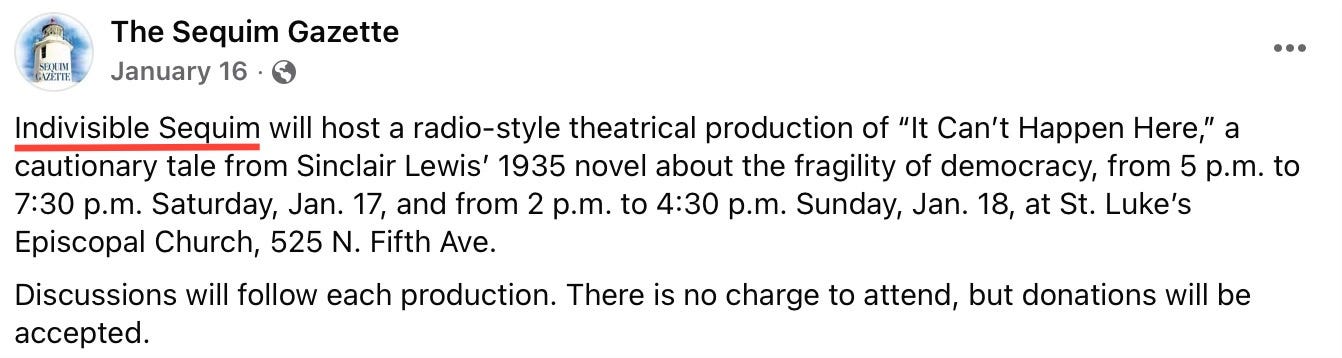
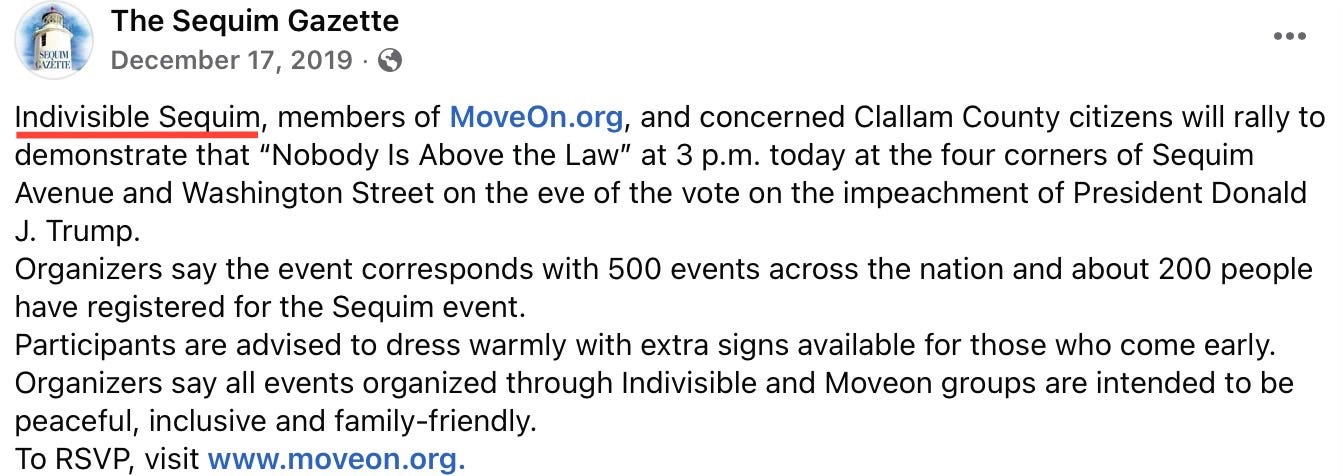
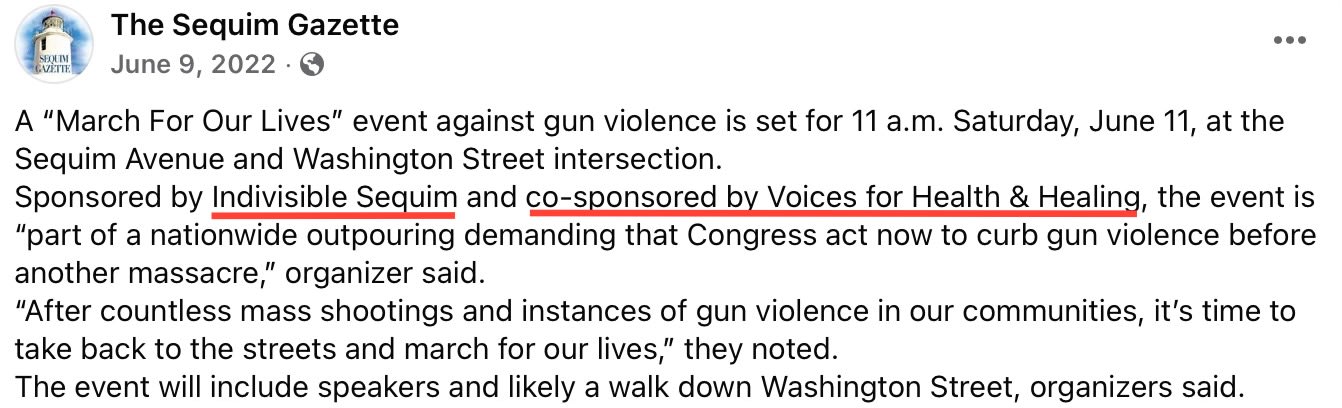
Lucia Grayson Fletcher, speaking as an organizer with Indivisible Sequim, told the board that students feel scared and unheard. She relayed conversations with student leaders and said the district lacked a clear plan if ICE were to show up on campus. She came prepared—with training from immigration advocacy groups, examples from other districts, and even template language the board could adopt.
Behind her, the familiar faces of Indivisible protestors Jim Stoffer and Alex Fane watched from the gallery.
All of that would carry more weight if the high school itself weren’t struggling with fundamentals. Only about 65% of students are attending regularly. Math proficiency sits barely above half. Science lags behind. Those are not abstract problems—they are measurable, persistent, and directly tied to outcomes for kids.

And yet the energy in the room was focused elsewhere.
Two sitting board members are affiliated with the League of Women Voters, an organization that promotes civic engagement and activism at increasingly younger grade levels. Indivisible, supported and promoted in those same circles, is now helping shape the conversation inside the school system itself.
It raises a question that doesn’t get asked often enough: when activism becomes the priority, what gets pushed aside?
Follow the Email—Then Follow the Money
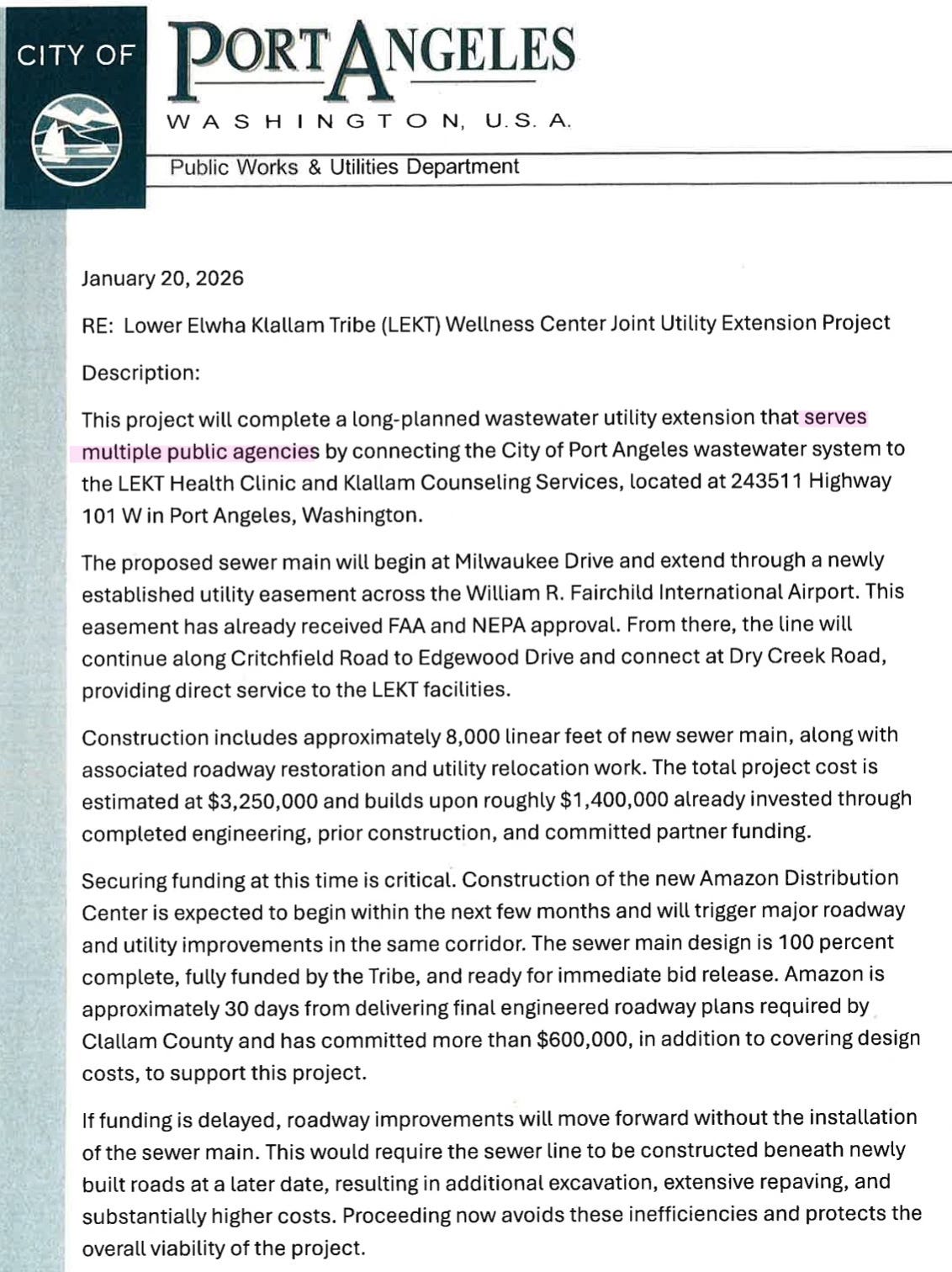
When State Senator Mike Chapman announced $3.3 million for the Lower Elwha Klallam Tribe Wellness Center, it sounded straightforward. Necessary repairs. Failing infrastructure. Preventing environmental damage.

But when you follow the project—not the press release—the picture changes.
The money is actually going to the City of Port Angeles to extend wastewater infrastructure into the western Urban Growth Area. The Tribe’s facility will connect to it, yes. But so will a new Amazon distribution center. So will future high-density development.
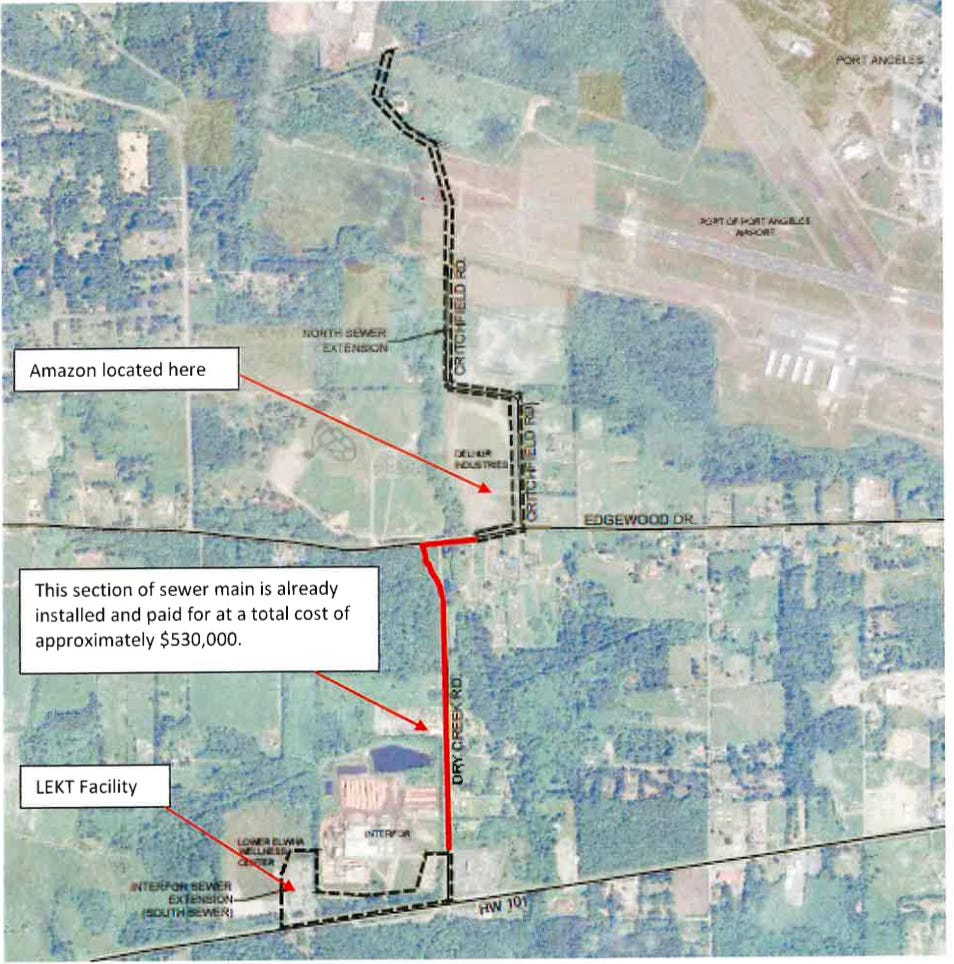
This wasn’t just a tribal project. It was a broader infrastructure expansion packaged in a way that made it eligible for a particular funding stream.
And that leaves a simple question: why describe it one way if it’s actually something else?
The Same Name, The Same Pattern
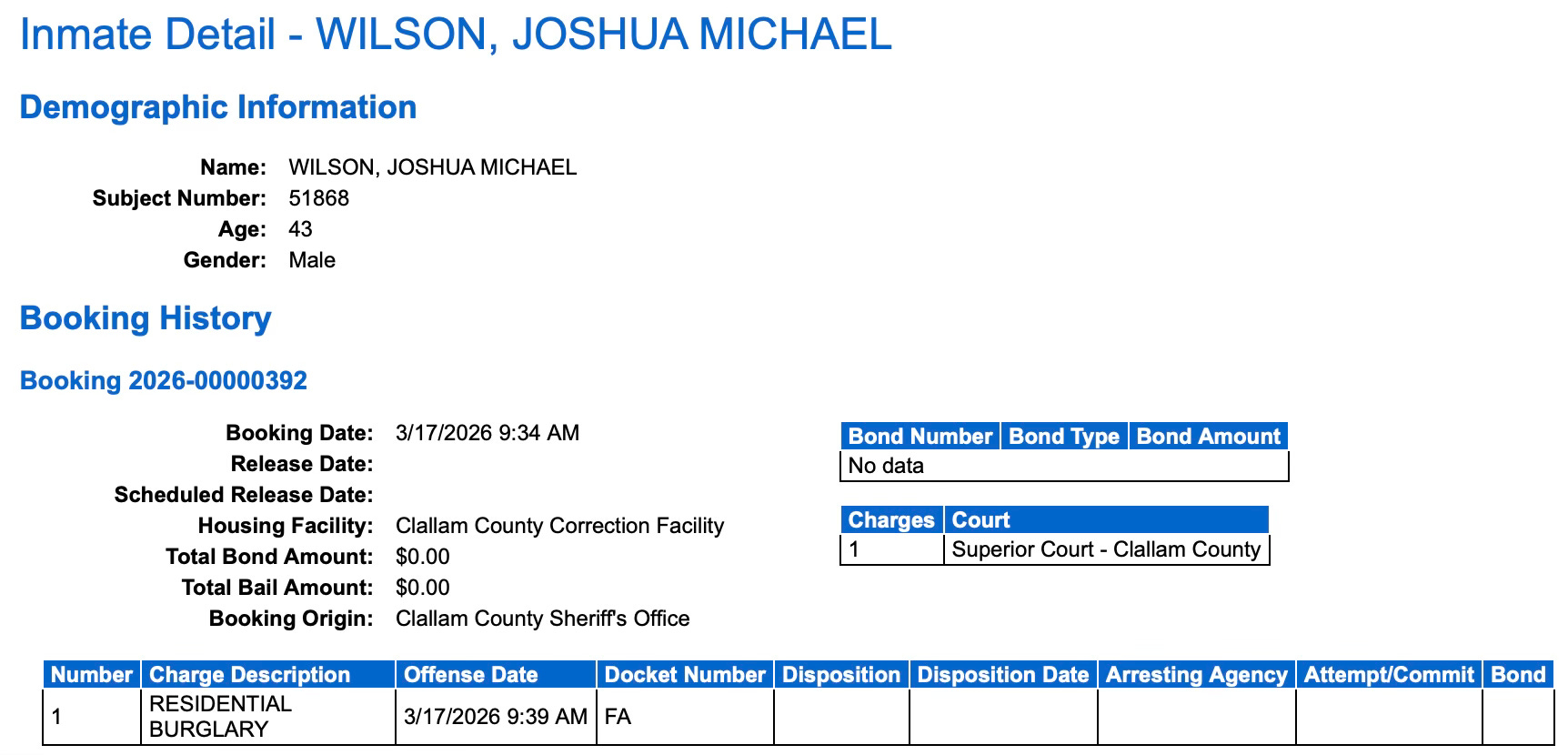
Joshua Wilson was arrested this week for residential burglary. If the name sounds familiar, it should.
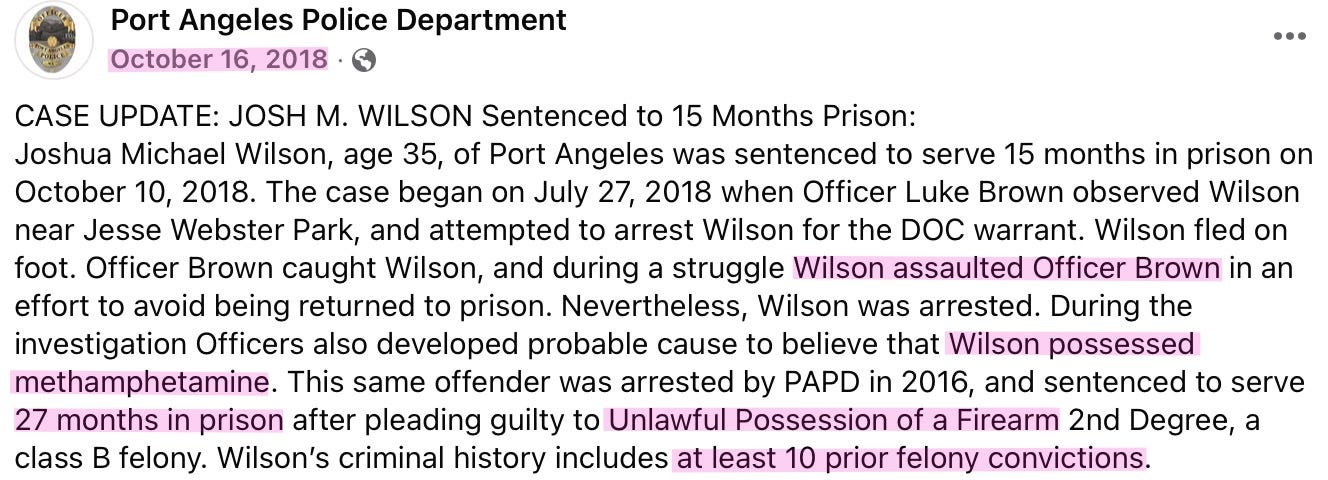
His record stretches back years—firearm charges, assaulting an officer while trying to avoid arrest, meth involvement, and a long list of felony convictions. More than ten. Multiple prison sentences. And now, another arrest.
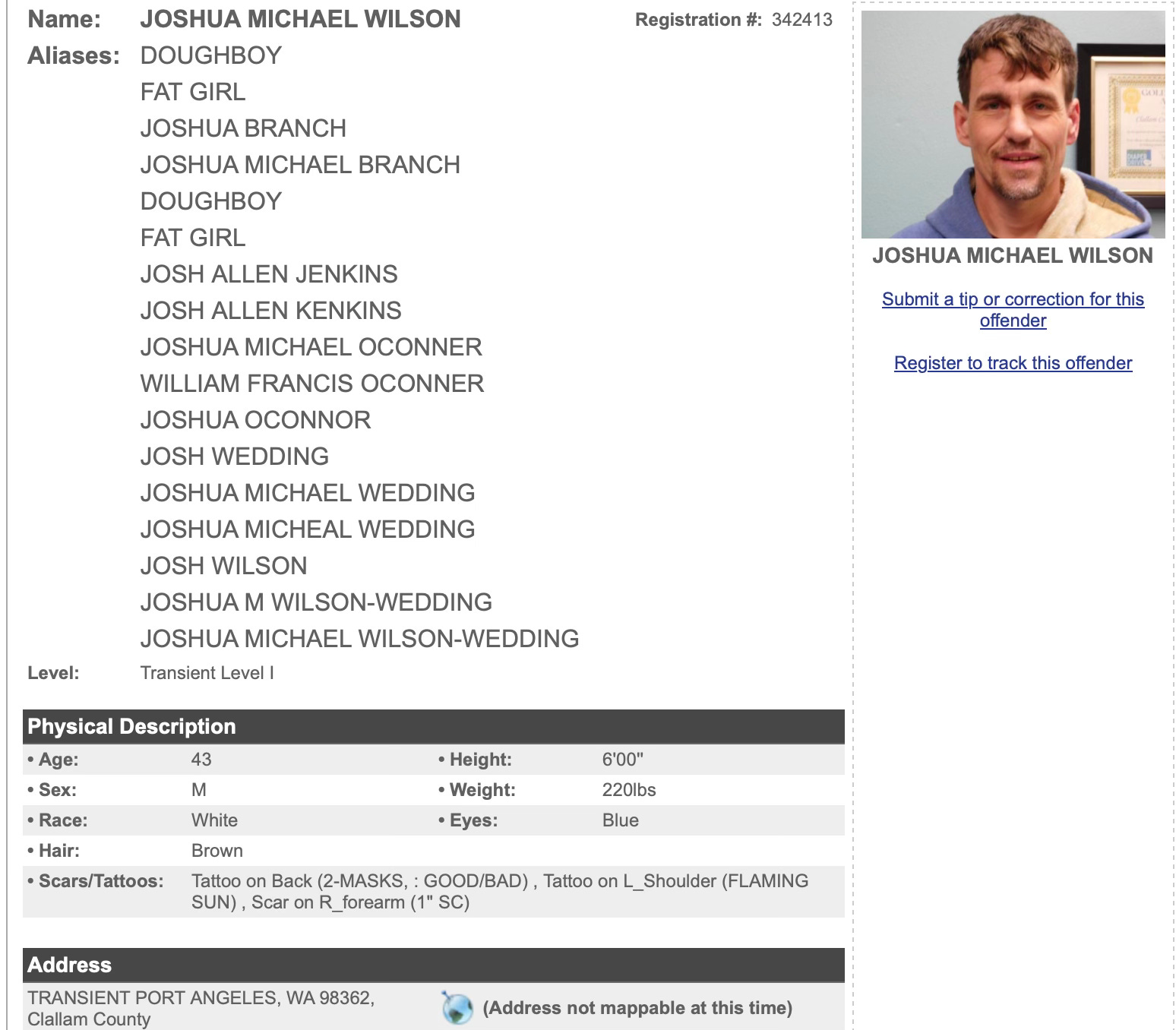
He’s also listed as a transient Level I sex offender, operating under more than a dozen aliases.
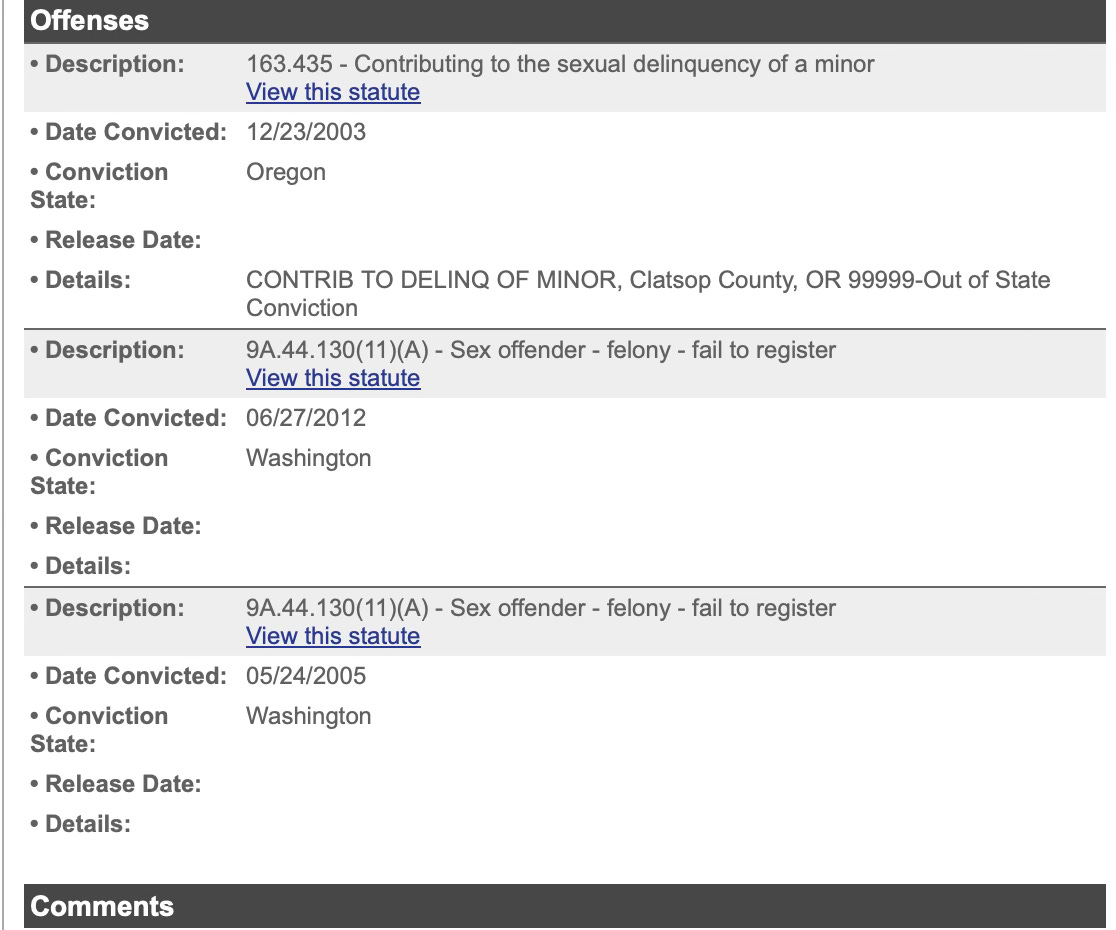
At some point, this stops being about one individual and starts being about a system. Because the pattern is not rare. It’s not unusual. It’s not even surprising anymore.
The cycle—arrest, release, reoffend—keeps repeating. And the public is told to focus on root causes, broader narratives, and systemic explanations, while the same individuals keep showing back up in police reports.
There’s a difference between understanding a problem and ignoring a pattern.
A Town Hall Without the Script
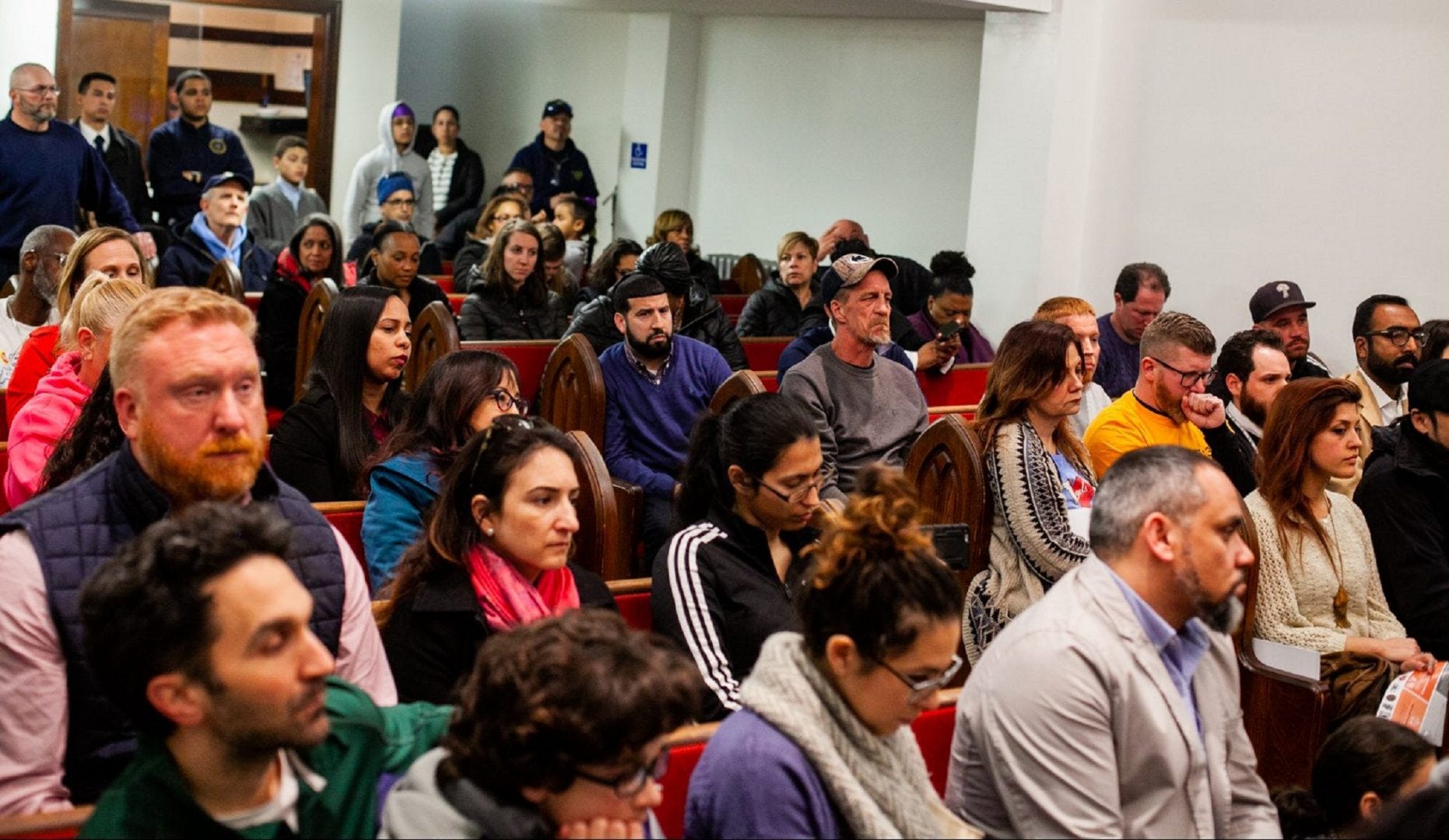
The Calico Cat Social Club is launching its “People’s Forum” series with a public safety town hall:
📍 April 16, 2026
⏰ 6:30–8:30 PM
📌 Fairview Grange Hall, Port Angeles
Panelists include:
Commissioner Mike French
Prosecutor Mark Nichols
Sheriff Brian King
Police Chief Brian Smith
The format is intentionally different:
No moderator interference
No strict time limits
Audience-driven Q&A
Organizers say the goal is simple: direct, unfiltered conversation between the public and those in power.
Given rising concerns around crime and accountability, turnout—and the questions—could be telling.
Who Owns the Narrative?
Meanwhile, questions about transparency aren’t limited to government—they’re increasingly being asked about the media itself. A recent investigation by the Columbia Journalism Review takes a closer look at the rapid expansion of Alabama-based Carpenter Media Group, which now controls Sound Publishing, the parent company of the Sequim Gazette, Peninsula Daily News, and Forks Forum. What emerges is a picture of aggressive consolidation across local news markets.
The article describes a model that prioritizes efficiency: leaner newsrooms, fewer local reporters, and more centralized decision-making over what gets published. While this approach is often framed as a way to keep struggling newspapers alive, it also raises concerns about how much truly local, independent reporting remains when coverage is shaped farther away from the communities it serves.
That context becomes especially relevant as readers start to notice patterns in coverage—what gets highlighted, how stories are framed, and what perspectives are missing. Local journalism has traditionally been expected to reflect a range of viewpoints and hold power accountable. As ownership consolidates and editorial control becomes more centralized, more residents are beginning to ask whether local balance is still being maintained.

Public Facilities, Private Realities
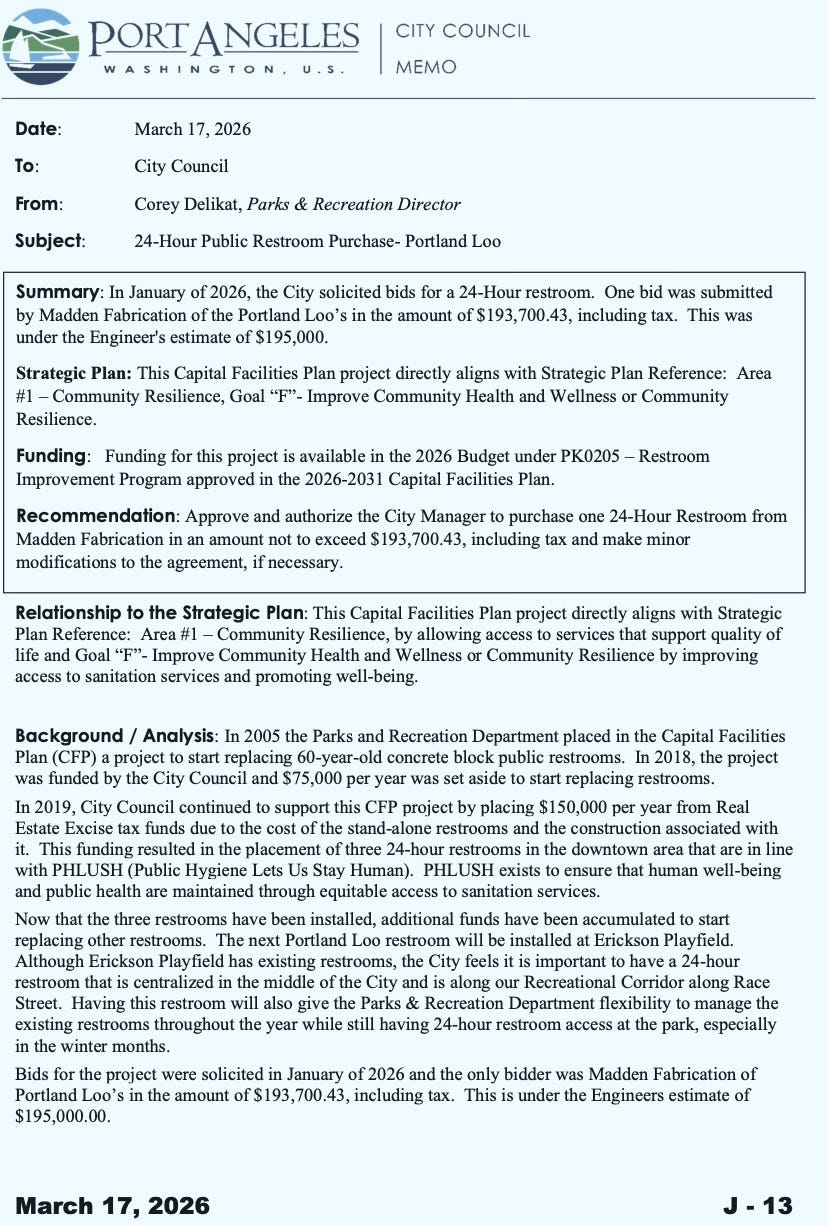
The City of Port Angeles is moving ahead with another Portland Loo—this one costing nearly $200,000 and to be installed at Erickson Playfield.
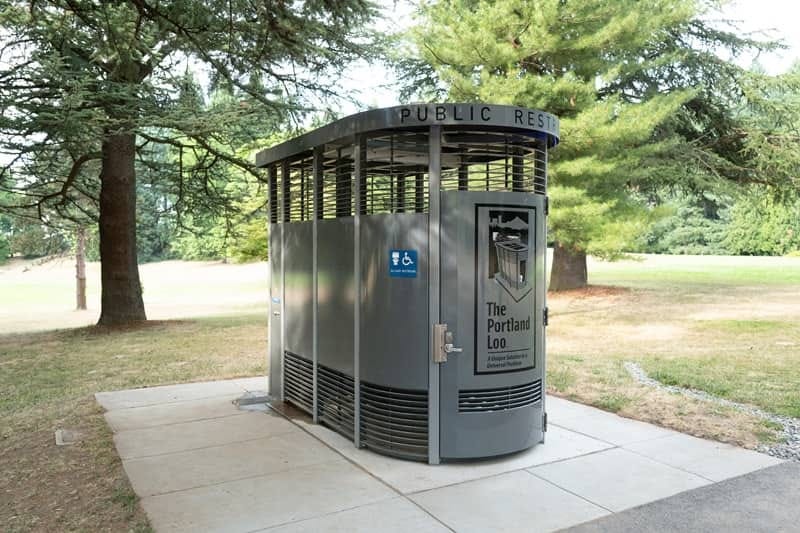
The language around it is polished: resilience, wellness, equitable access to sanitation. The advocacy group behind the concept even has a name designed to resonate—PHLUSH (“Public Hygiene Lets Us Stay Human”).
But residents who have seen the existing downtown units know how those spaces are actually used.
After hours, they don’t become symbols of public health. They become gathering points for activity most families would avoid. During the day, many people won’t go near them.
So the question isn’t whether access to sanitation matters. It does.
The question is whether anyone is willing to say out loud what these facilities are becoming—and who they’re really serving.
Counting Ballots—and Raising Questions
The Clallam Conservation District election is wrapping up, and ballots are being processed.
What’s drawing attention isn’t the vote itself, but who is handling it.
Volunteers from the League of Women Voters—an organization that supports and promotes Indivisible Sequim, which endorsed a candidate in the race—are processing ballots while observers remain outside the room.


Each ballot is verified, marked, and passed along in a system that relies heavily on trust.
And maybe that trust is well-placed.
But when the same networks show up on one side of an election and inside the counting process, people are going to ask questions. Not because they assume wrongdoing—but because they expect neutrality.
The CCD should announce unofficial results by 5:00 pm today. Check here for updates.
Public Land, Private Outcomes
At the state level, another quiet shift is underway.
According to The Northwest Sportsman, the Washington Department of Fish and Wildlife is preparing to appraise Point Whitney tidelands on Hood Canal for a potential sale to the Jamestown S’Klallam Tribe. Even within the agency, there are concerns about preserving public access.

That question becomes even more important when the intended use is tied to commercial interests. And it becomes harder to ignore when a related entity, “Jamestown Point Whitney, a Corporation,” was listed in an IRS Certificate of Release of Federal Tax Lien after failing to pay more than $190,000 in federal taxes last year.
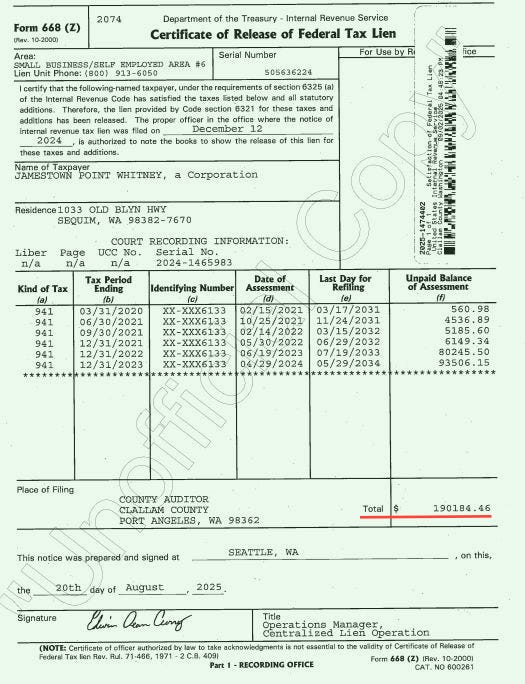
Taxpayers have every reason to ask why public land should keep being transferred for private or commercial benefit, especially when the entities involved are not exactly modeling financial stewardship.
Because once public land is transferred, it rarely comes back. And when it moves into the hands of a sovereign nation for commercial use, public leverage shrinks even further. Piece by piece, assets that once belonged to everyone are being moved beyond the public’s reach, and the people footing the bill are left wondering what, exactly, they are getting in return.
Then vs. Now
Every November, Clallam County Commissioners read aloud a proclamation stating that Indigenous people are still suffering the harms of systemic racism at the hands of colonizers. The League of Women Voters echoes a similar message, saying it works to “amplify the voices of Indigenous people” because of the “ongoing harms of colonialism.”

Former Sequim councilmember Vicki Lowe has warned about what she describes as racist dog whistles embedded in phrases like “high quality.” And Paula Allen, niece of Jamestown Corporation CEO Ron Allen, has put it more bluntly: “White people are a problem.”
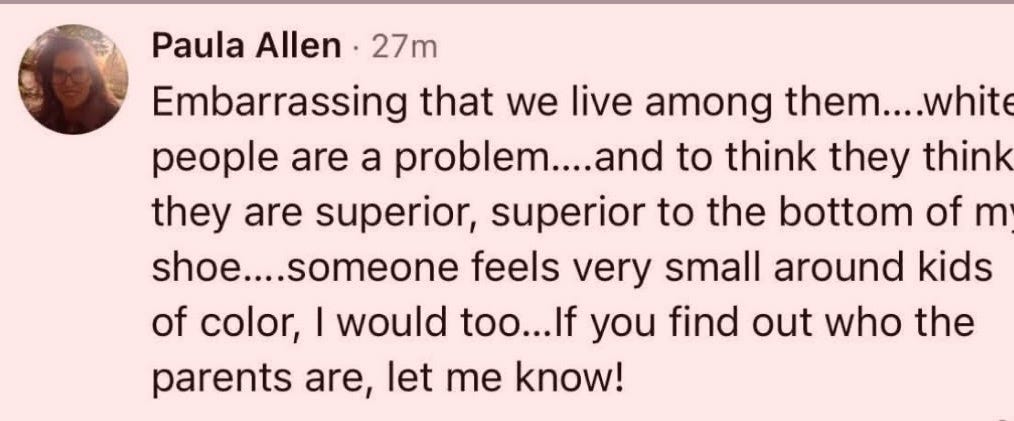
That perspective stands in sharp contrast to how this same community once described itself.
Dungeness: The Lure of a River, written exactly 50 years ago in 1976 by the Sequim Bicentennial History Book Committee, offers a very different account. Chapter 6, “The Land of the Clallam,” concludes with this statement on page 76:
“They have lived in friendship with non-Indian families in their own neighboring communities. Most of the Clallam people say they have felt little or no discrimination. They contribute to, are a part of, the lives of their non-Indian friends.”
Living in friendship with non-Indian families? Little or no discrimination? Where, then, was the account of the racism said to be coursing through this small community? What changed? Or is something else at work? Is today’s narrative a reflection of lived experience—or something that has been manufactured over time? What has happened since that book was published in 1976?
In 1977, Ron Allen became Chairman of the Jamestown Tribe.
What Democracy Used to Look Like
After Sunday’s article, where a county commissioner candidate was blocked from submitting a personal letter to the editor, many readers started looking more closely at how local media operates.
At the same time, coverage in the Sequim Gazette promoting an Indivisible Sequim protest appeared under the banner of community news—complete with messaging, framing, and quotes about defending democracy.
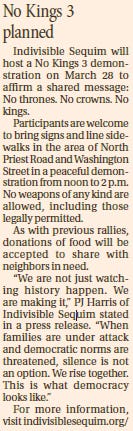
“This is what democracy looks like,” said PJ Harris in the article.
Maybe.
But for a long time, democracy also looked like something else:
a local press willing to publish competing viewpoints, ask uncomfortable questions, and stay independent from the movements it covered.
That version feels harder and harder to find.