

A question at a public town hall exposed a troubling reality: Commissioner Mike French claims he is “required” to sit on OlyCAP’s board—but that requirement appears to be one he imposed on himself. See how taxpayer dollars flow through nonprofits like OlyCAP, where millions go toward staffing and operations, and where elected officials often sit on boards tied to that funding. With parallels from Jefferson County, it highlights a system where influence, public money, and limited transparency intersect—raising a critical question: is this solving homelessness, or sustaining it?
There are moments in public events where the carefully managed narrative slips—just for a second—and something real comes through. At a recent public safety town hall, that moment came from someone who has seen the system from the inside.
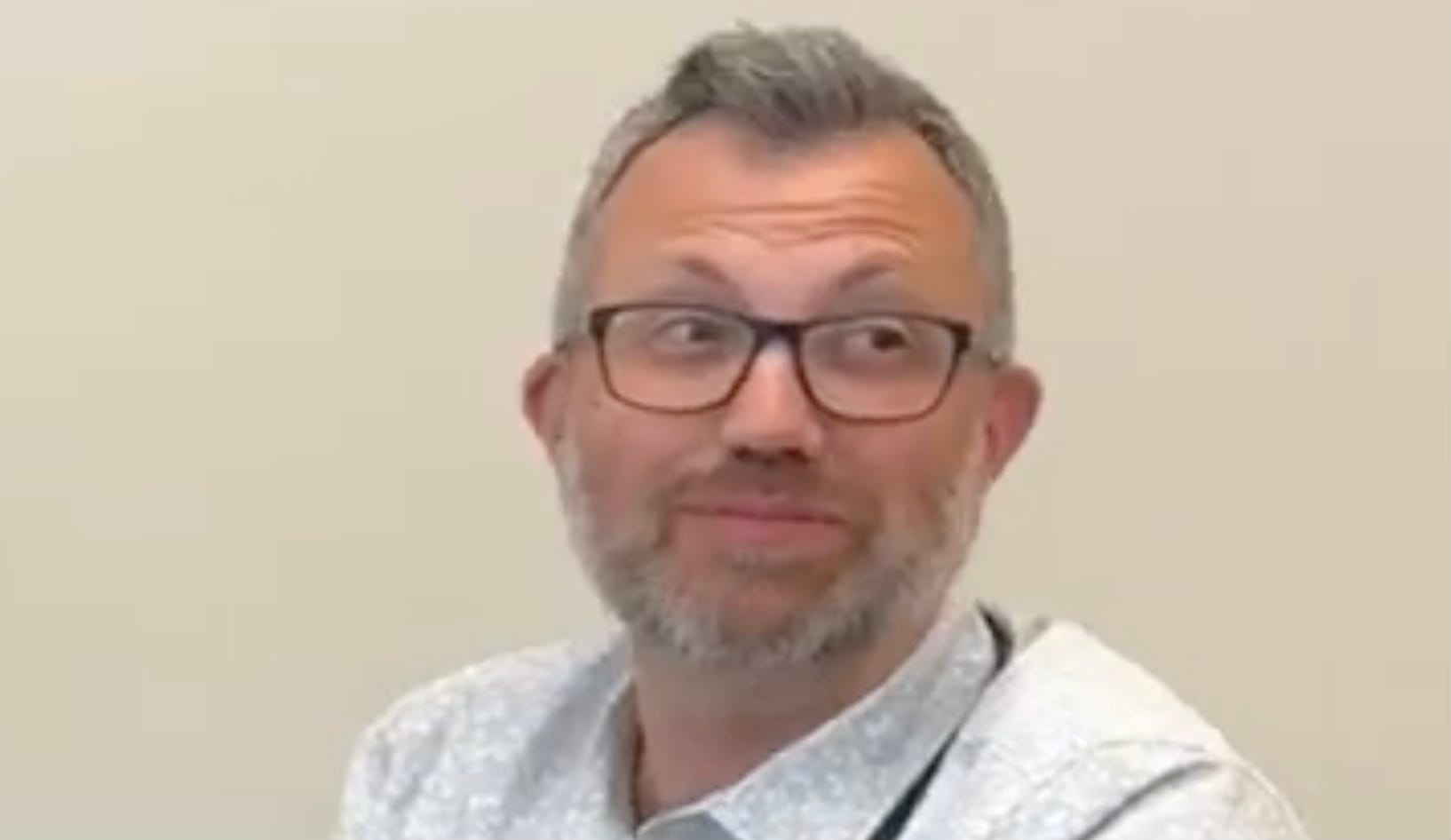
John De Boer is not an outsider throwing stones. He’s a formerly homeless resident, someone who serves on the county’s Homelessness Task Force and has even managed shelters. When he spoke, it wasn’t theoretical.
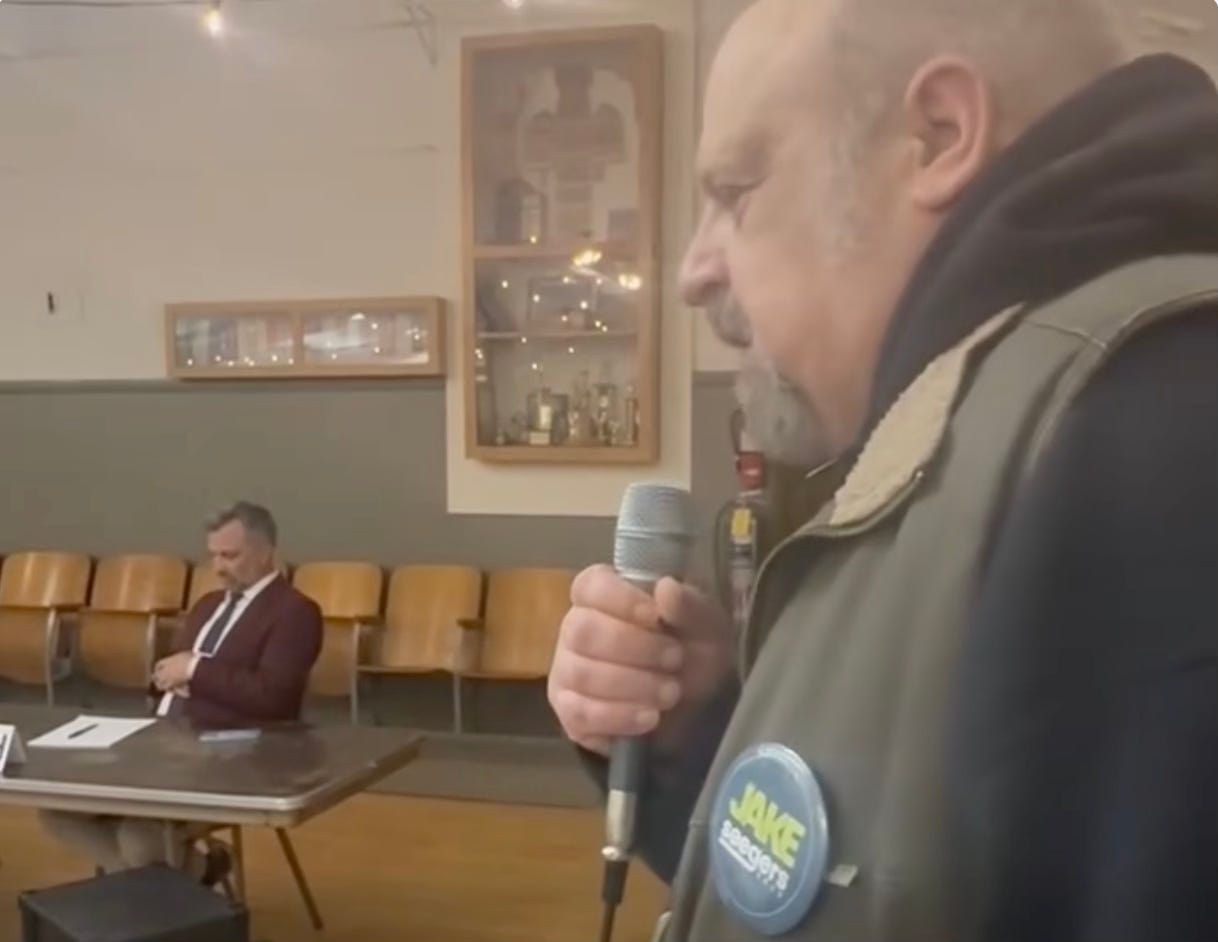
He described the system with a bluntness that clearly made people uncomfortable:
“We’ve reached the point where the money is doing more harm than good… Homelessness became big business… it became a racket.”
Then he asked the question that exposed a contradiction sitting in plain sight:
Would Commissioner Mike French consider resigning from either his elected role—or his position connected to the nonprofit system receiving public funds?
French’s first response was unequivocal:
“I do not serve on any nonprofit boards.”
But when DeBoer followed up—“What about OlyCAP?”—the answer shifted:
“I am required to serve on the Board of OlyCAP.”
That word—required—became the foundation for everything that followed. Because when you start pulling on it, the entire explanation unravels.
The “Requirement” That Isn’t
After the meeting, a follow-up request was sent asking a simple question: What law, policy, or mandate requires a Clallam County Commissioner to serve on the OlyCAP board?
French’s answer was revealing—and deeply problematic.
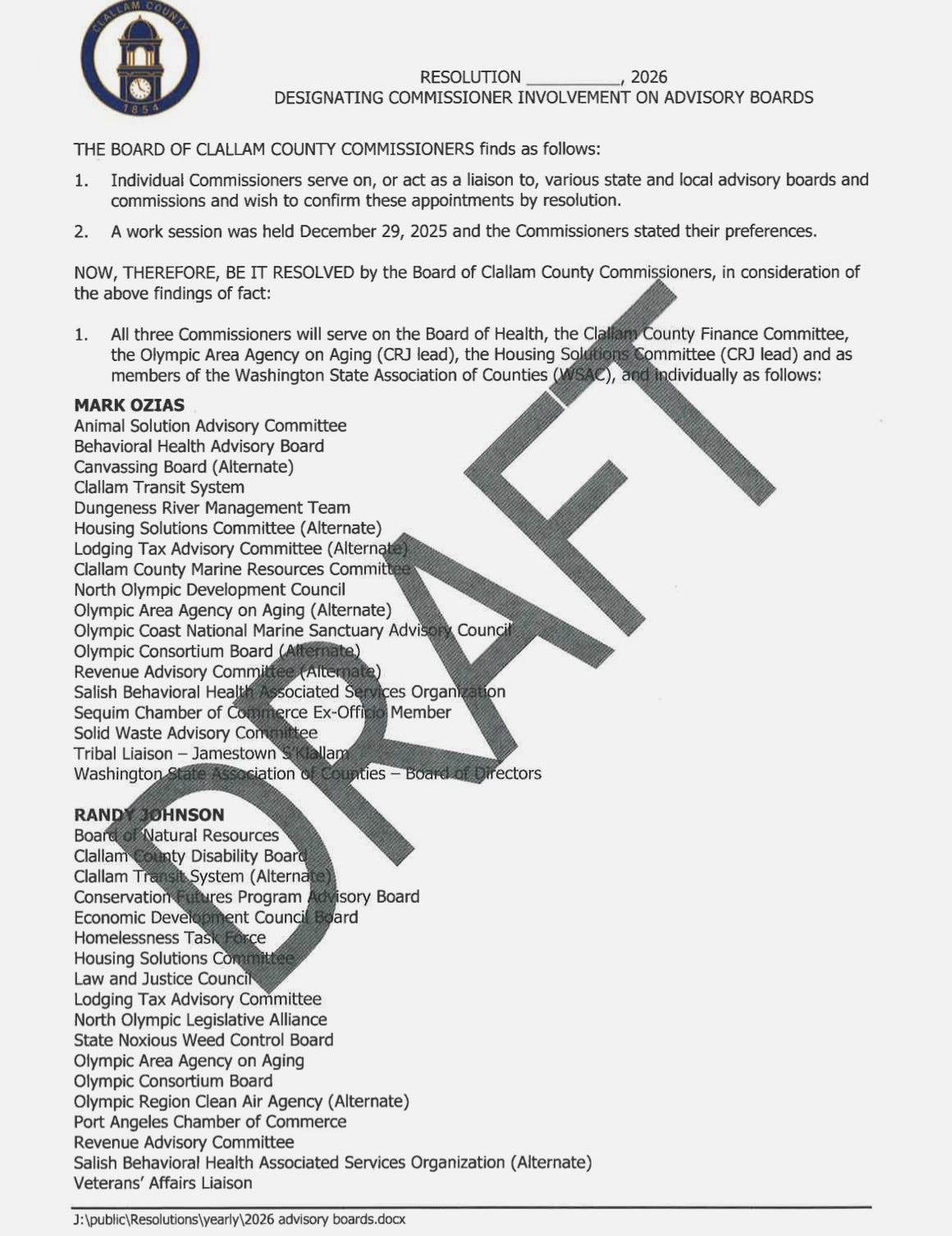
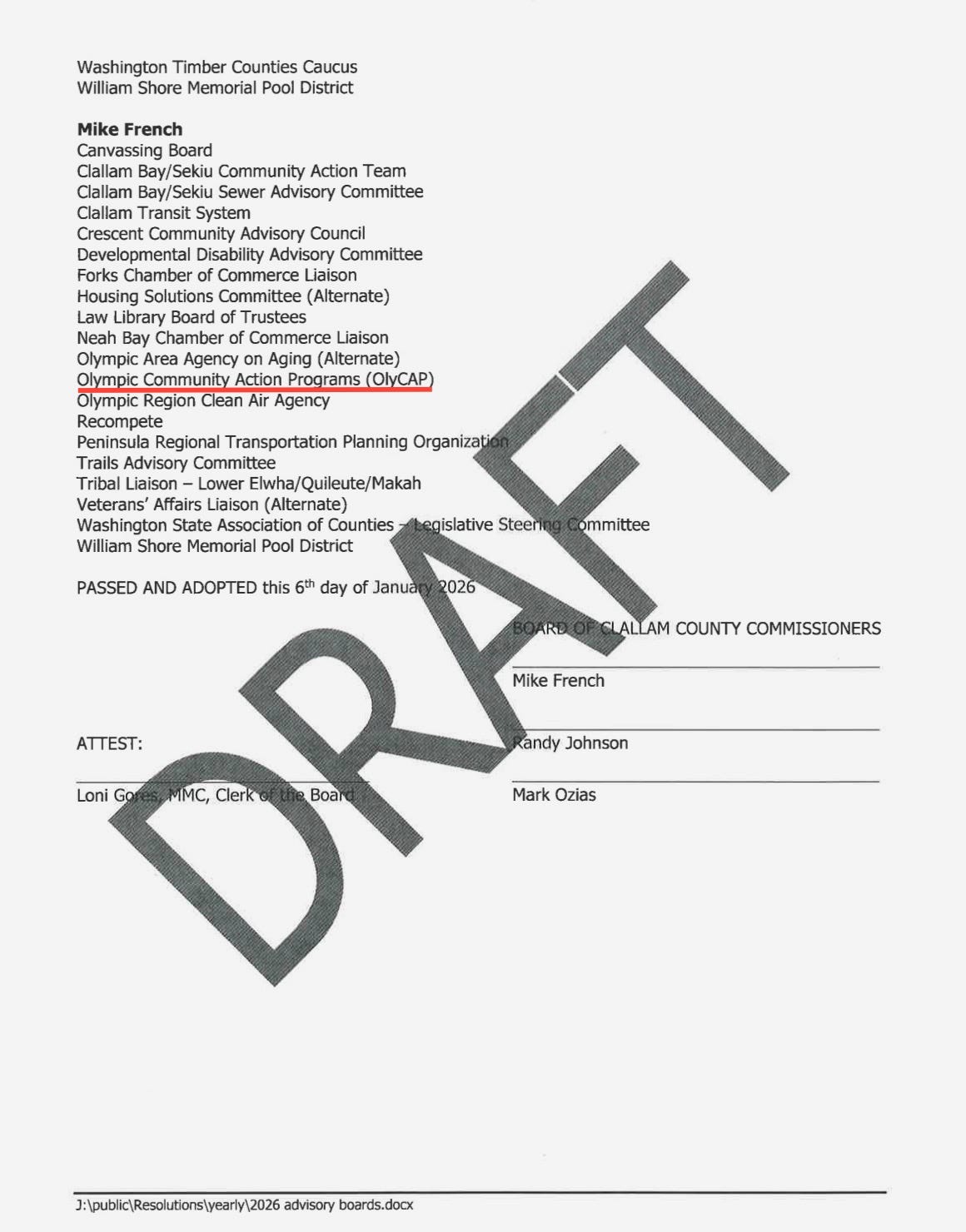
He pointed to a county resolution assigning commissioners to various advisory boards, explaining that he is “required” to serve because the Board of Commissioners directed him to do so.
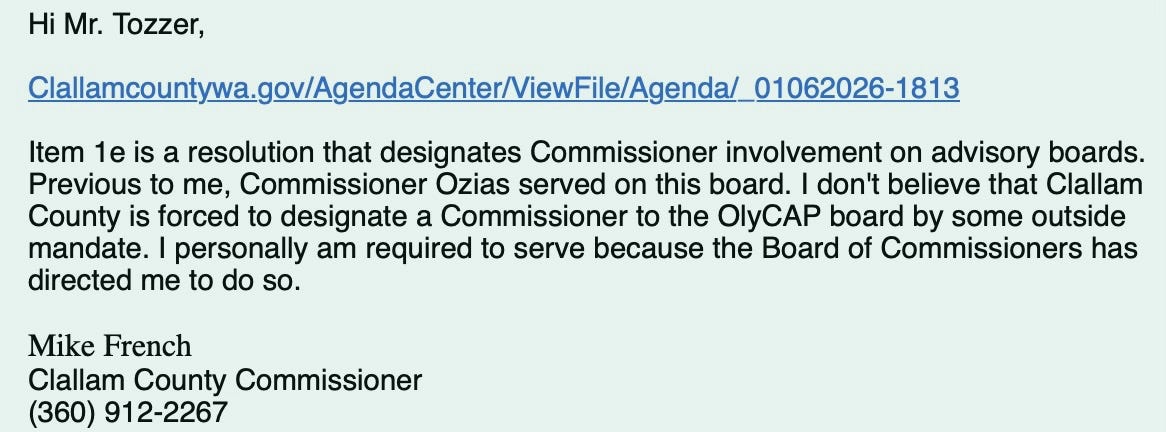
Read that carefully.
He is required… because the board he sits on told him to be.
There is no federal statute requiring Mike French to sit on OlyCAP’s board. There is no Washington State law mandating that the District 3 Commissioner hold that position. There is no external authority compelling his service.
Instead, the board created the assignment—and now cites that assignment as a requirement.
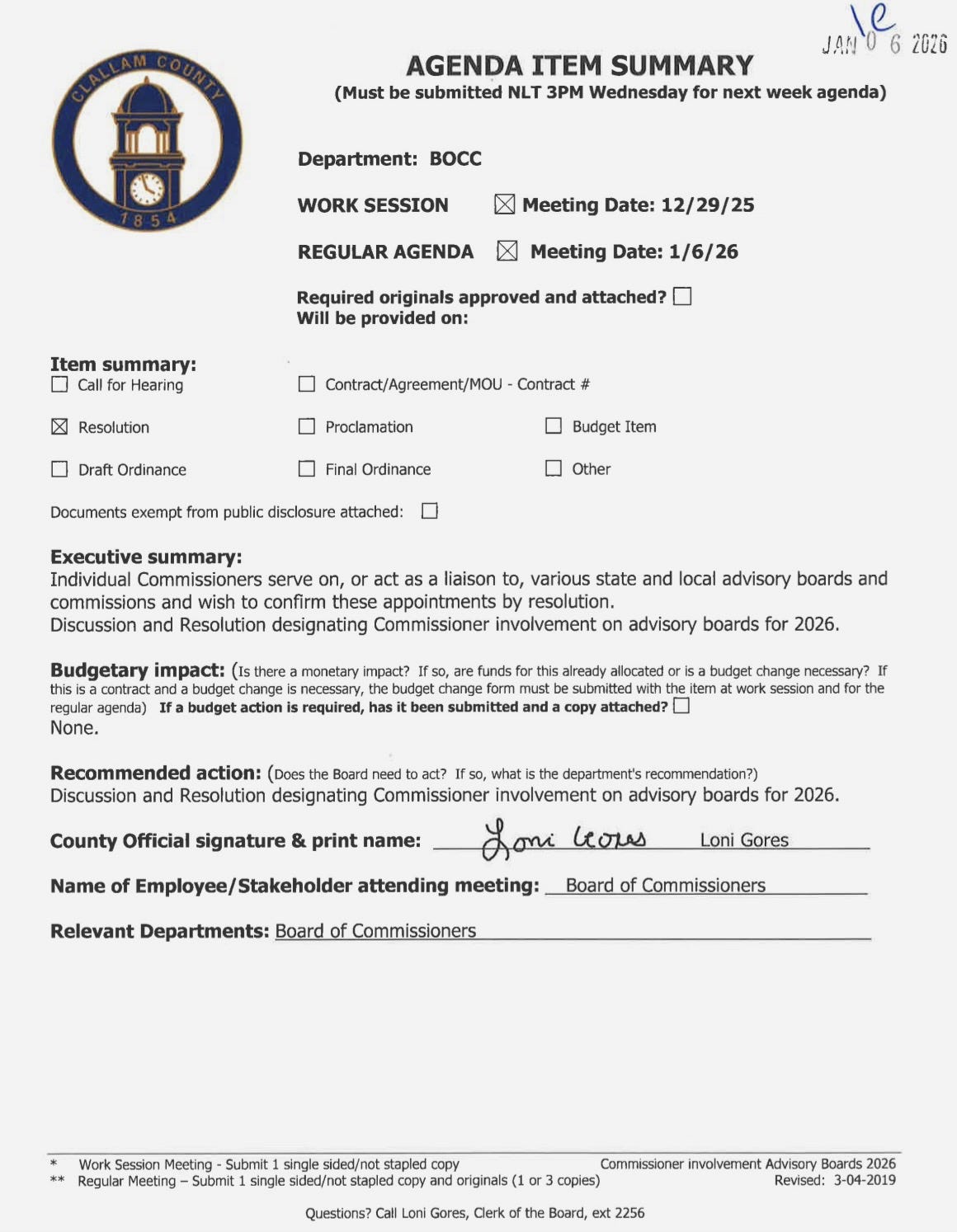
That isn’t a legal mandate. It’s circular reasoning.
At best, it’s a convenient mischaracterization. At worst, it’s a deliberate attempt to deflect scrutiny from a system that doesn’t hold up well under it.
What OlyCAP Actually Is
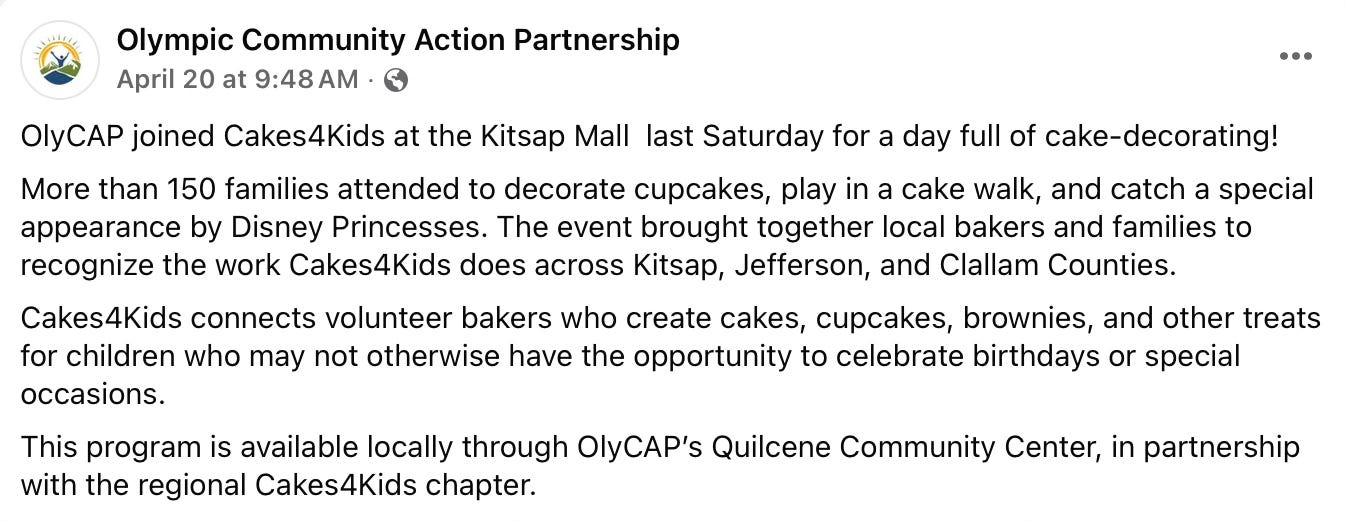
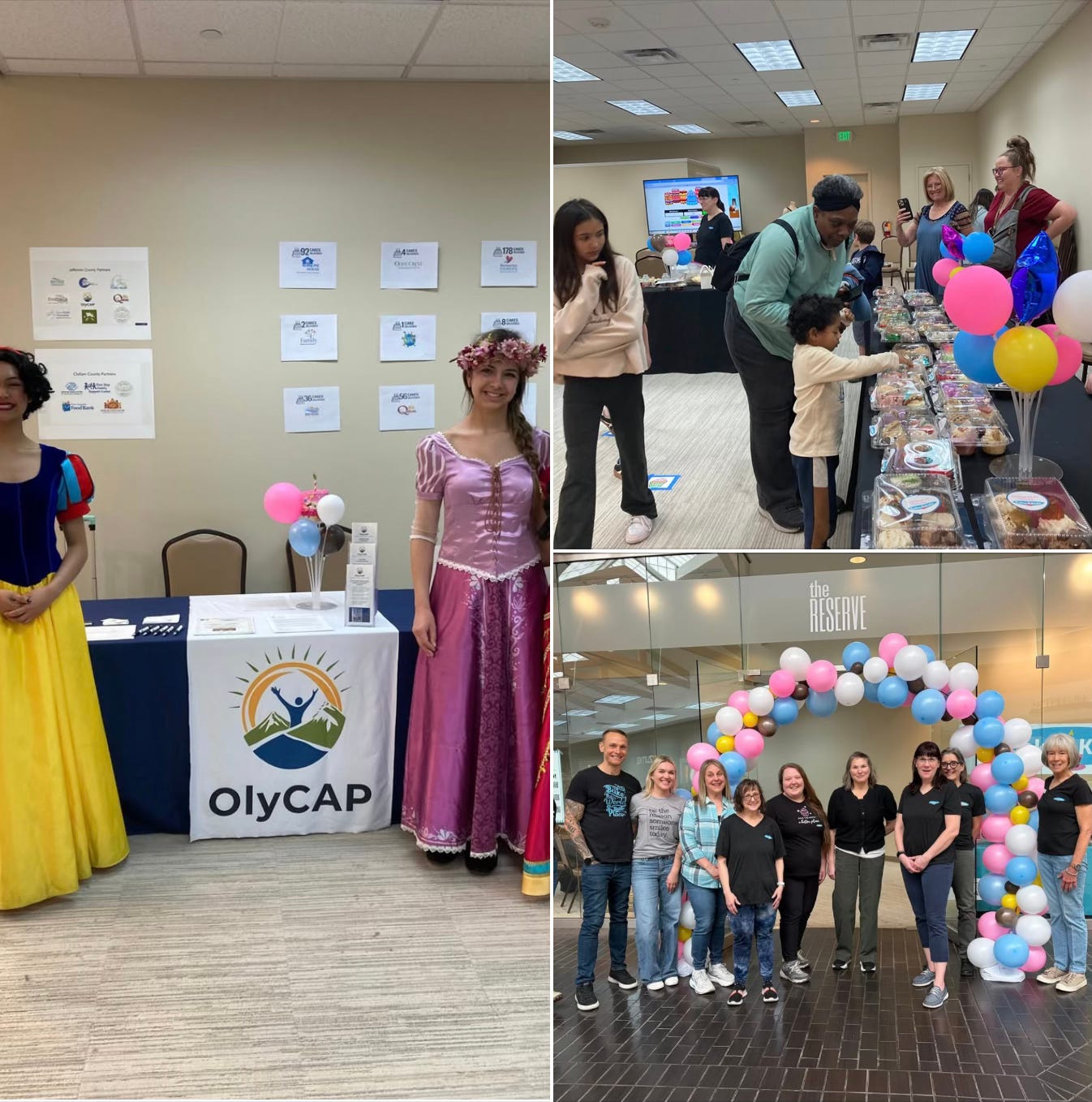
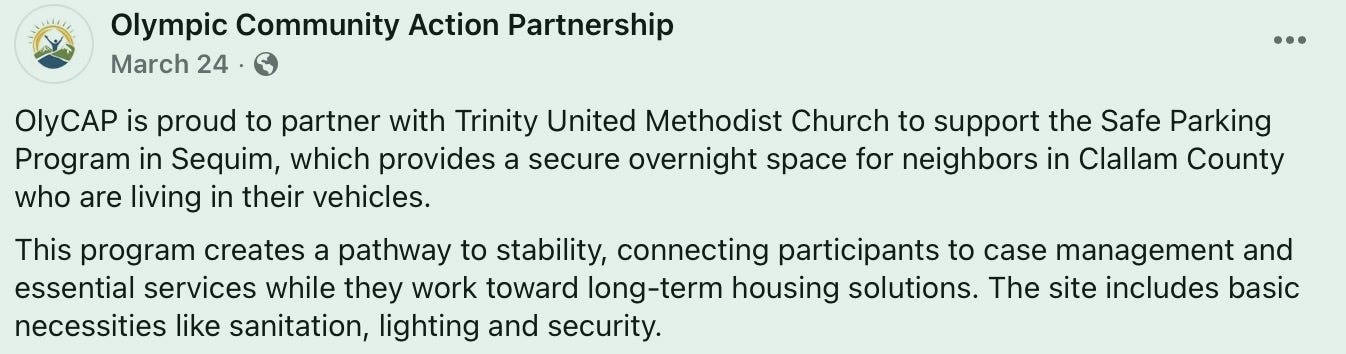
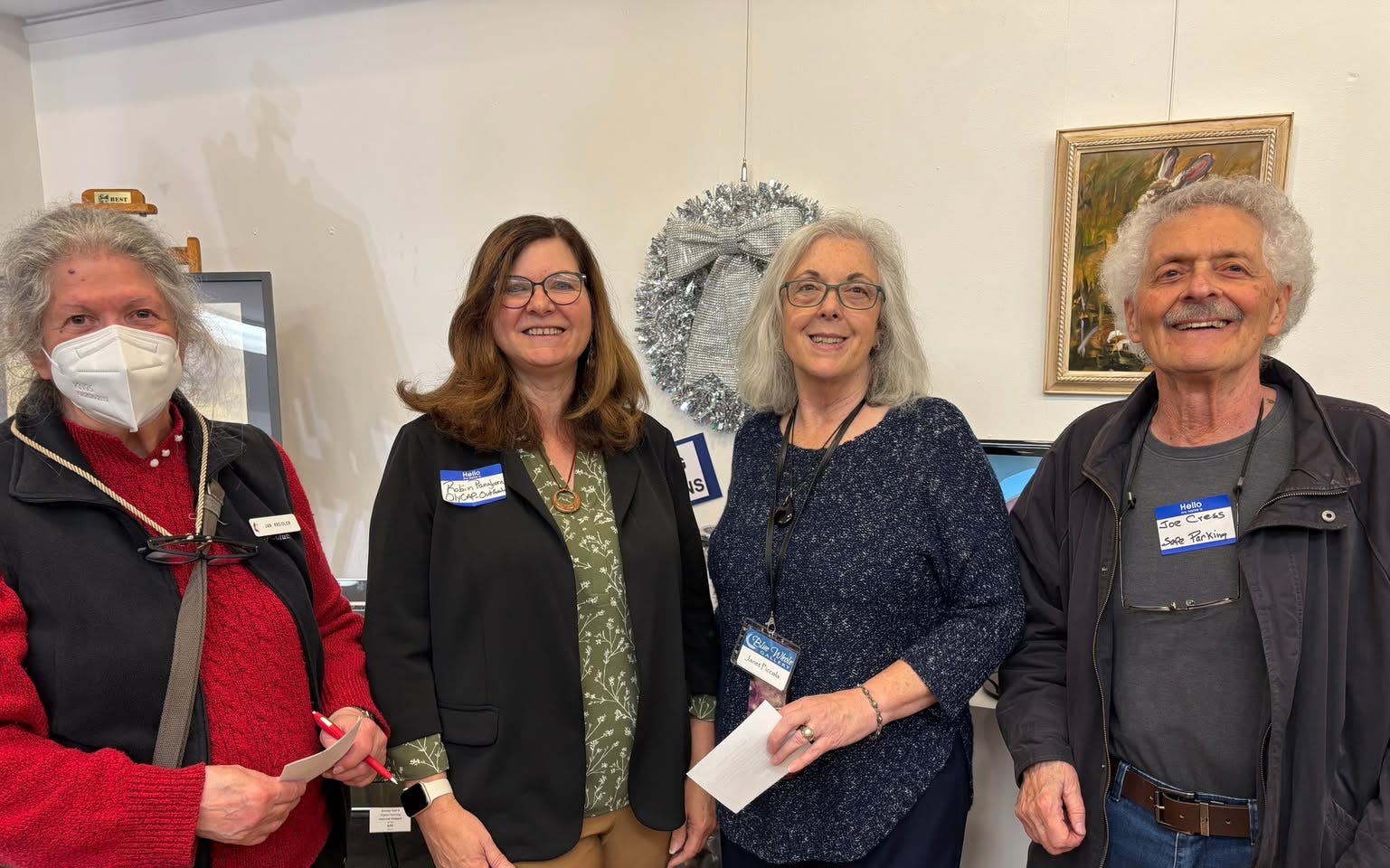
OlyCAP—Olympic Community Action Programs—is a federally recognized Community Action Agency. On paper, it exists to provide services: rental assistance, energy support, early childhood programs, housing stabilization, and senior meals.
And to be clear, it does provide those services.
But the scale and structure of the organization matter just as much as the mission.
In 2024, OlyCAP reported:
Nearly $700,000 in rental assistance
Thousands of individuals receiving utility and housing aid
Programs spanning both Clallam and Jefferson counties
At the same time, the organization reported something else that deserves just as much attention:
More than $5 million in staffing costs—its single largest expense.
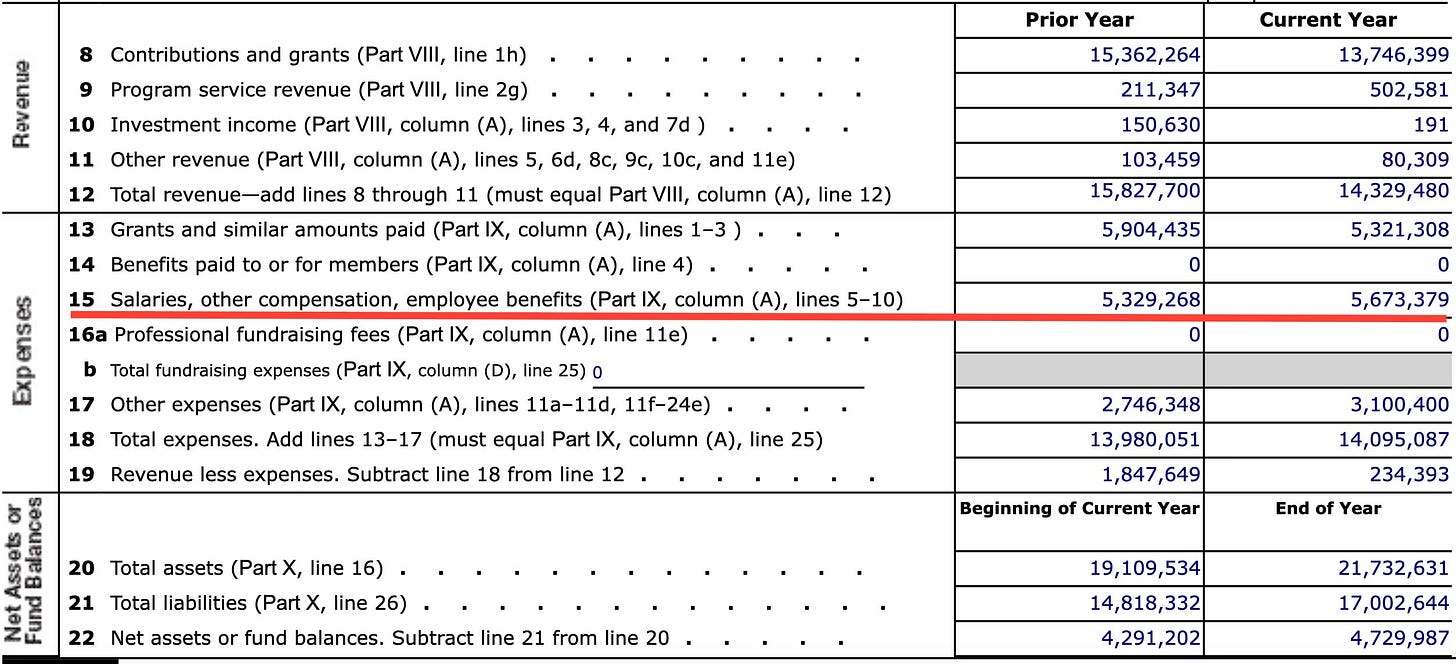
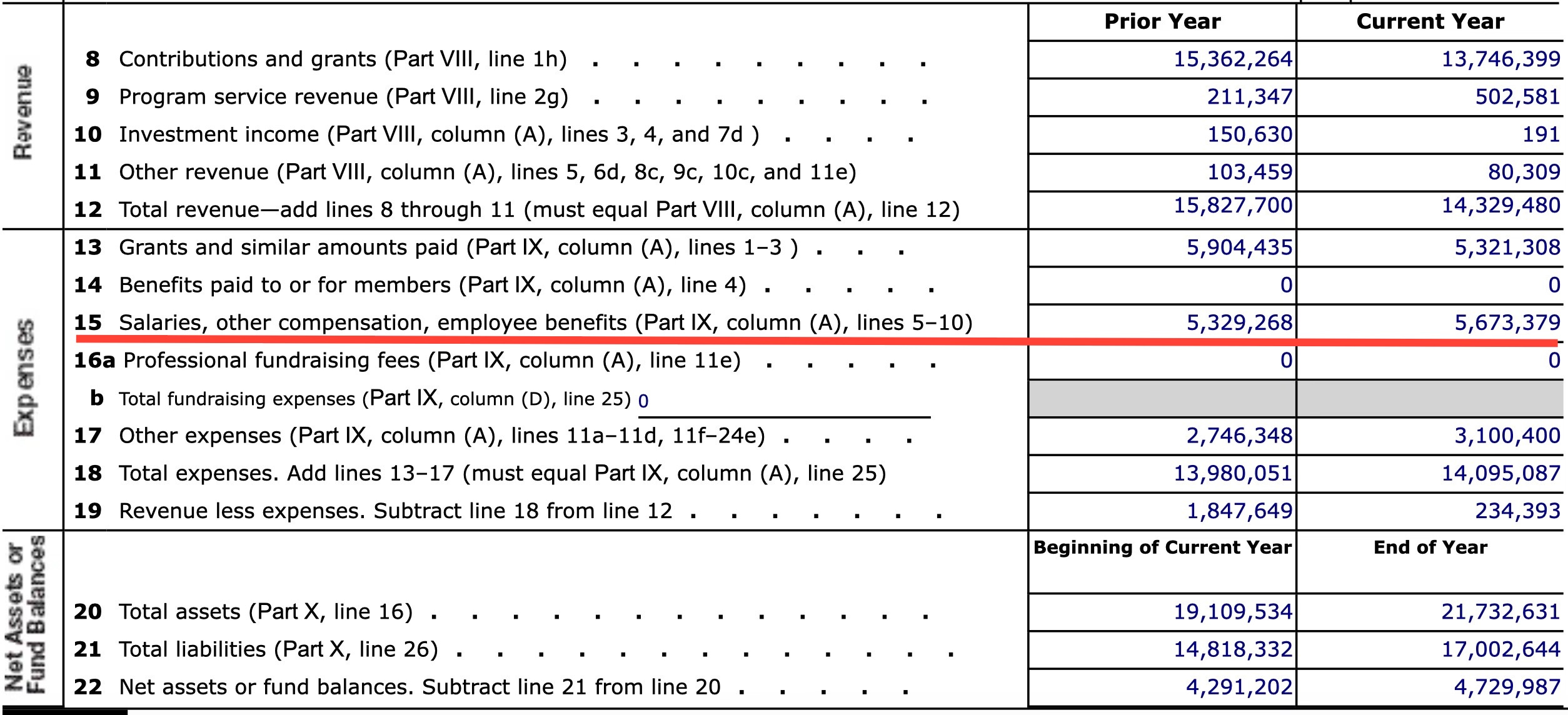
Even local officials noticed the imbalance. One Jefferson County Commissioner described the salary figure as “remarkable,” questioning how much of the funding is actually reaching people versus sustaining the organization itself.
And that’s where the conversation shifts—from what OlyCAP does to what the system incentivizes.
Because when the majority of funding flows toward staffing and administration, the system begins to behave differently. It begins to require scale. Continuity. Expansion.
It begins to require the problem to persist.
The Structure Nobody Talks About
OlyCAP operates under what’s called a “tripartite board” model, required for Community Action Agencies receiving federal block grants. That structure includes elected officials, private sector representatives, and community members.
On its face, that sounds like balanced governance.
In practice, it creates something far more complicated:
Elected officials—like Mike French—sit on the board of a nonprofit organization.
That nonprofit relies heavily on government funding.
Those same elected officials are part of the bodies that influence, allocate, or advocate for that funding.
And because the organization is technically a nonprofit—not a government agency—it is not subject to the same transparency requirements.
No public records laws.
No direct voter accountability.
No obligation to operate in the open.
That’s the loophole.
NGOs are described as “non-governmental,” but in reality, many are almost entirely government-funded, government-influenced, and government-connected—without being government-accountable.
It is where public money goes to pursue policy agendas that would be far more controversial if handled directly by elected bodies.
And once that structure is in place, it becomes very difficult to untangle.
The Jefferson County Precedent
If this dynamic sounds theoretical, it isn’t.
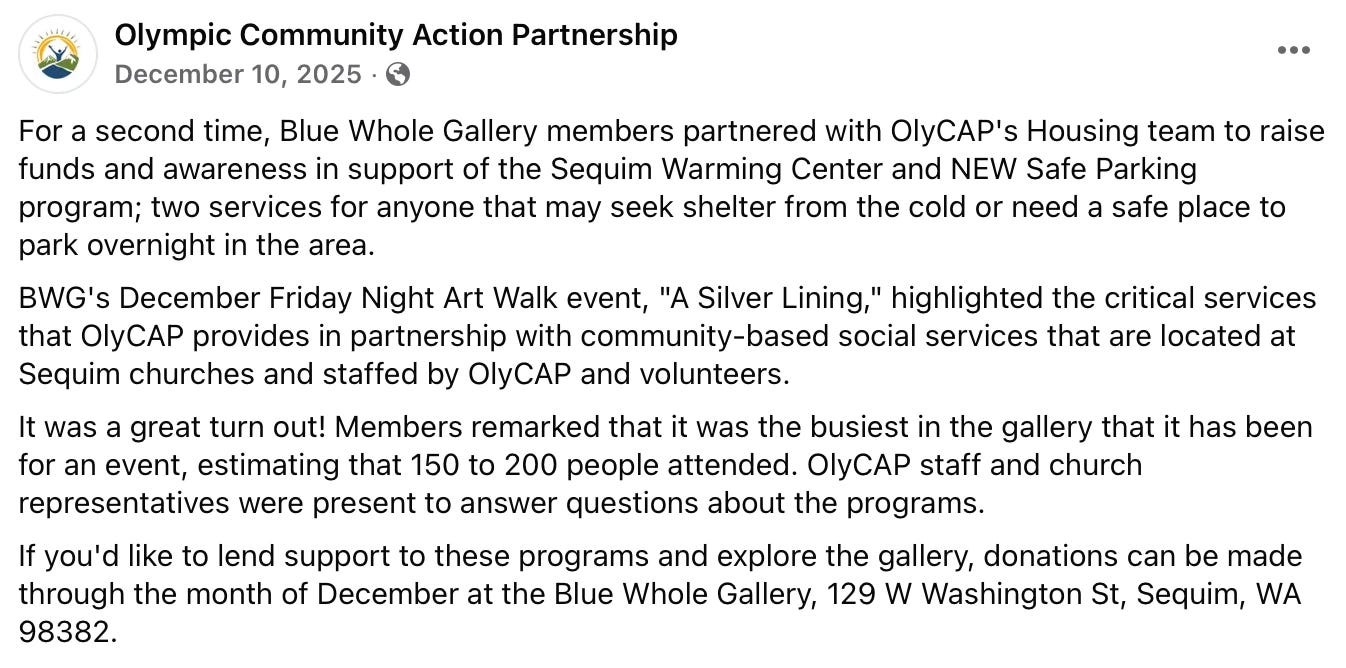
Just across the county line, a nearly identical situation unfolded involving Jefferson County Commissioner Greg Brotherton—who also served as Chair of the OlyCAP Board.
A formal complaint filed with the Washington State Auditor documented a pattern that should sound familiar:
Brotherton served on OlyCAP’s board while acting as a county commissioner
He participated in decisions awarding millions of dollars in public funds to OlyCAP
He advocated for additional funding, infrastructure investment, and land transfers benefiting the organization
Between 2019 and early 2022 alone:
$2.7 million in contracts and grants were awarded to OlyCAP
An additional $928,000 in public land value was transferred or dedicated to the organization
The complaint didn’t just focus on the money. It focused on influence.
Washington law—RCW 42.23—does allow what’s called a “remote interest” in certain cases, such as serving on a nonprofit board without compensation. But that exception comes with a critical limitation:
If the official influences or attempts to influence decisions involving that organization, the protection disappears.
And the documentation shows repeated instances of exactly that:
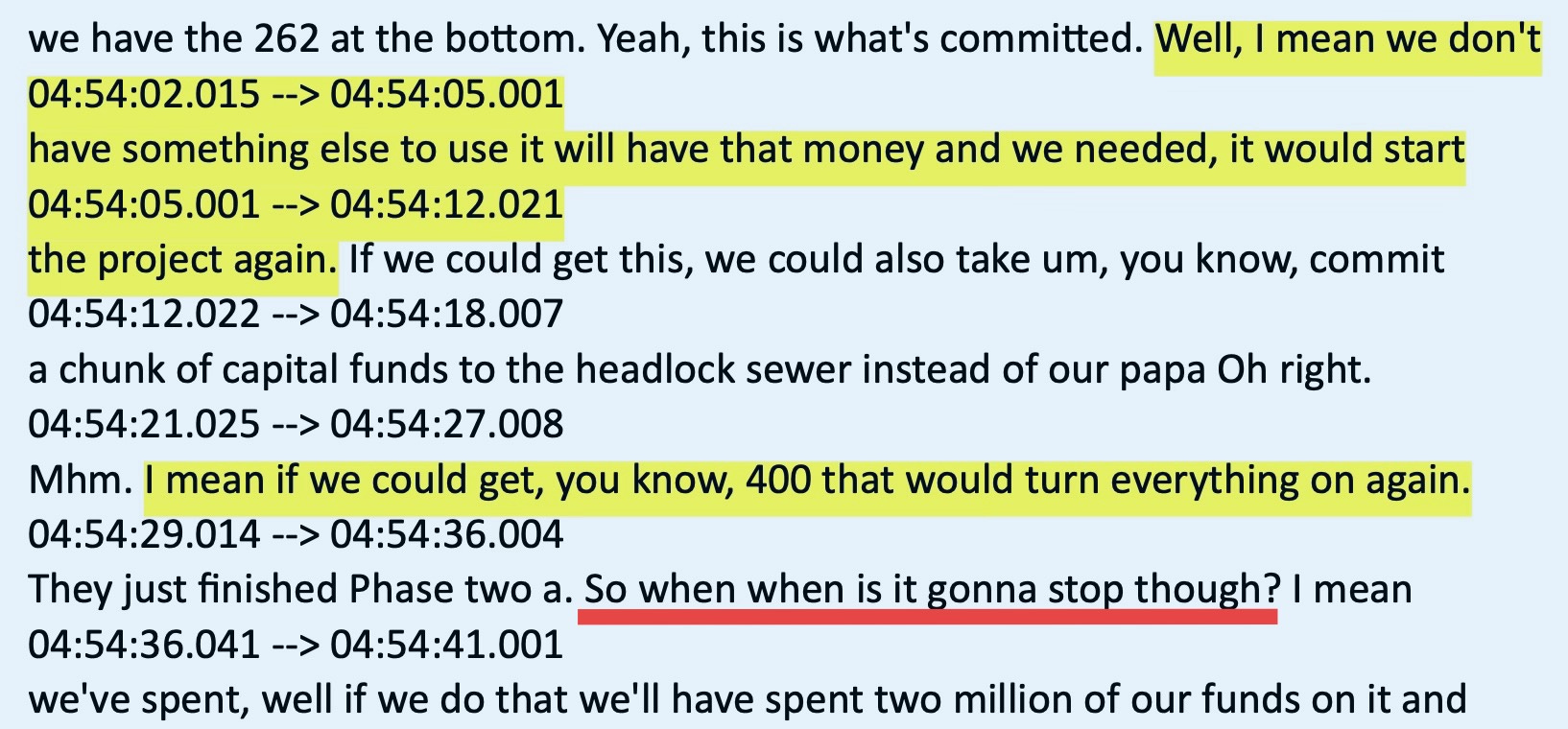
Advocating for an additional $500,000 in funding for an OlyCAP project
Pushing for continued infrastructure investments
Participating in votes approving those expenditures
Even fellow commissioners raised concerns during those discussions, asking whether the spending would ever stop.
The State Auditor ultimately concluded there was no violation—because no direct financial benefit to Brotherton could be proven.
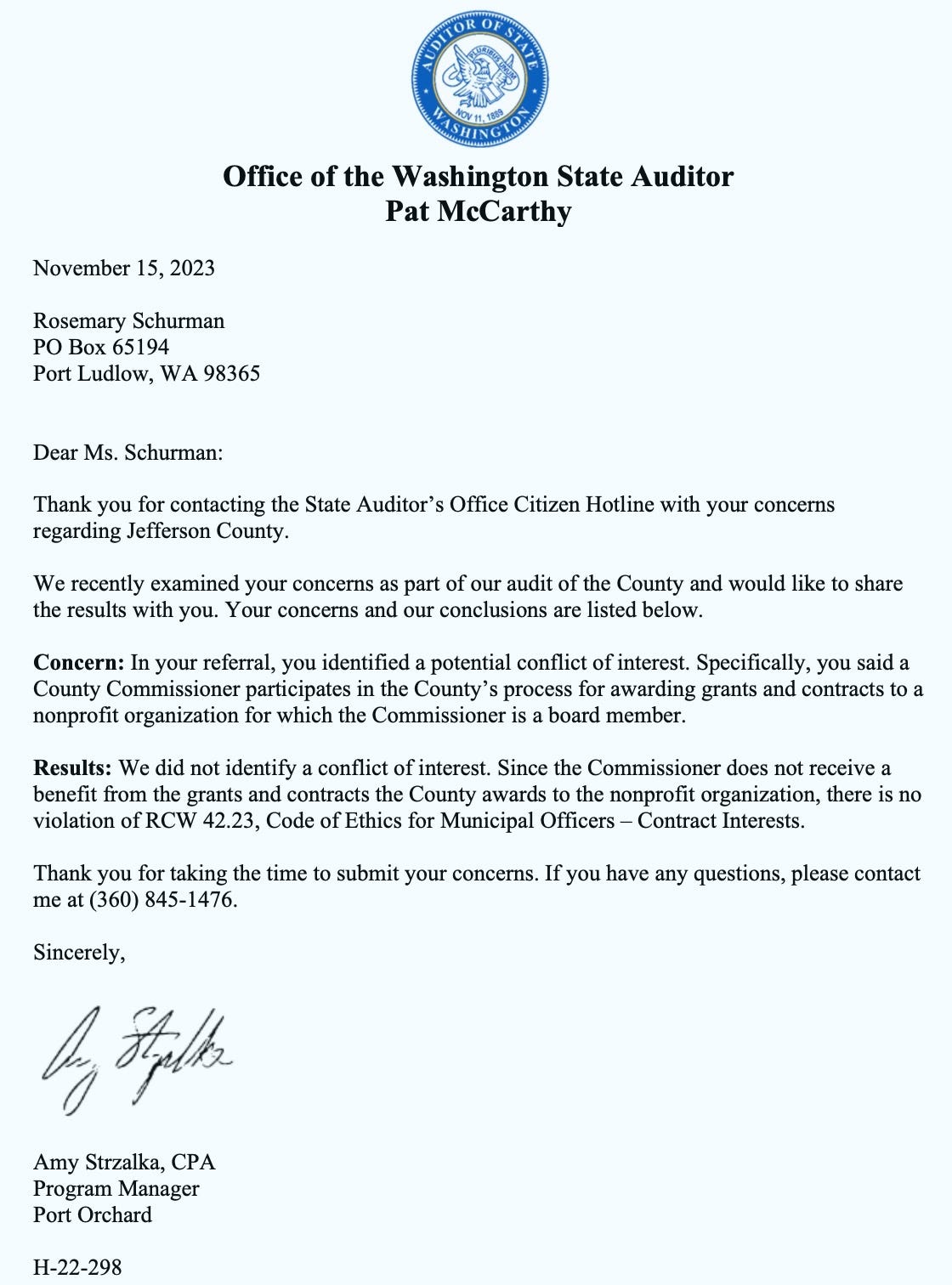
But that conclusion hinges on a narrow interpretation:
No paycheck = no conflict.
It ignores the broader issue:
Power, influence, and control over public funds don’t require personal compensation to matter.
The Pattern
Now return to Clallam County.
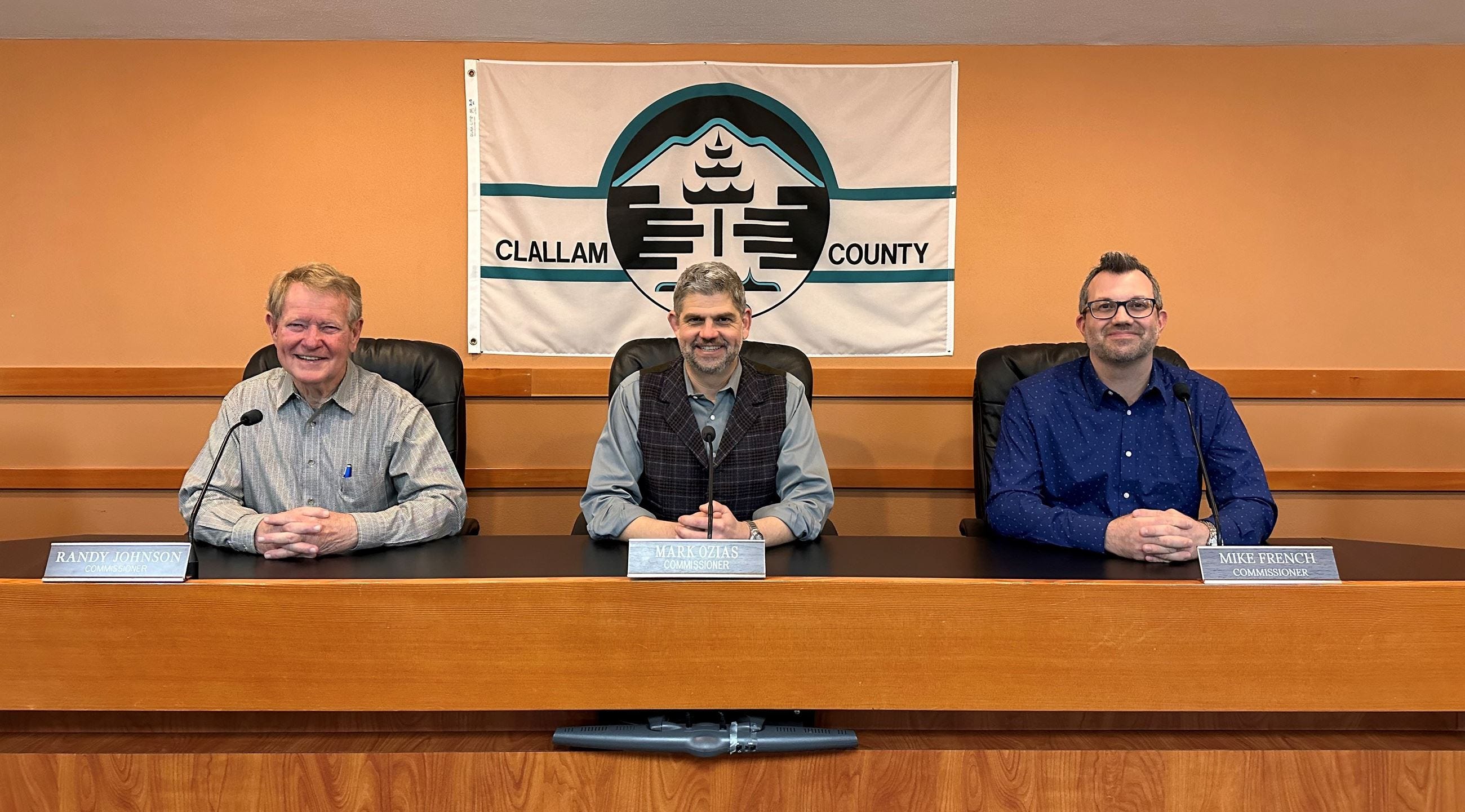
Mike French sits on the OlyCAP board.
He participates in a system where:
Public funds flow to nonprofit organizations
Those nonprofits operate with limited transparency
Elected officials help shape both the funding and the governance
And when asked about it, he claims his role is “required.”
Not by law. Not by statute. Not by external authority.
But by a resolution passed by the very body he serves on.
That’s not accountability. That’s insulation.
The Homelessness Industry
What John DeBoer described as a “racket” is better understood as a system with aligned incentives.
Government funding increases →
Nonprofits expand to administer it →
Staffing grows →
Programs multiply →
The need for continued funding becomes essential
And because NGOs sit outside direct government oversight, they provide the perfect vehicle:
Public money goes in
Policy is carried out
Accountability becomes diffused
No single entity owns the outcome.
And when outcomes don’t improve, the answer is almost always the same:
More funding. More programs. More expansion.
Rarely less.
The Question That Still Hasn’t Been Answered
Strip away the language, the programs, the mission statements—and one question remains:
Why are elected officials sitting on the boards of organizations that rely on funding that those same officials help direct?
This isn’t about whether it’s allowed.
It’s about why the system is set up this way in the first place.
Because it puts the same people on both sides of the equation—helping guide public money, while also helping oversee where it goes.
That overlap blurs responsibility.
It shifts decisions into spaces with less transparency.
And it weakens accountability.
Once that structure is in place, it doesn’t correct itself.
It reinforces itself.
Final Thought
OlyCAP is not the only organization operating this way. It is simply one of the clearest examples.
The issue isn’t whether services are being provided. They are.
The issue is whether the system delivering those services is structured in a way that prioritizes outcomes—or perpetuates itself.
When a commissioner says he is “required” to sit on a board because he helped create the requirement, it tells you something important.
Not just about him.
But about the system he’s part of.
And systems like that don’t correct themselves.
They expand.
Stay Engaged
Today — April 28, 2026 at 3:00 PM — the William Shore Pool Board will meet to discuss the shower voucher program, a policy that directly affects how a public, family-oriented facility is being used in our community.
This program allows the County to distribute free shower vouchers through the Harm Reduction Health Center—bringing transient individuals into the same space where families and children come to use the pool.
This is not an abstract issue.
This is a local decision, made by local officials—and they need to hear from you.

👥 Your Pool Commissioners
The Shore Metro Park District Board of Commissioners includes:
County Commissioner Mike French
County Commissioner Randy Johnson
Port Angeles City Councilmember LaTrisha Suggs
Port Angeles City Councilmember Mark Hodgson
Community Member Greg Shield
These are the individuals making decisions about how this facility is operated.
📍 Attend in Person
Shore Aquatic Center
225 E. 5th St.
Port Angeles, WA
Space is limited, so arrive early if you plan to attend.
💻 Or Join Online
Join via Zoom:
https://us06web.zoom.us/j/5513677299?pwd=2K6b5YZschdUPDYJb4jclbE6f2Zaib.1&omn=82828903573
Meeting ID: 551 367 7299
Passcode: 566029
Public comment is allowed.
Today’s Tidbit: A Glimpse Into the “Homelessness Industry”
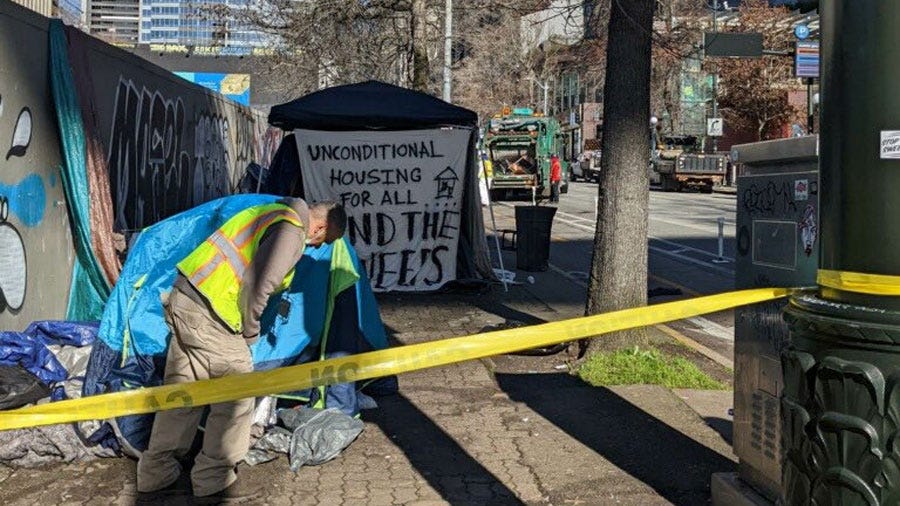
If anyone still doubts the existence of a “Homelessness Industrial Complex,” take a look at what’s happening in King County.
A recent report on the King County Regional Homelessness Authority (KCRHA) highlights an agency tasked with addressing homelessness—yet struggling with effectiveness, coordination, and results despite significant funding.

Now pair that with how the system takes care of itself.
KCRHA posted a position paying $120,000 to $140,000 per year, with benefits that include:
Unlimited vacation
96 hours of paid sick leave
A stated philosophy that employees should take time off “as they need,” with no tracking or payout limits
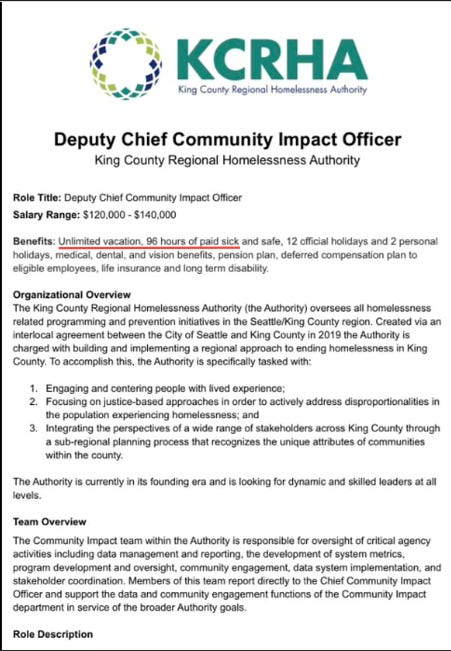
In other words, while homelessness continues to grow, the system built to address it continues to expand—with high salaries, generous benefits, and little visible accountability tied to outcomes.
If you want to know where Clallam County is headed, you don’t need a crystal ball.
Just look at King County.
o


