

This is part of CC Watchdog’s continuing series examining the most influential political bloc in Clallam County. The “nonpartisan” League of Women Voters presents itself as a trusted civic organization, but its elementary-age Washington history and civics curriculum pushes a narrow worldview on children—heavy on tribal grievance, climate alarmism, and modern political activism, while leaving out inconvenient parts of history that would complicate the story. Locally, League members have helped bring this worldview to life in schools through curriculum support and museum field trips, even as the League has declined to answer questions from CC Watchdog.
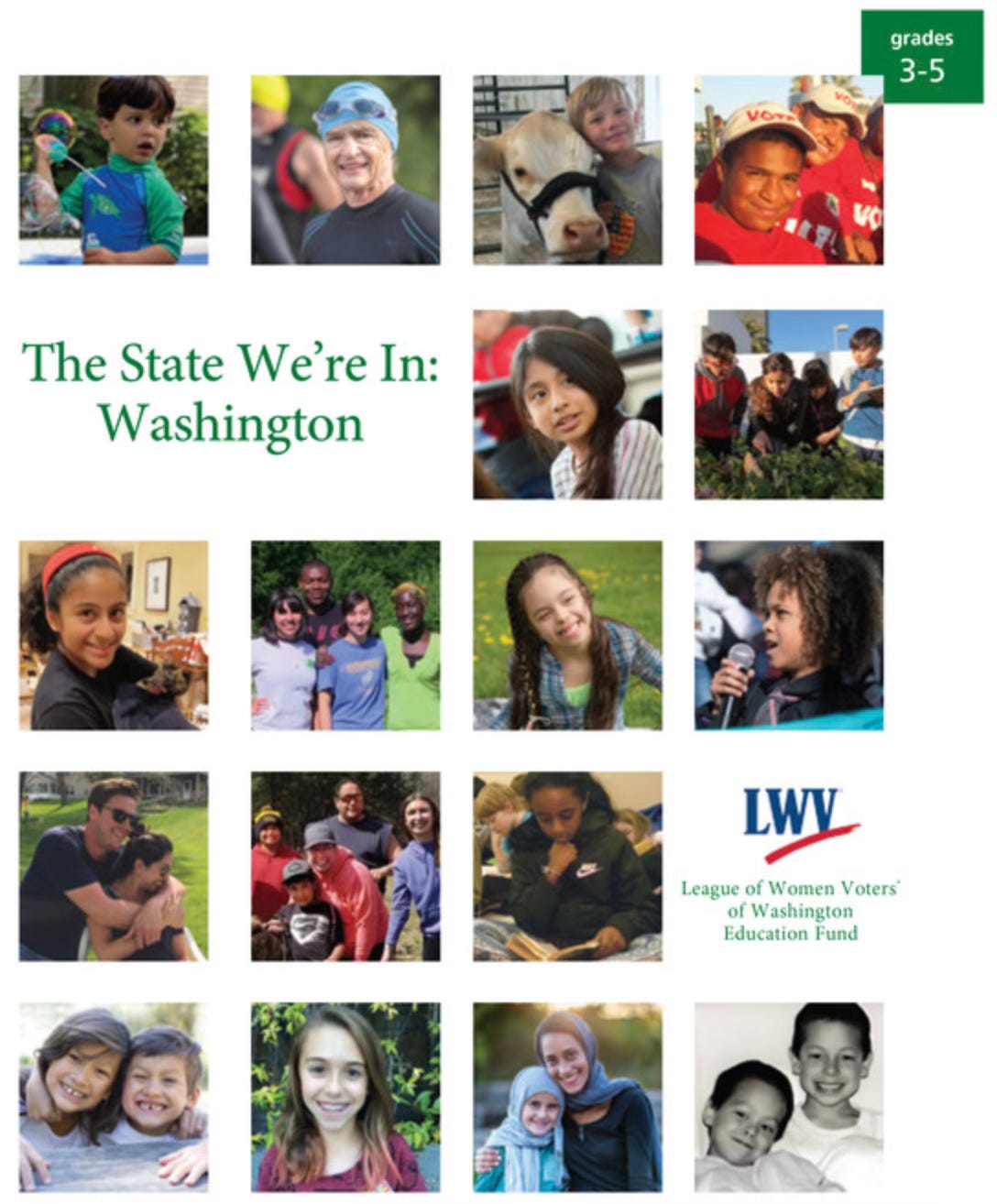
The League of Women Voters wants the public to believe it is simply promoting civic education. But its own words tell a different story.
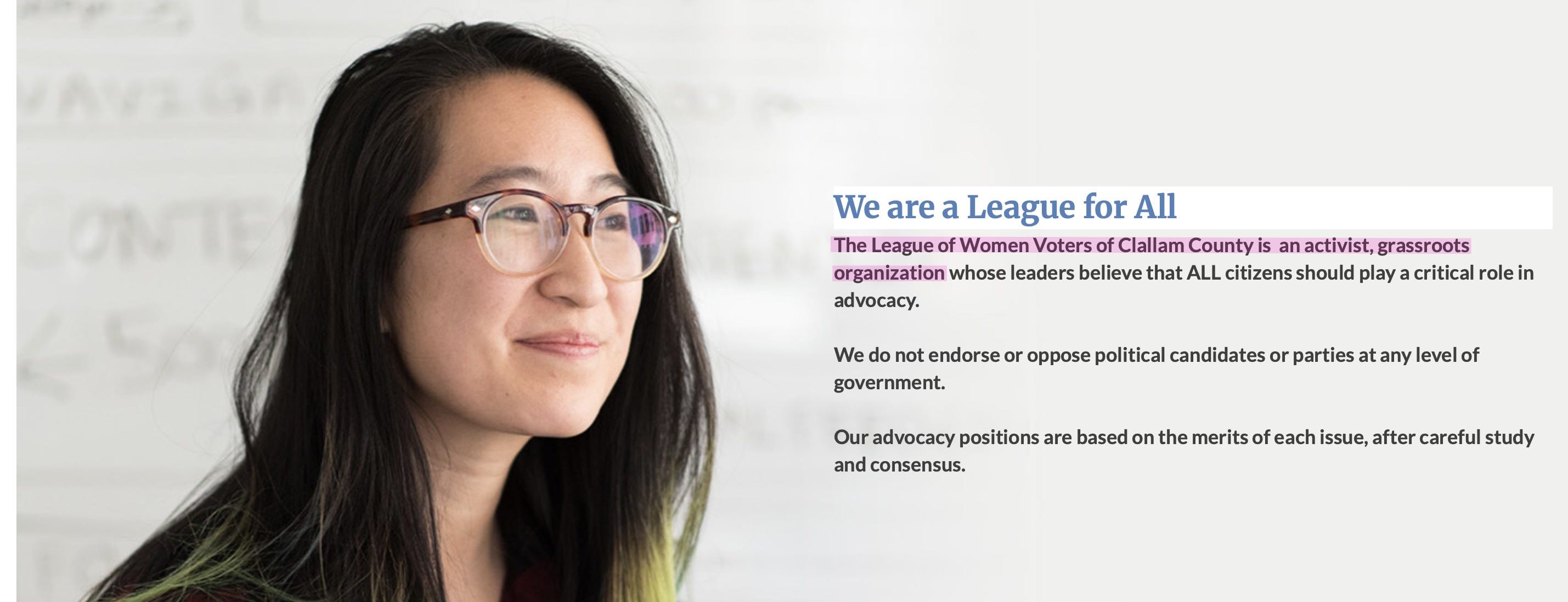
The League of Women Voters of Clallam County describes itself as an “activist, grassroots organization.” The statewide League has promoted and distributed The State We’re In: Washington, a civics and history textbook for elementary students. The Washington League says the book is designed for grades 3 through 5 and includes chapters on tribal government, settlers, treaties, and civic life.
That matters, because when an openly activist organization is shaping what children learn, parents and taxpayers should ask whether students are getting education—or ideology.
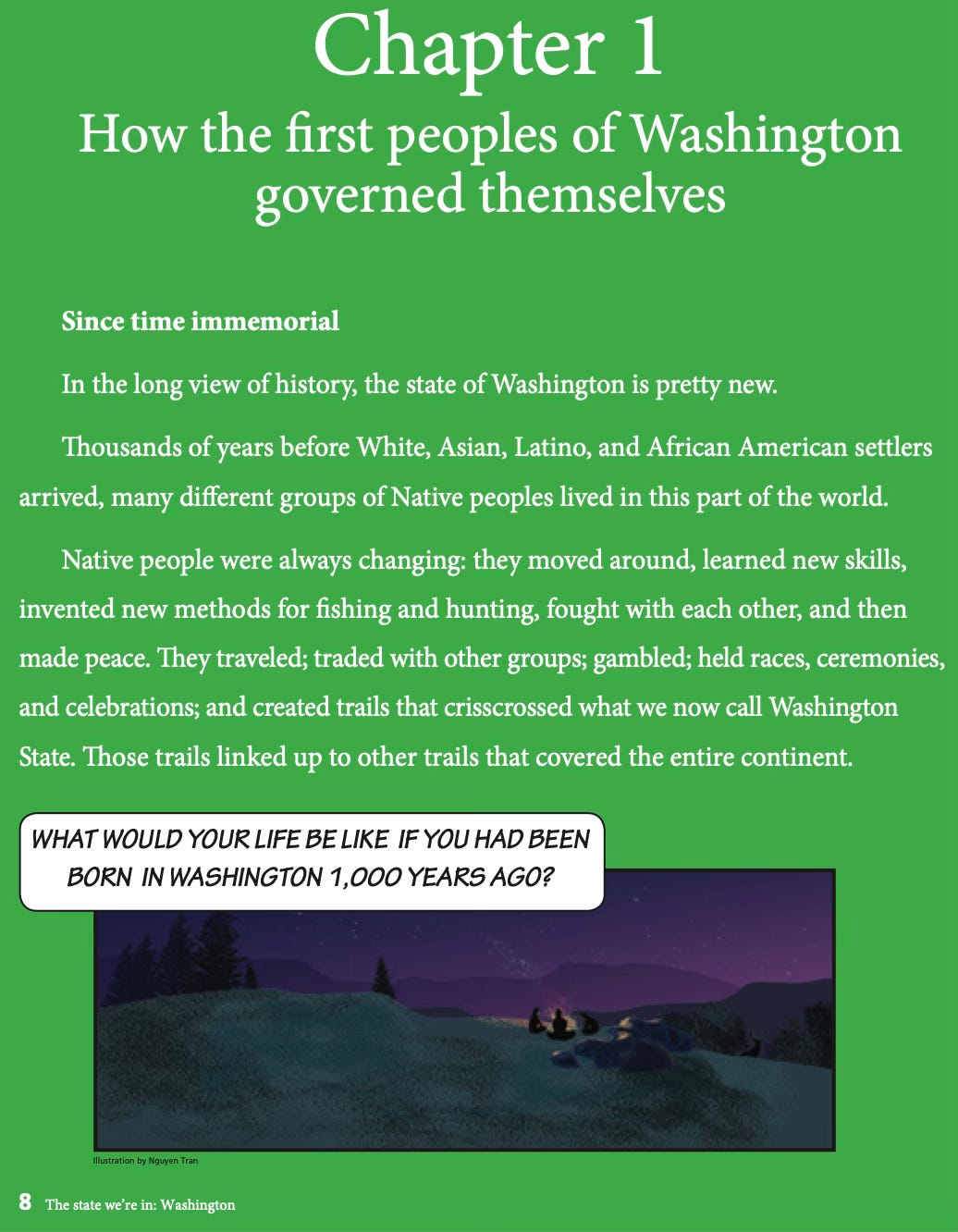
Right from Chapter 1, the book is not just presenting history. It is teaching children how to feel about it. Students are introduced to Washington’s first peoples through a romanticized lens: they “knew how to harvest fish without harming future fish runs,” they managed the land wisely, and they saw themselves as part of nature. It also says that in these societies “no one owned land.” That is not a small detail. That is the foundation for a very modern political message about land, stewardship, and legitimacy.
What is missing is just as important. There is little sign here that tribal societies, like every other human society, also experienced warfare, raiding, hierarchy, brutality, slavery, and conquest. Children are not being given a balanced account of human history. They are being given a moral lesson.
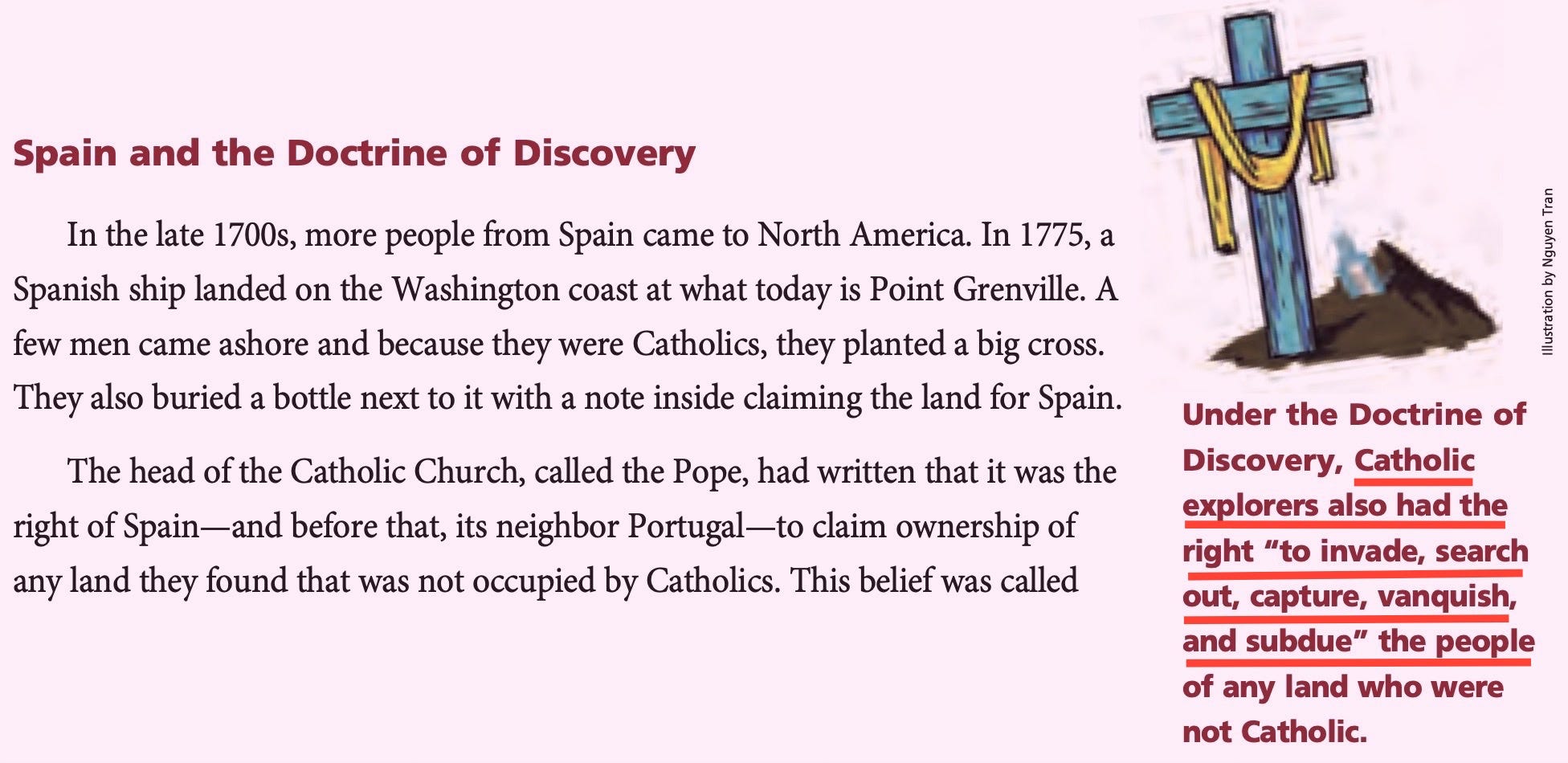
By Chapter 2, the storyline is unmistakable. Europeans arrive not just as explorers or settlers, but as the villains in a simplified morality play. The book highlights the Doctrine of Discovery and quotes the language about invading and subduing non-Christians. That history is real and worth teaching. But in this textbook, it is presented in a way that reinforces a one-way narrative: tribes as victims, Europeans as oppressors, and history as a neat march from innocence to injustice.
Again, what is left out? Where are the chapters on intertribal warfare? Where is the harder history of tribes raiding other tribes, taking captives, keeping slaves, or displaying the heads of enemies? Where is the recognition that cruelty and conquest did not begin only when white settlers arrived? Those parts of history would interfere with the emotional architecture of the book.
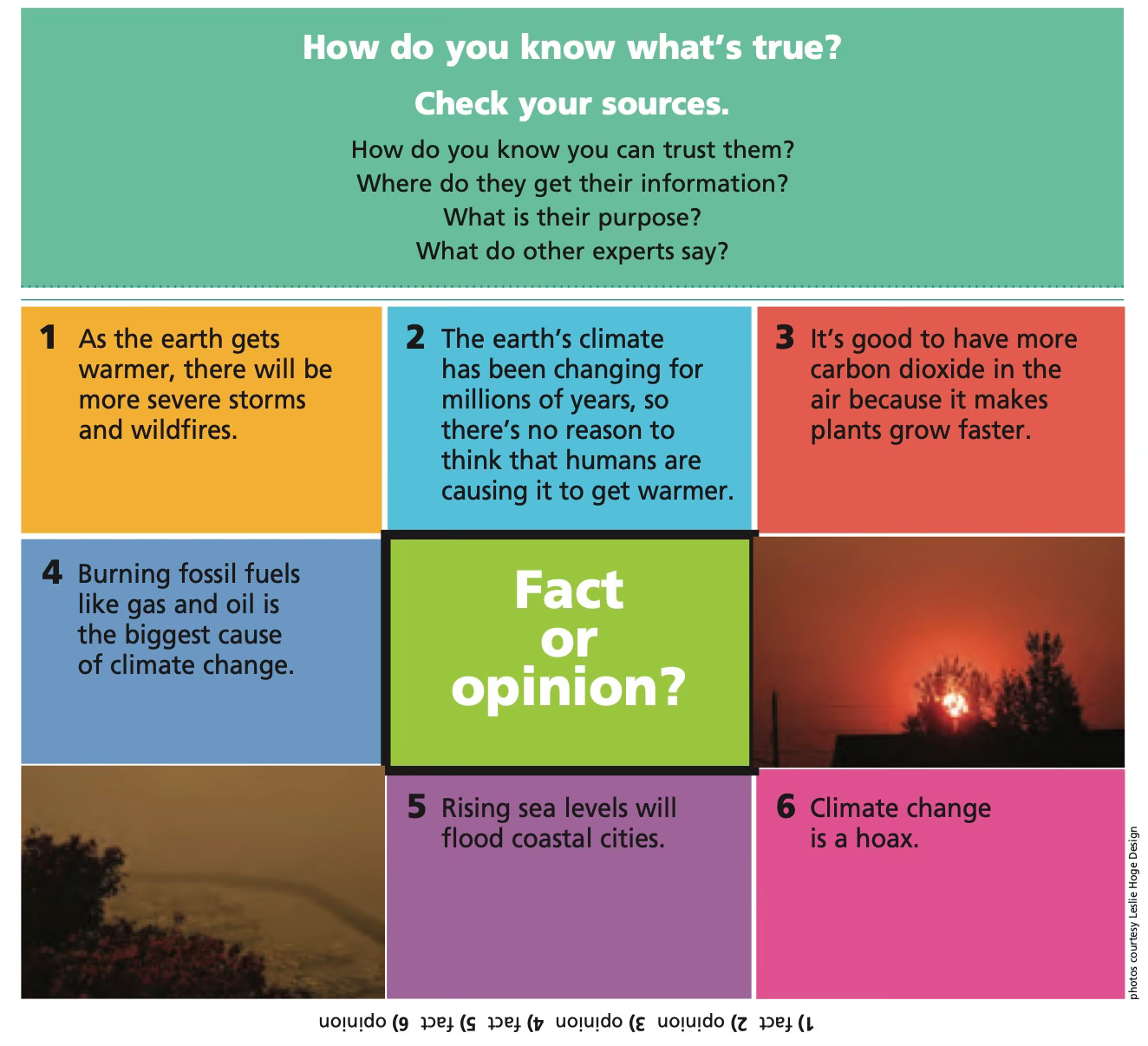
Chapter 3 drops any pretense of neutrality. In one exercise, children are told which statements about climate change are “fact” and which are merely “opinion.” Students are taught that claims about rising temperatures, more severe storms and wildfires, sea-level rise, and fossil fuels driving climate change are facts, while “climate change is a hoax” is an opinion.
That is not teaching children how to think. That is teaching them what to think.
This is one of the most revealing pages in the entire textbook because it shows that the book is not confined to Washington history. It uses history and civics as a delivery vehicle for current political messaging. Elementary students are not just being taught the structure of government. They are being nudged toward approved conclusions on some of the most contested political questions of the day.
And this is not happening in a vacuum. Jamestown CEO Ron Allen said in 2003, “You change a society… at the younger level. You use the media… every form of media.” Whether he meant schools, curriculum, civic institutions, or all of the above, the strategy is plain enough: shape the next generation early. The tone and content of this curriculum fit that approach perfectly.
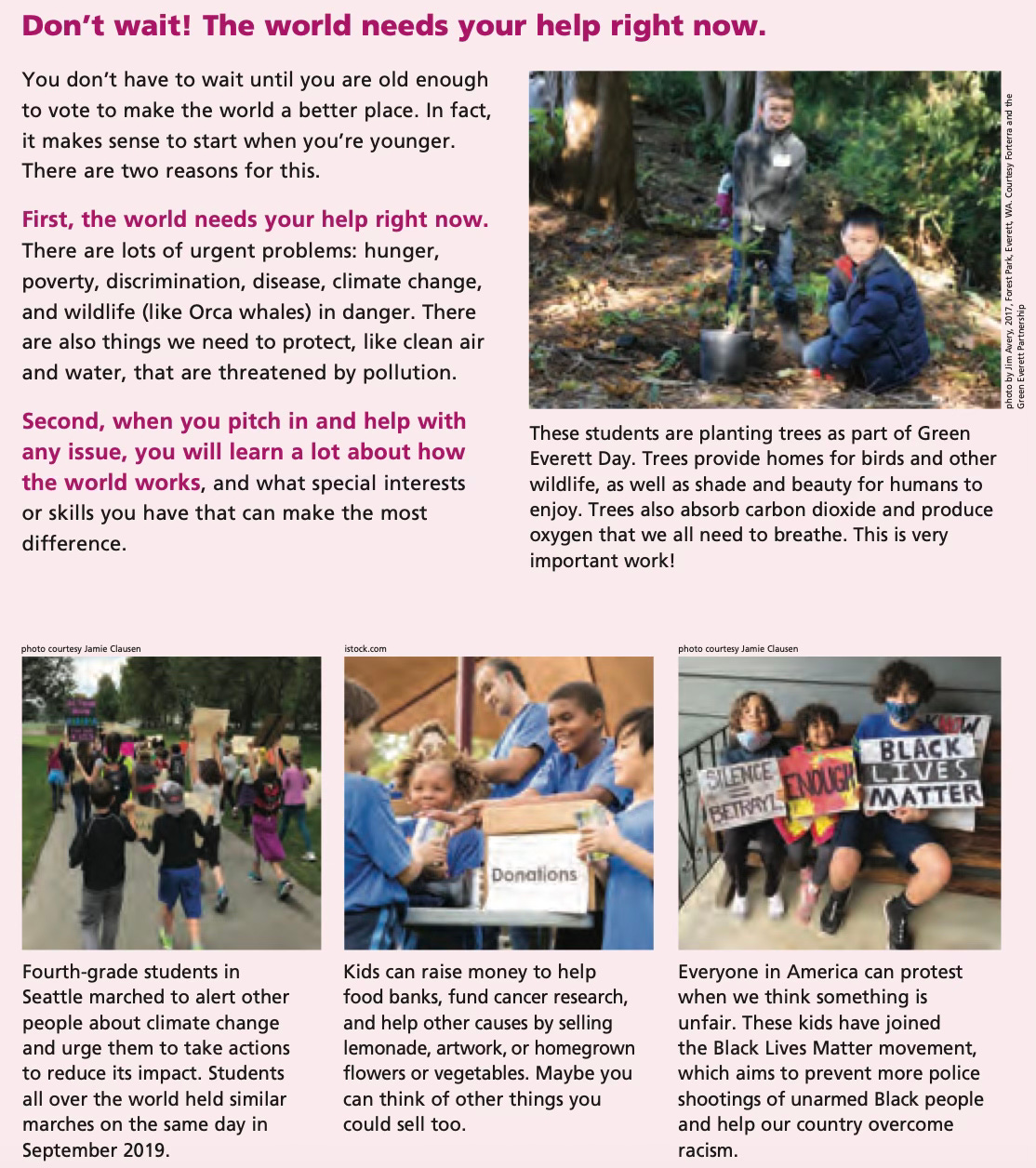
By Chapter 5, the book is openly encouraging activism. Children are told not to wait because “the world needs your help right now.” The list of approved causes includes hunger, poverty, discrimination, disease, and climate change. In the same chapter, students are shown examples of young people marching over climate issues, and the book approvingly notes that some have joined Black Lives Matter demonstrations.
Call that what it is: activism for children.
This is where the League’s defenders may say that encouraging engagement is part of civics. But there is a difference between teaching students how government works and steering them toward a specific ideological outlook. There is a difference between explaining how to participate in public life and wrapping that lesson in progressive political causes that are treated as morally settled.
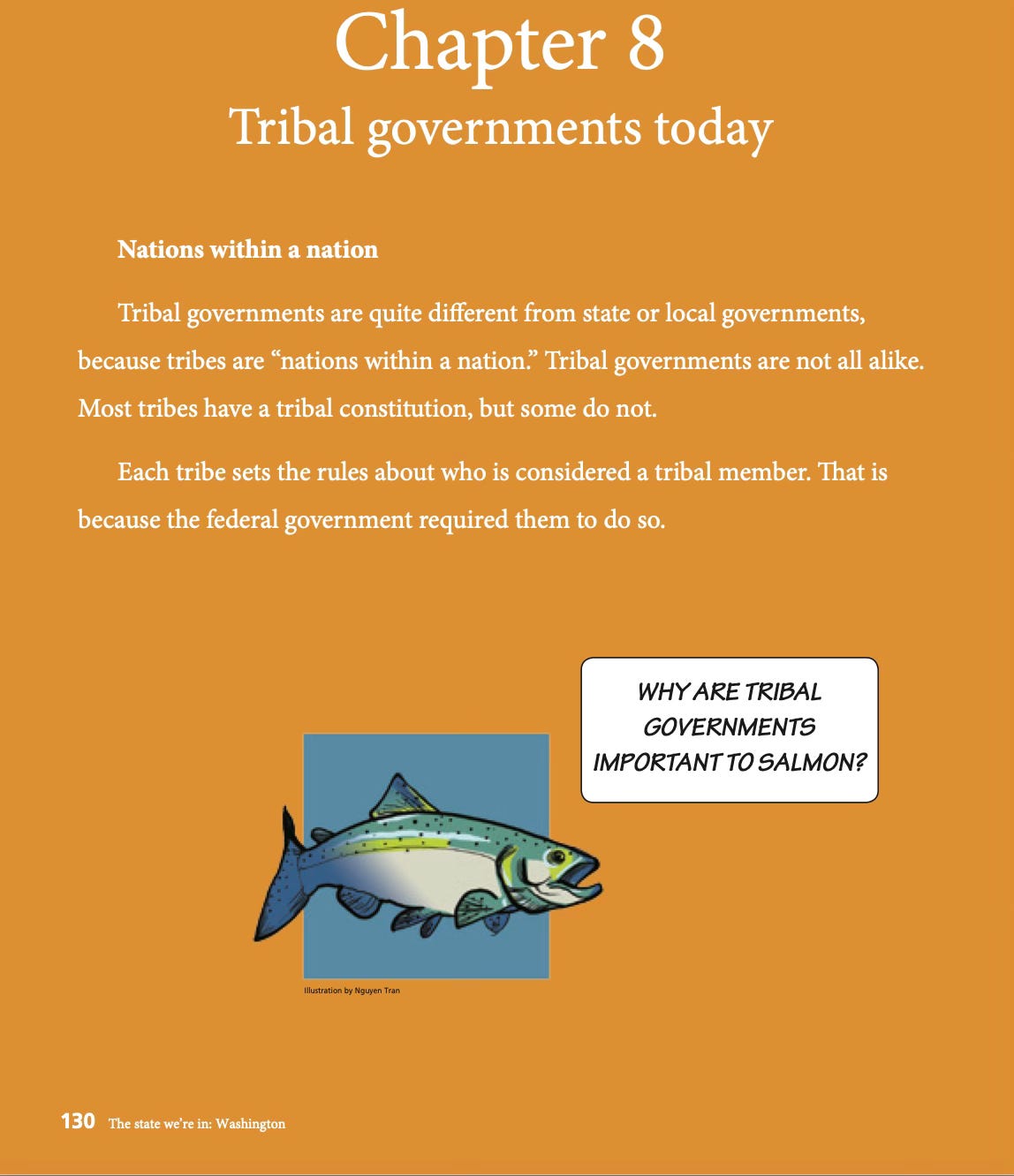
Chapter 8 continues the same pattern by emphasizing tribes as sovereign governing powers and moral leaders in areas like salmon restoration, environmental protection, and stewardship. Once again, only one side of the story is emphasized. Children are taught to see tribal governments primarily as wise protectors and rightful partners in public life. They are not taught to wrestle with the real-world tensions that come with sovereignty claims, tax exemptions, separate legal frameworks, race-based benefits, or the growing influence of tribal governments over land and water disputes.
That is especially relevant here in Clallam County, where questions about tribal influence are not abstract classroom discussions. They are live political issues.
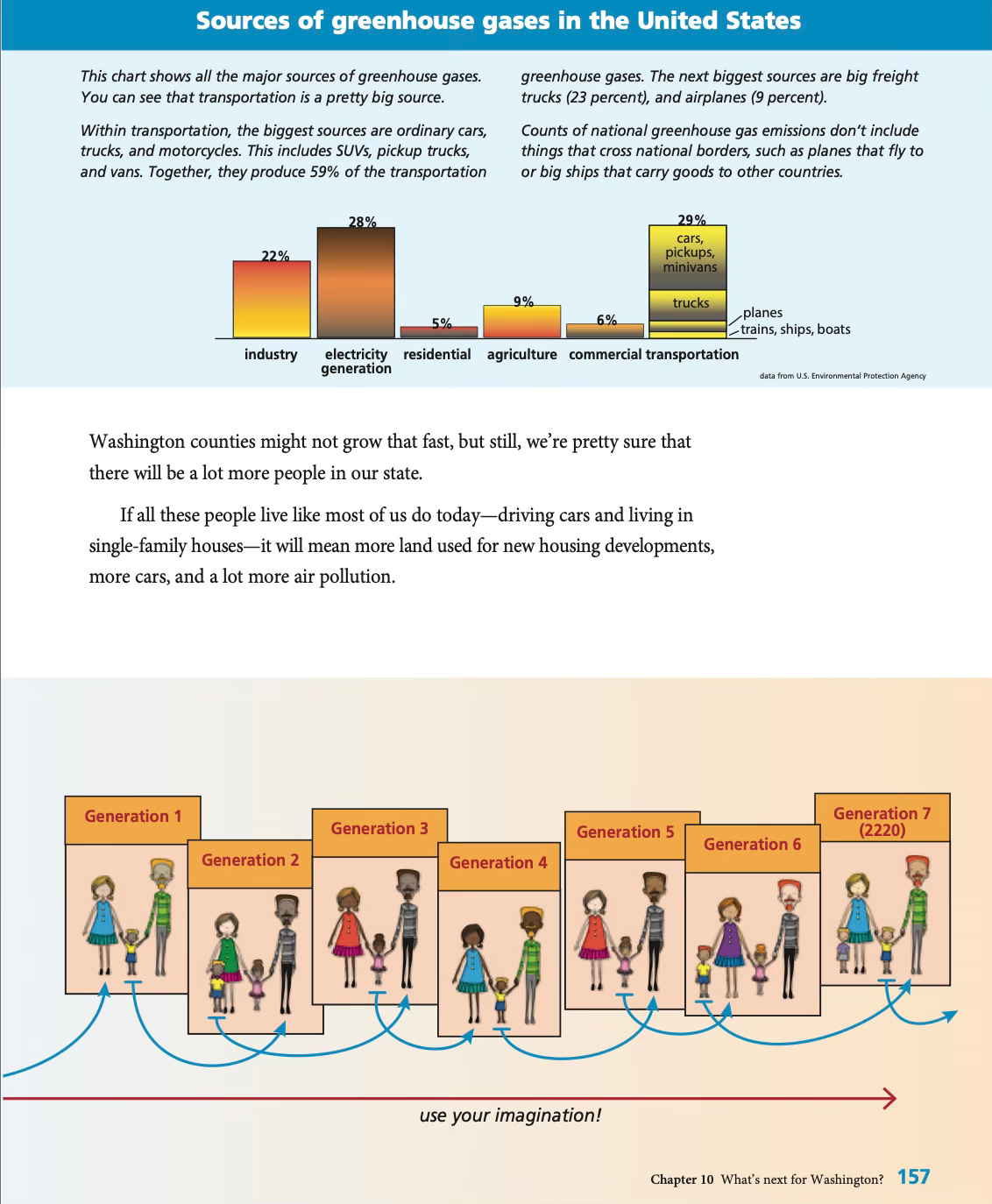
Later chapters continue layering in activist themes. Students are taught about climate change in emotionally charged, declarative terms. They are introduced to racial-justice framing. They are pointed toward a view of citizenship that sounds far less like civic literacy and far more like political formation.
That is a serious concern in a state where academic performance is still not where it should be. In 2025, OSPI said 71 percent of students demonstrated foundational grade-level knowledge and above in English language arts, and 63 percent did so in math and science.

Those numbers were an improvement, but they are hardly a sign that schools have mastered the basics. Parents have every right to ask why political and ideological framing seems to be getting so much classroom energy while core academic performance remains uneven.
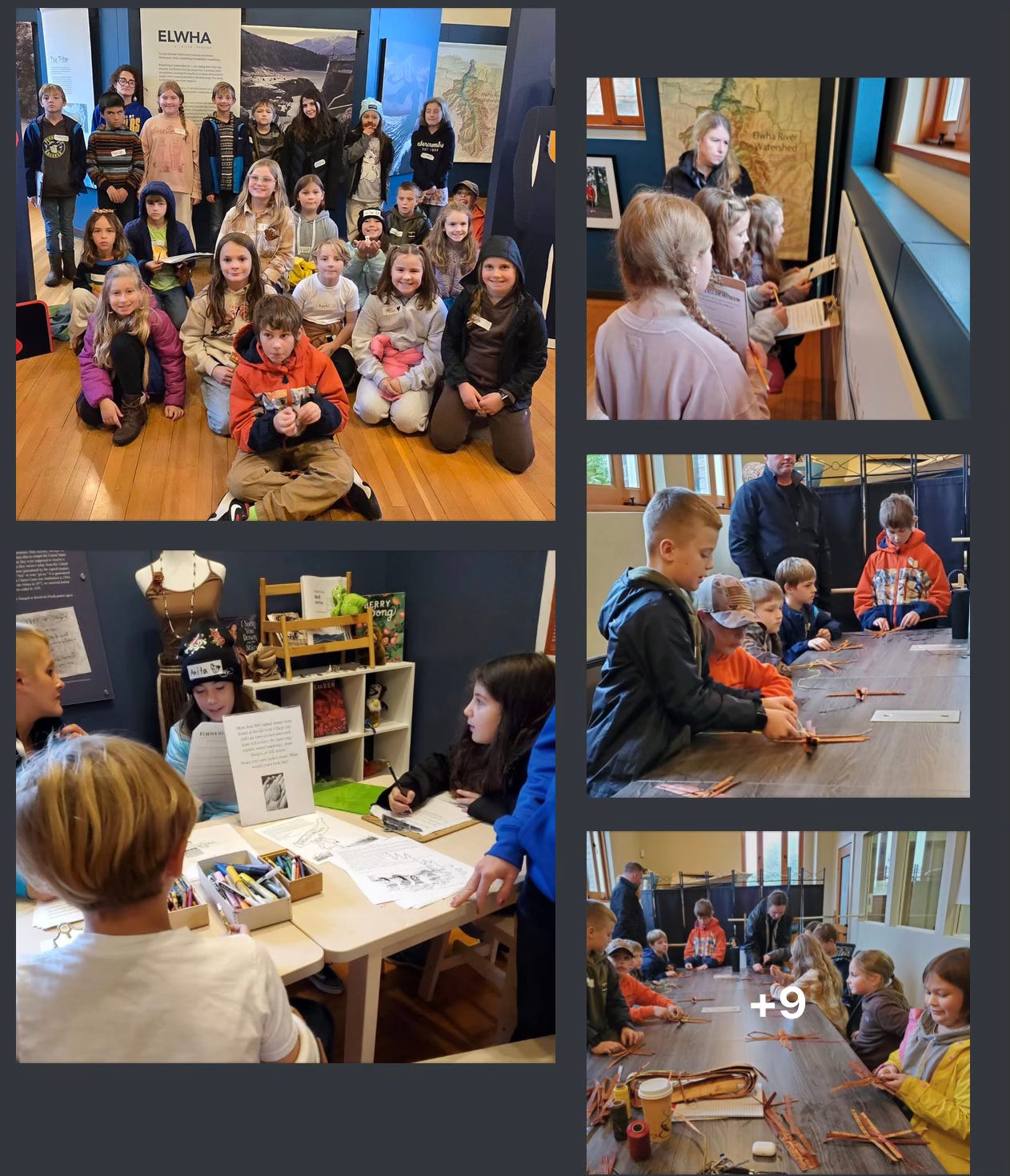
What makes this even more relevant locally is that the League is not simply publishing books somewhere off in Seattle. In 2022, the League said part of a civic-education grant would be used to purchase The State We’re In: Washington textbooks for teachers and libraries. Then, in 2025, the Clallam County League publicly stated that three of its activist members helped with a field trip to the Elwha Klallam Museum while Crescent fourth graders were working through the curriculum.

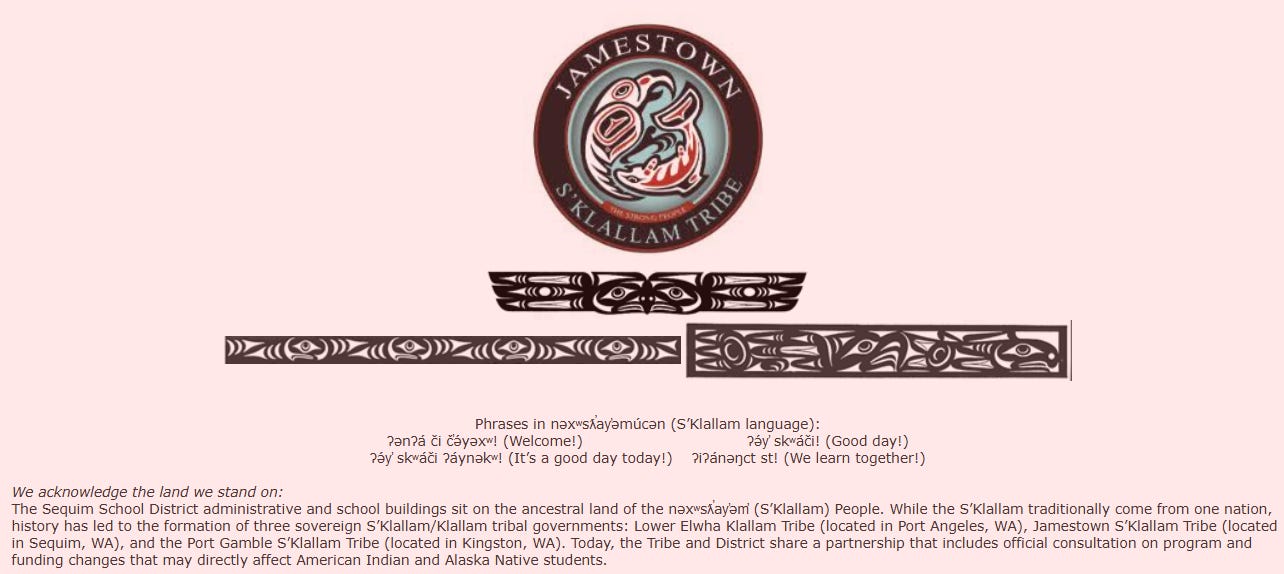
Locally, this matters even more because the Sequim School District has adopted a land acknowledgment and works with the Jamestown Tribe to integrate Since Time Immemorial curriculum.
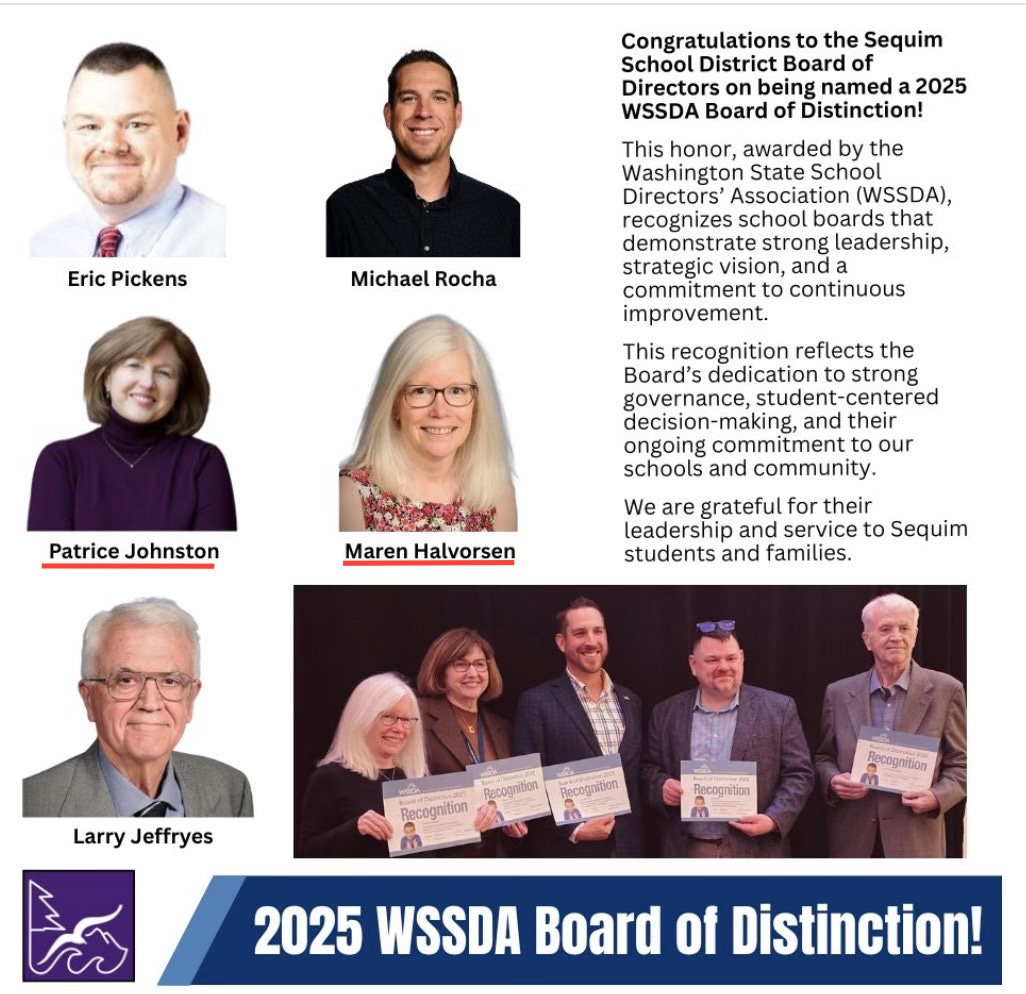
The district’s board also includes Patrice Johnston and Maren Halvorsen, both active with the League of Women Voters and part of the same local political network that frequently presents itself as neutral while advancing a very specific worldview.
To be clear, teaching tribal history is not the problem. Tribal history is part of Washington history and should be taught. The problem is that this textbook does not appear interested in balance. It does not appear interested in complexity. It is interested in shaping perspective. It teaches children to view the past through a preset moral script: tribes as stewards, settlers as oppressive colonizers, climate politics as settled truth, and activism as civic virtue.
That is not real education. Real education gives students facts, competing perspectives, historical complexity, and the tools to reason for themselves. Indoctrination gives them approved heroes, approved villains, and approved conclusions.
And that is what makes this so inappropriate. The League of Women Voters is not a neutral historical society. It is an activist organization. Its own local chapter says so. An activist organization should not be quietly shaping the worldview of elementary school children while pretending it is simply offering civics instruction.
The League of Women Voters did not answer questions from last week’s CC Watchdog. So here are some new ones:
Why is an openly activist organization helping shape what elementary students are taught about Washington history and civics?
Why are schoolchildren being steered toward one-sided narratives about tribal history, climate politics, and social justice before they are old enough to critically test those claims?
Why are difficult parts of tribal history and the fuller complexity of Washington’s past omitted while children are encouraged to internalize guilt, grievance, and activism?
And why should the public trust this as education rather than political formation?
This is part of CC Watchdog’s continuing series investigating the most influential political bloc in Clallam County. If the League of Women Voters chooses to answer, its response will be published in full, unedited, on CC Watchdog.
If you have questions for the Clallam County League of Women Voters, they can be contacted by emailing info@lwvcla.org.
A digital edition of the textbook can be accessed by clicking here.
The commissioners did not answer questions about the proposed $500,000-per-unit proposed public housing project. Here is today's email send to the League of Women Voters:
Hello,
I wanted to share the attached article from Clallam County Watchdog, “When Activists Teach History,” and invite the League of Women Voters of Clallam County to respond to the questions raised. The article examines the League’s involvement in promoting the "The State We’re In: Washington" civics curriculum and its role in local education efforts. I would welcome any response, clarification, or perspective the League would like to provide. If you choose to reply, your response will be published in full and unedited so readers can hear directly from you.
Good Governance Daily Proverb:
Good governance does not require classrooms to be perspective-free; it requires that perspectives be openly chosen, publicly reviewable, and accountable to the people.