


On Monday night, the Sequim City Council approved a Jamestown-drafted letter backing a refuge transfer—despite unanimous public opposition. Federal filings show the Jamestown Corporation opposes added restrictions and favors a streamlined trust process, leaving future access and use subject to change. And there’s a local precedent: land once open to the public was transferred into tribal trust with expectations of continued access—only to be closed later.
In the podcast: Highlights from yesterday’s County Commissioners’ Forum.
On Monday night, despite every public comment opposing it, the Sequim City Council approved a letter of support for transferring two national wildlife refuges into tribal control—a letter drafted by Jamestown S’Klallam CEO Ron Allen.
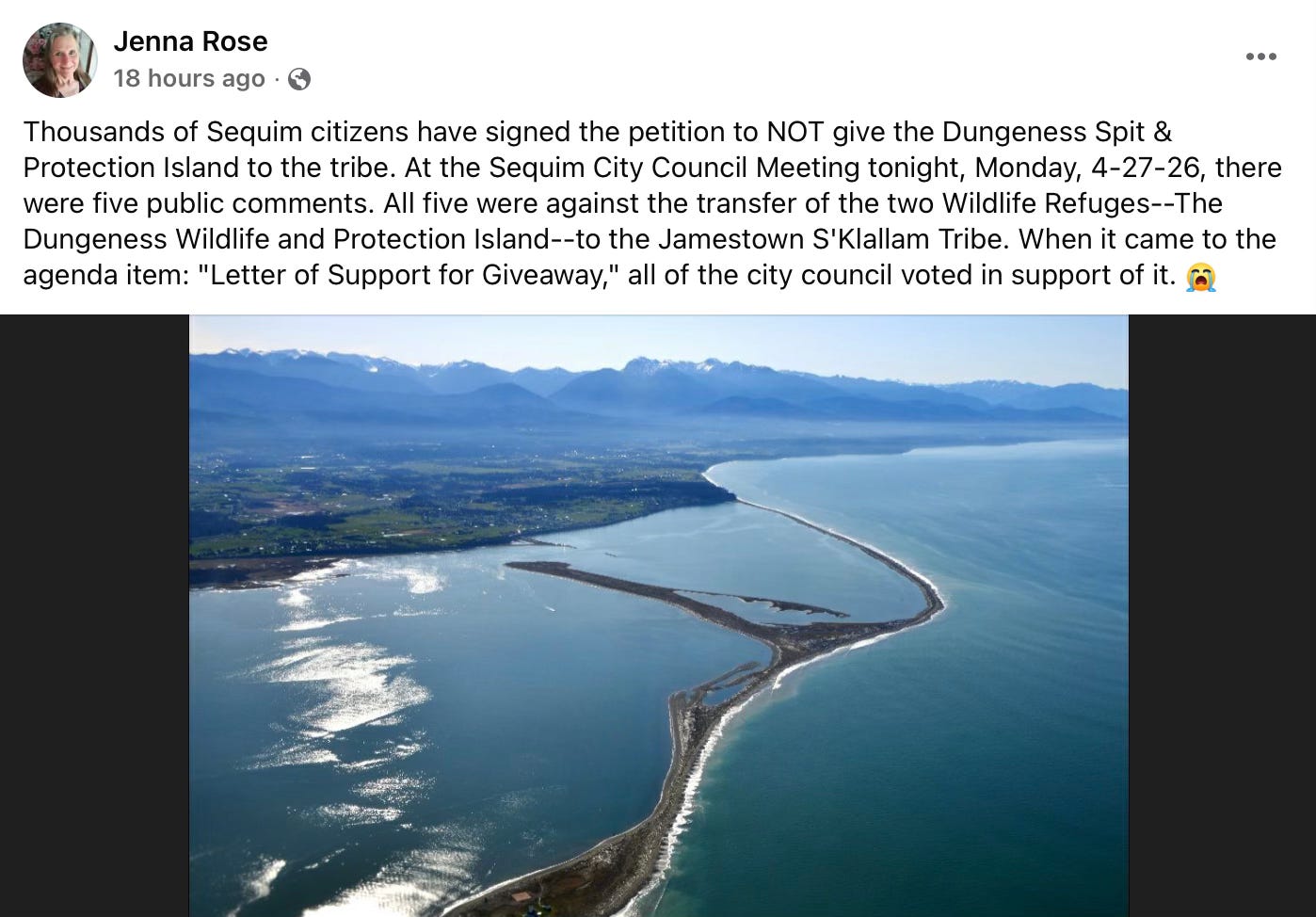


Every citizen who spoke said no.
The Council said yes anyway.
And they didn’t just approve any letter—they approved one written by the very entity that stands to benefit from the transfer.
A Decision Already Written?
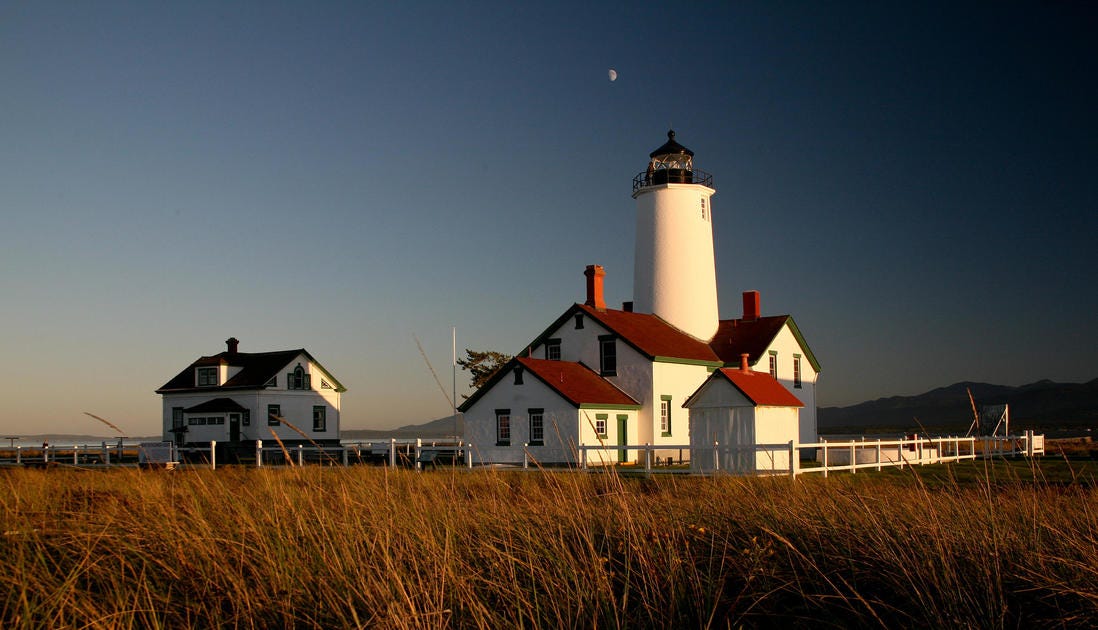
The Council’s vote effectively endorsed a proposal to shift ownership of the Dungeness and Protection Island National Wildlife Refuges into trust for the Jamestown S’Klallam Tribe.
Supporters frame this as stewardship. Partnership. Cultural restoration.
But beneath that language is a legal transformation most people never hear about.
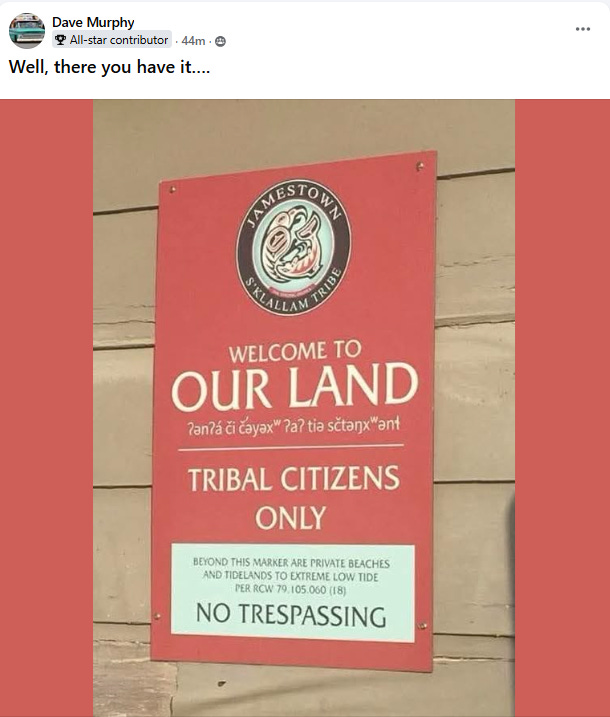
When land moves into federal trust for a tribe, it no longer functions as public land in the traditional sense. It is not governed the same way. It is not subject to the same local oversight. And critically—it is not guaranteed to remain open to the public.
That’s not rhetoric. That’s federal Indian law.
“No Conditions” Means Exactly That
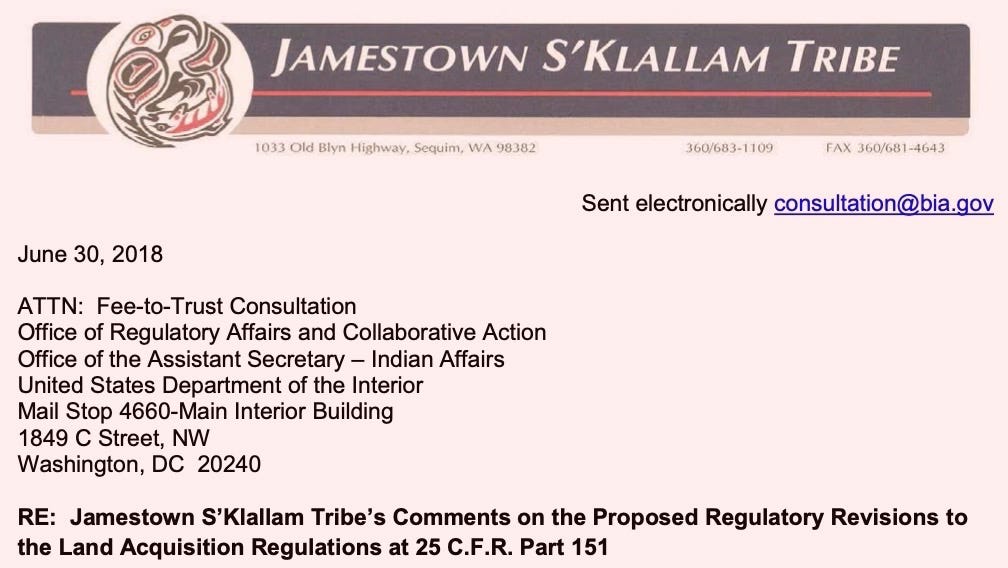
While reviewing federal filings connected to tribal land acquisition policy, one section stands out—and it should give pause to anyone concerned with public access and accountability.
In its comments to the Bureau of Indian Affairs, the Jamestown S’Klallam Tribe pushes back on added restrictions, expanded state and local involvement, and what it characterizes as unnecessary procedural hurdles.
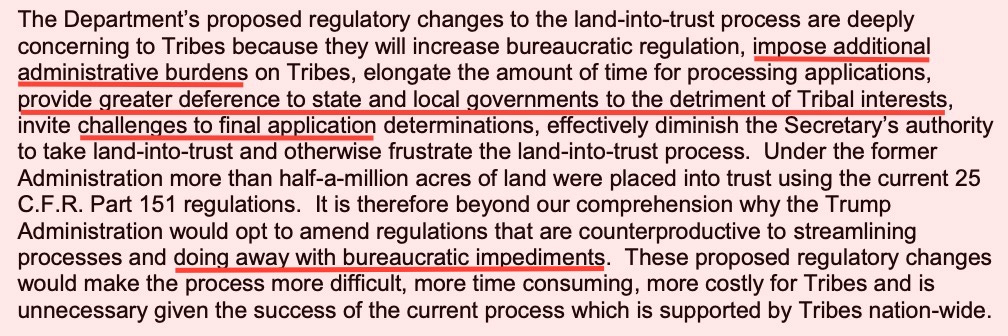
The theme is clear: streamline the process.
But “streamlining” in this context means reducing layers of review, limiting outside input, and minimizing opportunities for challenge—resulting in fewer constraints on how land is ultimately acquired and managed.

The Tribe’s position emphasizes minimizing barriers, limiting external influence, and preserving tribal authority once land is taken into trust.
Not layered with conditions.
Not subject to ongoing outside control.
But structured in a way that prioritizes flexibility after acquisition.
Consider what that means in practice.
If there are no binding conditions—and no mechanism for continued oversight—then assurances made during the approval process, whether about public access, environmental protections, or shared use, may not necessarily govern how that land is managed in the future.
We Don’t Have to Guess—We Have an Example
If this feels abstract, it shouldn’t.
Because we’ve already seen how this plays out.
At Madrona Point, a culturally significant site on Orcas Island, land was returned to the Lummi Nation with an understanding that it would remain accessible as open space under a memorandum of understanding with San Juan County.
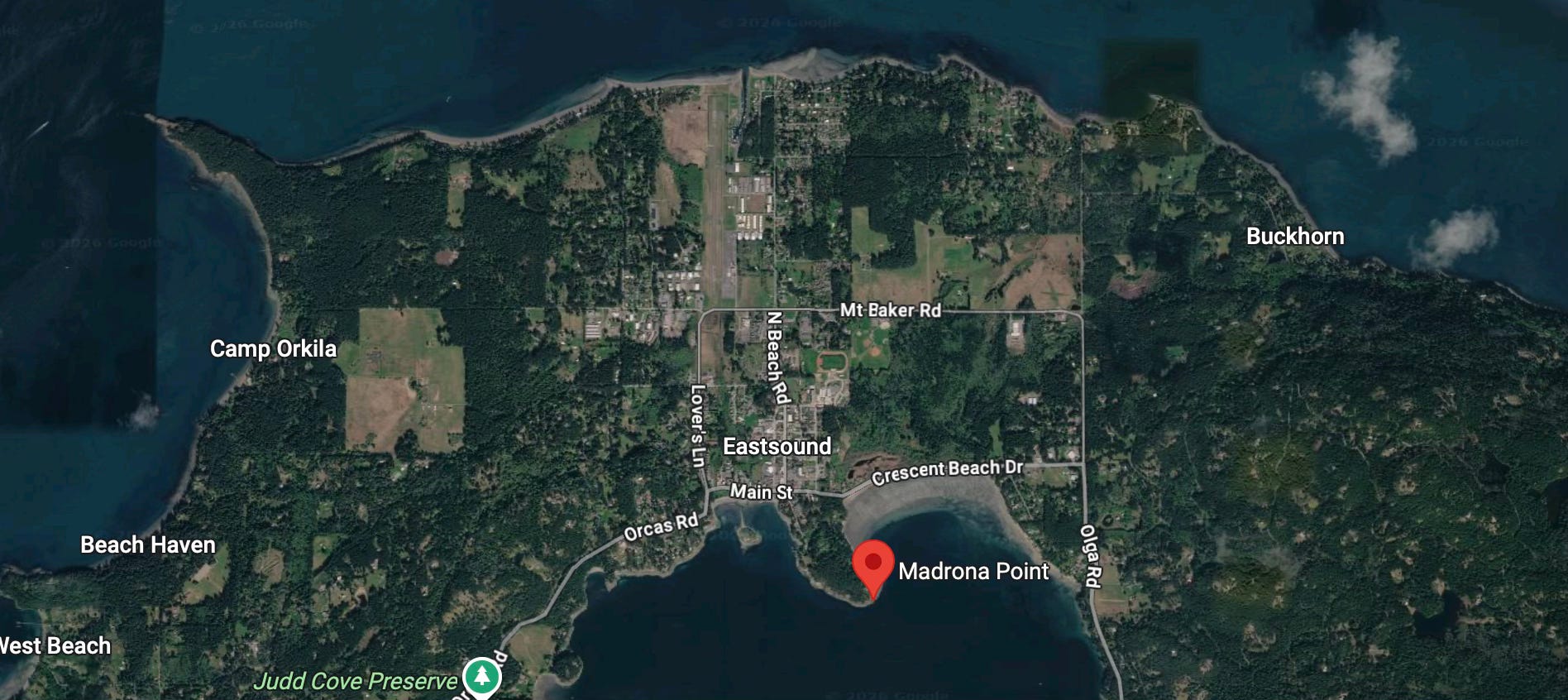
For a time, it was.
Then, in 2007, the site was closed indefinitely. Public access ended.
The reason cited: protection of the land and concerns about misuse.

Whether one agrees with that decision or not isn’t the point.
The point is this: the public no longer has access to land it once believed would remain open.
And there was little recourse when that decision was made.
From Public Refuge to Sovereign Control
Now bring that reality home to Clallam County.
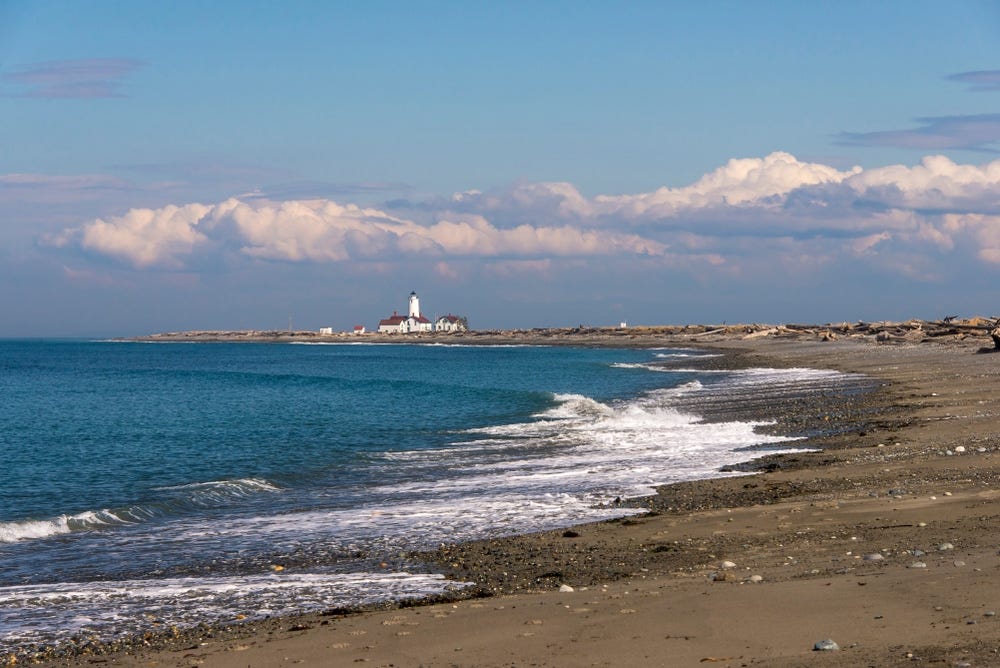
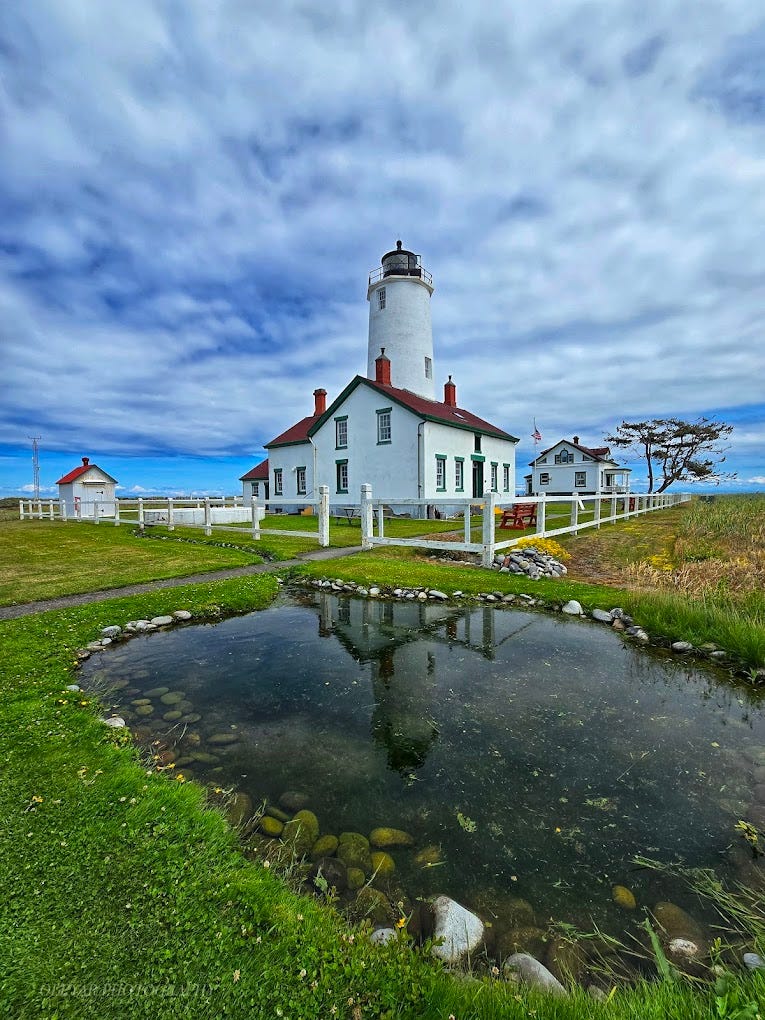
The Dungeness and Protection Island refuges are not just parcels of land. They are federally managed ecosystems, open to the public, governed by established rules, and held in trust for all Americans.
Transfer them into tribal trust, and the framework changes:
Public access becomes discretionary—not guaranteed
Local governments lose influence or standing
Federal wildlife management structures can be replaced or reshaped
Future land use decisions may occur without public process
And if the Tribe’s own stated position holds—that these transfers should carry no conditions—then there is no enforceable mechanism to preserve the current use of the land.
Where Was Clallam County?
Here’s a question that hasn’t been answered:
When the Jamestown S’Klallam Tribe submitted its position to federal regulators in 2018 advocating for no-conditions land transfers, where was Clallam County?
Did anyone formally object?
Did anyone request safeguards?
Did anyone push for binding guarantees to protect public access?
Because if they didn’t, then this moment didn’t start Monday night.
It started years ago—with silence.
The Council’s Vote—and What It Signals
By approving a letter drafted by tribal leadership, the Sequim City Council didn’t just take a position.
It signaled alignment.
Alignment with a policy framework that explicitly favors unrestricted control after acquisition.
Alignment with a process that bypassed public opposition.
Alignment with a future where these lands may no longer function as public spaces.
And they did it without demanding conditions.
Without requiring guarantees.
Without securing protections.
The Question That Matters
If these refuges are transferred, and access changes…
If use shifts…
If the public is told, years from now, that things are different…
What recourse will there be?
And why didn’t anyone ask that question before signing the letter?
The Sequim City Council had a choice on Monday night.
Listen to the public—or ignore them.
Demand conditions—or accept none.
Represent the people—or defer to power.
They made their choice.
Now the public has to live with it.

Today’s Tidbit
After more than an hour of public comment, the William Shore Memorial Pool Board unanimously voted to reinstate its shower voucher program for transients—despite concerns about how and where those vouchers are actually being distributed.
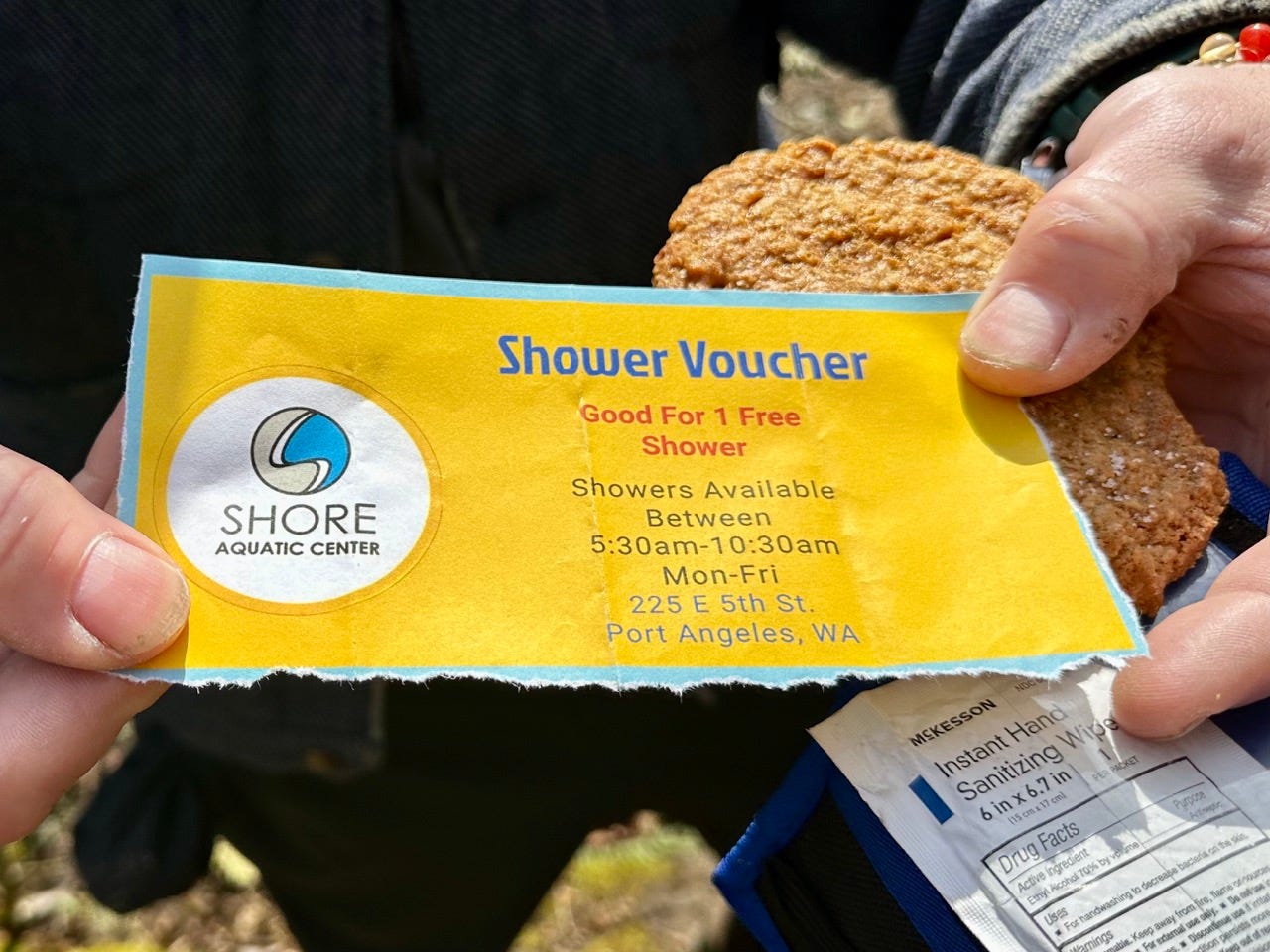
Staff stated vouchers are limited to St. Vincent de Paul and Clallam County Health and Human Services, where they are reportedly handed out through the Harm Reduction Health Center. Those vouchers are printed in batches of 200 at a time—raising additional questions about tracking, control, and how widely they may be circulating. But multiple public commenters challenged that claim saying vouchers have also surfaced at places like the library and community meal sites—with no apparent oversight or accountability.
Board members expressed little concern over that discrepancy.
Critics reminded the board that showers already exist at Serenity House of Clallam County—an actual shelter—while the Shore Aquatic Center is a public facility used by families and children, not a designated shelter space. Supporters of the program countered that eliminating vouchers was inhumane and stigmatizing.
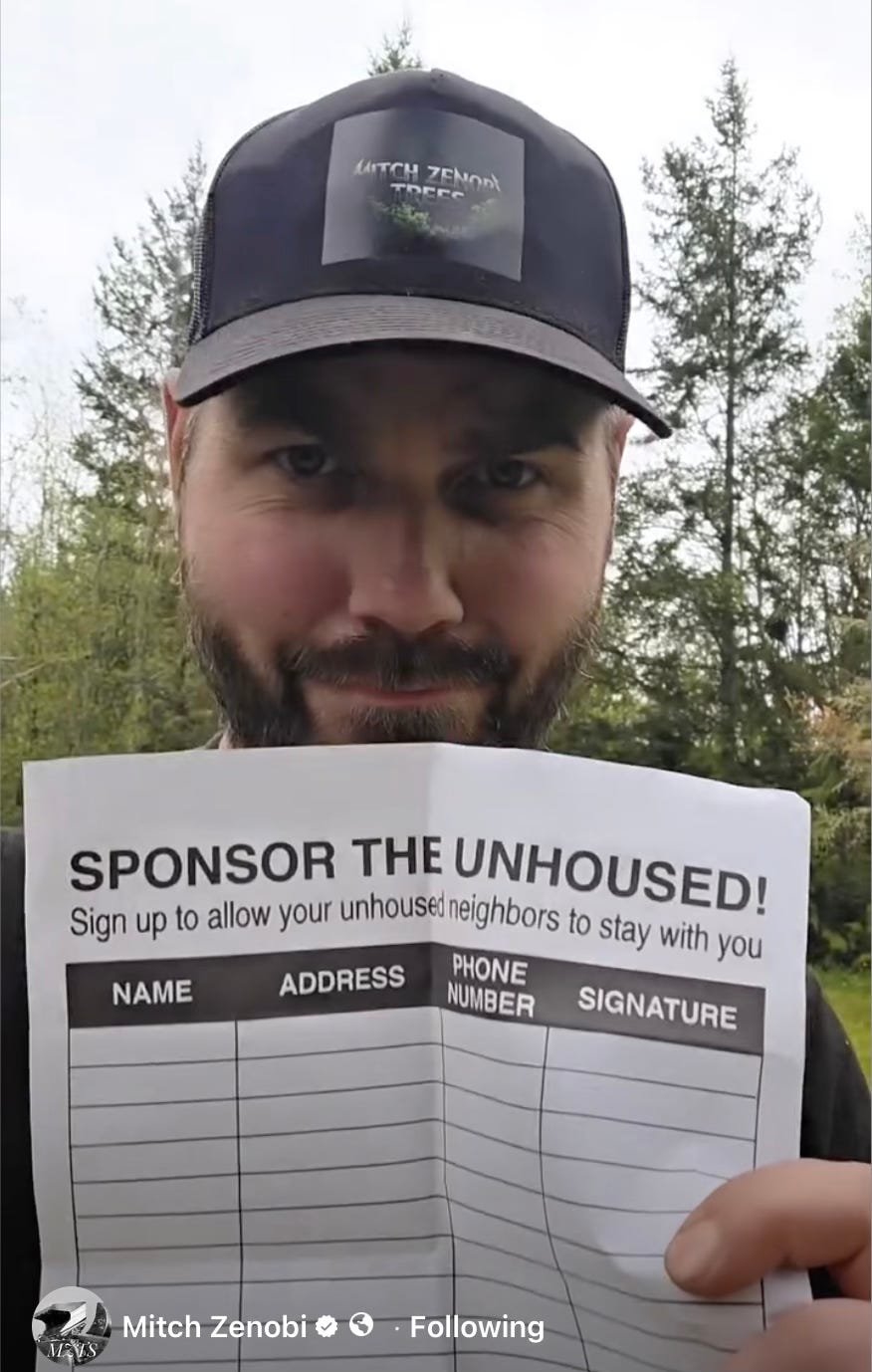
In a pointed moment, resident Mitch Zenobi circulated a sign-up sheet inviting supporters to host individuals in their own homes for showers. No one signed.
Now, the board will spend the next month reviewing possible changes—ranging from adjusted hours to rebranding the effort as a “community hygiene program.”
The vote was unanimous. Those in favor of continuing the shower voucher program—distributed through the same site where free drug paraphernalia is provided to addicts—included:
County Commissioners Mike French and Randy Johnson
Port Angeles City Councilmembers LaTrisha Suggs and Mark Hodgson
Community member Greg Shield
The question now isn’t just about access—it’s about oversight, boundaries, and who these public spaces are ultimately being designed to serve.


