


A $30,000 complaint over yard signs. A front-page story within 48 hours. And a campaign scrambling to fix a rule change it didn’t know existed. In this Sundays About Seegers, we break down how a minor compliance issue turned into “Signgate 2026”—and what it reveals about politics, media priorities, and the uphill battle facing independent candidates in Clallam County.
Thursday marked a turning point in the race for Clallam County Commissioner, District 3.
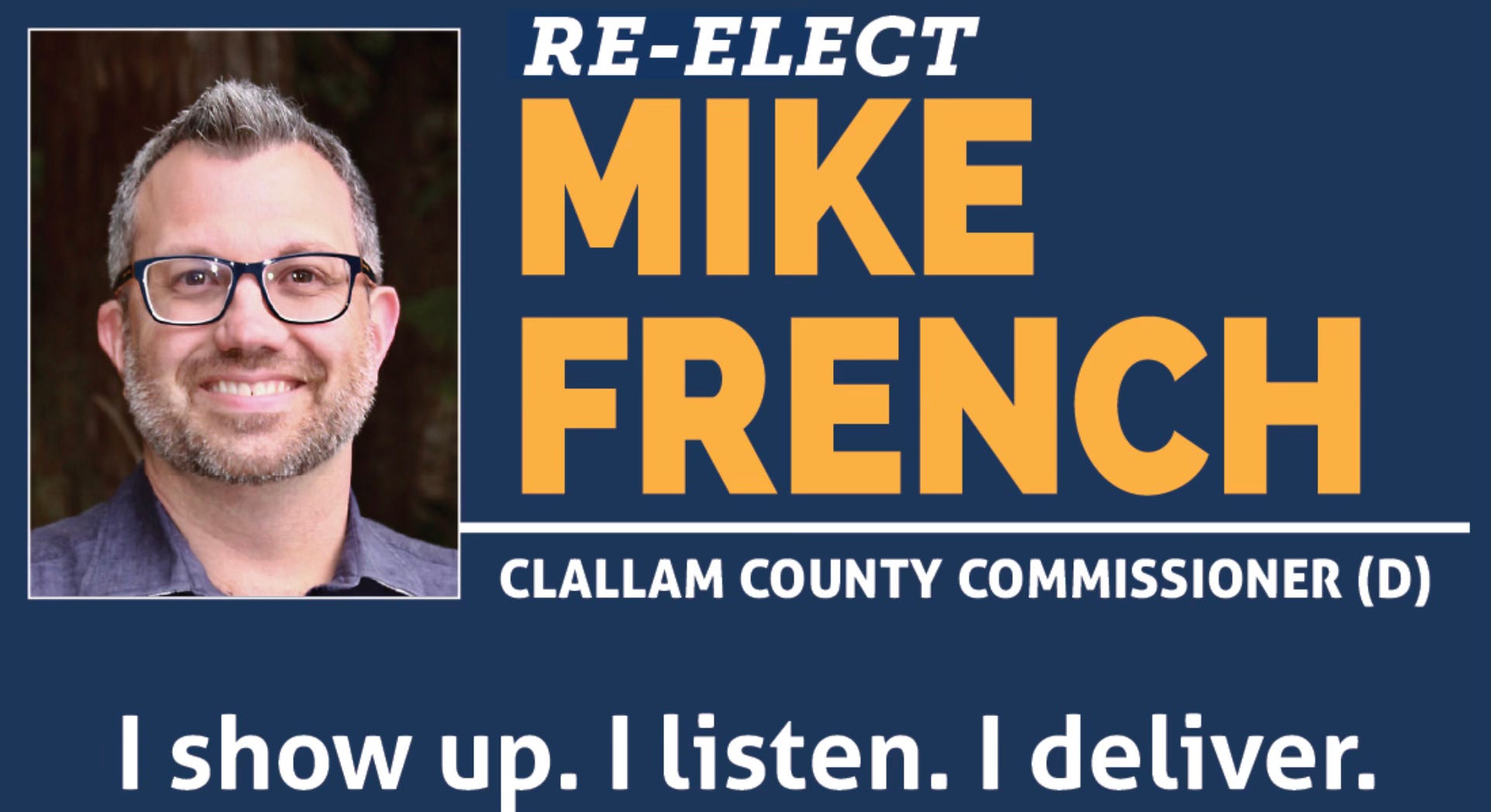
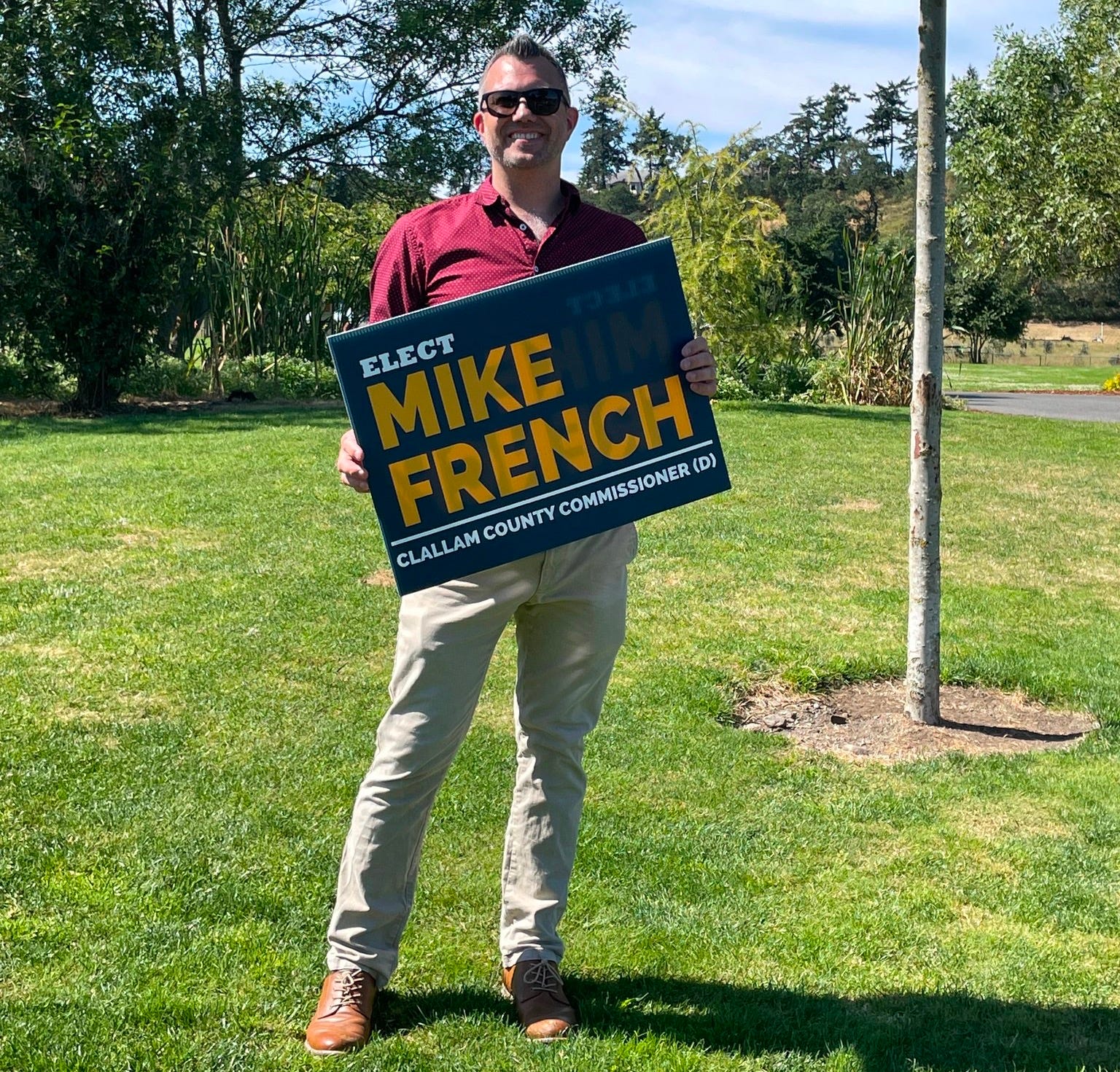
Incumbent Commissioner Mike French formally announced he’s seeking another four-year term.
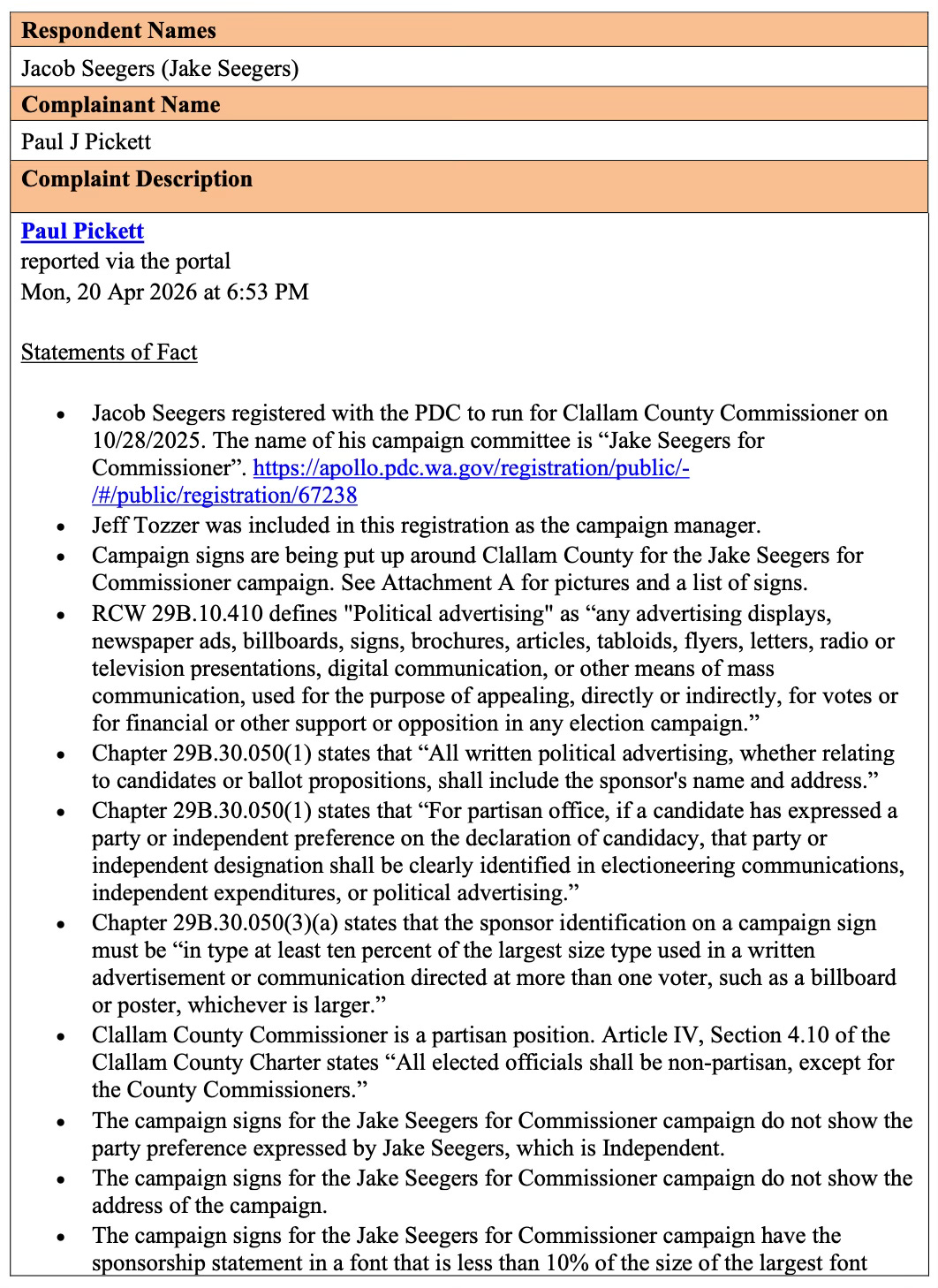
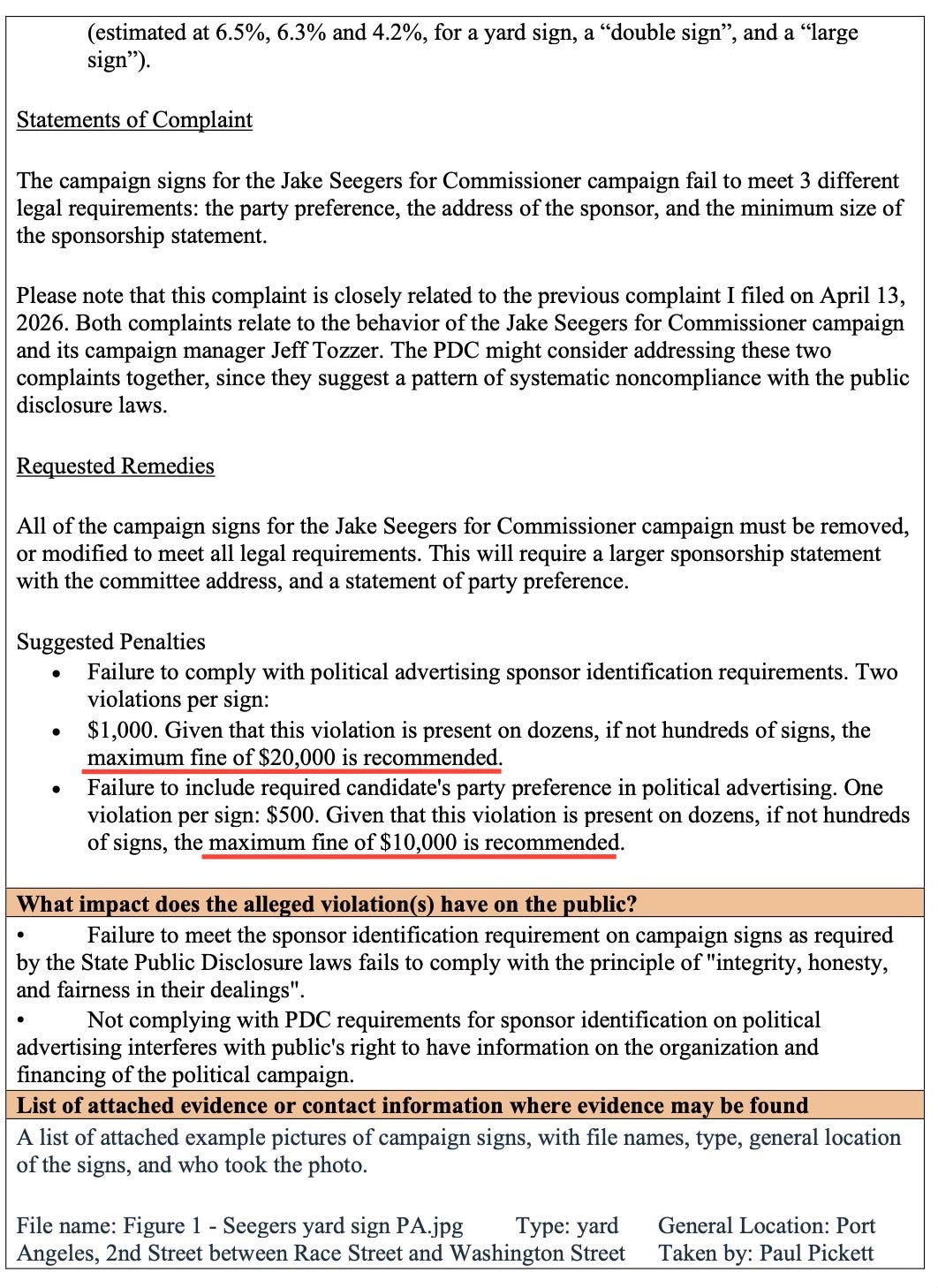
That same day, his opponent, Jake Seegers, was notified that a complaint had been filed with the Washington State Public Disclosure Commission (PDC)—one that seeks up to $30,000 in fines.
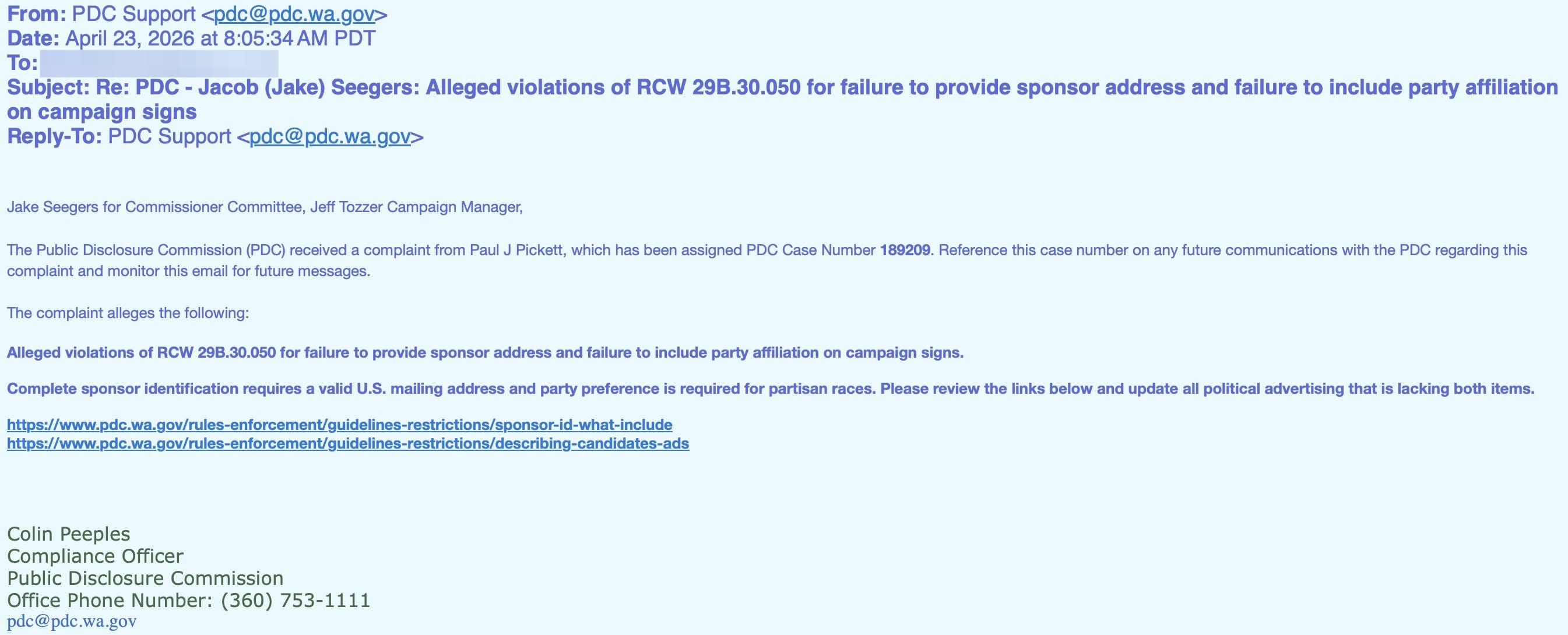
That number sounds serious. It’s meant to.
But what the complaint is actually about tells a very different story.
The Reality Behind the Complaint
The issue isn’t hidden money, undisclosed donors, or anything resembling corruption.
It’s yard signs.
Specifically:
The size of the disclosure font
The absence of the word “Independent”
The lack of a full campaign address


That’s it. A formatting issue.
And yes—the campaign’s signs were out of compliance. The rules changed in 2024, and Jake’s campaign manager didn’t catch it. That’s the honest answer. Campaigns, especially independent ones, don’t have compliance teams or legal departments combing through every update buried deep within state websites.
But here’s what matters: the moment it was brought to Jake’s attention, he acted.
New, fully compliant signs are already in production. In early May, you’ll see us out across the county replacing existing signs and making sure everything meets the current standards. We may even ask the community for help identifying locations of smaller yard signs so we can swap those out quickly and efficiently.
That’s how this is supposed to work—identify the issue, fix it, move on.
What’s unusual isn’t the mistake. It’s the response.
Who Filed the Complaint
The complaint was filed by Paul Pickett, with supporting documentation provided by Jim Stoffer.
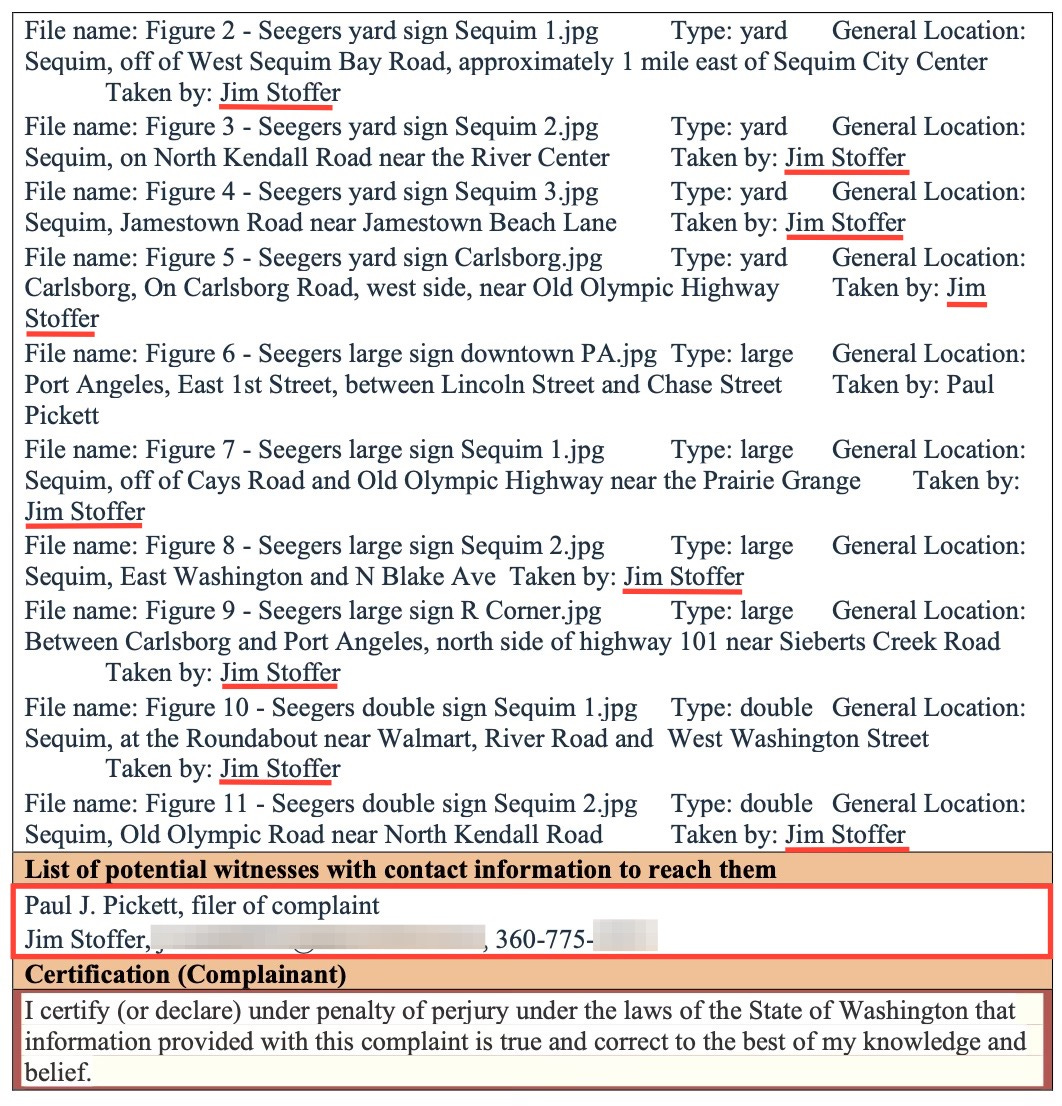
Both are not just politically engaged citizens—they are Precinct Committee Officers within the Clallam County Democratic Party. Pickett is also a contributor to the party’s monthly publication, Clallam Democrats Rising, where he recently published a glowing piece highlighting Commissioner Mike French’s accomplishments.
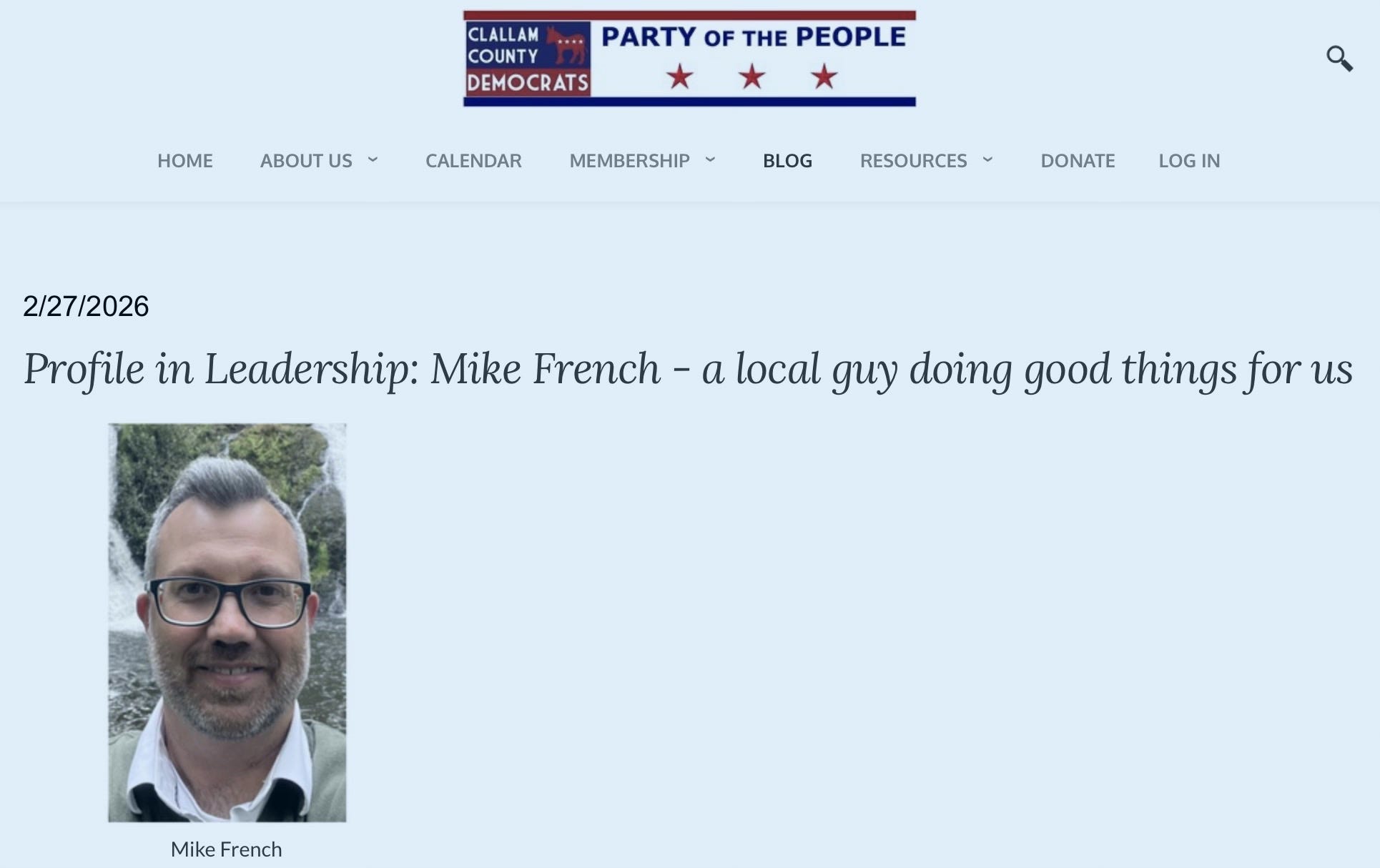
Taken together, the complaint wasn’t a casual observation from a passerby. It came from within the local political structure, directed at a candidate running outside of it.
And instead of a quick call, an email, or even a courtesy heads-up—something that would have resulted in the same correction—Jake’s campaign received a formal complaint to the state, paired with a request for tens of thousands of dollars in fines.
That tells you something.
The Media Moves Fast—Sometimes
Jake was notified of the complaint on Thursday morning.
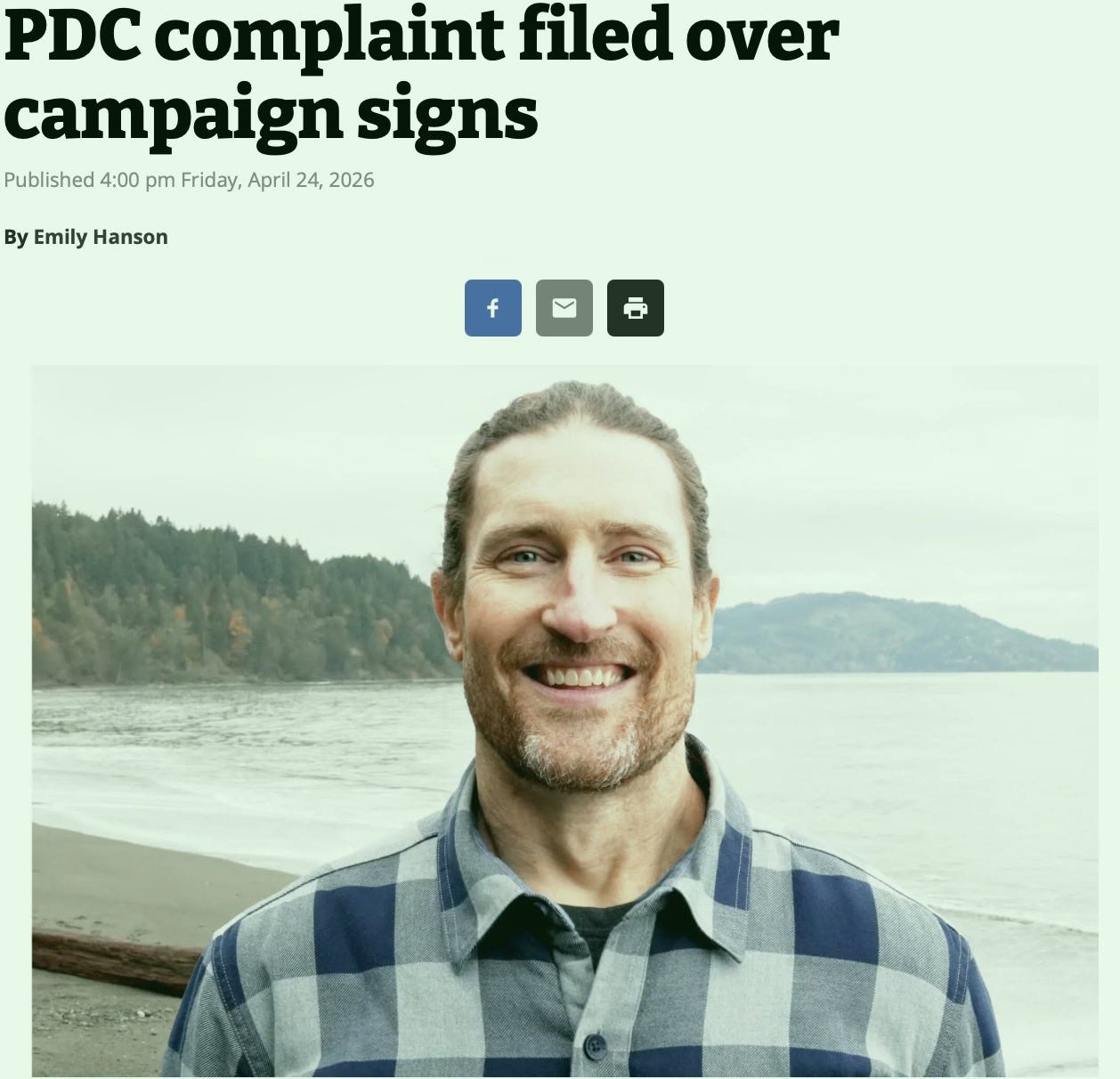
By midday, the Peninsula Daily News was already reaching out for comment. By Friday afternoon, the story was live online.
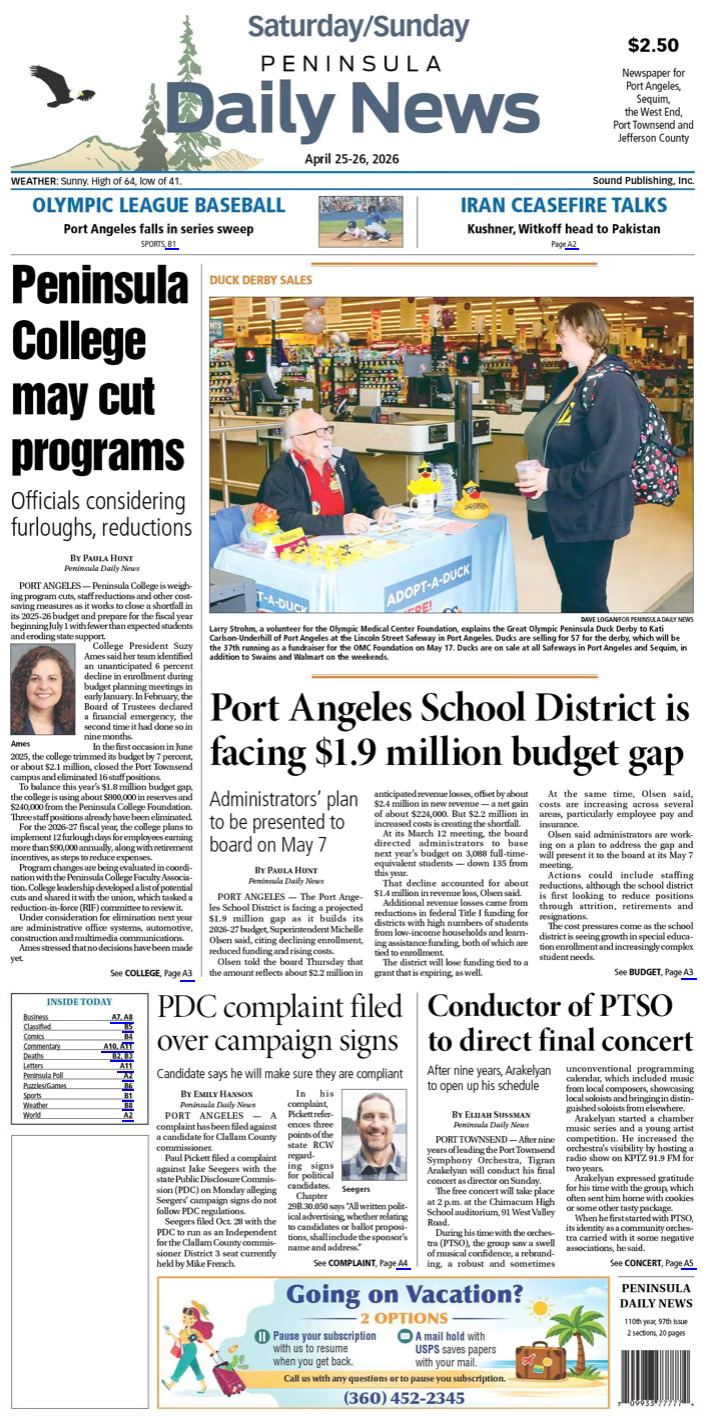
By Saturday morning, it was on the front page of the print edition.
By midday Saturday, the Peninsula Daily News had posted it to Facebook.
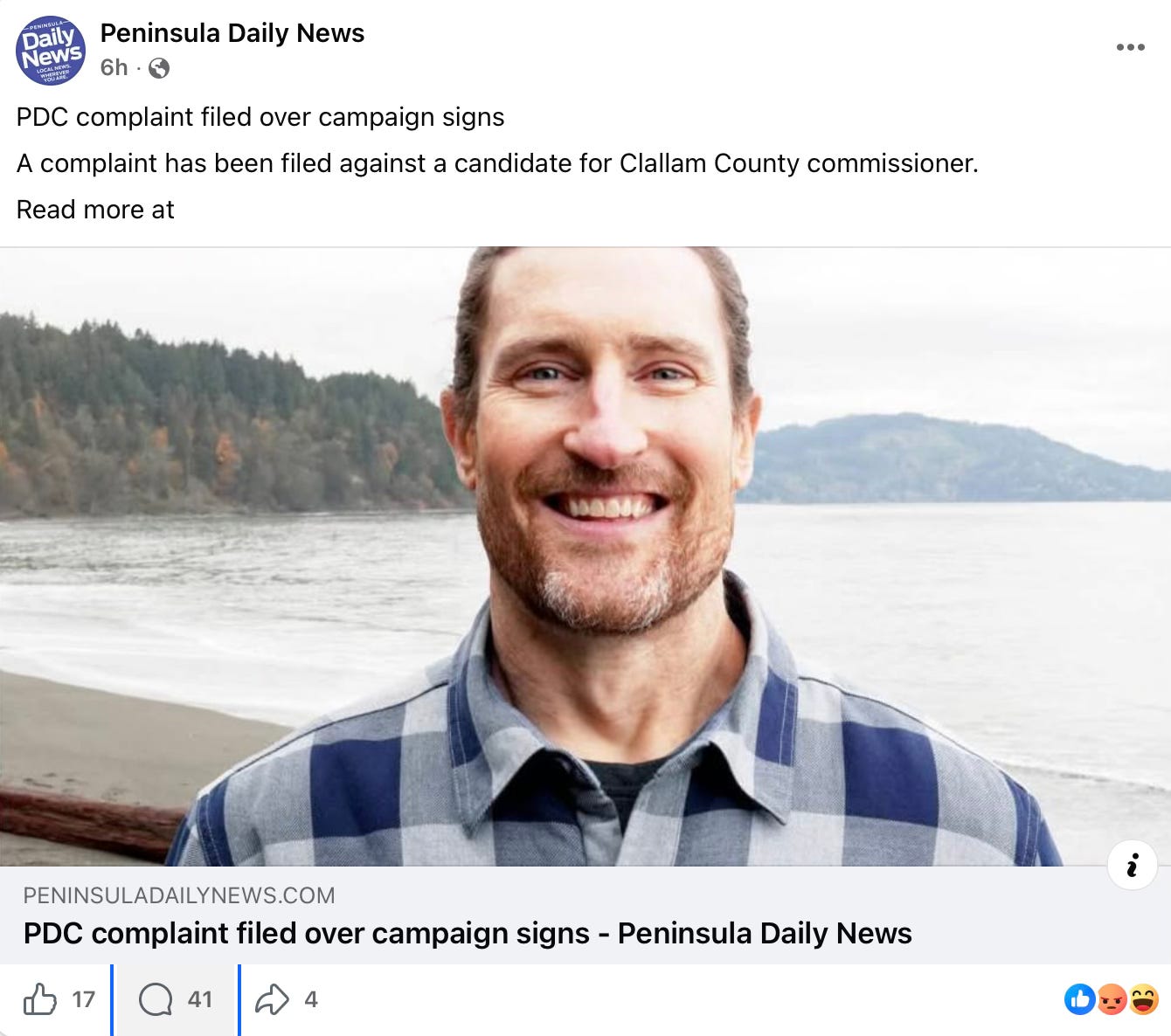
It’s fair to ask: where else do we see that level of urgency?
It took eight days for the PDN to report on the fatal daylight assault of Richard Madeo in downtown Sequim—despite an unprovoked public killing and active calls from law enforcement for witnesses
The PDN never reported on a rash of Improvised Explosive Devices placed around the county last September, including on school grounds and highway overpasses
Public records reveal the paper was aware of the Dungeness River levee breach that nearly caused a mass-casualty event, where even the Tribe acknowledged “loss of human life would be a real possibility” and “helicopters would circle the devastation and speculate on the number of dead”
Recently, the PDN refused to publish a letter to the editor from Jake Seegers about unsanctioned camping in the Tumwater Creek watershed, rejecting it solely because he is a candidate, even though it never mentioned his campaign—denying him a voice as a private citizen
But a yard sign compliance issue?
That’s immediate. That’s prominent. That’s front page.
A Question of Standards
The irony doesn’t stop with the complaint or the coverage.
Within that same political ecosystem are individuals in leadership roles—like Tim Wheeler, a Trustee on the Executive Board within the local Democratic Party, and Lisa Dekker, a Precinct Committee Officer—both of whom have been publicly documented engaging in vandalism on Department of Natural Resources land. These weren’t minor infractions. The damage cost taxpayers thousands to repair and involved deliberate defacing of public property.
And yet—no coordinated outrage. No rapid-response reporting. No front-page treatment.
No calls for accountability from the CC Democrats. No demands for fines from Pickett and Stoffer.
But a yard sign with the wrong font size? That becomes a $30,000 issue, elevated and amplified almost immediately.
So it’s worth asking the obvious question:
Are the standards consistent—or are they selective?
What the PDC Record Actually Shows
If you take a step back and look at PDC enforcement across Clallam County, a clear pattern emerges. Most complaints are not about corruption or deception—they’re about technical compliance. The kind of issues that get corrected, not prosecuted.
Anders Tron-Haukebo — Late/inaccurate campaign finance reporting
Randy Johnson — Missed required post-primary financial report
Phyllis Bernard — Late and incomplete reporting, clerical errors
William Purser — Missing sponsor ID on ads, reporting gaps
Mark Ozias — Late/inaccurate campaign finance reporting
Mark Hodgson — Late campaign finance filing
Mark Nichols — Improper timing of campaign fund usage
Jeff Tozzer - Incomplete expense detail
Serious violations—the kind involving deception or intentional concealment—are rare.
Which makes this situation stand out not because of the violation itself, but because of how aggressively it’s being pursued.
So it’s worth asking: were any of these cases on the front page of the local paper within 48 hours?
Why This Matters
For most people, politics already feels out of reach. This kind of environment only reinforces that.
If you’re an independent candidate without party backing, without paid staff, without institutional support, this is what you step into:
Your signs get slashed and stolen
Your mistakes—no matter how small—are escalated
And the system moves quickly when it’s aimed in your direction
Jake’s campaign was built with challenges like this in mind. It’s been run deliberately lean—no mileage reimbursements, no paid campaign manager, and no spending that isn’t necessary or effective—so when something like this comes up, there’s the flexibility and resources to respond quickly and do it right.
Because eventually, something like this does come up.
More Than a Sign
If this first week of a competitive race shows anything, it’s that this campaign is going to be about more than personalities.
One side will focus on process, compliance, technicalities, and distractions.
The other will focus on spending, accountability, transparency, and the direction of the county.
And underneath all of it is a broader question about how power operates locally—who gets scrutiny, who gets a pass, and how quickly the machinery turns depending on who you are.
Bottom Line
The signs will be fixed.
But “Signgate 2026” was never really about the signs.
It’s about the system that turned a correctable mistake into a headline—and that tells voters about the landscape heading into this election.
Because if this is how it starts, it’s worth paying attention to what comes next.
Today’s Tidbit: The “Independent Problem” in Clallam County
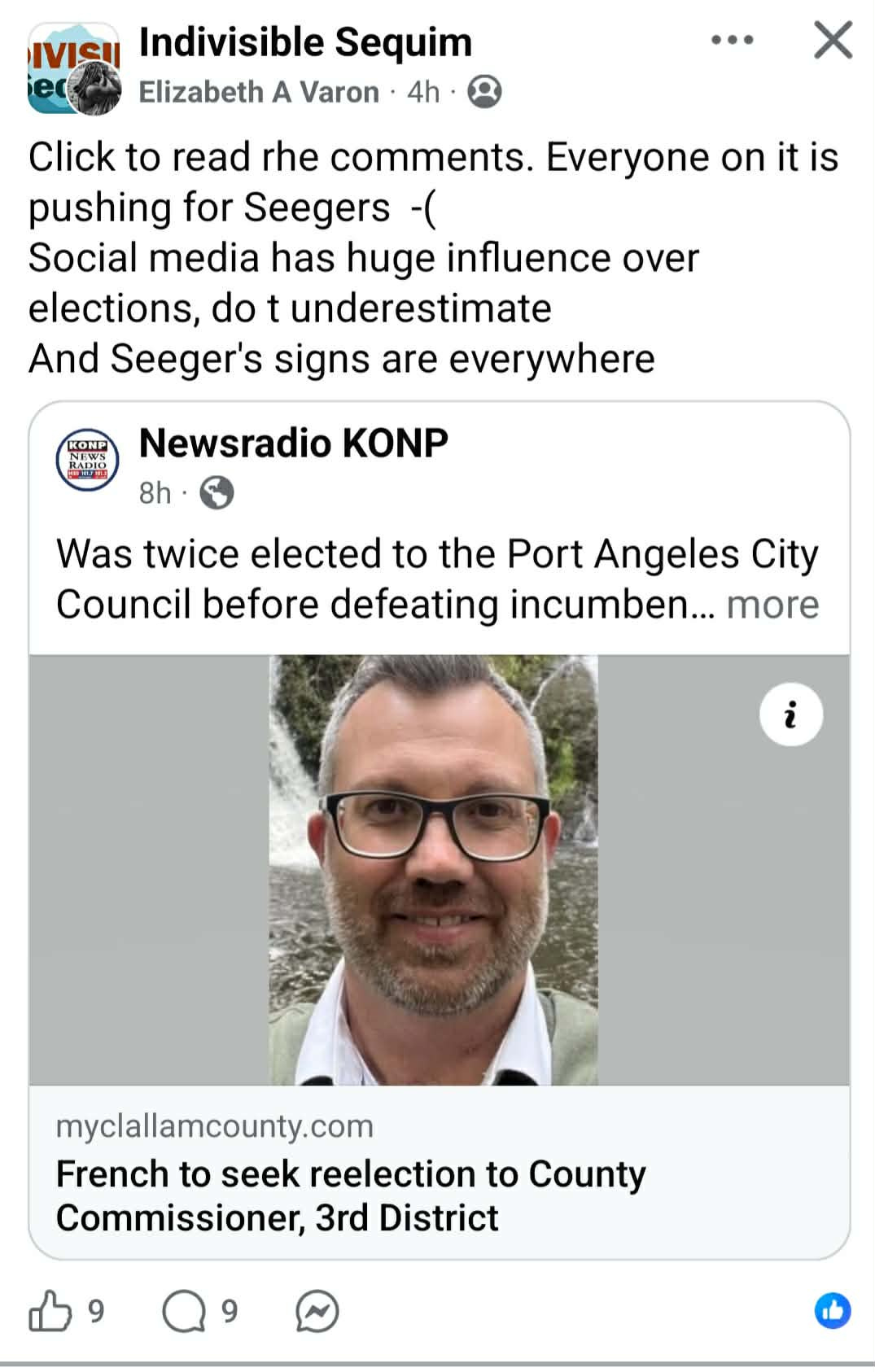
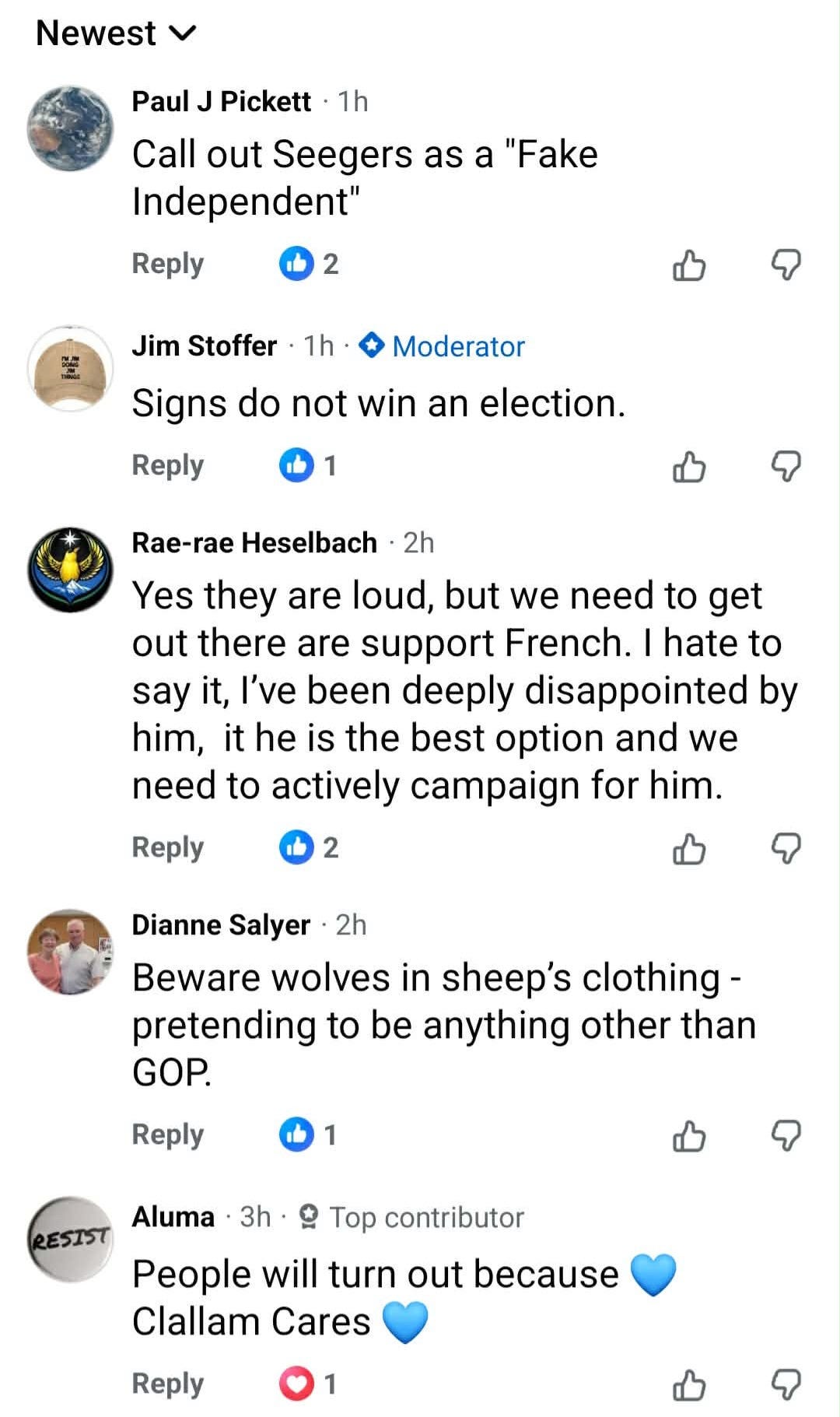
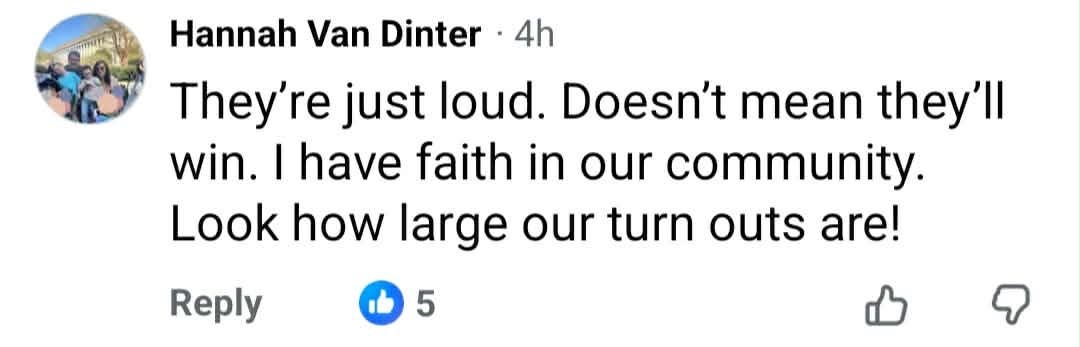
Scroll through the comments on local political posts—like these from Indivisible Sequim—and you start to see something deeper than just support or opposition to a candidate. You see a pattern.
Not just here, but nationwide, more voters are drifting away from traditional party lines. Democrats and Republicans alike are increasingly disillusioned with their own parties. And yet—when it comes time to choose—it’s remarkable how often people still fall right back into the same binary thinking.
Take one comment that says it all: disappointment in an incumbent, paired immediately with the conclusion that he’s still the “best option.” That’s not an evaluation of policy. That’s not a comparison of ideas. That’s instinct. That’s familiarity. That’s party gravity pulling people back in.
And that’s the hurdle.
In places like Sequim, the stigma attached to being labeled a Republican is real. In Port Angeles, it’s more mixed. On the West End, the dynamic shifts again. But across all of Clallam County, one thing remains consistent: once a label is attached—“R” or “D”—it becomes the lens through which everything else is judged.
Even when someone runs as an independent.
You can see it plainly in the language:
“Fake Independent.”
“Wolves in sheep’s clothing.”
Those aren’t policy critiques. Those are identity attacks. And they reveal something important—how difficult it is for ideologically anchored groups to evaluate candidates outside of party affiliation.
That’s the trap Clallam County is in.
We’re not debating solutions to local problems—we’re filtering people through national party frameworks that don’t always apply here. Housing, public safety, water, budgeting—these aren’t inherently Democrat or Republican issues. They’re local issues. Clallam County issues.
But as long as voters default to party identity instead of policy evaluation, real change becomes incredibly difficult. Because the conversation never actually gets to the substance.
And it’s worth noting: groups like Indivisible don’t operate in a vacuum. They are part of a broader political ecosystem that is supported and promoted by the League of Women Voters. That structure reinforces messaging, shapes narratives, and—intentionally or not—keeps the focus on political alignment over independent evaluation.
The result?
A political environment where:
Disappointment doesn’t lead to change
Labels outweigh ideas
And independence is treated with suspicion instead of curiosity
The sooner voters recognize that Clallam County’s challenges don’t fit neatly into “R” or “D” boxes, the sooner real solutions have a chance.
Until then, the hardest thing to run as in this county might not be a Republican or a Democrat.
It might be an independent.
Editor’s Note: CC Watchdog editor Jeff Tozzer also serves as campaign manager for Jake Seegers during his run for Clallam County Commissioner, District 3. Learn more at www.JakeSeegers.com.


