


What happens when public lands quietly change hands, water policy tells two completely different stories, and the people footing the bill are the last to know? This potpourri connects the dots—from a petition over the Dungeness Refuge, to a commissioner admitting key stakeholders were left in the dark, to growing questions about who gets heard and who gets left out. Add in contradictions on water supply, political messaging in schools, and a justice system that seems stuck on repeat, and a pattern starts to emerge. These aren’t isolated stories—they’re pieces of a bigger picture about transparency, priorities, and accountability in Clallam County. The question isn’t just what’s happening—it’s why so many people are only hearing about it after the fact.
A Fraction of a Voice
At the 1787 Constitutional Convention, enslaved Black Americans were counted as three-fifths of a person—not for voting, but for representation and taxation. They had no rights, no vote, and no voice—yet their existence increased the political power of slaveholding states.
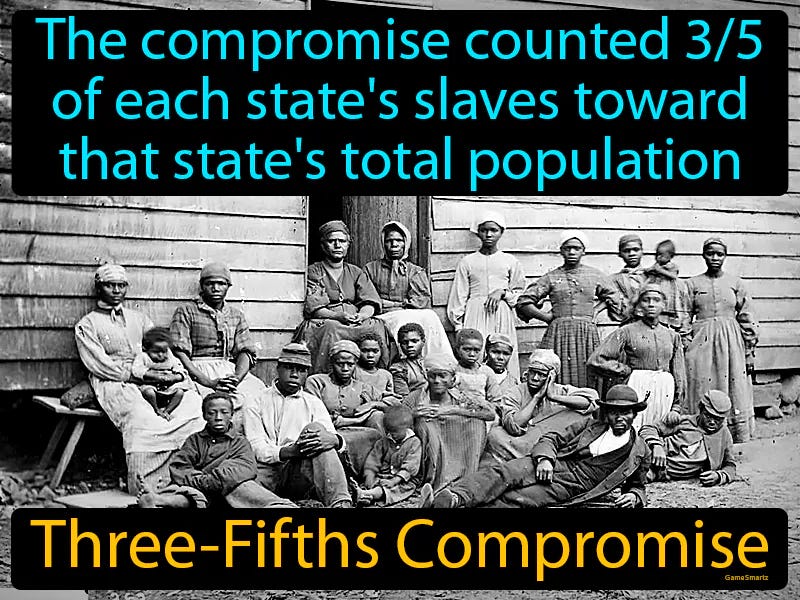
That compromise ended with the ratification of the Fourteenth Amendment in 1868, and today it stands as a dark and widely condemned chapter of American history.
But last week, during a Clallam County Revenue Advisory Committee meeting, a presentation from the Washington State Department of Natural Resources raised an uncomfortable parallel.
The Trust Land Transfer process—used in part for the Jamestown Tribe’s request for hundreds of acres in Blyn—relies on a scoring system. Proposals are ranked from 0 to 5, with weighted criteria. Community support carries a 2x multiplier. Economic value? 1x.
But one category—“Tribal Support”—is weighted at 3x.
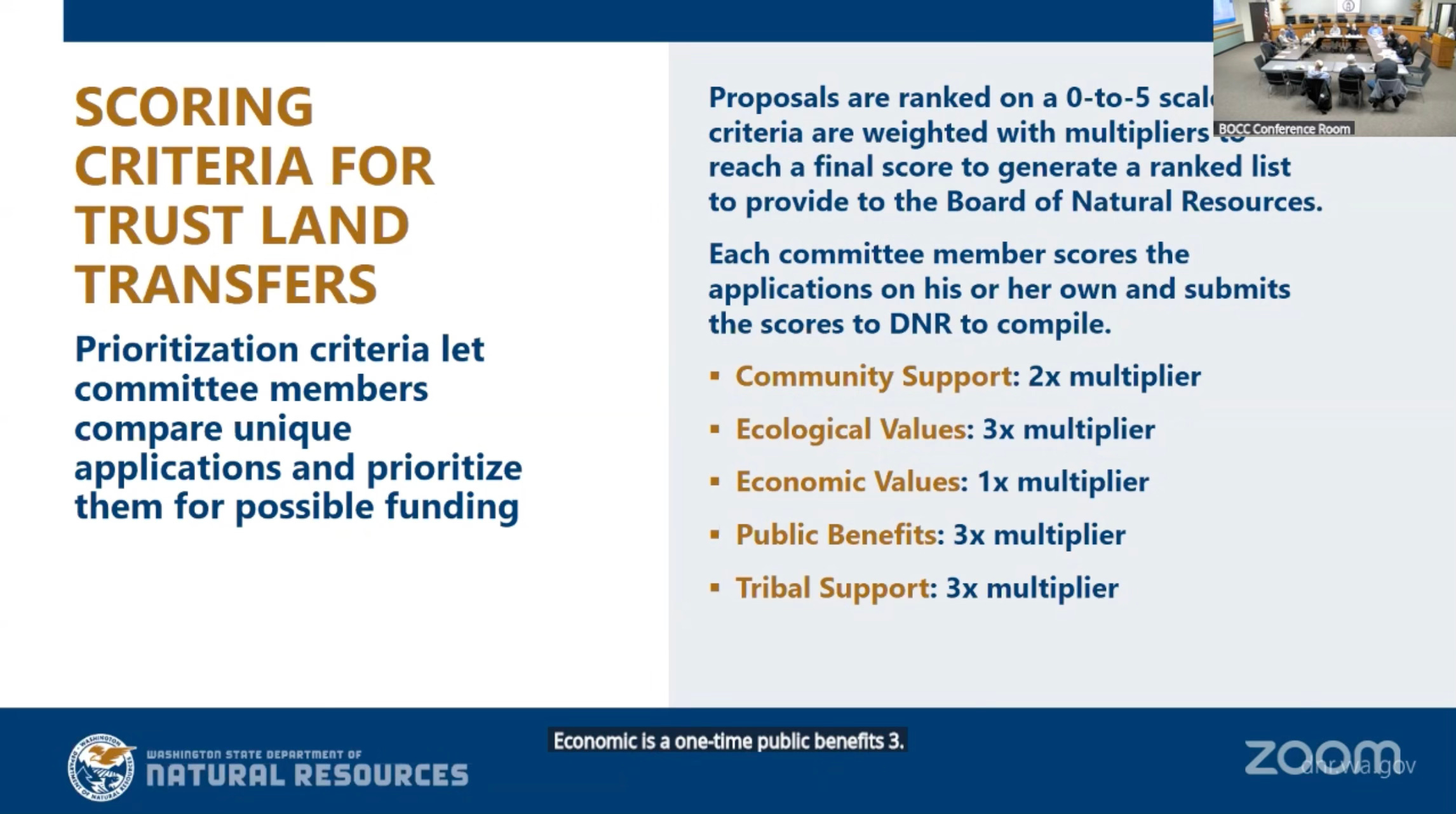
That means some voices are mathematically amplified over others.
In a program that directly affects funding for schools, hospitals, fire districts, and libraries, it raises a fundamental question: are we moving toward a system where influence is no longer equal, but weighted differently depending on who you are? And if that’s the case, it’s fair to ask—would there be immediate pushback if a 3x multiplier were applied to something like “Caucasian Support” instead of “Tribal Support”?
Later in the meeting, one member voiced frustration:
“We’re not included in that process… We would not be sitting here talking about it if it wasn’t brought out by a member of the public who put it out on substack, or however else he gets his info out. And people heard about it, then we hear about it, and we’re like: ‘Oh, what’s going on?’… we feel completely left out of the picture.”
Even county commissioners hadn’t heard about the request until members of the public raised it.
Remember that the next time you hear that the Jamestown Corporation is a transparent and collaborative community partner.
Sheriff Cuts Ties with Humane Society
At today’s Clallam County Commissioner work session, officials are expected to review a significant shift in how the Sheriff’s Office handles animal control—specifically, the decision to terminate its contract with the Olympic Peninsula Humane Society (OPHS).
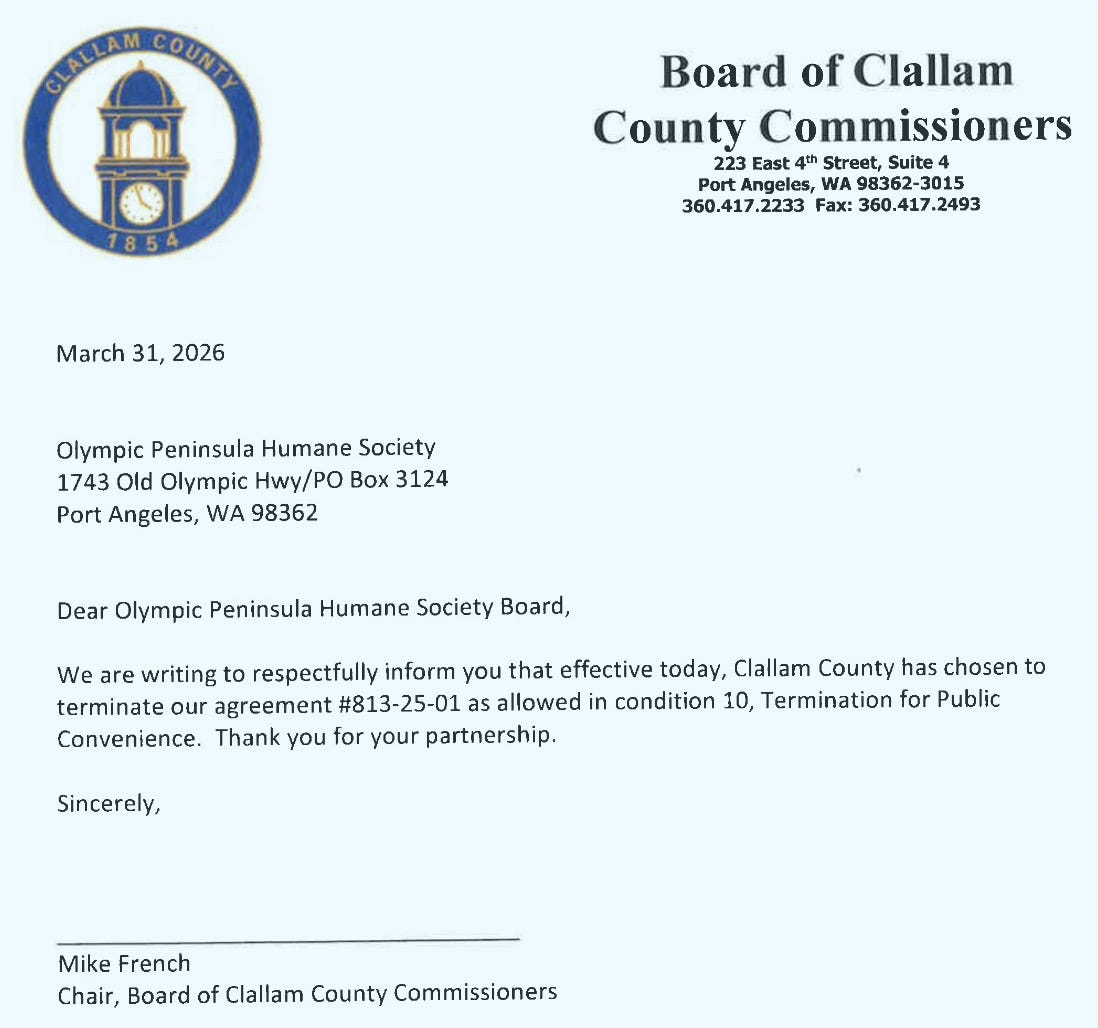
The Sheriff’s Office had maintained an agreement with OPHS to house and care for dangerous dogs not meeting control requirements under state law and county code. That contract has now been terminated under a “termination for public convenience” clause.
The County stated that ongoing lack of communication and responsiveness over the past four months led to the decision to end the agreement.

This is not a minor issue. By law, the Sheriff’s Office is required to seize and manage dangerous animals, and also needs temporary holding options in everyday situations—such as DUI arrests or vehicle accidents where animals are present.
Going forward, the County will rely on RISE Rescue Alliance to fill that role. RISE has agreed to house animals on behalf of the Sheriff’s Office and is described as a regional specialist in behavioral issues, with staff equipped to handle animals with safety or temperament concerns. County officials characterize RISE as a flexible and reliable partner already integrated into the broader network addressing stray animals and overpopulation.
The move comes after years of turmoil at OPHS, including:
Multiple executive director departures
Allegations of employee and animal mistreatment
Refusal to share financial documents
And the unionization of staff
Taken together, the contract termination signals more than a routine administrative change—it reflects a breakdown in a key public service relationship and raises new questions about accountability, oversight, and who is best equipped to handle critical animal welfare responsibilities in Clallam County.
“No Studies”… Or Not Quite?
In a discussion about harm reduction, Commissioner Mark Ozias recently wrote to a constituent:
“There are no studies I am aware of that show this public health strategy encourages drug use.”

That’s a pretty definitive claim. The problem is—it’s not accurate.
There actually is a body of research that looks at what’s called risk compensation—basically the idea that when you reduce the consequences of a risky behavior, people sometimes take more risks.
One of the more widely cited papers on this is Naloxone Access, Opioid Abuse, and Crime by Jennifer Doleac and Anita Mukherjee. The study found that after naloxone access laws were expanded, there were increases in opioid-related ER visits and some measures of misuse, particularly in certain areas. The authors point to the possibility that when the risk of dying goes down, behavior can change in ways policymakers didn’t intend.
You can read it here: https://docs.iza.org/dp11489.pdf
That same idea—sometimes called “moral hazard”—shows up in other policy discussions too. A University of Chicago brief on the topic puts it pretty plainly: when there’s a stronger safety net, some people may take bigger risks.
Here’s that one: https://bfi.uchicago.edu/wp-content/uploads/The-Moral-Hazard-of-Lifesaving-Innovations.pdf
Even in the medical field, the concern isn’t dismissed. A piece in Annals of Emergency Medicine acknowledges that making overdose reversal more available can change behavior, because the chances of surviving go up.
That article is here: https://www.annemergmed.com/article/S0196-0644(18)30457-8/fulltext
None of this means the issue is settled—far from it. There are plenty of studies that argue the benefits outweigh the risks. But to say there are no studies at all looking at whether harm reduction might encourage continued or riskier use just isn’t true.
There’s a word for telling people what they’re seeing isn’t real:
Gaslighting.
Deadlines, Packets, and Being Heard
Sol Duc Valley correspondent Heather Cantua has a reminder:
If you want your comments to matter, timing is everything.
To be included in the agenda packet for the April 1 Planning Commission meeting, comments must be submitted by Tuesday, March 24. Based on current discussions, the Commission is expected to take up the Western Region (RW5) Conditional Use Permit process, including whether to hold a public hearing in the Western Region itself and how the County plans to structure public input throughout the broader Comprehensive Plan update.
Miss that window, and your input likely won’t be discussed until the next meeting. Comments can be sent to bruce.emery@clallamcountywa.gov.
Cantua also flagged a potentially major development:
The Planning Commission is being asked to consider eliminating Master Planned Resorts (MPRs) from county code.
That would significantly raise the bar for future resort development—possibly requiring variances for projects that were once allowed.
The April 1 agenda is expected to include:
Public hearing location decisions
Timeline discussions for the Comprehensive Plan update
Potentially broader policy shifts affecting land use countywide
If you want a voice, speak now—not later.
Proclamations vs. Reality
At the upcoming Sequim City Council meeting tonight, a ceremonial item stood out to Clallamity Jen, and she wrote about it in the Sequim Monitor:
Child Abuse Prevention Month
The proclamation states:
“Children are our nation’s most vulnerable members…”
But just weeks earlier, a local parent reported a man behaving erratically—blocking sidewalks, shouting, and simulating self-harm—near the elementary school and the Boys & Girls Club.
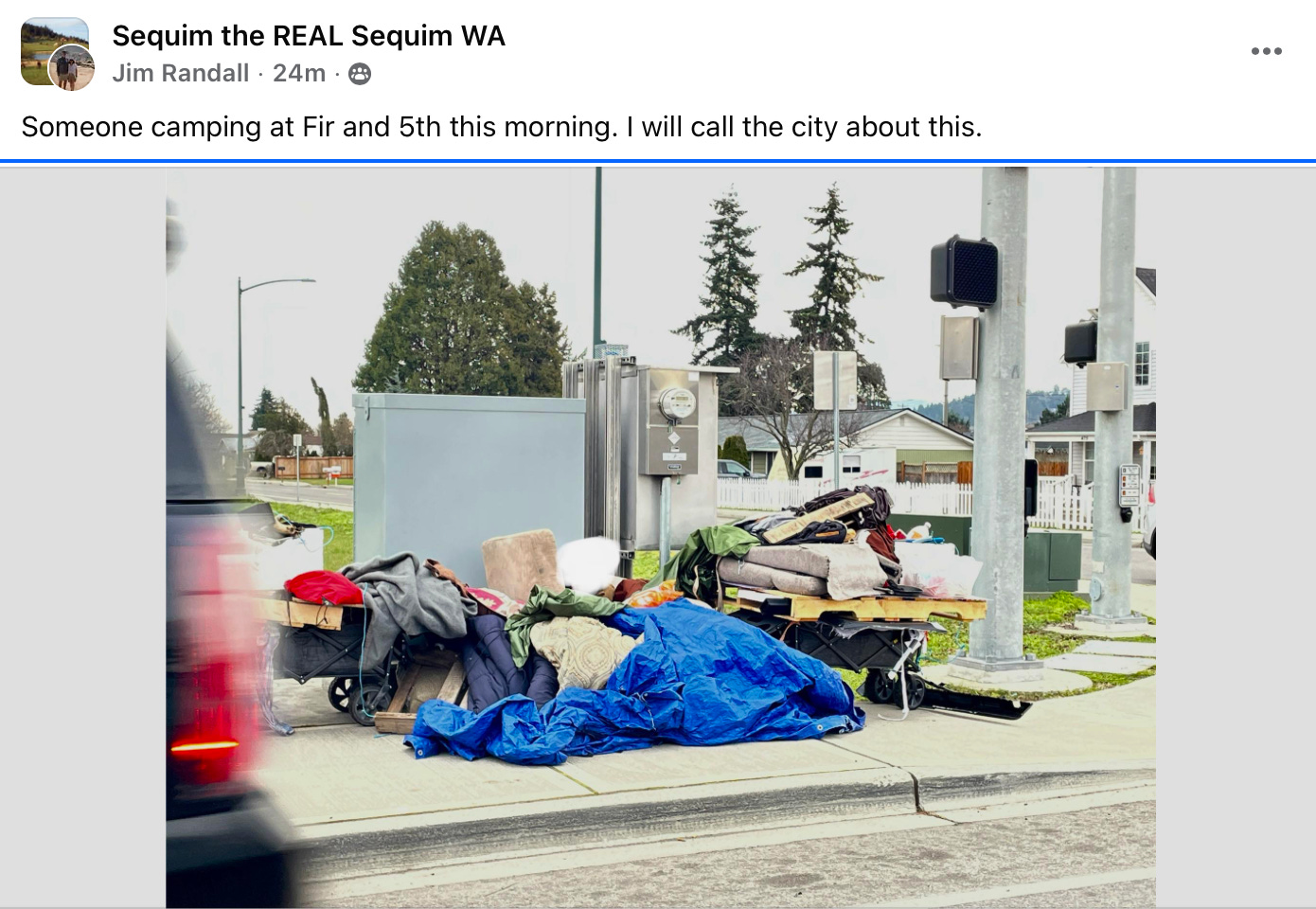
Police reportedly declined to respond.
That man, later identified as John E. Marshall, was arrested days later for indecent exposure. Drugs were involved.
So here’s the question:
If children are the most vulnerable, why are they being told to walk a different route instead of ensuring the route is safe?
If partnerships prevent harm, where were those partnerships?
And if the city’s actions don’t match its words—what do proclamations really mean?
Roundabout Economics
According to the Federal Highway Administration, a new roundabout is planned at Highway 101 and Old Olympic Highway.
We know because the Jamestown Tribe will be granted $216,900 in taxpayer dollars for a “control evaluation.”
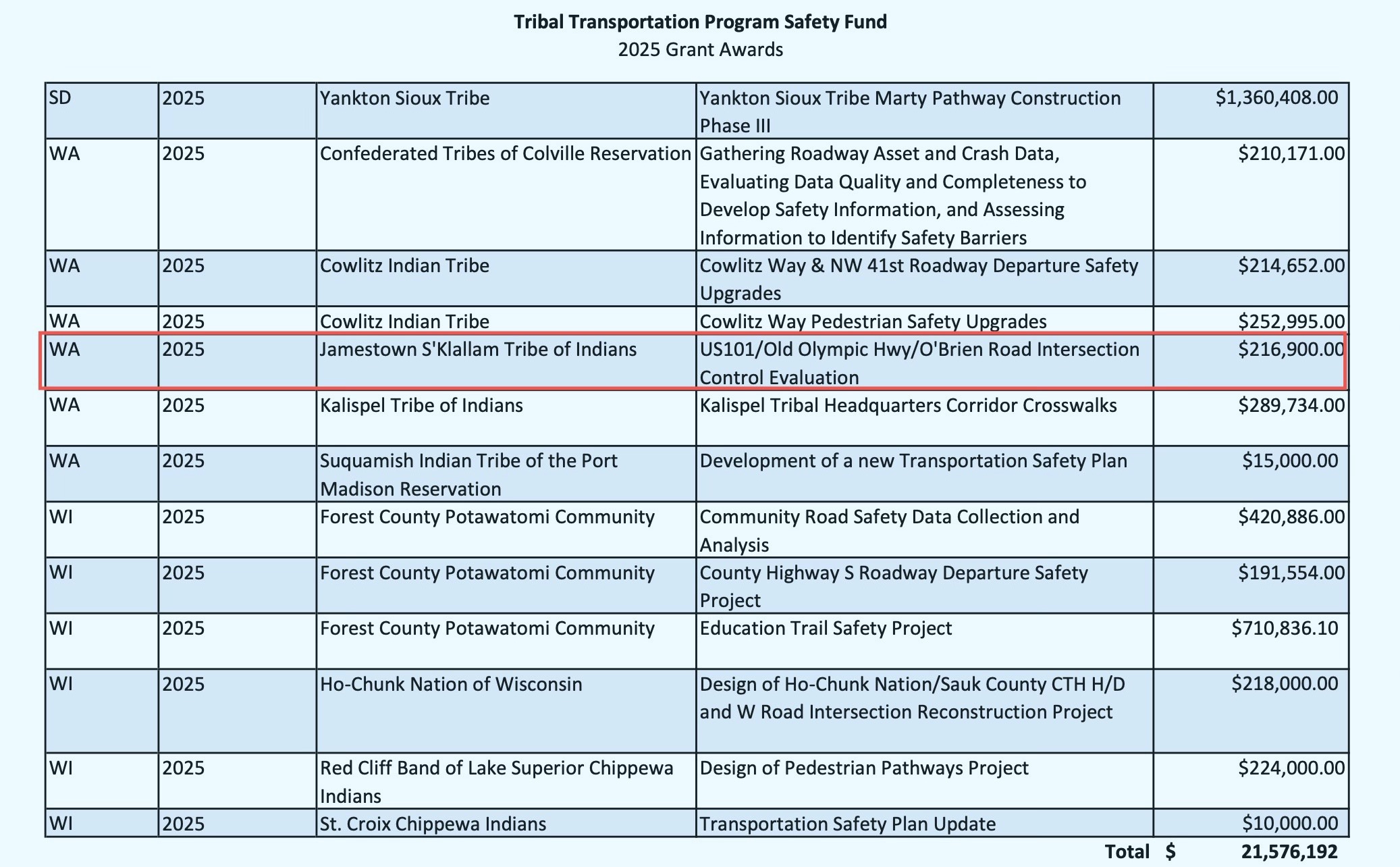
Funding flows through the Jamestown Tribe first, and the roundabout happens to sit near:
The Tribe’s Salish Trails RV Park
The Tribe’s newly acquired winery
Coincidence? Or strategic placement to funnel business to the Jamestown Corporation?
A Petition Worth Watching
A citizen-led petition is circulating in opposition to the proposed transfer of the Dungeness and Protection Island National Wildlife Refuges into tribal trust. Started by local resident Rose Marschall, it’s gaining traction as more people learn what the proposal could mean.
Supporters argue these lands were set aside for the benefit of all Americans and have long been managed for conservation and public access. Their concern isn’t just ownership, but what follows—whether access, management priorities, and decision-making could shift under full control by a sovereign entity.
They also note that while co-management was originally presented as a partnership, this proposal represents a move toward sole control, and no public meetings have been held to gather community input.
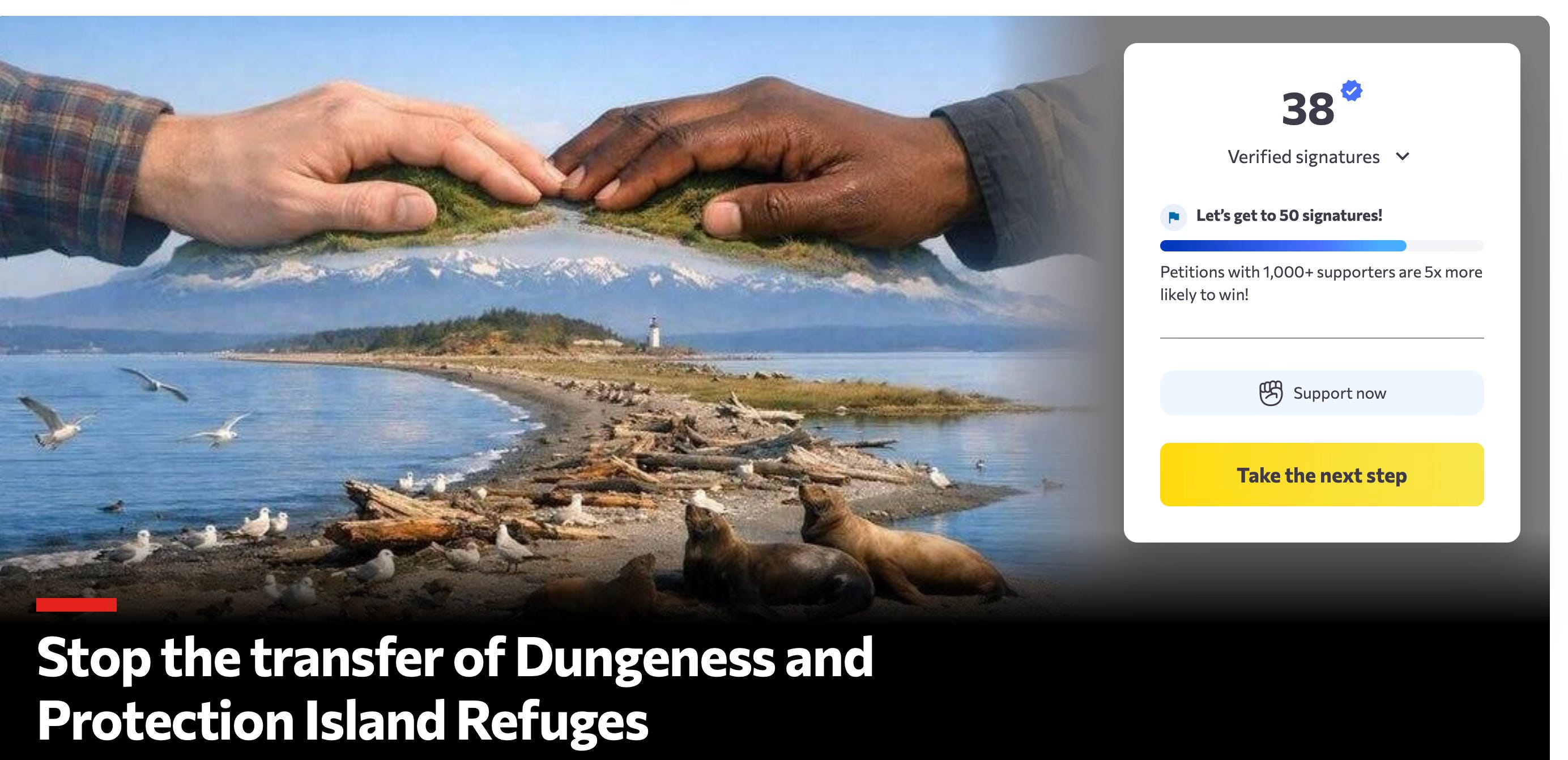
Whatever your position, one thing is clear: major decisions about public lands deserve transparent public involvement before they move forward.
A Rare Admission
In a recent email to one constituent, Commissioner Randy Johnson confirmed what many residents had already begun to suspect: the County—and even the taxing districts that rely on these lands—were not informed about the Jamestown Tribe’s Trust Land Transfer request.
The proposal, originally submitted for 435 acres and later reduced to 190 acres after DNR analysis, was moving forward through the state’s Trust Land Transfer (TLT) process with little to no local awareness. The program is designed to exchange underperforming timber lands for properties that better serve public or environmental goals—but in this case, even those who depend on the revenue didn’t know it was happening.
Johnson didn’t mince words. He said he was “upset” by the lack of communication and has since reached out to the Department of Natural Resources to push for changes in how these proposals are handled.
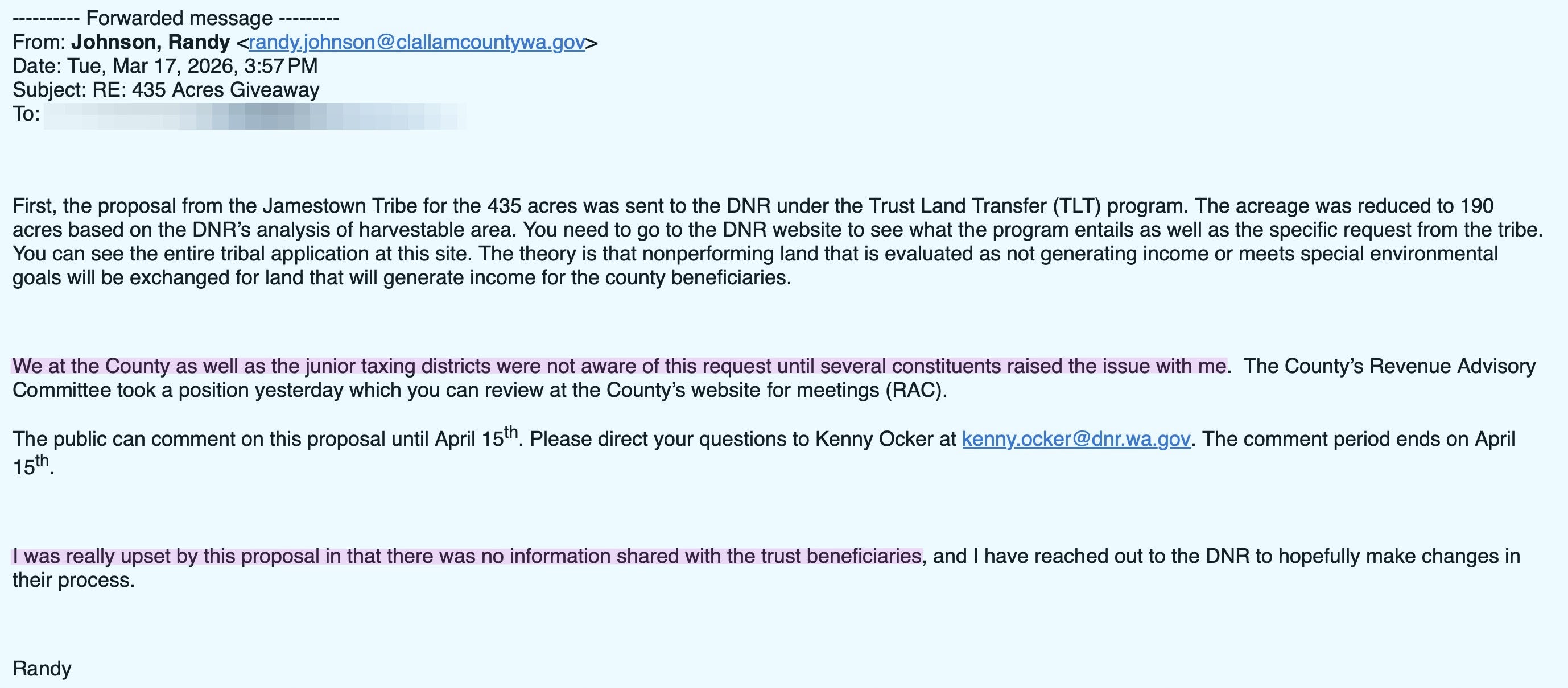
The County’s Revenue Advisory Committee has now taken a position, and the public comment period is officially open through April 15. Residents are encouraged to direct questions and comments to DNR by emailing kenny.ocker@dnr.wa.gov.
Voting Barriers—Selective Outrage?
During a recent debate, Senator Maria Cantwell cited the League of Women Voters, describing election reforms as a “coordinated effort to make voting harder for eligible Americans.”
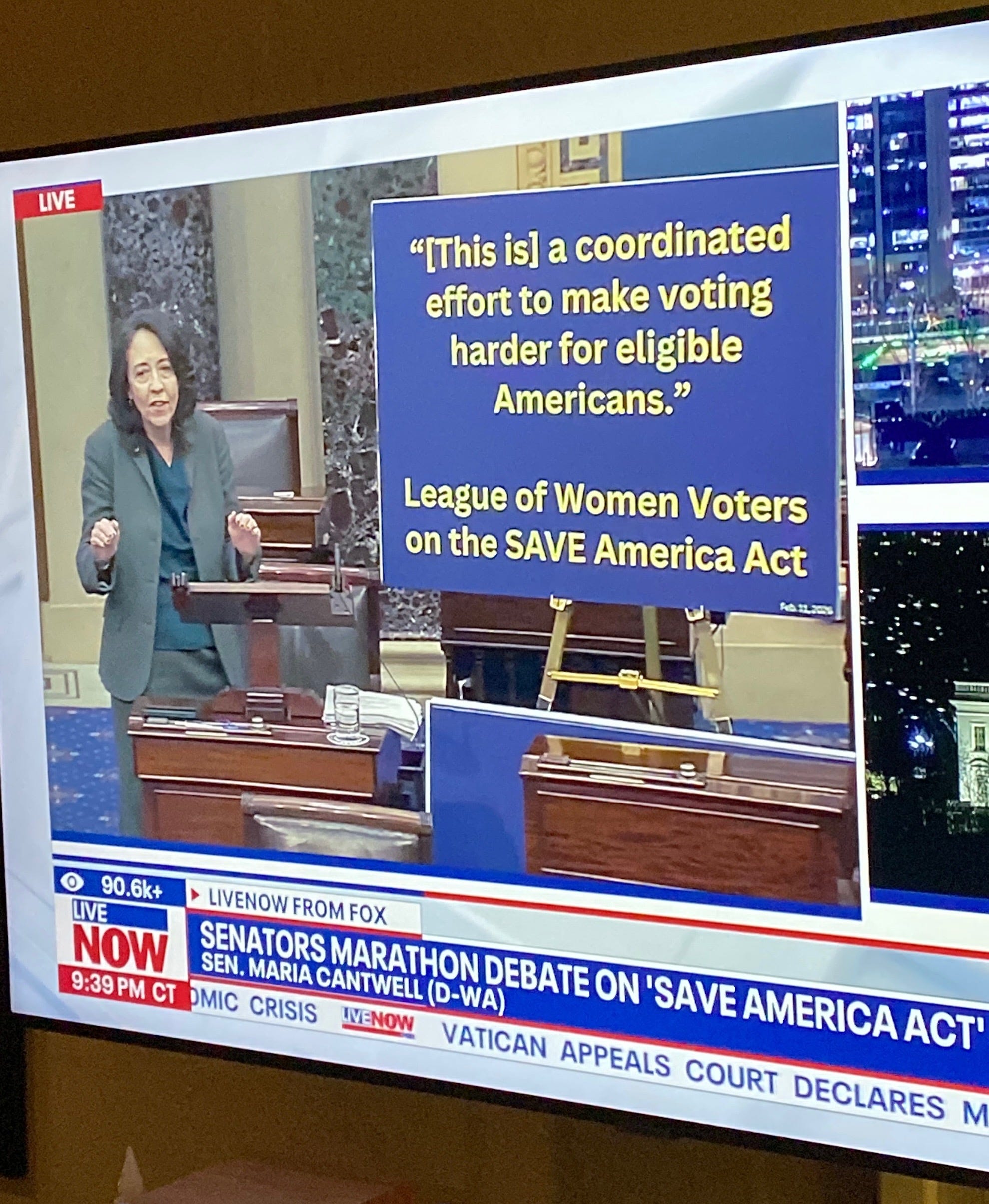
That’s a strong accusation—and one that carries weight.
But locally, a very different situation unfolded with the Clallam Conservation District election.
For the first time, the district moved to an all mail-in voting system. But instead of automatically sending ballots, voters were required to request one in advance. Many residents didn’t even know an election was taking place until it was too late.
The result? Low awareness, limited participation, and a narrow race between Wendy Rae Johnson and Judy Larson.
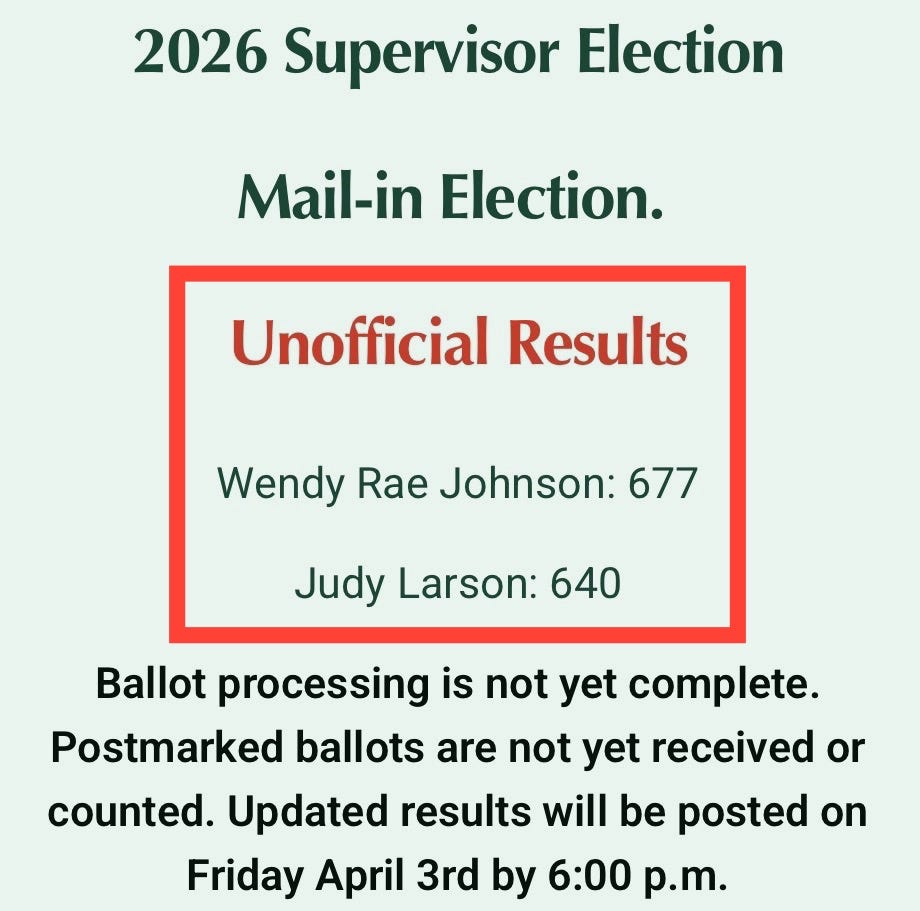
Johnson was endorsed by Indivisible Sequim—an organization promoted and supported by the local League of Women Voters, which also played a role in counting ballots.
So the question becomes unavoidable:
If making voters request a ballot—before they even know an election exists—doesn’t qualify as making voting harder, what does?
And where are the League’s voices raising concerns about fairness, access, and voter suppression locally?
Politics in the Classroom
A parent recently shared a photo from Sequim High School. According to the student, posters promoting an upcoming “No Kings” protest are displayed throughout campus.
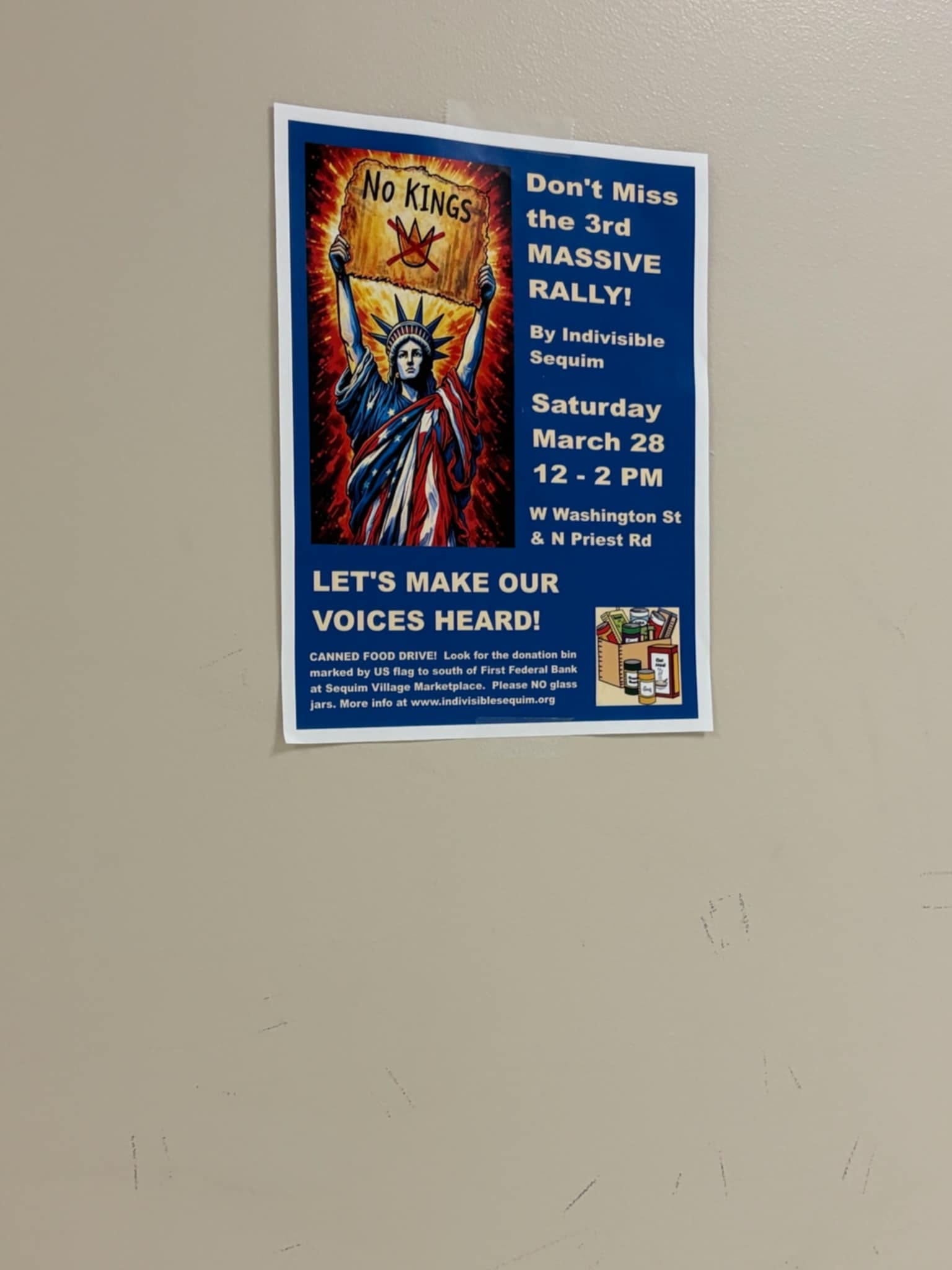
Not one or two—but several.
That raises a broader issue that communities across the country are wrestling with: where exactly is the line between education and activism?
Schools are supposed to be places for learning, critical thinking, and open discussion. But when political messaging—especially tied to specific movements or protests—appears on school walls, it starts to feel less like education and more like indoctrination.
And when staff or administrators allow it, or don’t intervene, it sends a signal—whether intentional or not.
Increasingly, it seems that line isn’t clearly defined anymore.
Instead, it’s being shaped in real time by whoever is willing to push it.
Is There Enough Water—or Not?
For years, water policy in the Dungeness Basin has been shaped by a clear premise: there isn’t enough water to go around without limits.
The Washington State Department of Ecology made that determination in 2013 when it effectively closed the basin to new withdrawals unless mitigation is provided. In water law, that’s about as clear as it gets—when a basin is closed, it means it’s considered fully allocated.
That position has also been supported by the Jamestown Tribe, and others focused on protecting instream flows and fish habitat.
But now, a different message is emerging.
At tonight’s Sequim City Council meeting, public works is expected to present findings that suggest the City has sufficient water resources for the next 30+ years, including anticipated development.
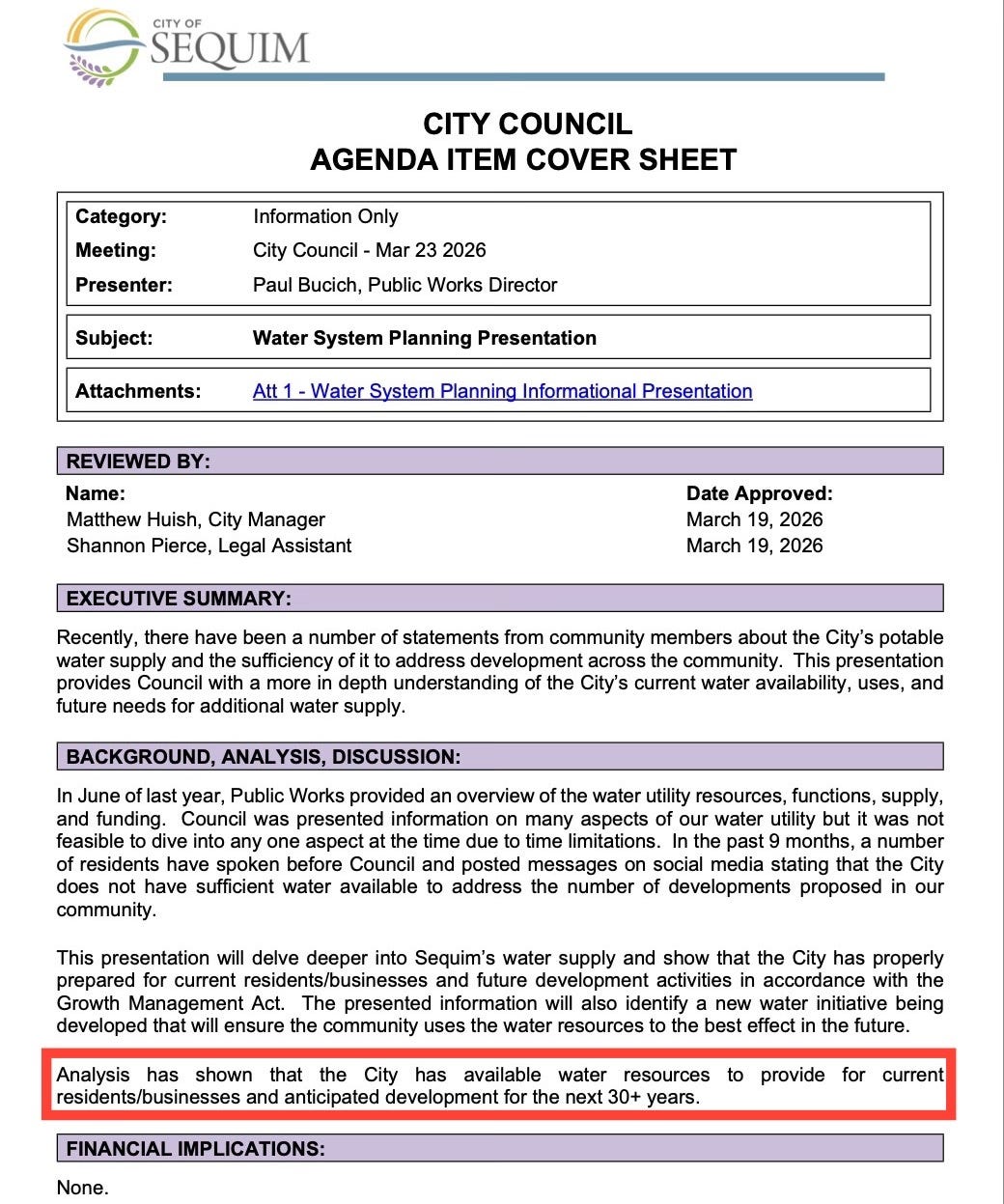
So which is it?
Is water so limited that new wells require mitigation and the basin must remain closed—or is there enough to support decades of growth?
Because those two positions don’t just differ—they point to entirely different futures for development, property rights, and planning in Clallam County.
WSSDA and the Reach of Influence
Speaking of activism in our education systems, Jim Stoffer’s connection to the Washington State School Directors’ Association (WSSDA) goes well beyond casual involvement.
Over the years, he served seven years on WSSDA’s Legislative Committee, one of its most influential bodies, helping shape statewide education policy priorities and legislative agendas in Olympia. He also acted as a regional legislative representative, representing districts across Clallam, Jefferson, and Kitsap counties—effectively serving as a bridge between local school boards and state-level decision-making.
His involvement didn’t stop there. Stoffer also served on the Trust Lands Advisory Committee, placing him directly in conversations about how timber lands are managed and how those revenues flow to support public schools.
At the same time, Stoffer was early to embrace another growing trend—land acknowledgments—incorporating them into his public messaging and even his own YouTube videos as far back as four years ago.
The Comment Window Widens
Clallam County has officially extended the public comment period for its Comprehensive Plan Update to April 15, 2026.
That extension comes after concerns were raised about insufficient notice and limited public awareness earlier in the process. In response, the Planning Commission agreed to keep the hearing open and give residents more time to weigh in.
Updated draft documents—including all seven chapters of the Comprehensive Plan, zoning code changes, land use maps, and environmental review materials—are now available both online and in physical notebooks at North Olympic Library System branches.
Meetings will continue at the courthouse and via Zoom, with agendas posted in advance.
For residents who have been following the process—or those just now realizing how significant these decisions are—this is a real opportunity to engage.
Because once the plan is finalized, the window closes.
Testimony may be given during open public hearings or may be emailed before the hearing at bruce.emery@clallamcountywa.gov.
Another Arrest, Another Cycle
Last Thursday, a disturbance on the 500 block of Jamestown Road—typically a quiet stretch north of Sequim—drew a response from two Clallam County patrol units.
According to the incident report, Gojhan Bastida Morales told deputies he had agreed to give a ride to a woman he had just met at a bar. That woman, identified as Mia Villarreal, reportedly began acting erratically during the drive. Morales told officers she refused to provide her address, started throwing items out of the vehicle, and eventually created a scene in the middle of the roadway. At one point, he told deputies, “She’s smashing my car,” and described her behavior as unstable.
Villarreal was arrested at the scene for indecent liberties and disorderly conduct and was released the following day.
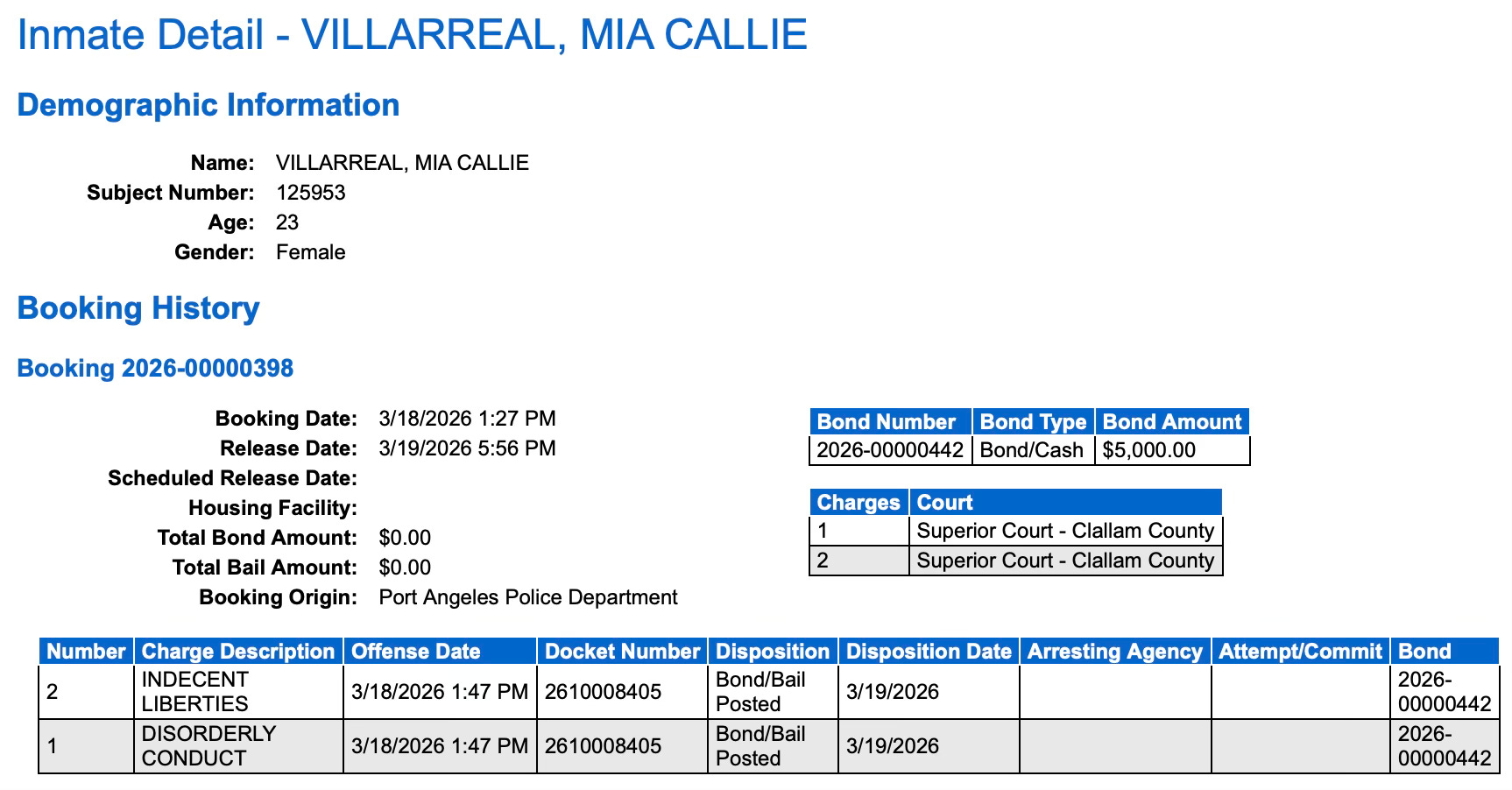
But this wasn’t an isolated incident.
Earlier this year, Villarreal was arrested in California for DUI involving alcohol or drugs and assault on a peace officer. A year before that, she was arrested for battery and public intoxication. The pattern is not new—it’s just new to this area.
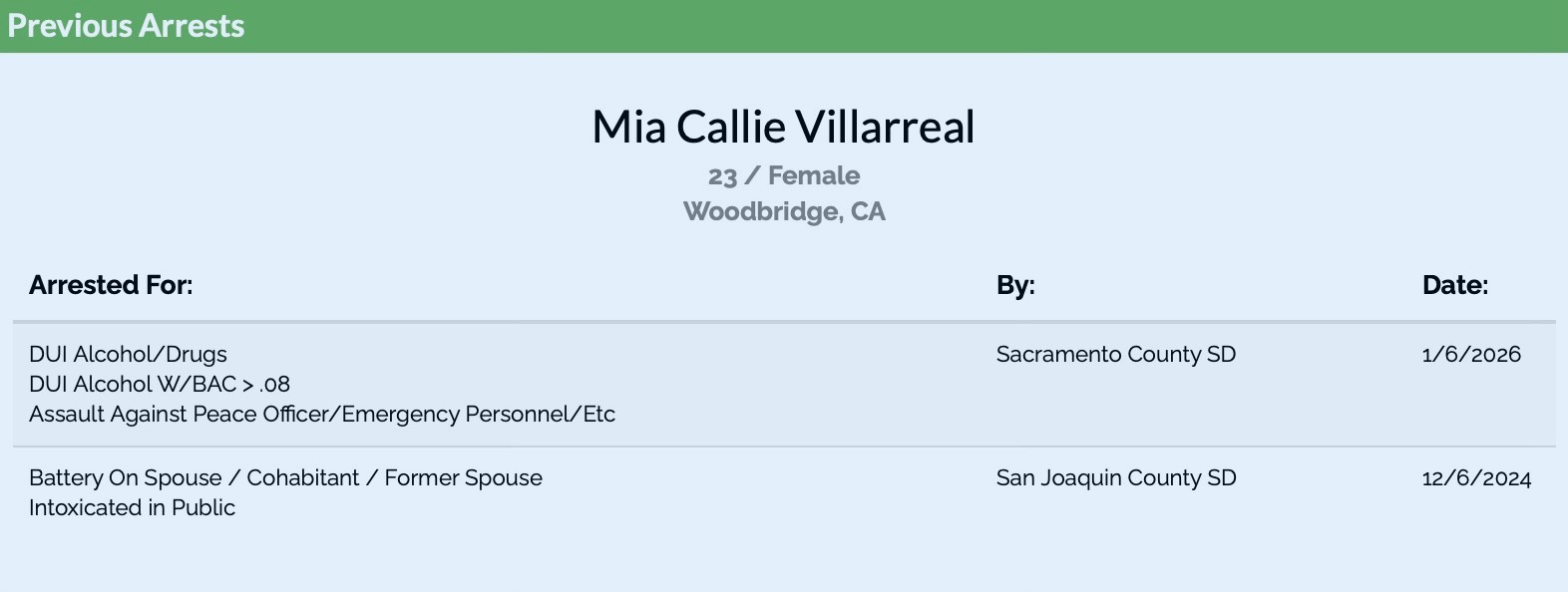
How many times does someone cycle through the system before something changes—and how many public resources are consumed along the way?
A Glimpse of What Ownership Could Look Like
As discussions continue about transferring federal refuge land into tribal trust for the Jamestown Corporation, some are looking west for a real-world example.
On the Makah Reservation, visitors are required to purchase a $20 annual recreation permit to access beaches, trails, and other sites. The permit must be displayed in your vehicle, and activities are limited to designated areas.

This isn’t unusual—it’s a reflection of tribal sovereignty. State laws don’t apply the same way, and the Tribe controls access to its lands.
But it does offer a glimpse into what management can look like under sovereign ownership.
So as proposals move forward involving the Dungeness and Protection Island refuges, some residents are asking a simple question:
If ownership changes, will access—and the rules that come with it—change too?


