


A man with a violent, multi-state criminal history is arrested a second time in Clallam County. As patterns mount, officials continue to question whether out-of-area offenders are really coming here at all. Meanwhile, taxpayers are left footing the bill.
Gerard Robert Fleetwood, 42, was arrested Friday in Clallam County and charged with interference with a healthcare facility, resisting arrest, unlawful imprisonment, and assault.
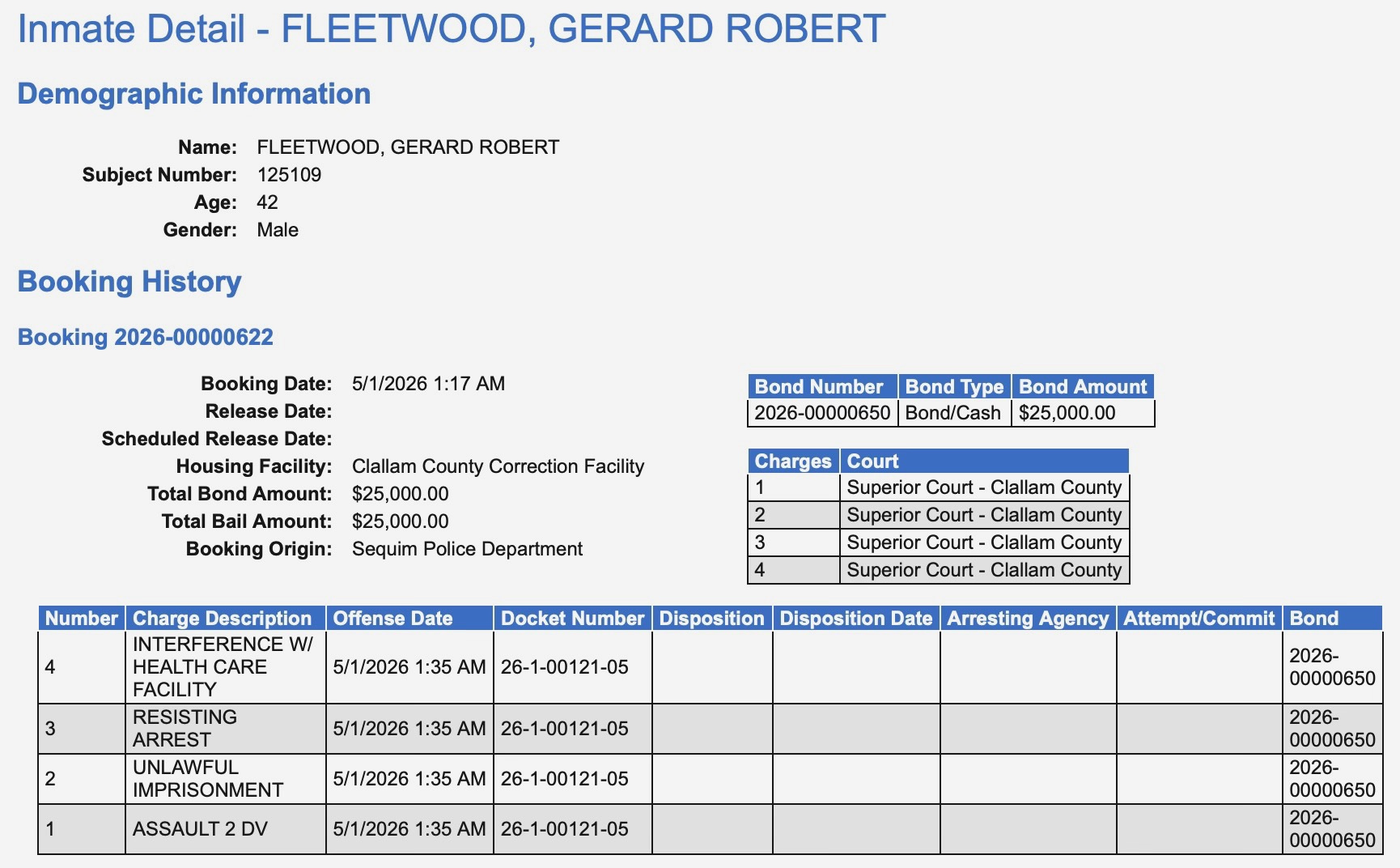
If the name sounds familiar, it should.
CC Watchdog previously reported on Fleetwood in December when he was arrested locally on charges including fugitive from justice and fourth-degree assault. But his history doesn’t start—or end—here.
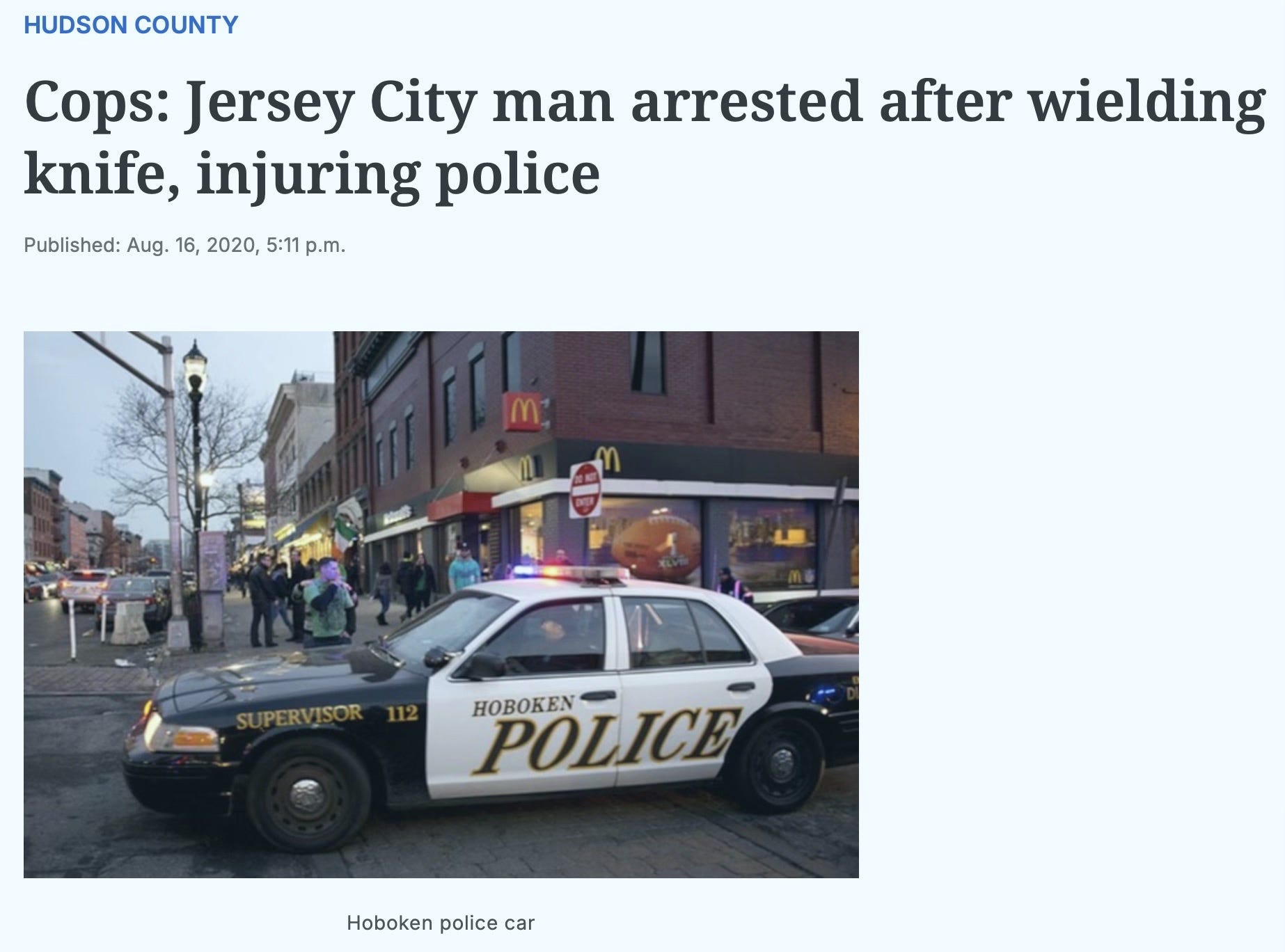
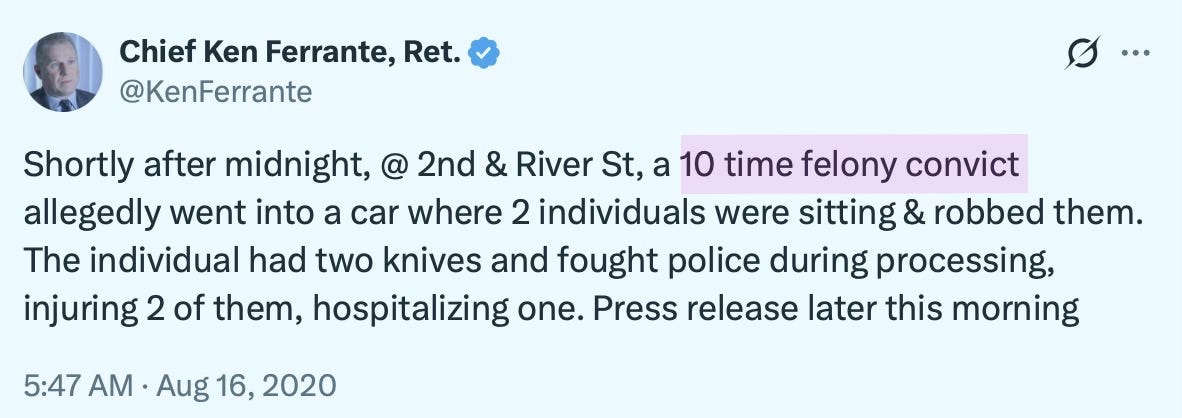
In 2020, Fleetwood was arrested in Hoboken, New Jersey after a violent incident involving robbery, knives, and injuries to two police officers. At the time, Hoboken Police described him as a “10-time felon.” According to reports, he entered a vehicle, stole a phone, threatened a victim with a knife, and later resisted arrest so aggressively that officers were injured during the struggle.
Now he’s in Clallam County.
Roughly 3,000 miles from where that story unfolded.
Which raises a question that keeps coming up: why here?
A Pattern That’s Getting Harder to Ignore
Fleetwood is not an isolated case. Over the past year, CC Watchdog has highlighted arrests involving individuals with criminal histories tied to states like Montana, Arizona, Missouri, California, and Arkansas.
At a certain point, it stops looking random.
At some point, it stops looking like coincidence and starts looking like a pattern—one that comes with a cost. When individuals like Fleetwood are arrested and held here, those costs don’t follow them from out of state. Jail, healthcare, indigent defense, and court proceedings are all absorbed locally—by Clallam County taxpayers.
What People on the Ground Are Saying
That pattern is something residents—and even those who have experienced homelessness locally—say they’re seeing firsthand.
In an interview with county commissioner candidate Jake Seegers, recovering addict Chelsea Jones described an encampment where eight people were from her home state of Missouri. According to Jones, word had spread that the Olympic Peninsula was an easier place to live while homeless.
Another interview, with a woman named Jen who had previously been homeless in the area, included a blunt observation: Port Angeles was “the first place I’ve seen spoiled homeless people.”
Those perspectives may not come from official reports, but they reflect lived experience—and they line up with what many residents say they’re noticing.
What Was Said at the Commissioners’ Forum
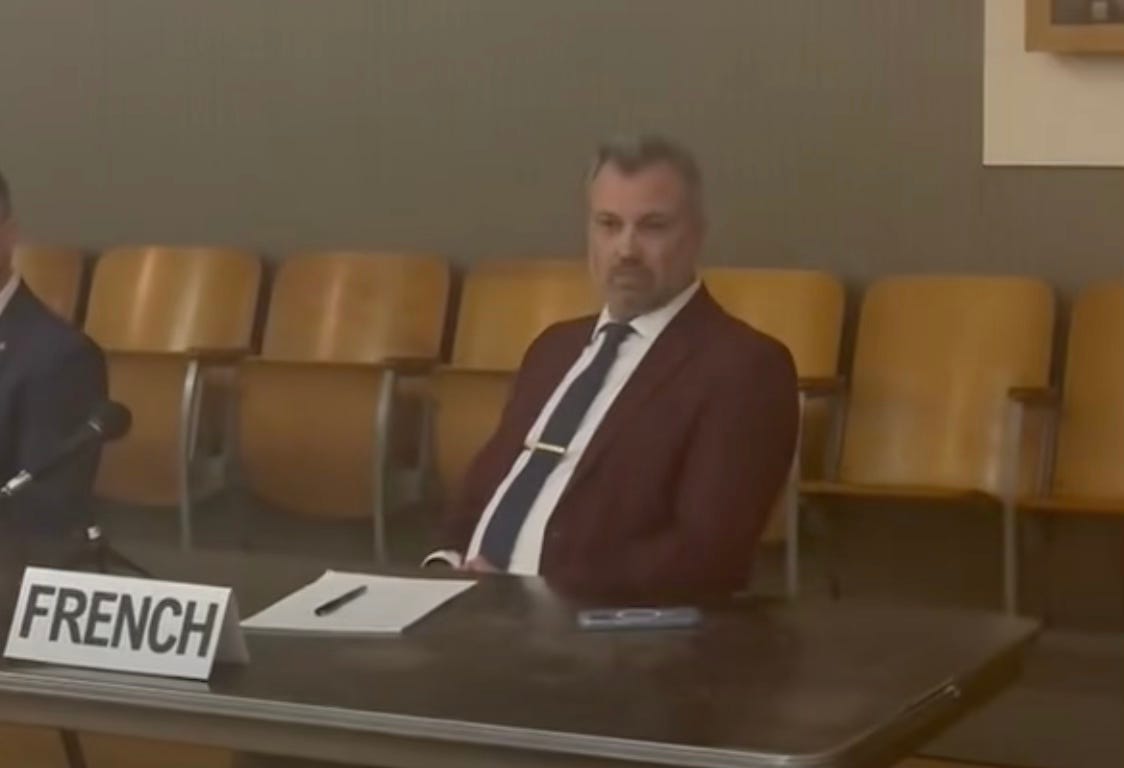
At last month’s Commissioner Forum, Commissioner Mike French was asked directly whether Clallam County’s approach to homelessness and harm reduction might be drawing people from outside the area.
French acknowledged uncertainty, saying he doesn’t have definitive data, but added that his general view is no—that services are not a primary driver.
Instead, he offered a different explanation.
“Generally no,” French said when asked if services are attracting people here. He went on to suggest that Clallam County’s remoteness could be a factor, noting that if someone has a warrant elsewhere, “you go to the remote place, right?”
He also cautioned against what he described as a tendency to shift blame outward.
“The focus right now is on finger-pointing,” French said, arguing that saying people are coming from somewhere else and “they’re not our community” risks becoming “an abdication of our responsibility.”
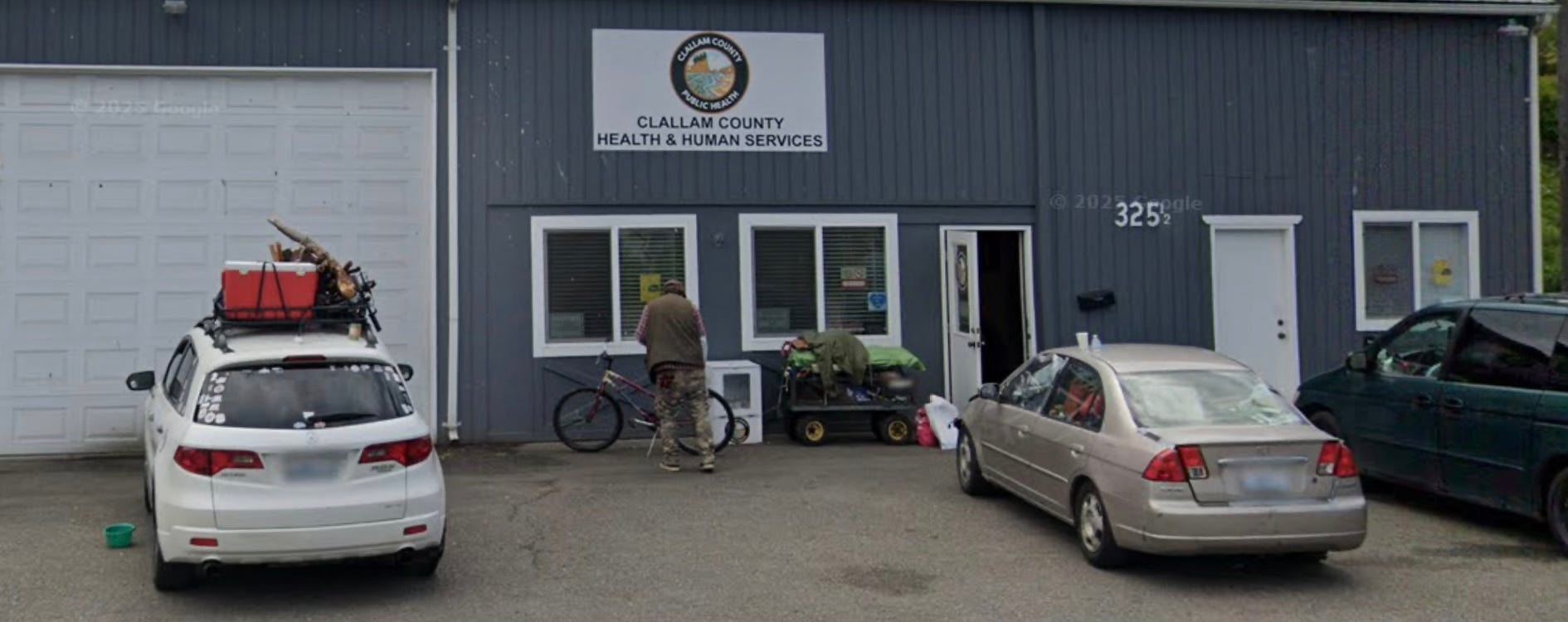
At the same time, French acknowledged that the largest concentration of homelessness is in Port Angeles—where the majority of services are located.
That leaves a tension that wasn’t fully resolved in the discussion.
If people are drawn by remoteness, why are they concentrated where services are?
And if services aren’t a factor, why is that concentration so closely tied to where those services exist?
Other Views—and Open Questions
Commissioner Randy Johnson recently shared his own observation from a visit to Serenity House, where he said that out of roughly 115 individuals staying there, only four were from out of town.
That may be accurate for that setting on that night. But it raises broader questions about how origin is tracked, how representative that snapshot is, and what it leaves out.
Not everyone experiencing homelessness is in a shelter. Many are in encampments, RVs, or dispersed throughout the county in ways that aren’t as easily measured.
What Residents Are Seeing
For many in the community, this debate isn’t abstract.
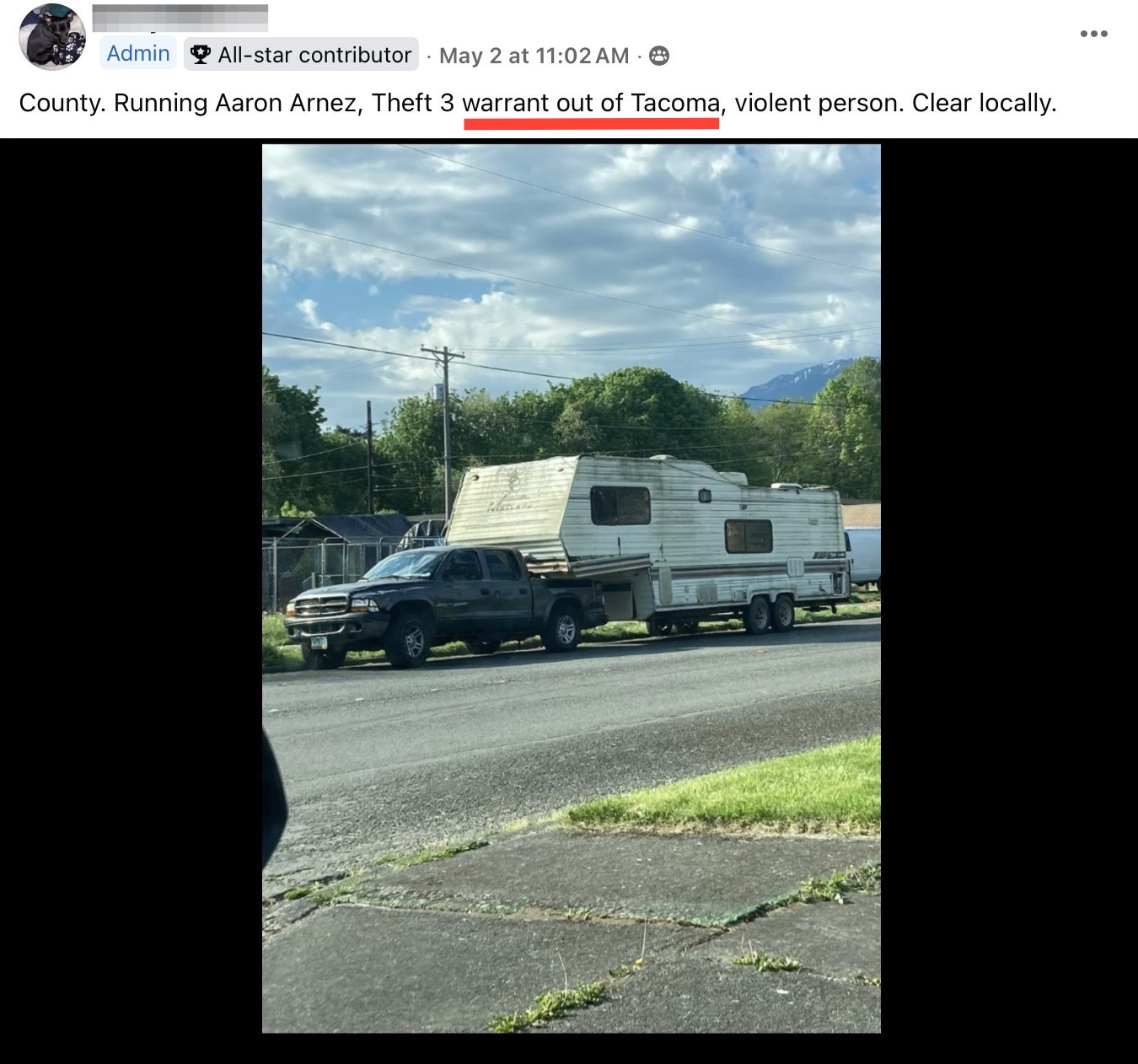
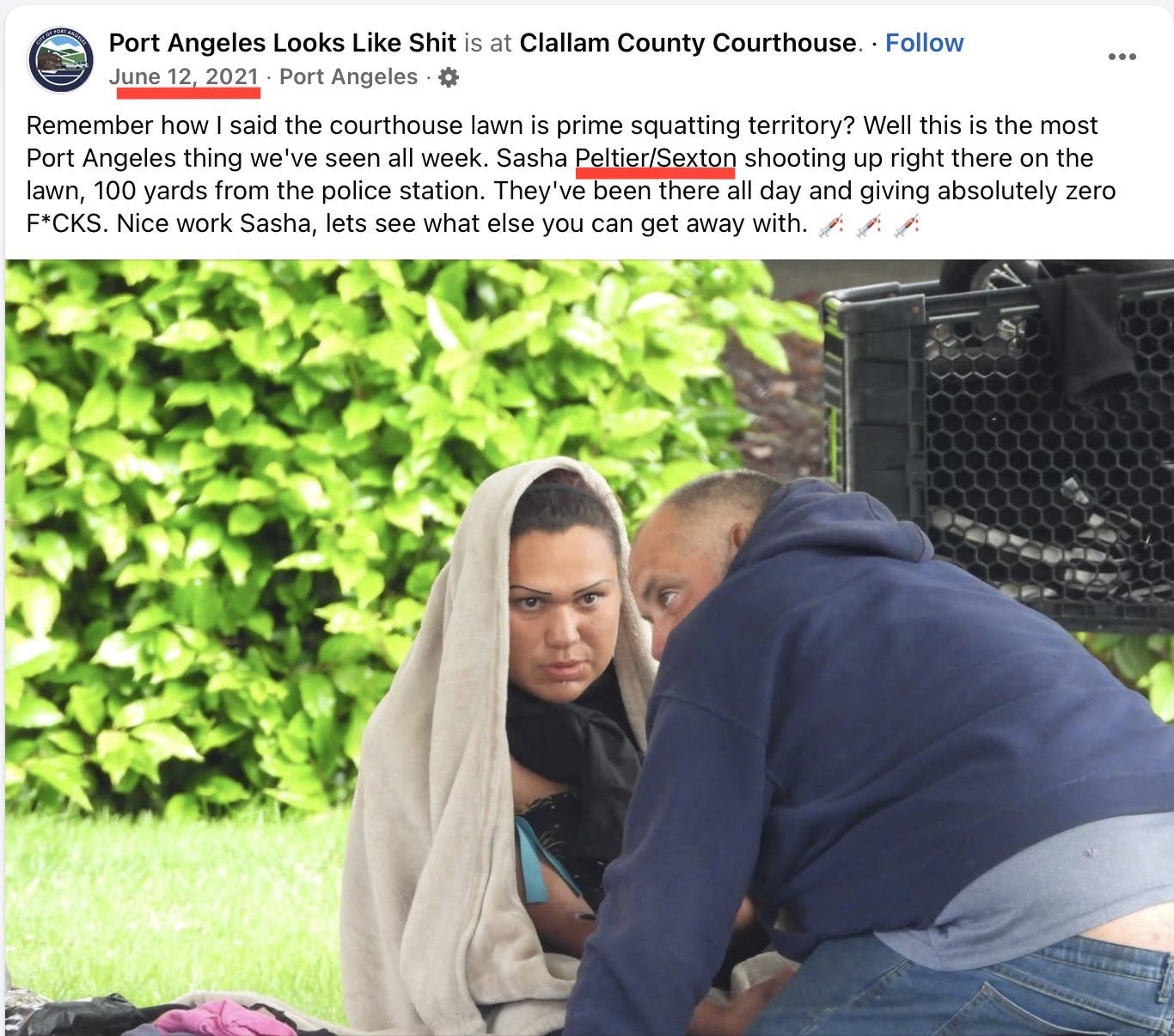
They’re seeing arrest reports. They’re recognizing repeat names. They’re noticing that some of those names come with long histories from other states.
And when those observations are dismissed as “finger-pointing,” it creates a growing disconnect between what people are experiencing and what they’re being told.

The Policy Question That Follows
All of this is happening as discussions continue about increasing taxes to fund public safety and related services.
Which makes the core issue harder to avoid.
If there’s uncertainty—or disagreement—about what’s driving these patterns, then what exactly is the strategy for addressing them?
And how do you build public confidence in that strategy if the underlying problem is still being debated?
Time to Reevaluate
Fleetwood’s arrest is one more data point in a trend that many residents believe is already clear.
The question now isn’t just how he got here—but whether local leadership is willing to take a hard look at why cases like this keep happening, and whether the current approach is actually working.
Because without that reassessment, the trajectory doesn’t change.
Today’s Tidbit
Those who attended the Public Safety Town Hall will remember David Rogers. After Commissioner Mike French said it was the public’s responsibility to reclaim public spaces, Rogers invited him to walk those same spaces together in downtown Port Angeles. What follows is from Rogers’ Facebook post yesterday, unedited.
Long post but I hope you read until the end.
Last Wednesday I had the opportunity to take a walk with commissioner Mike French, and I want to start by saying I genuinely appreciate his willingness to have these conversations. They aren’t always easy, and it matters when elected officials are willing to step out, listen, and engage directly with the community.
We covered a lot of ground, starting with something I think many people are feeling right now, a real decline in the sense of safety in our community. It’s not just a statistic, it’s a lived experience. Open-air drug use, camps popping up and leaving trash behind, and situations where law enforcement is called but there are little to no visible consequences. That wears on people over time.
To Mike’s credit, we agreed on several points. We talked about the need for more funding for law enforcement and the fact that Port Angeles is bringing on additional officers with recent funding allowances. That’s a positive step. But I also shared a concern I hear often, adding officers only helps if those officers are actually allowed to enforce the law. If their hands are tied, more staffing alone won’t solve the problem.
We also discussed housing, and this is where I have some serious concerns. When we’re talking about $350,000+ per unit for permanent transitional housing, and that’s before ongoing operating costs, it raises real questions about sustainability. Beyond cost, there’s also a practical reality: if someone is placed in a fully furnished unit, with a kitchen, bathroom, and even a water view, with no clear timeline or expectations to move on… what’s the incentive to transition out? Especially when what’s waiting on the other side is often more expensive and lower quality.
Another concern I shared is around “low barrier” housing. While the intention may be good, I worry that it doesn’t create a safe or supportive environment for people who are actively trying to get clean. When active use is allowed in the same space, it can undermine those who are working hard to change their lives. In effect, we risk creating environments where addiction is maintained rather than challenged.
We also touched on MAT (Medication-Assisted Treatment) programs. I do support these, when they are done correctly and with strong oversight. Unfortunately, what I’ve seen and heard too often is inconsistent management and over prescribing, which limits their effectiveness.
Through all of this, I will say I felt heard. Mike didn’t push back heavily on most of these points, and I appreciate that. But at the same time, I didn’t walk away feeling a clear sense of action or urgency. Maybe that’s where more voices from the community come in, I’m just one person.
One thing that really stood out to me, though, was a difference in tone compared to another recent conversation. When I told Jake Seegers that I was meeting with Mike, his response was overwhelmingly positive. He called Mike a great guy, said disagreements on policy are normal, and encouraged the conversation.
During my walk with Commissioner French, the tone was different. A few times he made comments along the lines of “that’s why I don’t think you’re like them,” or that I was different from others at the public safety meeting because I “ have compasion.” I understand the intent may have been to be complimentary, but I felt it missed something important.
I told him directly, I don’t think I’m different. I think most people in our community care deeply. And when people feel ignored, frustrated, or like nothing is changing, even good people can say things they normally wouldn’t. I shared a personal example: calling law enforcement, watching nothing happen, and eventually losing my patience and confronting the situation myself. That’s not how I want to act, but it came from feeling like I was hitting a wall.
That’s why I appreciated Jake’s perspective. It showed a level of confidence, in himself and in his ideas, that allows for open dialogue without needing to separate people into “reasonable” and “unreasonable” groups. I think we need more of that.
At the end of the day, I’m grateful for the conversation with Commissioner French. These discussions matter. But I also think it’s important that we continue to push for not just conversation, but clear direction, accountability, and action.
If we want our community to feel safe again, we can’t just talk about the issues, we have to be willing to address them head-on.


