


Clallam County canceled public meetings despite having a quorum available. At the same time, one commissioner is tied to a Maui conference funded through taxpayer-backed associations, while internal emails reveal extraordinary access, praise, and coordination with powerful interests. The contrast raises a fundamental question: when it comes to time, attention, and influence—who comes first?
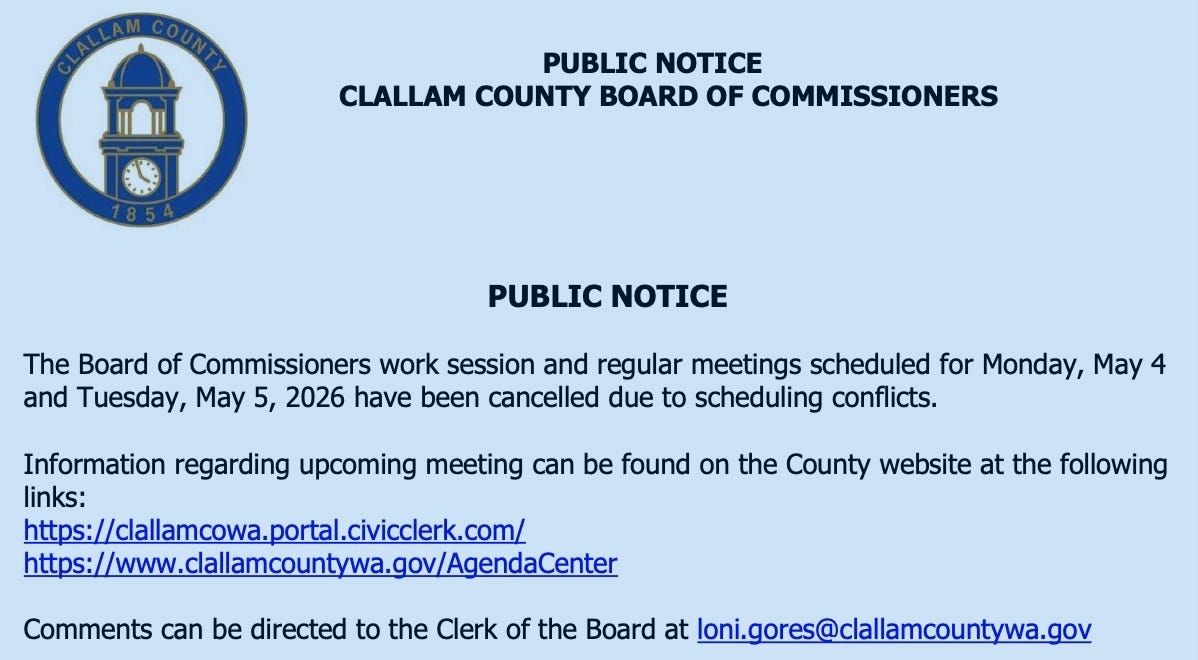
The county commissioners’ work session today and Tuesday’s weekly meeting are canceled this week due to “scheduling conflicts.”
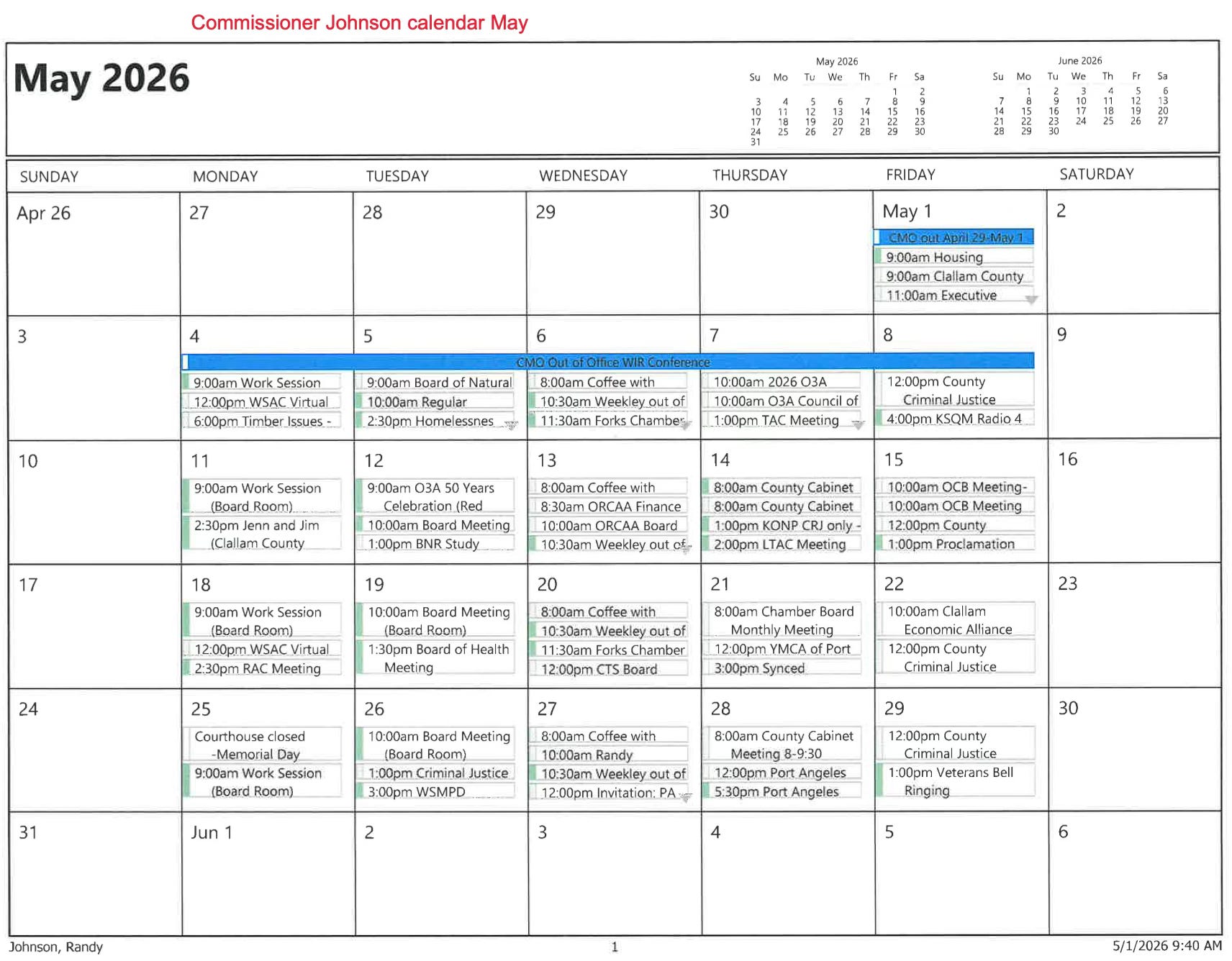
According to a public records request, the first eight days of May, Commissioner Mark Ozias is either “out of office” or attending a “WIR Conference.”

What is the “WIR Conference”?
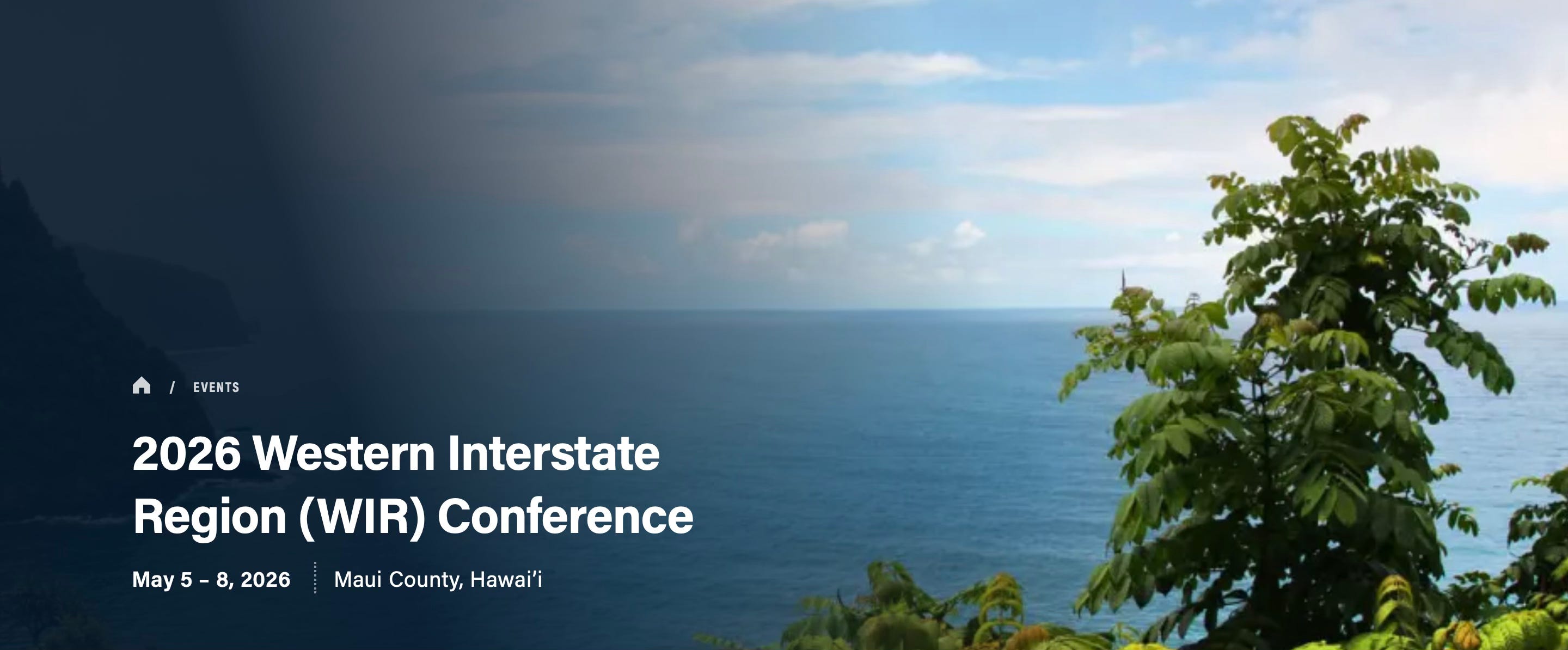
It appears to be the Western Interstate Regional Conference, hosted by the National Association of Counties (NACo)—an NGO that serves as the parent organization of the Washington State Association of Counties (WSAC), a statewide lobbying organization that has advocated for tax increases without direct voter approval.
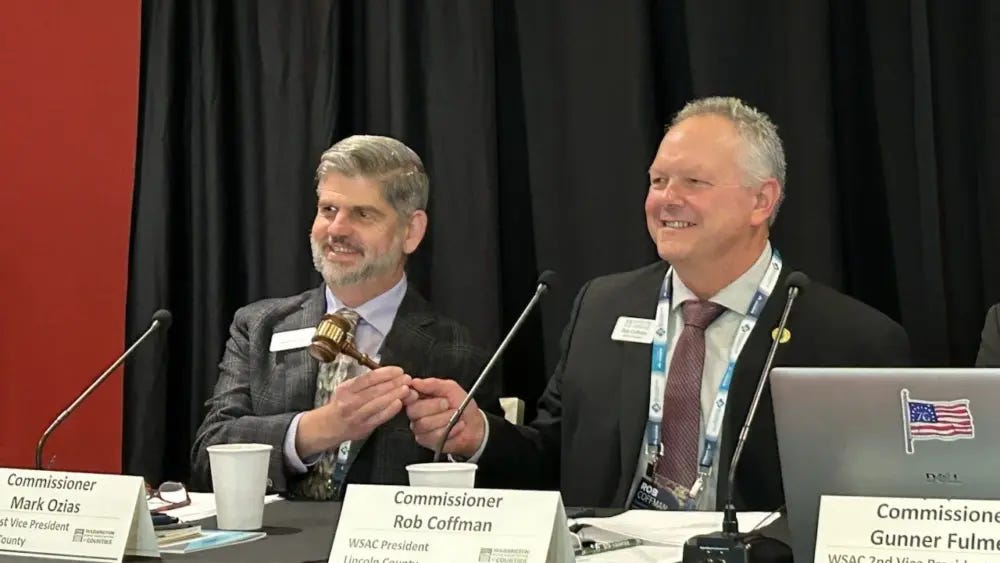
WSAC is led by its president: Mark Ozias.
And where is this conference?
May 5–8. Maui, Hawaii.
Commissioner Ozias has previously contended that Clallam County taxpayers do not directly fund his attendance at WSAC or NACo events—that those organizations cover the cost.
But those same organizations collect roughly $40,000 annually from Clallam County in membership dues—a voluntary expense funded by taxpayers.
So yes, in a roundabout way, Clallam County taxpayers are very likely footing the bill for a trip to Maui.
So why cancel the meetings?
That’s where things get more difficult to explain.
Only a quorum of two commissioners is required to conduct county business. And based on publicly available calendars:
Commissioner Mike French appears to be in town and scheduled for county-related events, including OlyCAP’s 60th anniversary.

Commissioner Randy Johnson is also available and scheduled for multiple county obligations.
In other words: the Board could meet.
Yet the meetings are canceled.
Emails were sent asking why. No response.
One additional factor: County Administrator Todd Mielke is on vacation this week. Often referred to as the “fourth commissioner,” Mielke plays a central role in guiding meetings and answering questions.
Which raises a fair question:
Are commissioners—paid $118,000 a year plus benefits—unwilling, or unable, to conduct public business without him?
As commissioners increasingly engage in outside organizations and regional networks, the reliance on administrative staff to interface with the public appears to have grown. Canceling meetings altogether, rather than proceeding with available elected officials, only reinforces that perception.
Who Gets Access—and Who Doesn’t
A recently reviewed email chain from 2018 offers a revealing contrast.
In it, Commissioner Ozias—wearing another of his many “hats” as Chair of the Olympic Coast National Marine Sanctuary Foundation—personally solicits funding from Jamestown Corporation CEO Ron Allen.
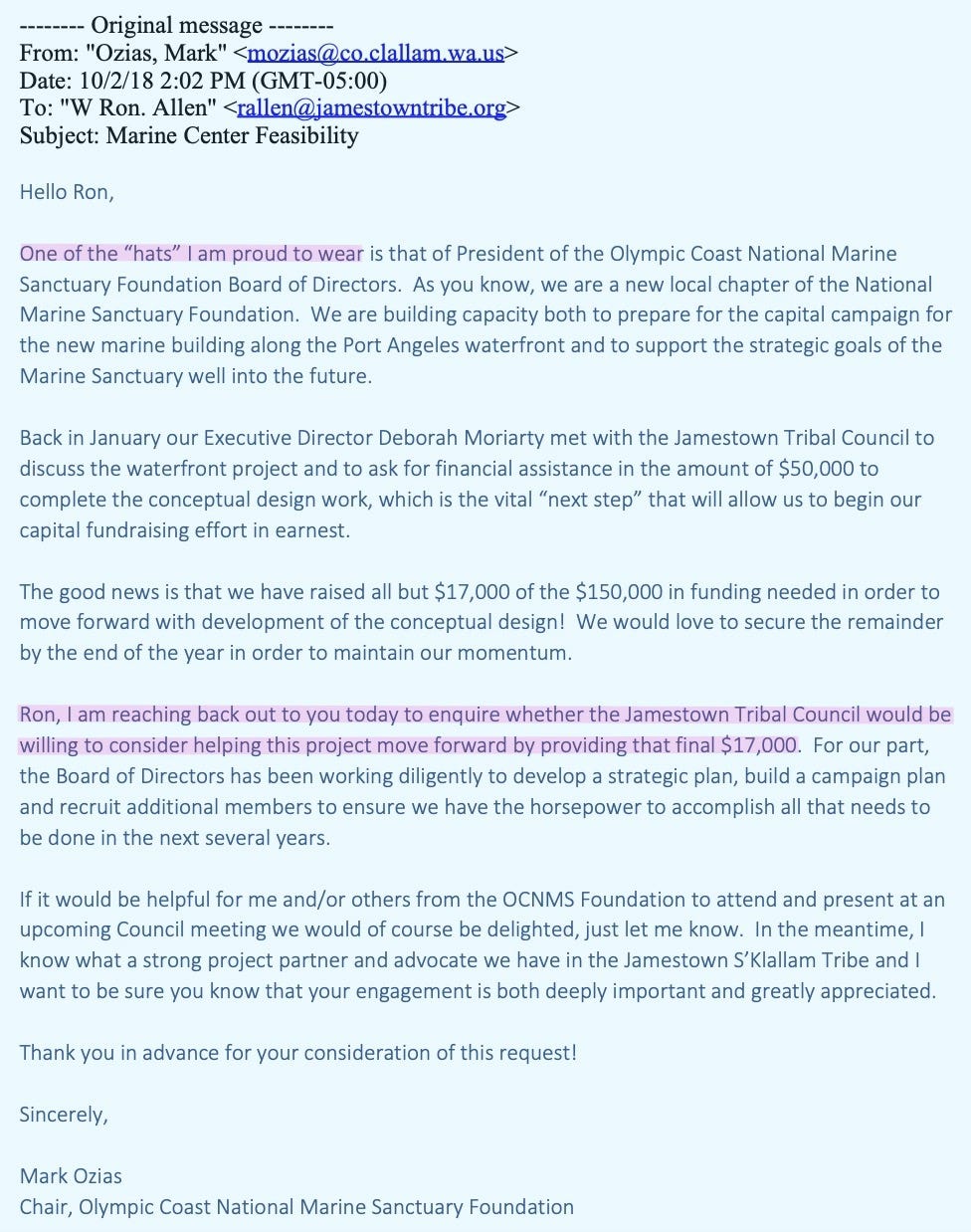
The tone is striking.
After the Tribe commits $10,000, Ozias responds:
“Wow!!! … I continue to be grateful for the multitude of ways in which the Jamestown S’Klallam Tribe engages with the community. Your leadership is inspiring…”

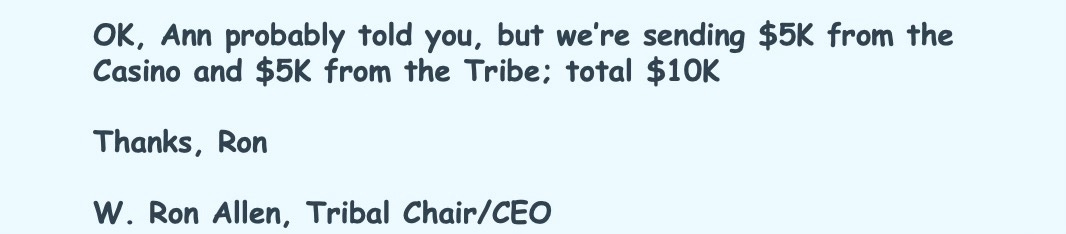
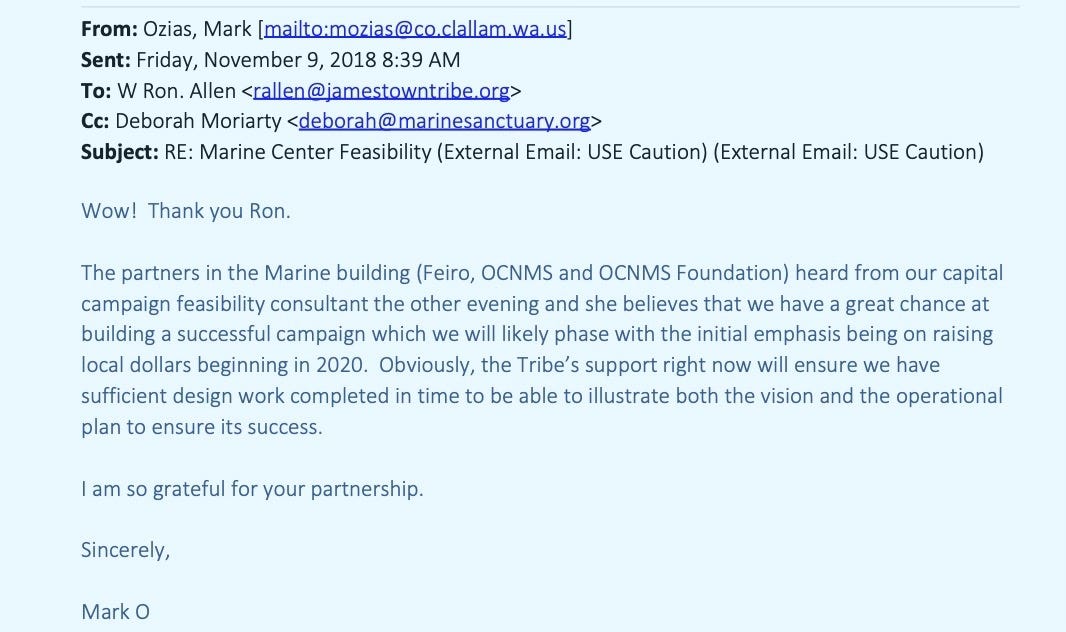
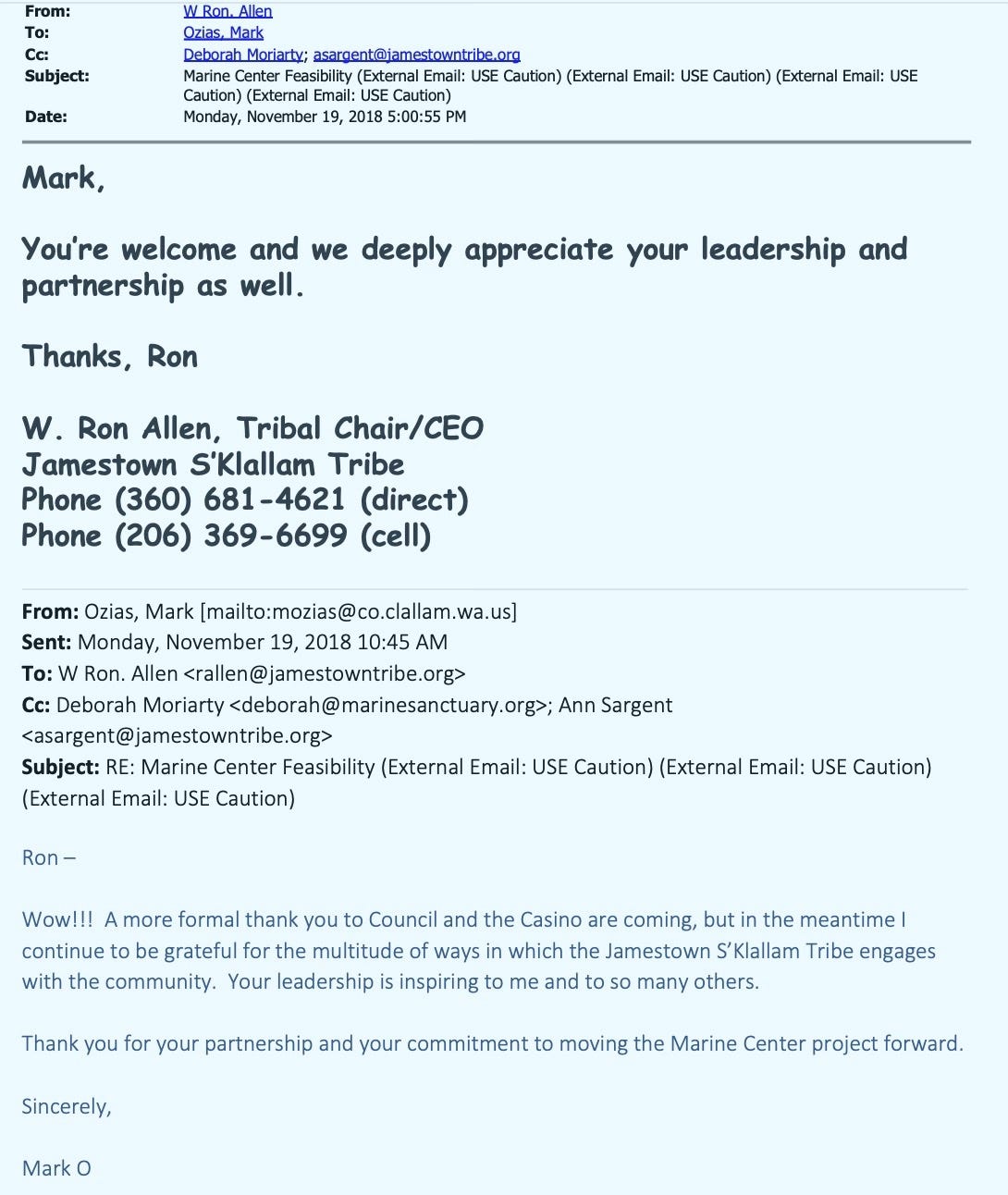
Multiple exclamation points. Repeated praise. Direct outreach.
At one point, Ozias encourages Allen—who was in Washington, D.C.—with:
“In the meantime, while in DC, give ‘em hell!”
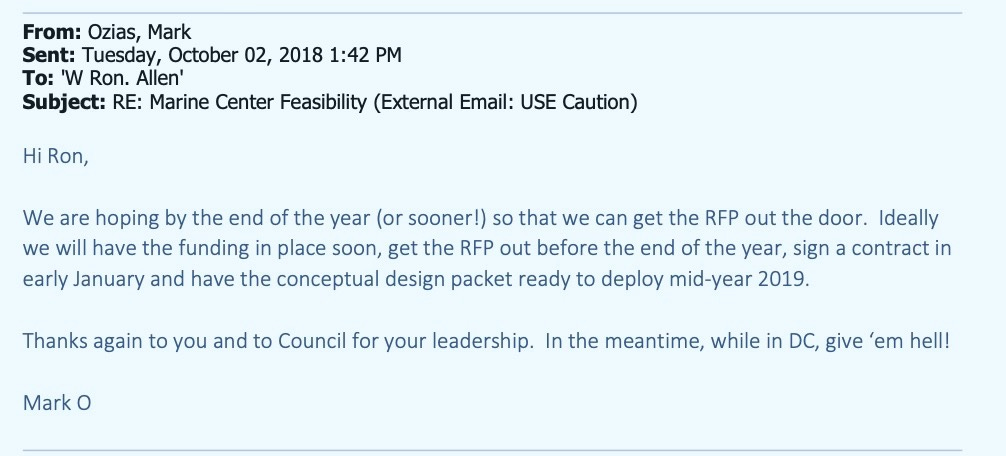
This is not distant, arms-length governance. This is close, enthusiastic partnership.
And it raises a simple question:
What kind of everyday taxpayer gets this level of access?
When property owners write checks—often far larger than $5,000—to fund county government, do they receive this kind of praise? This level of engagement? This enthusiasm?
Or is that reserved for institutions with influence, resources, and political alignment?
“I believe that the Jamestown S'Klallam Tribe is our most important partner in local governance whether we're talking about healthcare, or habitat restoration, or transportation, or emergency management, or economic development, or any of the myriad of areas that we work together for this community, and I hope to do better in meeting that standard in the future.” — Commissioner Mark Ozias, April 2024
The Many “Hats” of Mark Ozias
Mark Ozias simultaneously occupies a growing number of roles.
County Commissioner
President of WSAC
President of the North Olympic Development Council (NODC)
Chair of the Salish Behavioral Health Organization
President of Sequim Food Bank
President of the Olympic View Community Foundation
Each role brings influence. Each creates overlapping relationships.
And in some cases, those overlaps become difficult to ignore.
Coordinating Treatment, Steering Conversations
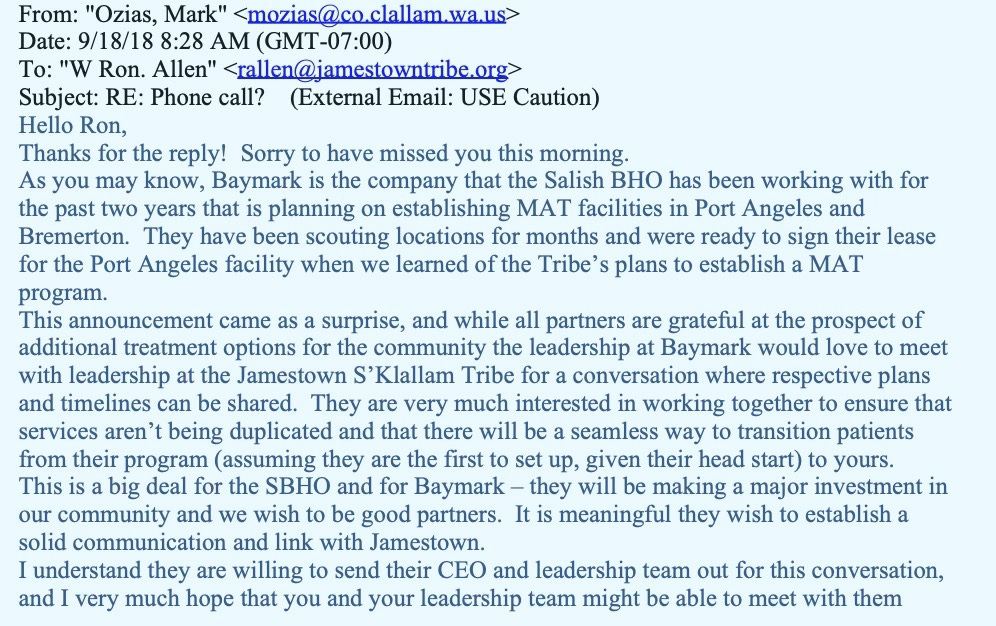
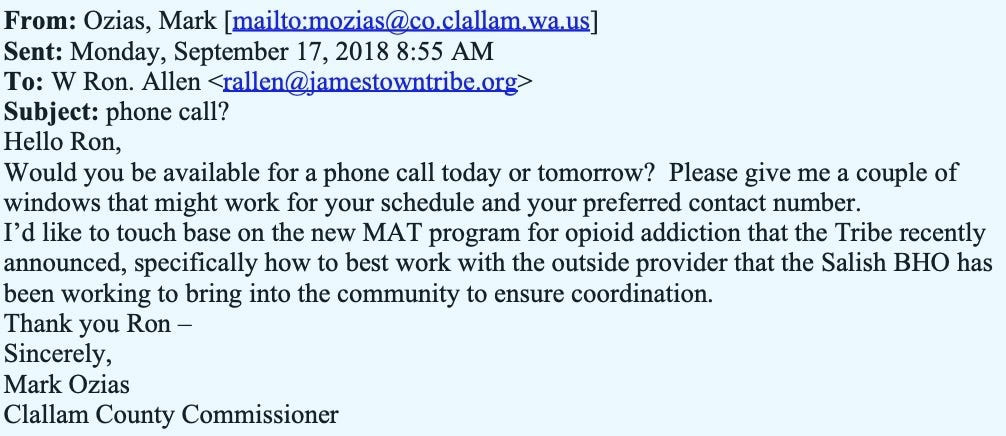
In another portion of the emails, Ozias is actively coordinating between:
A private MAT provider (BayMark)
The Tribe’s planned MAT clinic
The Salish Behavioral Health Organization (SBHO)
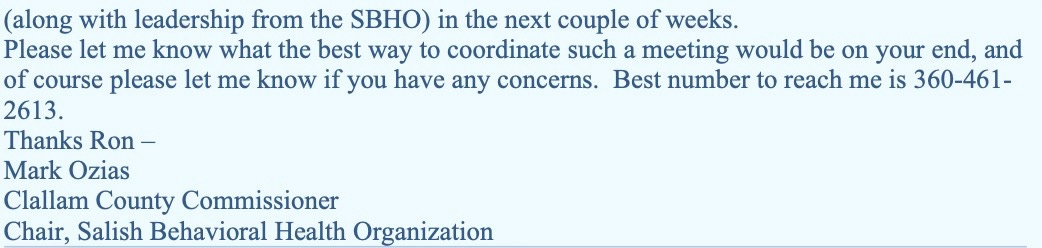
He writes about arranging meetings between the parties, noting that:
“This is a big deal for the SBHO… they will be making a major investment in our community and we wish to be good partners.”
At the same time, Ron Allen describes plans for the Tribe’s clinic, including:
“a bussing system to serve west Clallam County and over to Jefferson County.”
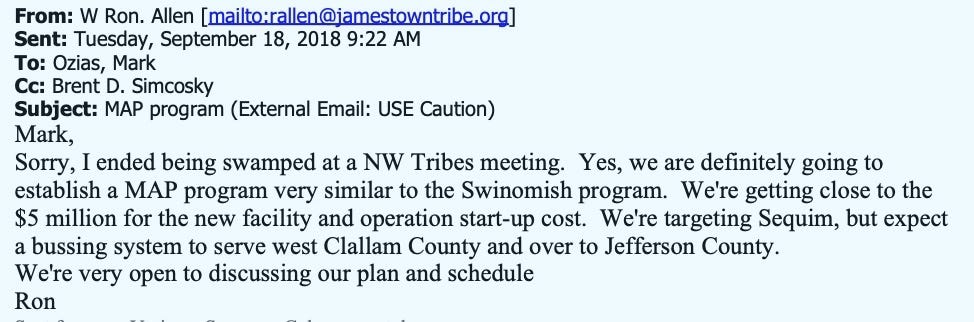
That detail stands out—particularly given prior public messaging that minimized or denied such plans.
Meanwhile, SBHO is the entity responsible for distributing opioid settlement funds.
So the question becomes unavoidable:
When a county commissioner is simultaneously:
helping coordinate between providers,
serving as chair of the funding body,
and working closely with a major institutional partner,
Where is the line between collaboration and conflict of interest?
Follow the Influence
The Jamestown S’Klallam Tribe, through its corporate enterprises, generates tens of millions in annual revenue. At the same time, tribal entities operate under different tax structures—often exempt from many of the property, sales, and lodging taxes that fund local government. This creates an unfair advantage.
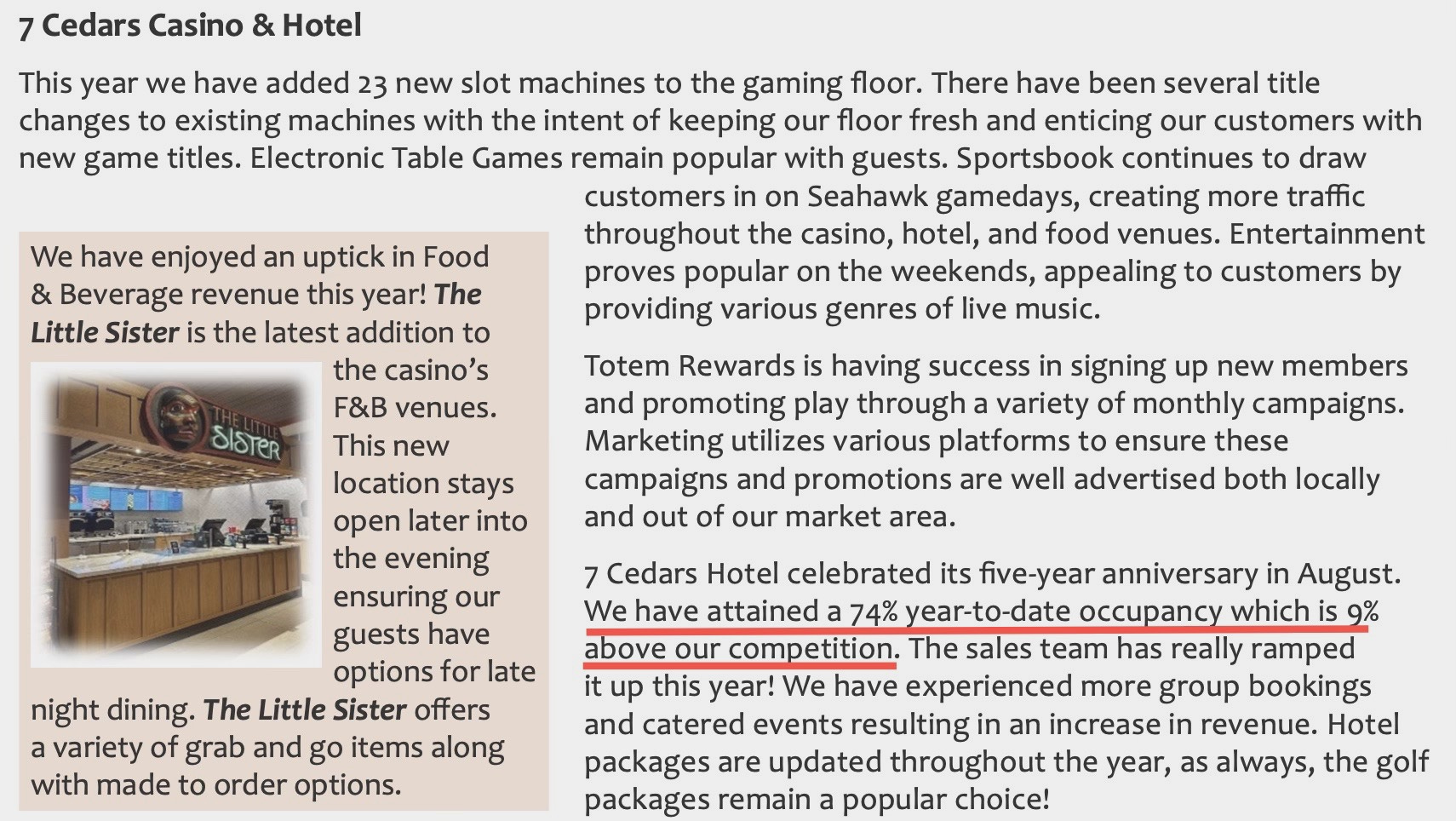
Yet when relatively modest contributions are made to projects, the response from county leadership is enthusiastic, immediate, and personal.
Meanwhile, the taxpayers who fund the system—year in and year out—see meetings canceled, questions unanswered, and access limited.
Back to This Week
All of this context makes the current situation harder to dismiss as routine.
A commissioner is attending a conference in Maui tied to organizations funded by taxpayer dollars.
Two commissioners appear available to conduct business.
The county cancels meetings anyway.
The administrator is out.
Questions go unanswered.
At a minimum, it reflects a troubling set of priorities.
At worst, it suggests a governing culture more comfortable engaging with institutions, sovereign governments, and insiders than with the public it was elected to serve.
The Question That Remains
Clallam County residents don’t expect perfection.
But they do expect availability. Transparency. Accountability.
And above all:
That public business is prioritized above private conferences—and that elected officials serve the public with the same energy and enthusiasm they show behind closed doors.
Because right now, the contrast is hard to ignore.

Today’s Tidbit
Remember when a commenter took to Nextdoor to scold a new steakhouse in Sequim, saying it “exemplifies the haves and have nots”?
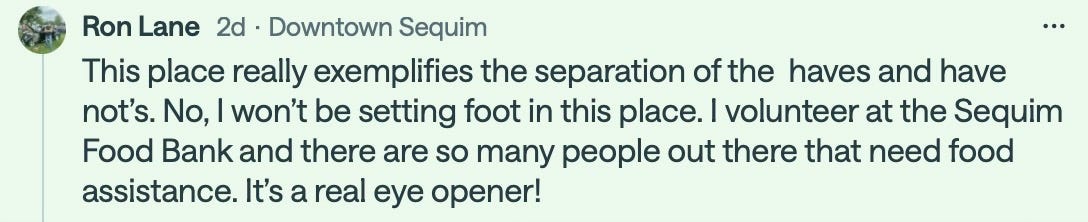
Well… they may want to sit this one out.
The Cedars at Dungeness—owned by the Jamestown Corporation—recently hosted a $122.50 per person tequila pairing dinner, complete with five courses, a featured tequila expert, and what was described as an “elevated experience that is par none on the Olympic Peninsula.”
We’re talking:
Mesquite grilled prawns
Guajillo braised pork shoulder
Charred halibut with fig mole
Mexican chocolate fried ice cream
And five premium tequila pairings to match
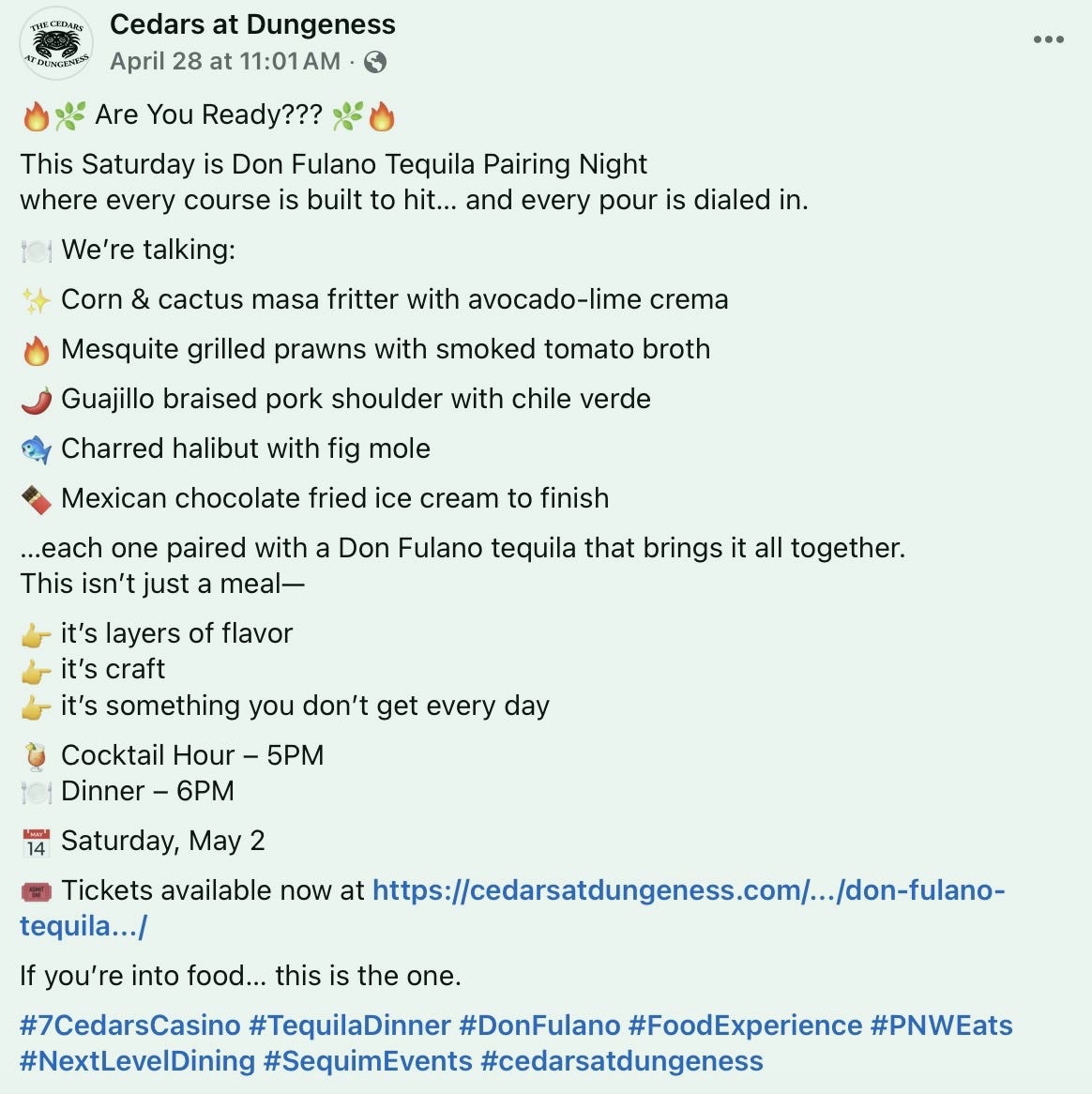
An “intimate, immersive setting” with “fantastic tequila and even better company.”
No complaints about “haves and have nots” there.
But here’s the part that never seems to make the conversation:
Some businesses in this county:
Pay property taxes
Pay federal income tax
Collect and remit sales tax
Undergo health inspections
Pull permits for events
Register vehicles and pay tabs
Provide mandated employee benefits
And some don’t—because they operate under a sovereign corporate structure that operates as a tax shelter and exempts them from many of those obligations.
Same marketplace. Very different rulebook.
So if we’re going to talk about “haves and have nots,” maybe the conversation should include not just who can afford a $122 dinner—but who’s operating with a built-in structural advantage from the start.


