


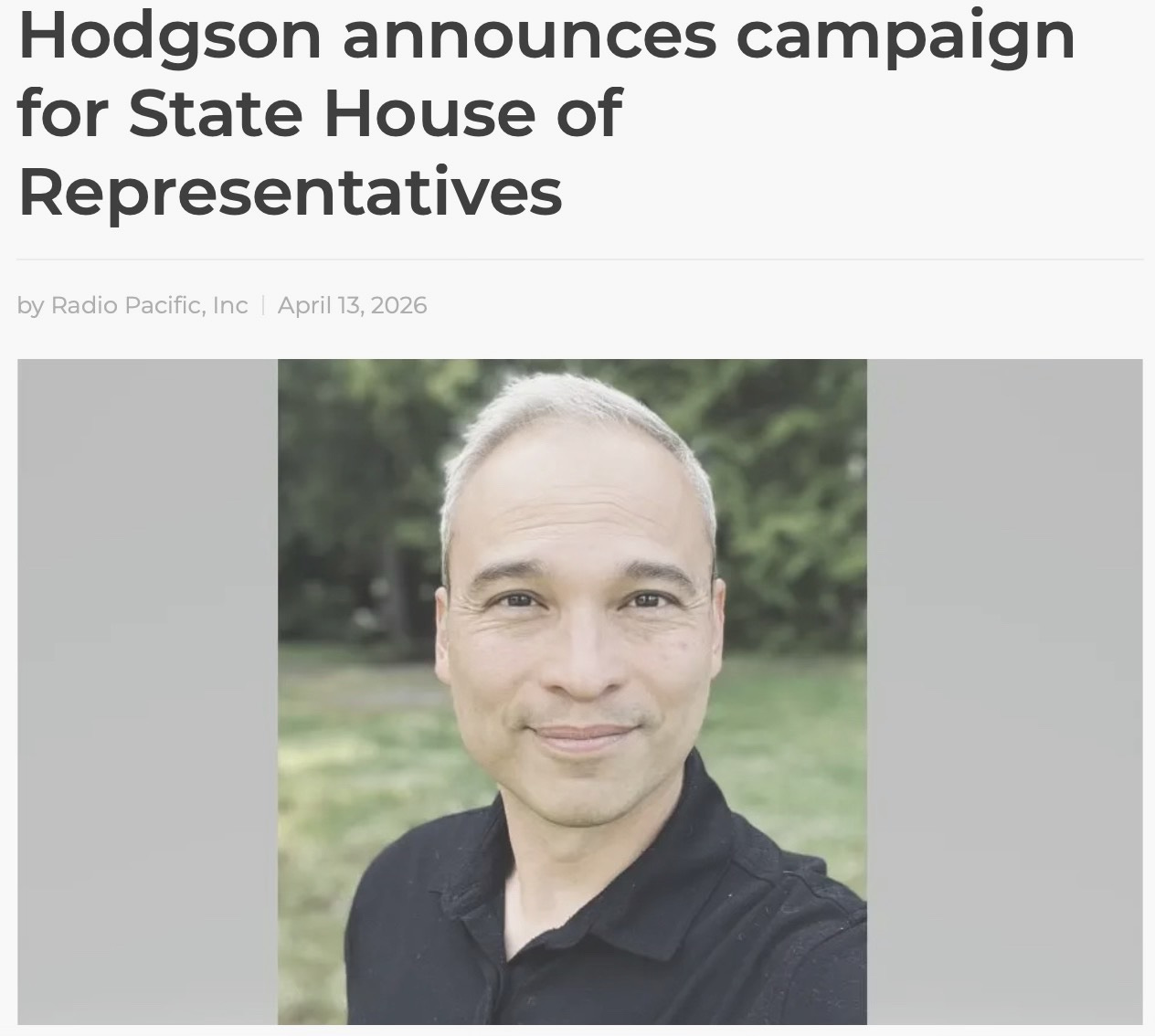
Just three months into his role on the Port Angeles City Council, Mark Hodgson is already aiming higher—announcing a run for the State House while pushing one of the city’s most expensive and controversial policies: keeping all public bathrooms open 24/7. But as questions linger about his past attendance, residency, and priorities, critics are asking whether this is leadership—or the early signs of another political stepping stone.
Mark Hodgson has officially announced his candidacy for the Washington State House of Representatives, signaling that his ambitions extend well beyond Port Angeles City Hall. But for many watching closely, the announcement raises a more immediate question: what kind of leadership is he demonstrating right now?
That question becomes harder to ignore when looking at the record.
Last year, as a member of the Clallam County Charter Review Commission, Hodgson had the worst attendance out of all 15 commissioners—a body tasked with shaping the county’s foundational governing document. It was a serious responsibility, yet one that, by the numbers, didn’t receive consistent participation.
At the same time, questions surrounding his residency have never been publicly addressed. During his run for Port Angeles City Council, Hodgson reportedly listed Olympia as his residence, even as he campaigned locally. Those concerns were raised publicly but never fully clarified.
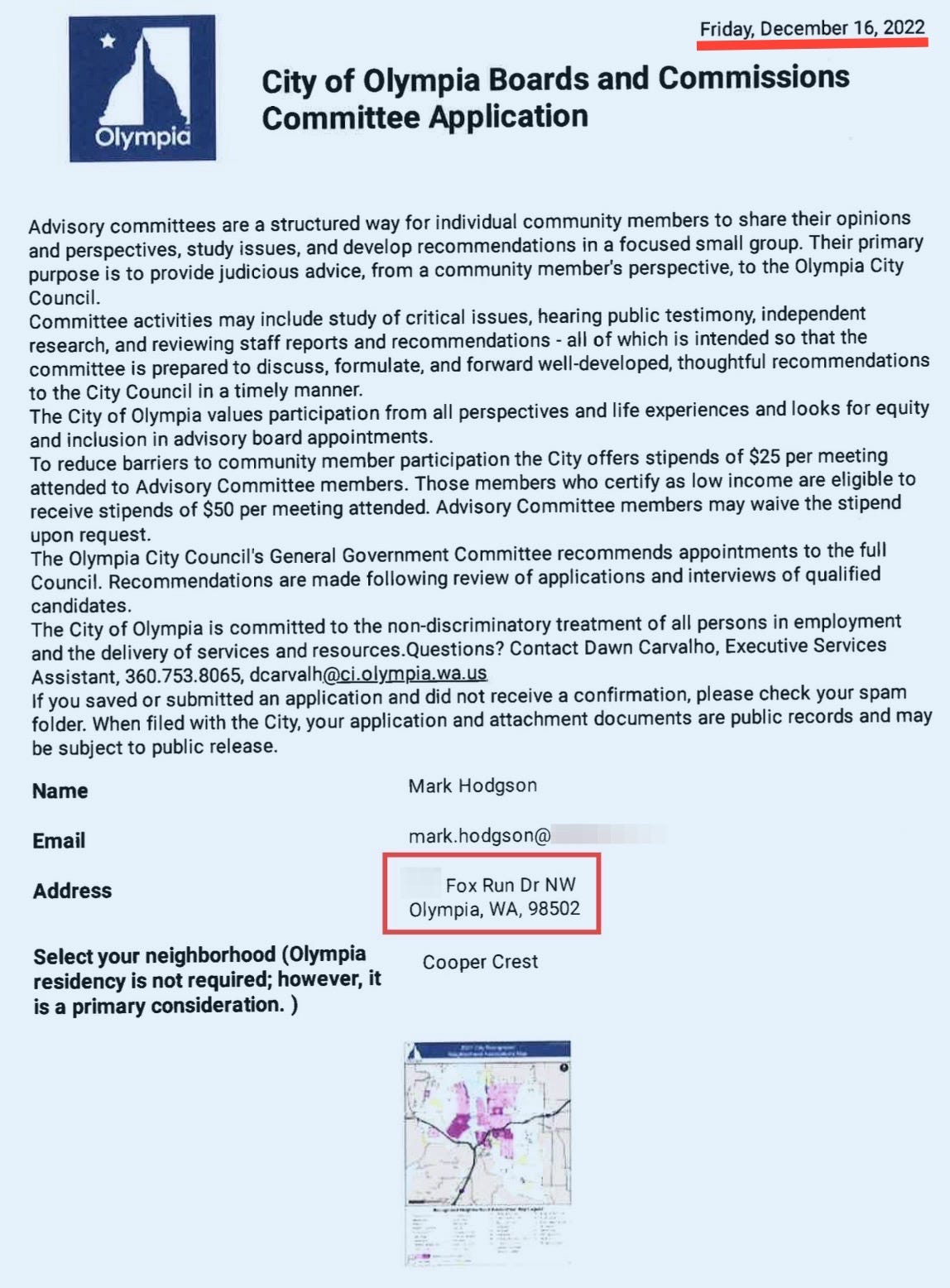
Now on City Council, the pattern hasn’t exactly inspired confidence. Hodgson:
Missed his very first council meeting in January
Had his swearing-in delayed due to “work obligations”
Was, at the time, reportably living and working as a State Trooper in Olympia
He has since transferred to Clallam County, and is quickly gaining a local reputation as a no-nonsense state trooper.
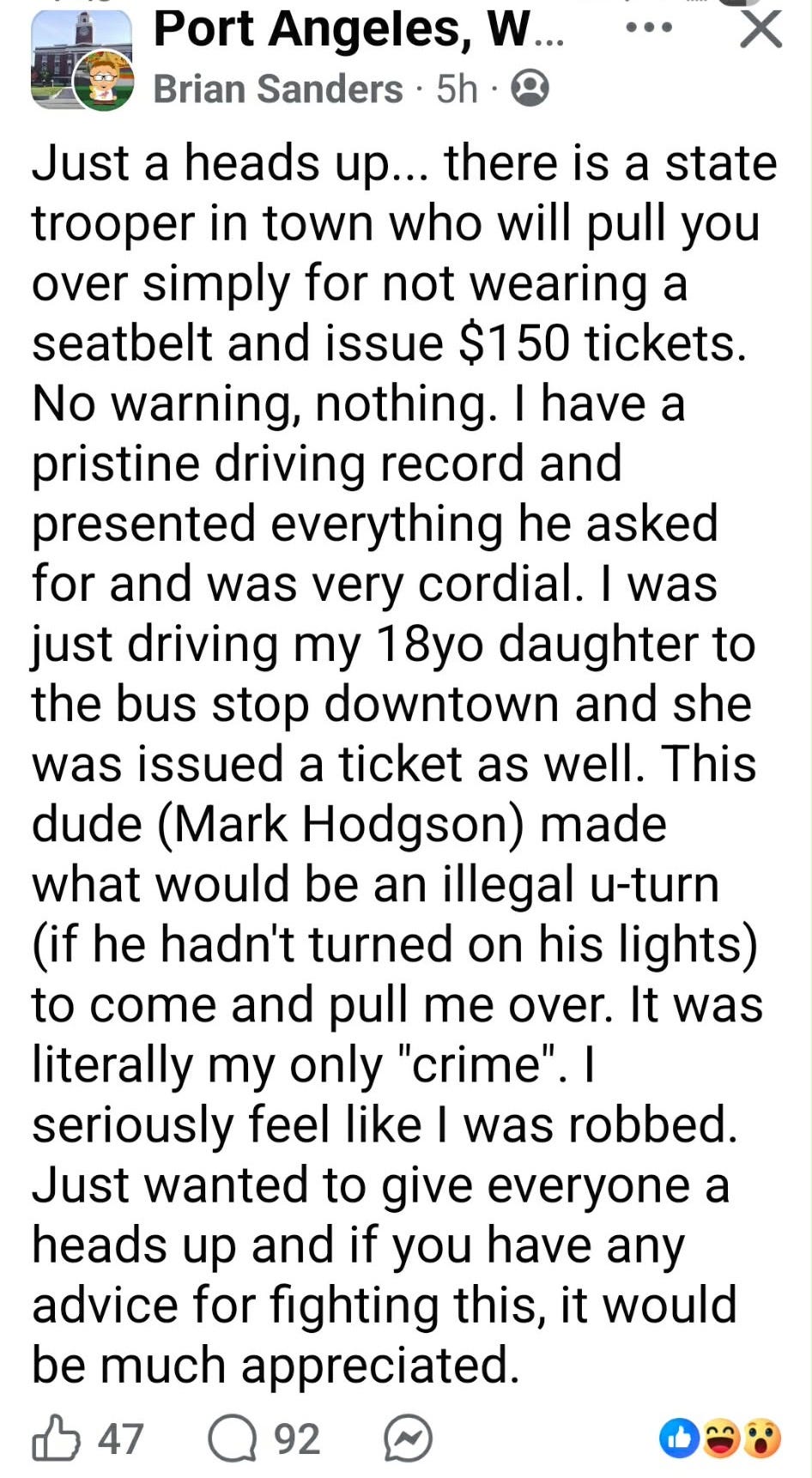
But the broader concern remains: how rooted is his focus here in Port Angeles and Clallam County?
Because already, the attention appears to be shifting.
The Bathroom Debate: Cost vs. Policy Direction
At a recent council discussion, Hodgson’s first major motion was striking:
Keep all three city bathrooms open 24 hours a day
And begin identifying locations for two additional bathrooms
This came despite clear warnings from city staff.
The Port Angeles Parks Department reported:
“Since 2023, our department has spent nearly a half a million dollars just cleaning our outdoor restrooms.”
Let that sink in—$500,000 just to clean bathrooms.
And the problems aren’t minor:
Clothes and syringes flushed into plumbing
Toilets requiring removal from the floor to clear blockages
Frequent damage, biohazards, and safety concerns
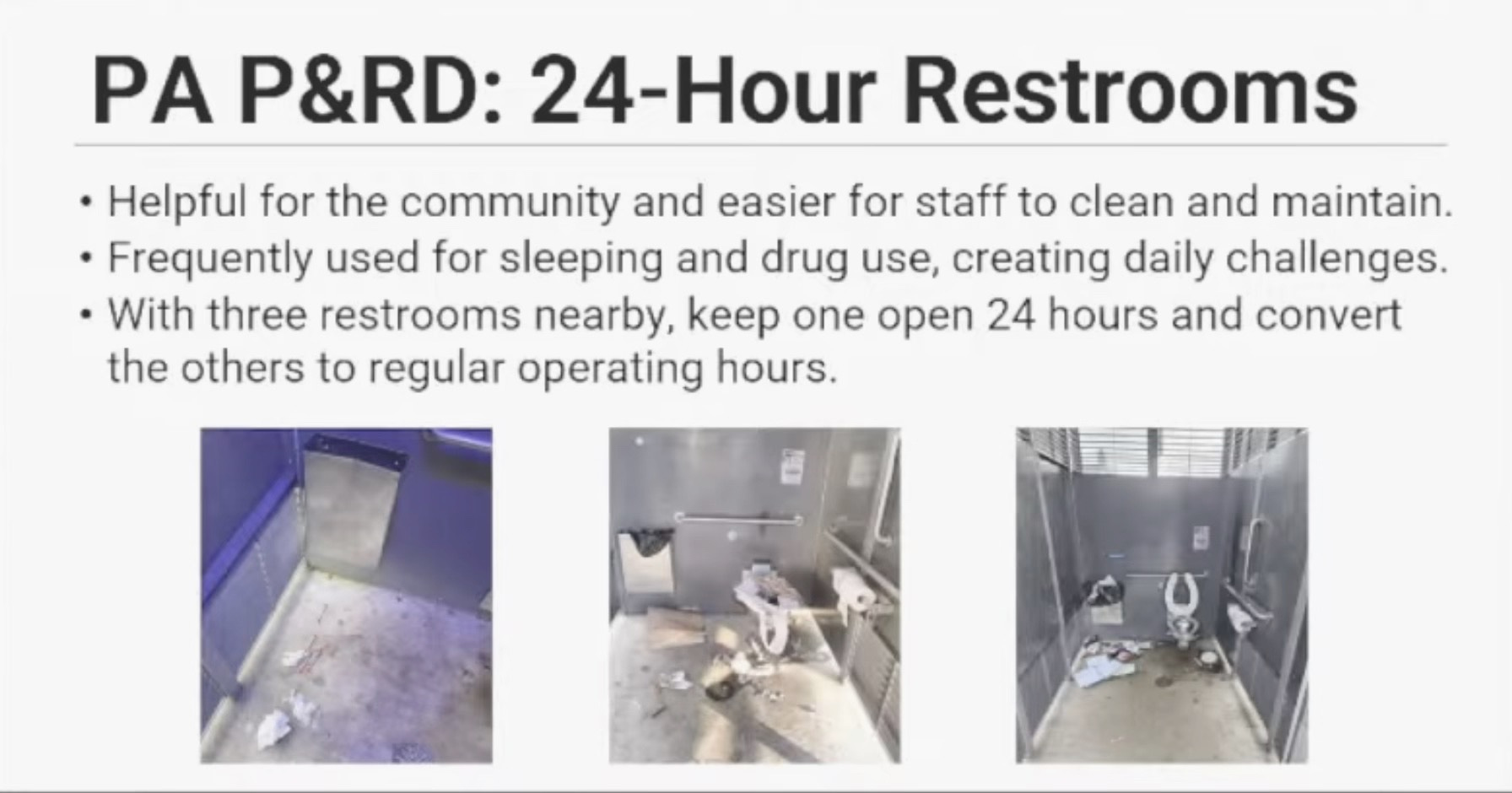
Staff were already considering a scaled-back approach:
One 24-hour restroom
Two others daytime-only
Why? Because they don’t have enough staff to maintain them now.
One staff member, speaking candidly, admitted:
“We don’t clean everything that we should… I wouldn’t take my kids there.”
That’s not a political talking point—that’s the reality on the ground.
Not a “Middle Ground”
Hodgson has positioned himself as a middle-of-the-road problem solver. But based on the meeting, his position is clear: expand access, even as costs and misuse spiral.
That’s not moderation—that’s doubling down.
And it aligns with comments he made at a recent Port Angeles Business Association meeting, where he expressed support for low-barrier housing—a model that allows continued drug and alcohol use.
Taken together, the philosophy becomes clearer:
Keep facilities open, regardless of misuse
Expand services, even when they’re already overwhelmed
Absorb the cost—passed on to taxpayers
A Familiar Pattern?
There’s a bigger concern here.
Running for state office just months into a local term raises the possibility that Port Angeles is not the priority—it’s the platform.
If that sounds familiar, it should.
The Charter Review Commission already saw what happens when responsibilities take a back seat. Now, some are wondering if the City Council is next.
Because when:
Attendance is inconsistent
Residency questions go unanswered
Major policy pushes ignore operational realities
…it doesn’t suggest balance.
It suggests ambition outpacing accountability.
Bottom Line
Mark Hodgson’s push for 24-hour bathrooms isn’t just about restrooms.
It’s a window into:
His policy priorities
His governing philosophy
And how he may approach higher office
At a time when the city is already struggling to maintain what it has, the question isn’t whether bathrooms are important.
It’s whether this approach is sustainable—or just the beginning of more costly decisions to come.

Today’s Tidbit: Emily Randall
Congresswoman Emily Randall responded to a concerned Clallam County resident with a form letter that tries to have it both ways—praising the Dungeness National Wildlife Refuge as a vital public asset while signaling support for transferring it into trust for the Jamestown S’Klallam Tribe. She leans heavily on phrases like “since time immemorial” and tribal stewardship, but avoids the obvious tension: land held in public trust doesn’t stay public once it’s transferred to a sovereign nation.
She promises to “ensure public access,” yet backs a process that could put that access out of local control entirely. There’s no real acknowledgment of growing public concern or what enforceable protections would remain. For a representative elected to serve her constituents, the letter reads less like advocacy for the people of the 6th District—and more like a careful defense of a decision already heading in one direction.
Dear [Redacted],
Thank you for reaching out to my office to share your thoughts on the Dungeness National Wildlife Refuge and potential land transfer to the Jamestown S’Klallam Tribe. As your representative in Congress, hearing from folks in Washington’s 6th District is incredibly important to me, and I truly appreciate your time and your perspective.
As you may know, the Dungeness National Wildlife Refuge in Clallam County includes one of the world’s longest sand spits, and is home to more than 300 species including types of fish, mammals, birds, and more. These lands are invaluable not just for their natural beauty, but also for the benefits they provide to our communities and to our economies. Furthermore, wildlife refuges are a crucial cornerstone of our country’s conservation obligation. It is imperative that we protect areas like the Dungeness National Wildlife Refuge from any harm, whether that be from plastic pollution, offshore drilling, or ocean mining.
The Dungeness Watershed is located in the ancestral homeland of the Jamestown S’Klallam Tribe along the Strait of Juan de Fuca. The Tribe has fished, gathered, hunted, and conducted ceremonies in the area since time immemorial. For over 30 years, the Tribe has worked with Clallam County and other partners through the Dungeness River Management Team (DRMT) to protect the watershed and meet the needs of both people and wildlife. Important plans, such as the 1994 Dungeness-Quilcene Water Resources Plan, helped guide fair water use, including an agreement that limits how much river water can be used for irrigation so enough remains for fish. Later updates improved water conservation and set minimum river flow levels to protect fish habitats. The Tribe has played a key role in these efforts and continues to work with farmers, local governments, and environmental groups to protect the land and reduce pollution.
The Tribe has been engaged in co-management of the tidelands since 1990, and in 2024, reached an agreement with the U.S. Fish and Wildlife Service to establish co-management of the refuge. The Tribe is seeking a land transfer for the Dungeness Refuge to be held in trust, which means the federal government, through the Department of Interior (DOI), would hold the title to the land for the benefit of the Tribe. Land transfers require an act of Congress and there is precedent for federally owned lands, within established refuges, ranges, and other federally designated lands, to be transferred into trusts for Tribes. I plan to work closely with the Tribe, the County, local community members, the relevant state and federal agencies, and other members of our congressional delegation to ensure that any land transfer continues to safeguard public access and protects these areas for generations to come.
As you know, these lands are invaluable not just for their natural beauty, but also for the benefits they provide to our communities, like the ability to hunt, hike, fish, and camp. These benefits are strengthened when Tribal stewardship and sovereignty are respected and upheld. As a member of the Subcommittee on Indian and Insular Affairs within the House Natural Resources Committee, I am committed to advocating for Tribal sovereignty and working alongside Indigenous leaders to support policies that uplift Tribal Nations across the country. I will continue advocating for policies that safeguard our wildlife and public lands, protect our environment, and honor Tribal sovereignty and self-determination.
Thank you again for sharing what matters to you. If you would like to stay up to date with my work on behalf of Washington’s 6th Congressional District, connect with me on Instagram, Facebook, Bluesky, and subscribe to my newsletter. If you need help with a federal agency, such as the VA, IRS, or USCIS, my office is here to assist. Please visit this link or call my Bremerton District Office at (360) 373-9725 or my Tacoma District Office at (253) 272-3515.
Sincerely,

Emily Randall
Member of Congress


