
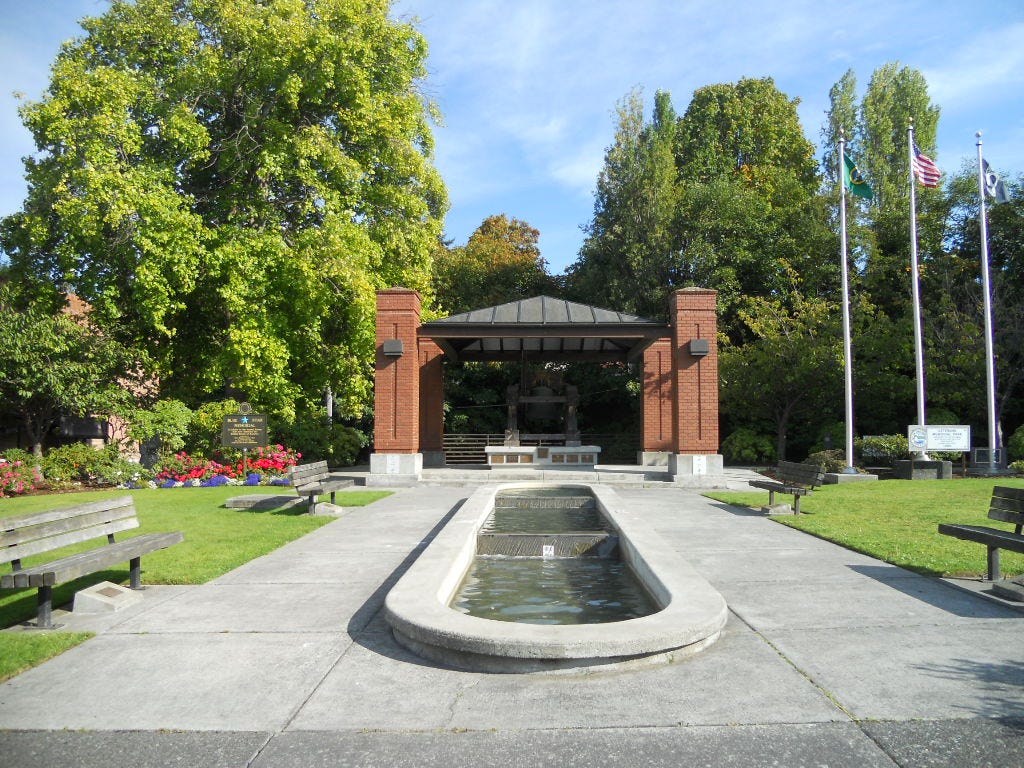
For one afternoon earlier this month, Veterans Memorial Park in Port Angeles was clean, peaceful, and worthy of the sacrifices it was built to honor during the Clallam County Sheriff’s Office annual Law Enforcement Memorial Ceremony. But within days, the park returned to open drug use, camping, and disorder. This Memorial Day, many are asking whether we truly honor veterans if the memorials built for them are no longer safe or welcoming to the public.
Earlier this month, the Clallam County Sheriff’s Office hosted its annual Law Enforcement Memorial BBQ and ceremony honoring officers who died in the line of duty and those who continue serving the community every day. Following the barbecue on the courthouse grounds, attendees gathered at Veterans Bell just north of the courthouse for a solemn and deeply moving ceremony.
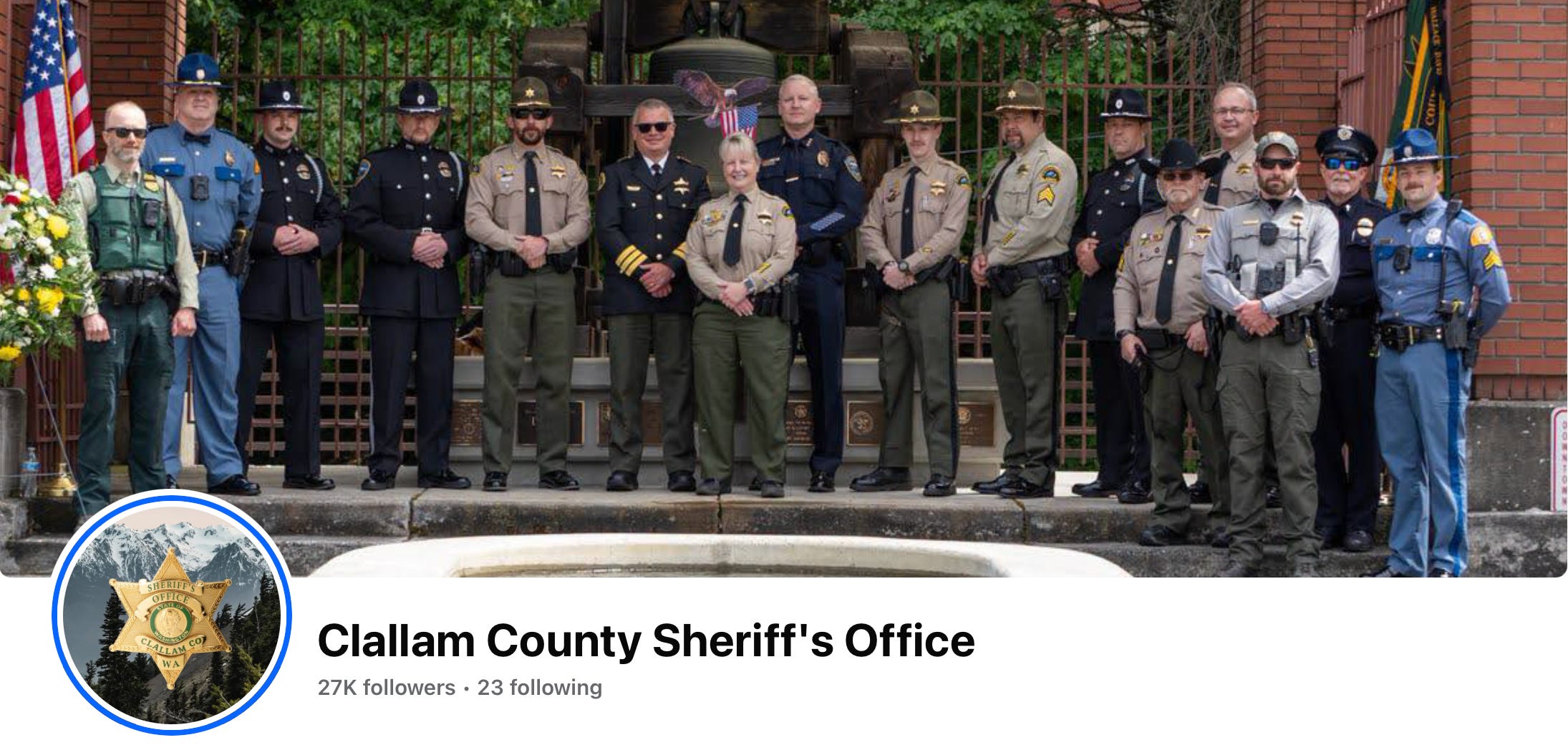
There were speeches, an invocation, the national anthem, and a flag line provided by the American Legion Riders. For those who attended, it was a powerful reminder of sacrifice, service, and civic duty.
And the park looked beautiful.
The Veteran’s Bell itself — a replica of the Liberty Bell — stood over spotless grounds, clean walkways, manicured landscaping, a clear reflecting pool, and memorial plaques that visitors could actually approach and read.
Veterans Memorial Park, located north of the Clallam County courthouse on Lincoln Street in Port Angeles, was renamed in 1986 to honor Americans who served in every branch of the military and in every conflict since the Civil War. It was built as a permanent public tribute to those who sacrificed for the country and the freedoms Americans enjoy today.
But according to local resident Mitch Zenobi, the park's condition the day before the ceremony looked very different.


Zenobi recorded video around Veteran’s Bell showing loitering, camping, open drug use, and pipes being passed around near the memorial grounds. The park’s temporary transformation was achieved only through an intensive, coordinated cleanup effort involving the Port Angeles Police Department ahead of the ceremony.
Within days, Zenobi returned and again documented individuals camping, sleeping, publicly urinating, and smoking drugs off foil around the memorial.


That contrast is difficult for many residents to ignore this Memorial Day.
Perhaps the best way to honor veterans and public servants is not simply with an annual proclamation, ceremonial bell ringing, or speeches once a year. Perhaps the greater act of respect is maintaining the memorials built in their honor as safe, welcoming, dignified public spaces every day of the year.
Right now, it is impossible to comfortably approach Veterans Bell and quietly read the plaques honoring service members without encountering behavior that makes the space feel neglected, unsafe, or hostile to families and visitors.
That is not honoring veterans.
It dishonors the men and women who served. It dishonors the citizens and veterans who fought to establish and maintain the memorial. And it dishonors the community the space was built for.
Mike French has argued that the public itself must help reclaim public spaces while he’s supporting a new criminal justice sales tax proposal. Meanwhile, the County’s Health Officer Allison Berry has publicly suggested that photographs online can be manipulated and has accused CC Watchdog of “stoking anger,” while framing criticism of current policies as hostility toward poor people or indifference toward people suffering from addiction and disease.
But many residents insist that is not what they are asking for at all.
They are asking for measurable outcomes. They are asking for accountability. They are asking whether current policies are actually helping people escape addiction instead of simply managing visible decline. They are asking for public spaces that families, veterans, seniors, and children can safely use again. They are asking why compassion for struggling individuals increasingly appears to come at the expense of the broader public’s ability to safely enjoy the very parks, memorials, and civic spaces their tax dollars built and maintain.
Memorial Day is ultimately about sacrifice. It is about remembering those who gave something of themselves for the benefit of others — sometimes everything.
And perhaps this year, as ceremonies conclude and the flags are folded away, the community should ask itself a difficult but necessary question:
If we cannot preserve dignity, cleanliness, safety, and public access at the very memorials dedicated to those who served this country, what exactly are we honoring?
Today’s Tidbit: Memorial Day, Citizenship, and the Responsibility to Vote
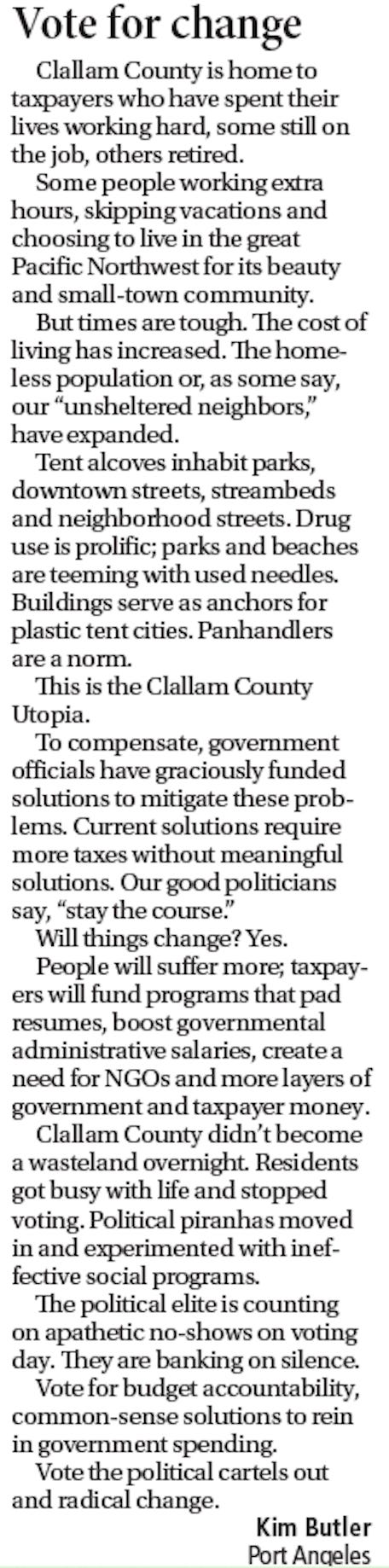
A recent letter to the editor in the Peninsula Daily News carried a message that feels especially relevant this Memorial Day weekend. Port Angeles resident Kim Butler argued that many of the problems frustrating residents today did not appear overnight. They grew slowly while people became distracted, disengaged, and increasingly absent from the voting process.
“Residents got busy with life and stopped voting,” Butler wrote. “The political elite is counting on apathetic no-shows on voting day.”
Memorial Day is ultimately about sacrifice, but it is also about citizenship. The men and women honored this weekend did not serve simply so Americans could enjoy freedom passively. Self-government only works when citizens remain engaged, informed, and willing to participate.
Voting may seem small compared to military service, but both are rooted in the same idea: responsibility to community and country.
Many Americans died defending the right to representative government. Choosing not to participate in it at all may be one of the quietest ways a society begins surrendering it.