
A young mother stood before the Clallam County Commissioners earlier this month and spoke candidly about the fear of homelessness. She said rising housing costs and the removal of affordable housing options are pushing families to the brink. “This will only kill people,” she warned. Sitting in the room listening were Commissioner Mike French and OlyCAP Housing Director Viola Ware. French sits on OlyCAP’s Board of Directors. Weeks later, basic questions about a taxpayer-funded “safe parking” program tied to OlyCAP and a Sequim church still remain unanswered, even as public records show French seconded a motion approving additional funding connected to the program without recusing himself.
A young mother struggling to stay housed recently came before the Clallam County Commissioners and shared something many residents quietly fear every day: even working families are one lease renewal away from instability.
She explained she had finally found housing large enough for her and her children, but admitted she had no idea what would happen when the lease expired.
“When my six month lease is up, I don’t know what we are going to do,” she told commissioners.
She spoke about housing costs spiraling beyond reach for ordinary residents. Buying a home is unattainable. Rentals are scarce. Affordable housing options continue disappearing.
The public testimony was emotional, raw, and remarkably honest. What was equally remarkable was who was sitting in the room listening. Among those present was Viola Ware, chair of the County’s Homelessness Task Force and Housing Director for Olympic Community Action Programs — better known as OlyCAP.
Also sitting there nodding empathetically was Clallam County Commissioner Mike French.
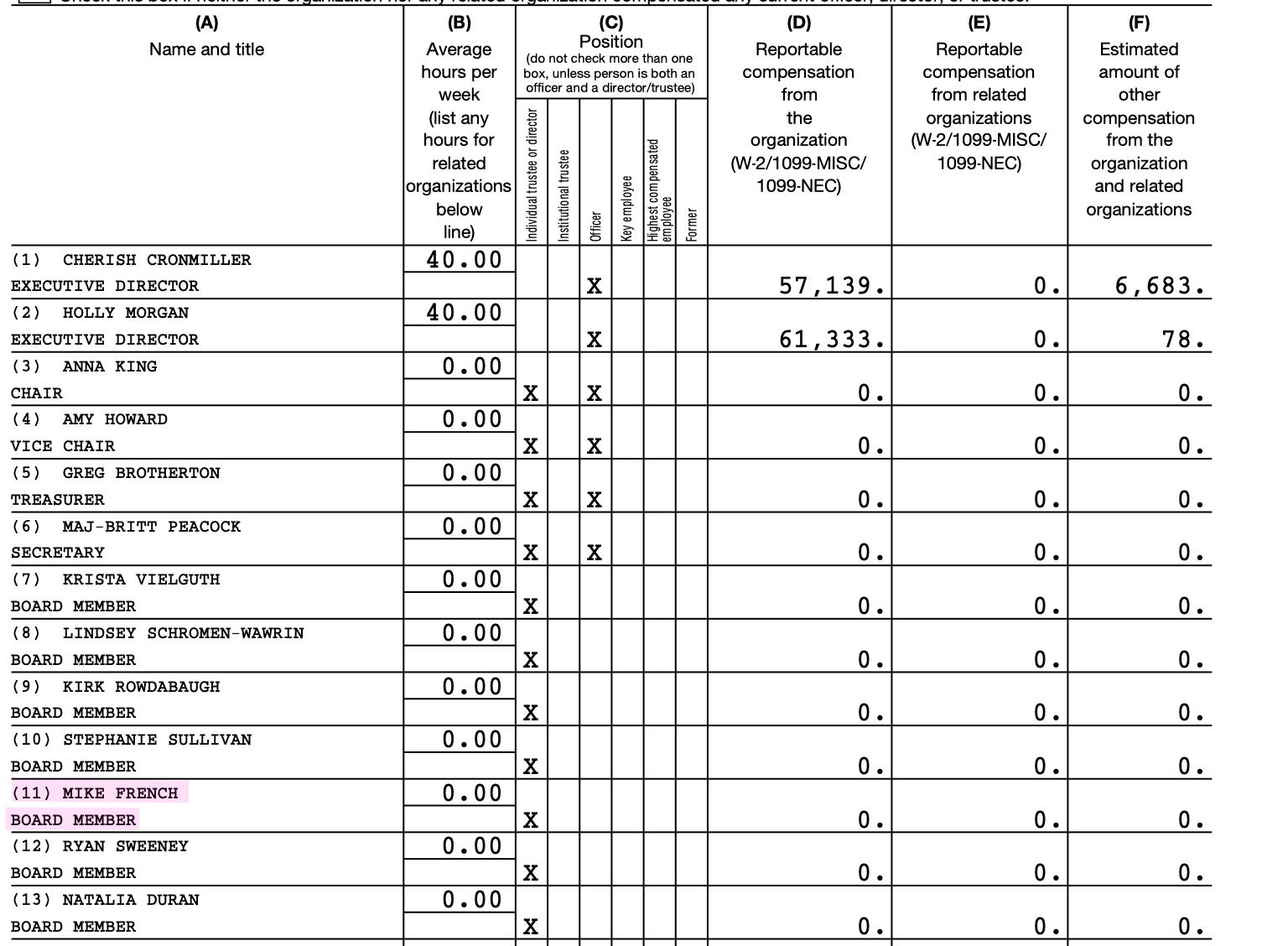
French is not simply a county liaison to OlyCAP. IRS filings from 2024 list him as a member of OlyCAP’s Board of Directors.
OlyCAP is a nonprofit organization serving Clallam and Jefferson Counties. Founded in 1966 as a Community Action Agency, it administers a wide range of publicly funded programs, including housing assistance, homelessness prevention, food programs, energy assistance, Head Start, senior services, and case management programs. The organization relies heavily on federal, state, and local taxpayer funding while partnering closely with local governments.
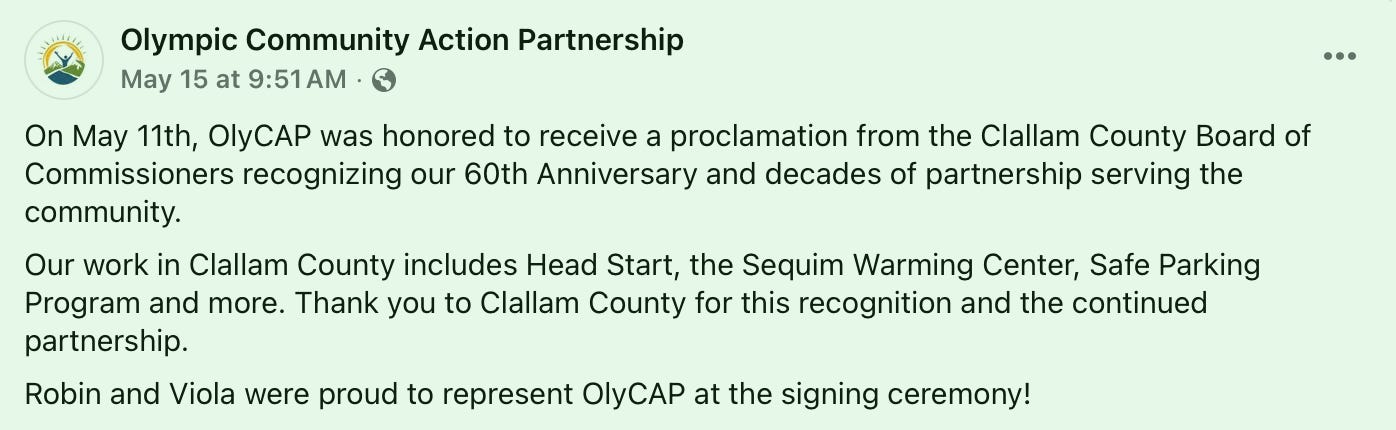
Earlier in the meeting, the commissioners issued a proclamation celebrating OlyCAP’s 60th anniversary. Viola Ware was there to accept it.
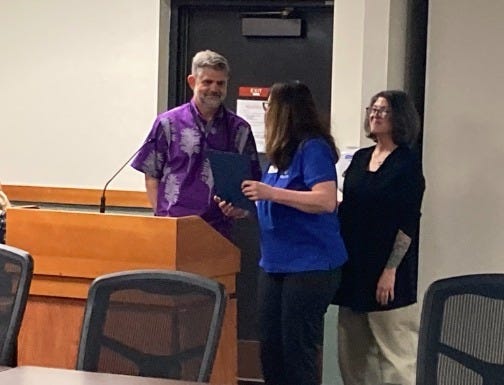
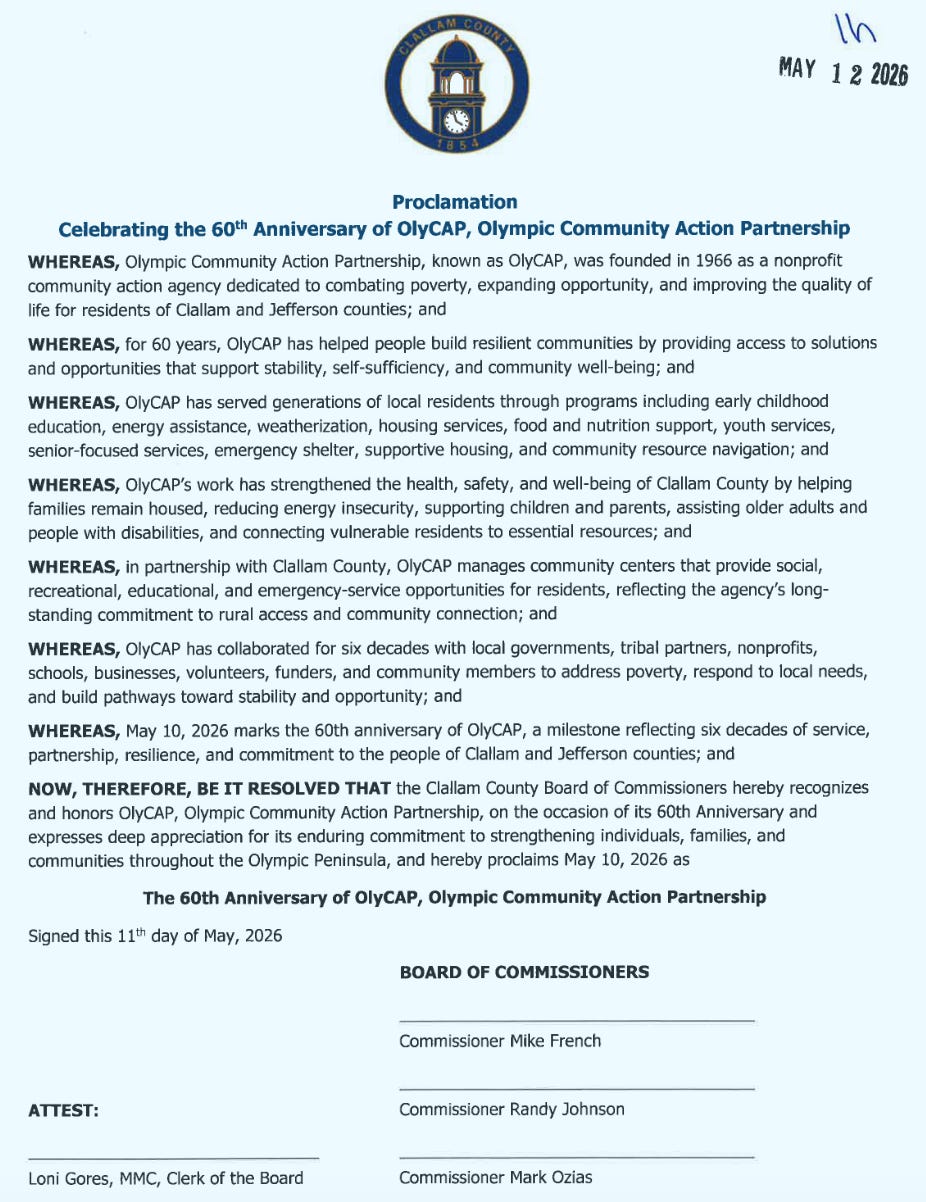
Yet after the young mother finished describing her fears about homelessness, neither the commissioners nor OlyCAP representatives publicly directed her toward assistance programs or followed up with her concerns during the meeting. Instead, it was a member of the public sitting in the audience who informed her that OlyCAP may have services available.
It was a missed opportunity for both Commissioner French and OlyCAP.
“The Safe Parking Program Is Not an OlyCAP Program”
During public comment, Viola Ware attempted to clarify what she described as misconceptions surrounding the Safe Parking Program operating through Trinity United Methodist Church in Sequim.
“The safe parking program is not an OlyCAP program,” Ware explained.
According to Ware, the program is managed by Trinity United Methodist Church, while OlyCAP partners with the church by providing staffing and support services.
Ware explained that OlyCAP provides approximately one hour of staffing support in the evening, one hour in the morning, and maintains one staff member on-call overnight should emergencies arise. OlyCAP also provides supportive services to participants.
“But we do it for free,” Ware said about the supportive services.
However, public records obtained by a CC Watchdog subscriber paint a more complicated picture.
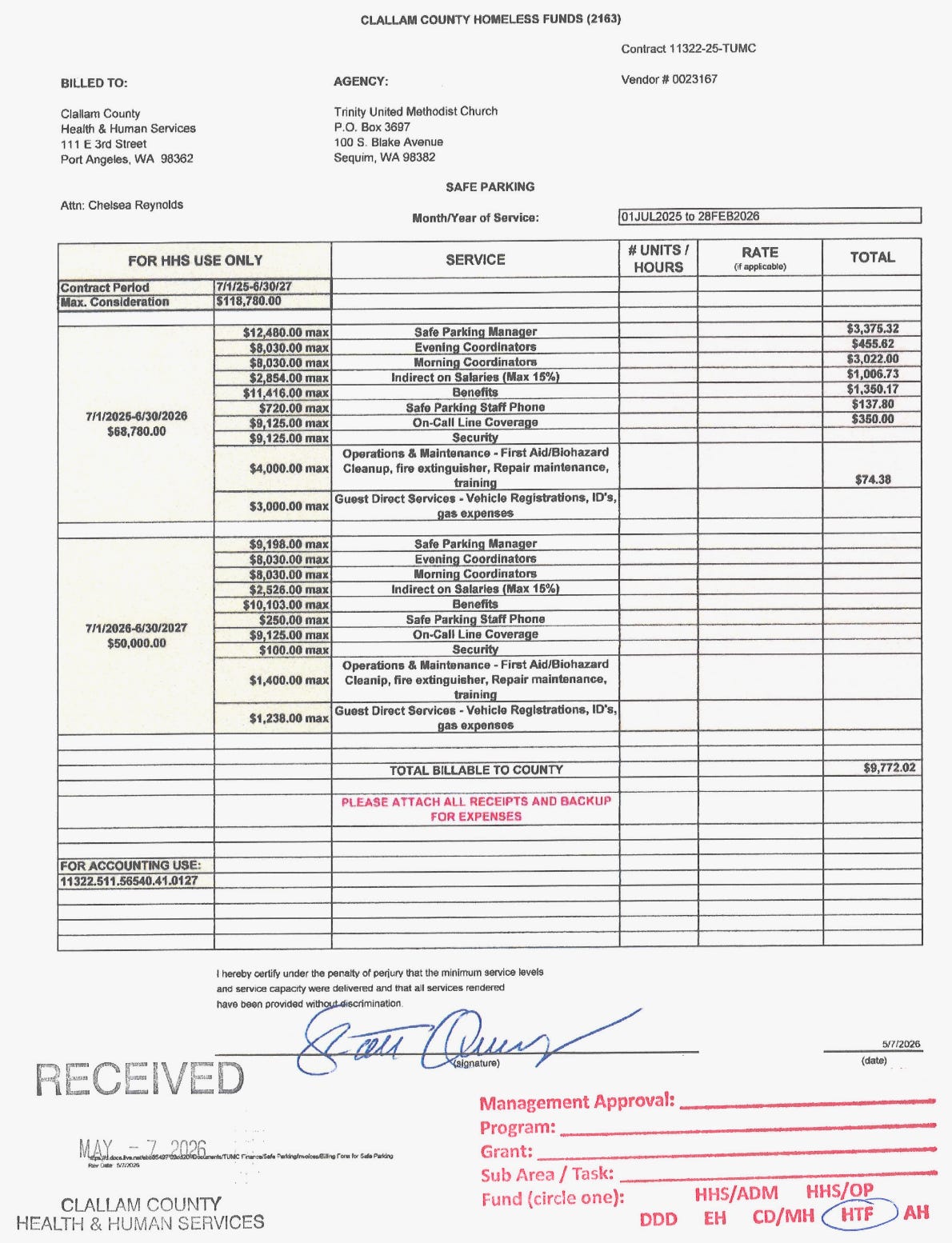
County contract documents show that Clallam County approved up to $118,780 in taxpayer funding for the Safe Parking Program through Trinity United Methodist Church.
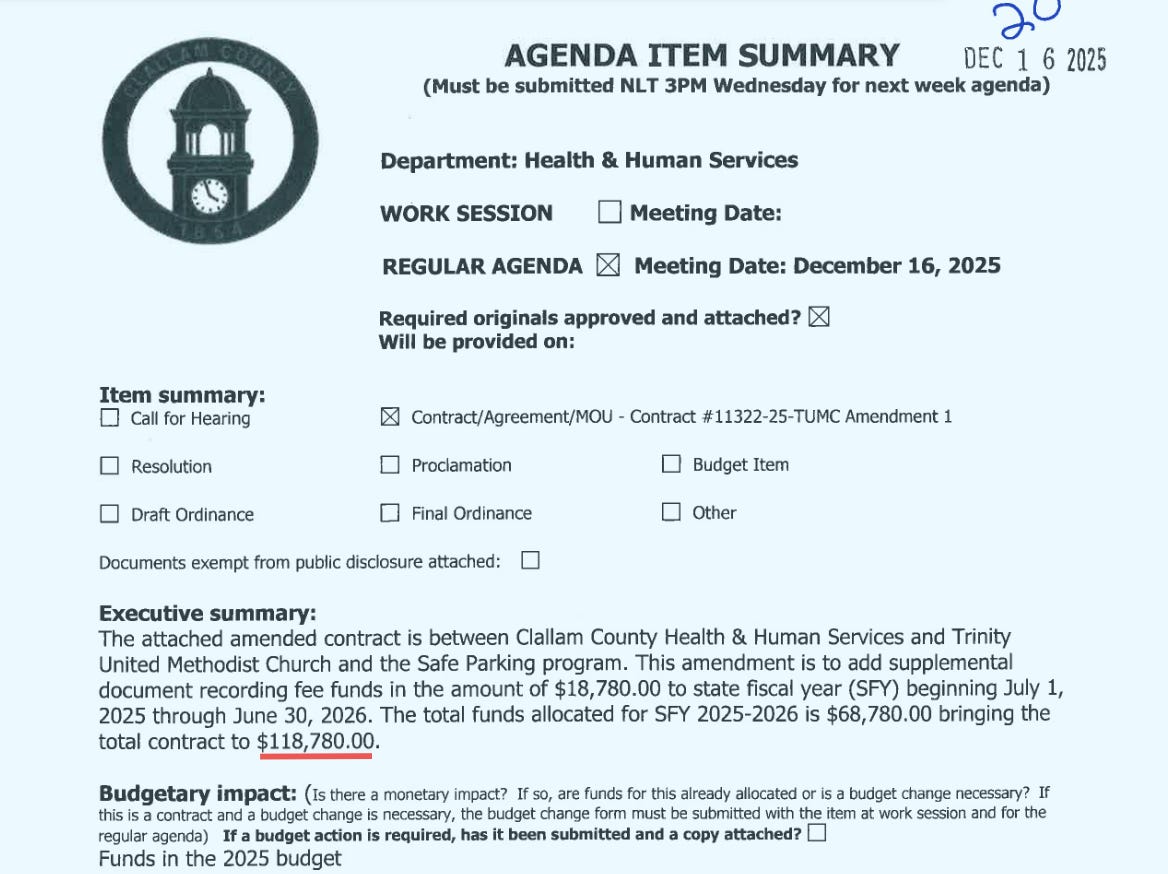
The agreement specifically states that Trinity United Methodist Church’s Safe Parking Program operates “in partnership with Olympic Community Action Programs.” The contract outlines funding for staffing, benefits, phones, on-call coverage, security, operations, maintenance, and direct services.
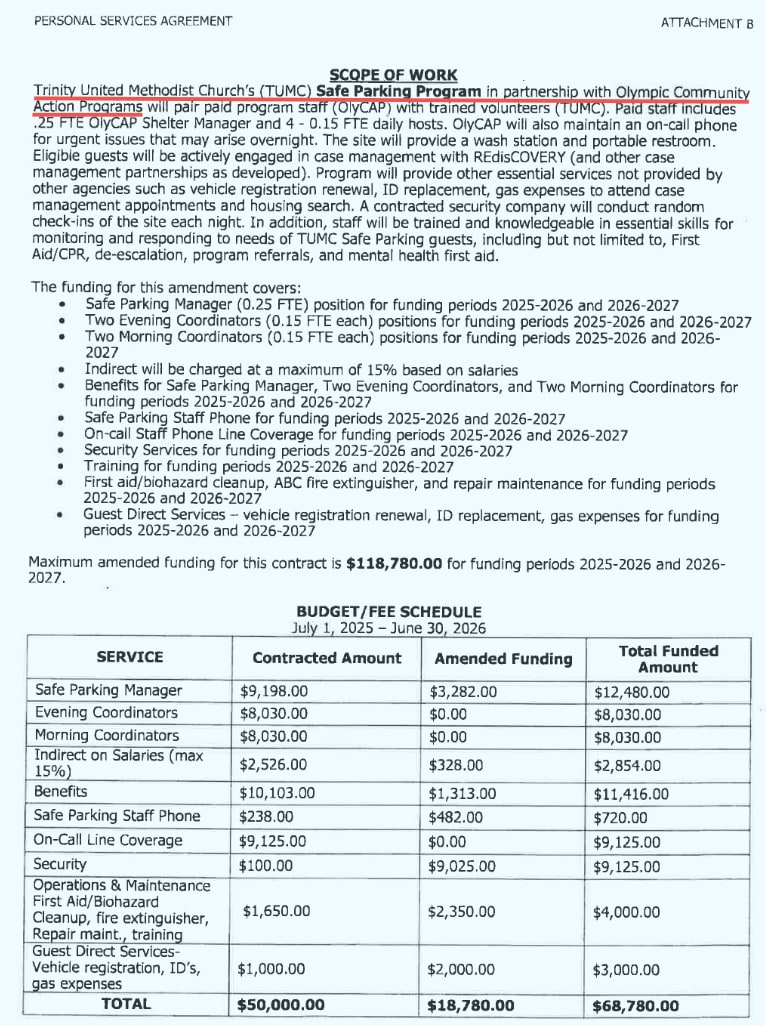
The scope of work explicitly identifies OlyCAP staffing positions tied to the program, including:
Safe Parking Manager
Evening Coordinators
Morning Coordinators
On-call phone support
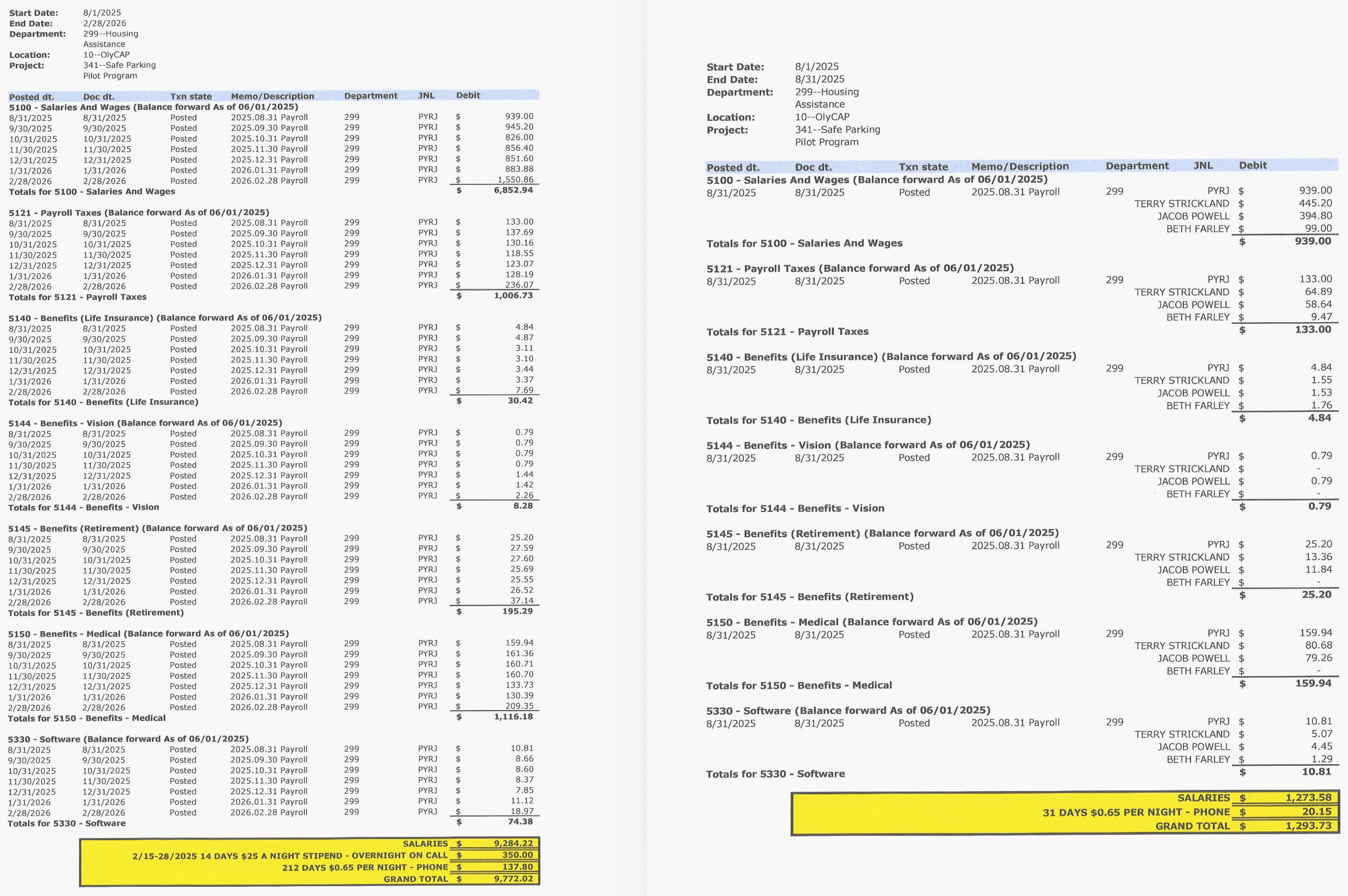
The records also include OlyCAP payroll records, time sheets, invoices, and reimbursement documents tied to Safe Parking staffing.
The Safe Parking Program appears less focused on permanently moving people out of homelessness and more focused on managing homelessness indefinitely by giving participants a place to sleep in their vehicles.

The invoices and supporting records obtained by one Watchdogger show substantial spending tied to staffing, coordination, on-call coverage, and administrative support related to OlyCAP.
The program increasingly resembles a publicly funded homelessness management and employment infrastructure rather than a measurable pathway out of homelessness.
Taxpayers still do not know how many participants have successfully transitioned into permanent housing, how long individuals typically remain in the program, or what objective outcomes justify the continued expense. At the end of the day, the public is still looking at more than $118,000 tied to just three parking spaces — a figure that is difficult to defend, especially in the absence of clear performance metrics.

Two Weeks of Questions — Still No Answers
Today marks two weeks since CC Watchdog began asking questions about the Safe Parking Program and the public funding surrounding it.
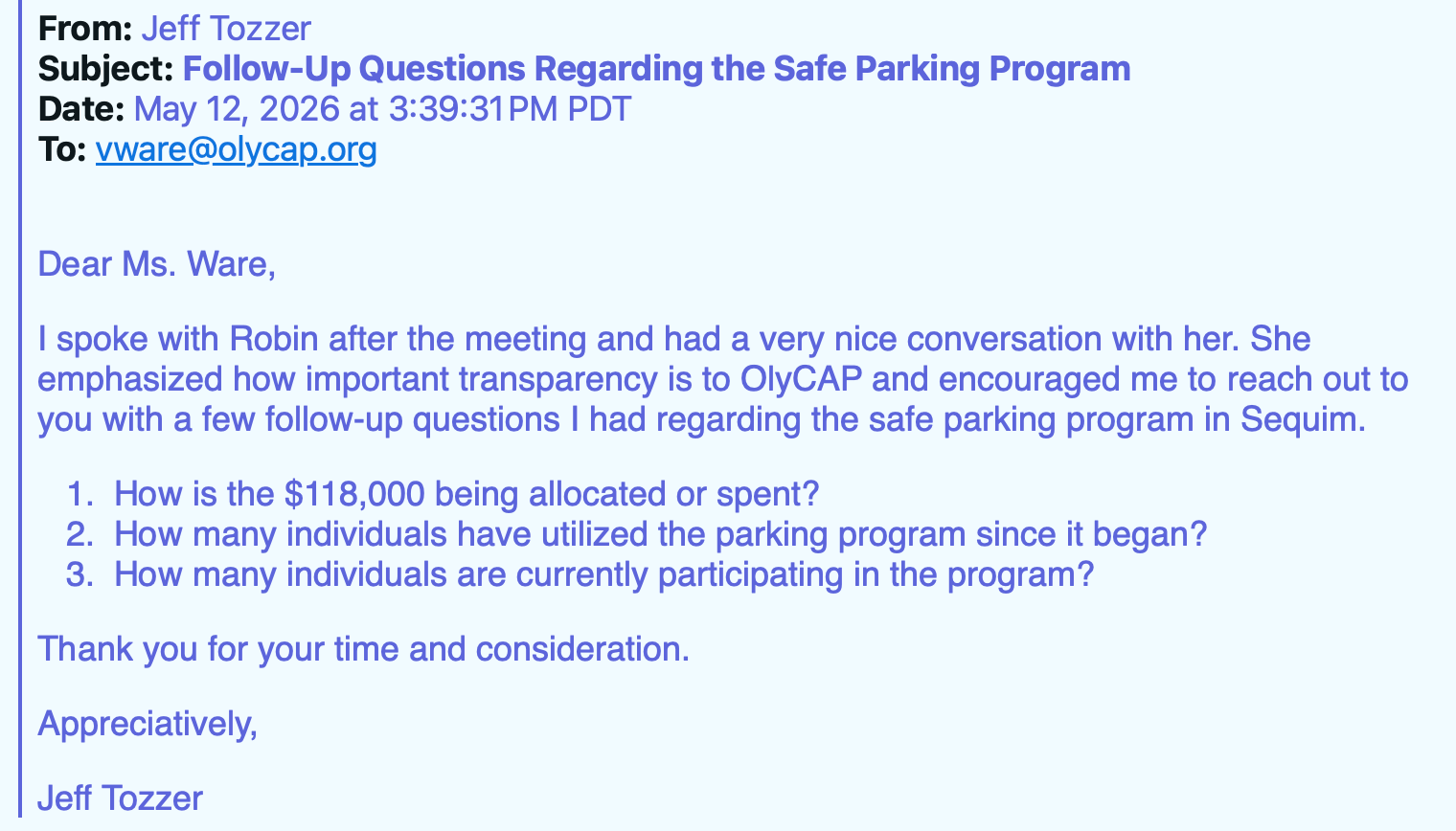
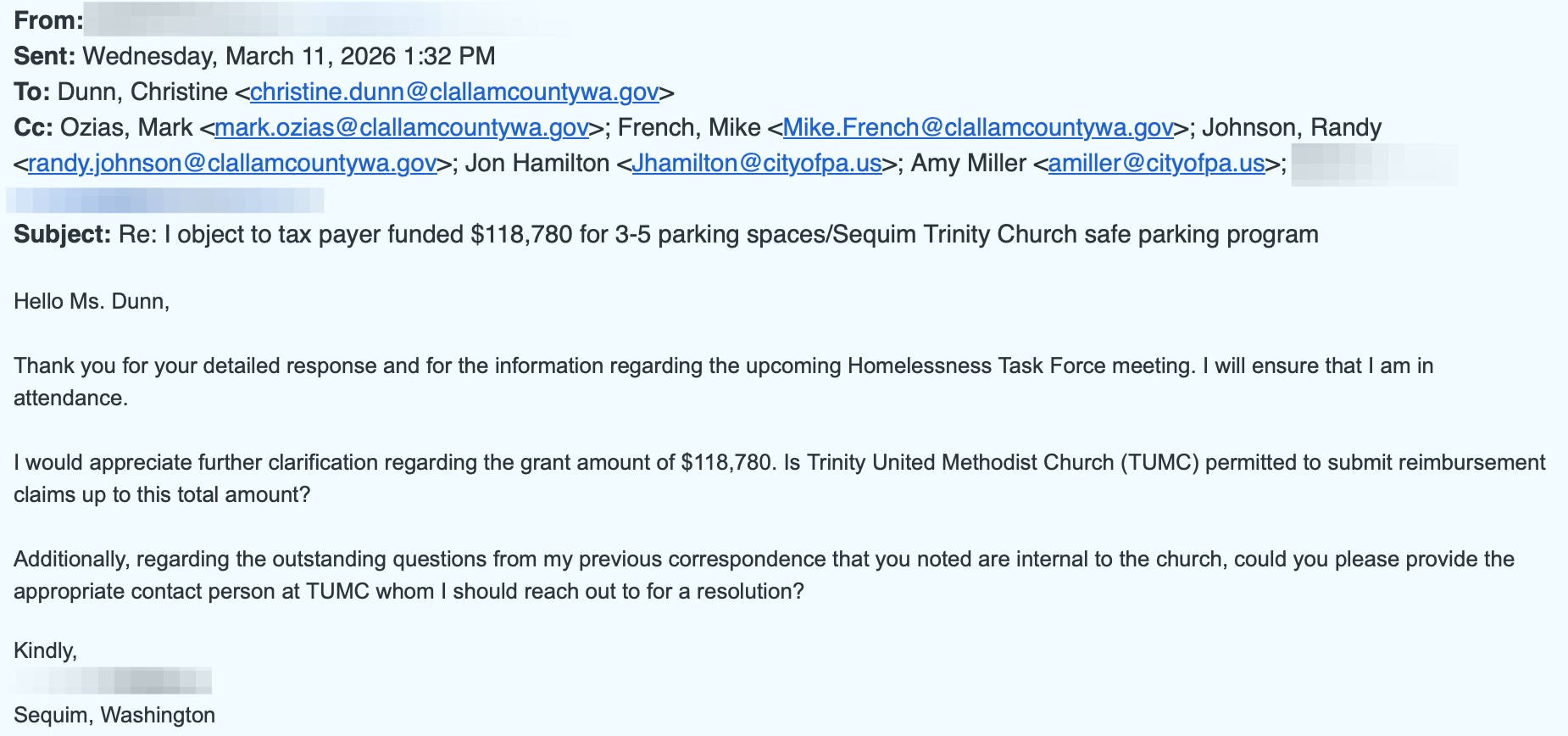
Other residents have been seeking answers for months.
Among the unanswered questions:
How exactly is the $118,780 being spent?
How many individuals have utilized the program?
How many participants are currently enrolled?
Questions directed to Trinity United Methodist Church were answered with an invitation to attend the upcoming Homelessness Task Force meeting rather than with direct responses.
The response stated:
“To learn more, you’re invited to attend the Homeless Task Force meeting June 2.”
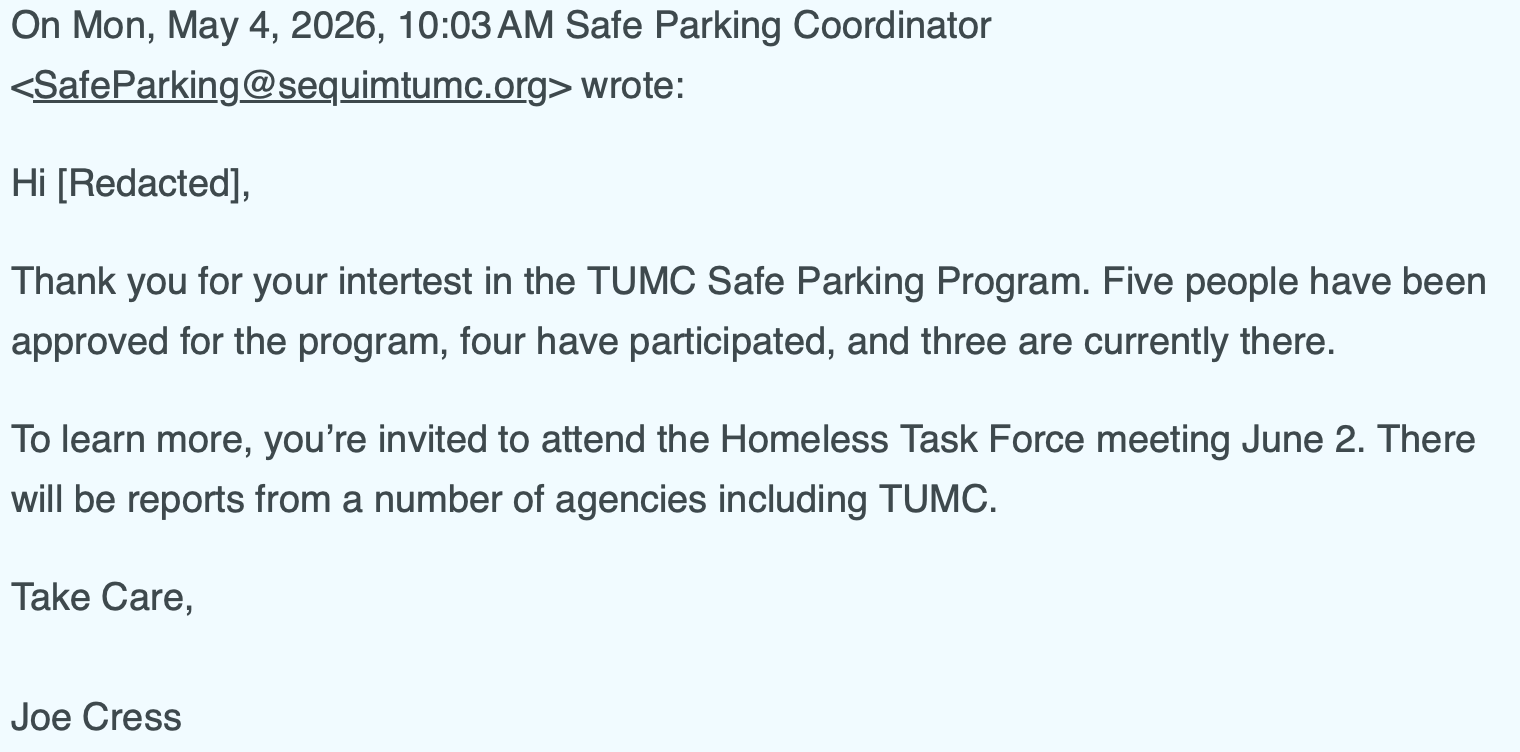
The Homelessness Task Force meeting is scheduled for Tuesday, June 2, at 2:30 p.m. in the commissioners’ board room. Remote and in-person attendance are allowed.
The Ethics Questions
The larger issue now extends beyond the Safe Parking Program itself.
It involves transparency and ethics regarding elected officials voting on funding for organizations on whose boards they serve.
The Municipal Research and Services Center (MRSC), which provides legal and governance guidance to Washington municipalities, addresses these issues under Chapter 42.23 RCW, dealing with conflicts of interest.
MRSC guidance states that local elected officials generally may not have a “beneficial interest” in contracts made under their supervision. Even when an official’s involvement qualifies as a “remote interest,” MRSC guidance states the official should disclose the interest publicly and abstain from voting.

MRSC further emphasizes avoiding not only actual conflicts of interest, but even the appearance of impropriety or special privilege.
Importantly, Washington law distinguishes between:
serving on a nonprofit board without compensation, and
receiving direct financial benefit.
Simply serving on an NGO board is not automatically illegal.
However, MRSC guidance specifically notes:
“A municipal officer may not vote in the authorization, approval, or ratification of a contract in which he or she is beneficially interested…”
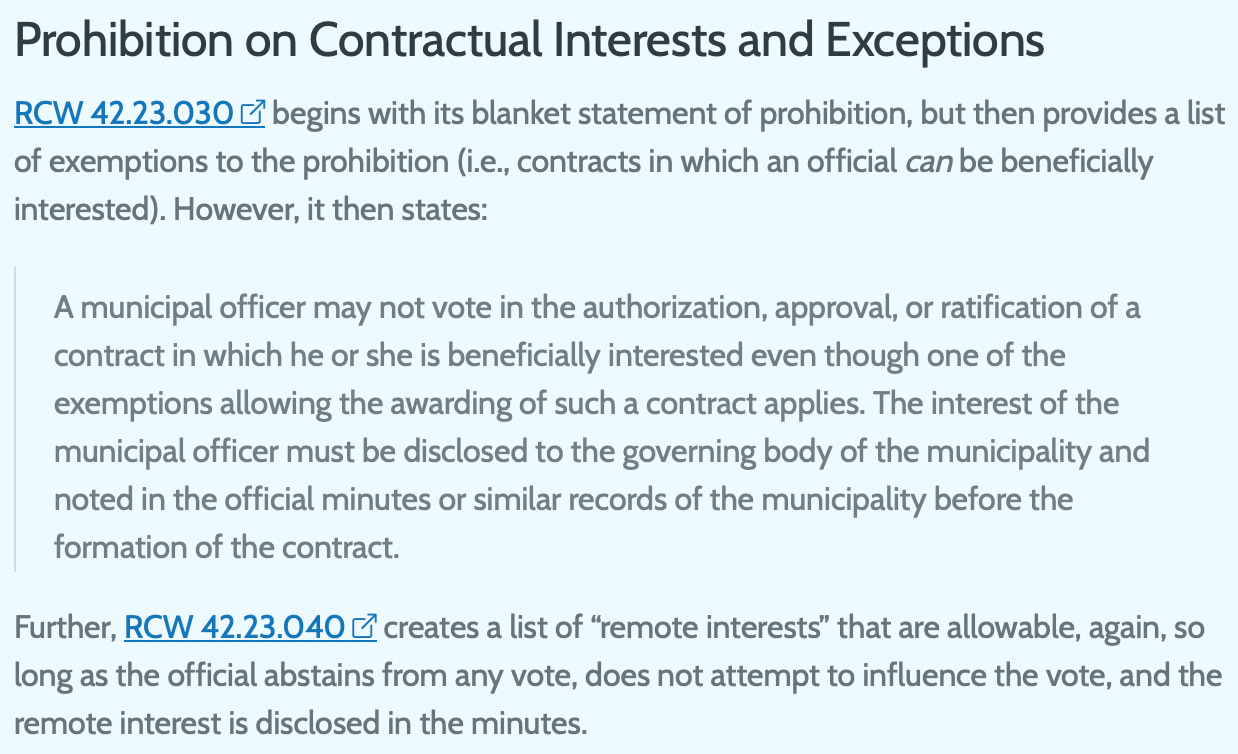
MRSC further recommends that officials with remote interests should avoid even appearing to participate in the governing body’s action on the contract.
The issue surfaced in a complaint involving Jefferson County Commissioner Greg Brotherton and OlyCAP funding. That complaint cited RCW 42.23.040 and argued that even where a “remote interest” exception exists for unpaid nonprofit board service, the official’s vote should not count toward approval and the official should refrain from influencing the decision.
The complaint quoted MRSC guidance stating:
“It is accordingly recommended that the officer with a remote interest should not participate, or even appear to participate, in any manner in the governing body’s action on the contract.”
The December 16th Vote
That brings attention back to Clallam County.
Minutes from the December 16 meeting show commissioners approved an agreement providing additional funding connected to Trinity United Methodist Church’s Safe Parking Program.

The minutes reflect in county shorthand:
Commissioner Randy Johnson made the motion,
Commissioner Mike French seconded it,
and the motion carried.
The agreement added supplemental funding tied to the Safe Parking Program, which operates in partnership with OlyCAP.
No recusal by Commissioner French appears in the meeting action summary. That does not automatically mean any law was violated.
But it does raise legitimate public questions:
Did Commissioner French disclose his OlyCAP board position before the vote?
Were disclosures entered into the official minutes?
Did county legal counsel review the arrangement?
Does seconding a motion involving funding tied to an organization on whose board he serves conflict with MRSC’s own recommendations?
If not, where exactly is the ethical boundary?
Those answers should not require public records requests and weeks of follow-up to obtain.
Because when taxpayer dollars move from county government into NGOs tied directly to elected officials, transparency is not optional.
Oversight Is Not a Ceremonial Role
Taxpayers have reason to ask hard questions about oversight. Commissioner French also serves on the William Shore Memorial Pool Board, where, under his watch, the Washington State Auditor found roughly $67,000 in questionable spending and serious failures in financial oversight involving the former executive director.
“This report and the related audit work show the District lacked internal controls and procedures over its essential functions, including disbursements, credit cards and cash receipting. It also lacked adequate internal controls for ensuring compliance with state regulations for self-insurance.” — Washington State Auditor’s Report
Public board service is not supposed to be ceremonial or résumé-building. When elected officials sit on boards overseeing taxpayer dollars, the public expects active stewardship, accountability, and transparency. Routing controversial public programs through NGOs while basic financial and performance questions remain unanswered only deepens public distrust.
Commissioner Mike French now finds himself at the center of two growing public trust questions at the same time: one involving controversial homelessness spending through an NGO on whose board he serves, and another involving a public pool board that state auditors found lacked even basic financial controls. At some point, taxpayers are justified in asking whether these boards are being governed — or merely attended.
Today’s Tidbit: Helping or Enabling?
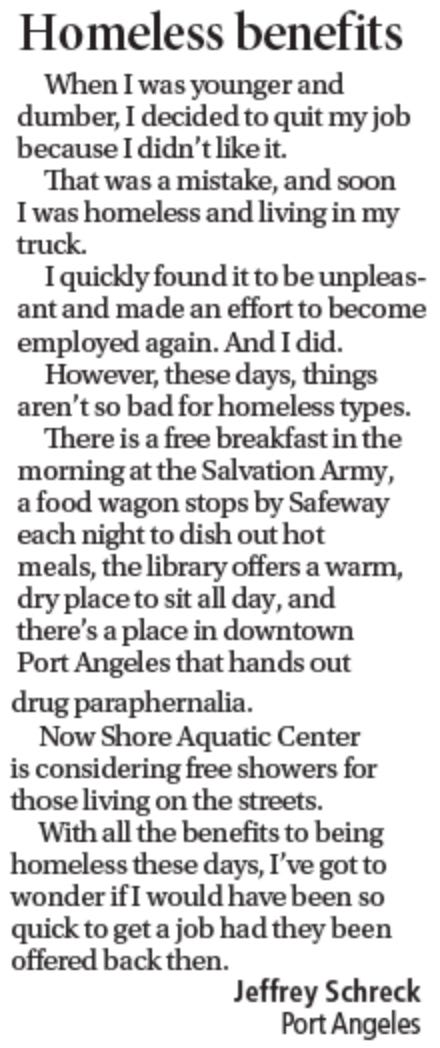
A recent letter to the editor in the Peninsula Daily News struck a nerve with many local residents frustrated by the growing normalization of homelessness in Port Angeles. Writer Jeffrey Schreck argued that when he briefly experienced homelessness years ago, discomfort and instability motivated him to quickly return to work. Today, he says, the growing network of free meals, public services, hygiene programs, warm spaces, and harm reduction resources may unintentionally reduce that urgency. Whether residents agree or disagree, the letter reflects a growing public debate over whether Clallam County’s expanding homelessness infrastructure is truly helping people recover — or simply making long-term street living more sustainable.