


At Tuesday’s Board of Health meeting, Clallam County Health Officer Dr. Allison Berry sharply criticized opponents of harm reduction, suggested fear about public safety is being amplified for political purposes, and made the explosive statement that she hopes critics are not implying that drug users “deserve to get AIDS and die.” Meanwhile, residents continue asking for measurable outcomes after years of needle distribution, safer-use supply programs, and growing public concern over encampments, addiction, and public safety.
“There are a couple different funky bugs that are in the news,” Health Officer Allison Berry said Tuesday during the monthly Board of Health meeting.
“Two different funky bugs,” Berry explained before discussing Hantavirus related to the cruise ship outbreak. She said the risk in Clallam County is “incredibly low,” but acknowledged that the public is no longer reassured by communications from the CDC using the term “low,” because it was also used in 2020 to describe COVID.
“I think it’s worth acknowledging the loss of trust that came from them saying that, and saying that longer than they should have,” Berry said.
But she acknowledged that “low” is accurate in this case. Berry said she has treated patients for Hantavirus through her part-time work for the Jamestown Corporation at the Healing Clinic and the Family Health facility.
The second concern discussed was Ebola, which Berry said, “we don’t think that’s going to come here, but it’s worth being aware of.” She explained that the outbreak in Sub-Saharan Africa has been worsened by “massive cuts to USAID,” which allowed it to spread farther before being diagnosed.
Harm Reduction Without Metrics
Clallam County Health and Human Services still is not publicly providing meaningful outcome data regarding how many people are entering treatment, leaving homelessness, achieving sobriety, or successfully transitioning out of addiction and instability.
Instead, the county highlighted success stories and “participant encounters.” One slide showed:
668 participant encounters in April
21 reported overdose reversals
61 participants connected with partner services
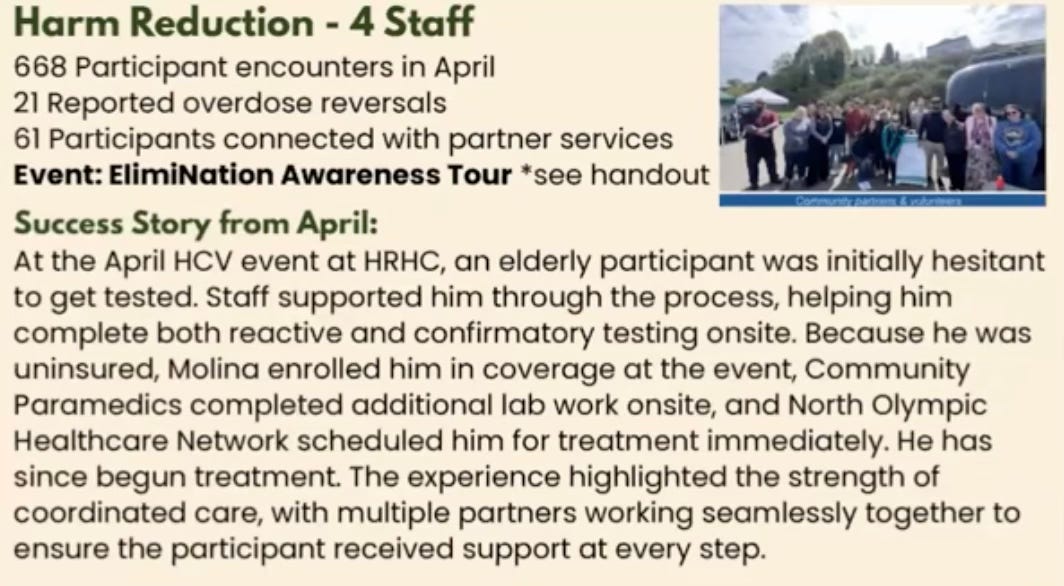
Dr. Berry explained that the department may explore telehealth access for Suboxone prescriptions through the Harm Reduction Health Center.
Commissioner Randy Johnson noted that earlier public comment included criticism from residents upset about the program and asking where the data is.
“When we talk about specifics of our program, it would be nice to be able to track our specific program,” Johnson said.
That raises an obvious question many residents have been asking for years: How many decades into embracing harm reduction are we, and we are just now discussing establishing meaningful metrics?
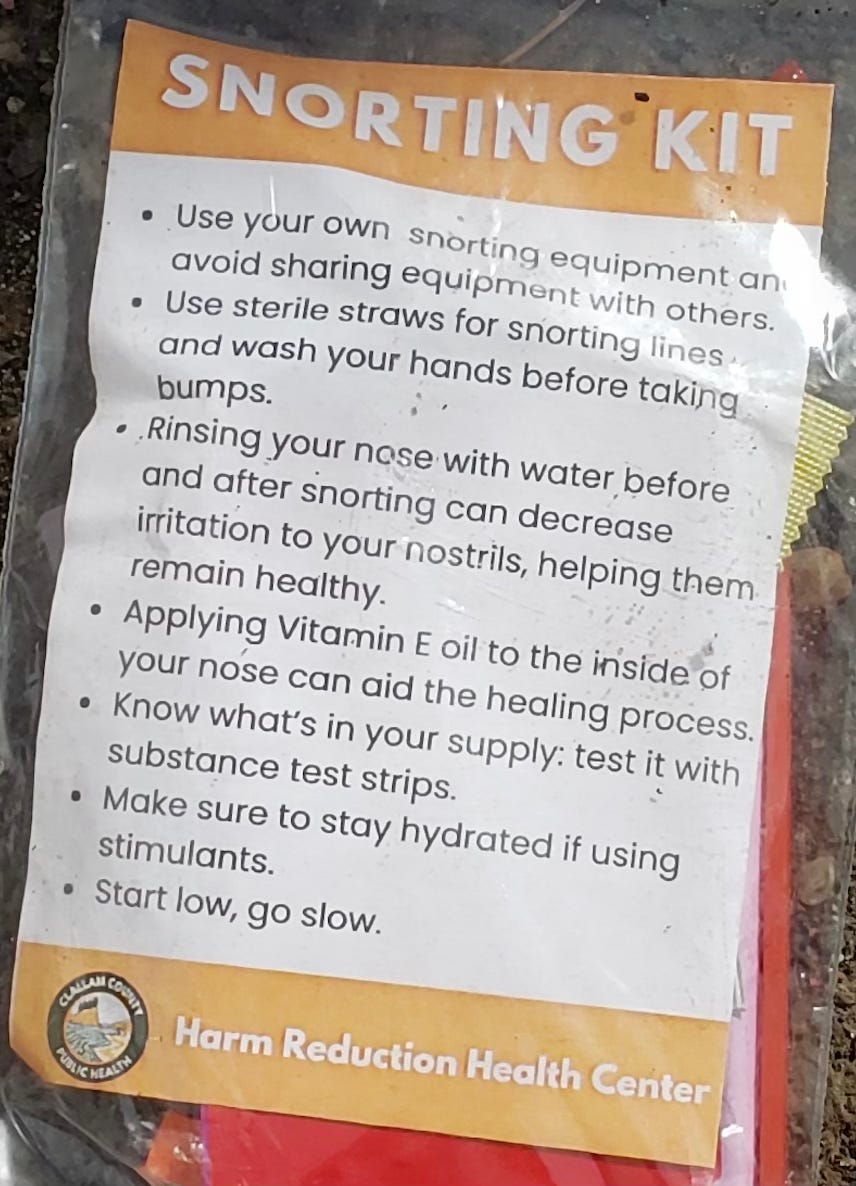
How many tens of thousands of meth pipes, crack pipe cleaning kits, boofing kits, foil kits, and needles has the county dispersed while only just now discussing how to measure success?
Commissioner Mark Ozias said one of the most common public concerns involves the distribution of safer-use supplies and the perception that the county is encouraging drug use.
“My understanding of that strategy is that that’s a communicable disease prevention strategy,” Ozias said.
Berry explained that distributing safer-use supplies like pipes and boofing kits is intended to move people away from syringes because syringes carry a higher risk of spreading disease.
Berry explained that sharing pipes can spread disease too, so that’s why it’s important to distribute more pipes. “Because what’s better than clean needles, is no needles,” she said, adding that “we are seeing people in our community quit using needles.”
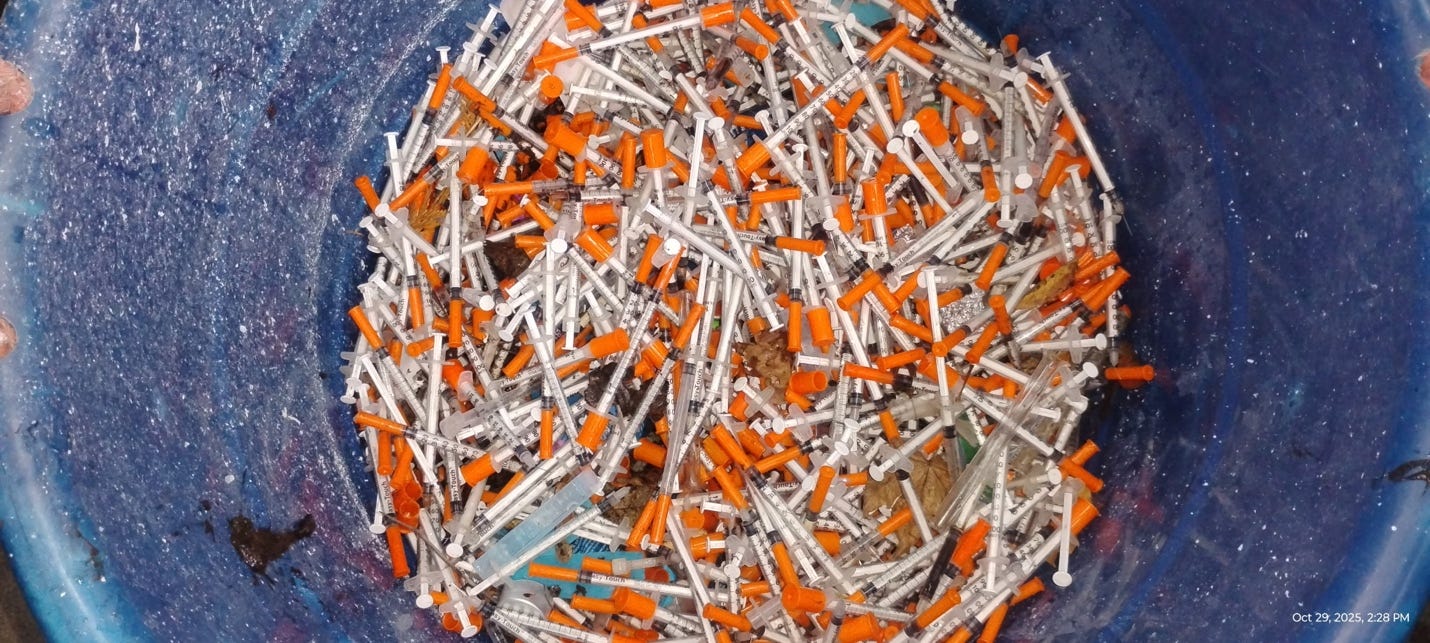
“I know the rhetoric we see online about it, that maybe we’re encouraging drug use, and the data is just very consistent that having access to these kind of supplies does not increase use of drugs. It does not teach people how to use drugs,” Berry said.
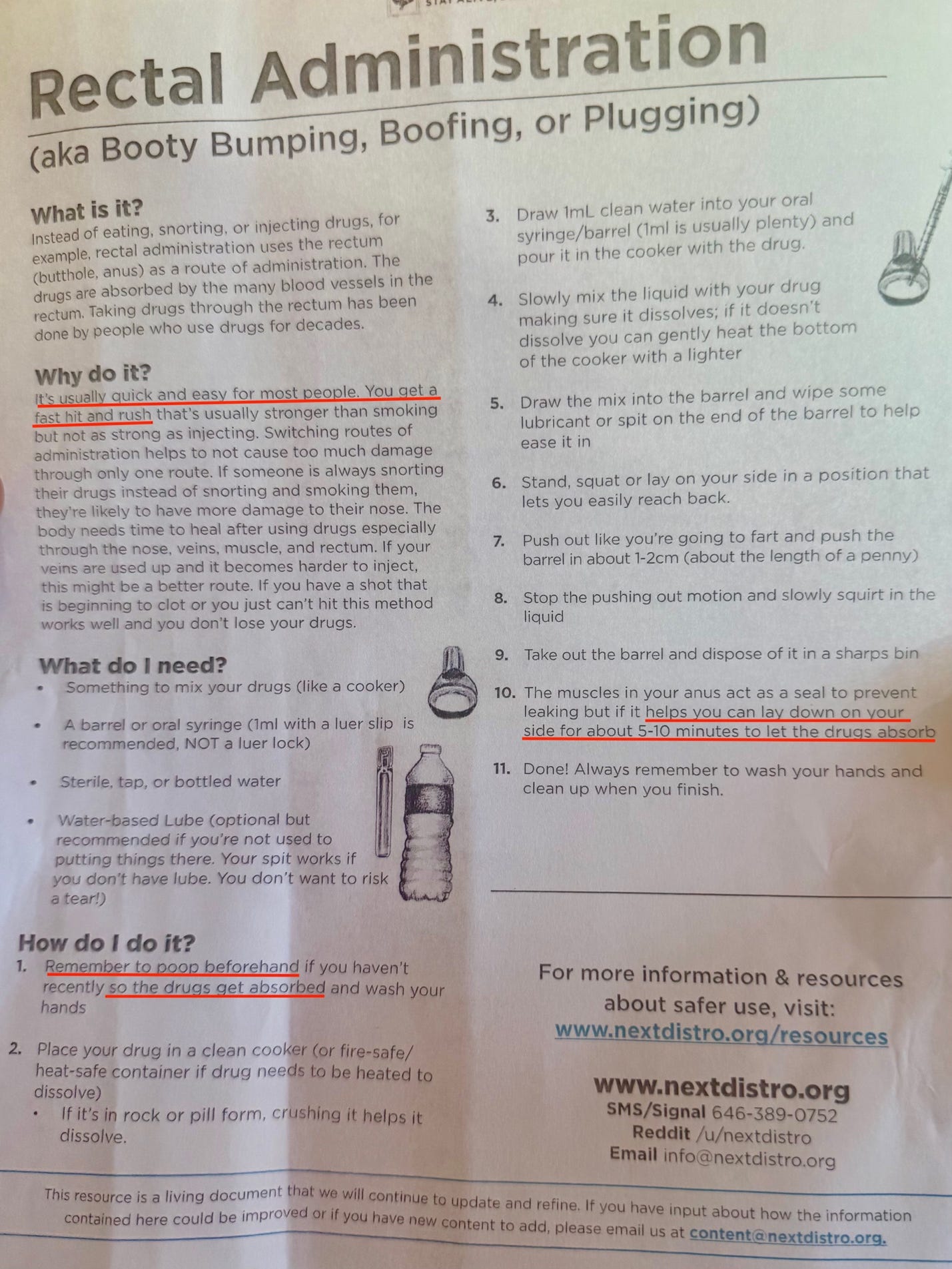
Then came the statement that is likely to become the most controversial moment of the meeting.
“I’ve heard a lot of this conversation about this idea that we need, like, more accountability for folks and — what’s the phrase? — compassion without accountability, and it’s strange that we’ve gotten wrapped into that in some way, because all that we do is help people not get AIDS and make them less likely to die.”
Berry then added:
“I hope that when people are asking for accountability, they’re not saying that people who use drugs deserve to get AIDS and die.”
That statement reframed criticism of county policy into something far darker.
Residents asking questions about public safety, discarded needles, public drug use, overdose rates, or whether distributing safer-use supplies is effective are now implicitly being associated with wanting drug users to “get AIDS and die.”
That is an extraordinary accusation from a public health officer.
Dream Playground Wasn’t “Misinformation”
Johnson again raised concerns about public unease surrounding harm reduction and public safety.
Berry responded:
“I don’t think that’s happening organically.”
She explained there is an active attempt to “build that narrative online” using misinformation and disinformation.
“If someone is trying to make you afraid, you have to wonder what they benefit from sowing that fear,” Berry said.
She claimed some individuals benefit politically by “sowing fear and distrust with our neighbors” and by creating the impression that there is “a public health catastrophe brewing.”
Berry referenced receiving an email from someone who said they would not take their child to Dream Playground anymore because they heard syringes were there.
“There are elements who want to build the idea that it’s so much worse than it is, because that serves them politically,” Berry said.
But residents may remember that fears about syringes in playgrounds are not hypothetical.
In 2018, a three-year-old child was accidentally poked by a discarded syringe at Dream Playground in Port Angeles. The Port Angeles Police Department later issued a public warning explaining that accidental needle sticks can expose victims to bloodborne pathogens and urged parents to conduct safety sweeps before allowing children to play.
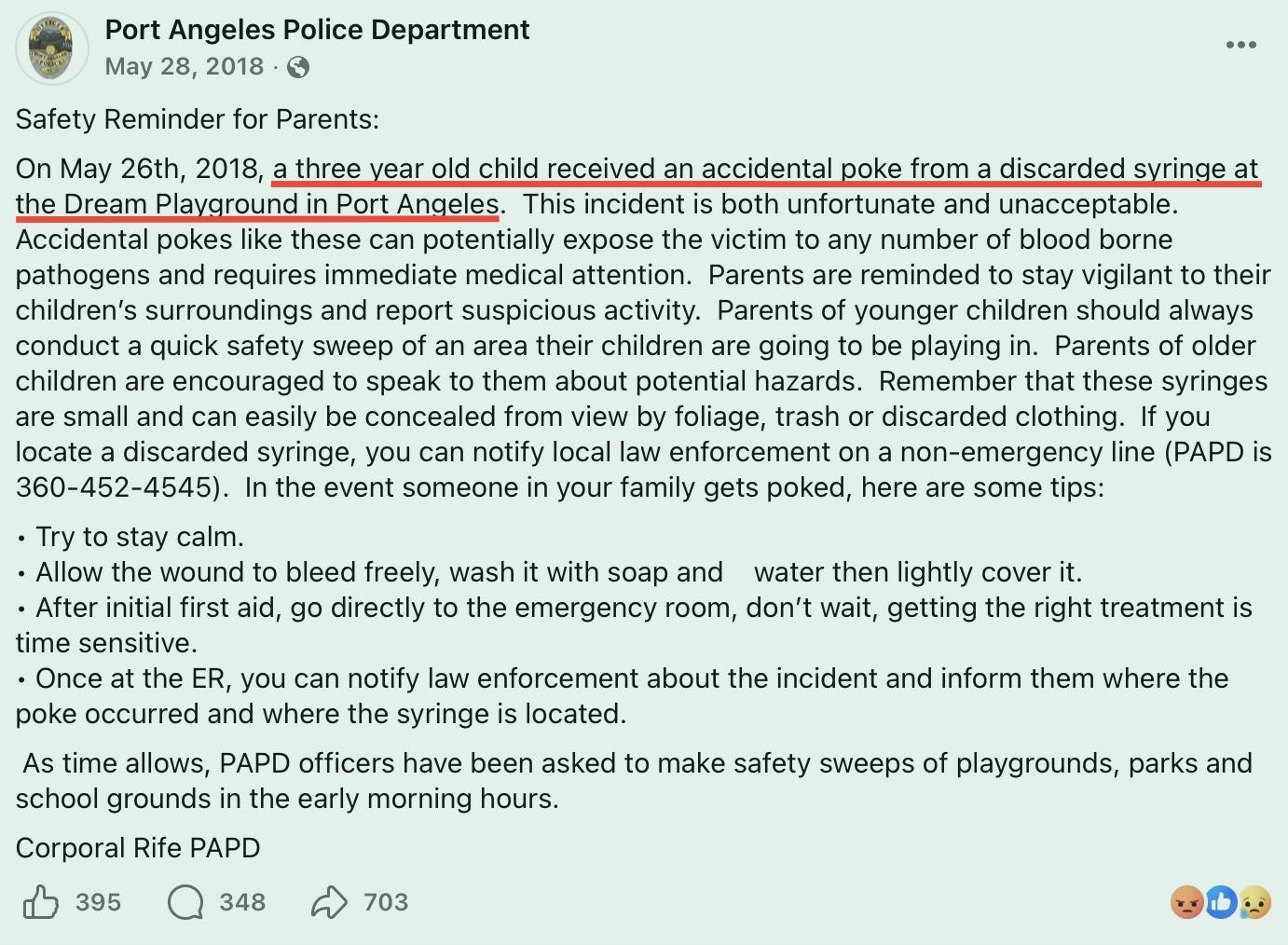
That incident was not misinformation. It happened.
And for many parents, once a child is exposed to that kind of risk, the fear does not simply disappear because officials say conditions are being exaggerated.
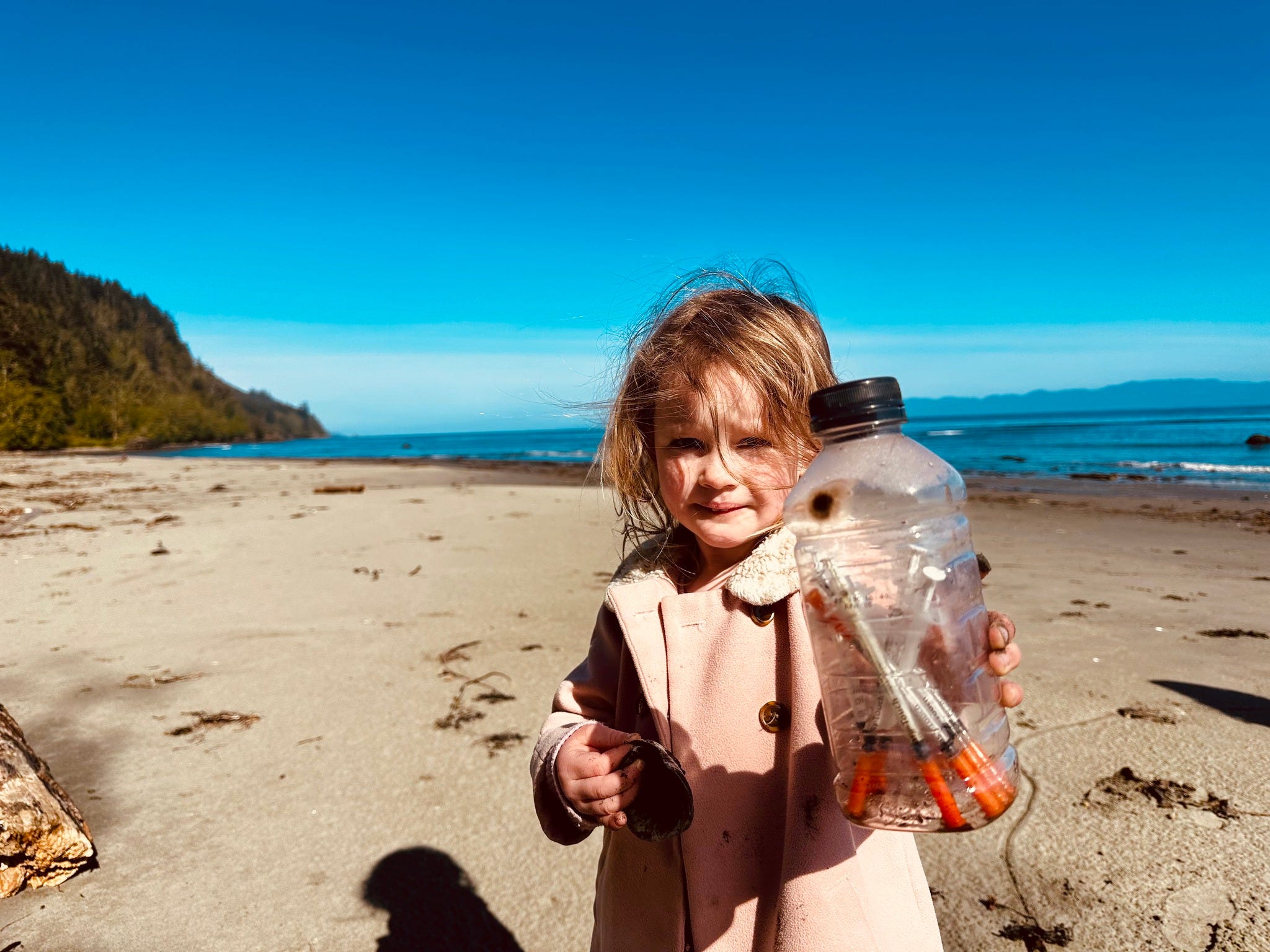
“Manipulated Pictures” and the Fight Over Public Perception
Berry also said one of the biggest challenges facing public health officials is combating what she described as viral misinformation online.
“Folks can even manipulate pictures online,” Berry said. “We have folks that are going into places that they know are messy, going in ostensibly to clean it up, but then taking a whole lot of pictures and posting online as if it’s downtown Port Angeles, as if it’s the trails we all take our kids on.”
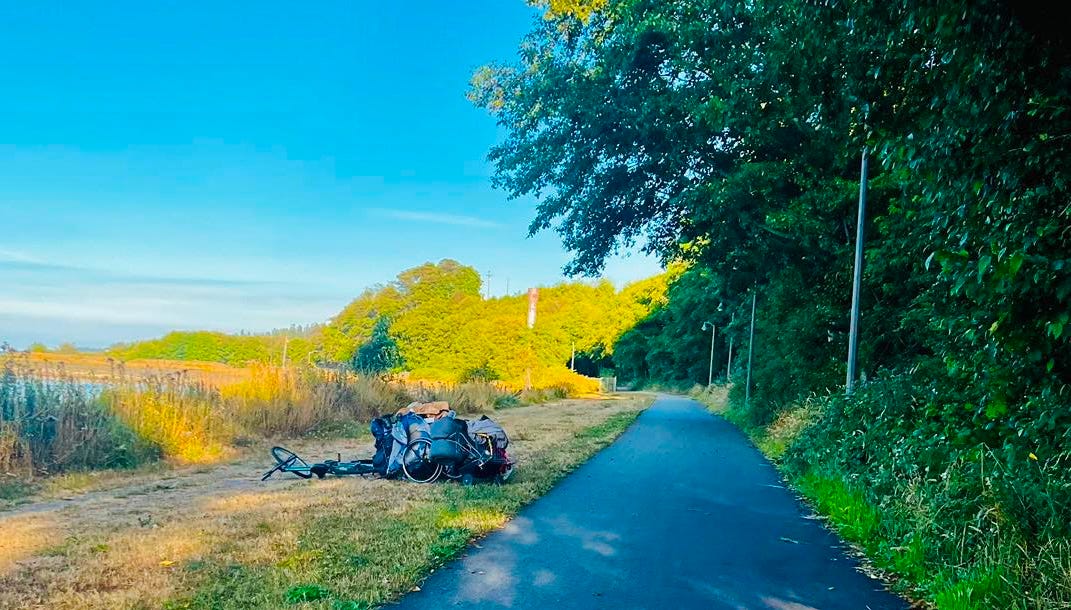
Berry said that portrayal “isn’t accurate” and called it “a disservice” to the community.
The comments appeared to be directed, at least in part, toward community volunteers who routinely document encampments, garbage, discarded paraphernalia, and environmental damage in and around Port Angeles. Among them are 4PA volunteers, county commissioner candidate Jake Seegers, and resident Stacey Richards, all of whom have entered camps, removed trash from creeks and greenbelts, and publicly documented what they encountered.
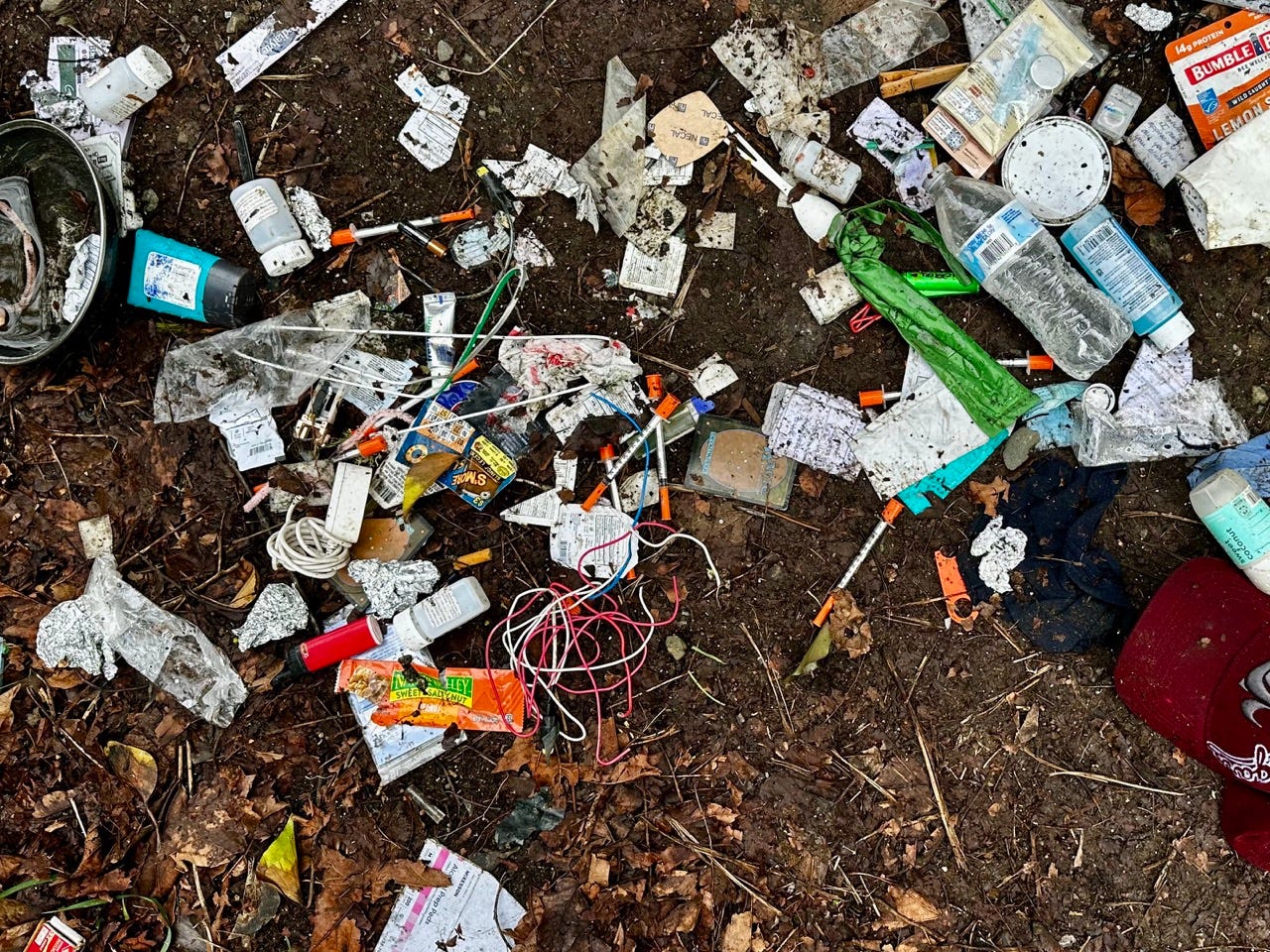
Those cleanup efforts have resulted in tons of garbage being removed from public spaces and waterways, including needles, propane bottles, shopping carts, human waste, foil kits, and other drug paraphernalia. Critics of the county’s harm reduction policies argue that at least some of those safer-use supplies originate from programs supported by local government and public health agencies.
Berry’s remarks immediately raised another question: Who exactly is she accusing of manipulating photographs?
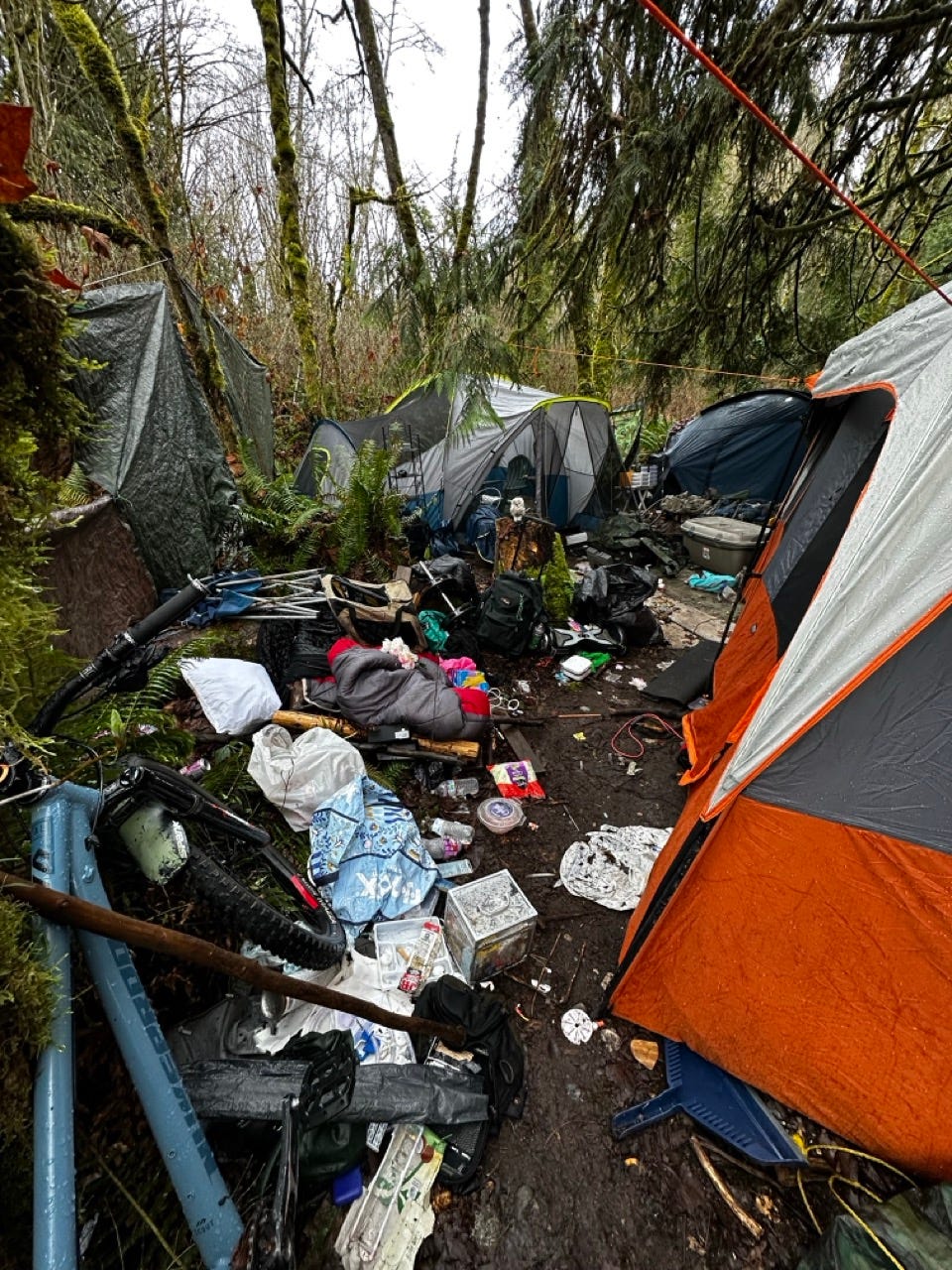
Because many of the images being shared online are, in fact, taken in downtown Port Angeles, along public trails, beside salmon-bearing waterways, and in parks and greenbelts used by local families. The camps are real. The trash is real. The cleanup efforts are real.
“If I were a business owner, I would hate that people are making P.A. look like that online,” Berry said.
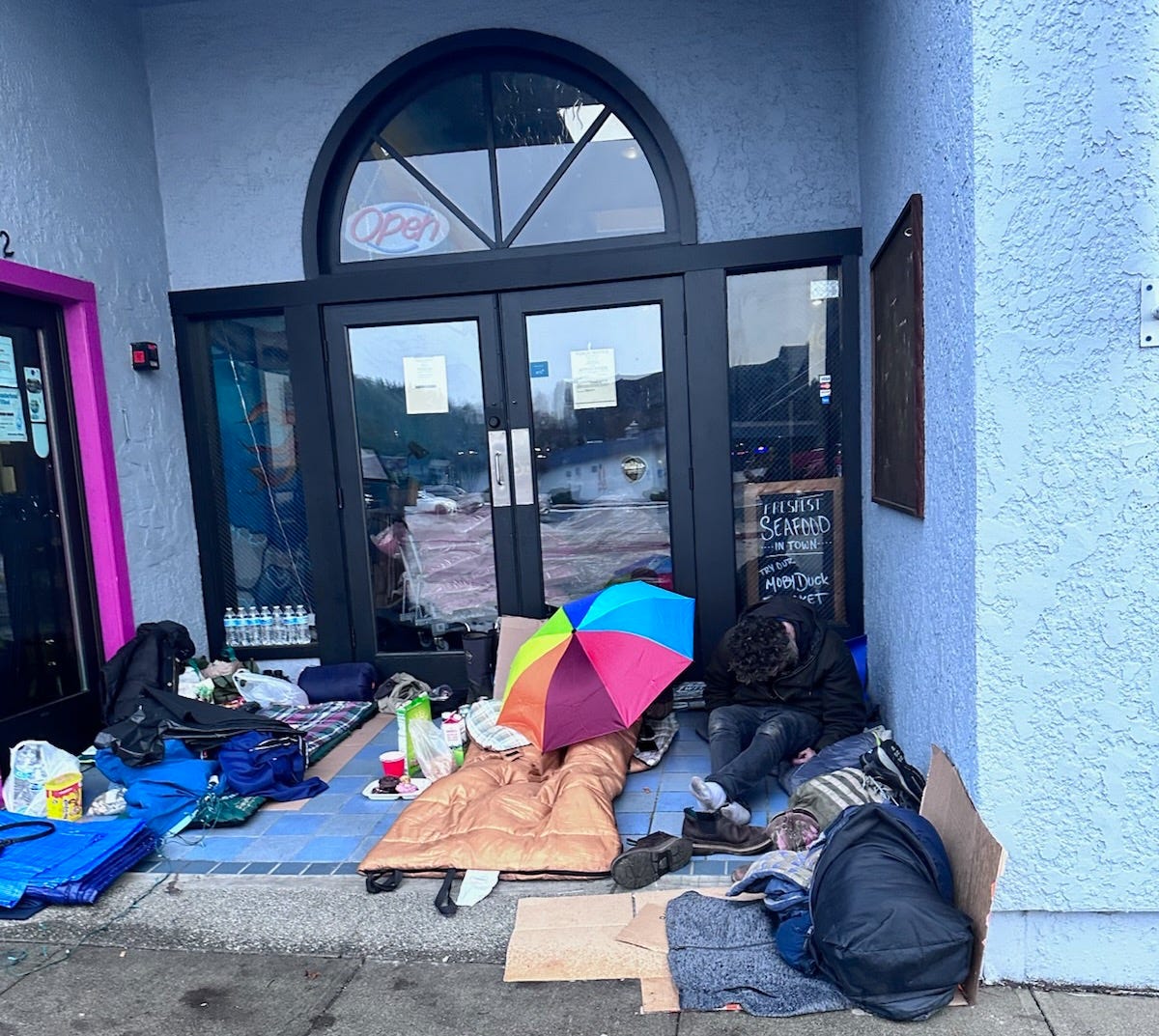
The people documenting the conditions are not the ones creating them. They are simply showing residents what already exists.
“Positive Public Use” As a Vaccine
Commissioner Mike French added that “Positive public use is kind of like its own vaccine against negative public use.” French argued that discouraging positive public activity can unintentionally create conditions where more negative activity takes hold.
To many residents, however, the exchange reinforced a growing frustration with county leadership. Officials appear more focused on criticizing the people documenting deteriorating conditions than addressing the conditions themselves.
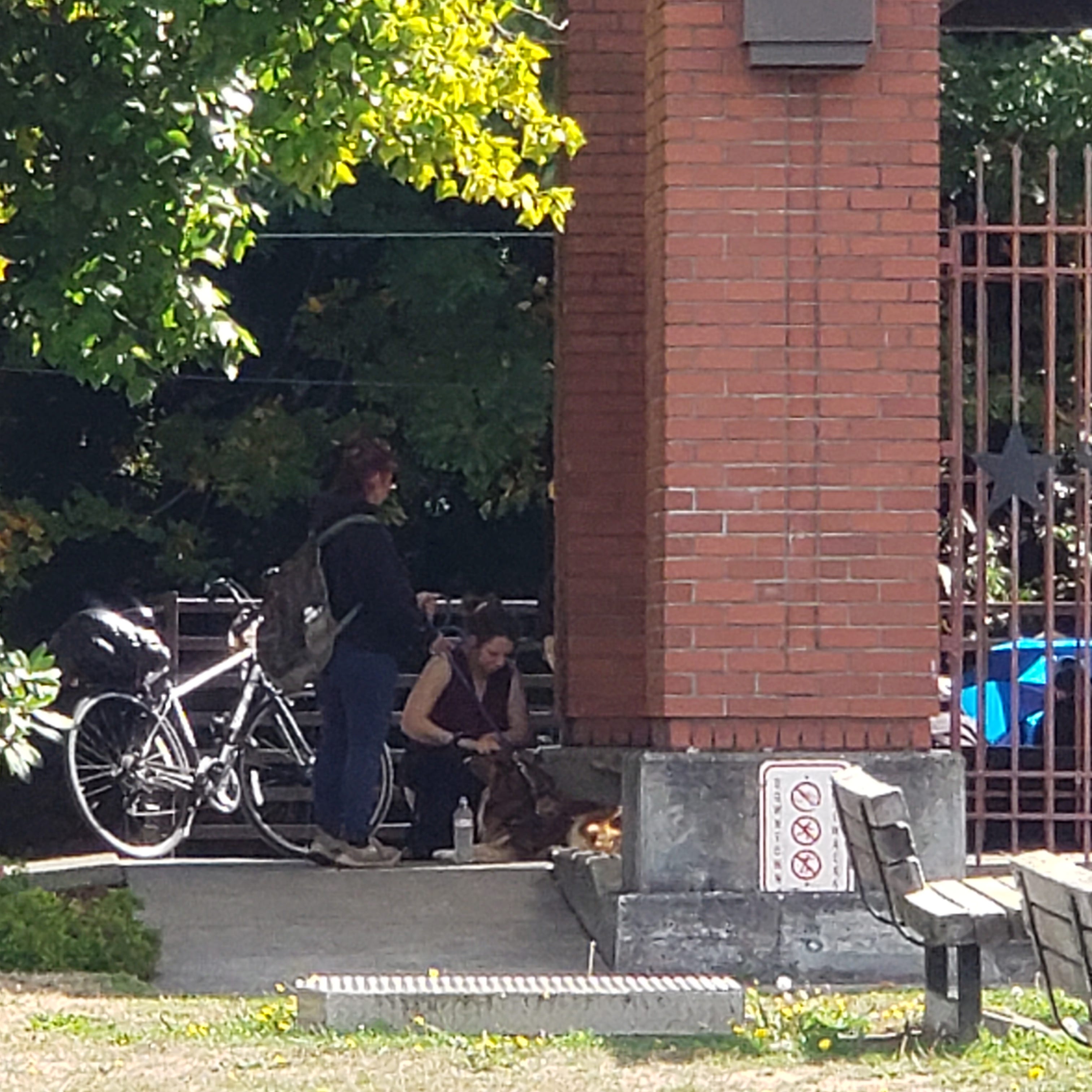
That tension is why many residents believe photographs matter.
If officials insist the images are misleading or exaggerated, then readers can judge for themselves.
This is downtown Port Angeles.
These are the public trails.
These are the public spaces residents are talking about.
Fear and Financial Incentives
Berry repeatedly suggested that fear is being politically weaponized.
But that fear also played a central role during COVID-era public health policy.
This is the same Health Officer who supported restaurant shutdowns, vaccine passport requirements, and sweeping public restrictions during COVID, while also working for the Jamestown Family Health Clinic. At the same time, Jamestown-owned businesses operated under tribal sovereignty and were not subject to many of the same mandates and restrictions imposed on local non-tribal businesses throughout Clallam County.
Berry also works for the Jamestown Healing Clinic, a Medication-Assisted Treatment (MAT) provider.
As the county expands harm reduction services, overdose interventions, and telehealth Suboxone access, some residents are increasingly questioning whether there is an inherent conflict of interest when the county’s Health Officer also works for an addiction treatment provider that stands to financially benefit from ongoing addiction treatment and federal reimbursements.
Those concerns become even more politically sensitive given that the Jamestown Corporation was Commissioner Mark Ozias’ top campaign donor, and Ozias has consistently supported expanding harm reduction.
The question residents continue asking is simple:
If county policy funnels more individuals into MAT treatment pipelines, who financially benefits?
And why are questions about those financial incentives increasingly portrayed as hateful or dangerous?
“Folks Who Use Drugs… Are an Easy Group to Get Folks to Hate”
Berry argued that criticism of harm reduction often targets vulnerable populations.
“Folks who use drugs, folks who are homeless, are an easy group to get folks to hate,” Berry said Tuesday. “There is a strong push to blame that population for anything that’s going wrong right now, and that sells.”
Berry said broader economic policies involving housing and wages are driving homelessness.
“It’s harder to hate policy, it’s so much easier to hate that person that is right there, who is poor, and who looks it,” Berry said.
She also said she personally walks around Port Angeles and is not afraid.
“There are folks who want those challenges to feel worse because that serves them,” Berry said.
Berry insisted there is no evidence that the county’s harm reduction programs are causing drug use.
“Bring the evidence that somehow we have caused drug use,” she challenged.

Storytelling Over Statistics
Dr. Paul Cunningham, who oversees the Jamestown Healing Clinic and also serves on the Board of Health, suggested officials should highlight more stories from people helped by programs like the Jamestown Healing Clinic.
In other words, while data matters, storytelling may be more persuasive in shaping public opinion.
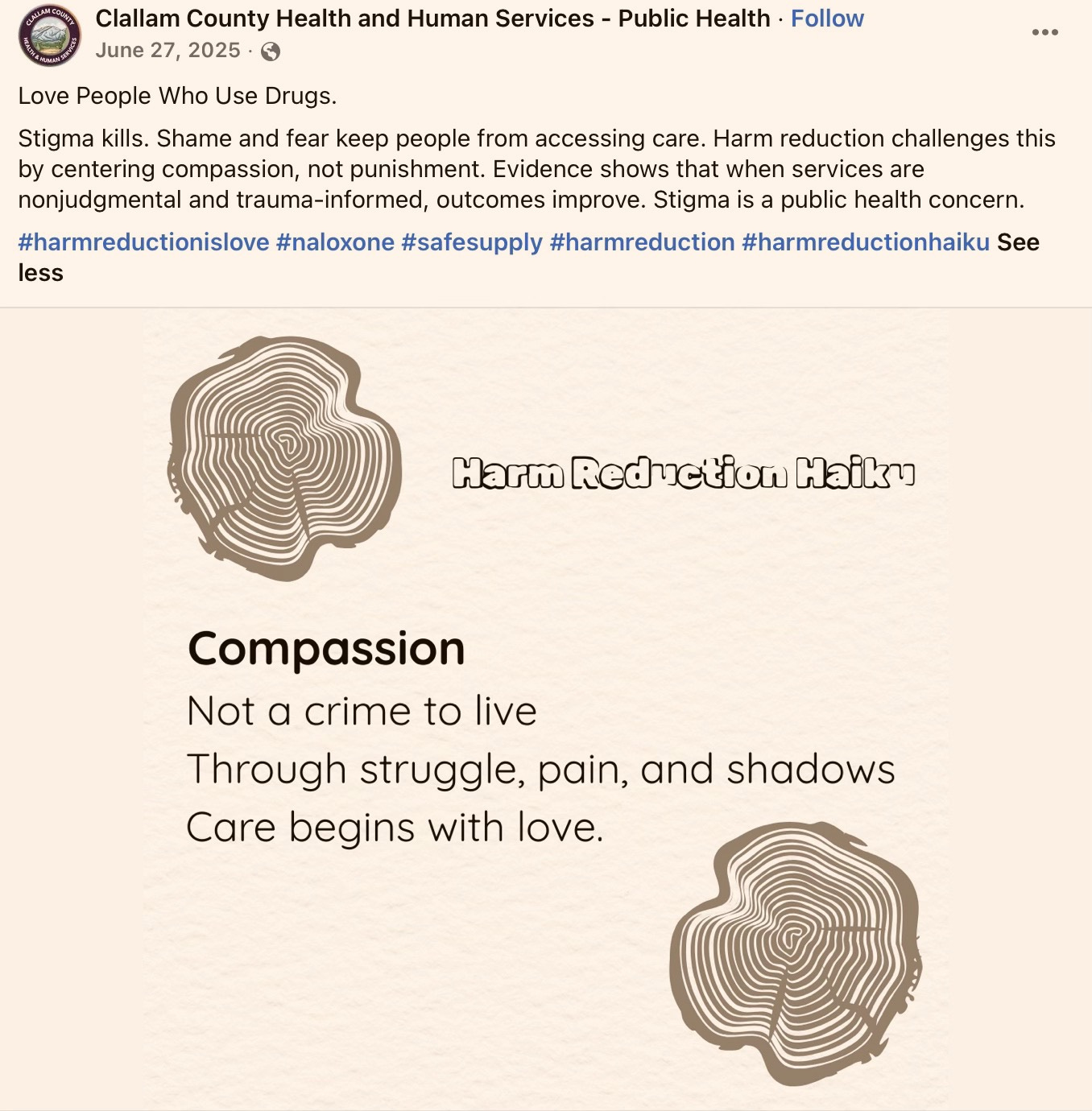
That comment may concern residents who believe public policy should be judged primarily through measurable outcomes, not emotional narratives.
Because the questions many residents are asking remain unanswered:
Are overdose deaths decreasing because of harm reduction?
Are neighborhoods safer?
Are public parks cleaner?
Are more people entering sobriety?
Are fewer children at risk of encountering discarded syringes?
Or are officials simply becoming better at defending the system already in place?
Today’s Tidbit: Follow the Money?
While county officials insist harm reduction is simply about compassion and public health, another question continues surfacing in the community: how much money is tied to the rapidly expanding addiction, behavioral health, and treatment industry?
A recent job posting tied to Jamestown Corporation operations advertises a salary of $300,000 to $400,000 for a Psychiatric Medical Director as the Tribe moves toward opening its new psychiatric facility in Sequim.
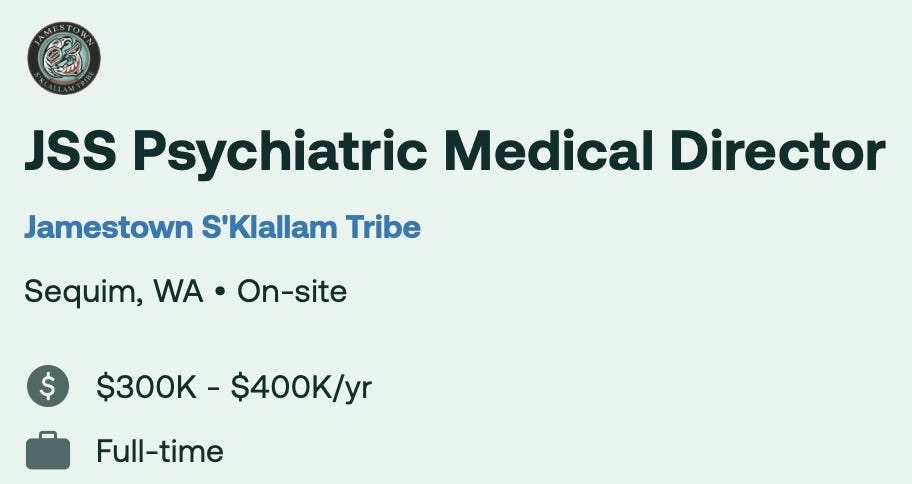
The posting repeatedly emphasizes Tribal integration and Native preference considerations, including:
“Partner with Tribal representatives to integrate Tribal culture and values into medical care, training, and policies.”
“Demonstrate cultural humility and awareness when working with American Indian/Alaska Native patients and families.”
“American Indian/Alaska Native preferences apply.”
That language has raised eyebrows among some residents because the public has repeatedly been told these behavioral health expansions and taxpayer-supported partnerships are intended to serve the broader community.
At the same time, Jamestown Healing Clinic — where Dr. Allison Berry works — continues expanding Medication-Assisted Treatment services while Clallam County expands harm reduction strategies designed to connect more individuals into long-term treatment systems heavily funded through federal and state reimbursements.
Residents are now asking how much taxpayer money is flowing into the addiction-treatment system, who ultimately benefits financially, and whether the public is helping fund institutions that may prioritize Tribal systems and hiring preferences over the broader community they were told these facilities would serve.


