
They filmed themselves committing the act. They admitted it. The damage was real. And yet—no charges. A new memo reveals why prosecutors walked away, raising deeper questions about accountability, politics, and a growing double standard in Clallam County.
It’s hard to imagine a more straightforward case.
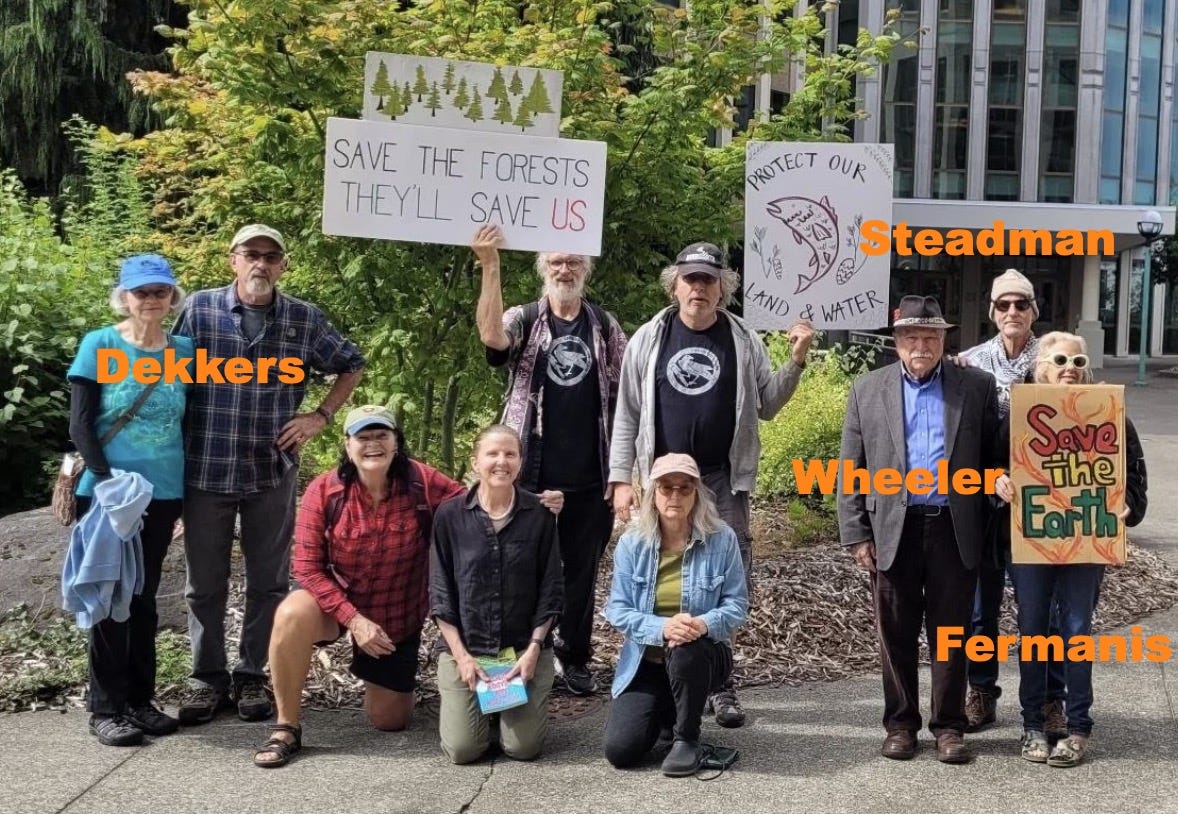
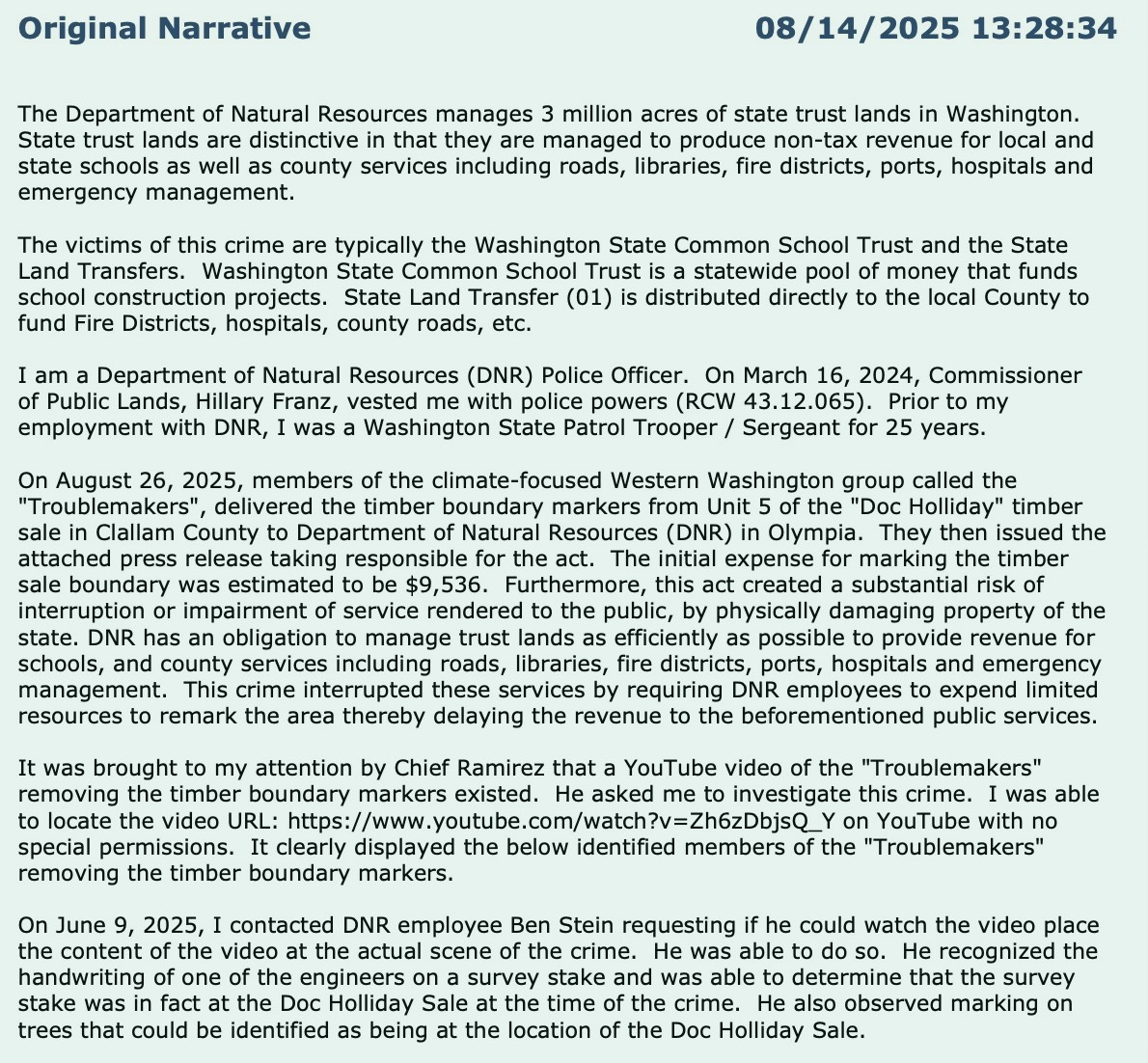
A group of self-described activists—calling themselves the “Troublemakers”—walked onto Department of Natural Resources (DNR) land in Clallam County, tore down boundary markers, filmed themselves doing it, identified themselves on camera, and then hand-delivered the evidence to the state.
The cost to taxpayers? Nearly $10,000 just to redo the work.
And yet, no charges will be filed.
That’s not speculation—that’s now confirmed.
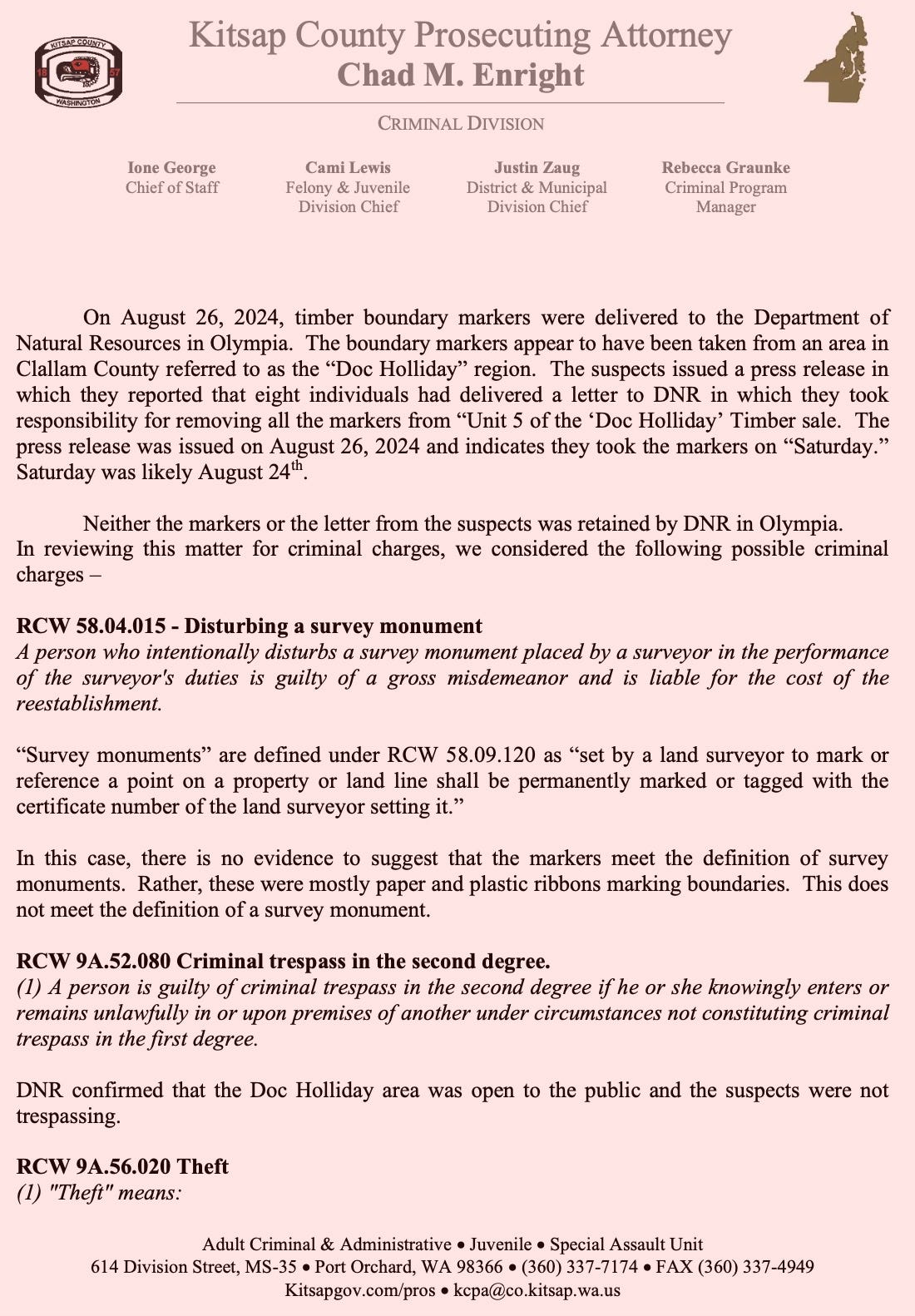
According to a March 18, 2026 memo from Kitsap County Prosecuting Attorney Chad Enright, who was brought in as a special deputy prosecutor, the conduct “should be a criminal matter,” but ultimately does not fit cleanly under existing Washington law.
What the Prosecutor Actually Said
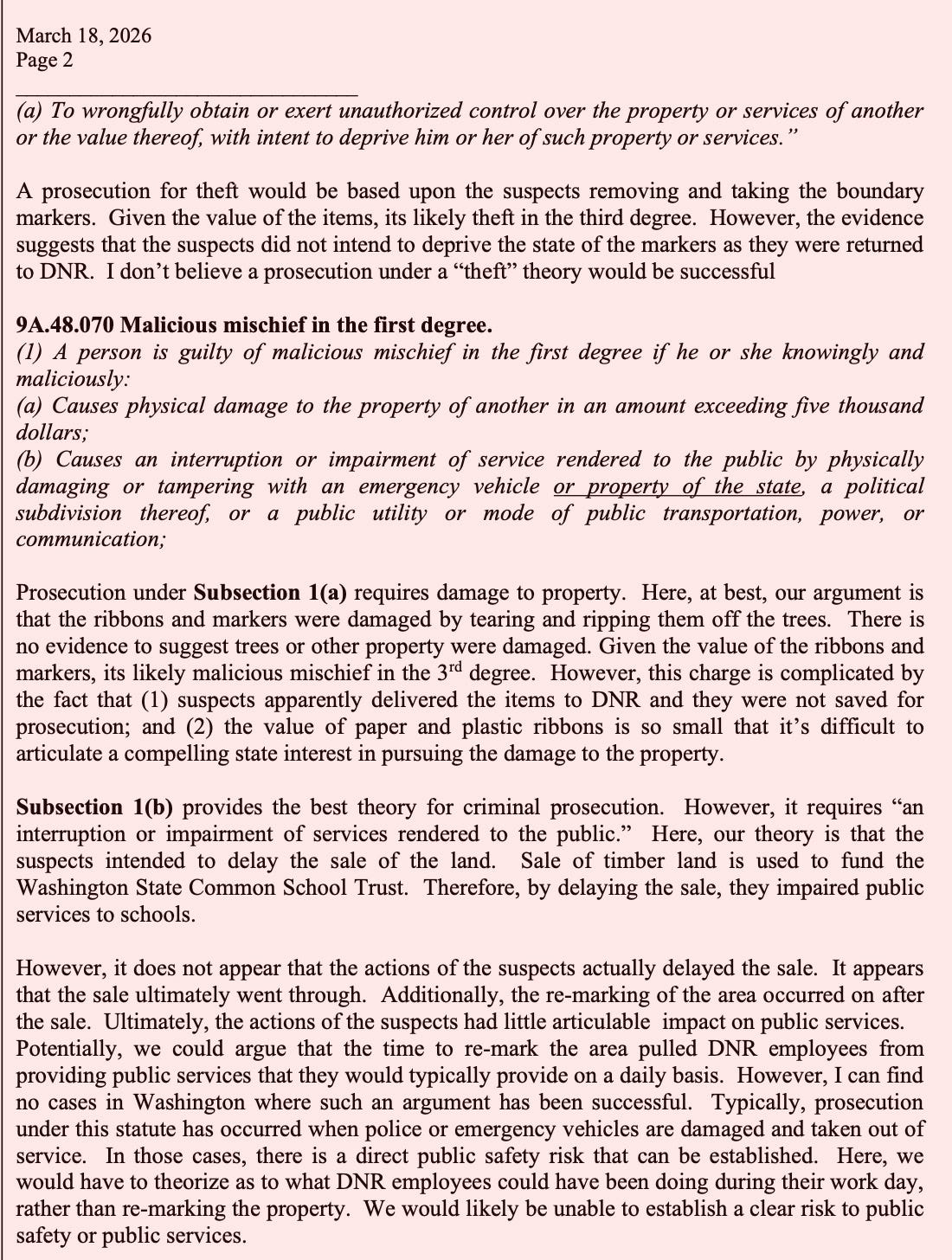
The memo walks through every possible charge—and systematically explains why none will stick:
Disturbing a survey monument?
Doesn’t apply. The markers weren’t official survey monuments—just ribbons and temporary markers.Criminal trespass?
No. The land was open to the public.Theft?
Unlikely. The items were returned, so prosecutors say there was no intent to permanently deprive the state.Malicious mischief (property damage)?
Technically possible—but the value of the ribbons themselves is minimal, and the physical damage to property is hard to prove.Impairment of public services?
This was the strongest theory—arguing that disrupting a timber sale impacts school funding—but prosecutors concluded there was no clear evidence the sale was actually delayed.
The conclusion is blunt:
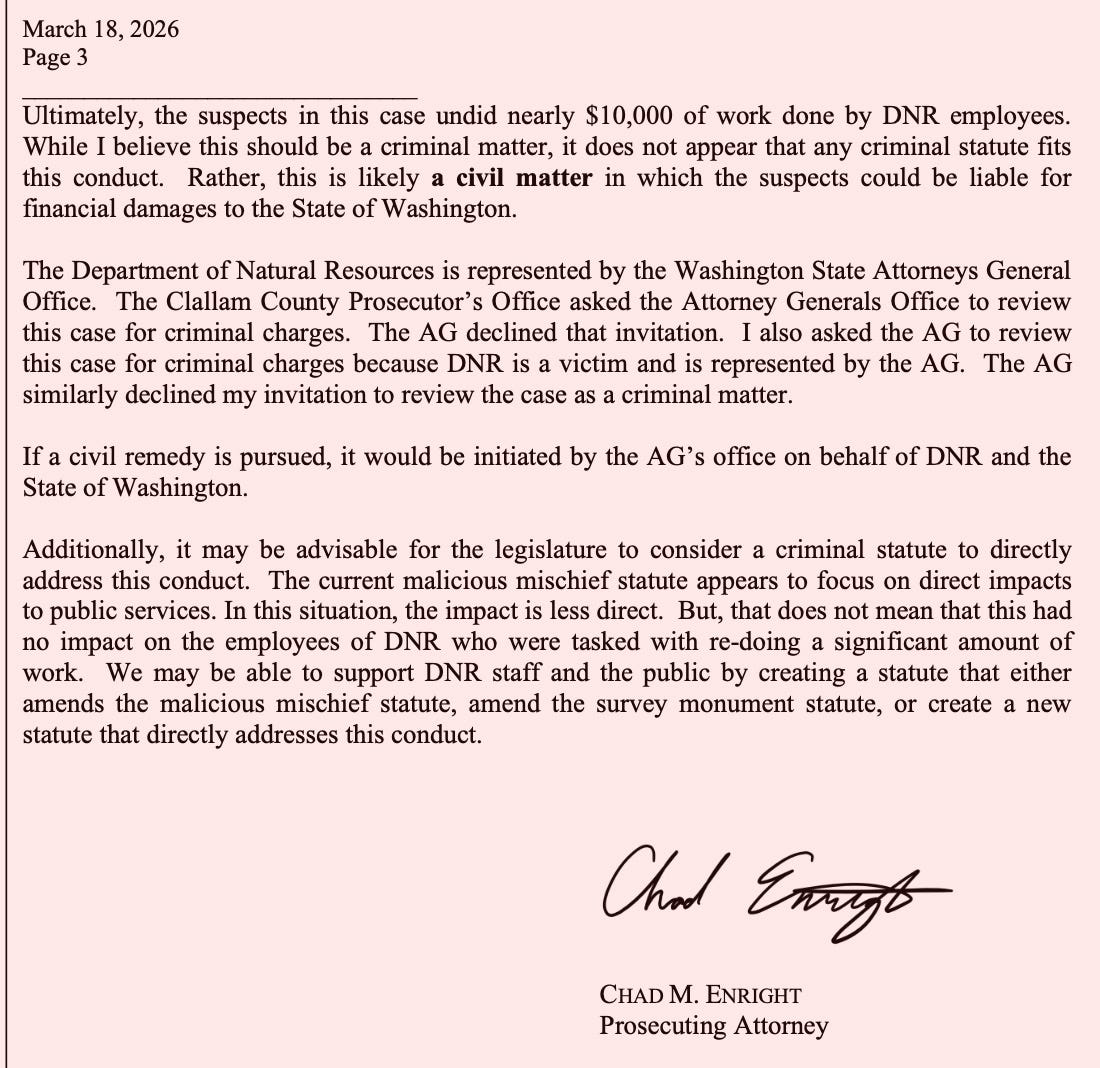
Nearly $10,000 worth of work undone… and no criminal statute clearly fits.
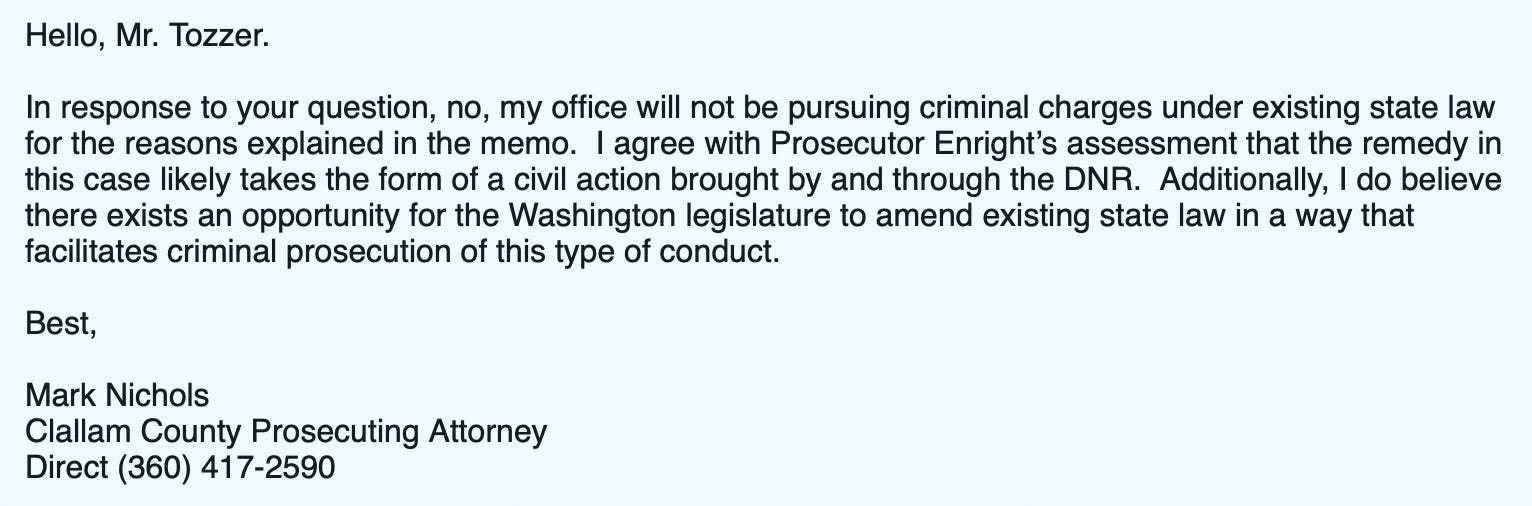
Instead, Enright suggests this is likely a civil matter, and even calls on the legislature to consider creating a law to address this kind of conduct in the future.

What Happened
This wasn’t ambiguous.
This wasn’t circumstantial.
This wasn’t a case of “we can’t identify the suspects.”
They filmed it.
They narrated it.
They explained their intent on camera:
“We are here to remove the survey flagging so DNR can’t sell it.”
“When you see pink, just pull it off.”
“It’s going to slow them down…”
And then they turned the materials in themselves.
If this is not prosecutable, what is?
The Cost Was Never Just $10,000
The $9,536 estimate was just the re-marking cost.
It doesn’t include:
Staff time to investigate and re-survey
Law enforcement resources
Prosecutorial review in two counties
Public meetings and staff hours spent addressing activist pressure
The broader disruption to DNR operations
And potentially—though not definitively confirmed—delays to timber harvest timelines.
If those timelines were impacted, that means delayed work for:
Loggers
Truck drivers
Mill workers
And delayed revenue for:
Schools
County roads
Fire districts
Hospitals
Libraries
This wasn’t symbolic. It had real downstream consequences.
A Precedent That Should Concern Everyone
Here’s the real issue:
If nothing happens here, what stops this from happening again?
What stops the next group from walking into another timber sale and doing the same thing?
What stops activists from targeting other public lands, infrastructure, or projects they don’t like?
Because right now, the lesson is clear:
Do it on camera. Admit it. And walk away.
That’s not accountability—that’s permission.
And there’s another consequence people are already experiencing: access. When public lands are repeatedly disrupted, damaged, or interfered with, the response isn’t more openness—it’s restriction. Gates go up. Locks get heavier. Access points get limited. The very people who respect the land and follow the rules end up paying the price. If this kind of behavior continues without consequences, it shouldn’t surprise anyone when more of our public land becomes harder—and sometimes impossible—for the public to access.

Meanwhile, A Very Different Standard Applies Elsewhere
It’s impossible to ignore the contrast.
In late 2023, I was the subject of a month-long investigation directed by Commissioner Mark Ozias, who requested the involvement of:
The Prosecuting Attorney
The Sheriff’s Office
The Chief Criminal Deputy
No photos.
No video.
No evidence.
No charges.
And yet, the full weight of the system was mobilized.
Why?
Because I was a critic of a stalled county project, Towne Road.
Emails show Commissioner Ozias initiating contact, looping in law enforcement, and pushing for action based on allegations that ultimately went nowhere.
That case had no evidence—and got a full investigation.
This case has video, admissions, and financial damage—and gets nothing.
That’s not a gray area. That’s a double standard.
The Politics Are Hard to Ignore
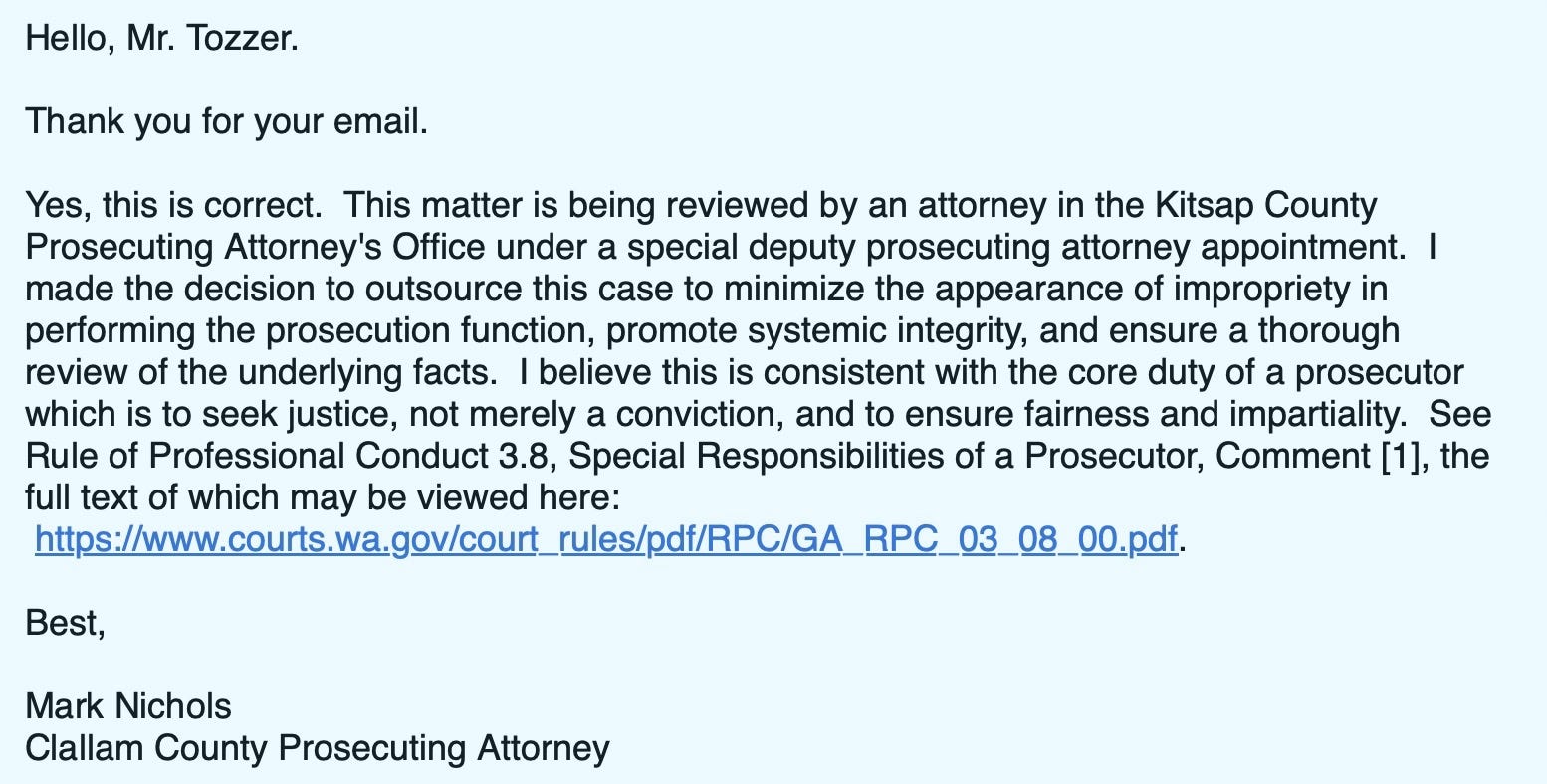
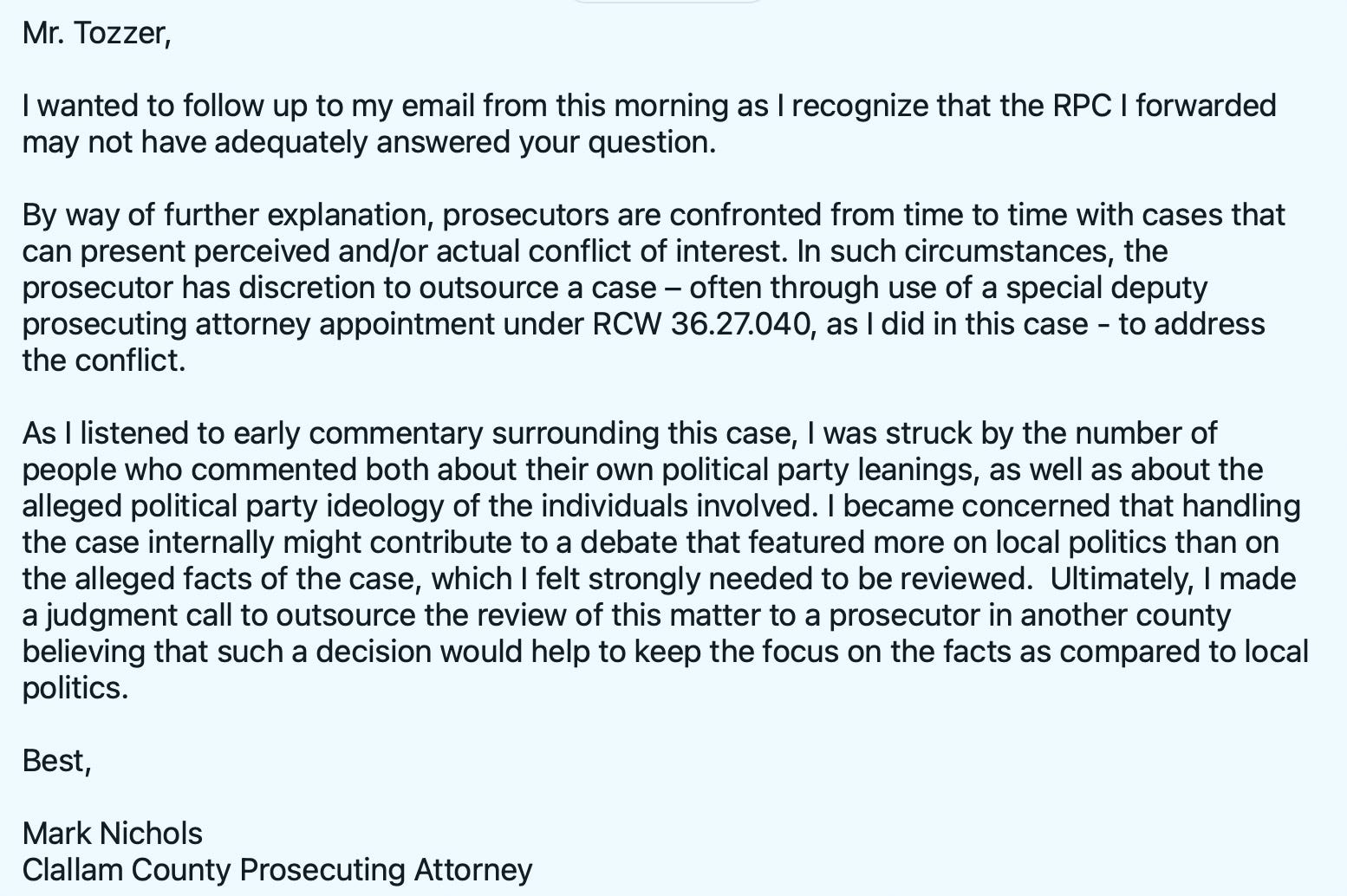
Clallam County Prosecutor Mark Nichols made the decision to outsource this case to Kitsap County, citing concerns about political perception and a desire to “promote systemic integrity.”
But the result is the same: No charges.
And it raises a fair question:
Where is the prosecutor when the county’s own interests—and taxpayer-funded public lands—are directly impacted?
Because at the same time, we’re told that public safety and accountability are top priorities.
When Property Destruction Becomes Policy
There’s another piece of context that shouldn’t be overlooked.
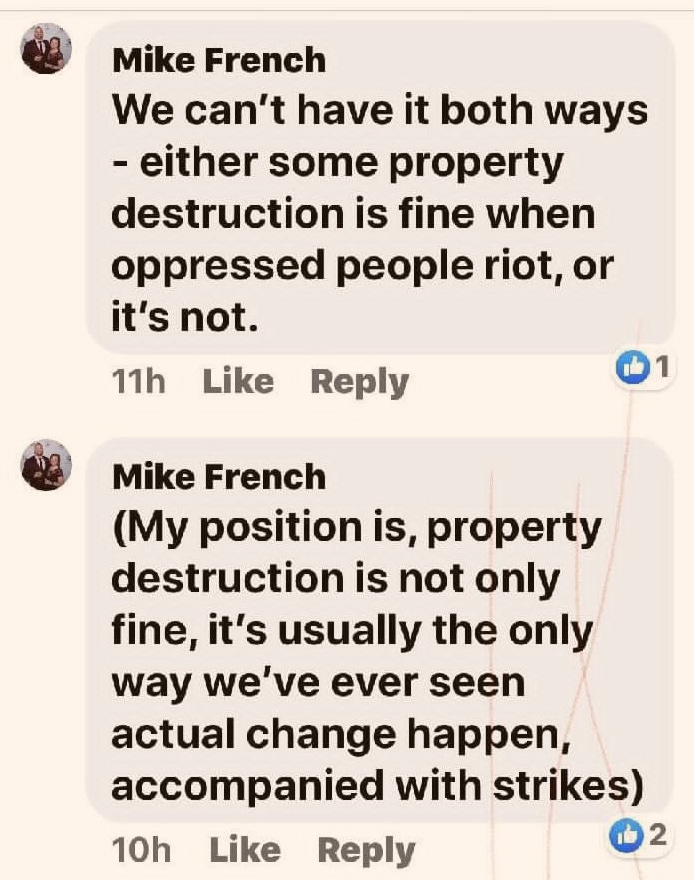
Clallam County Commissioner Mike French once wrote:
“Property destruction is not only fine, it’s usually the only way we’ve ever seen actual change happen…”
Maybe he’s right.
Because right now, in Clallam County, there are no consequences.
And when there are no consequences, behavior doesn’t just continue—it escalates.
The Bigger Picture
The Troublemakers didn’t just remove ribbons.
They tested the system.
And the system blinked.
If this stands, it sends a message far beyond one timber sale:
Public land is fair game
Activist disruption carries little risk
Enforcement depends on who you are—not what you did
That’s a dangerous precedent for any community.
And Now—Re-Election
All of this comes as Prosecuting Attorney Mark Nichols has announced he is seeking a fourth term.
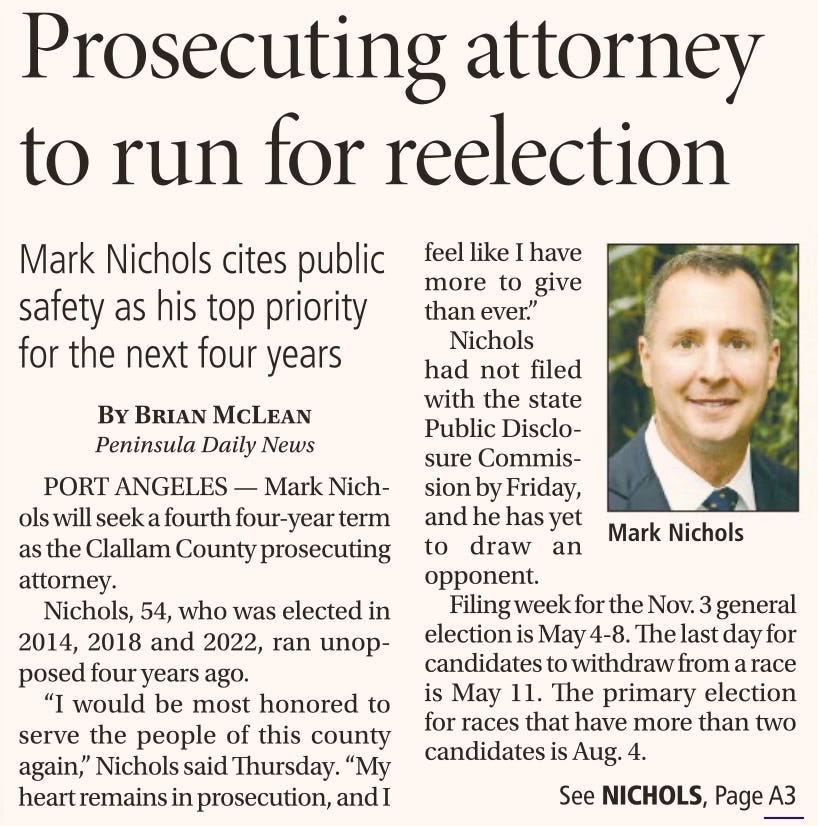
“My heart remains in prosecution,” Nichols said. “I feel like I have more to give than ever.”
He says his priorities include:
Prosecuting dangerous offenders
Advocating for victims
Expanding transparency
But voters may reasonably ask:
If a case this clear doesn’t result in charges… what does?
Because when the facts are visible, the admissions are public, and the damage is real—yet nothing happens—it’s not just a legal question.
It’s a question of priorities.
And the public deserves an answer.