


What began as a simple request for help in 2023 quietly evolved into a shower voucher pipeline tied to Clallam County’s Harm Reduction Health Center, all with little public awareness, no clear board approval, and almost no meaningful oversight. Now, instead of shutting the program down after public backlash, the Shore Pool board is expanding it, rebranding it, and pushing forward anyway.
A Shower Program Nobody Knew About
For nearly two years, the William Shore Memorial Pool District quietly operated a shower voucher program for homeless and unhoused individuals without a formal board-approved policy, without meaningful public awareness, and apparently without some board members even knowing it existed.
Now, after public outrage exposed the program, the response from the Shore Pool board has not been caution, accountability, or reassessment. Instead, it has been rebranding.
The “Shower Voucher Program” is now the far more polished-sounding “Community Hygiene Access Program.” Because apparently if you rename something, the controversy disappears with it.
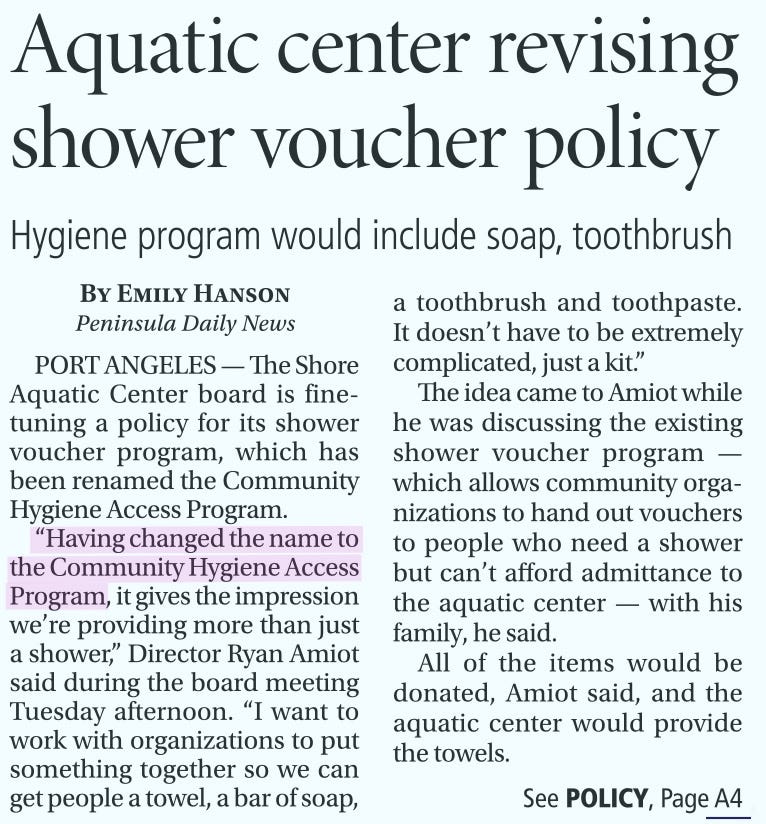
The board unanimously voted to reinstate the program after briefly pausing it following community backlash. During the latest meeting, commissioners and staff discussed expanding the offerings beyond showers to include hygiene kits with soap, toothbrushes, toothpaste, and towels.
“Having changed the name to the Community Hygiene Access Program, it gives the impression we’re providing more than just a shower,” Director Ryan Amiot said during the May meeting, according to the Peninsula Daily News.
That part, at least, is honest.
Because the Shore Pool is no longer functioning simply as a public aquatic center. It is steadily morphing into another publicly funded social service arm in a city already saturated with them. And taxpayers are rightfully asking: When exactly did families vote for the local pool to become part of the county’s harm reduction infrastructure?
The Real Issue Isn’t Showers
The issue has never been whether struggling people deserve access to hygiene. The issue is where the vouchers are being distributed, who is receiving them, and why this program was embedded into a family-oriented aquatic facility without transparency or safeguards.
The vouchers are being distributed through Clallam County’s Harm Reduction Health Center — the same facility that distributes free drug paraphernalia and supplies to active addicts — as well as St. Vincent de Paul. Meanwhile, Port Angeles already has shelters and facilities specifically intended for serving unhoused populations, many of which already provide showers.
The Shore Pool is not a shelter. It is a family recreation facility where children swim, families change clothes, patrons store valuables, and people are often in vulnerable situations.
Yet the board’s repeated defense is that they are “unaware of incidents.” That is a remarkably low standard for public safety. So the plan is to wait until something happens?
How exactly do you “un-victimize” a child after the fact?


One of the more revealing moments during the public discussion came when board commissioner LaTrisha Suggs argued that while transients are using the facility, they could potentially encounter someone who offers them a job. That may sound compassionate on paper, but many residents are asking a more basic question first: Why are vulnerable families and children being placed into an unnecessary social experiment when alternative shower facilities already exist elsewhere?
The Board Doesn’t Even Know Where the Vouchers Are Going
Even more concerning, the board openly acknowledged they do not actually know where all the vouchers are ending up. Although officials insist only two organizations distribute them, public commenters stated vouchers are also showing up at the library and community feeding events. The board did not seem especially alarmed.
One section of the proposed policy states that “vouchers may not be sold, transferred, or reused.” That sounds reassuring until one asks the obvious follow-up question: How would they know?
There appears to be no meaningful tracking system, no identity verification, no accountability chain, and no enforcement mechanism. Just trust.
Commissioner Suggs also objected to language in the draft policy allowing the board to suspend or terminate the program based on “community impact” because she worried it could stigmatize the program or produce a “fear response.” But “community impact” is precisely what elected boards are supposed to consider, especially when taxpayers are raising concerns about safety, sanitation, operational priorities, and mission creep.
The comments from Commissioner Mike French were equally revealing.
“I want to highlight a couple of things in this because it’s important to me,” French said. “The program is intended to operate at little or no cost to the facility and during low-use times, so I’m against anything that makes the program more complicated or complex.”
In other words: keep it simple. Don’t burden it with too many rules.
French also supported allowing the executive director to approve participating organizations without requiring a formal board application process. So the public gets fewer safeguards, less oversight, and more administrative discretion.
What could possibly go wrong?
Mike French Says He Didn’t Know
Perhaps the most astonishing revelation of all is that Commissioner Mike French — who sits on the pool board and also serves as a Clallam County commissioner overseeing the county’s harm reduction programs — admitted he didn’t even know the voucher program existed until social media exposed it.
In an email, French wrote:
“I was made aware of the program because of information shared on social media; I was not aware of the program before the public was informed.”
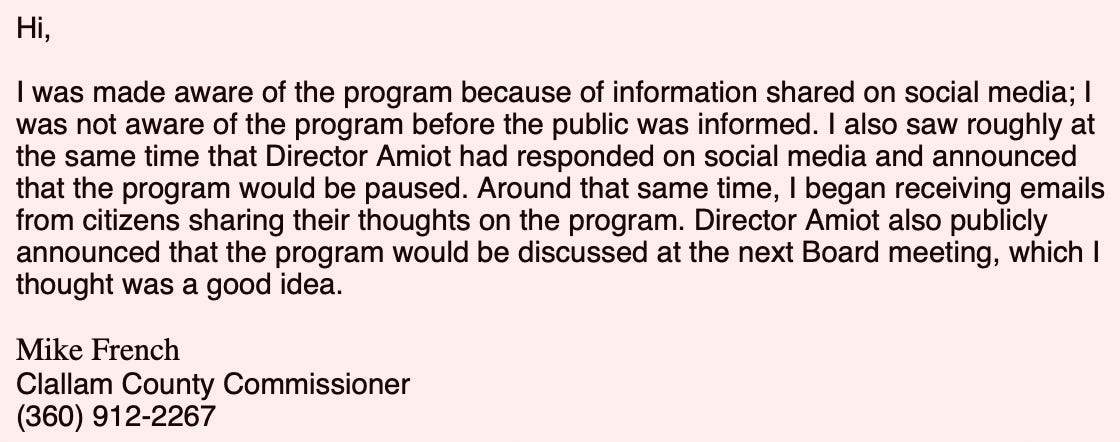
The program had reportedly been operating for approximately 18 months.
A year and a half.
And a commissioner serving on both sides of the arrangement claims he knew nothing about it.
This is the same pool district scrutinized last year after the State Auditor uncovered fraud involving tens of thousands of taxpayer dollars. Oversight matters. Boards are not résumé builders for those who serve. Members are supposed to supervise public institutions, monitor programs, ask questions, establish safeguards, and protect taxpayer interests.
Instead, this program appears to have evolved through informal conversations between social service organizations and pool administrators with little visible board involvement.
How the Program Actually Started
The paper trail tells the story.
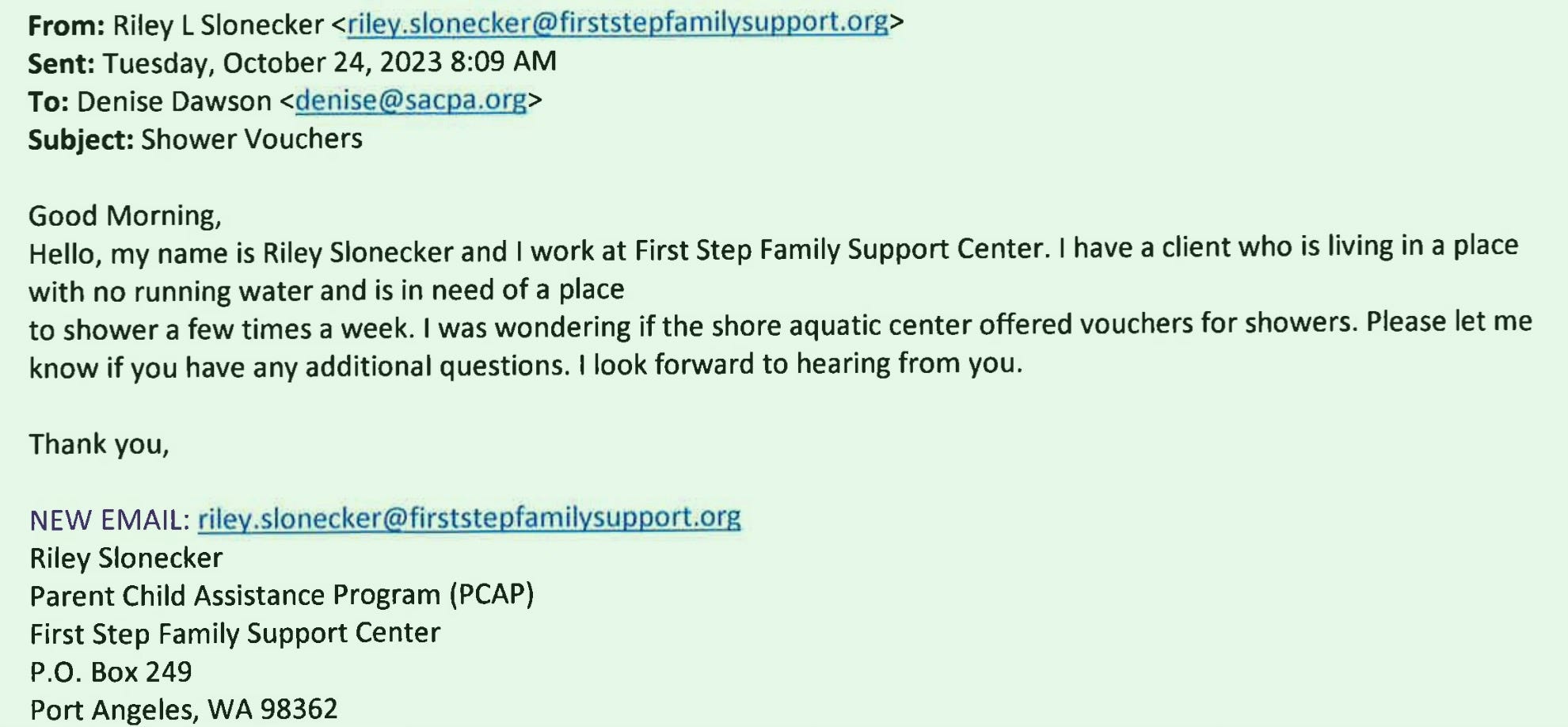
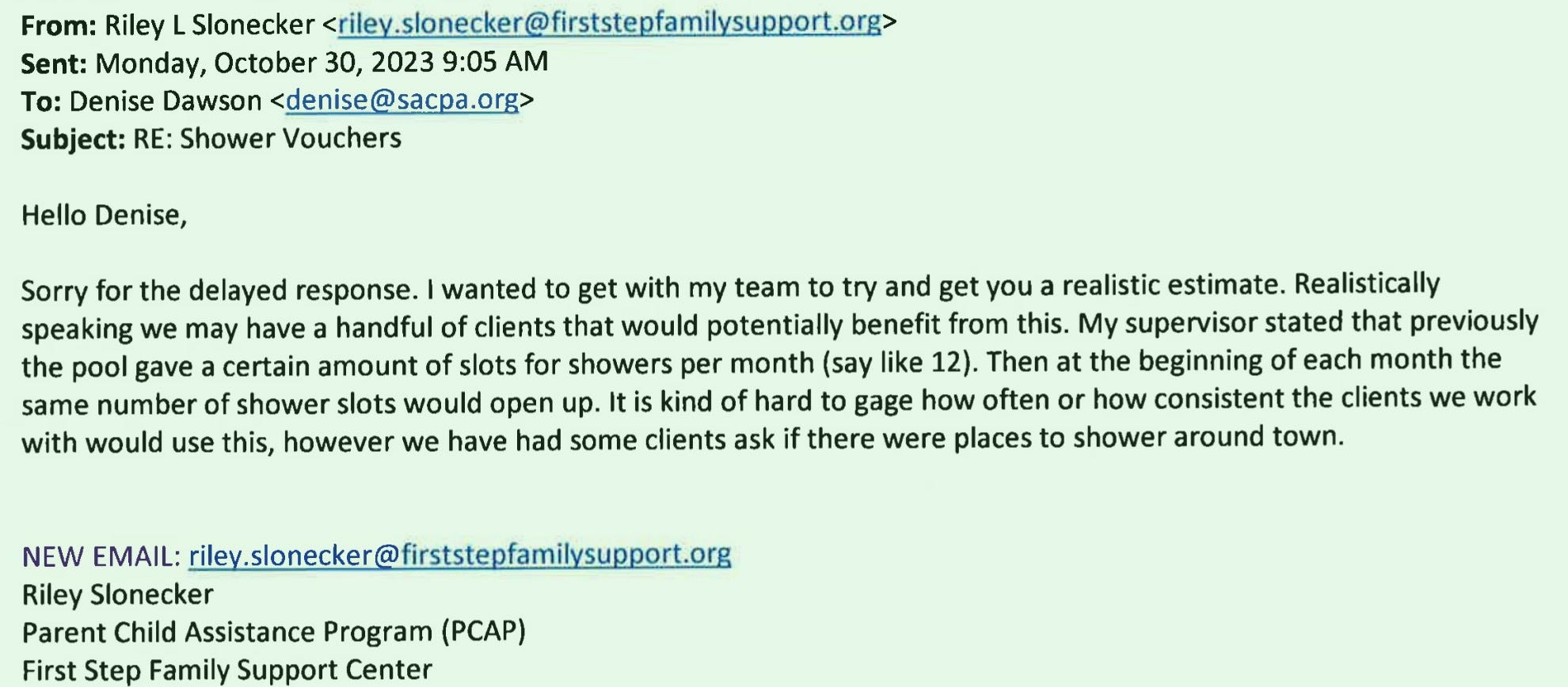
On October 24, 2023, First Step Family Support Center employee Riley Slonecker emailed then-director Denise Dawson asking whether the aquatic center offered shower vouchers for a client living without running water.
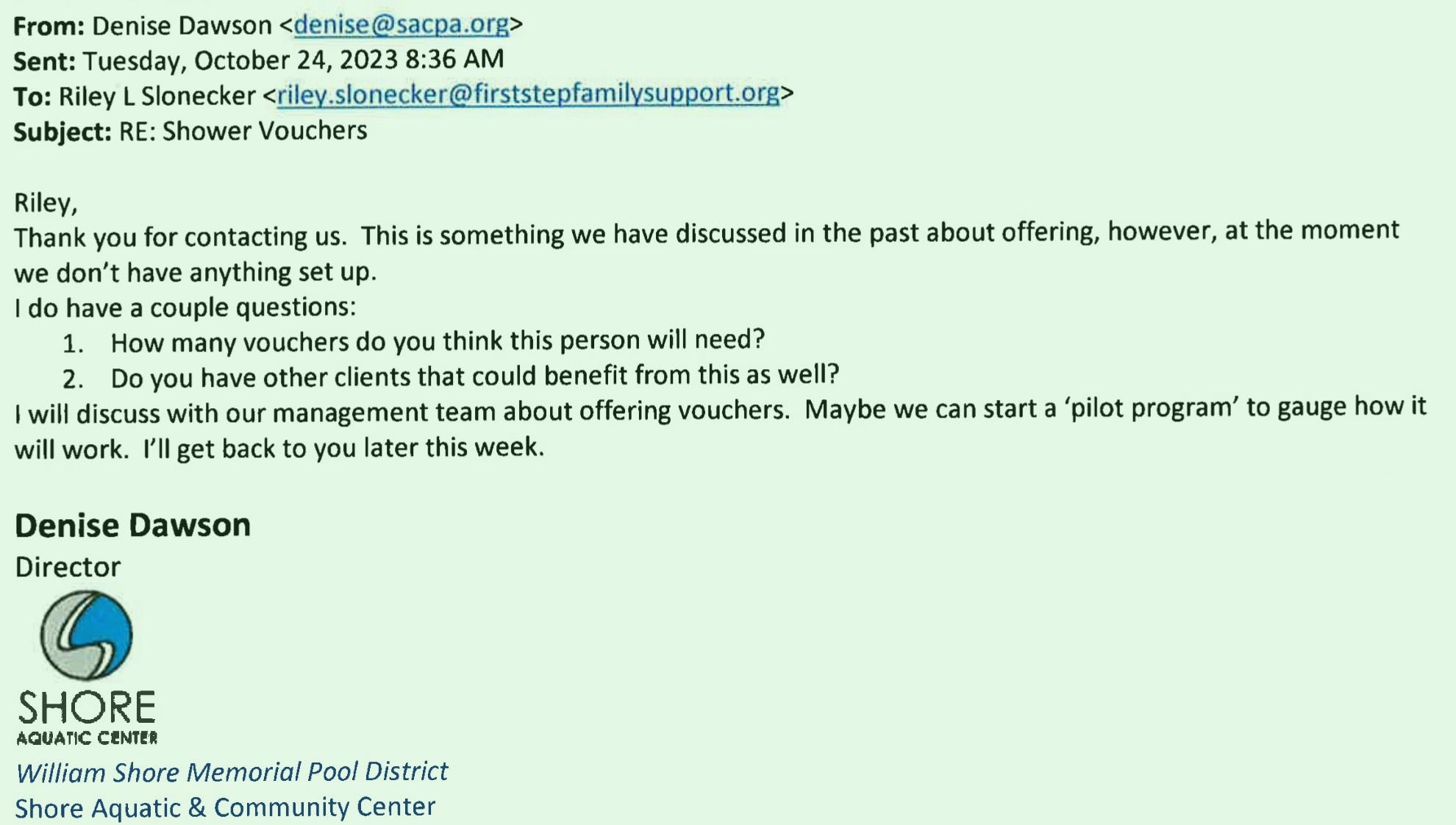
Dawson responded the same day, saying the idea had been discussed previously and suggesting a “pilot program” to see how it would work.
At the time, the discussion sounded limited and specific. Slonecker indicated they may have “a handful of clients” who could benefit from shower access.
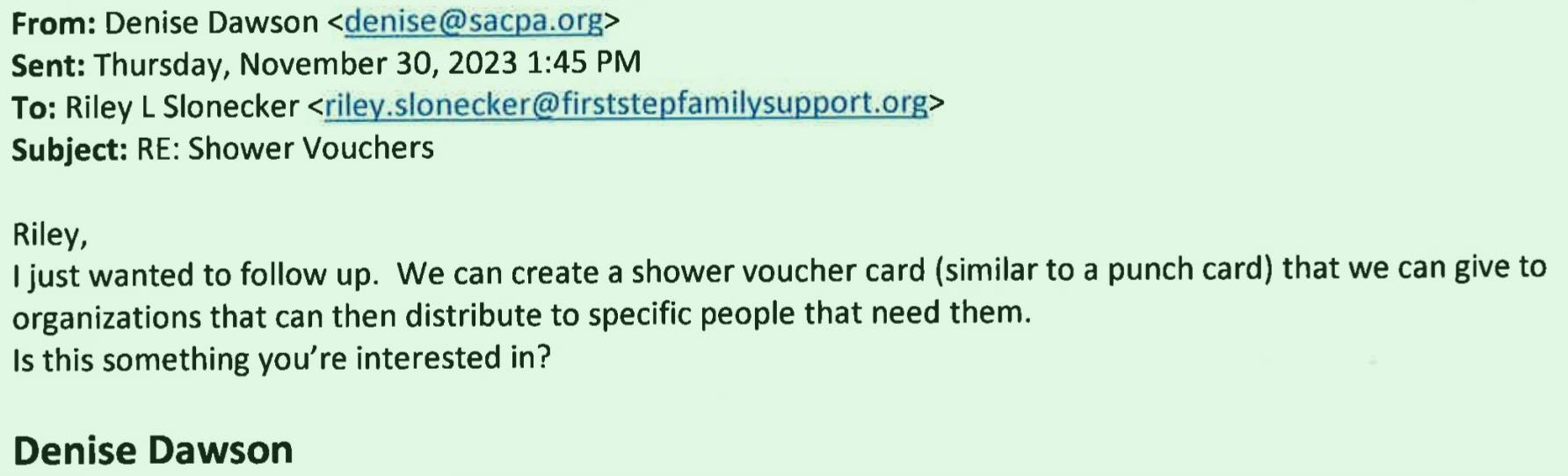
By November 30, 2023, Dawson proposed creating “a shower voucher card (similar to a punch card)” for organizations to distribute to people needing showers.
Then management changed.
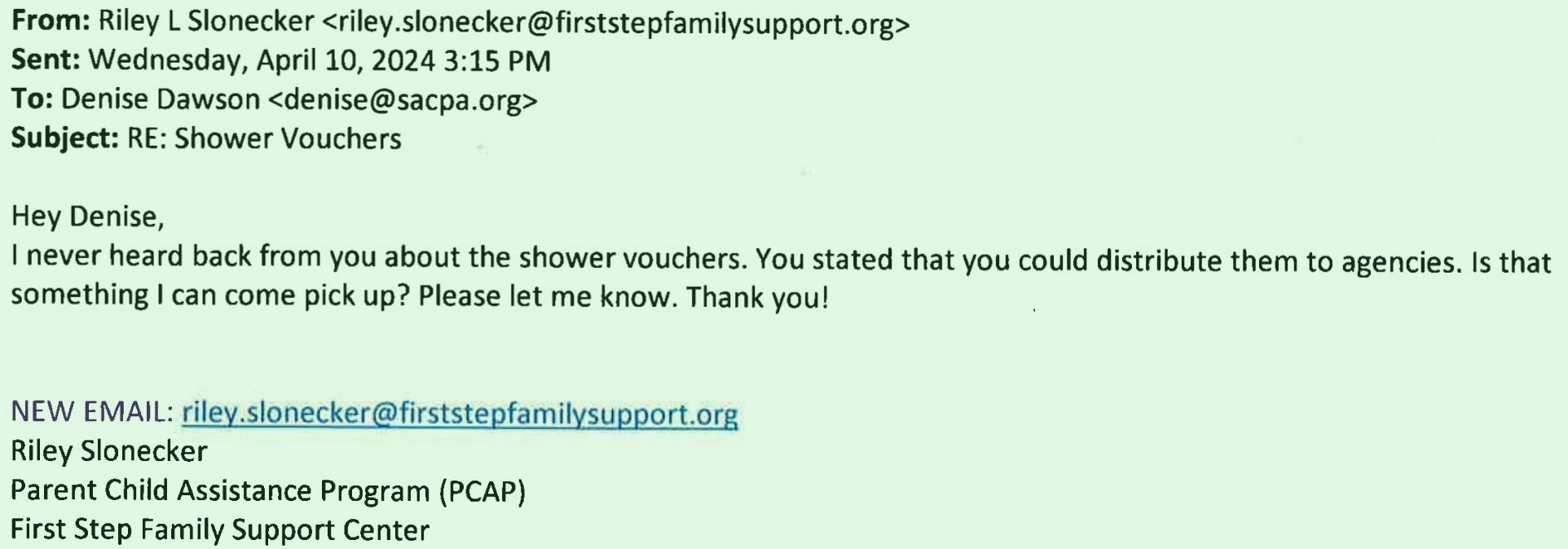
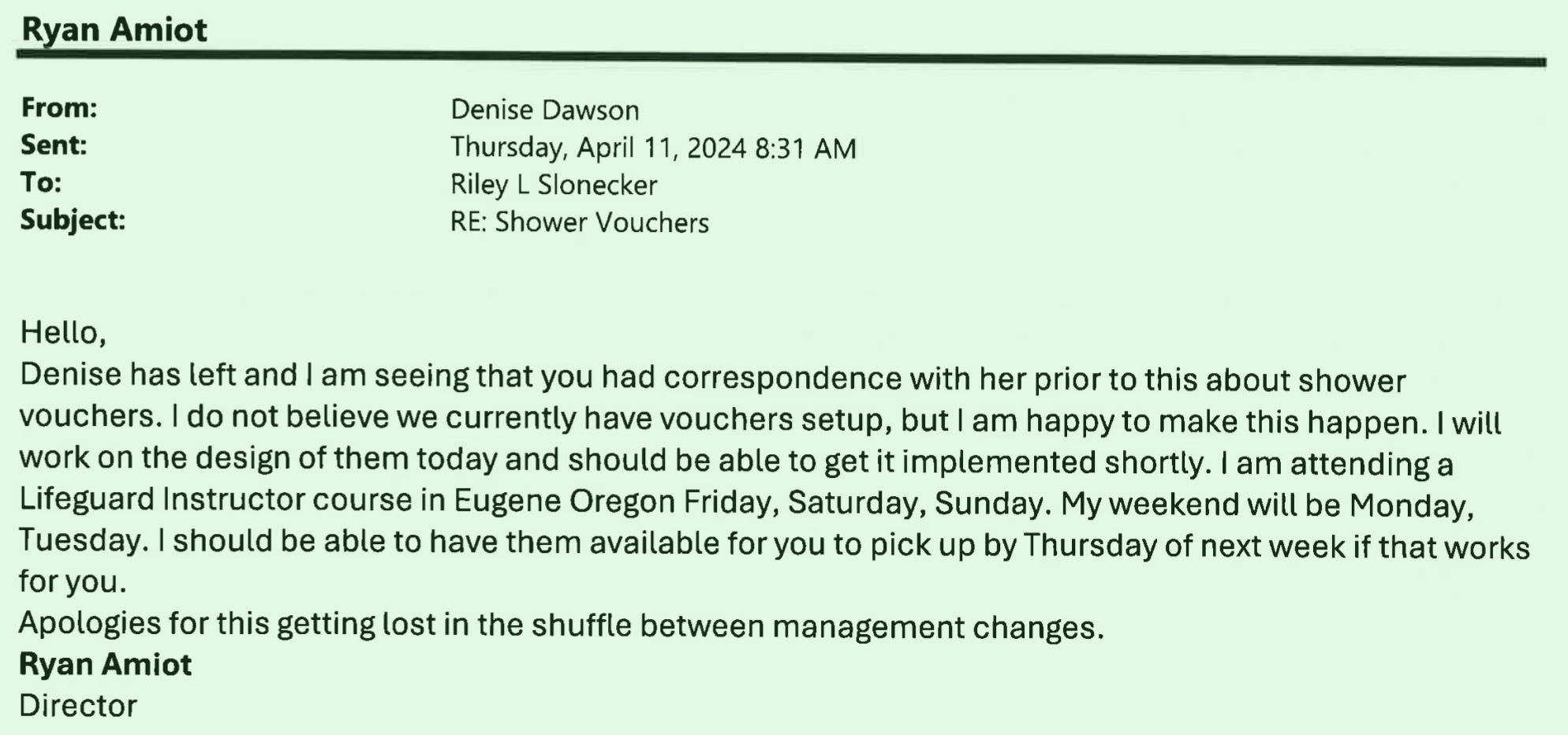
After Dawson left, current Executive Director Ryan Amiot revived the idea in April 2024, apologizing for it “getting lost in the shuffle between management changes” and promising to implement the vouchers.
On May 21, 2024, Amiot confirmed the vouchers had been finalized and were ready for pickup.
Then, in October 2025, Clallam County’s Harm Reduction Health Center formally requested vouchers for syringe service participants, writing that the population served was “primarily unhoused or unstably housed.” The county specifically requested vouchers to distribute during walk-in hours at the Harm Reduction Health Center.
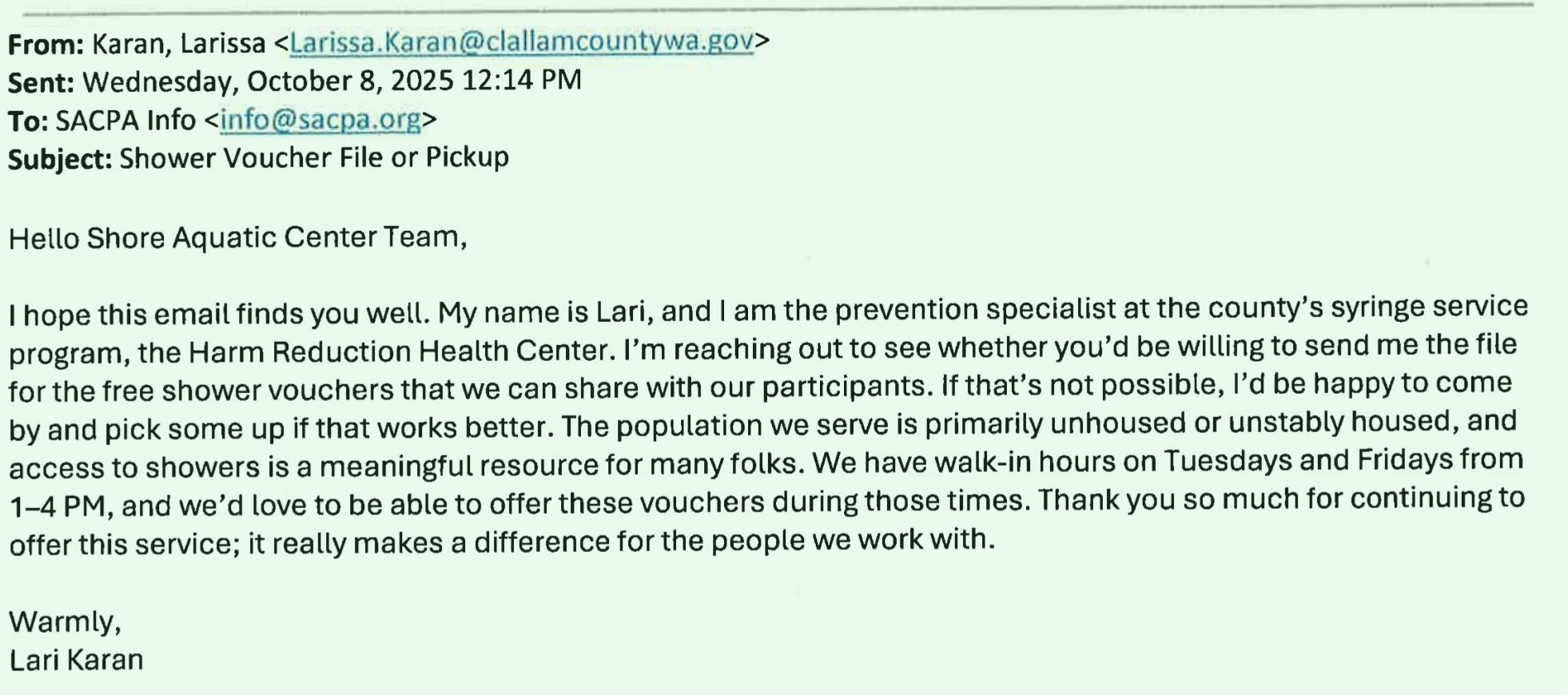
So despite claims this program simply evolved organically to help people in need, the records show something much more structured: a coordinated expansion between the pool district, social service organizations, and eventually the county’s harm reduction apparatus.
So What Exactly Is the Board For?
That question becomes even more important after another records request response from Executive Director Ryan Amiot.
Amiot acknowledged he could not locate prior board approval for the program and instead cited the executive director’s job description as the apparent authority for creating it.
The job description does indeed state the executive director may “develop programs and improve operations.”
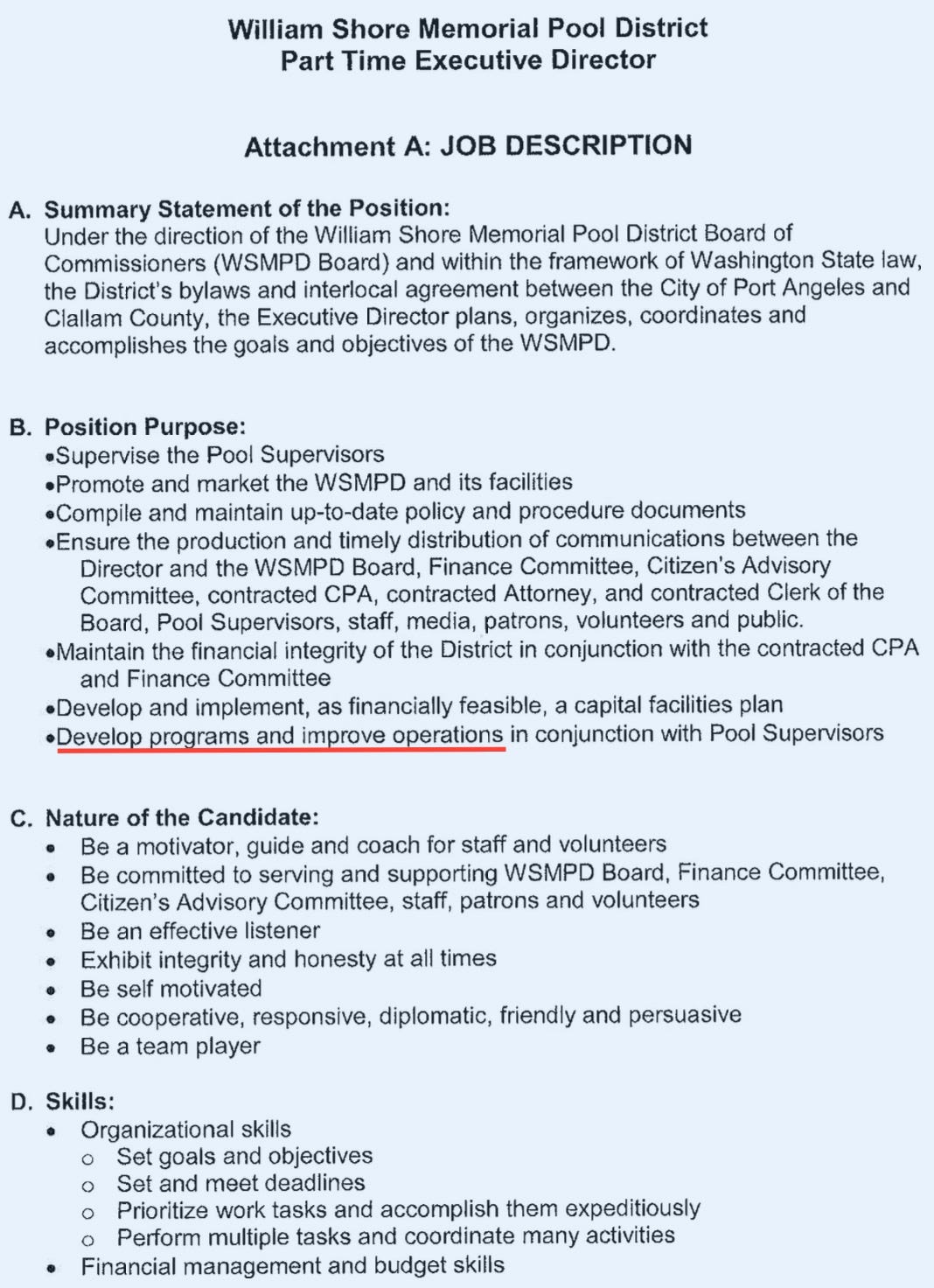
But if a single administrator can independently create public-facing programs involving safety, liability, partnerships with outside agencies, operational impacts, and taxpayer-funded resources without explicit board approval, then residents are left asking a fair question: What exactly is the board for?
Especially when commissioners later claim they had no idea the program even existed.
The same executive director job description also states that the director is supposed to “keep WSMPD Board fully informed of conditions and operations of the District” and work with the board in developing district policies.
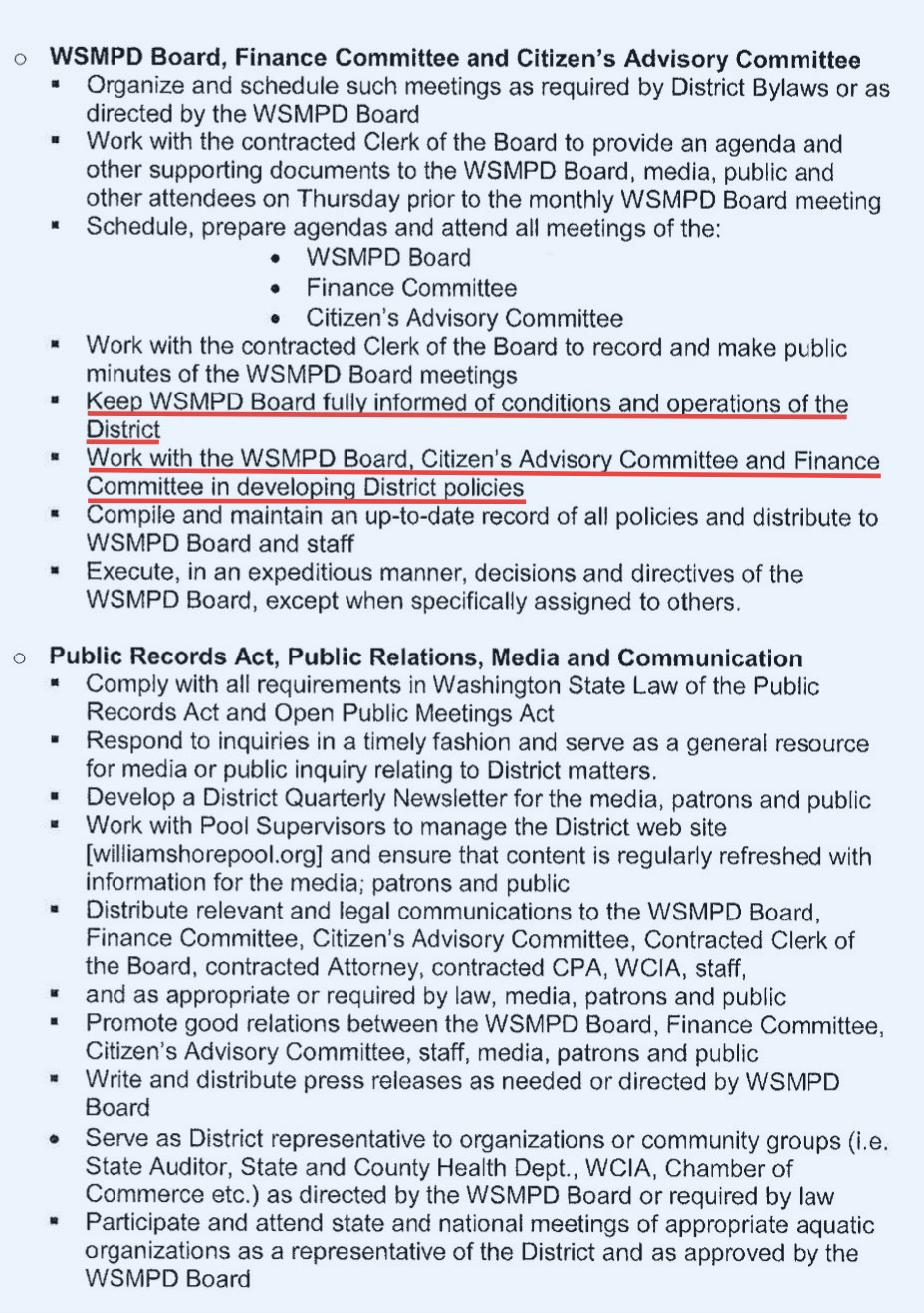
If commissioners truly did not know this program existed for a year and a half, either the board was not being informed, or the board was not paying attention.
Neither explanation inspires confidence.
Mission Creep at the Community Pool
Meanwhile, the board continues discussing operational details like color-coded vouchers, reusable towels, hygiene kits, and expanded services. One commissioner worried discarded towels could become litter around town. Another concern raised during the meeting was whether towels used by voucher participants could pose health risks to other patrons. Amiot dismissed those concerns, explaining the towels would simply be washed and reused.
There are also new budget questions emerging. On page 8 of a recent Shore Aquatic Center document, “shower caddies” are listed as an expense totaling $228, along with another $724 for shower parts. Residents are now asking whether those purchases are tied to the expanding hygiene program.


And while the board insists the program operates at “little or no cost,” the reality is that every expansion creates additional operational responsibilities, staffing considerations, laundry demands, sanitation concerns, liability questions, and public safety considerations.
At some point, residents have to ask whether local government has entirely lost sight of mission boundaries.
The Shore Pool exists because taxpayers approved funding for a public aquatic and recreation facility. Not a satellite arm of the county’s harm reduction system. Not a hygiene distribution hub. Not a soft-entry social service center. And certainly not a place where families are expected to simply accept increased risk because officials insist there have not yet been enough problems to justify concern.
Because by the time there is a major incident, it will already be too late.
Today’s Tidbit: The Boy in the Tent
One year ago, the story of the “boy in the tent” shocked Washington state — a child living in a fentanyl-filled tent along Aurora Avenue while systems looked the other way. Now, according to a follow-up report, his mother has reached five months of sobriety in a recovery-based shelter, and the boy just celebrated his 10th birthday.
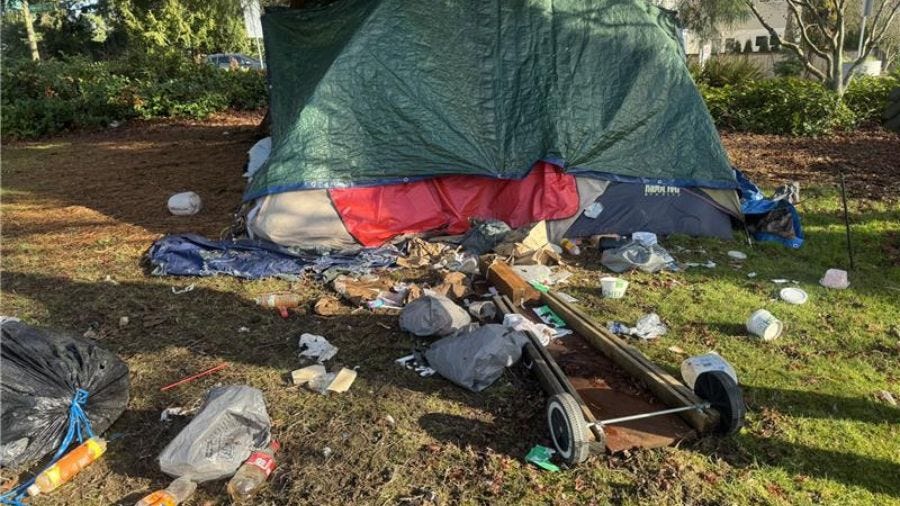
One detail stands out: her recovery is reportedly coming through structure, treatment, sobriety, and accountability — not continued drug use under the banner of “harm reduction.” It is a reminder that true compassion means helping people escape addiction, not normalize living in it.


