


After a teenage driver nearly killed a pedestrian near the Tumwater encampment, County Commissioner candidate Jake Seegers confronts the hard questions local leaders have avoided for years: How did Port Angeles allow dangerous encampments, rampant drug activity, and environmental destruction to flourish beside public roadways and salmon streams — and who will finally stop it? This in-depth article connects the crash, the policies, the funding system, and the leadership failures that critics say turned compassion into chaos.
A Close Call
May 5th was a typical Tuesday for the 4PA Clean-Up Crew. 4PA is a Port Angeles-based nonprofit focused on trash cleanup efforts and high-barrier transitional shelter services for people experiencing homelessness. We were preparing for our second cleanup site of the day along Tumwater Creek.
Founder Joe DeScala had already positioned the truck and dump trailer along the shoulder of the Tumwater Truck Route. I waited for a break in traffic so I could cross from where I had parked on the opposite side of the road, but cars continued streaming through the curves in both directions at a steady, fast pace. Passenger vehicles, log trucks, and dump trucks rumbled past just feet away as I hoped drivers were paying attention to their surroundings.
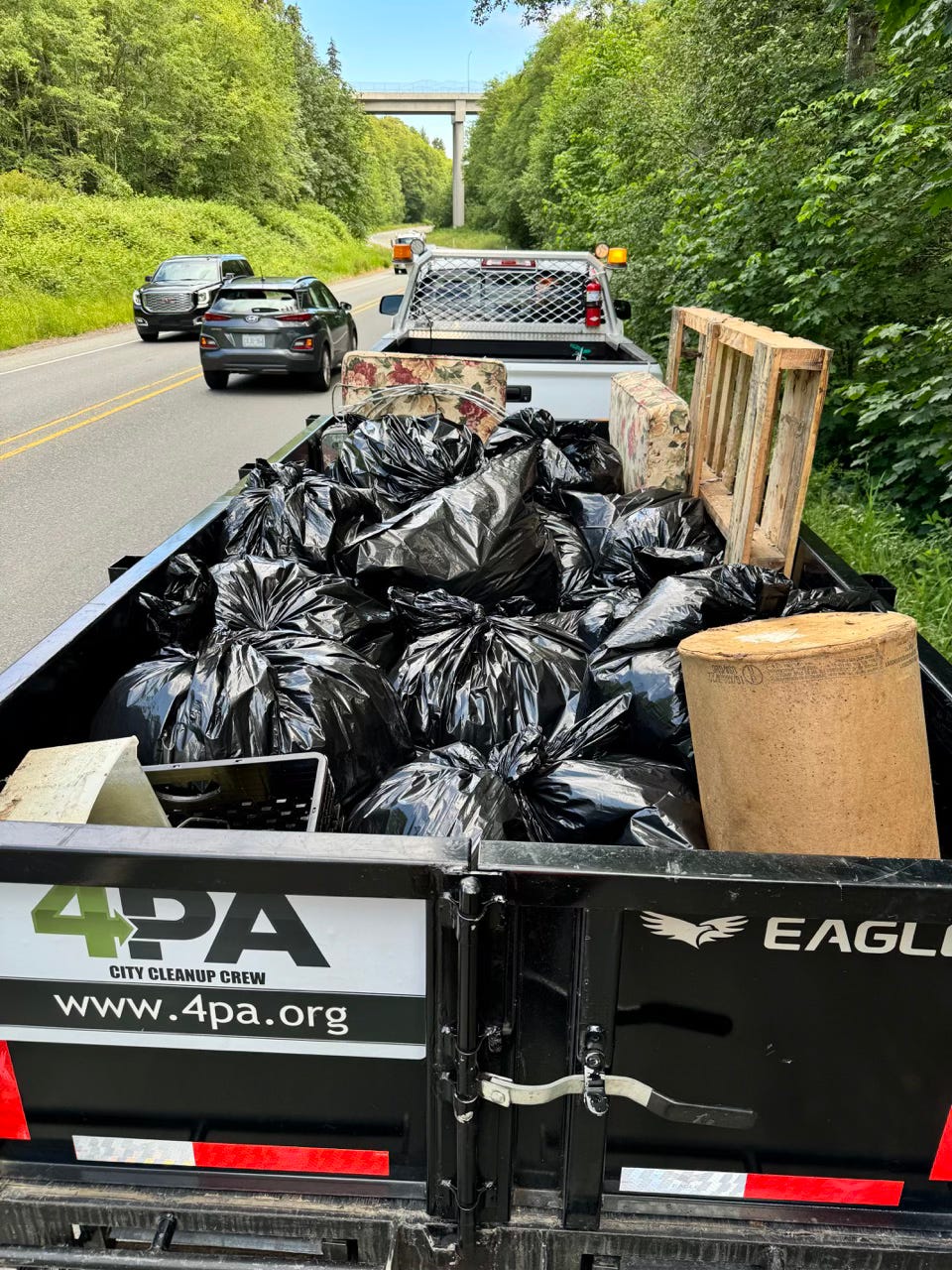
It is a dangerous location for 4PA employees and volunteers, but it’s the only way to remove the trash that piles up along the creek below.
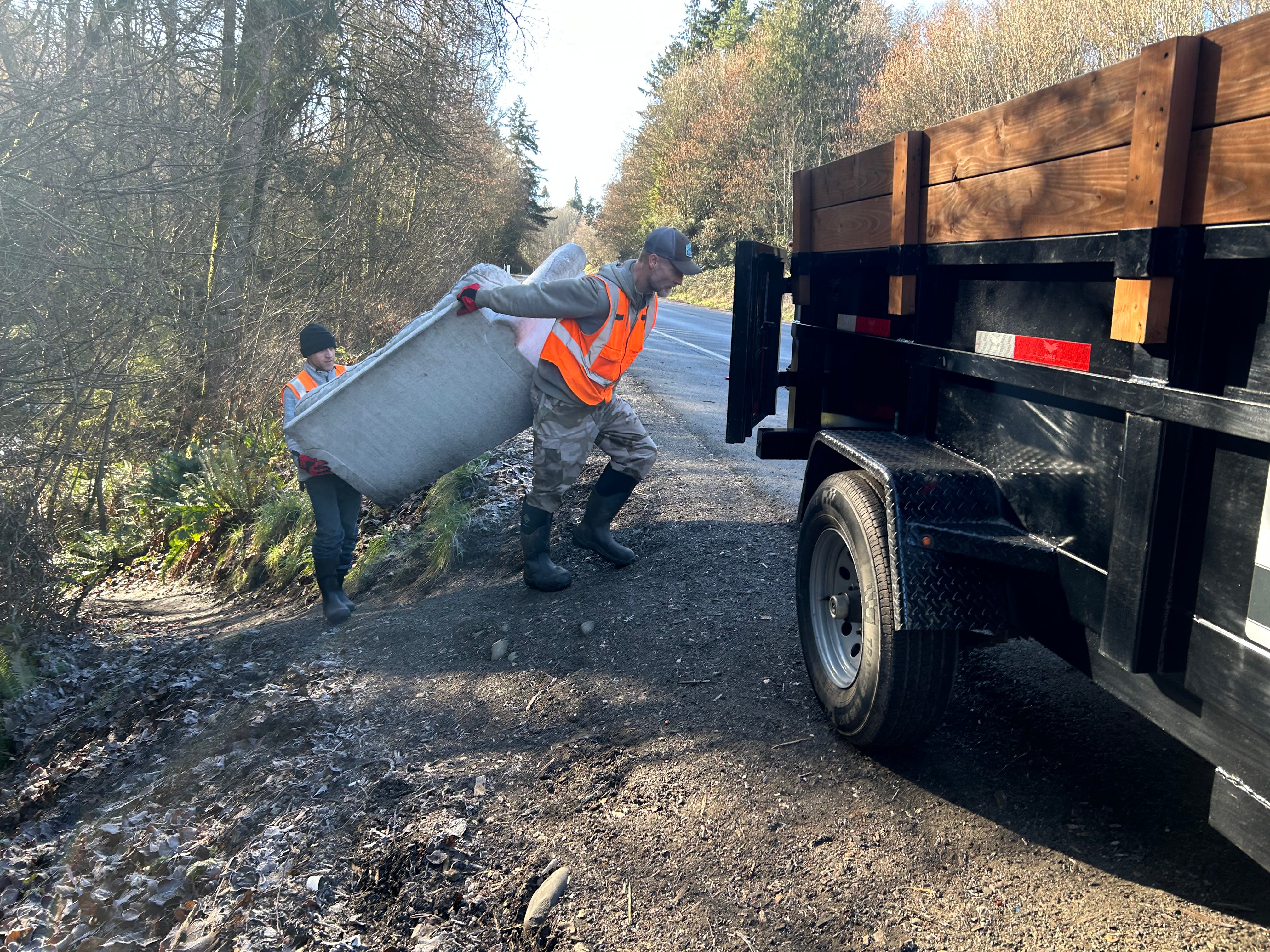
And the trash never stops. Constant accumulation is a result of illegal camping that violates ordinances the City of Port Angeles fails to consistently enforce.
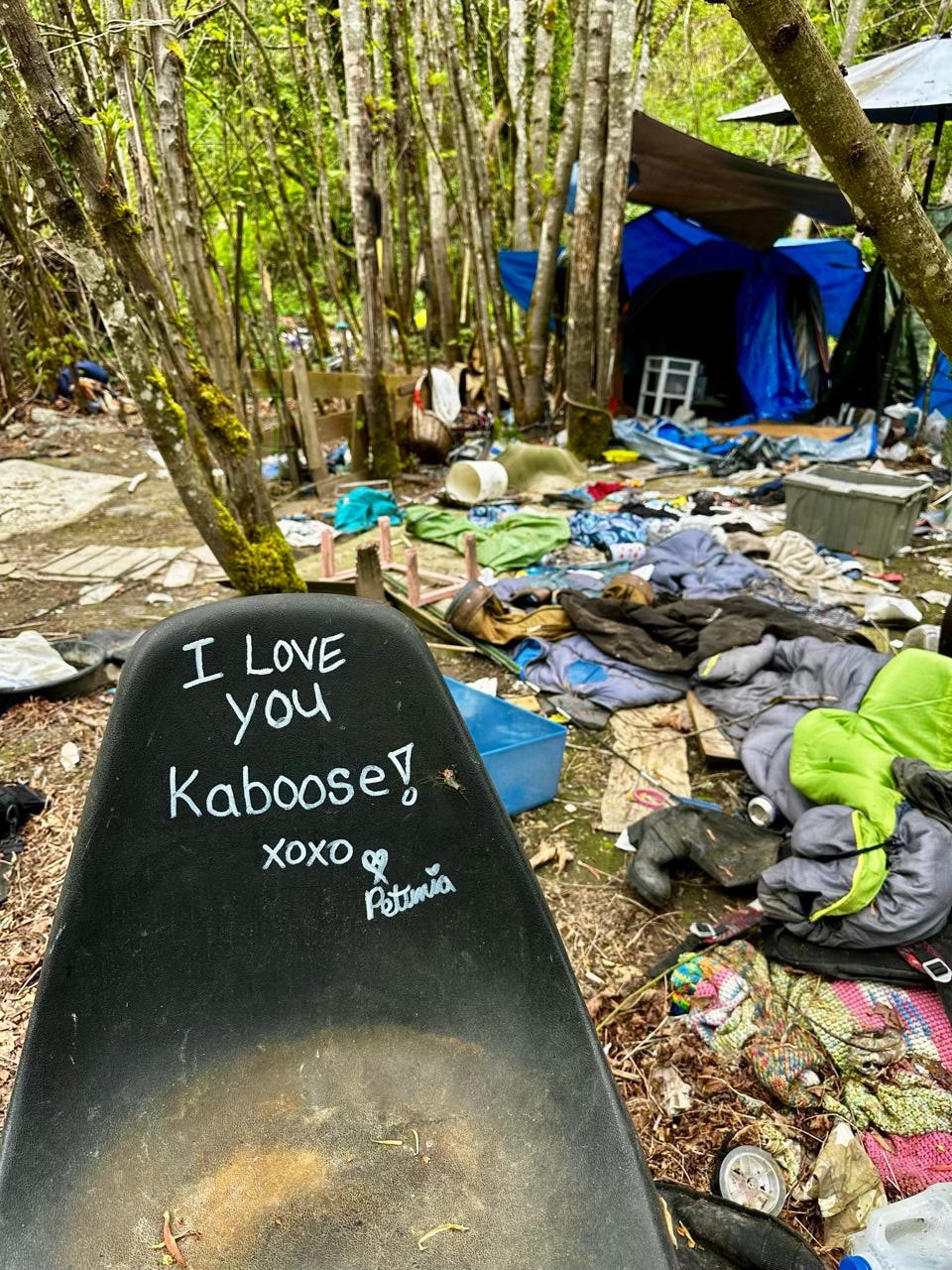
Illegal creekside encampments have exploded in recent years. Along with them have come thousands of pounds of human and solid waste: discarded clothing, blankets, tents, food containers, stolen shopping carts, and piles of drug-use supplies — many still unopened — from nearby harm-reduction distribution programs.
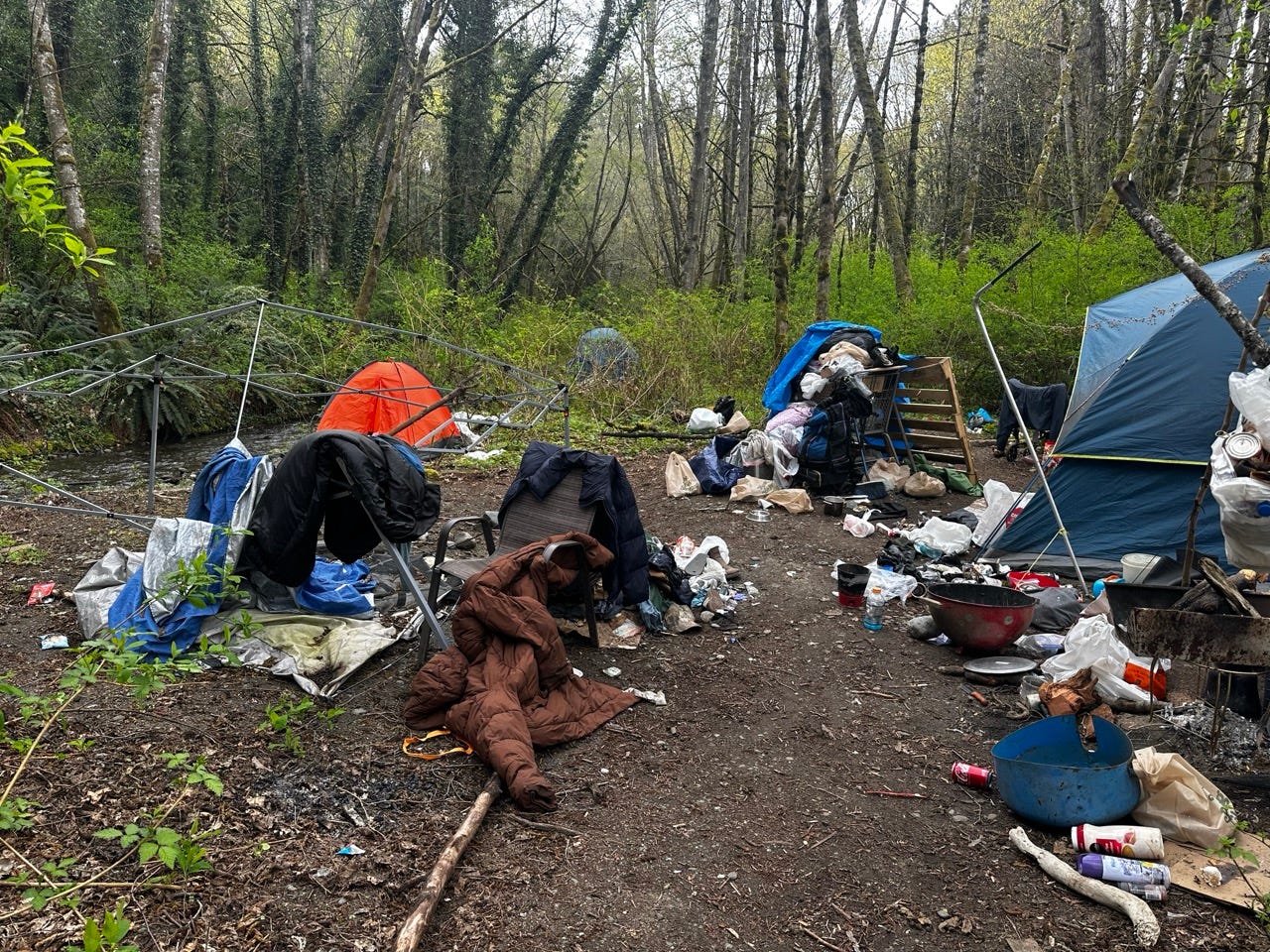
In a February interview with Radio Pacific Inc., Joe DeScala described the scale of the problem:
“In one waterway alone [Tumwater Creek], we average about 1,500 pounds of garbage removed every single week — 1,920 pounds today, actually. If we stop tomorrow, that accumulation would continue at the same rate. I’ve got the numbers to show it, and these would be directly in sensitive watersheds.”
That pace would total nearly 80,000 pounds of trash annually from Tumwater Creek alone.
On May 5th, hours after 4PA finished cleaning, a different kind of tragedy struck.
One Instant. Two Lives Changed.
At 9:46 PM on May 5th, two lives would be changed forever.
A 16-year-old female driver was heading northbound on Tumwater Truck Route, approaching the 8th Street bridge.
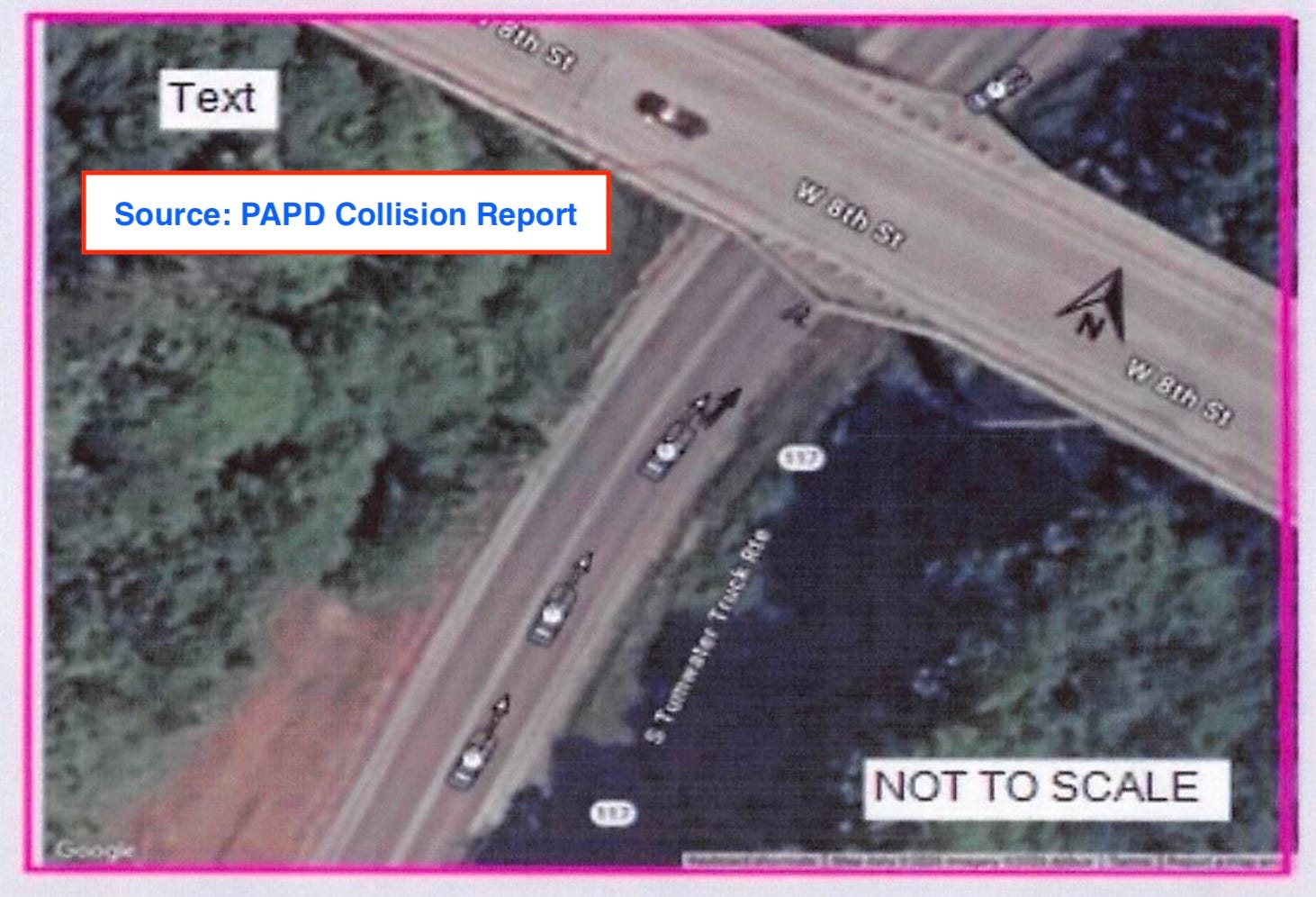
Beneath the 8th Street Bridge, a pedestrian crossing over Tumwater Creek serves as a common access point to and from the encampments lining the creek corridor.
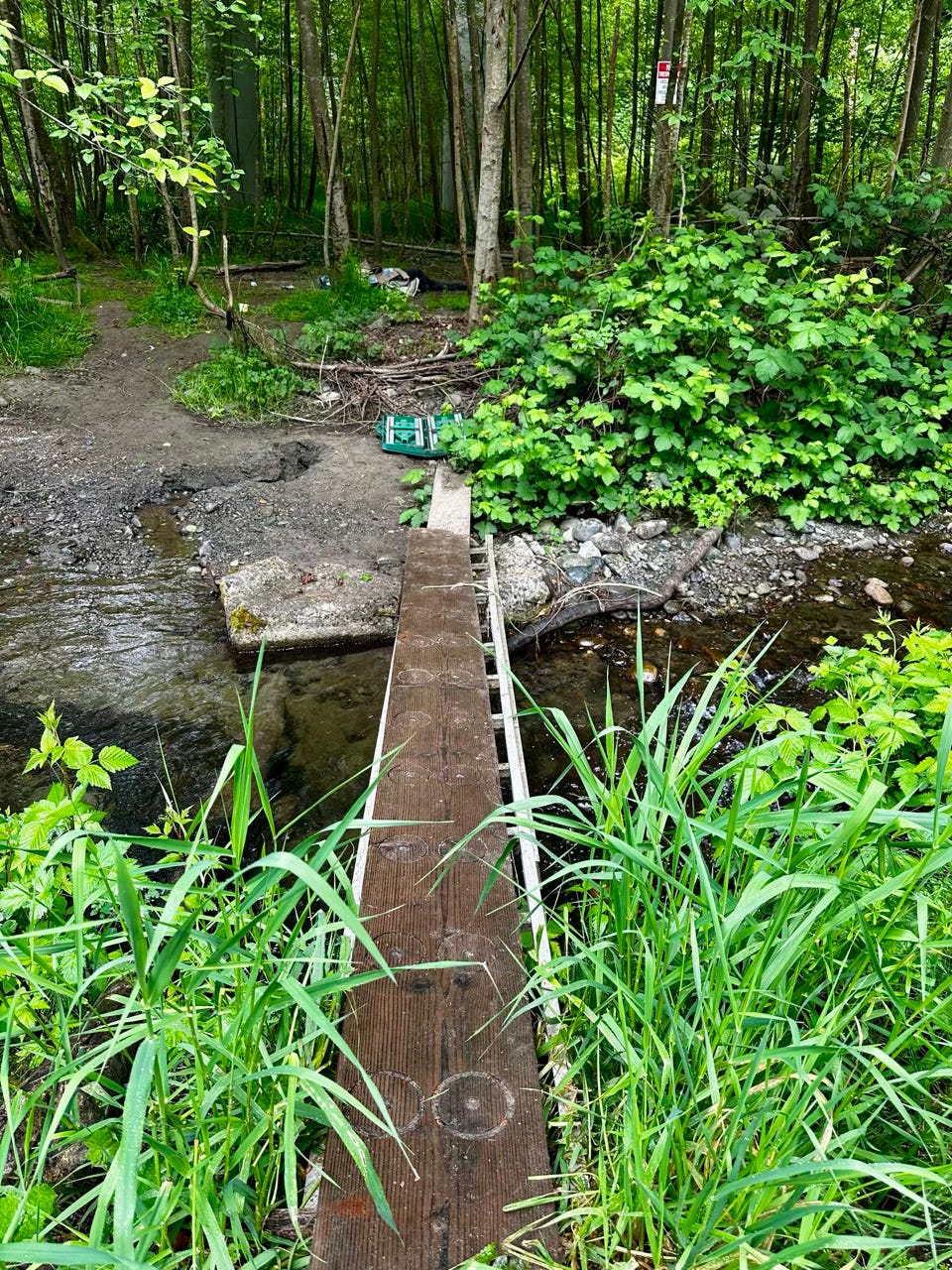
It leads to a clearing in the dense brush, opening onto a frequently occupied parcel of county-owned property.
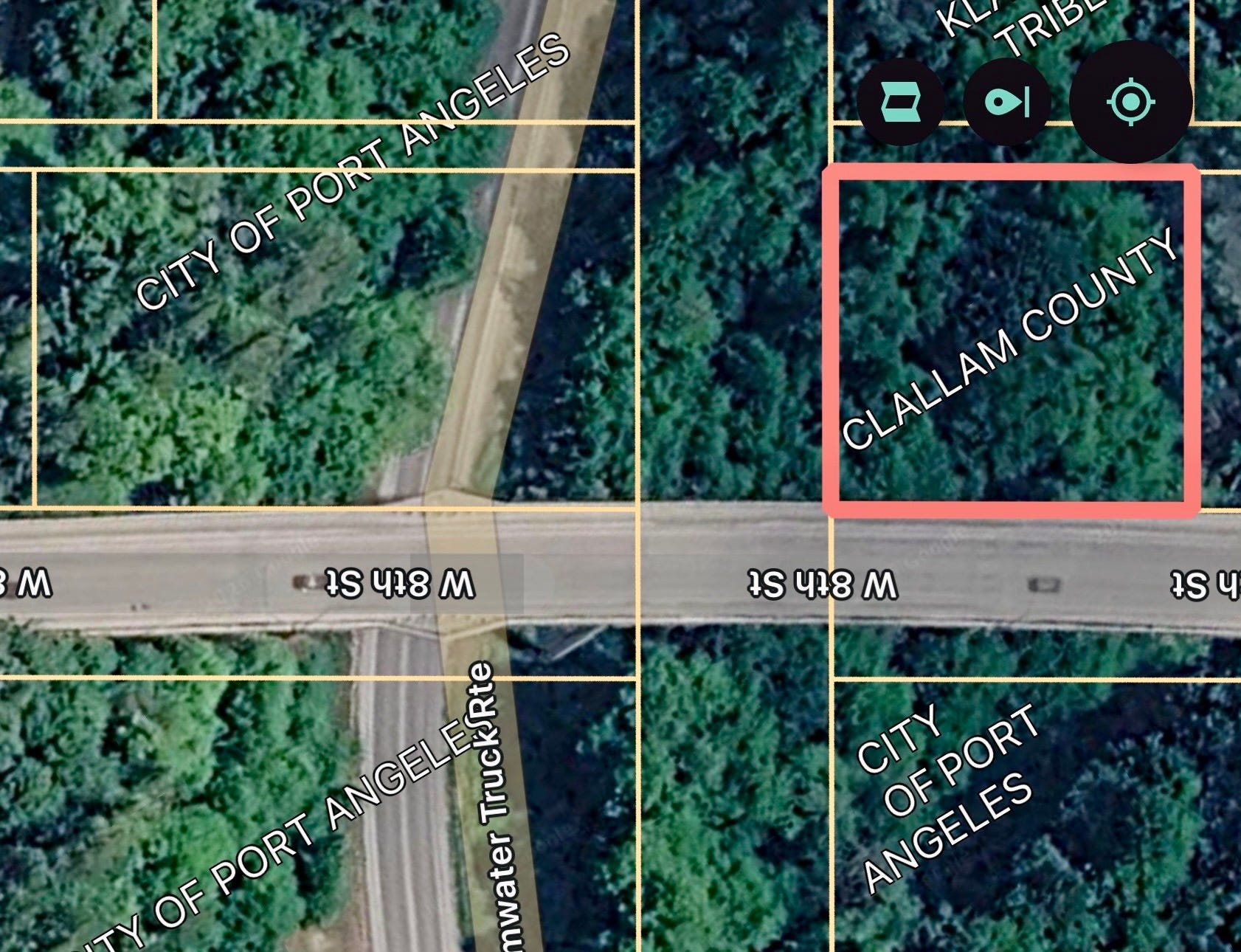
This corridor is often active with Tumwater residents walking along the shoulders of the truck route in both directions, day and night.
That evening, it was already dark. There are no street lights illuminating the nearby entrance to Tumwater’s unsanctioned encampment. As the young driver rounded the bend near the bridge at approximately 40 MPH, she struck a pedestrian walking along the shoulder.
The vehicle's damage reflected the severity of the collision.
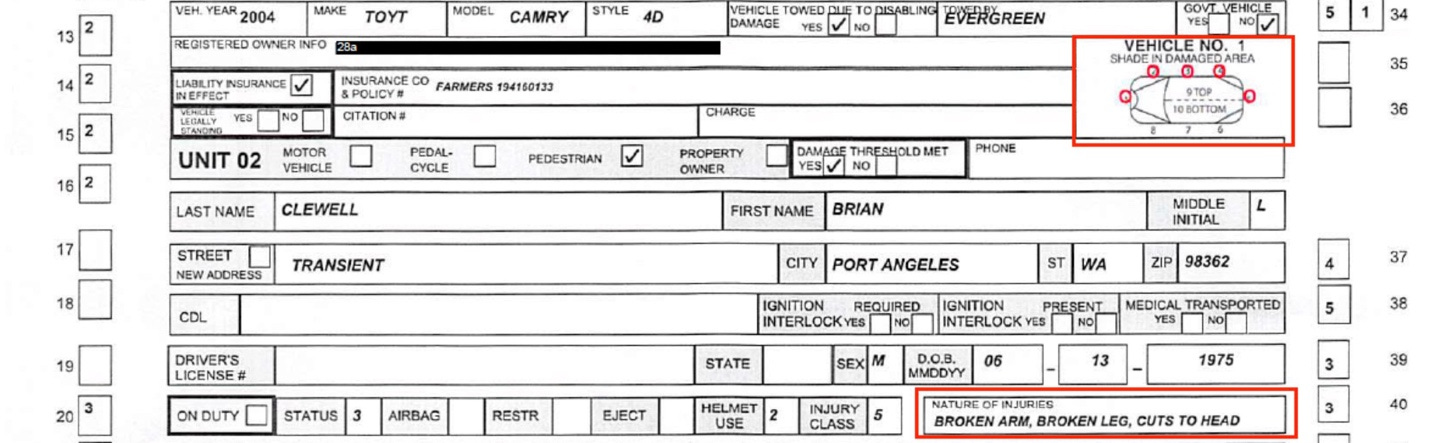
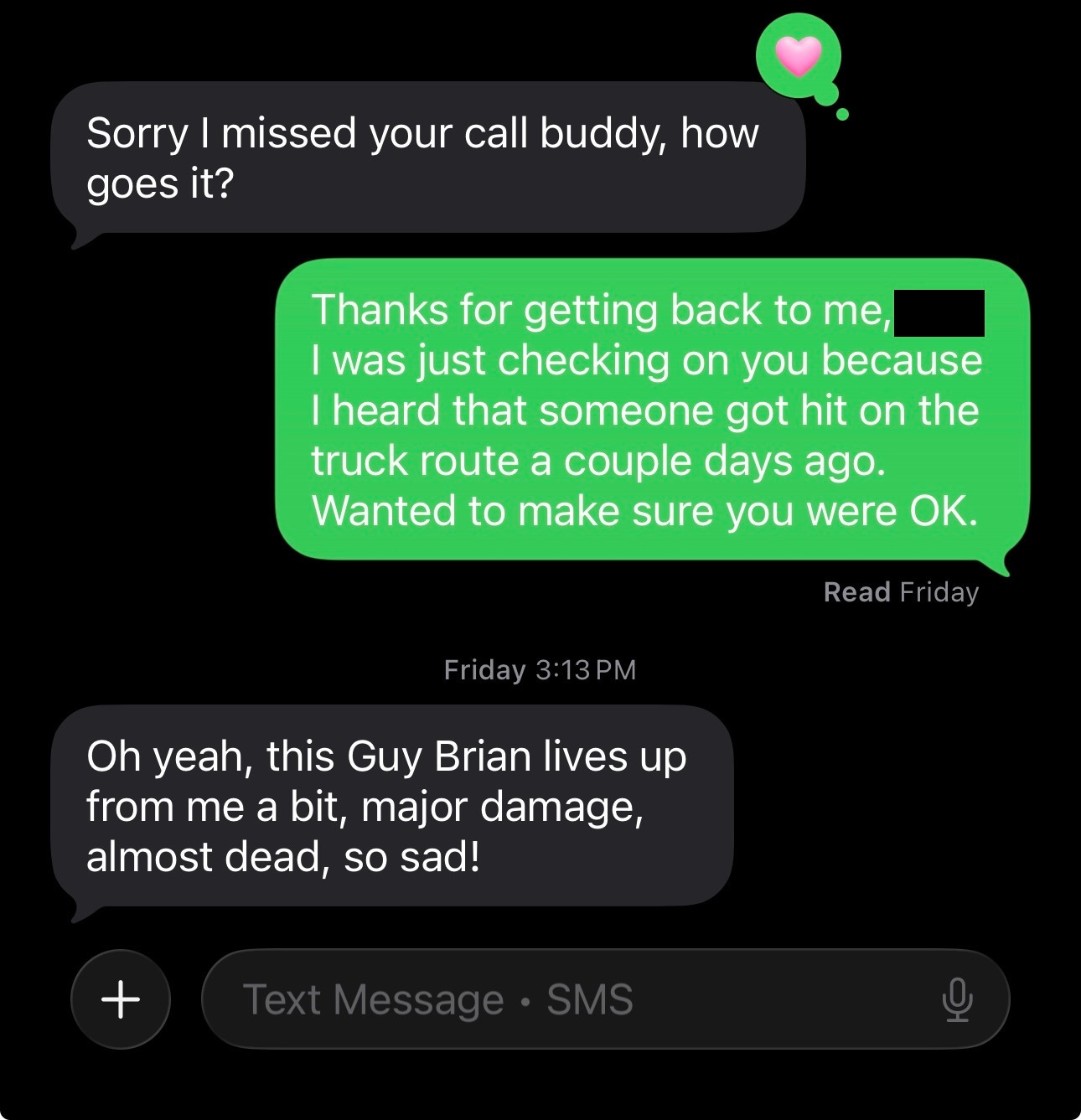
The pedestrian, identified as Brian Clewall, sustained injuries to his head, leg, and arm.
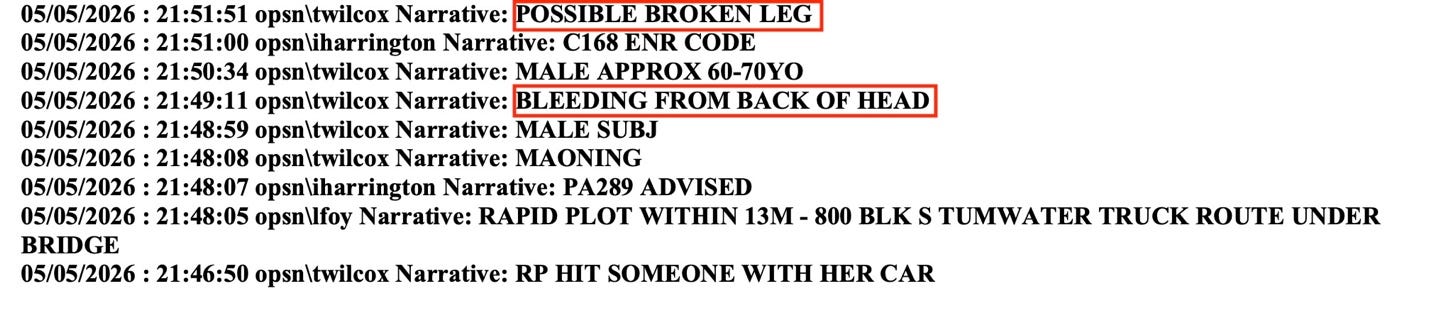
Photos from the scene showed his belongings scattered across the roadway beside a significant pool of blood.
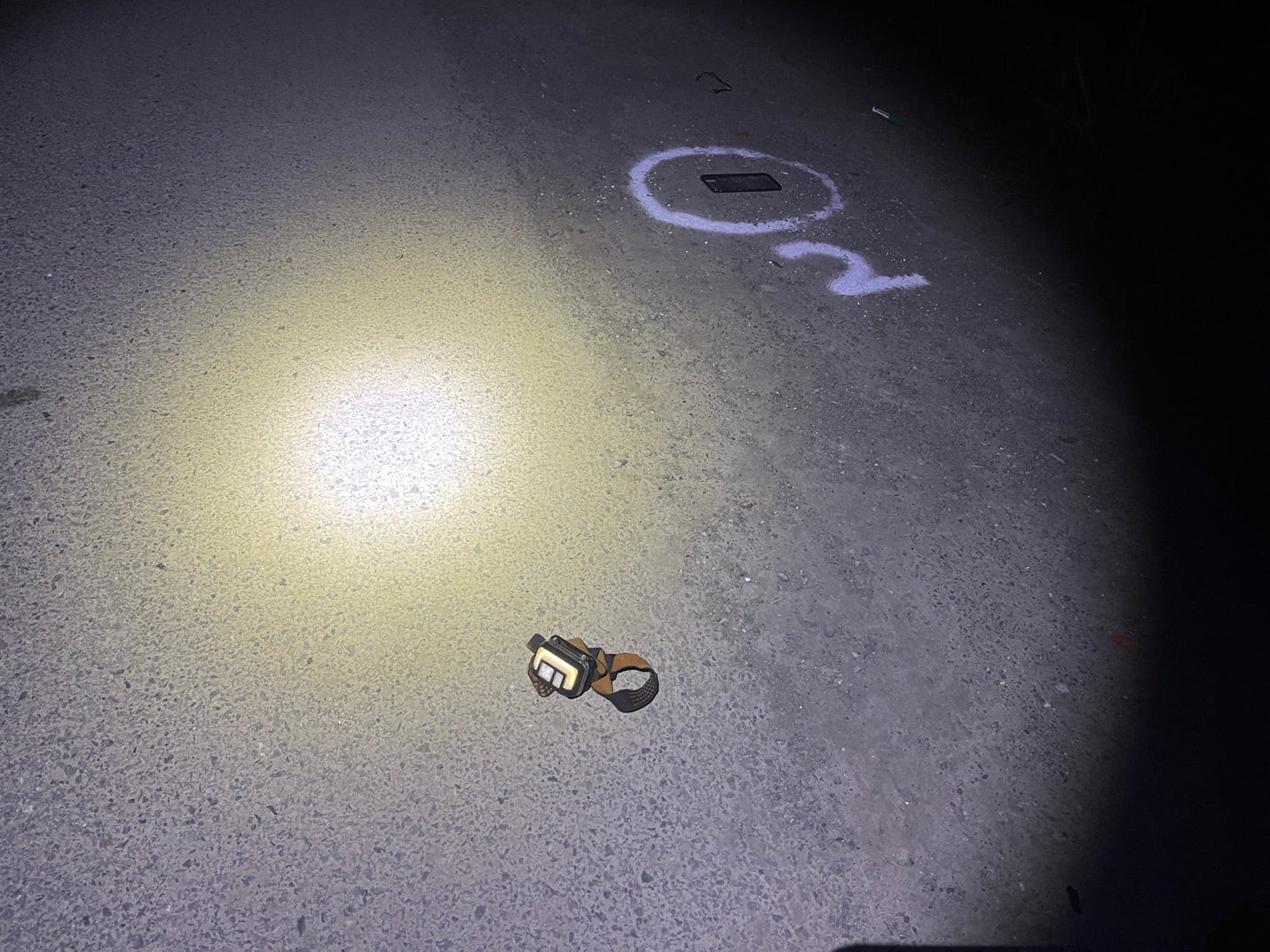
A local resident of the Tumwater Encampment described the injuries as “major” and indicated they were nearly fatal.
According to the collision report:
“Unit 1 was traveling northbound on the S Tumwater Truck Route. Unit 1 did not see the pedestrian walking alongside the shoulder and struck him. She pulled over and called 911. I arrived on scene, and the pedestrian had major injuries to his foot and arm. The pedestrian was transported to the hospital.”

These five sentences describe a tragedy that should have never happened.
The Expansion of Harm
County leadership and the Port Angeles City Council have long embraced the distribution of drug-use supplies under the banner of “harm reduction.”
Meanwhile, the City has often refused to enforce illegal camping ordinances on public land in the name of compassion. But what officials describe as compassion has increasingly become a well-documented environmental and public health catastrophe.
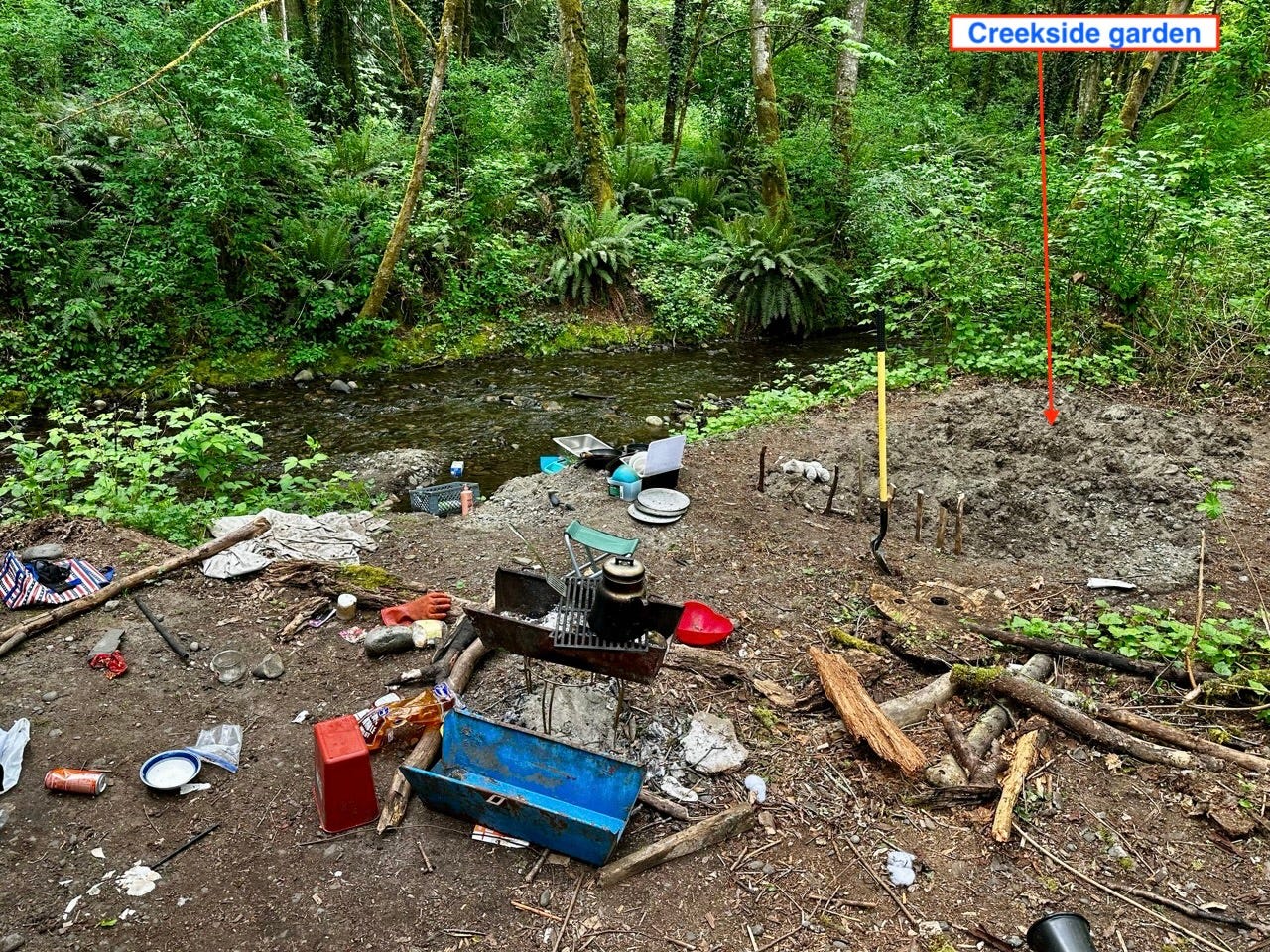
The human toll resembles cruelty far more than compassion: individuals trapped in addiction living among mounting refuse while fighting off rats and raccoons burrowing into tents.
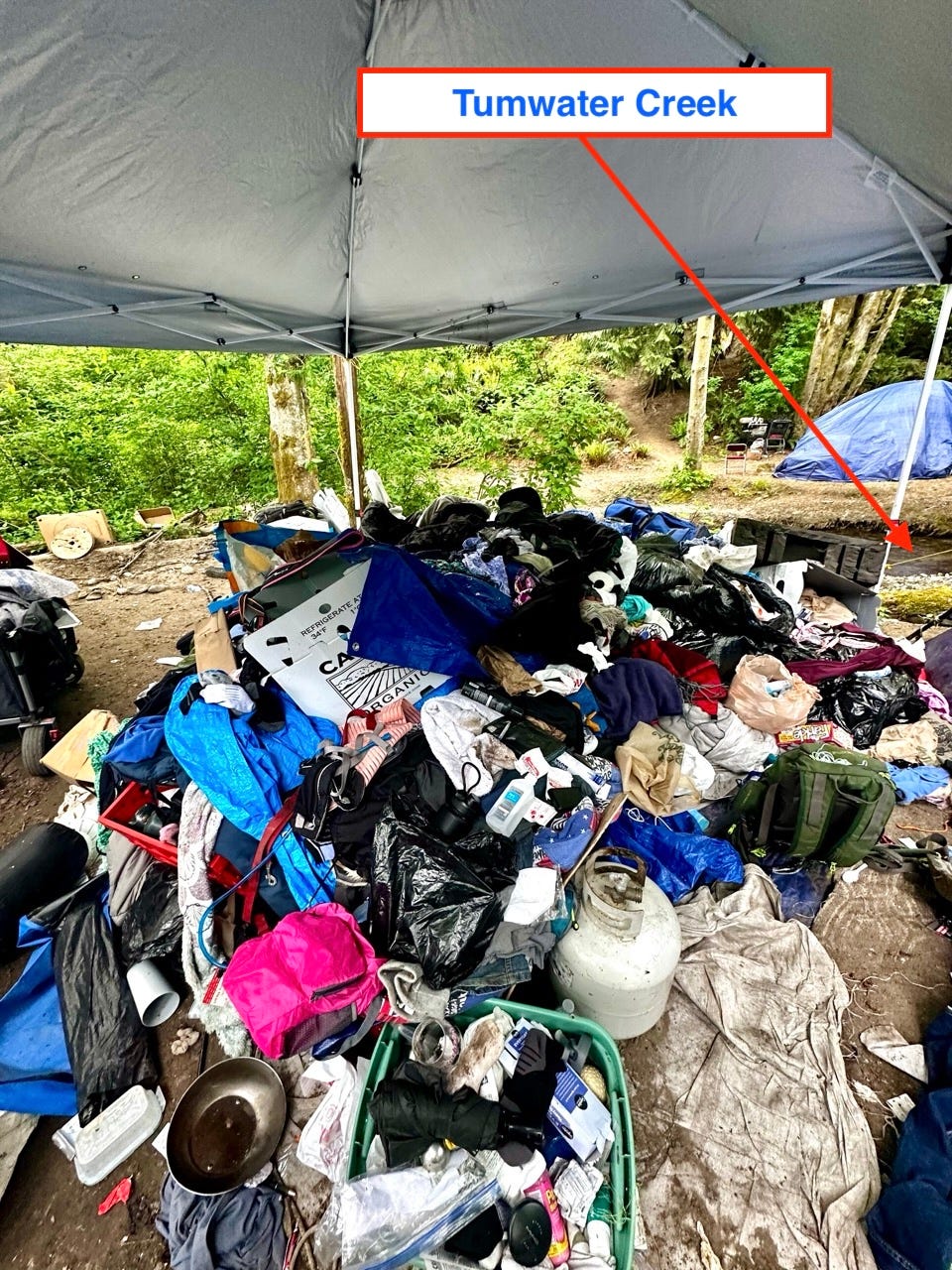
Abundant services and access to drug-use supplies have created the Tumwater ecosystem of homeless camping and substance abuse.
Free food is abundant (see list here)
Showers are available at multiple locations, including taxpayer-funded locker rooms at Shore Aquatic Center.
The Answer For Youth (TAFY) provides free tents, camping gear, and propane tank refills to all ages.
Free healthcare services are readily available.
Drug-use supplies are widely distributed.
Drugs are openly bought and sold in known locations throughout the city.
Clallam Transit conveniently connects these services at no cost to riders.
Trespass ordinances on public land, such as those at the Tumwater Encampment, often go unenforced.
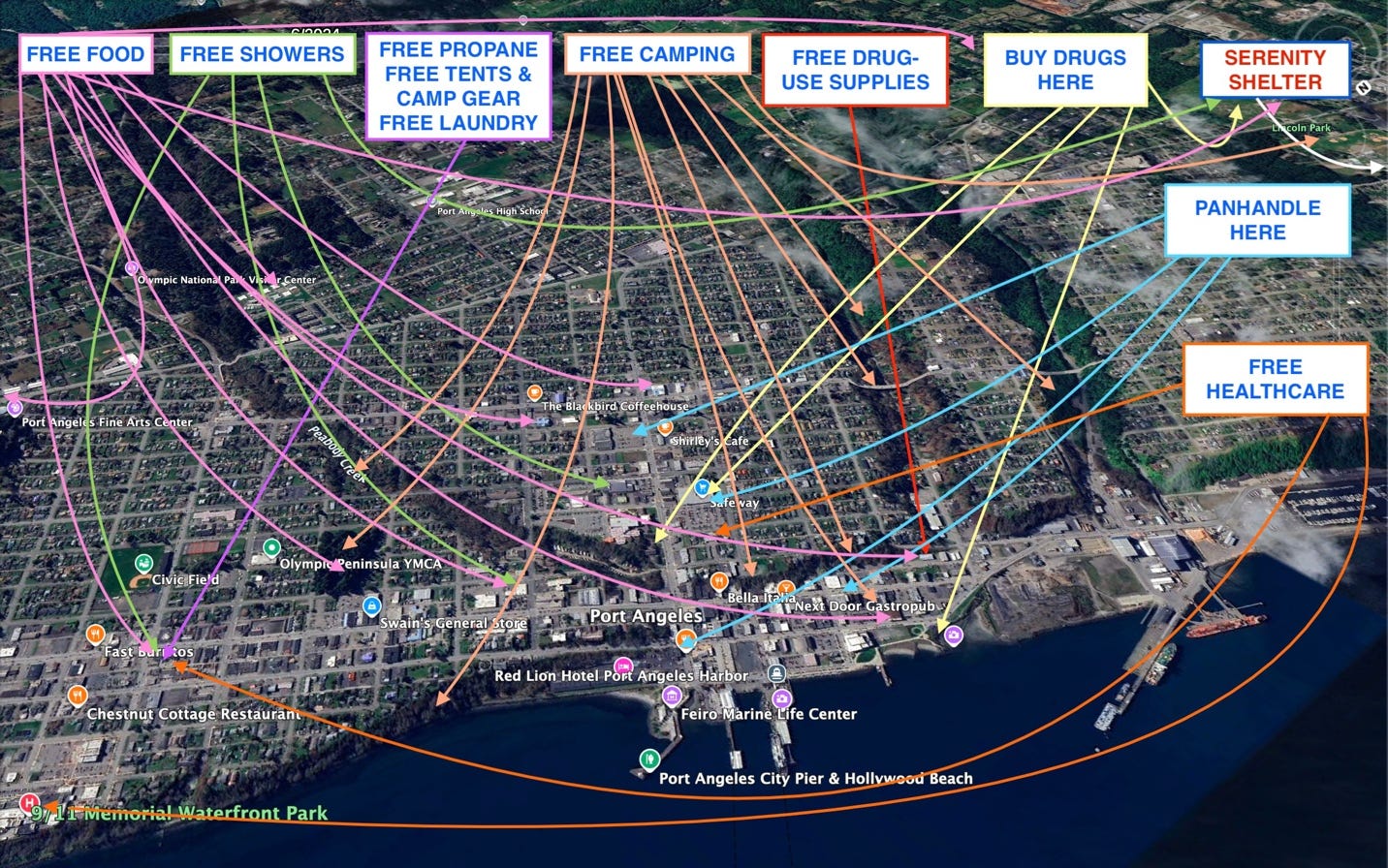
Public safety has been compromised by attracting and encouraging illegal activity as health officials hand out the supplies and instructions on how to get high, leaving their patients to creatively fund their addiction.
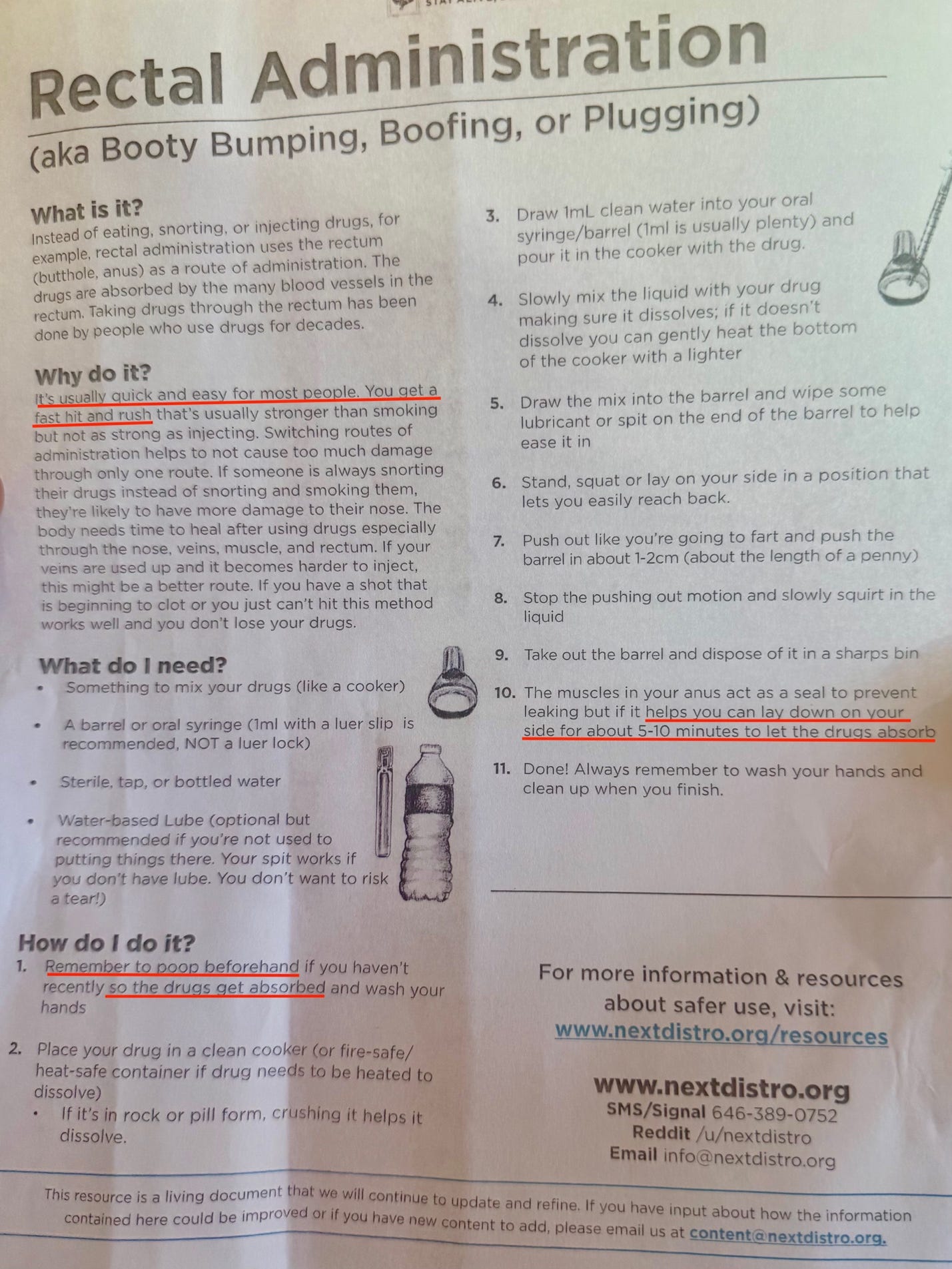
Under RCW 69.50.412 and RCW 69.50.4121, possession and distribution of drug paraphernalia are illegal.
In 2023, Washington added explicit exemptions for public-health-oriented harm reduction distribution.
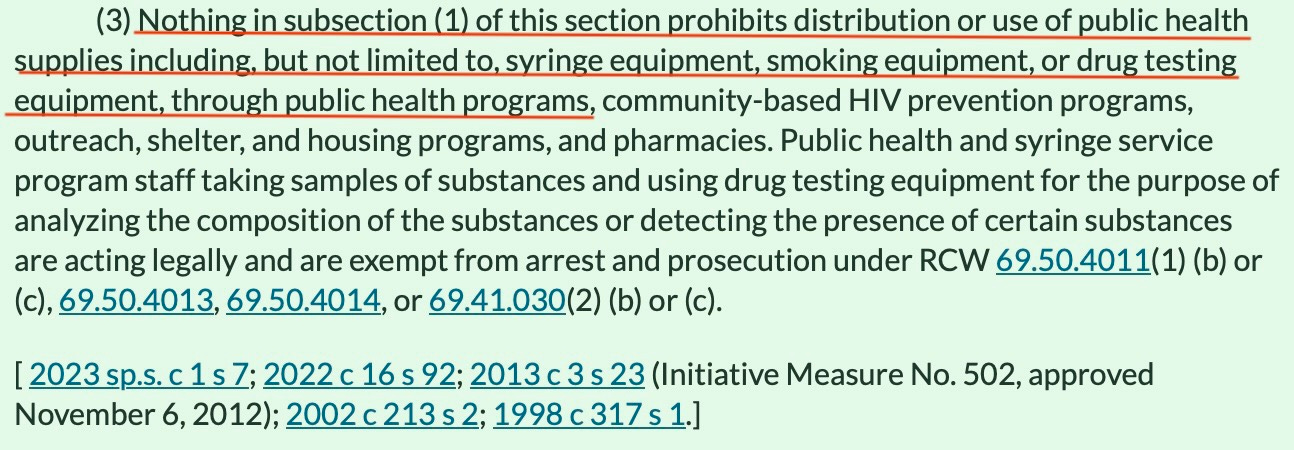
In other words, it is a misdemeanor for ordinary citizens to possess or distribute drug paraphernalia, yet government-protected healthcare workers are exempt when distributing those same supplies in ways that facilitate illegal drug use in our community. Once those supplies are handed off to individuals intending to abuse drugs, criminal activity has been enabled, condoned, encouraged, and facilitated under the banner of public health.
These policy decisions have made Clallam County the destination of least resistance for homelessness and substance abuse, and have welcomed illegal communities like the Tumwater Encampment, where drug use is commonplace.
Listed among Mr. Clewall’s personal possessions was 17.2 grams of methamphetamine – a quantity unlikely to represent personal-use alone.
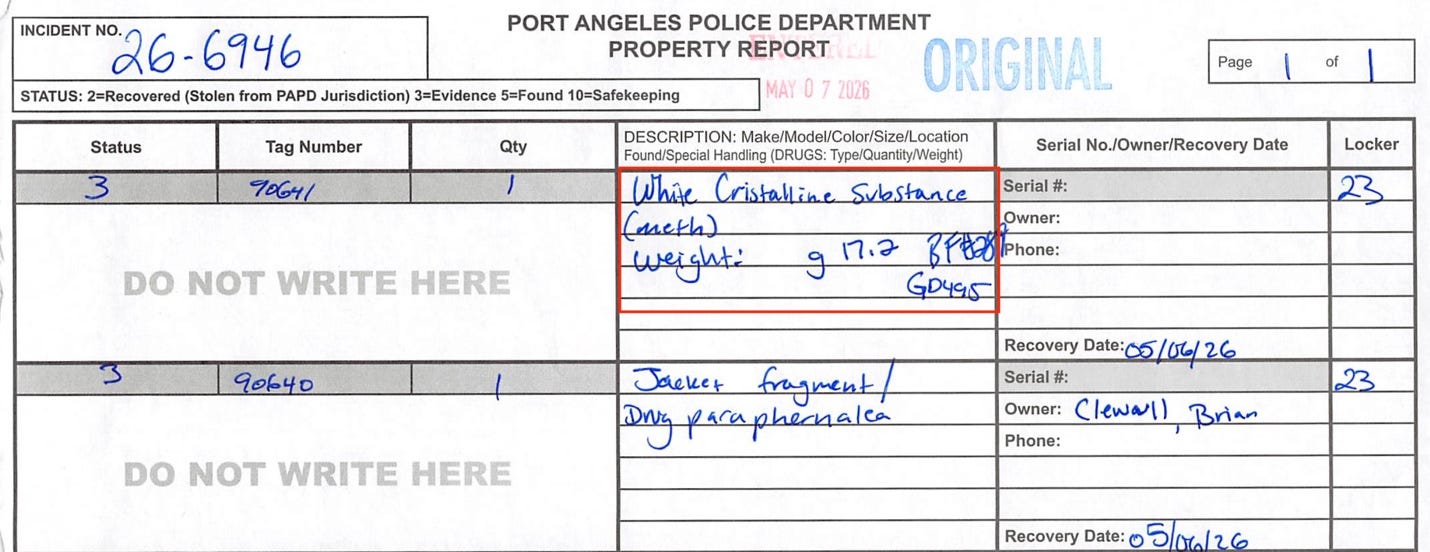
Tumwater is not officially sanctioned as a drug camp, but through persistent non-enforcement and active enabling, it increasingly functions as one.
This failed leadership nearly cost another life — this time not from overdose, but from the dangerous conditions created by allowing illegal encampments and drug use to thrive beside dangerous roadways.
Local Housing Last
Housing First — the belief that homelessness is solved by providing permanent housing without requiring sobriety, employment, or participation in treatment — has guided Clallam County policy since the county’s original 10 Year Plan to End Homelessness in 2005.
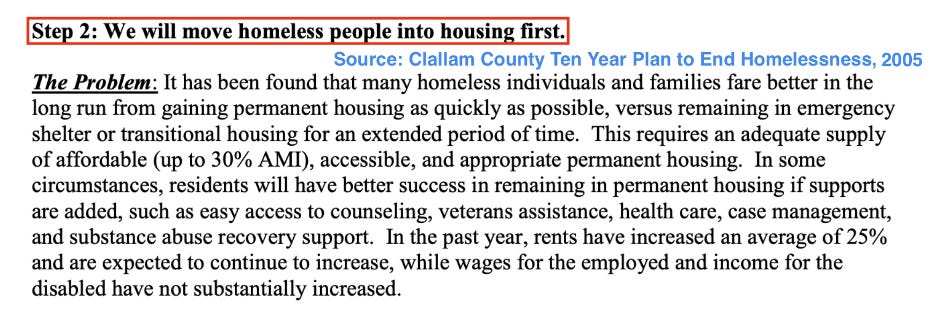
Yet homelessness continues to grow.
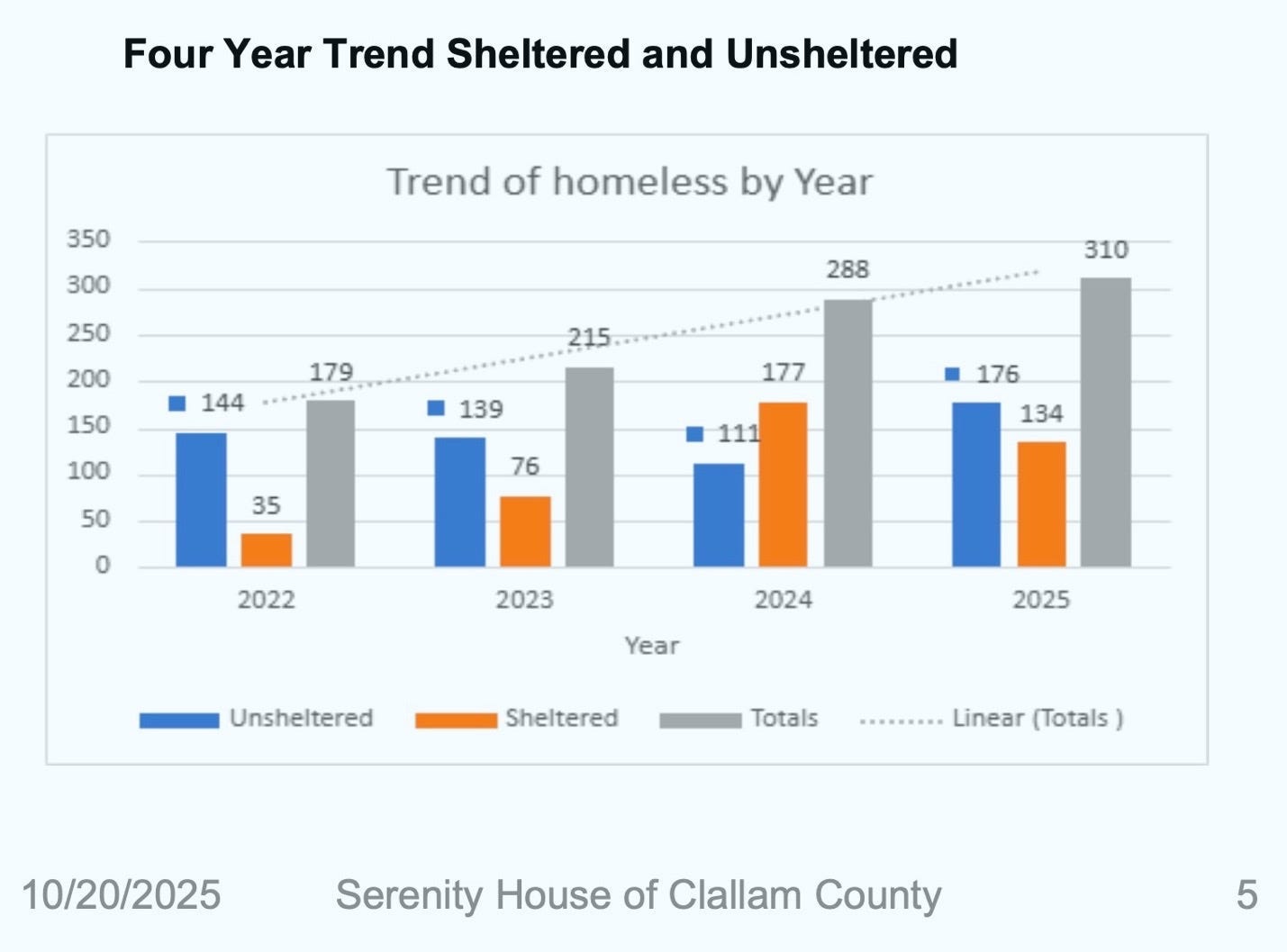
Part of the problem may be tied to how the system is funded. The federal HUD Continuum of Care grant awards consider “demonstrated local need.” Point-in-Time homeless counts, along with lengthy housing waitlists, are often used to justify additional or continued funding and resources.
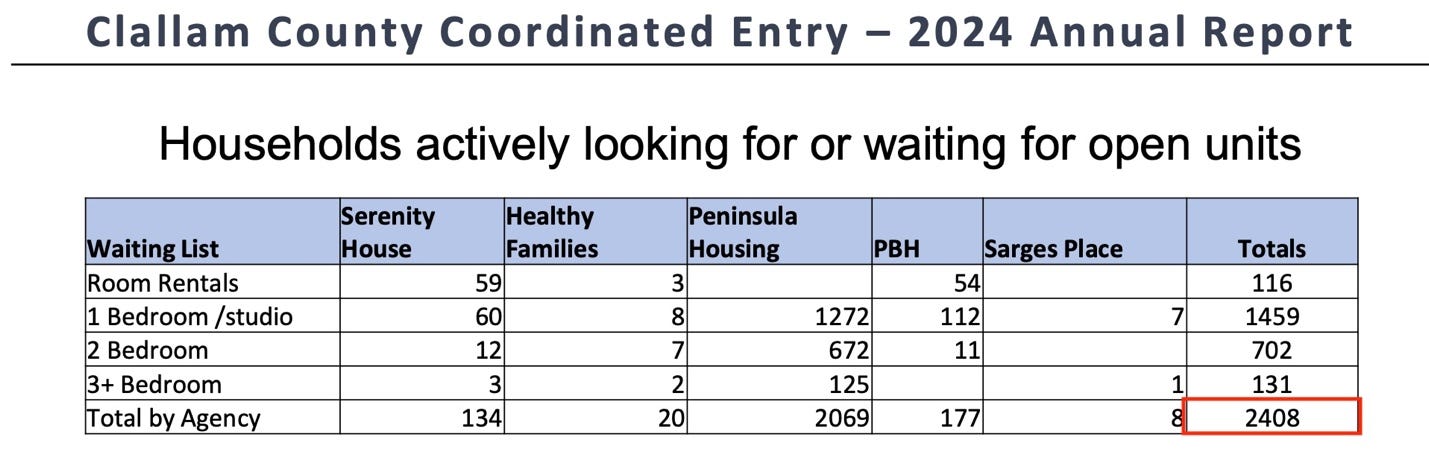
In 2024, 2,408 households were on the waitlist for local permanent supportive housing.
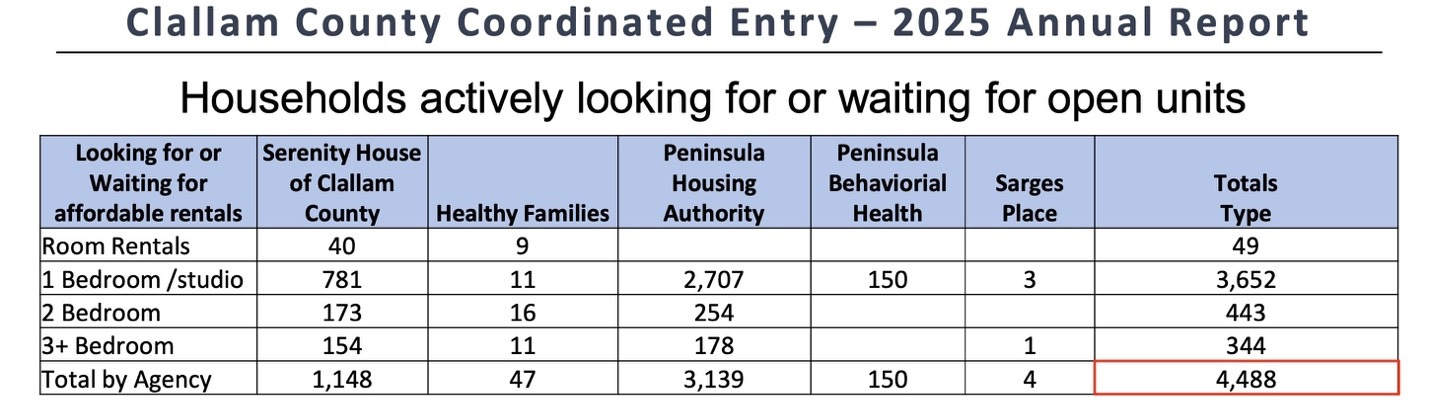
By 2025 – only twelve months later - the waitlist had nearly doubled.
Meanwhile, Clallam County’s Point-in-Time Count (shown earlier) identified 310 homeless individuals, including 176 unsheltered — a meager 7.6% increase over the same period.
How did the housing waitlist increase by 86% in a single year while the Point-in-Time count of homeless individuals rose by only 7.6%? More importantly, why is the housing waitlist nearly fifteen times larger than the homeless population counted in 2025?
The disconnect is difficult to ignore. Thousands of individuals appear to be competing for local housing resources despite not being physically present and unsheltered in Clallam County.
In an economically depressed county with scarce resources and a strained tax base, local housing resources should prioritize local needs.
The Tumwater Fix
Working together, Clallam County and its municipalities, the Port of Port Angeles, the Clallam County Board of Health, the Sheriff’s Department, local police, fire, and EMS agencies, and social service nonprofits have an opportunity to reverse the decline in public safety and public health, protect environmentally sensitive areas and business districts, and restore public spaces to the communities they were meant to serve. Cities such as Spokane, Dallas, and San Diego have successfully implemented approaches.
Here’s how elements of those strategies could be applied in Clallam County:
Prioritize local housing resources for individuals currently residing in Clallam County. This may require wiping the housing waiting list clean and rebuilding it with individuals who are physically present and unsheltered in Clallam County.
Strengthen shelter policies to ensure services are supportive and attractive to those leaving outdoor living. Serenity House Shelter typically has dozens of vacant beds.
Expand transitional shelter capacity rather than focusing primarily on costly permanent supportive housing. Fast-track permitting and prioritize funding for transitional shelters similar to those operated by 4PA.
Redirect funding from drug-use supplies to treatment programs with measurable outcomes.
Remove the option to live outside on public land.
Prevent encampments from returning through consistent cleanups, volunteer ambassador patrols, regular inspections, and coordinated law enforcement presence.
The Choice
Housing and treatment — or move along.
Individuals living illegally on public land should be given a clear choice: enter shelter or transitional housing combined with mandatory treatment and case management, or move to a county that will accommodate their desire to live outside.
The Process
Grants Pass vs. Johnson affirmed the authority of cities to enforce anti-camping laws.
The Port Angeles City Council has the authority, through the Port Angeles Police Department, to lawfully remove the Tumwater encampment through established legal process. To date, it has largely failed to do so.
On Tuesday, May 19th, at the Council’s upcoming meeting, city staff are expected to present long-awaited recommendations regarding homelessness and public safety. Residents should pay close attention to whether those recommendations finally include meaningful enforcement of public camping ordinances and protection of environmentally sensitive areas.
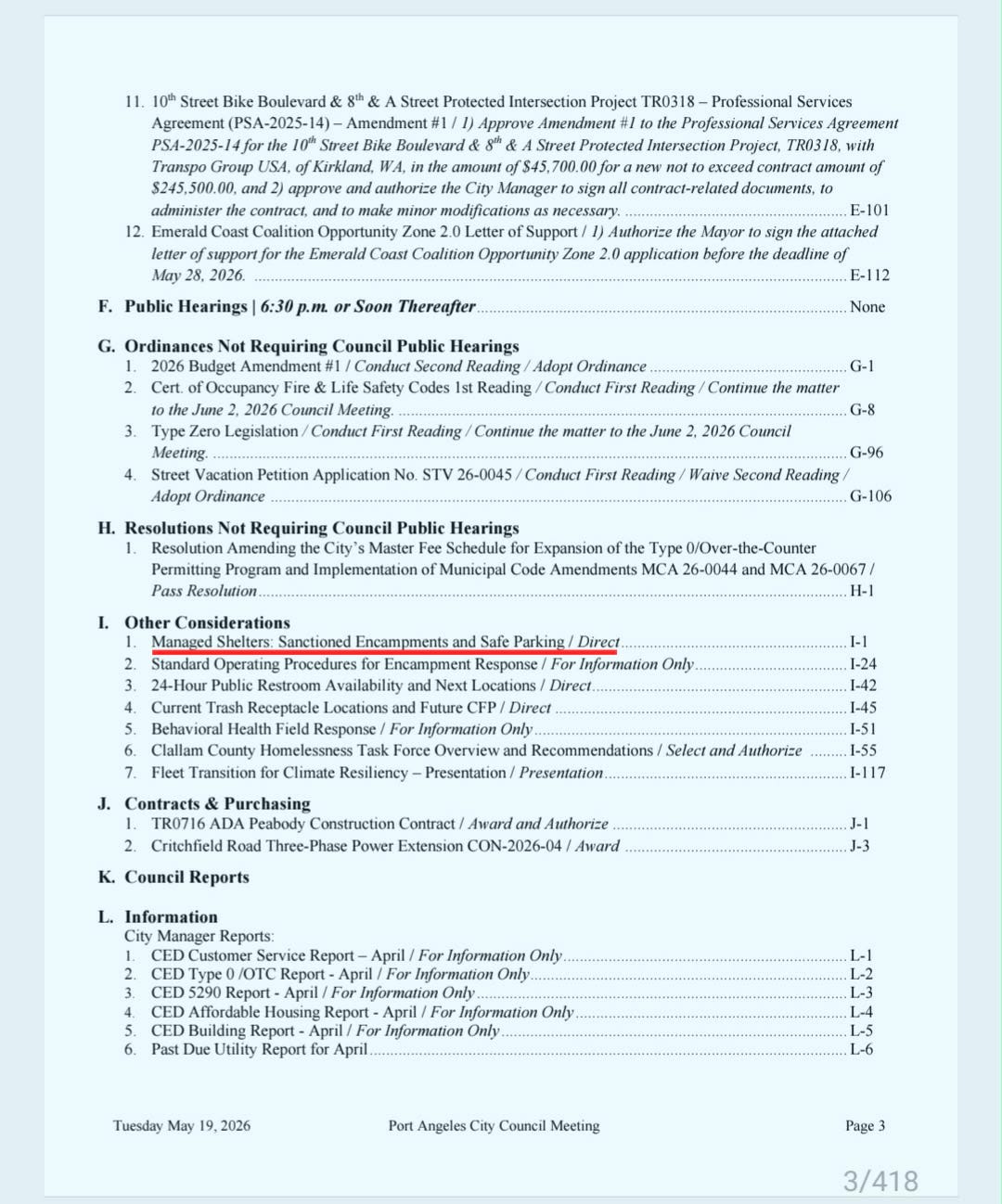
This is an opportunity for the City of Port Angeles to lead by example. However, if the City continues to refuse to act, the County has both the authority and obligation to intervene.
The County’s potential avenues include:
Action through the Board of Health and the health officer under RCW 70.05.060 and RCW 70.05.070,
Directing the Sheriff's enforcement authority of trespass, solid waste, reckless burning, and public nuisance
Emergency declarations related to human health or environmental hazards
Court-ordered cleanup and removal processes with appropriate due process protections, including clear notice of eviction and lawful opportunity for individuals to retrieve their belongings from storage.
Human waste, solid waste accumulation, and contamination of fish-bearing streams are not merely policy disagreements — they are public health and environmental hazards.
If the City will not act, the County must.
Public safety is not optional.
The Port Leads
The Port of Port Angeles deserves recognition for stepping forward and demonstrating leadership by clearing overgrowth and improving visibility along Tumwater Creek on Port property.
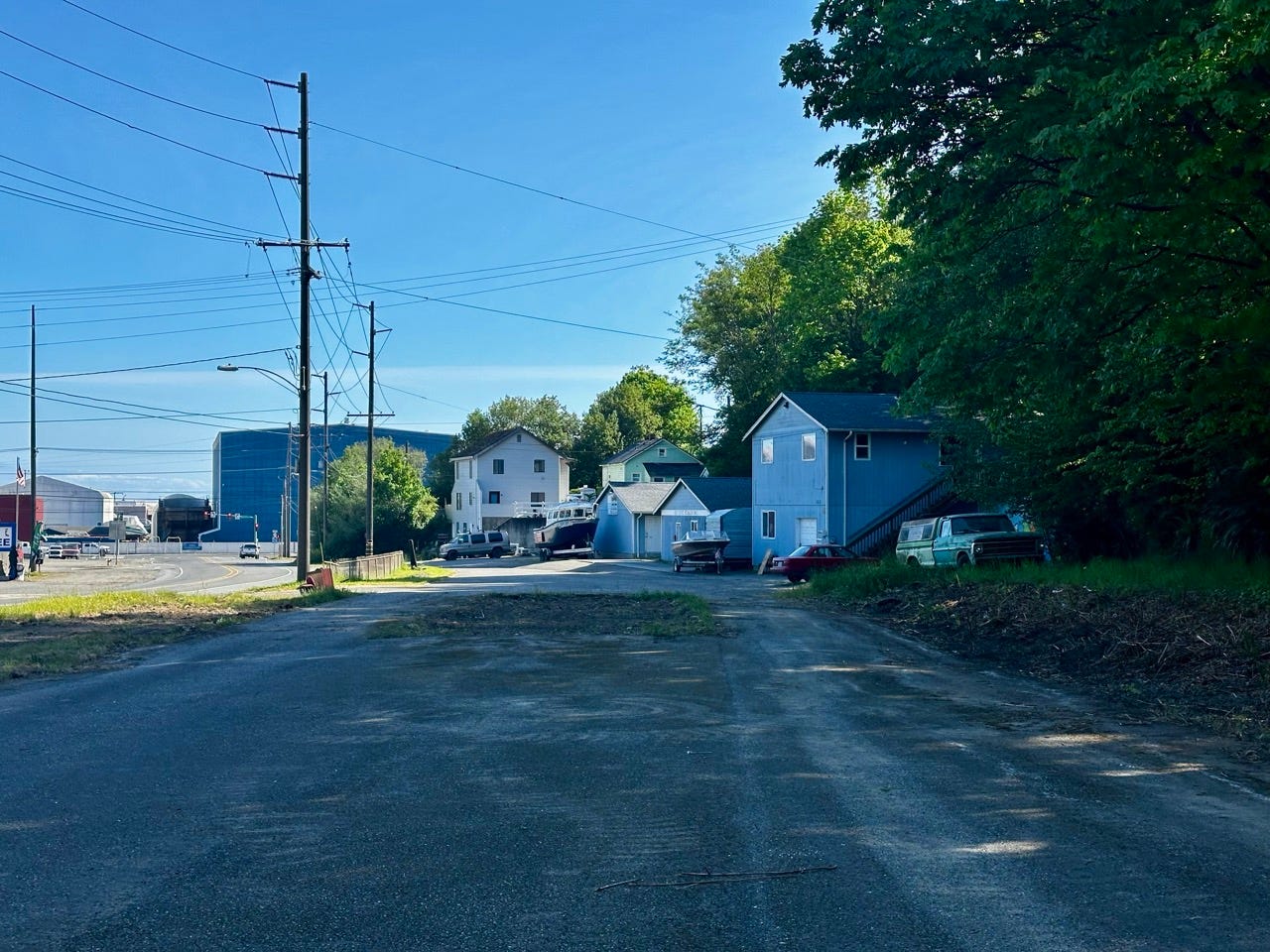
Before this effort, the area provided dense cover for encampments, illegal dumping, and drug activity.
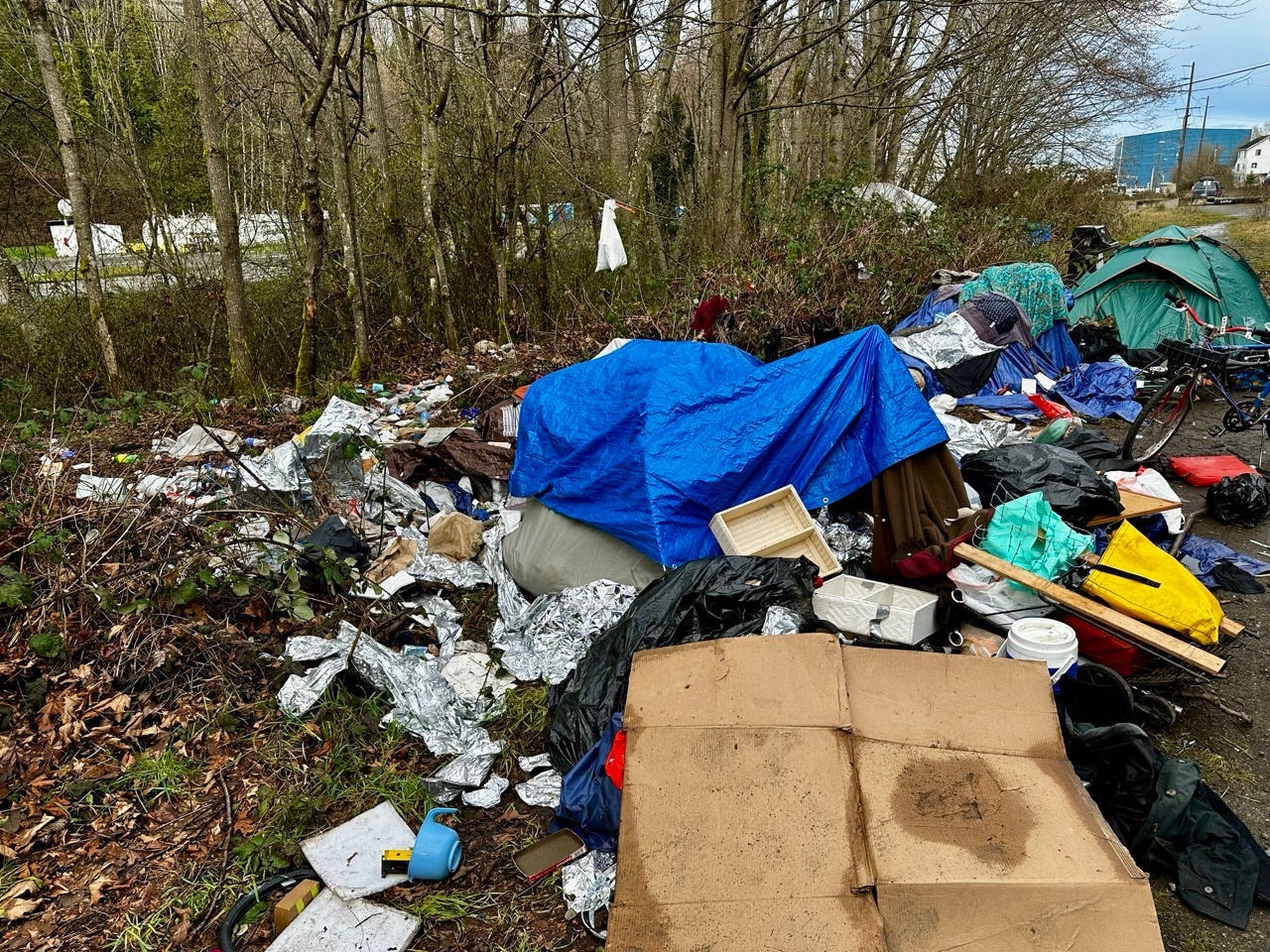
Thick brambles often concealed vehicles associated with disturbing and unlawful behavior.
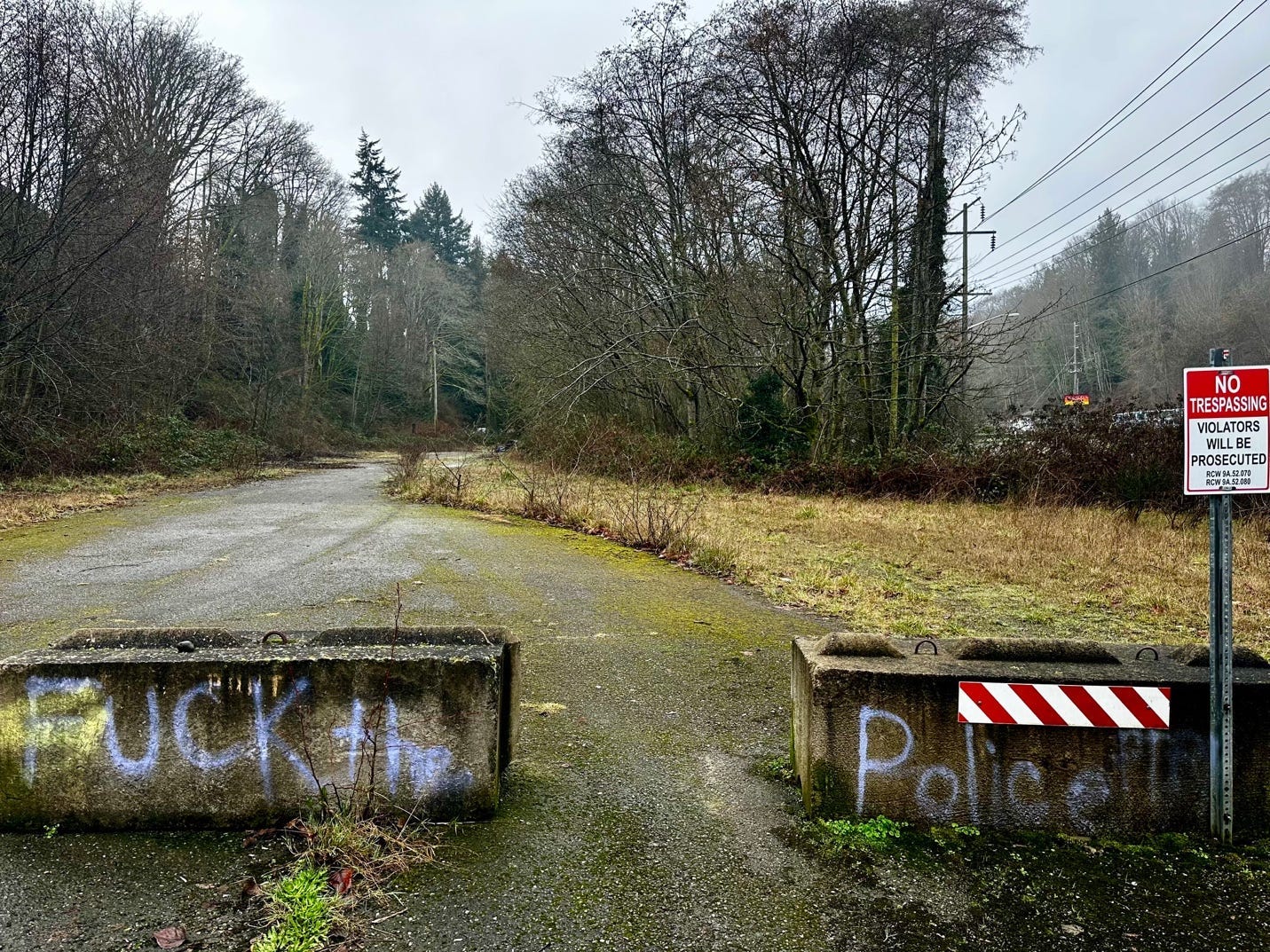
Today, those activities are far more difficult to hide.
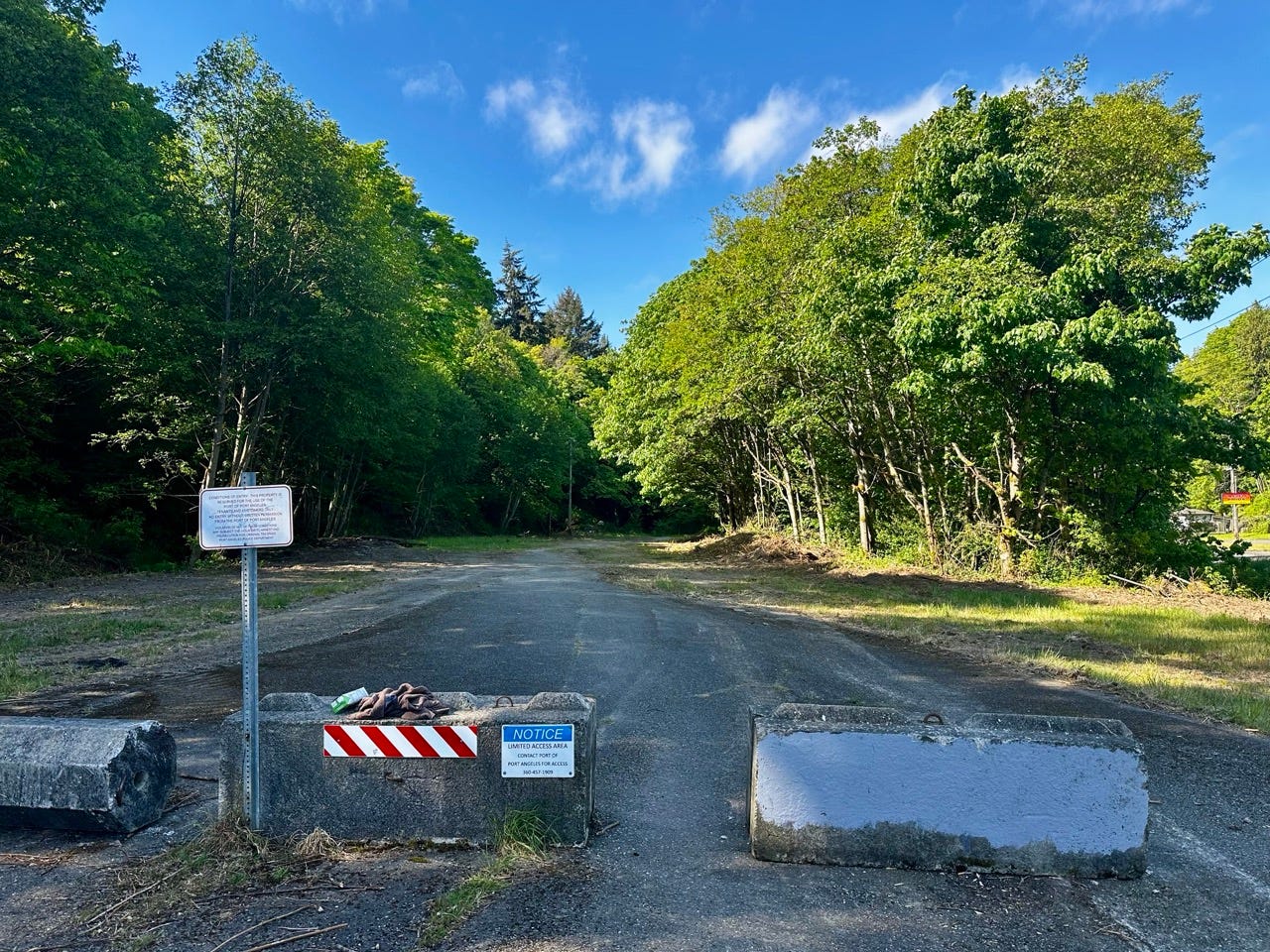
The Port’s willingness to act stands in sharp contrast to years of paralysis elsewhere.
Now What?
Clallam County did not arrive here overnight.
Years of non-enforcement, policy drift, and enabling have transformed environmentally sensitive areas into illegal encampments marked by addiction, violence, human waste, and growing public danger. The collision on the Tumwater Truck Route was not an isolated tragedy. It was the predictable outcome of leadership that tolerated dangerous conditions in the name of compassion while abandoning basic standards of public safety and accountability.
Compassion without boundaries is not compassion at all. It is neglect.
Residents should not have to dodge needles on public trails, clean human waste from waterways, or watch young drivers navigate dark roadways beside illegal encampments that officials pretend not to see. Nor should individuals struggling with addiction be left to slowly destroy themselves in tents along fish-bearing streams while government agencies distribute the supplies that sustain the cycle.
The status quo is failing everyone.
The encouraging news is that this can change. Other cities have proven that consistent enforcement, transitional shelter, treatment, cleanup efforts, and coordinated leadership can reclaim public spaces and reduce dangerous encampments. Clallam County can do the same.
The Port of Port Angeles has already demonstrated what leadership looks like. By clearing overgrowth and restoring visibility along Tumwater Creek, the Port showed a willingness to act while others debated, delayed, and deferred responsibility.
Now the question is whether the rest of our local government will finally do the same.
Public safety is not cruel. Protecting waterways is not extreme. Enforcing laws is not oppression. These are the basic responsibilities of government.
The people of Clallam County have been patient long enough.
What can you do?
If you believe the status quo is failing both the community and those struggling with addiction and homelessness, now is the time to speak up.
Contact all three Clallam County Commissioners by emailing the Clerk of the Board: loni.gores@clallamcountywa.gov
Contact the entire Port Angeles City Council and urge meaningful action on public safety, environmental protection, and illegal encampments: council@cityofpa.us
Attend the Port Angeles City Council meeting this Tuesday at 6:00 PM — in person or virtually — and consider giving public comment:
Thank the Port of Port Angeles for taking the initiative to steward land along Tumwater Creek and improve visibility and safety beside a salmon-bearing stream. The port can be contacted at paulj@portofpa.com.
Contact Clallam County Health Officer Allison Berry and ask what steps are being taken to address the growing public health and environmental concerns surrounding Tumwater Creek: allison.berry@clallamcountywa.gov
The people of Clallam County have been patient long enough. Public safety, clean waterways, and accountable leadership matter.
See You This Afternoon in Forks

Editor’s Note: CC Watchdog editor Jeff Tozzer also serves as campaign manager for Jake Seegers during his run for Clallam County Commissioner, District 3. Learn more at www.JakeSeegers.com.


