


Clallam County continues to deliver a familiar pattern: public safety incidents downplayed, transparency resisted, spending justified without scrutiny, and ordinary residents left carrying the consequences. These ten short stories—each real, each documented—offer a clear picture of a system that increasingly protects institutions, insiders, and repeat offenders, while asking taxpayers and law-abiding residents to absorb the risk.
Transit Violence, Fare Policy, and Reality
In October 2023, the Peninsula Daily News reported that most drivers at Clallam Transit opposed eliminating fares, with several warning that free rides attract people who ride aimlessly and engage in disruptive behavior. County Commissioner Mike French—who also serves on the Clallam Transit Board—later acknowledged a “small number” of security exclusions had occured while the agency empasized de-escalation training.
Then came the September assault on a female transit driver.
Watch the video and ask yourself: does this look like a situation where de-escalation training would have mattered? The box cutter seen in the footage did not belong to the attacker—it belonged to a passenger who intervened and may have prevented further harm. Should this have been reported locally as a security “exclusion?” And more fundamentally: are we now living in a county where riding public transit responsibly means being prepared to defend yourself?
Land Acknowledgments and Legal Reality
Washington State University Extension has resumed appending land acknowledgments to official emails, stating that its locations sit on lands traditionally inhabited by Native peoples.
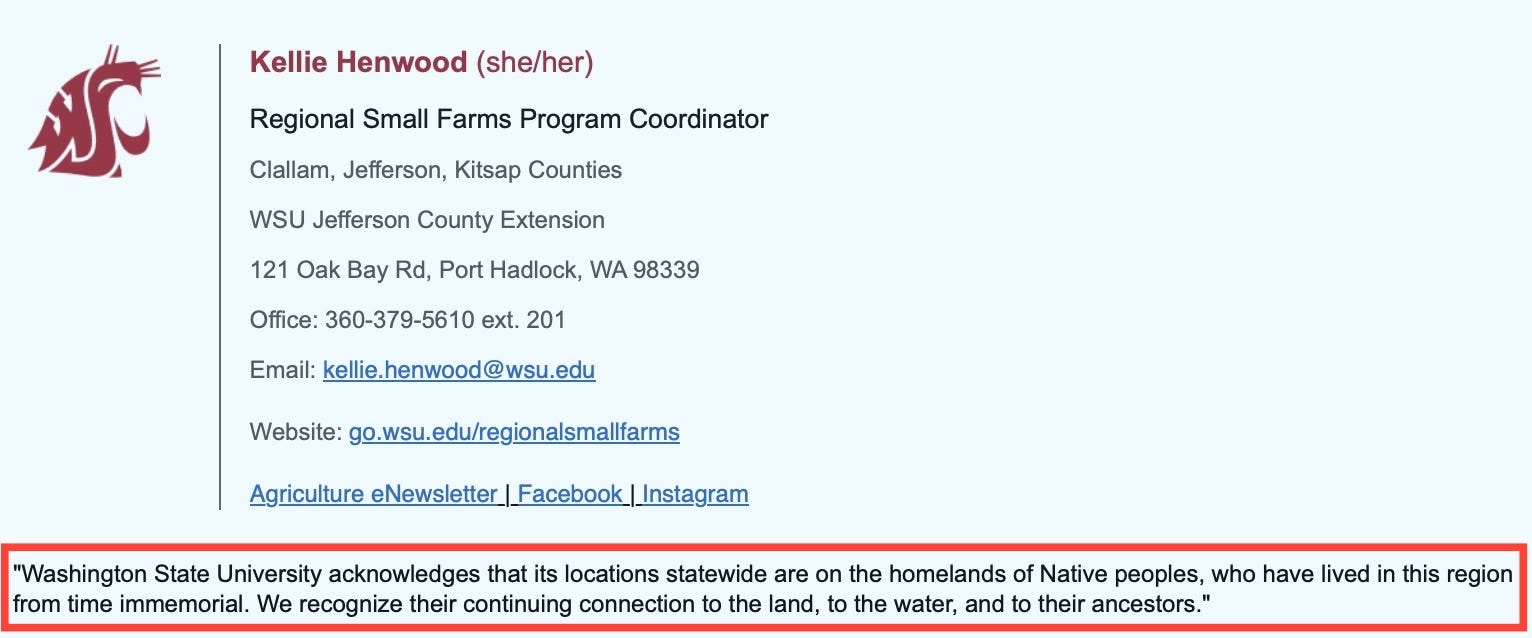
A recent legal challenge, summarized in Seattle Red, raises an uncomfortable question: when land acknowledgments are adopted as institutional policy, do they remain symbolic speech—or do they begin to imply legal standing, obligations, or concessions that the institution is not authorized to make?
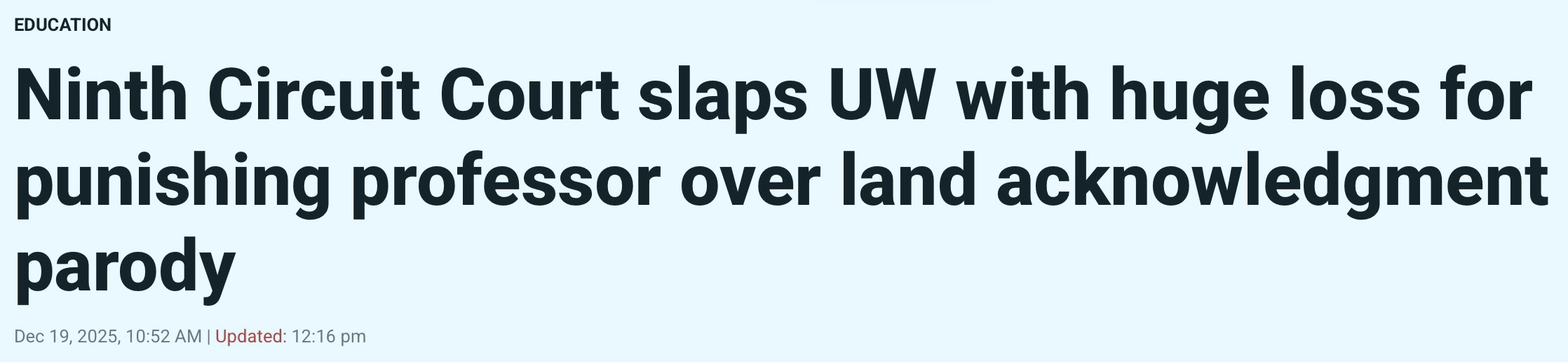
The lawsuit argues that while historical recognition may be appropriate, embedding such language into official communications blurs the line between expression and policy, potentially exposing public institutions to legal and constitutional conflicts they have not fully considered.
A New Repeat Offender, Same Soft Landing
Port Angeles appears to have acquired another familiar problem. Alex Velez—reportedly with prior criminal histories in Oregon, California, and Hawaii—caused a disturbance at the Lincoln Street Safeway and required police intervention again just two days later.
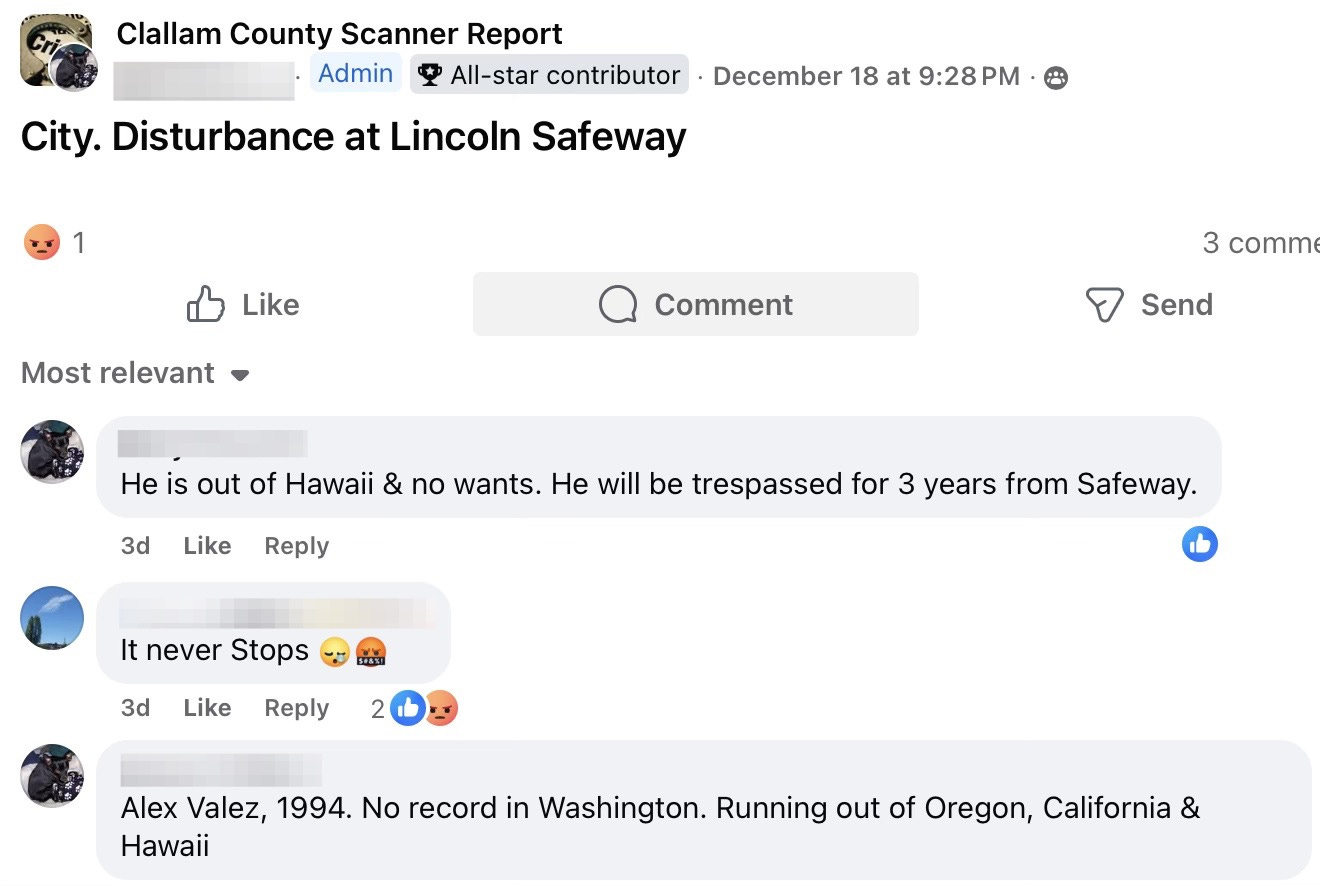
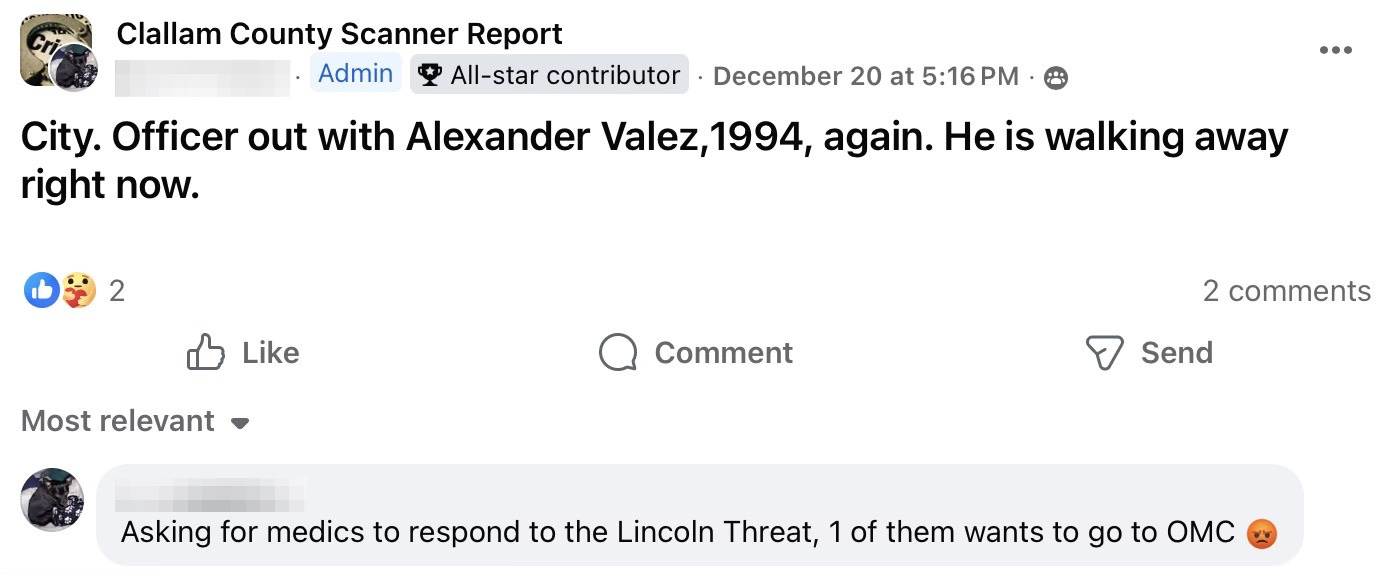
As of now, there is no associated booking information in the Clallam County Jail roster. Welcome to Clallam County, where repeat offenders often encounter minimal friction—and residents are left to absorb the consequences of “compassion-first” systems that rarely include accountability.
Where Is the Commissioner?
Commissioner Mark Ozias attended last week’s work session remotely—from a car—and was absent entirely from the following board meeting. When asked about his whereabouts, Commissioners French and Johnson, along with County Administrator Todd Mielke, refused to answer.
A public records request later revealed Commissioner Ozias was attending a meeting of the Washington State Association of Counties (WSAC), a lobbying organization based in Olympia that routinely advocates for tax increases without a vote of the people.
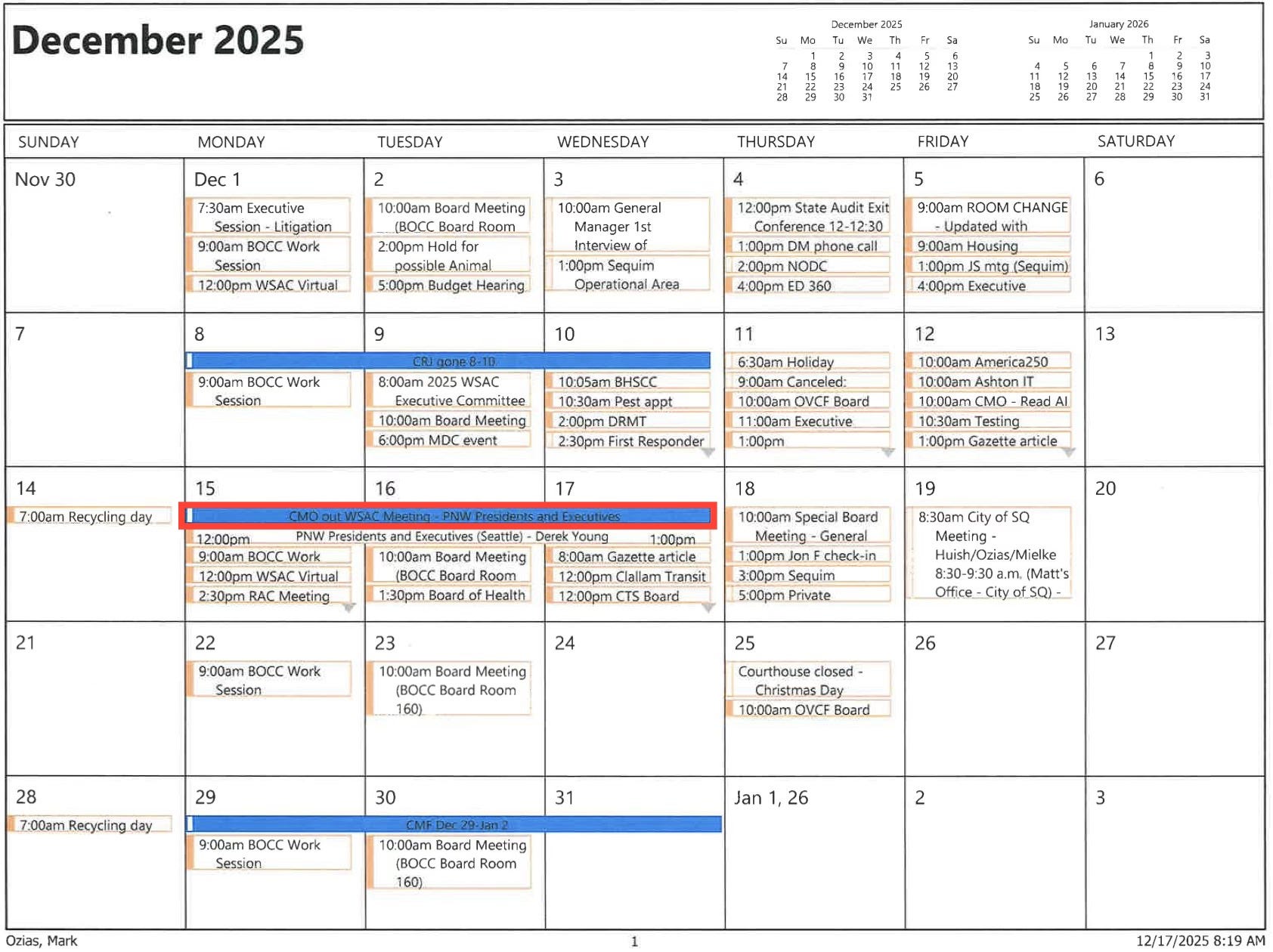
Clallam County continues to pay Commissioner Ozias to represent District One—yet as WSAC president, he now has competing obligations. Most people would not tolerate paying an employee who refuses to say where they are, only to learn they were working against their interests while on the clock.
Spending Spotlight: Conferences and Condos
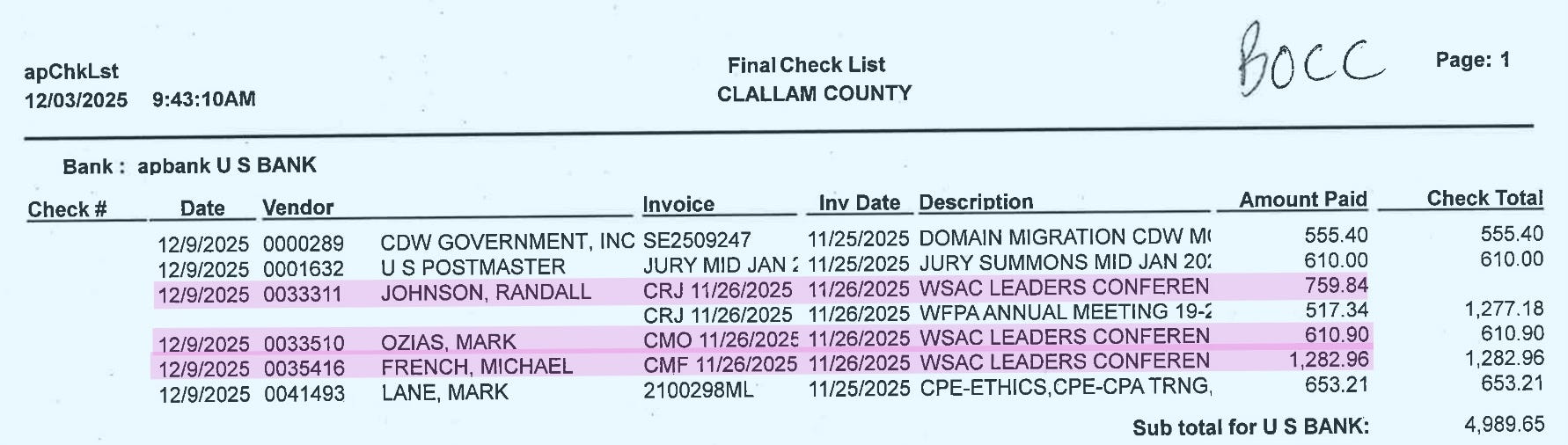
This month, the Board of Commissioners approved $2,653.70 to cover attendance at a WSAC leadership conference—the same event where Commissioner Ozias was elected president—during a budget cycle in which commissioners openly questioned whether funding for public safety, election integrity, and public health could be sustained.
In the same meeting, the board approved an additional $199,514.94 for the 2nd/Oak Project—better known as Peninsula Behavioral Health’s North View complex. The facility offers dishwashers, a dog-washing station, rooftop terrace, and panoramic harbor views for residents who are frequently incarcerated and not necessarily sober.
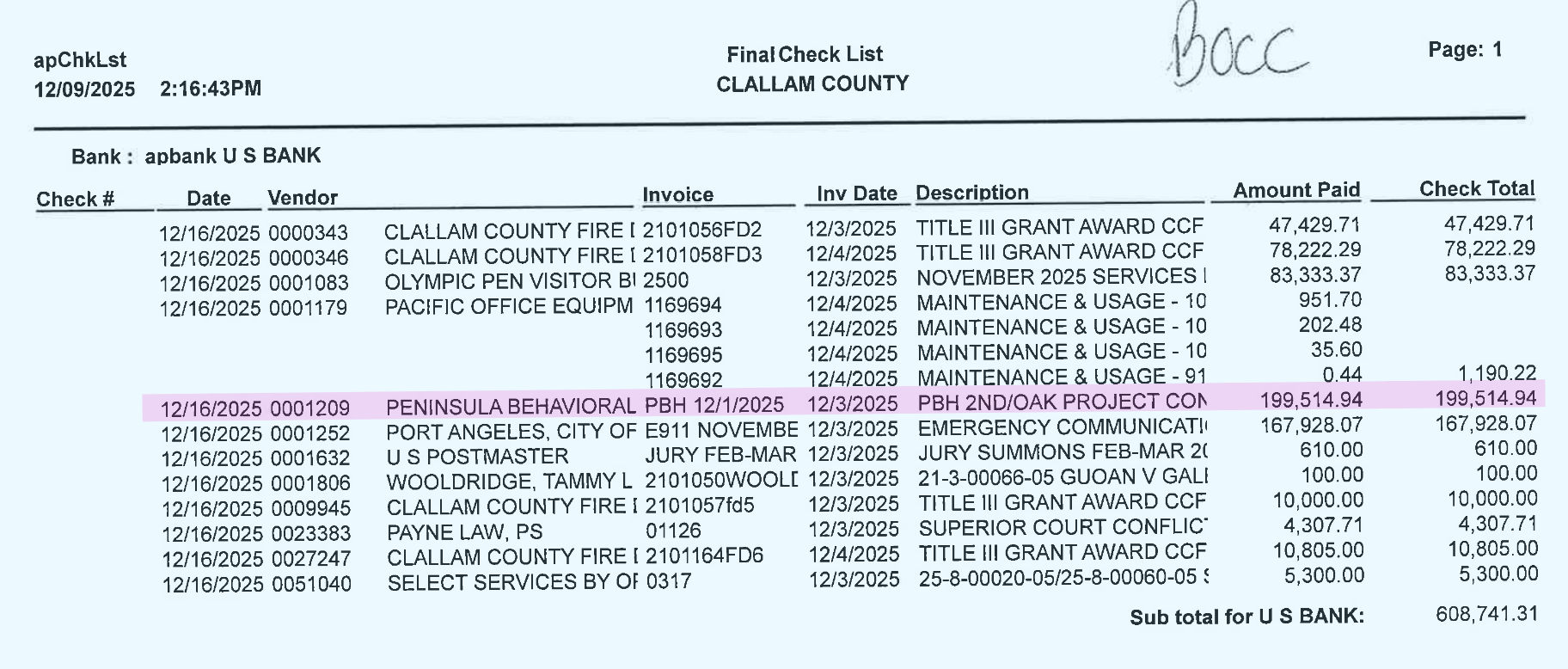
Nearly $200,000 more of taxpayer money—while working families are told resources are scarce.
Transparency Promised, High Salary Delivered
After last year’s financial collapse, the Olympic Peninsula Humane Society pledged “full transparency.” Yet the organization has declined to publicly release meeting minutes or financial details, directing citizens instead to IRS filings.
Those filings are now available—and they show that Executive Director Jason Stipp was paid more than $62,000 in 2024.

That figure matters because Stipp only worked at OPHS for roughly five months, from late February through July—more than $12,000 per month, over double the average Clallam County household income.
This, from an organization that reportedly lacked funds for basic supplies like canned kitten food.

After an Election Scandal, Fewer Eyes
Following an overturned election due to improper procedures, the Clallam Conservation District had options: third-party election oversight, in-person polling, or public observers.
Instead, the District announced that the 2026 Supervisor Election will be mail-in only—no in-person voting, no polling site, and a single drop box closing at 4:00 p.m. on Election Day.
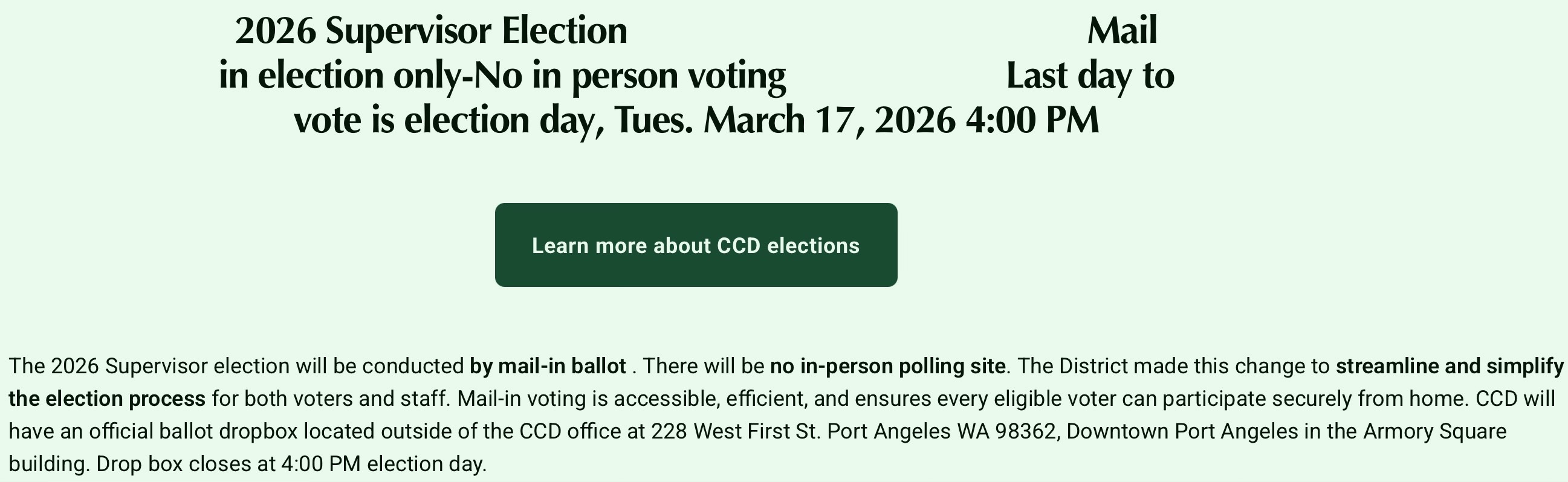
The stated goal is “streamlining.” After a voided election, some residents may reasonably see it as streamlining scrutiny out of the process.
You must request a ballot to vote in this election.
Comment Highlight: When Policy Hits Home
One CC Watchdog commenter, Veronica, captured what many residents are experiencing after the County Commissioners voted in a Conservation District parcel fee: “WHAT EXACTLY CAN I DO WITH MY PROPERTY?”
Her full comment—reprinted below—details how county policies simultaneously demand agricultural production, penalize landowners for noxious weeds they did not create, revoke exemptions, increase taxes, and restrict land use. Meanwhile, enforcement elsewhere appears nonexistent.
My head is spinning. I have been doing all I can to reduce spending, make my home, my land more efficient. I own 7 acres, modest home and an ADU. A couple years ago the county put 5 acres in agricultural, which saved some on property tax. My neighbors fields are infected with daisy’s so I have had to quit having hay baled and turn to irradicating the daisy’s. The county sent me a letter demanding receipts from hay sales so I could keep my exemptions. I wrote them back explaining the process, sent pictures of myself treating the hay field, etc. Nope !!
They didn’t like that, took away my exemption and told me to pay 300.00 to “re-file” I said I would not pay.
So, the county demands I produce hay to keep my exemption
The county calls the daisy’s a noxious weed
The county does not address the current daisy situation at all. (neighbors fields)
BUT the county says my land is not agricultural, so....
I pay more, I cannot build on it, but I pay $ 542.00/month on a modest income.
WHAT EXACTLY CAN I DO WITH MY PROPERTY? They only want their money , and every branch of this county govt. that pays 80.00/hour, is to blame. If I earned near that amount, the 542/mo. wouldn’t bother me.
They take, take, take, in order to pay for their “special” hires.
I am sick to death of it and do not know how I can stay here.
I can’t grow hay, I can’t get an exception on 5 acres of clear agricultural land, yet I get a tax increase every year and assessed for every shed or building. And, I’m told I cannot build on my own land. It is too much.
My neighbors down the road live in a crap hole. Trash, junk cars, car parts, etc. Police there all the time, transients, and more. The county sure hasn’t responded to THAT. ! I am a much easier target.
Her conclusion is blunt: compliance is demanded from those who follow the rules, while dysfunction is tolerated where it is hardest to confront.
Half the CC Watchdog stories are often in the comments. This is one of those cases.
Speech Policed, Citizenship Optional
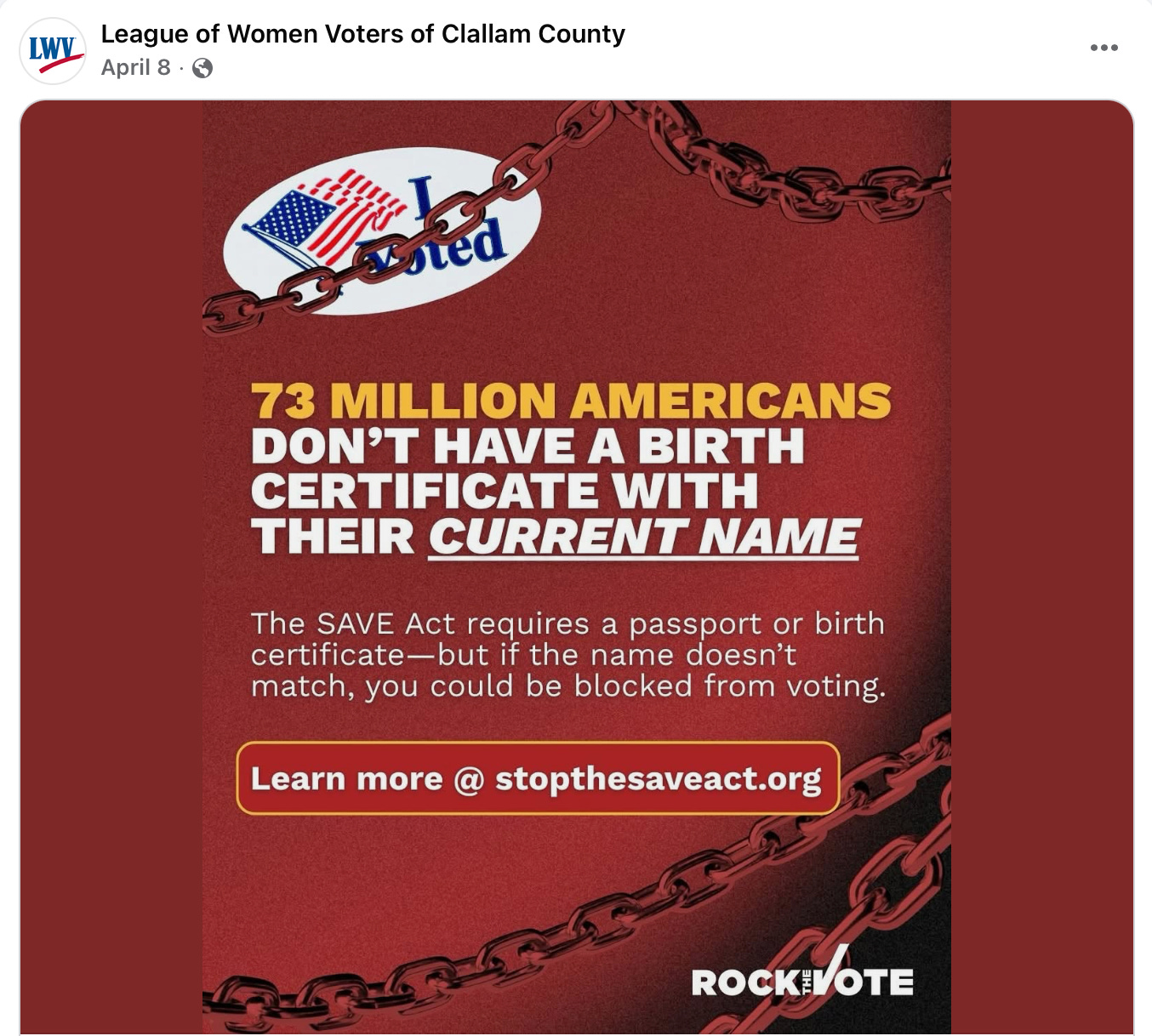
The President of the League of Women Voters of Clallam County was caught signaling to Charter Review Commission Chair Susan Fisch—an immediate past League secretary—during a public meeting to discourage out-of-county speakers. Such a restriction would violate the First Amendment.
At the same time, the League has taken the position that proof of citizenship should not be required to vote. So: prove you are from Clallam County to speak—but do not prove you are a U.S. citizen to vote.
Make that make sense.
Letters That Build Momentum
One of the most effective tools in civic engagement is writing to elected officials—not only to be heard, but to let others know they are not alone. That is the premise behind Clallam County Letters, a new Substack launched by Clallamity Jen.

The site publishes redacted letters sent by residents to commissioners, school boards, planning commissions, and hospital districts—allowing the words to stand on their own. This kind of shared visibility helped open Towne Road, introduced commissioner forums, and reshaped local debate in a remarkably short time.
If you write a letter to a public official, consider cc’ing clallamityjen@gmail.com. Momentum is built when voices are seen, not buried.


