


Clallam Transit went fare-free in January 2024 using revenue from Washington’s Climate Commitment Act (CCA) — the same program that pushed statewide gas prices to the highest in the nation. Officials promised equity, climate benefits, and broader access. Instead, incidents at transit centers and on buses have surged. Increasingly, buses are functioning as rolling homeless shelters, leaving essential riders — workers, seniors, families, and students — exposed to violence and disorder. A recent assault on a bus driver and a growing list of unreported incidents raise questions about transparency, accountability, and whether local leaders are choosing political narratives over public safety.
A Wednesday Morning That Should Concern Everyone
Last Wednesday, an incident occurred on Clallam Transit in Port Angeles near 16th Street. The bus stopped in the roadway as at least three police cars arrived.
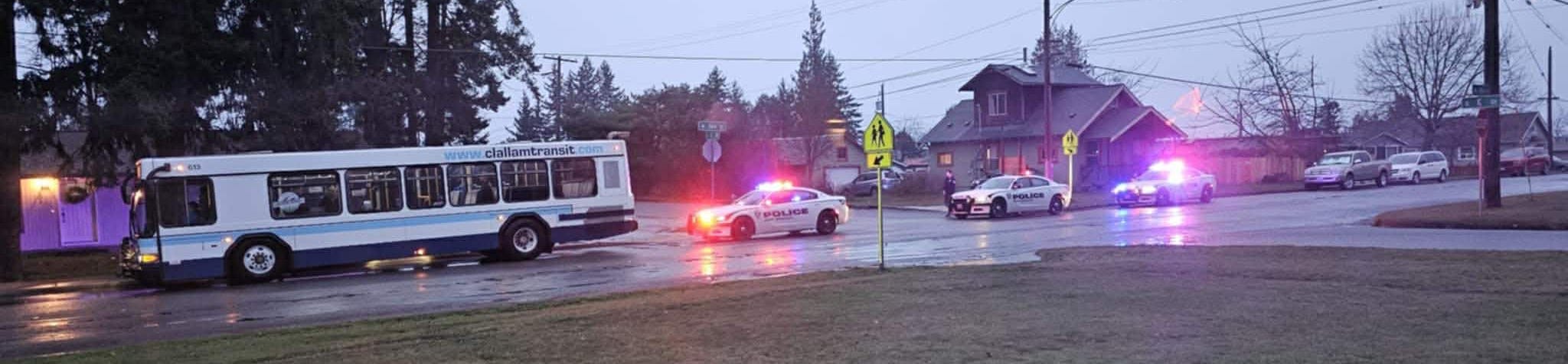
Witnesses saw an individual with a dog and several Safeway bags being taken into custody. Other riders left the bus on foot — including a mother and a young child carrying groceries. These are essential riders heading to work, medical appointments, school, and daily tasks. Their primary mode of transportation is increasingly disrupted by individuals behaving violently or erratically, transforming what should be a predictable commute into a safety risk.
The September Assault
A redacted police report documents a severe onboard assault against a Clallam Transit bus driver.
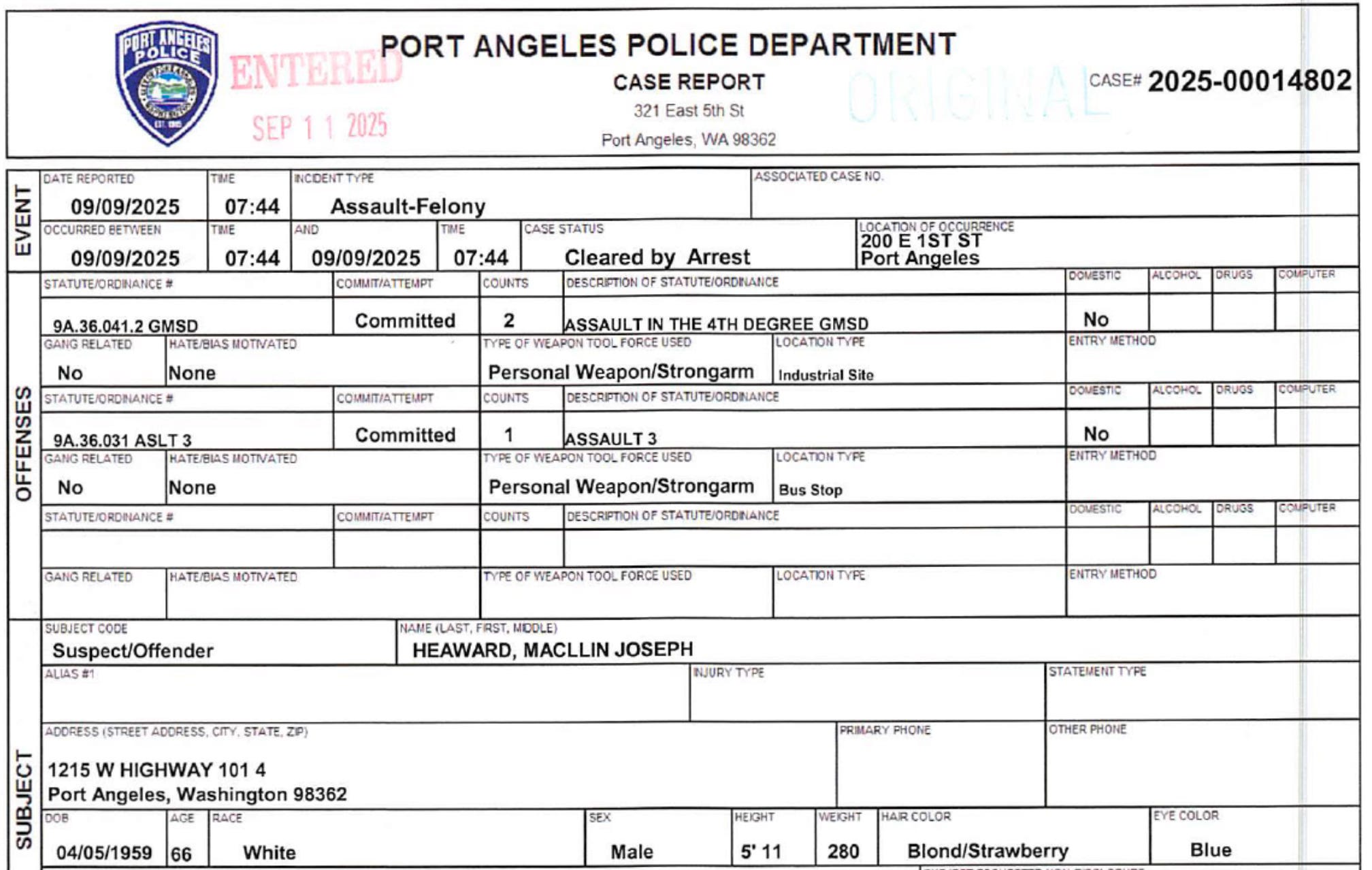

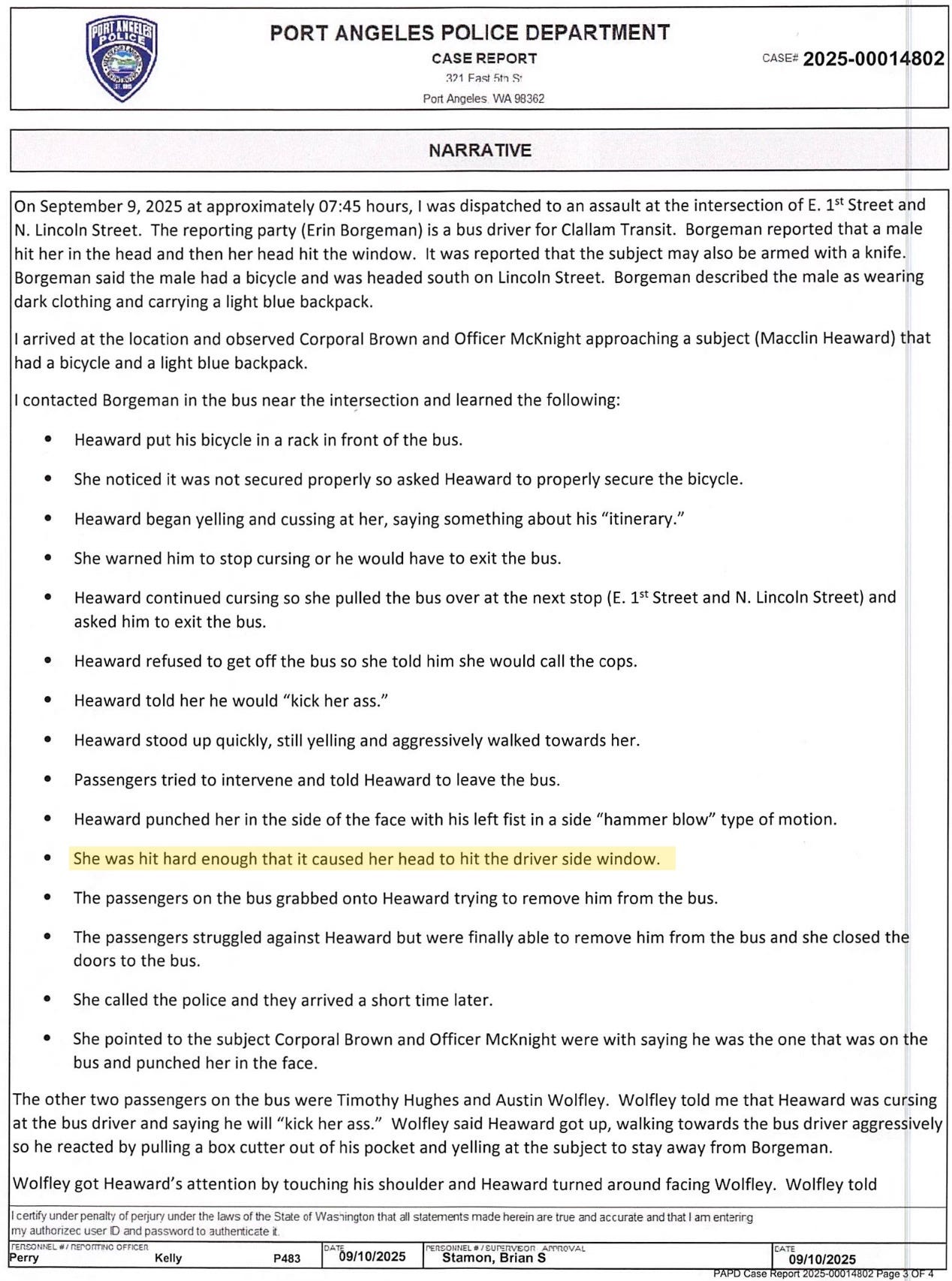
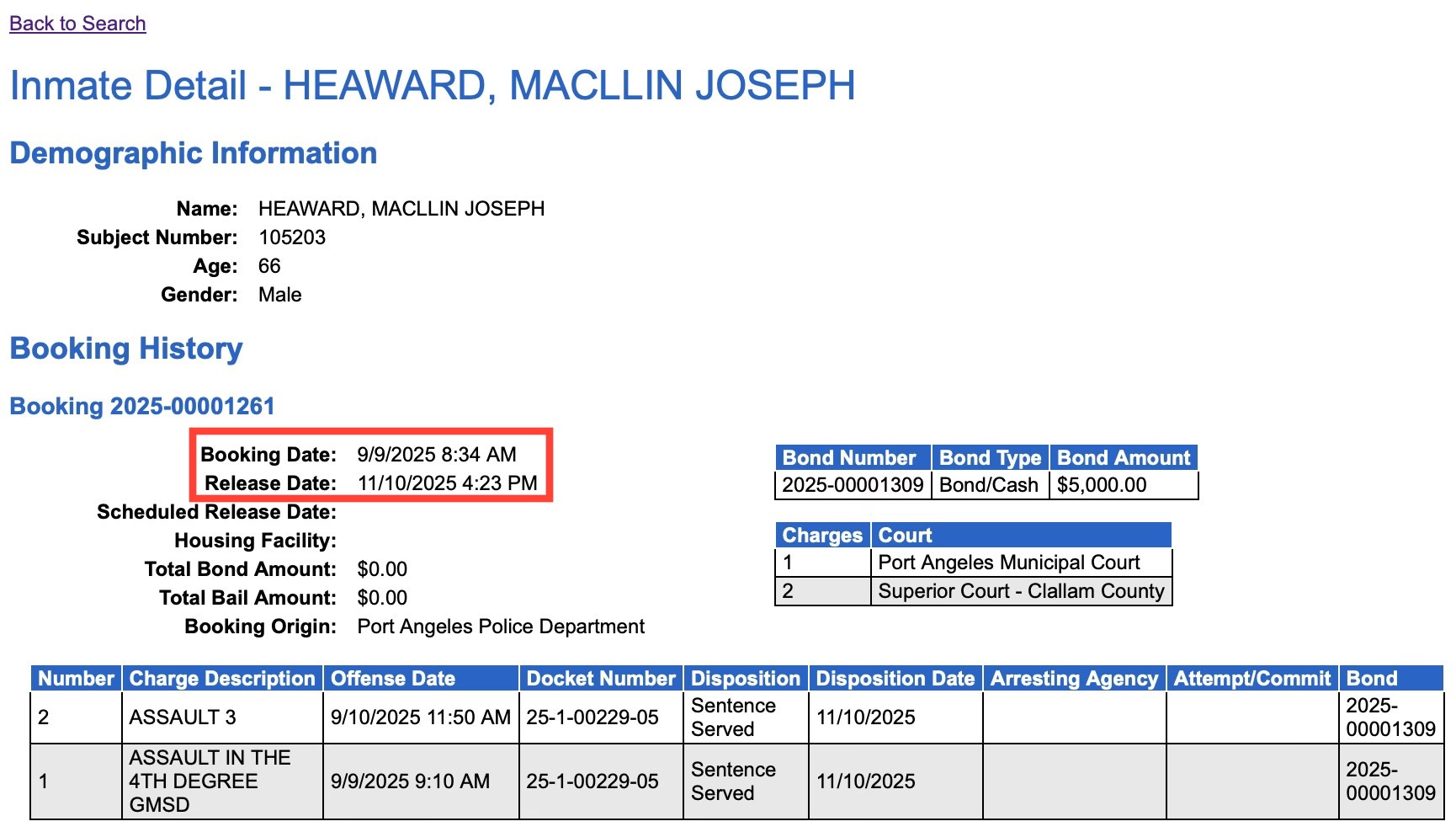
On September 9, 2025, at approximately 7:45 a.m., a female driver was assaulted by rider Maclinn Joseph Heaward, a 5’11”, 280-pound man armed with a knife. According to the report, Heaward refused to secure his bicycle properly, approached the driver aggressively, punched her in the head, and slammed her face into the bus window before brandishing a knife as passengers attempted to intervene. Two riders physically restrained him, almost certainly preventing more serious harm.
The chaos of the incident is clear throughout the report.
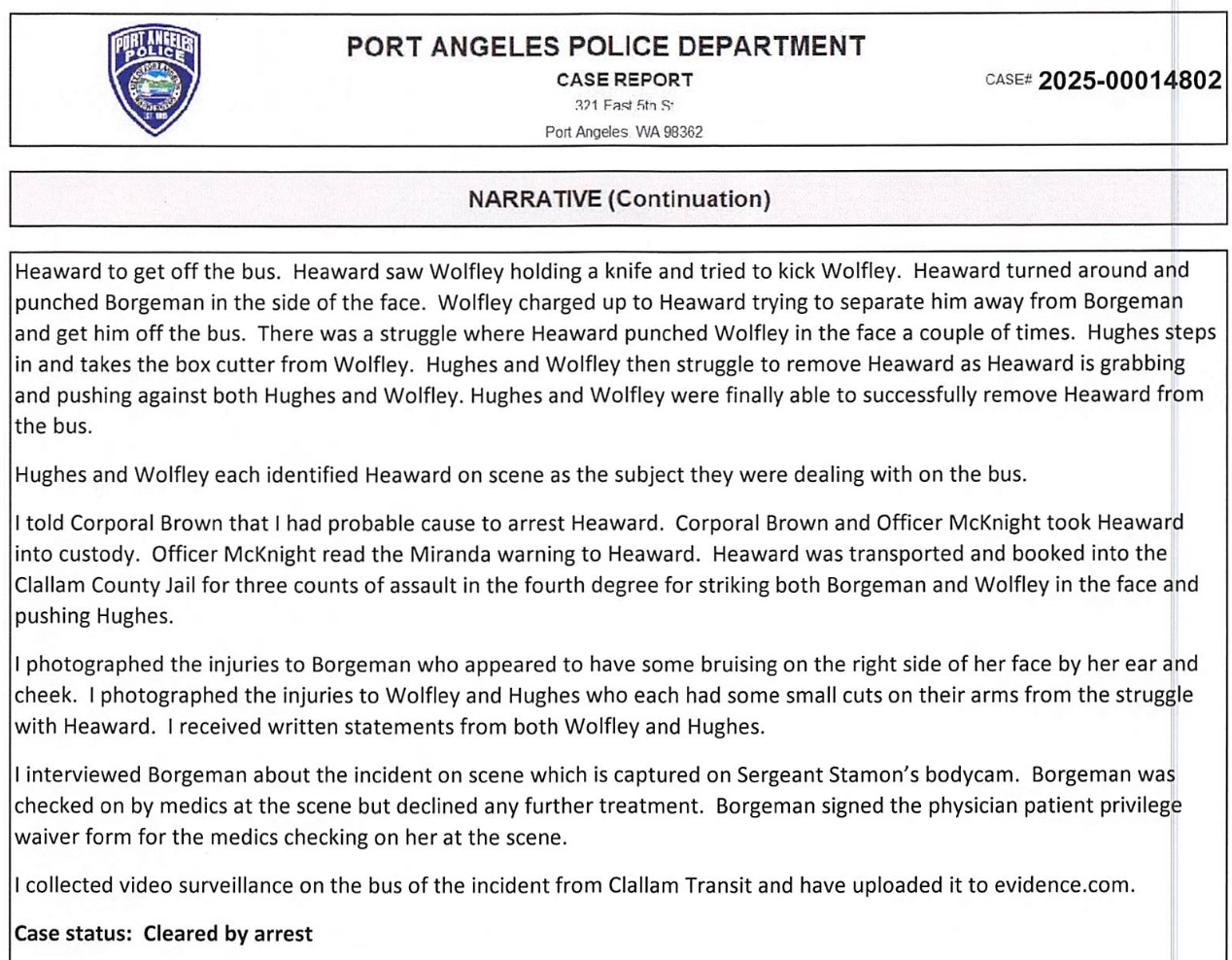
Officers noted that the suspect was so aggressive they were unable to place him in a standard caged police SUV, citing “flexibility issues” — an unusual explanation considering he had been riding a bicycle that same morning. Heaward was ultimately transported to jail in an ambulance and later issued a three-year trespass order barring him from all Clallam Transit property.
Heaward was released from Clallam County Jail two months later, on November 10th.
The Buses Have Become Rolling Homeless Shelters
Since the system abolished fares in early 2024, Clallam Transit has experienced a steady rise in behavioral incidents. Without fare enforcement or any barrier to boarding, buses have become accessible to anyone wishing to stay warm, mobile, or hidden — regardless of behavior. Some individuals remain on board for hours at a time, and drivers report a growing presence of drug use, untreated mental illness, and volatile behavior that threatens riders and staff alike. The transit system, intended to move essential workers, seniors, and families safely around the county, is increasingly serving as a rolling extension of the homelessness crisis.
Drivers are not trained as crisis responders, substance-abuse counselors, or law enforcement officers, yet the current system forces them into all of those roles. The combination of a fare-free model and inadequate security effectively guarantees that violent or unstable individuals can enter and remain on the bus until an incident escalates.
What Local Leaders Know — and What the Public Has Not Been Told
Internal communication shows that top city leadership knew about the assault on the Clallam Transit operator the following day. A summary from the Port Angeles Police Chief was sent directly to Mayor Kate Dexter, City Manager Nathan West, and Councilmembers Navarra Carr, Amy Miller, Drew Schwab, LaTrisha Suggs, Jon Hamilton, and Lindsey Schromen-Wawrin, along with other city staff. The case was forwarded to the prosecutor’s office as well.
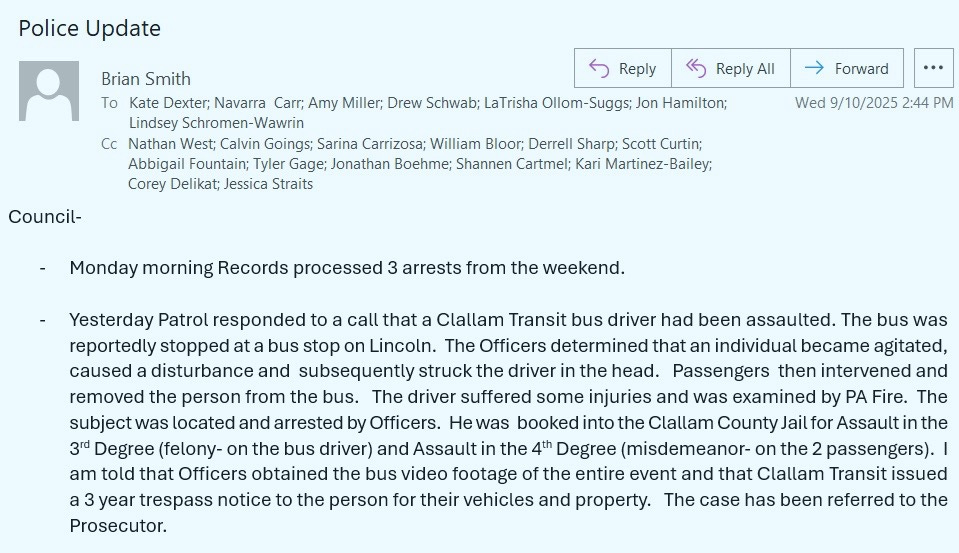
Yet there was no press release. No media coverage. No public briefing. No outreach to warn riders that a bus operator had been violently attacked while on duty and that passengers were forced to intervene to stop the assault.
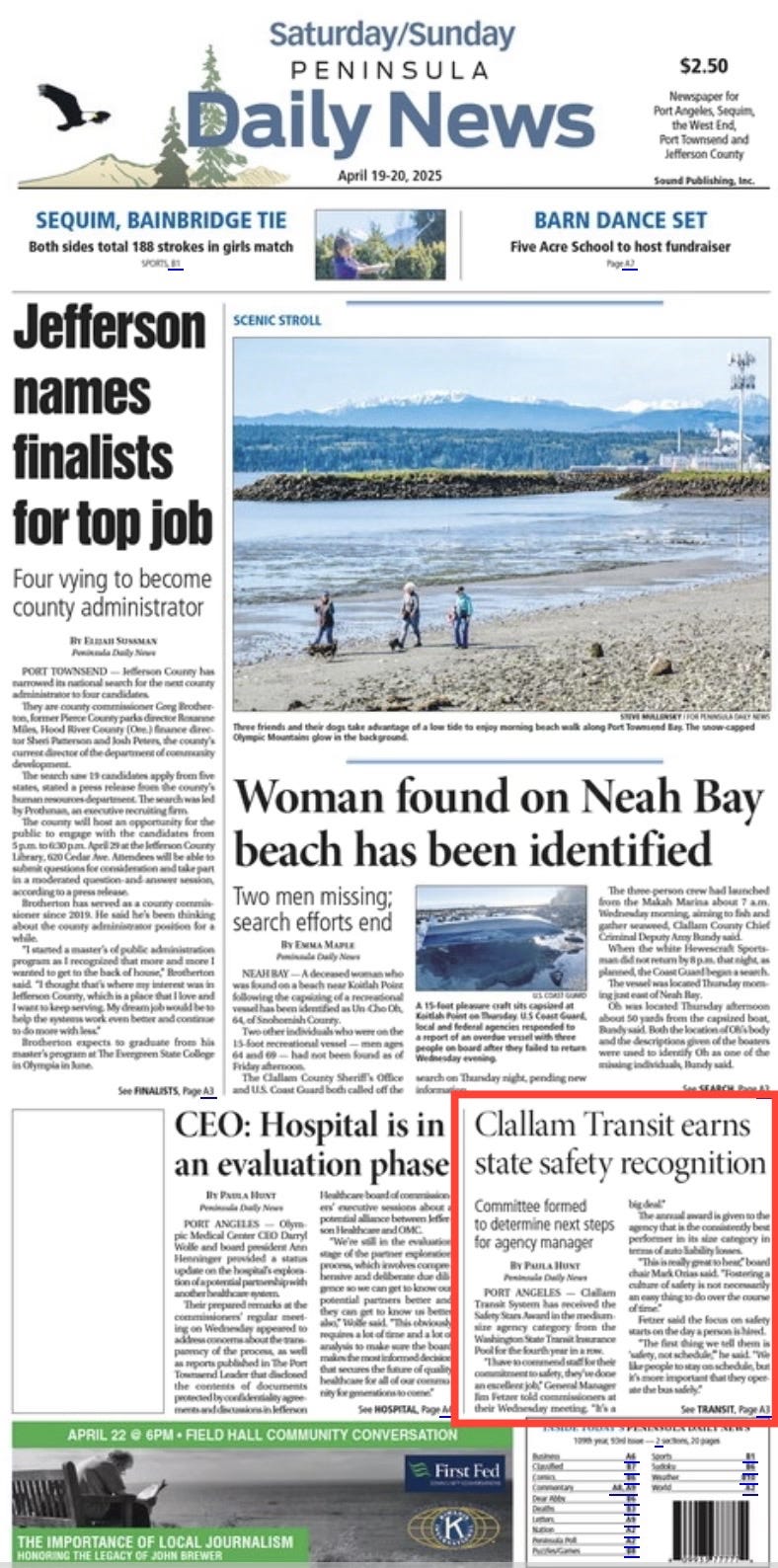
Meanwhile, local news outlets continue to publish articles written by the same public institutions they are supposed to hold accountable. Commissioner Mark Ozias writes glowing commentary about county performance. A monthly Recompete “success story” is written by the very county employee working for the program. Community nonprofits publish their own promotional columns. The flow of government-authored content is steady — but the oversight is not.
The question practically asks itself: Why did this story surface only because a private resident filed a public-records request?
Why didn’t the media request the same records? Why did the police chief’s internal notification include every city policymaker but exclude the press?
It’s a disturbing trend. The City of Port Angeles is increasingly focused on priorities like salmon habitat and addiction services, while the safety of its own transit operators — and the public that rides with them — receives scant attention.
De-Escalation Instead of Real Security
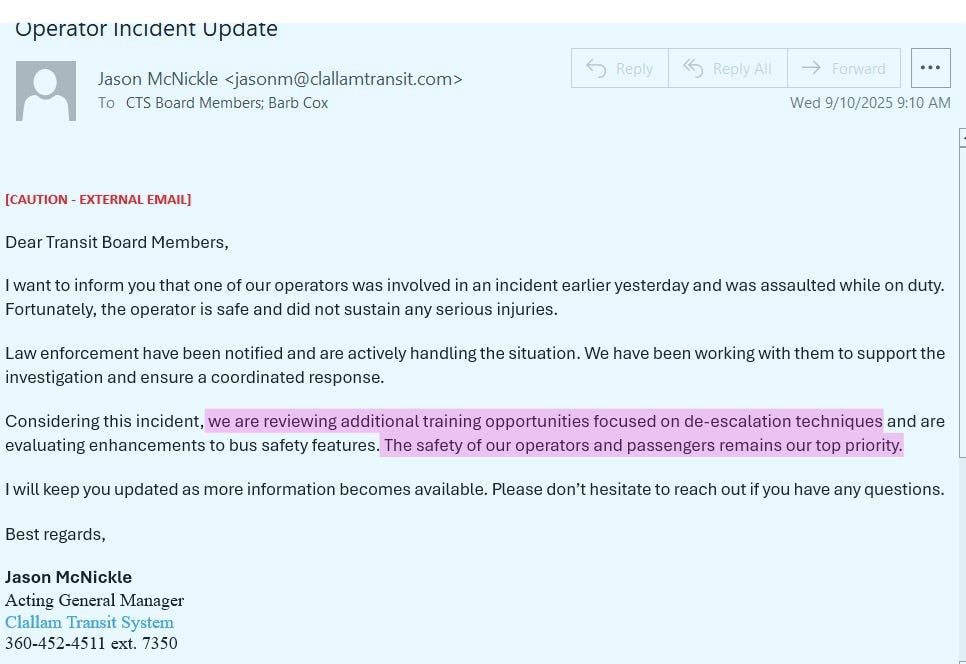
An internal memo places heavy emphasis on de-escalation training as the primary response to the rise in onboard conflicts. While de-escalation is valuable, it cannot replace the basic safety infrastructure required when drivers are confronted by violent individuals or riders carrying weapons. Incidents like the September attack make clear that drivers are being asked to manage threats far beyond the scope of training modules. Without stronger protections, both staff and passengers remain vulnerable.
A fare-free system that jeopardizes the wellbeing of essential riders is not delivering equity — it is producing preventable harm.
A System That Cannot Protect Riders Is Failing Them
Public transportation is built on the promise of safe, reliable mobility for everyone, especially those who depend on it most. When buses become unpredictable and dangerous, that promise collapses. Drivers are left without meaningful protection; families, workers, and seniors are exposed to escalating risks; and leadership responds by managing messaging rather than confronting the underlying failures.
A Path Toward Restoring Safety and Trust
The safety issues on Clallam Transit are solvable — but only if the system acknowledges that current policies are contributing to the problem. Lax enforcement around public drug use, permissive approaches to camping in public spaces, and an increasingly “free everything” model have created conditions that attract individuals whose behavior threatens the safety of drivers and passengers. When consequences are minimal or nonexistent, disorder becomes predictable rather than exceptional.
Addressing the crisis will require firmer, consistently applied behavioral standards and clearer consequences for violent or chronically disruptive riders. Clallam Transit must also reevaluate aspects of the fare-free model, especially where it allows non-travel riders to remain onboard for extended periods. Practical adjustments — such as time limits for non-travel riders or basic screening to ensure buses are being used for transportation rather than shelter — would help restore the system’s intended purpose. Greater transparency, regular public reporting, and a renewed commitment to accountability would signal that the wellbeing of riders and operators is again the system’s highest priority.
Call to Action: Attend the Clallam Transit Board Meetings
Public involvement is essential to improving safety on local transit. The Clallam Transit System Board meets at 12 p.m. on the third Wednesday of each month, with hybrid in-person and Zoom options. Meeting materials, schedules, and board contact information are available by clicking here. The Clerk of the Transit Board can by contacted by emailing frontdesk@clallamtransit.com.
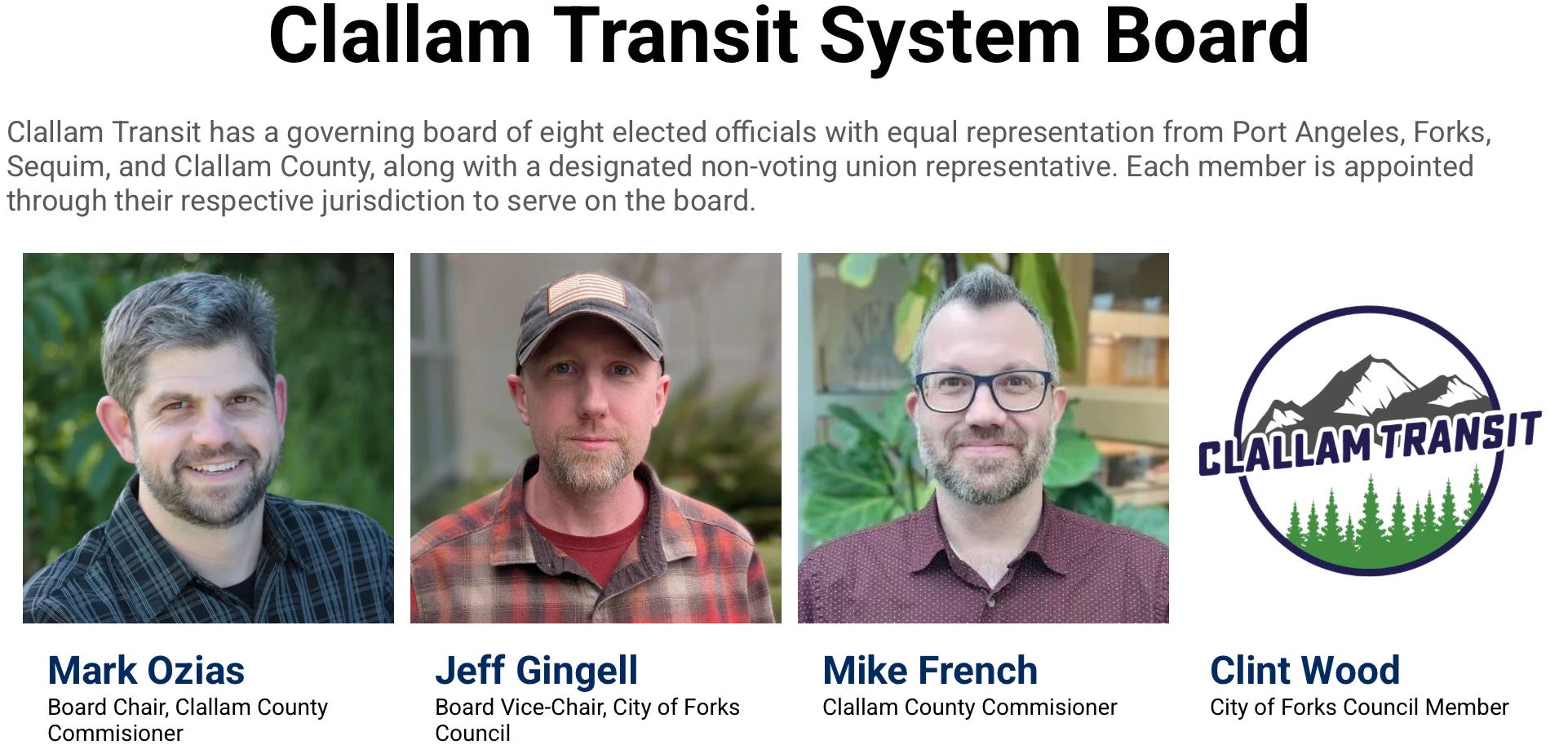

These meetings are open to the public. Residents can attend, submit public comment, and urge leaders to address safety concerns directly. Community involvement can play a decisive role in moving Clallam Transit toward more transparent decision-making and toward a system that protects the riders and operators who rely on it every day.


