


County Commissioner candidate Jake Seegers has described a rip current of change beneath Clallam County government — and recent events suggest it’s real. Citizens are showing up, demanding transparency and equal enforcement of the law. From a controversial Conditional Use Permit in the Sol Duc Valley to overdue action on county-owned land and long-delayed clarity on land-use rules, public pressure is producing visible course corrections. These are civic, non-partisan wins, driven by neighbors who understand that when citizens speak clearly, government must listen.
CUPs and Mirrors
During a February 5 public hearing on a Conditional Use Permit (CUP) application submitted by Nevada-based 9999GrouseGlen, LLC, local representative Luanne Hinkle failed to ease community concerns.
Neither Ms. Hinkle nor the property owners contacted neighboring homeowners before submitting a CUP application to the Department of Community Development (DCD). The proposal seeks approval for 32 mirrored prefabricated structures and a 4,800-square-foot community center on a 21-acre parcel currently zoned for 5-acre homesites.

The development would operate as a commercial short-term tourist destination in the Sol Duc Valley.
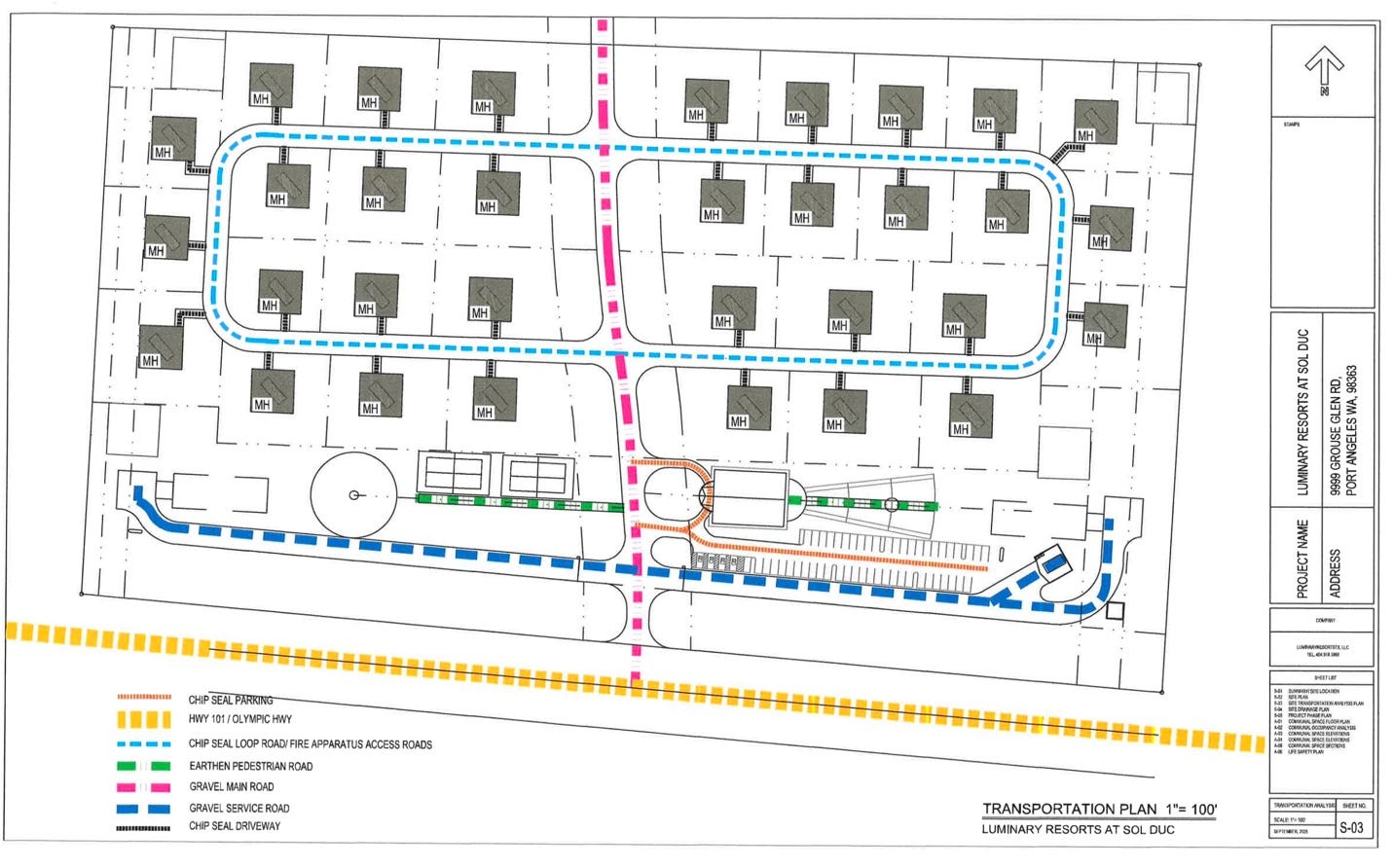
Approximately 40 west-end community members drove an hour to the courthouse to attend in person, with another 15 joining via Zoom. One by one, neighbors testified under oath that granting the CUP would be devastating to their rural community and the surrounding habitat. Concerns included:
Water depletion affecting established wells
Increased traffic at an already dangerous intersection
Strain on limited and distant emergency response
Tourism dollars leaving the local economy
Noise, light pollution, trespass, and urban-scale density
Young Blake McClure bravely approached the podium:
“Thanks for the opportunity to speak. I’m scared about what this means for my future. I know there are kids that live on this road. And, they like to ride dirt bikes and bikes up and down the road. And more cars coming up and down the road will be dangerous. Thank you.”
Ms. Hinkle objected to DCD’s condition requiring a Habitat Management Plan prepared by a wildlife biologist, stating:
“While the site does support general wildlife habitat, the concerns cited in the staff report regarding elk movement and bird collisions are generalized and speculative.”
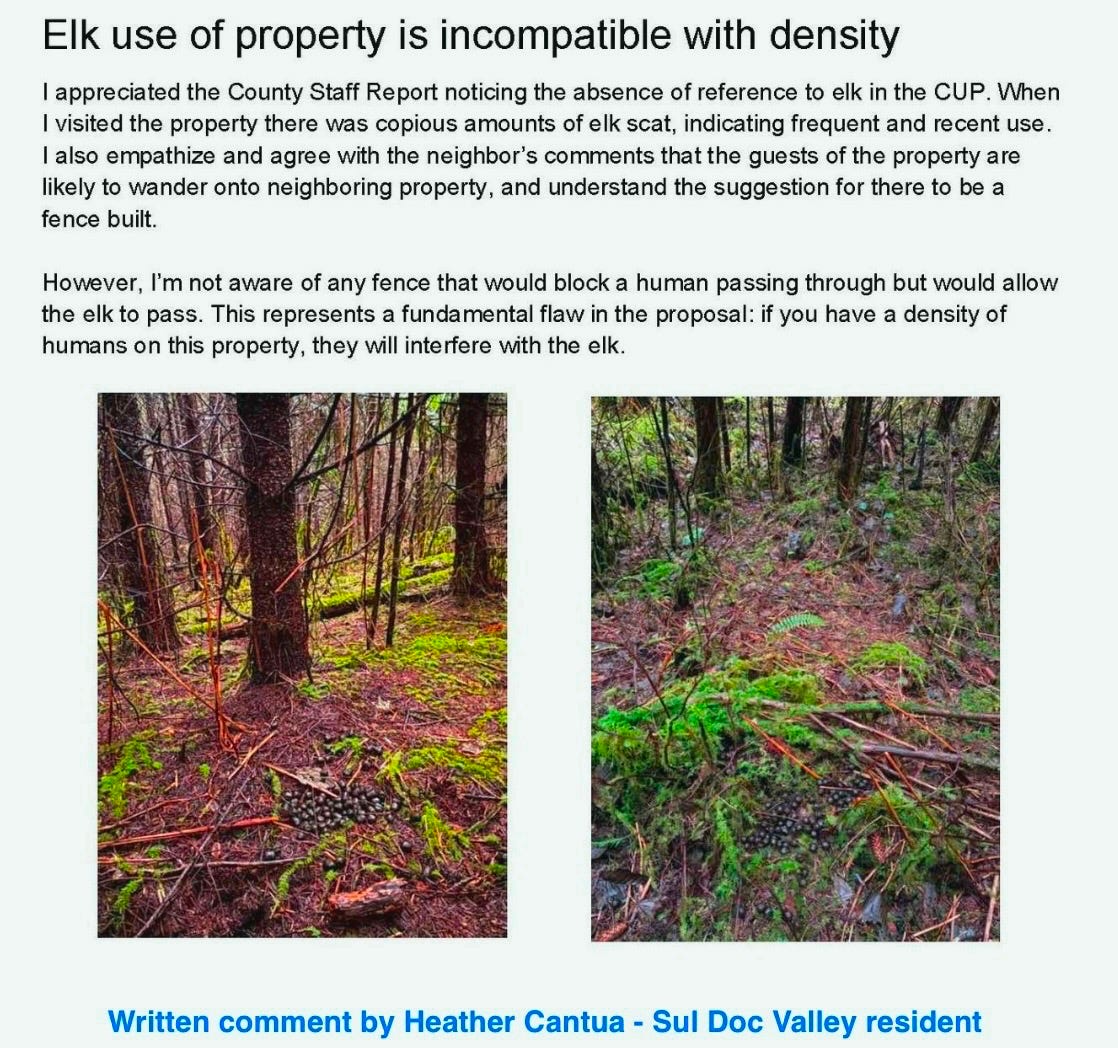
Neighbors responded with photos of elk herds regularly crossing their properties — and the applicant’s. Heather Cantua, a Sul Doc Valley resident, documented multiple instances of elk scat directly on the proposed development site.
Then something rare happened.
After more than an hour of public testimony, County Planner Enrique Valenzuela humbly acknowledged the strength of the public’s case:
“I would like to address the question of the habitat – the elk, salmon and eagles. Originally I thought a habitat management plan prepared by a biologist would properly address these concerns. I don’t think that they would. I would like to recommend a condition that no reflective surfaces or mirrors be allowed in the cabins altogether.”
Additional conditions were also added based directly on public testimony.
DCD staff will finalize revised conditions by February 11. The applicant has until February 25 to respond. Written public comment will be accepted through that date. The hearing examiner is expected to issue a determination in early March.
While a final decision has not yet been made, one fact is clear:
When citizens organize across party lines, show up prepared, and speak with clarity, they can change the trajectory of their community’s future.
And in this case, they already have.
County Takes the Lead
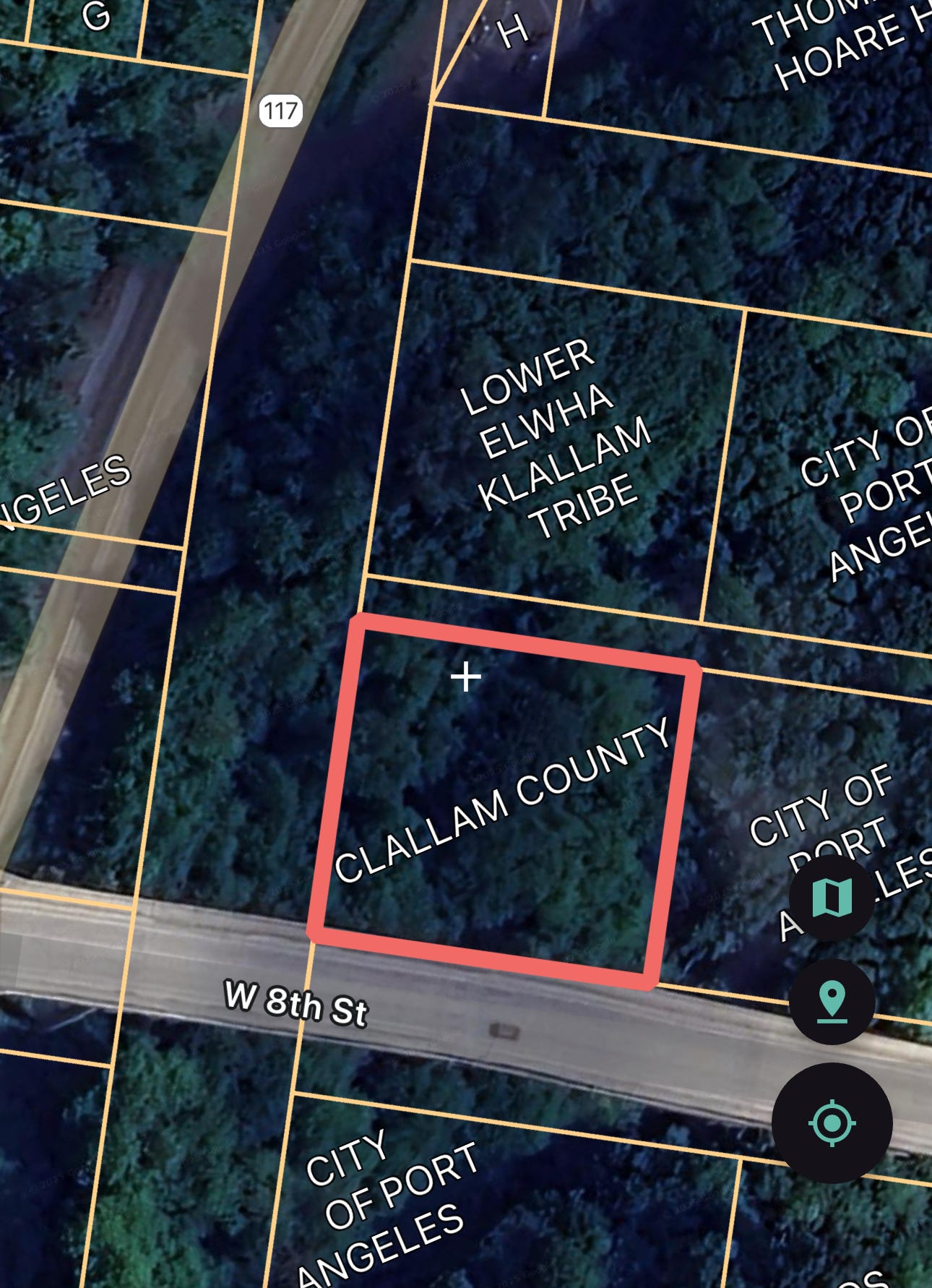
For months, citizens have urged commissioners to enforce existing ordinances on county-owned land. Chief among concerns is the county parcel along Tumwater Creek, just north of the 8th Street Bridge.
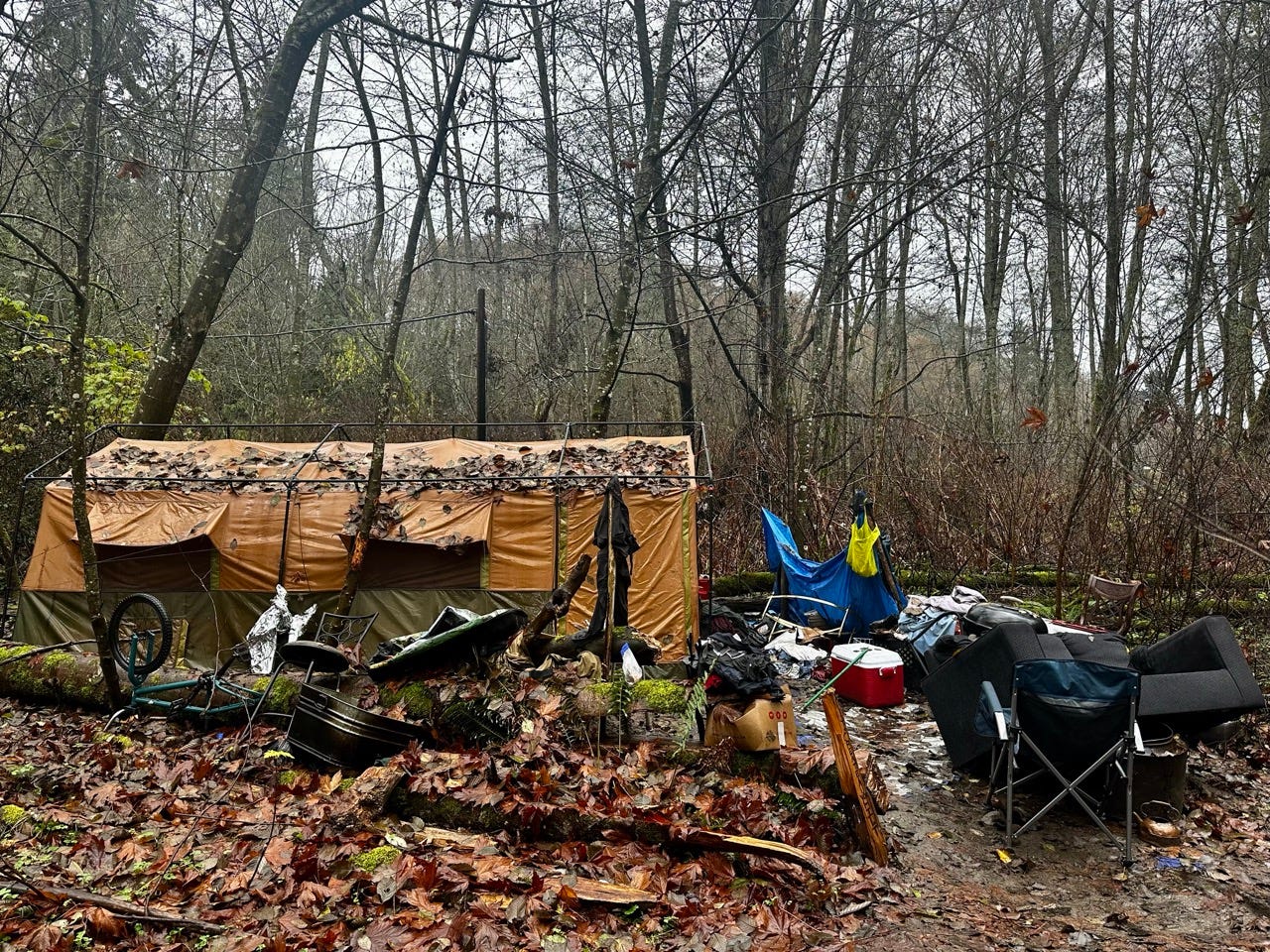
The property has frequently hosted encampments.
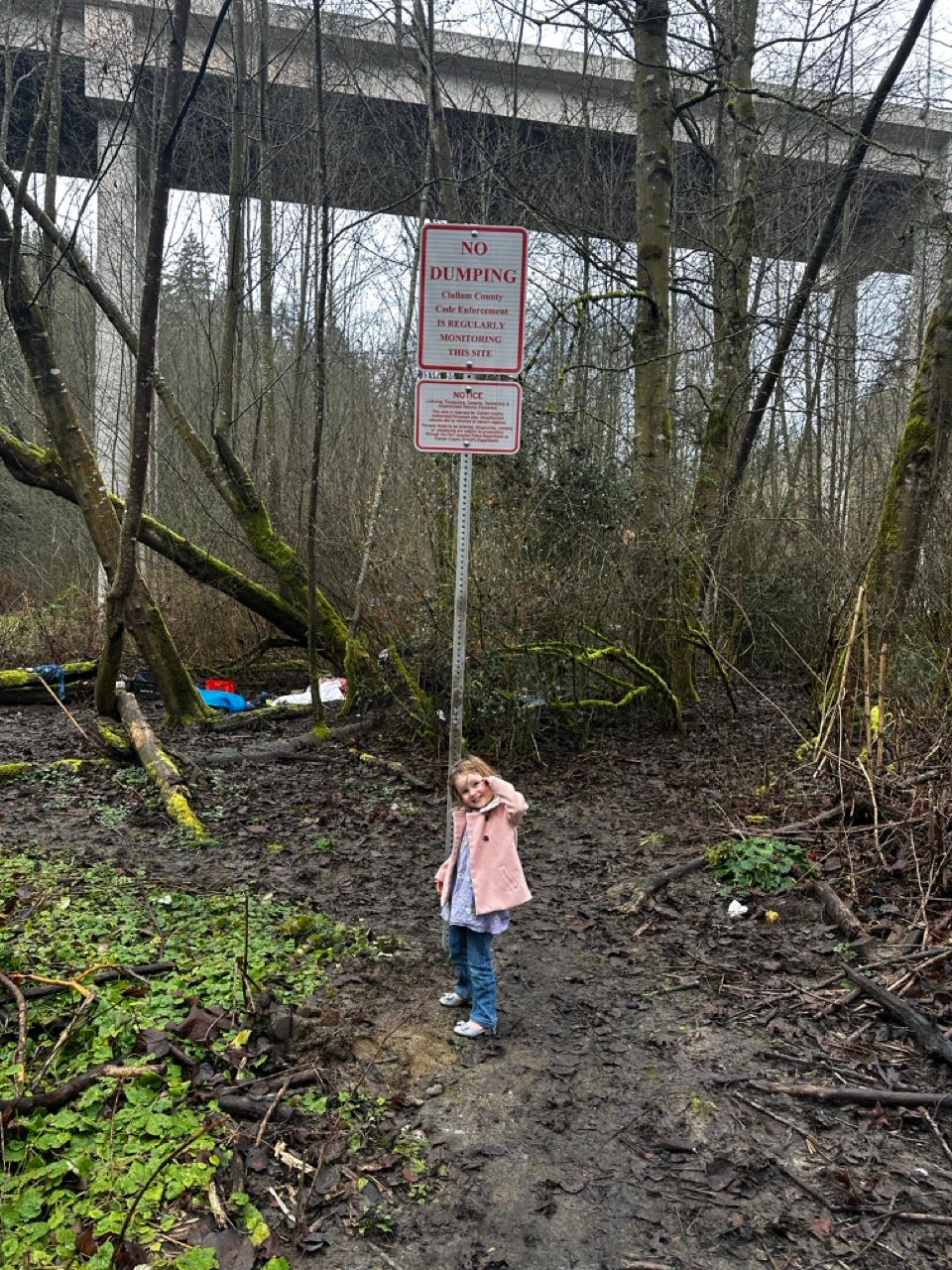
Recently, however, county code enforcement placed prominent signage along property boundaries.
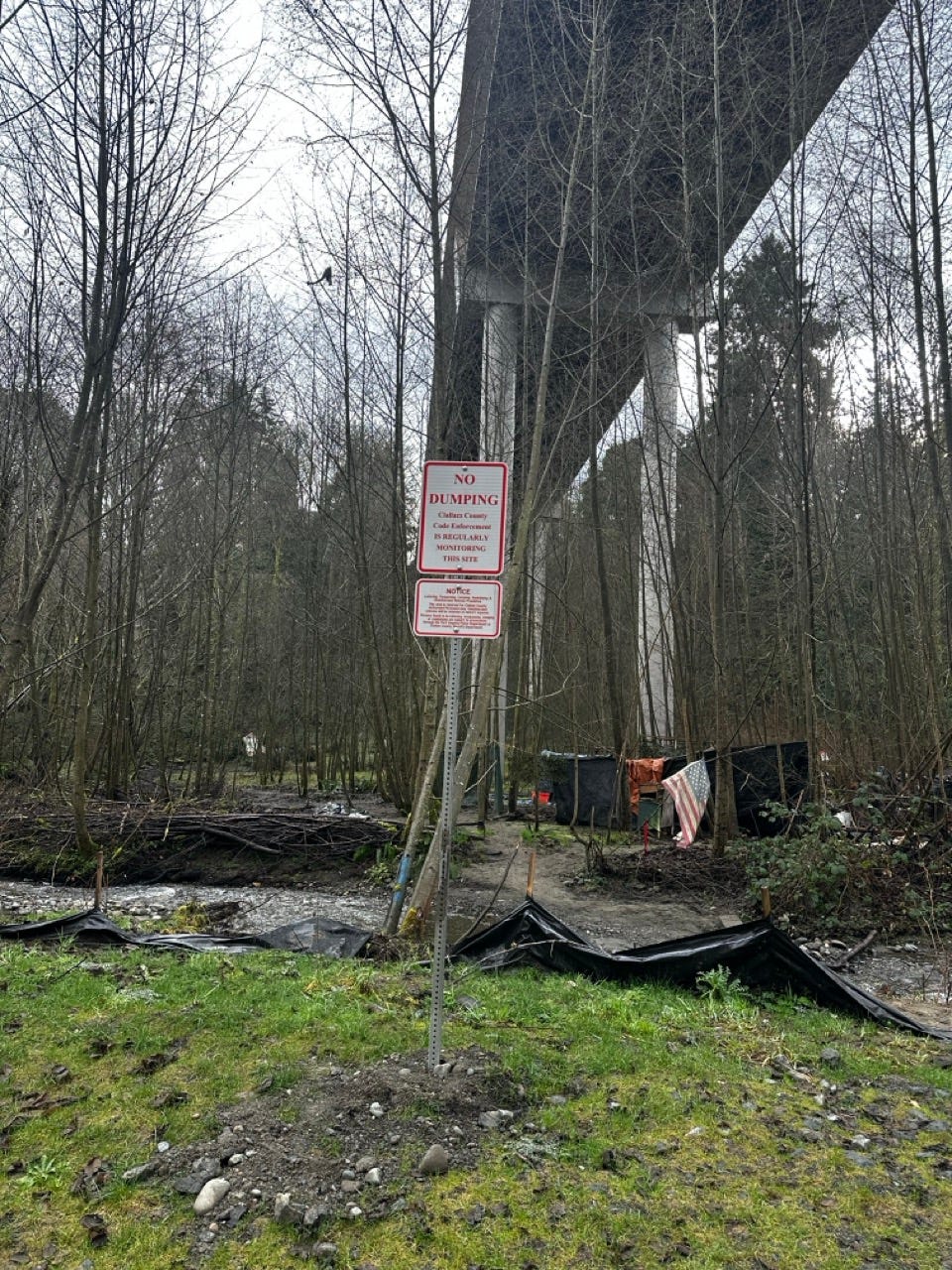
With assistance from local clean-up nonprofit 4PA — and continued monitoring by code enforcement and the Sheriff’s Office — this single parcel could become a model: a family-friendly, drug-free public space along Tumwater Creek.
Just downstream, on City of Port Angeles land, solid waste continues to spill into the creek bed.
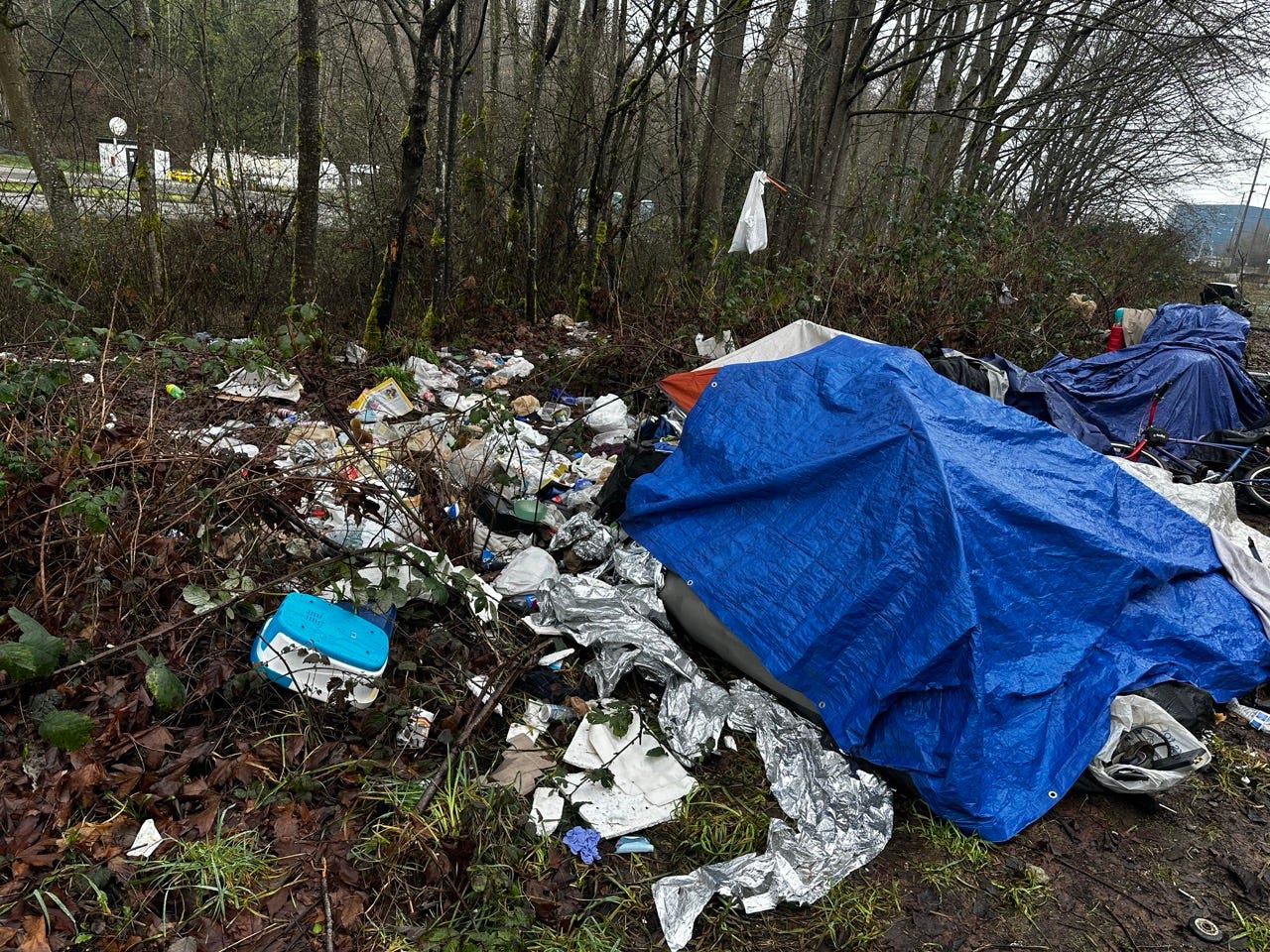
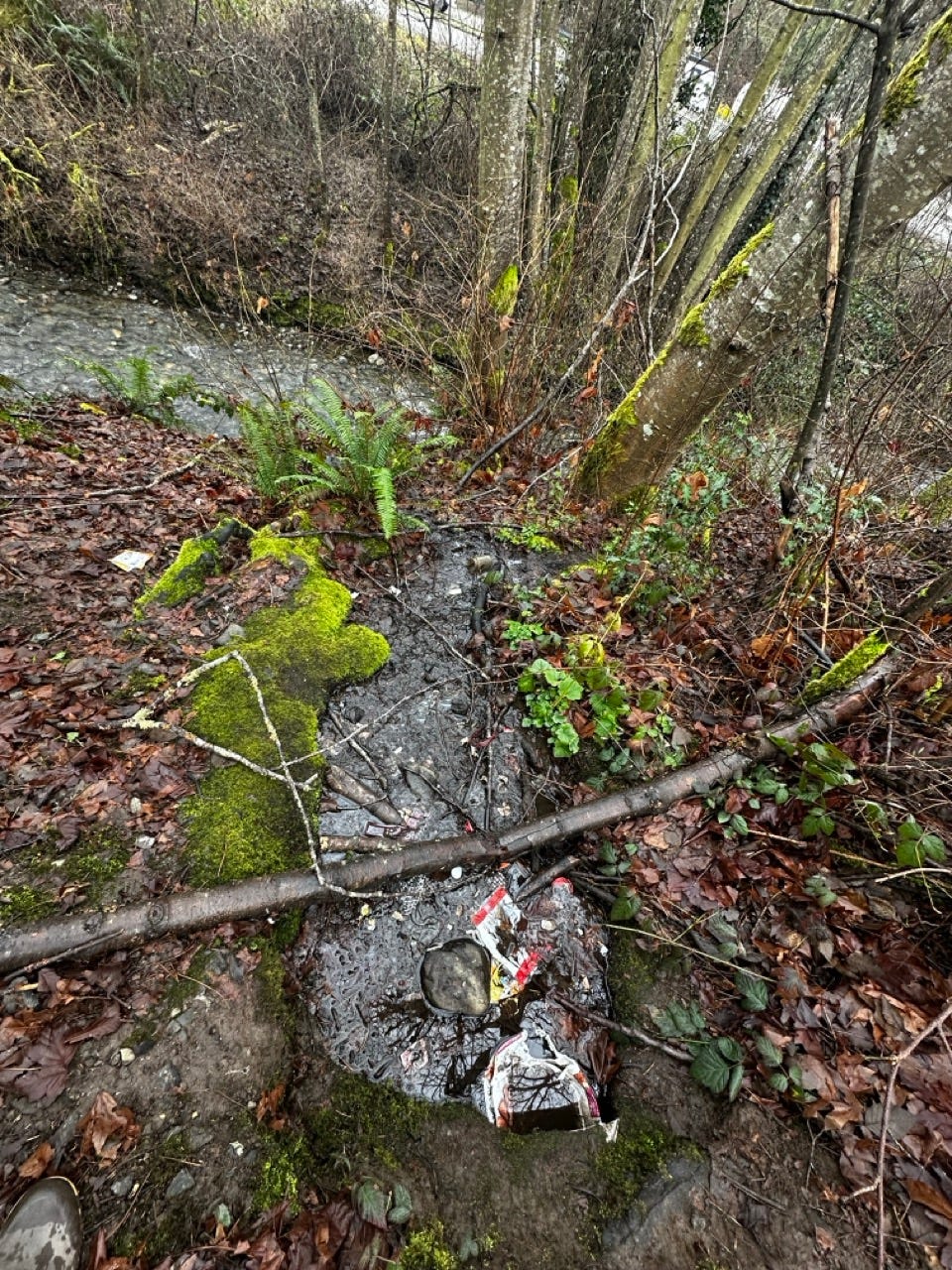
Will citizens demand that the City of Port Angeles also abide by its own ordinances?
Coffee with the DCD
Following strong community opposition to the Department of Community Development’s (DCD) proposed 180-day annual RV occupancy limit in November 2025, the commissioners have twice declined to vote on changes to Title 33 of the Clallam County Code. Proposed revisions related to RVs, ADUs, and vacation rentals remain under active scrutiny by citizens.
DCD Director Bruce Emery addressed the issue this week on Coffee with Colleen to clarify the situation.
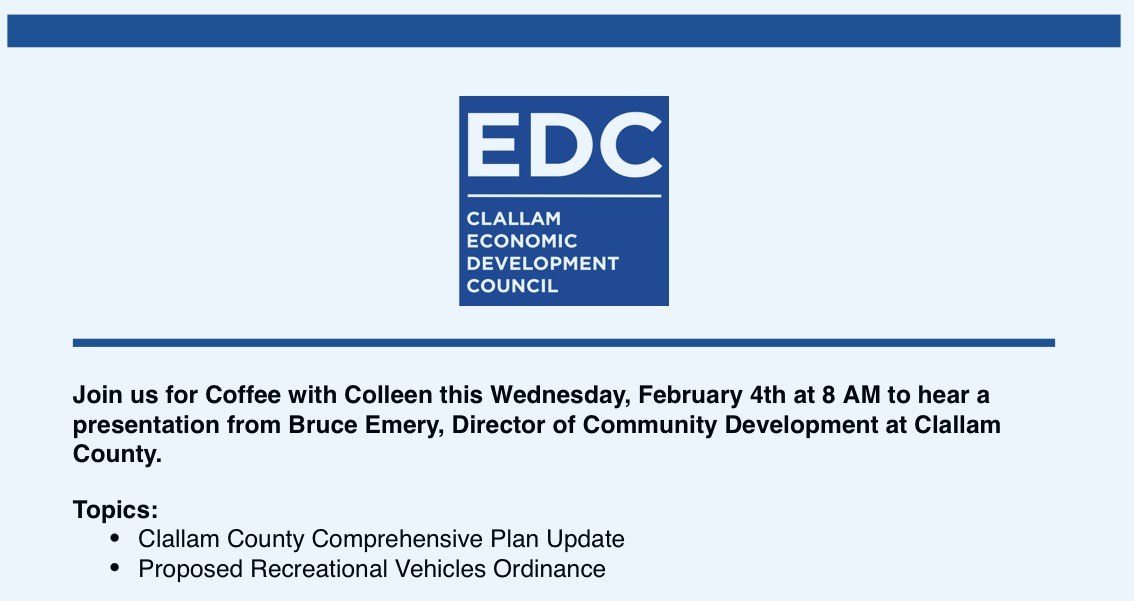
Director Emery’s presentation was commendable. After hearing extensive public comment — at hearings, board meetings, and through email — the Director provided meaningful transparency by clearly outlining current ordinances, proposed changes, and the reasoning behind them.
The result of sustained public engagement and a Director willing to listen is this:
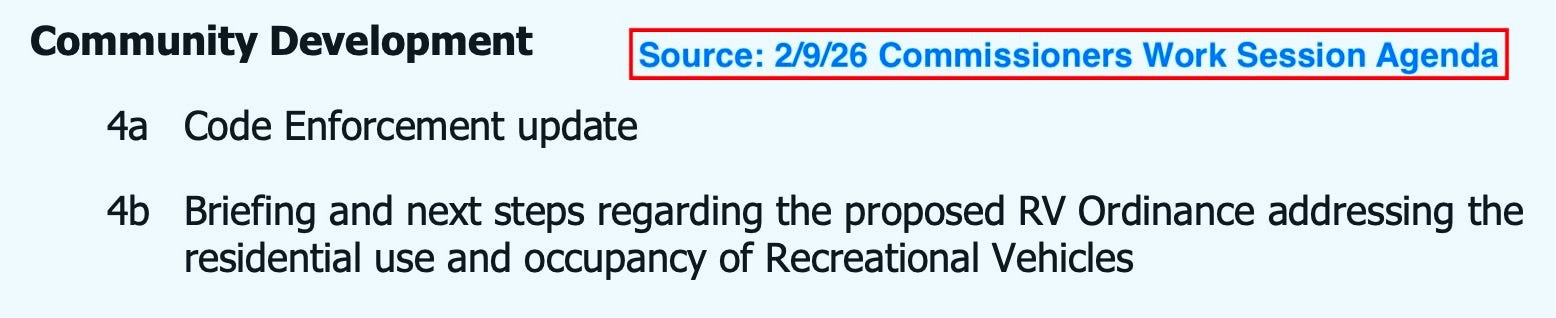
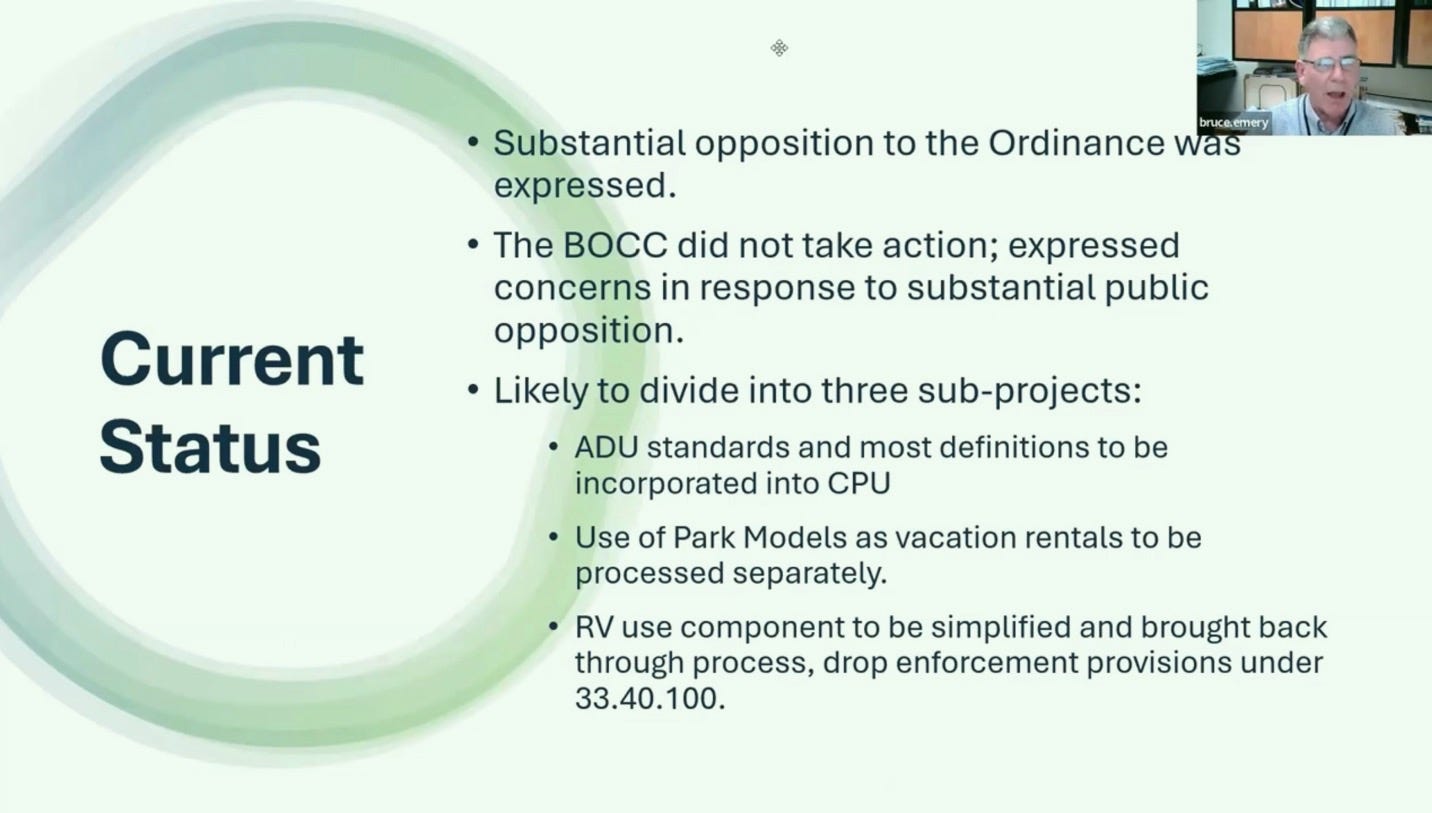
On Monday, DCD will recommend addressing Title 33 revisions in three phases.
Expanding vacation rental uses to include park models
Updating ADU rules to allow up to two ADUs per parcel in Urban Growth Areas
Revisiting RV-use language through the Planning Commission
Now is the time to continue submitting input on Title 33. For example:
Should property owners be allowed more than one vacation rental per parcel?
Should property owners be allowed up to two occupied RVs per parcel -without a conditional use permit (assuming compliance with water, septic, and utility standards)?
Should RVs be permitted as short-term rentals? Director Emery expresses reservations about such an allowance in the context of the Growth Management Act here:
Focus on Future Victories
During a recent Planning Commission meeting and in his Coffee with Colleen presentation, Director Emery stated that Title 41 of the Clallam County Code (CCC) already requires sewage and potable water for occupancy greater than 30 days.
CCC 41.20.080 states:
“Every residence, place of business, or other building or place where people congregate or reside, if not connected to an approved public sewer, shall be connected to an on-site sewage system approved by the Health Officer.”
Environmental Health staff clarified:
“If an RV is a person(s) residence, they are required to connect to a public sewer or approved septic-system.”
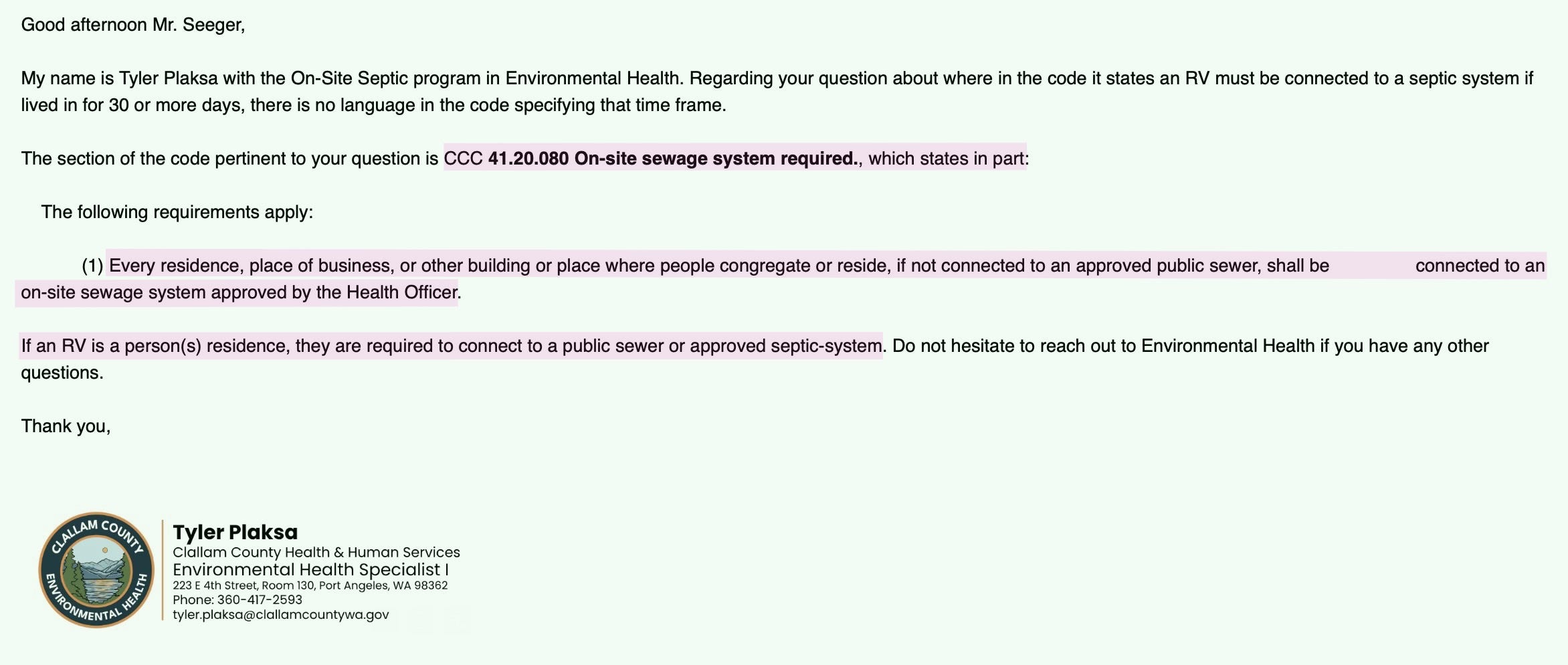
In other words, if a person is living in an RV, Title 41 requires that it be connected to an approved public sewer or an on-site septic system. The obligation is tied to the act of residing there — not to whether the individual owns the underlying property.
What matters most, then, is the enforcement authority behind this code.
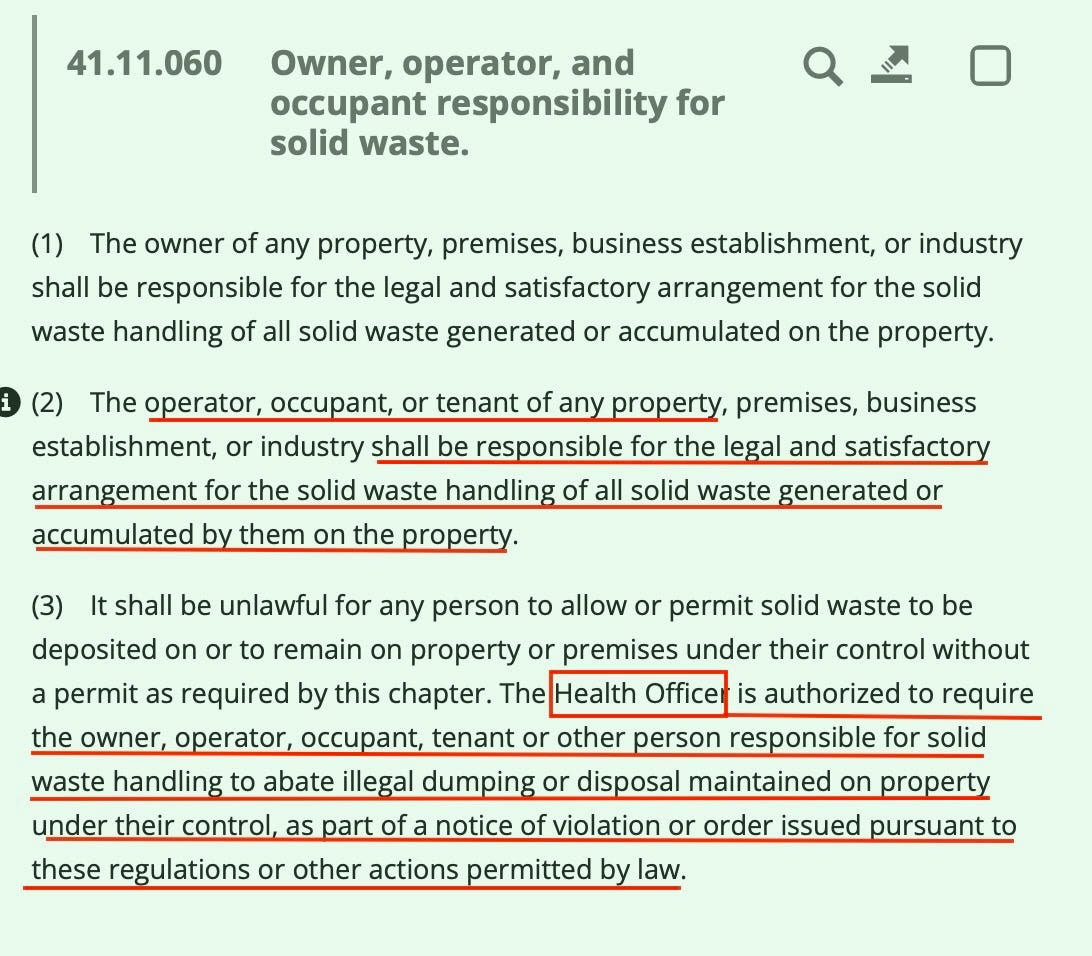
Under Title 41, enforcement authority rests with Health Officer Allison Berry and her staff. Importantly, that authority appears to be triggered by occupancy — not ownership. The focus is on whether someone is residing on the property and creating a public health concern, not on who holds title to the land.
That distinction is significant in cases where property ownership is in flux, such as the situation on Old Olympic Highway.
Title 41 may be one of the only tools available to Clallam County that allows enforcement action to be taken directly against occupants who violate health and sanitation standards — even when ownership is disputed, delayed in probate, or otherwise unclear.
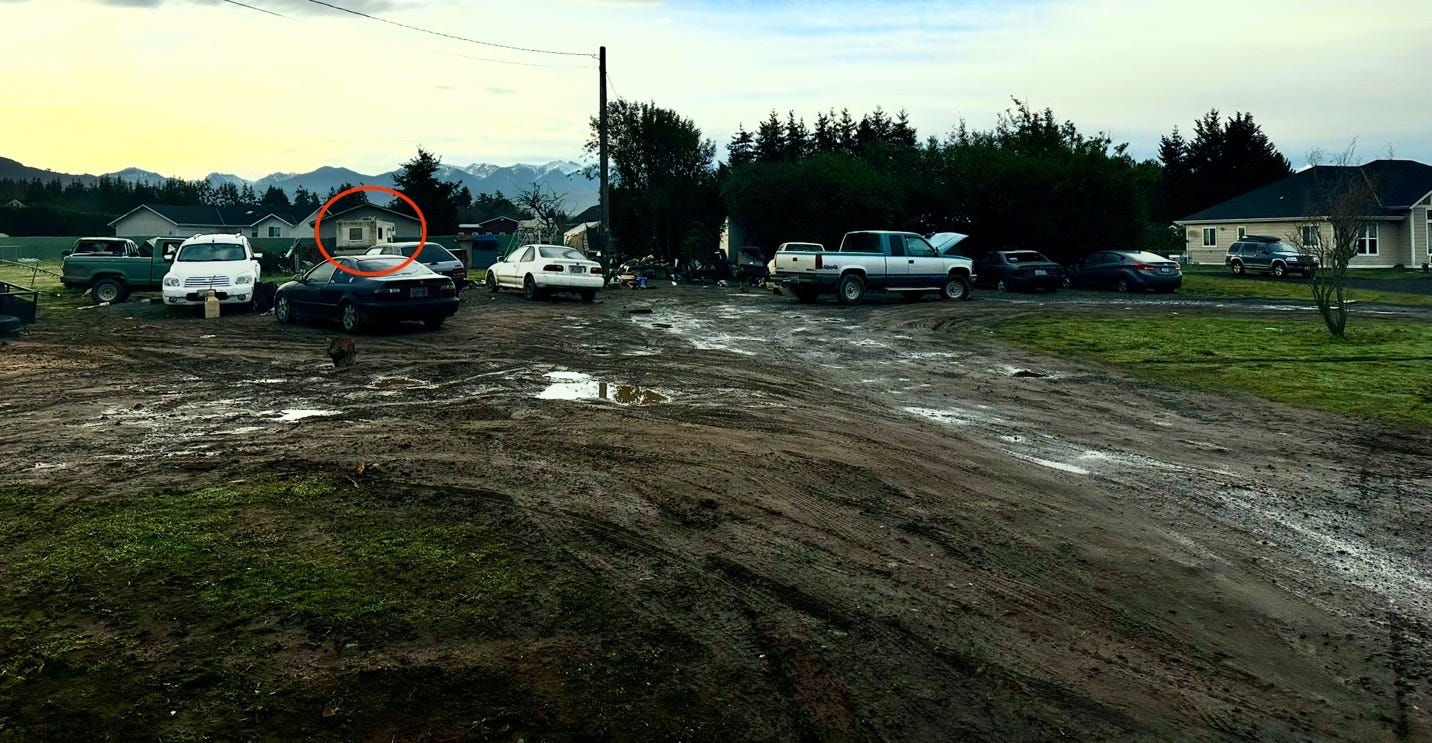
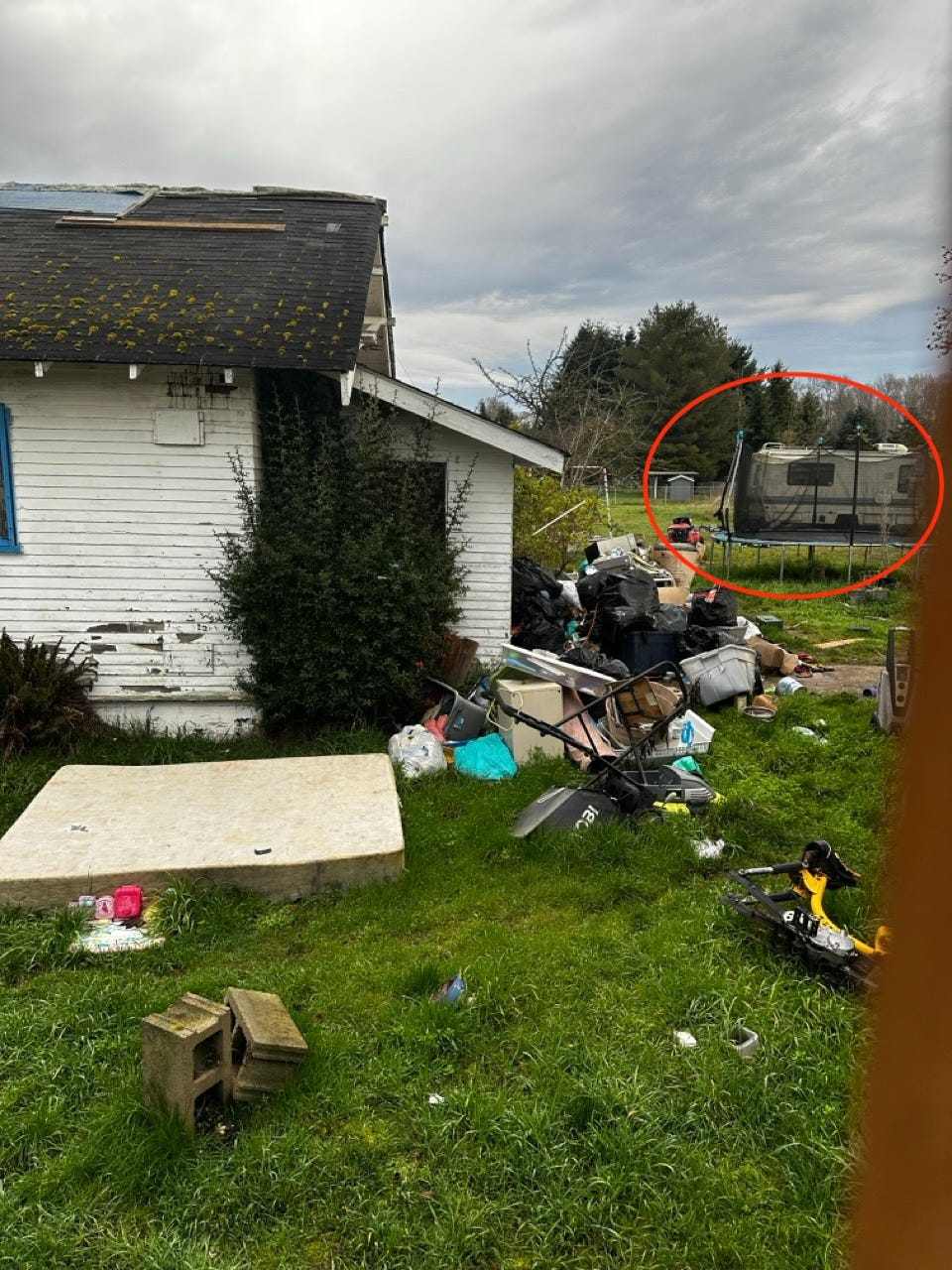
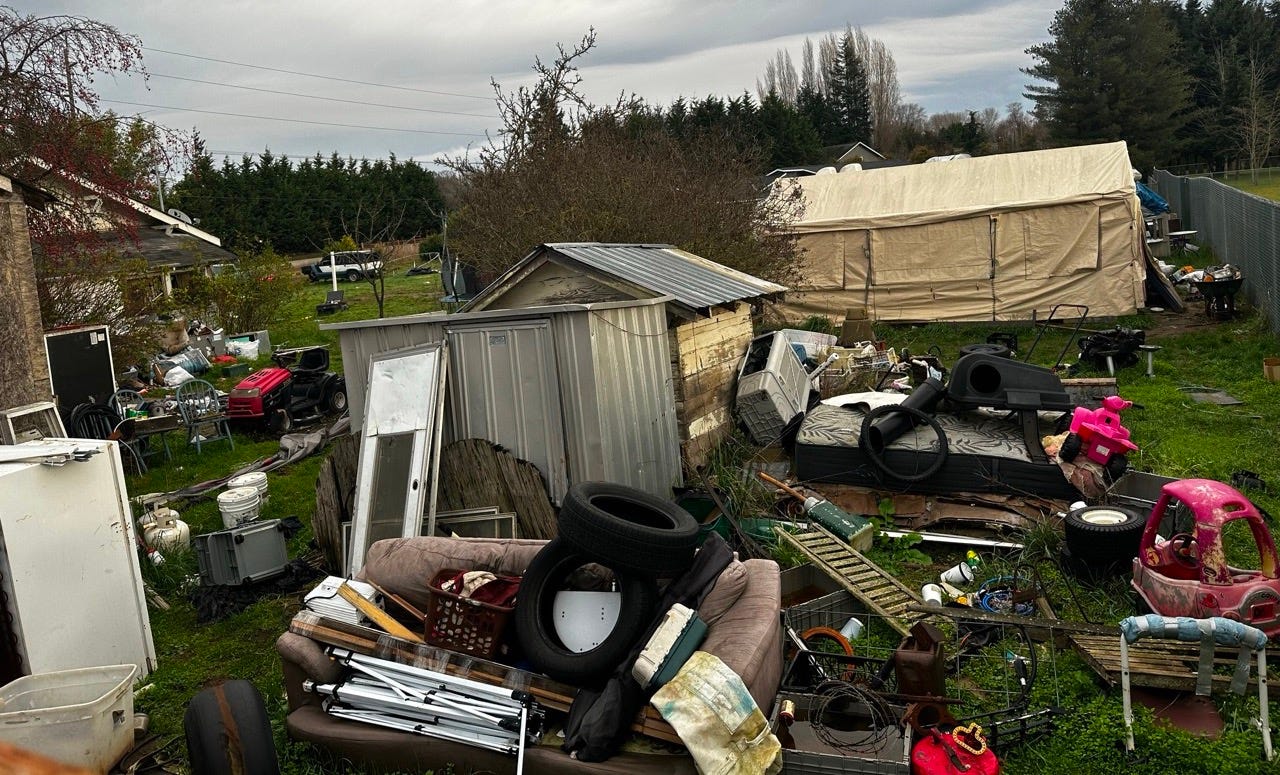
Title 41 also grants the Health Officer authority to inspect premises and require abatement of solid waste accumulation by the owner, occupant, tenant, or responsible party.
RV occupancy without a septic connection and documented solid waste accumulation have been reported to Environmental Health by citizens and neighbors.
While Sheriff’s deputies and county code enforcement often rely on ownership status for action, Title 41 appears to grant the Health Officer enforcement based on occupancy.
If that is the case, why is it not being exercised?
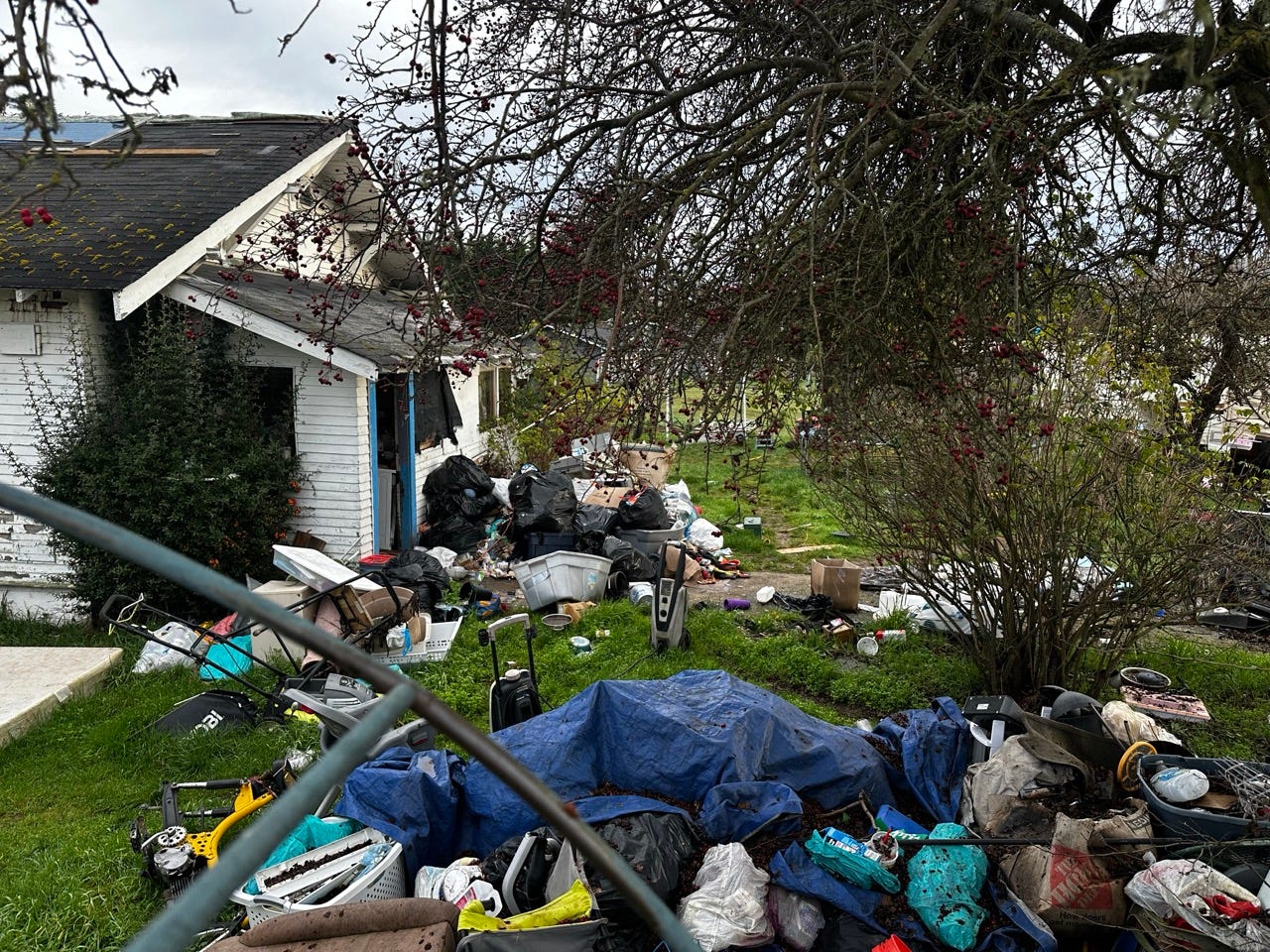
In a community that increasingly feels unheard, consistent enforcement of existing code could represent the next major victory for citizens demanding equal application of the law.
When citizens show up informed, organized, and unified — across party lines and personal interests — they remind elected officials who they serve. The victories highlighted here were not accidents. They were the direct result of neighbors speaking up for their land, their water, their roads, and their rights. County governance works best when it reflects the will of the people, not the preferences of bureaucracy. The recent course corrections prove something important: when Clallam citizens band together, they are not powerless observers of government — they are its rightful authority.
What can you do?
Submit written comment regarding Luminary Resorts at Sul Doc to the County Planner at Enrique.Valenzuela@clallamcountywa.gov
Email county code enforcement here.
Email the DCD Director at Bruce.Emery@clallamcountywa.gov with ideas for enhancing property rights with current and future RV, ADU, and Vacation Rental ordinances
Attend the next Planning Commission meeting on February 18th at 6 PM
Email Health Director Allison Berry at allison.berry@clallamcountywa.gov and ask why Environmental Health has declined to enforce Title 41 requirements at the Old Olympic Highway property.
Last week, Jake Seegers asked readers how Clallam County should measure success in addressing addiction. Of 95 votes:
55% said, “Fewer people in addcition”
42% said, “Treatment completion rates”
3% said, “Reduced overdose deaths alone”
No one chose, “Harm reduction participation”
Editor’s Note: CC Watchdog editor Jeff Tozzer also serves as campaign manager for Jake Seegers during his run for Clallam County Commissioner, District 3. Learn more at www.JakeSeegers.com.


