


What happens when public meetings dodge public questions, when county buildings are shielded while private businesses are left exposed, when grants and boards tilt toward insiders, and when accountability is replaced with slogans? This potpourri traces a single through-line: a governing culture that talks endlessly about compassion, process, and equity—while everyday residents absorb the costs. From Forks to Sequim, from homelessness policy to land management, the pattern is becoming harder to ignore.
When a Recompete Talk Becomes a Filibuster
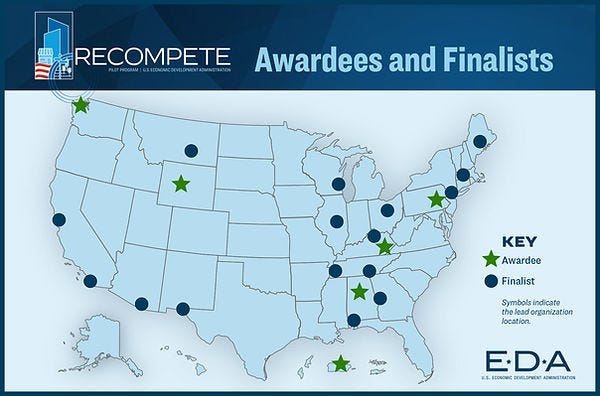
What was billed last week as an opportunity to hear County Commissioner Mike French speak about the Recompete grant to the Port Angeles Business Association turned out to be something else entirely.
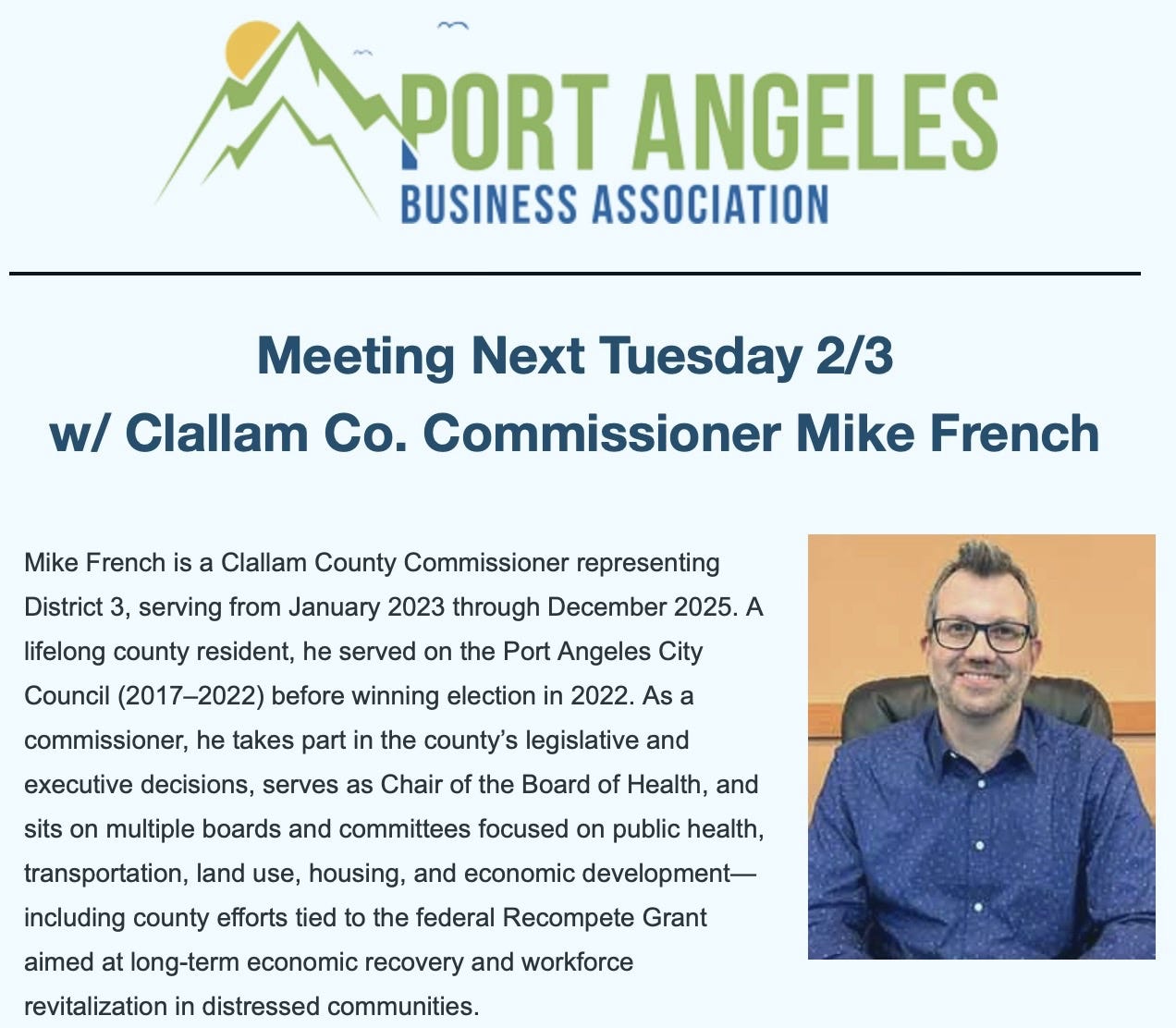
Instead of a focused discussion on Recompete, attendees received a lengthy presentation—delivered predominantly by County Administrator Todd Mielke—explaining the basics of county government to a room full of business owners who already understand how government works. Commissioner French was present, offering interjections of support.
The presentation leaned heavily on one theme: how under-resourced the county supposedly is. Several attendees remarked that it felt less like an informational briefing and more like groundwork for a possible mid-year county sales tax increase, framed as necessary to fund criminal justice. Notably absent was any discussion of waste, inefficiency, or tradeoffs. The message was clear: according to the presenters, the county is doing just fine—except it needs more money.
An anticipated 30–45 minute talk stretched to one hour and fifteen minutes, leaving time for just four questions. None addressed Recompete. Instead, the discussion shifted almost entirely to harm reduction and homelessness. Many in attendance viewed the overlong presentation as an obvious filibuster designed to stifle meaningful Q&A.
The first question raised the issue of camping directly in front of the county’s Health and Human Services building—an issue recently highlighted on social media alongside photos of tents and garbage outside county offices.
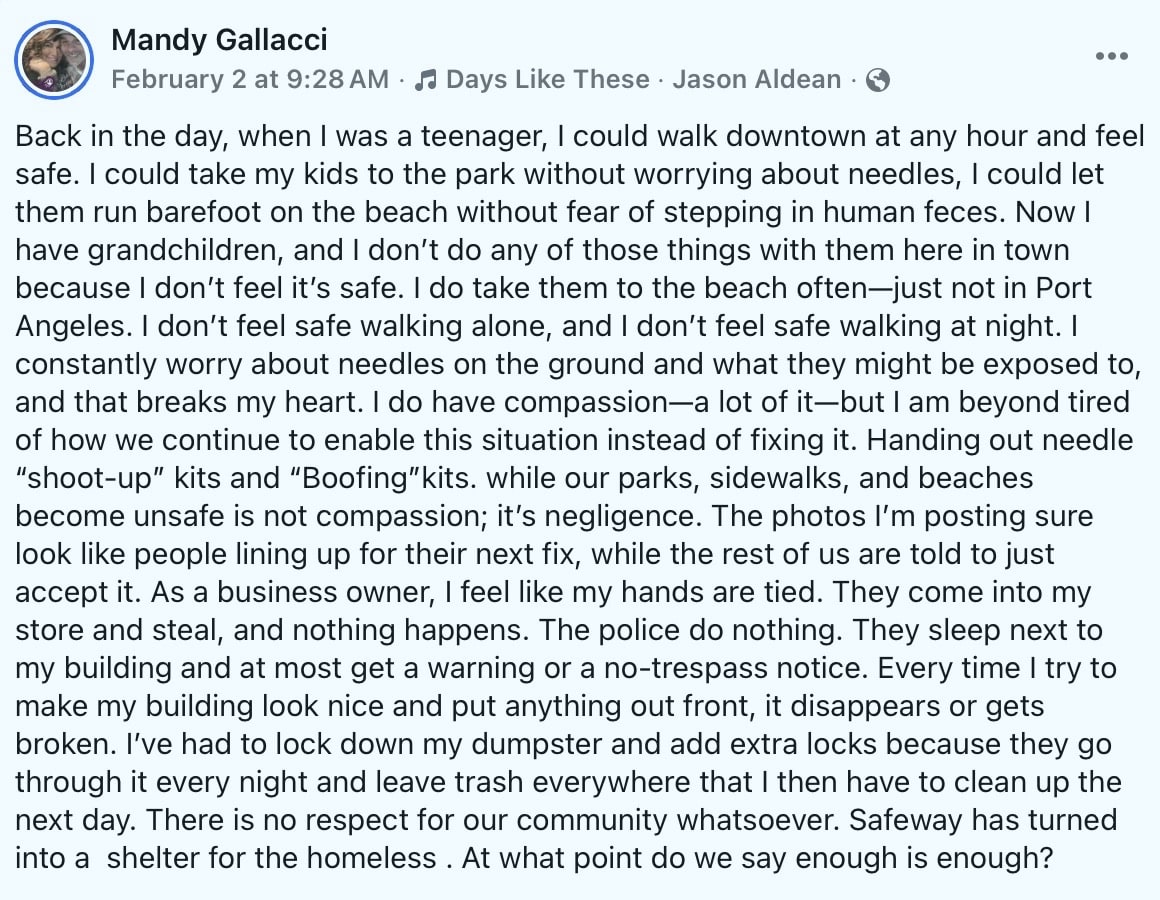
One post captured the frustration felt by many residents and business owners:
“Back in the day, when I was a teenager, I could walk downtown at any hour and feel safe… I could let them run barefoot on the beach without fear of stepping in human feces… Now I have grandchildren, and I don’t do any of those things with them here in town because I don’t feel it’s safe… Handing out needle ‘shoot-up’ kits and ‘Boofing’ kits while our parks, sidewalks, and beaches become unsafe is not compassion; it’s negligence… As a business owner, I feel like my hands are tied… Every time I try to make my building look nice and put anything out front, it disappears or gets broken… Safeway has turned into a shelter for the homeless. At what point do we say enough is enough?”


Commissioner French responded, “It’s a complex issue,” before pivoting to legislative constraints, jurisdictional boundaries, and the county being under-resourced—while noting his interest in “new revenue sources” for public safety.
Translation: more taxes.
“Where do people go?” French asked, without addressing reports of empty shelter beds at Serenity House, while also highlighting the $12.75 million North View luxury homeless apartment complex set to open this year.
“Every individual has human dignity,” French added, “and we need to always center that these are human beings and that they deserve something from us as a community.”
Administrator Mielke followed up by explaining that the county plans to install a fence and gate around the HHS building.
The county’s solution—fencing off its own building—does not solve the problem. It simply moves it.
The tents, trash, and disorder will be pushed into the doorways, alleys, and parking lots of nearby private businesses, which will then be forced to decide whether to spend thousands of dollars on fencing, gates, and security of their own.
That leads to an unavoidable question of fairness: the county routinely fines private property owners for garbage, improper sanitation, and blight—yet appears unwilling to hold its own offices to the same standard.
That is not compassion.
That is hypocrisy.
Those same images inspired a separate social media post from county commissioner candidate Jake Seegers:
“Current policies embraced by city and county leadership have made Clallam County the path of least resistance for homelessness and substance abuse. That must change.
Reducing homelessness and substance abuse isn’t just about compassion — it’s fundamental to public safety and economic development. Why would families or businesses invest here if it’s clear their safety, property, and livelihoods will not be protected?
This is how city and county officials should begin to lead:
1. End outdoor living on public land by revising ordinances and enforcing existing laws.
o2. Prioritize local housing resources for people who are currently living in Clallam County.
3. Reduce the cash that fuels addiction through clear anti-panhandling signage and public education.
4. Defund drug-use supplies and redirect funding toward treatment programs that produce measurable results.
5. Measure outcomes, not inputs, by asking how many people graduate from addiction into sobriety? How many exit homelessness and financial dependency into self-sufficiency?
Compassion without accountability has failed. Real leadership sets expectations for recovery, safety, and community well-being — and then follows through.”
Clallam County still has an opportunity this year to change course—to move from enabling dysfunction to demanding results, and from managing decline to restoring confidence.
Two Square Miles Carry the Load
A recent comment in the CC Watchdog comments section after Saturday’s roundup of police scanner happenings captures a reality many residents feel daily:
I want to point out the concentration of concerns highlighted in this week’s social media roundup. Almost every one of those happened within central Port Angeles in an area roughly 2 miles wide by 1 mile deep. From Ennis st on the east to Tumwater creek on the west , and from the waterfront to near Lauridsen to the south lies a concentration of crime and despair in Clallam county. In addition to containing the courthouse where suspects are briefly gathered then released to our streets with little consequence or guidance, this small area also contains FIVE facilities offering MAT (BAART, PBH, NOHN, OPHS and OPCC), Specialty Services detox facility, DSHS, OMC, TAFY, Salvation Army, the main transit center, plus the “camps” of most of the 7 to 10 transient sex offenders listed in the county at any given time.
This area is also full of wonderful small locally owned businesses and amazing neghbors. This area is also a primary tourism gateway for the ONP, though it seems racist Ron and family want to claim that status while letting this small area of central PA carry the vast majority of social service burden for the entire county. I empathize with Sequim residents who are seeing patterns in their neighborhood, but please realize central PA is burried in this cycle of crime and despair and what Sequim is seeing is just a small taste of where things are headed.
The posts highlighted this week are just a regular week for those of us living in central PA. Many similar occurances go unreported because it has all become so common, traumatizing and densensitizing that many just shut out reality to cope. Just in the past few days walking through town I’ve had to show my pepper spray at the strung out young guy with the whip to get him to stop cracking it towards my feet as I walked past, and had to jog to get away from a crazy old man walking too close and fast behind me muttering obscenities, and these are not things I bothered to call in because I knew there would be no response. PENCOM crew if you are reading, know I only call in a very small fraction of what I would consider reportable.
This is our “walkable city” and it’s also where I made my home, legally purchased by US and WA law where I will continue to be the host, not guest, until I pass it to my children as my small piece of the American dream.
If you listened to the last council meeting and heard the stress in my voice during my impromptu public comment, perhaps you understand why I sound that way? If you live, work or own a business in this area- we need to join forces. I have been pondering starting my own NGO, an unsanctioned neighborhood association of residents, and perhaps calling it the Port Angeles Livability Society. Right now it’s not feeling so livable here.
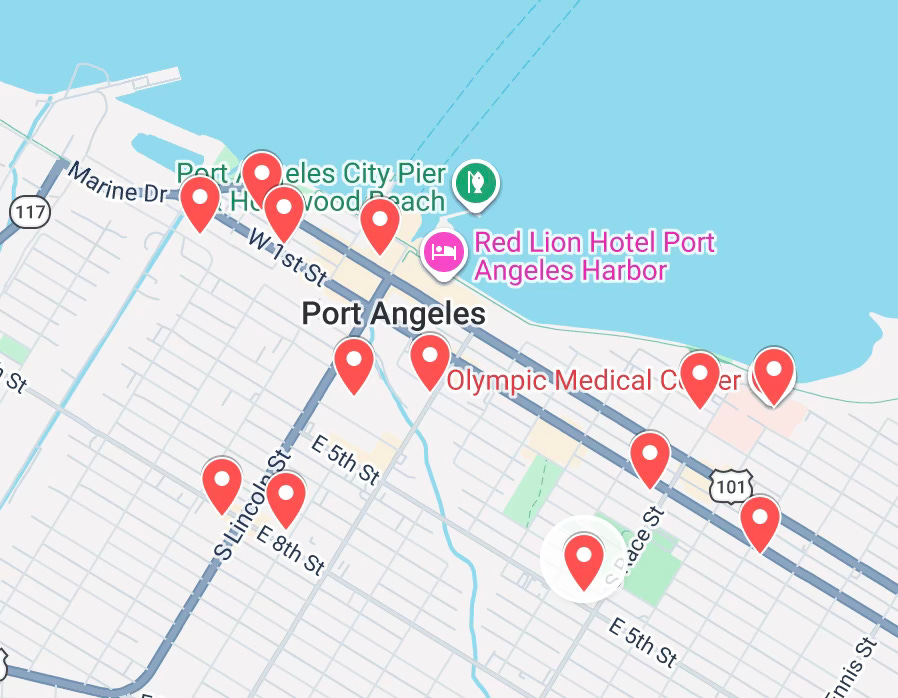
As the commenter notes, this same area also contains what they describe as the “HRHC, hub of despair”—a taxpayer-funded magnet that concentrates addiction, crime, and trauma into one neighborhood.
A Doctor Returns to Court
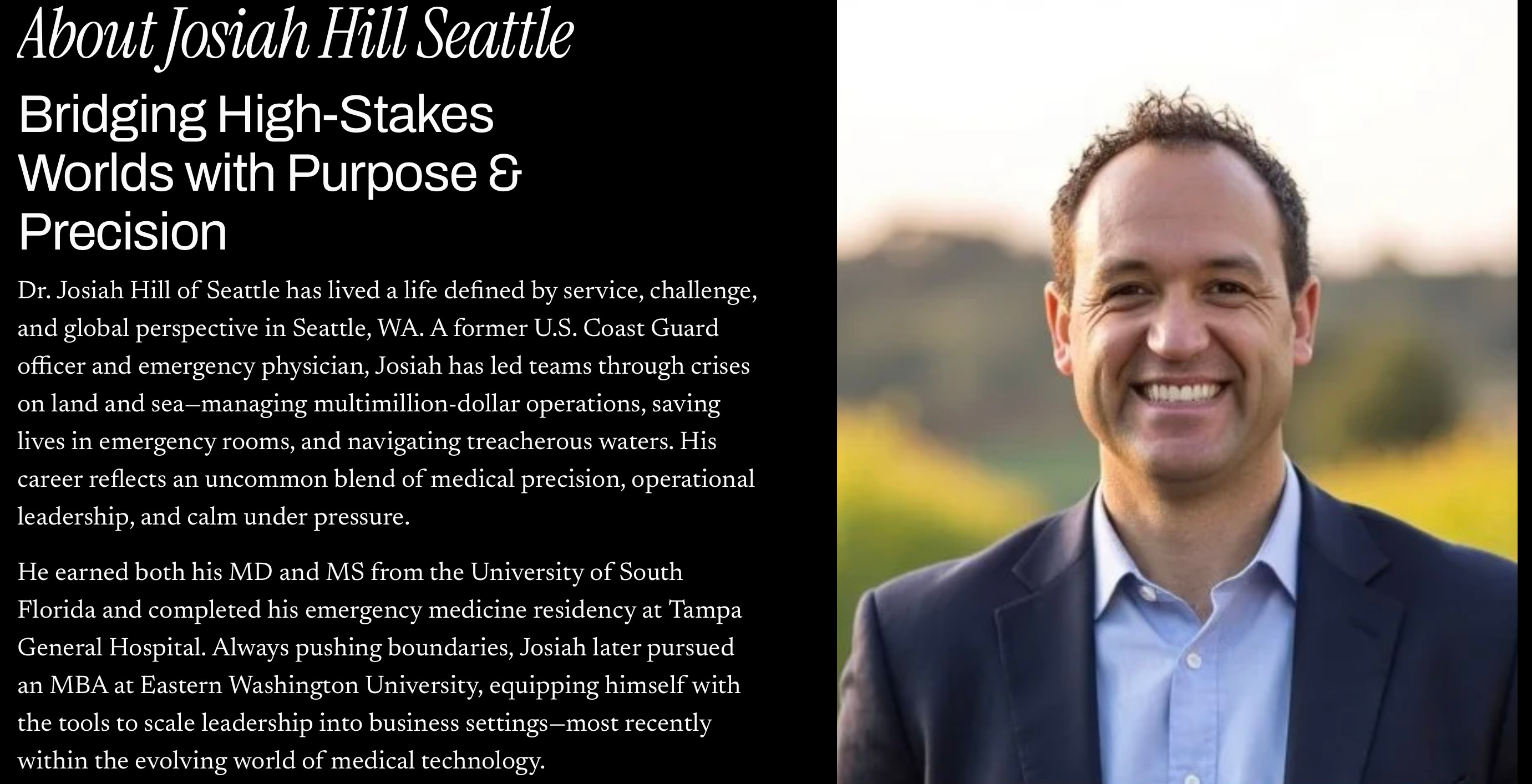
According to reporting from The Olympic Herald, disgraced former Olympic Medical Center doctor Josiah Hill is scheduled to return to court for a show-cause hearing on February 20 at 9:00 a.m., after the state filed a petition to revoke or modify his probation.
Prosecutors allege Hill failed to complete a court-ordered fitness-for-duty evaluation. Hill was sentenced in June 2024 to 179 days in jail after pleading guilty to assaulting six female patients.
Hill also faced a civil malpractice lawsuit in 2023, represented by Port Angeles attorney Lane Wolfley. That case was dismissed with prejudice in June 2024 by Judge Brent Basden. According to the Olympic Herald, court records do not disclose Basden’s close relationship with Wolfley.
Hill was last known to be building his business as a motivational speaker in the Seattle area.
Selective Residency Standards
Late in the Charter Review Commission process, the League of Women Voters expressed serious concern about non-locals participating in public comment, culminating in a heated Zoom moment where a non-resident criticizing Commissioner Jim Stoffer was abruptly muted by Chairwoman and past LWV Secretary Susan Fisch.
Given that history, a fair question arises: where is the League’s concern now?
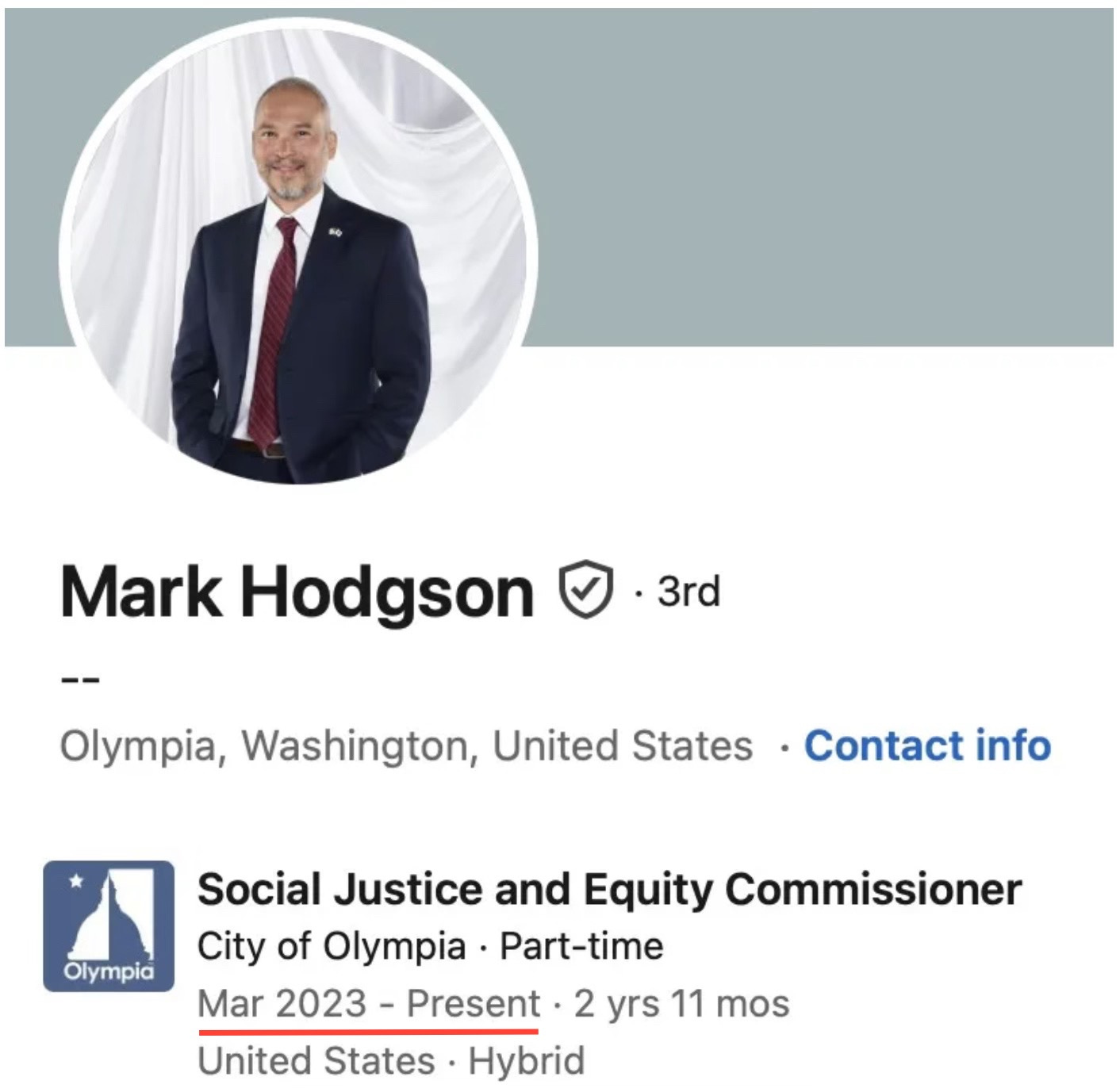
The commissioners recently appointed Derrick Eberle to the Heritage Advisory Board. He owns a home in Tacoma, receives mail there, and his children attend school there. Similarly, newly elected Port Angeles City Councilmember Mark Hodgson is listed as serving in Olympia government and refers to Olympia as “our city.”
Is residency a principle—or a convenience?
Readers can ask directly: info@lwvcla.org.
WorkSource: Serving Some, Excluding Most

WorkSource now operates out of a new building in Sequim, funded through a public-sector workforce development system.
Yet it is currently promoting a “small business grant opportunity” limited to Black, Latino, Tribal, Asian, Hawaiian, and Pacific Islander-owned businesses.

In a county where roughly 86% of residents identify as White, this raises an uncomfortable question: how is this serving the entire community?
In an economically struggling county, the message appears to be that help is available—but only if you meet the right racial criteria. That isn’t equity. It’s favoritism.
Public Lands, Private Governance
A bill moving through the Legislature would add two tribal representatives to Washington’s Board of Natural Resources, which oversees logging and management of roughly six million acres of public land.

Supporters argue that tribes bring “valuable stewardship experience,” while critics warn that adding tribal seats to land-management boards risks shifting fiduciary responsibility away from counties and public schools that rely on timber revenue.
Seven tribes—including Jamestown—have signed on in support. Advocates repeatedly invoke the claim that tribes have stewarded Washington’s lands “for thousands of years.” Yet even the City of Sequim’s own historical account of the Jamestown S’Klallam Tribe describes that stewardship this way:
“…the S’Klallams maintained the Sequim prairie by burning it back each year, to create a habitat for berries and other edible plants, and new grass to feed the deer and elk they hunted.”
In other words, the cited model of “stewardship” involved intentional, routine burning to maximize short-term subsistence yields—not managing complex, multi-use public trust lands that today fund schools, counties, and essential services through sustained timber harvest.
When Small Business Hopes Collide With Reality
A comment left after a CC Watchdog podcast on Recompete underscores the growing frustration among employers:
I own and operate a Clallam County small business. Specifically, my company is in the skilled trades industry. On average, we receive two to three inquiries each and every week regarding job opportunities. We have young people in this community reaching out to us, asking if we have any apprenticeship openings. We have highly skilled, licensed journeyman reaching out to see if we have a spot for them. When we first heard about our county receiving the Recompete Grant funding, we were ECSTATIC. We thought to ourselves, FINALLY. Now we’ll finally have the means to create an apprenticeship program for our local youth to be able to train for a very rewarding career. We couldn’t wait to start creating an apprenticeship program for all of these young people reaching out to us. We have a vision for the next generation, and we’re invested in the long-term stability of this county.
Listening to this podcast today, I found myself teetering between furious indignation and total disbelief. Is it really possible our elected officials are so willfully blind to not realize the gravity of what this will do? Do none of them have children of their own, kids who might like to stay on the Peninsula and live a good, decent life here? HOW WILL THAT BE POSSIBLE IF THERE ARE NO LIVABLE WAGE JOBS?
I am on the front lines of this situation. And I am completely beside myself.
On the bright side, the Commissioners might want to consider the fact that this money is FEDERAL MONEY, and the feds are paying close attention to the recipients of the grants they pass out. With such a close watch against fraud and mismanagement, they might want to consider a bit more carefully just how they handle these funds. Uncle Sam isn’t playing the waste game anymore.
In the meantime, what can we do? Where can we turn? I’m willing to do whatever it takes if anyone has some suggestions.
That question—what can we do?—is one that local leadership continues to dodge.
When Local Radio Still Does Its Job
As legacy media continues to shrink and consolidate, independent journalism is quietly filling the gaps. A good example came this week from KBDB-FM (96.7 FM), owned by Forks Broadcasting Inc. Broadcasting an adult contemporary format, KBDB-FM remains the only commercial radio station serving the West End of Clallam County—and it’s still paying attention to issues that affect everyday residents.

The station recently aired a segment on the Washington Association of Counties pushing for a tax hike on vacation rentals, reporting that CC Watchdog had covered the story. That’s how local media is supposed to work: identify an issue, credit original reporting, and bring it to a wider audience.
Thanks to Twilight 96.7 for keeping the focus on local policy decisions that affect everyone. Anyone can listen live here. The featured news segment that cited CC Watchdog is embedded below.
Churches, Campaigns, and the Line They Can’t Cross
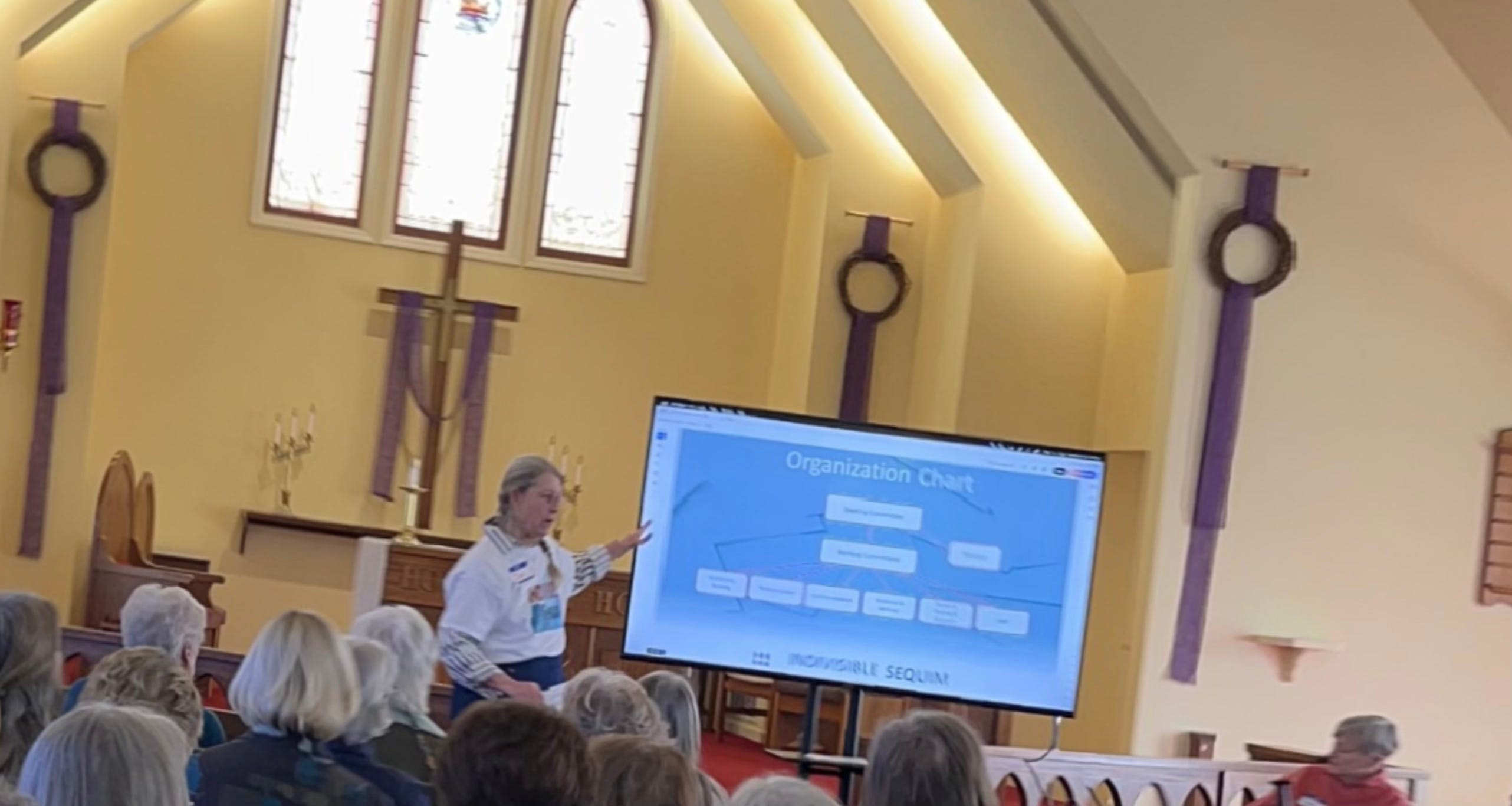
St. Luke’s Church in Sequim is hosting an explicitly partisan organizing event aimed at “flipping” the House and Senate.

Federal law is clear: churches may not participate in or facilitate partisan campaign activity without risking their tax-exempt status. The language used—phone banking, GOTV, flipping legislative bodies—goes well beyond issue education.
The irony is hard to miss: Indivisible Sequim, backed by the League of Women Voters and openly discriminatory of religion in its participation standards, is organizing inside a church.
A Final Warning Label
Clallamity Jen, on a recent podcast with her husband, the Strait Shooter, recently pointed out an unsettling contrast: cigarettes are required to carry warnings about death and disease—while county-branded snorting and “boofing” kits carry cheerful instructions like “start low, go slow” and “hold onto the base so you don’t lose it.”


Drugs kill people too. If the county insists on distributing paraphernalia, the least it could do is tell the truth.


