

County Commissioner candidate Jake Seegers takes a hard look at the North Olympic Library System’s proposed $3 million tax increase and asks a question many residents are quietly starting to raise: Why is a shrinking user base costing more than ever, while core public safety remains stretched thin? With staffing up, usage down, and services expanding far beyond traditional library functions, April’s vote is shaping up to be less about libraries—and more about priorities.
The $3 Million Ask
On the April 2026 ballot, the North Olympic Library System (NOLS) will ask voters to approve a roughly $3 million annual property tax increase. The proposal would raise the levy rate from $0.28 to $0.45 per $1,000 of assessed value, increasing collections to approximately $7.8 million in 2027—a 63% jump.
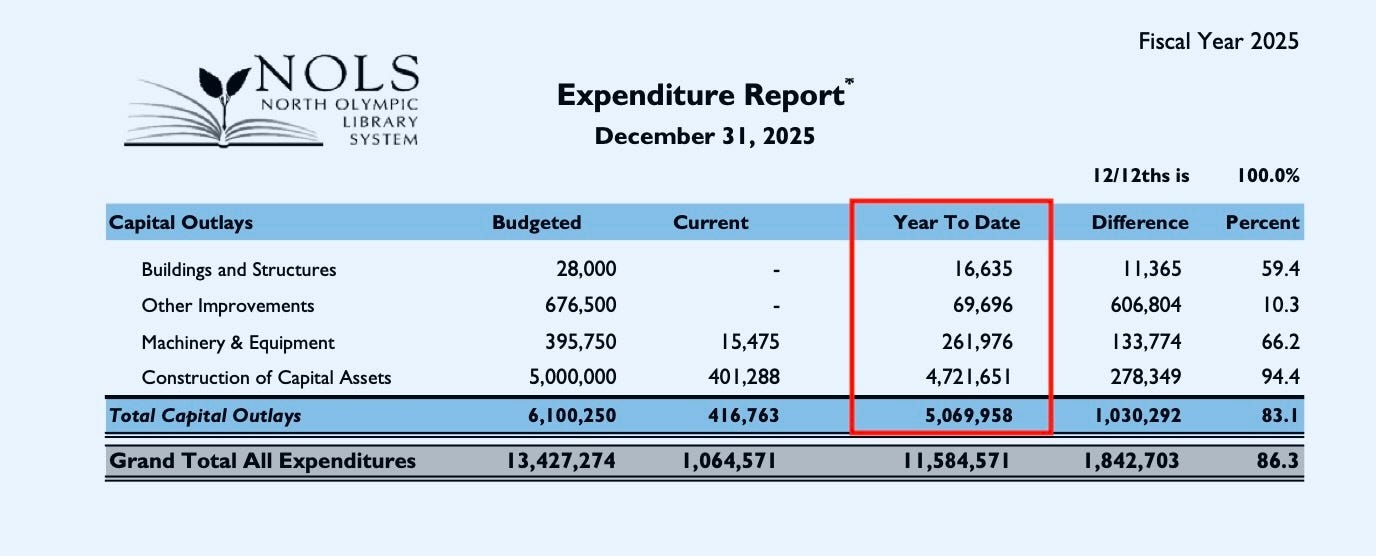
This levy funds only NOLS’ operating budget, not capital spending. NOLS spent about $6 million on operating expenses in 2024 and $6.5 million in 2025, according to annual reports. NOLS spent an additional $5 million on capital projects in 2025.
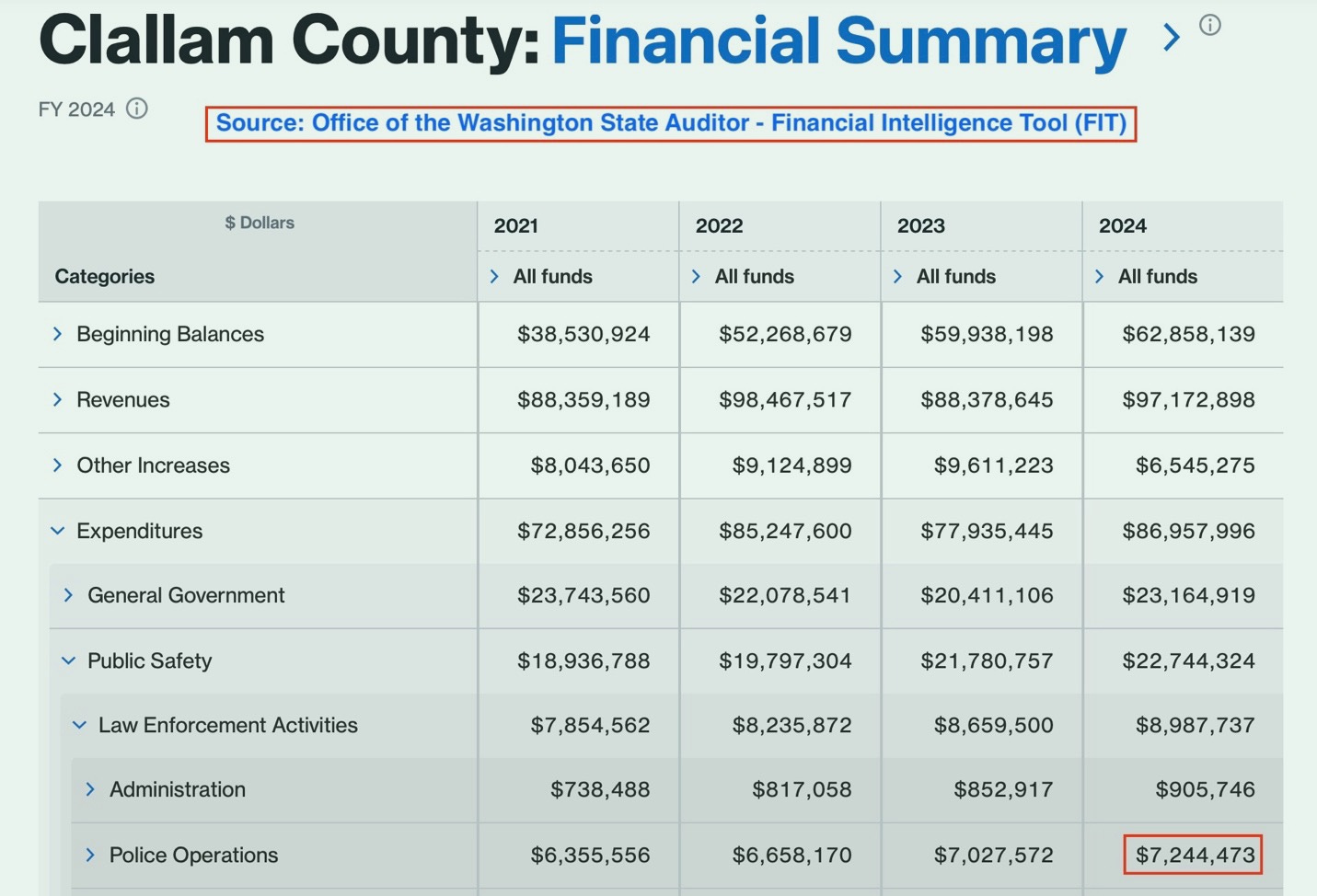
For perspective, Clallam County spent $7.2 million on policing operations in 2024, according to the Washington State Auditor’s Financial Intelligence Tool.
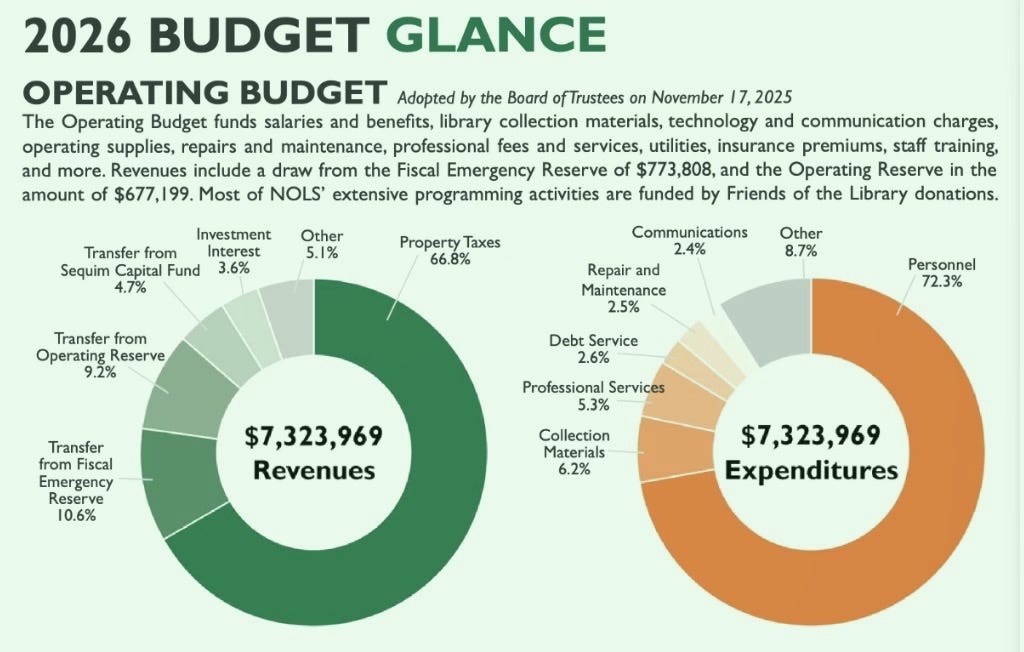
NOLS projects $7.3 million in operating expenses for 2026—meaning voters are being asked to approve a library budget that rivals core public safety spending in the county.
A Familiar Pattern
This proposal is part of a broader trend. Nearly every year, voters are asked to approve higher taxes for schools, fire districts, parks, hospitals — and now libraries.
Since 2018, Clallam County property tax collections have increased by roughly 58%, driven largely by voter-approved levy increases.
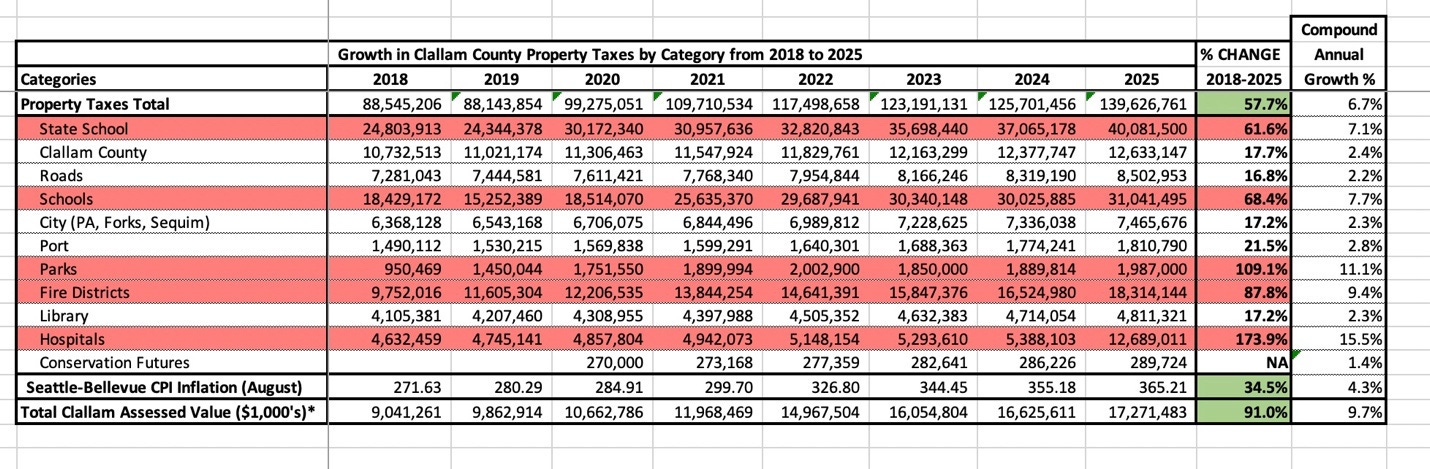
And more taxes may be on the way. County commissioners are now considering a criminal justice tax that could be implemented without a direct vote of the people. The City of Port Angeles is exploring similar options, and Commissioners Mark Ozias and Mike French have not ruled out a future Cultural Access Tax. In other words, the April library levy may not be a standalone decision — it could be one of several new tax increases facing residents in the near future.
Meanwhile, household incomes have not kept pace with inflation, and taxpayers are increasingly forced to prioritize.
At its core, the question is simple:
Is this essential? Is this effective? Is this a good use of limited taxpayer resources?
Libraries are valuable. But value alone does not justify continuous expansion or rising cost.
Rising Costs, Falling Use
NOLS’ operating budget has grown from $4.5 million in 2018 to a budgeted $7.3 million in 2026—a 62% increase.
The primary driver is personnel costs. Since 2018, NOLS salaries and benefits have increased by 53%, far outpacing the Seattle–Bellevue Consumer Price Index, which rose 34.5% over the same period. Personnel now account for roughly 71% of operating expenses, up from 67% in 2018.
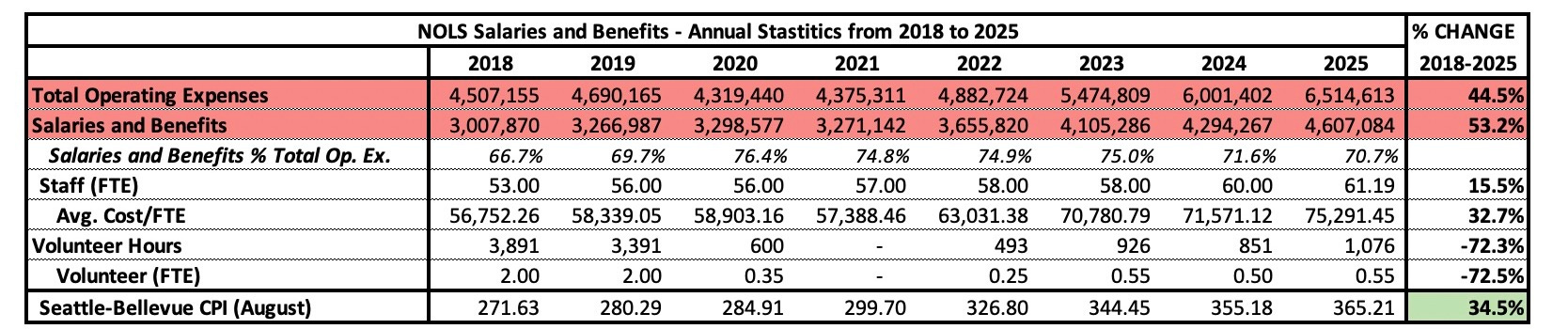
Staffing grew from 53 FTE in 2018 to 61.19 FTE in 2025.
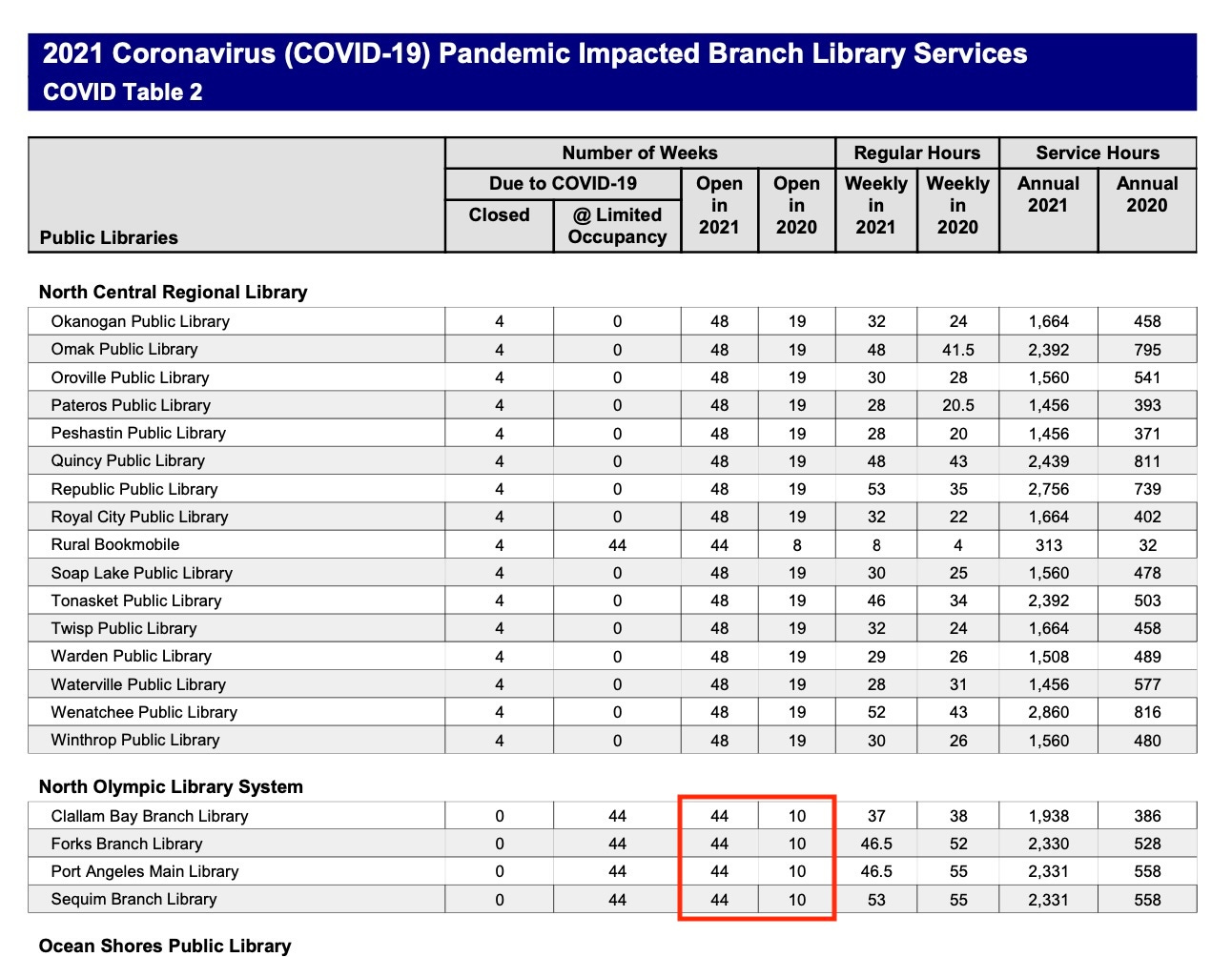
This growth continued even through COVID closures, when NOLS locations were open to the public for only part of 2020 and 2021, according to the Washington Secretary of State.
At the same time, volunteer support declined sharply, from the equivalent of 2 full-time staff to just 0.5 FTE.
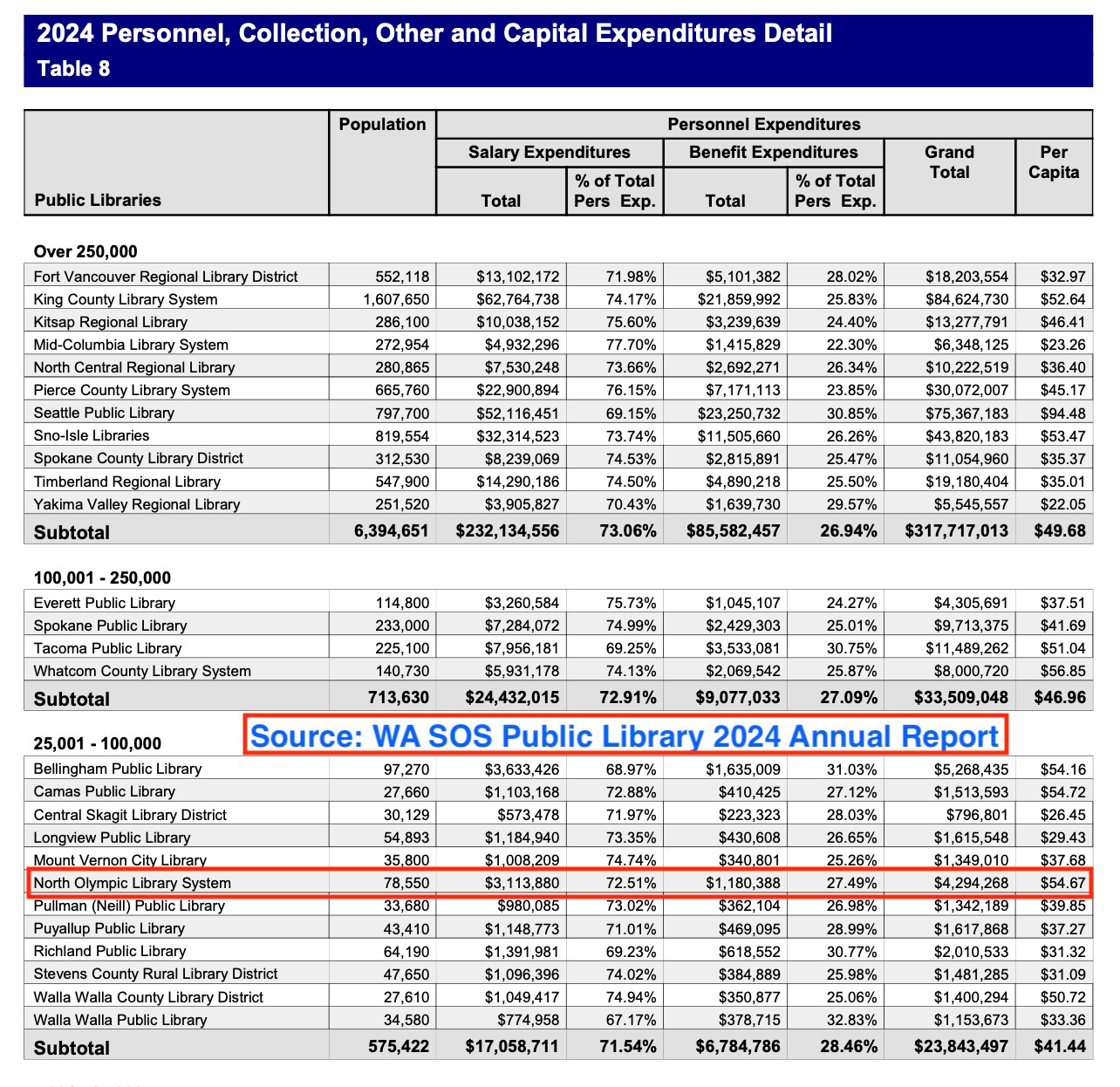
In fact, according to the Washington Secretary of State, NOLS spends more on salaries and benefits per capita than all but one library in the 25,000–100,000 population category—despite having the second-largest population in that group.
Meanwhile: Declining Utilization
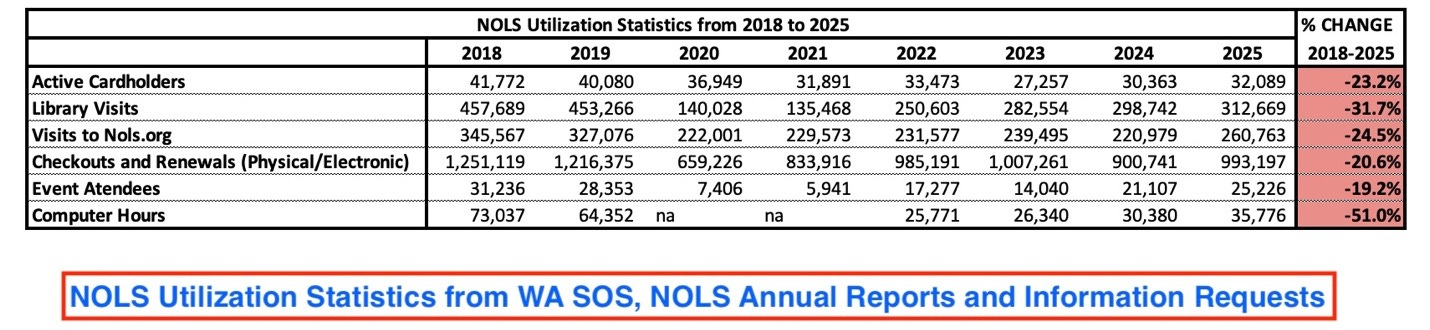
Despite rising costs and staffing, nearly every measure of library use has declined since 2018:
Active cardholders decreased 23%
Library visits sunk 31.7%
Circulation dropped 20.6%
Program attendance declined 19.2%
Computer use plummeted 51%
Website visits fell 24.5% (despite digital expansion)
In a sit-down meeting, NOLS Executive Director Noah Glaude provided some context for the drops in library utilization. He countered that:
Annual library card issuance is up 12% since 2018. However, that increase has not offset the decline in overall cardholders, which are down 23% over the same period.

Library visits may not be down as much as reported due to a new tracking system placed on the outer doors of branches instead of the inner doors in branches that have them, like Port Angeles. Some double-counting occurred before that time when patrons or staff used restrooms in the lobby.
Although circulation is down overall, E-checkouts more than doubled from about 129,000 in 2018 to 271,000 in 2025. E-checkouts do not renew like physical checkouts, so Mr. Glaude contends that total circulation is understated. However, if all E-checkouts renewed at the same rate as their physical counterparts (64.5% in 2025), that would only account for about 92,000 of the roughly 258,000 loss in circulation since 2018.
WIFI Sessions are up 42%, and printing is up 49% since 2018, as more visitors have their own phones and laptops, and many opt not to own a printer at home.
Although website visits fell 24.5% where physical holds are placed, NOLS applications visits, like “Libby”, are not counted in this measure.
Utilization rates have generally been up since 2022 despite failing to return to 2018 levels.
While Director Glaude’s insights provide some explanation, the overall trend is unchanged:
More staff. More Spending. Fewer users.
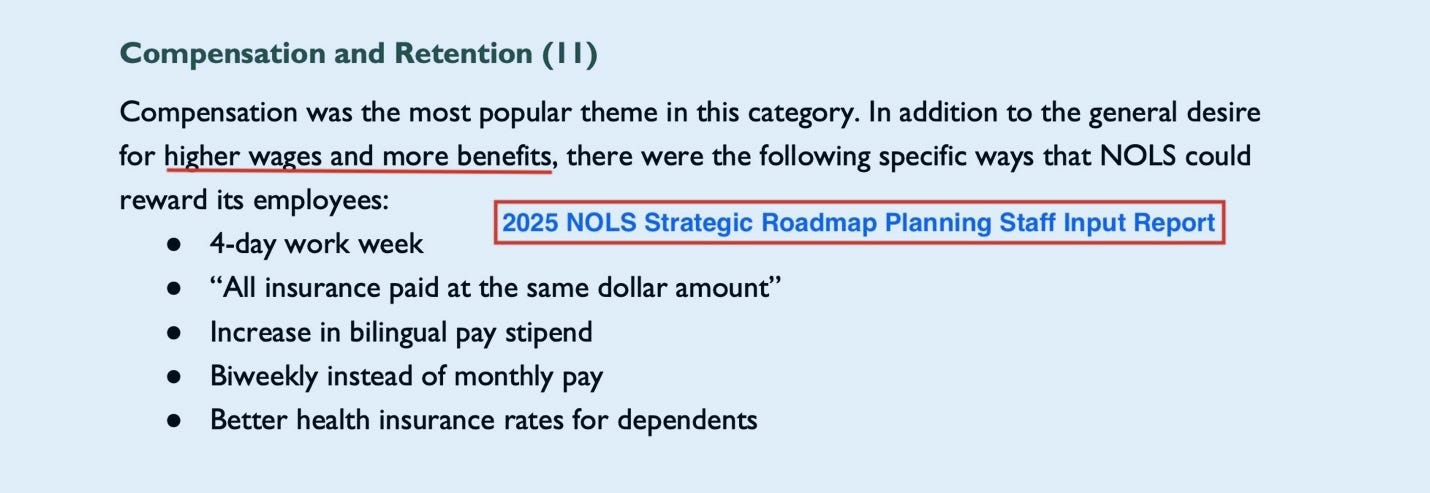
Yet, while the customer base has declined, staff continue to prioritize higher pay and expanded benefits, according to a report compiled by Speaking Justice — a Sequim-based firm that provides “leadership coaching, staff training, conflict resolution sessions, strategic plan consulting, cultural audit, data analysis, and other consulting services to improve the processes and culture in nonprofit organizations.”
Among the requests from staff: a four-day work week, increased stipends, and more generous insurance coverage.
Losing Focus, Expanding Scope
At their core, libraries exist to organize, preserve, and provide access to information, literature, and research tools—both physically and, more recently, electronically.
Yet while demand for core services has slumped, NOLS has expanded its service scope far beyond them.
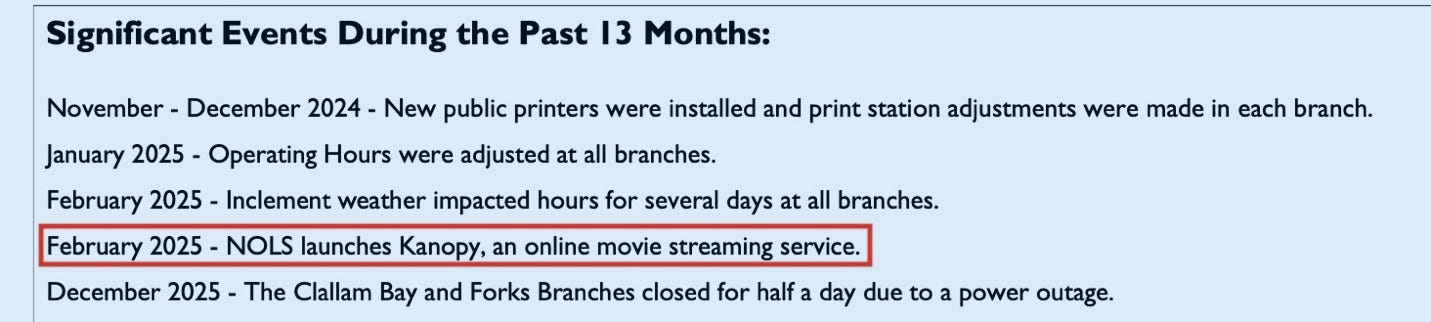
In 2025, the system began offering a movie streaming service to cardholders.
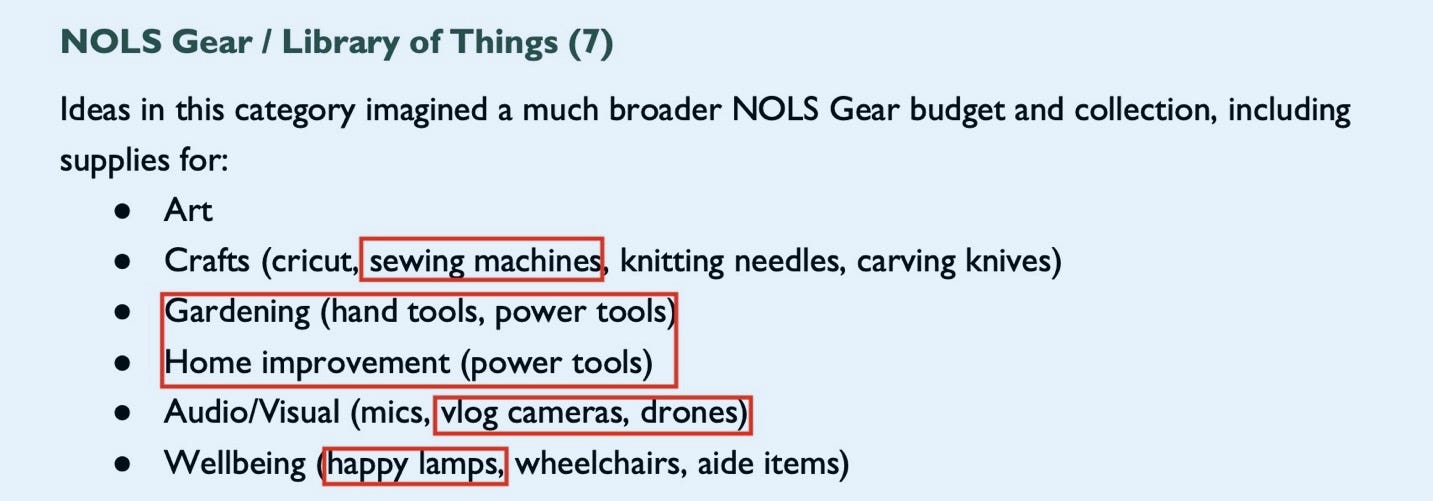
The 2025 NOLS Strategic Roadmap Staff Input Report highlights proposed further expansions into non-core services, including:
Providing power tools, gardening tools, vlog cameras, drones, sewing machines, wheelchairs, and “happy lamps” for customer check-out.
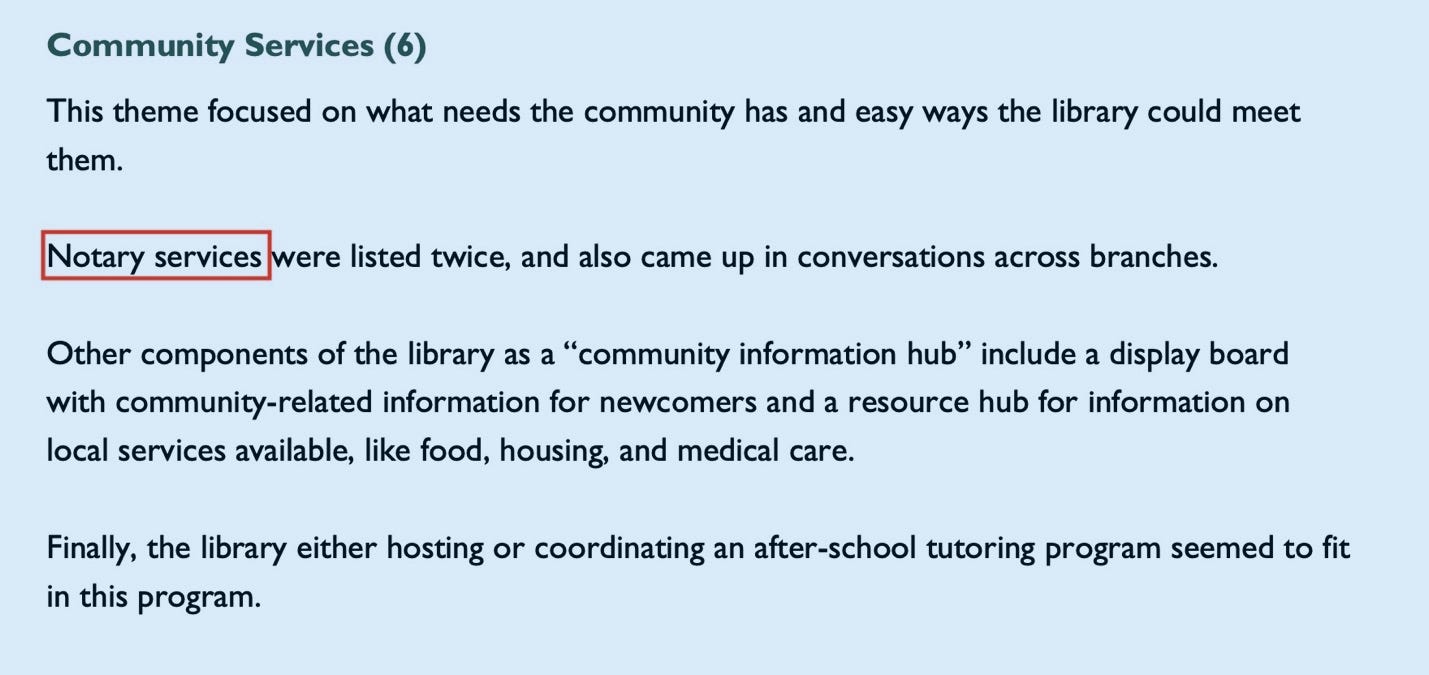
Notary services, too.
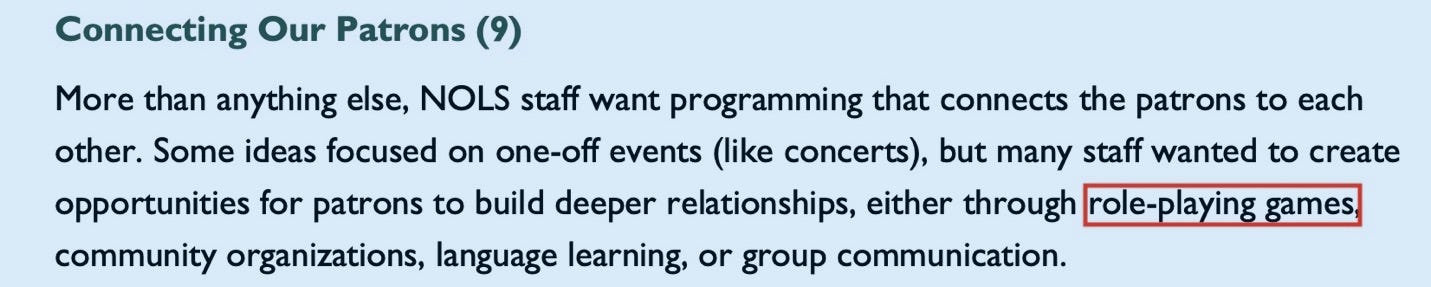
Also, role-playing games.
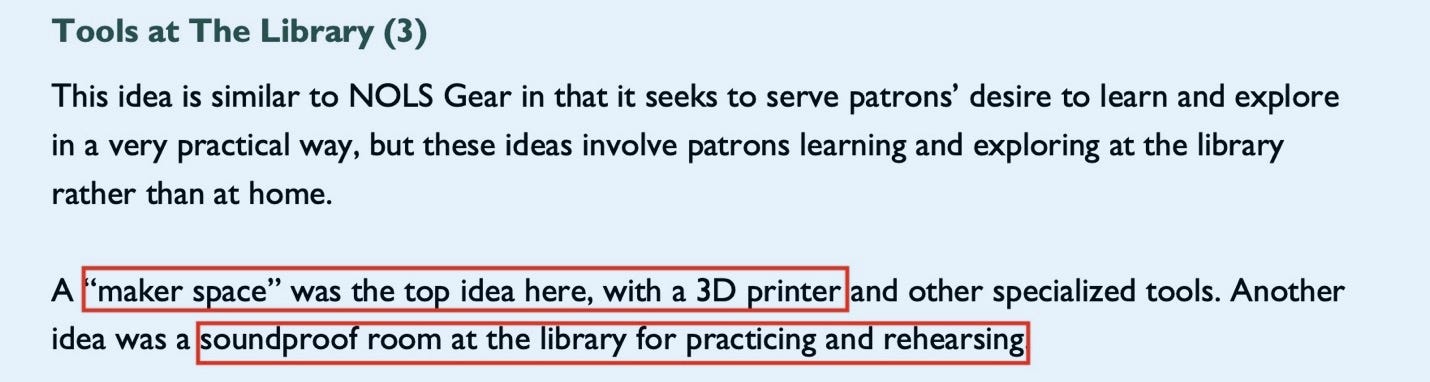
Add to that a “Maker Space” with a 3-D printer and a soundproof room for band practice.
The idea of expanding into social and healthcare services was also strongly supported by staff. This would be accomplished by “Social Service Librarians” and a full telehealth set-up for confidential medical appointments.
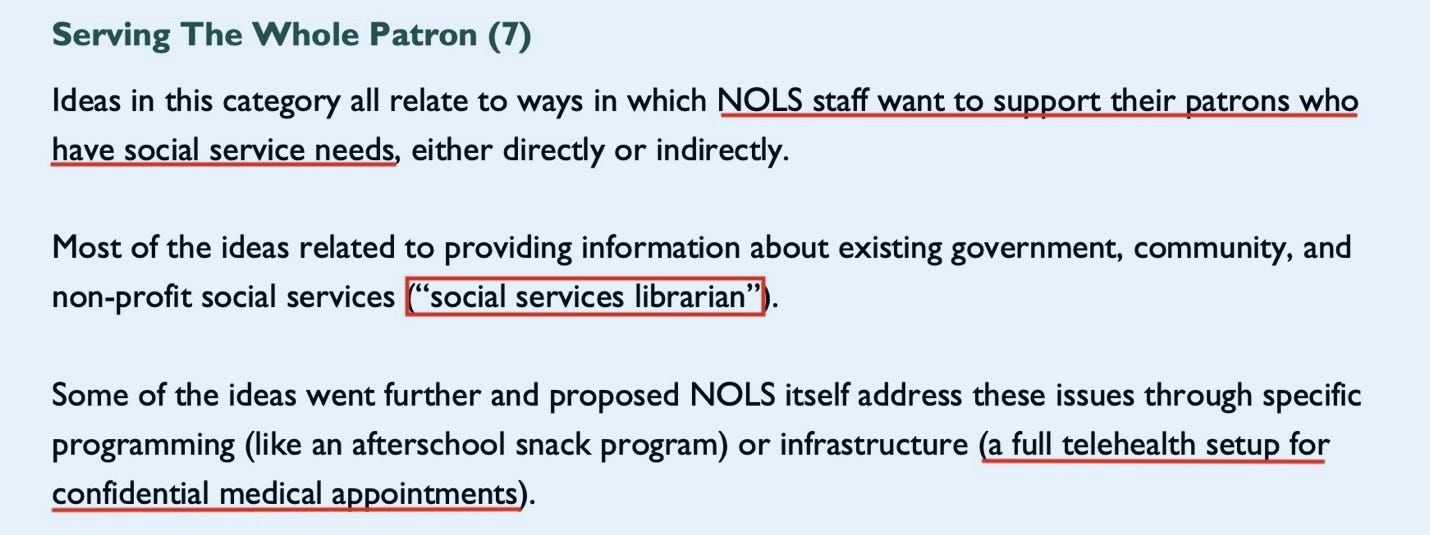
Other social services recommended by staff include food, Narcan, and safe spaces.

All Services to All People or Bust
This reflects a shift away from the library’s traditional function—organizing and providing access to information—toward a broader “all services to all people” model. That shift appears to be influenced in part by consultants focused on DEIB (Diversity, Equity, Inclusion, and Belonging).
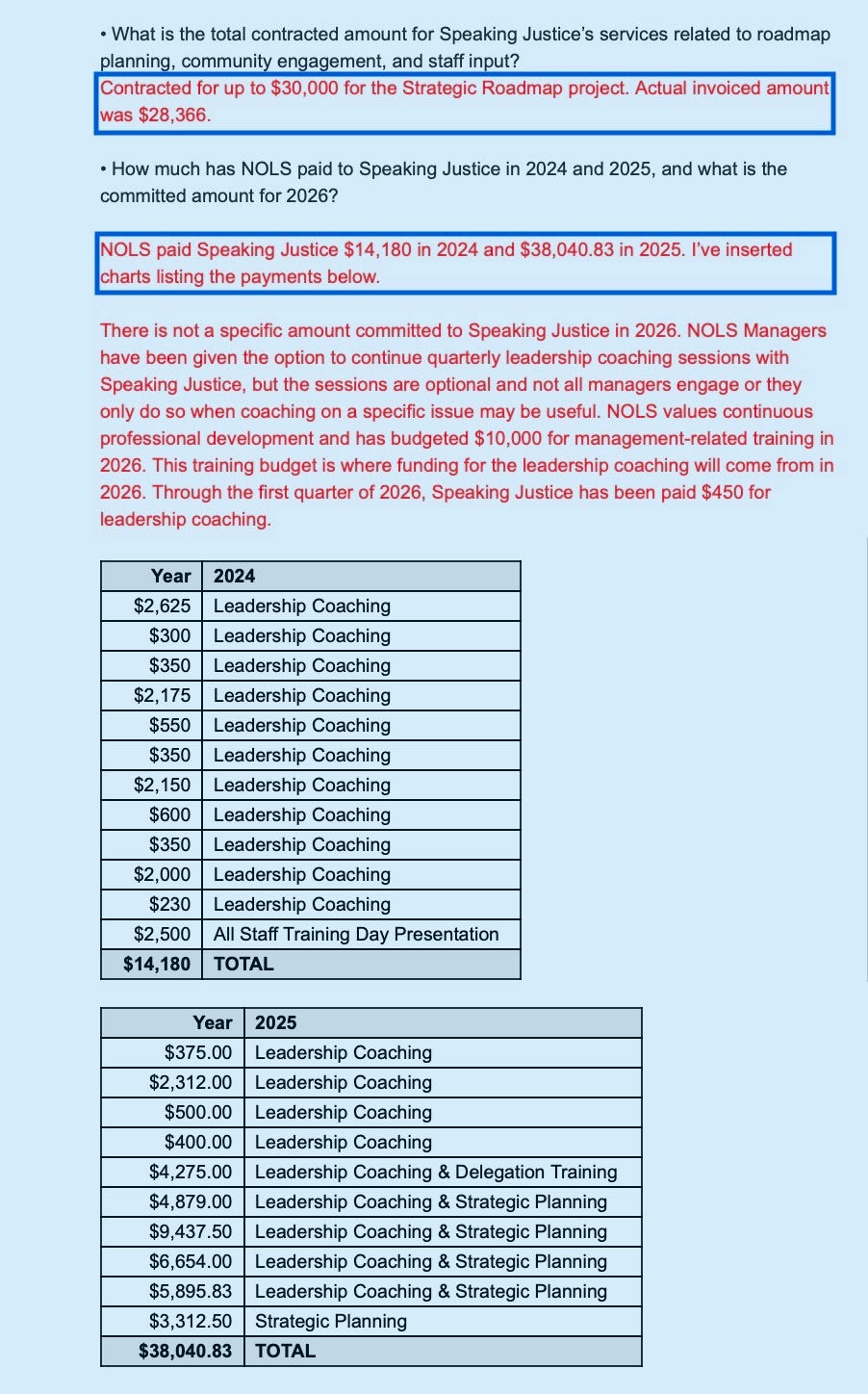
According to NOLS Executive Director Noah Glaude, the system paid $28,366 to equity consultant Speaking Justice to develop the 2026–2030 Roadmap. In total, Speaking Justice received over $38,000 in 2025 and more than $14,000 in 2024 for related consulting, strategic planning, coaching, and presentations.
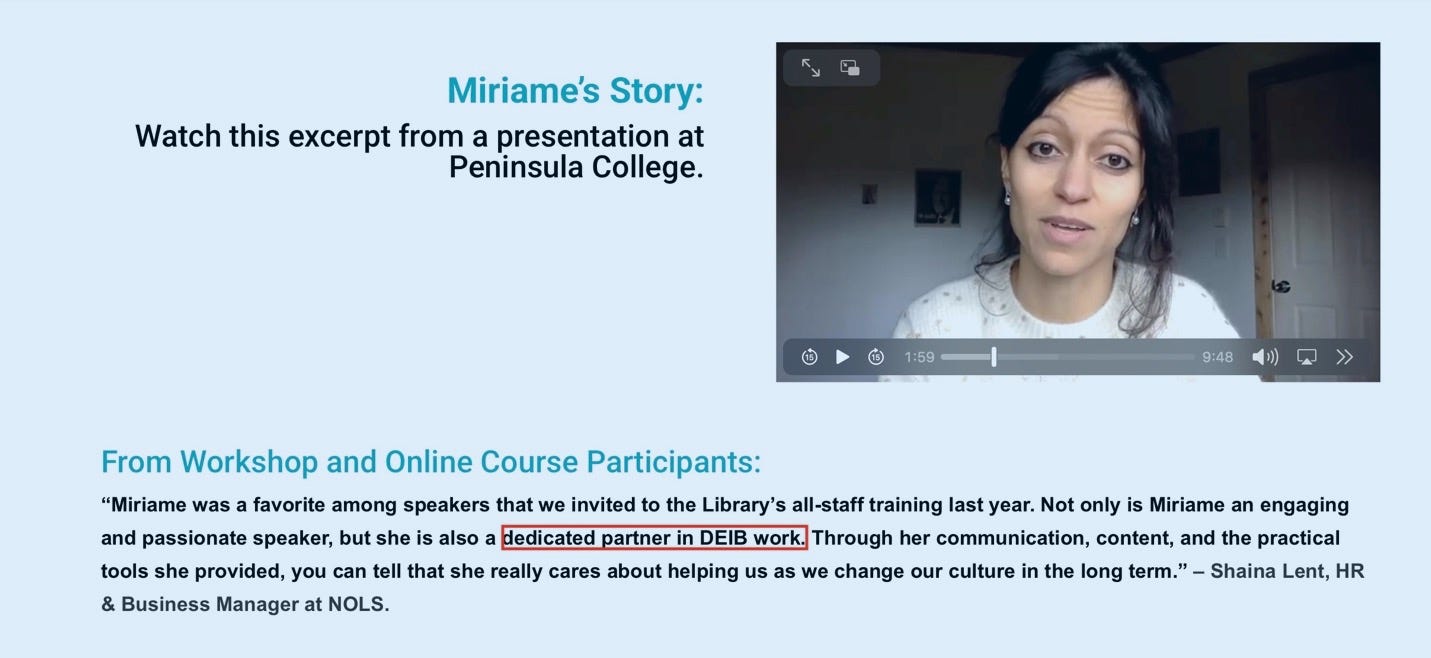
NOLS has described Speaking Justice founder Miriame Cherbib as a “dedicated partner in DEIB work.”
The result is reflected in NOLS’ guiding philosophy. One core value commits the system to delivering services “when, where, and how they are needed,” a principle echoed in the 2026–2030 Roadmap:
“If a patron cannot easily access a library branch, we will reach them with alternative and innovative service models.”

This approach is inherently costly. Expanded services and outreach—such as home delivery and the return of the Bookmobile—require additional staff and resources, driving up per-capita costs even as overall usage declines. NOLS is now spending millions more in taxpayer funding to serve fewer users with a broader array of services.
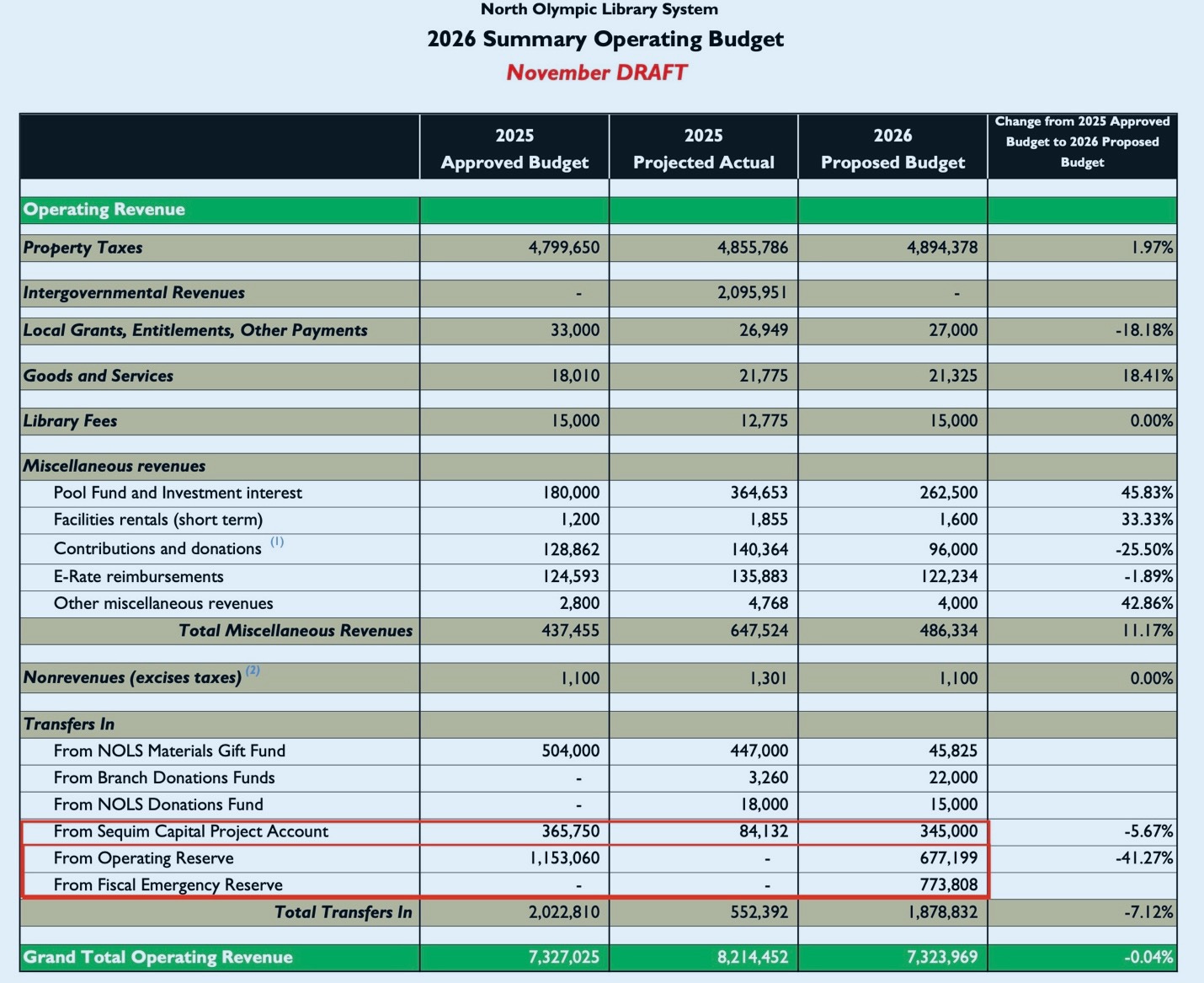
That trajectory has strained the system’s finances. To sustain operations, NOLS is increasingly relying on reserves, with approximately $1.7 million in transfers projected for 2026—including nearly $775,000 from “Emergency Reserves.”
Yet NOLS’ own reporting acknowledges the underlying issue: when expenditures outpace revenue—especially in the face of declining utilization—the appropriate response is to realign staffing and spending.
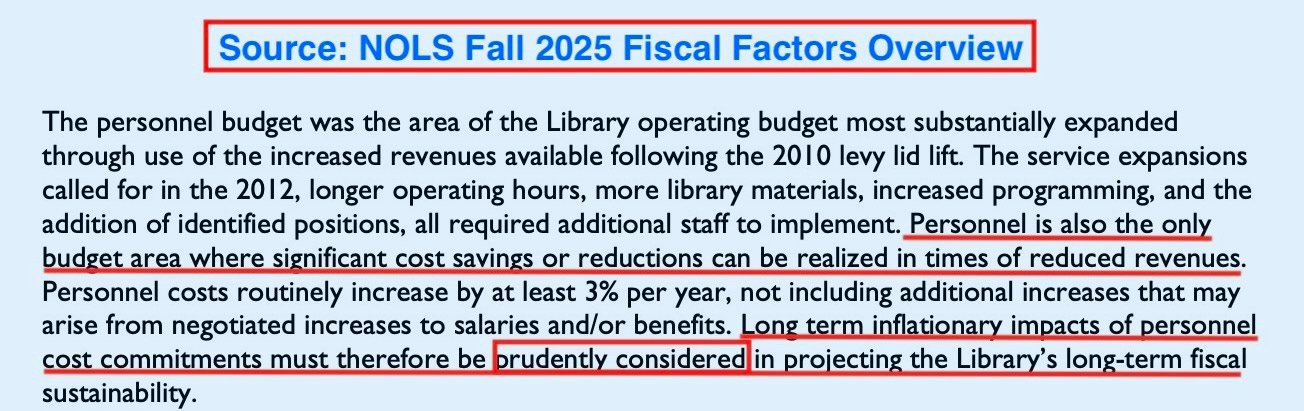
Instead, the library system is asking taxpayers for an additional $3 million to close the gap created by its own decisions.
A Question of Priorities
The library’s contrast with public safety is difficult to ignore.
In a recent email, Sheriff Brian King confirmed that Clallam County has just 39 fully commissioned deputies—equating to roughly 0.84 officers per 1,000 residents in the county’s unincorporated areas (outside the city limits of Sequim, Port Angeles, and Forks), a level that falls well below both state and national averages.
At the same time, NOLS employs 61.19 FTE serving a broader population base of about 78,000 — or about 0.78 library staff per 1,000 people served.
In other words, Clallam County has nearly as many library staff per capita as law enforcement officers—during a time when concerns about public safety, homelessness, and substance abuse are top of mind and demand for library services has dwindled.
While the Sheriff’s Office increased staffing by just over 8% from 2018 to 2025, NOLS staffing grew at nearly twice that rate—raising a fair question about priorities: one agency is stretched responding to urgent public safety needs, while the other is facing declining demand for its core services.
Taxpayers are left to decide where their spending will have the greatest impact.
Value, Not Messaging
Executive Director Glaude opines that the proposed levy increase is a “reasonable return on investment” and contends that without voter approval of the levy lift, staffing and branch hours will be cut.
But taxpayers have the right to ask:
Where has the investment gone?
Costs have surged. Staffing has expanded. Services have broadened. Yet utilization has declined across nearly every meaningful metric.
This is not an issue of underfunding — it is a story of misaligned priorities by a system that will not change unless voters tell it “no”.
Those concerns are not limited to outside observers. In the official voter pamphlet, Dr. Sarah Huling, author of the “No” statement, raises similar issues around financial oversight, transparency, and fiscal discipline.
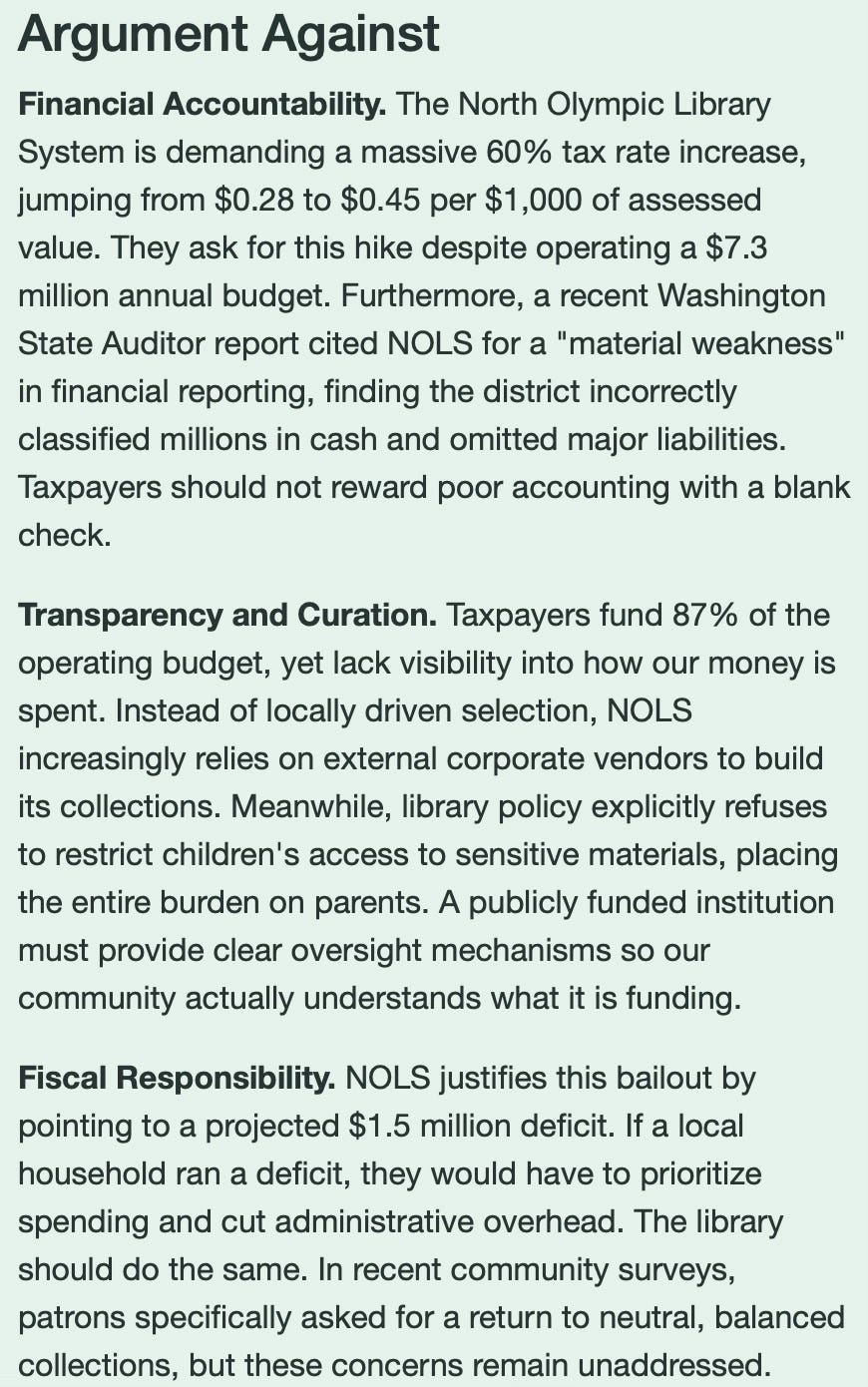
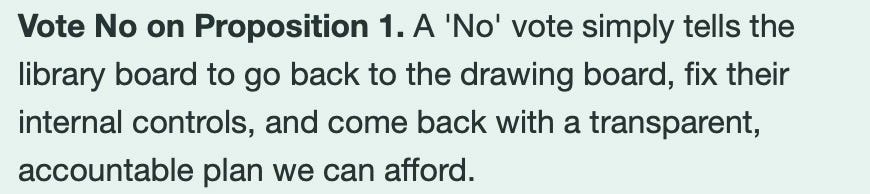
A “No” vote, Dr. Sarah argues, is not a rejection of libraries—but a request for a more transparent, accountable, and financially sustainable plan.
There is no question whether libraries are valuable to the Clallam community – they are.
But the NOLS model of more spending, more staff, a broader mission, and fewer users is unsustainable, and the taxpayer should not be asked to foot the bill.
In April, voters will have the opportunity to decide.
In doing so, they will not be deciding whether to support libraries.
They will be deciding whether to support this version of one.
What Can You Do?
Talk to your friends. Talk to your neighbors. Share the facts and ask the same simple questions: Is this sustainable? Is this necessary? And is this where our tax dollars should go right now? Then make a plan to vote in April—because decisions like this don’t get made by headlines or meetings, they get made by the people who show up.
Editor’s Note: CC Watchdog editor Jeff Tozzer also serves as campaign manager for Jake Seegers during his run for Clallam County Commissioner, District 3. Learn more at www.JakeSeegers.com.


