
Olympic Medical Center, Clallam County’s largest employer, lost more than 180 employees in less than a year, according to newly obtained public records. The departures come as auditors warn of serious financial trouble and providers report staffing shortages, declining morale, and threats to patient care. After taxpayers approved a major property tax increase to support the hospital, many are left wondering why the warning signs appear to be growing instead of fading.
Correction: The next Shore Pool Board meeting is scheduled for Tuesday, June 23 at 3:00 p.m. (not June 26). Click here for more information. The agenda has not yet been posted.
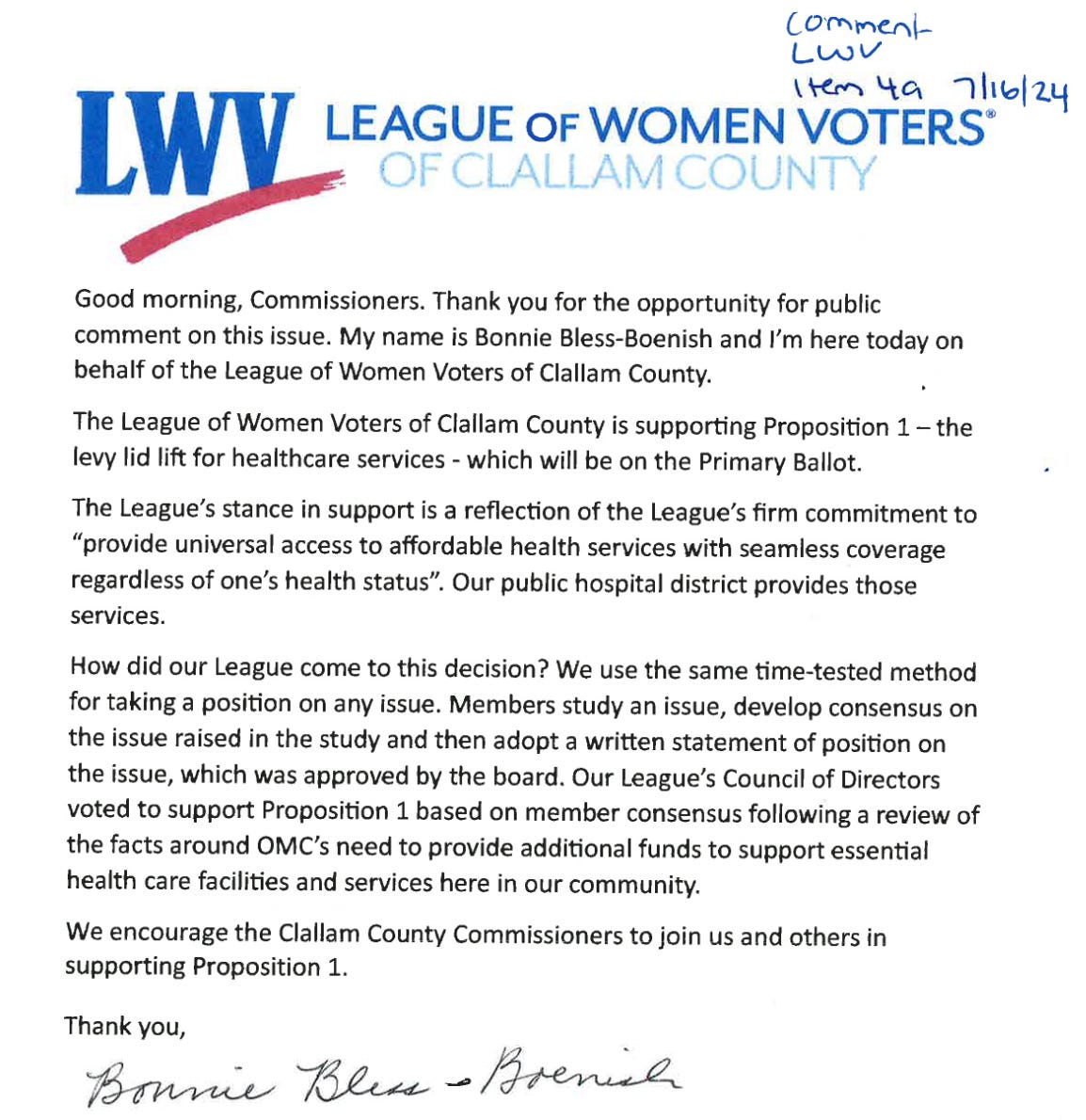
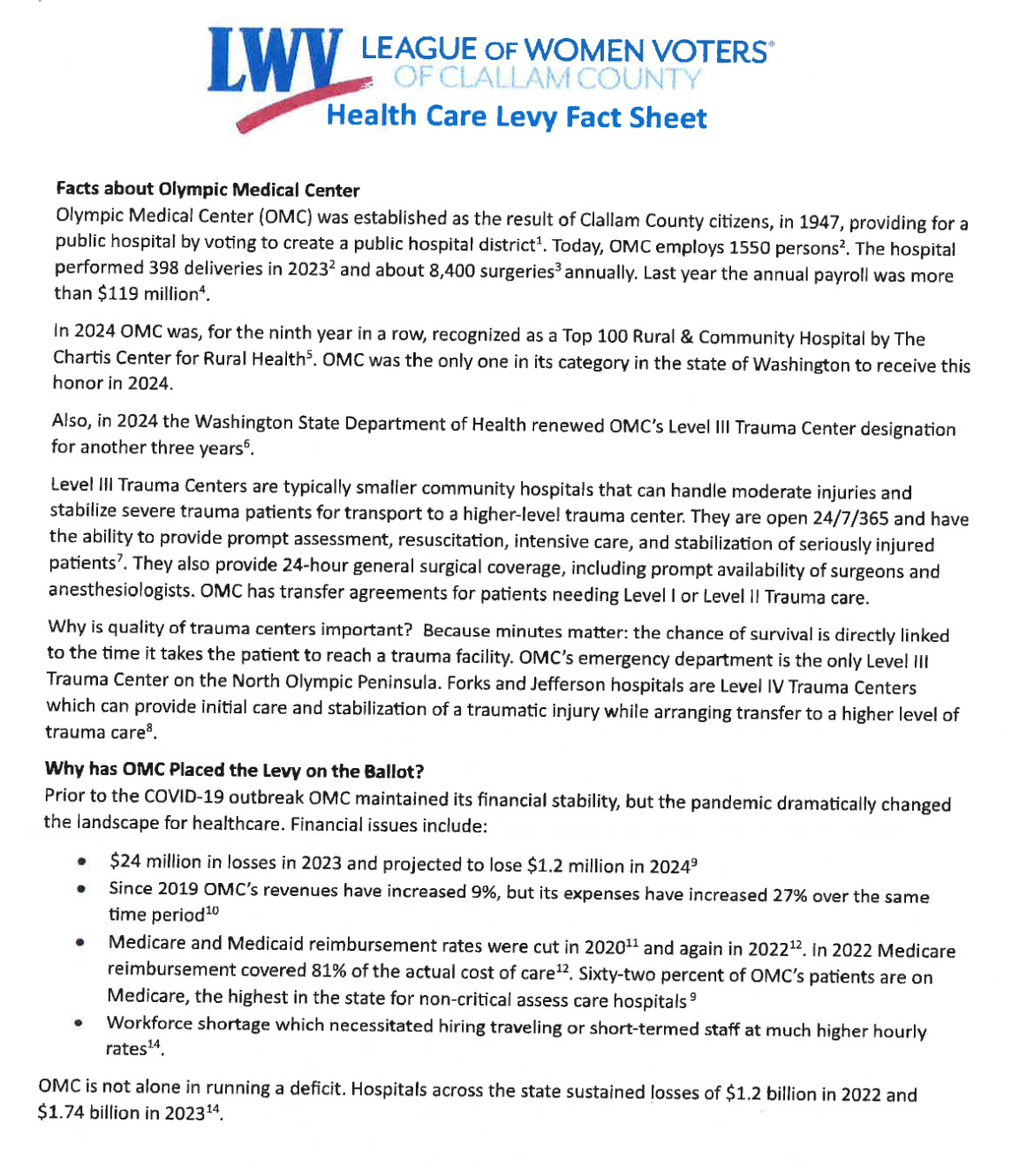
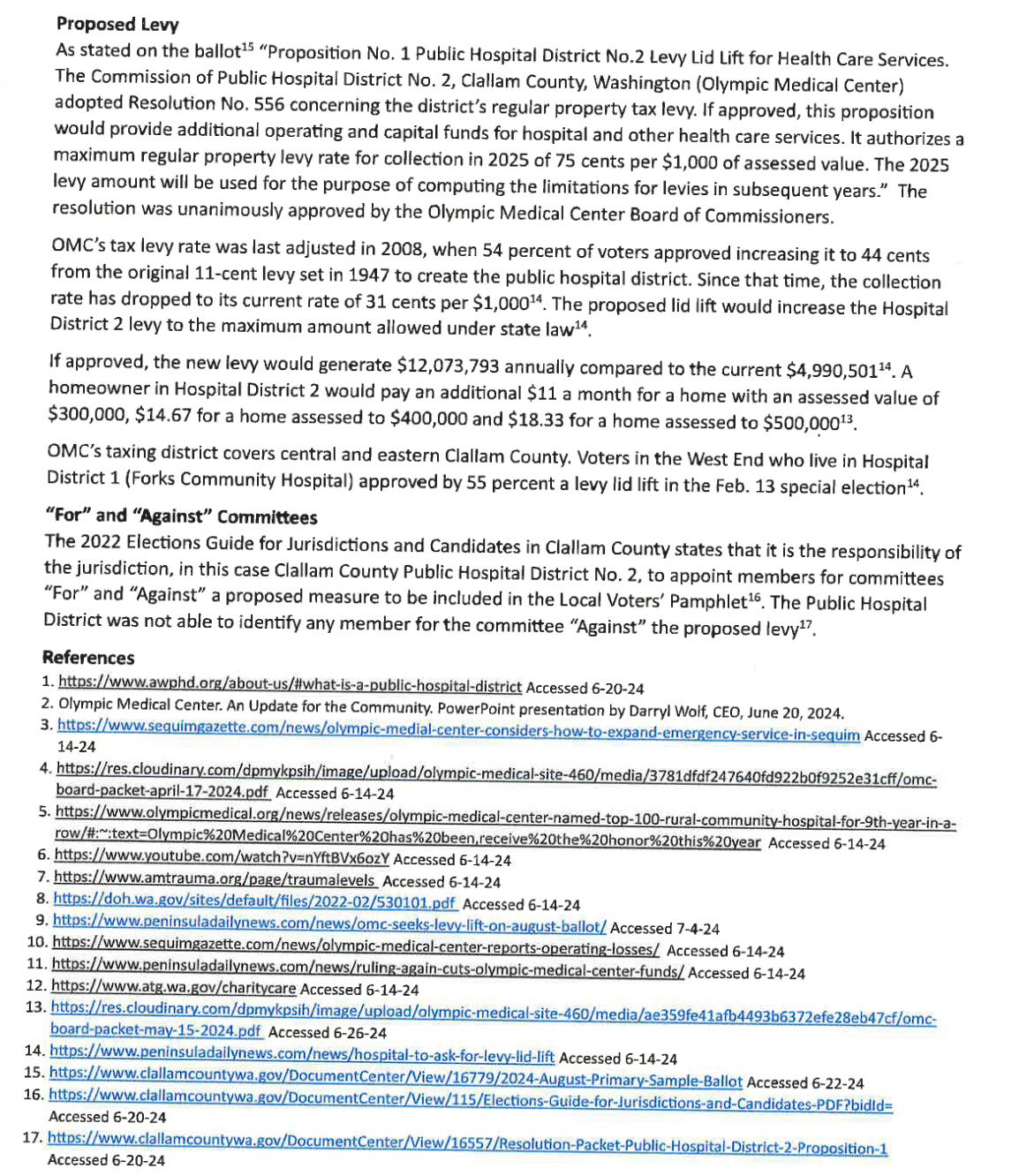
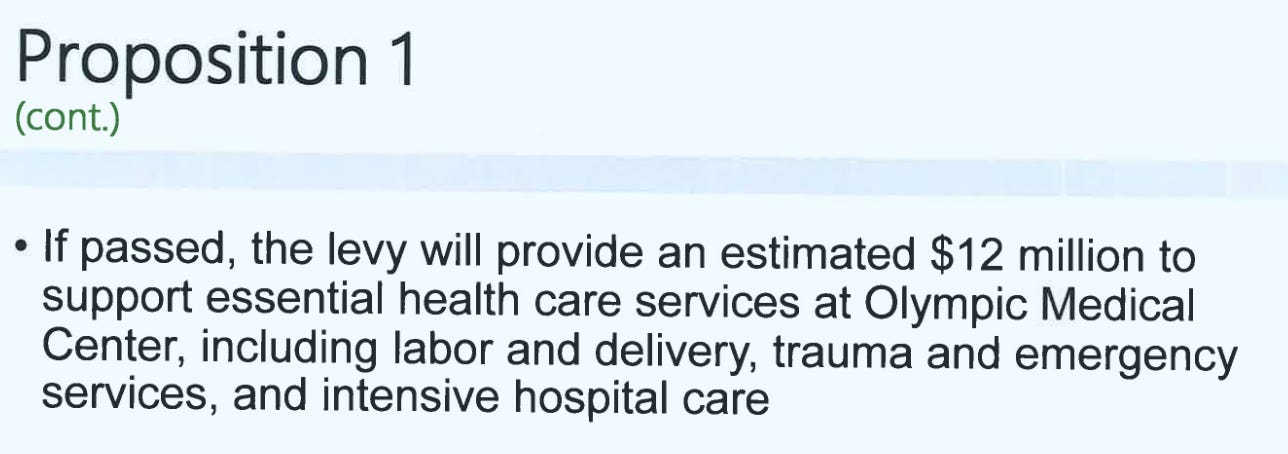
In 2024, Clallam County Commissioners passed a resolution supporting a levy lid lift for Olympic Medical Center. The measure doubled the hospital’s property tax authority, asking residents to provide significantly more financial support to an institution that was already facing mounting challenges.
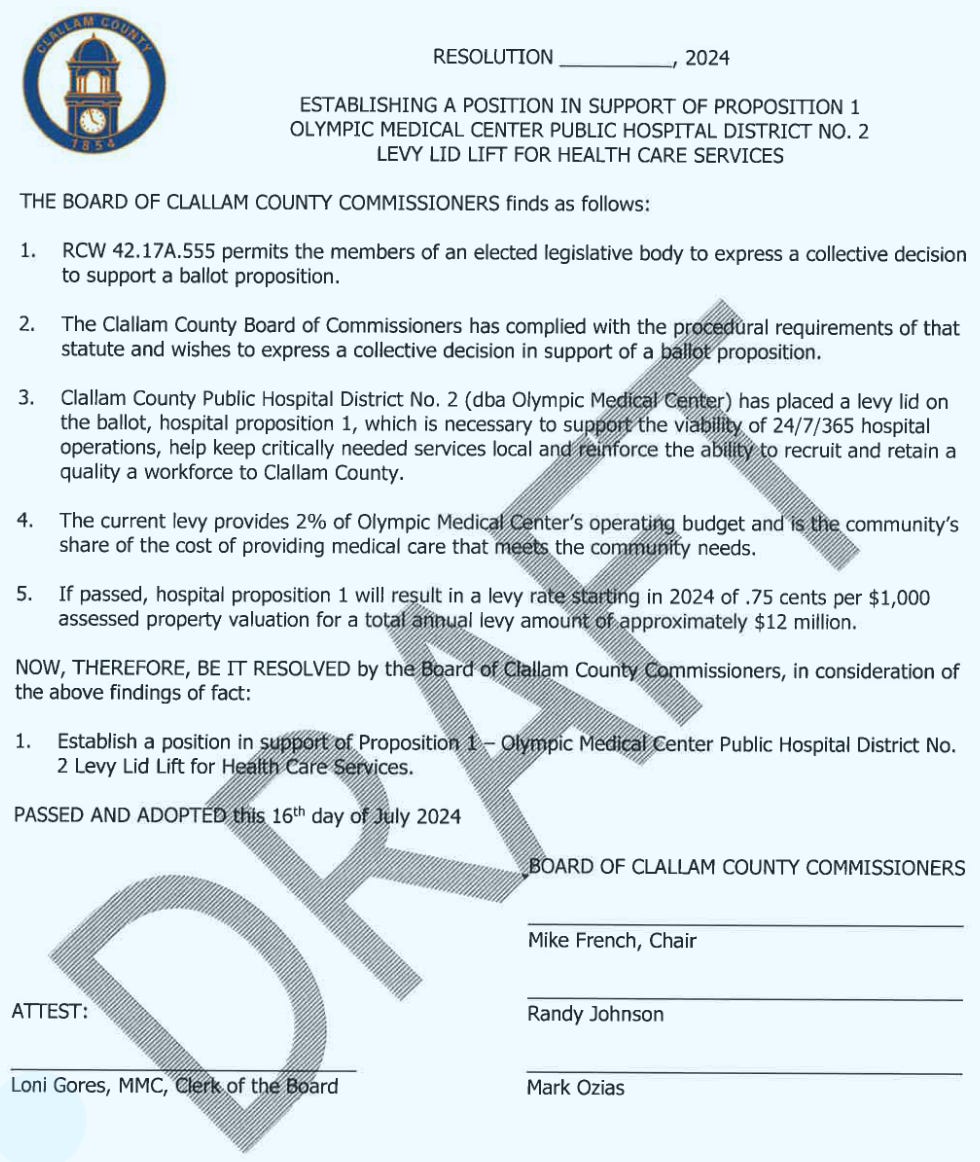
Supporters argued the additional revenue would help stabilize the county’s largest employer and preserve local healthcare services.
Two years later, newly released public records suggest the situation has not improved.
Records obtained by Clallam County Watchdog show that more than 180 employees departed Olympic Medical Center between May 1, 2025, and April 18, 2026. The separations occurred throughout the organization, affecting nurses, physicians, physician assistants, department directors, executives, technicians, therapists, support staff, and administrative personnel.
The departures touched nearly every major service line.
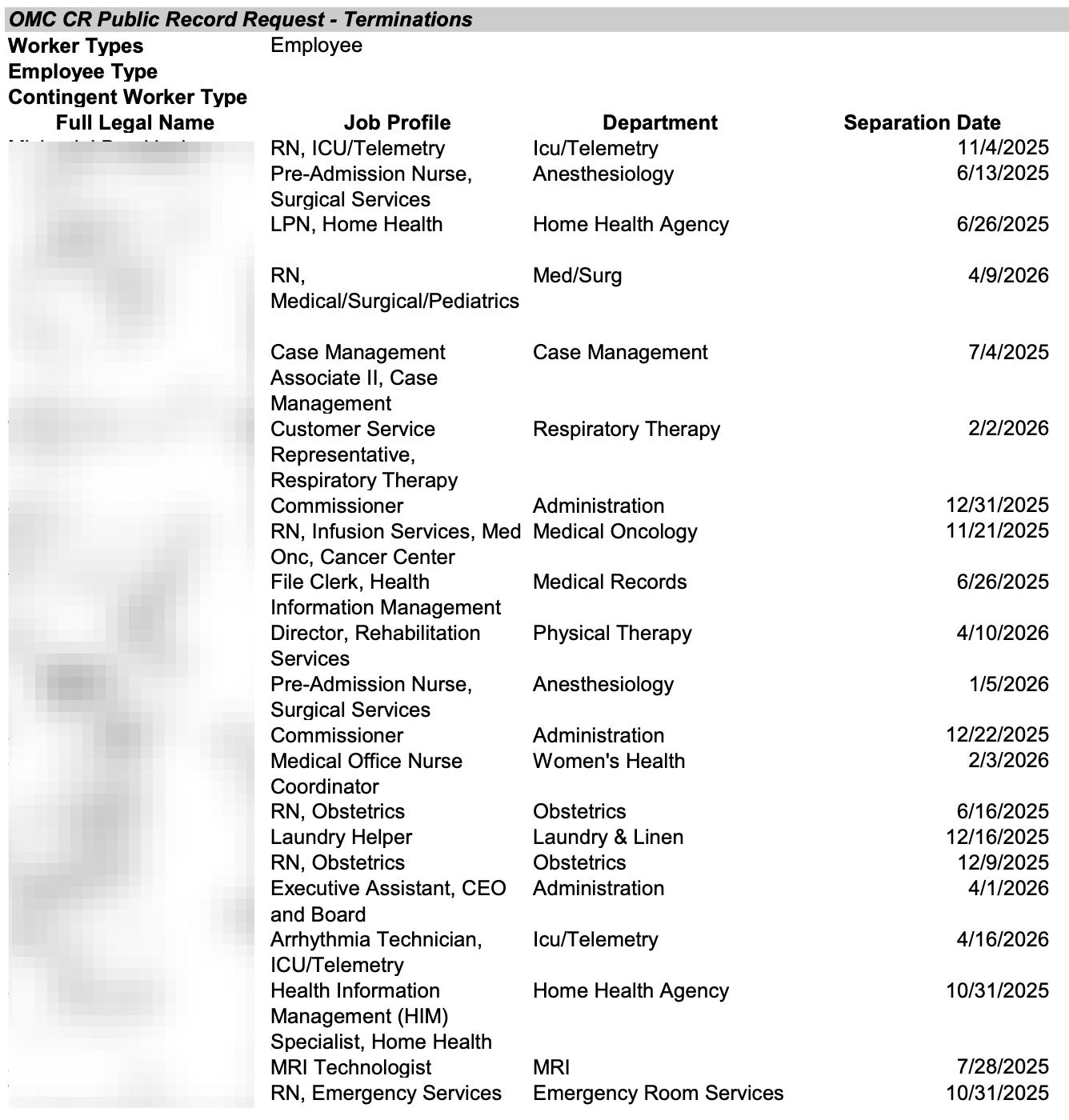
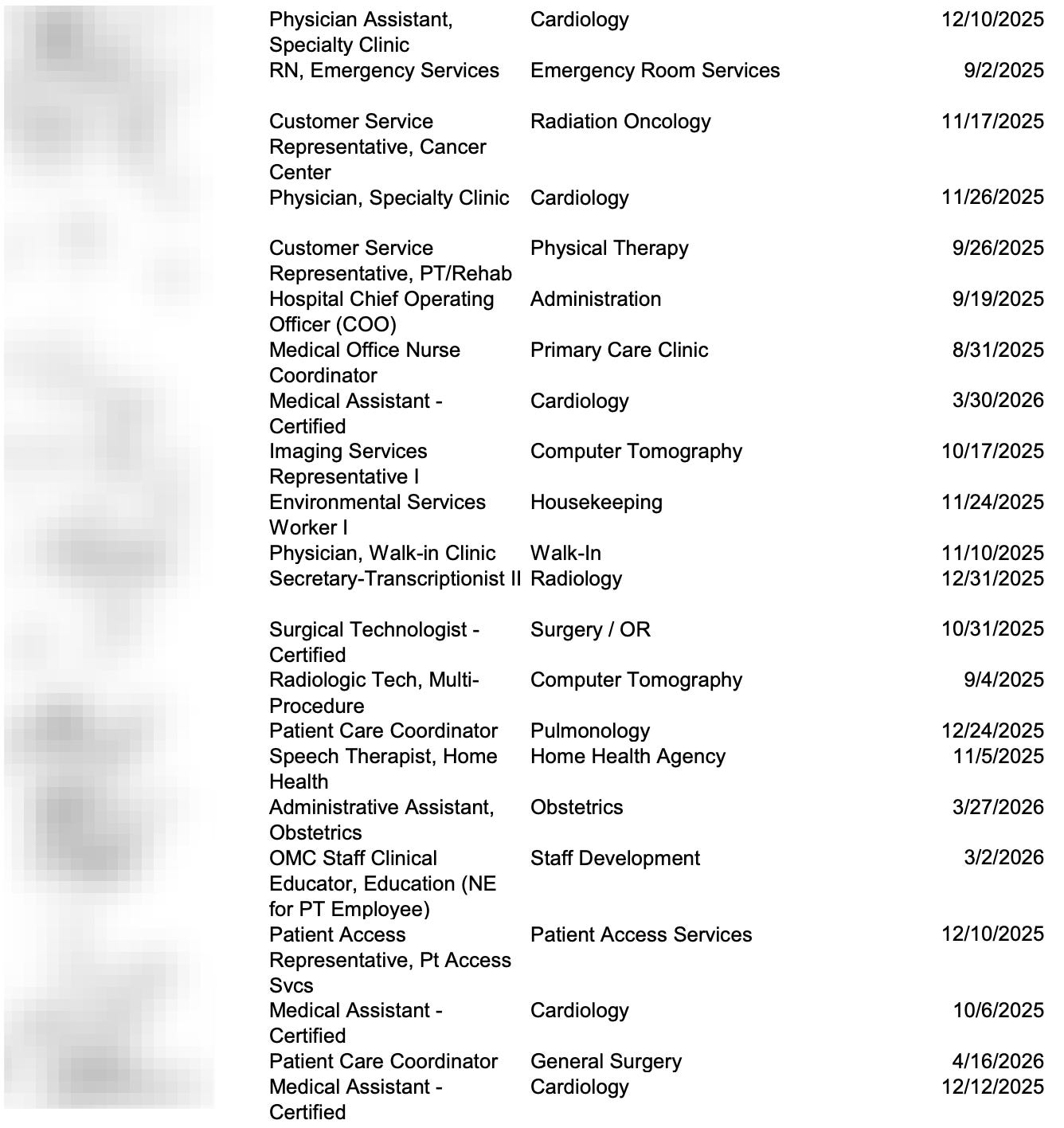
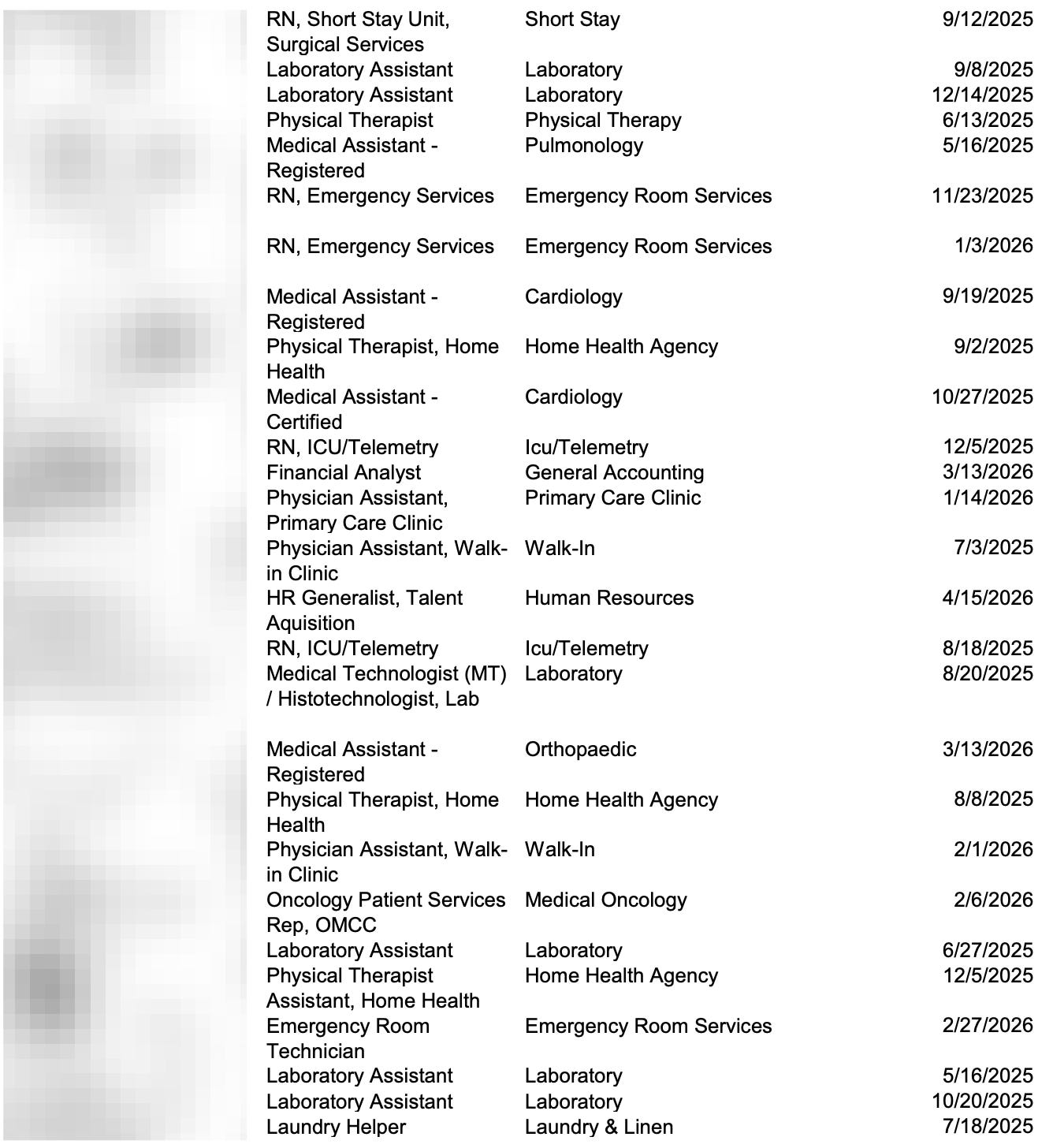
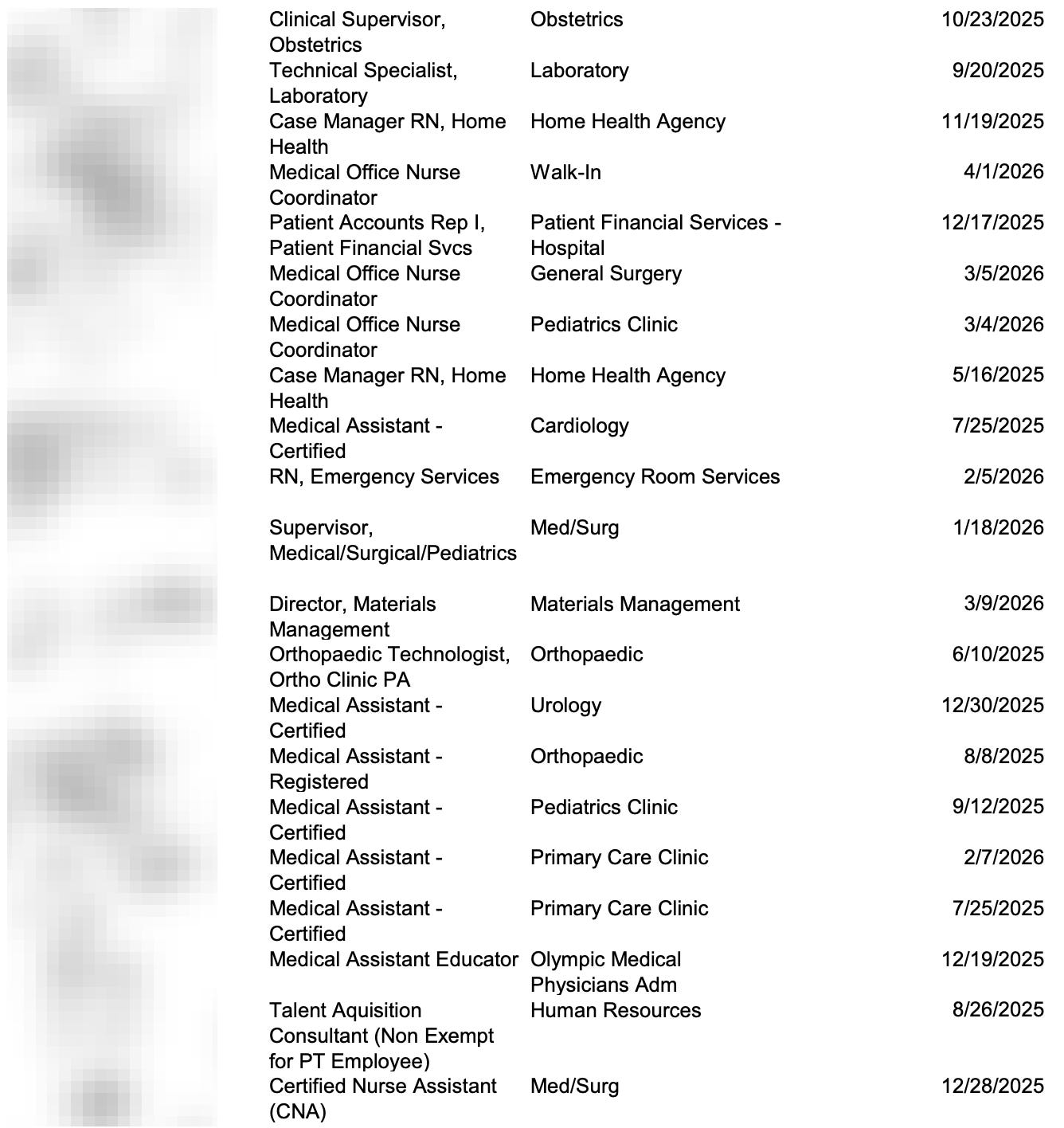
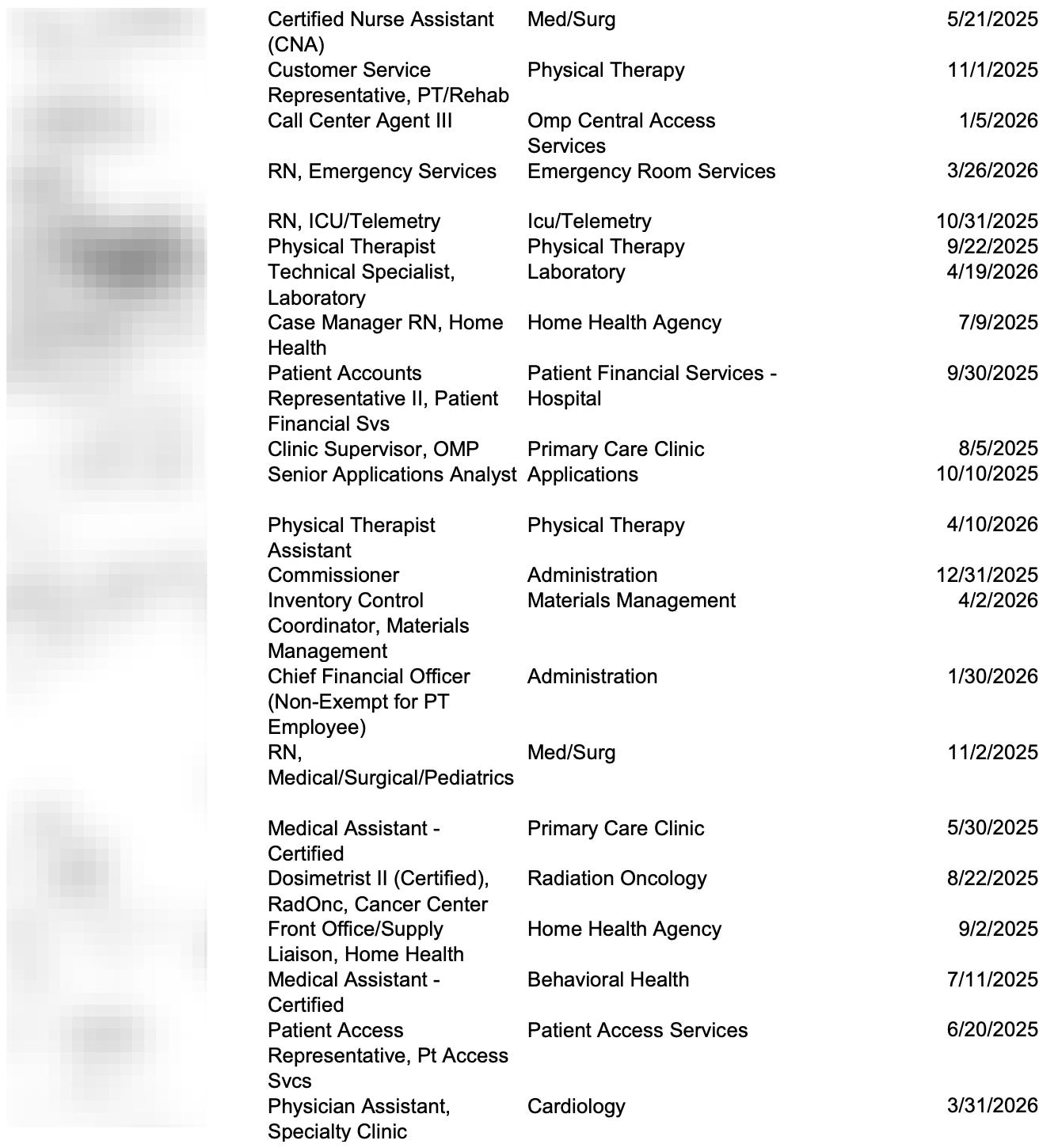
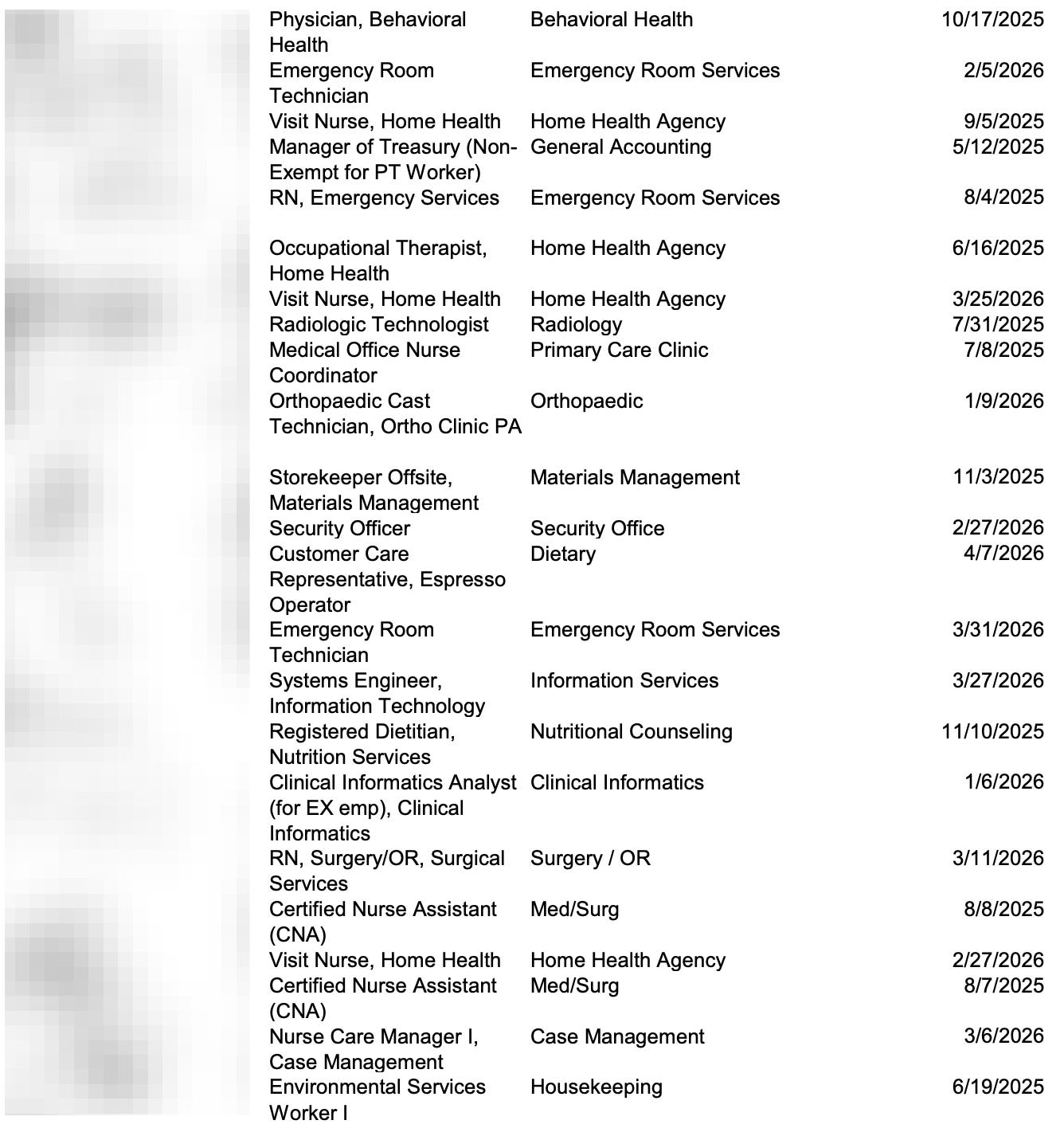
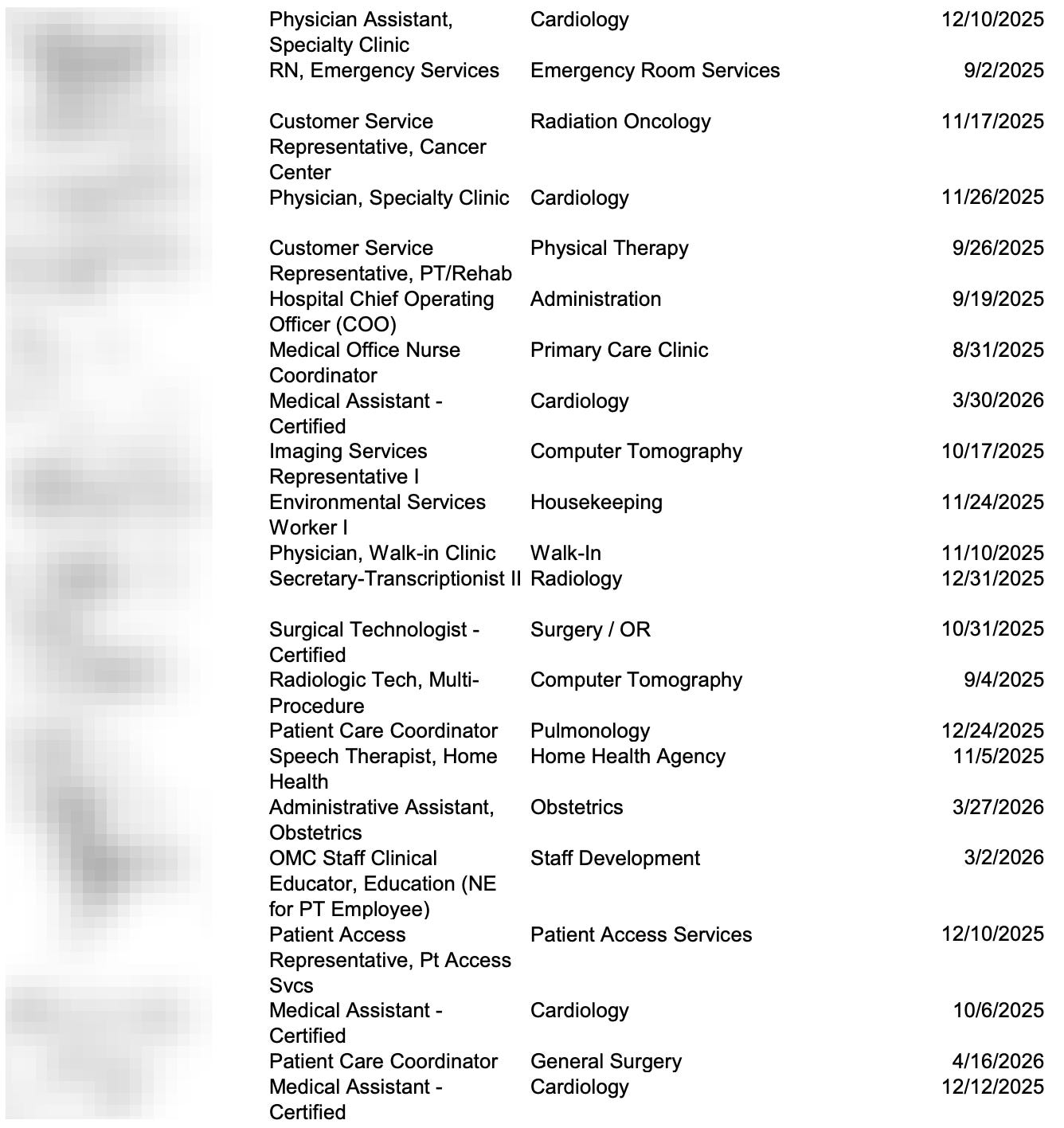
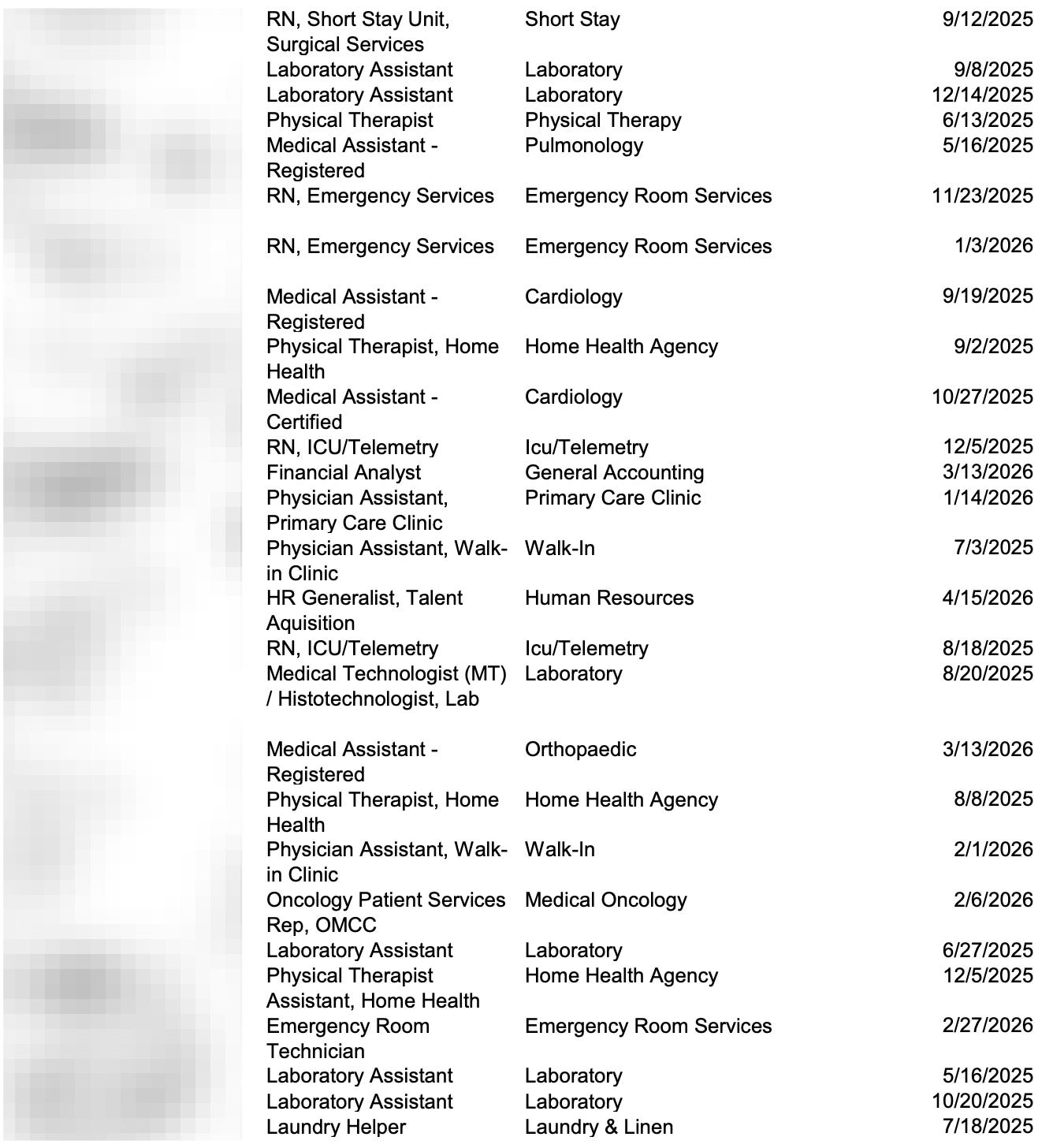
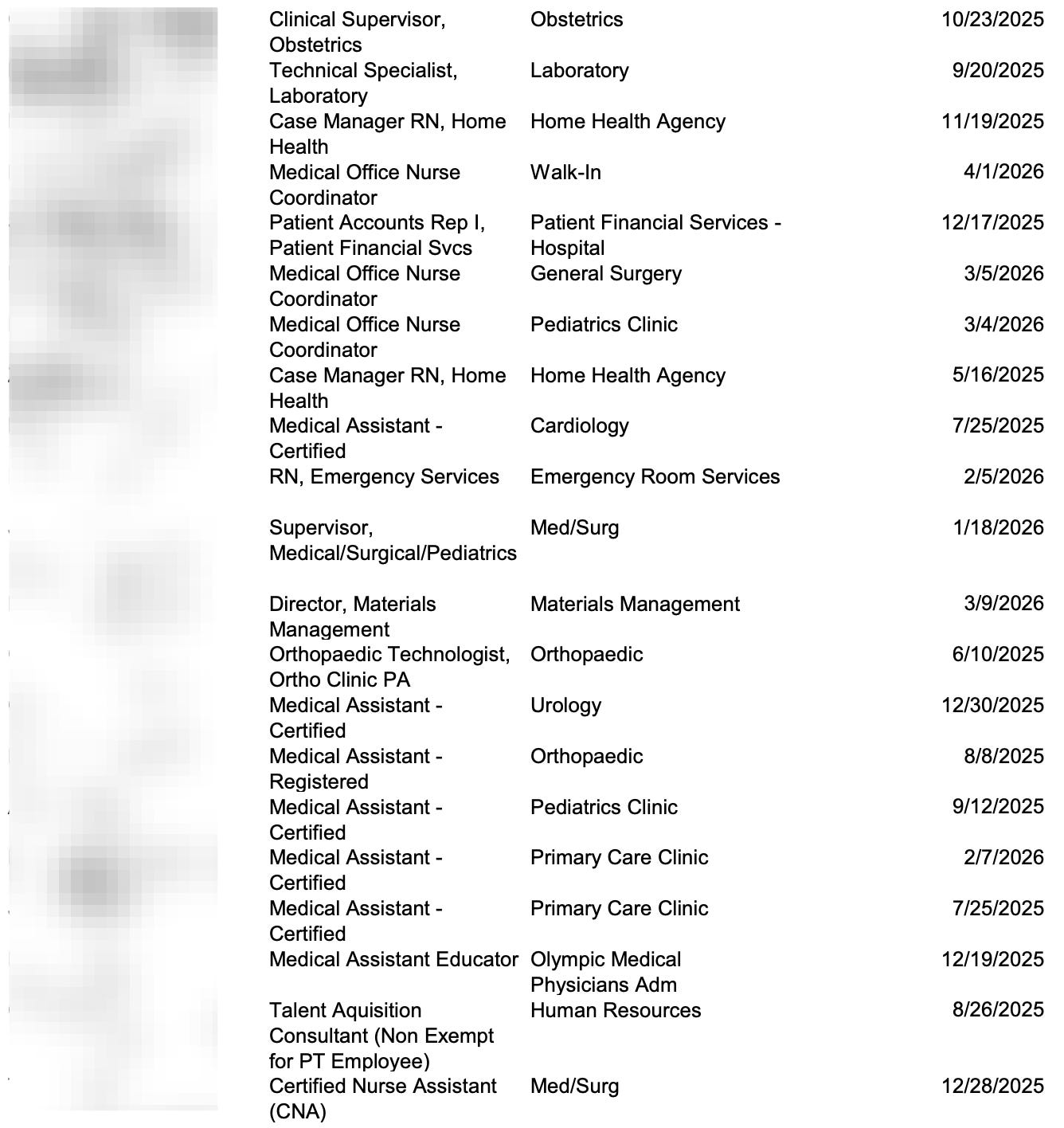
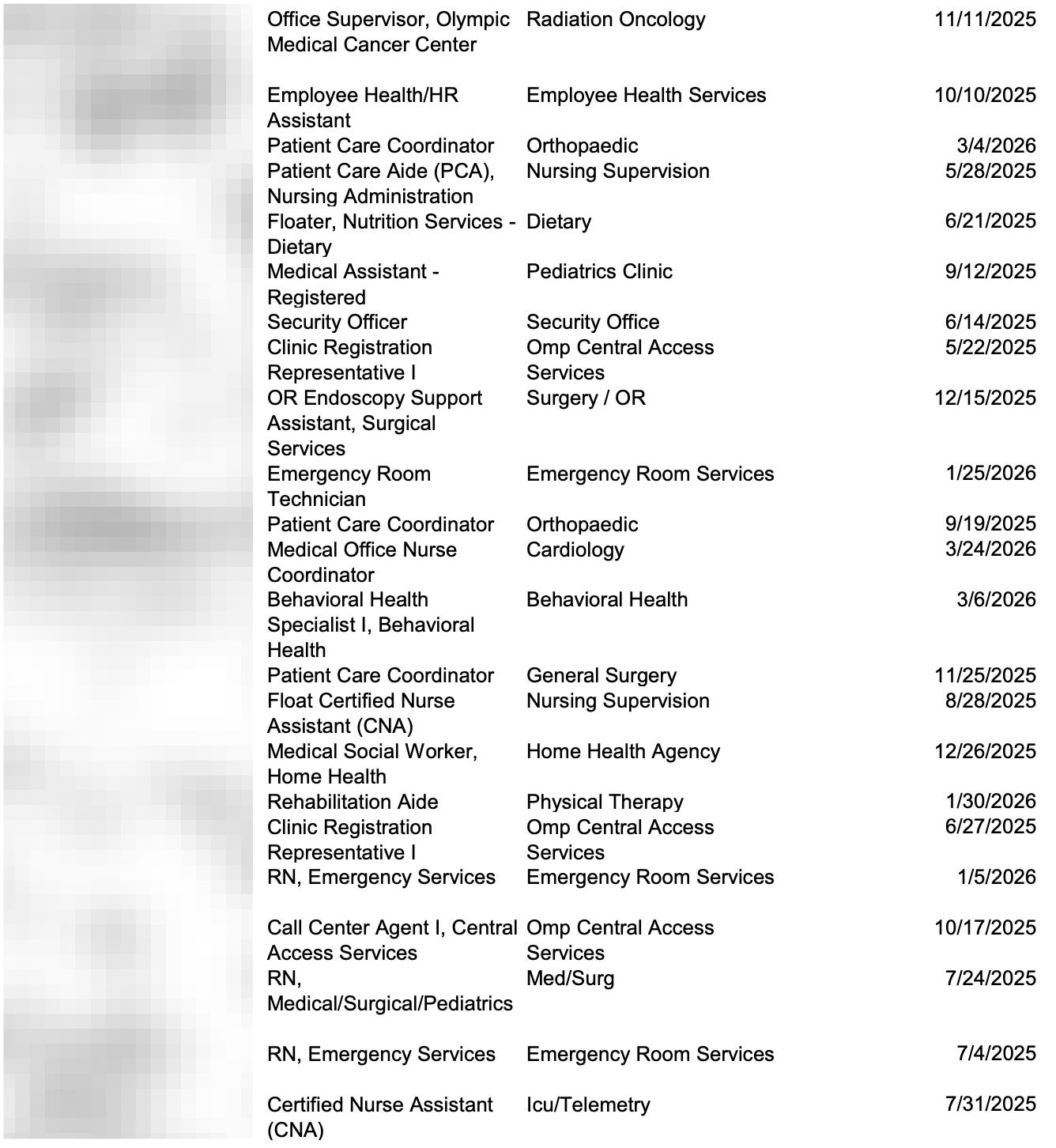
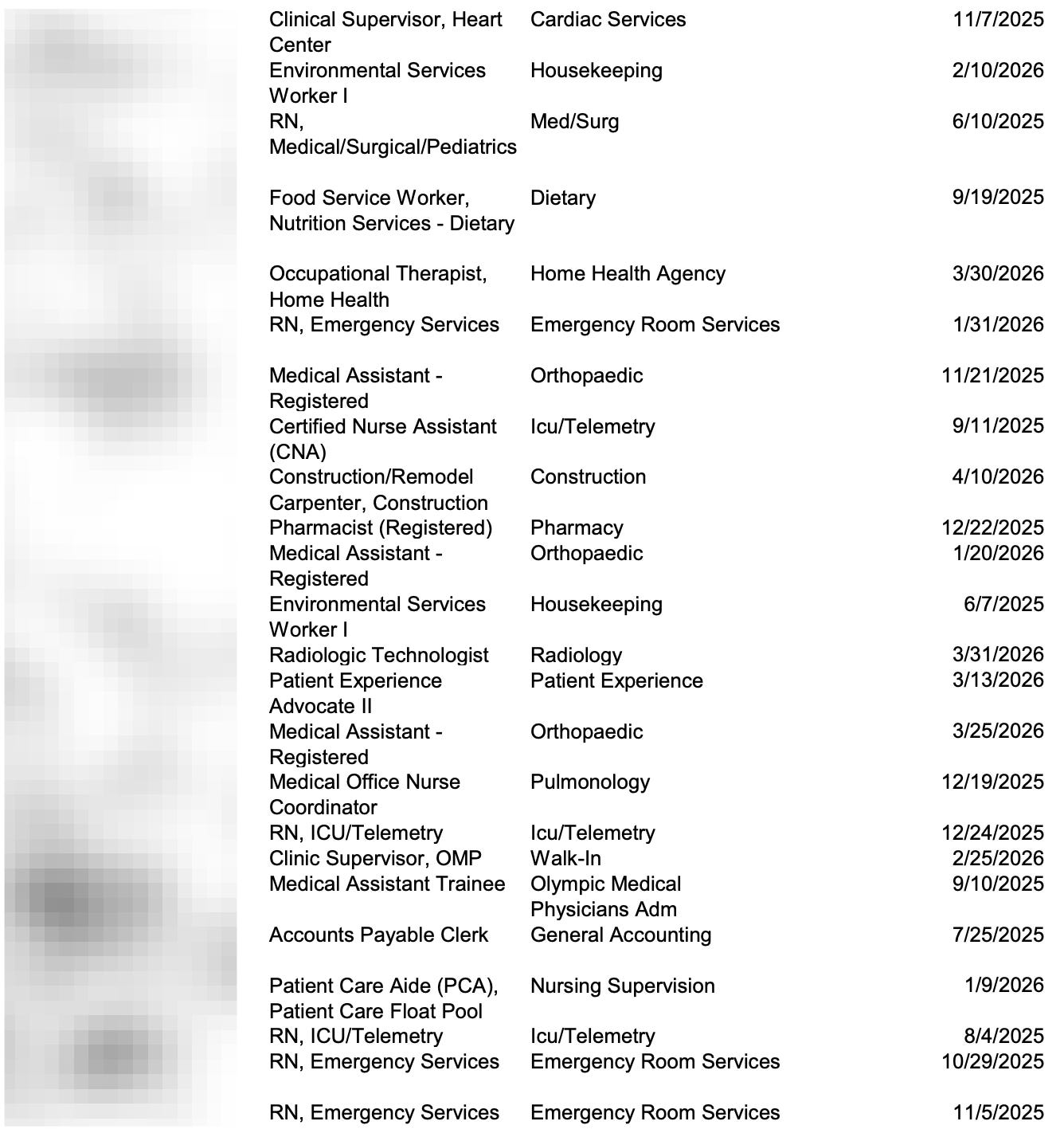
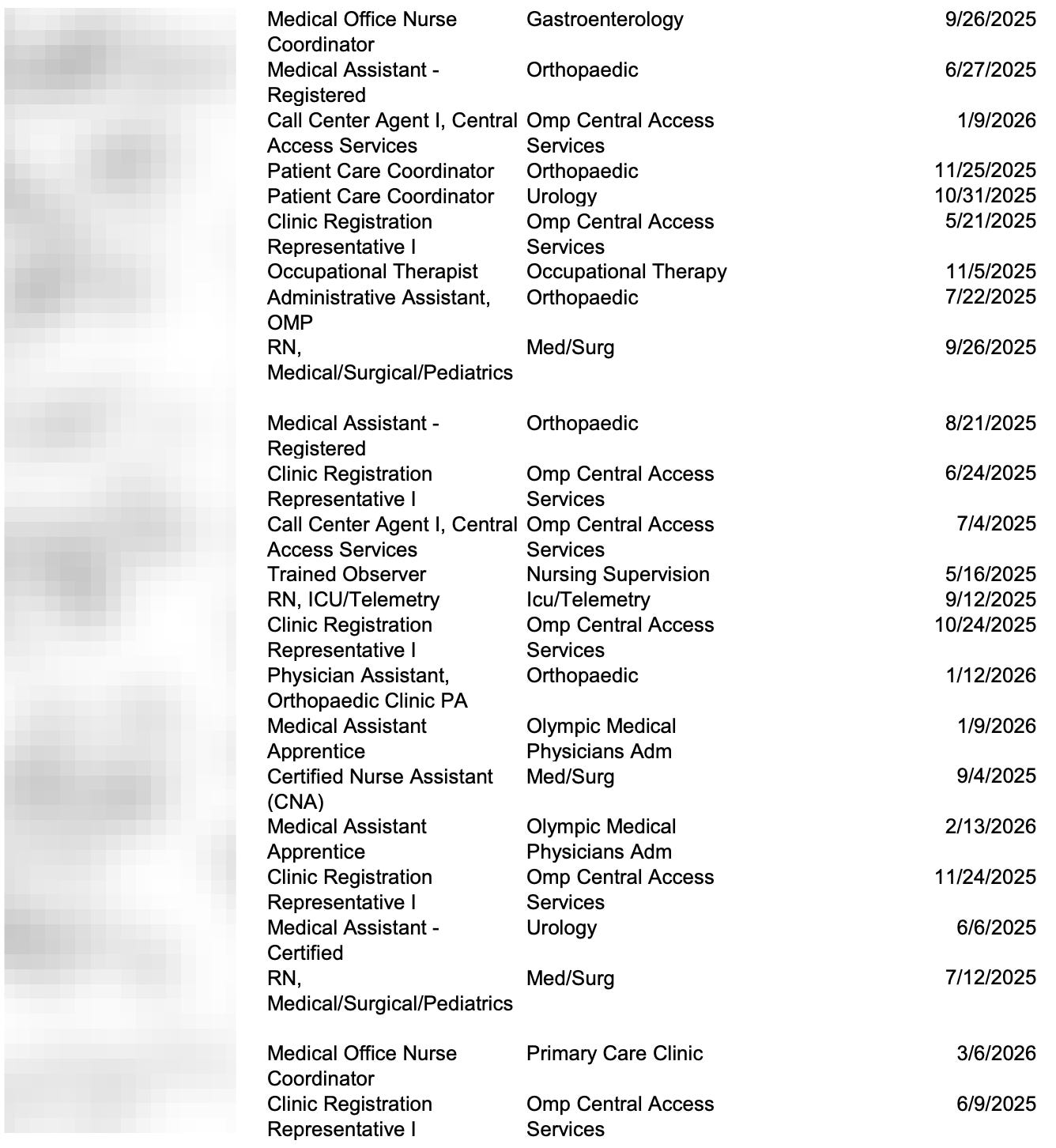
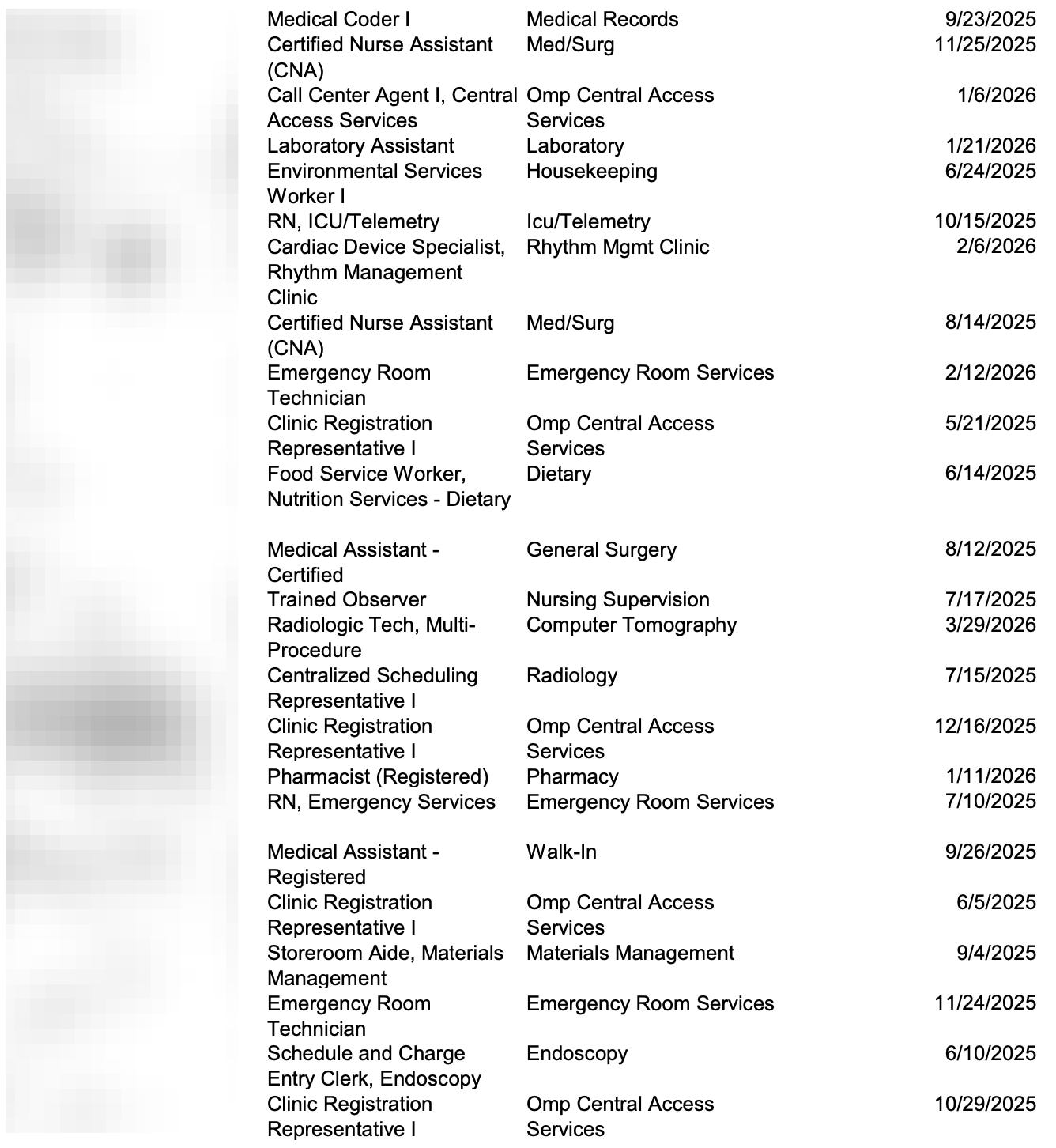
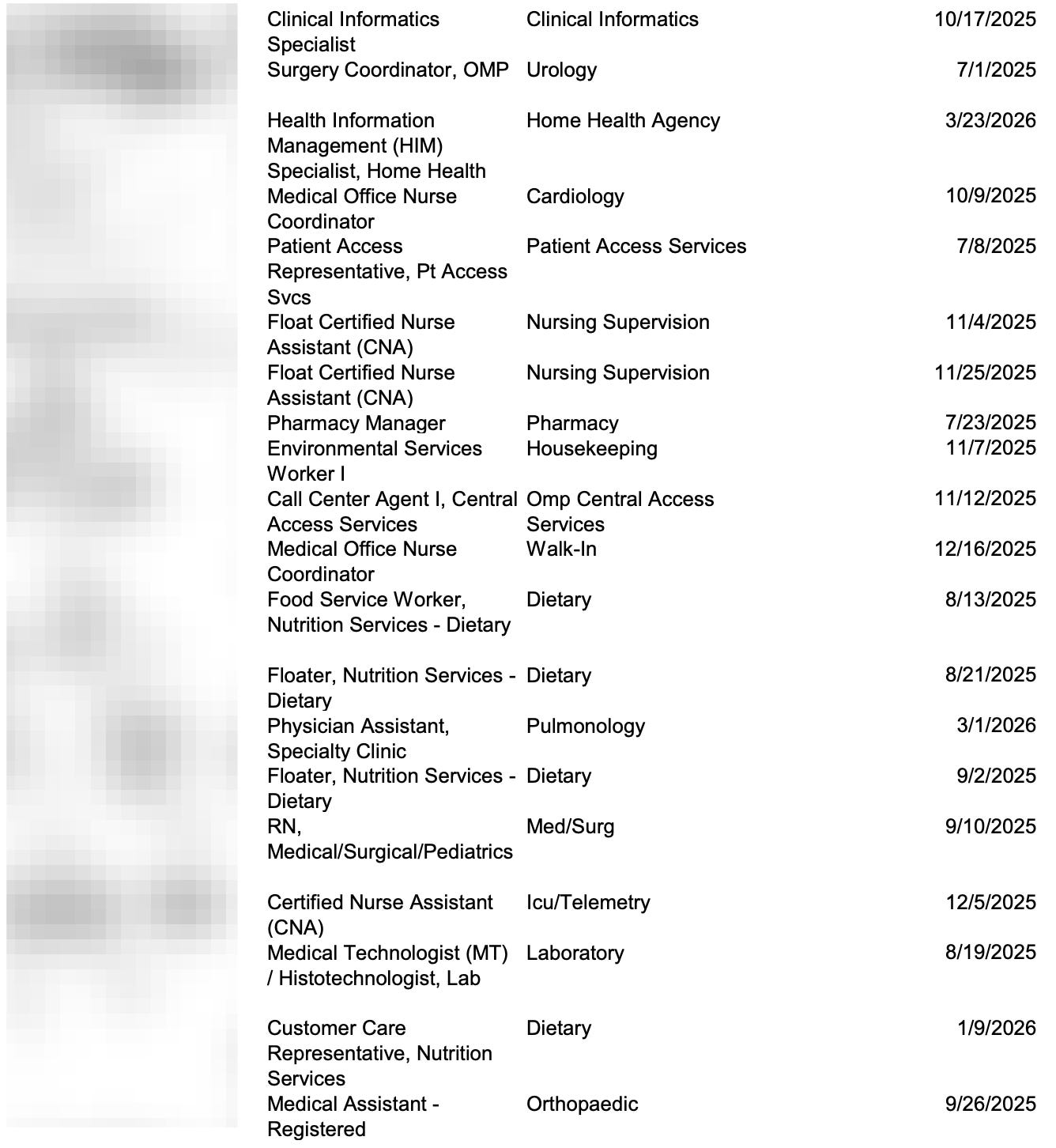
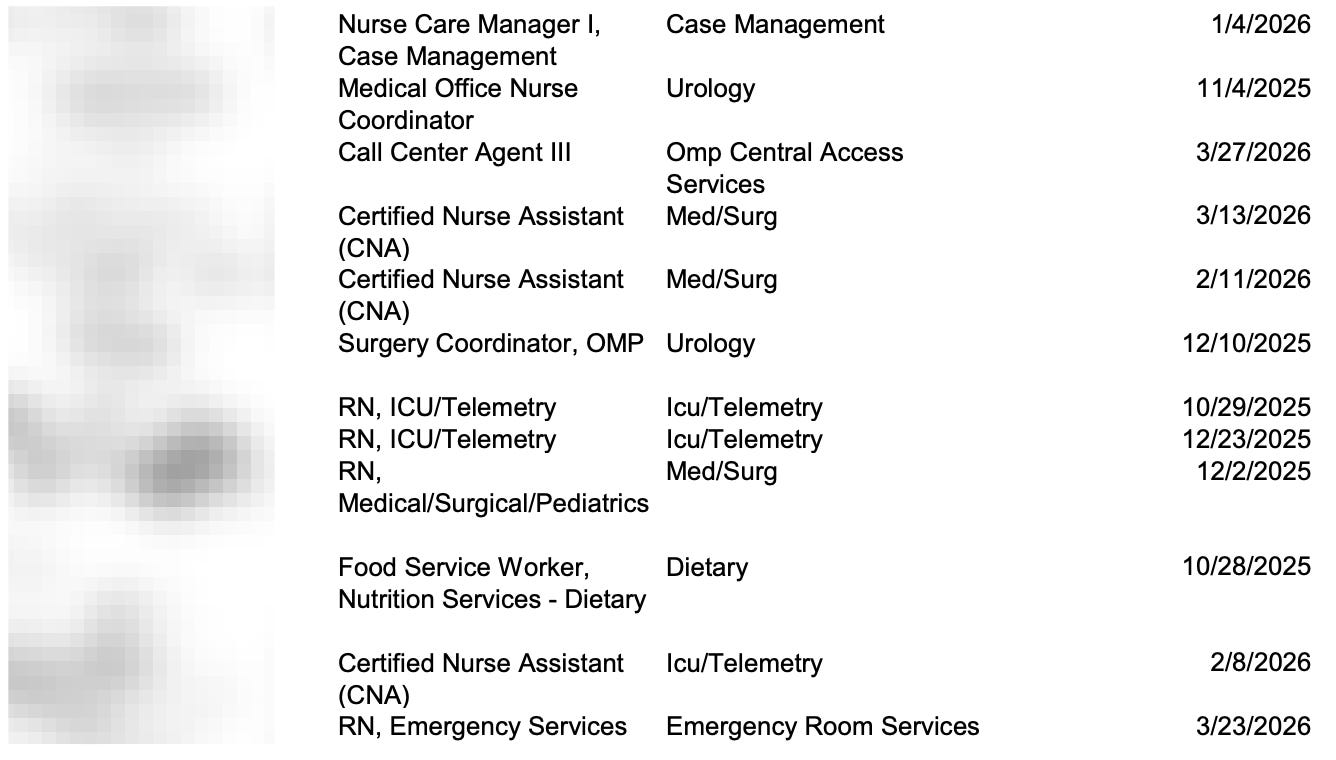
Home Health experienced approximately 19 departures. Emergency Services lost about 16 employees. OMP Central Access lost roughly 15 employees. Med/Surg saw about 11 departures, while ICU/Telemetry lost another 11. Significant turnover also occurred in Primary Care, Orthopedics, Cardiology, Laboratory Services, Radiology, Pediatrics, Obstetrics, Materials Management, Dietary Services, and numerous other departments.
The records also show turnover among OMC’s leadership team, including the departure of the hospital’s CEO, Chief Operating Officer, Chief Financial Officer, Chief Nursing Officer, and multiple directors and managers.
Adding to the uncertainty, OMC is already searching for a permanent CEO. In May, commissioners voted to hire WittKieffer—the same firm that supplied interim CEO Mark Gregson—to recruit his replacement. Gregson reportedly works under a contract worth approximately $50,000 per month and is generally onsite about three and a half days per week, arriving from his home in Arizona on Tuesdays and departing Thursday afternoons.
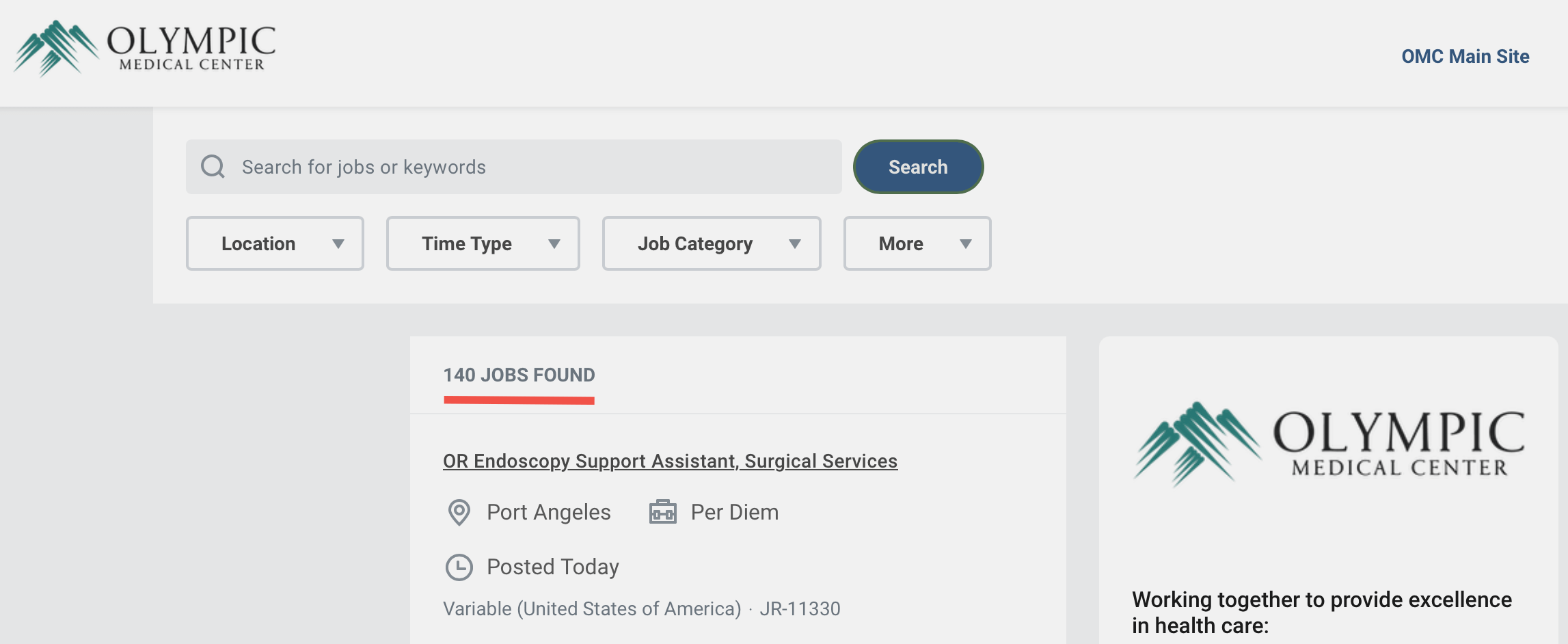
These staffing losses come as OMC continues to face serious financial headwinds. OMC currently has 140 job openings.
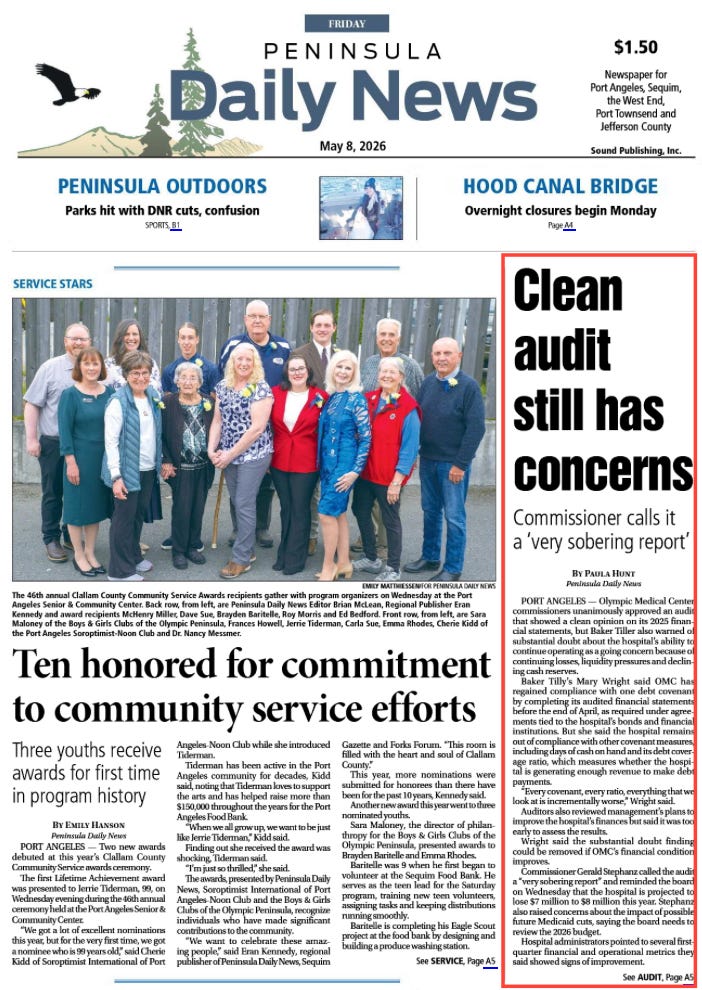
In May, auditors warned there was “substantial doubt” about the hospital’s ability to continue operating as a going concern. OMC remains out of compliance with several debt covenants, faces declining cash reserves, and is projected to lose between $7 million and $8 million this year. According to auditors, “Every covenant, every ratio, everything that we look at is incrementally worse.”
Meanwhile, interim CEO Mark Gregson reported that OMC had reduced its workforce by approximately 140 positions through attrition and unfilled vacancies. He also acknowledged that 23 of the hospital’s 76 providers had left since August, while only 13 had been hired.
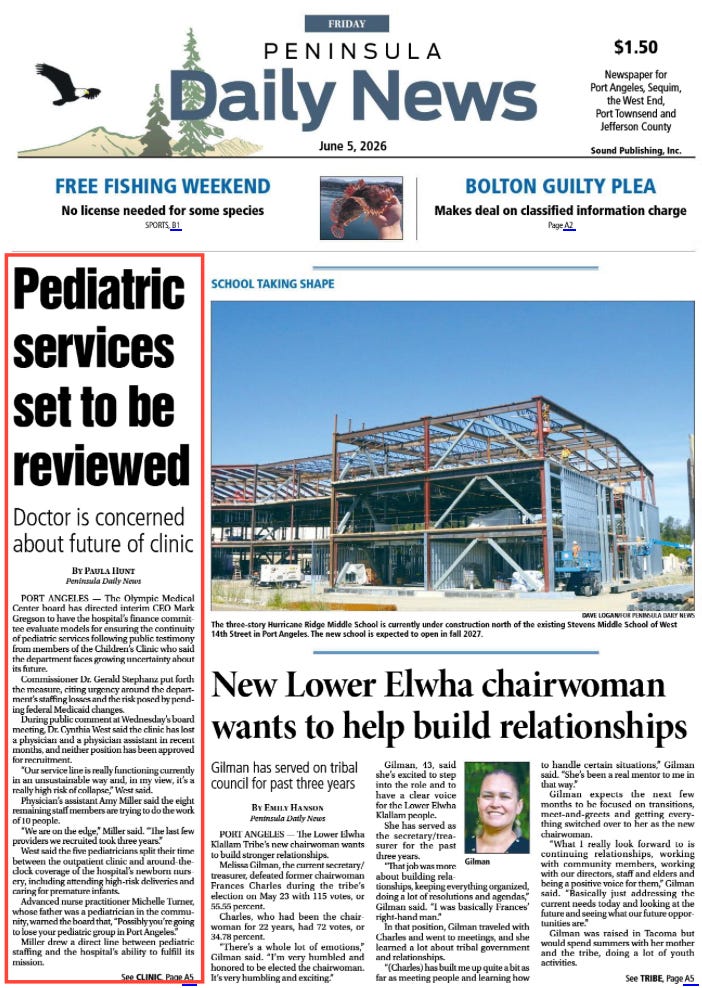
Recent board meetings have featured warnings from providers about worsening morale, staffing shortages, patient access concerns, and uncertainty surrounding pediatric services. Physicians and advanced practice providers have publicly cautioned that replacing specialized medical staff in a rural community can take years.
Taken together, the public record paints a picture of an organization still struggling despite receiving voter approval for increased taxing authority.
That raises a question for taxpayers: If the county’s largest employer continues to lose employees, executives, providers, and department leaders while facing warnings about its financial future, what exactly did residents receive in return for the tax increase they were asked to support?
The Board of County Commissioners’ mission statement promises to “put the translated desires of residents into action through effective communication” and provide “comprehensive and exemplary public service levels in a prompt responsive manner.”
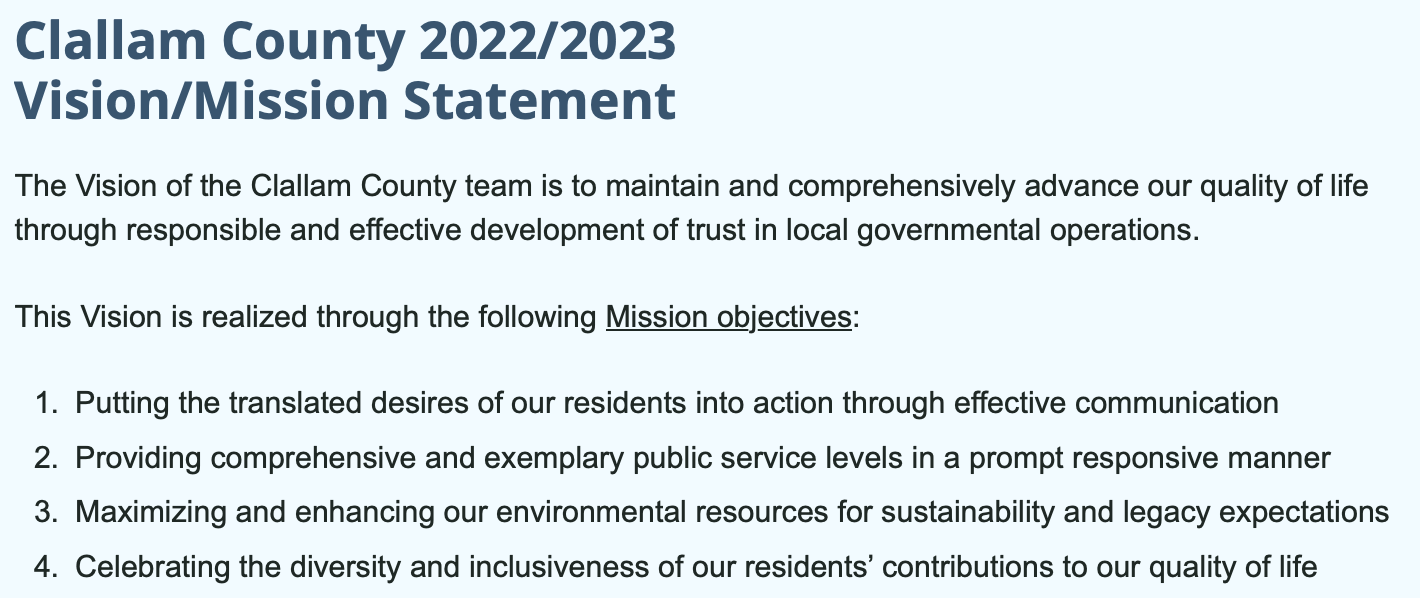
When commissioners endorsed the levy in 2024, residents heard plenty about why OMC needed more money. What they weren’t told were the warning signs that continue to emerge today: financial instab ility, provider departures, leadership turnover, service reductions under consideration, and more than 180 employee separations in a single year.
For an institution that serves as the county’s largest employer and primary public hospital system, those numbers deserve public attention.
Today’s Tidbit: An Endorsement Built on Blind Trust?
The League of Women Voters says it studies issues before taking positions. Yet its endorsement of OMC's 2024 levy reads largely like a summary of OMC's own talking points. Missing are hard questions about cash reserves, management decisions, executive accountability, and the long-term sustainability of the hospital's finances. If the warning signs that later emerged were already developing beneath the surface, how thorough was the League's study—and who was asking the difficult questions before taxpayers were asked to write a bigger check?