


Futurewise and its GreenLink partners want to daylight lower Valley Creek and turn parts of Port Angeles into a new creek-and-trails corridor. Supporters call it environmental restoration. Critics see a costly vision that could require property acquisition, impact industrial land near the waterfront, and eventually burden taxpayers with another park the city struggles to maintain. The Port of Port Angeles has signaled it does not support plans that interfere with waterfront operations, yet the project continues moving forward with grants, NGO backing, and regional political support tied to the NODC — where Clallam County Commissioner Mark Ozias serves in leadership.
In the podcast: Public comment highlights from the commissioners’ meeting.
It Started With an Email
Futurewise is a Seattle-based environmental and “smart growth” nonprofit involved in land-use planning, housing policy, climate initiatives, and environmental restoration projects across Washington state. One of its local efforts is “GreenLink Port Angeles” — a long-term vision to reshape parts of Port Angeles through connected parks, trails, stormwater projects, and restored creek corridors using what planners call “green infrastructure.”
Supporters describe GreenLink as an effort to improve salmon habitat, recreation, walkability, and climate resilience. Critics see something much larger: a gradual but transformative land-use agenda driven by NGOs, grants, advisory committees, and regional planning groups rather than direct public demand or voter approval.
That debate intensified after an April 23 presentation to the North Olympic Development Council (NODC).
During the meeting, Futurewise representative Susannah Spock presented updates on the “GreenLink Port Angeles Master Plan for Valley Creek.” Afterwards, NODC staff circulated the presentation to community leaders and noted that additional background materials and feasibility studies may eventually be posted online.
At first glance, the slides look harmless enough: salmon, trails, stormwater, trees, and community visioning.

But buried inside the presentation are references to:
property ownership,
acquisition planning,
vehicle circulation,
industrial constraints,
and future economic studies.
That is when this stops looking like a simple environmental cleanup project and starts looking like a major land-use proposal.
The presentation itself openly states the project was funded through the EPA and Washington Department of Ecology.
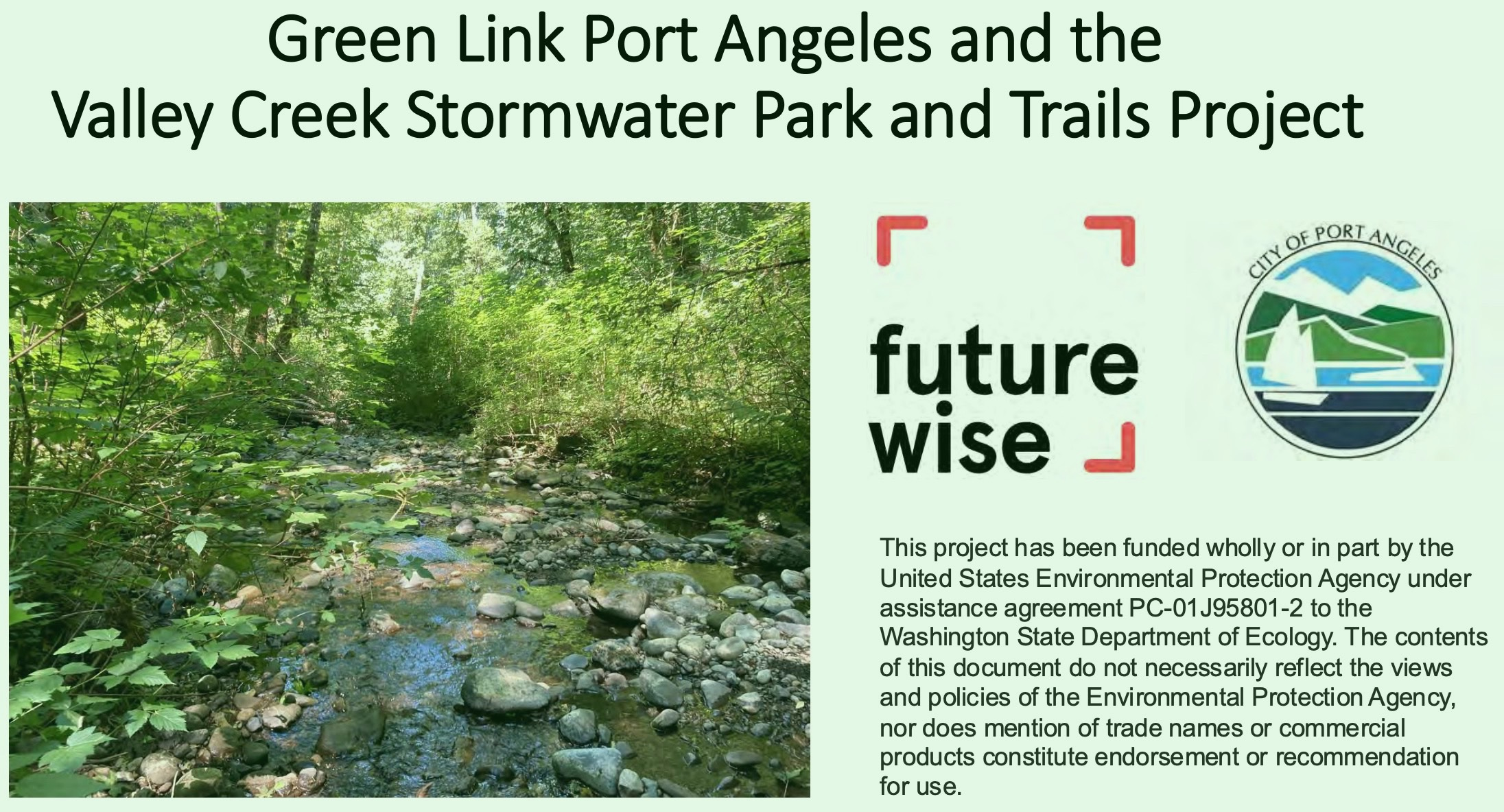

A “Property Acquisition Map” Should Get People’s Attention
By Slide 13, the presentation includes something called a “City property acquisition map.”
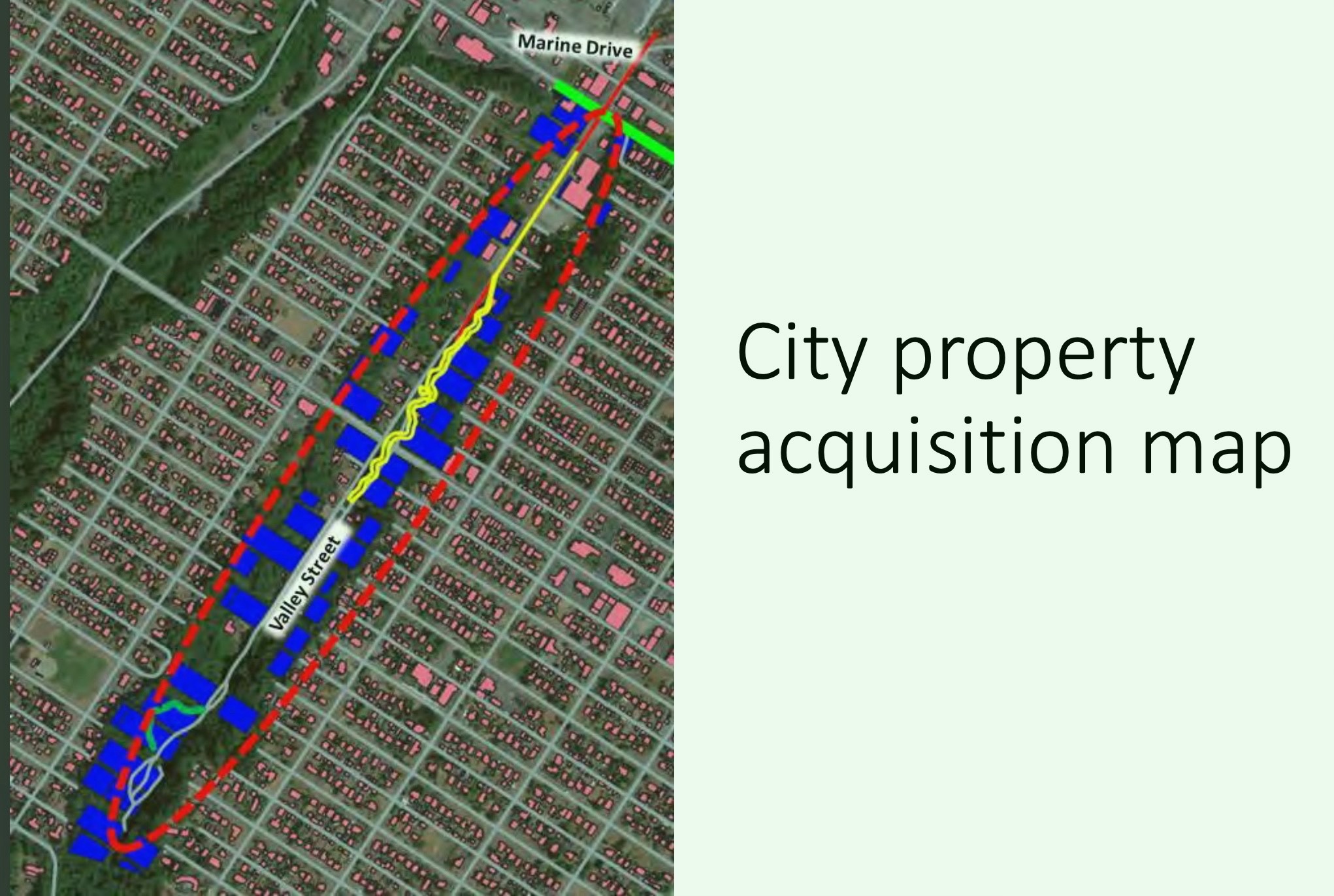
This project is not being proposed in an empty field. It runs through developed parts of Port Angeles near businesses, roads, utilities, industrial property, and waterfront infrastructure.
Slide 11 of the presentation says the planning process examined:
property ownership,
legal and historical context,
pedestrian and vehicle circulation,
creek routing alternatives,
and more.
Again, that is not just “planting trees.” That is planning around existing private and public land.
The City of Port Angeles’ own 2022 feasibility-study packet says the lower Valley Creek watershed is already “highly developed” and includes major constraints involving:
industrial and commercial uses,
stormwater infrastructure,
utilities,
contaminated soils,
and circulation issues.
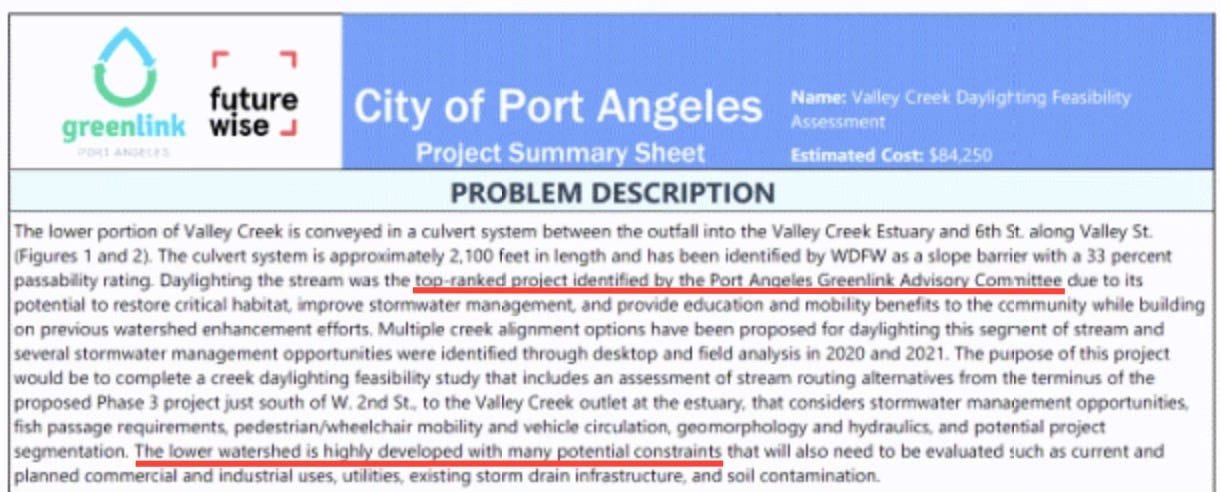
Why Valley Creek?
One of the biggest questions critics raise is simple:
Why Valley Creek?
Valley Creek is not currently a fish-bearing stream in the area being discussed, and the project itself reportedly still faces a major upstream fish-passage problem, including an approximately 8-foot drop further upstream.
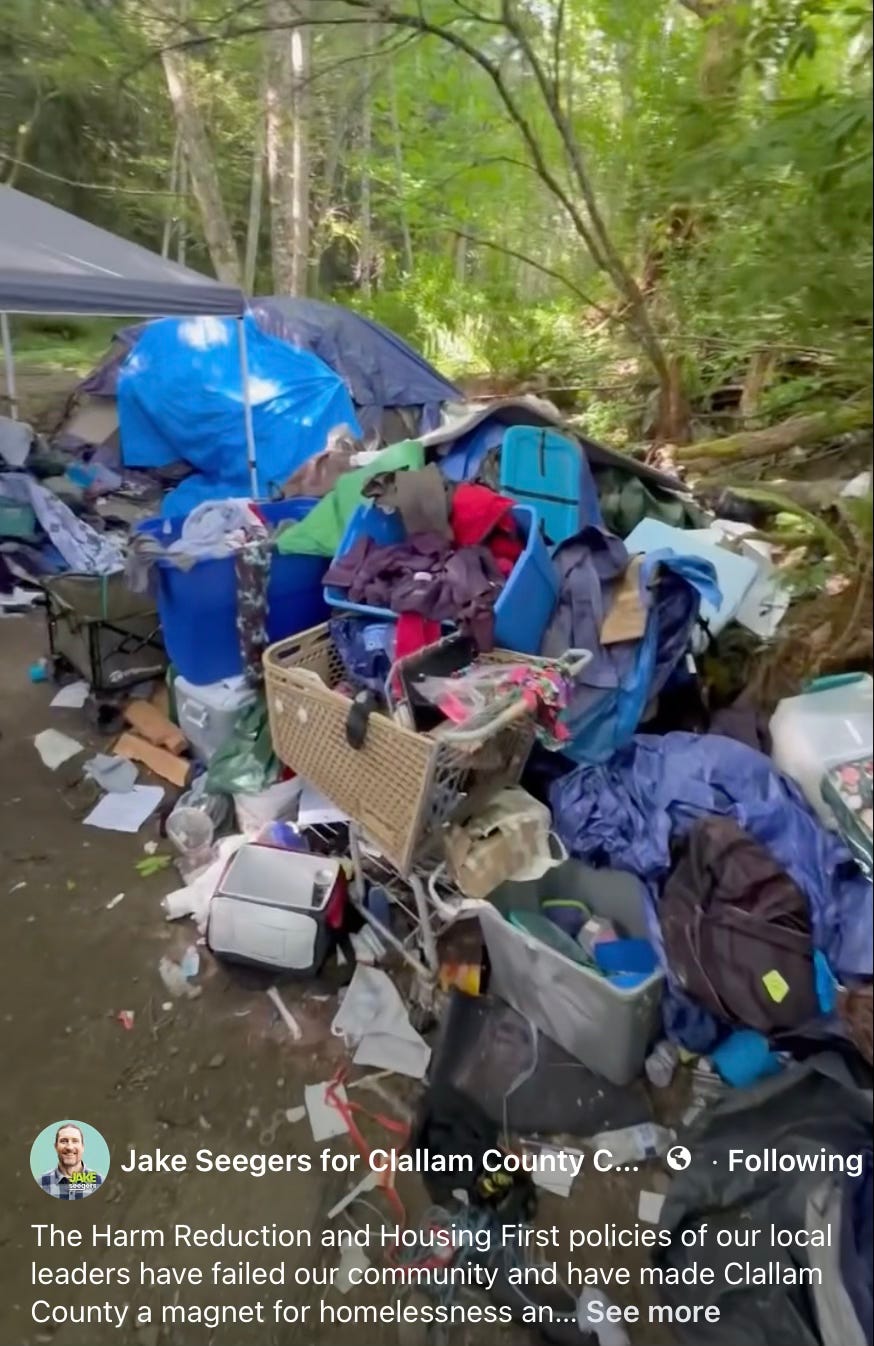
Meanwhile, residents point out that Tumwater Creek — an actual fish-bearing stream — already struggles with homeless encampments, garbage, environmental degradation, drug activity, and public safety concerns.
So critics are asking:
If the city already struggles to protect Tumwater Creek, what happens when another urban creek park is created?
What prevents a future Valley Creek trail system from becoming another unmanaged encampment corridor?
Who pays for security, cleanup, maintenance, and enforcement?
Those concerns are not theoretical anymore in Port Angeles.
Residents have watched camps spread near waterways, parks, trails, and public spaces for years.
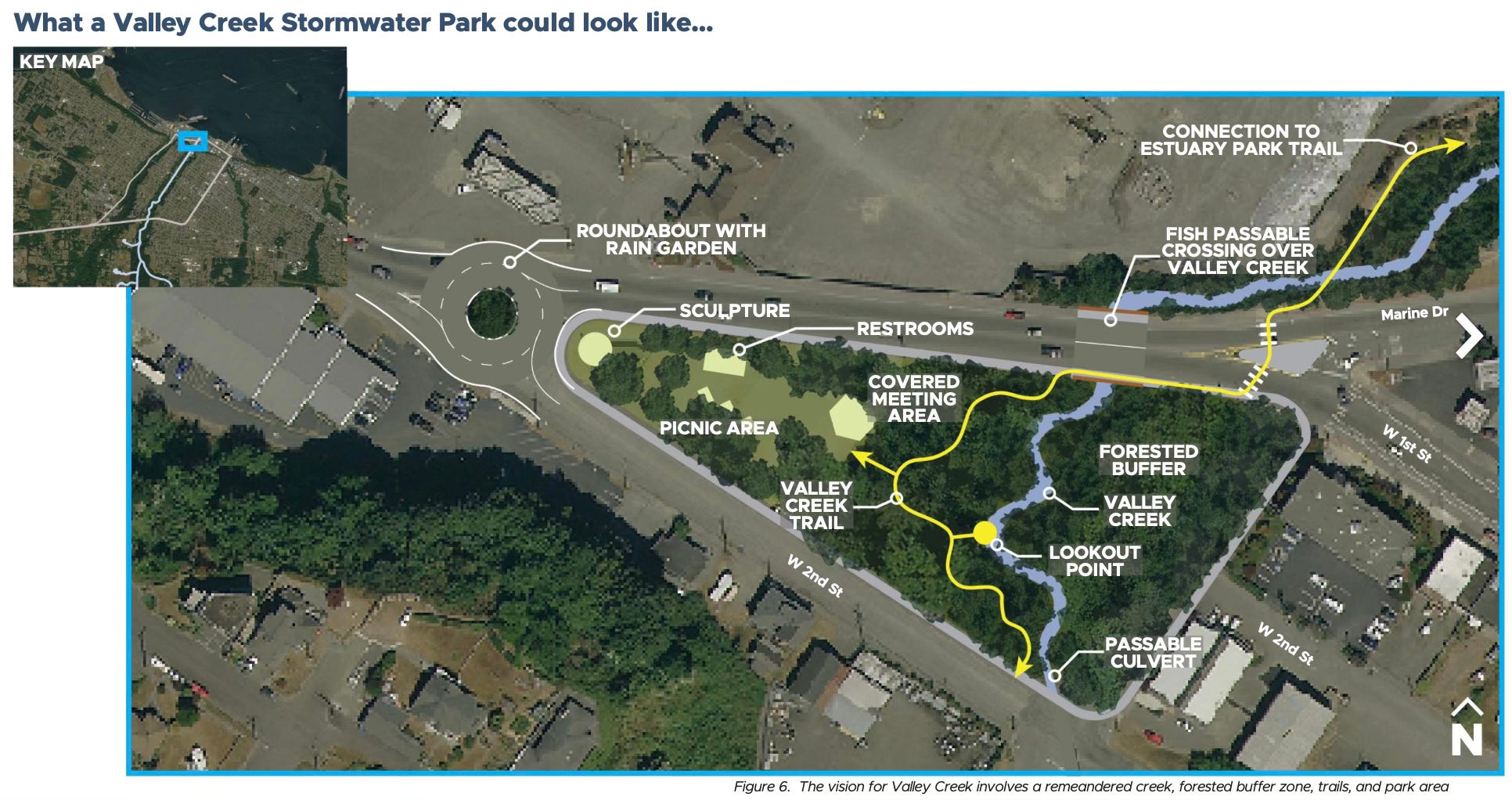
The glossy renderings in the GreenLink presentation show peaceful walking trails and restored habitat. One slide literally transforms an industrial-looking corridor into a green pedestrian creek park.
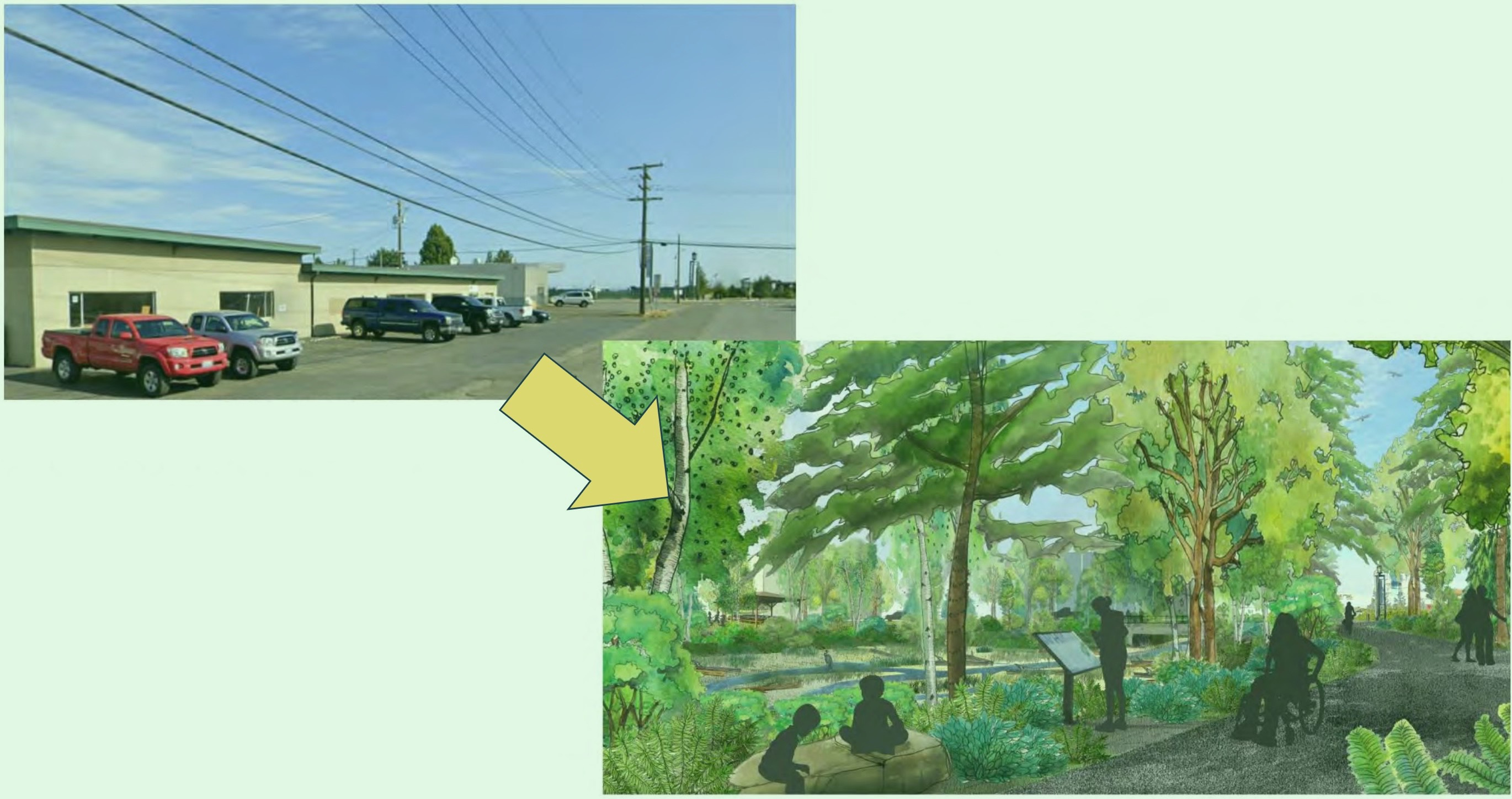
But nowhere in the presentation is there a serious discussion about:
long-term park security,
camping enforcement,
public drug use,
sanitation,
or the costs of maintaining another vulnerable urban greenspace.
The Port and Futurewise Are Not on the Same Page
The Port of Port Angeles may not have passed a formal resolution opposing the Valley Creek project, but its own planning documents make one thing very clear: protecting the working waterfront comes first.
The Port’s 2024 Recreation and Public Access Plan repeatedly states that public access and recreation must remain compatible with:
industrial and marine-trades activity,
freight movement,
maritime operations,
and long-term economic development.
That matters because the GreenLink proposal envisions transforming parts of the waterfront area into green infrastructure corridors, trails, and public-access spaces — the exact kinds of changes that can conflict with industrial waterfront operations.
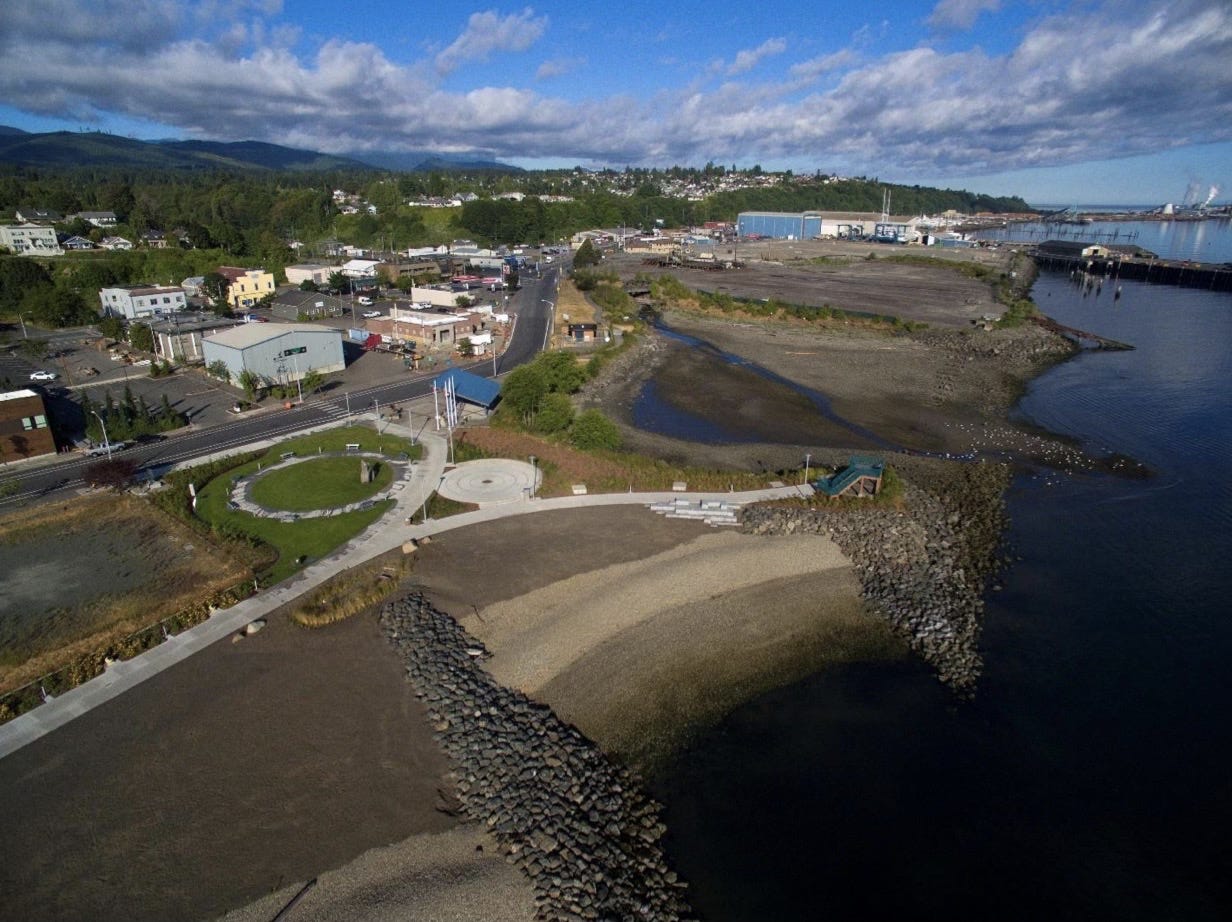
The GreenLink documents themselves acknowledge those challenges. The planning materials discuss:
property acquisition,
circulation changes,
infrastructure conflicts,
industrial land constraints,
and impacts to surrounding businesses.
At the same time, the Port has been actively pursuing marine-trades and industrial development projects nearby.
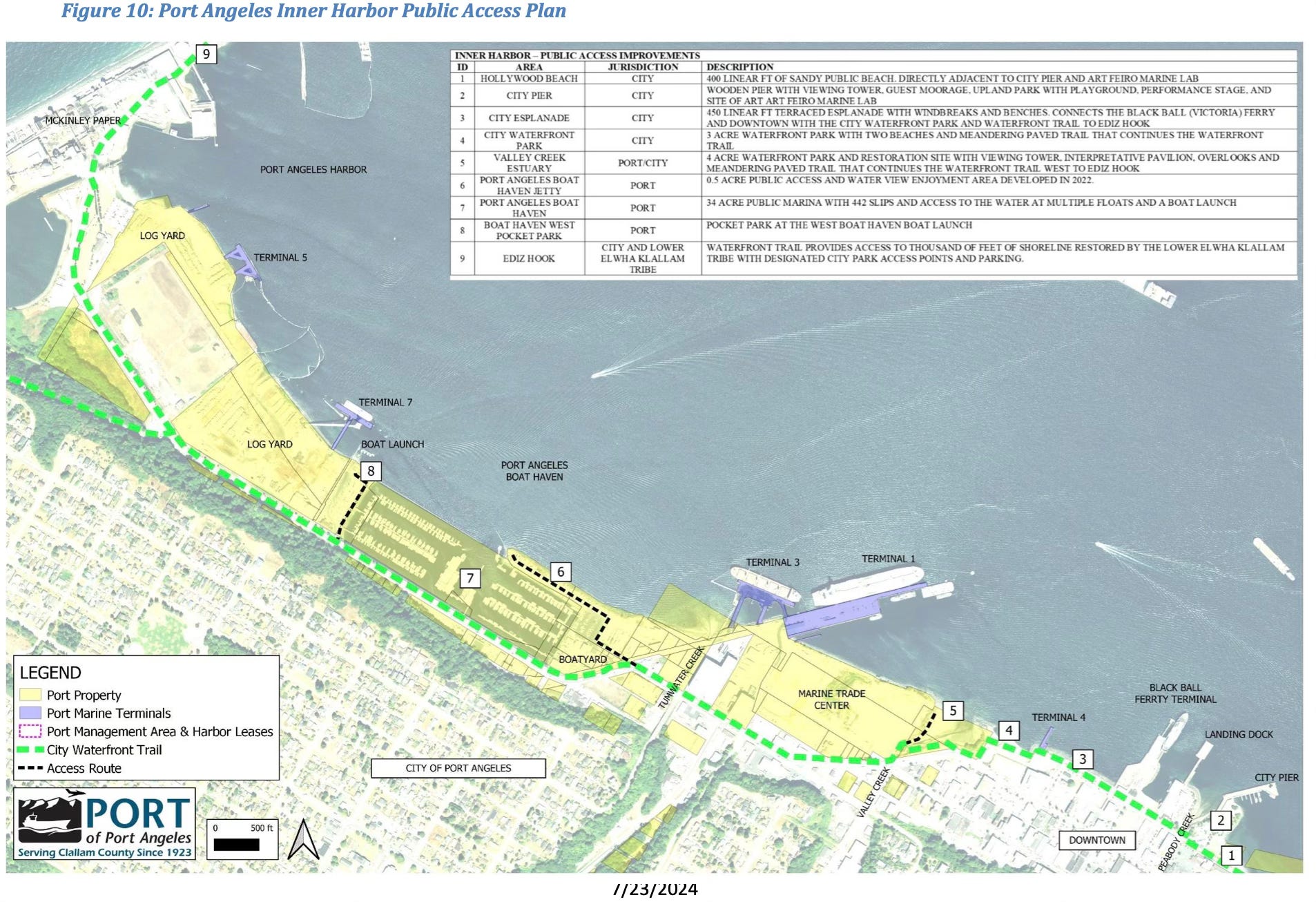
Those two visions do not naturally align.
One side sees a restored creek corridor and public greenspace. The other sees working waterfront land that supports jobs, shipping, marine trades, and economic activity.
Port planning documents repeatedly stress that recreation must not interfere with industrial waterfront operations — language that strongly suggests the Port has little interest in seeing key waterfront property transformed into another experimental urban restoration project.
The Money Doesn’t Exist Yet
Another major issue: funding.
The City’s own feasibility materials acknowledge that the lower Valley Creek corridor is heavily developed and filled with major constraints. The documents also make clear that the current grants fund planning work — not construction — meaning the project would depend on substantial future funding, additional studies, and further phases before any major work could move forward.
Despite that, the project continues moving forward through grants and planning phases.
The Puget Sound National Estuary Program lists a $100,000 award connected to the “GreenLink Port Angeles Valley Creek Stormwater Park.” Futurewise also later sought consultants for an economic study tied to the Valley Creek daylighting project and future capital funding applications.
In other words:
the project may not have construction money, but it continues building momentum through planning grants, studies, outreach, and stakeholder coordination.
Who Is Driving This?
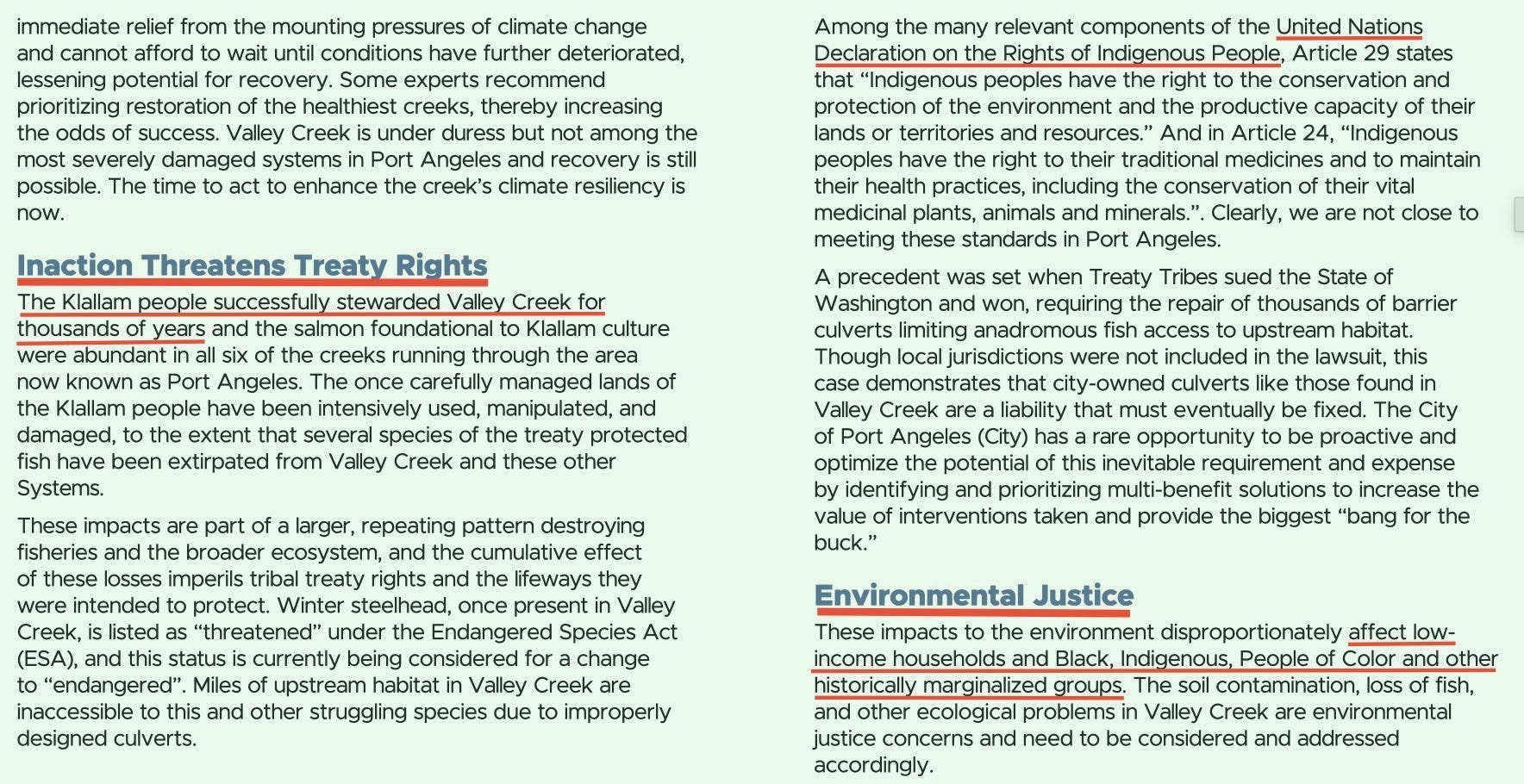
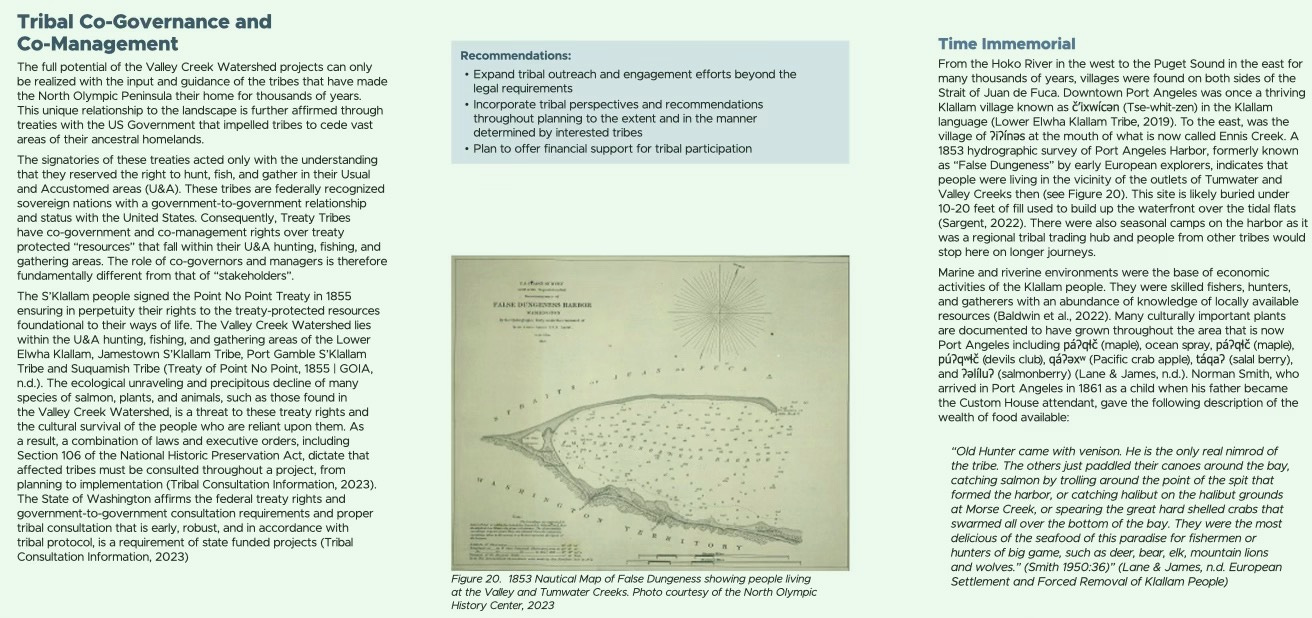
The GreenLink Advisory Committee (GLAC) reportedly included environmental organizations, agency representatives, consultants, and tribal participation.
According to the City packet, participants included:
the Lower Elwha Klallam Tribe,
Washington Sea Grant,
Olympic National Park,
City representatives,
environmental planners,
and restoration professionals.
The same City materials specifically reference:
tribal cultural interests,
environmental justice,
and tribal restoration interests connected to Valley Creek.
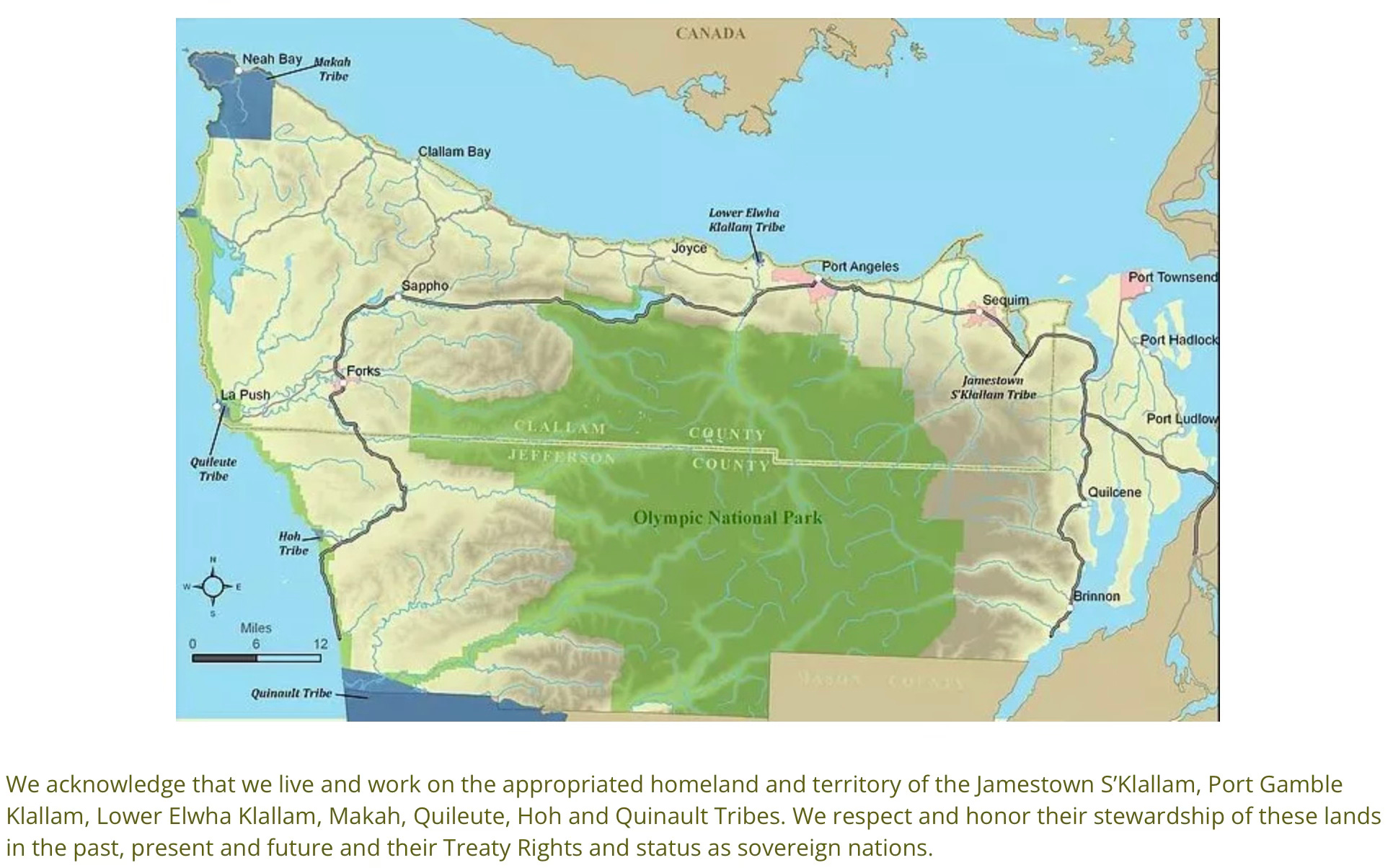
Meanwhile, NODC — the organization hosting the presentation — prominently features tribal land acknowledgment language on its website and includes tribal governments among its membership.
Clallam County Commissioner Mark Ozias serves as Vice President of the NODC.
That raises a broader public question:
How much influence should NGOs, unelected advisory groups, and grant-funded planning organizations have over the future of Port Angeles property, waterfront development, and public land policy?
The Bigger Concern
Supporters see GreenLink as restoration.
Critics see the early stages of something much larger:
property acquisition,
shifting waterfront priorities,
expensive long-term obligations,
and another urban park system that the city may struggle to control or maintain.
And after watching what happened around Tumwater Creek, many residents are no longer convinced that simply creating another “green corridor” automatically improves a city.
Sometimes it just creates another place government cannot manage.
Today’s Tidbit: Another Transient Sex Offender Arrives in Clallam County
Clallam County has attracted another transient sex offender.
Why?
Because this county is increasingly becoming the path of least resistance — a place where transients can arrive, blend in, access services, and remain largely disconnected from accountability. Critics say the combination of permissive policies, weak enforcement, endless social services, and publicly funded harm-reduction programs has helped turn Port Angeles into a destination for troubled individuals from outside the region.
According to the Washington sex offender registry, 32-year-old Mikel Adam Couch is now listed as a transient in Port Angeles.
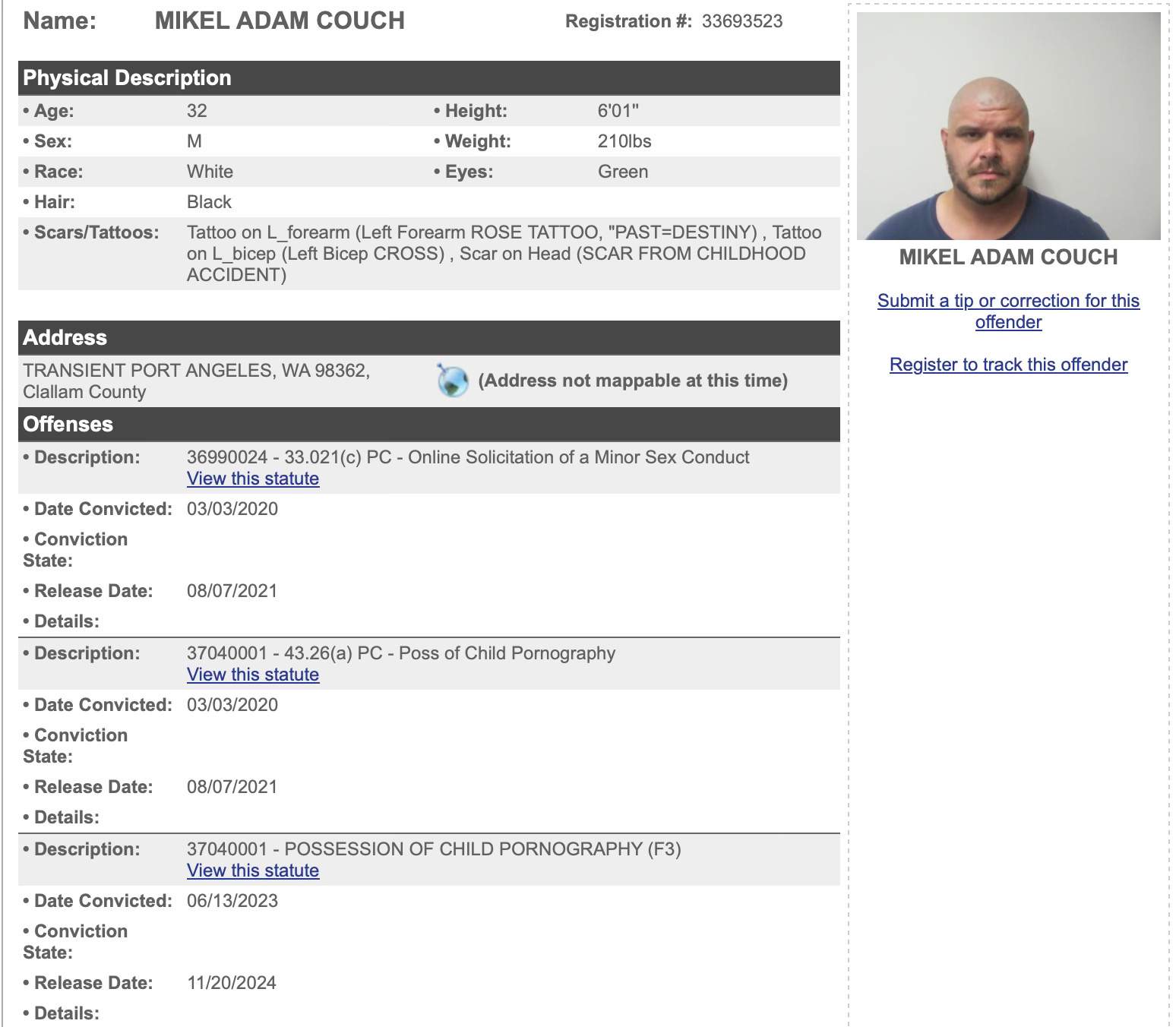
Couch’s criminal history comes out of Texas and includes:
Online Solicitation of a Minor for Sexual Conduct
Two convictions for Possession of Child Pornography
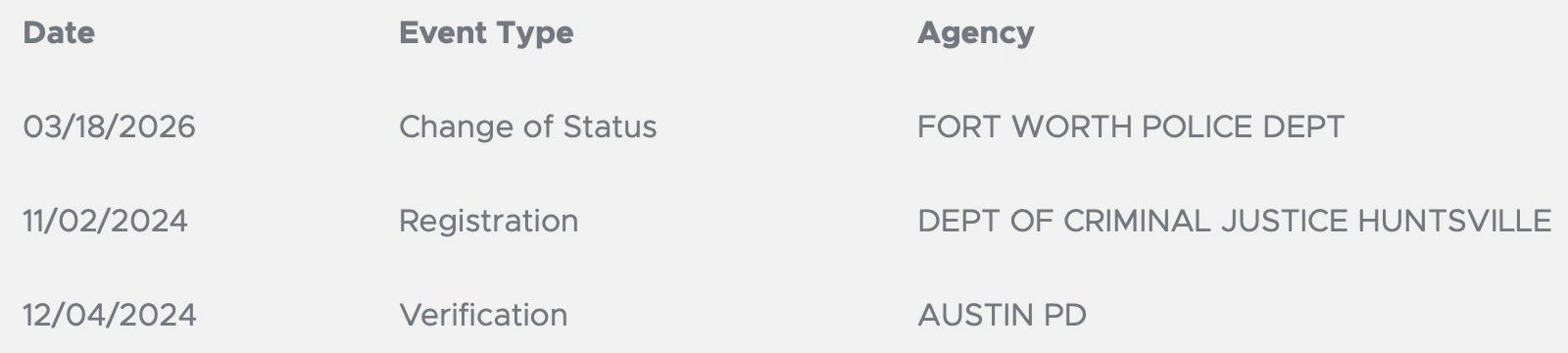
Texas records show he was still registered there as a sex offender as recently as March of this year.
According to a 2019 CBS Texas report, Couch was among multiple suspects arrested during an undercover Internet Crimes Against Children operation in Tarrant County.
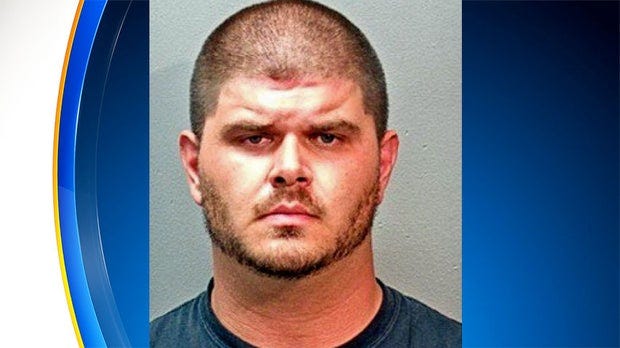
Police said undercover officers posed as minors online to identify adults attempting to arrange sexual encounters with children.
Investigators said Couch believed he was meeting a 15-year-old girl.
According to the report, Couch later consented to a search of his cellphone, where investigators reportedly discovered four videos of child pornography.
And now he is reportedly transient in Port Angeles.
Residents are asking an increasingly uncomfortable question:
Why does Clallam County continue attracting people like this?
Many locals argue that the county’s policies advertise that Port Angeles is a place where transients can access:
free supplies,
publicly funded services,
relaxed enforcement,
camping tolerance,
and harm-reduction programs with few meaningful barriers.
Critics also point to the county’s Harm Reduction Health Center, where individuals can receive free drug paraphernalia and shower vouchers for the Shore Aquatic Center.

That policy was approved by the Shore Pool Board, which includes Commissioners Mike French and Randy Johnson, Port Angeles City Councilmembers LaTrisha Suggs and Mark Hodgson, and community member Greg Shield.

So residents are left wondering:
How did Clallam County become a place where transient offenders from Texas end up living near parks, trails, schools, and public facilities — while local taxpayers fund the systems supporting them?


