


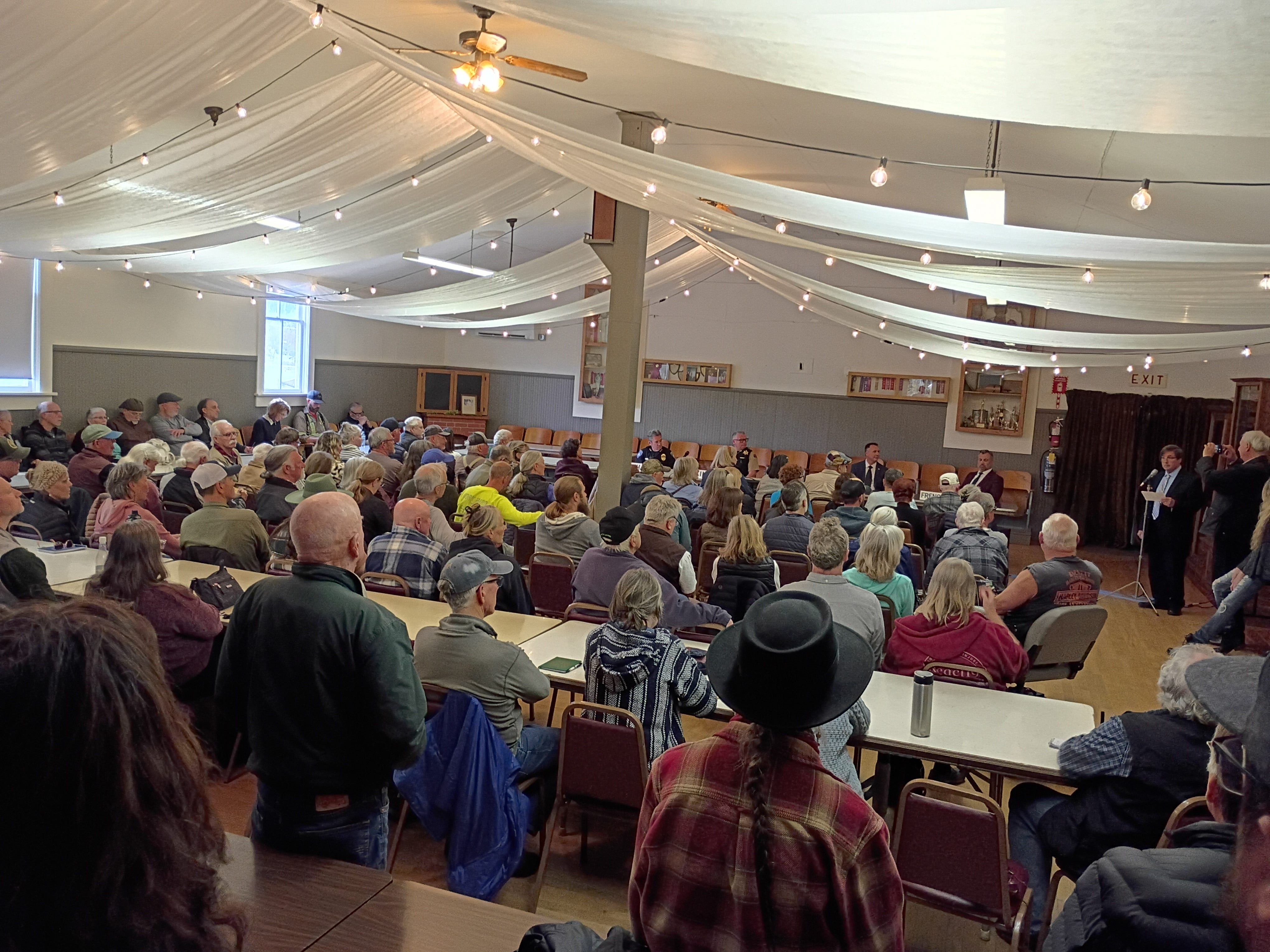
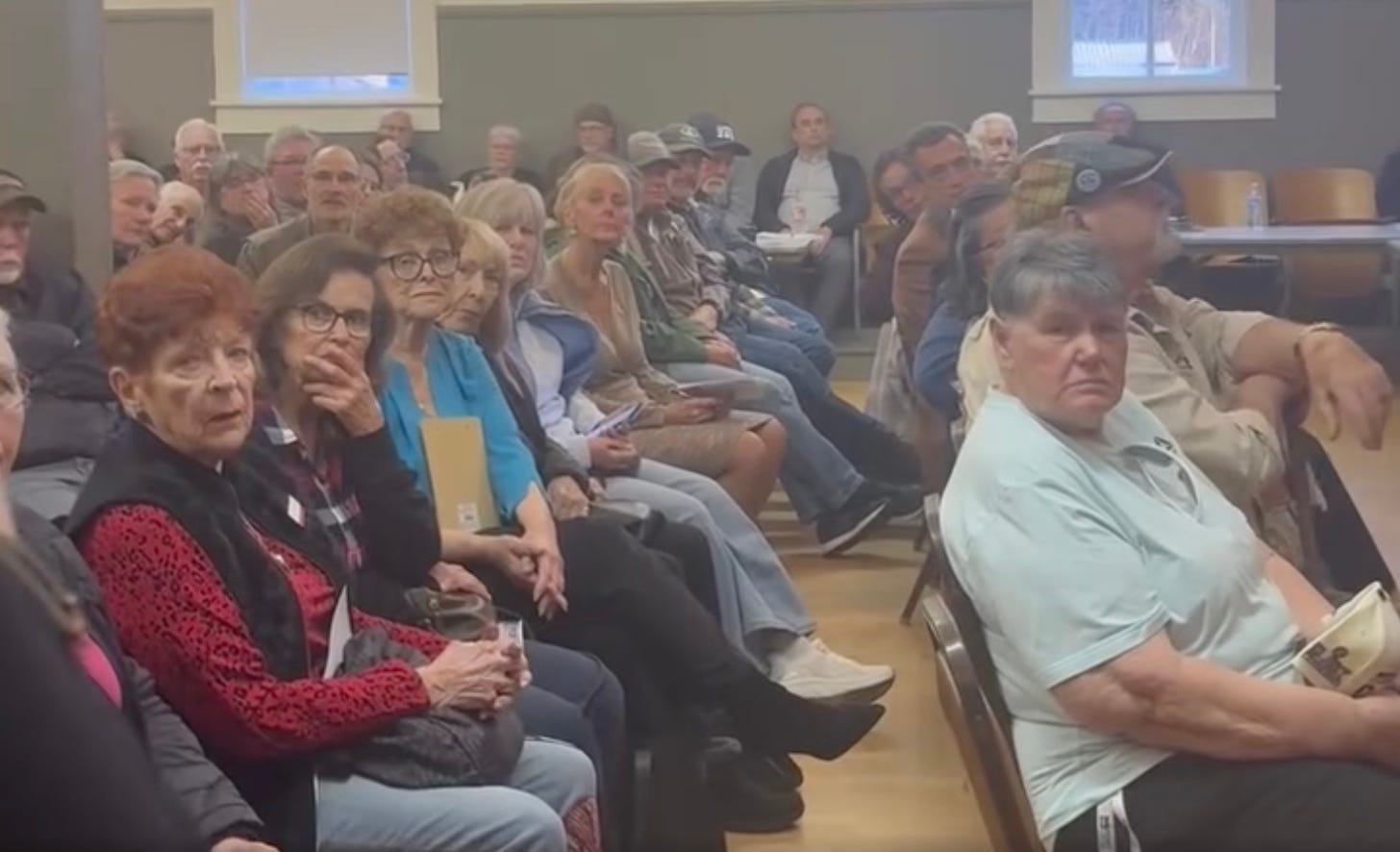
At Thursday’s Public Safety Town Hall, 172 Clallam County residents packed the Fairview Grange Hall for an unfiltered, two-and-a-half-hour exchange with local leadership. What emerged wasn’t just a discussion about crime—it was a revealing look at priorities, philosophies, and a growing disconnect between elected officials and the people they represent.
Democracy, Unfiltered
There was no moderation in the traditional sense. No curated questions. No guardrails.
Residents stepped up to the microphone one by one, asking direct, sometimes uncomfortable questions of those in charge. It was democracy in its most authentic form—raw, unscripted, and at times, tense.
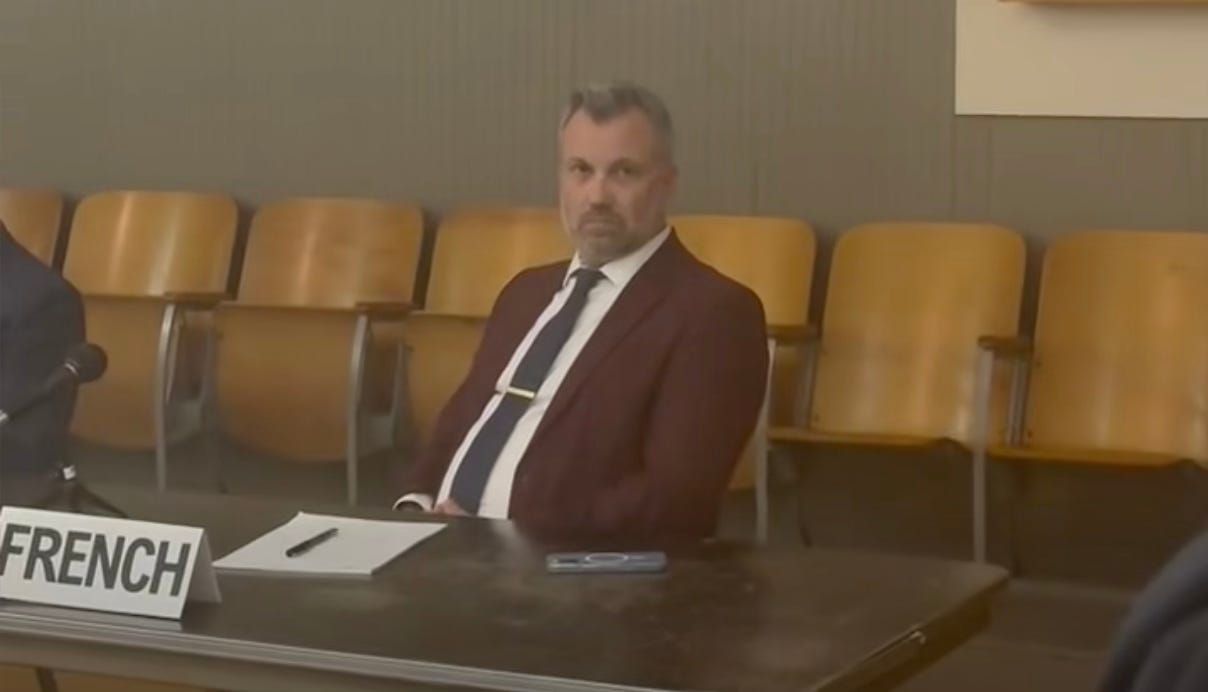
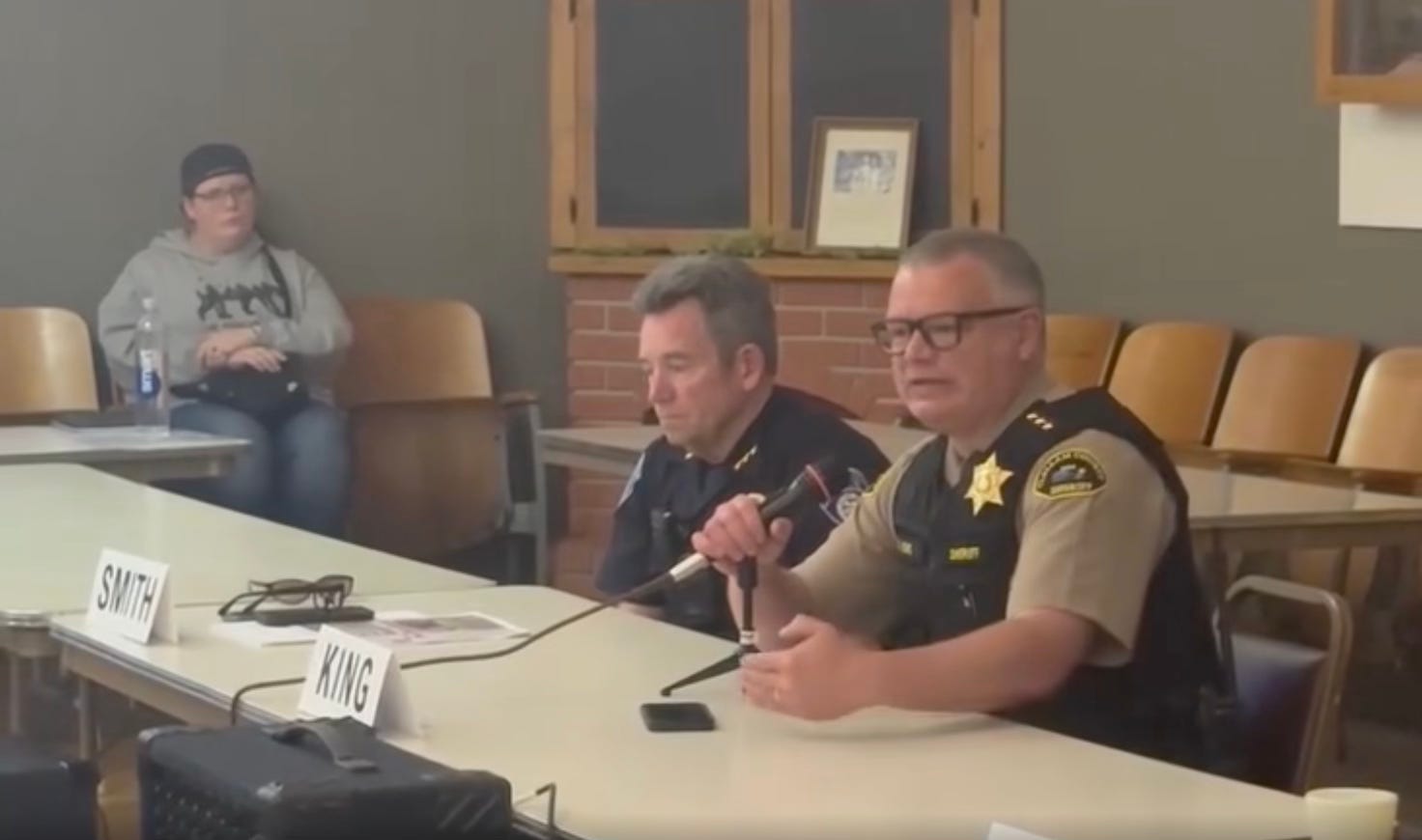
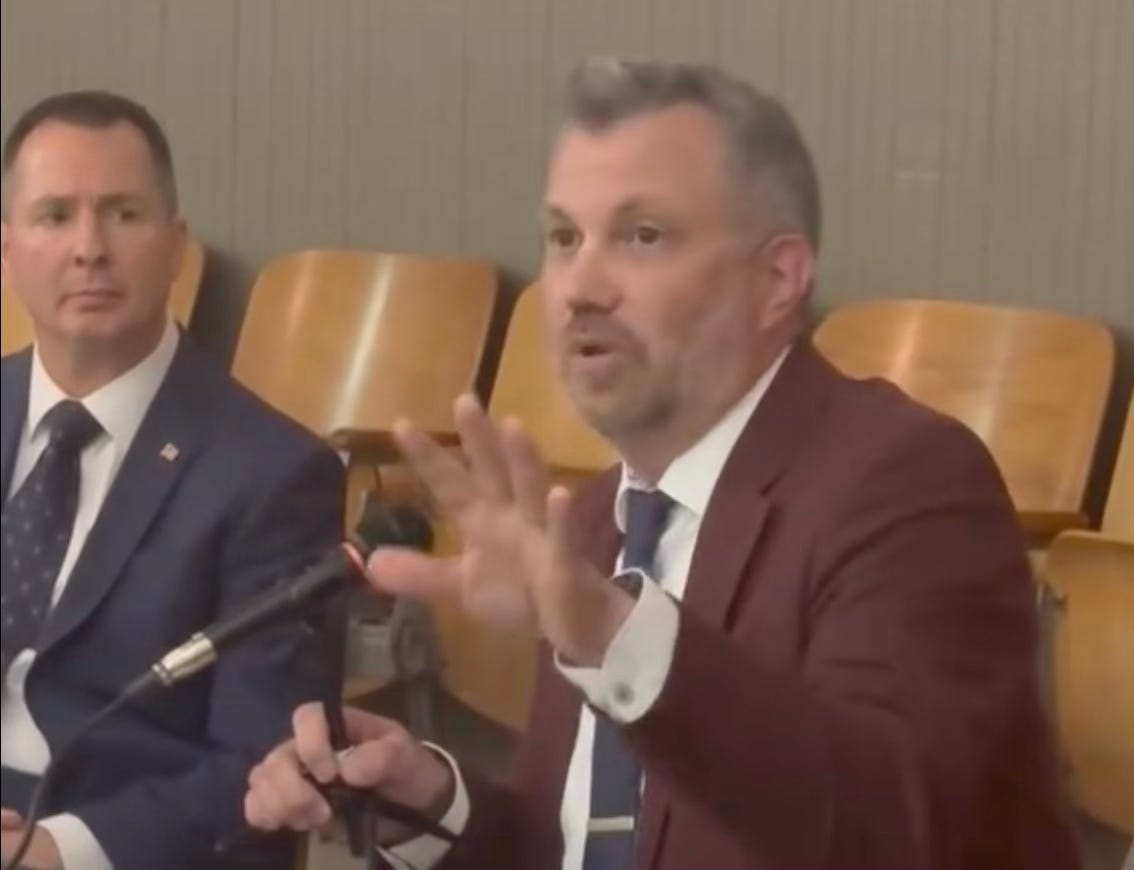
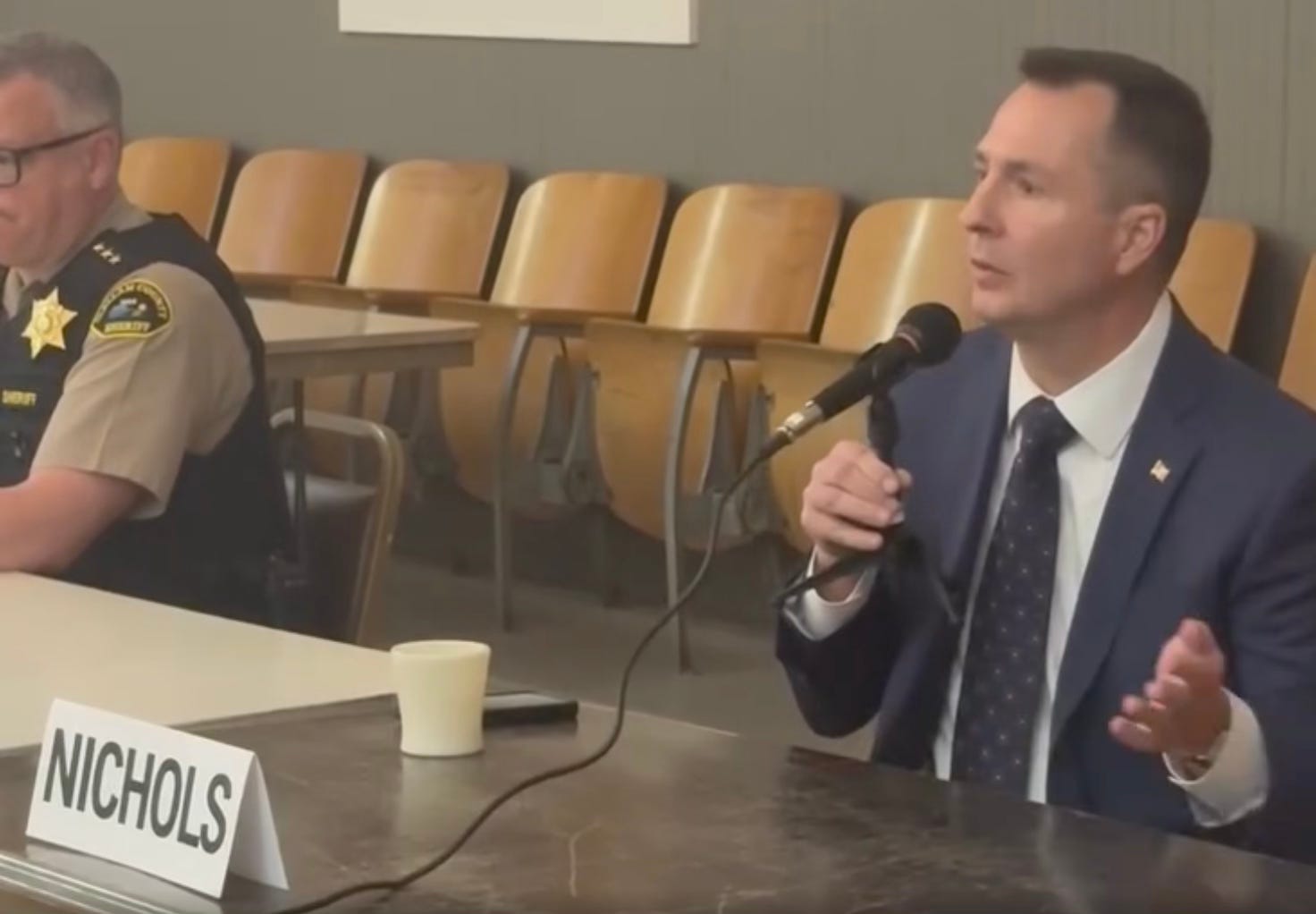
The panel included County Commissioner Mike French, County Prosecutor Mark Nichols, Clallam County Sheriff Brian King, and Port Angeles Police Chief Brian Smith.
Of the three county commissioners, only Mike French attended. Commissioner Randy Johnson cited family obligations, and Commissioner Mark Ozias declined to participate. In a room full of constituents seeking answers, that absence was noticed. French’s willingness to show up, take questions, and stay for the full duration deserves acknowledgment.
A Clear Policy Framework
Throughout the evening, Commissioner French articulated a consistent governing philosophy centered on three pillars:
A housing-first approach centered on continued investment in new units—often translating into high-cost developments for the homeless, like the nearly completed North View complex, featuring rooftop terraces and price tags approaching $350,000 per unit
Support and possible expansion of harm reduction programs as a primary response to addiction
A belief that increased tax revenue is necessary to solve the county’s challenges
His message was steady: the problems are complex, and the solutions require more resources, more infrastructure, and more government involvement.
A Moment That Defined the Night
One exchange crystallized the divide between the audience and the dais.
Jake Seegers asked attendees two simple questions:
First, whether public safety was a top priority. Nearly every hand went up.

Second, whether they felt safer today than they did four years ago.
Out of 172 people, only two hands initially rose.
Then a third hand went up—Commissioner Mike French.
The moment didn’t need commentary. That contrast spoke for itself.
Competing Views of Reality
Commissioner French outlined his understanding of the root causes behind the county’s challenges:
Homelessness is primarily driven by high housing costs
Economic disruption from COVID-era job loss continues to play a role
Harm reduction is an effective pathway toward recovery and stability
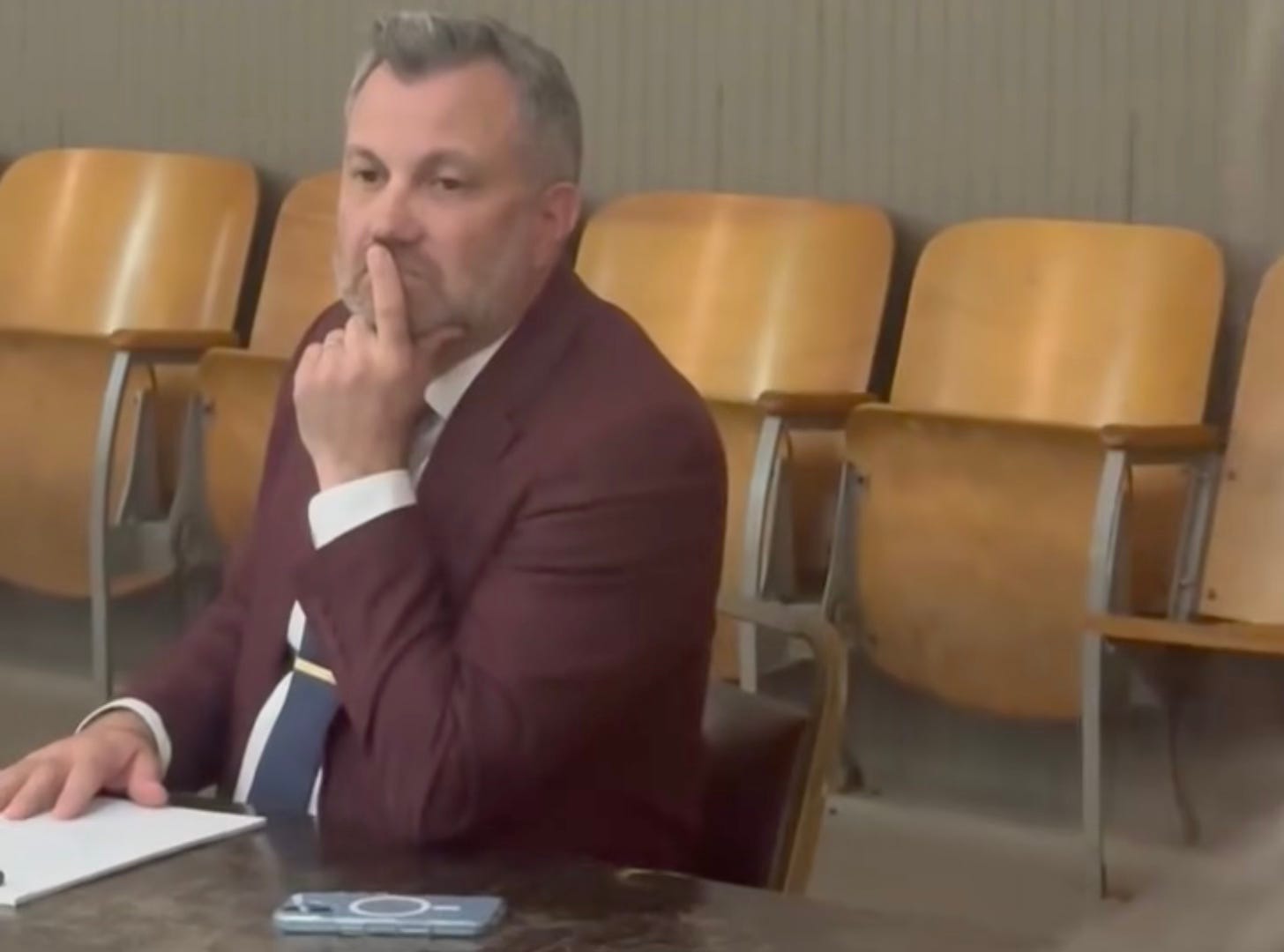
Crime, in his view, has not significantly worsened in recent years
For many in the audience, these explanations felt incomplete.
Repeatedly, residents raised concerns about drug use, repeat offenders, and the visible deterioration of public spaces. Yet the connection between addiction and crime—something many see playing out daily—was not directly acknowledged in French’s responses.
Law Enforcement’s Perspective
Sheriff Brian King offered a notably different tone.
He confirmed progress in addressing a squatter situation in the 6000 block of Old Olympic Highway in Sequim, including the recovery of stolen mail earlier that day. But more broadly, he pointed to a deeper issue:
We are not investing sufficiently in law enforcement, while increasingly potent drugs are devastating individuals and pushing them onto the streets.
It was a grounded, operational perspective—less about theory, more about what deputies are encountering in real time.
Public Spaces and Public Responsibility
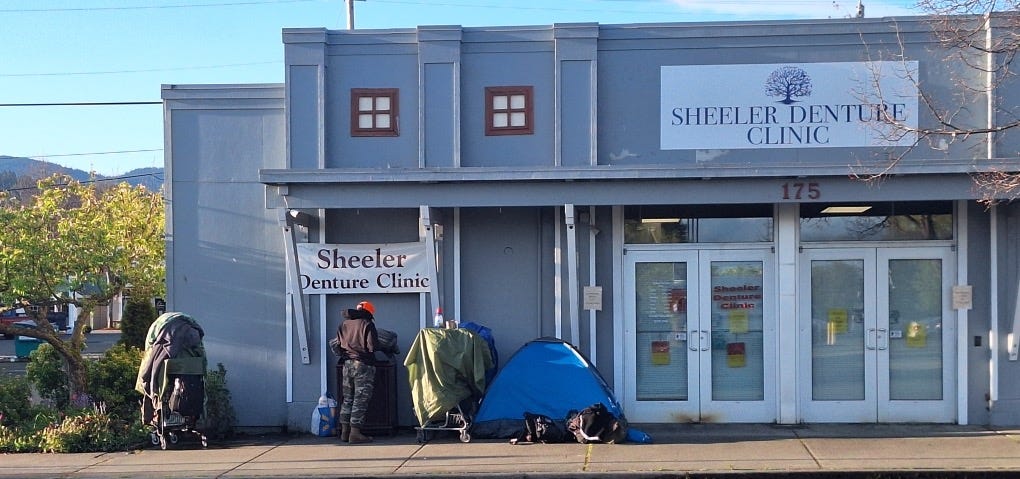
When asked about conditions in parks—needles, tents, open drug use, and families feeling unsafe—French acknowledged the concerns but framed the issue in a broader social context.
Public spaces, he argued, are meant for positive activity. When they are underused by the community, negative behavior fills the void. The solution, in part, is for families to return and reclaim those spaces.
For many, it felt like responsibility was being shifted away from those tasked with maintaining safety.
“It All Starts With Arrest”
In one of the more notable statements of the night, French said:
“It all starts with arrest.”
The comment stood out, particularly given the county’s broader emphasis on harm reduction strategies that often deprioritize enforcement.
French also described the State v. Blake decision as an “abject failure,” raising an obvious question left largely unaddressed: what steps have been taken locally to restore accountability in drug enforcement? Have the commissioners sent a letter to Washington State legislators to push back or advocate for change?
Stories That Cut Through Policy
Perhaps the most impactful moments didn’t come from officials, but from residents.
Individuals shared deeply personal stories—of addiction, recovery, and loss. Parents spoke about children in the criminal justice system. Others described losing family members to overdose. Some spoke as people in recovery themselves.
These weren’t policy abstractions. They were lived experiences, offered in good faith to leaders in the hope of being heard.
One resident described living near the so-called “UnSafeway,” calling it a “vortex of crime” marked by break-ins, vandalism, and daily exposure to open drug use at the County’s Health and Human Services building.
Commissioner French’s response? The County plans to install fencing around its offices.
To many in the room, that felt less like solving a problem and more like moving it.
Enforcement, Accountability, and Open Questions
Questions also touched on environmental activists who caused significant damage to public land in an effort to delay a timber harvest last year. Prosecutor Mark Nichols declined to comment, citing an active case.
Nichols did confirm that a State Auditor fraud investigation involving the Shore Aquatic Center was referred to the Attorney General due to conflicts of interest, as Commissioners French and Johnson serve on the pool’s board.
These moments underscored a broader concern expressed throughout the evening: whether accountability is being applied consistently.
Economic Development and Missed Opportunities
Commissioner French acknowledged that Clallam County lacks strong private economic development.
But that raises a more fundamental question: why not focus first on attracting businesses themselves? When industry takes root, workforce training tends to follow organically. Without that foundation, training programs like Recompete risk preparing people for opportunities that simply don’t exist here.
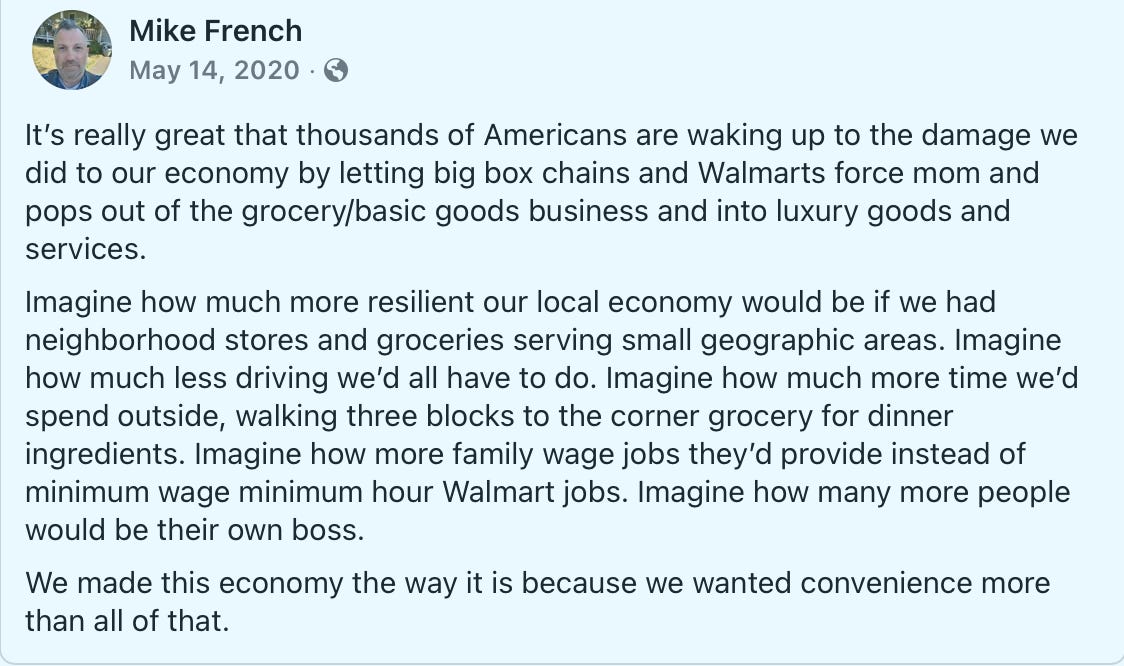
Imagine how much more resilient our local economy could be if elected leaders fully leveraged existing laws and consistently enforced the rules already on the books—creating a stable, predictable environment where businesses feel confident investing, expanding, creating jobs, and strengthening the tax base the entire community relies on.
Taxes, Authority, and Public Trust
Commissioner French expressed support for increasing the local sales tax to fund public safety—something the commissioners could enact without a direct vote of the people.
That position mirrors broader efforts at the state level, where organizations like the Washington State Association of Counties (WSAC)—on whose legislative steering committee French serves—have pushed to raise the long-standing 1% cap on property tax increases, again without requiring voter approval.
Layered into that concern is a broader question of consistency and accountability. French has previously indicated a tolerance for property destruction when framed as part of broader social or political causes—an outlook that sits uneasily alongside calls for increased public funding and enforcement.
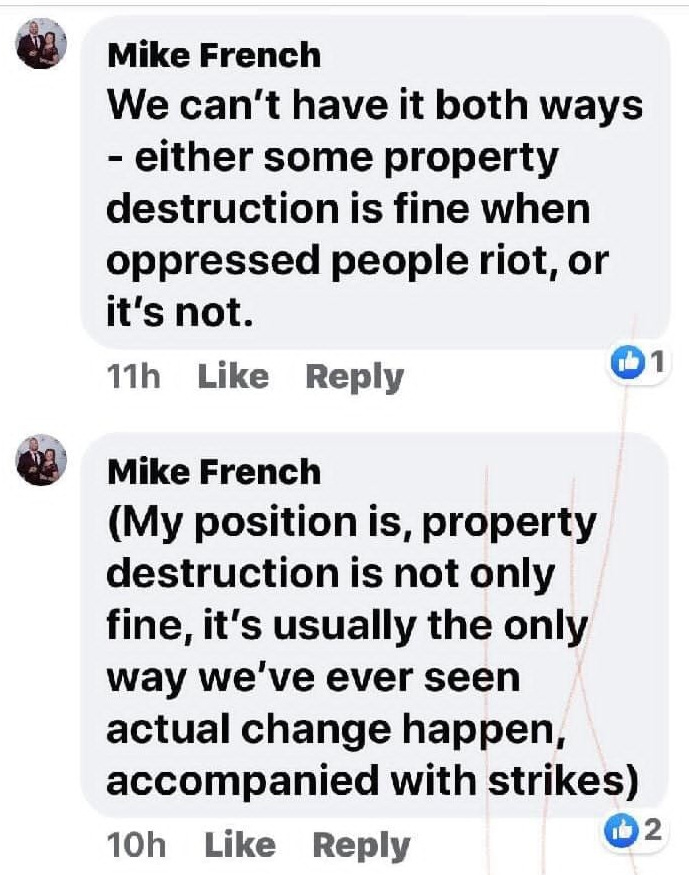
For many attendees, the issue wasn’t just about taxes. It was about process, trust, and whether major financial decisions—and the principles behind them—are drifting further from the voters they’re meant to represent.
Who Showed Up—and What It Revealed
Attendance from elected officials was limited. Of the seven Port Angeles City Councilmembers, only Amy Miller was present. In a county facing serious challenges around public safety, addiction, and economic stability, that absence did not go unnoticed.
But in many ways, that contrast helped define the evening.
Thursday night offered something increasingly rare: a clear, unfiltered look at both leadership and the community it serves. Residents asked direct questions. Officials gave candid answers. And in the space between the two, a broader divide came into focus—one not just about policy, but about how problems are understood and what solutions are prioritized.
For those who attended, the event wasn’t just informative—it was clarifying.
And while elected representation may have been sparse, community leadership was not.
A sincere thank you goes to the Calico Cat Social Club for hosting the event entirely on their own dime. No public funding. No government backing. Just engaged citizens who recognized a need in their community—and stepped up to meet it.
On a night centered around accountability and leadership, that example stood out.
Today’s Tidbit
A recent letter to the editor in the Peninsula Daily News tackled several national hot-button issues. It’s a strong opinion—one that mirrors broader national debates—but also comes with some local context worth noting.
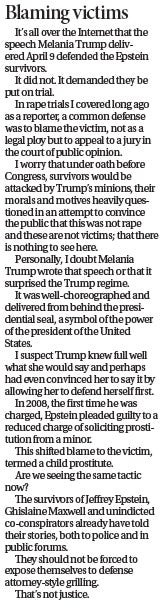

The author, Leah Leach, is the former longtime Executive Editor of the Peninsula Daily News and still contributes articles to the paper. That’s not mentioned in the letter. Opinion pieces are expected, but when a former top editor weighs in without that context, it raises fair questions about transparency and whether readers are getting the full picture of who’s speaking.
That matters more than it might seem. When someone who helped shape a newsroom’s voice continues writing in its pages, it can blur the line between personal opinion and institutional perspective. At a time when trust in media is already shaky, even small omissions like this can leave readers wondering how balanced things really are, and how balanced they were for years under Leach’s leadership.


