


When Commissioner Mark Ozias responds to concerned citizens, a pattern emerges: blame Washington, D.C., defend current policies, and dismiss the role of local decision-making. But the conditions on the ground in Clallam County tell a different story—one shaped not by distant policymakers, but by years of choices made right here at home.
If you haven’t subscribed to Clallam County Letters, you’re missing some of the most provocative exchanges between concerned citizens and the officials elected to represent them.
When a Clallam County resident recently reached out to the Board of Commissioners, Commissioner Mark Ozias responded with a familiar explanation: homelessness is being driven by rising costs and cuts to the federal safety net.
It’s a convenient answer. It’s also incomplete.
Commissioner Ozias has served in local government for over a decade. The president he references has been in office just over a year. Yet somehow, the responsibility for what we’re seeing on our streets—addiction, disorder, and growing encampments—belongs almost entirely to the federal government.
That doesn’t hold up.
Not every county in America is experiencing the level of overdose deaths and public disorder that Clallam County is. Local policy matters. Local leadership matters. And local outcomes reflect local decisions.
Authority When It’s Convenient
In his response, Ozias also defended Health Officer Dr. Allison Berry, stating:
“Dr. Berry is not a police officer and cannot arrest or forcibly move anyone…”
But that explanation raises an obvious question.
During COVID, Dr. Berry exercised sweeping authority—mandating masks, requiring proof of vaccination for entry into restaurants, and shutting down businesses that did not comply.
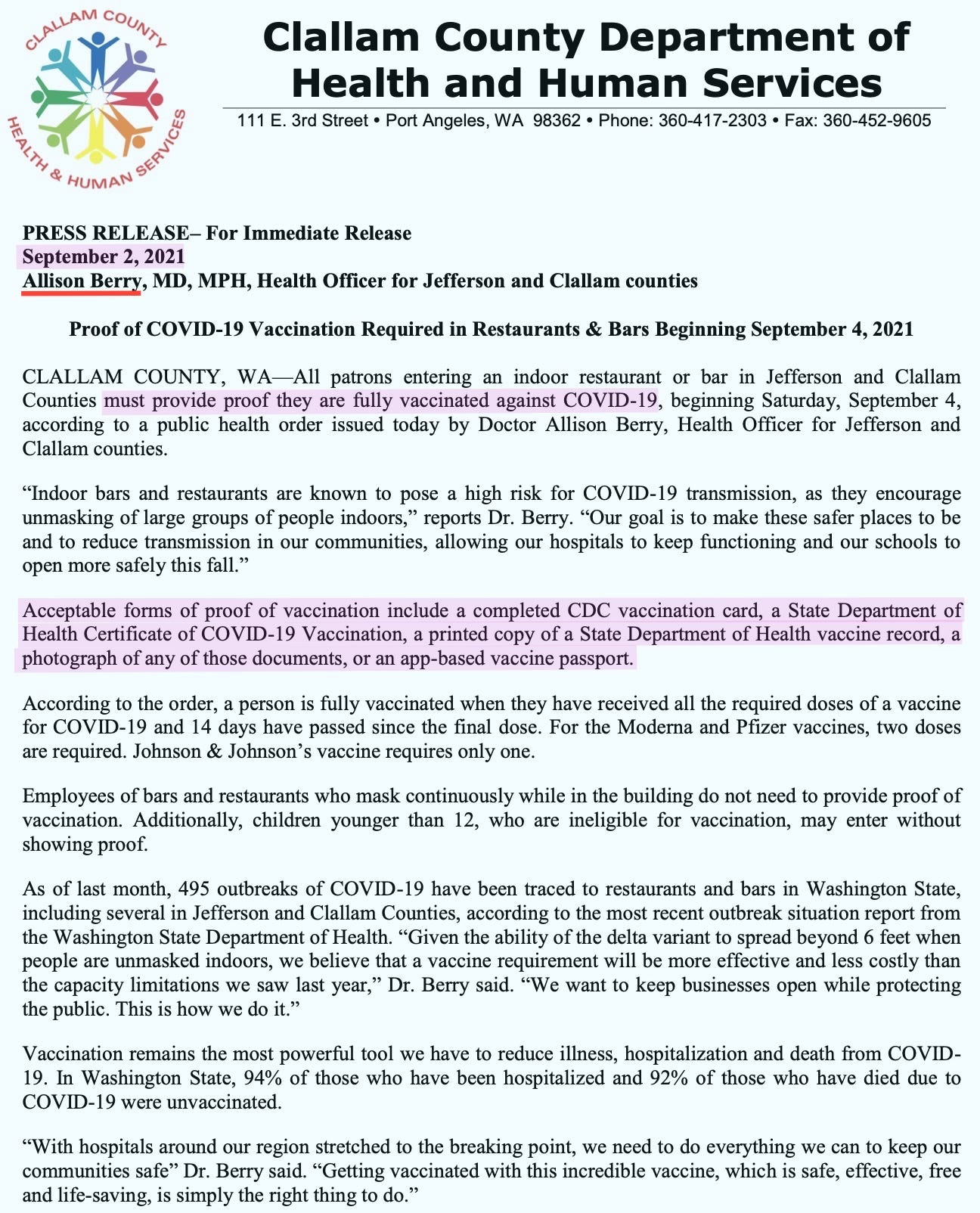
She had authority then.
Now, when it comes to addressing public health hazards tied to encampments, open drug use, and environmental degradation, we’re told her authority is limited.
Which is it?
A False Choice — and an Inappropriate One
In another response to a constituent, Ozias wrote:
“If your argument is ‘let them die rather than trying to save their life with Narcan’ I would just say that I do not agree with you, though I certainly know others who share your opinion.”
No one made that argument.
It’s a strawman—and an inappropriate one. Concerned residents are not advocating for death. They’re asking why current policies appear to enable continued addiction without requiring a path to recovery.
That’s not cruelty. That’s concern.
What’s Missing: Personal Responsibility
Commissioner Ozias frames the issue this way:
“It is not harm reduction that is causing people to live on the street and/or to be addicted to drugs. Rather it is the lack of affordable housing and a decayed social safety net that are leaving people without options.”
Housing matters. But this framing leaves out a critical piece: personal responsibility.
People do not become addicted to fentanyl because rent is too high.
Addiction is a behavioral and medical issue. It requires treatment, accountability, and intervention. What we’re seeing instead is a system that often provides services without expectations.
When there are no expectations, behavior doesn’t change.
When Policy Becomes the Problem
This isn’t theoretical. It’s already playing out.
Peninsula Behavioral Health’s North View luxury apartments for the homeless represent a model of permanent supportive housing where drug and alcohol use will be permitted and tolerated. Similar approaches in Seattle offer a preview of what follows.
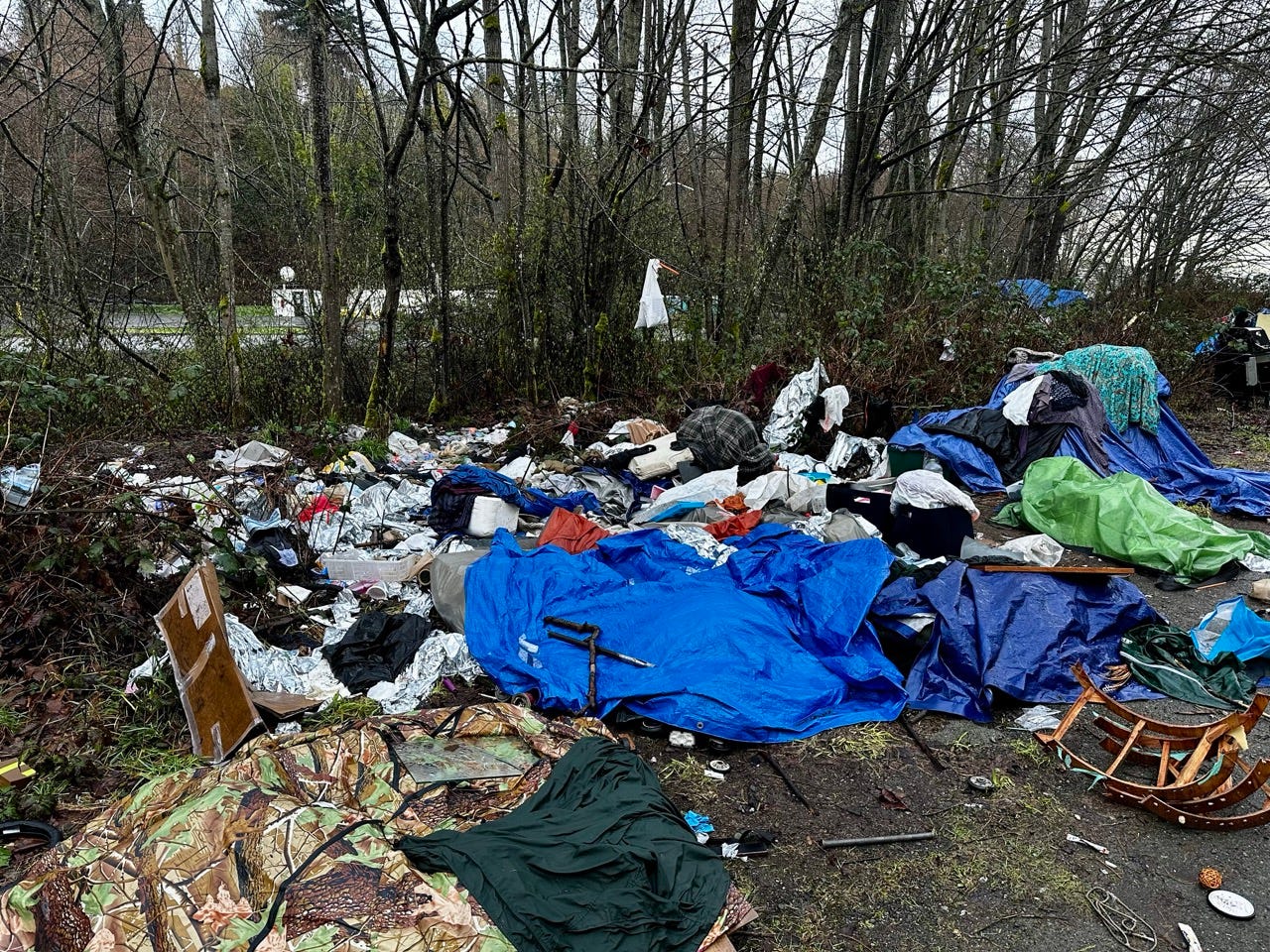
In Seattle’s Beacon Hill neighborhood, four parks have effectively been overtaken by an open-air drug market. Hundreds of people living in tents. Open use. Dealers operating openly. Residents threatened. Public spaces lost.
One local observer put it plainly:
“This is not a down-and-out homeless camp… This is an open-air drug market. There’s prostitution, theft, dealing, using, property destruction.”
Another described the policy mindset behind it:
“Somewhere in the last decade, Seattle decided that leaving people to rot in public parks was the enlightened approach… That’s what we are calling compassion.”
This isn’t a housing crisis—it’s a drug crisis. And until our leaders are willing to acknowledge that, the current approach won’t reduce suffering; it will continue to concentrate it.
Closer to Home
For many in Clallam County, this already feels familiar.
Drive past Serenity House in Port Angeles, and you’ll see it: open use, visible dealing, makeshift privacy screens just feet from families trying to live normal lives.
One resident described the contrast:
A man playing catch with his son in front of housing units—while just yards away, a drug economy operates in plain sight.
That’s not a housing crisis.
That’s a policy failure.
The Affordability Argument Falls Apart
If unaffordable housing is the root cause, then what have county leaders done to make housing more affordable?
The record suggests the opposite:
The county commissioners regularly support tax increases
The commissioners back policies that shift land into tax-exempt trust status
Through the Washington State Association of Counties, the commissioners lobby for expanded taxing authority without a public vote
Each of these decisions increases the burden on property owners—and drives costs higher.
You cannot cite affordability as the problem while advancing policies that make it worse.
A Dead End
In a recent podcast responding to Commissioner Ozias’ remarks—titled “A Pathetic Deflection”—Clallamity Jen and The Strait Shooter captured the Board of Commissioners’ approach with a line that hits uncomfortably close to home:
“The best place to turn around is a dead end.”
Clallam County has hit that dead end.
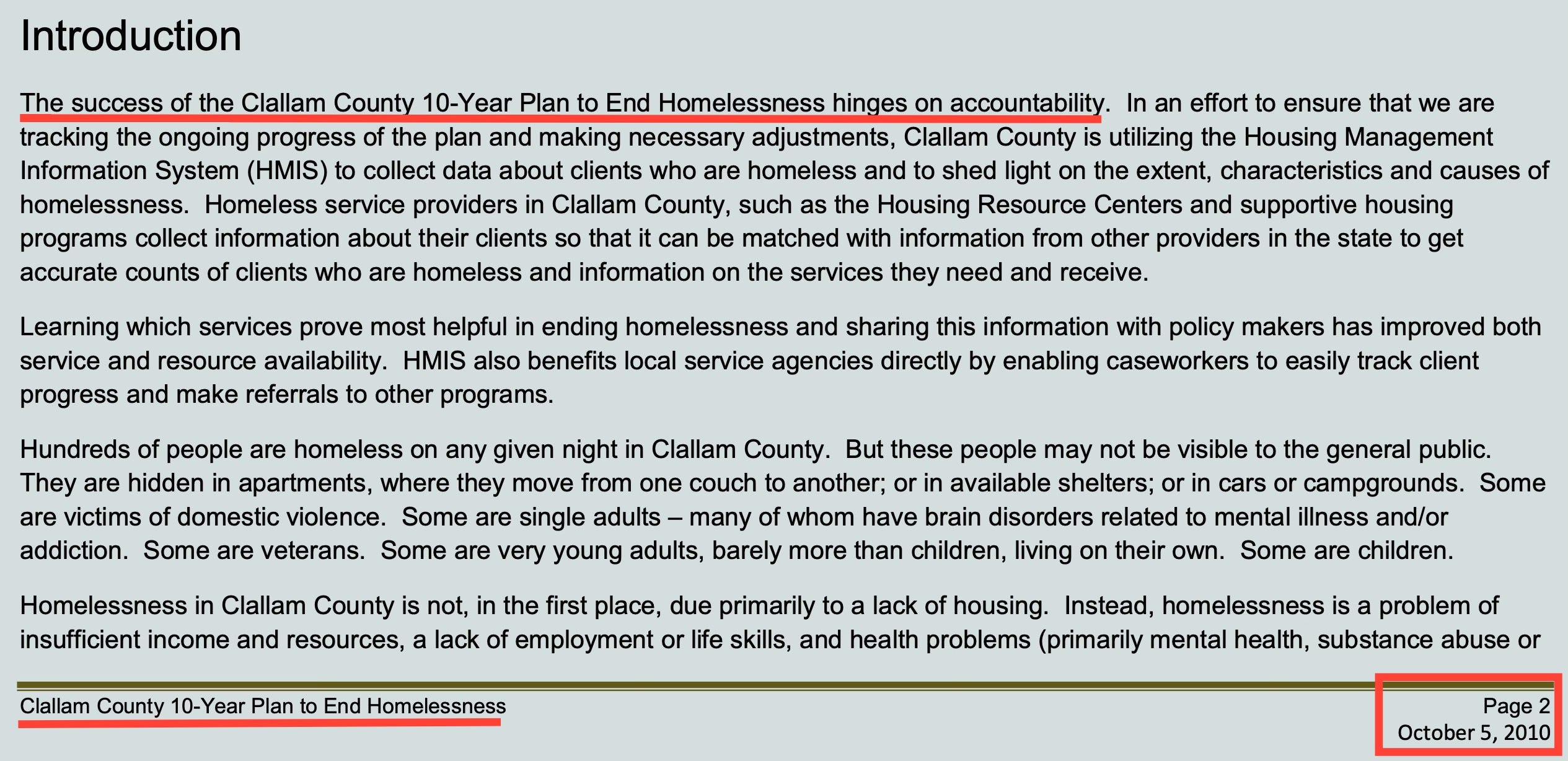
We are now 16 years into a 10-year plan to end homelessness. More money is being spent than ever before. Outcomes continue to decline.
At some point, the question isn’t whether we’re trying hard enough.
It’s whether we’re trying the right things at all.
What Comes Next
This is not a problem beyond our control.
The County—through the Board of Health and its Health Officer—has both the authority and the obligation to address conditions that threaten public health and safety.
What’s missing isn’t funding.
It’s a willingness to change course.
Because we cannot fix a problem we refuse to acknowledge.
And until that happens, the gap between what residents are experiencing—and what they’re being told—will only continue to grow.
What to Watch Today
This afternoon at 4:30 p.m., the Port Angeles City Council will hold a special meeting to discuss “Camping and Encampment.”
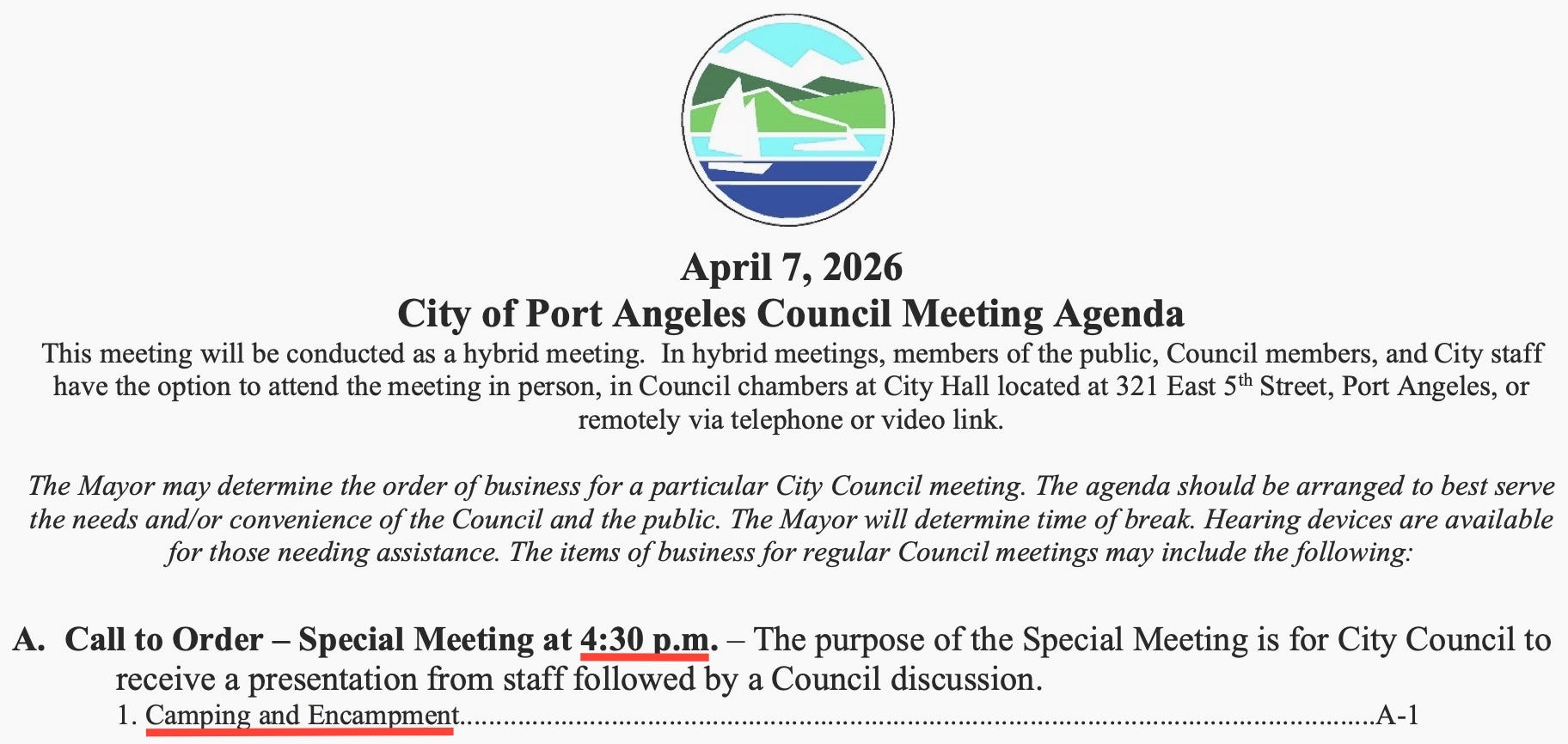
For residents who have been raising concerns about public safety, open drug use, and the growing impact of encampments, this is an opportunity to pay attention.
Click here for instructions on how to attend, either in person or virtually.
Today’s Tidbit
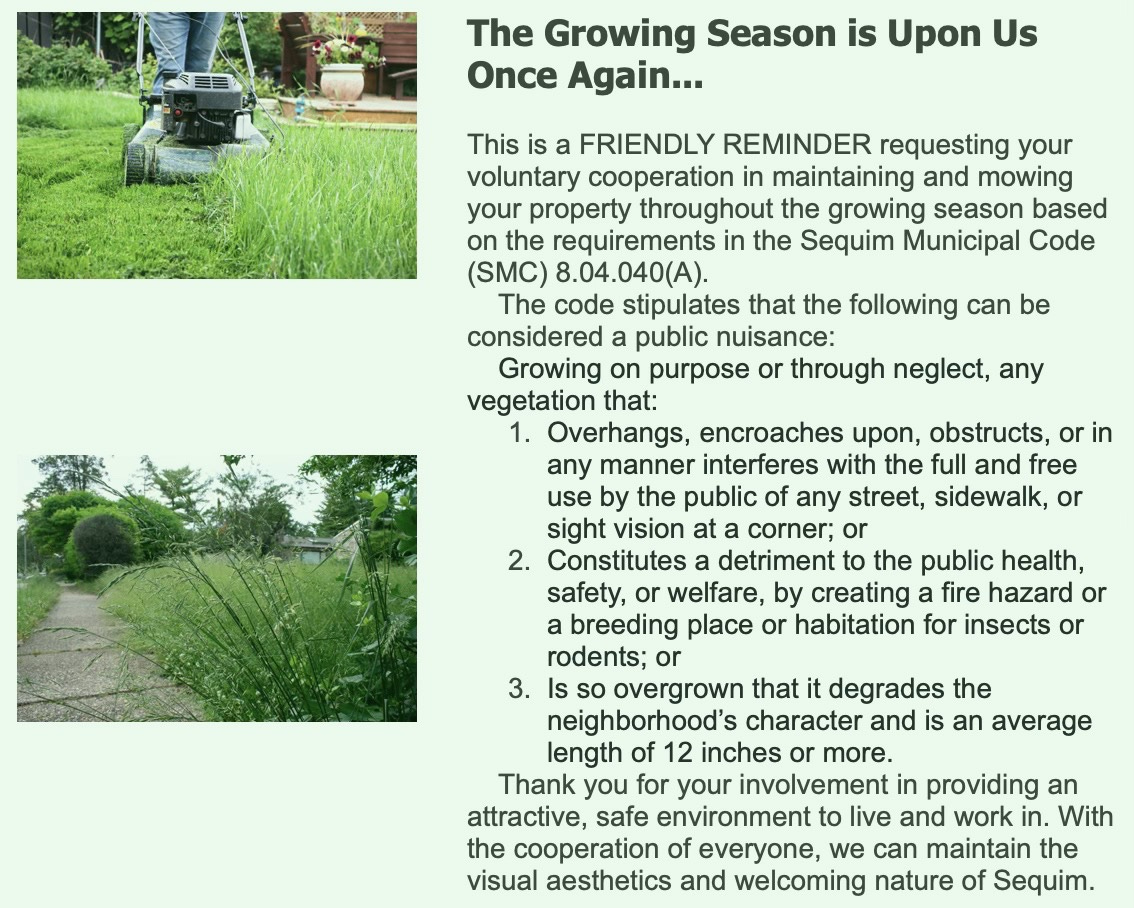
The City of Sequim is reminding residents to keep their lawns mowed—warning that overgrown grass may be deemed a public nuisance if it obstructs sidewalks, threatens public health or safety, attracts rodents, or diminishes neighborhood character.
Just across from City Hall:


