

The Jamestown Corporation is the second-largest employer in Clallam County and one of its most influential political and economic forces. Whether you agree with its policies or not, understanding what the Tribe is doing matters to everyone who lives here.
Helping Tribal Citizens Pay for Expensive Gas
The headline story announces a new fuel assistance program for enrolled Jamestown tribal citizens. Those living in Clallam or Jefferson counties can receive a $1-per-gallon discount on up to 100 gallons of gasoline each month at Longhouse Market, while citizens living outside the area can receive a one-time $150 fuel stipend.
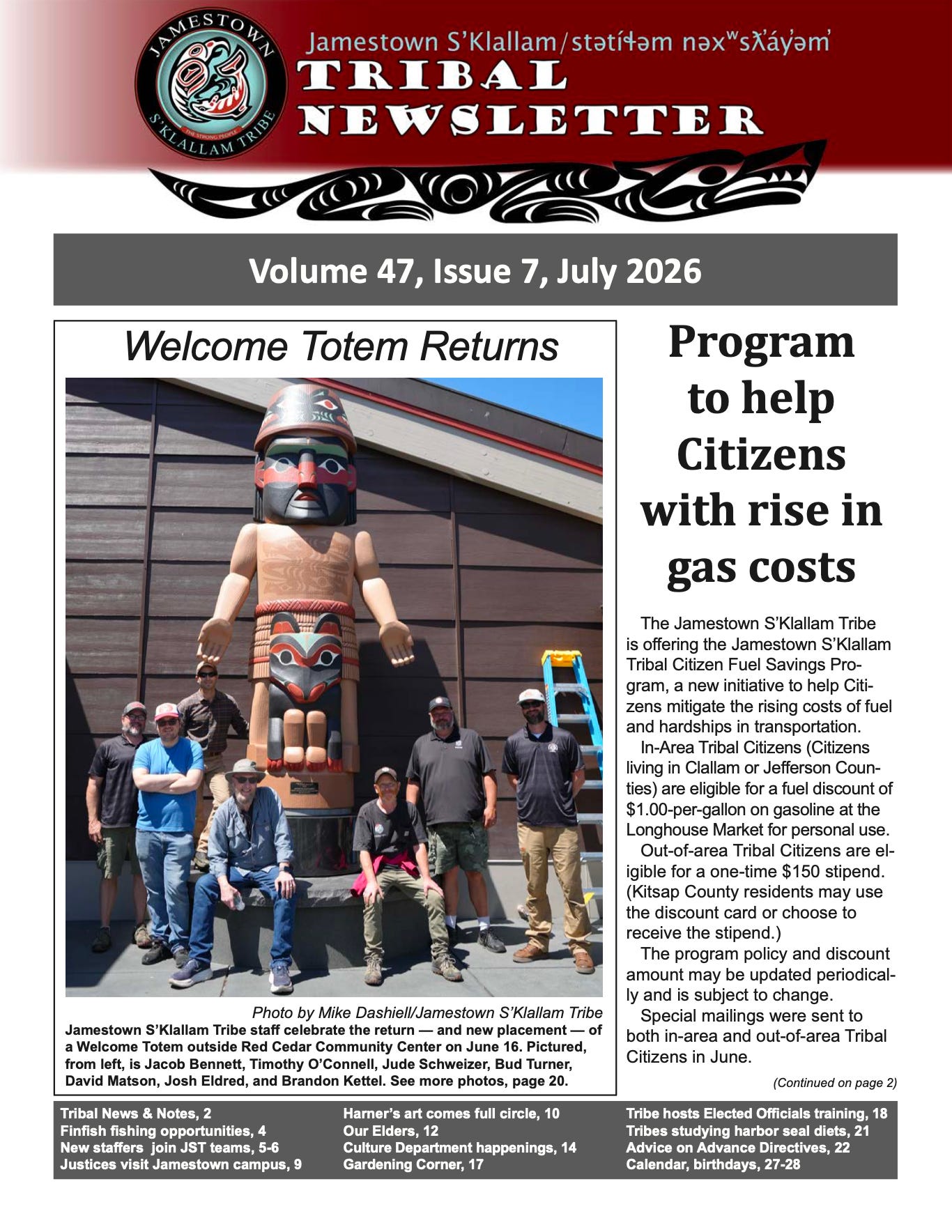
The obvious question is: Why are gas prices so high in the first place?
Washington drivers continue paying some of the highest fuel prices in the nation.
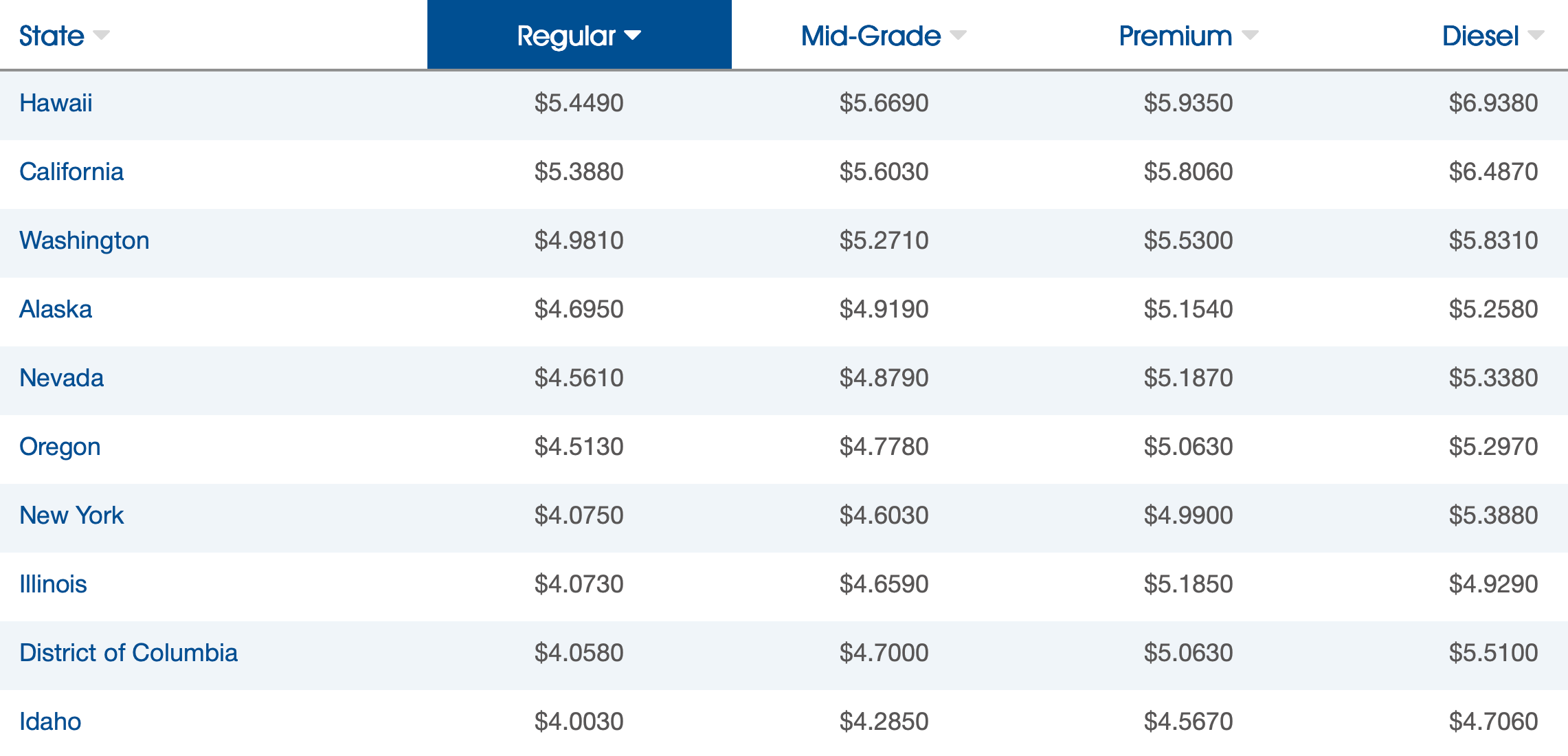
That’s due in large part to state policies, including the Climate Commitment Act—which adds costs to fuel through the state’s carbon allowance program—and repeated increases to the state gas tax.
The Jamestown Tribe has been an outspoken supporter of Washington’s climate agenda. At the same time, it has received significant benefits from Climate Commitment Act funding, including grants tied to electric vehicle infrastructure, charging stations, and energy-efficiency projects.
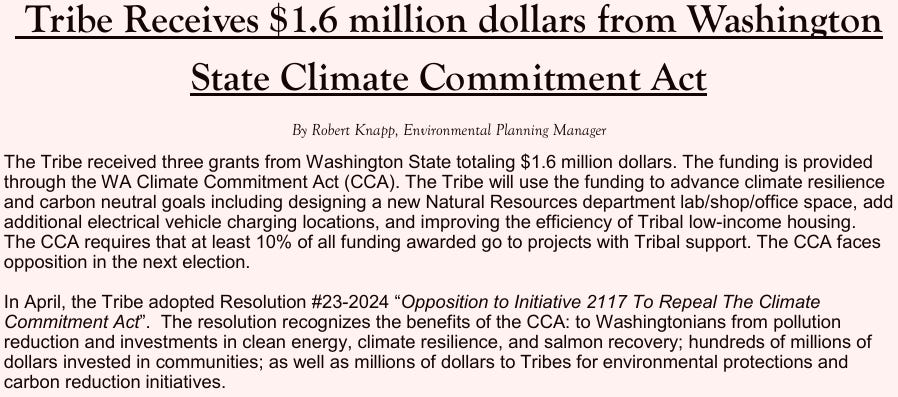
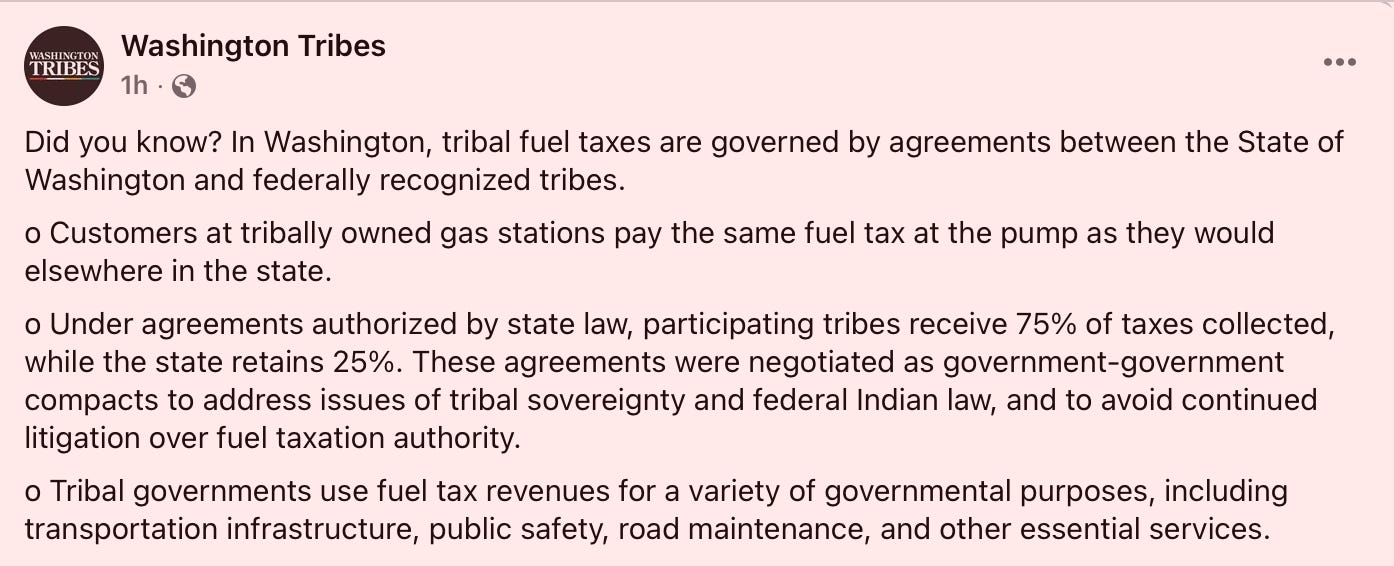
The Tribe also retains a 75% share of fuel tax revenues generated on tribal lands.
Now, with fuel prices straining household budgets, the Tribe is stepping in to help—but only its own enrolled citizens.
The newsletter says the program is intended to provide “equitable access“ to fuel assistance. Yet eligibility isn’t based on income, financial hardship, or residency. It is based on tribal citizenship, which is based on race.
If the Tribe truly views itself as the community partner it often says it is, some residents may reasonably wonder why this relief isn’t being extended more broadly to the community that also shops, works, and pays taxes here.
Transparency Still “Under Construction”
For years, the Jamestown Tribe published and archived its newsletters online, making them easily accessible to the public.
Then the archive disappeared.
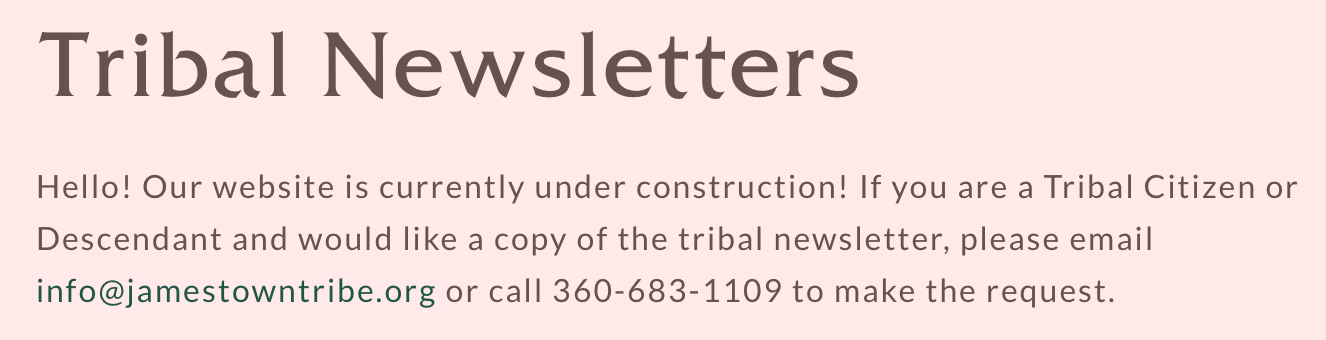
More than a year later, the page where those newsletters once lived still displays an “under construction” message.
That’s disappointing.
The Jamestown Corporation has repeatedly spoken about its commitment to transparency and community engagement. Restoring public access to its newsletter archive and annual reports would be a simple step toward honoring that commitment.
Fortunately, copies still circulate, which is why we’re sharing this one.
Whether you’re interested in tribal government, local healthcare, fisheries, economic development, or the Tribe’s expanding influence throughout Clallam County, the monthly newsletter provides one of the best windows into what the organization is doing.
Other Stories Worth Reading
This month’s edition also includes several stories that deserve attention:
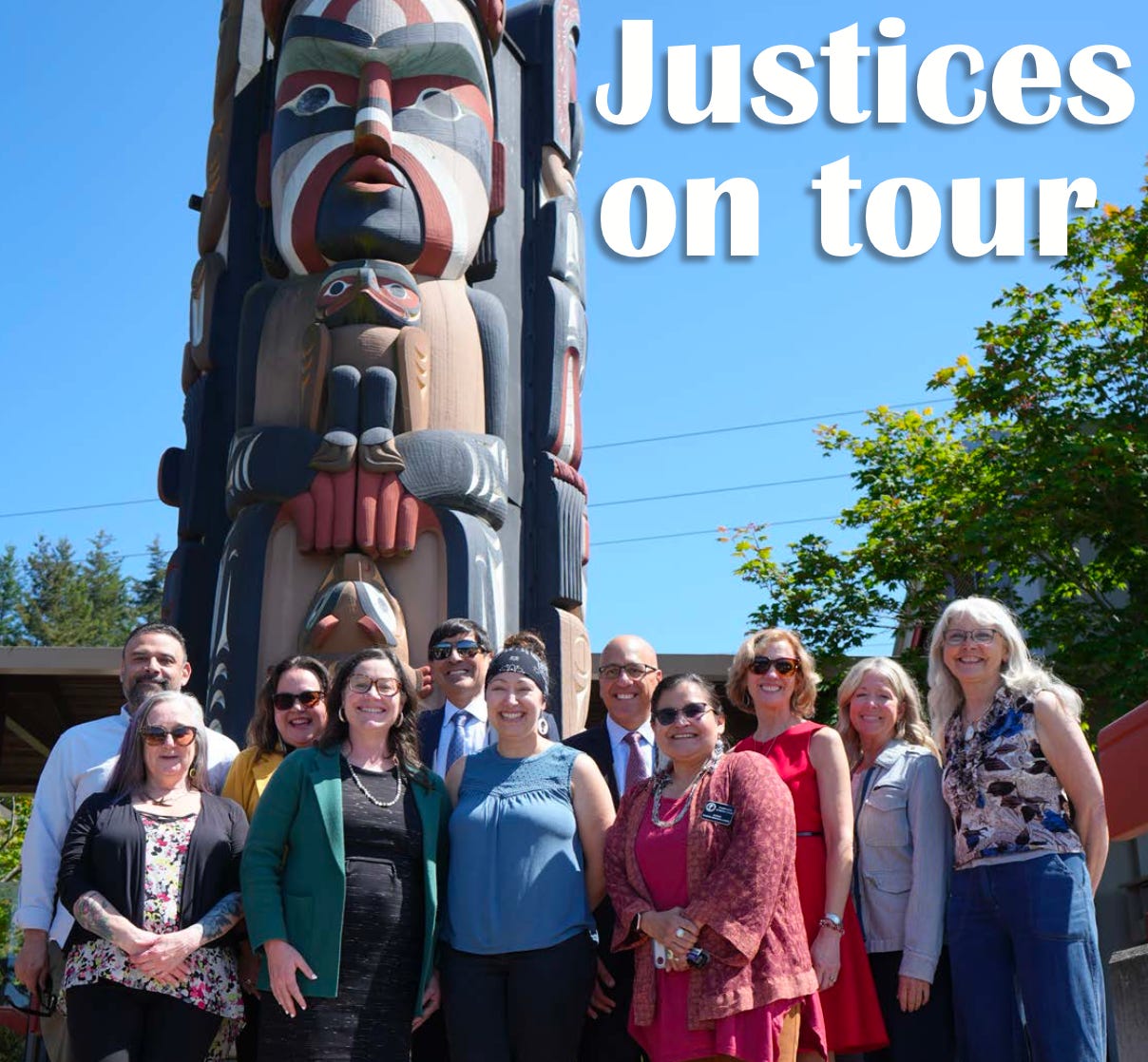
A visit from five Washington Supreme Court justices as part of the Traveling Court program.
New policies governing treaty-reserved gathering rights and harvesting activities.
Research into harbor seal diets and their possible impact on local salmon populations.
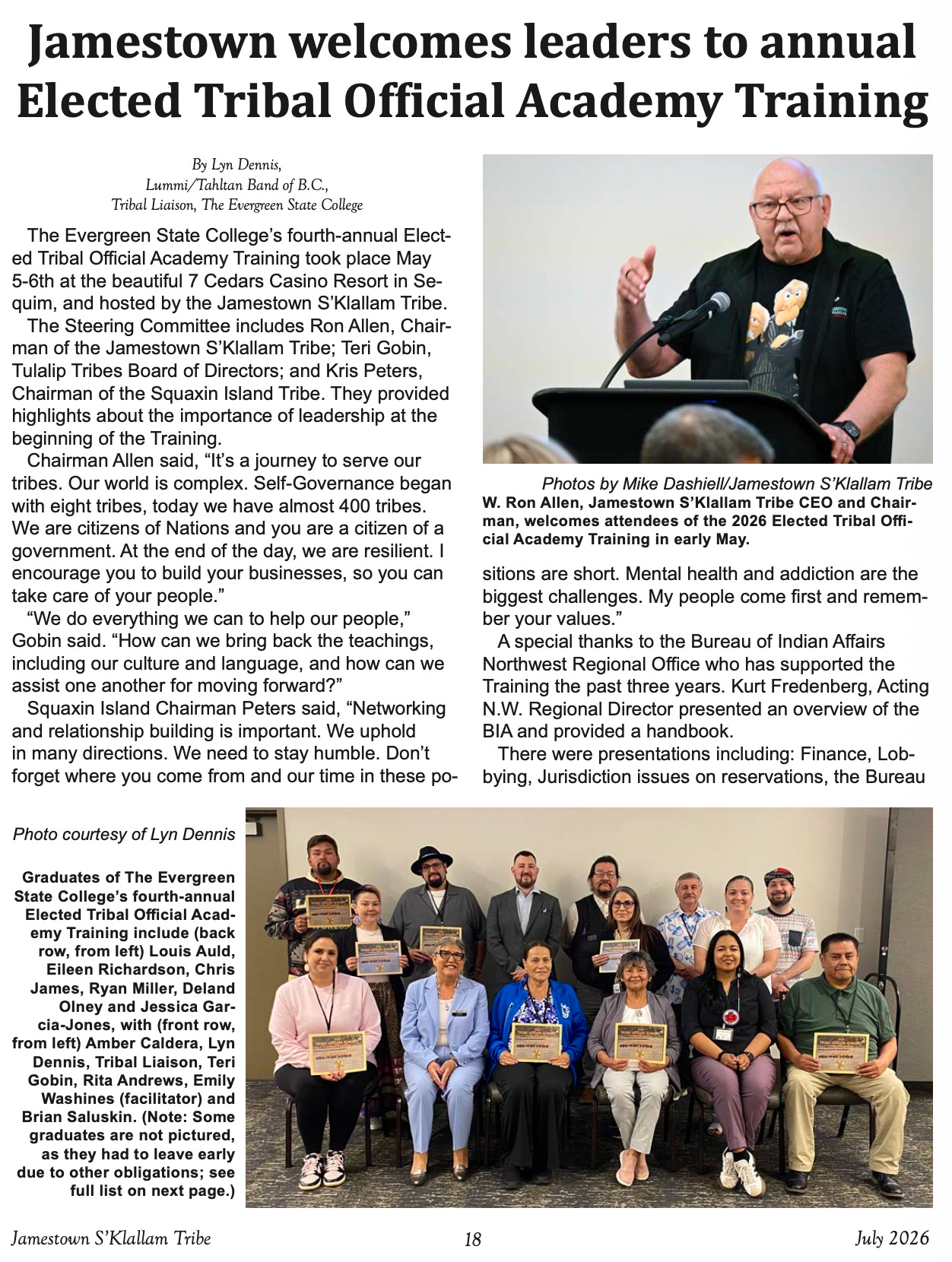
Coverage of the Tribe’s annual Elected Tribal Official Academy, where Chairman Ron Allen encouraged tribal leaders to continue expanding tribal businesses to support their communities.
New hires across Jamestown Health and Social & Community Services, continued cultural programming, and preparations for Canoe Journey and the annual Tribal Picnic.
The Tribe’s newsletter isn’t just internal news. It offers a glimpse into the priorities, investments, and direction of one of the Peninsula’s most influential organizations.
Take a few minutes to read it for yourself. Whether you come away impressed, skeptical, or somewhere in between, you’ll be better informed—and that’s always the goal.

Today’s Tidbit: Your $5 Fee at Work
In its March 10, 2026 letter, the Clallam Conservation District officially endorsed the Dungeness Source Substitution Flow Restoration Project — and that support appears to have helped move the proposal forward.
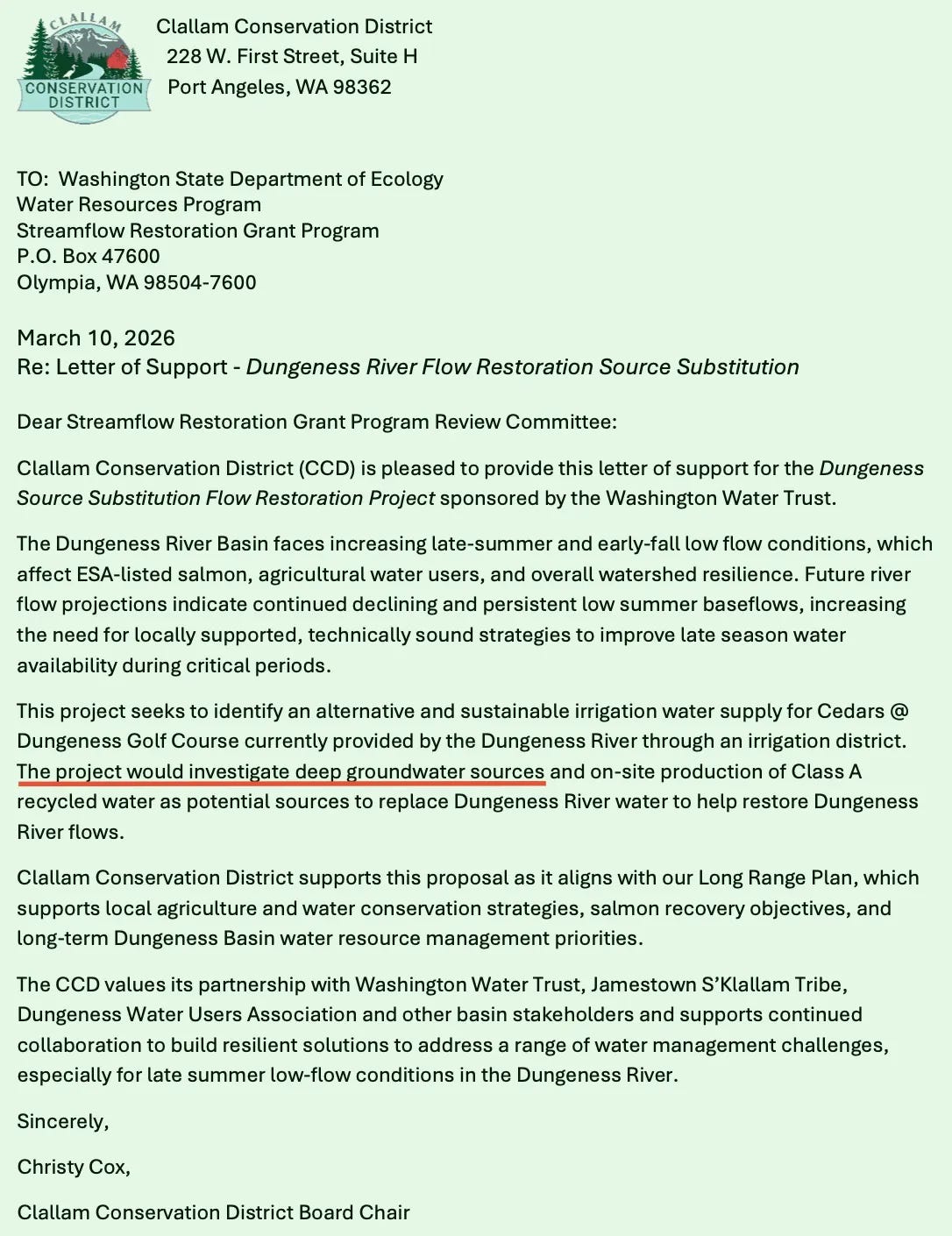
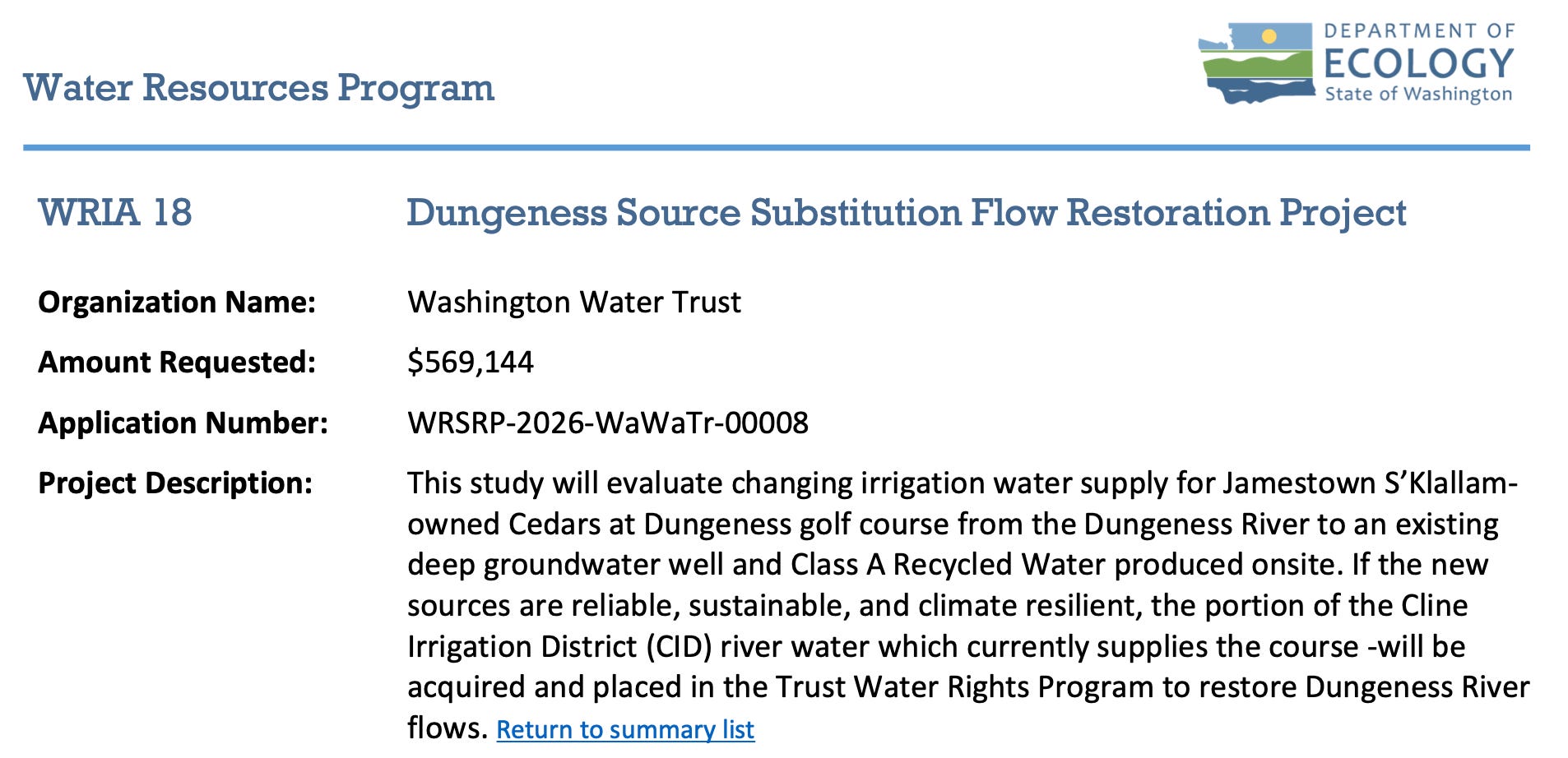
The project, sponsored by the Washington Water Trust, is now listed as an active $569,144 grant application in the Washington State Department of Ecology’s official 2026 Streamflow Restoration Grant Round Application Summary.
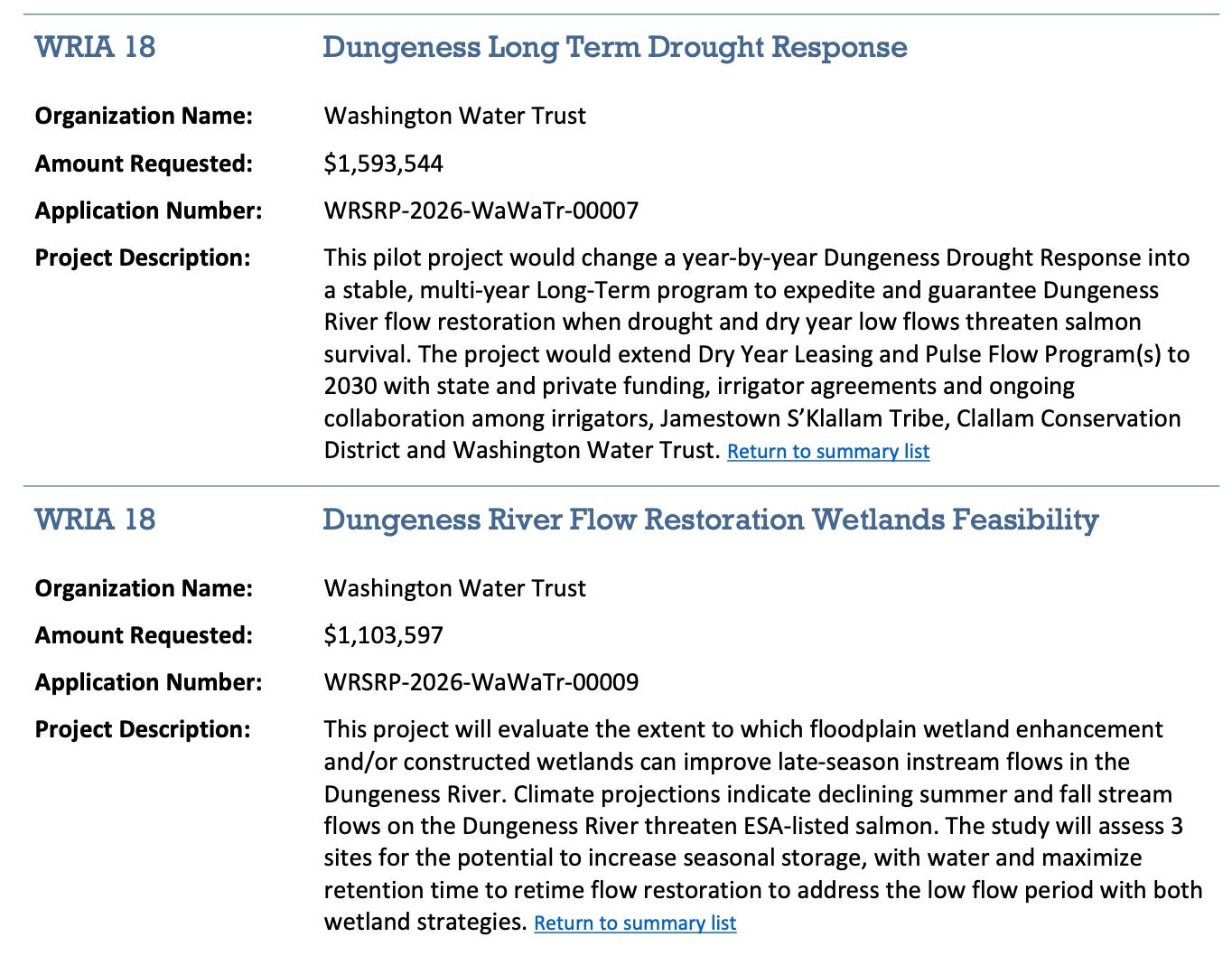
In fact, all of the Clallam Conservation District’s letters of support seem to have had a favorable impact for the Jamestown Corporation at the Department of Ecology.
The goal of the letter: Replace Dungeness River water used to irrigate the Jamestown Corporation-owned Cedars at Dungeness golf course with a deep groundwater well and on-site Class A recycled water. If successful, the freed-up river water would be transferred into the Trust Water Rights Program to “restore” flows for salmon.
This is exactly what happens when the Clallam Conservation District writes a letter of support. Further proof that local ratepayers’ $5 fee is helping underwrite water infrastructure benefits for a sovereign nation’s golf course. Properties held in tribal trust are exempt from the paying the parcel fee.
Did you ever think you’d see “sustainable” and “climate resilient” used to describe keeping a golf course green?
Welcome to water policy in Clallam County.


