


Washington enacted the largest tax increase in state history last year, and lawmakers now signal interest in even broader revenue tools. Supporters say the money is needed for education, behavioral health, housing, and public safety. But newly released state materials show millions in climate-related grants flowing to Clallam County’s second largest employer — prompting a straightforward question: In a time of higher taxes, who benefits most?
Last year, the Washington State Legislature approved what has been widely described as the largest tax package in state history. Washington’s gas prices continue to rank among the highest in the nation, due in part to the Climate Commitment Act — a policy publicly supported by the Jamestown S’Klallam Tribe and Mark Ozias. Now, policymakers in Olympia are openly discussing the possibility of adopting a broader income tax framework.

The justification is familiar: education funding, behavioral health services, housing programs, and public safety require stable revenue. That is the public case.
At the same time, the Washington State Department of Commerce recently highlighted more than $3.3 million in climate and resilience funding awarded between 2024 and 2026 to the Jamestown S’Klallam Tribe — specifically its governmental and corporate arms operating in Clallam County.
The Commerce press release frames the Tribe as a “model for energy resiliency,” describing investments in solar microgrids, housing upgrades, and electric vehicle infrastructure. It also features imagery of western red cedar trees located in Mount Rainier National Park — underscoring cultural heritage and climate impacts.
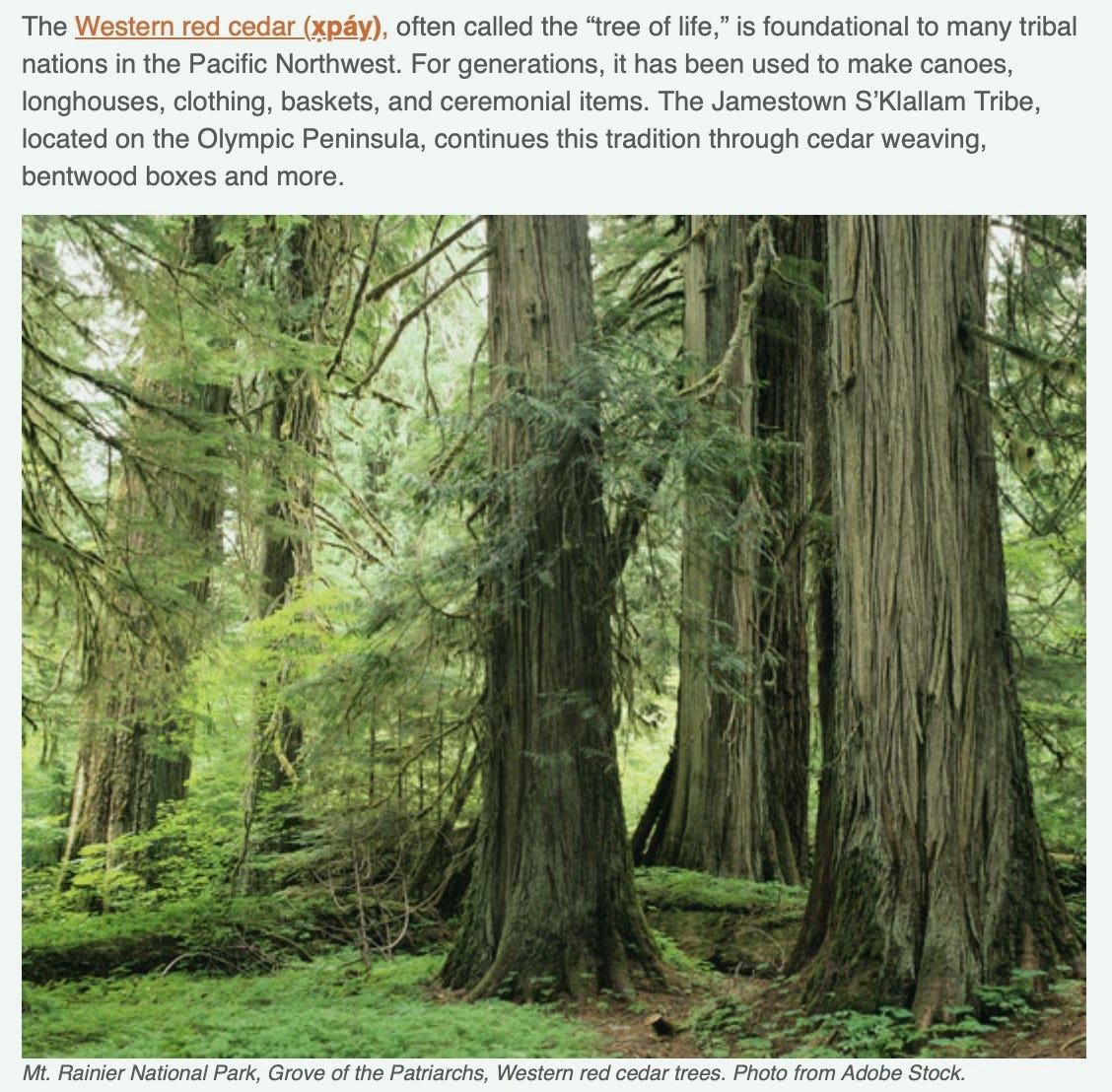
No one disputes that cedar is culturally significant or that climate events — including the 2021 heat dome — affected shellfish along Washington’s coastline. The press release notes that extreme heat coincided with low tide, resulting in shellfish mortality. What it does not mention is that shellfish aquaculture is also a major commercial enterprise for the Jamestown corporate structure, with geoducks and oysters sold into lucrative overseas markets.

The question is not whether climate change exists or whether adaptation is prudent. The question is whether taxpayers understand how climate funding is allocated — and to whom.
The Nature Center and Public Messaging
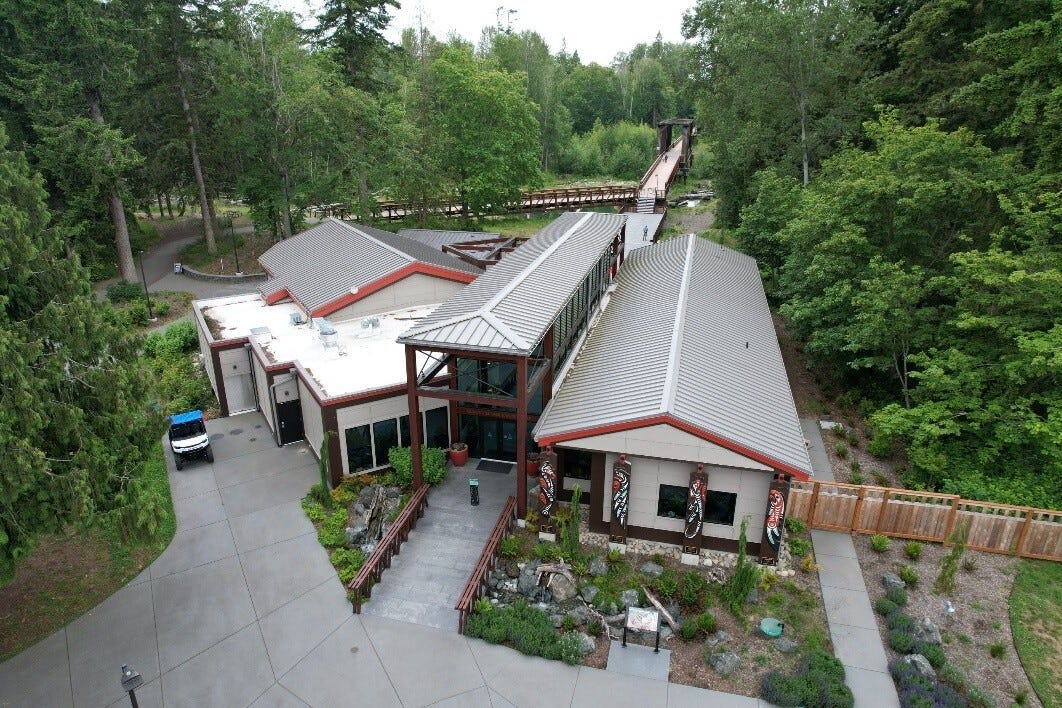
The Dungeness River Nature Center, located at Railroad Bridge Park, received Commerce planning and design support, including $99,000 for solar-related upgrades, with additional funding tied to microgrid installation.
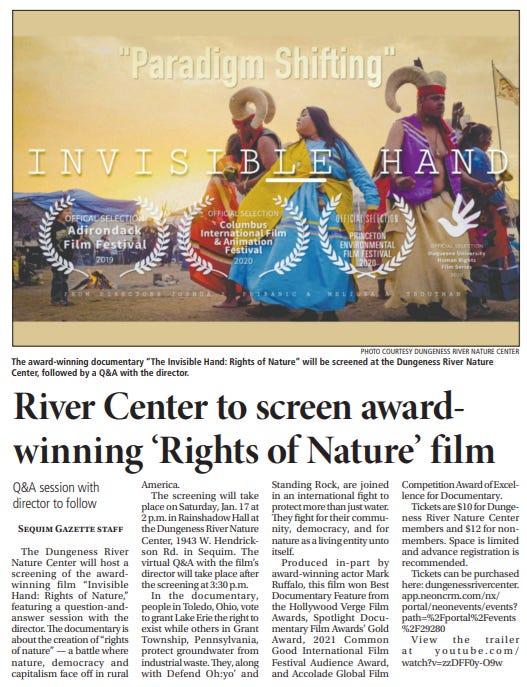
The Center serves as a community venue, educational facility, and event space. It also hosts film screenings and programming related to treaty rights, environmental stewardship, and tribal history. Past events have included documentaries such as Fish War, a film examining the Boldt decision and treaty fishing rights.
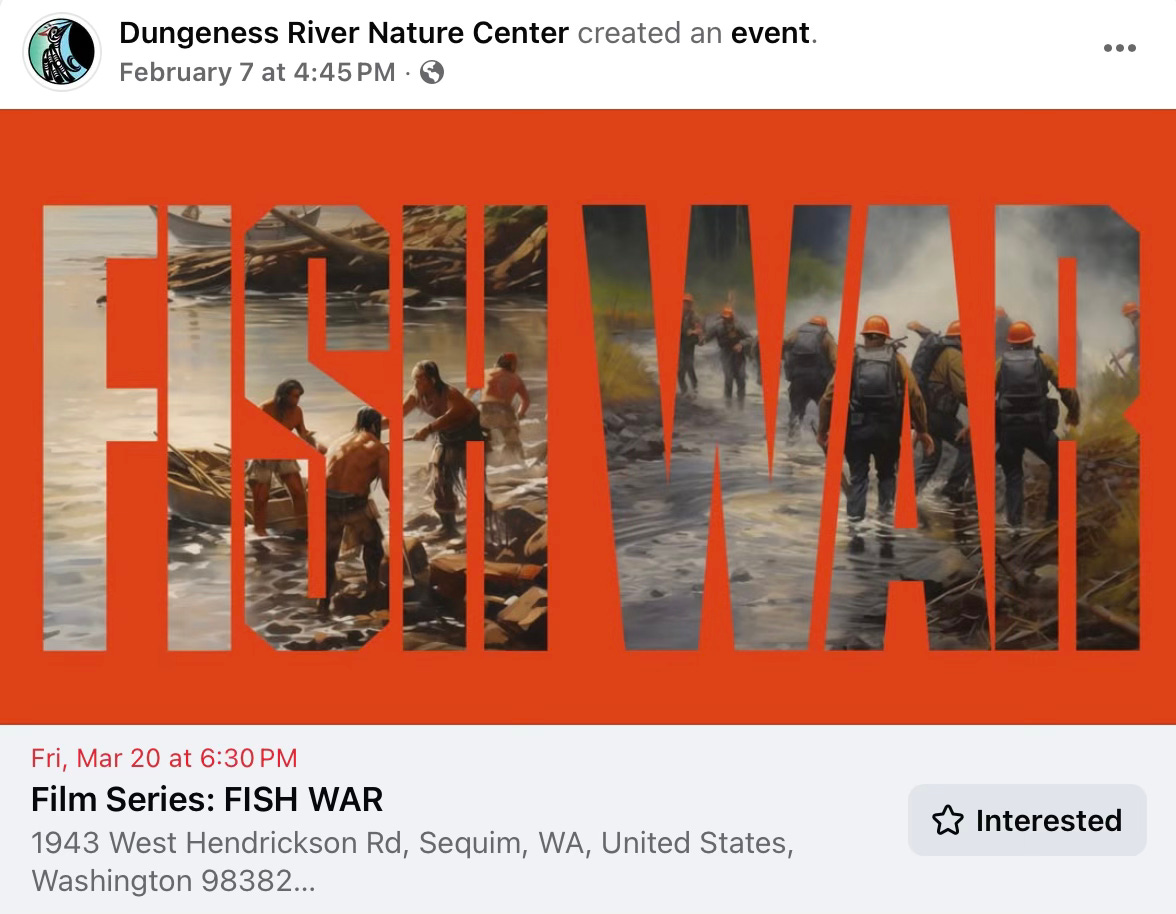
Watch the trailer here:
Educational programming is perfectly appropriate for a public venue. At the same time, it’s worth recognizing that state-funded upgrades — including energy infrastructure and facility improvements — also strengthen a space that plays an active role in shaping public conversation around environmental policy and treaty rights, both of which are central to ongoing local and statewide debates.
The Tribe’s published materials focus on sovereignty, treaty protections, cultural preservation, and a long tradition of self-reliance. They recount the 1874 land purchase, emphasize stewardship of the Dungeness River, and define “S’Klallam” as “The Strong People.” That history is real and meaningful.
Taxpayers may still ask a basic fiscal question: when climate resilience funds are handed out, should publicly financed capital improvements go first to facilities owned by a sovereign government that already operates substantial commercial enterprises?
The Jamestown Corporation generates more than $100 million annually, serving roughly 500 tribal members, with only about 200 living locally. Those numbers matter in the broader context.
At a time when taxes are rising, and many households are tightening their budgets, it’s reasonable for residents to want a clear explanation of how funding priorities are determined — and why certain recipients rise to the top of the list.
Housing Upgrades and Equity Questions
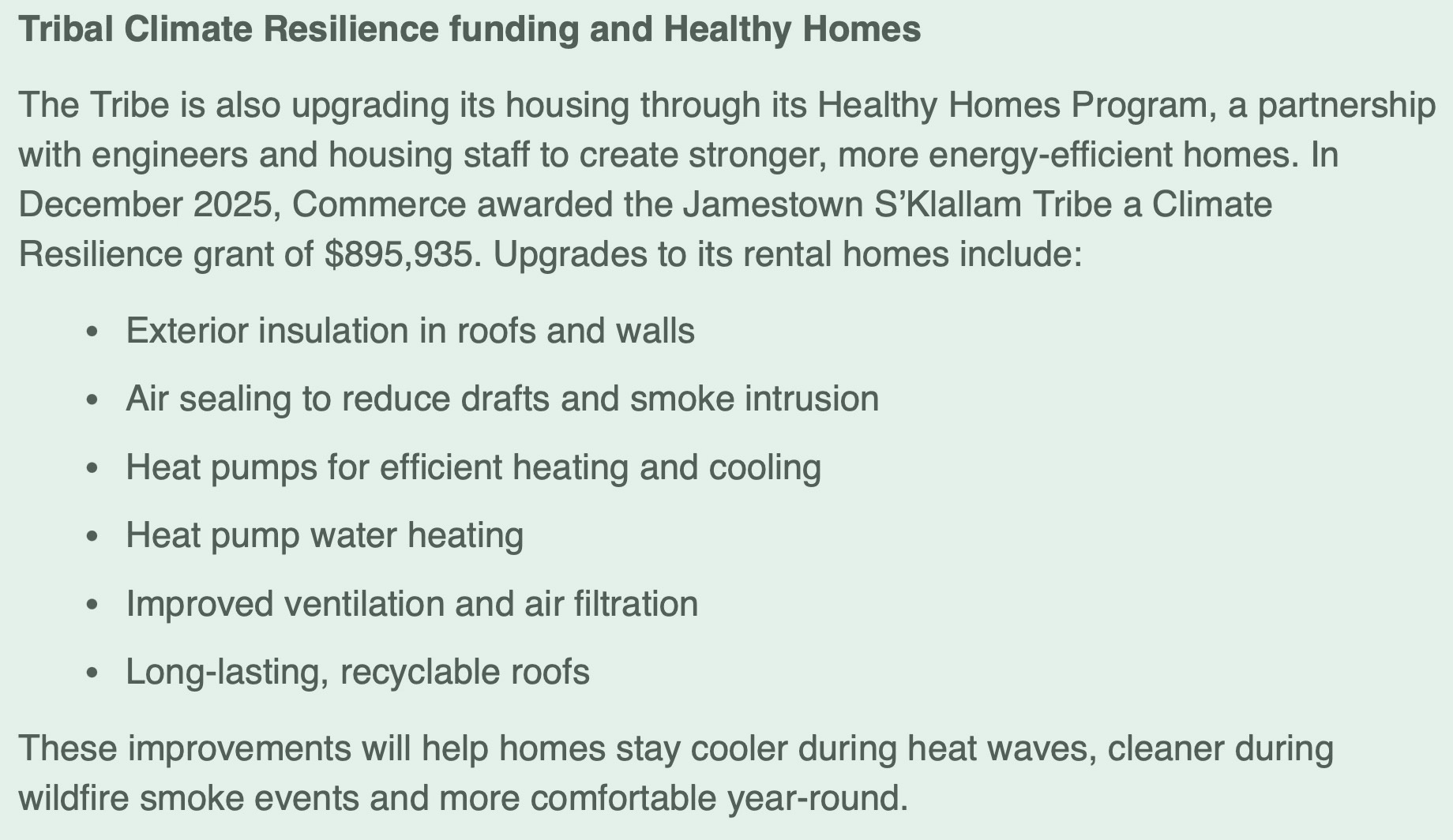
Commerce also awarded $895,935 in Climate Resilience funding for housing upgrades through the Tribe’s Healthy Homes Program. The work includes added insulation, heat pumps, improved ventilation, and longer-lasting roofing — all upgrades that make homes more efficient and more comfortable.
No one disputes that energy efficiency helps. Better insulation and air filtration matter during wildfire smoke events. Cooling systems matter during extreme heat.
The harder question is about priorities. In Clallam County, plenty of working families are struggling to pay for similar upgrades out of pocket. How are these grant decisions made? Are there programs of the same size and accessibility for low-income homeowners who aren’t part of a sovereign government? If higher taxes are justified as necessary to meet urgent needs, residents deserve a clear explanation of how — and to whom — that money is distributed.
Electric Vehicles and Commercial Reality
The Tribe has also grown its electric vehicle fleet and installed around 30 charging stations, using a mix of funding sources that includes state Commerce dollars.
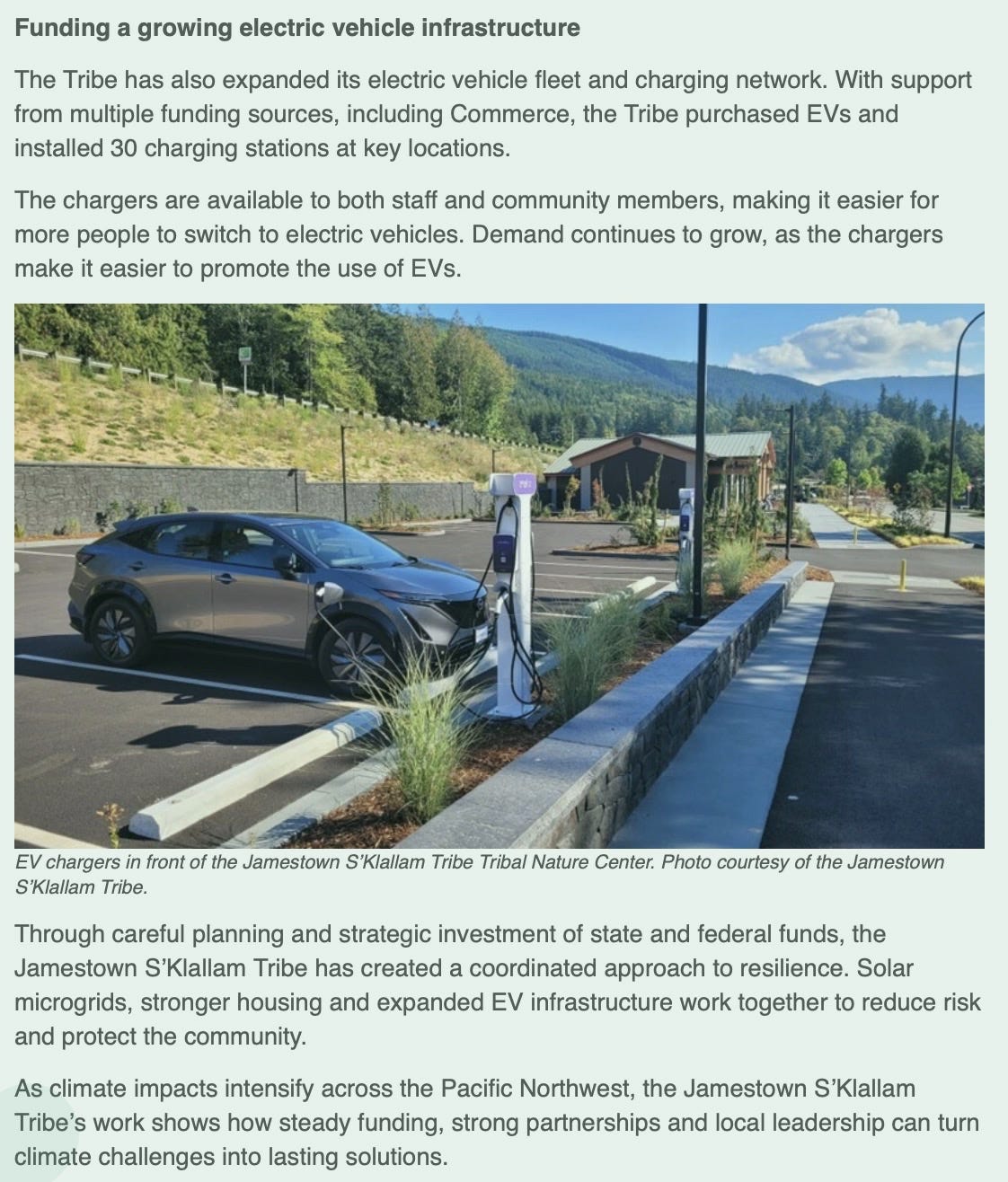
At the same time, the Jamestown Corporation operates a gas station and has plans to develop a truck stop on the Miller Peninsula. There’s nothing illegal about promoting climate resilience while also running fuel-based businesses. Still, to many residents, the optics can feel inconsistent — advocating for carbon reduction on one hand while expanding fossil fuel infrastructure on the other.
The Larger Fiscal Context
Clallam County families are feeling it from every direction — higher fuel costs, rising utility bills, property taxes, insurance, groceries. Olympia says more revenue is needed to fund schools and core services.
But when state agencies put out press releases highlighting multi-million-dollar resilience grants to one of the county’s largest and most established economic players, people are going to ask whether the balance feels right.
How much of the new tax revenue is making its way back to small businesses, working families, and homeowners trying to keep up? And how much is going to large institutions that already have the staff and structure to compete successfully for grants?
Those questions aren’t about opposing tribal sovereignty or dismissing climate planning. They’re about priorities. When taxes go up, scrutiny naturally goes up too.
If lawmakers are asking residents to accept the largest tax package in state history — and possibly even more — then residents deserve straightforward answers about where the money goes and who benefits.
That discussion doesn’t have to be hostile.
But it does need to be honest and grounded in facts.


