


Peninsula Behavioral Health receives millions in taxpayer dollars. The county commissioners control the purse strings. Yet when residents ask basic questions — about outcomes, sobriety standards, or eviction policies — the answers dissolve into abstractions, deflections, or silence. This isn’t just about one email exchange. It’s about a structural problem in Clallam County: publicly funded NGOs operating with private-sector obscurity, while elected officials refuse to use the leverage taxpayers have already given them.
The Email Exchange That Says Everything
After Wendy Sisk, CEO of Peninsula Behavioral Health (PBH), presented to the Port Angeles Business Association last week, CC Watchdog sent a follow-up email.
The questions were not hostile. They were not rhetorical. They were precise:
What outcome metrics demonstrate recovery and improvement?
What specific state law prevents eviction for relapse?
Is North View a low-barrier facility or not?
If residents use drugs or alcohol, do they stay?
Is low turnover success — or stagnation?
What portrayals of behavioral health are “harmful”?
Can PBH share the slides so the public can see them?
PBH’s reply — from Wendy Sisk and Development Director Tracy Sheldon — was prompt and appreciated.
But it did not answer the questions.
“We Report to Regulators” Is Not a Metric
CC Watchdog asked for measurable outcomes — recovery rates, reduced substance use, housing progression, crisis reduction.
PBH’s response:
PBH tracks and reports outcome data in accordance with state and federal requirements… We submit performance and quality metrics to regulatory agencies.
That is not data.
That is a compliance statement.
If harm reduction is “working,” show the numbers. If housing stability is improving, show the progression rates. If relapse declines, show the percentages.
No metrics were provided.
In a public meeting last May, when Commissioner Randy Johnson asked how PBH defines and tracks success, Sisk responded:
“What do you mean by success, Randy?”
Johnson proposed a reasonable definition: functioning in society while sober and self-reliant. “You can measure it a lot of different ways,” he added.
Sisk replied, “Well, let’s talk for a minute about what success means. It depends, right?” She noted that not everyone ends up “married and employed with a college degree and 3.4 kids.” For her, success is defined individually, based on what the person sitting across from her wants for themselves.
That exchange was revealing.
Wendy Sisk had reframed the question.
She had taken control of the room.
The commissioners hold the purse strings. But in practice, the NGOs define the terms.

The Jamestown Deflection
At the presentation, PBH’s CEO referenced methadone outcomes and, while she didn’t have the data at the moment, suggested the Jamestown Tribe could provide those metrics.
When asked whether Wendy Sisk could obtain and share them for readers? No reply. No data.
The Jamestown Corporation has previously told CC Watchdog that it is focused on future projects and unable to respond to requests.
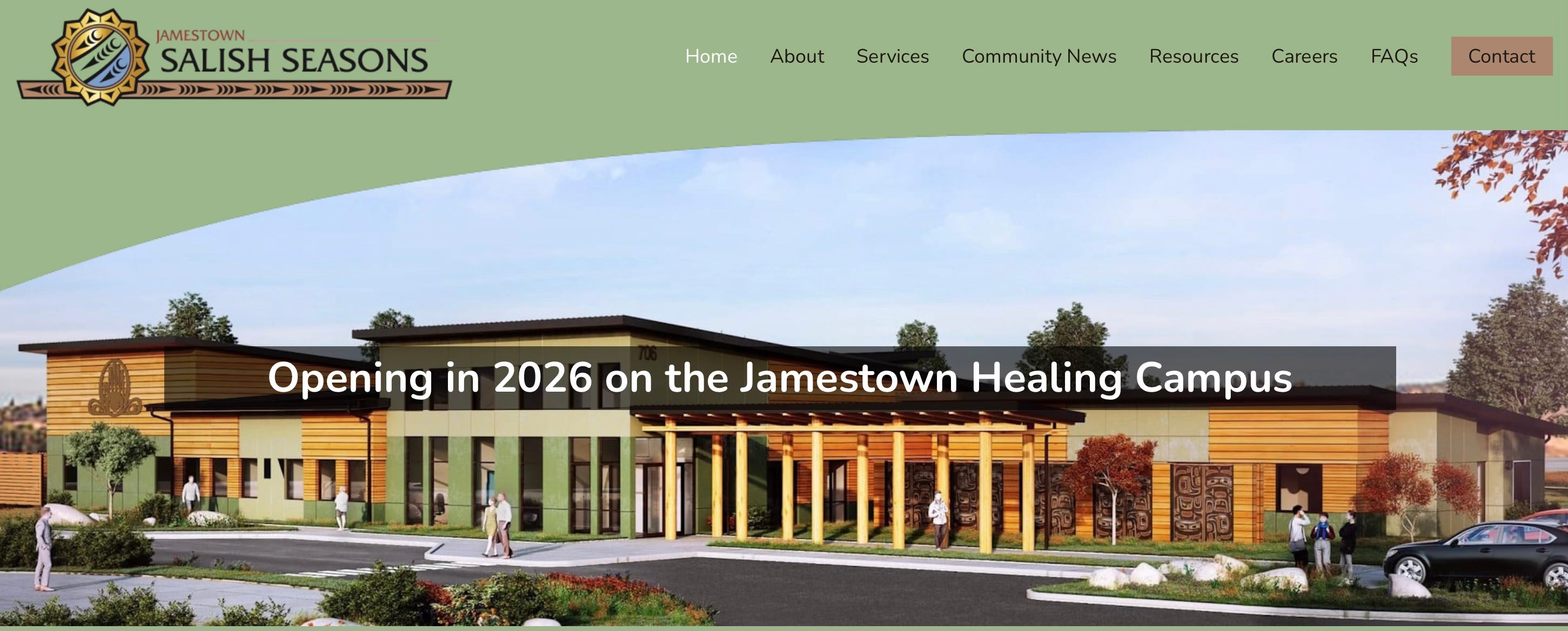
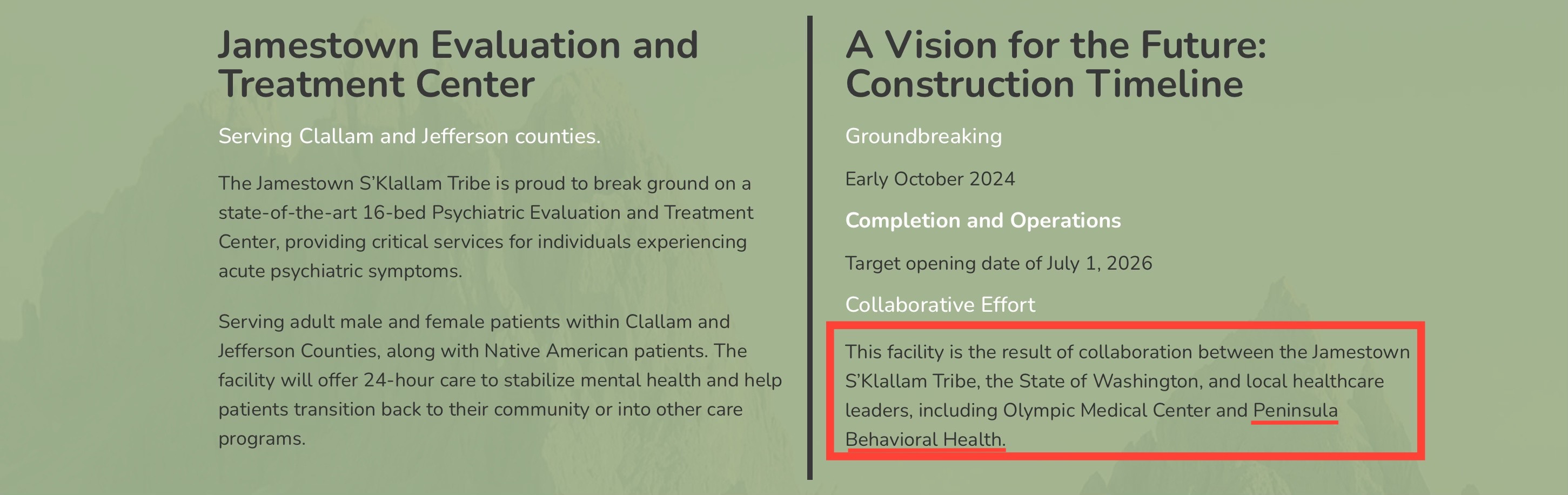
PBH and Jamestown partner on multiple behavioral health initiatives. That collaboration is documented. Yet when asked for shared outcome data, PBH deflects, and Jamestown doesn’t respond.
If PBH is going to cite another entity’s metrics to support its policy approach, PBH should be willing to produce those metrics — or explain why it cannot.
The Eviction Question: Law or Policy?
Commissioner Mike French wrote to a concerned resident about PBH’s soon-to-be-completed North View homeless housing complex:
“The nuance is that our state’s landlord-tenant laws do not allow a landlord to evict solely because of substance use.”
CC Watchdog asked PBH:
What specific RCW?
Under what circumstances can eviction occur?
Is this state law — or PBH policy?
PBH’s response:
Residents retain standard landlord-tenant rights. Substance use alone does not automatically result in eviction.
Again: no statute cited. No RCW number. No regulatory clause.
So what is this? A legal mandate? Or a philosophical choice?
If it’s the law, show it.
If it’s policy, own it.
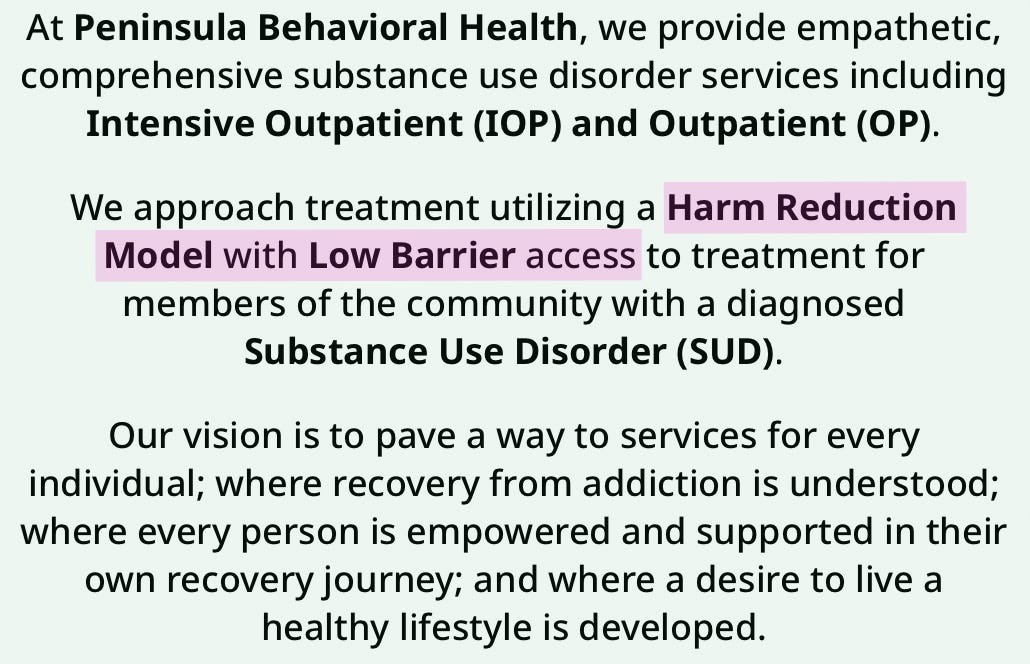
Low Barrier in Everything but Name
PBH says North View is not “low barrier.”
But PBH also says:
Substance use alone does not result in eviction.
Relapse triggers re-engagement, not removal.
Sobriety is not exclusively required.
That is, functionally, a low-barrier facility.
You cannot redefine “high barrier” to include ongoing substance use.
Compare that to 4PA’s stated model:
“The Touchstone Campus will be a ‘high barrier’ facility. There will be NO drugs or alcohol permitted on campus… establishing clear boundaries is the best way for us to make a difference.”
Clear. Direct. Unambiguous.
PBH’s language? Nuanced. Elastic. Conditional.
Words matter. Especially when taxpayer dollars are attached.
Permanent Supportive Housing: Success or Stagnation?
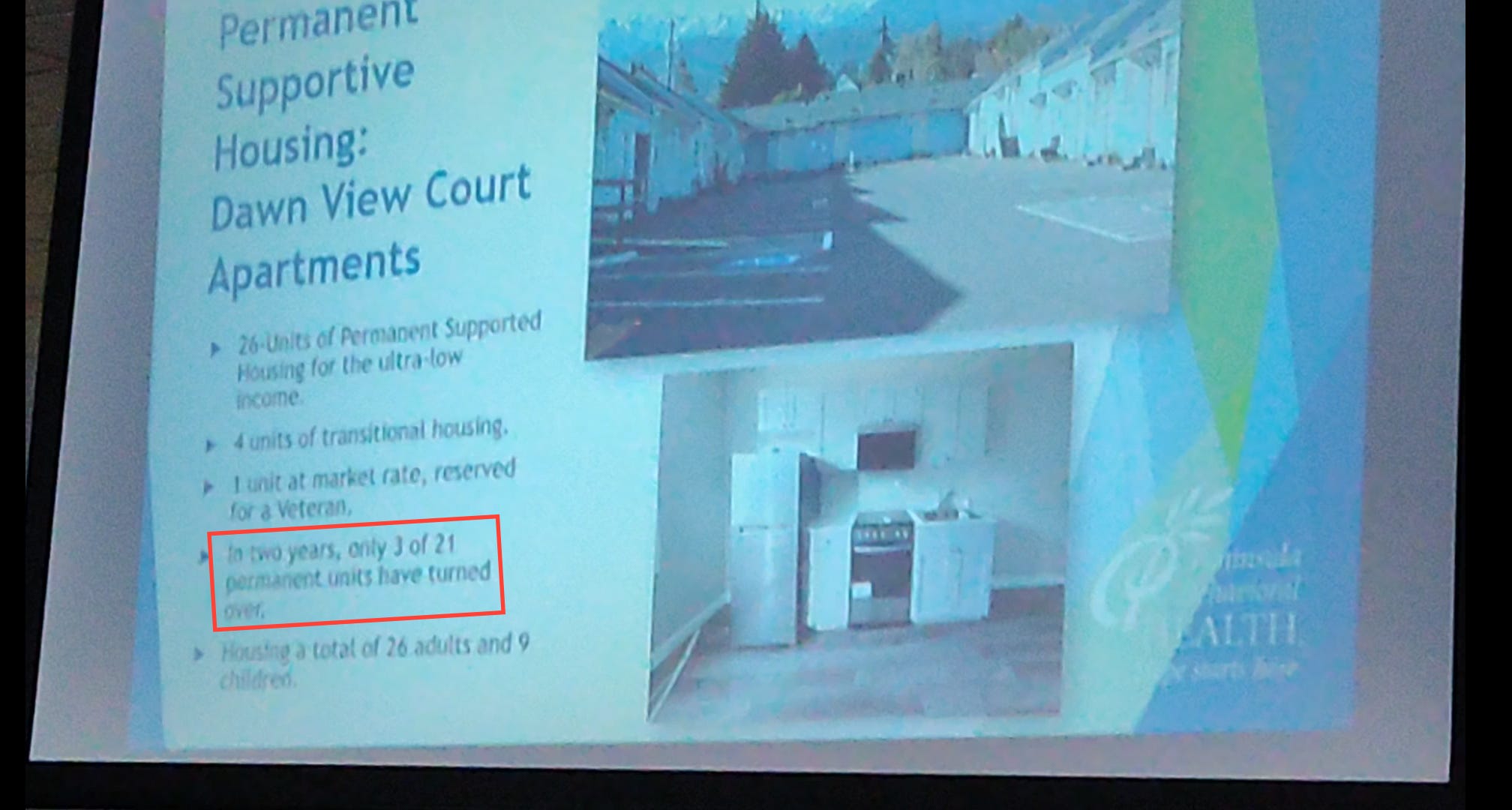
PBH’s materials include a point that in two years, only 3 of 21 permanent supportive housing units turned over — meaning only three people left.
PBH frames low turnover as stability.
But the question remains: is the objective permanent retention — or eventual transition to independence when possible? Stability is important, but so is transparency about goals. If the model is “permanent means permanent,” the public deserves to hear that clearly.
The Slides You Can’t See
PBH declined to share the presentation slides with CC Watchdog for publication.
That’s a choice PBH is allowed to make.
But it raises a basic question: why should a publicly presented slide deck — describing publicly funded work — be treated as private?
PBH is an NGO heavily funded by public money. Its annual budget is $18.2 million, with roughly 75–80% spent on staffing. County taxpayers contributed $4 million to the North View project alone.
Public money should come with public visibility — even when it flows through a nonprofit that is not subject to public records laws.
“Push Back on Media Portrayal” — But Which Portrayals?
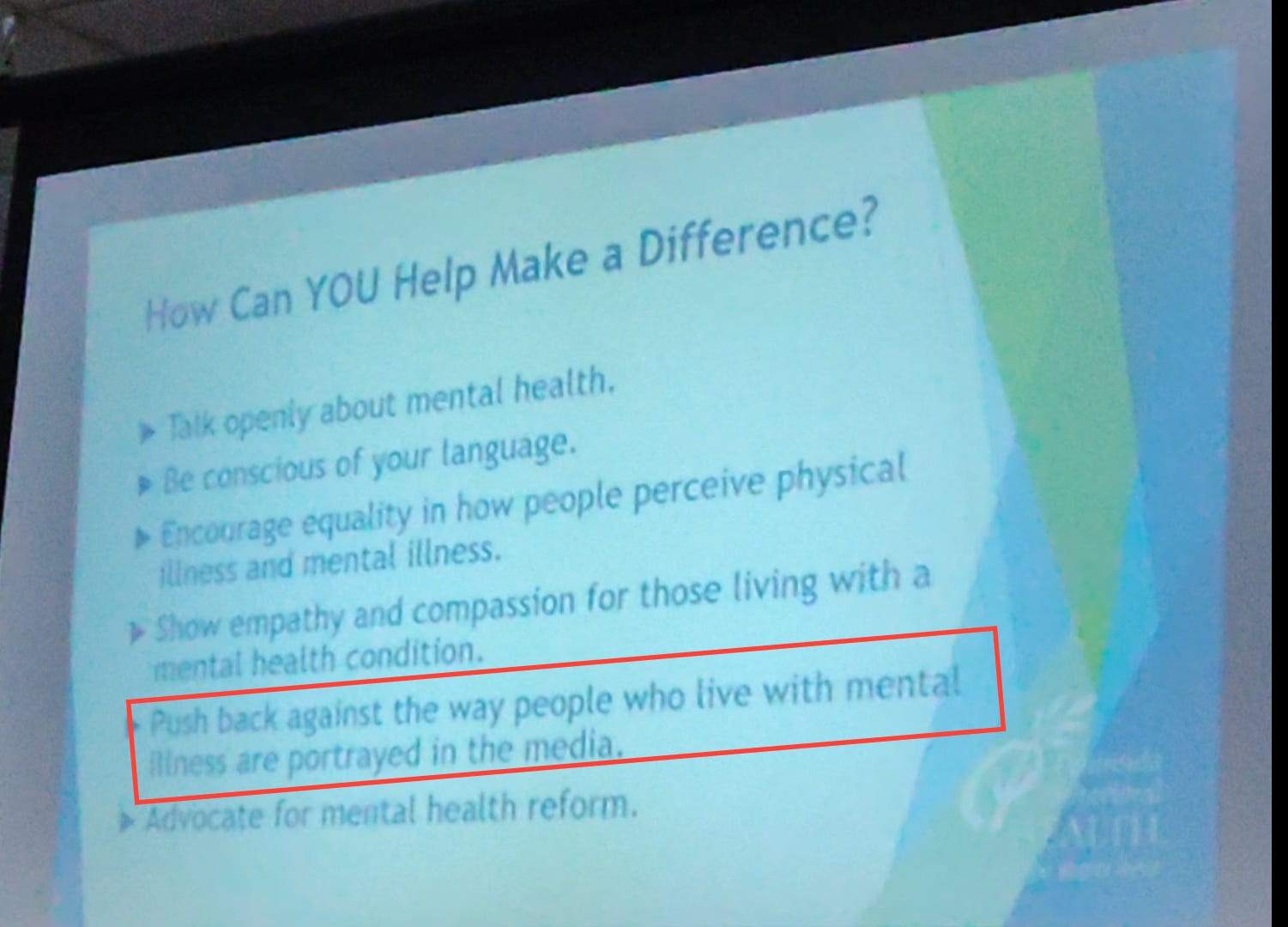
On PBH’s slide titled “How can you help make a difference?” the audience was urged to push back on how individuals with mental illness are portrayed in the media.
PBH later wrote:
The comment regarding portrayal was intended to encourage thoughtful and balanced discussion…
But CC Watchdog asked for specifics: which portrayals are inaccurate or harmful? That wasn’t answered.
The General Contractor Problem
Imagine someone hiring a general contractor — say Commissioner Mike French — to build a dream house.
The homeowner pays him.
He hires the plumber.
The homeowner notices the sinks are wrong and asks the contractor about it.
General Contractor Mike French says: “Talk to the plumber.”
The homeowner talks to the plumber, Wendy. She says she won’t answer questions about the sinks. Wendy already got paid.
The only difference in Clallam County?
The public is forced to pay the county. It’s not voluntary.
The commissioners allocate millions to NGOs. Then, when residents question the commissioners about those NGOs, they’re told to contact the nonprofits directly. Then the NGOs say, “We’re not sharing that information with you.”
That’s not accountability.
That’s surrender.
The Resident Who Asked for Help
Recently, a Port Angeles resident wrote to Commissioner French detailing what daily life has become: repeated break-ins, encampments forming and reforming, assaults caught on camera, calls to police that lead nowhere — and no visible improvement despite years of reporting.
Commissioner French replied. His tone was courteous. He expressed sympathy. He acknowledged the frustration.
But the solutions offered were the same ones residents say they’ve already tried:
File more reports.
Join a Facebook group.
Stay engaged.
Contact Peninsula Behavioral Health.
What was missing was measurable accountability.
If the Board of Commissioners truly wanted answers, they could draw a clear line:
“Before the next $2 million in taxpayer dollars is allocated, we need transparent metrics and outcome data.”
They control the contracts. They approve the funding. They hold the leverage.
Instead, the leverage goes unused.
And when elected officials decline to set expectations, nonprofits inevitably fill the leadership vacuum.
The Pattern Beyond PBH
This isn’t isolated.
Habitat for Humanity, which received $800,000 in county funds last year, refused to share a job description for its Native American Housing Liaison position.
The Humane Society received hundreds of thousands from the county over the years and refuses to share its financials.
The Trinity United Methodist Church's safe parking program, costing taxpayers $118,000, is struggling to fill three parking spaces with clients.
Clallam County taxpayers are an ATM, and everyone knows the PIN.
Leadership or Leverage?
Commissioners hold leverage.
They approve contracts.
They allocate funds.
They can demand performance metrics.
Instead, they defer.
When challenged on oversight, Commissioner French once said:
“I am not interested in micromanaging a developer… that’s not my issue.”
It is the public’s issue.
Because once the money leaves county control, transparency evaporates.
The Real Question
Who governs Clallam County?
The elected commissioners?
Or the nonprofit executives they fund?
When an NGO CEO can flip a commissioner’s question back at him —
When outcome metrics aren’t publicly produced —
When legal claims dissolve under scrutiny —
When presentations funded by public dollars can’t be published —
That’s not partnership.
That’s a power imbalance.
And right now, the NGOs are winning.
In Clallam County, power follows the money.
And the money keeps flowing.
The Emails
Dear Wendy,
Thank you for your presentation to the Port Angeles Business Association on Tuesday. I appreciate the time you took to share about Peninsula Behavioral Health’s work in our community.
I am working on an article and have a few follow-up questions for clarification. If possible, I would appreciate your responses by Wednesday at noon. If that timing does not work, please let me know. Additionally, if you are willing to share the slides from your presentation, I would like to reference or publish select slides for accuracy.
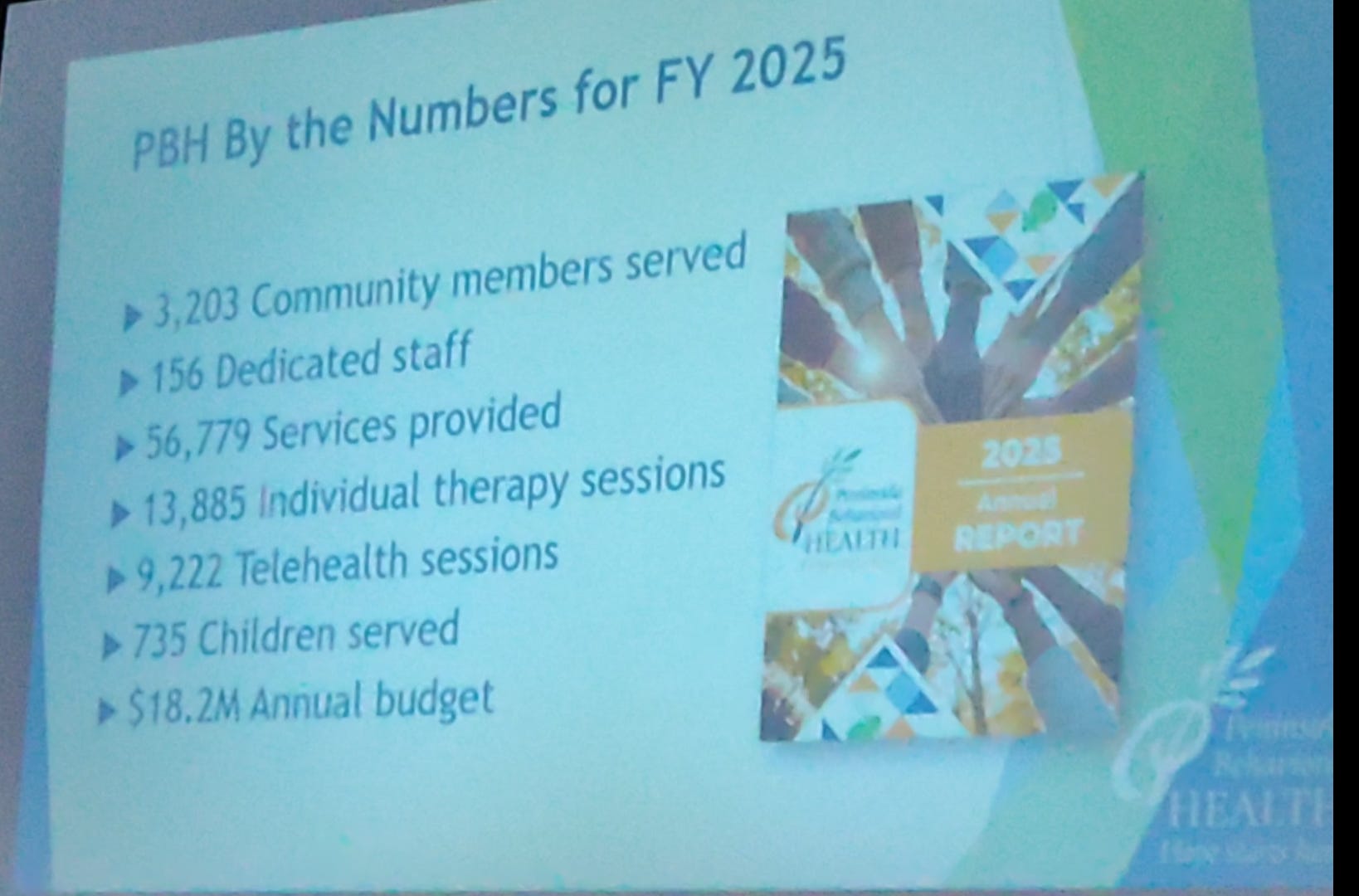
During your presentation, you shared a slide titled “By the Numbers,” which highlighted the number of community members served, staff positions, and services provided. While those inputs are helpful, I did not see outcome measurements — such as metrics related to recovery, reductions in substance use, housing stability progression, or other indicators of long-term improvement.
When asked about evaluating outcomes, you stated that harm reduction is working and referenced methadone treatment as an example, though PBH does not directly provide methadone services. You mentioned that the Jamestown Tribe would be able to provide related metrics. Would you be able to provide outcome data directly, or request and share those statistics so readers can better understand measurable results?
You also stated that residents in permanent supportive housing cannot be evicted for relapse. My understanding of Washington’s Residential Landlord-Tenant Act (RCW 59.18) is that tenants in permanent supportive housing retain standard landlord-tenant rights and obligations, and that eviction depends on lease terms and legal cause rather than relapse alone. Could you please clarify:
• What specific state law or regulatory provision prevents eviction in cases of relapse?
• Under what circumstances, if any, could a tenant in permanent supportive housing be evicted for substance use?
Regarding housing models, you indicated that PBH does not operate “low barrier housing,” and that drugs and alcohol are not allowed in your housing. However, at a May 14, 2024 Behavioral Health Board presentation, you described North View as “not exclusively dry.” To ensure clarity for readers, may I ask a straightforward question:
If a resident of North View uses drugs or alcohol, will they be permitted to continue residing there? If so, under what conditions?
You also provided an example in which someone using meth might be encouraged to reduce consumption rather than cease entirely. Would an individual actively using meth in that manner qualify for permanent supportive housing under PBH’s criteria?
Regarding Dawn View Court, a slide noted that in two years only 3 of 21 permanent units have turned over. Is low turnover considered a primary success metric? Or is there an expectation that residents will eventually transition to more independent housing as part of recovery and stabilization goals?
Finally, on your slide titled “How can you help make a difference?” you encouraged attendees to push back against how individuals living with mental illness are portrayed in the media. Could you provide an example of portrayals you believe are inaccurate or harmful?
Thank you again for your time and for your willingness to engage in these questions. My goal is to present your perspective accurately and give readers a clearer understanding of PBH’s approach and policies.
Sincerely,
Jeff Tozzer
Clallam County Watchdog
Hi Jeff,
I appreciate your patience as Wendy is out-of-office and I needed time to connect with her. Thank you for your follow-up and for your interest in Peninsula Behavioral Health’s work.
Outcomes & Measurement:
PBH tracks and reports outcome data in accordance with state and federal requirements. As a Medicaid-funded provider, we submit performance and quality metrics to regulatory agencies. These include measures related to service engagement, housing stability, reduced crisis utilization, and improved functioning using standardized assessment tools.
Medication-Assisted Treatment:
PBH does not dispense methadone. Outcome data for specific opioid treatment programs are maintained by the providers who operate those services.
Permanent Supportive Housing & Eviction:
Residents in permanent supportive housing retain standard landlord-tenant rights under Washington law. Substance use alone does not automatically result in eviction. When relapse occurs, the focus is on re-engagement in recovery supports, including services aimed at restoring sobriety and stability, consistent with lease agreements and community safety standards.
Housing Stability & Turnover:
Permanent supportive housing is intended to provide long-term stability for individuals living with serious behavioral health conditions and/or who have experienced chronic homelessness. Low turnover typically reflects sustained housing stability among residents who previously faced significant barriers to housing.
Media Portrayal:
The comment regarding portrayal was intended to encourage thoughtful and balanced discussion. Behavioral health recovery is complex and individualized, and public dialogue benefits from reflecting that nuance.
We are not distributing presentation slides for publication.
Thank you,
Wendy


