


This week’s potpourri is not light reading. From 40,000 pounds of trash in a single quarter to expanded gambling, sparse services, courthouse politics, and a water-rights warning from across Puget Sound — the throughline is hard to ignore: systems that are growing less transparent, less accountable, and more disconnected from the people footing the bill. Here are ten stories you won’t hear framed this way anywhere else.
40,000 Pounds Later — And It’s Still Getting Worse
“Impossible to ignore” was how many described last week’s presentation to the Port Angeles City Council by Joe DeScala of 4PA.
Joe gave a boots-on-the-ground report of what his team sees in our creeks, watersheds, and public spaces — not once a month, but six days a week.
The numbers:
Q4 2025: 40,000+ pounds of garbage removed — their largest quarter ever.
Tumwater Creek alone: ~1,500 pounds per week on average.
Most recent week: 1,920 pounds.
His message was blunt: even with near-daily cleanups, they are “barely keeping ahead” of the volume. And if 4PA stopped? The accumulation would continue — rapidly.
Joe didn’t just call for more cleanups. He called for a clear, transparent city protocol:
Formal reporting system
Rapid site visits
Risk ranking
Coordinated outreach
Timely enforcement for high-risk sites
It’s worth hearing his full remarks and watching the presentation below.
If you do one thing this week to remain civically engaged, consider emailing the Board of County Commissioners (via Clerk of the Board at loni.gores@clallamcountywa.gov) and ask them to invite Health Director Dr. Allison Berry to a work session so Joe can present the ecological conditions in Tumwater Creek directly. Although most of this occurs on city property, much of the garbage comes from the County’s Harm Reduction Health Center.
Residents are waking up; now it’s time for our elected leaders to do the same.
Betting Expansion: A Win for the Jamestown Corporation
The Washington State Senate has approved betting on in-state collegiate sports. For tribes operating casinos, that could mean another revenue stream.
For the Jamestown Corporation, which operates gaming enterprises, this is a significant win. Expanded betting increases customer engagement and casino traffic, and positions tribal gaming operations for additional growth.
Ron Allen, longtime CEO of the Jamestown Corporation, has long advocated for strengthening tribal enterprise capacity. This legislation does exactly that.
Representatives from many of the state’s tribes testified in support of the legislation during a Jan. 22 committee hearing. Ron Allen, chair of the Jamestown S’klallam Tribe, told members of the Senate Business Committee that similar bets are already allowed in the state through commodity future trading markets. — Spokesman Review
But what does expanded gambling mean for economically fragile regions like the North Olympic Peninsula?
Casino revenue unquestionably funds tribal services and infrastructure. But economists have long noted that in economically depressed regions, gambling can also:
Extract disposable income from low-income households
Increase debt cycles
Redirect spending from local small businesses
Intensify addiction-related social costs
The question isn’t whether the tribe benefits. It likely will.
The question is whether the broader regional economy grows stronger — or simply circulates more money through betting terminals.

“I WILL STAY HERE”
Jon Purnell wrote to CC Watchdog. His message deserves to be published in full:
We have spent nearly 50 years building and improving and maintaining our place, and will not willingly leave it, in spite of the drug house down the road that burned down; in spite of the garbage fires and resultant explosions, derelict cars, RVs and other discarded junk deposited there, in spite of the gunshots and screaming there; in spite of the used needles I found in my driveway and out by my mailbox; in spite of a stabbing down the road the other direction that resulted in a man's death; in spite of graffiti and garbage, public defecation and encampments in public parks and sidewalks; in spite of drug addled maniacs obstructing intersections downtown; in spite of panhandlers at the Safeway and the Shore Aquatic Center; and in spite of self-serving local pols and so called NGOs who remain blind to, or are otherwise unaffected by all of this; I WILL STAY HERE, until they haul me out feet first. I plan to defend myself, my wife, my dogs, and my wonderful neighbors, if that is what it takes.
Dismayed? Yes.
Leaving? No.

77,000 vs. 500 — A Tale of Two Governments
Anyone among the 77,000 Clallam County residents who has tried to resolve a permit issue, ask a policy question, follow up on a complaint, or simply get a return email from a commissioner knows the experience can involve delays. That’s not a moral failing — it’s scale. A county government serving 77,000 people will inevitably triage priorities.
But after the layoffs in early 2025, wait times and responsiveness appear to have worsened. Fewer staff. Shortened hours. More deflection between departments. Residents feel it.
Now compare that to the Jamestown S’Klallam Tribe.
According to the Tribe’s publicly available Social Services resource listing, there are 28 employees in that department alone. The Jamestown Tribe has just over 500 enrolled members, with roughly 200 living locally.
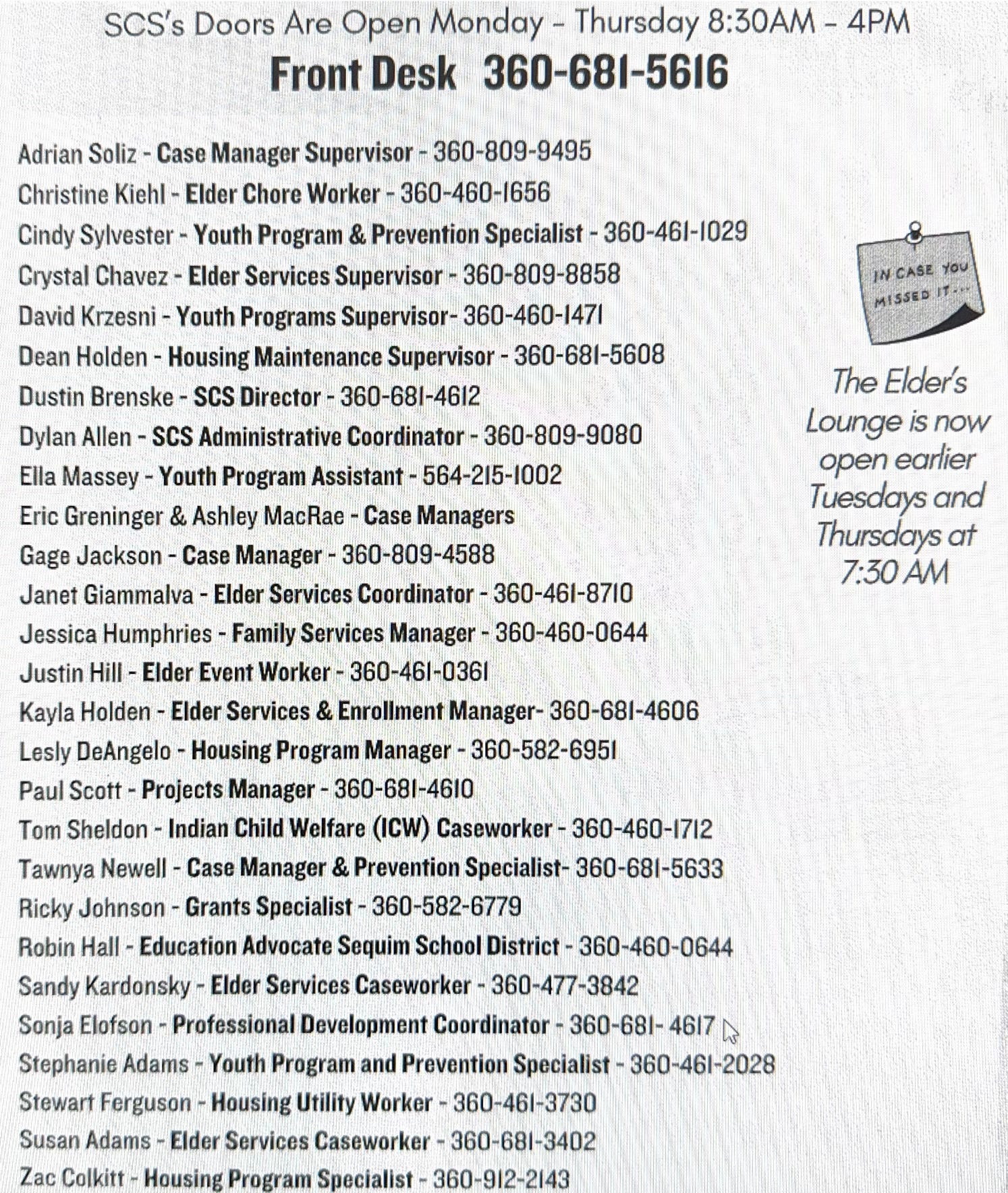
Those members also have access to county services.
That staffing ratio means dramatically more individualized access, quicker navigation of the bureaucracy, and far more direct support per capita than the average Clallam County resident receives from county government.
No one begrudges tribal members robust services for their community. The question is structural. County residents are repeatedly told budgets are tight. Taxes and fees rise. Services consolidate. Staffing shrinks. And yet responsiveness declines.
Wouldn’t it be nice if Clallam County government had the staffing depth to serve its 77,000 residents with the same per-capita attentiveness? Instead, many feel they are being asked to pay more while receiving less.
Seal Street Park: Virtue Signaling vs. Visible Reality
Watchdogger Patty Erickson reports that Seal Street Park — in the heart of downtown Sequim — continues to struggle with encampments and trash.
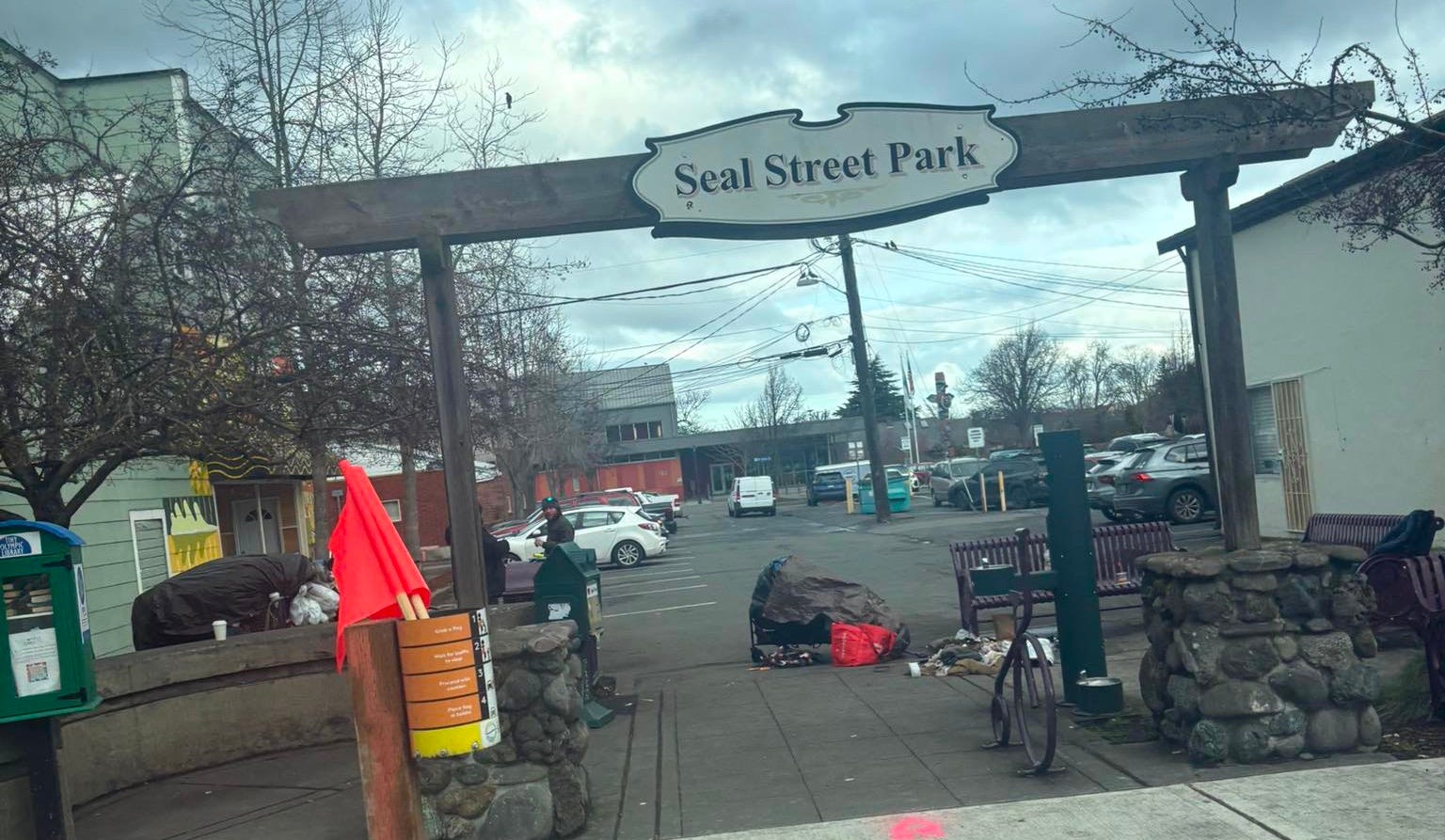
The irony? At the end of Seal Street, visible in the photo, stands Sequim City Hall.
City officials have discussed “solutions” for over six months. Where are the priorities of the new mayor, Rachel Anderson? The Sequim Monitor reports that at tonight’s Sequim City Council meeting, she will issue a proclamation affirming that the City of Sequim “does not engage in federal civil immigration enforcement.”
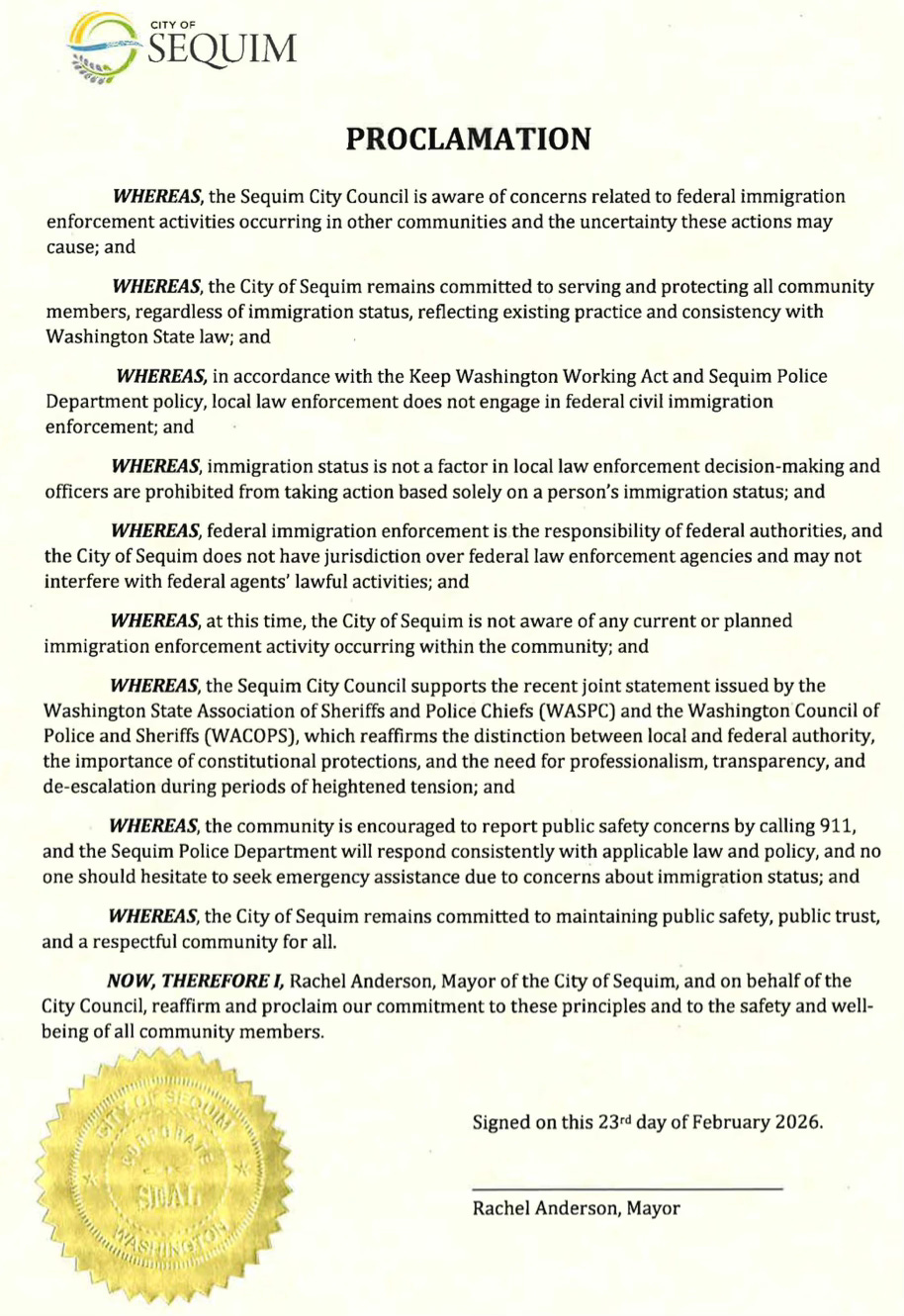
Important? Perhaps, for a council known for political grandstanding. But residents walking past trash and tents might reasonably ask: Should we focus on cleaning up our park instead?
The Sequim City Council meets tonight, Monday, February 23, at 6 pm. Instructions for in-person and virtual attendance are here.
What’s Happening on Woodcock Road?
Speculation is swirling about activity at the Jamestown Corporation’s golf course on Woodcock Road.
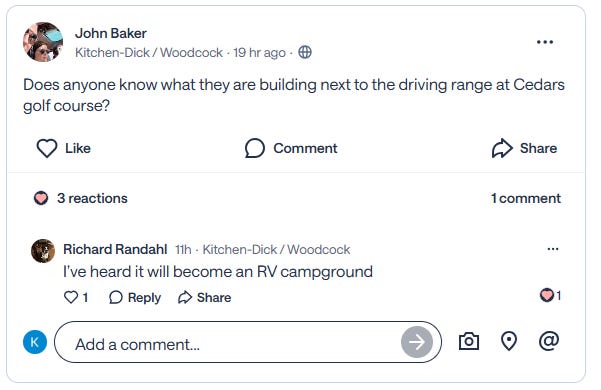
An RV park? Something else?
Here’s the reality: once land is converted into federal tribal trust, it is no longer subject to county zoning or state permitting requirements.
No county permits.
No public notice requirements.
No zoning consistency.
As more property transitions into trust, it’s not just the tax base that shifts — it’s transparency as well.
Retraction: Twilight Radio Covers What Others Won’t
CC Watchdog previously stated that local media never carries stories covered here.
Correction: Twilight Radio 96.7 in Forks does.
They recently aired a segment discussing the League of Women Voters’ support for Dr. Allison Berry and its role in the Conservation District election.
In a media landscape increasingly shaped by institutional press releases written by elected officials and heads of NGOs earning six-figure salaries, independent local radio still matters. Twilight 96.7 can be streamed worldwide here.

Courthouse Renaming: Impartial or Proponent?
The Peninsula Daily News published notice of a public hearing to consider the renaming of the Clallam County Courthouse in honor of Justice Susan Owens.
Oddly, the listed proponent? The three people who will decide the issue — the Clallam County Board of Commissioners.
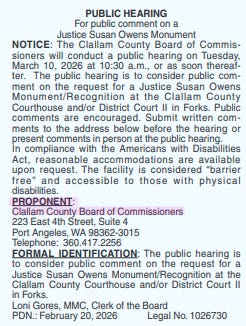
If the board is the proponent, what exactly is the purpose of the public hearing? Residents have begun noticing a pattern: decisions appear pre-aligned before public comment is heard.
Public input should not feel like theater.
Two Registries. Five Nations. One Gap.
Convicted child rapist Marcus Lee Dalos continues cycling in and out of Clallam County Jail.
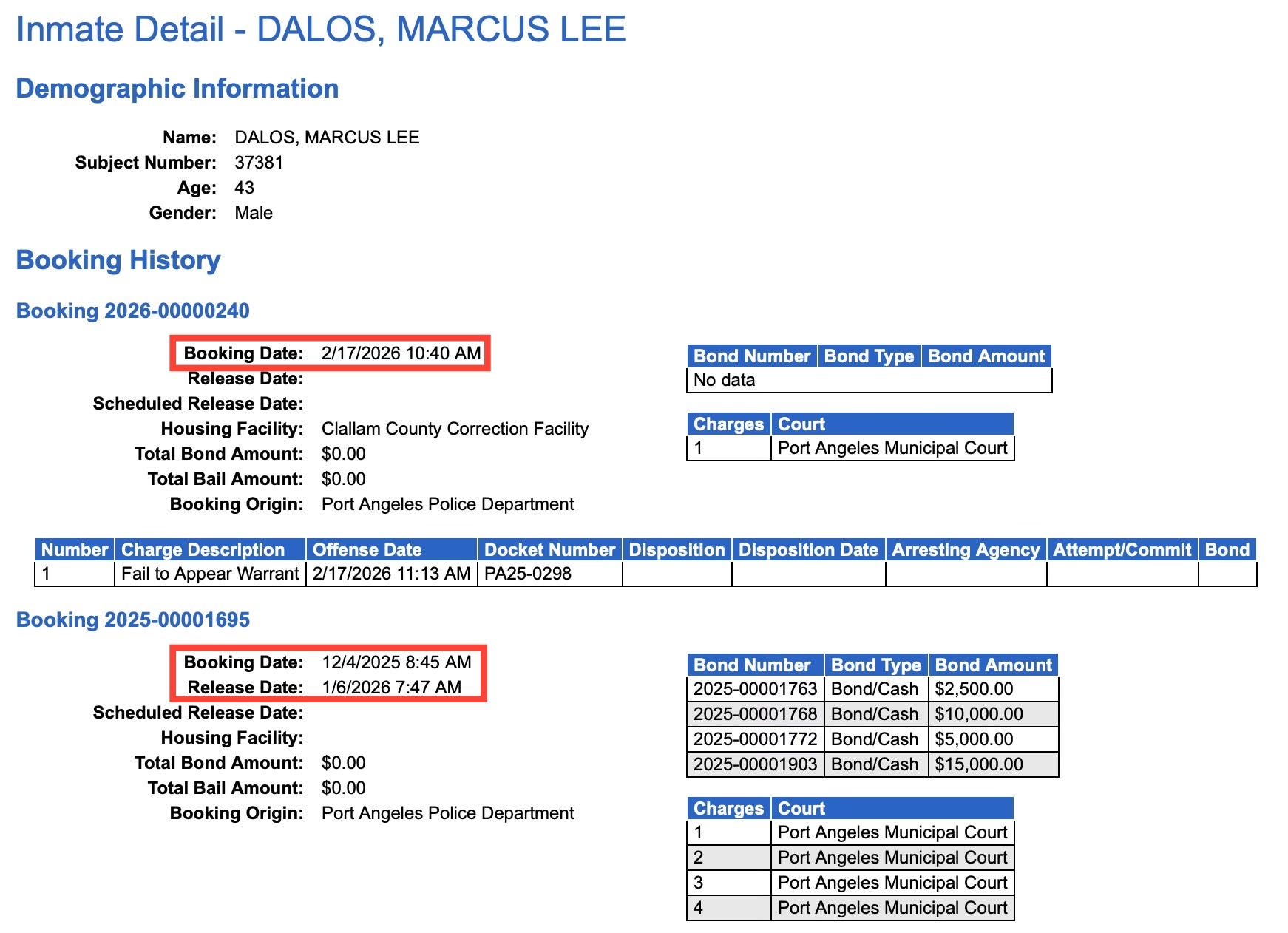
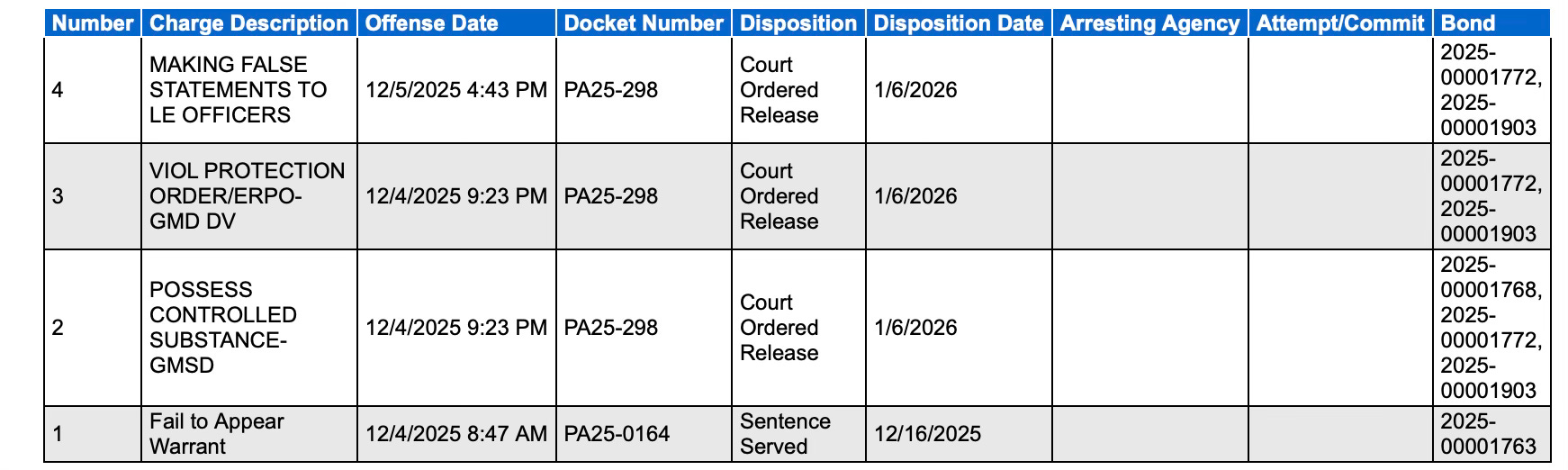
He is listed on the Makah Tribe sex offender registry as an absconder, believed to be living in Port Angeles.
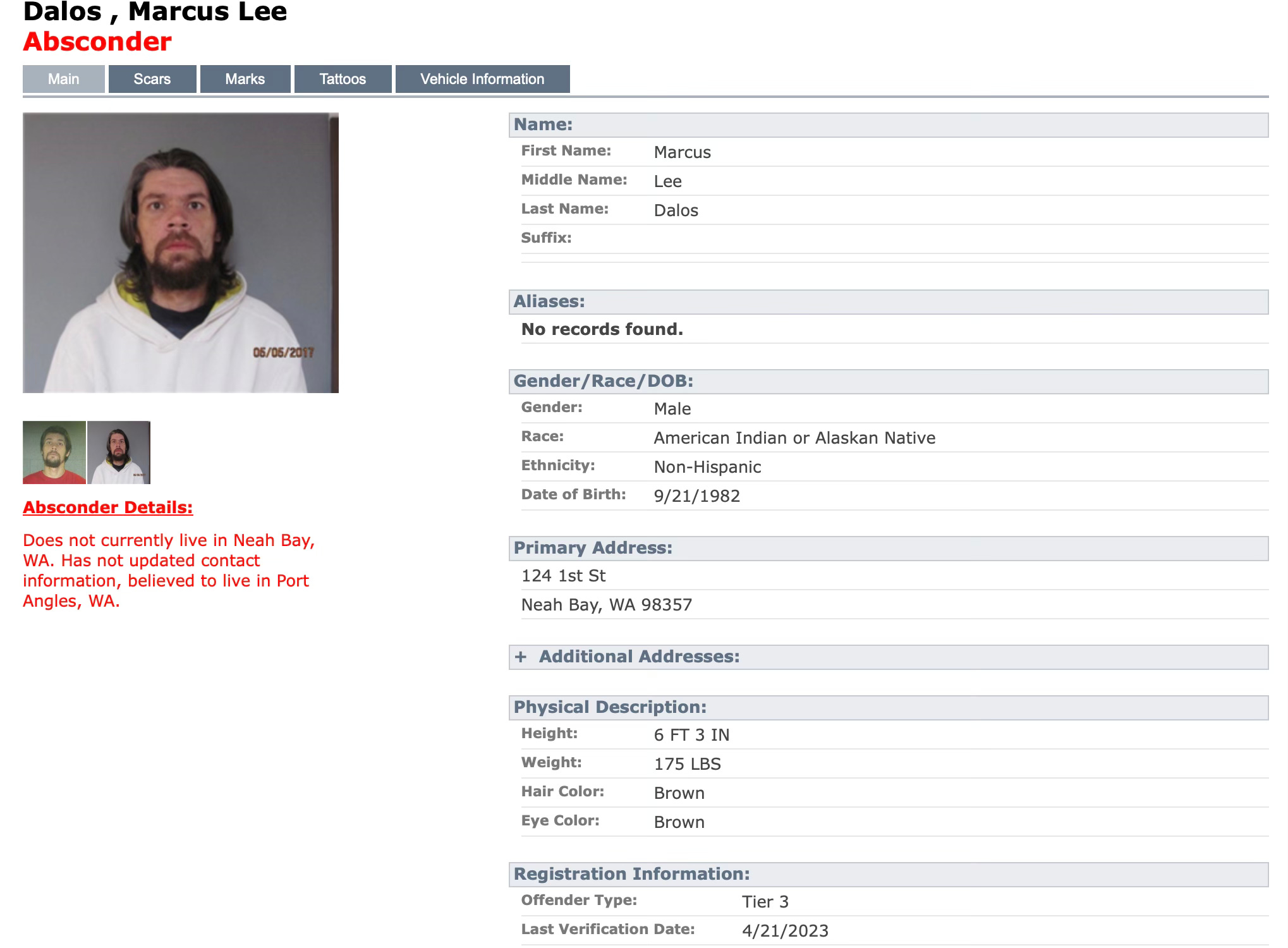

Yet his name does not appear in the Clallam County registry.
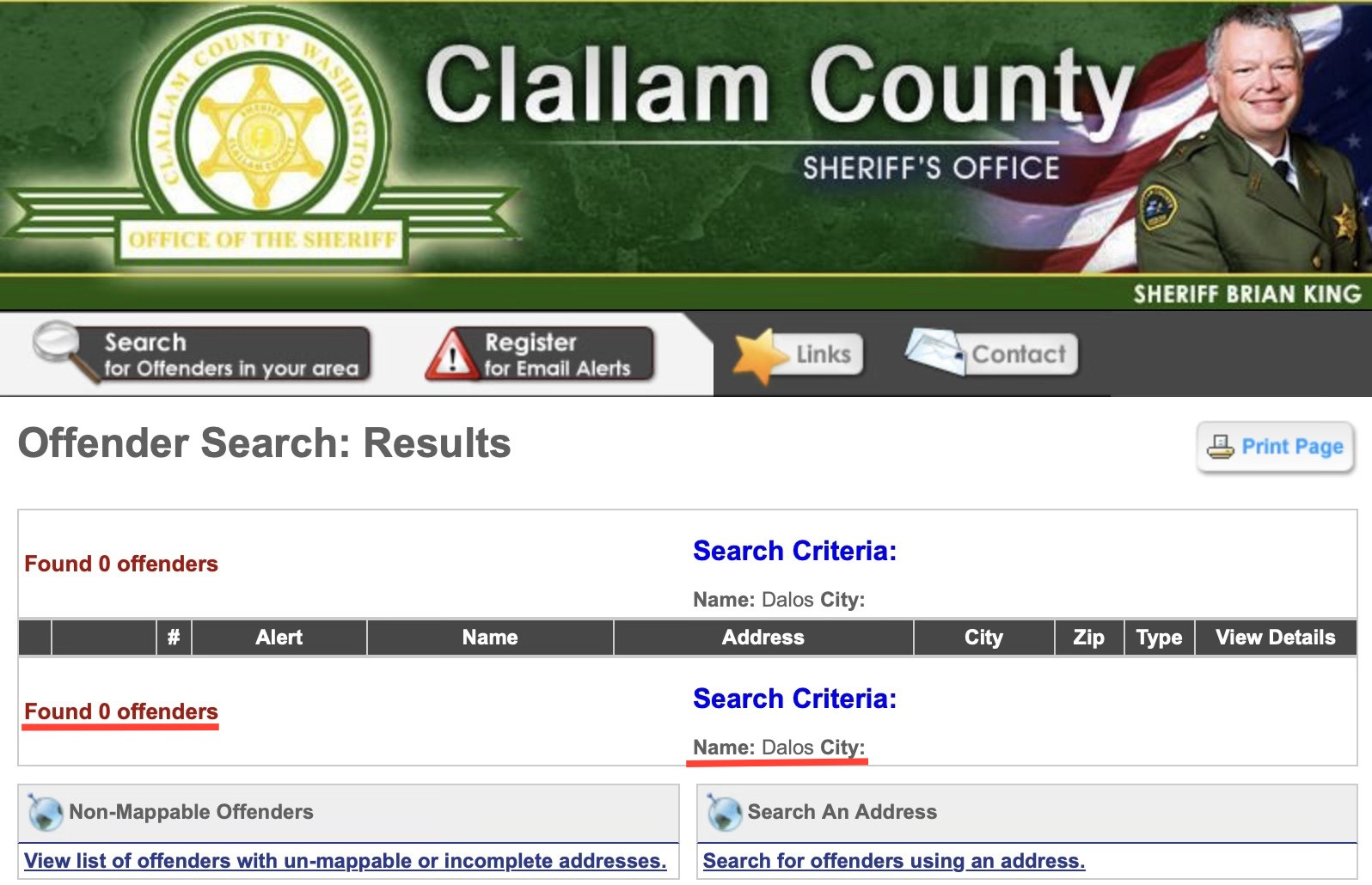
Why? Because the tribal and county systems do not interface with each other.
In Clallam County, there are overlapping jurisdictions: Jamestown, Lower Elwha, Makah, Quileute, and the United States.
Jurisdictional complexity should never create blind spots in public safety.
Water Rights: A Warning From Whatcom
Writer Nancy Churchill, on her Substack Dangerous Rhetoric, is sounding the alarm over a Department of Ecology lawsuit in Whatcom and northern Skagit counties.
More than 35,000 private well owners have reportedly been subpoenaed in a sweeping adjudication effort that could drastically reduce historic well allocations.
Her thesis: the state is using tribal water-right claims as a vehicle to centralize water control, meter wells, and restructure property rights.

Whether you agree with her conclusions or not, the east end of Clallam County is even drier than Whatcom — and local water governance conversations are accelerating.
If you care about wells, adjudication, or long-term control of water, subscribe to Dangerous Rhetoric and read the full analysis.
Water rights are property rights. And property rights debates rarely stay contained to only one basin.


