


In a bold new step beyond harm reduction, Clallam County unveils a revolutionary program aimed at eliminating life’s greatest injustice: doing the dishes. One survivor shares her story of childhood trauma—and the battery-powered bottle opener that saved her life.
She agreed to meet because she wanted her story told.
She sat across from me in a dim apartment, sleeves pulled down tight despite the warm afternoon. Her voice trembled as she began.
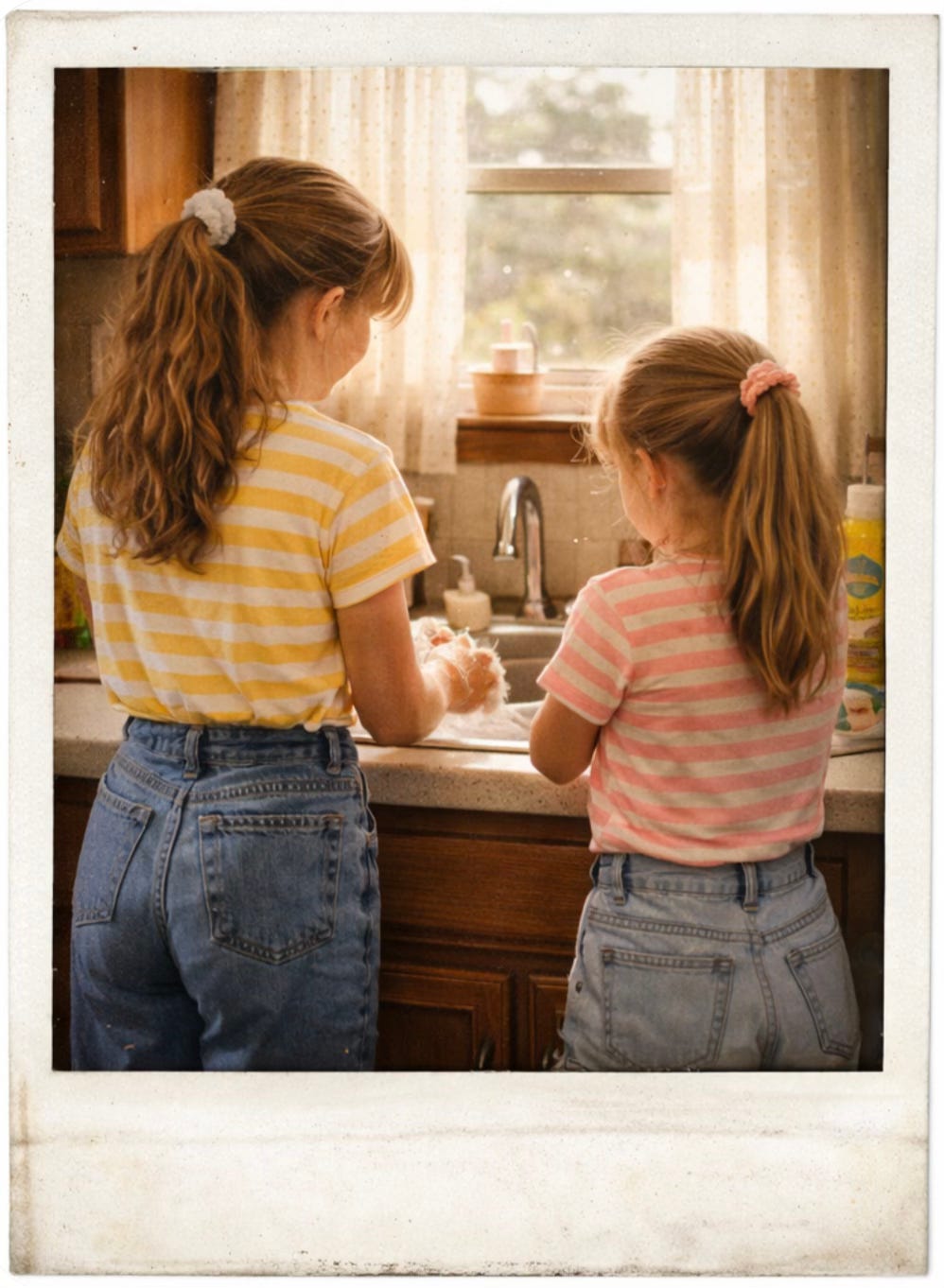
“It started when I was about seven,” she said quietly. “Thanksgiving. Everyone else was watching football… and I was alone in the kitchen.”
She paused.
“My uncle came in.”
I leaned forward.
“He showed me what to do. How to hold things. How to scrub. And before I knew it…” she swallowed hard, “…I was rinsing.”
I exhaled slowly.
“It didn’t stop there,” she continued. “Once my sister was old enough, they brought her in too. She didn’t resist as much. Then it was everyone and all the time. Extended family. Holidays. Weekends. Any time there were dishes… we were expected to handle it.”
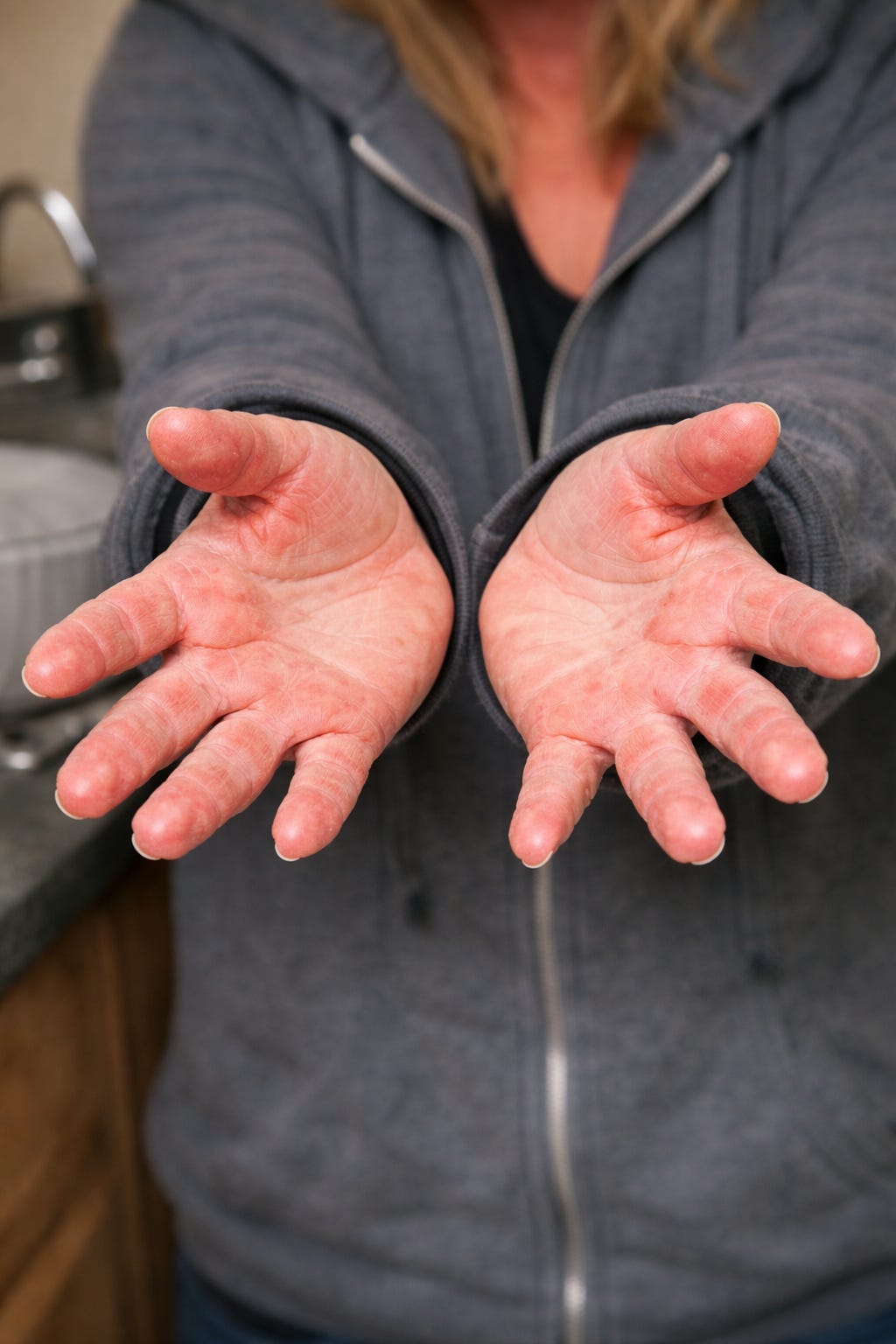
She slowly rolled up her sleeves.
The damage was unmistakable.
Dry skin.
Cracked knuckles.
Permanent wrinkles.
She had dishpan hands.
“Don’t Forget to Presoak”
“My mother was the worst,” she said flatly.
“We’re estranged now.”
She described years of verbal abuse.
“She’d say things like ‘Don’t forget to presoak’… or ‘Make sure you wipe the crystal before it spots.’”
She shook her head.
“I was just a child.”
She said the abuse was calculated.
“I honestly believe my parents had kids just so they wouldn’t have to do the dishes themselves.”
I asked her why she thought that.
She stared at me.
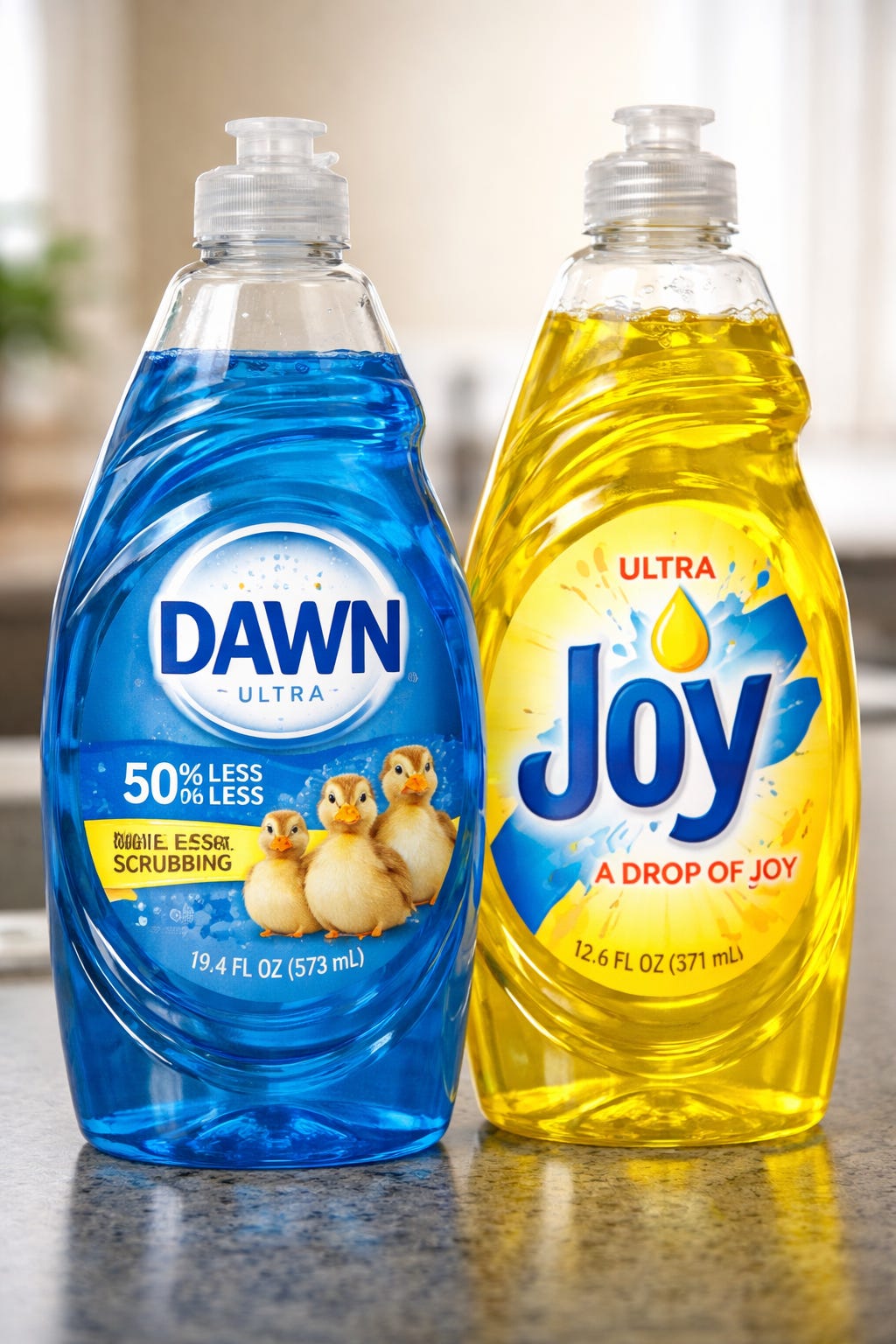
“Because of what they named us.”
A long pause.
“My sister is Joy.”
Another pause.
“I’m Dawn.”
I sat back.
“…like the dish soap?”
She nodded.
“They’d say things like, ‘You have such a bubbly personality,’ or ‘Your mind is like a sponge.’”
She clenched her fists.
“It wasn’t encouragement. It was conditioning.”
A Lifetime of Scars
Dawn says she worked hard to escape her family. It was all she could think about growing up. She moved out at 32 and never looked back.
“I just couldn’t do it anymore. Every plate… every fork… it was like reliving the trauma.”
Her sister Joy had left earlier.
“Joy’s doing… fine,” Dawn admitted reluctantly. “She’s a regional manager now, owns two homes, runs marathons… but emotionally? Completely unavailable. You don’t go through something like that and come out normal.”
The Dishwasher Theory of Crime
Dawn believes the issue runs deeper than most people realize.
“Do you know who didn’t have a dishwasher?” she asked suddenly.
I braced myself.
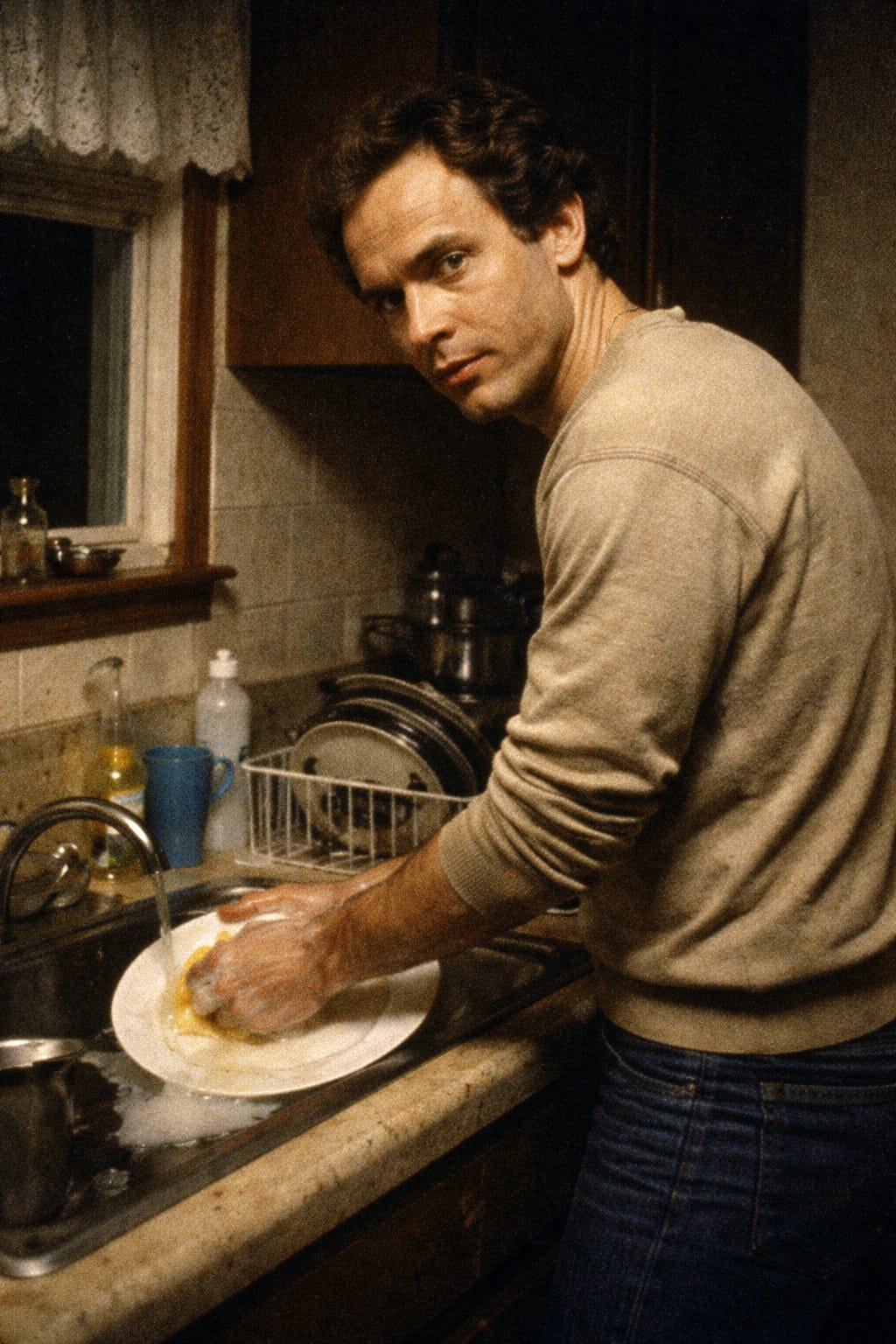
“Ted Bundy.”
I blinked.
“He had to wash his own dishes,” she continued. “You think that didn’t contribute? Imagine standing there, scrubbing baked-on lasagna… day after day…”
She leaned in.
“And then being expected to function in society.”
I nodded cautiously.
“When they caught him, I guarantee there was still cheese stuck to that knife.”
A Turning Point
Dawn says everything changed when she discovered a new county program.
“I met a woman named Windy Grift that runs a behavioral health NGO,” she said. “She told me about a place that could help.”
“The Harm Reduction Center?” I asked.
She shook her head.
“No. Next door to that.”
She reached into a bag stamped with the county logo.
“The Burden Reduction Center.”
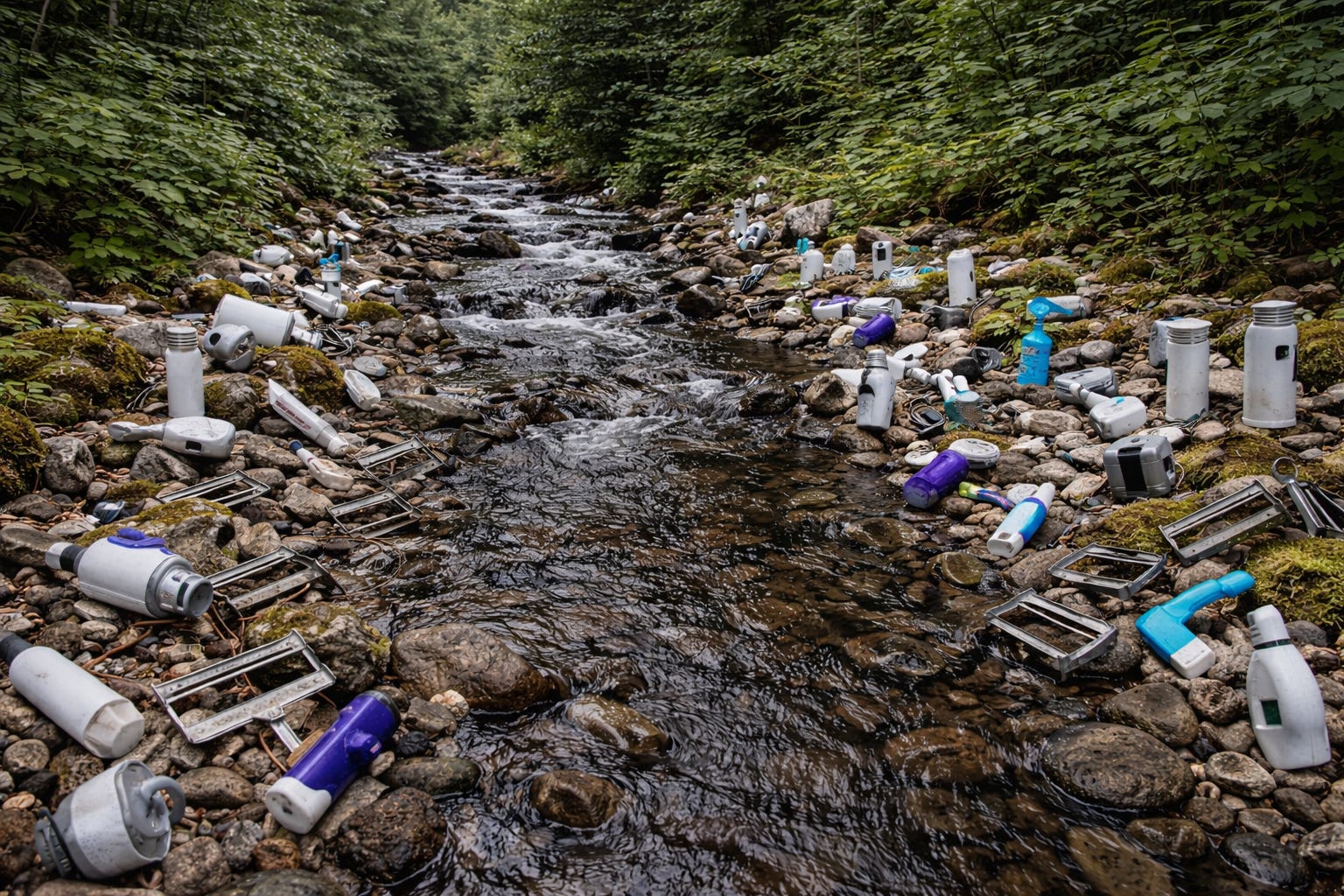
She began unloading items onto the table.
“A precision cheese slicer,” she said proudly. “Uniform cuts. No more uneven sandwiches.”
Next: a motorized bottle opener.
“I saw one of these in SkyMall once. I cried.”
Then: a small plastic spray bottle with a fan attached.
“It mists and cools,” she explained. “And when the battery dies, you just throw it on the ground and get another one.”
Breaking the Cycle
A door creaked open down the hallway.
“That’s my son getting up,” she said.
It was 2:00 PM.
A lanky teenage boy shuffled out.
“Come say hi,” Dawn called.
He approached.
“Nice to meet you,” he said. “I’m Kenmore.”
“I made a promise,” Dawn said. “That boy will never wash a dish in his life.”
She handed him a lighter, an ashtray, and an extended cigarette holder.
“Don’t smoke,” she told him. “But if you do, do it safely.”
Kenmore nodded and left for the alley behind Safeway.
A Life Rebuilt
Dawn stood and opened the curtains.
Sunlight flooded the room, revealing a stunning panoramic view of Port Angeles Harbor.
“I still can’t believe I got into North View,” she said. “Top floor. Harbor view. Dishwasher included.”
She smiled.
“My application was a shoo-in. I checked the box for ‘Raised Without Dishwasher.’”
One Last Lesson
As I prepared to leave, I carried my empty glass to the kitchen.
“Just put it in the dishwasher,” she said.
I opened it.
“But… this is the only thing in here.”
She nodded.
“I know.”
She winked.
Then gently closed the dishwasher and started the cycle.
Today’s Tidbit
This isn’t an April Fool’s joke… but it should be.
Washington State Ferries is raising fares again.
After implementing a roughly 3% increase on October 1, 2025, another ~3% increase is scheduled to take effect May 1, 2026. For riders, that means paying more for a system that continues to struggle with reliability, staffing, and service consistency.
At the same time, the agency is expanding its payroll.
WSF is currently hiring a “Tribal Liaison” with a salary range of $91,400 to $122,976 annually. According to the job description, the position is intended to “build and sustain meaningful government-to-government relationships with Puget Sound Tribes,” ensure ferry operations respect treaty rights and cultural resources, and incorporate Tribal perspectives into planning and projects.
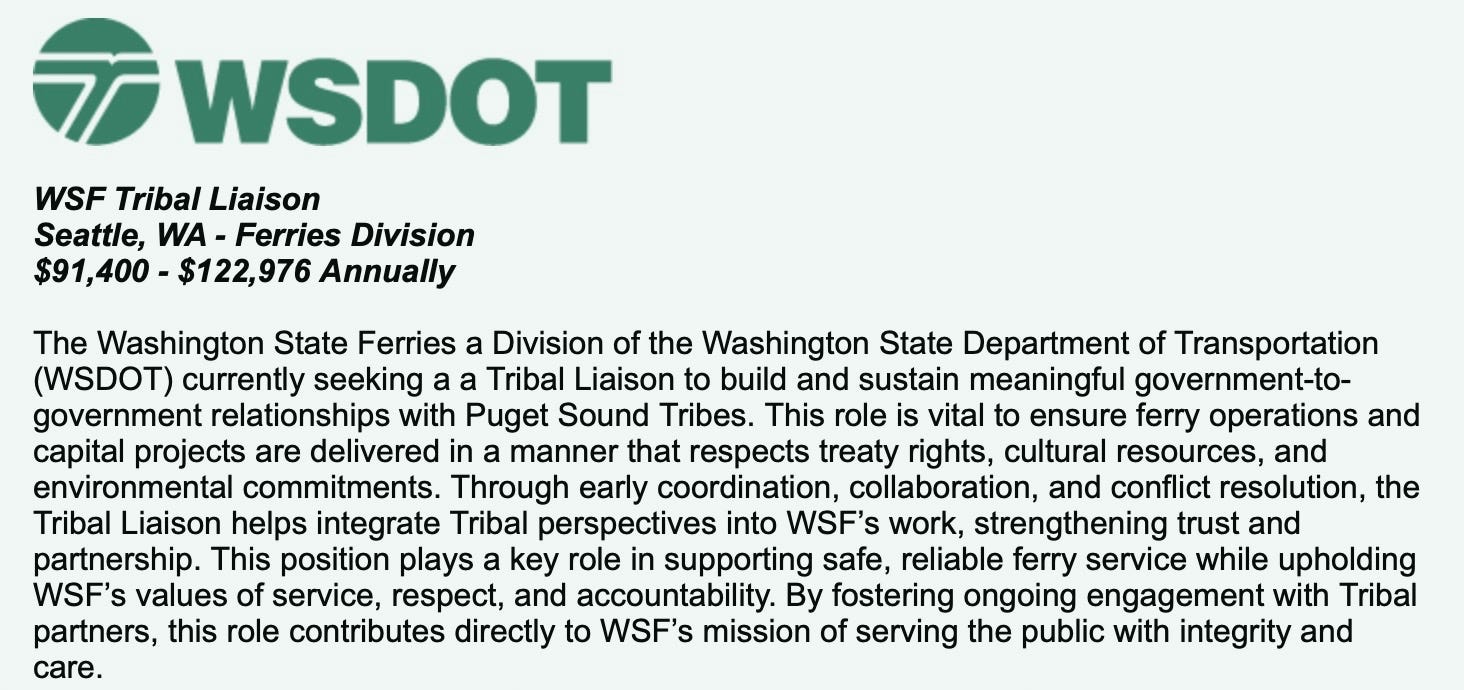
The role emphasizes coordination, collaboration, and long-term relationship building.
All of which raises a straightforward question for ferry riders:
As costs continue to rise, how much of the system’s limited resources are being directed toward improving service—and how much is being directed elsewhere?


