


Commissioner Mike French recently called himself “pretty close to a free speech absolutist.” That may surprise residents who remember public comments being cut short, monthly Q&A forums canceled, and one critic suddenly losing Zoom video access after challenging the county’s story on the Dungeness Reservoir. The bigger problem? That critic, John Worthington, keeps turning out to be right.
“I am pretty close to a free speech absolutist,” Commissioner Mike French told the gallery during a Board of Commissioners meeting last month.
“I think that the First Amendment is one of the most important amendments that exists,” French continued. “It is fundamental to American democracy. It changed the world when it was instituted.”
French explained that he intentionally allows broad public participation during meetings, even when comments drift away from agenda items. He said that even if fellow commissioners pushed him to tighten the process, “I wouldn’t do so.” If a meeting runs an extra 30 minutes because citizens are speaking, French said, that is time well spent.
It was a remarkable statement from a commissioner, given that meeting attendees had spent years observing him doing the exact opposite.
For more than three years, residents attending Clallam County commissioner meetings have watched public comments interrupted when they drifted away from agenda items. Critics of the board were often cut off abruptly at the three-minute mark, while supporters received additional time. Monthly commissioner forums were canceled due to time constraints; make-up sessions were not rescheduled, and the forums — the only chance for residents to engage in two-way dialogue — end precisely at 11:45 a.m., even when constituents are still waiting to ask questions.
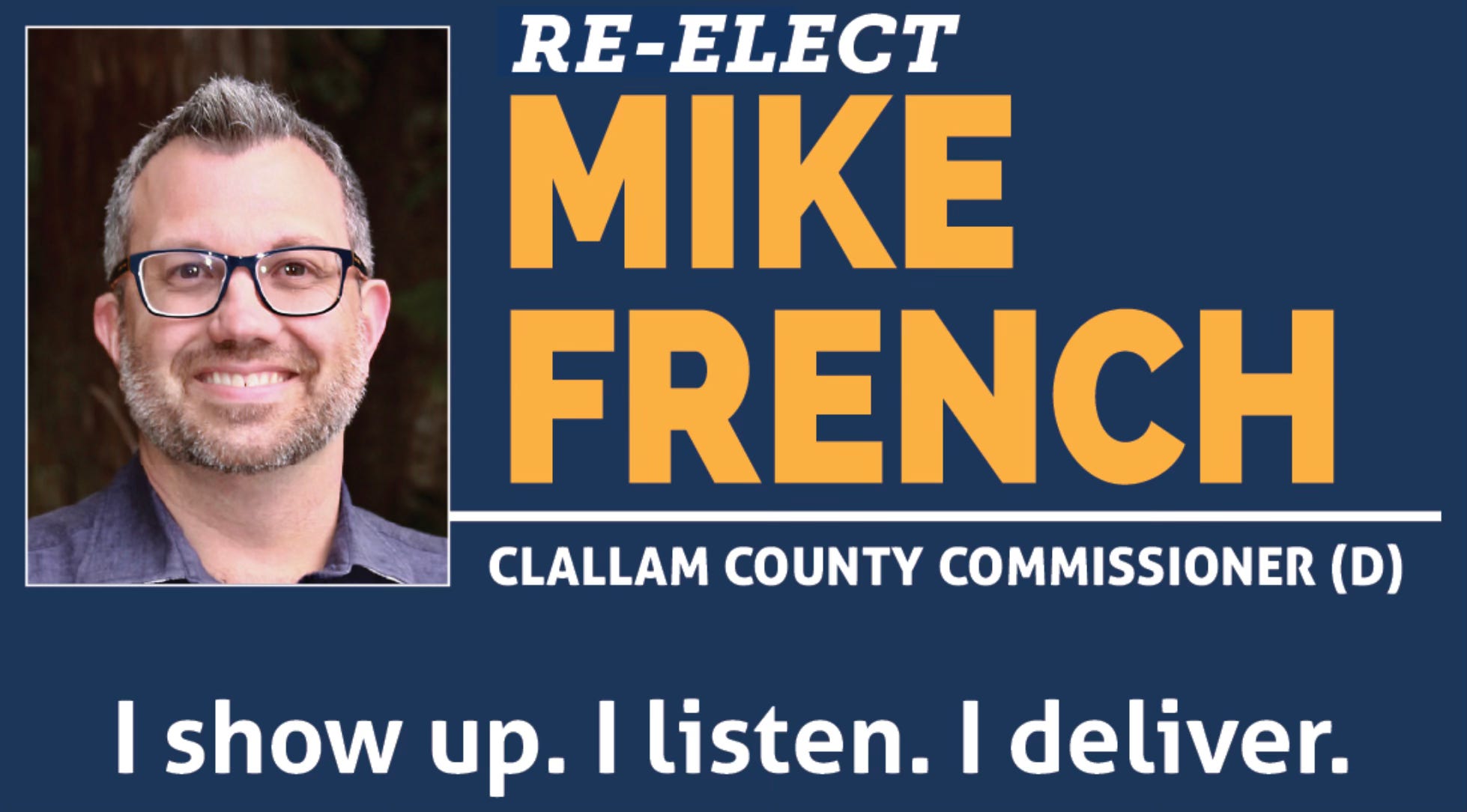
Now, however, French is running for reelection under a new campaign slogan:
“I show up. I listen. I deliver.”
That may explain why the listening suddenly feels new.
The Day the Video Suddenly Stopped Working
The clearest example came in March 2024 during a public comment session held over Zoom.
“No video allowed? Is that what’s going on here?” asked a remote participant after realizing his camera feed had been disabled.
“Go ahead,” replied Board Chairman Mike French.
“I have no video,” the commenter responded.
“Yes, we can hear you,” French reassured him.
“Why am I being censored?” the commenter asked.
“So, this is a limited public forum,” French explained. “You’re allowed to make comments. We’re not required to give you full access to every feature on Zoom.”
The explanation immediately raised eyebrows in the room because Zoom video participation had already become common practice during commissioner meetings following the pandemic. Residents across Clallam County — particularly those in remote areas like Forks and Sekiu — had relied heavily on video participation and screen-sharing to present documents, photos, statistics, and road conditions without driving hours to Port Angeles.
Even more confusing, video and screen-sharing had already been allowed earlier in the very same meeting.
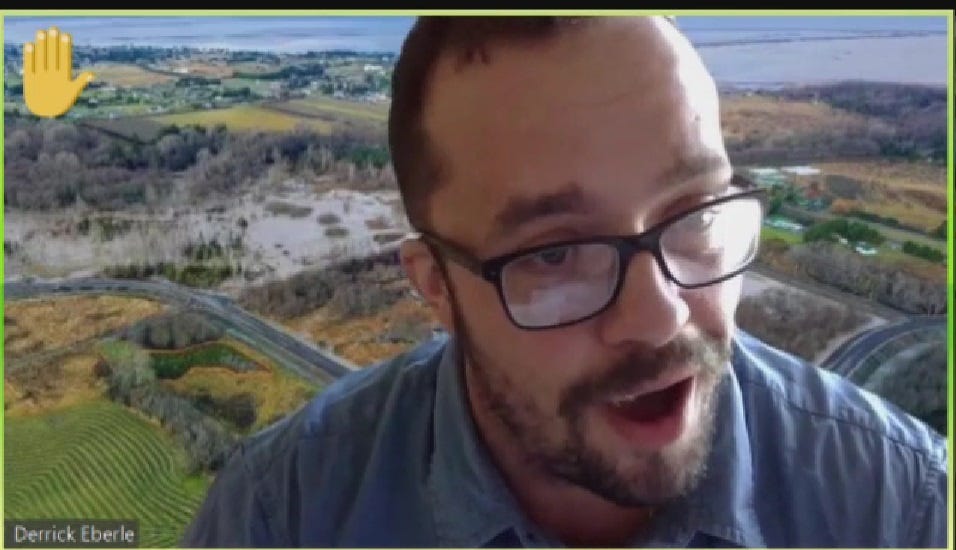
One Towne Road landowner had routinely used Zoom video to argue against reopening Towne Road.
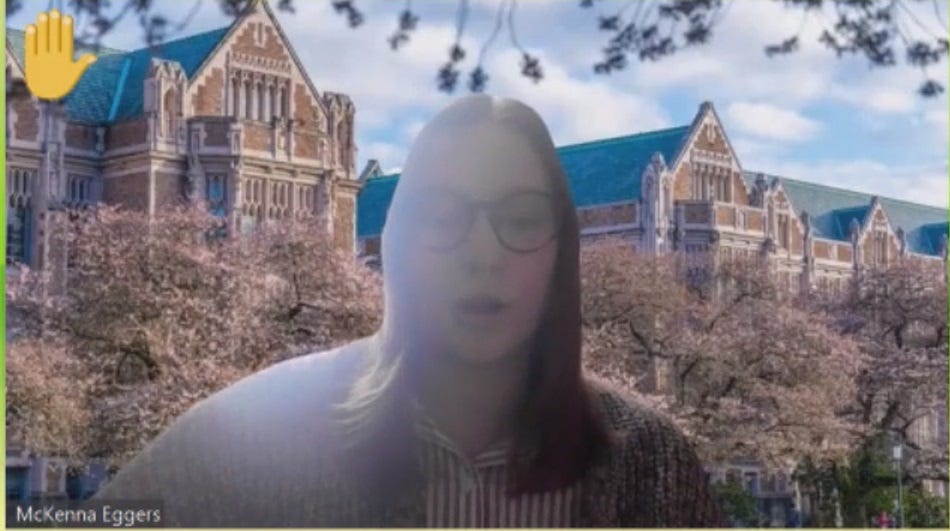
On other occasions, a University of Washington student activist group had been allowed to use screen-sharing while advocating that the Towne Road levee should not function as a public road.
But on this particular day, the rules changed.
Enter John Worthington
The resident whose video access had been disabled was John Worthington.
Worthington had become increasingly critical of statements made by Commissioner Mark Ozias and county leadership regarding the Dungeness Reservoir and other county issues. This was the first time Worthington had participated in public comment since an article had been published questioning the county’s public narrative surrounding those matters.
The gallery noticed the sudden restriction immediately.
Commissioner French attempted to justify the change by pointing out that other agencies often impose even stricter limitations during virtual meetings.
“I’ll just point out that if you join other virtual meetings of other public agencies in the area, you’re not even allowed to unmute,” French said.
At the close of the meeting, French again addressed public comment rules and reminded attendees that the county is not actually required to provide open public comment periods.
“We go over and above what the state requires because we want people to have an opportunity to provide feedback on general county business to us,” he said. “There has been a recognized trend of people weaponizing these platforms to pursue hate speech… I don’t think that we have a problem with hate speech, but I just want to make it clear that many other communities have.”
A resident in the gallery then asked the obvious question:
“What’s the policy on video?”
“We’re not required to accept video public comments,” French answered.
Another attendee followed up:
“Is there a policy though? No more video going forward?”
French responded that county policies existed within county code and administrative policies, though he admitted, “I can’t tell you off the top of my head what it says exactly.”
The strangest part of the exchange was that Worthington had been allowed to use video and screen-sharing during the earlier public comment session just 30 minutes before. After his comments became critical of county leadership, the rules appeared to change specifically for him.
Commissioner Mark Ozias later stated that he supported developing additional policies governing public comment.
The Problem With Selective Rules
Freedom of speech does not simply mean allowing approved opinions while restricting critics. Government entities are expected to apply rules consistently and impartially, especially when public participation is involved. When one resident is allowed to share video and documents while another suddenly loses those privileges immediately after criticizing county leadership, it naturally creates concerns about viewpoint discrimination.
That concern becomes even more significant considering Worthington’s history with the commissioners.
In November 2024, Worthington publicly questioned county officials about a contract with Cascadia Consulting Group. Commissioner French initially claimed he did not recognize the company.
“I’m at a loss as to what that group would be,” French said at the meeting.
County officials similarly suggested they were unaware of any significant relationship with the consultant.
But Worthington was correct.
The county had entered into an active contract with Cascadia six months prior. The contract was worth $369,535, and the county had issued a payment to the company just weeks earlier.
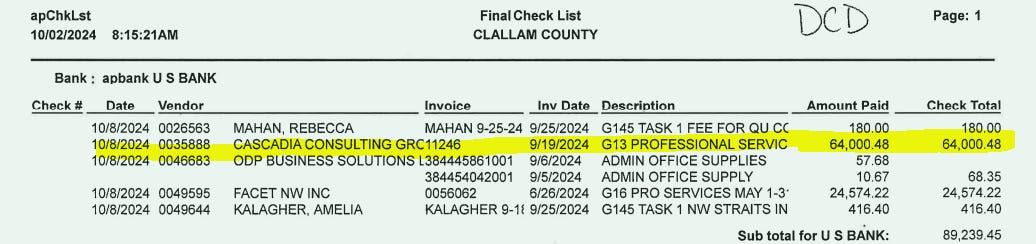
After staff searched county records during the meeting, officials acknowledged the contract existed.
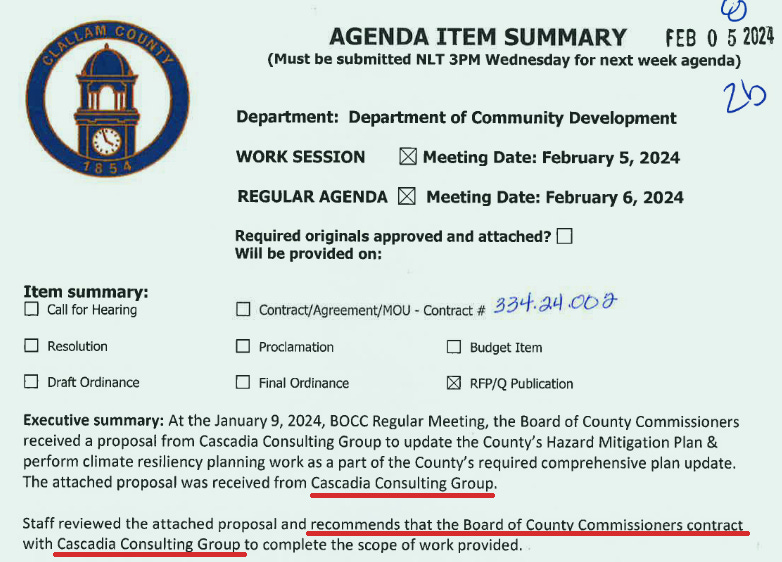
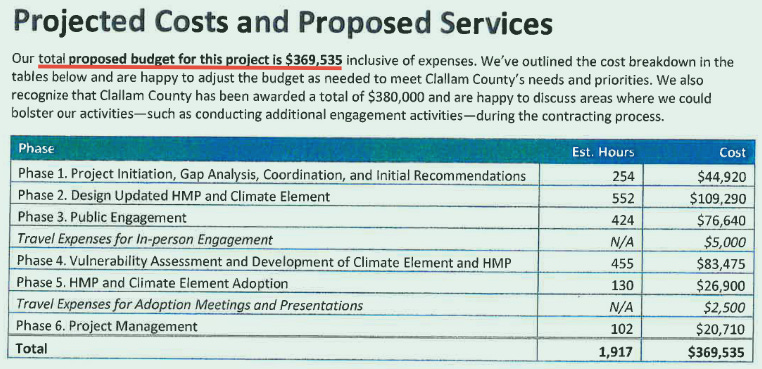
That history matters because it helps explain why some residents believe Worthington was not being treated as a neutral public commenter. He had become a persistent critic who had uncovered uncomfortable information.
And that is what makes French’s recent “free speech absolutist” comments so politically awkward.
COVID Restrictions and Political Messaging
French now speaks passionately about the importance of the First Amendment and open public participation. Yet many residents remember the COVID era, when local government restrictions affected movement, business access, employment, and public participation throughout the county.
They also remember French publicly defending vaccine verification requirements at his former restaurant, First Street Haven, in 2021.
“So I stood at the door to my restaurant yesterday and today and asked customers for proof of vaccination,” French wrote at the time, explaining that only a small number objected or walked away.
“Social media is not an accurate representation of reality,” he added.
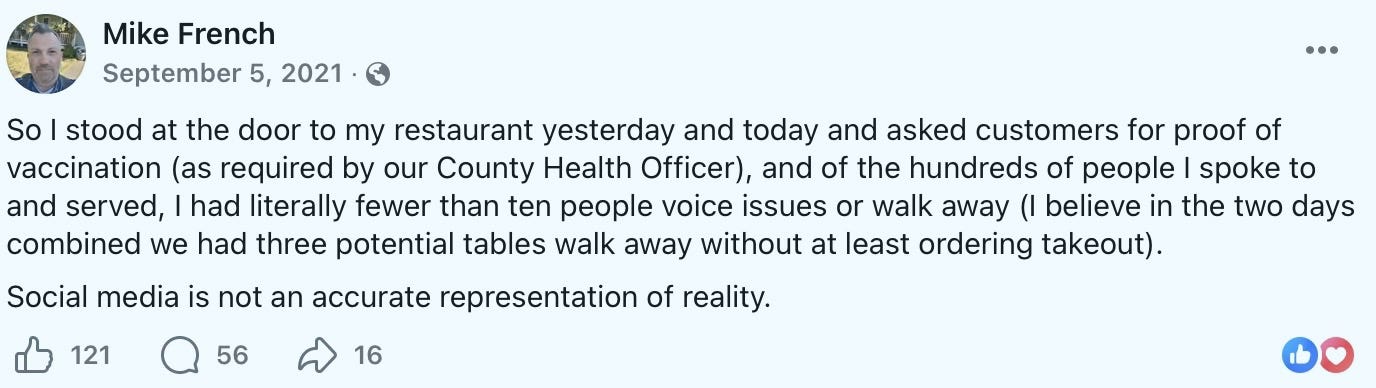
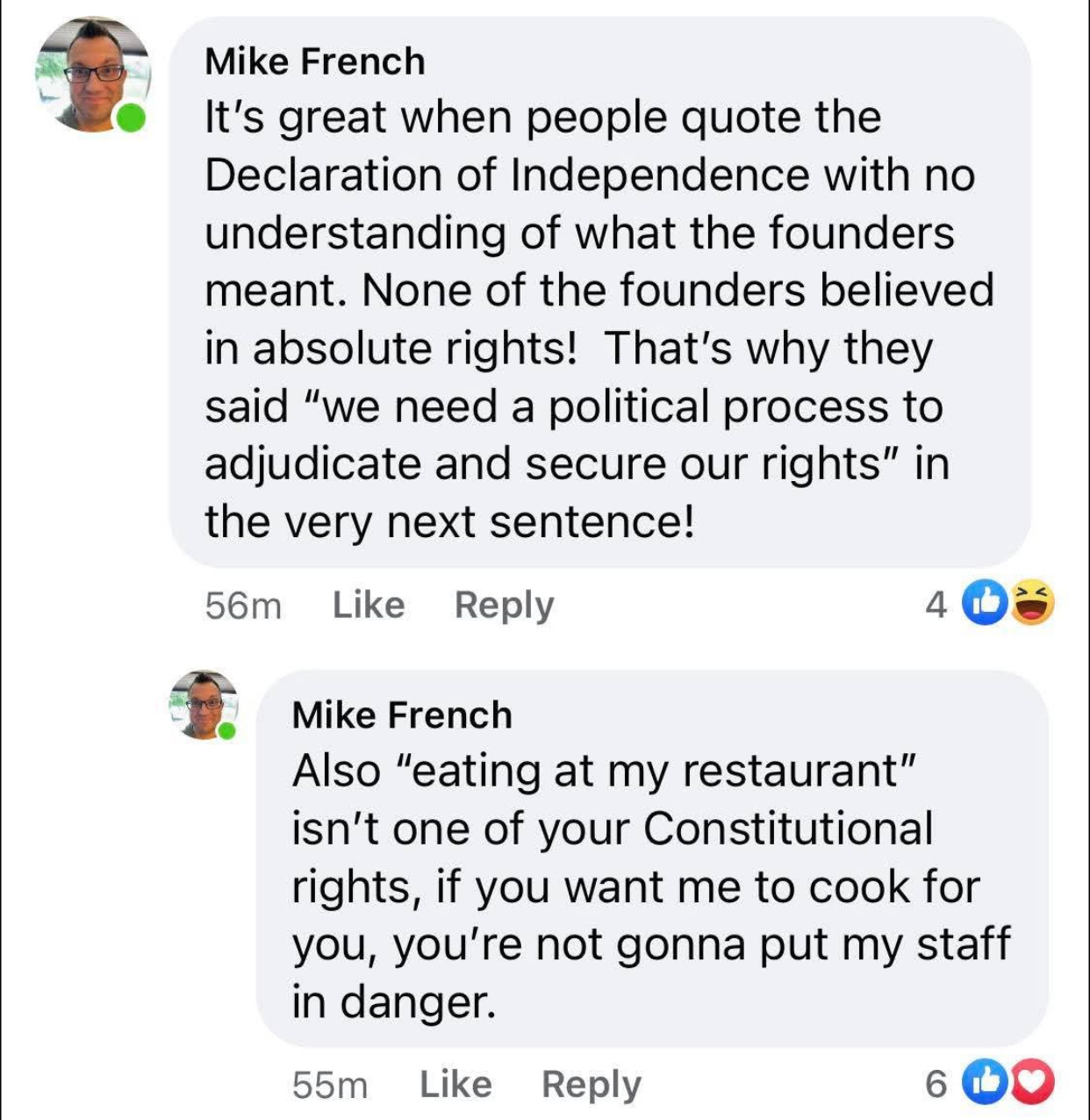
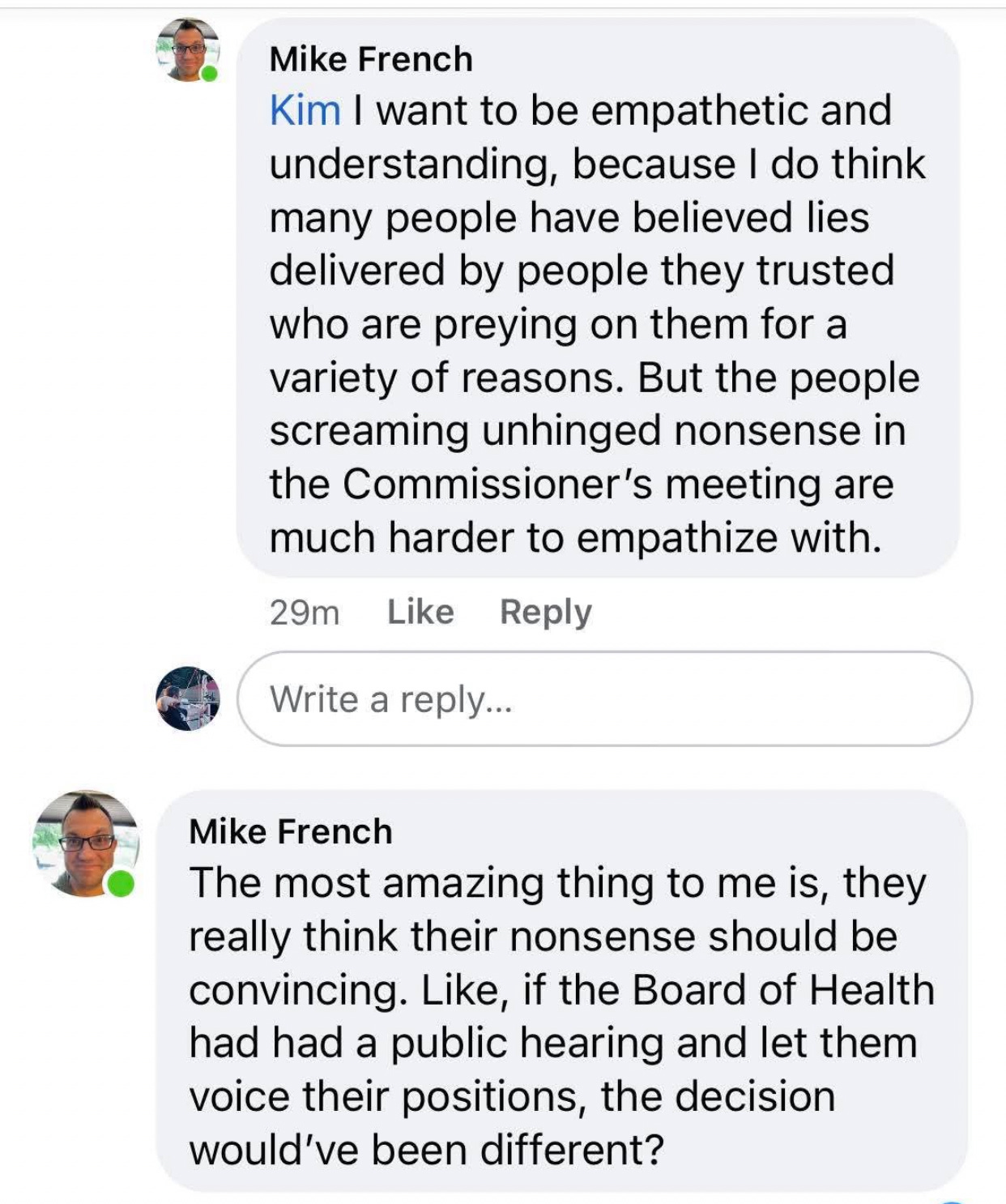
Critics see a contradiction. Constitutional liberty and freedom of movement were treated very differently during COVID than they are in today’s reelection messaging about free speech and public participation.
“Leave Your Politics Out of Disneyland”
French’s own social media posts have also complicated the image of a principled “free speech absolutist.” In one Disneyland post, French joked about seeing visitors wearing MAGA hats and wrote: “leave your politics out of Disneyland, boners.”
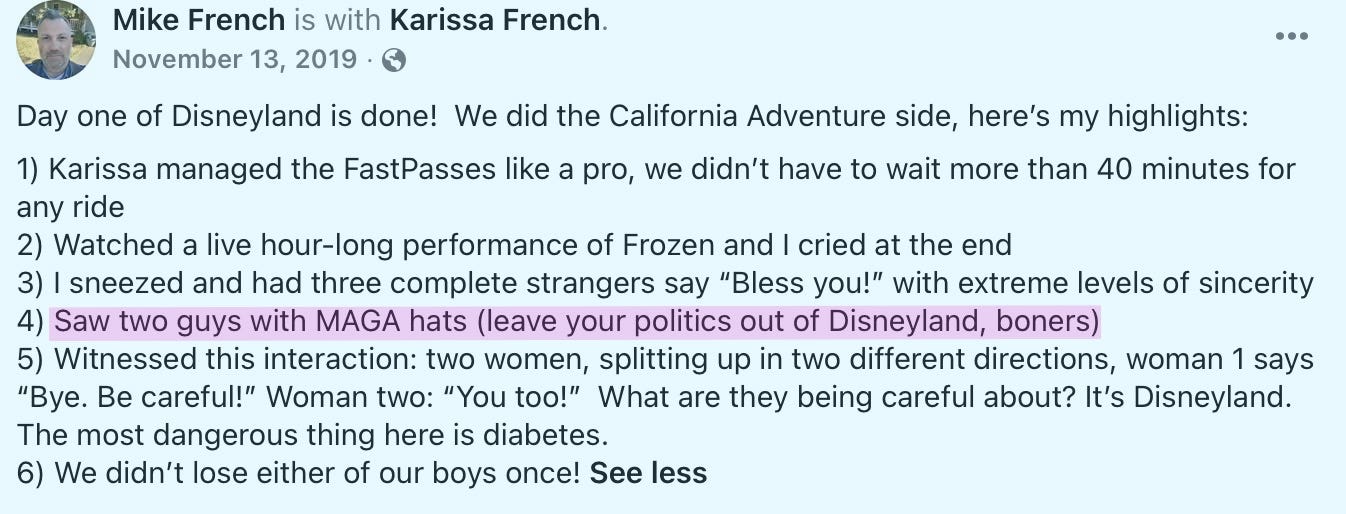
Humorous? Probably.
Consistent with a free speech absolutist philosophy? Perhaps not.
The Bigger Question
The larger issue now facing Clallam County voters is not whether Commissioner French supports free speech in theory. Most politicians claim they do.
The real question is whether those principles are applied consistently — especially when the speaker is critical of county leadership.
Because when John Worthington supported positions favorable to county leadership, Zoom video worked just fine.
When he became a problem, suddenly it did not.
Today’s Tidbit: Saturday Morning Hangover
The following photos were taken Saturday morning in Port Angeles by a contributor who wishes to remain anonymous. The sender titled the email: “French’s Clallam County.”


According to the source, Saturday mornings are especially rough because the Harm Reduction Health Center is open Fridays, meaning many users have just received fresh supplies and paraphernalia.
The contributor said a woman was sitting against a wall behind Safeway with a white sheet draped over her head and was not moving. According to the source, the man with her appeared so impaired that he was unable to monitor her condition or safety. Concerned for the woman’s wellbeing, the contributor contacted law enforcement.
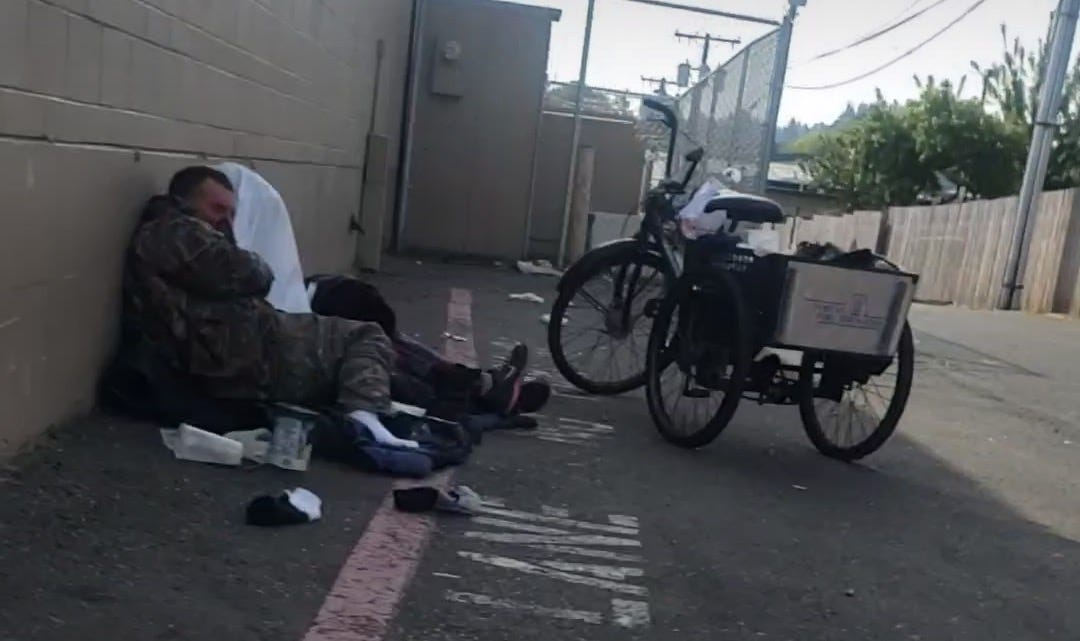
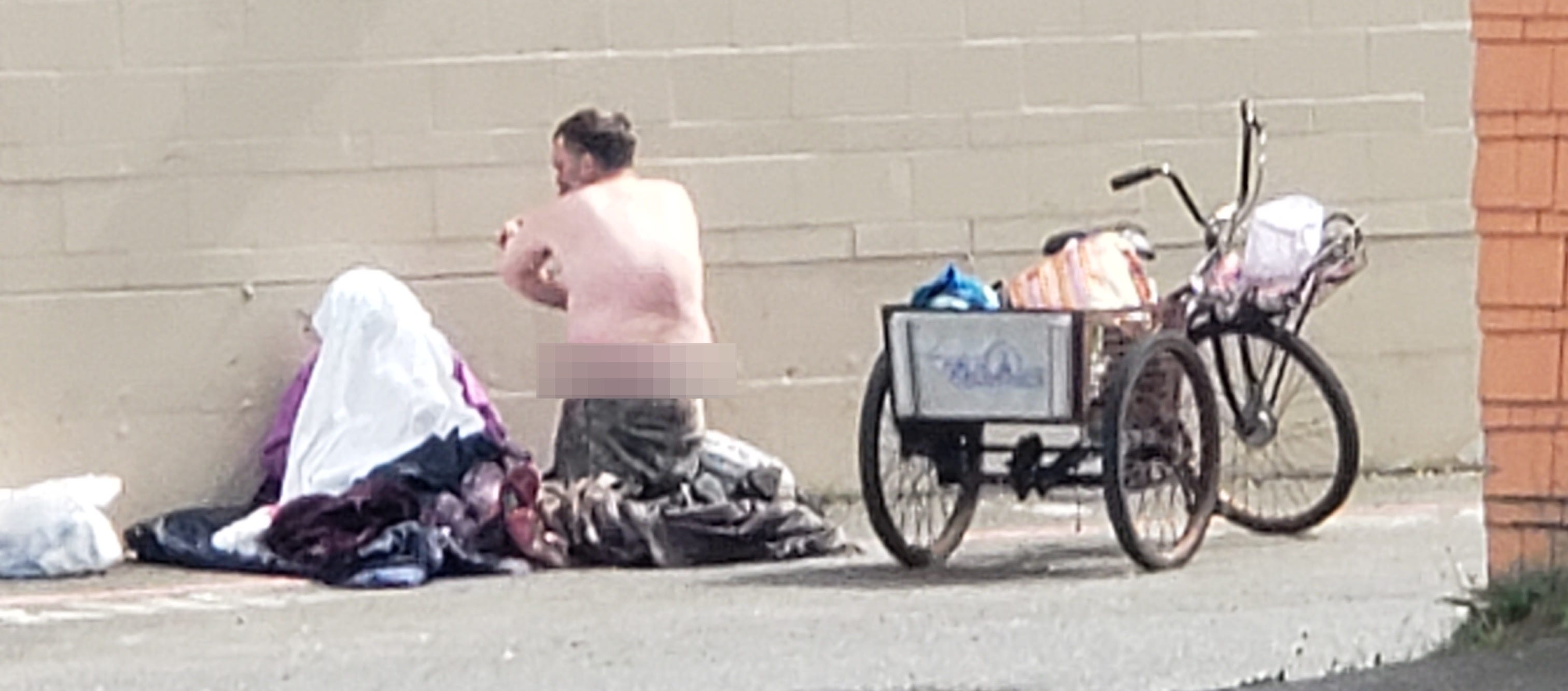
Many of the scenes were photographed directly in front of Clallam County’s Health and Human Services building on 3rd Street, across from the “UnSafeway.” Tents, open drug use, loitering, and trash continue to dominate the area surrounding county property.
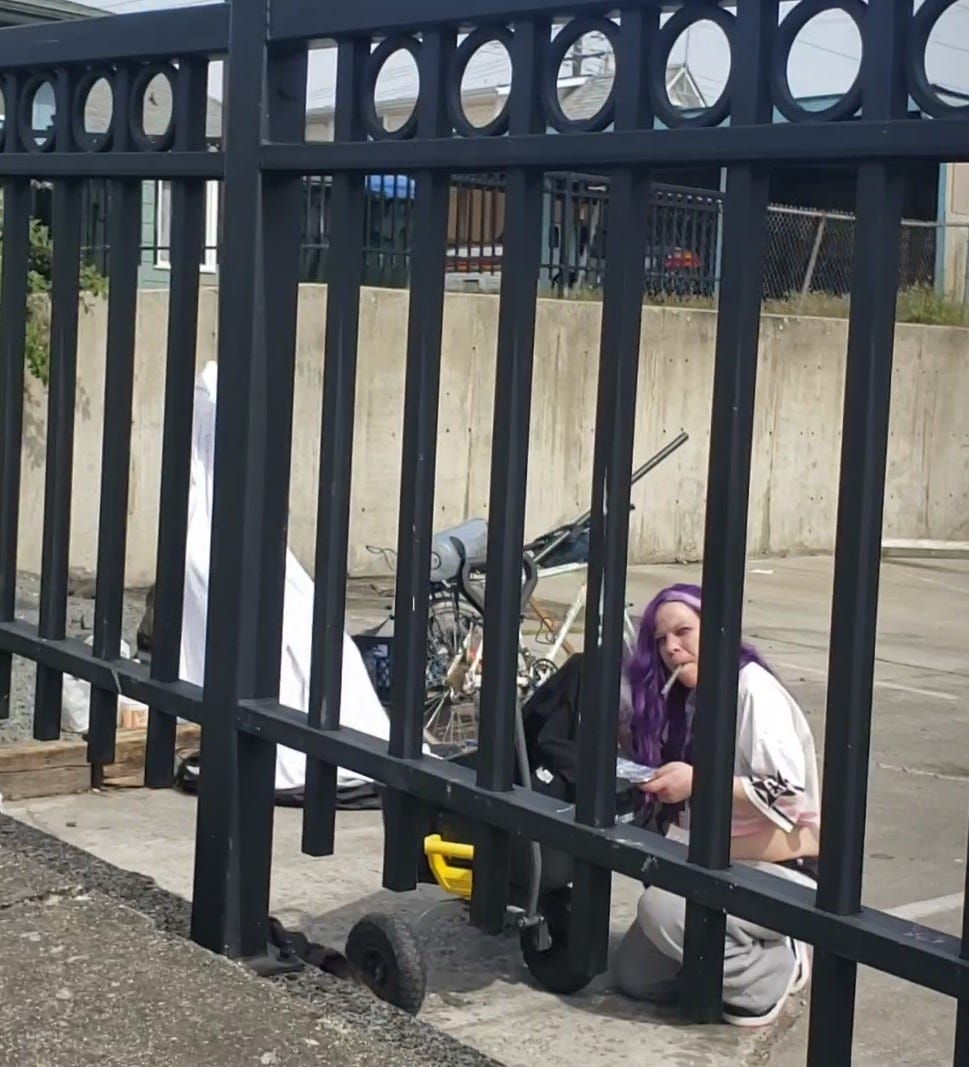
At a recent Public Safety Town Hall, Commissioner Mike French said public spaces would improve when ordinary citizens show up and begin using parks again to reclaim them.
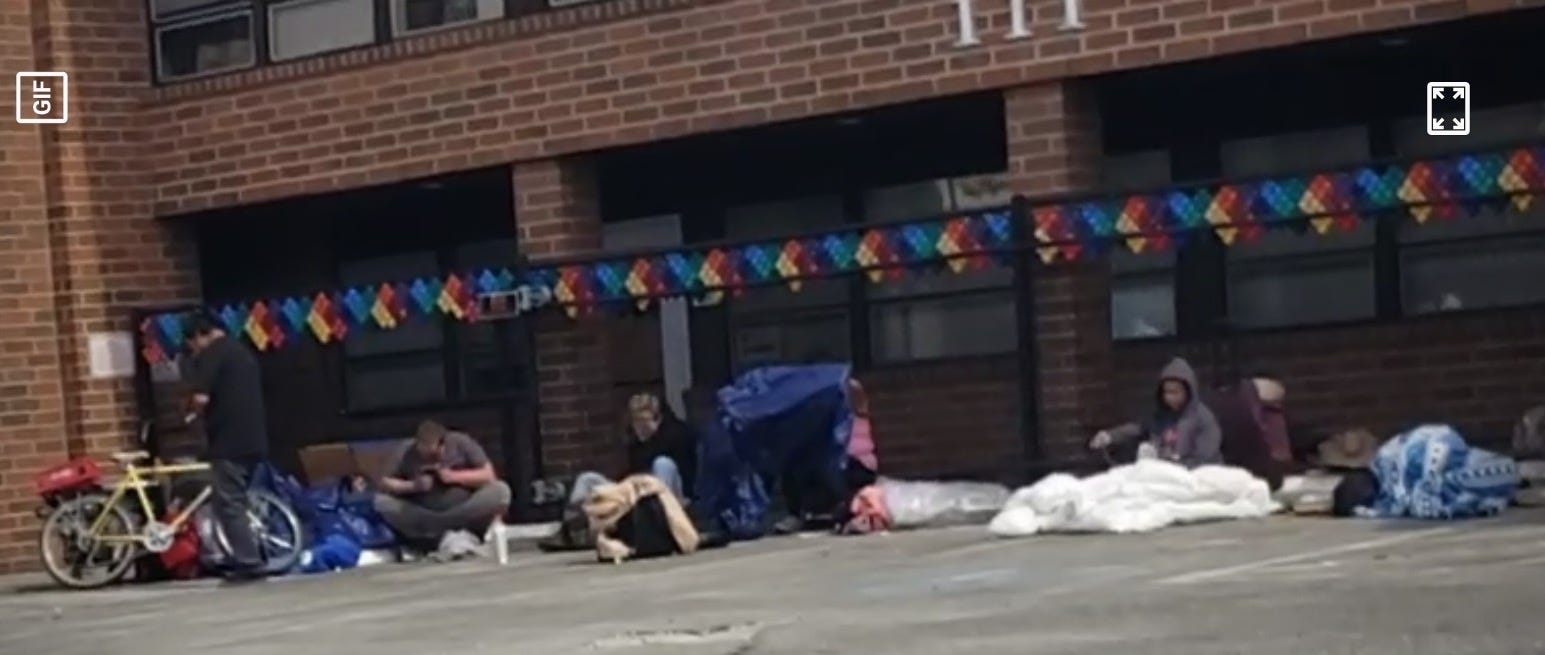
That raises an obvious question: if simply “showing up” is the solution, why isn’t the county reclaiming its own property first?
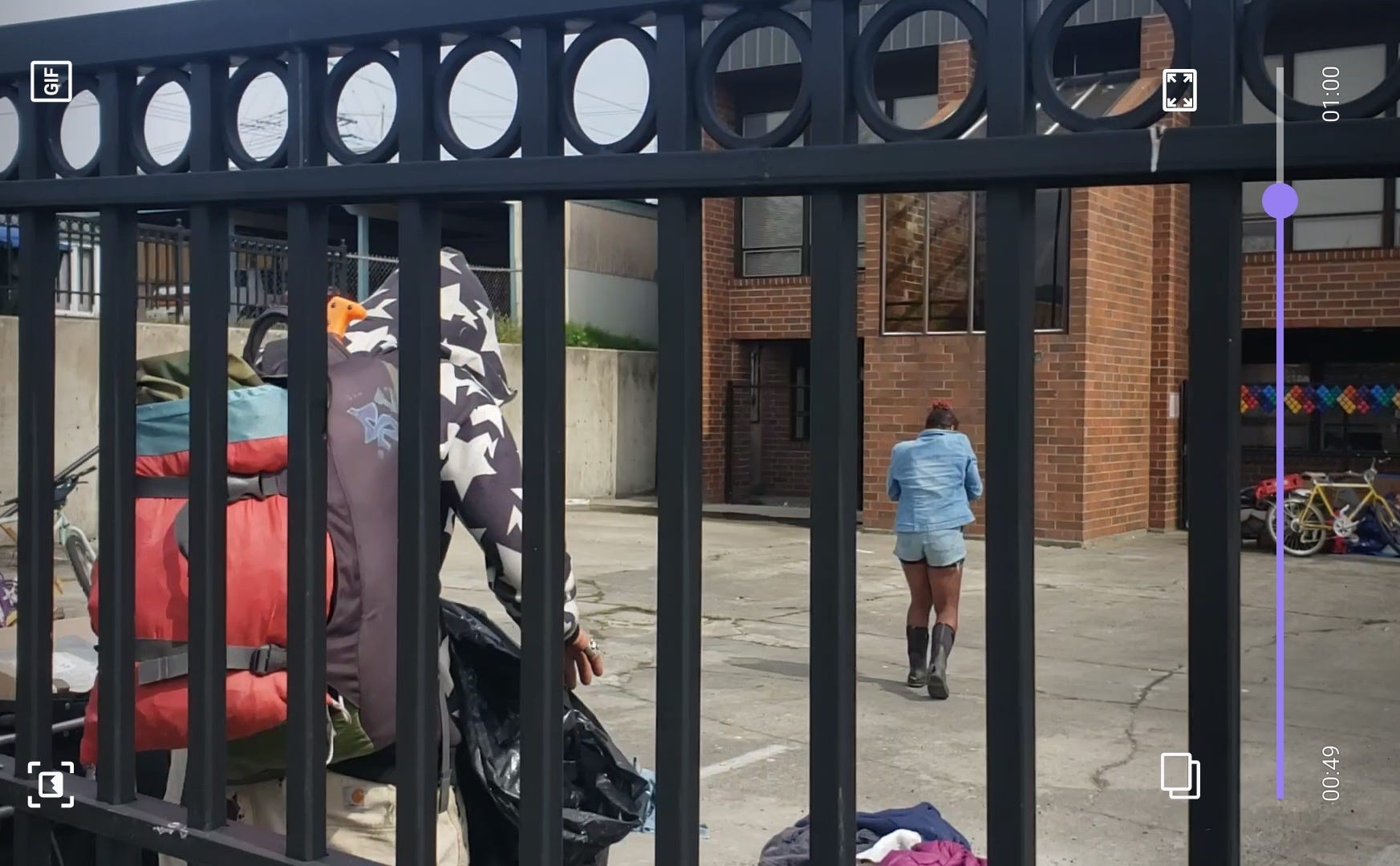
Recently, Stacey Richards filmed activity at the Veterans Bell encampment beside the courthouse — a memorial space honoring local veterans. According to Richards, individuals using drugs there told her it was “private property” and that she was not allowed to film or even be present.


All of this is happening next door to Commissioner Mike French’s office.


