


In this Sundays With Seegers, Clallam County commissioner candidate Jake Seegers recounts a moment no parent wants to face—his 10-year-old son exposed to indecent behavior in broad daylight. But this isn’t just about one incident. It’s about a growing sense that what once shocked us is becoming normalized, and whether those entrusted with public health are meeting their legal and moral obligations. As conditions on the ground change, Seegers asks where does compassion end—and accountability begin?
“I saw a man’s penis today”
Those were the words my 10-year-old son said to me over the weekend. My heart stopped. We had just finished setting up the trampoline. Between the laughter, flips, and wrestling matches, he paused—trying to make sense of something no child should have to process.
Earlier that day, on our drive to Safeway in Port Angeles, he had seen a grown man standing in broad daylight with his pants and underwear down around his ankles.
I missed it. Or maybe I didn’t. Maybe I’ve just become used to it.
In Clallam County, scenes like this are no longer rare. Public drug use, open dealing, indecent exposure, erratic behavior, garbage, human waste—it has become part of daily life in too many places. What once shocked us now barely registers. But it shouldn’t be this way.

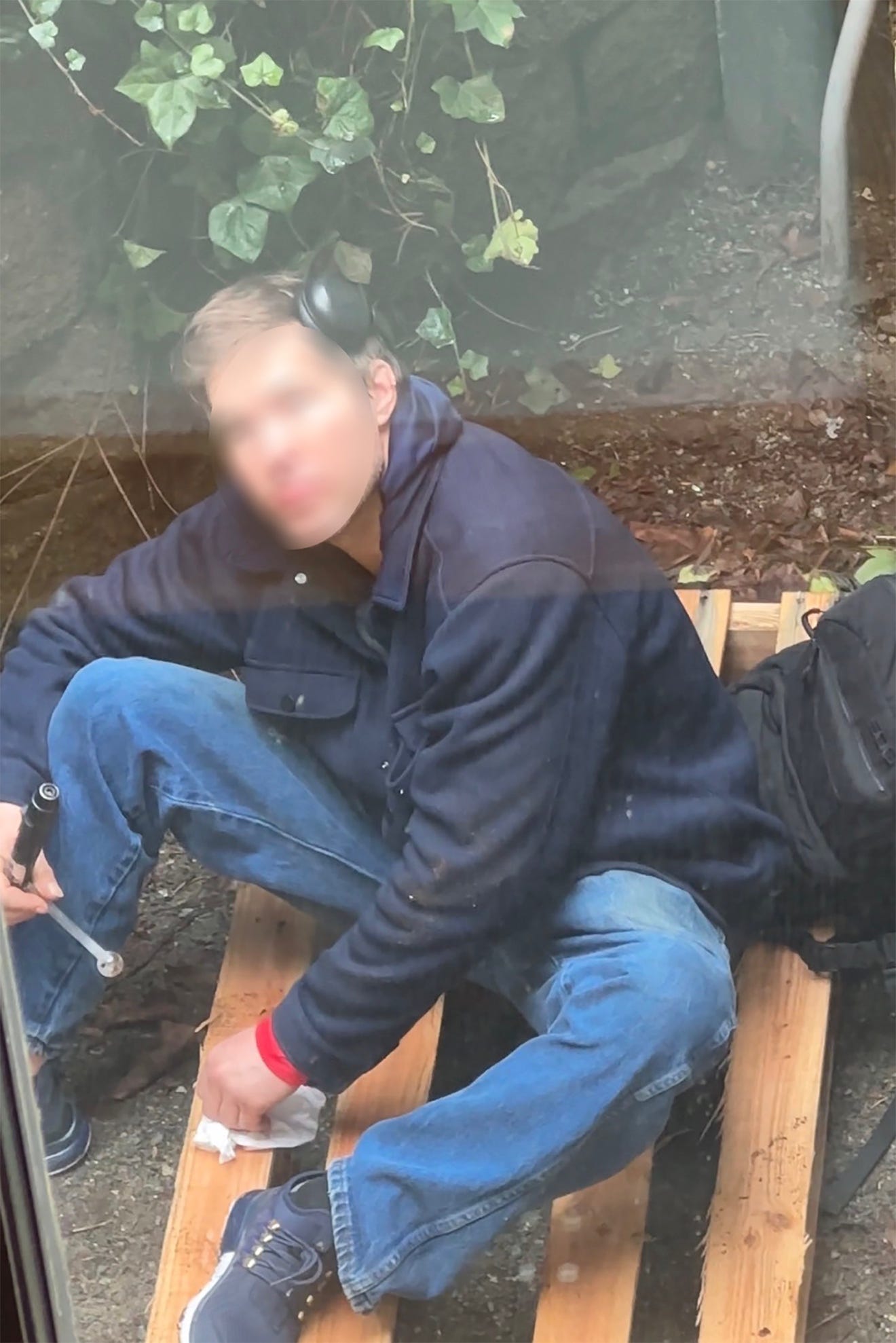
A County-Wide Disaster
This is not confined to one street or one neighborhood.
On Old Olympic Highway, a property continues to accumulate solid waste, junk vehicles, and occupied RVs without septic systems. Ownership of the property has been in flux for over a year, and despite numerous complaints and diligent efforts by Sheriff King and Code Enforcement Manager Diane Harvey, solutions have been elusive.
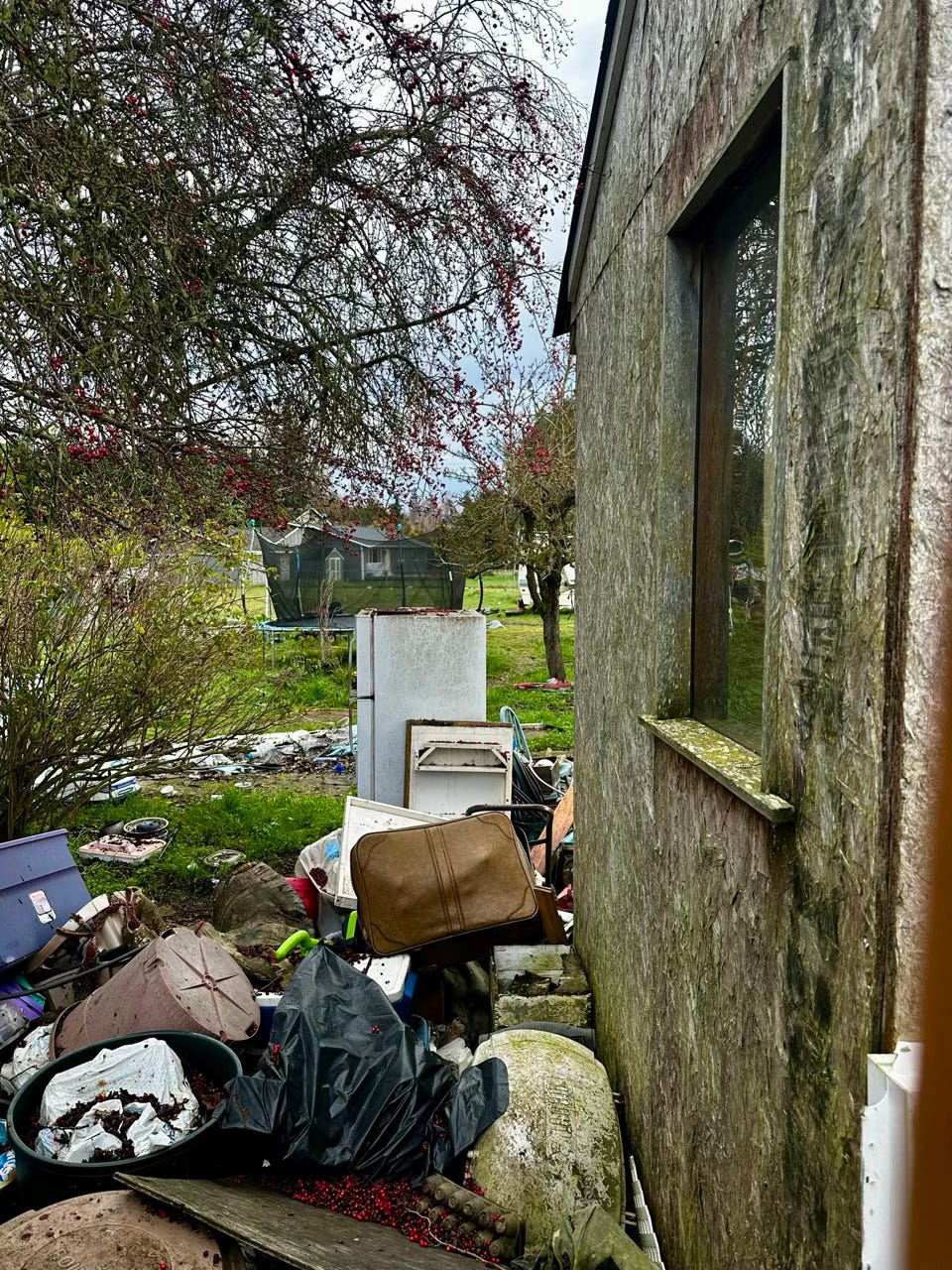
Off Elwha River Road, private property has been overrun by trespassing, dumping, drug use, and camping.
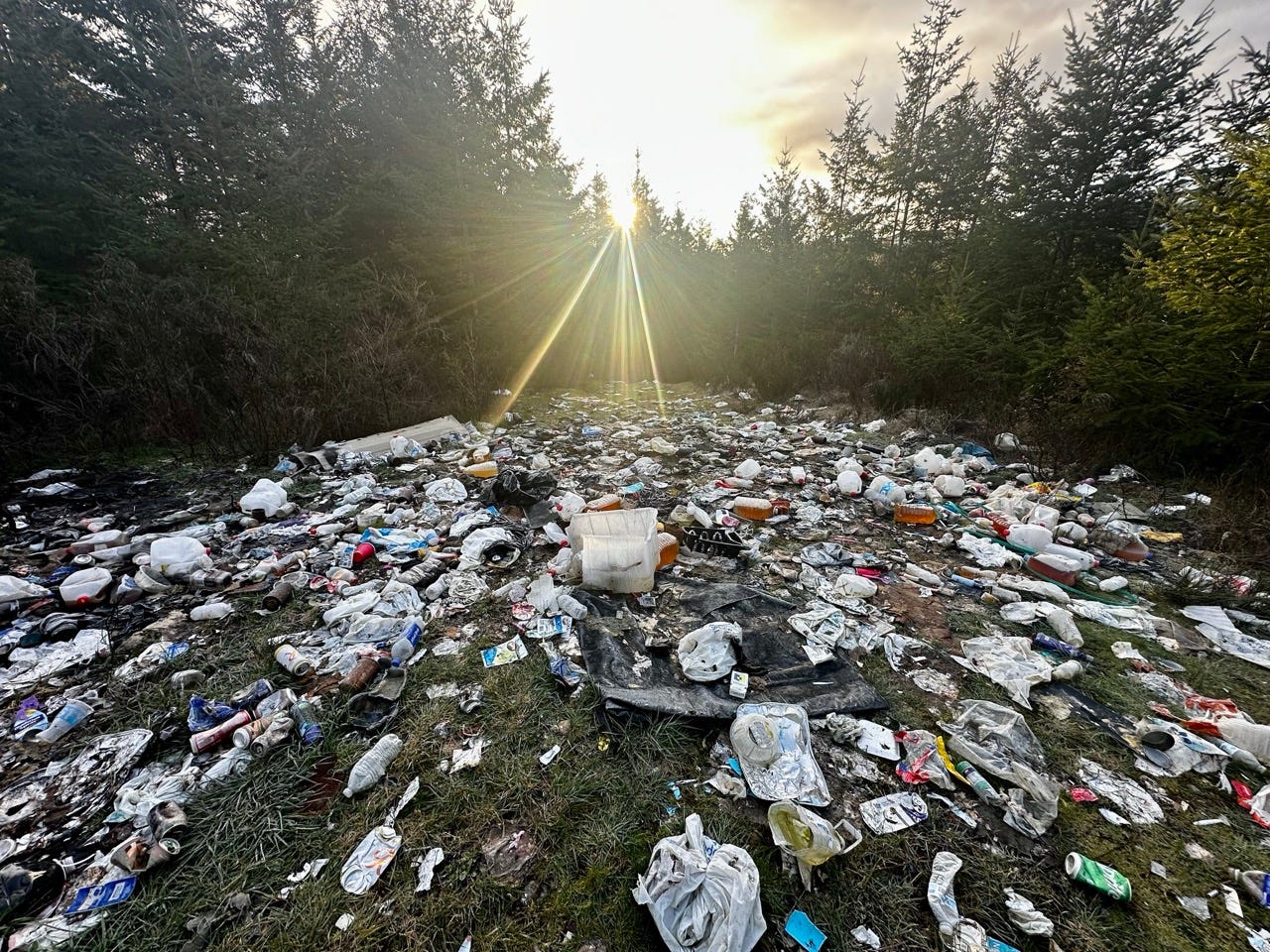
Along Tumwater Creek, on Port of Port Angeles property, a recurring encampment continues to reappear.
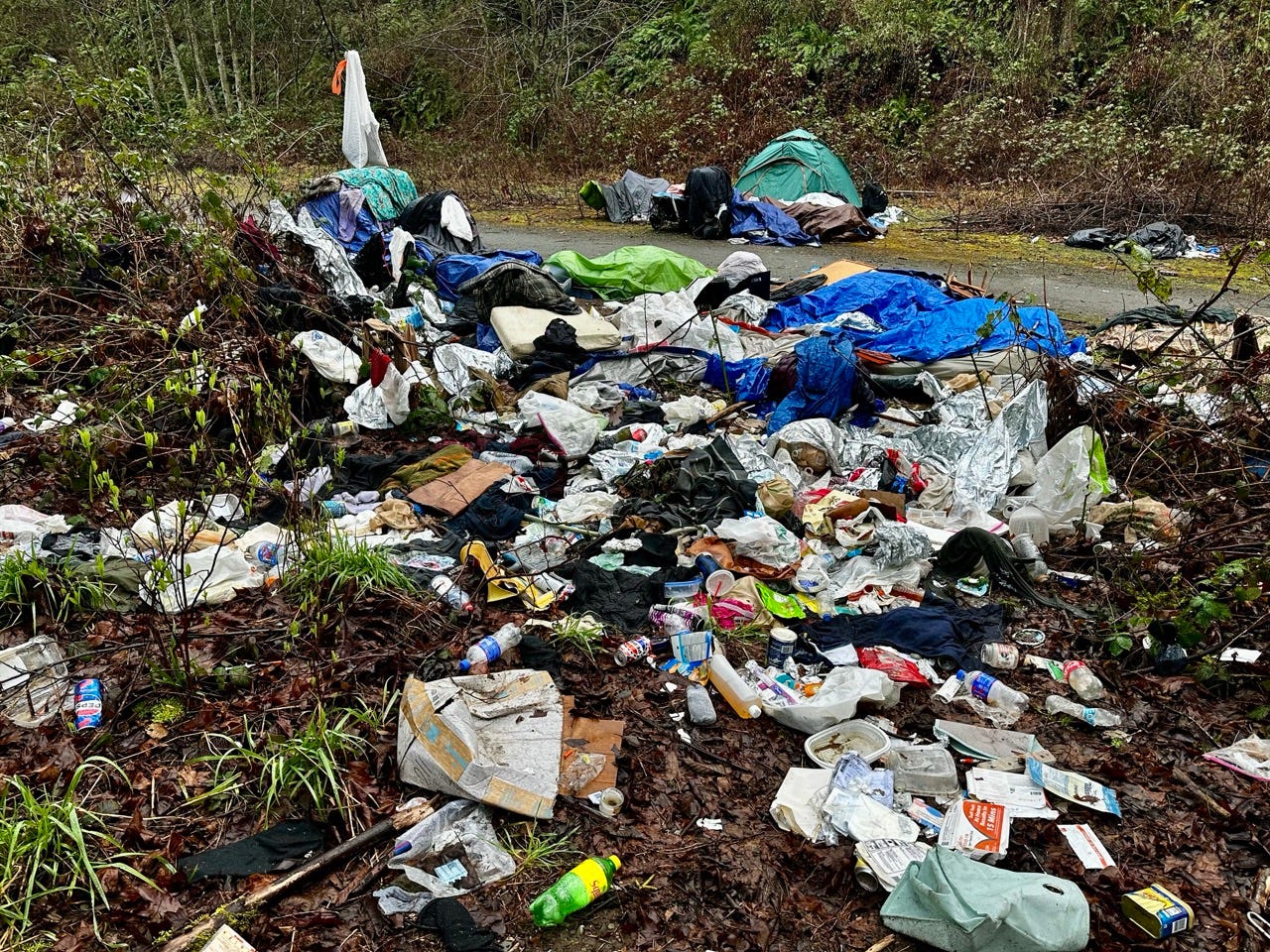
Signs of heavy drug use abound.
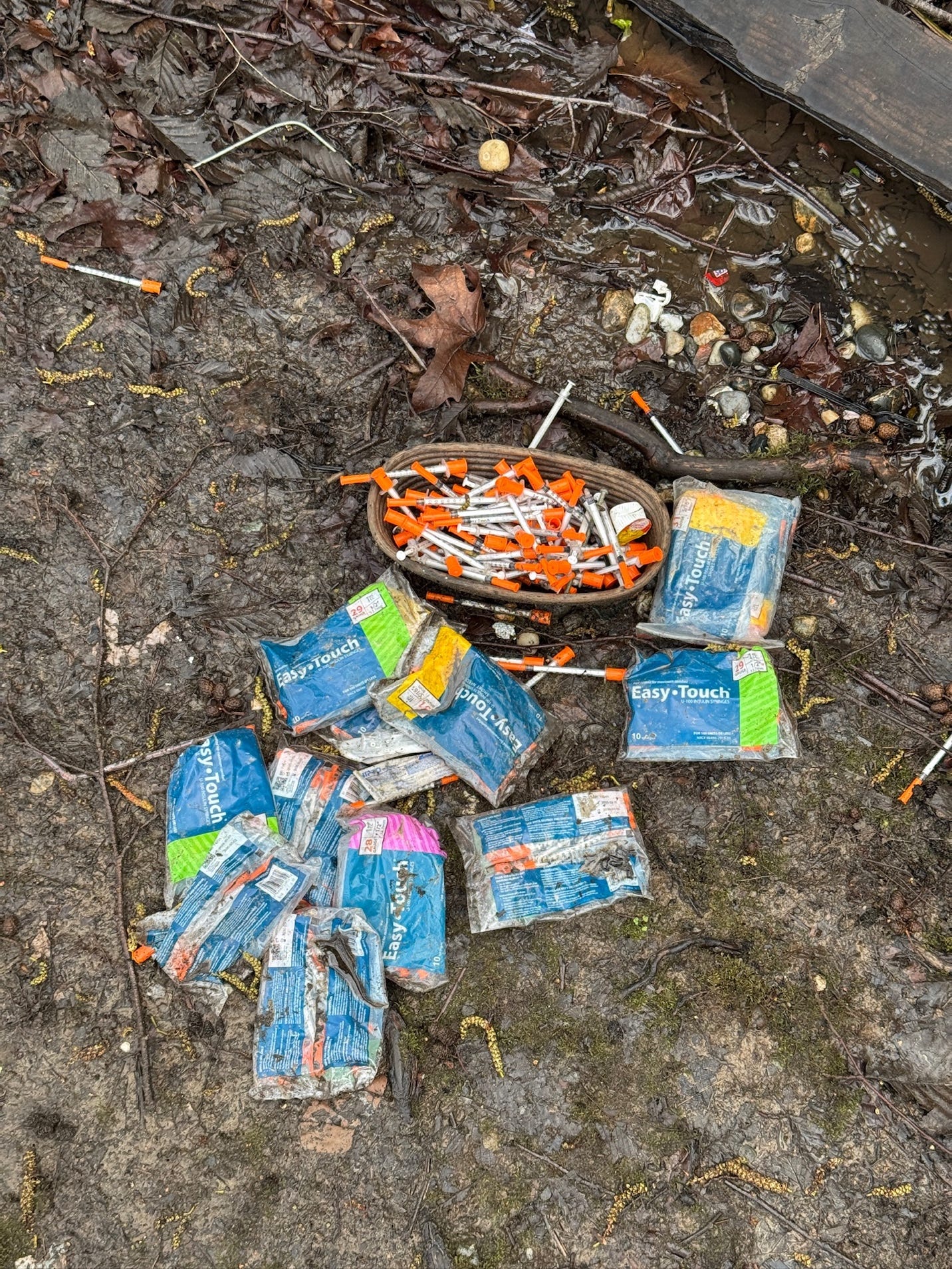
Volunteers and staff from local clean-up nonprofit 4PA collect the discarded items —knowing full well the garbage will be back in a matter of weeks.
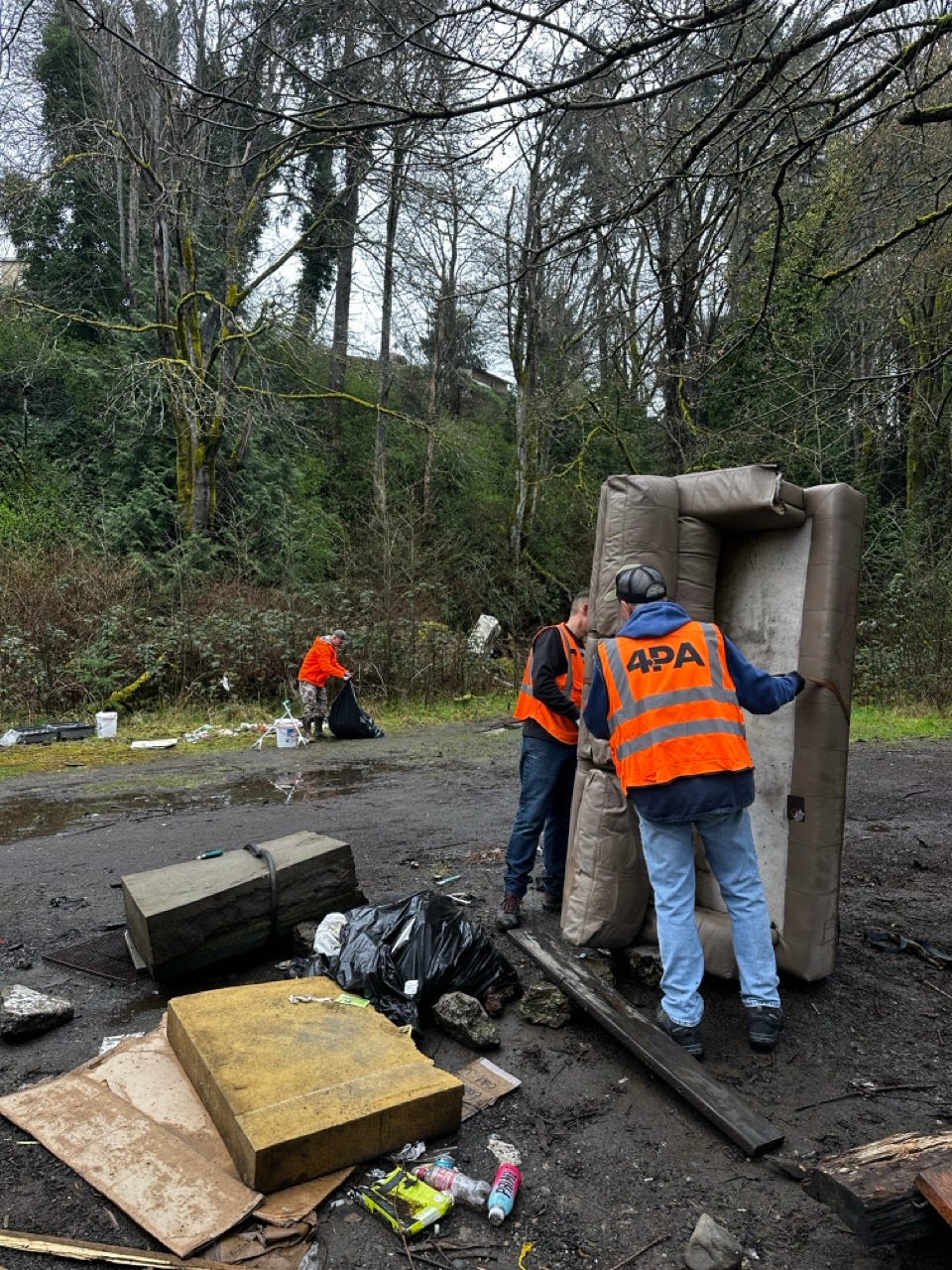
And throughout the county—on city streets, county roads, and Washington State Department of Transportation rights-of-way—solid waste tied to homelessness and substance abuse continues to accumulate.
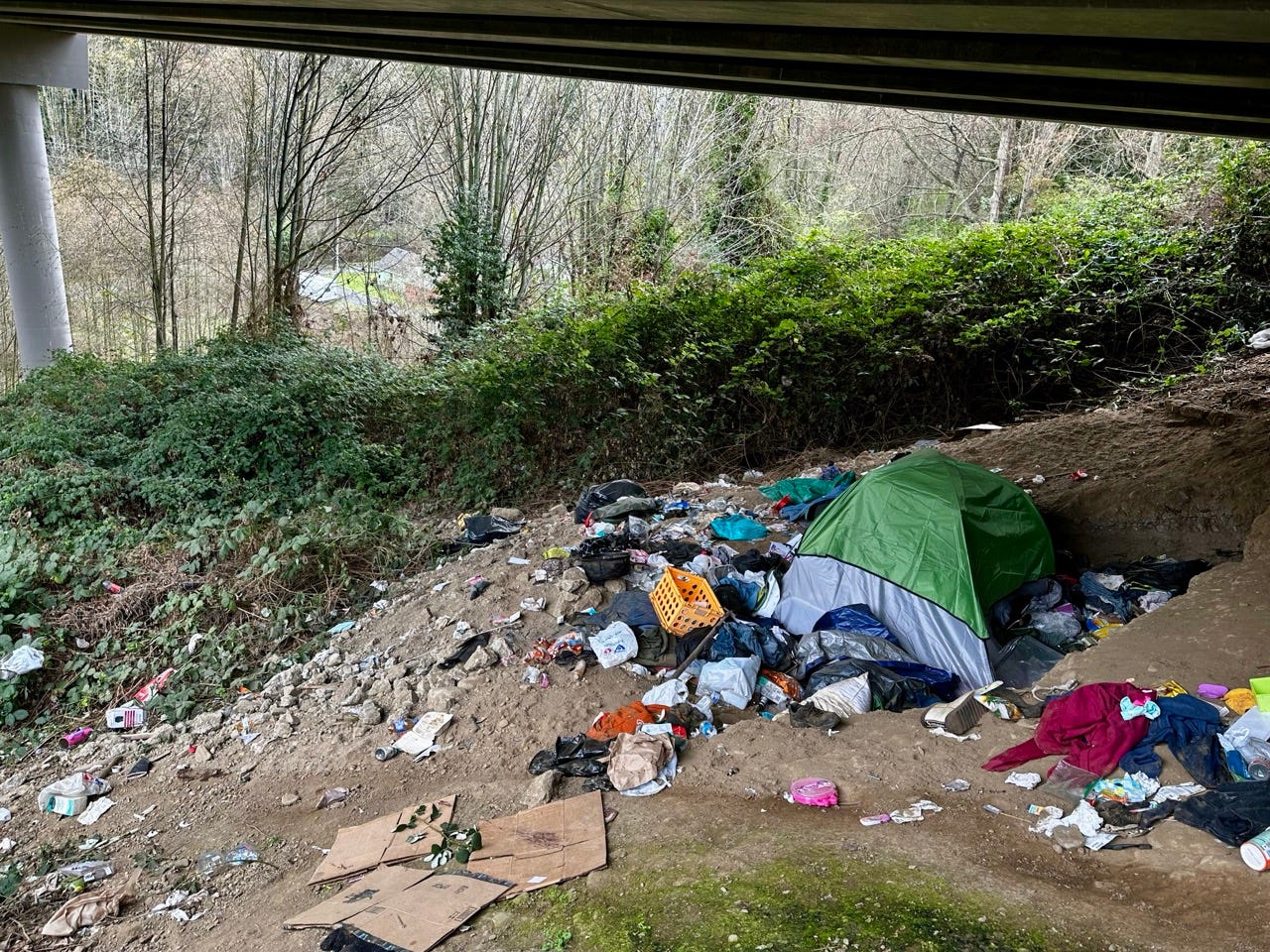
The question is no longer whether or not this is a public health and environmental emergency.
The question is: Who is responsible for fixing it?
The Law Is Not Ambiguous
Many of these public health and environmental concerns occur within city limits or on Port-owned property. But when collaboration between jurisdictions fails—or when property owners and municipalities are unwilling or unable to act—the authority and responsibility to address them ultimately rests with the Clallam County Board of Health. All three county commissioners serve on that board.
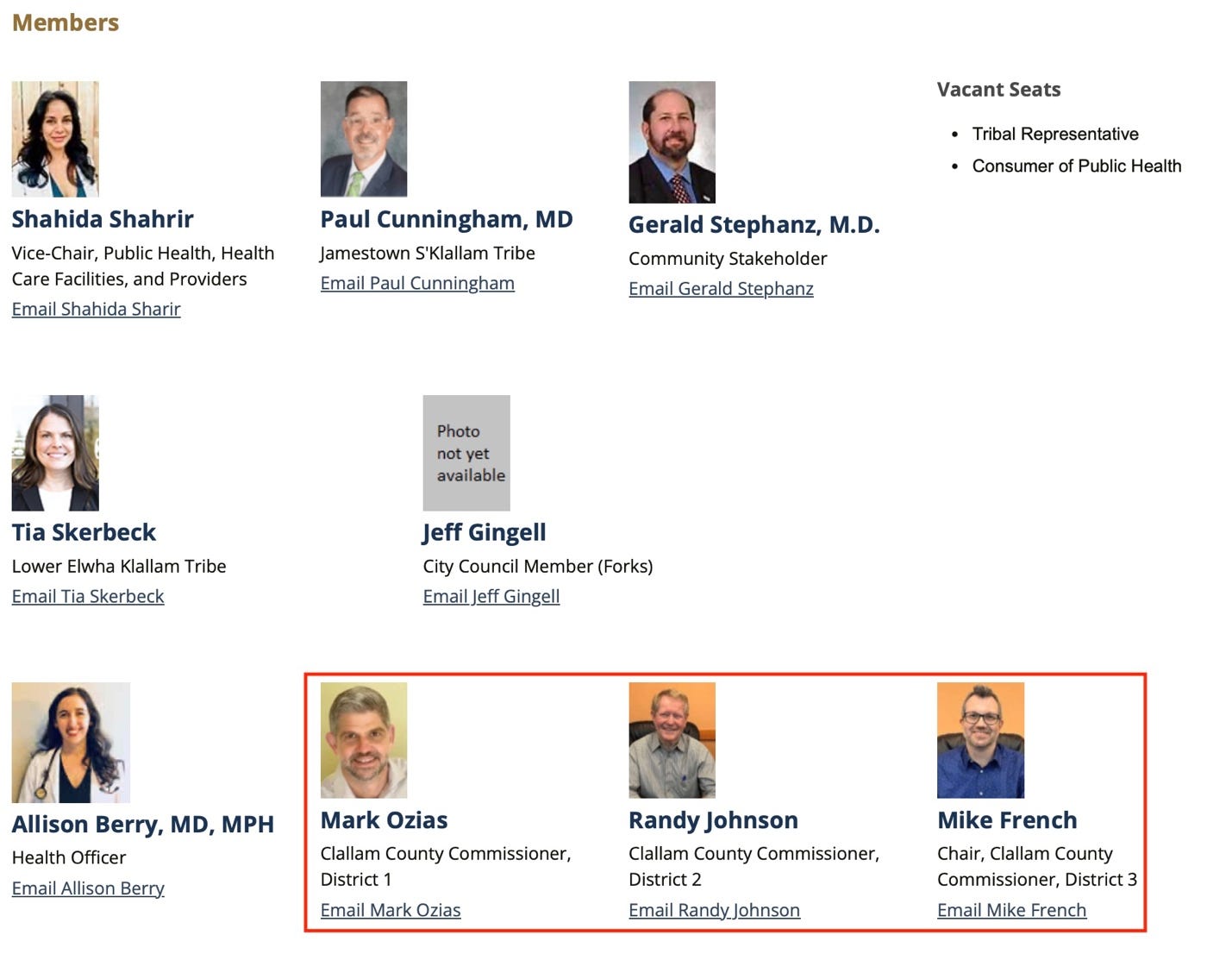
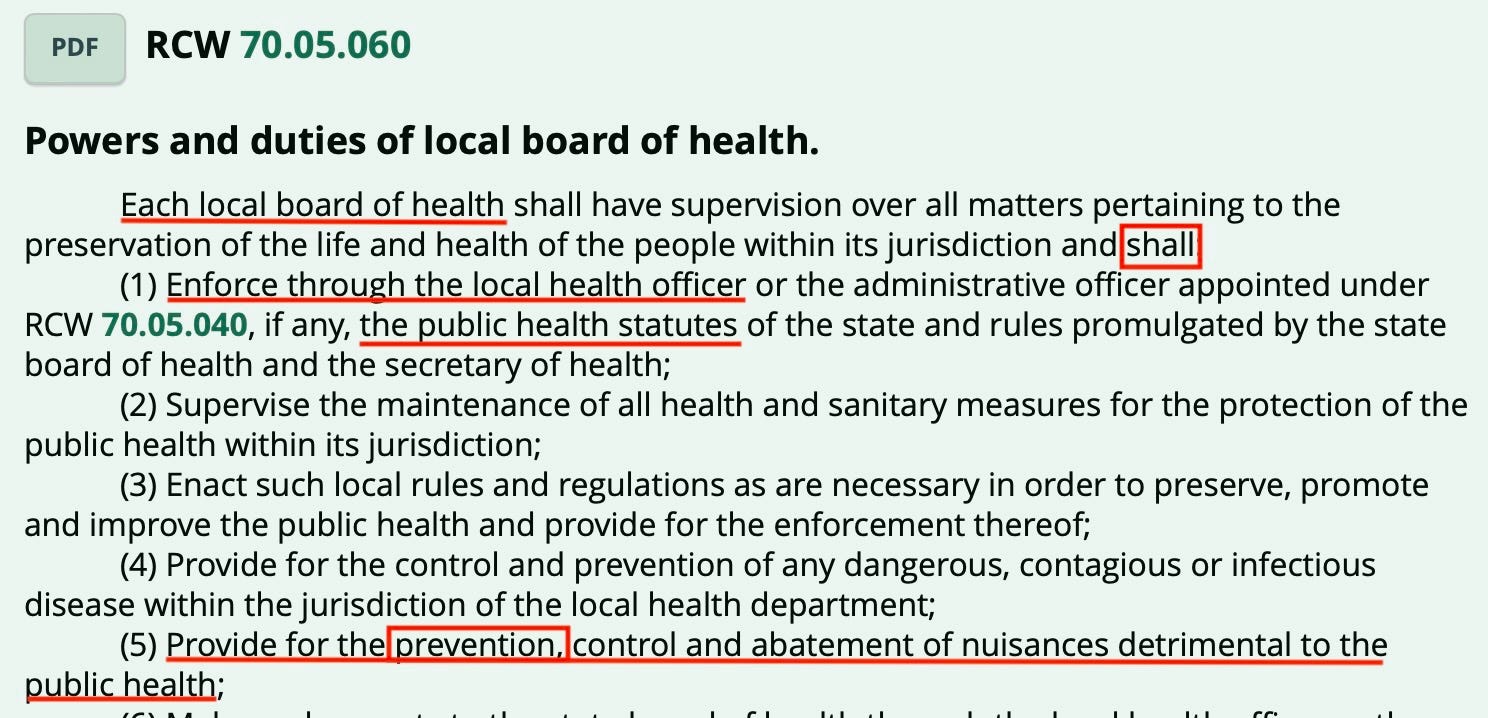
Under Washington law, a county’s duty to address threats to public health is not discretionary—it is statutory. RCW 70.05.060 assigns local boards of health the responsibility to protect public health, including the obligation to provide for the “prevention, control, and abatement of nuisances detrimental to public health.”
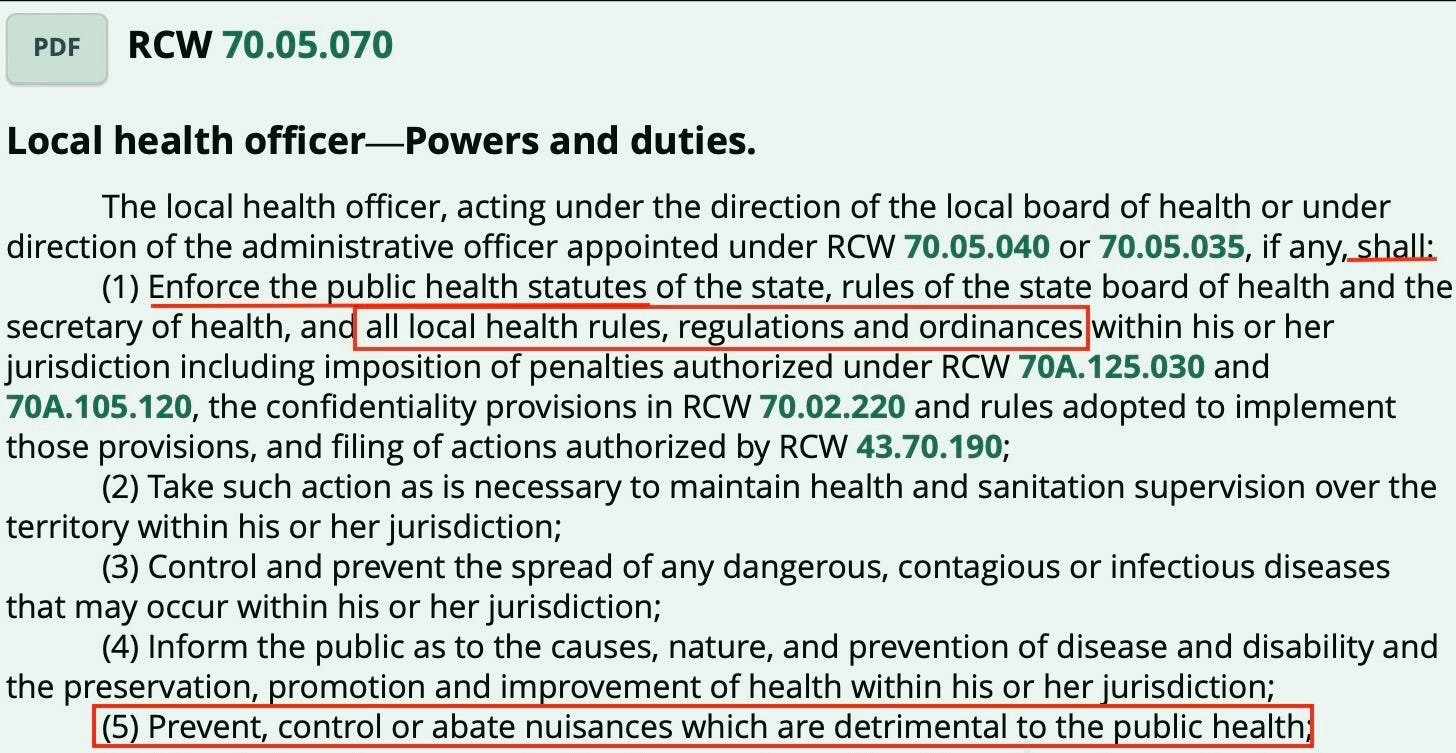
That obligation is carried out through the health officer, who under RCW 70.05.070 must enforce public health laws and take action to “prevent, control or abate nuisances.”
The law does not carve out exceptions.
It does not exempt:
cities
port districts
state right-of-way
private property in an ownership dispute
Public health authority applies everywhere—every parcel, every jurisdiction, every public space.
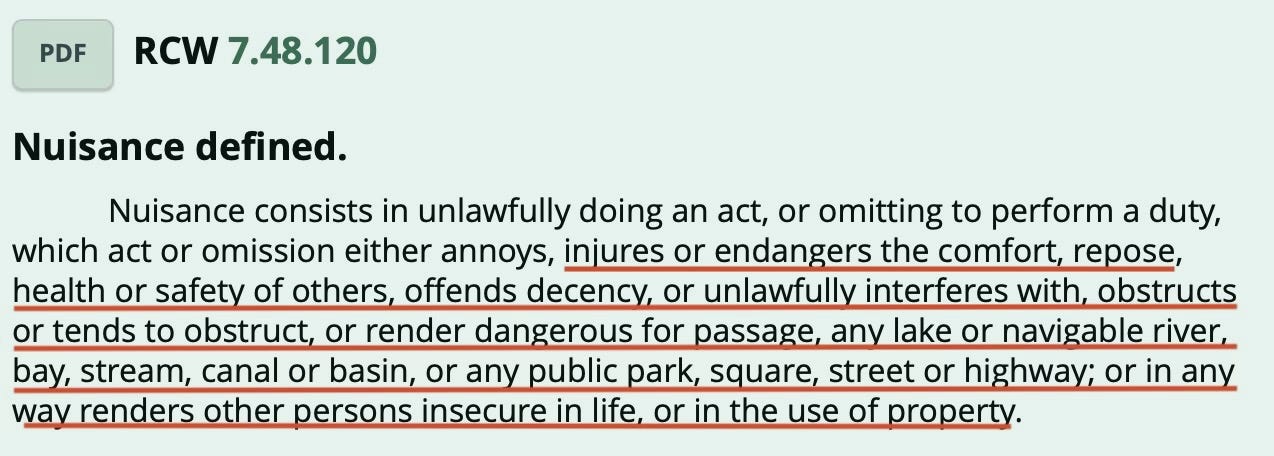
Washington law further defines nuisance broadly. Under RCW 7.48.120, a nuisance includes anything that “injures or endangers…health or safety…or offends decency…or renders other persons insecure in life, or in the use of property.”
So, when conditions such as the accumulation of solid waste…
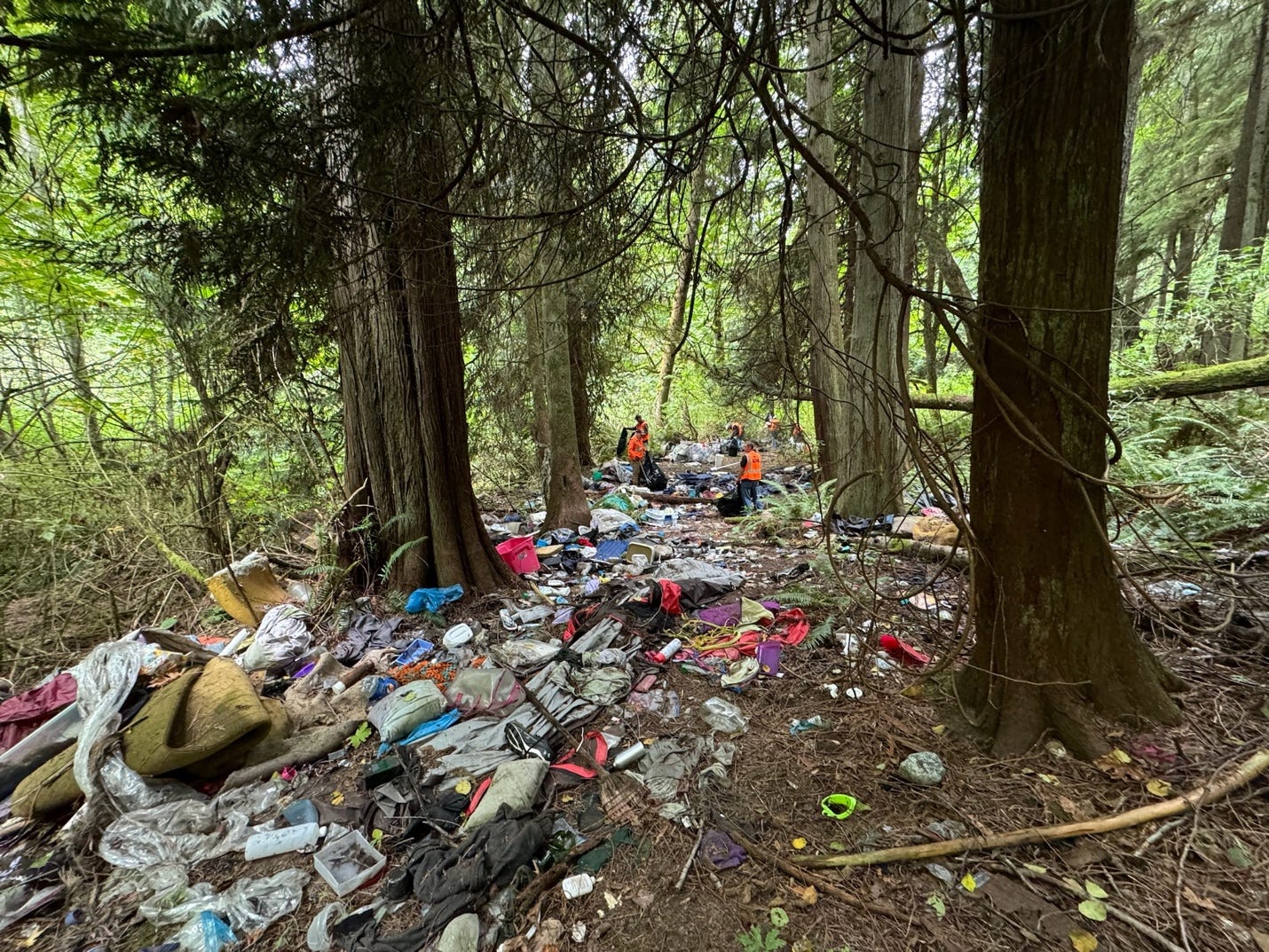
The presence of human waste…
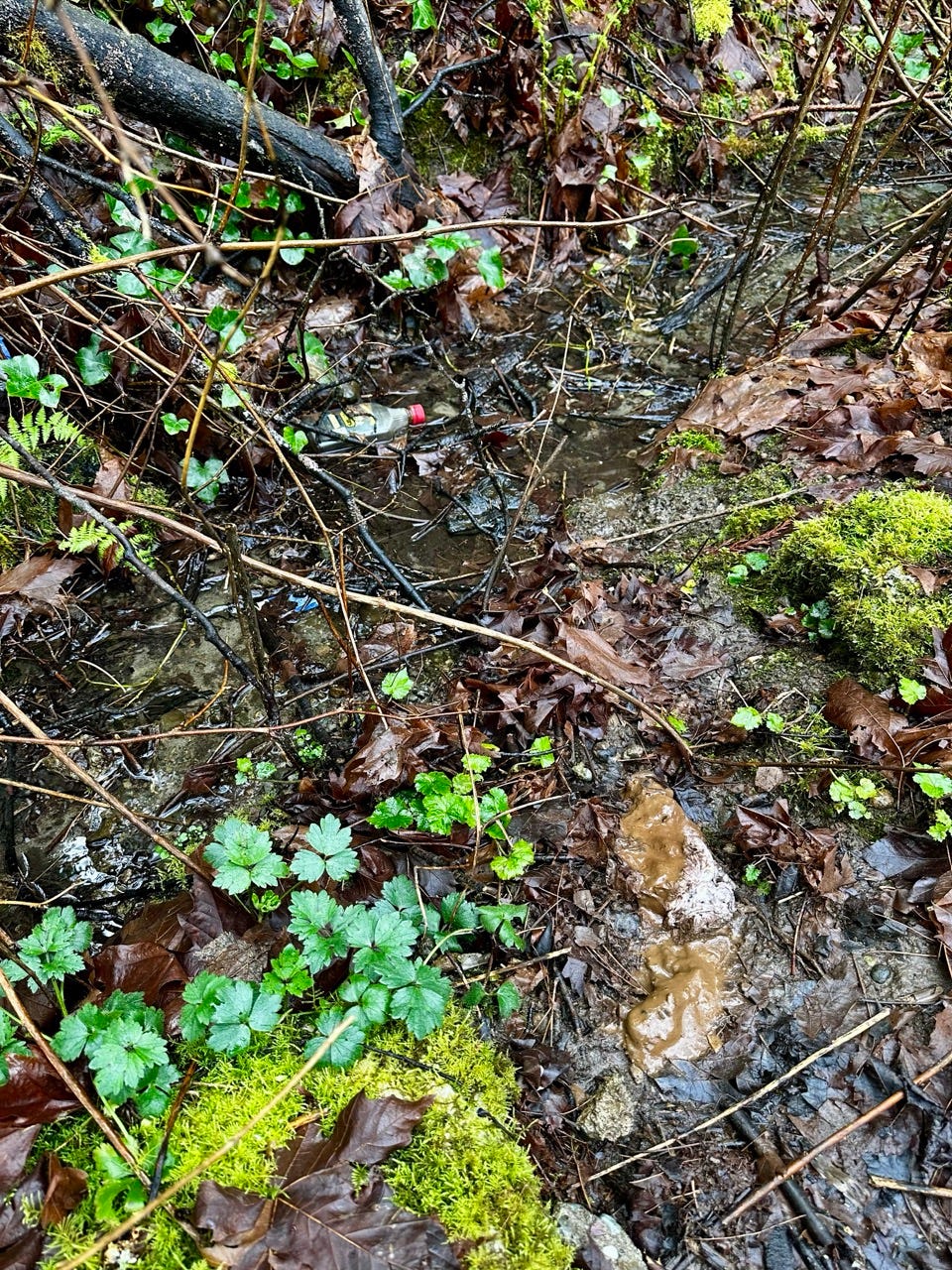
Or contamination in or near streams occurs, those conditions fall directly within the definition of a public health nuisance.
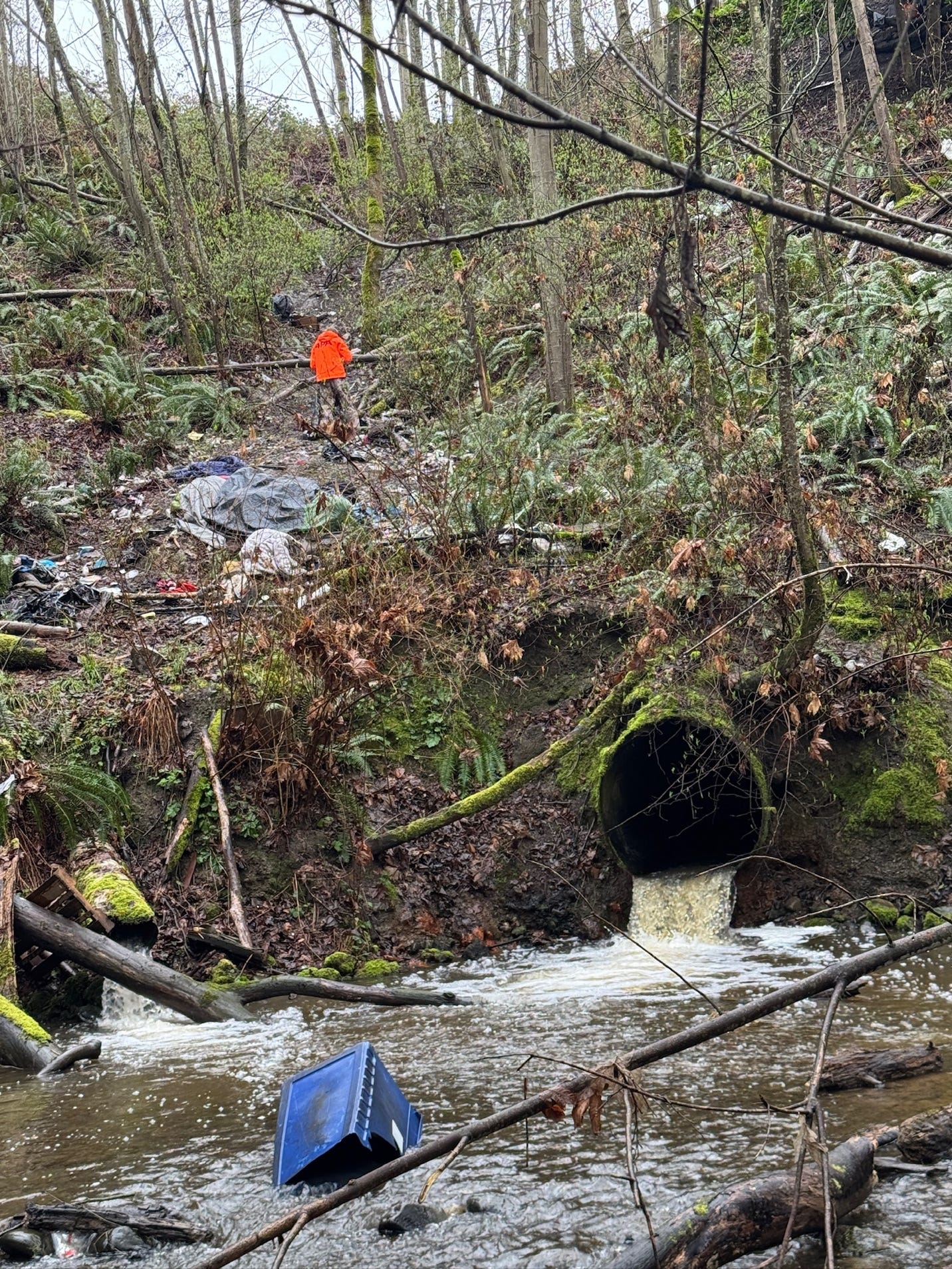
The framework is not unclear. It is designed for exactly these circumstances.
Public Land Is Not an Exception
There is a persistent misconception that public land—city and county property, port property, or state right-of-way—is somehow exempt from enforcement.
It is not.
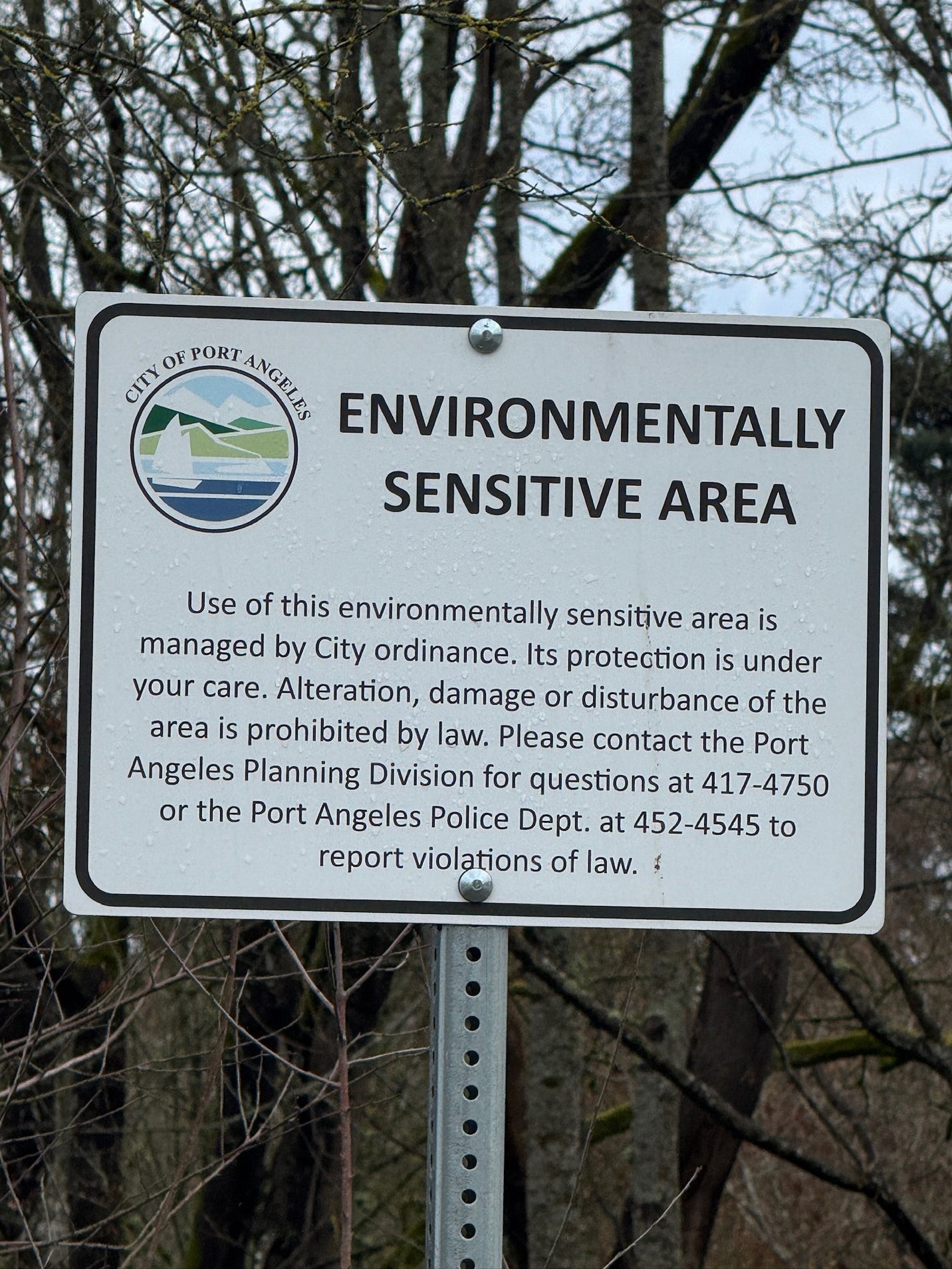
The Clallam County Health Officer’s authority is countywide. Ownership does not negate a hazard. If anything, it increases the obligation to act.
Clallam County Code Title 41 reinforces this authority, allowing enforcement against any “owner, operator, occupant, tenant, or other person.” That language is intentionally broad. It ensures that responsibility cannot be avoided simply because ownership is unclear or shared.
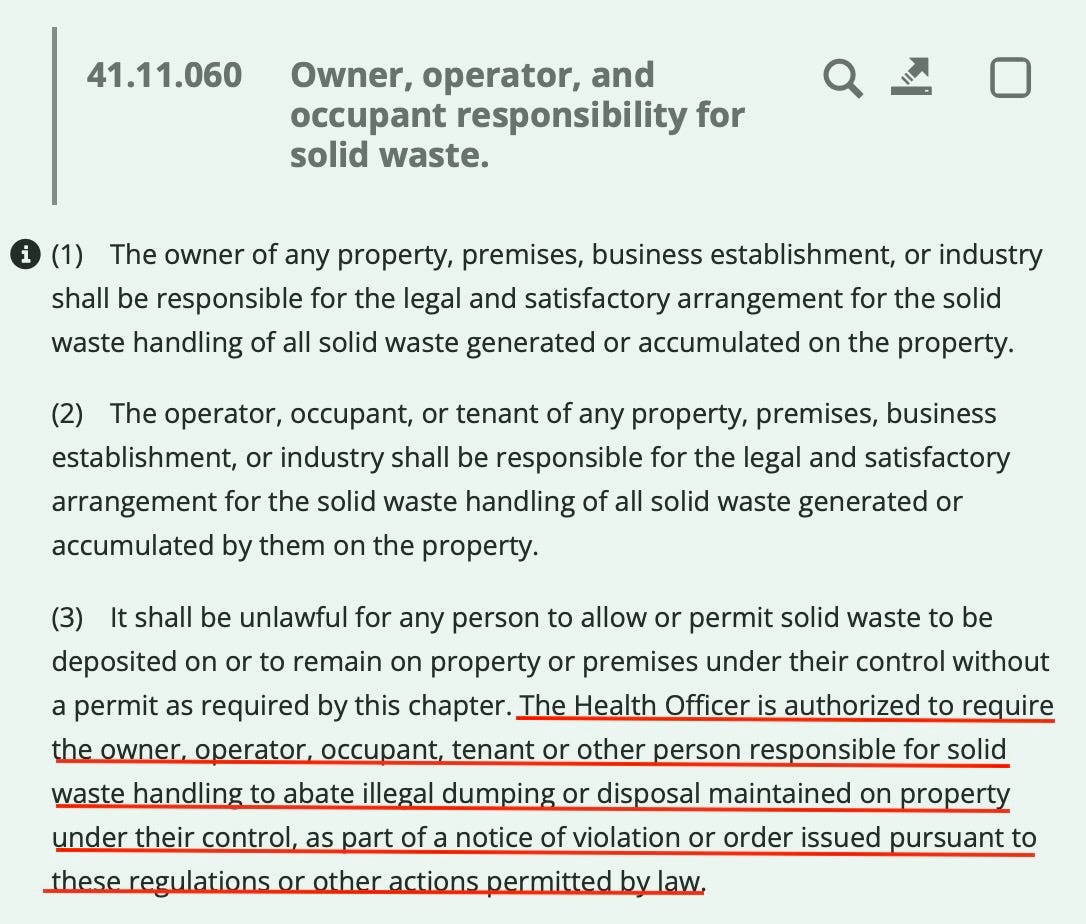
When garbage piles up, when human waste accumulates, when streams are polluted—the issue is no longer about jurisdictional boundaries. It is about public health.
Enforcement Can Include Forced Abatement
The law does not stop at identifying a public health nuisance — it provides a clear enforcement pathway.
Typically, enforcement begins with notice and an order to abate. If ignored, fines may follow.
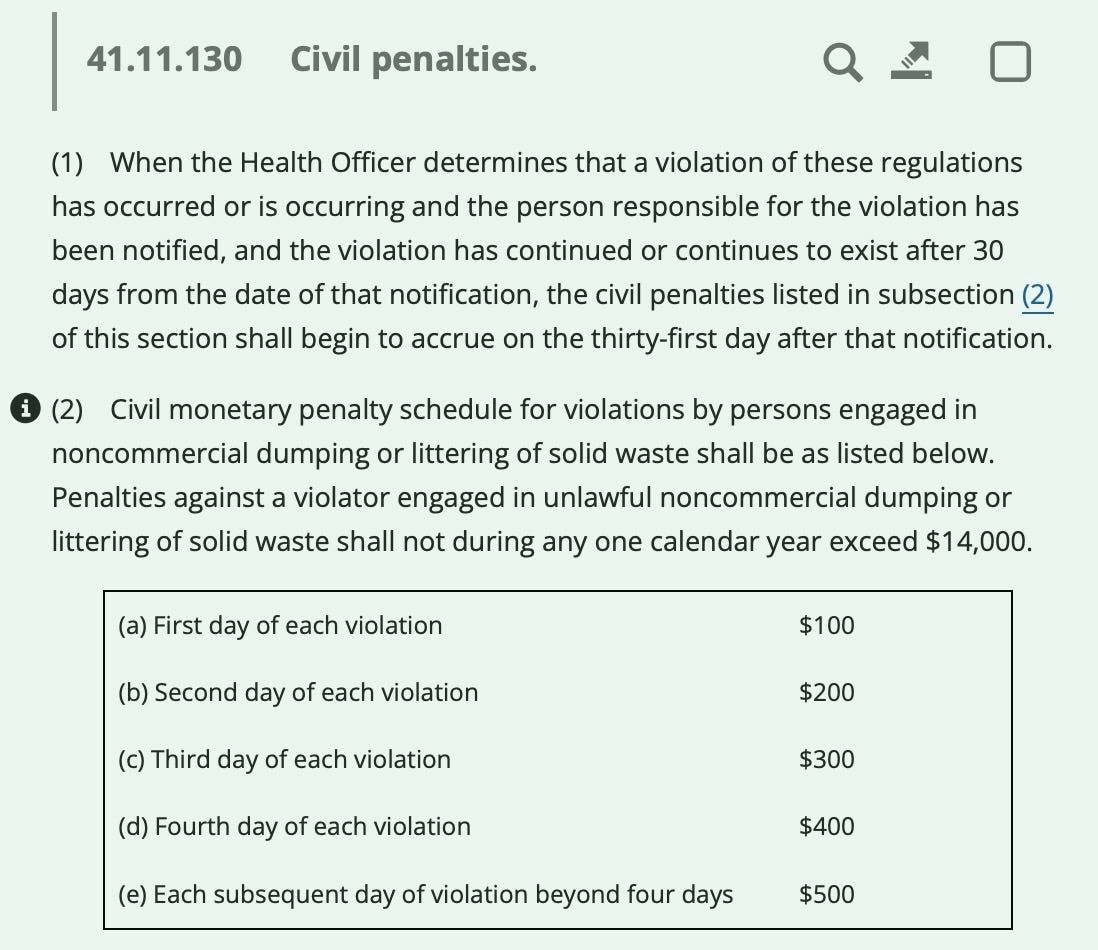
Washington law provides for court-backed nuisance abatement and cost recovery.

And where conditions pose immediate risk—such as exposure to human waste or contamination of waterways - RCW 70.05.070 authorizes the health officer to “take such action as is necessary” to protect public health.
This is the legal basis for forced or emergency abatement.
The mechanism exists. It is well established.
The only question is whether it is being used here.
When the Law is Ignored
Homelessness and substance abuse response are often framed as policy choices—balancing compassion, housing challenges, and enforcement. But public health law is not optional, and it is not subordinate to policy preference.
The law does not require the elimination of homelessness.
It does require the abatement of conditions that threaten public health.
That distinction matters.
A county can choose how it provides services. It can choose how it allocates resources. But it cannot choose to ignore conditions that meet the legal definition of a public health nuisance.
When those conditions persist without action, it is not a policy difference.
It is a failure to comply with the law.
Rights of Citizens and Cities
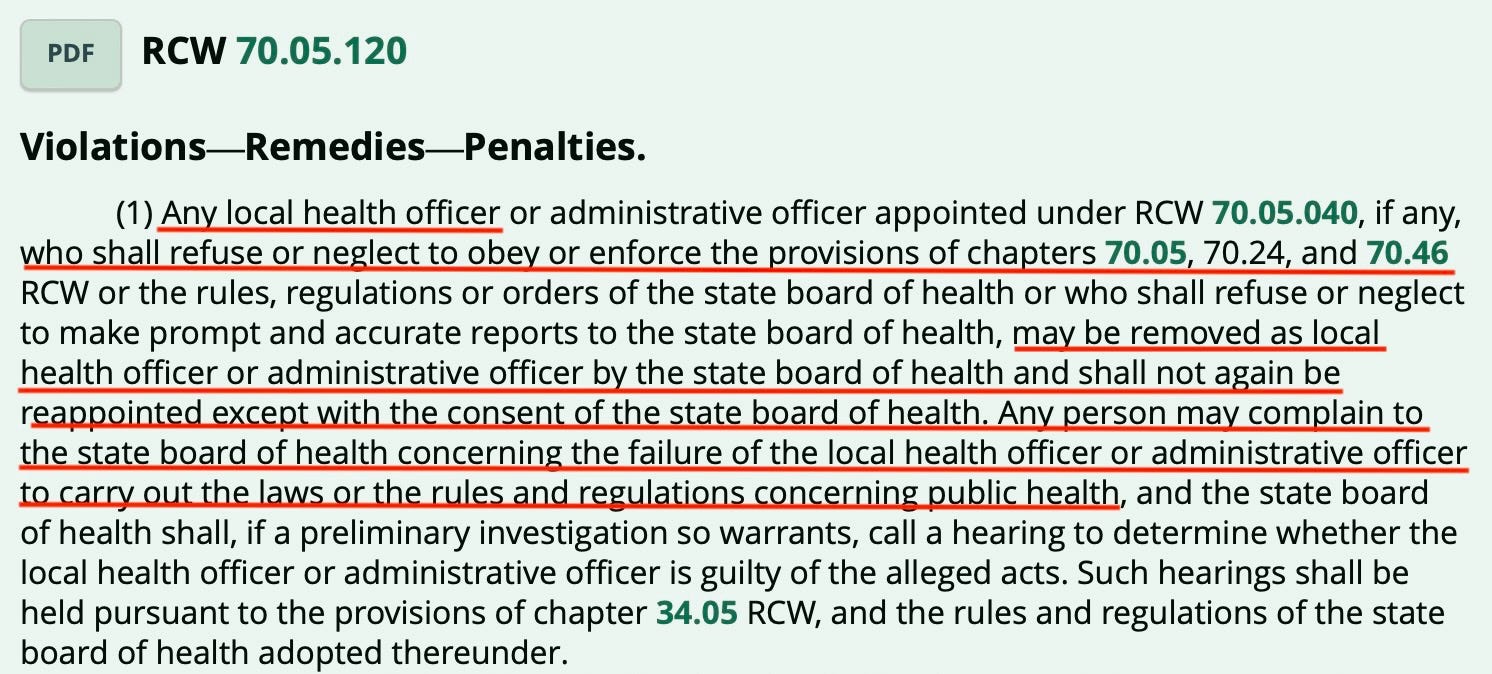
When a Health Officer fails to fulfill her statutory duties, citizens may file complaints with the State Board of Health, which can review the matter and, if warranted, initiate proceedings that may result in removal.
Elsewhere in Washington, cities like Spokane are taking public and environmental health threats directly.
In late 2025, the Spokane City Council unanimously approved the “Safe and Accessible Spaces” ordinance, explicitly tying enforcement of camping restrictions to public health and environmental protection—including waste, fire risk, and waterway contamination.
And it seems to be working.
As one resident recently told The Spokesman Review:
“This is what a clean and safe downtown looks like…it’s almost a strange feeling.”
That should not feel strange.
It should feel normal.
The Stinky Truth
Earlier this week, I was reminded just how far we’ve drifted.
While cleaning up an abandoned campsite under the 8th Street Bridge, the contents of dozens of colostomy bags splattered onto my boots as I pulled them from the blackberry brambles where they had been discarded.
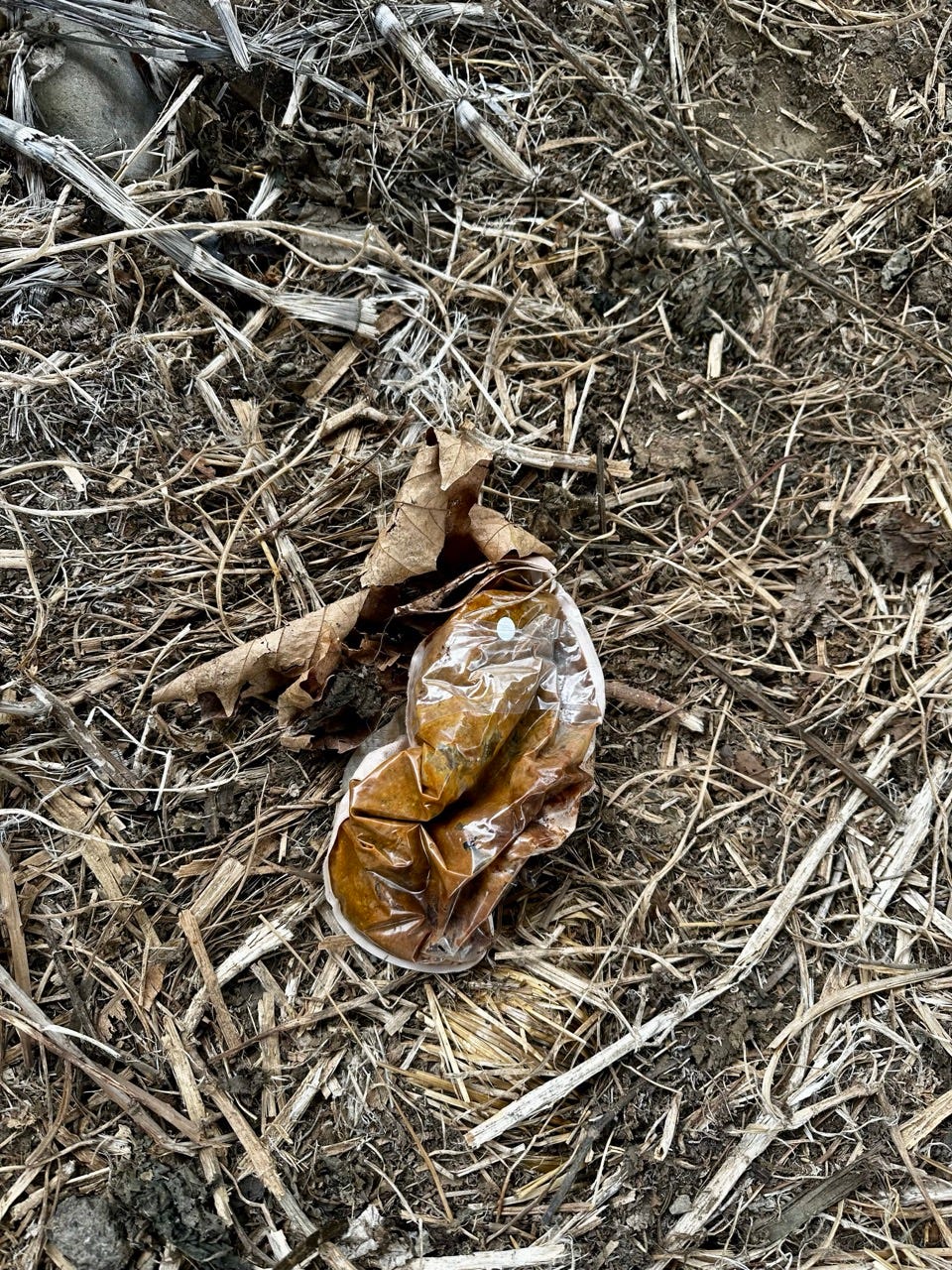
Separately, a fellow 4PA crewmember searched for the source of the stench of human feces that seemed to follow him—only to discover it had leaked down his back from a heavy bag of trash he was carrying to the dump trailer.
Nearby, another volunteer risked personal injury, combing through piles of solid waste, rotting food, and discarded harm-reduction supplies to pull hundreds of syringes from the ground.
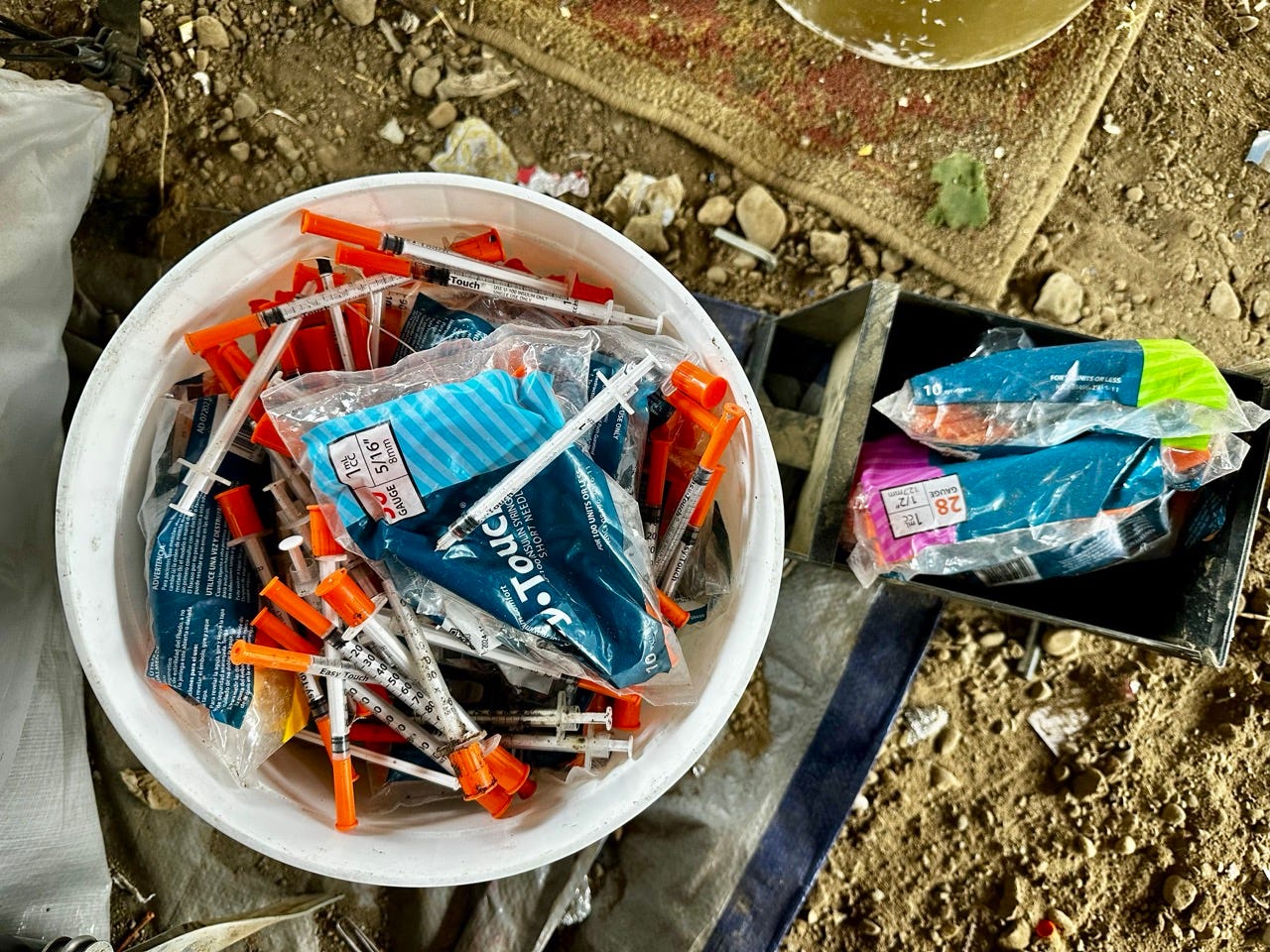
And as we cleaned, one question kept coming to mind:
Where is the Health Officer?
Where are the commissioners?
Where is the Board of Health?
This is the result of their policies.
This is their harm reduction trash.
This is their mess.
They should be cleaning it up.
More importantly, when coordination between jurisdictions, law enforcement, and property owners breaks down—regardless of ownership, location, or city policy—the Clallam County Board of Health, including the commissioners and the Health Officer, retains both the authority and the legal obligation to act.
Pivot to Common Sense
It’s time to pivot from the failed policies of the last decade and restore public safety, public health, and environmental stewardship to Clallam County through common-sense leadership.
Here’s how:
1. End outdoor living on public land by consistently enforcing existing laws. If cities refuse to act, the Health Officer has the obligation to abate public health nuisance.
2. Prioritize local housing resources for individuals currently residing in Clallam County.
3. Strengthen shelter policies to ensure that services are supportive and attractive for those leaving outdoor living.
4. Expand transitional shelter capacity rather than focusing primarily on costly permanent supportive housing.
5. Reduce the cash flow that fuels addiction through clear anti-panhandling signage and public education.
6. Redirect funding from drug-use supplies to treatment programs with measurable results.
7. Measure success by outcomes — tracking how many individuals move from addiction to sobriety and from homelessness to stable lives.
What can you do?
If this concerns you, don’t stay silent.
Reach out to your county commissioners and ask what specific steps are being taken to address these public health conditions—and what measurable outcomes the public should expect.
All three commissioners can be contacted by emailing the Clerk of the Board at loni.gores@clallamcountywa.gov.
You can also contact the County Health Officer, Dr. Allison Berry, at allison.berry@clallamcountywa.gov.
Public policy improves when the public participates—your voice matters.
Editor’s Note: CC Watchdog editor Jeff Tozzer also serves as campaign manager for Jake Seegers during his run for Clallam County Commissioner, District 3. Learn more at www.JakeSeegers.com.


