
In economically challenged rural Clallam County, residents already navigate Washington’s Growth Management Act and strict energy codes. Now, local decisions on water use, septic systems, and wildfire “resilience” threaten to drive up costs, restrict private property use, and worsen the housing crisis—while tribal properties frequently remain exempt.
Layer Upon Layer of Local Regulation
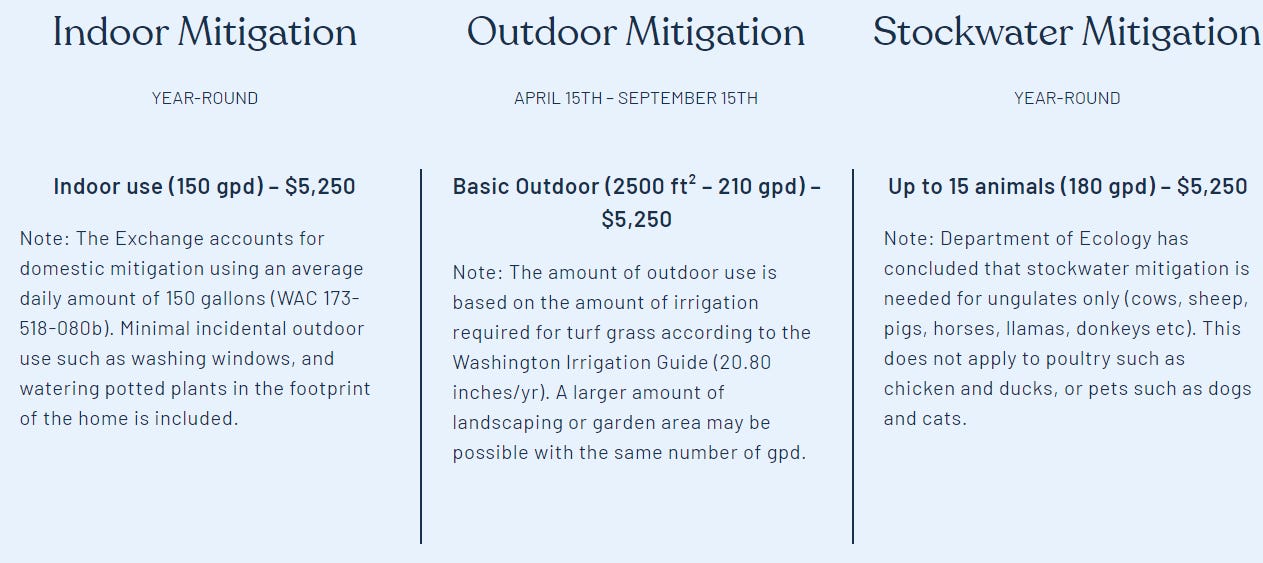
On the water front, the Dungeness Water Rule—advanced by the Jamestown Corporation and the Washington Department of Ecology—imposed costly mitigation requirements for new water uses on the eastern end of Clallam County. This program operates in tandem with Clallam County and the Clallam Conservation District. Tribal properties are exempt.
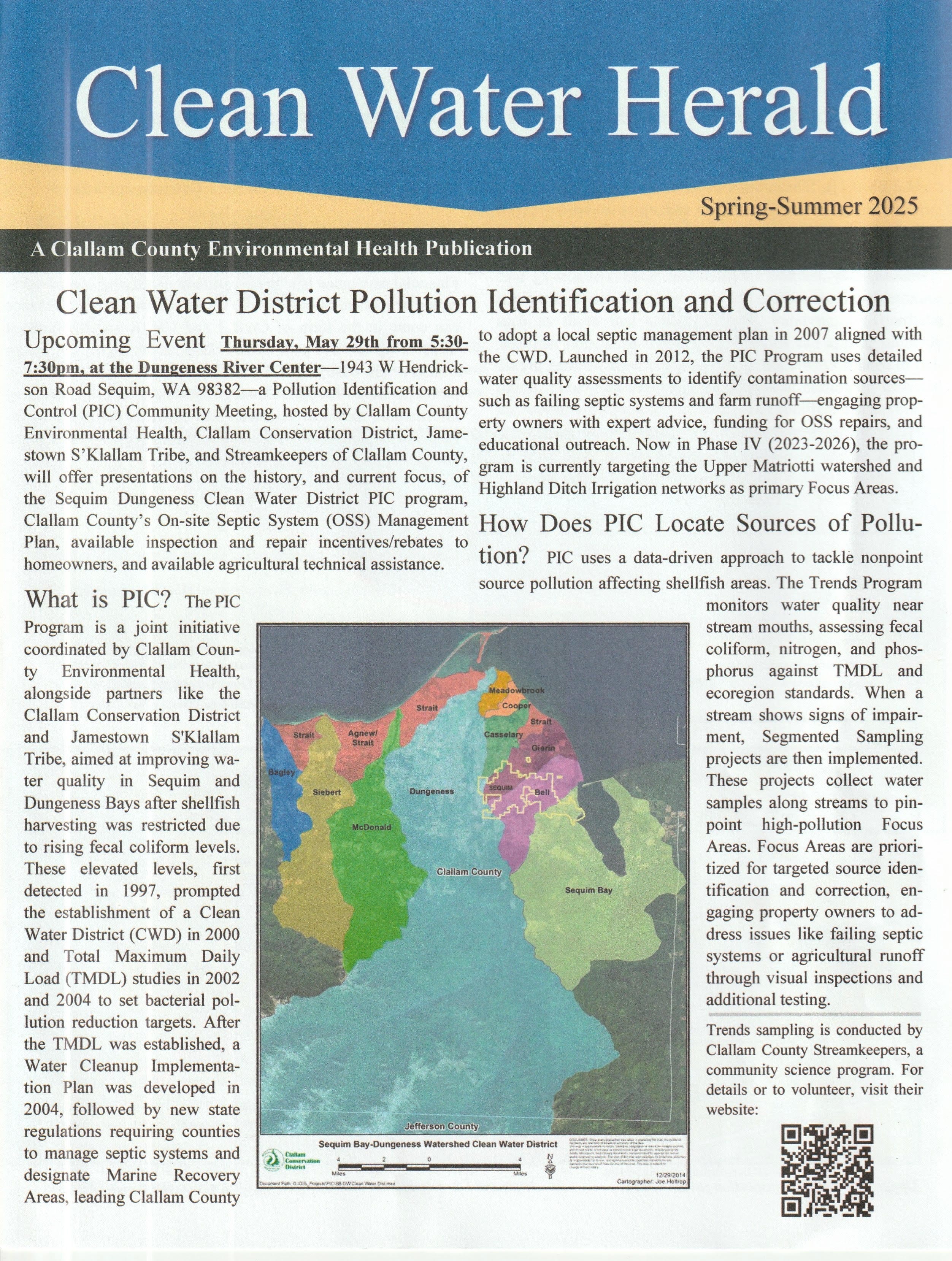
Adding to the burden, the Pollution Identification and Correction (PIC) program—a collaboration among the Jamestown Corporation, Clallam Conservation District, and Clallam County—targets failing septic systems. It layers additional local oversight and potential costs beyond existing state mandates.
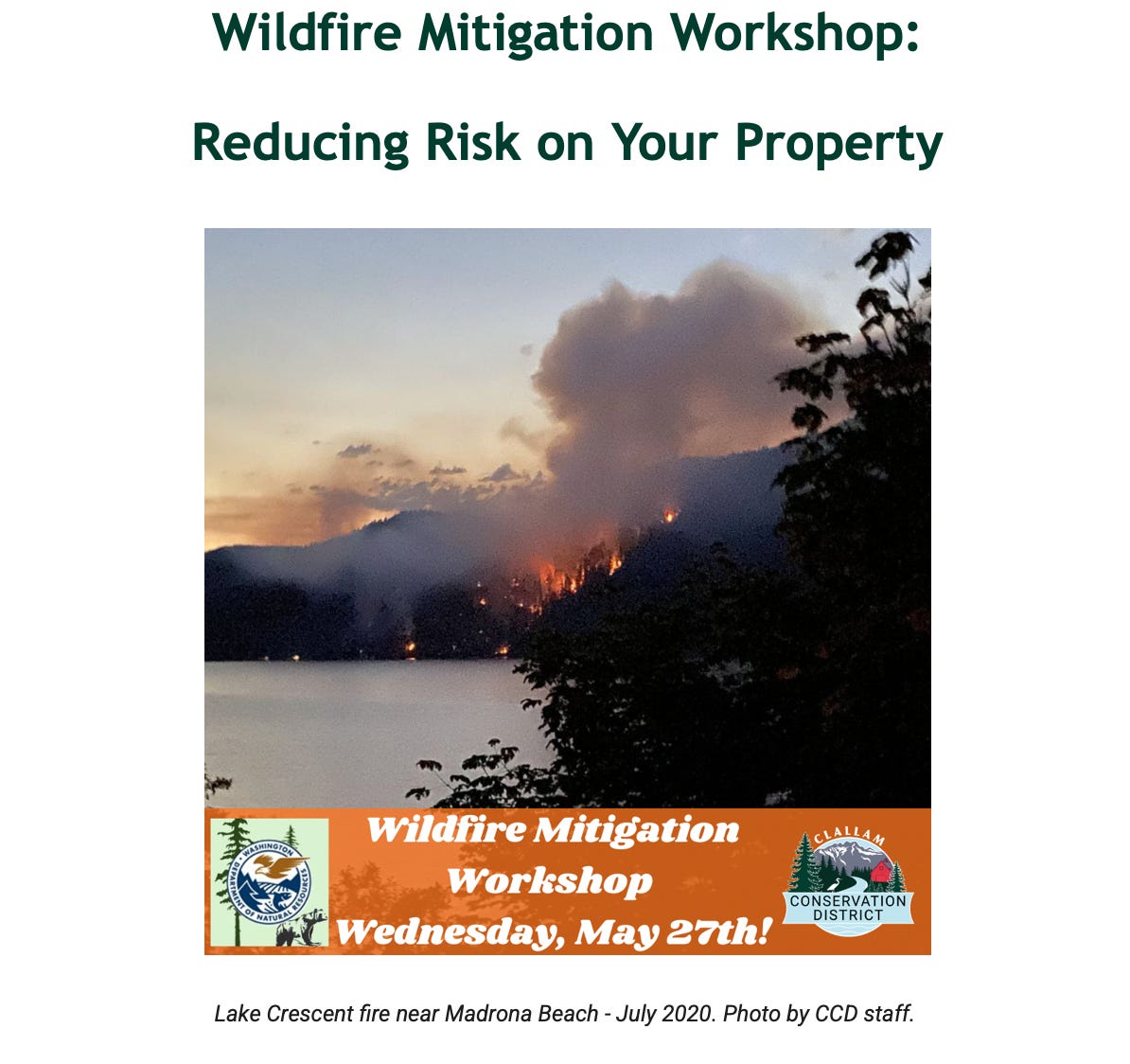
The Clallam Conservation District, traditionally focused on agriculture, has expanded with the new $5-per-parcel annual fee (tribal properties are exempt). The parcel fee was approved by the county commissioners. This is projected to transfer roughly $2 million from county taxpayers to the District over the next decade. Emboldened by this funding, the CCD has now ventured into wildfire education workshops.
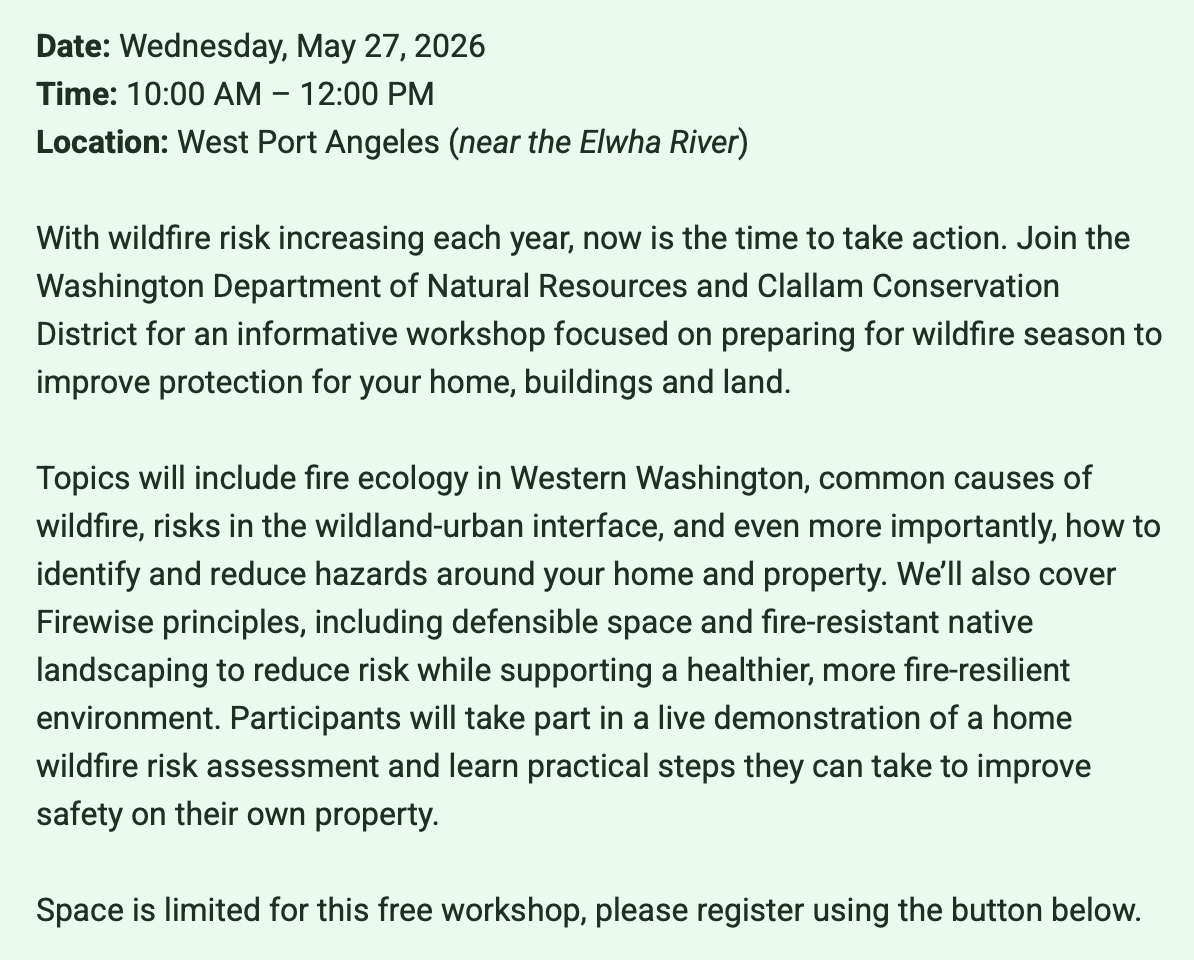
The Next Wave: Community Wildfire Protection Plan
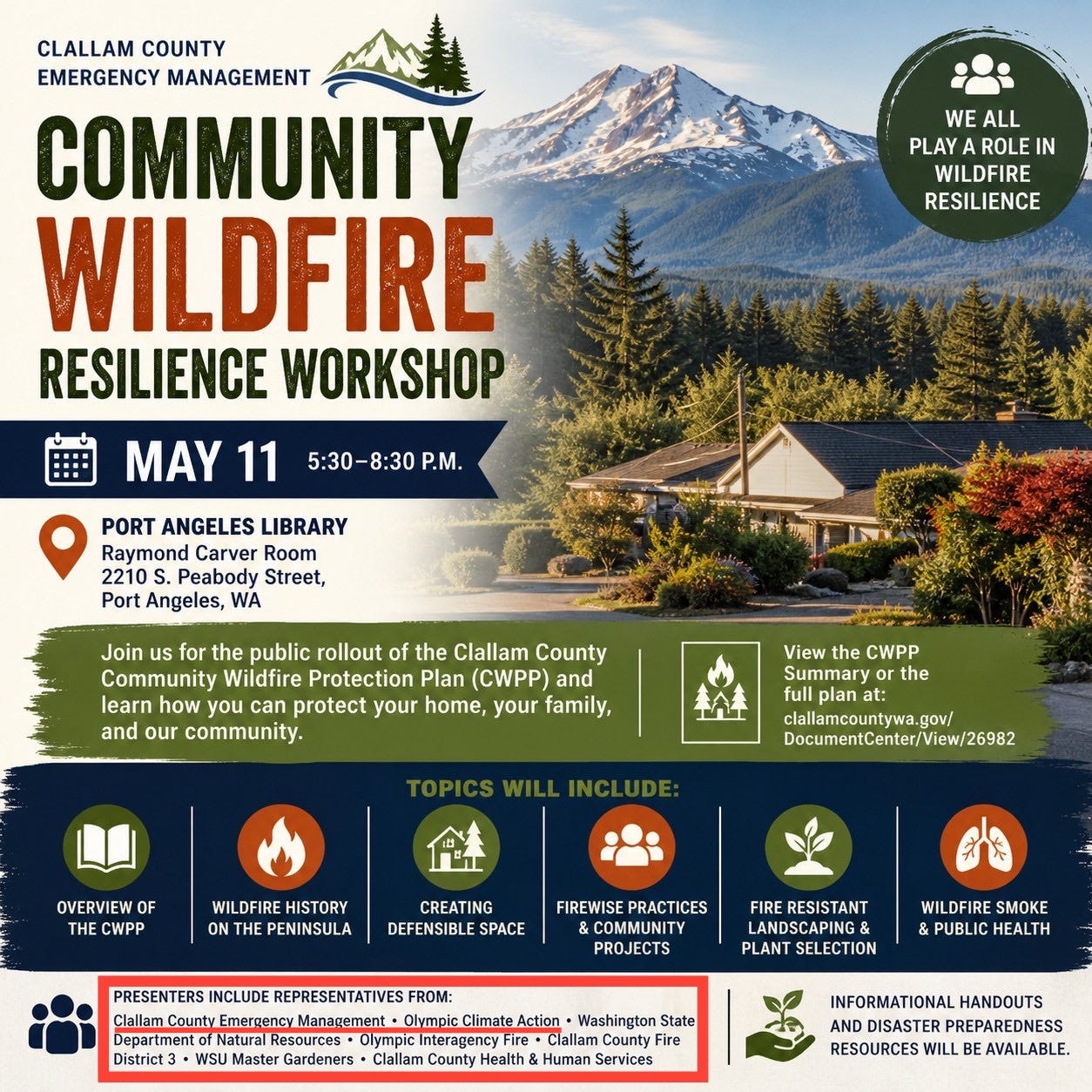
Last week, we exposed how Olympic Climate Action — led by President Brian Grad — has waded into partisan politics by endorsing candidates.


Now, the partisan group is deepening its local influence: Olympic Climate Action has teamed up with Clallam County Emergency Management and other partners to roll out the county’s new Community Wildfire Protection Plan (CWPP) through a series of public workshops.
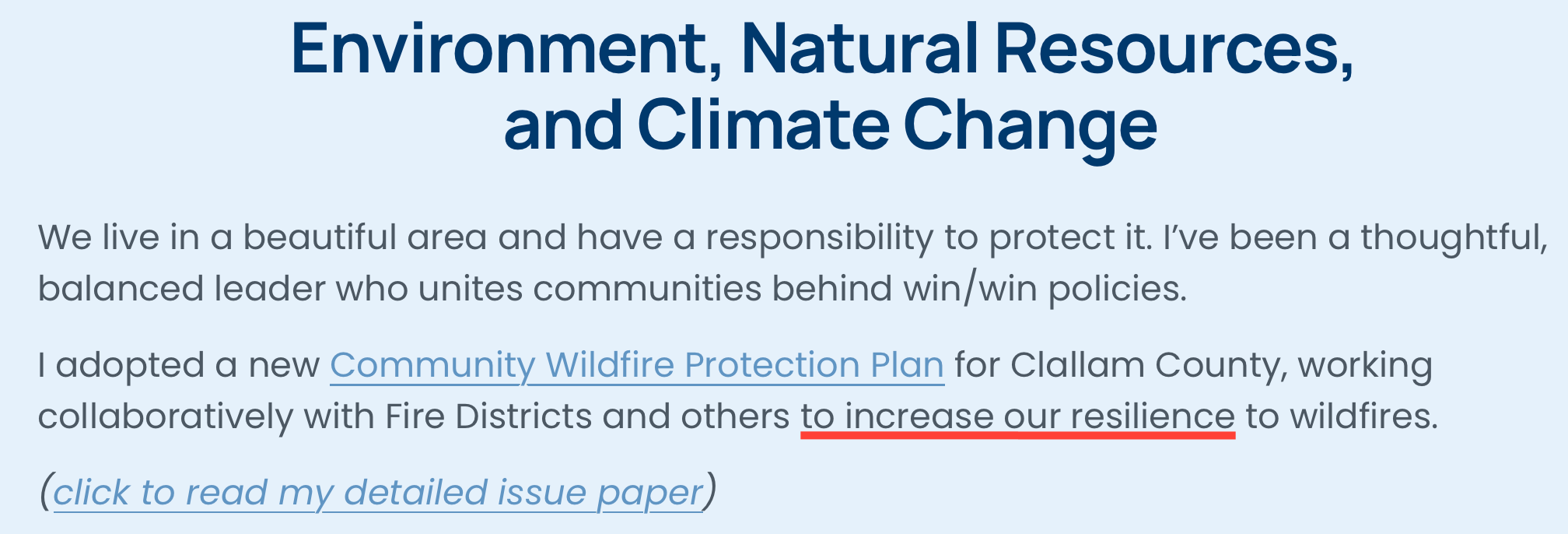
Commissioner Mike French, who is seeking reelection, has made adoption of this plan a centerpiece of his campaign, proudly touting it as a collaborative effort to increase “resilience.”
The CWPP itself repeatedly states it is not mandatory. It does not impose immediate requirements on private landowners and emphasizes voluntary implementation. However, the plan—particularly Appendix I on building code recommendations—lays the groundwork for future enforceable rules that could significantly impact housing affordability and property rights.
Questionable Choice of Consultant: SWCA
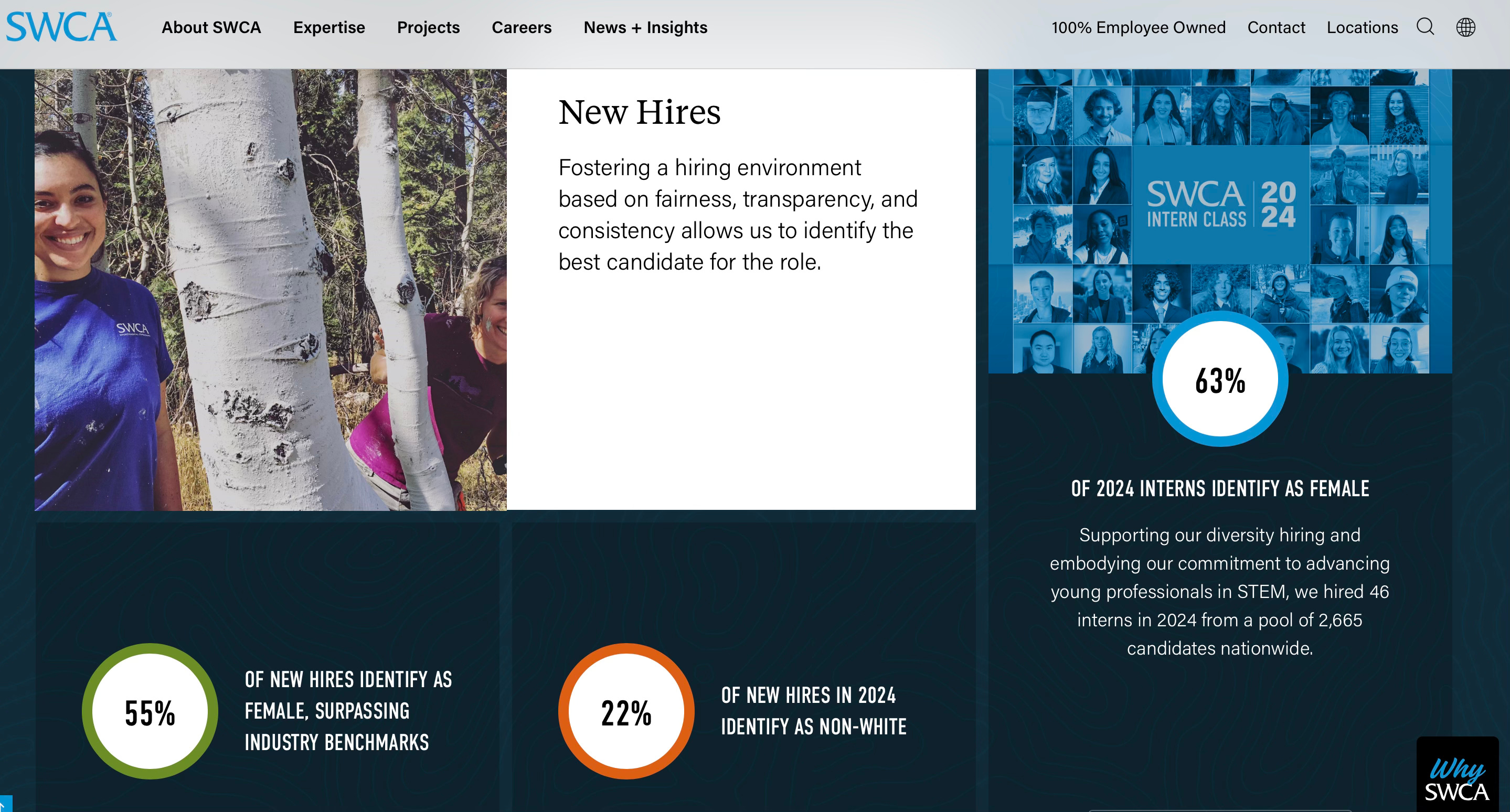
Clallam County commissioners selected SWCA Environmental Consultants, a national firm, to develop the new CWPP. While SWCA has experience with wildfire planning, the company prominently markets its strong commitment to Diversity, Equity, and Inclusion (DEI) initiatives on its website and in public reporting.
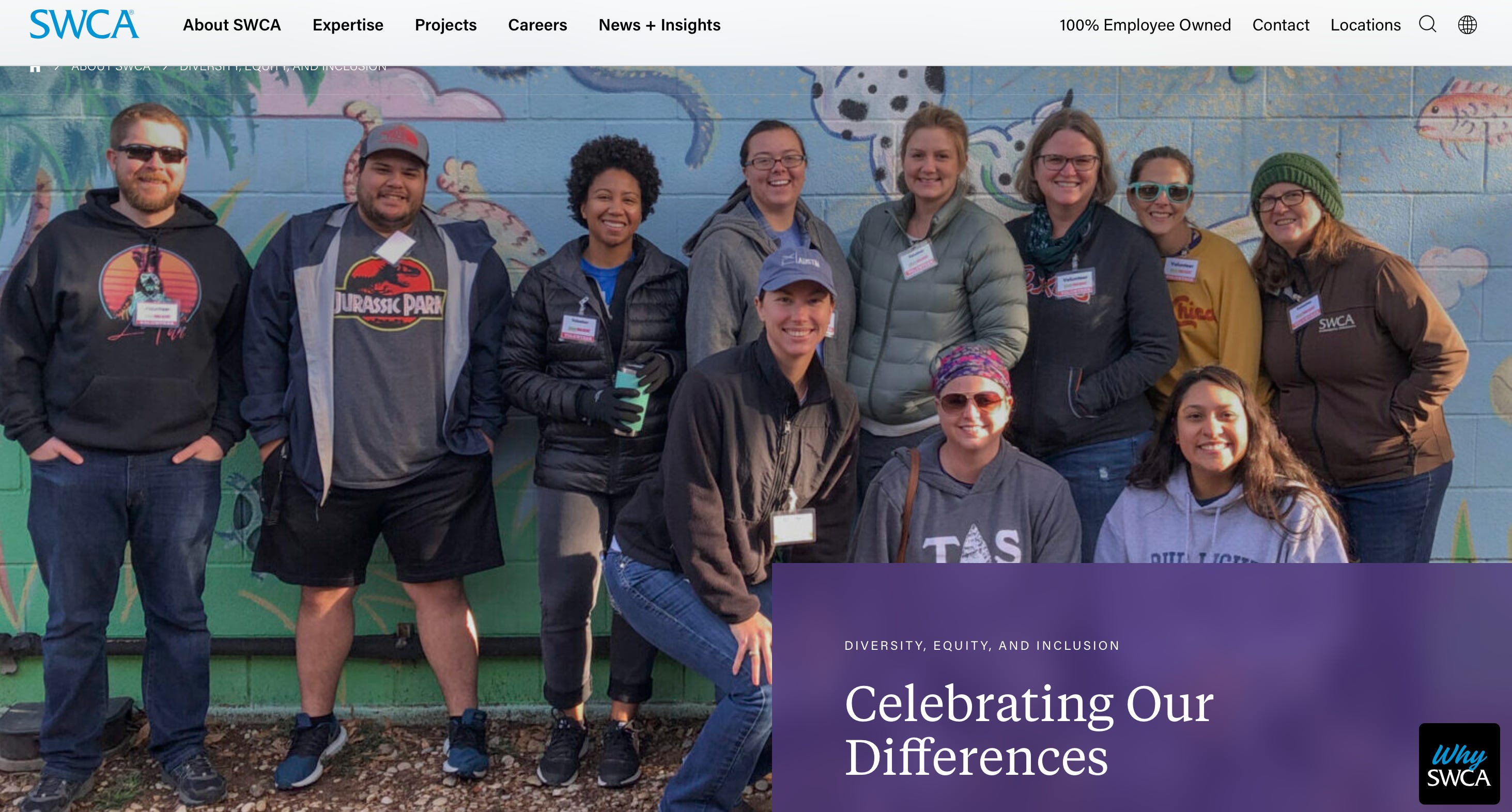
SWCA highlights metrics such as high percentages of female and non-white new hires, earns top DEI awards, and integrates equity-focused language into its corporate culture and project work.
The firm also emphasizes ESG (Environmental, Social, and Governance) priorities alongside its technical services. In a remote, rural county like Clallam — with its unique geography, limited evacuation routes, heavy timberlands, and very real wildfire risks — residents have every right to ask:
Are we hiring the most qualified local-knowledge experts, or are we paying for a national firm whose corporate priorities align more with national DEI and ESG trends than with practical, ground-level wildfire protection?
Key Concerns from the CWPP and Appendix I
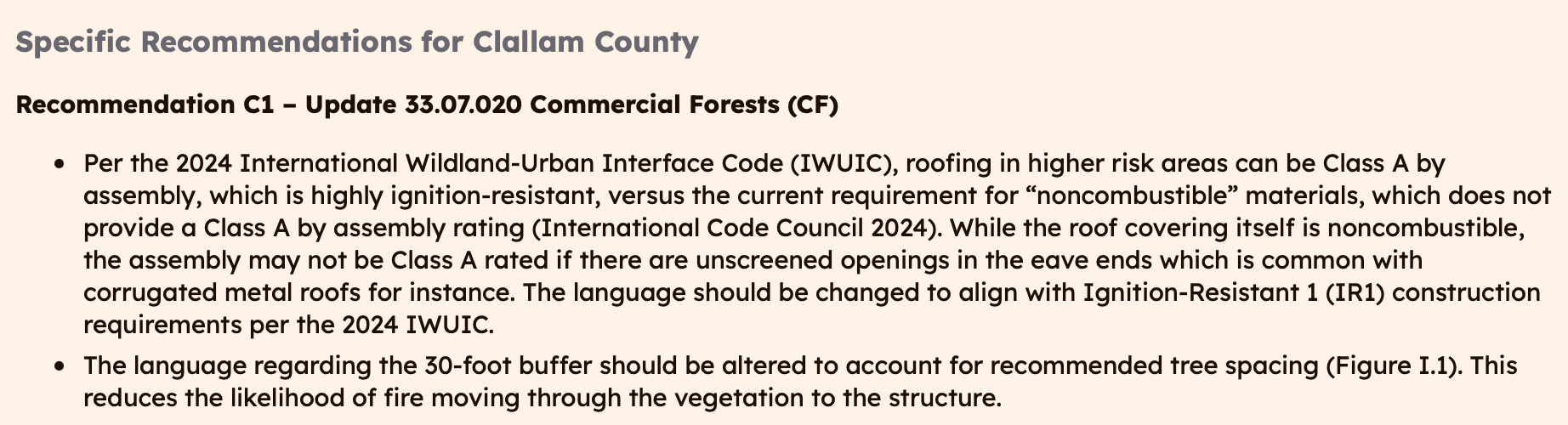
Adoption of stricter Wildland-Urban Interface (WUI) codes: Recommends adopting the 2024 International Wildland-Urban Interface Code (with localized amendments that could be more stringent than state rules), including enhanced requirements for roofing, siding, vents, decks, and fencing.
New subdivision standards: Calls for a comprehensive review and redesign focused on wildfire safety, affecting road widths, access, lot layouts, setbacks, and vegetation rules—all of which raise development costs and reduce land value.
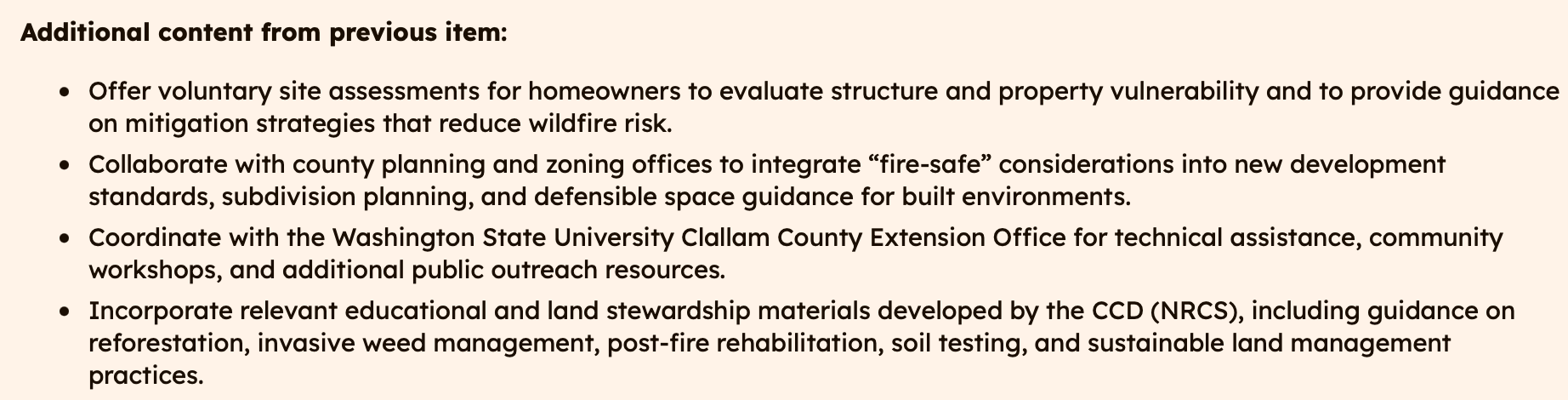
Defensible space and vegetation management: Promotes ongoing maintenance of “Home Ignition Zones,” which could evolve from education into mandatory clearing, thinning, or landscaping restrictions.

Setbacks from forests and open space: These reduce buildable area on rural parcels, effectively acting as hidden down-zoning and lowering housing density.

Mandatory Wildfire Safety Plans: New developments may require plans prepared by certified “special experts,” plus perpetual maintenance obligations baked into CC&Rs, ongoing audits, and funding mechanisms.

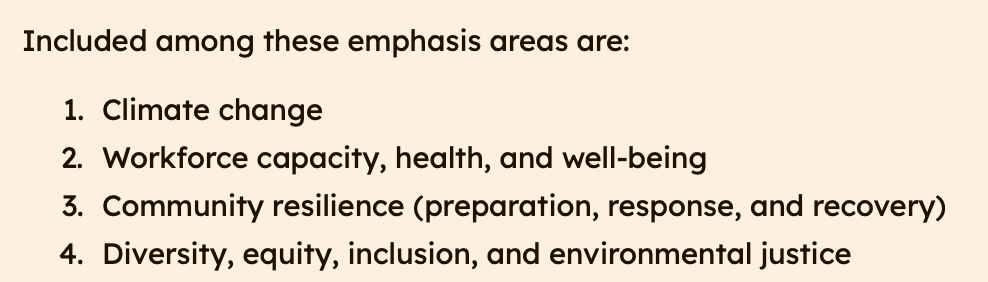
Equity language and grant chasing: Emphasis on “promoting equity” in mitigation and using the plan to secure grants, which often steer policy toward additional regulations.
These changes would compound Washington’s already strict building and environmental standards. Fire-rated materials, larger setbacks, extra permitting, and consultant requirements all increase construction and site-preparation costs—making new homes harder to build and less affordable, especially in rural, forested areas where housing supply is critically needed.
Pattern of Exemptions and Expanding Control
As with the Dungeness Water Rule and the new parcel fee, tribal properties often receive exemptions. Meanwhile, private property owners in this economically depressed county bear the costs of layered local initiatives that go beyond state requirements.
Commissioner French and partners present these efforts as balanced protection. Critics see a familiar pattern: well-intentioned planning documents that start “voluntary” but open the door to costly, top-down rules that erode property rights and exacerbate housing shortages.
Rural Clallam County doesn’t need additional county-level regulatory overlays on top of one of the nation’s most ecologically stringent states. True resilience should prioritize practical fuel reduction on public lands, realistic evacuation planning, and education—without turning every homeowner into a regulated land manager or pricing out new housing.
Clallam residents deserve policies that protect lives and property without sacrificing affordability and private property rights. The CWPP’s recommendations warrant close scrutiny before they harden into code.
Today’s Tidbit: Debate #2 Tomorrow
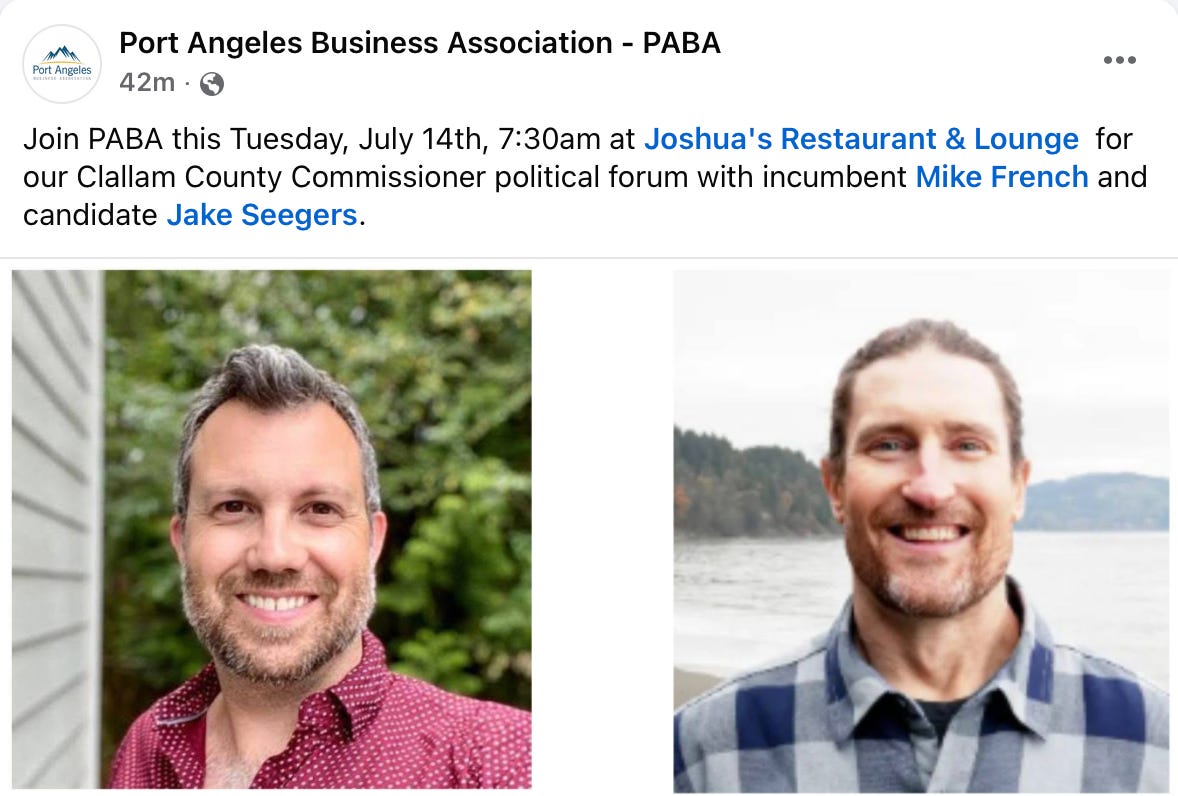
The Port Angeles Business Association invites you to the second French/Seegers debate tomorrow morning at 7:30 a.m. at Joshua’s Restaurant.
The debate will be streamed live on Facebook and recorded for later viewing. Attendees can enjoy breakfast at Joshua’s, or pay a $5 minimum charge if not ordering food. PABA members receive priority when asking questions, but guests are welcome and may have the opportunity to ask questions after members.
This is another excellent reason to join the Port Angeles Business Association — an organization that generously hosts open candidate forums for the entire community.