
Every summer, drought warnings return, along with calls to conserve water. But does more than a century of USGS data from the Dungeness River support the increasingly dire narrative? One CC Watchdog subscriber analyzed the public record dating back to 1923, and, together with criticism from renowned meteorologist Cliff Mass, the findings raise an important question: are Washingtonians getting the full picture?
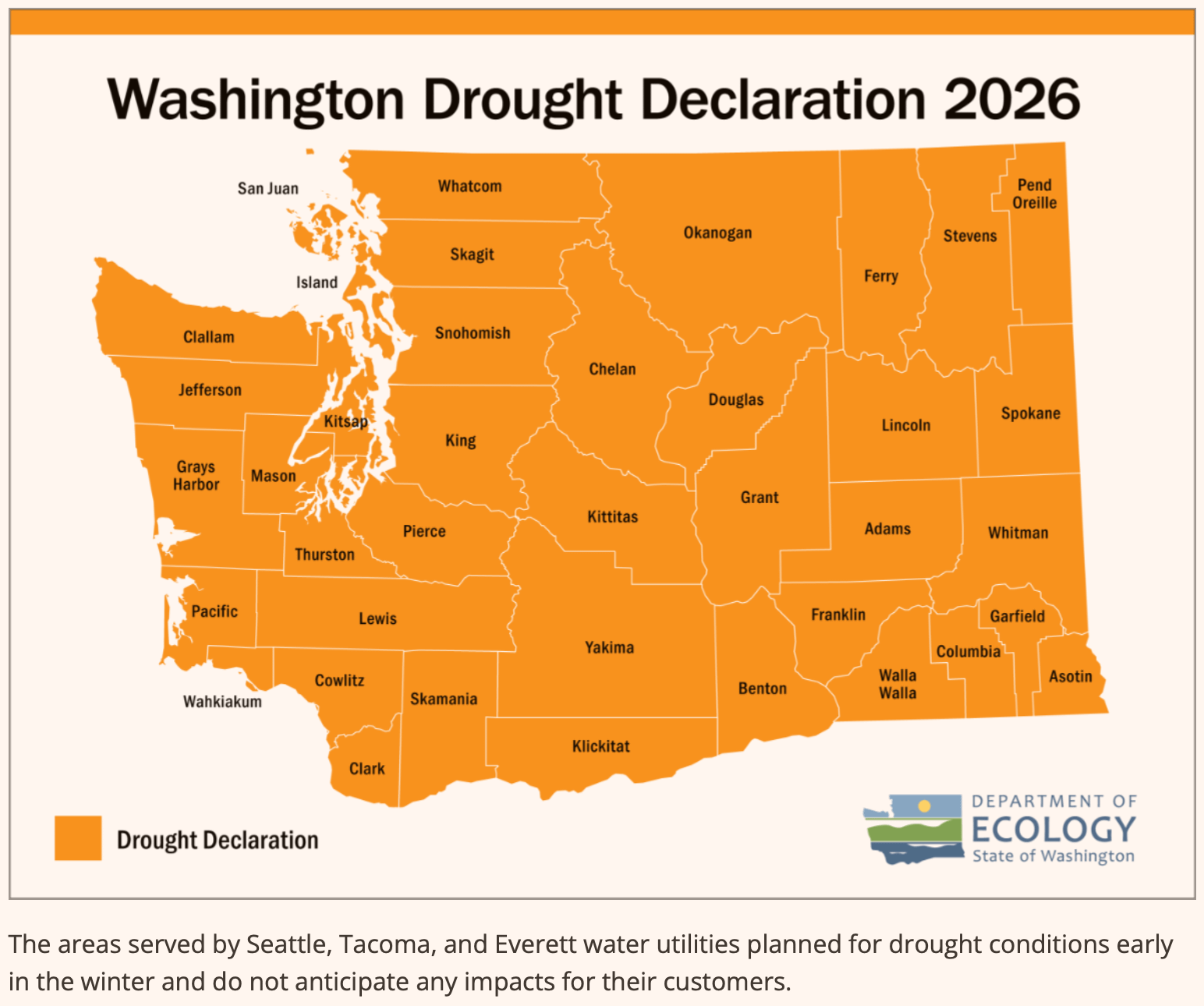
Like clockwork, summer has arrived—and so has Washington’s annual drought declaration.
The Washington State Department of Ecology has once again declared the entire state to be in drought.
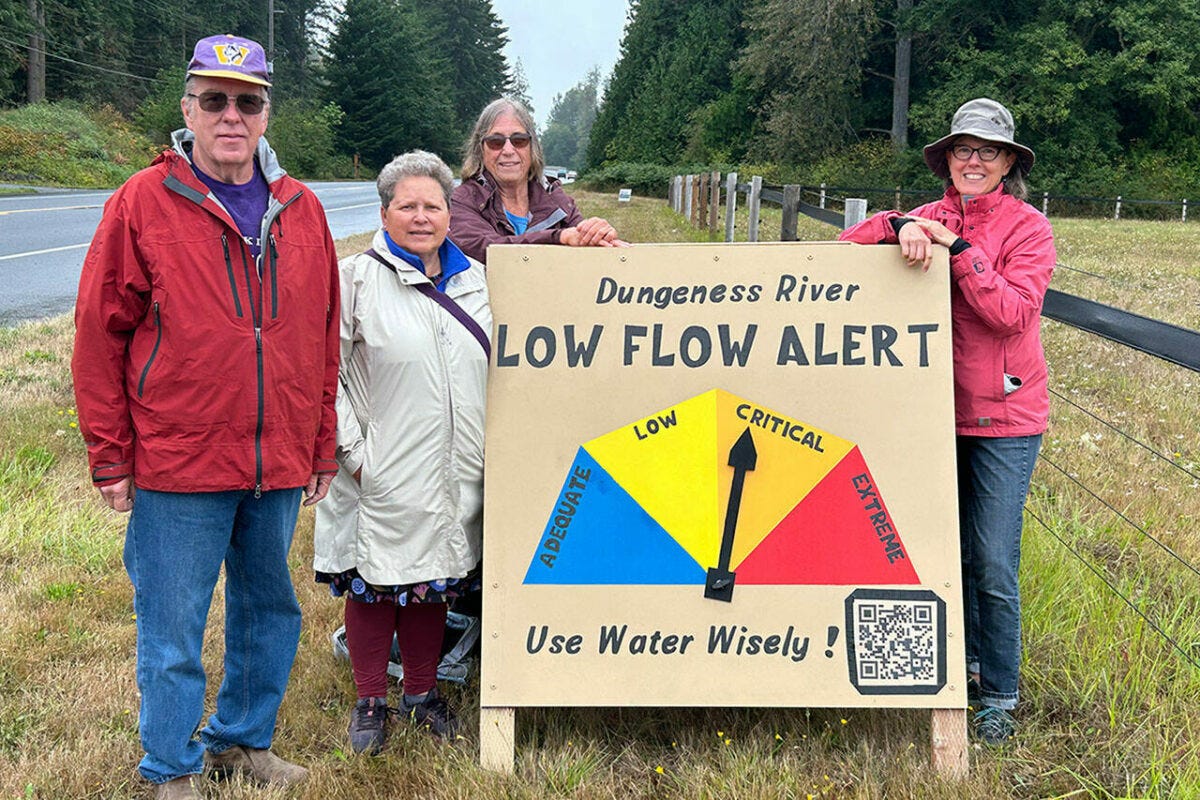
Along the Old Olympic Highway, the needle on the familiar League of Women Voters “Low Flow Alert” sign keeps inching toward “extreme,” warning motorists to conserve water.
Meanwhile, the Jamestown Corporation’s Dungeness River Nature Center is encouraging residents to reduce their water use.
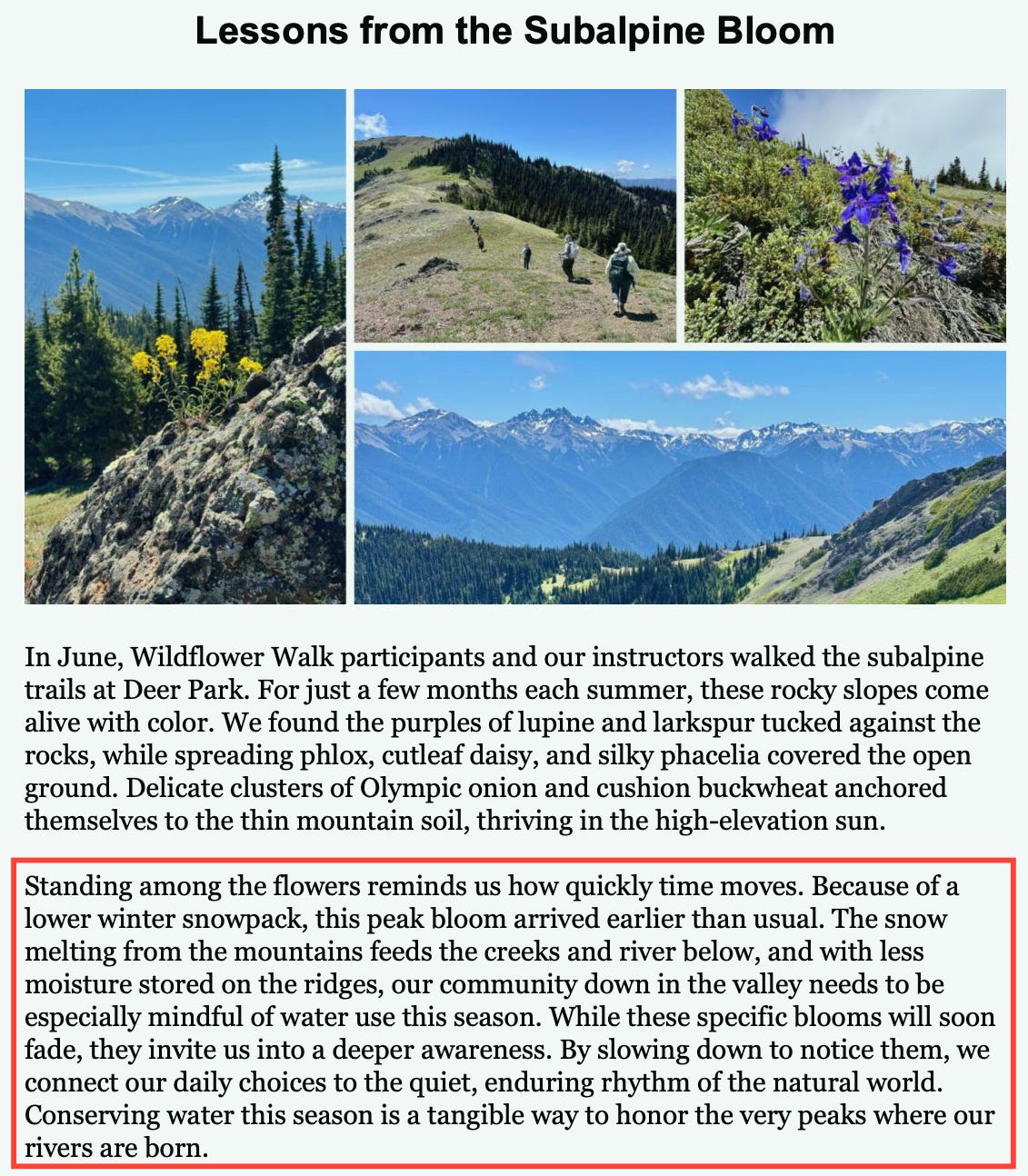
“The snow melting from the mountains feeds the creeks and river below, and with less moisture stored on the ridges, our community down in the valley needs to be especially mindful of water use this season... Conserving water this season is a tangible way to honor the very peaks where our rivers are born.”
It is a message few would disagree with. Conserving water is simply good stewardship.
But it also raises an obvious question.
The same Jamestown Corporation encouraging residents to cut back will also be irrigating its 122-acre golf course throughout the hottest, driest months of the year.

Which leads to another question.
How unusual are these summer low flows, really?
One CC Watchdog subscriber decided not to rely on press releases or advocacy groups. Instead, they downloaded the complete public record from the U.S. Geological Survey’s stream gauge on the Dungeness River near Sequim—more than 100 years of daily flow measurements dating back to 1923—and analyzed the numbers.
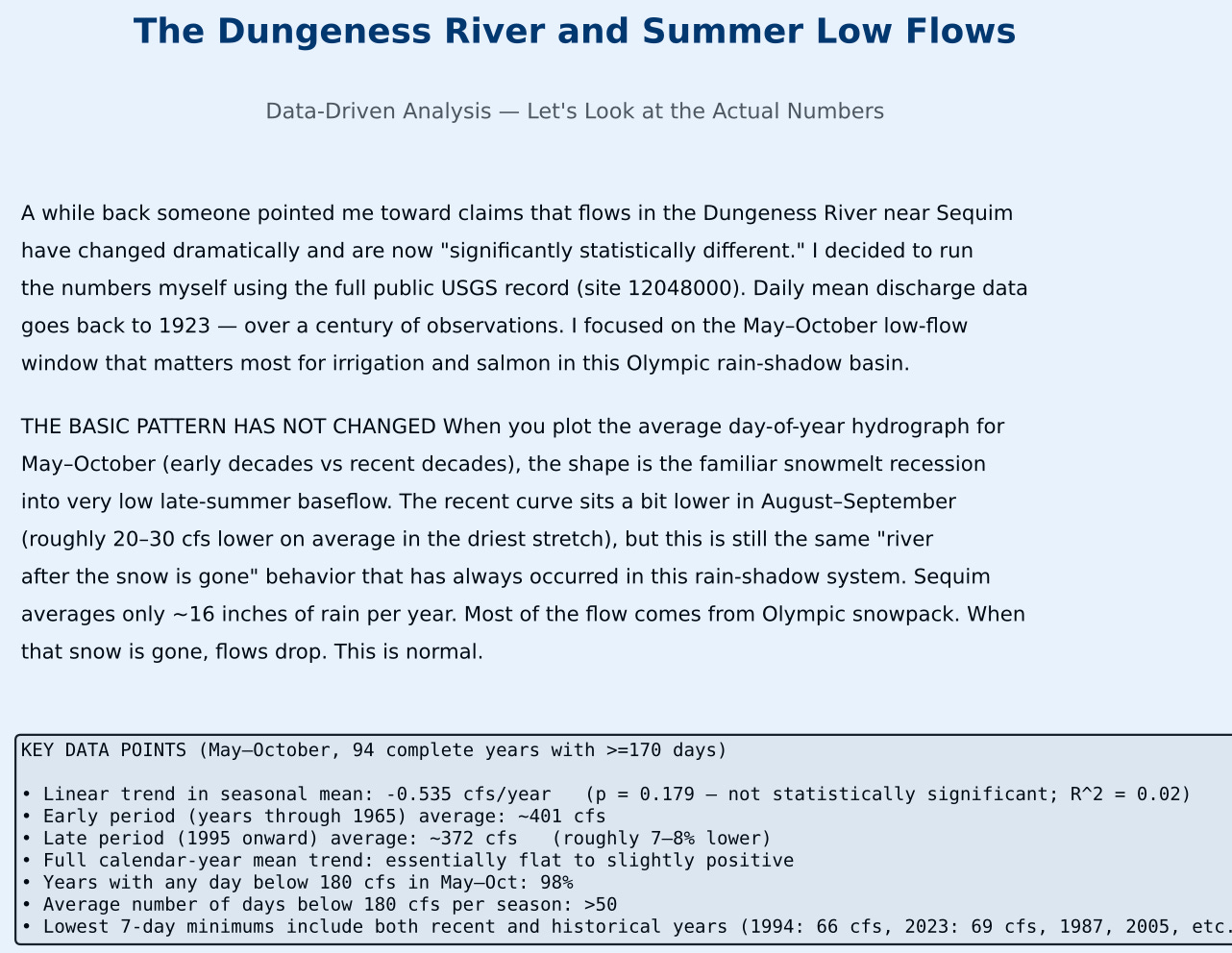
The results don’t suggest that nothing has changed. Summer flows appear modestly lower than they were decades ago. But they also don’t support the narrative of a river suddenly collapsing into unprecedented conditions.
The analysis found that average May through October flows have declined only slightly—about 0.5 cubic feet per second per year—and, importantly, that trend was not statistically significant (p = 0.179).
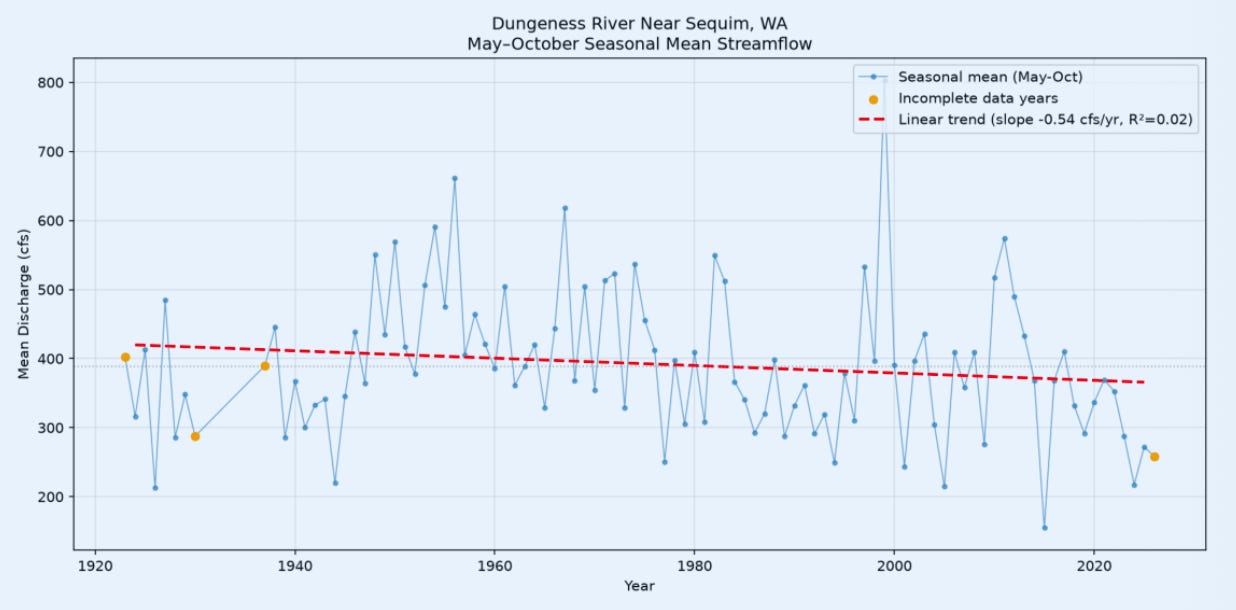
In other words, the long-term record contains enough natural variability that researchers cannot confidently conclude a meaningful long-term trend exists from this data alone.
Comparing earlier decades with recent decades tells a similar story.
Recent summers average roughly seven to eight percent lower than the early record, but the river still follows the same seasonal pattern it always has. Snowmelt fills the river during late spring. By August and September, flows naturally decline as the Olympic snowpack disappears.
That pattern has remained remarkably consistent for over a century. The hydrographs comparing early and recent decades are strikingly similar despite the modest reduction in late-summer flow.
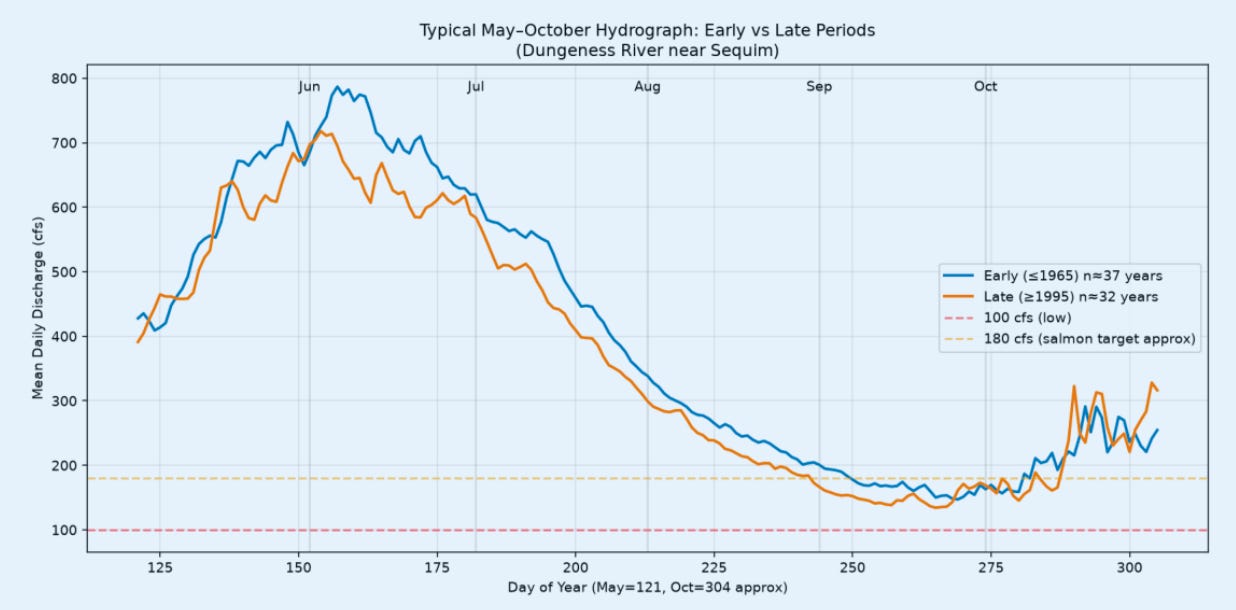
Perhaps most surprising is how often the river has historically fallen below today’s warning thresholds.
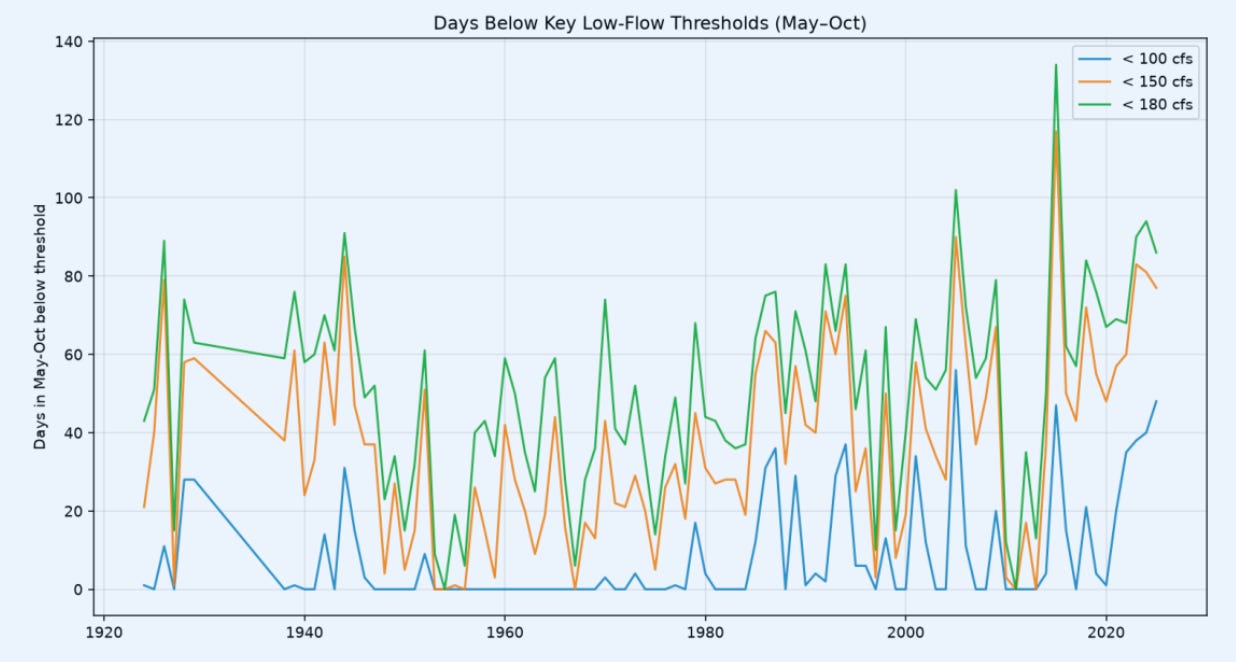
According to the analysis:
Flows below 180 cubic feet per second occurred in 98 percent of recorded years.
Flows below 150 cfs occurred in 94 percent of years.
Even flows below 100 cfs occurred in nearly half of all years on record.
In other words, low summer flows are not a new phenomenon. They are characteristic of rivers in the Olympic rain shadow. It’s all laid out in this video:
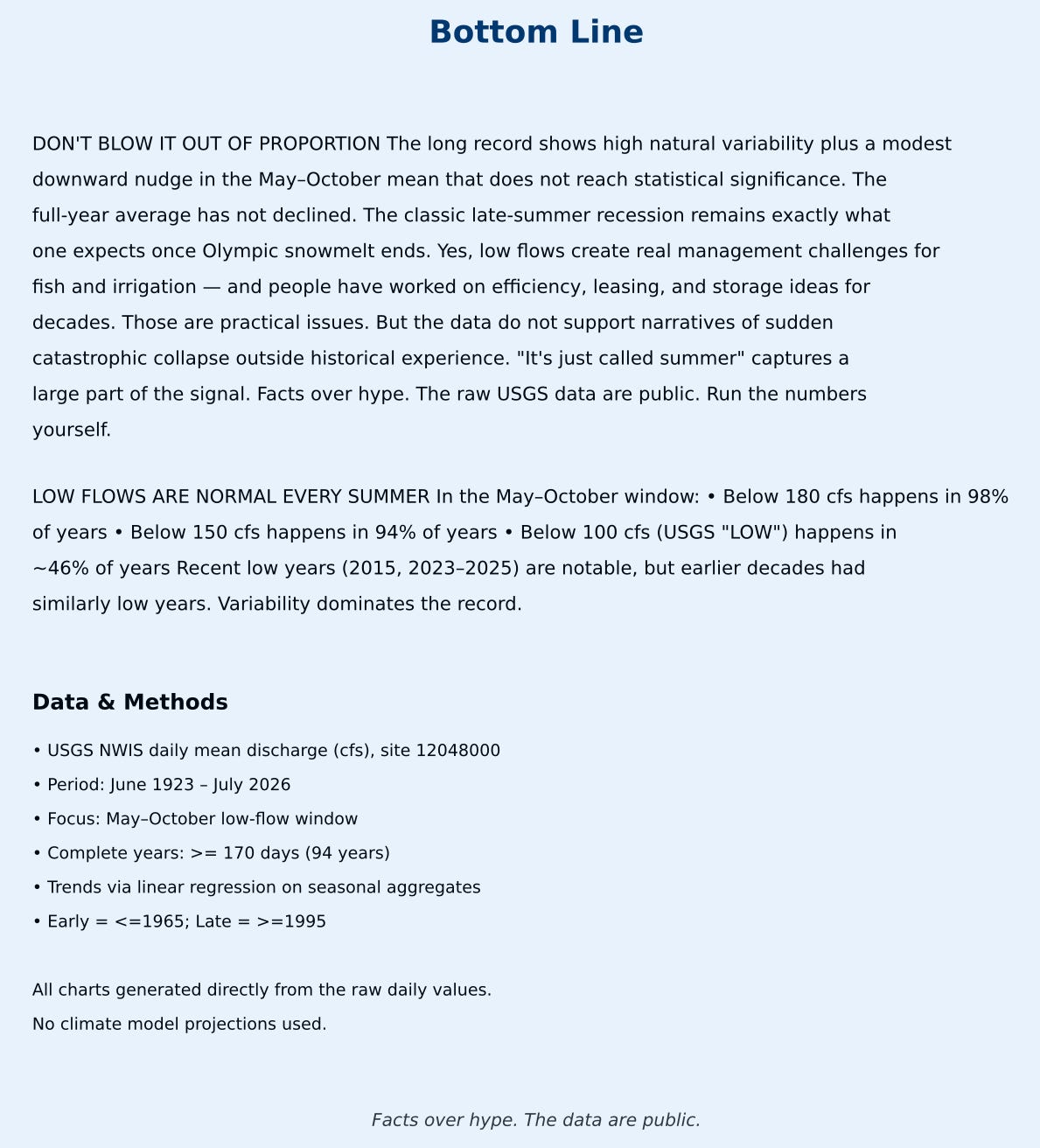
The report’s conclusion is difficult to ignore:
“The data do not support narratives of sudden catastrophic collapse outside historical experience... Facts over hype.”
Interestingly, these conclusions echo concerns raised by one of the Pacific Northwest’s best-known meteorologists.
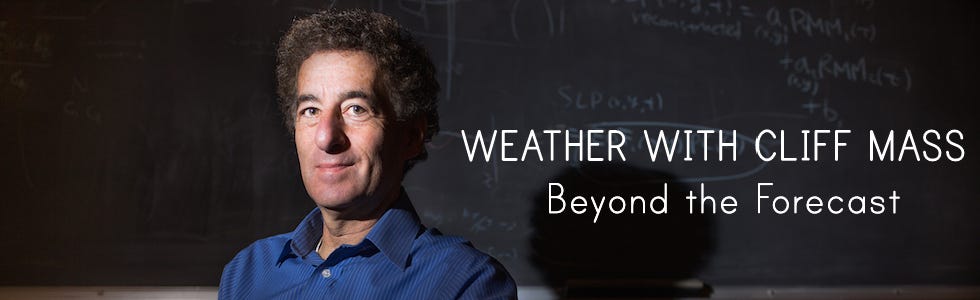
Earlier this year, University of Washington atmospheric scientist Cliff Mass questioned Washington’s drought declaration, arguing that the term “drought” is often misunderstood.
Mass noted that while snowpack was below normal in some areas, precipitation had generally been above average, reservoirs remained full, soils were moist, and forecasts called for additional spring precipitation. Most importantly, he argued that a drought is defined not simply by weather conditions but by significant impacts on people, agriculture, or ecosystems.
Looking back at 2025, Mass pointed out that Washington agriculture produced excellent crops, reservoirs never approached critical levels, and hydropower production remained close to long-term averages. His conclusion was straightforward: the dire warnings simply did not match the observed impacts.
That doesn’t mean water conservation isn’t worthwhile.
It doesn’t mean salmon don’t face challenges.
It doesn’t mean river management isn’t important.
But it does suggest there is room for a more nuanced public conversation.
When government agencies declare another drought, are they describing an unprecedented crisis—or a seasonal pattern that has characterized this watershed for generations?
It also raises a broader question familiar to many CC Watchdog readers.
Throughout the past year, county residents have repeatedly been told that various public policies are supported by “rock solid” science. Whether the subject is harm reduction, homelessness, land management, or drought, citizens often discover that equally credentialed experts interpret the same evidence quite differently.
Science is strongest when competing ideas can be examined openly—not when one narrative is treated as beyond question.
The USGS river data are public.
The Department of Ecology’s declarations are public.
Cliff Mass’s analysis is public.
Residents can review the information themselves and decide whether the annual drought narrative fully reflects what the numbers actually show.

Today’s Tidbit: Another Serious Criminal Record Lands in Clallam County
A week ago, Mishaela Joene Cutler, 24, was booked into the Clallam County Jail on charges of possession of stolen property, obstructing a law enforcement officer, and residential burglary.
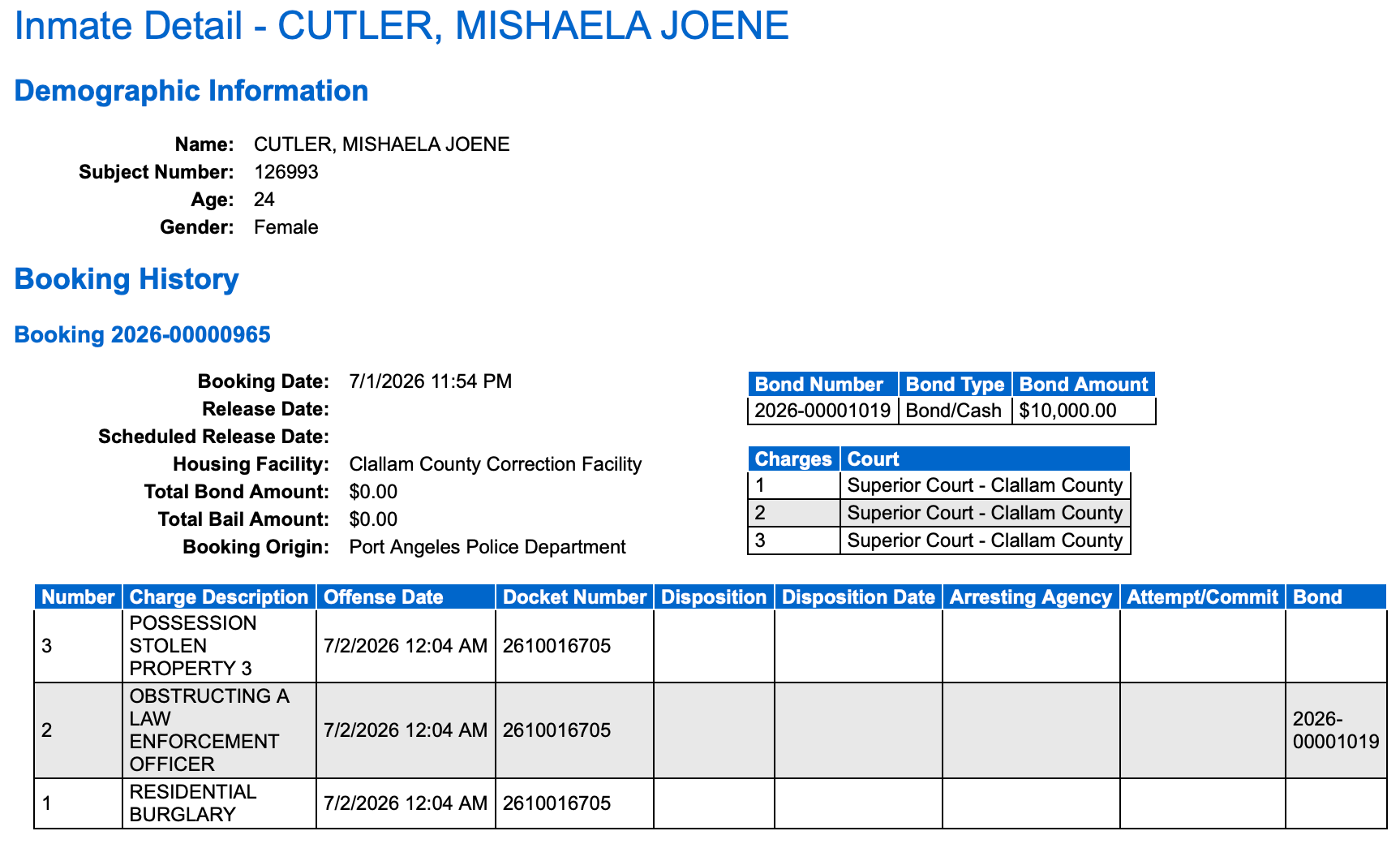
But this isn’t her first encounter with the criminal justice system.
In 2020, at age 18, Cutler made headlines across Washington after prosecutors in Skamania County charged her with attempted murder, first-degree arson, burglary, and possession of stolen firearms. According to investigators, home security footage appeared to show Cutler pouring an accelerant around vehicles inside a carport and leading it to the door of an occupied residence before setting the fire. Investigators also alleged the home’s smoke detectors had been disabled. She was arrested and held on $500,000 bail.
Now, six years later, Cutler is in Clallam County facing a new set of criminal charges.
Every time someone with a lengthy criminal history enters our local justice system, Clallam County taxpayers pick up the tab—housing, meals, medical care while incarcerated, and, if indigent, legal defense.
County leaders often speak about compassion and expanding services to those in need. But residents are left to ask another question: What message are we sending to repeat offenders when communities known for generous public services and limited accountability become places they repeatedly end up?
Whether by design or by reputation, Clallam County increasingly appears to be attracting people with significant criminal histories—leaving local taxpayers to bear the financial and public safety costs.
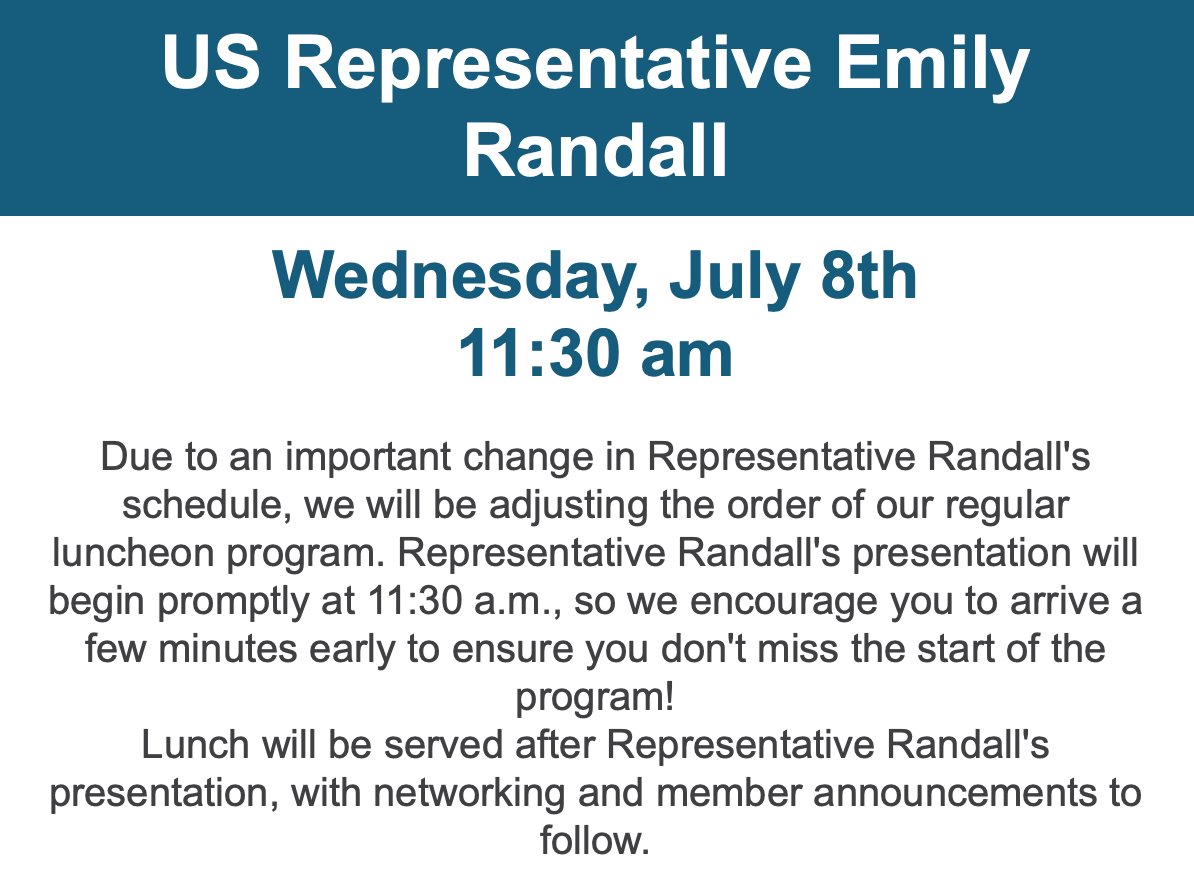
Correction: Emily Randall’s Signs Are in Compliance
Yesterday, I published an article titled “Hypocrisy on Parade” in which I stated that Congresswoman Emily Randall’s campaign signs were not in compliance with Washington State campaign sign requirements.
I’m thankful for an engaged CC Watchdog readership who pointed out that I was wrong.
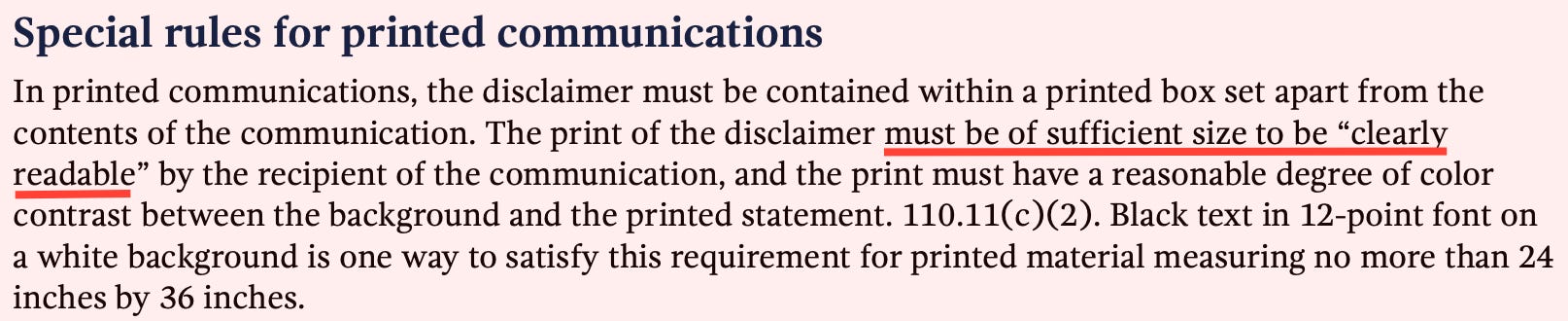
Because Emily Randall is a candidate for federal office, her yard signs are governed by the Federal Election Commission (FEC) rather than Washington’s Public Disclosure Commission (PDC). Under the applicable federal rules, her signs are in compliance. I apologize to Congresswoman Randall and her campaign for incorrectly stating otherwise.
If anything, this experience reinforced what I believe the article should have been about in the first place.
Rather than criticizing Emily Randall’s campaign, it should have highlighted just how confusing and inconsistent campaign regulations have become.
A candidate running for Congress follows one set of disclaimer requirements. A candidate running for county office follows another. Tribal elections appear to follow yet another set of rules, with different—or in some cases no—requirements regarding sponsorship identification, party designation, addresses, or font sizes.


It is entirely possible to stand along a parade route in Clallam County and see three campaign signs side by side, each subject to a different legal standard simply because of the office being sought. That strikes me as unnecessarily complicated and difficult for ordinary citizens to navigate.
Where I continue to believe hypocrisy exists is not in Emily Randall’s compliance with federal law, but in how campaign laws are enforced and discussed locally.
Leadership in the Clallam County Democratic Party supports a Public Disclosure Commission complaint seeking tens of thousands of dollars in penalties against Jake Seegers over campaign disclosure issues. At the same time, when local Democratic trustee Tim Wheeler was filmed causing thousands of dollars in damage to public land during an act of environmental activism, the party had nothing to say publicly about it.
Reasonable people can disagree on those situations, but they help explain why I titled the original article “Hypocrisy on Parade.”
That said, facts matter. I got one wrong, and when that happens, the right thing to do is correct it.
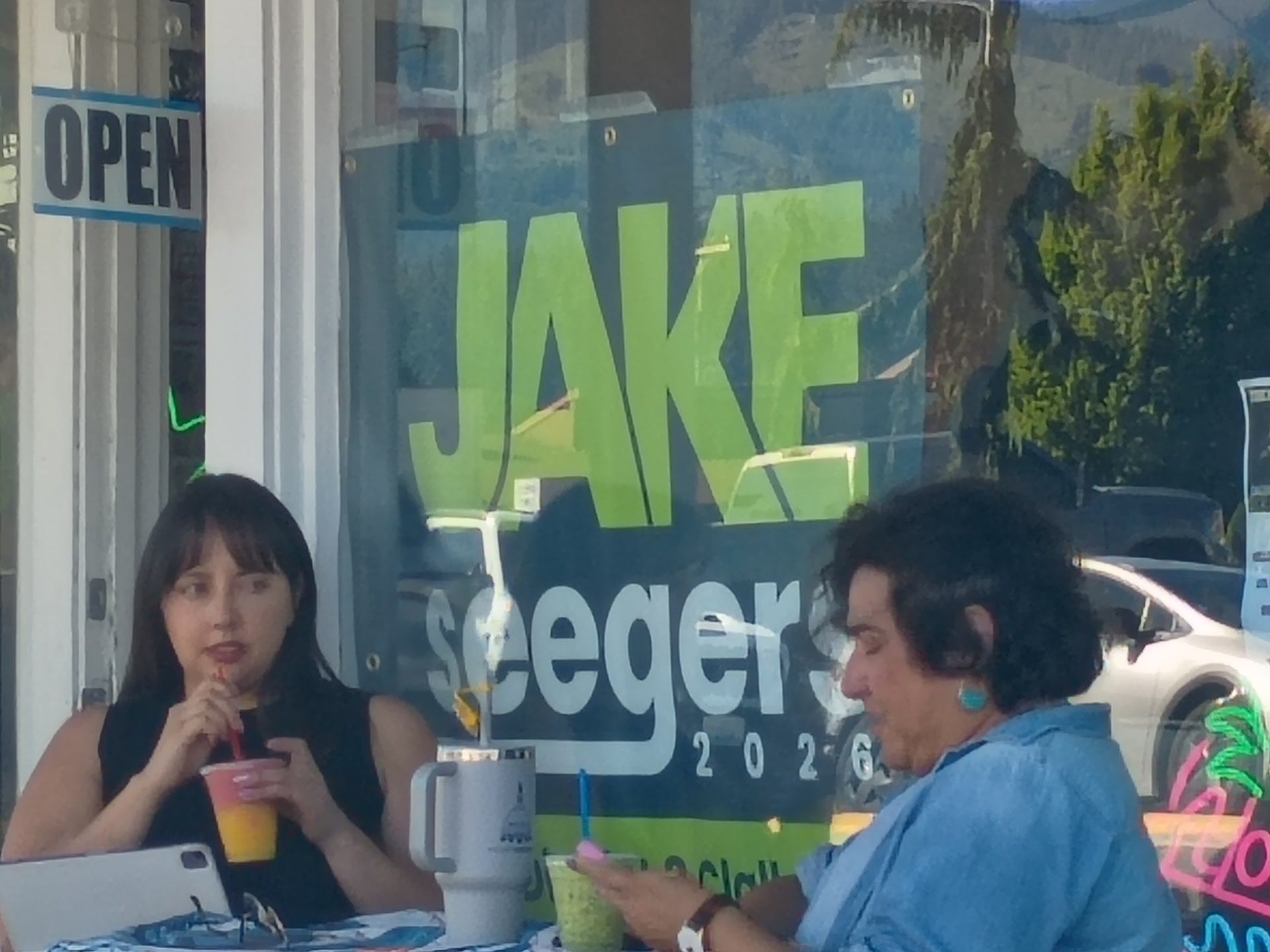
Emily, I owe you a smoothie.
Tomorrow: Slight Change in Randall’s Schedule