

Clallam County says it is selling surplus land to reduce costs and restore parcels to the tax rolls. But several properties slated for sale sit inside a developing commercial node that has already attracted the Jamestown Corporation’s expansion — raising an uncomfortable question: are taxpayers being asked to believe land will generate long-term public benefit, when past practice suggests it could soon come off the rolls again?
The County’s Case for Selling
The Peninsula Daily News recently reported that Clallam County plans to surplus and sell 13 county-owned properties of varying size and zoning.
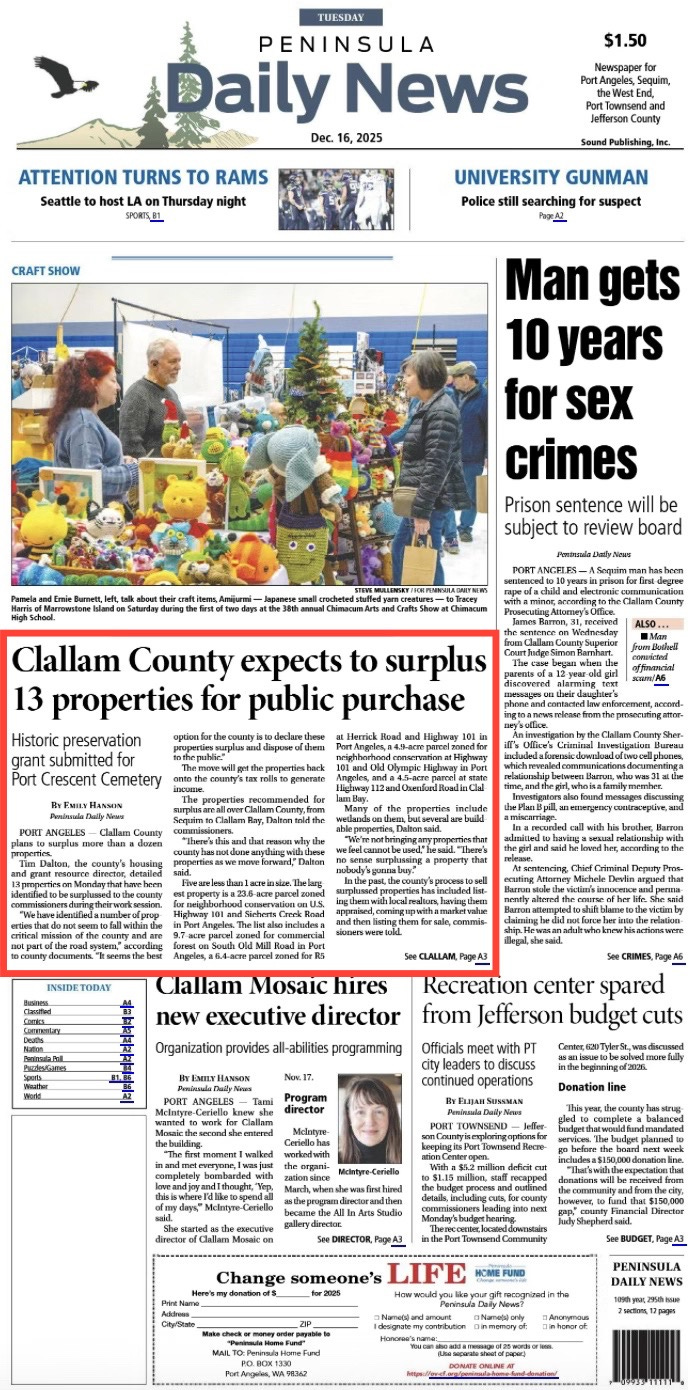
The stated rationale is straightforward: offload land the county no longer needs, reduce maintenance costs, and return parcels to private ownership where they can generate property tax revenue.
A Cluster Worth Noticing
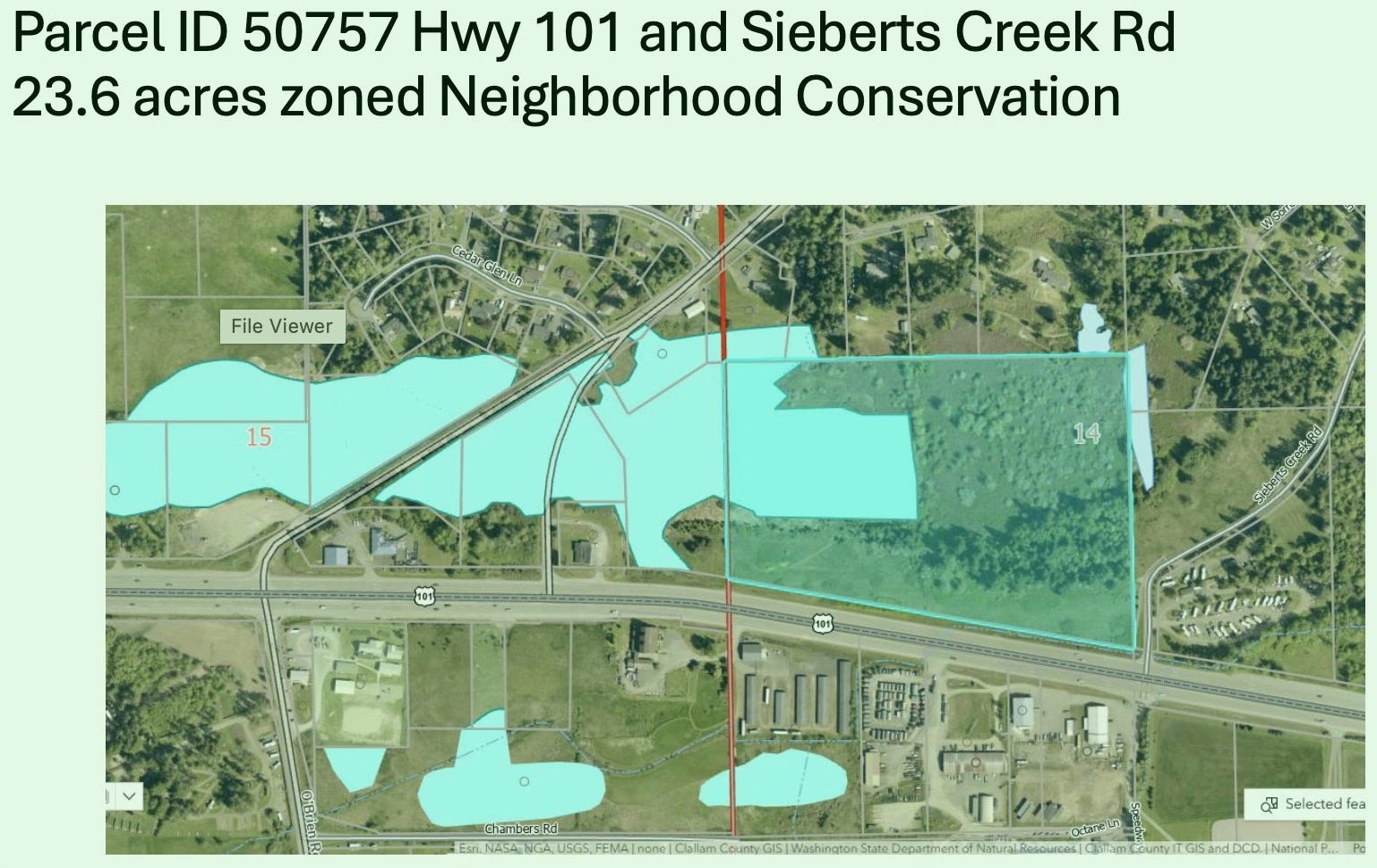
Between Sequim and Port Angeles — where Old Olympic Highway meets Highway 101 — two county parcels totaling approximately 28.5 acres are next to each other.
23.6 acres zoned Neighborhood Conservation at U.S. Highway 101 and Sieberts Creek Road in Port Angeles
4.9 acres zoned Neighborhood Conservation at Highway 101 and Old Olympic Highway, also in Port Angeles
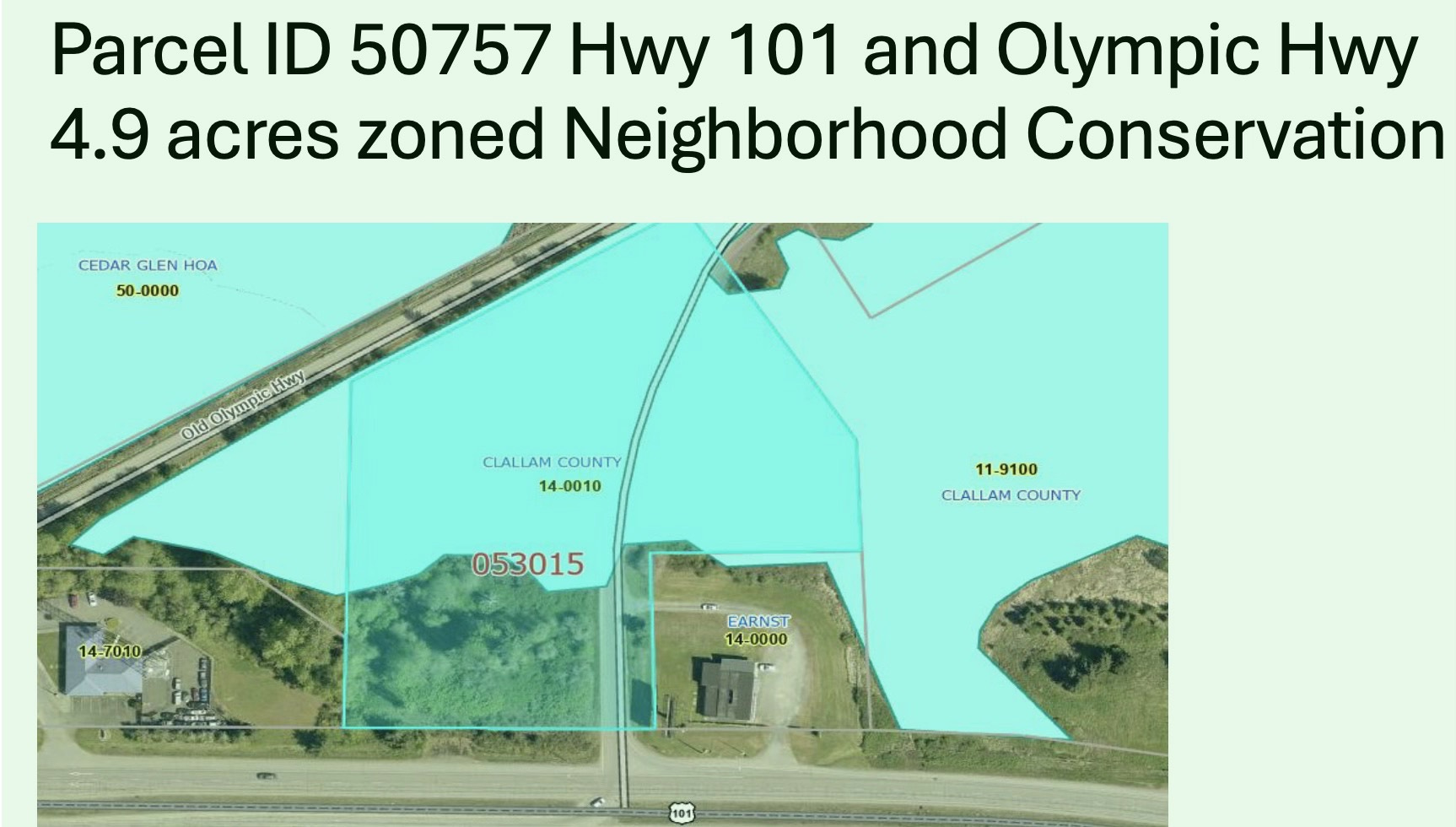
County officials have noted that these surplus properties include wetlands and may be difficult or impossible to develop under standard county and state permitting rules.
Ordinarily, that would limit their market value and development potential.
Ordinarily.
When Wetlands Matter — and When They Don’t
For a Washington State corporation or private developer, wetlands are a hard stop or an expensive obstacle. County, state, and federal permits sharply restrict grading and fill.
A sovereign tribal entity, however, operates under a different framework.
Under a Tribal Environmental Protection Act (TEPA) — a tribal law adopted by a tribe to regulate environmental activity on its lands — a tribe may issue its own environmental permits on tribal trust land. While TEPA does not override federal law, it allows a tribe to regulate grading, filling, and development under tribal authority in ways that non-tribal entities cannot.
This is not theoretical.
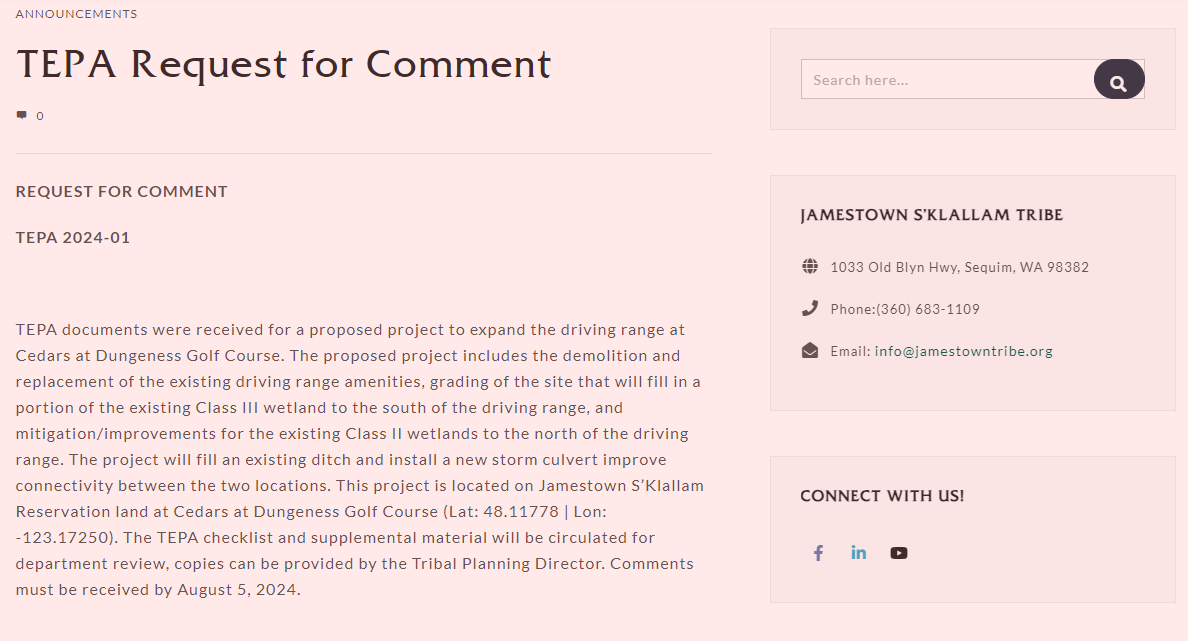
The Jamestown Corporation has already expanded its golf course and driving range by issuing its own TEPA permits, including work in wetland areas that would not have been approvable for a non-tribal developer.
Which raises a practical question:
Land that is “unbuildable” today may become developable tomorrow — depending on who buys it.
A Commercial Node, Quietly Taking Shape
This matters because the surplus parcels sit near an area the county itself has identified as a rural commercial node.
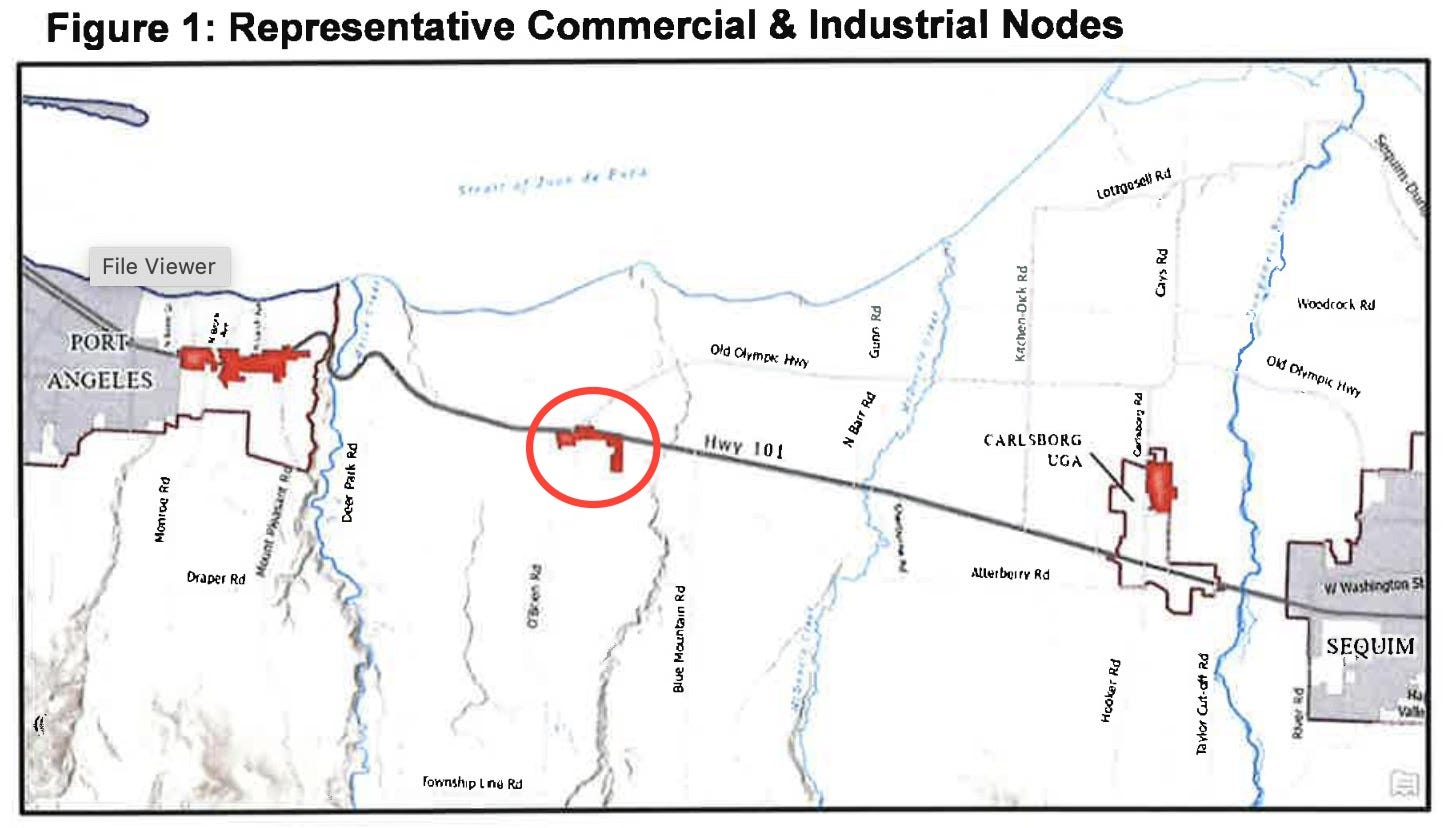
In June, Community Development Director Bruce Emery presented a Land Capacity Analysis to the Board of County Commissioners focusing on this exact area — the Highway 101 / O’Brien Road / Old Olympic Highway junction.
From that presentation:
“The commercial node at Highway 101 and O’Brien Rd/Old Olympic Highway covers approximately 98.5 acres, consisting of Rural Limited Commercial (RLC) and Rural Neighborhood Commercial (RNC)zoning. The density of business and character of development make this area a good proxy for rural commercial zoning districts throughout unincorporated Clallam County.”
The county is using this node as a model — a benchmark — for future rural commercial growth.
And that node is already being built out.
Following the Pattern
In recent years, the Jamestown Corporation has:
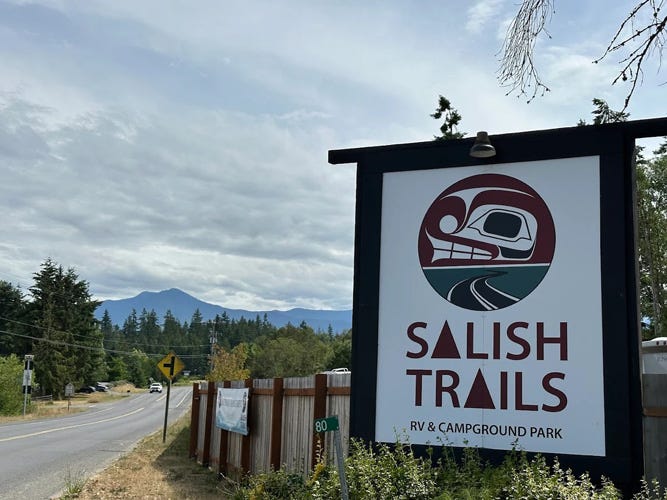
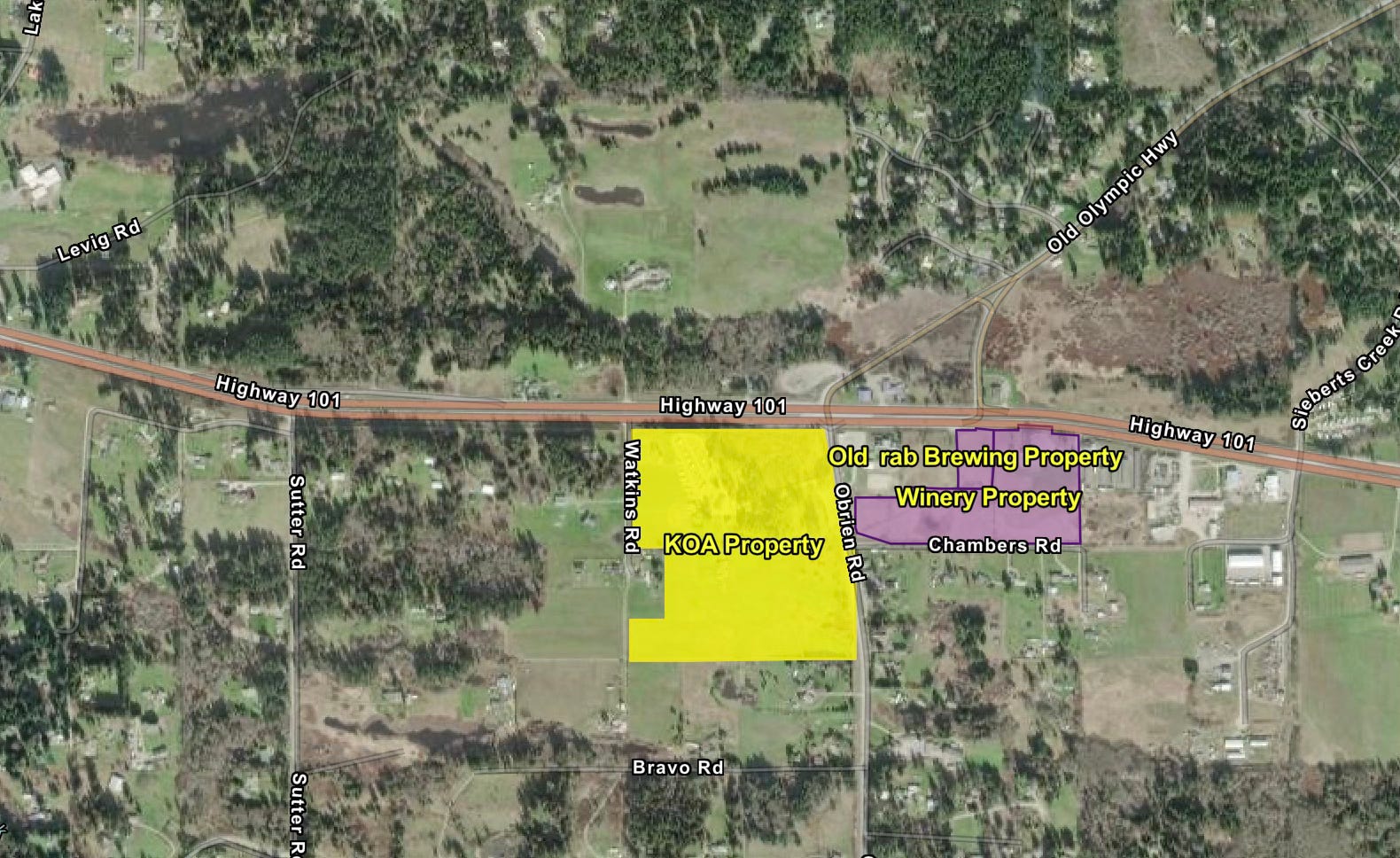
Purchased the former KOA campground west of O’Brien Road, now operating as Salish Trails
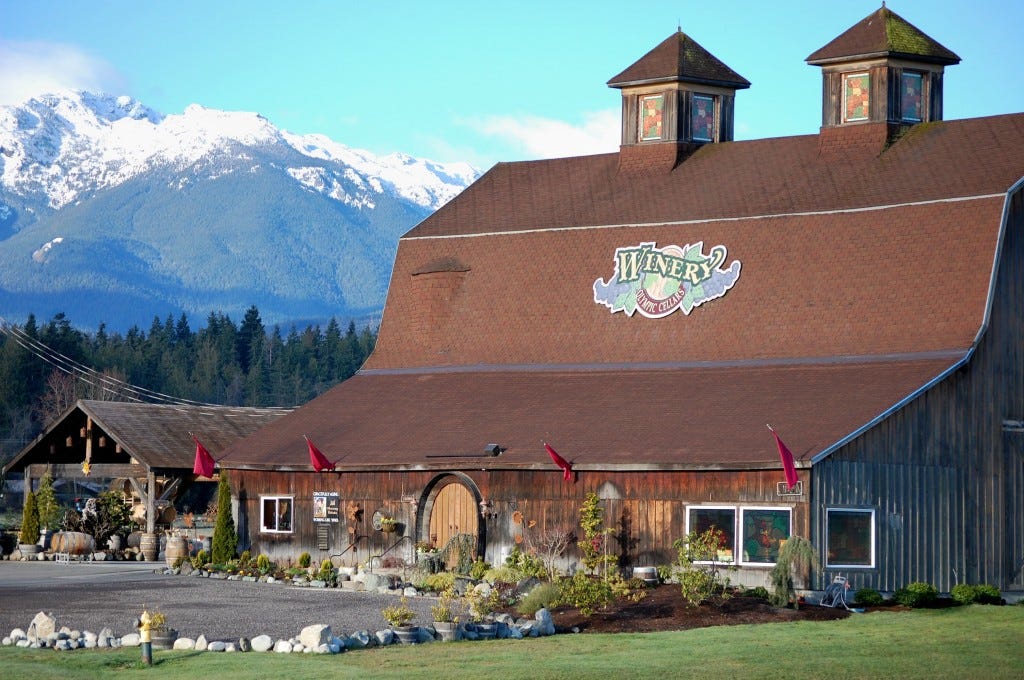
Acquired the winery and adjoining land east of O’Brien Road, which connects to Salish Trails
Been the subject of persistent reports about a future gas station at O’Brien Road and Highway 101
Benefited from WSDOT plans for a new roundabout at that same intersection — infrastructure that would funnel traffic directly into adjacent commercial uses
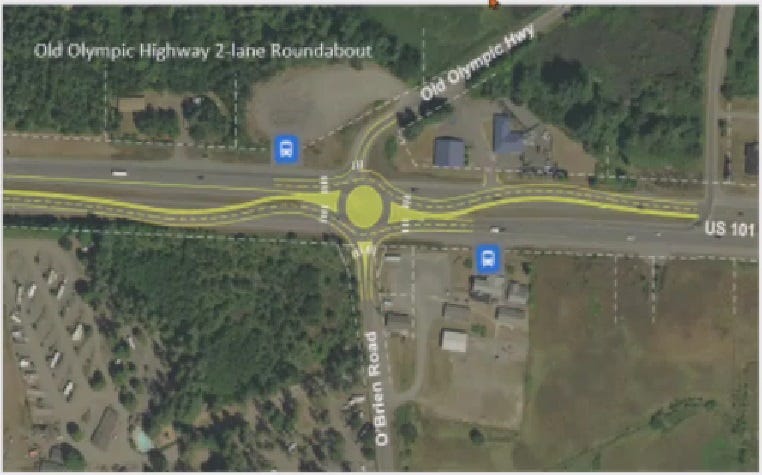
All of that activity lies south of Highway 101.
The county’s surplus parcels lie to the north — constrained by wetlands for ordinary buyers, but not necessarily for a tribal corporation operating under TEPA on trust land.
Words That Matter
In August, Commissioner Mark Ozias said this during an interview on KONP radio:
“Ideally, we can work toward a mutually acceptable agreement or understanding on how to consider the impacts of these trust conversions — what they mean for the Tribe, for their governance, and for fulfillment of creation of a land base for that Tribe, and what it means for Clallam County.”
That statement was candid — and revealing.
County commissioners are elected to represent Clallam County residents, yet here we have an explicit acknowledgment that the county is actively working toward the expansion of a sovereign nation’s land base.
At the same time, those same commissioners are voting to sell county land — including land inside a targeted commercial node — to the highest bidder, without addressing what happens if that land is later converted to trust status and removed from the tax rolls.
A request letter from the Board of County Commissioners to the Jamestown Corporation—seeking a discussion about paying property and lodging taxes comparable to other businesses in Clallam County—has gone unanswered since August. Despite the lack of response, the commissioners have declined to send a follow-up letter.
The Transparency Gap
Clallam County’s history of negotiations with the Jamestown Corporation has often been opaque, with key terms disclosed after the fact and public impacts downplayed until they are irreversible.
So it is reasonable — not inflammatory — to ask:
Are these parcels truly being sold to generate long-term tax revenue?
Or are taxpayers being asked to accept a short-term benefit that may vanish once land enters tribal trust?
Has the county analyzed or disclosed the likelihood of that outcome?
A Constructive Path Forward
There is a way to proceed without halting land sales or undermining tribal sovereignty.
Before selling surplus land, the county should be transparent about whether those parcels sit inside areas being eyed for commercial node development and whether trust conversion is a realistic possibility. County staff should also lay out clear best- and worst-case tax scenarios for both commissioners and the public, including what happens if land eventually comes off the tax rolls. If the Board believes expanding a tribal land base is a policy goal, that should be discussed openly and on the record — not folded quietly into routine land sales.
Ultimately, county decisions should be guided by transparency and a duty to protect the long-term financial interests of Clallam County residents, not by hopeful assumptions that history doesn’t back up.
Selling surplus land may make sense.
Doing so without acknowledging who can develop it, how, and for whose benefit does not.
And Clallam County residents deserve better than assurances that dissolve once the paperwork is filed.


