


This week’s developments reveal a troubling pattern in Clallam County governance: voter authority quietly sidelined while public accountability is replaced by commissions, NGOs, and “stakeholders” who never appear on a ballot. From Olympia legislation that would let unelected boards remove elected sheriffs, to courthouse renaming efforts that ignore the wishes of the very person being honored, to harm-reduction policy, dark-sky hypocrisy, public-safety failures, and a tax-everything mentality in a state where businesses are already planning their exits—one theme keeps repeating. Power is drifting away from the people, and the commissioners seem increasingly comfortable with that.
When Olympia Overrides the Ballot Box
Clallam County Sheriff Brian King issued a rare public warning this week about legislation that strikes at the heart of local democracy.
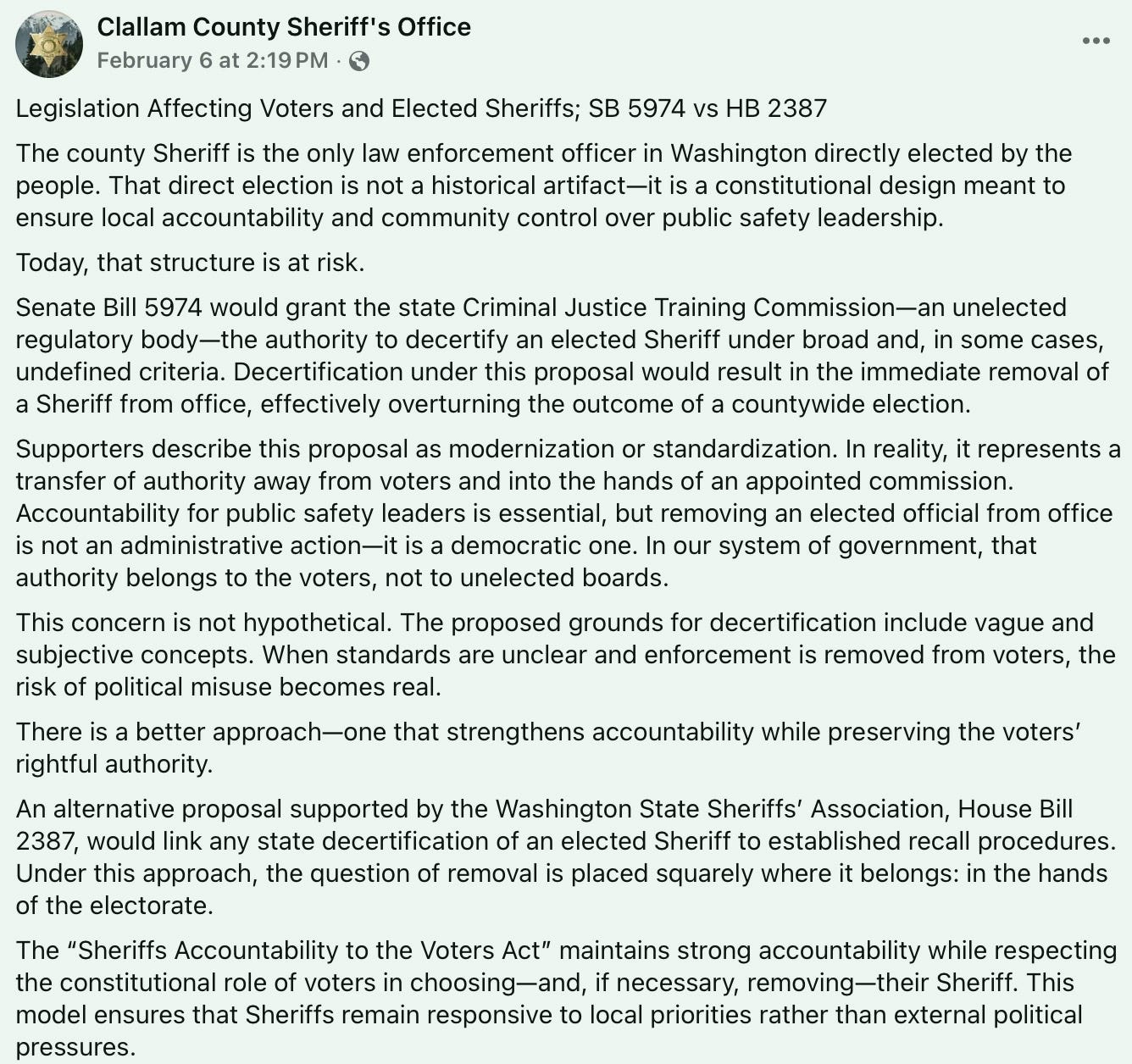
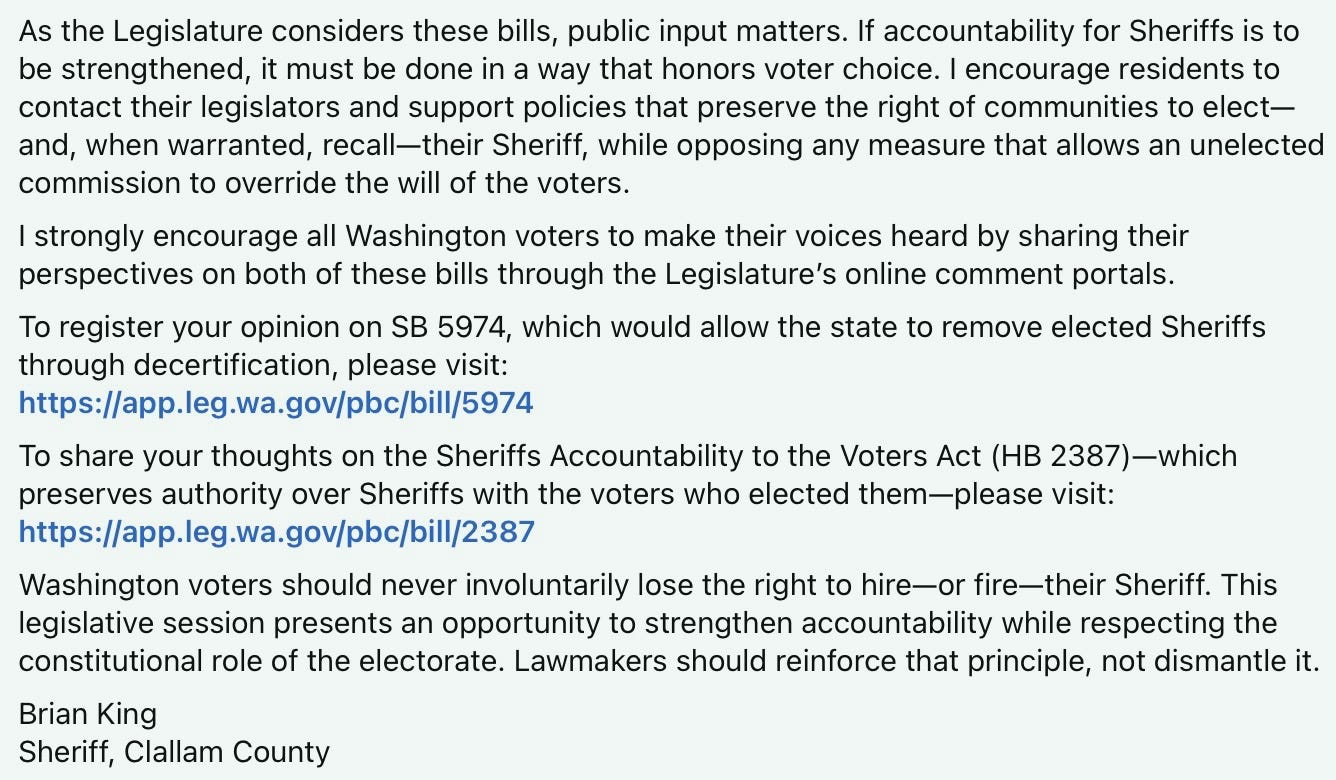
Washington’s elected sheriffs are the only law-enforcement officials directly accountable to voters. Senate Bill 5974 would change that by allowing the state Criminal Justice Training Commission—an unelected body—to decertify an elected sheriff using vague, subjective standards. Decertification would mean immediate removal from office, nullifying a countywide election.
Sheriff King rightly called this what it is: not “modernization,” but a transfer of power away from voters.
There is a better bill—HB 2387, backed by the Washington State Sheriffs’ Association—that ties any decertification to the existing recall process, keeping the ultimate decision with voters where it belongs.
And yet…
On Monday, Commissioner Mike French—who sits on the legislative steering committee of the Olympia-based lobbying organization Washington State Association of Counties (WSAC), which has been tracking this legislation—offered his perspective on the proposed new eligibility requirements for elected sheriffs.
“From my perspective, I can see how those seem reasonable,” French said.
Reasonable to whom? Certainly not to voters who suddenly find their choices subject to bureaucratic veto.
If it’s “reasonable” to impose state-mandated qualifications on sheriffs, why stop there?
Why not require county commissioners to have degrees in economics or business?
Commissioner French holds a Bachelor of Arts in music.
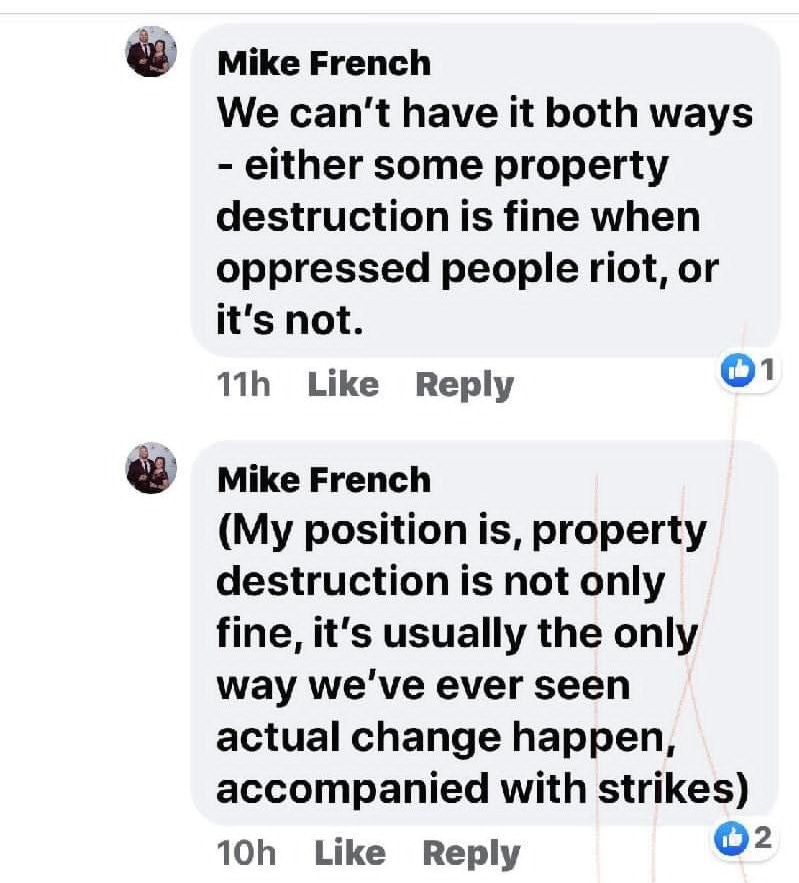
Or require that commissioners not publicly endorse property destruction—something French once did on social media when he wrote that “property destruction is not only fine, it’s usually the only way we’ve ever seen actual change happen.”
The moment voters lose the exclusive right to hire and fire their elected officials, every office becomes vulnerable to ideological gatekeeping. That may feel convenient today. It rarely ends well.
Courthouse Renaming: Ignoring Susan Owens’ Own Wishes
A public-records request by Sequim resident Denise Lapio revealed something remarkable.
Four days before Commissioner French invited hand-picked “stakeholders” into a courthouse-renaming work session, the District Court administrator in Forks sent a blunt email stating—clearly and unequivocally—that Justice Susan Owens would not have wanted the Clallam County Courthouse renamed after her.
“She never ran court in Port Angeles. She was deeply involved with the community on the West End and considered this her home.”
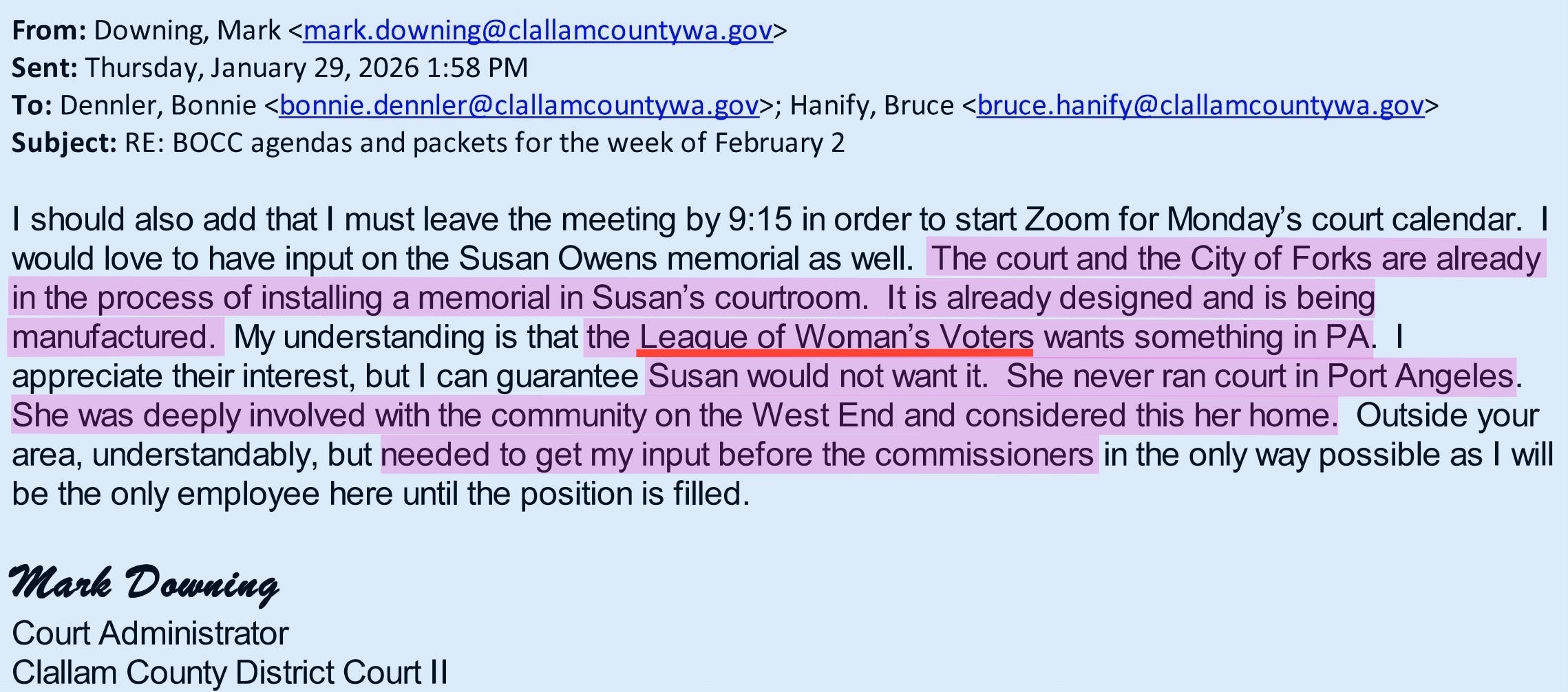
That email was never mentioned in the work session. Instead, commissioners spoke enthusiastically about renaming the courthouse anyway.
Lapio proposed a thoughtful alternative: name the law library—soon relocating to the Port Angeles library—after Justice Owens, preserving the courthouse as a symbol belonging to everyone.
Harm Reduction, Expanded—Quietly
Next week, commissioners will vote on extending an agreement with Salish Behavioral Health Administrative Services Organization, the regional entity responsible for administering state behavioral-health funds.
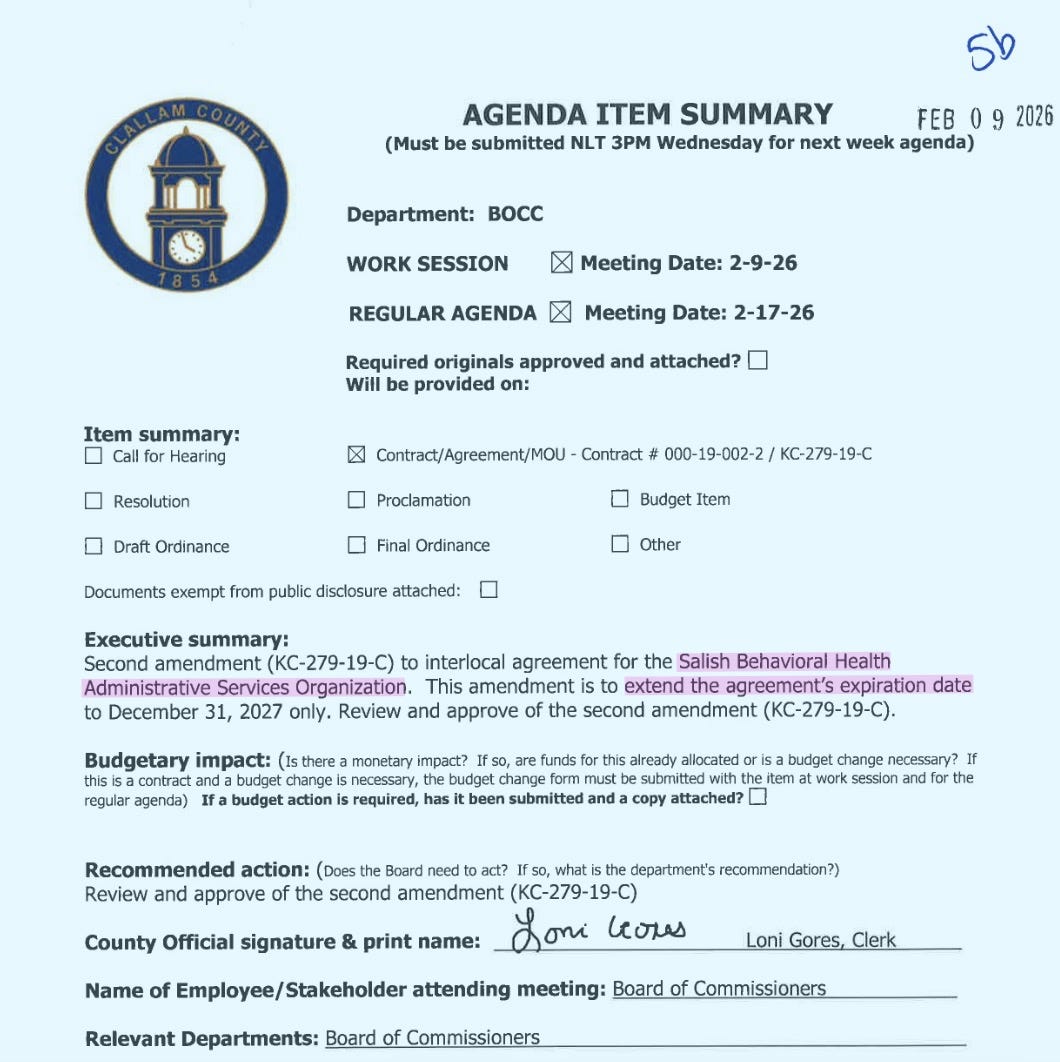
While not a direct service provider, Salish BH-ASO has explicitly concluded that additional investment in harm-reduction strategies is needed.
Who sits on its executive board? Commissioner Mark Ozias.
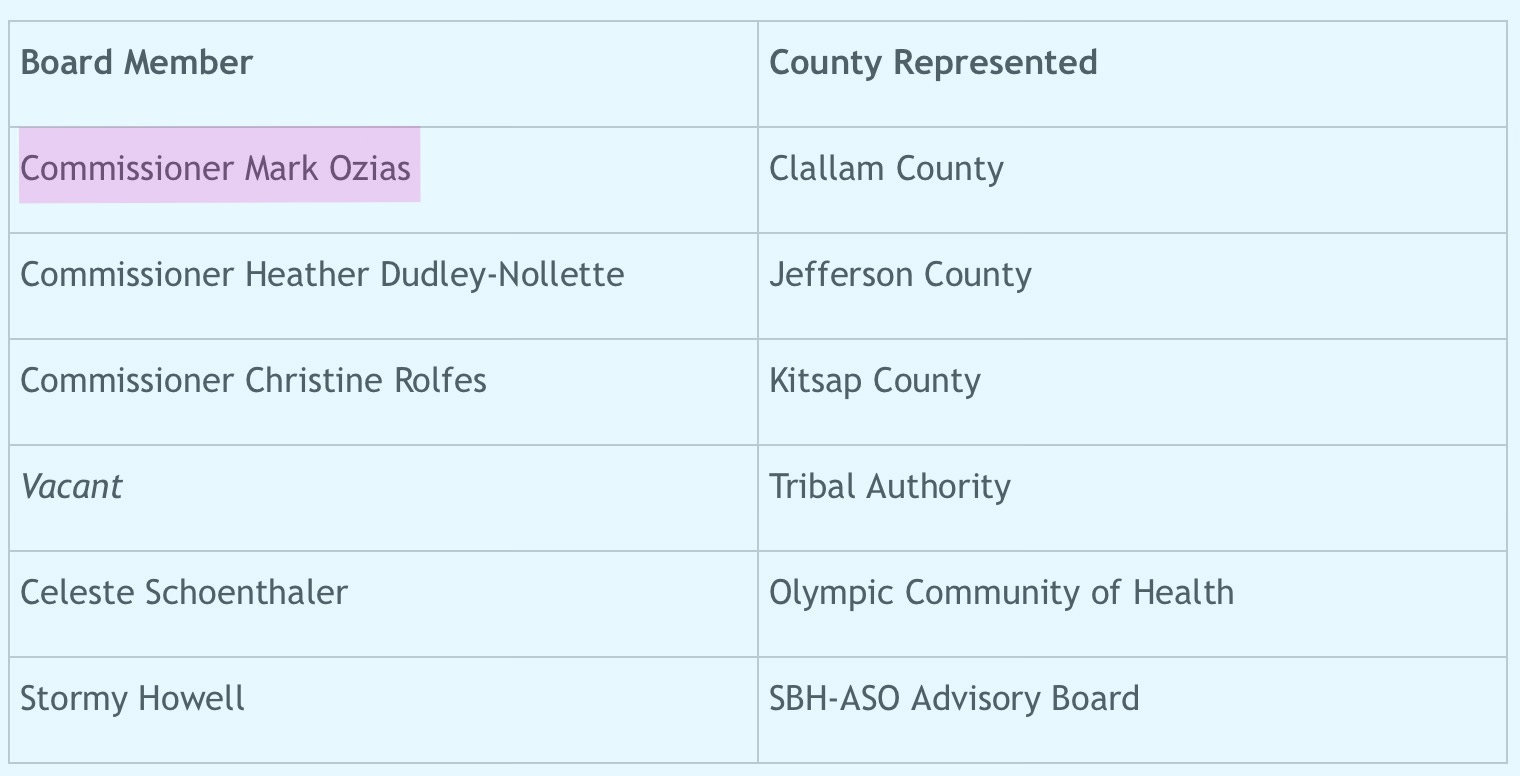
This matters because, while harm-reduction policy continues to expand administratively, voters are never asked whether this is the direction they want—or where the line should be drawn.
Dark Sky Proclamations vs. Sol Duc Reality
None of the commissioners attended the first Conditional Use Permit hearing for the controversial Luminary Resorts project.
That absence is striking, given that the Sol Duc Valley is known for its exceptionally dark, rural night skies—no streetlights, no freeway glow, no artificial illumination dominating the landscape. Residents raised concerns about proposed light posts and inconsistencies between public statements and the CUP language.
Each year, the commissioners issue a proclamation recognizing International Dark Sky Week, warning about the harms of artificial light.
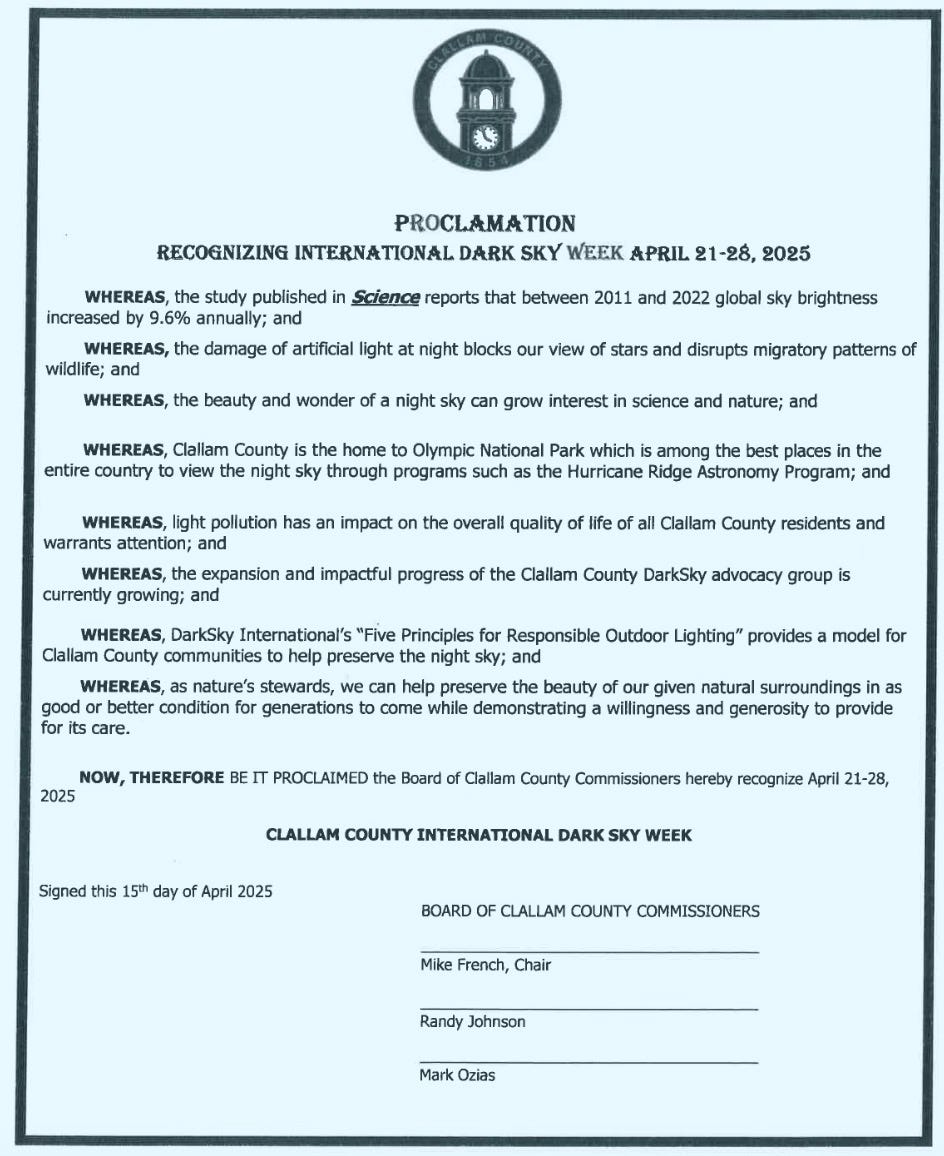
So which is it? A meaningful commitment to preserving rural character—or a ceremonial proclamation with no follow-through?
Public comments to the hearing examiner are open until February 25 and can be sent to Enrique.Valenzuela@clallamcountywa.gov
The Volunteers Who Never Had a Chance
The Port Angeles Chamber of Commerce has announced its “Organization of the Year.” It wasn’t Clallam County 4-H—the kids and volunteers who spend countless hours learning responsibility, caring for animals, and showing up year after year. They lost. It wasn’t the Peninsula Trails Coalition, either—about 150 volunteers maintaining the Olympic Discovery Trail and quietly generating real tourism dollars for our local economy. They lost too.
The award went to the Lower Elwha Klallam Tribe—a sovereign nation.

Since when does a sovereign government qualify as an “organization of the year”? If that’s the standard now, maybe next year’s winner will be Argentina. Or Belgium. Or the State of Washington.
At a minimum, the Chamber should explain the criteria—because this choice doesn’t just skip over local volunteer-driven civic organizations. It changes the meaning of the award.
A Sword, a Struggle, and a Swift Release
On January 9, deputies responded to a disturbance on Old Deer Park Road. A man armed with a sword destroyed property, resisted arrest for 17 minutes, injured three deputies, and caused significant damage.
He was booked on multiple felony charges.
He was released on January 23.
And this week—on Monday—he was booked again, this time for criminal trespass.
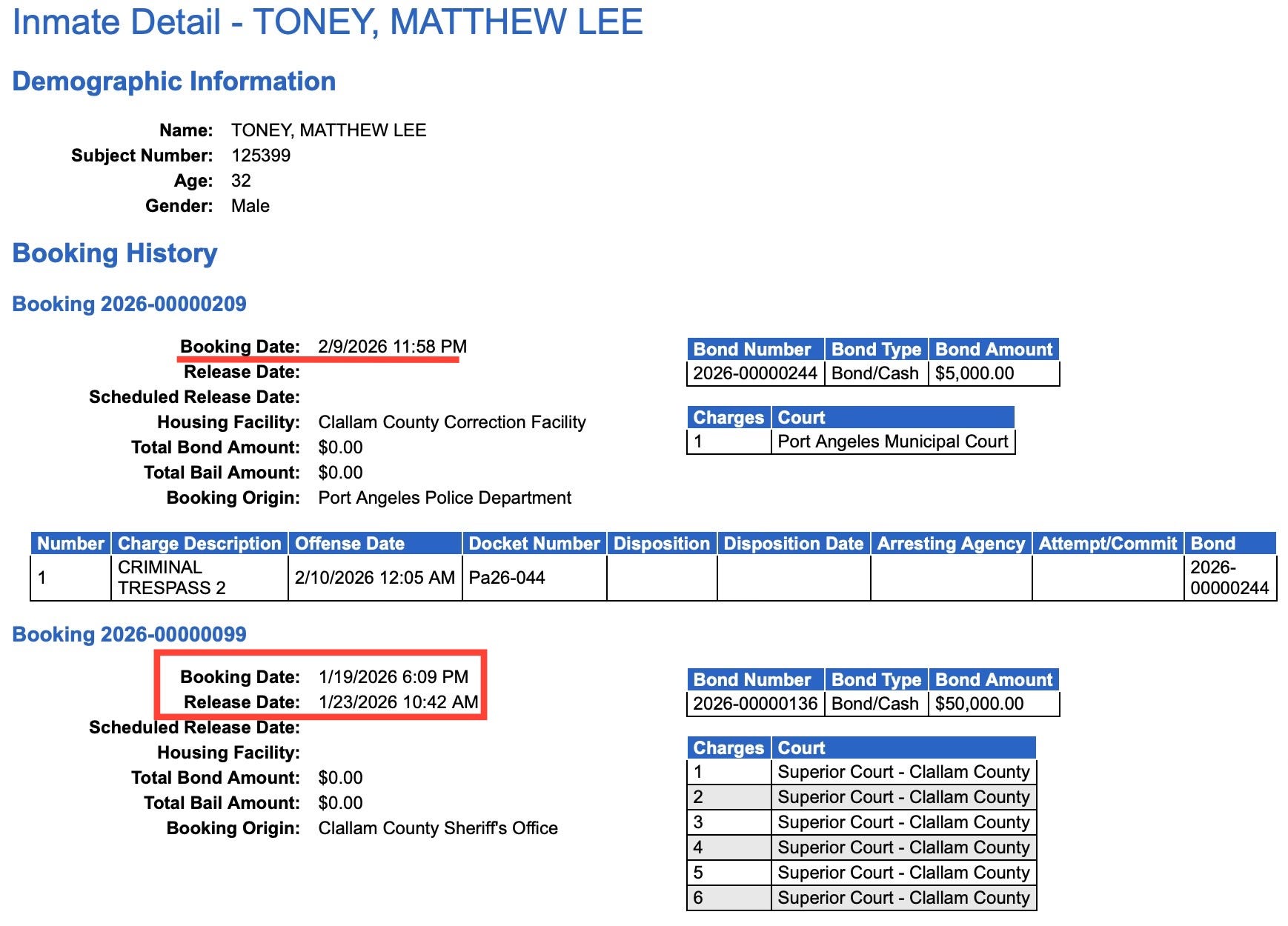
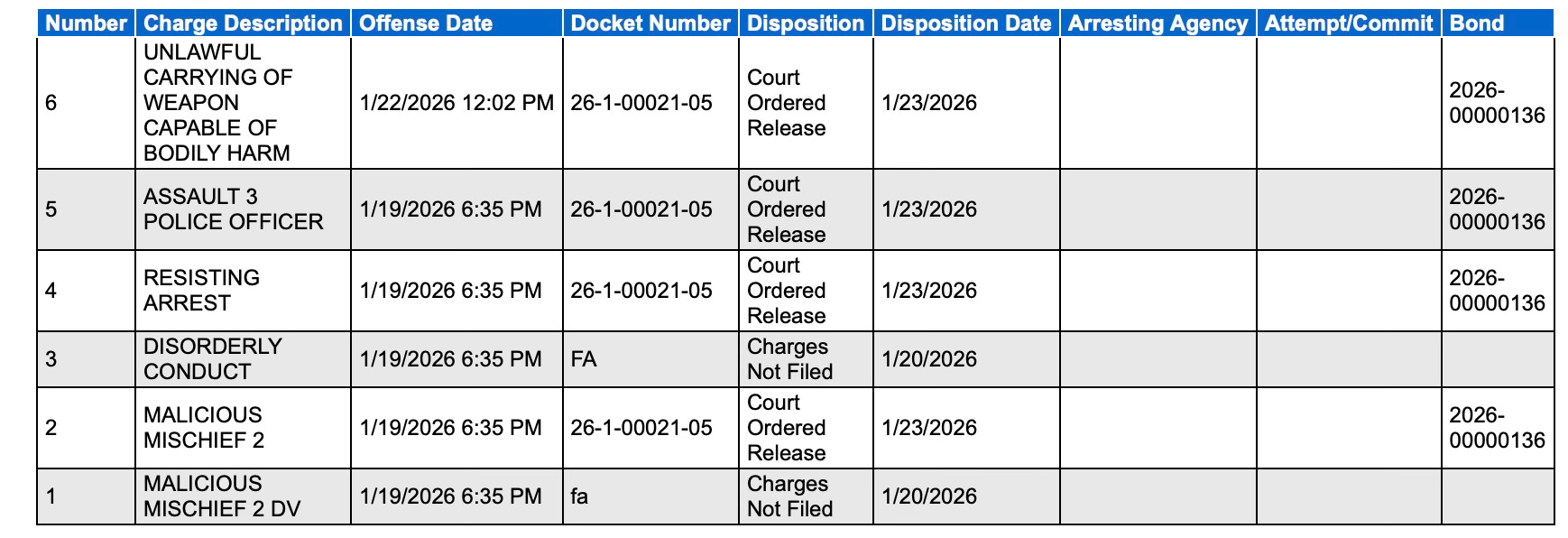
At what point does this stop being an isolated incident and start being a pattern? Every arrest, every transport, every medical evaluation, every booking, every court appearance—these are taxpayer-funded responses. When repeat offenders cycle in and out without meaningful intervention or consequence, it drains limited law enforcement, jail, court, and emergency resources that could be focused on protecting the broader community.
Who exactly is the justice system working for?
County leaders—including the sheriff, prosecutor, police chief, and commissioners—have been invited to attend a public safety town hall. Private citizens have even offered to rent the venue. So far, officials are dragging their feet.
Meanwhile, repeat offenders are back on the street—and deputies are back on the clock responding to the next call.
Inclusivity—With a Boycott Clause
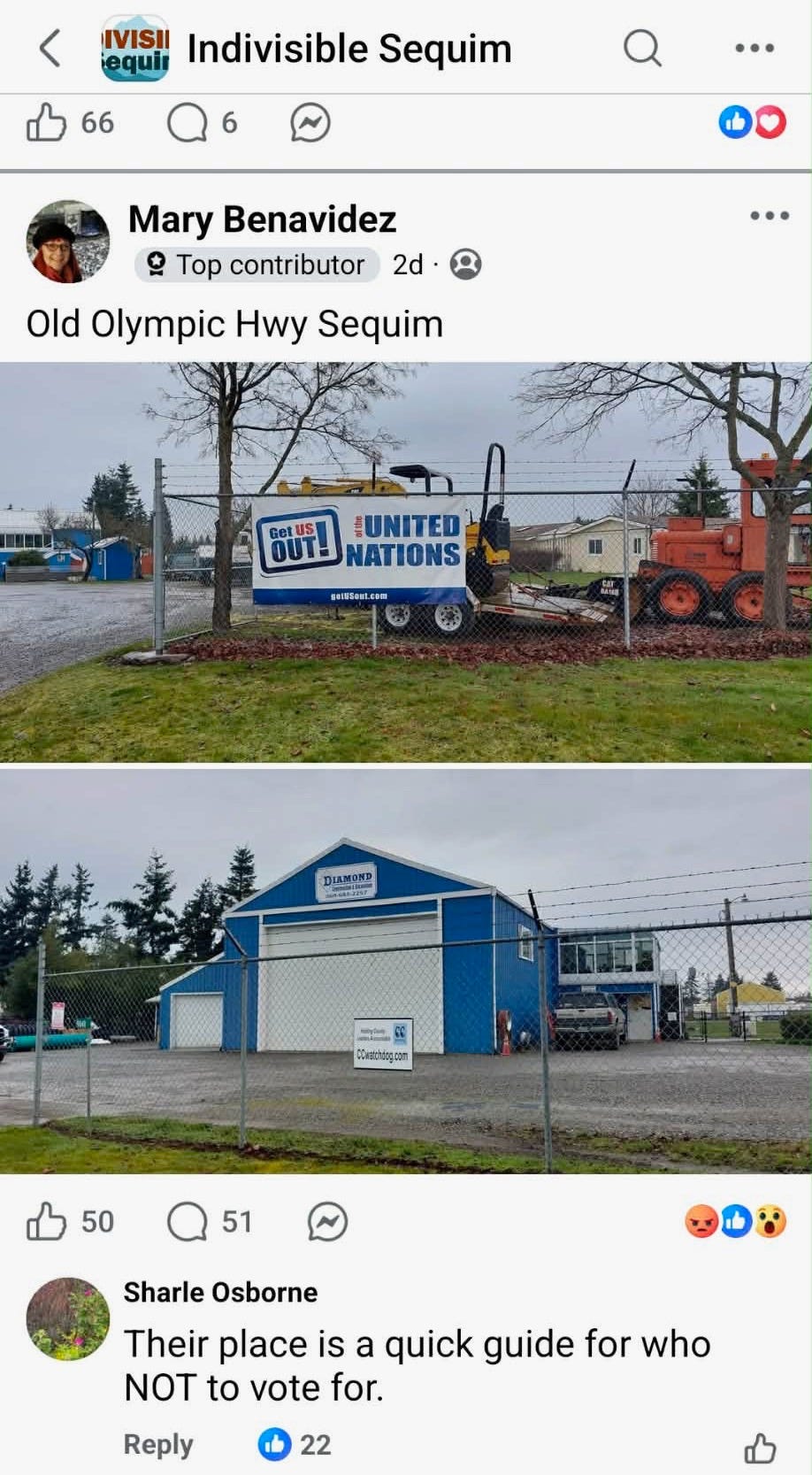
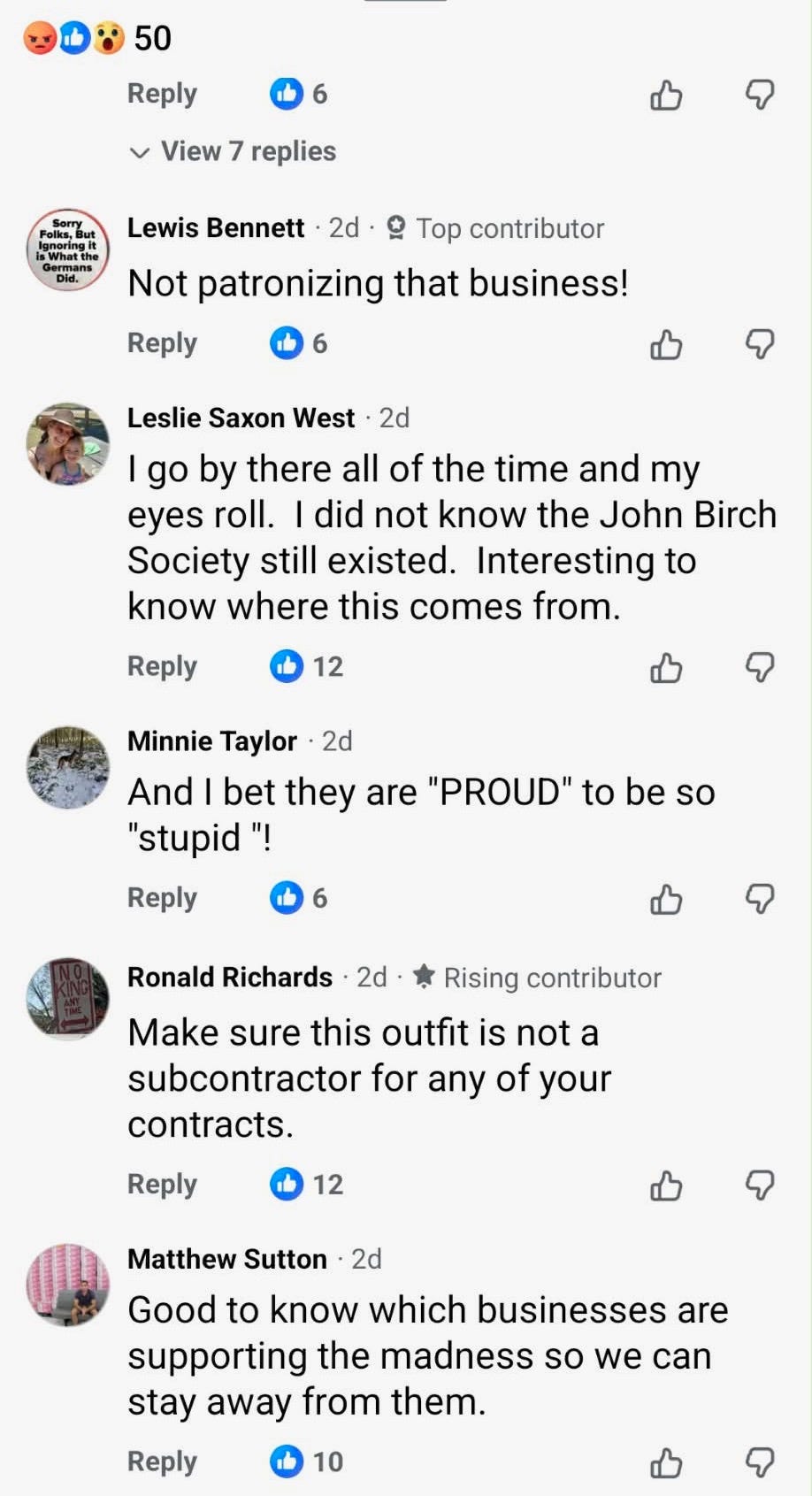
Backed by the “nonpartisan” League of Women Voters, Indivisible Sequim claims to value inclusivity and respect.
Yet when a small, family-owned local business displayed a CC Watchdog sign, Indivisible members openly called for a boycott.
Tolerance, apparently, is conditional.
‘Complex Issues’ and Simple Consequences
Commissioner French recently described the growing encampment at the county Health and Human Services building as a “complex issue” and questioned where the homeless population should go. That triggered a comment at the bottom of the article:
Where do they go, Mike? Rehab, shelter or jail. "They deserve" to be treated with the same behavioral expectations as everyone else. They deserve a chance to build a life worth living, not be held in street hospice perpetually to prop up the NGO industry. They deserve opiate settlement funds paying for rehab, not funding tools to keep them trapped. Consuming and dealing narcotics is illegal and currently the health department is hosting an illegal narcotic trafficking and consumption site. Where do you suppose they get money to feed their addiction? What happens to minors, women and other vulnerable persons inside the drug den tents you are illegally hosting, Mike?
French seems clueless of the health dept situation. There are already TWO fences at front of property. One is iron at the sidewalk south side property line. Are they going to tear that down and replace it? The chain link fence across the front of the buding was supposed to go around the property front but Berry fought against it because she wanted her dope addled fan club to have 24 hr access, thus the expensive useless chainlink fence across the front of the building that is used to attach tents and tarps. Nearby the cable building at 4th and Laurel had to fence off their entry after repeated vandalism to the granite exterior that is now covered with ugly paint. Safeway had to fence off utility equipment in their alley to keep Berry's pets from destroying it . Transients parade back and forth to use the Safeway bathroom and Safeway employees get to clean up after them. Businesses in the area suffer and nobody in government seems to care.
Seattle already ran this experiment. The results are well documented—and devastating. Especially for children.
Recompete: Posters, Platitudes, and Five More Years
Recompete was sold as a once-in-a-generation economic reboot. Its social-media update reads like a press release written by a consultant.
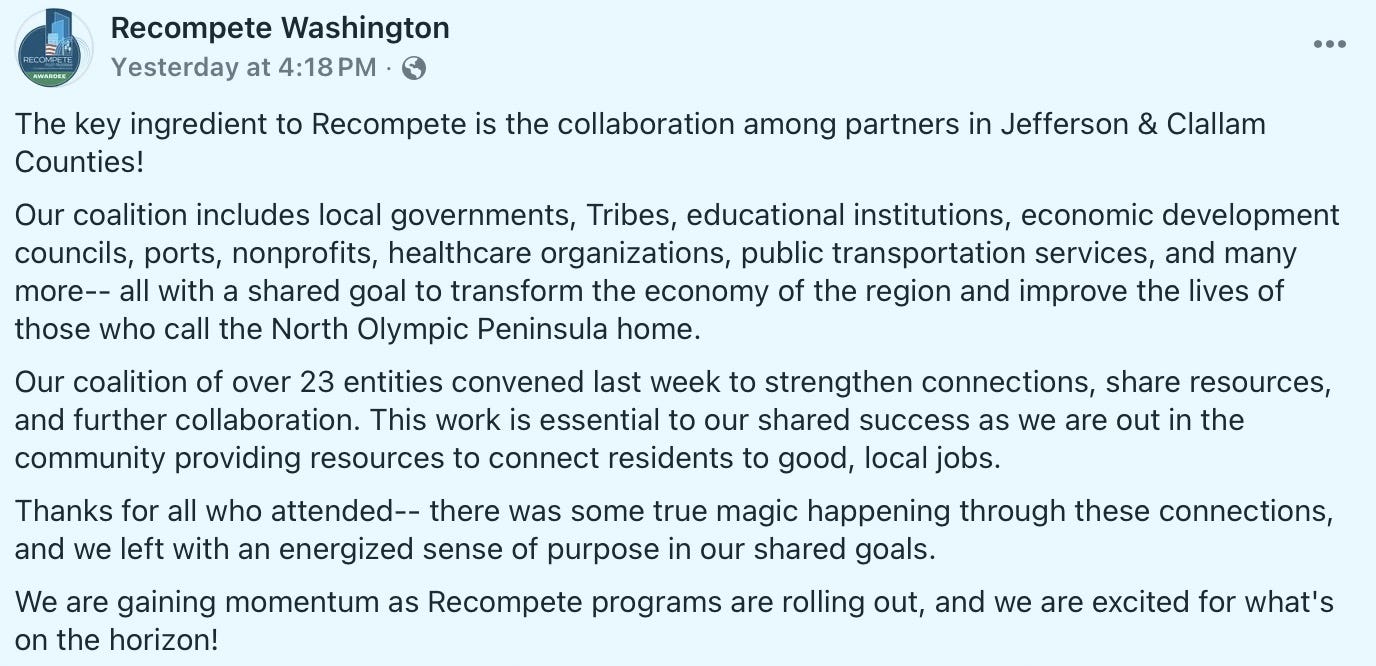


More meetings. More posters. More NGO partners—like the YMCA—tasked with “building relationships” with clients who may “not want to reenter the workforce” or are reluctant to “shift from being underemployed.”
The seminar was held at the Jamestown Tribe’s campus in Blyn.
What Recompete increasingly looks like is five years of task forces and strategy sessions while federal dollars circulate among nonprofits.
Tax, Spend, Repeat—While Businesses Plan Their Exit
A new Association of Washington Business survey paints a grim picture: businesses leaving, prices rising, recession fears growing.
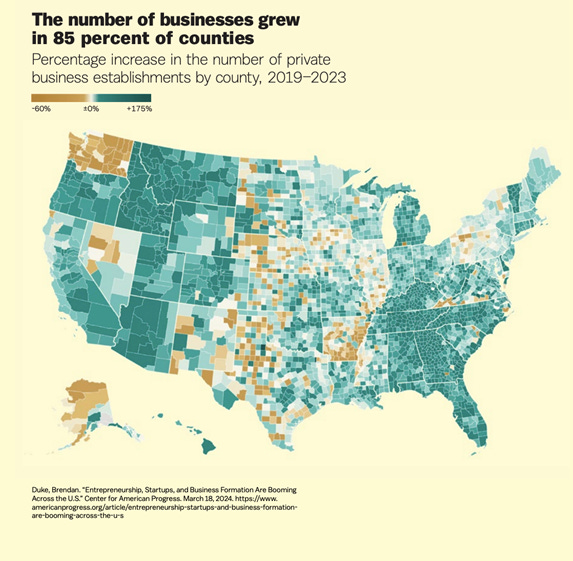
And locally? Commissioners French and Ozias haven’t ruled out a cultural access tax. All three commissioners are discussing a criminal-justice tax. They just voted to hike property taxes. Conservation District fees were added. An Olympia-based lobbyist organization, WSAC, is working with the commissioners to raise taxes on short-term rentals.
One group remains untouched: tribal corporations—who also happen to be major campaign donors.
At some point, the pattern stops looking accidental.


