

On the morning of February 24, Clallam County Health Officer Dr. Allison Berry sent CC Watchdog a message accusing the publication of spreading misinformation about the county’s harm-reduction policies. Less than two hours later, a series of public commenters appeared at the county commissioners meeting praising Berry and urging stronger support for harm-reduction programs. Several of those speakers share connections through the same activist and nonprofit circles in Port Angeles — including SisterLand Farms, Pine & Eight Grocery, Food Not Bombs, and programs linked to Washington State University Extension, the Clallam Conservation District, and the North Olympic Land Trust. The timing raises a question residents are beginning to ask: when criticism surfaces, does a familiar network mobilize to defend the policy?
A Message Without a Conversation
At times, the Clallam County commissioners can appear slow to act. Meetings run long. Decisions take months. Reports can take years.
But when it comes to defending the county’s harm-reduction policies, the response can appear remarkably organized.
Recently, the county’s Health and Human Services department launched a social-media campaign reminding residents that “people who use drugs are just people.”
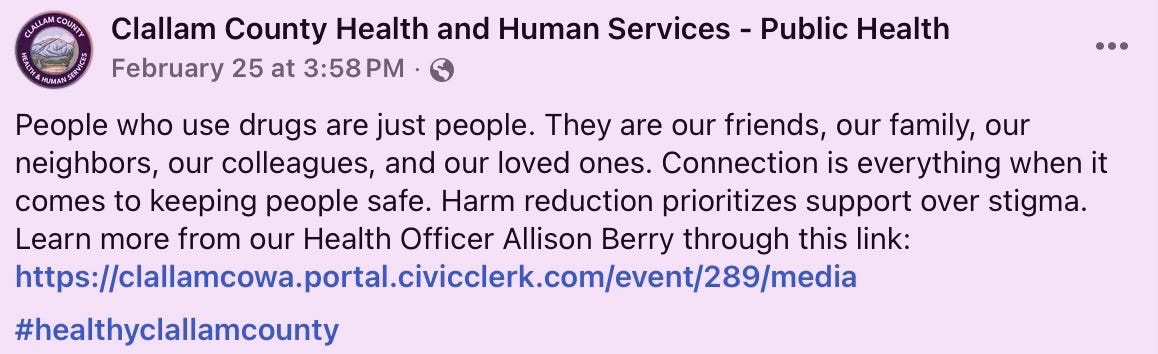
Few residents would disagree with that statement.
Yet the county limited who could comment on the post.

In other words, the county had a message for the public — but the public was not invited to respond.
For residents asking questions about outcomes, costs, or effectiveness, the signal was clear: the message is one-way.
A Curious Morning
The pattern was particularly noticeable on Tuesday, February 24.
At 9:00 a.m., CC Watchdog received the only email ever sent directly from Clallam County Health Officer Dr. Allison Berry. In it, Berry accused the publication of serving as a platform to “stoke anger based on misleading and false information.”
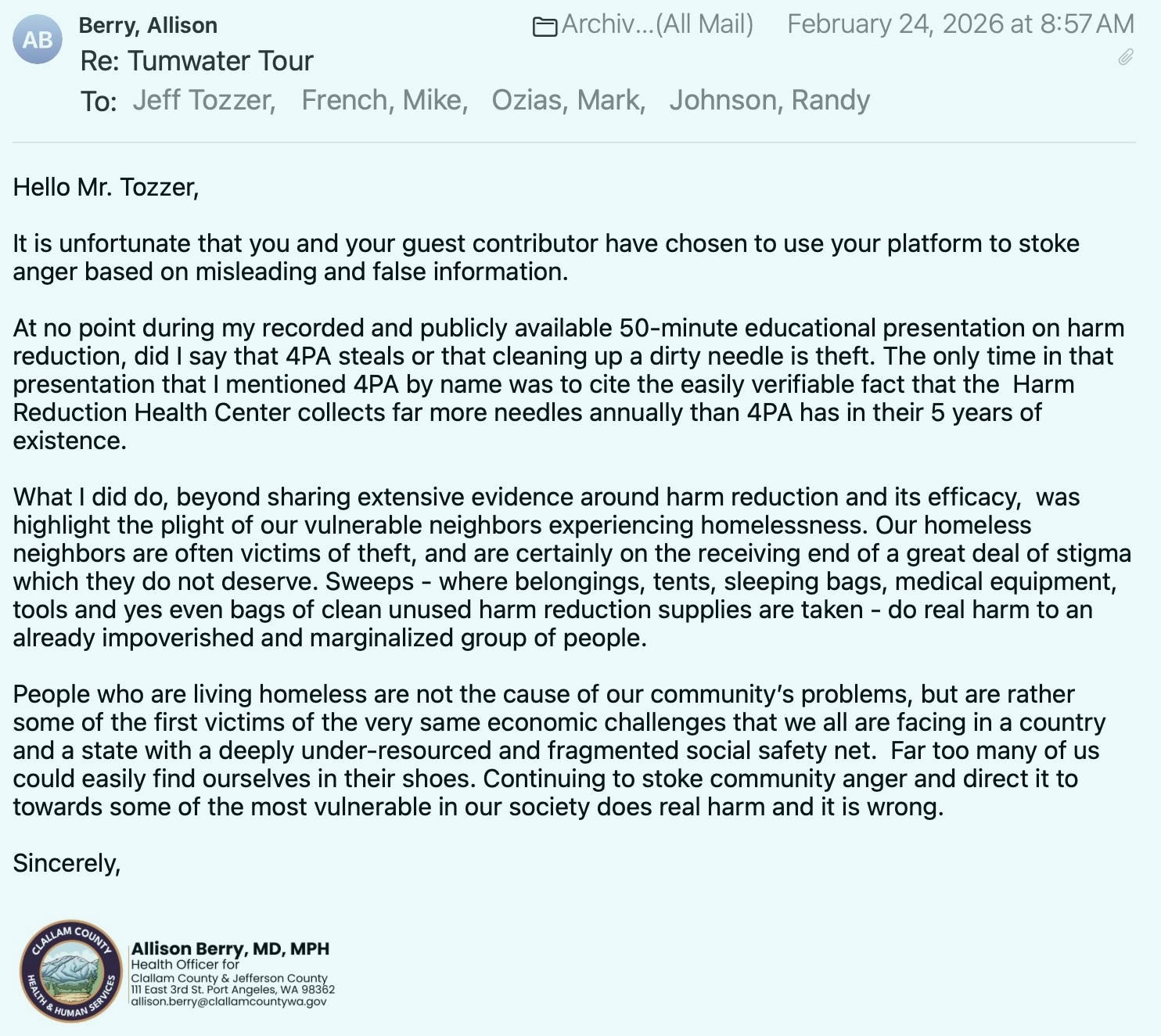
Less than two hours later, during public comment at the weekly Board of Commissioners meeting, a series of speakers appeared defending the county’s harm-reduction strategy and praising Dr. Berry.
First came “Jensen,” attending virtually, a Port Angeles resident and business owner who said it had come to Jensen’s attention that harm-reduction programs were being questioned and that the services needed “more robust support” from county commissioners. Jensen emphasized the holistic and compassionate approach that Jensen believes harm reduction offers.
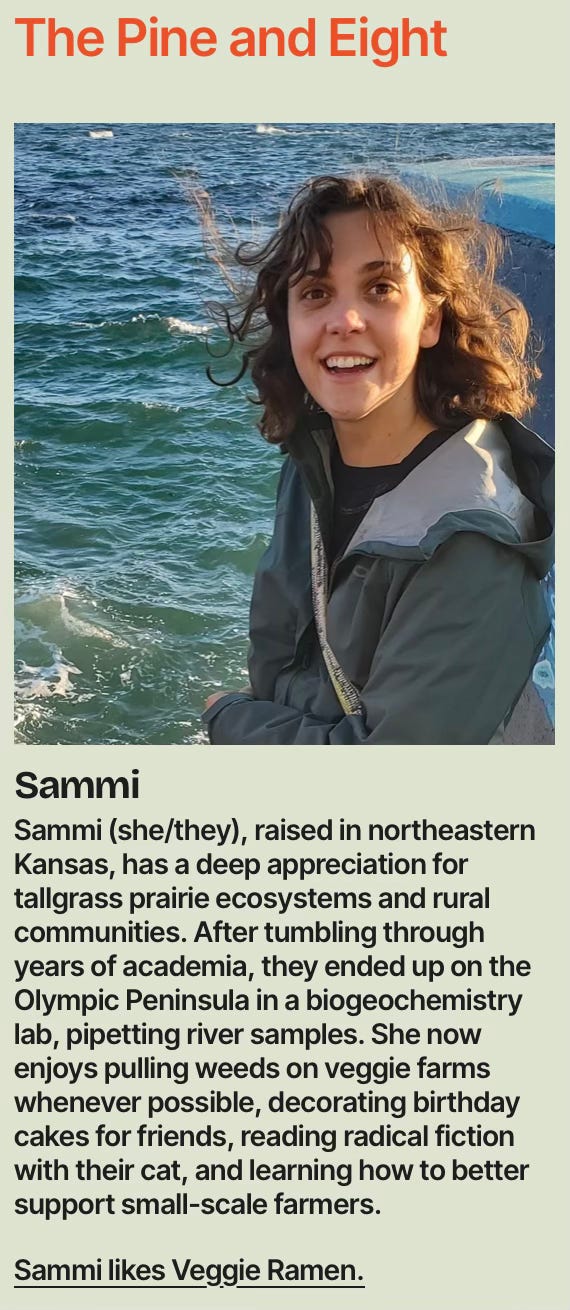
Next came “Sammi,” speaking over Zoom, who said she supported the county health office and health officer and echoed many of the same points about harm-reduction strategies.
Two additional speakers followed virtually.
Jessi spoke about placing trust in local health officials.
Dawn described initially doubting harm reduction before coming to support the approach, tying it to broader issues like food security and basic needs.
Four new speakers.
One theme.
All arriving within hours of Berry’s email criticizing a publication questioning the policy.
The timing raises an obvious question: Was this a coincidence, or evidence of how quickly the county’s activist ecosystem responds when harm-reduction policies face scrutiny?
Who Is “Jensen”?
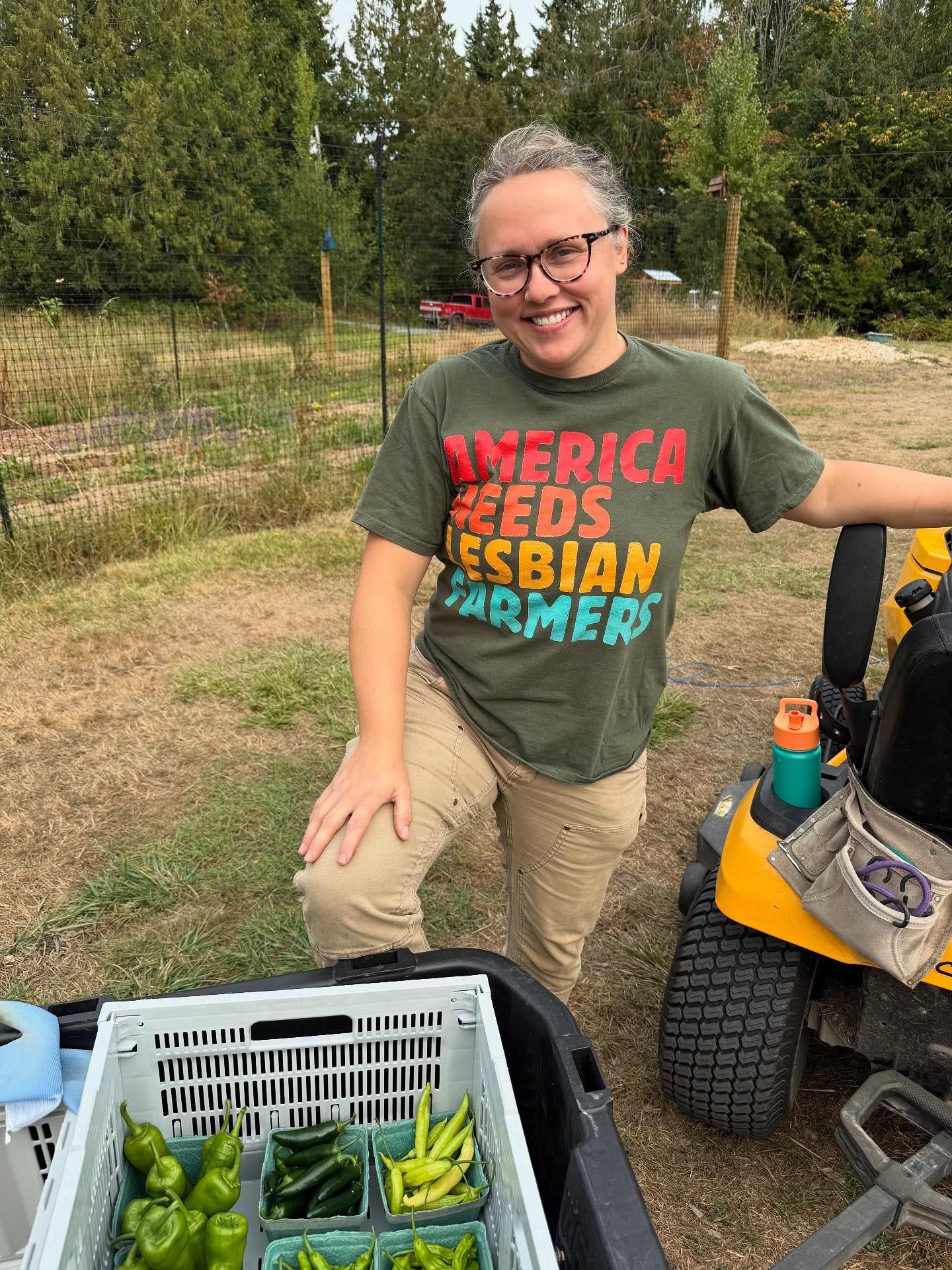
Web searches suggest the speaker may be Arleen Jenson, a co-founder of SisterLand Farms, located outside Port Angeles.
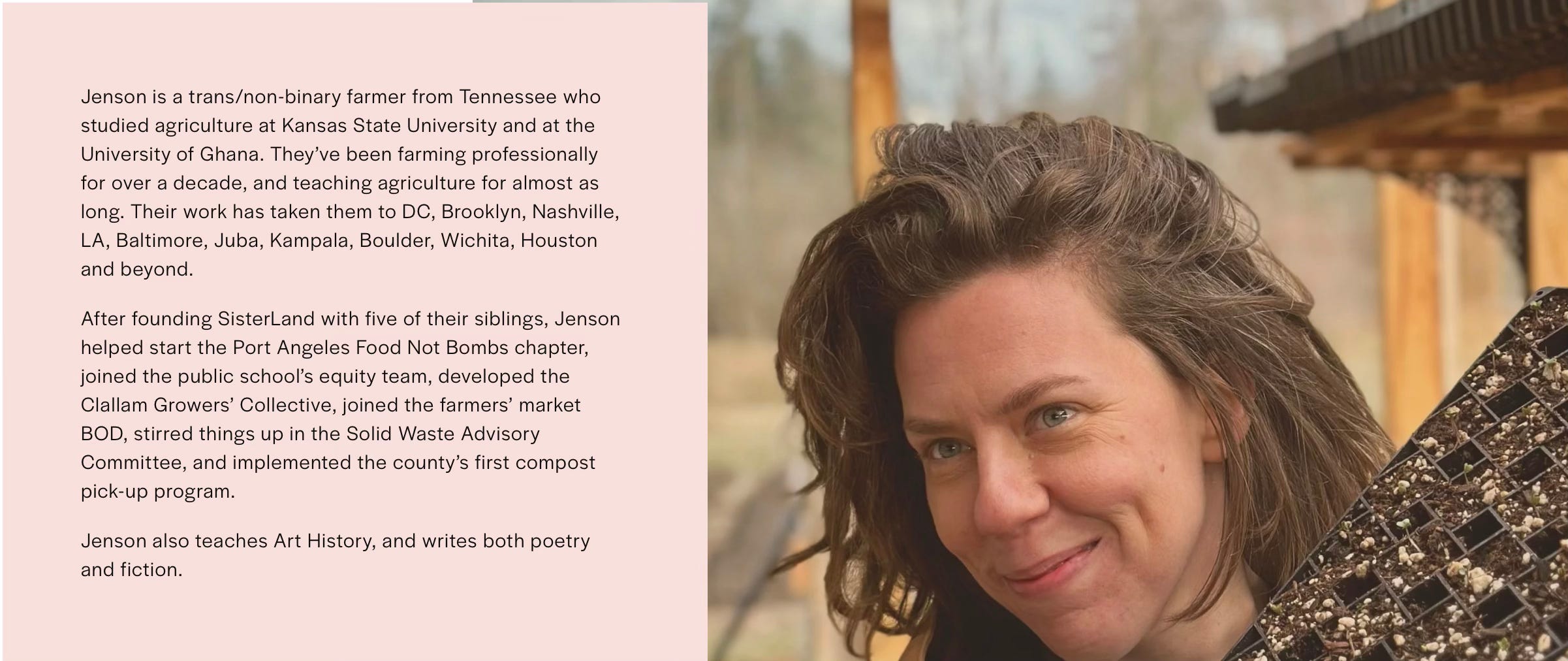
Jenson is described publicly as a trans/non-binary farmer from Tennessee who helped establish the farm as a community-focused agricultural project.
SisterLand Farms was co-founded with Christy Cox, who was elected to the Clallam Conservation District and previously led the effort urging county commissioners to adopt a $5 parcel fee.

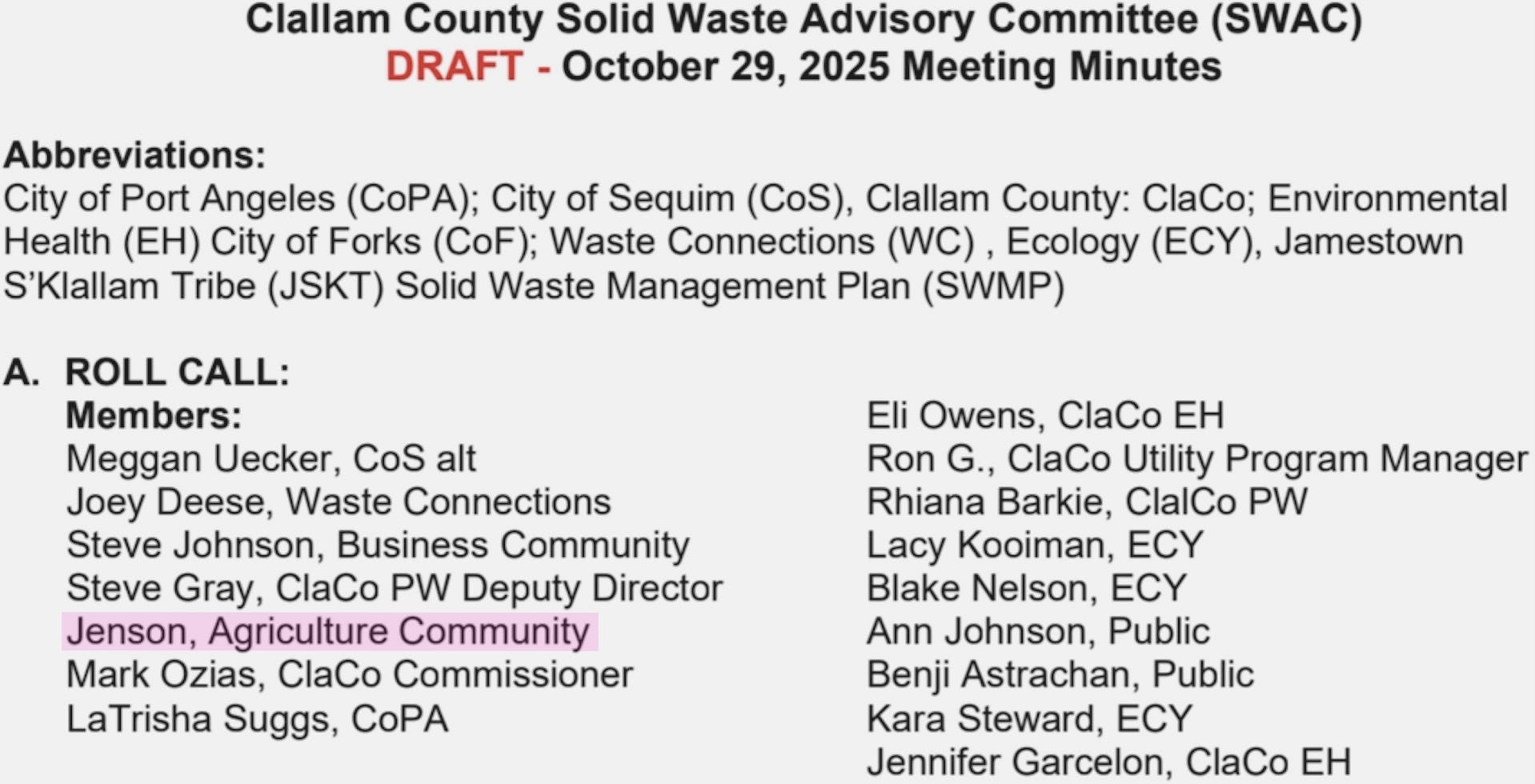
Jenson has also served on the county’s Solid Waste Advisory Committee, appearing in meeting minutes simply as “Jensen.”
The SisterLand Network
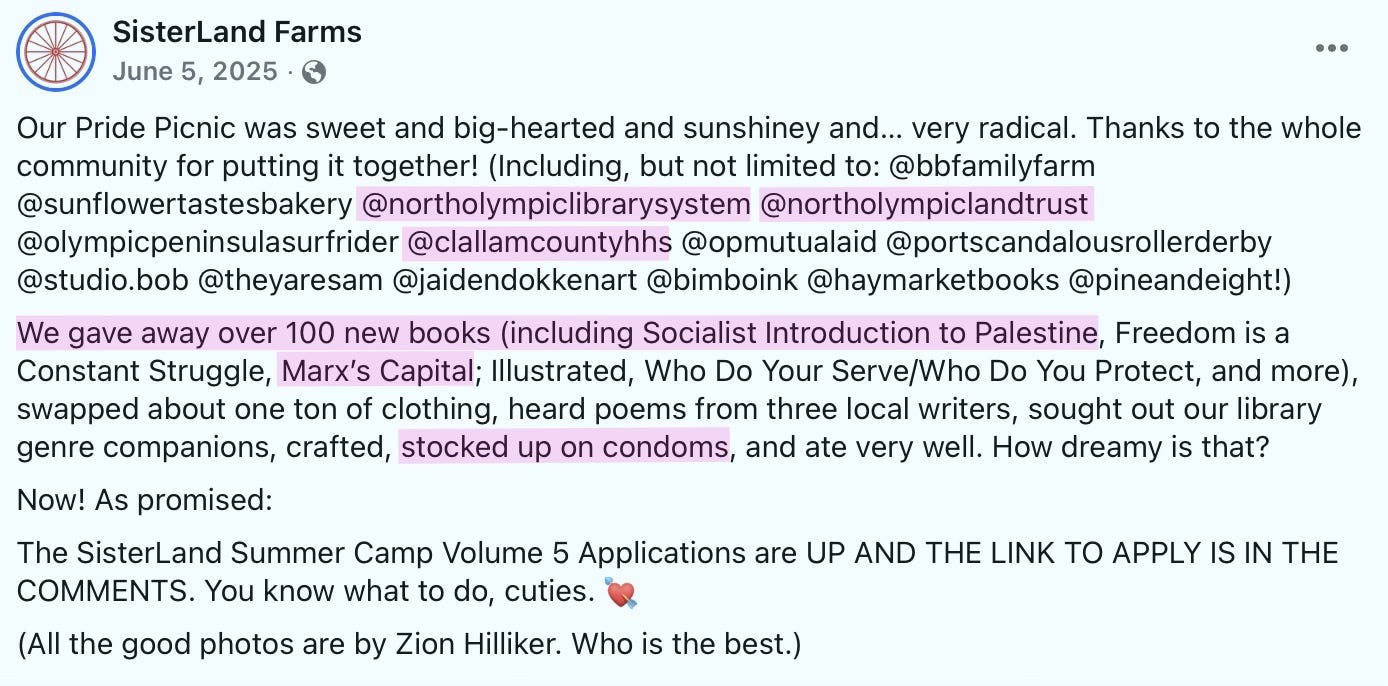
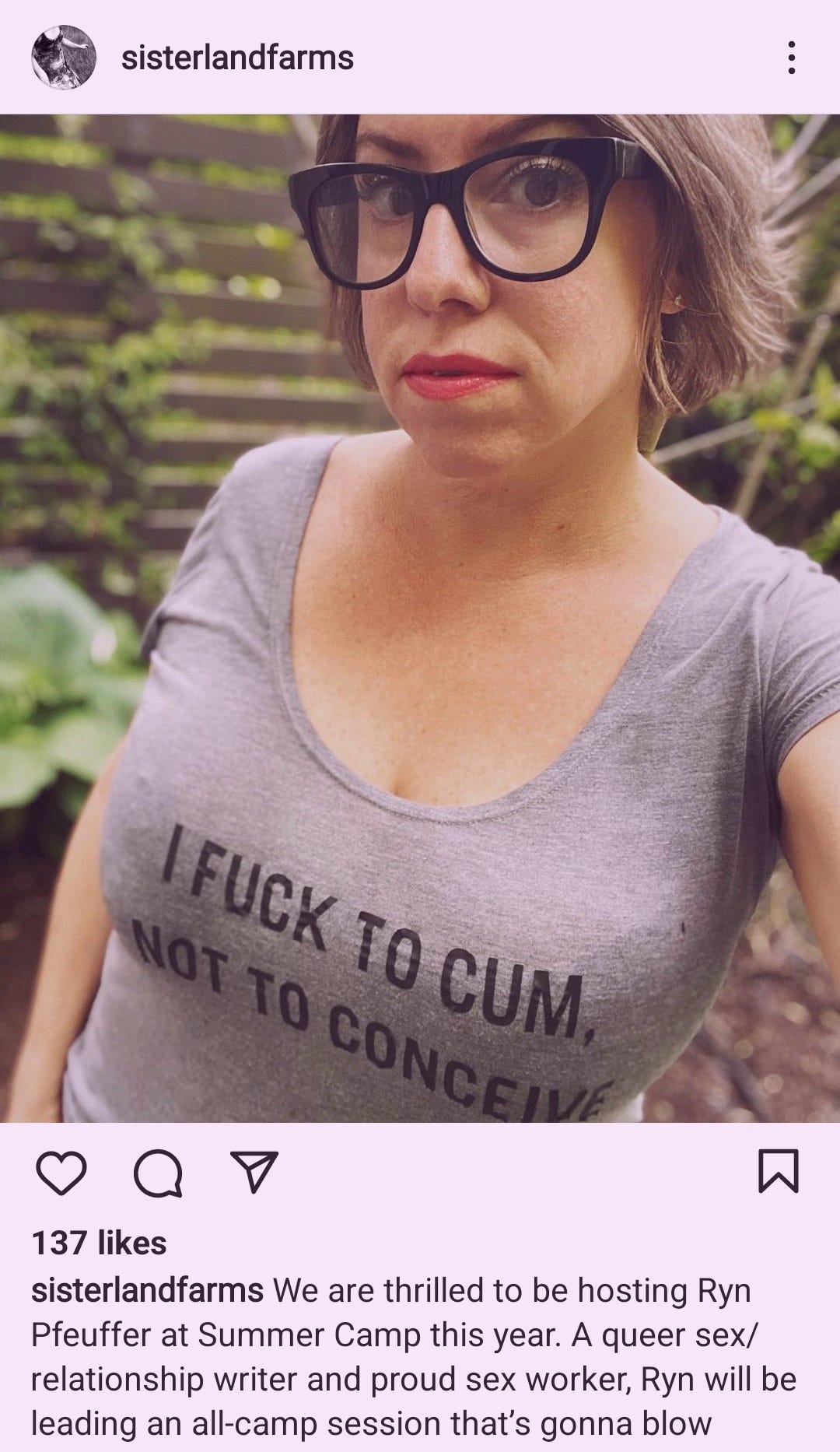
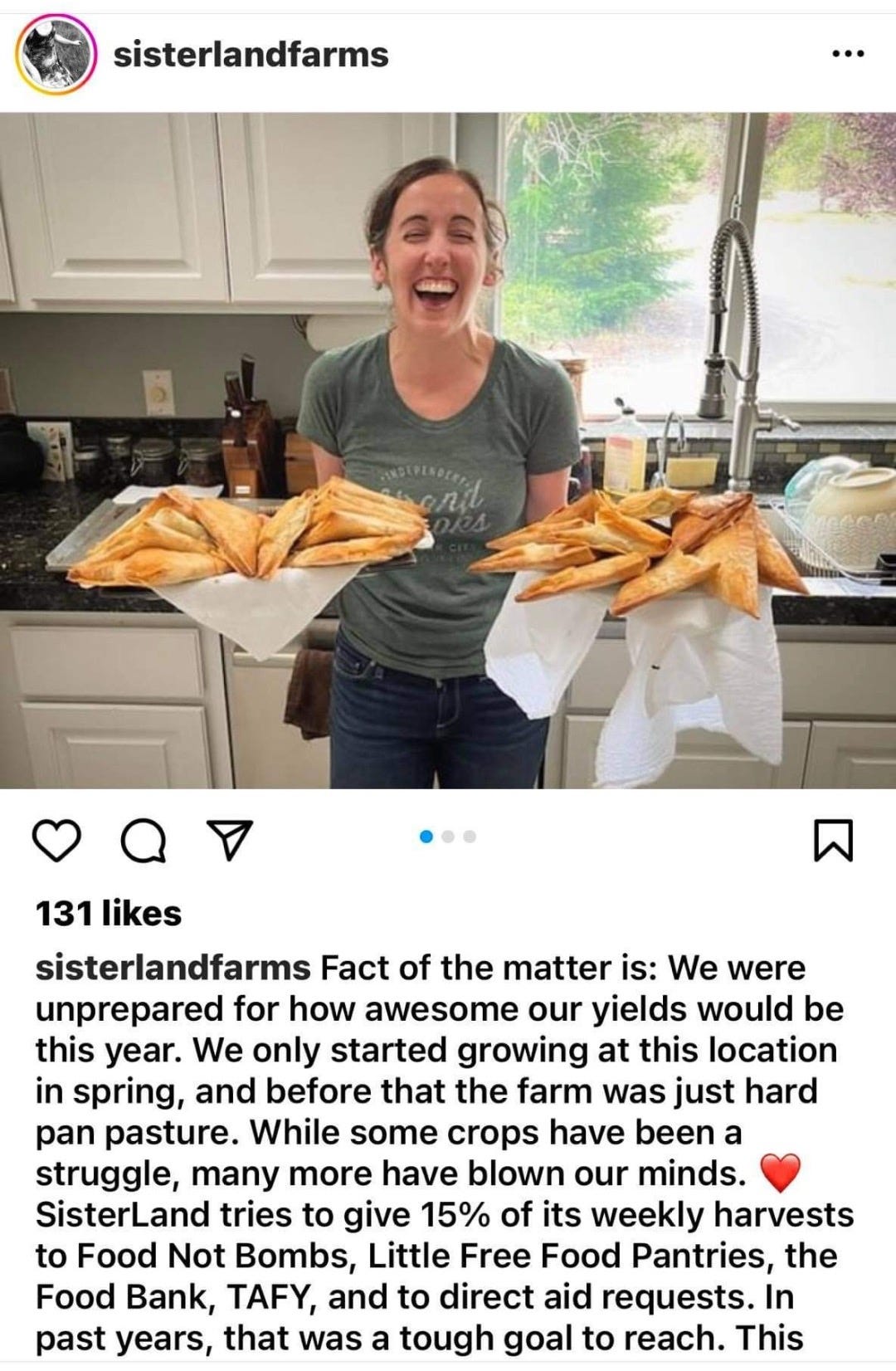
SisterLand Farms operates a CSA program and sells produce and flowers locally, but it also promotes a broader activist mission.
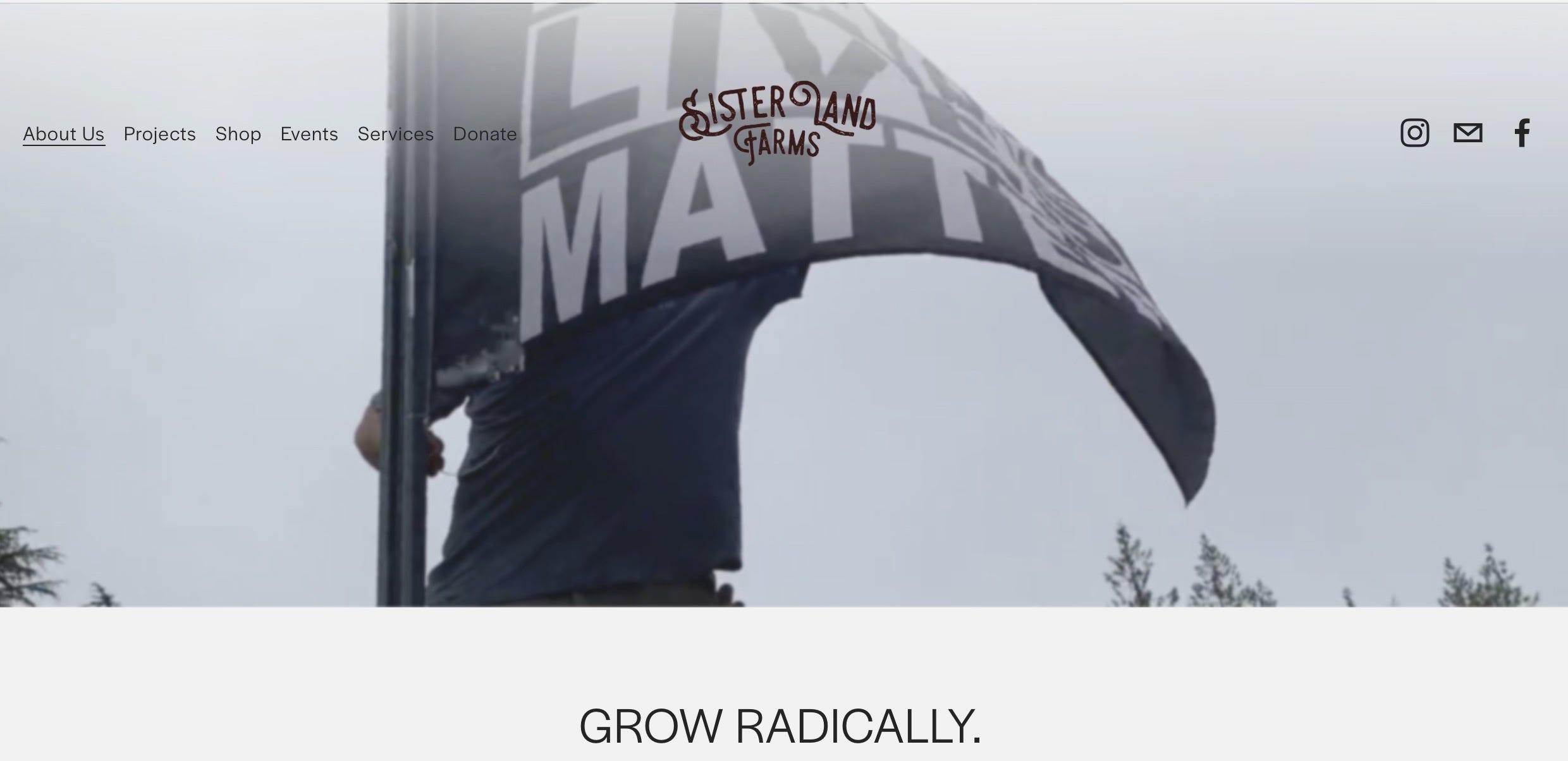
On its website, the farm describes itself as “vociferously radical and passionate about progress.”
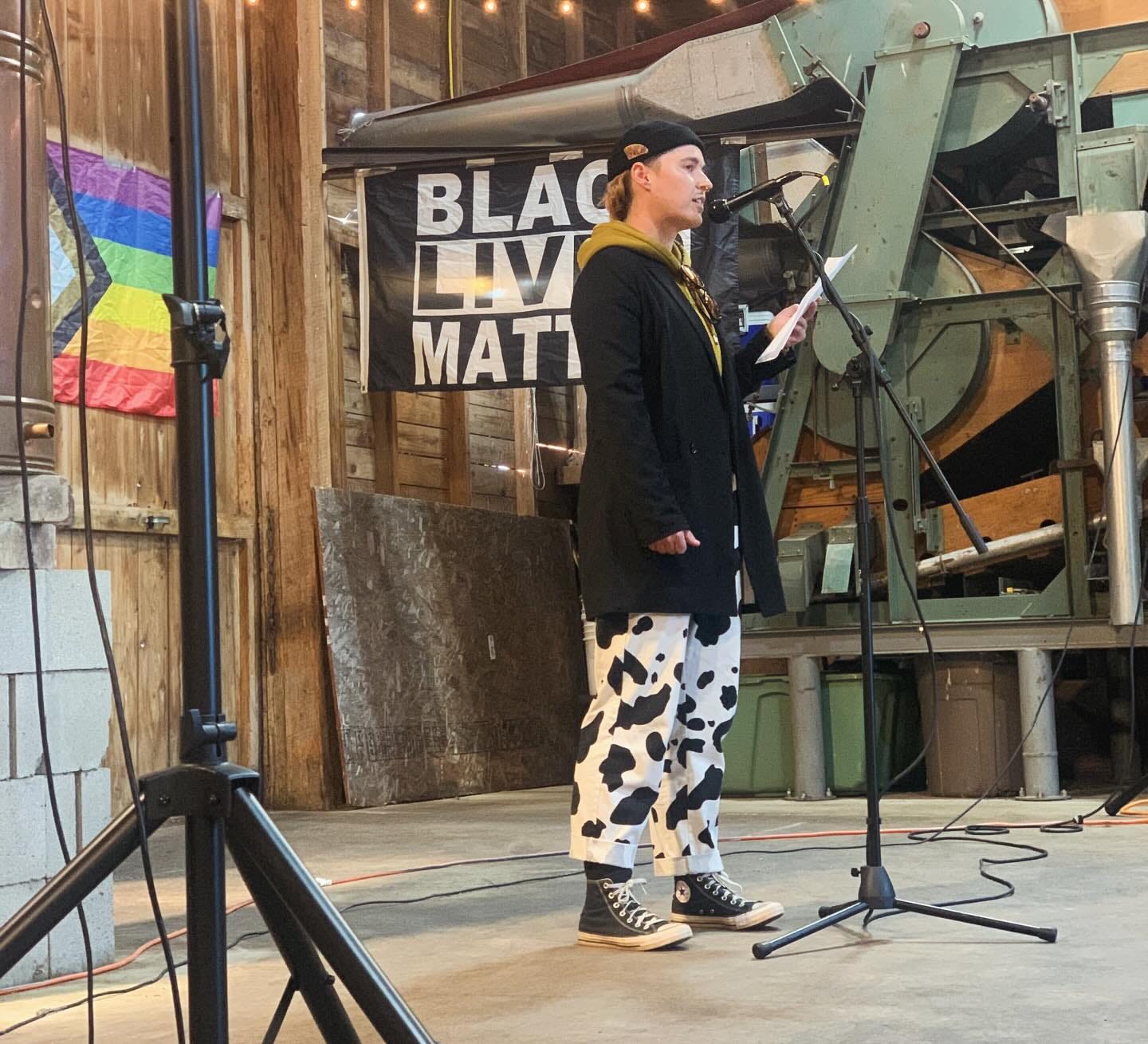
Its programming includes educational initiatives aimed at historically marginalized groups, including Black, Indigenous, and formerly incarcerated individuals.
The farm promotes mutual aid, food access, and volunteer networks, and has worked with organizations such as Food Not Bombs, food banks, and other community initiatives.
SisterLand is also connected to Pine & Eight, a Port Angeles grocery store managed by the farm.
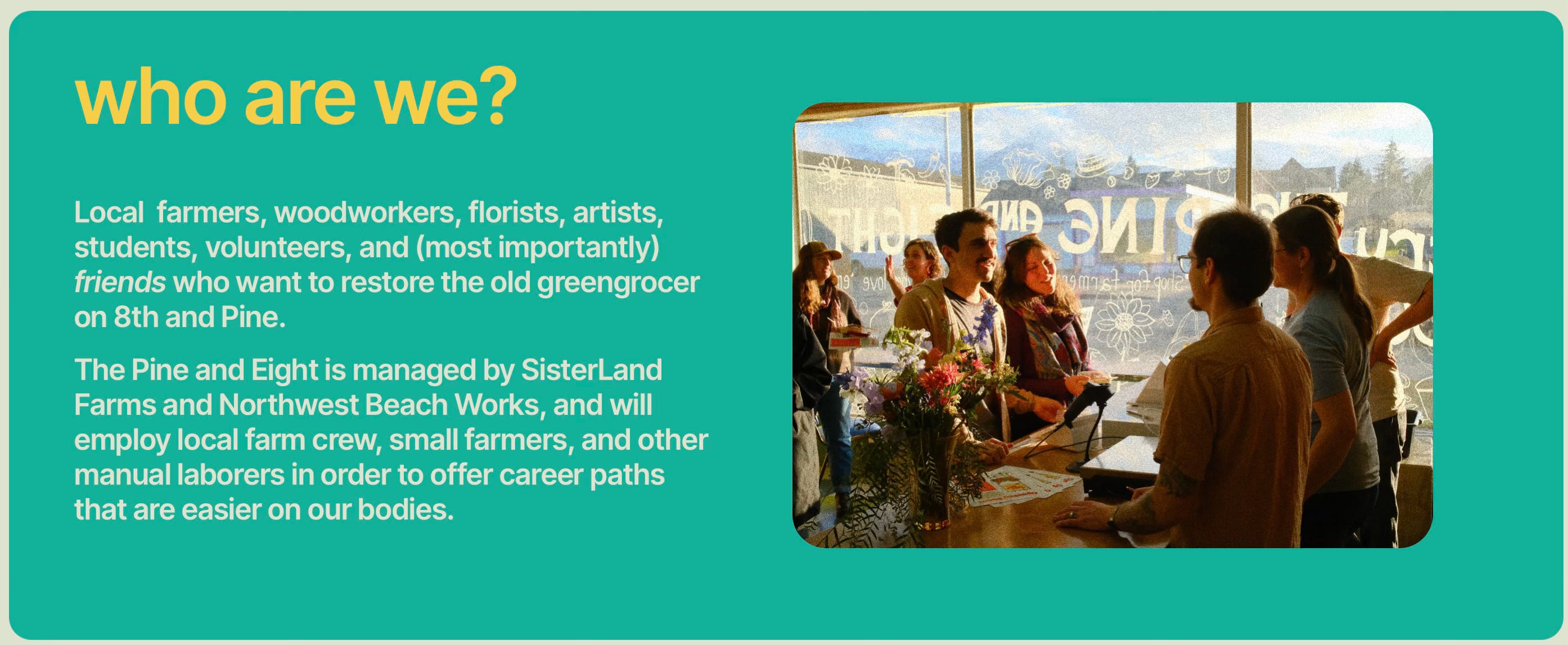
Another public commenter at the February meeting, Sammi, works there as well.
Activism Beyond Farming
SisterLand Farms openly frames its work through an activist lens.
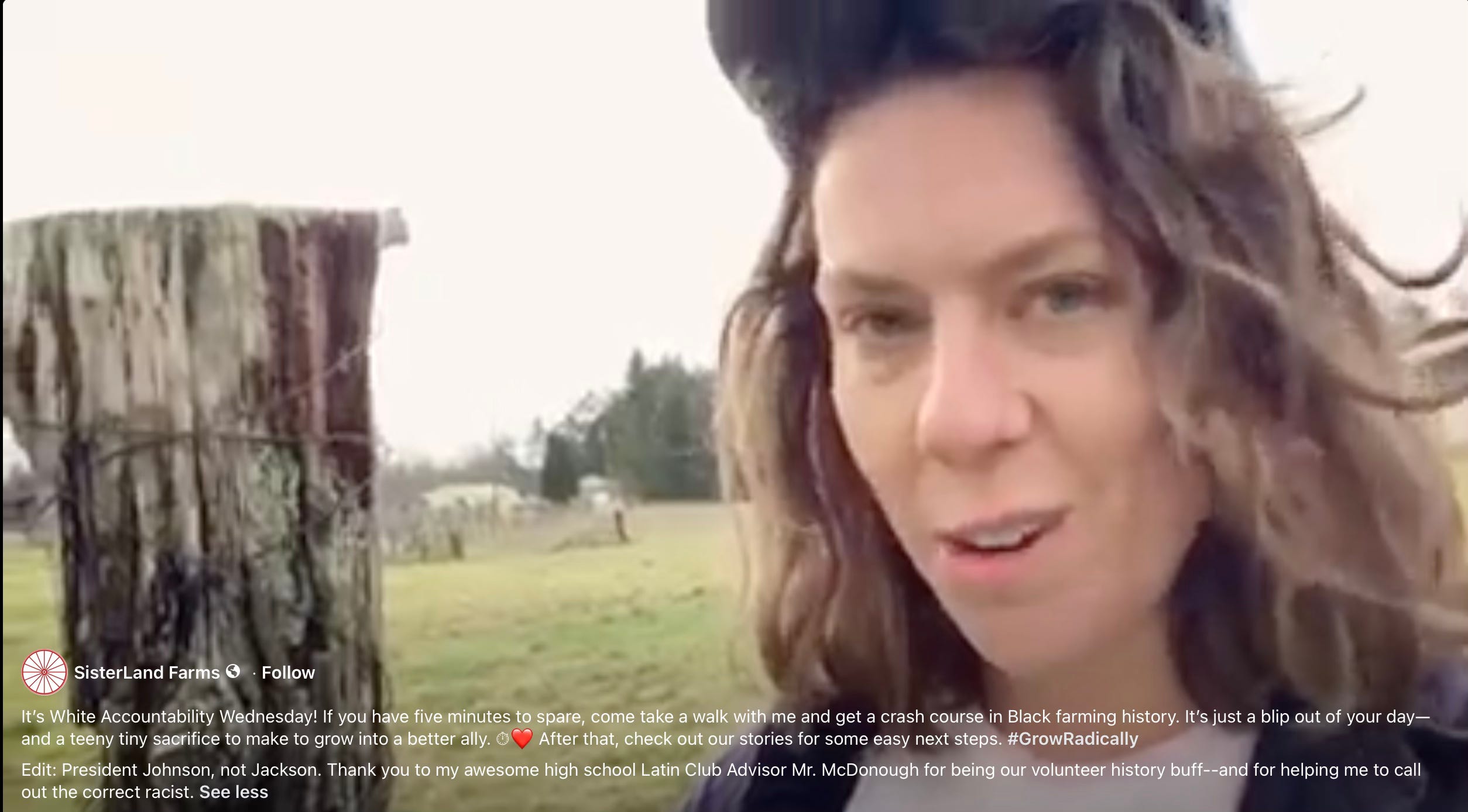
Language used in its messaging includes goals such as:
• dismantling systems rooted in racism and the harms of capitalism
• promoting mutual aid and community food redistribution
• transitioning toward worker-owned economic models
• advancing climate activism and environmental justice
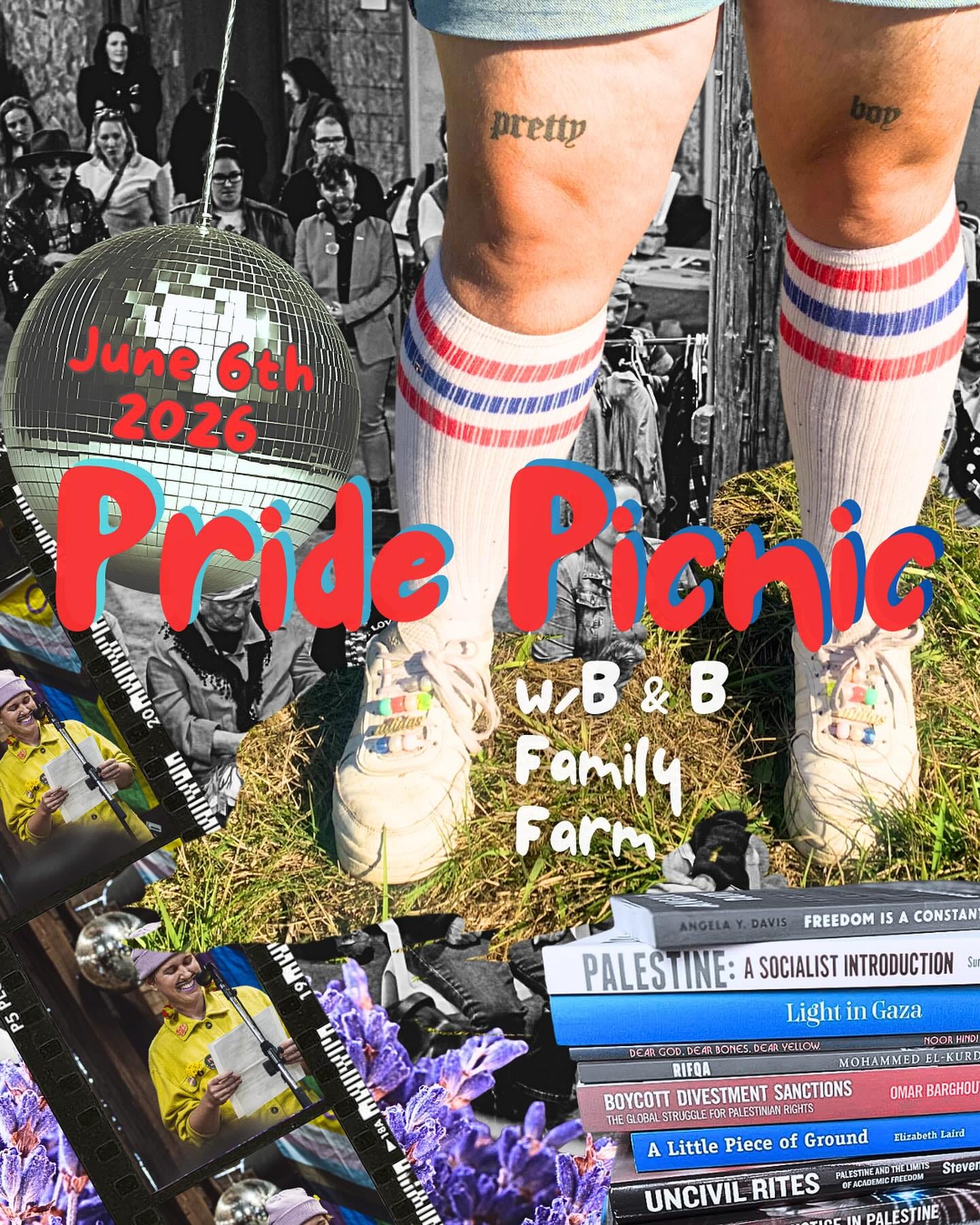
Members of the organization have also participated in LGBTQ community events and Pride-related activities.
Food Not Bombs and Political Messaging
Jenson also helped establish the Port Angeles chapter of Food Not Bombs, a global mutual-aid organization that redistributes food and advocates for anti-poverty and anti-war causes.
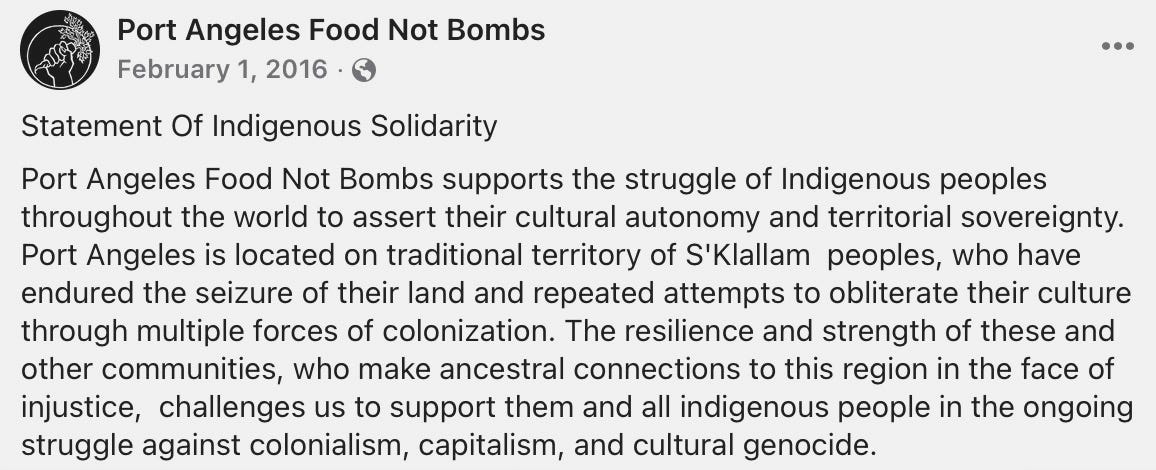
The Port Angeles chapter has published statements supporting Indigenous sovereignty and criticizing colonialism and capitalism, describing the Olympic Peninsula as traditional S’Klallam territory.
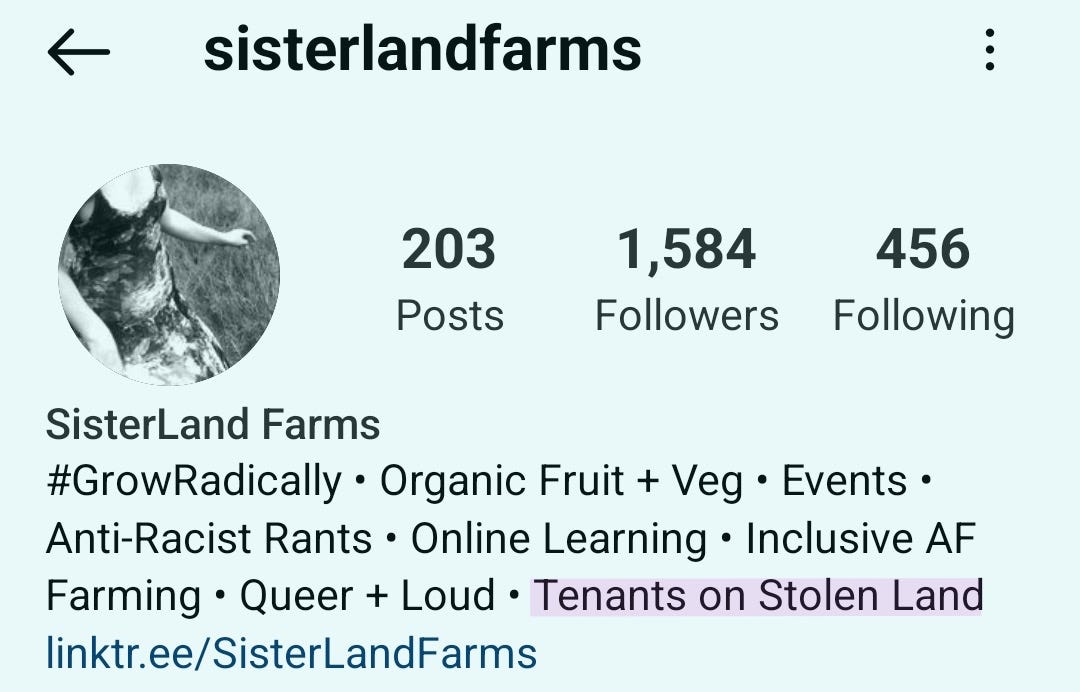
SisterLand itself has also used language referring to residents as “tenants on stolen land.”
Ideology in Writing
In a 2020 essay published through Olympic Climate Action, SisterLand co-founder Arleen Jenson wrote about the Fourth of July from a very different perspective than the usual celebration of American independence.
Instead of focusing on the founding of the country, the essay centered on groups Jenson argues were excluded from the freedoms promised in 1776 — including Indigenous people, Black Americans, incarcerated individuals, immigrants, and women.
The piece walks through examples like the Indian Removal Act, slavery, incarceration, discrimination, and the treatment of minorities and women, arguing that the ideals celebrated on Independence Day did not apply equally to many Americans and that the struggle for those freedoms is still ongoing today.
Connections Across the Local Ecosystem
SisterLand Farms intersects with several local institutions.
Two individuals connected with the organization — Sammi Grieger and Benji Astrachan — have been associated with programs connected to Washington State University Extension.
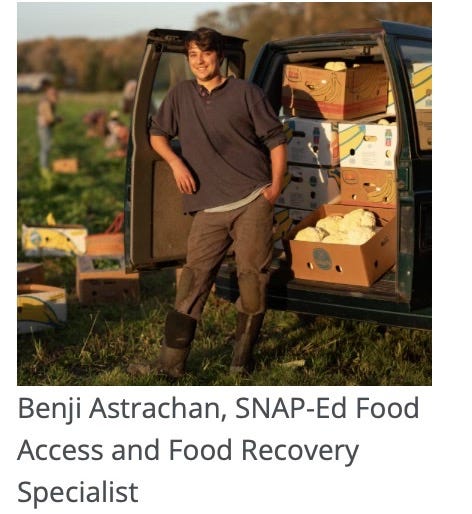
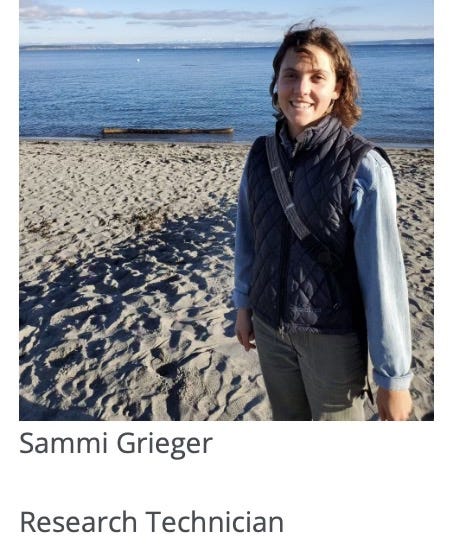
WSU Extension programs in Clallam County are partially funded through county contracts, meaning taxpayer dollars support some of the operations.
SisterLand has also twice received recognition from the North Olympic Land Trust, which named the farm “Farm of the Year.”
Port Angeles City Councilmember Navarra Carr has also appeared in social-media interactions with the organization.
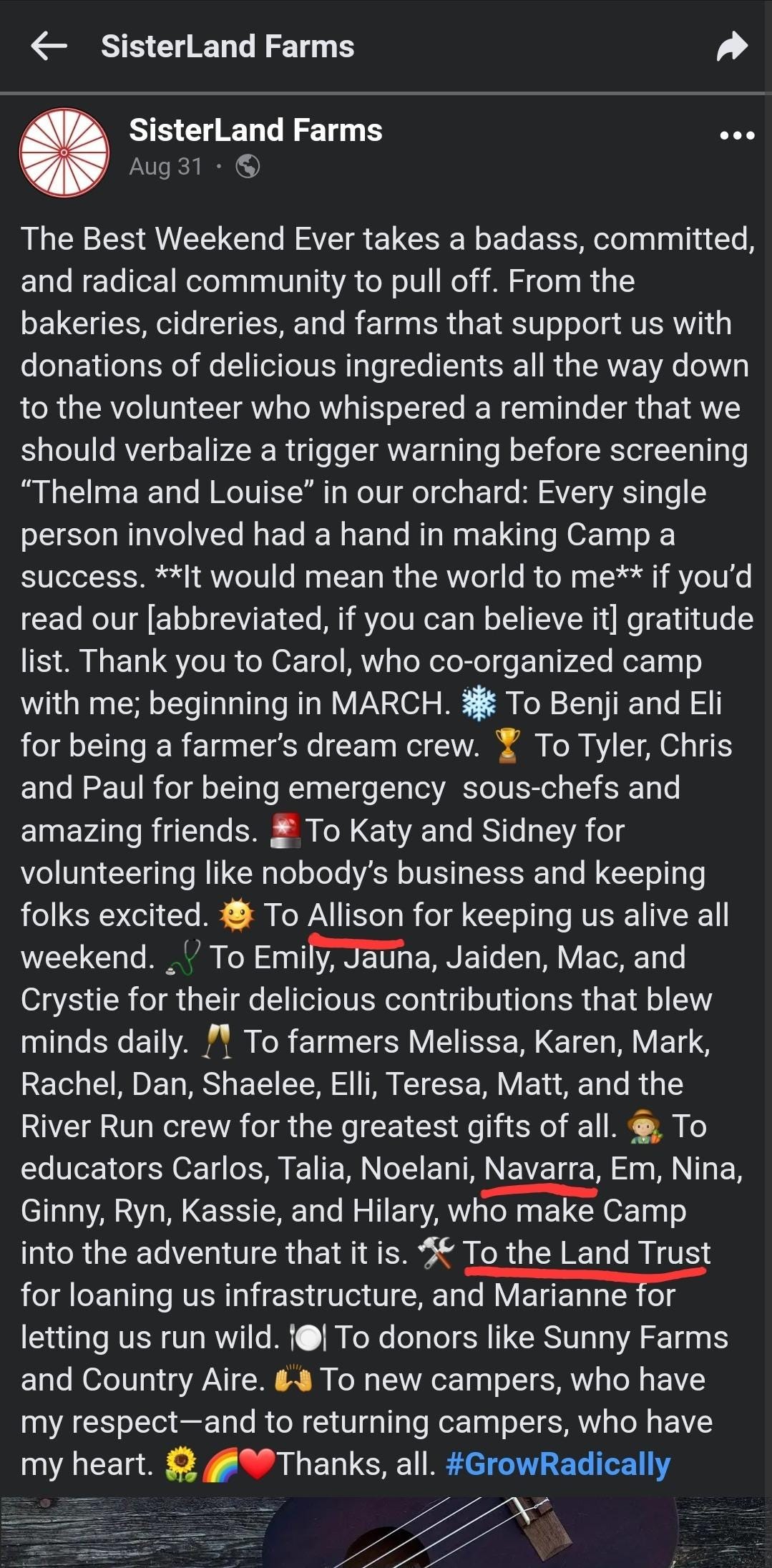
Questions About Public Health Leadership
Critics have also pointed to social media photos from a SisterLand Farms gathering that appear to show Dr. Allison Berry in attendance.
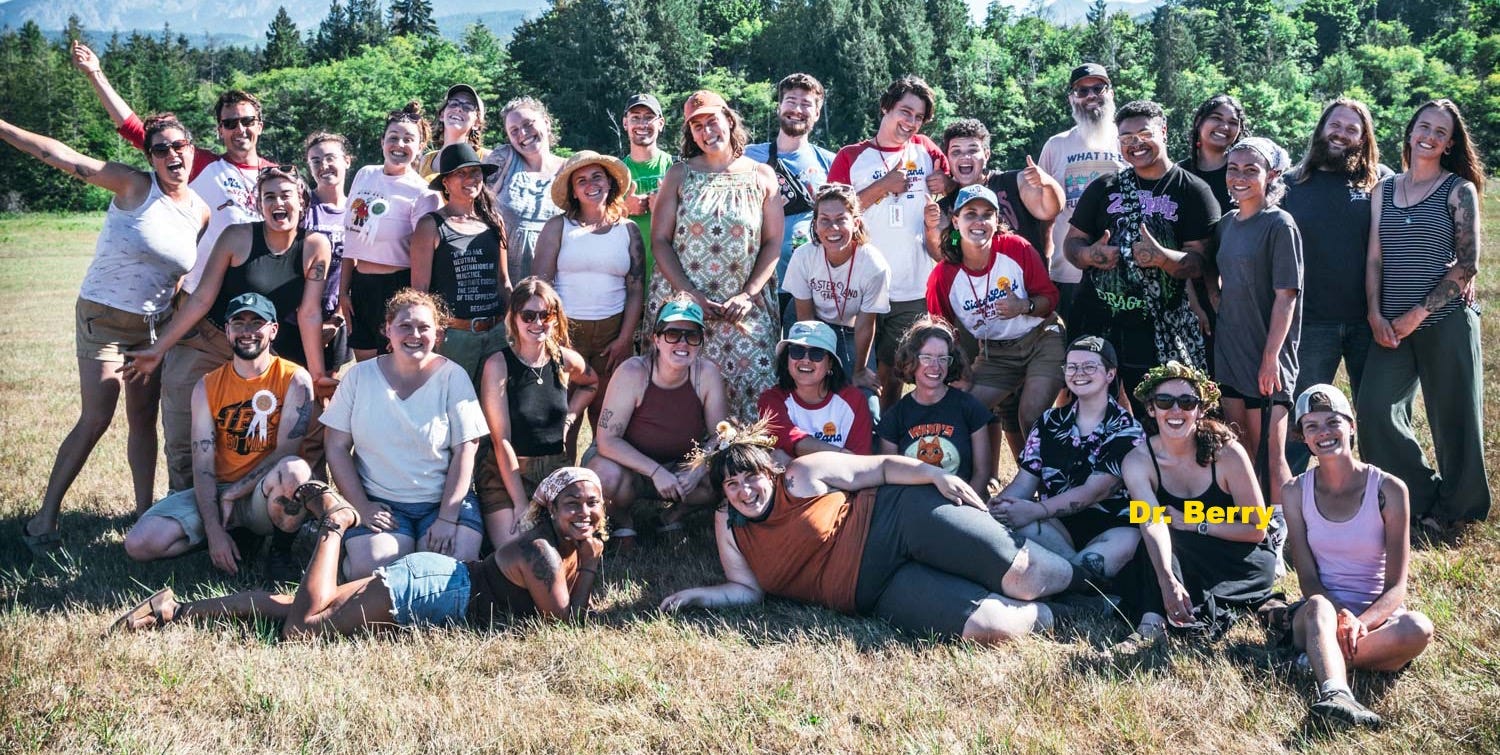
In one of the pictures circulating online, apparently from August 2021, Berry can be seen standing with a small group — about nine people gathered closely together for a photo — and none of them appear to be wearing masks.
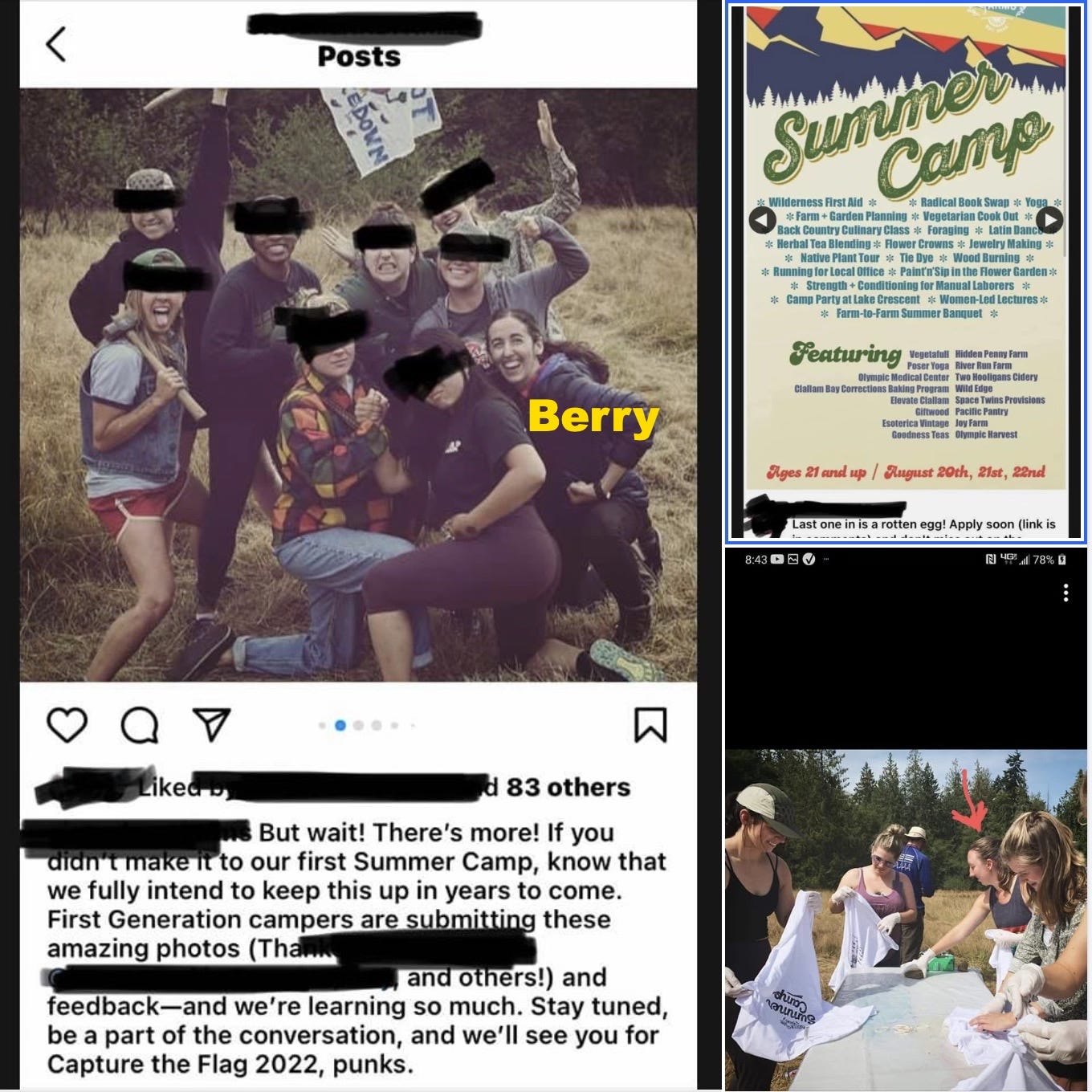
The gathering appears to have been outdoors, where masking rules were different from indoor public spaces. At the time, however, Berry’s office had put in place an indoor mask mandate covering both Clallam and Jefferson counties, affecting businesses, schools, and everyday life for thousands of residents.
For people who spent months navigating those rules, the image struck some as odd. The photo quickly made the rounds online, often posted alongside criticism of pandemic restrictions and questions about how those policies were communicated and enforced.
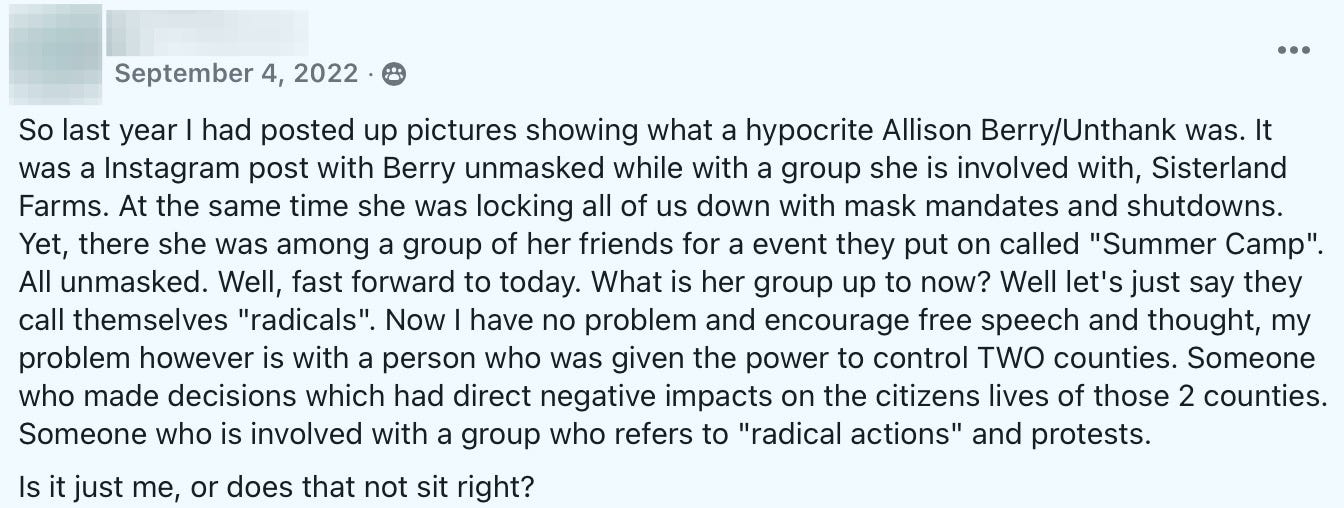
Whether fair or not, the images became another flashpoint in the broader debate over how the county handled COVID policies — and how those rules looked when applied outside official settings.
A Familiar Pattern
None of these connections necessarily imply wrongdoing.
People involved in farming, food access, environmental activism, and public health often move in overlapping circles.
But the pattern has not gone unnoticed.
When criticism of county policy surfaces — whether around harm reduction, taxes, or land use — a familiar group of supportive voices often appears in public comment.
Residents saw similar dynamics during debates over the Cultural Access Tax, where officials referenced strong community backing. Leaked emails later showed that support was manufactured by the county commissioners.
During the Towne Road controversy, residents were told there were “hundreds of signatures” opposing the project — though records later showed the petition contained fewer than one hundred names.
Each time, the narrative of broad public support appeared quickly.
The Conversation That Isn’t Happening
The core issue is not activism.
Citizens have every right to participate in public comment.
The larger question is why the county appears reluctant to engage critics directly.
Residents asking about harm-reduction policies are not asking for slogans. They are asking for metrics.
How many people have entered treatment?
How many overdoses have declined?
How much money is being spent?
Instead, critics often receive lectures about compassion or accusations of spreading misinformation.
That approach does little to build public trust.
A Better Way Forward
Clallam County’s drug crisis is real.
So is the homelessness crisis.
After more than a decade of harm-reduction-focused policy, residents are asking a simple question:
Is it working?
Answering that question should not require restricting public comments online or relying on supportive speakers to fill public-comment slots.
It requires transparency.
Show the data.
Explain the strategy.
Invite debate.
If the policies are working, the numbers will prove it.
And if they are not, Clallam County deserves the honesty to admit it — and the courage to try something new.
Call to Action: Speak Up on the Library Levy
The Clallam County Auditor’s Office is looking for local residents willing to serve on a committee to write the “against” statement for the voters’ pamphlet regarding the proposed North Olympic Library System levy lid lift on the April 28 special election ballot.
If you believe voters should hear both sides of the issue, this is your opportunity to help ensure the ballot includes a perspective opposing the measure.
Committee members must live in Clallam County, and the deadline to request appointment is noon this Friday.
Residents interested in participating should contact the Clallam County Auditor’s Office as soon as possible. Even a small group of volunteers can make sure voters have a full and balanced set of arguments before they cast their ballots.
Clallam County Elections
223 E. 4th St., Room 042
Port Angeles, WA
360-417-2221
elections@clallamcountywa.gov


