


What visitors and residents saw in downtown Sequim this weekend. What a mother in a Seattle encampment admitted on camera. What a border seizure tells us about supply. What a scanner call revealed at Maloney Heights. What’s happening on our college campus. And what our commissioners are — and are not — doing about it. Ten stories. One pattern. You decide whether this is compassion… or something else.

Downtown Sequim — A Snapshot of “Compassion”
Meme maker Clallamity Jen and her satirical husband, The Strait Shooter, drove through downtown Sequim on Saturday. They saw what many residents now describe as a slow erosion of the downtown core.


At the old Rite Aid, a woman appeared to be in visible mental distress, belongings scattered across the sidewalk. On Washington Street, a wagon piled high with possessions sat unattended. Half a block away, near Habitat for Humanity, a familiar cart under a blue tarp and stacked pallets suggested a return of a well-known street presence.
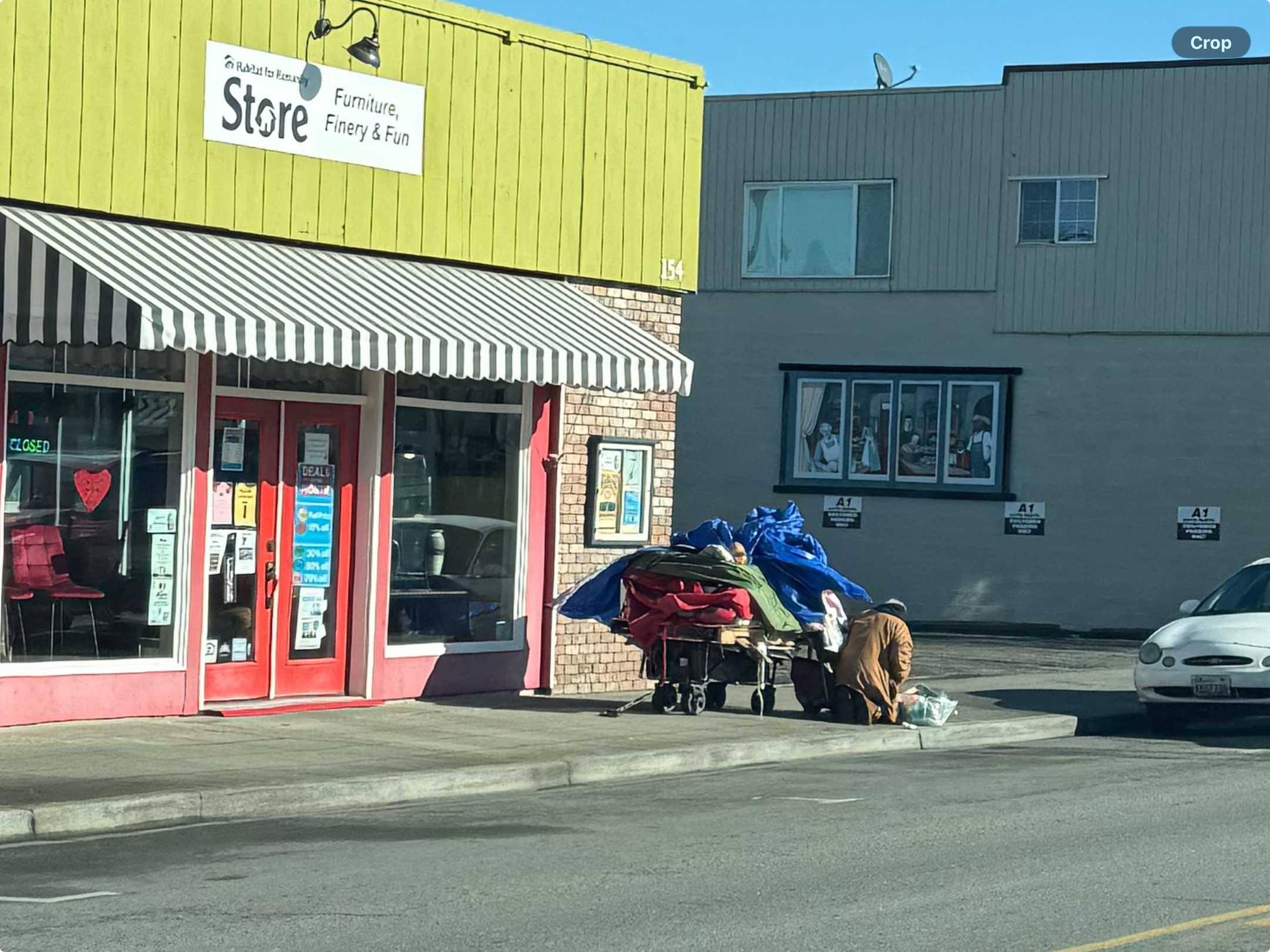
John Marshall was arrested earlier this month for indecent exposure. Suspected meth and a glass pipe to smoke it were found in his possession. He has also been camping on the sidewalk one block from Helen Haller Elementary School. He spent one night in jail before being released.
Nine months ago, during the Irrigation Festival, a known meth user fatally assaulted an elderly man in broad daylight.
Residents are asking:
Is this the trajectory we’re choosing?
Is this what we mean when we say “compassion”?
Visitors see it. Business owners see it. Families see it.
How much normalization are we willing to accept?
The Video That Could Have Been Filmed Here
A video circulating online shows independent reporters walking through a wooded encampment outside Seattle.
“Basically drugs,” a young mother says when asked how she got there.
She warns viewers not to take drugs — and describes fentanyl addiction consuming her entire day. She spends her day riding the bus and trying to get high. Her four children live with family. “I love you, and I’m sorry,” she says.
County Commissioner candidate Jake Seegers saw parallels between that video and what he has personally witnessed along Tumwater Creek.
Here is his full statement on Facebook:
The PA City Council is waiting for guidance from the I-5 Corridor before revisiting enforcement of the trespass ordinance. What that really means is stalled leadership. Under the label of compassion, we’ve copied Seattle’s policies—and now we’re seeing Seattle’s problems show up in our local woods and along our streams.
County harm-reduction policies are not reducing harm. They are enabling the expansion of addiction and death. As Reno said in this video, fentanyl will kill “everyone it touches… eventually.”
I recently met a young man living in the woods near Tumwater Creek. He is intelligent, capable, and painfully self-aware. He told me he’s ashamed of his addiction. He wants to change, but believes there is no real hope for him. The best future he can imagine is being “somewhat functional,” trading fentanyl for methadone.
He has been convinced that methadone is the “gold standard” for treating addiction. Yet for him, it is failing as he continues to revert to fentanyl.
This is where local governance is broken. We’ve replaced expectations with excuses. We count Harm Reduction Health Center and MAT clinic visits as “success” and celebrate the system—while a young man gives up on ever being whole.
We don’t need leaders who tally harm-reduction encounters and call it compassion. We need leaders who see potential. Leaders who set expectations for recovery, stability, and dignity and who support policies and programs that actually help people reach them.
This young man should not be ashamed of his addiction or his circumstances.
Our elected officials should be.
This year, Clallam County has a chance to change things.

Boycotts in the Name of “Non-Partisanship”
Indivisible Sequim — with the backing of the League of Women Voters — has begun publicly identifying businesses whose political views differ from theirs and encouraging boycotts.
In one case, they posted photos of a local family-owned business and suggested contractors avoid working with them.
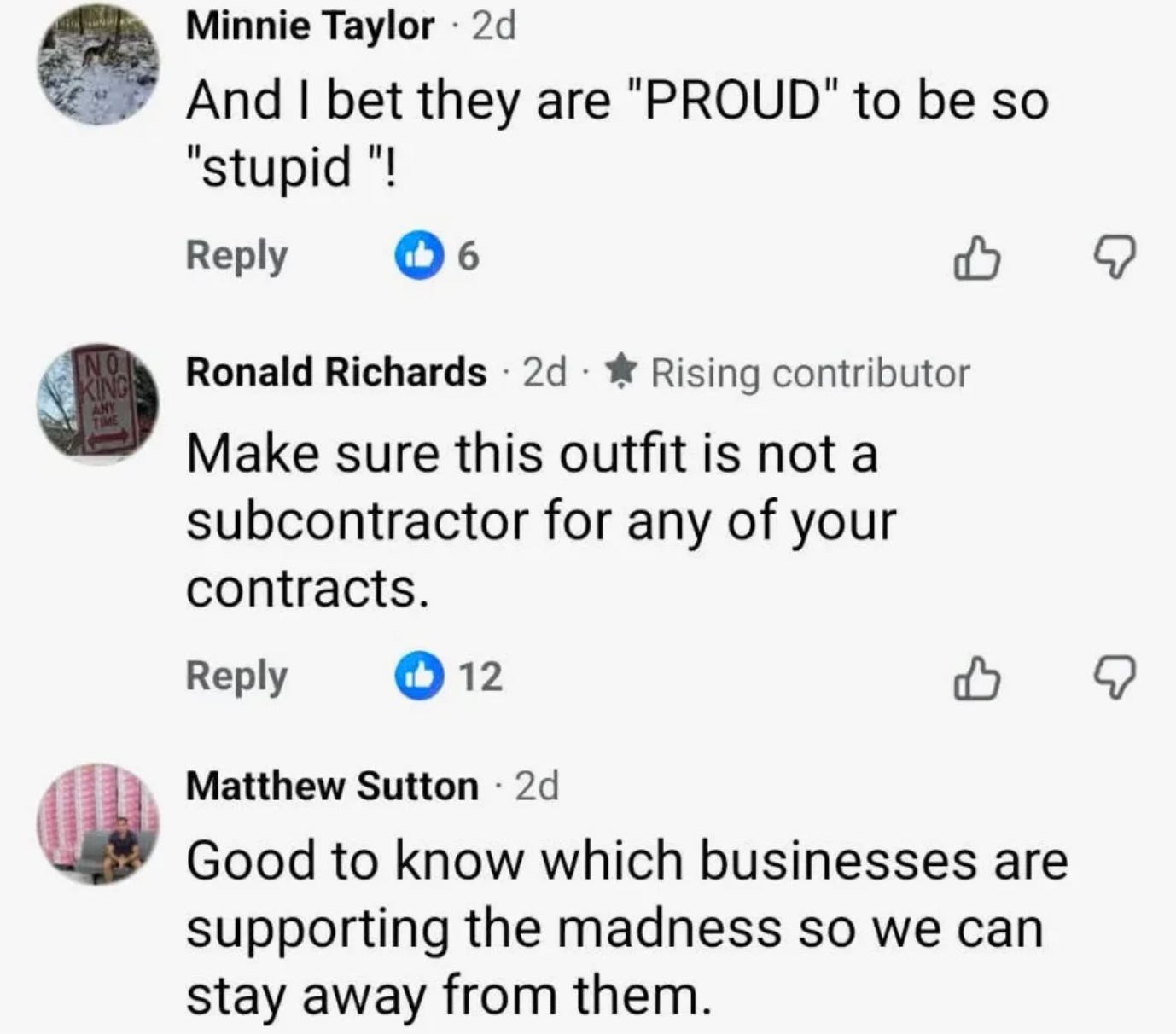
What Indivisible Sequim did not highlight: the largest sign at that business promotes youth participation in Sequim Little League.

When political activism targets small local businesses — especially those supporting youth sports — it raises a question:
Is this civic engagement… or economic intimidation?
Wendy Sisk Speaks
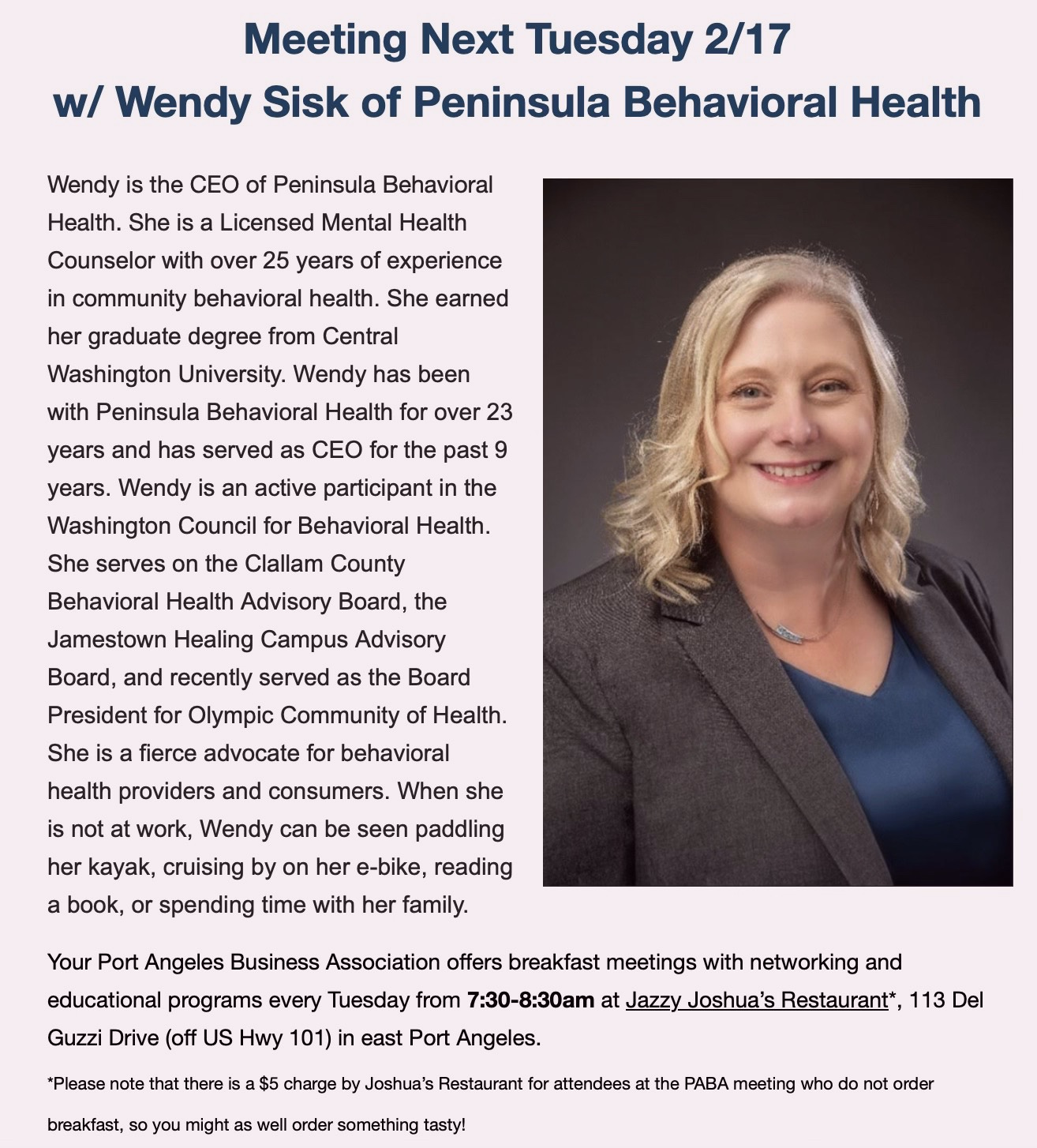
Peninsula Behavioral Health CEO Wendy Sisk, whose compensation is nearly four times the median household income for the county, is scheduled to speak before the Port Angeles Business Association at Joshua’s Restaurant at 7:30 a.m. tomorrow. The event is open to the public, though non-members pay $5 (if they don’t order breakfast) and members receive priority for questions.
PBH has long embraced harm-reduction models and has expanded into housing development. Its North View permanent supportive luxury housing project costs about $350,000 per unit. Housing will be prioritized for frequently incarcerated individuals and will include amenities such as dishwashers, a dog-washing station, and rooftop terraces. During discussion of the project, PBH initially indicated that dishwashers were required by state code, a claim later proven not to be true.
At the same time, the organization has raised concerns about potential funding shortfalls, and it has also spent thousands of dollars to sponsor community events such as Sequim’s Sunshine Festival.
When an organization relies heavily on public funding and shapes local behavioral health policy, public scrutiny isn’t hostility — it’s accountability.
Catch, Release, Repeat
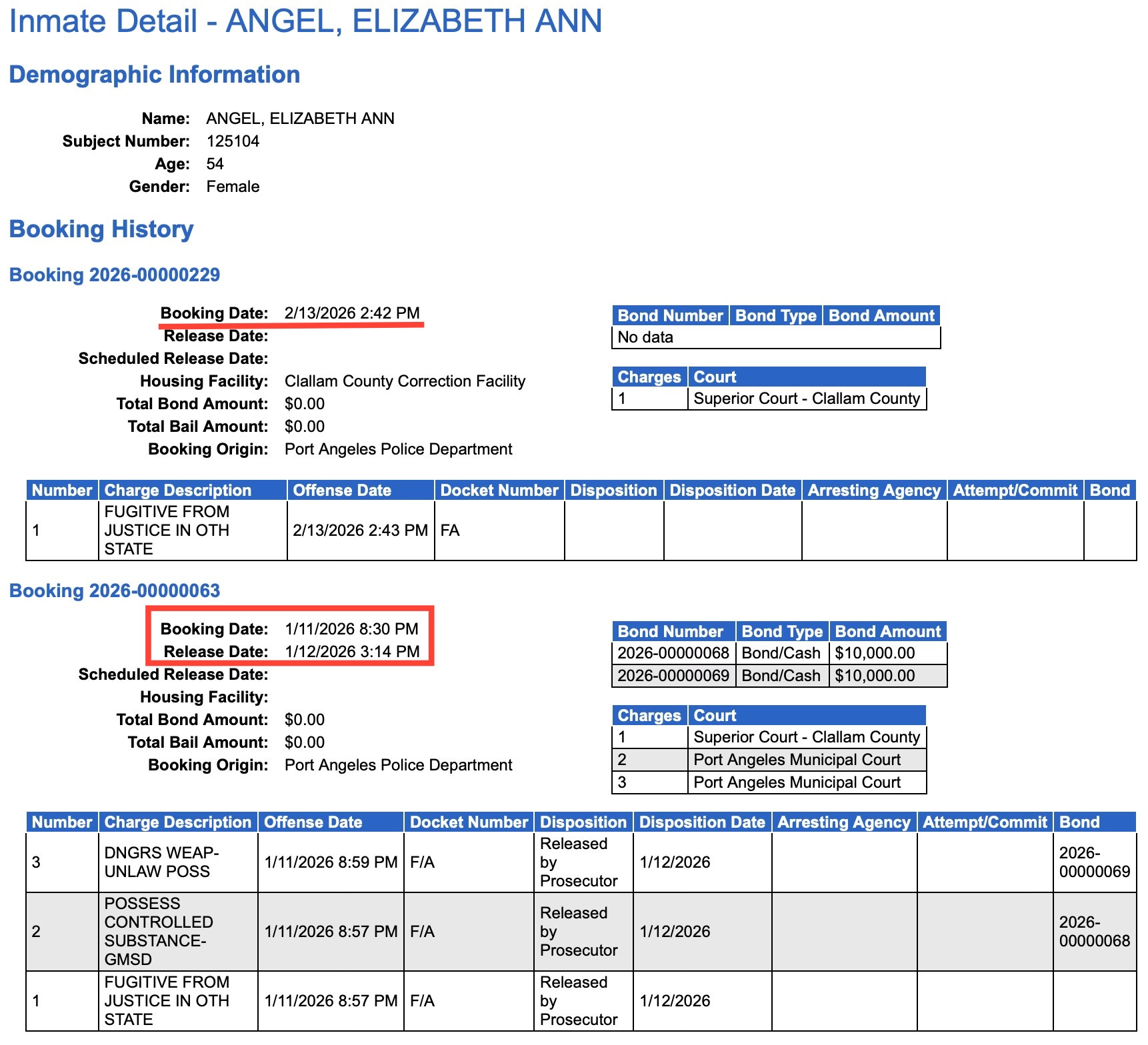
Elizabeth Ann Angel, a recent arrival to Clallam County by way of Idaho and Florida, was arrested last month for unlawful possession of a dangerous weapon, drug possession, and for being a fugitive from another state. She was released the following day.

On Friday, she was arrested again — once more on fugitive charges. For many residents, the pattern feels familiar: arrest, release, repeat.
Residents continue asking for a public safety town hall to address repeat offenders and community safety concerns. Commissioners have said there isn’t enough time while the Washington Legislature is in session. In the meantime, Commissioner Mike French attended a gala focused on the “science of hope,” Commissioner Mark Ozias is preparing for his second trip to Washington, D.C. this year, and Commissioner Randy Johnson praised the Port Angeles Chamber of Commerce awards ceremony, which he enjoyed attending. For citizens watching the cycle continue, the question isn’t whether officials are busy — it’s whether public safety is the priority.
Politics on Campus?
Peninsula College leadership discourages politically charged displays — a standard many would consider reasonable given that the institution is publicly funded and expected to serve students across the political spectrum.
Recently, signage containing vulgar anti-immigration enforcement language appeared outside a faculty office.
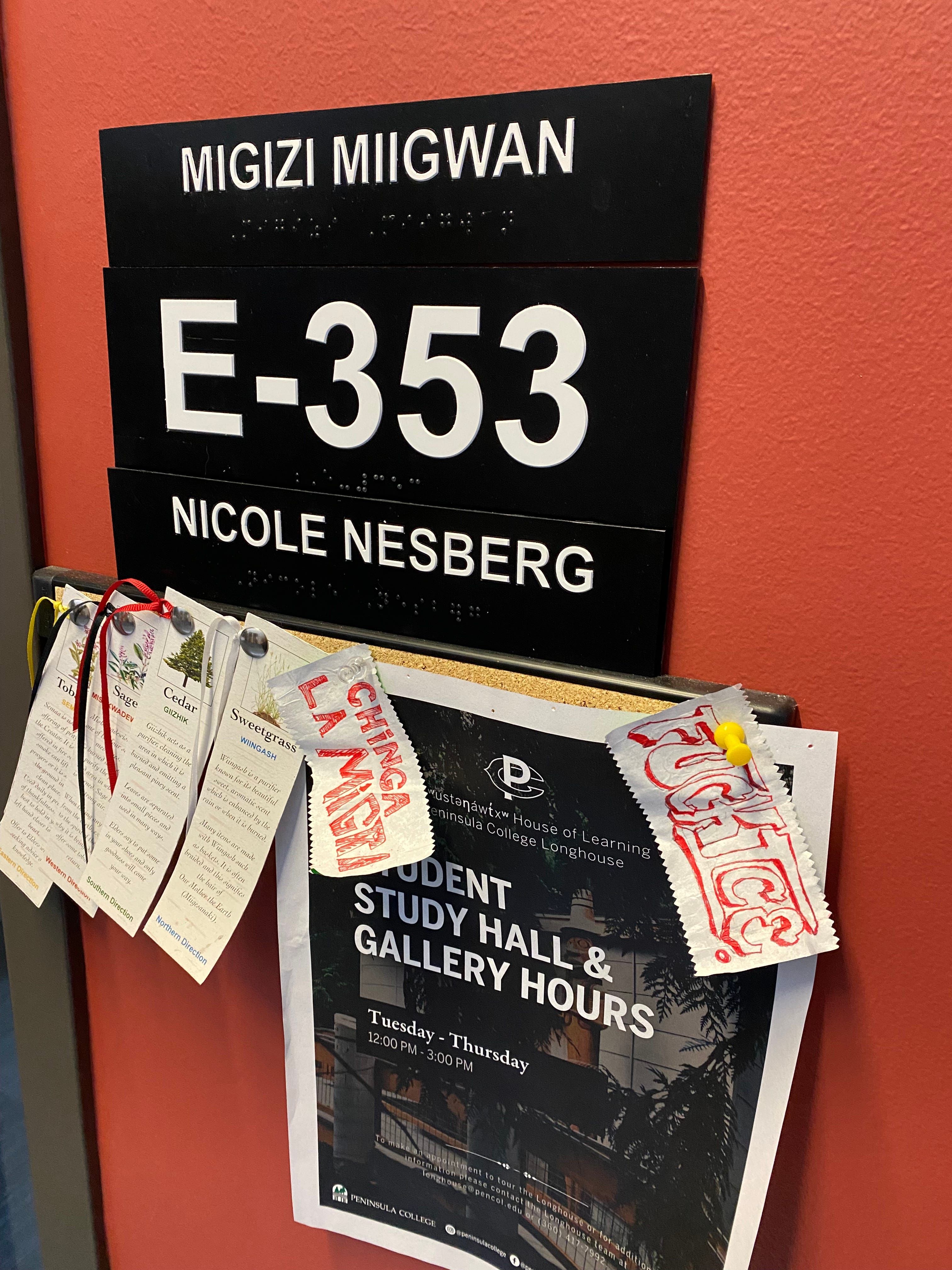
It is not known whether the instructor personally placed the material there or whether it was posted by someone else. The faculty member in question, Nicole Nesberg, who goes by her Ojibwe name Migizi Miigwan, teaches Integrated Indigenous Studies and has been involved in campus programming and activism.
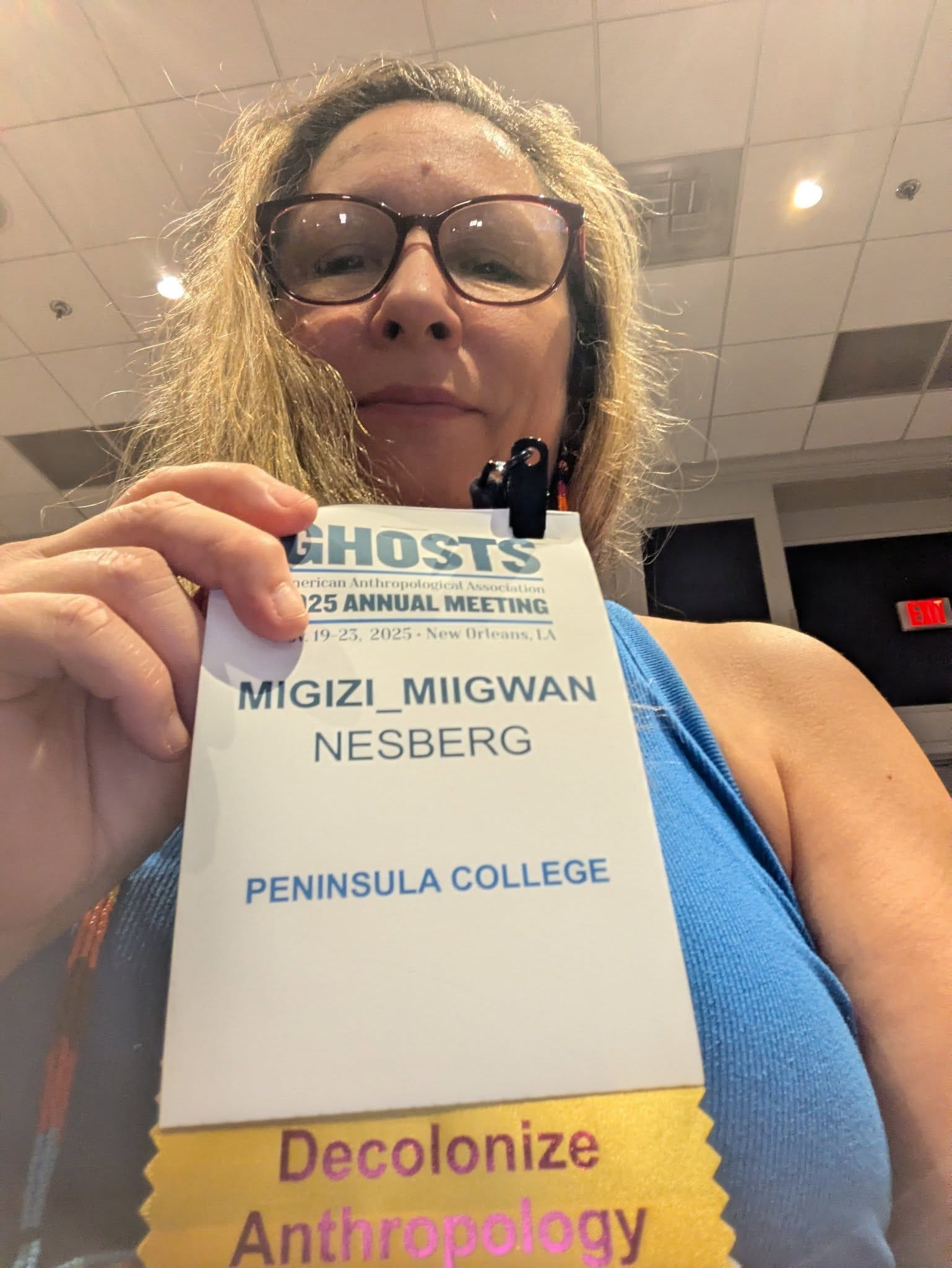
The broader issue goes beyond one door or one sign. In publicly funded institutions, where does academic freedom end and political advocacy begin? Taxpayers support higher education to encourage inquiry and debate — but many are asking whether that includes openly partisan messaging in shared academic spaces.
Supply and Demand
At the Sumas border crossing, Canadian officials recently seized 314 kilograms of methamphetamine hidden inside a commercial truck — one of the largest drug seizures in the Pacific Region’s history. Authorities described it as a major disruption to trafficking networks operating across the border.

Port Angeles, too, is a border town. While local leaders do not control international smuggling routes or federal enforcement, geography matters. The Olympic Peninsula is not isolated from broader trafficking patterns moving through the Pacific Northwest.
County commissioners continue directing taxpayer dollars toward expanded harm-reduction programs, including distributing drug-use supplies and funding low-barrier services. If addiction and availability remain high, people are questioning whether current funding priorities are reducing harm — or simply driving demand.
Scanner Call — Maloney Heights
Saturday afternoon, a report came across the scanner: a deceased male at Maloney Heights. The coroner was dispatched.
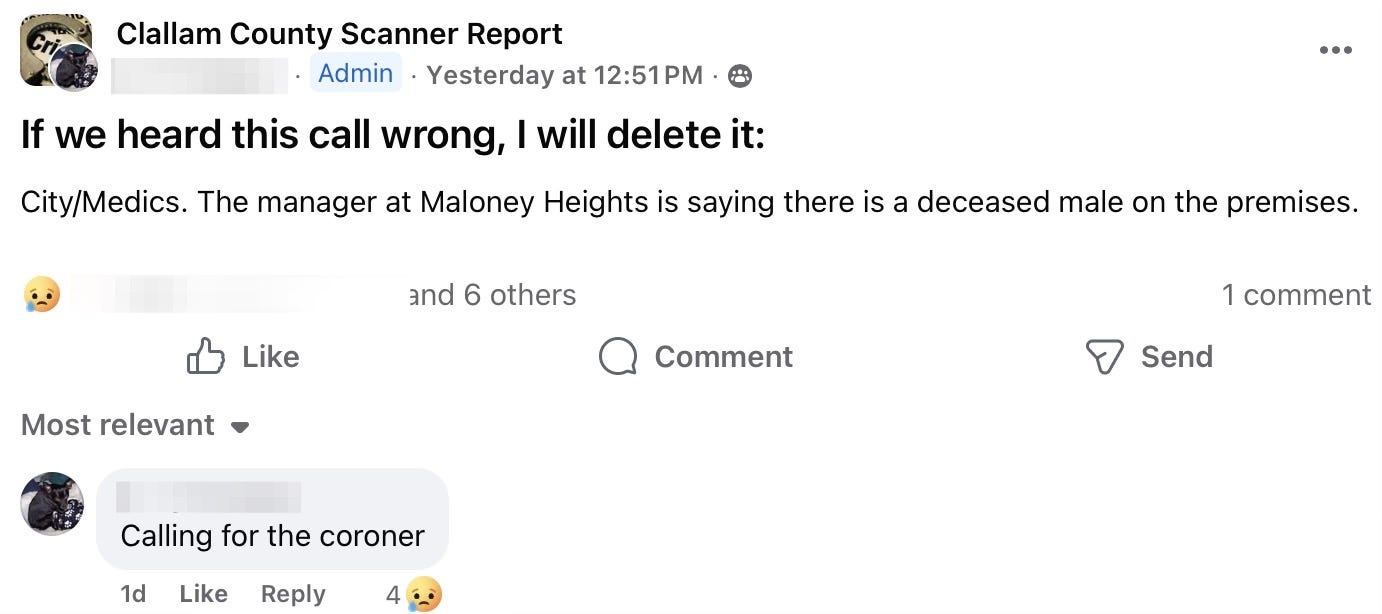
Maloney Heights, next to Serenity House on 18th Street in Port Angeles, is a Permanent Supportive Housing facility. It follows a low-barrier model, meaning residents are not required to meet sobriety or treatment conditions prior to entry.
Supportive housing is intended to provide safety and structure, but incidents like this inevitably raise questions in the community. How often are emergency services called to the facility? What are the long-term outcomes for residents? When public funds support low-barrier permanent housing, the public reasonably expects transparency about both successes and setbacks.







Opinion Pages — Selective Voices
Last year, during a debate over creating a Water Steward position within county government, those who opposed the idea or raised concerns about scope and cost were not allowed to publish their views in the local paper. Meanwhile, an opinion piece supporting the proposal was given space, creating the perception — fair or not — that certain perspectives were easier to platform than others.
Fast-forward to today, and recent submissions have come not from longtime local residents but from Seattle-based political consultants, progressive revenue advocates, and policy organizers promoting statewide reform agendas.
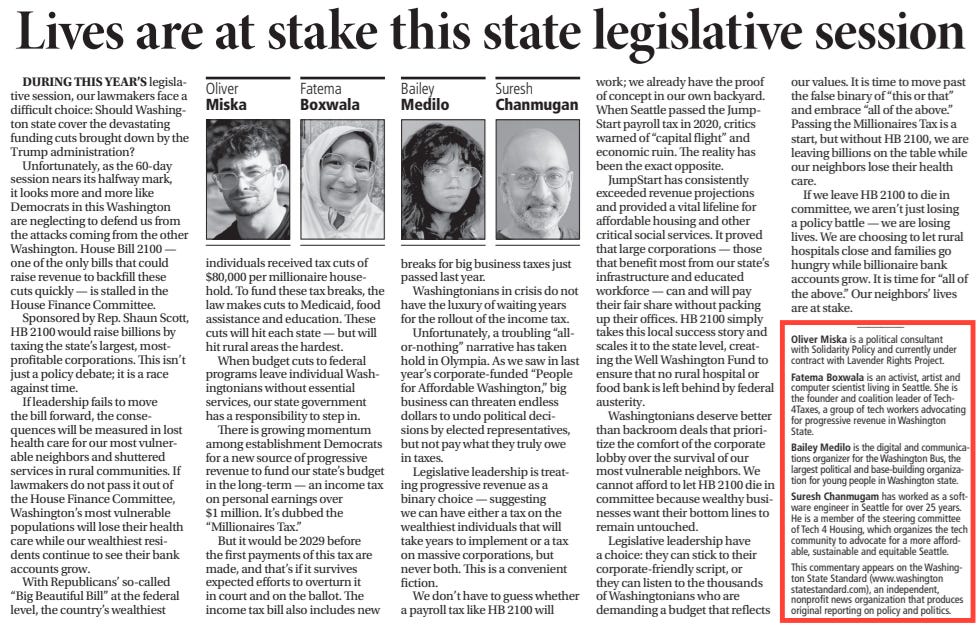

It is important for readers to understand who is shaping the local narrative and whether those authors have professional, political, or organizational interests connected to the policies they support.
When did our local newspaper start giving more space to Seattle activists than to the people who actually live here? A community paper ought to reflect the voices of its own residents — not lean on outside political operatives to frame the conversation.
The Bus Assault Arrest Video
Bodycam footage from the arrest following a September assault on public transit in downtown Port Angeles shows the suspect claiming he was the victim and insisting he could not sit in a police car due to paralysis from a prior injury.
That claim stood in stark contrast to the footage captured by cameras on the bus: the same individual beating a bus driver, kicking at passengers, and attempting to drag one rider off the bus. He is currently back in the community and has reportedly attempted to board the transit system despite being trespassed from it.
The issue isn’t ridicule — it’s the system itself. When the same people cycle through social services, jail, emergency response, and back to the streets, residents are left asking a basic question: What exactly are we measuring as success?


