


Whether it’s a surprise proposal giving sovereign governments veto power over city projects, a statewide lobbying push for new transportation taxes led by Commissioner Mark Ozias, or last-minute attempts to restrict RV living on private land, one theme keeps resurfacing: transparency is missing. This week, Jake Seegers points out that while commissioners lament their “limited authority” in public emails, they simultaneously advance policies that tighten state rules, shrink available land, and inflate costs. Meanwhile, the county fails to enforce its own standards on its own property. This deep dive exposes the widening gap between what leaders say and what they do.
Beneath the Surface
Washington’s state, county, and city codes are revised far too often without meaningful transparency. Ordinances are amended quietly, comprehensive plans are altered during late-night sessions, and the public is frequently left scrambling to understand changes only after they’re already in motion — if they learn about them at all. Taxpayers shouldn’t find out about new mandates once they’ve already taken effect.
A recent example in Port Angeles shows the problem clearly. During the final hours of a long meeting, the council floated a surprise proposal to replace normal tribal consultation with Free, Prior, and Informed Consent (FPIC)—a U.N. doctrine that would give sovereign tribes the power to approve or veto city projects. FPIC was designed for major industrial projects in developing countries, not local zoning or housing decisions, and no other Washington city uses it.
Port Angeles is already struggling with housing and infrastructure challenges, and residents deserve full transparency before a change this sweeping is even considered. Decisions like this shouldn’t appear in late-night discussions; they should be openly explained and debated.
What a Gas!
Sometimes you have to leave Washington to truly appreciate the burden placed on Clallam County residents by state lawmakers and local elected officials.
The day after Thanksgiving, gas near Denver International Airport cost $2.10 per gallon.
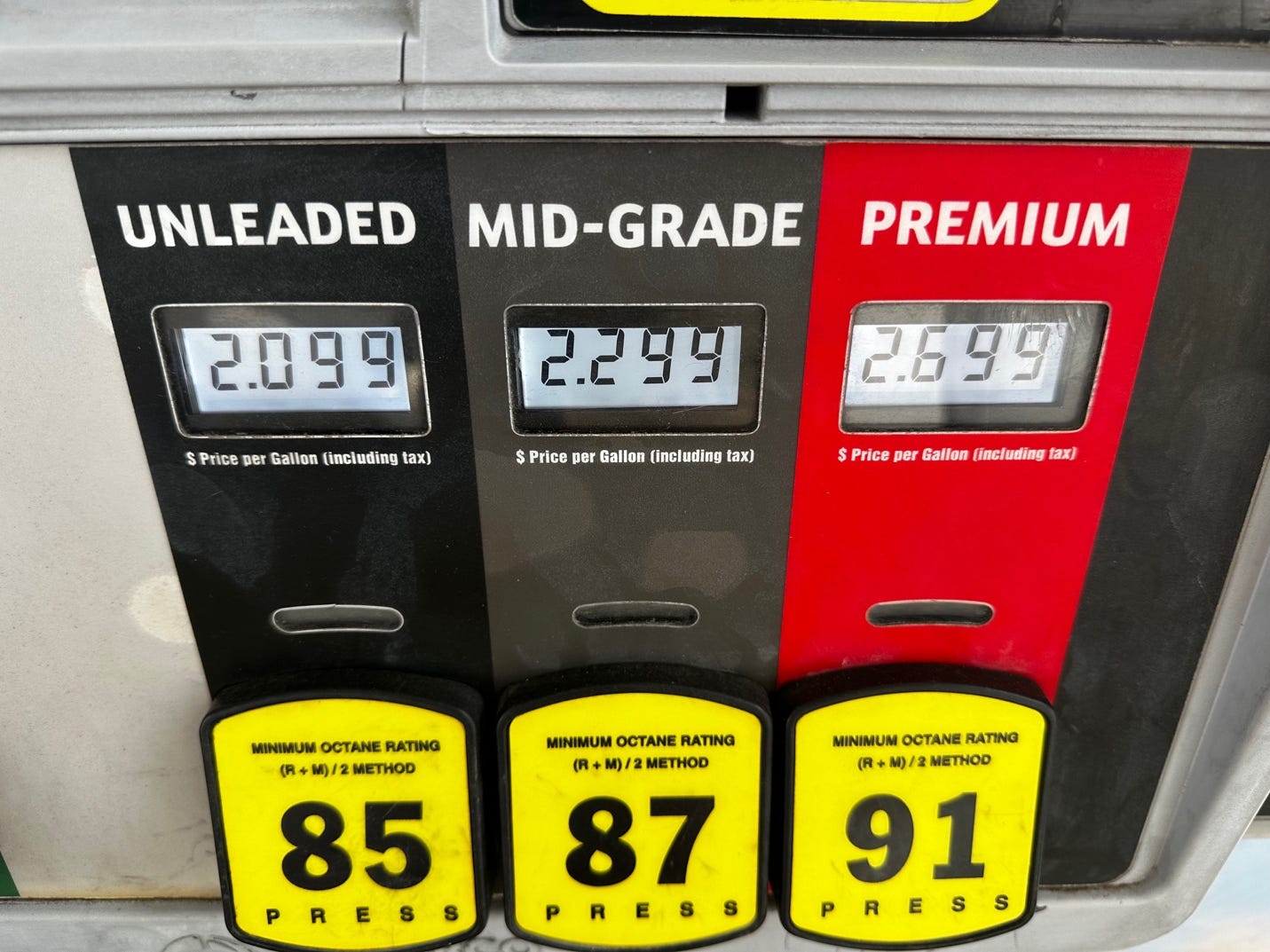
The price near SeaTac Airport? Over $5.00.
Meanwhile, the Washington State Association of Counties (WSAC) — to which Clallam County paid $40,000 in dues this year — is pushing to keep transportation costs at record levels.
WSAC’s 2025-2026 Transportation Revenue legislative priorities include:
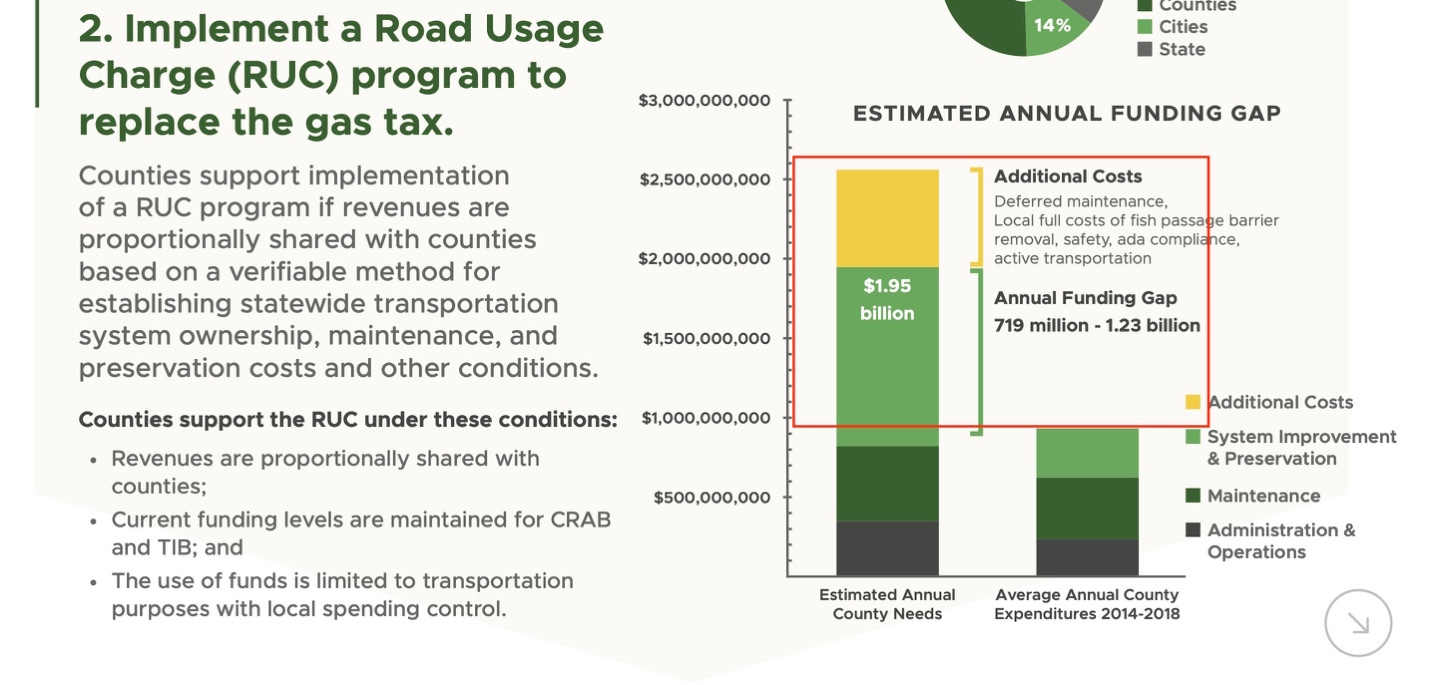
A New Road Usage Charge
This priority aims to raise transportation taxes by over $1.5 billion per year
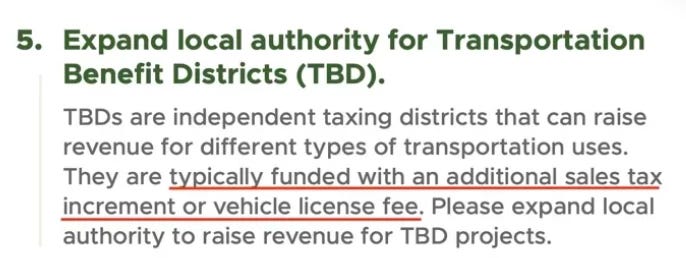
Expanding sales tax collection and increasing fees for transportation
WSAC is lobbying for new taxing districts and fee increases to fund transportation projects.
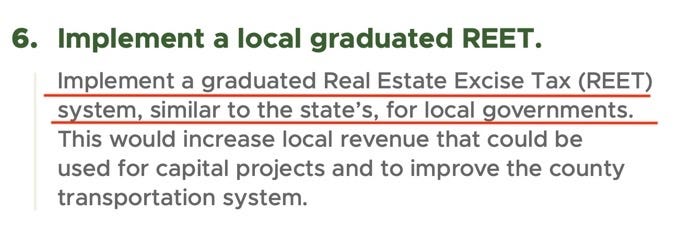
A graduated Real Estate Excise Tax (REET) for local governments.
Increased tax collections at the time of sale, if passed on to the buyer, would further reduce home affordability.
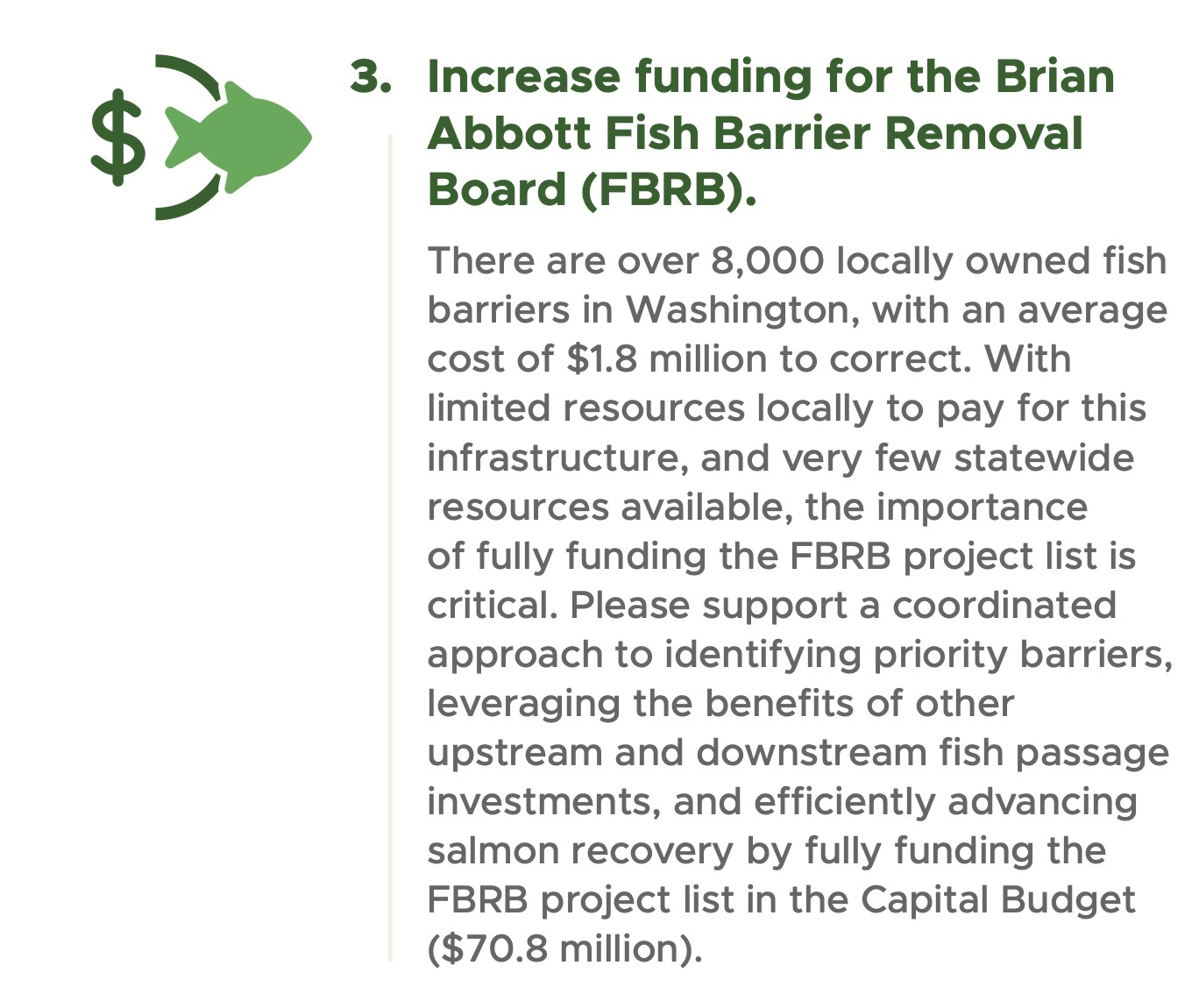
More funding for fish-barrier removal
Who is WSAC’s newly elected president — the one now positioned to guide this lobbyist organization’s push for higher taxes? Clallam County Commissioner Mark Ozias.
Have Your Cake and Eat it Too
In a recent email about housing affordability, Commissioner French expressed frustration with state law's constraints on local decision-making, saying, “I can’t change state building code.”
Yet Commissioner French and his fellow commissioners continue to champion WSAC-backed proposals aimed at shaping state law — proposals that consistently drive up costs for residents and businesses and strain housing affordability — increasing property taxes without public input.
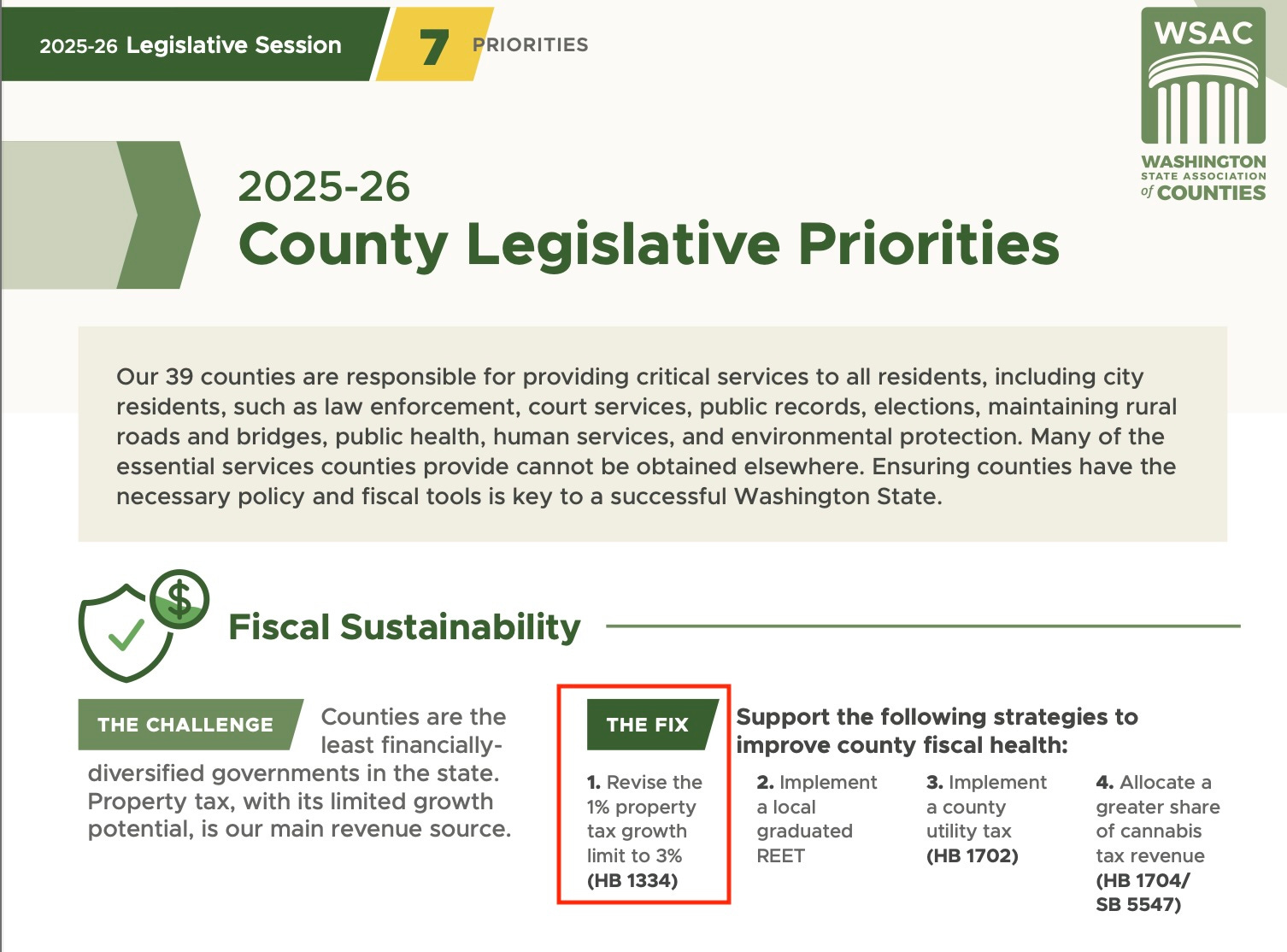
Commissioners have also backed conservation measures that, over the past five years, have taken more than 50,000 acres out of circulation—over 11% of Clallam County’s 437,600-acre private land base. As demand for land has surged, this shrinking inventory has pushed land costs higher and permanently locked in broad property-tax exemptions.
These contradictions are becoming increasingly difficult for citizens to ignore.
The RV Debacle
Local government wields enormous authority, and lately it has used that power to impose new restrictions on property owners far beyond already burdensome state requirements.
That frustration peaked at the November 10th hearing on proposed changes to the county code regulating RVs, ADUs, and vacation rentals. Residents across the political spectrum lined up for nearly two hours, conveying a consistent message to the commissioners and Department of Community Development Director (DCD) Bruce Emery:
Hands off our property rights. Hands off the last remaining options for affordable housing.
Joyce resident and EMT Clark Allen summed it up with biting humor (time-stamp 1:56:30):
“If this keeps up, these people won’t be here in five years… They won’t be able to afford it.”
Similar frustration swept through the county when residents discovered, at the last hour, the Planning Commission and DCD’s proposed changes to the county’s Title 33 Zoning.
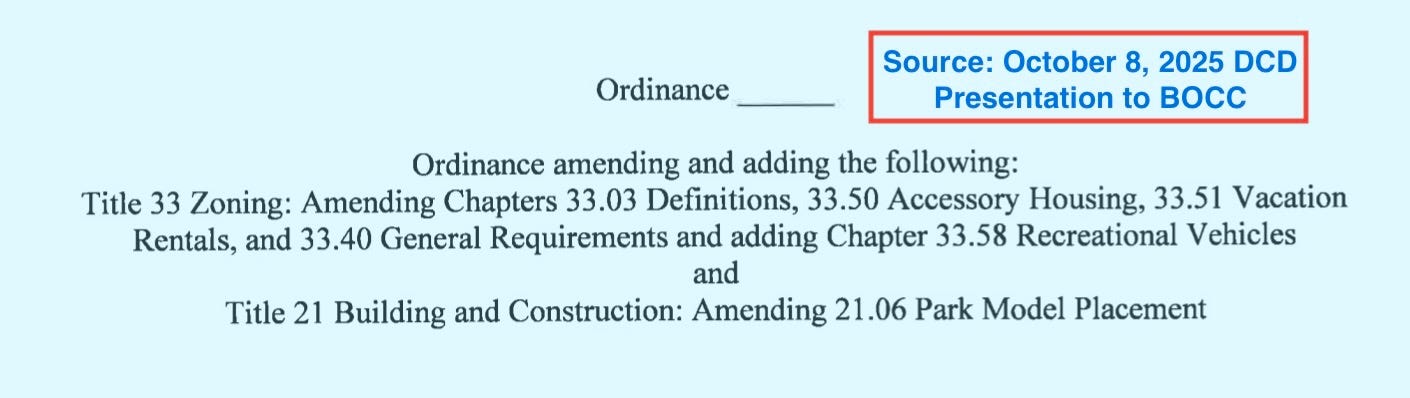
The most controversial? A 180-day limit on RV occupancy on private property.
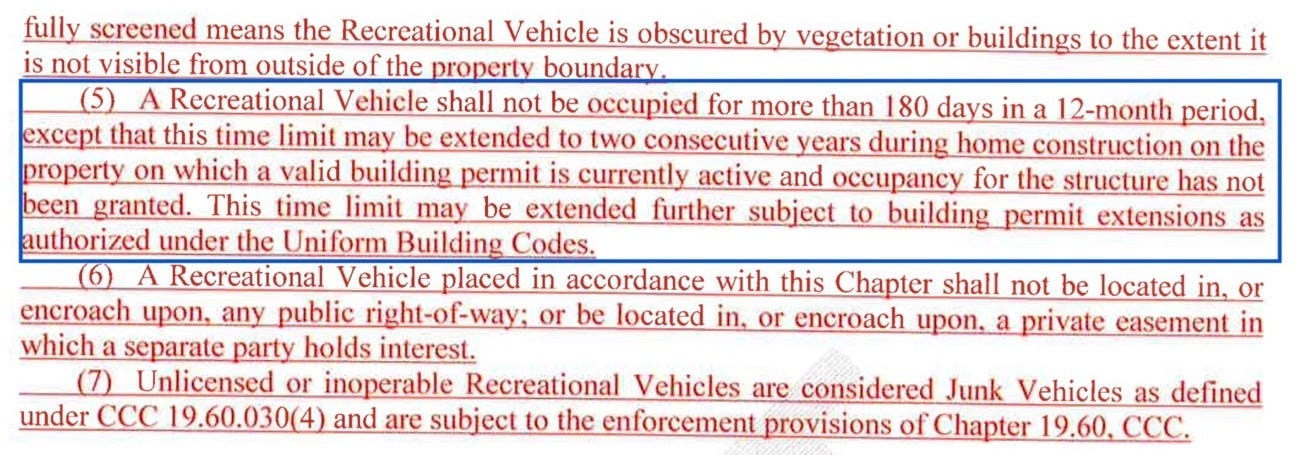
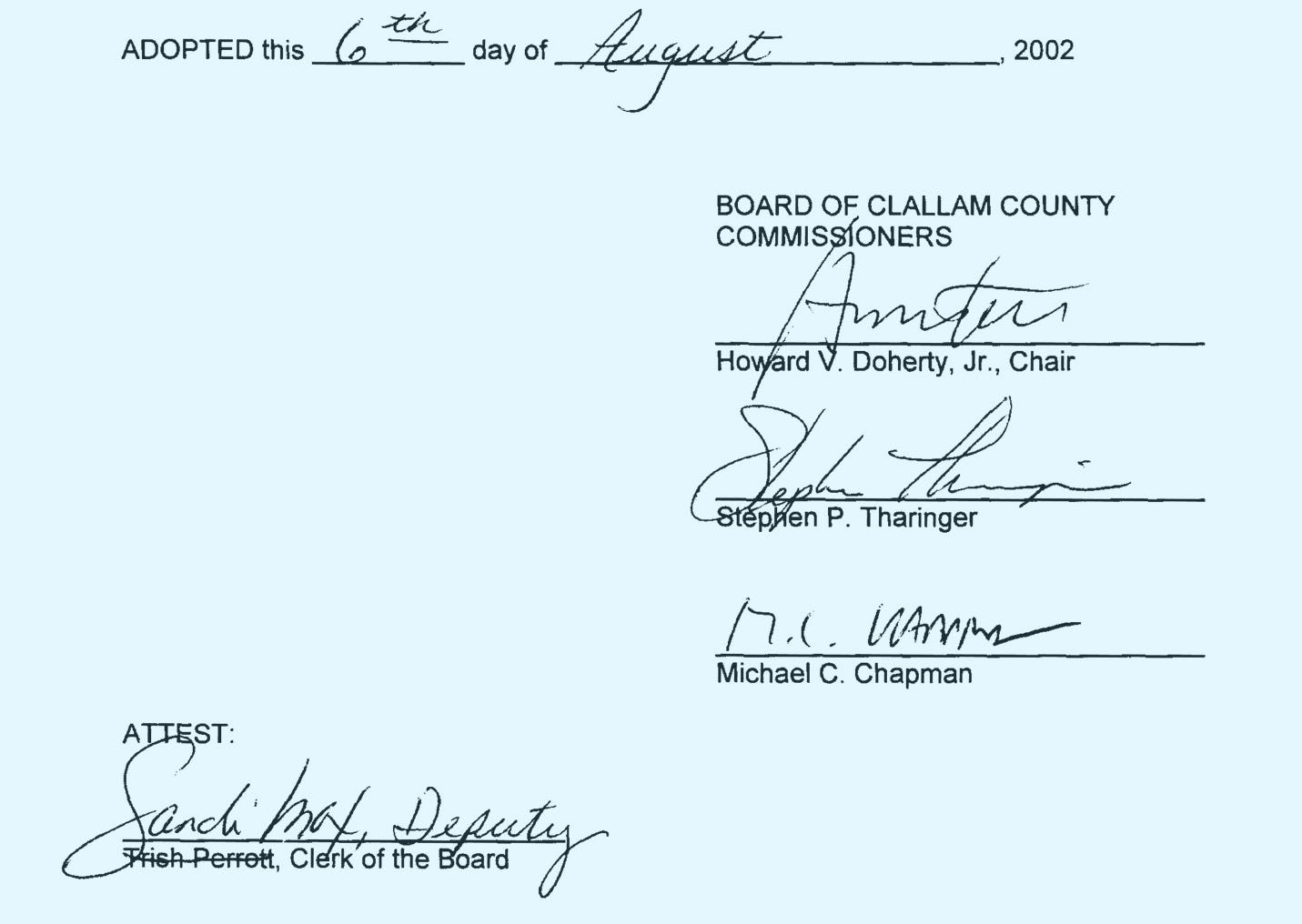
DCD Director Emery and the commissioners have since tried to reframe the 180-day RV limit as an expansion of use, citing what they claim is an existing 90-day occupancy limit in Clallam County Code (CCC) 33.50.020(2). But the line they reference is ambiguous, poorly placed, and effectively unenforceable. It appears to have been quietly added in 2002 by then-commissioners Mike Chapman, Steve Tharinger, and Howard Doherty — and inserted into a section of code intended to regulate Accessory Dwelling Units (ADUs), not recreational vehicles.
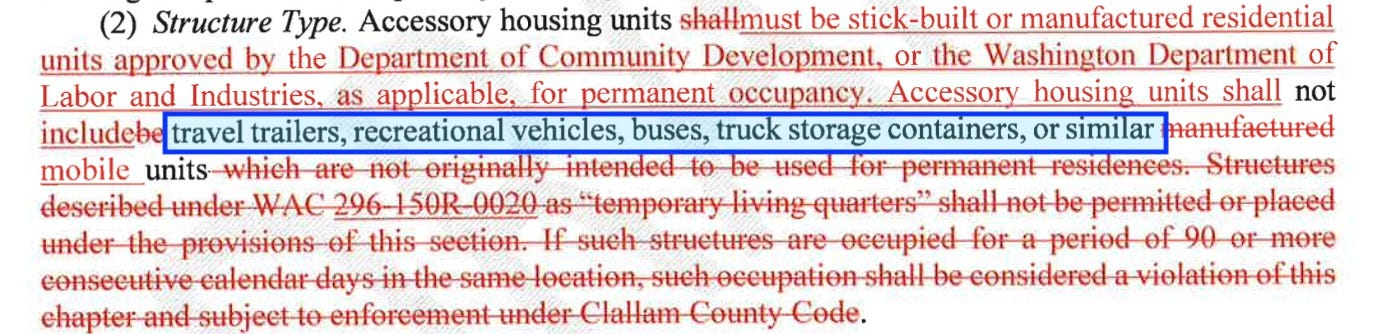
Currently, the line in question sits within the ADU regulation code, as shown below (highlighted in blue). But RVs are not ADUs: they are regulated by Washington State Labor & Industries, do not require a certificate of occupancy, and are explicitly excluded from the “Structure Type” definition required for ADUs.
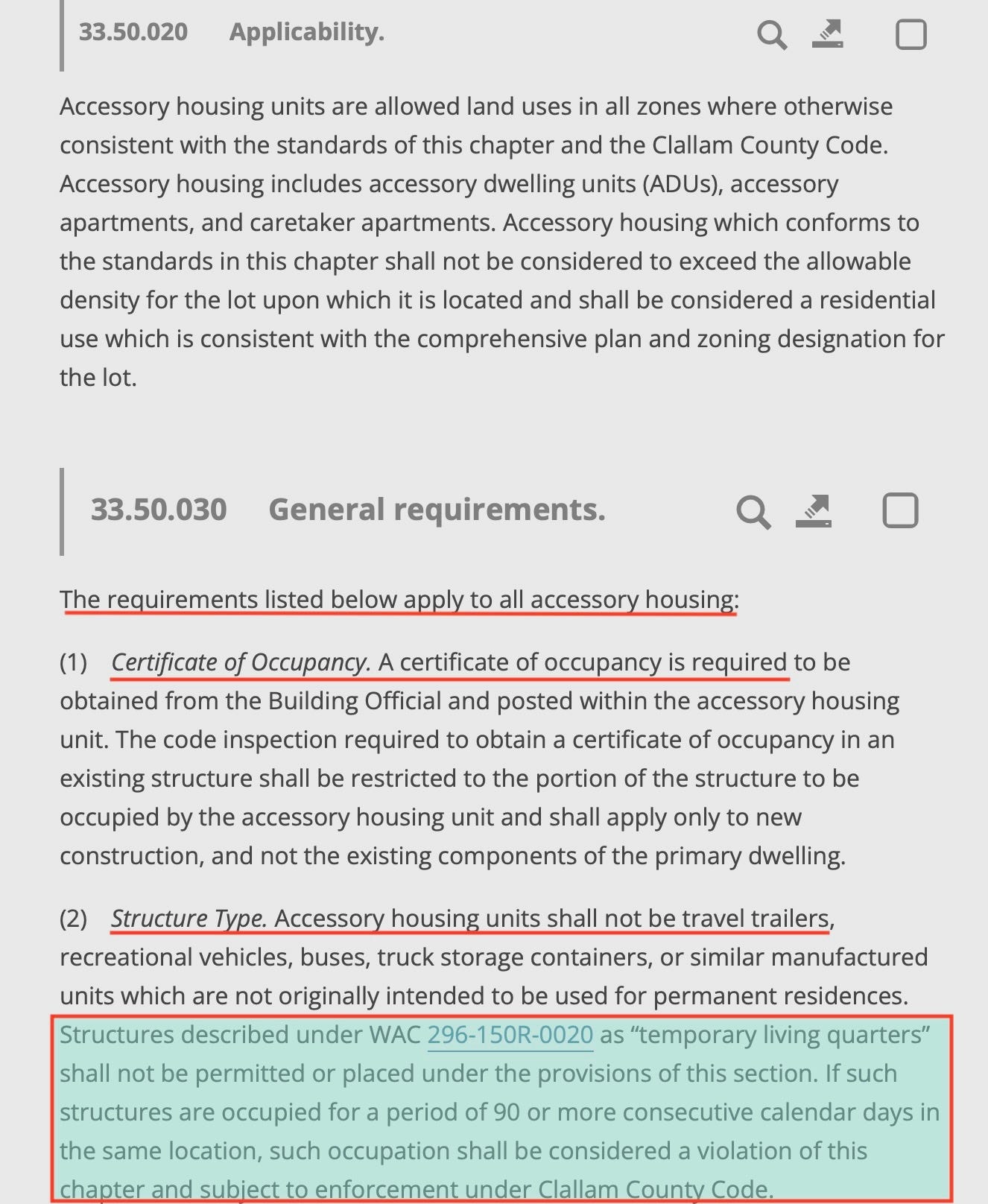
Even more telling, the supposed “90-day limit” is unenforceable in the real world. The ordinance prohibits occupation of “90 or more consecutive calendar days in the same location,” but as Director Emery himself admitted during an April 2nd Planning Commission meeting (11:20), this is “absolutely unprovable.” Any RV owner could simply claim they were gone for a night or moved the vehicle briefly, making enforcement impossible.
What is clear is this: the proposed 180-day occupancy limit would have been a major strike against property rights and one of the last remaining forms of affordable housing in Clallam County.
A Win — and an Opportunity
Because citizens spoke loudly and in force, the 180-day limit has been removed from the draft ordinance. The county is also proposing to allow a second occupied RV — but only with a conditional use permit.
More can be done. With the County’s Title 33 zoning still under review before the January 20th vote, property owners have a unique opportunity to push back further.
Here are key changes worth demanding:
1. Allow two occupied RVs per parcel without a conditional use permit.
2. Increase vacation rental allowance from one to two per parcel, including bedrooms within a primary residence (dependent on owner-occupancy) - without being classified as a “Bed and Breakfast".
This approach would give families, retirees, and young professionals—many of whom are struggling to afford to stay in Clallam County—flexible options for additional income while expanding both short-term and long-term housing supply. For example, a young professional could rent out two bedrooms of a primary residence on Airbnb while offering an ADU and an RV as long-term rentals. Items 1 and 2 above directly support these property-owner options for ADUs and RVs and would meaningfully improve local housing availability.
3. Remove the 30-day critical area location limit
Extended outdoor camping or “RVs as extra bedrooms” on private property near streams and lakes should not be restricted when RV sewage and water systems are not discharged or are properly hooked up.
4. Broaden the language so that alternative structures may be planned or retrofitted to meet approved building codes.
Don’t lock out innovation. Forks Watchdog, Dr. Sarah, put it best:
“Ensure the resolution does NOT lock the county into a permanent ‘No’ on alternative housing. Right now, the language essentially bans future innovation by putting these structures into a prohibited list rather than a regulated list.”
Tumwater Tents: The Double Standard
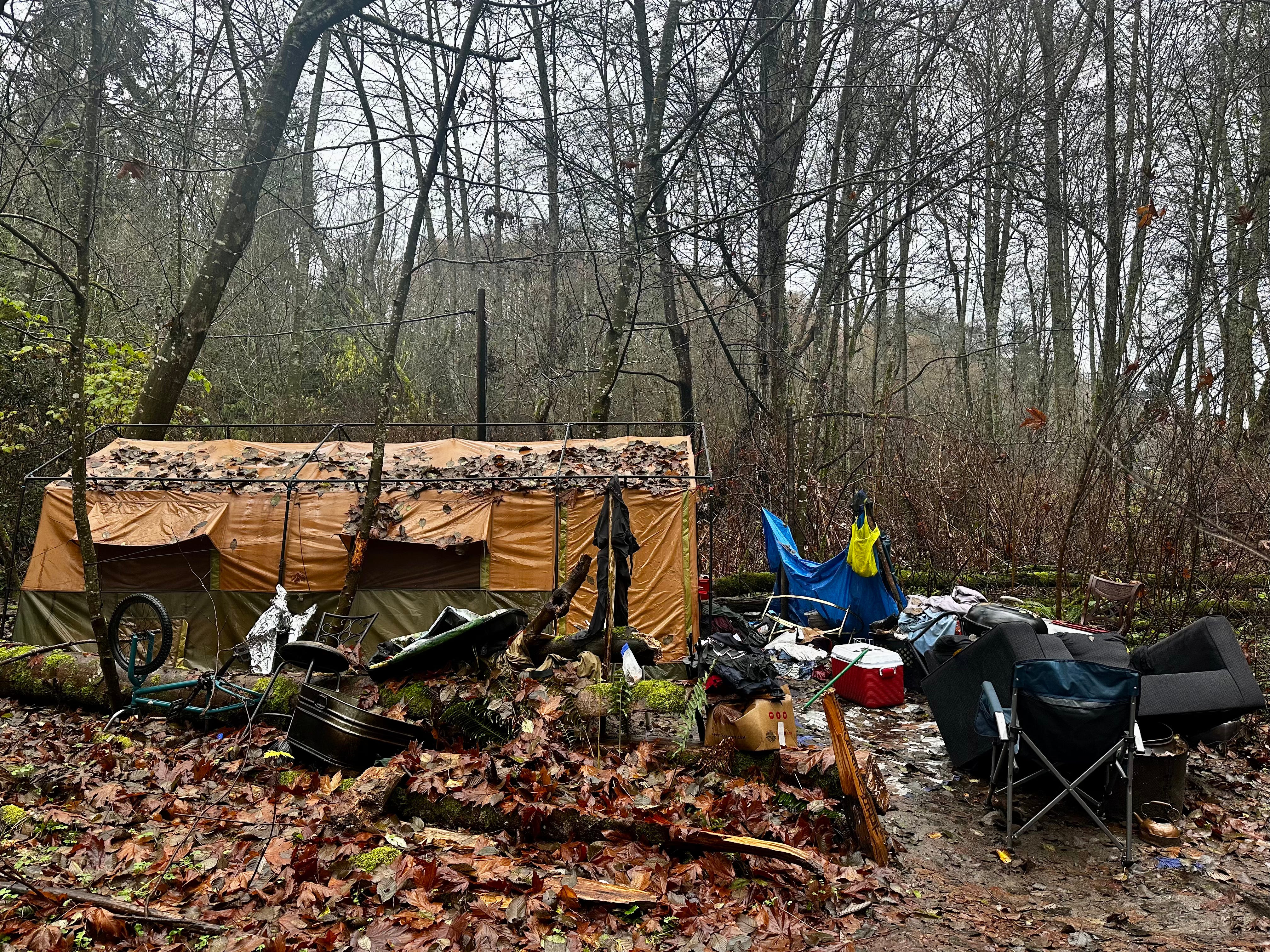
As taxpayers fight to defend their property rights, county commissioners fail to responsibly manage the county’s own land — where tent communities proliferate, and trash from the Harm Reduction Health Center washes into fish-bearing creeks.
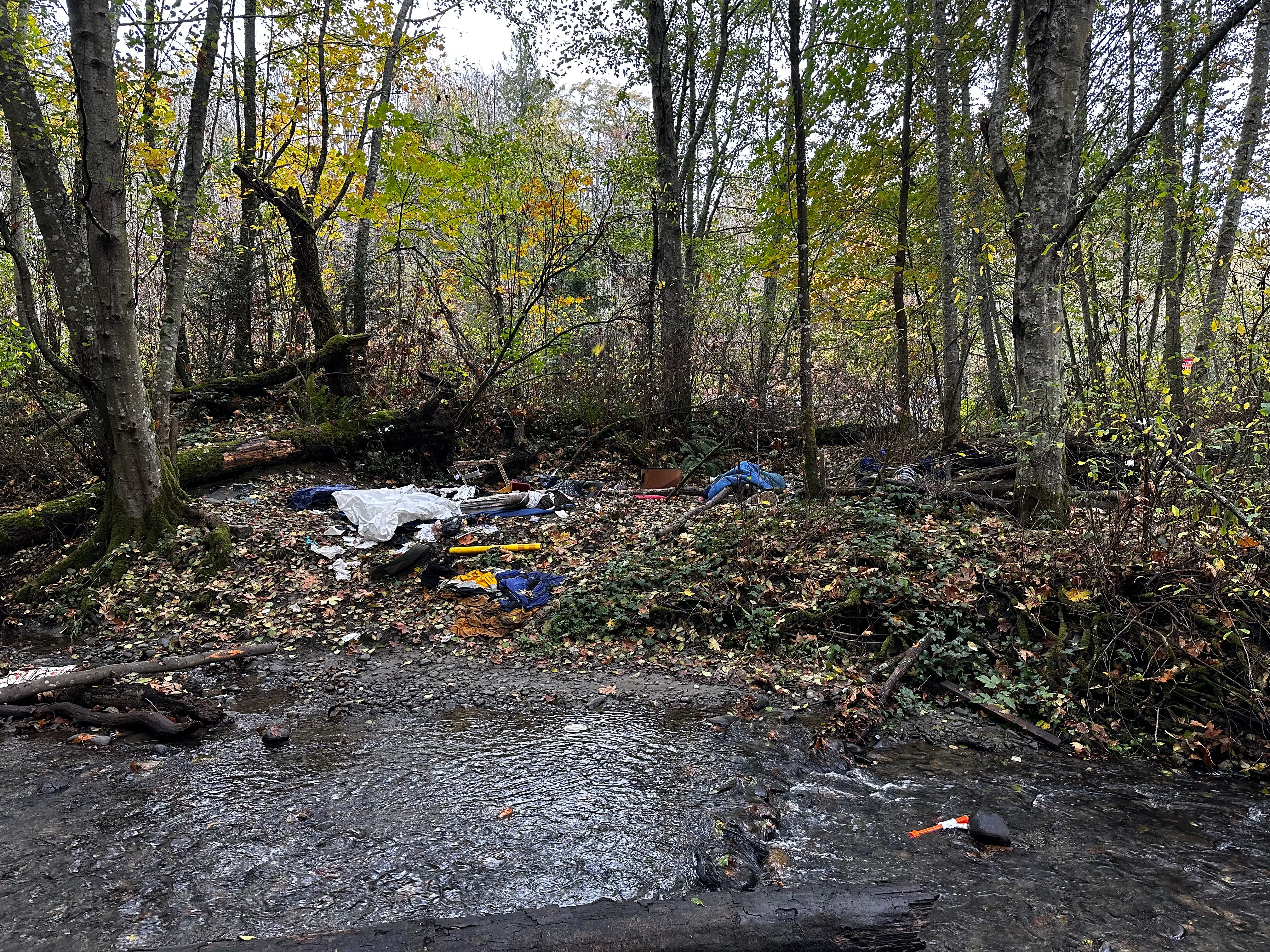
On a piece of Clallam County–owned land just below the 8th Street bridge, a major creekside tent encampment has taken hold.
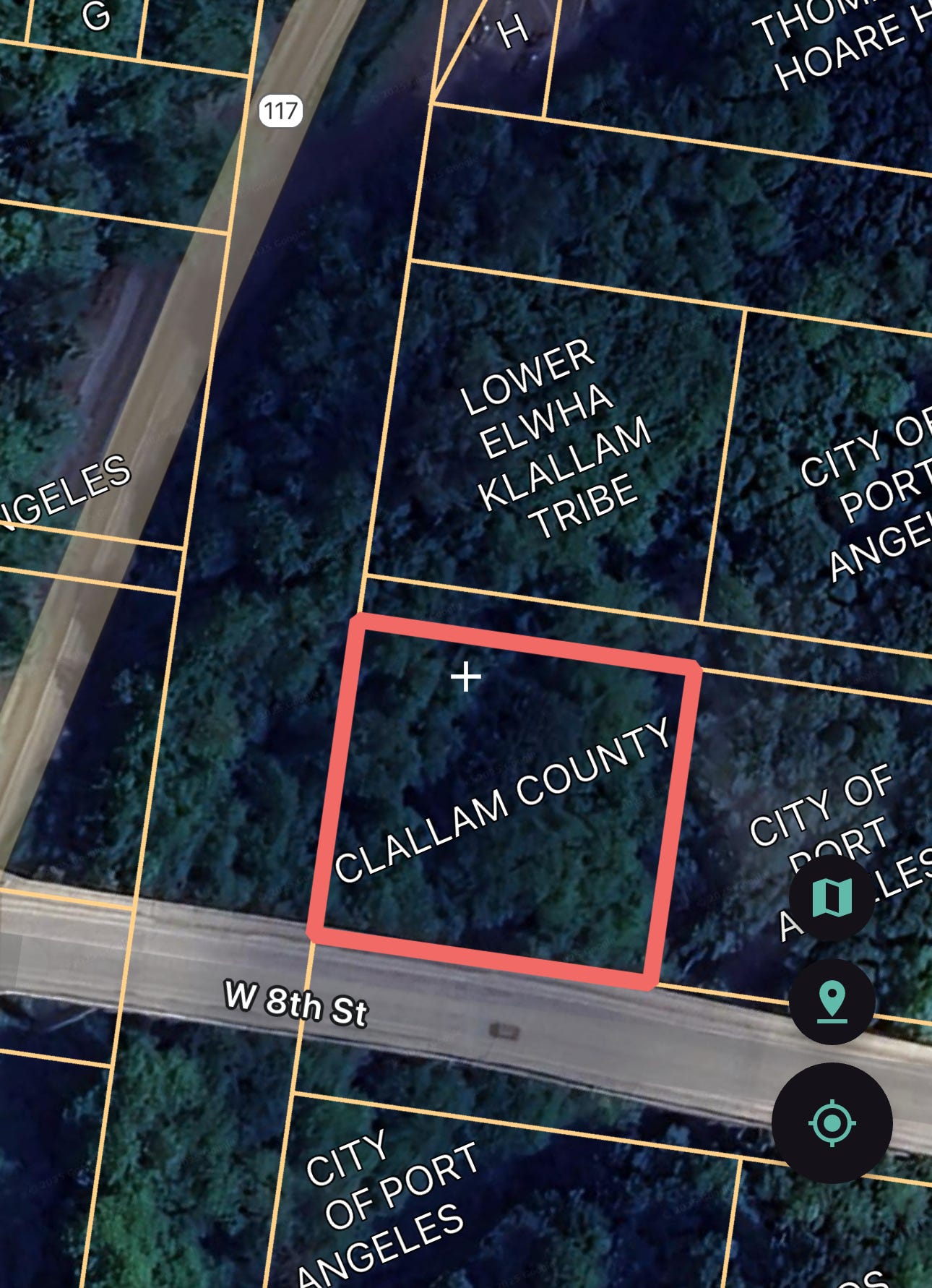
The encampment on county land is littered with trash, presents health hazards, and causes ongoing environmental damage. Despite its visibility and impact, there has been virtually no enforcement.
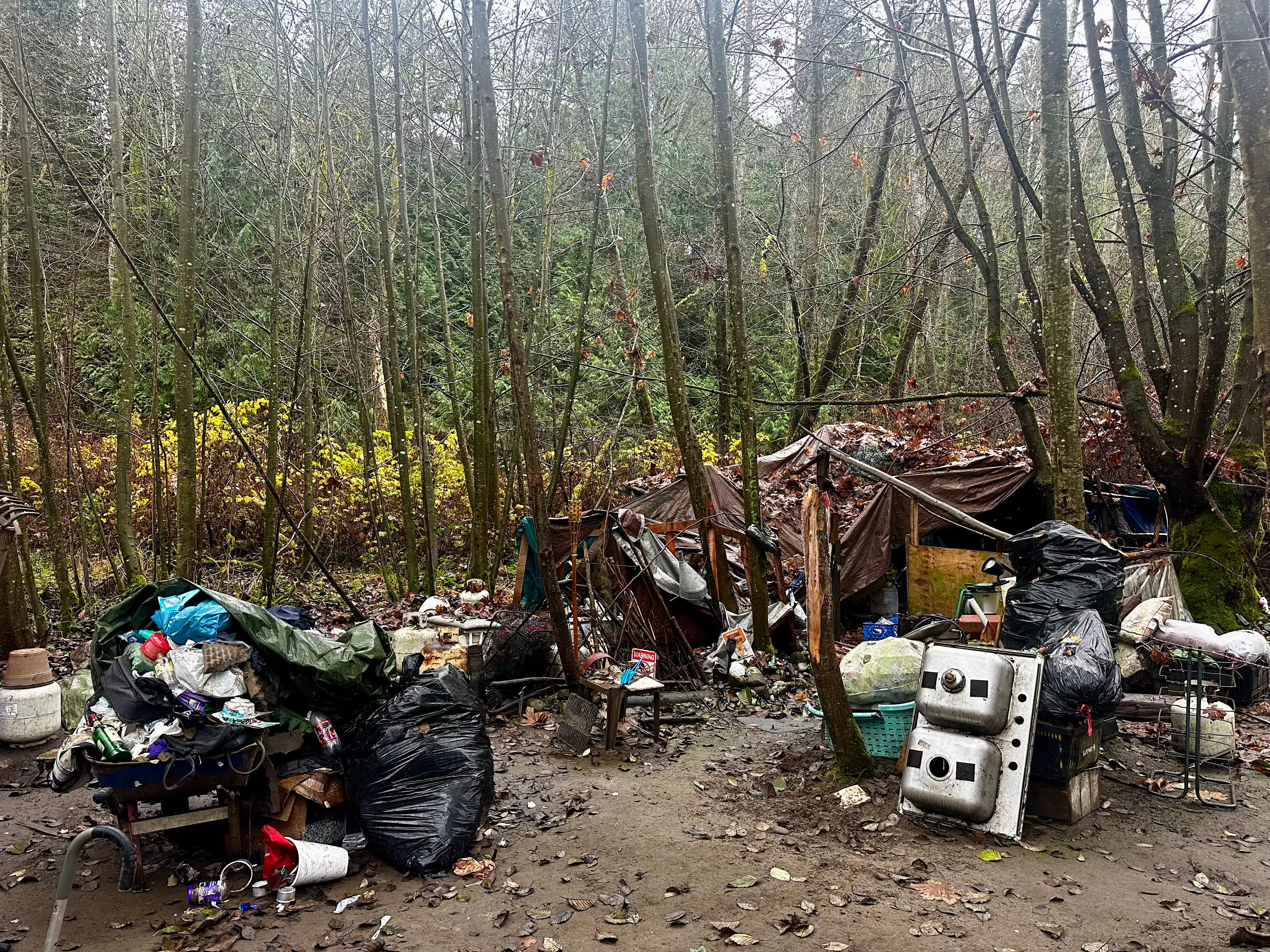
While property owners face 30-day limits for responsible RV camping near creeks on their own land, tent communities on Clallam County–owned property are allowed year-round along ecological restoration sites — dumping waste directly into the waterways the county claims to protect.
Citizens are expected to jump through code-enforcement hoops.
The county doesn’t enforce its own rules on its own land.
This hypocrisy is the heart of the problem.
What Can You Do?
Write the commissioners and Director Emery to share how you believe the proposed RV/ADU/Vacation Rental ordinances should be modified to protect—and expand—property rights. All 3 commissioners can be reached by writing the Clerk of the Board at Loni.Gores@clallamcountywa.gov. The DCD Director can be reached by emailing Bruce.Emery@clallamcountywa.gov.
Write to the Port Angeles City Council about their plan to outsource your property rights to a sovereign nation and provide public comment during their December 16th meeting. All Port Angeles City Councilmembers can be reached by emailing council@cityofpa.us.
Last week, Jake Seegers asked readers whether the Clallam Conservation District should play a larger role in addressing pollution-reduction efforts along salmon streams. Of 126 votes:
91% said, “Yes”
4% said, “No”
5% were unsure
Editor’s Note: CC Watchdog editor Jeff Tozzer also serves as campaign manager for Jake Seegers during his run for Clallam County Commissioner, District 3. Learn more at www.JakeSeegers.com


