


Port Angeles Deputy Mayor Navarra Carr just spent a work session asking how much of the city isn’t a “critical area” — downtown fill, the mill, the port, the harbor, the bluffs. She wants codes that prohibit development there, and she wants last year’s fight over net ecological gain put back into city law. She also runs Mike French’s campaign, and this is what that partnership sounds like when the microphones are on.
Port Angeles Deputy Mayor Navarra Carr spent the August 25 city council work session mapping a city so full of “critical areas” that she was no longer sure what was left.
She wants maps.
She wants stronger codes that “prohibit development in critical areas.”
She wants downtown fill treated as a climate problem.
She wants net ecological gain revived.
She wants variances locked down so mills and ports cannot “bend our ear.”
She even asked whether people should still be allowed to drop anchor in Port Angeles Harbor.
That is not a side comment from a junior member. Navarra Carr is County Commissioner Mike French’s campaign manager.
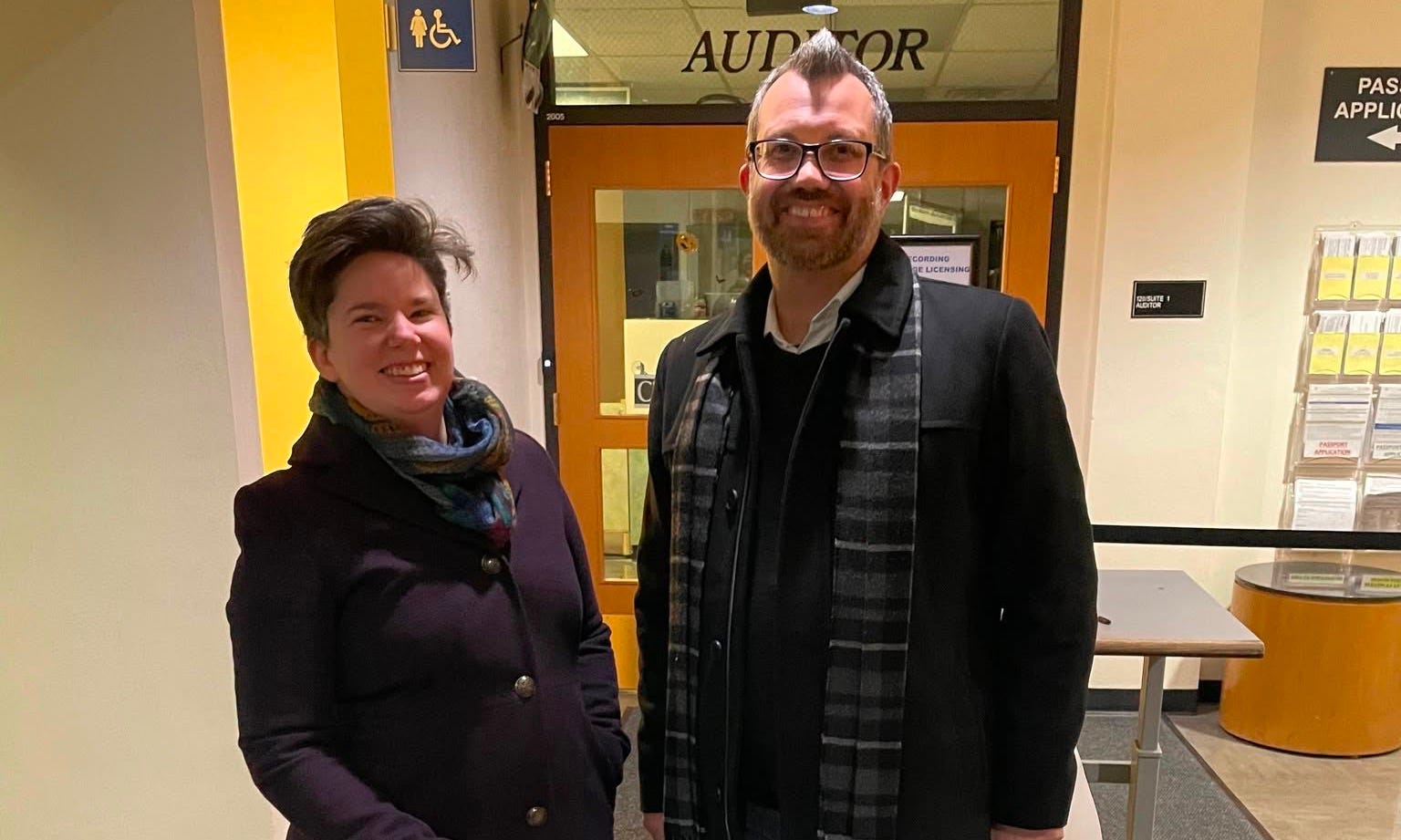
French gave her $1,000 in her last race — behind only a union and the Jamestown Tribe.

If voters want to know what a second French term looks like, this is the crystal ball.
The same playbook as last December
Last December, then-Councilmember Lindsey Schromen-Wawrin tried to stuff the 20-year Comprehensive Plan with two upgrades: replace “no net loss” with net ecological gain, and replace tribal consultation with U.N.-style Free, Prior and Informed Consent. No other Washington city uses FPIC for local zoning. Staff were told to write it in. Carr strongly supported it.
On August 25, Carr did not say the letters F-P-I-C. She did something quieter and more durable. She put net ecological gain back on the calendar and said if it is not settled inside the critical areas ordinance, “frankly, I don’t know when we would be having it.”
That is the same standard debated late last year: prove the environment is better after you build, not merely that you avoid damage. In a small, already-built city on fill, creeks, bluffs, and a working waterfront, “gain” is not a scientific finding. It is a permission slip the city can withhold. Housing gets slower and more expensive. Remodels become negotiations. Industrial land becomes a hearing.
Carr wrapped it in the favorite phrase of the planning class: “best available science.” Science is not the issue. Who picks the science, and who gets a variance, is the issue.
If everything is critical, nothing can be built
Carr’s opening move was the map. Stream corridors under roads. Shoreline. Ravines. Aquifers. “I’m not sure which areas aren’t in our critical areas.” Then the policy: “We should also have strong codes that prohibit development in critical areas.”
Then she asked the question that should alarm every downtown owner: what about the fill? “All of downtown, to my understanding… is built on fill.” Maybe not a wetland for salmon, she said, but “when we’re talking about climate change mitigation, it certainly comes into play.”
Read that again.
The commercial core — Railroad Avenue, Front Street, First Street, the streets people actually use — can be pulled into the same regulatory bucket as a creek corridor if climate language is wide enough. That is how a working downtown becomes a special overlay.
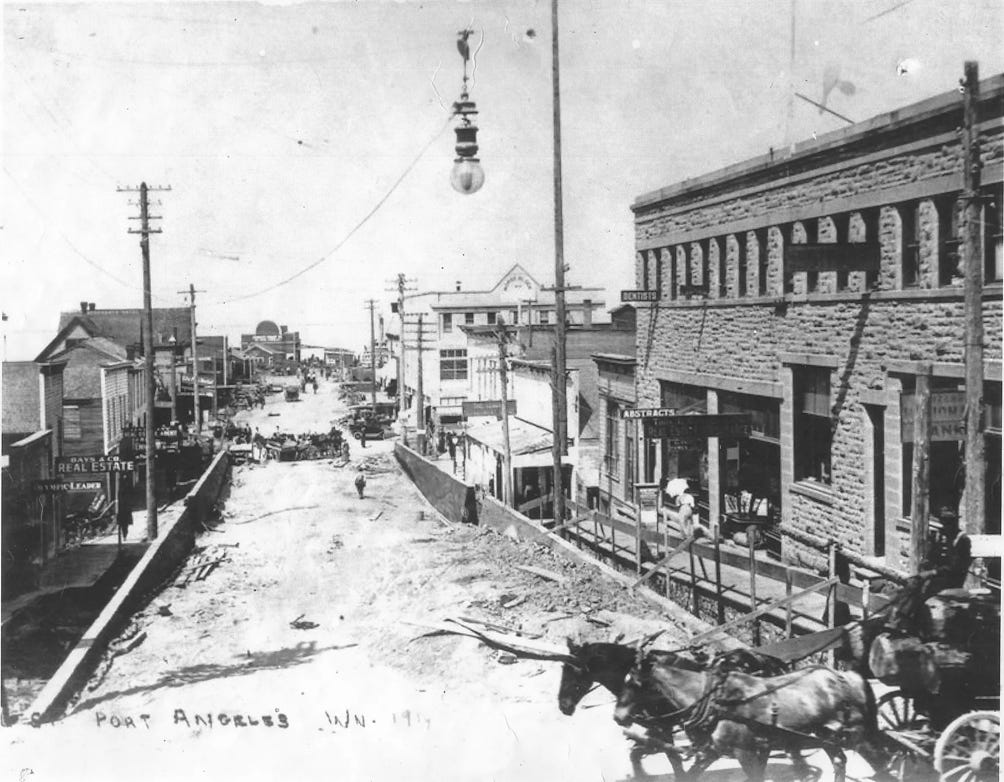
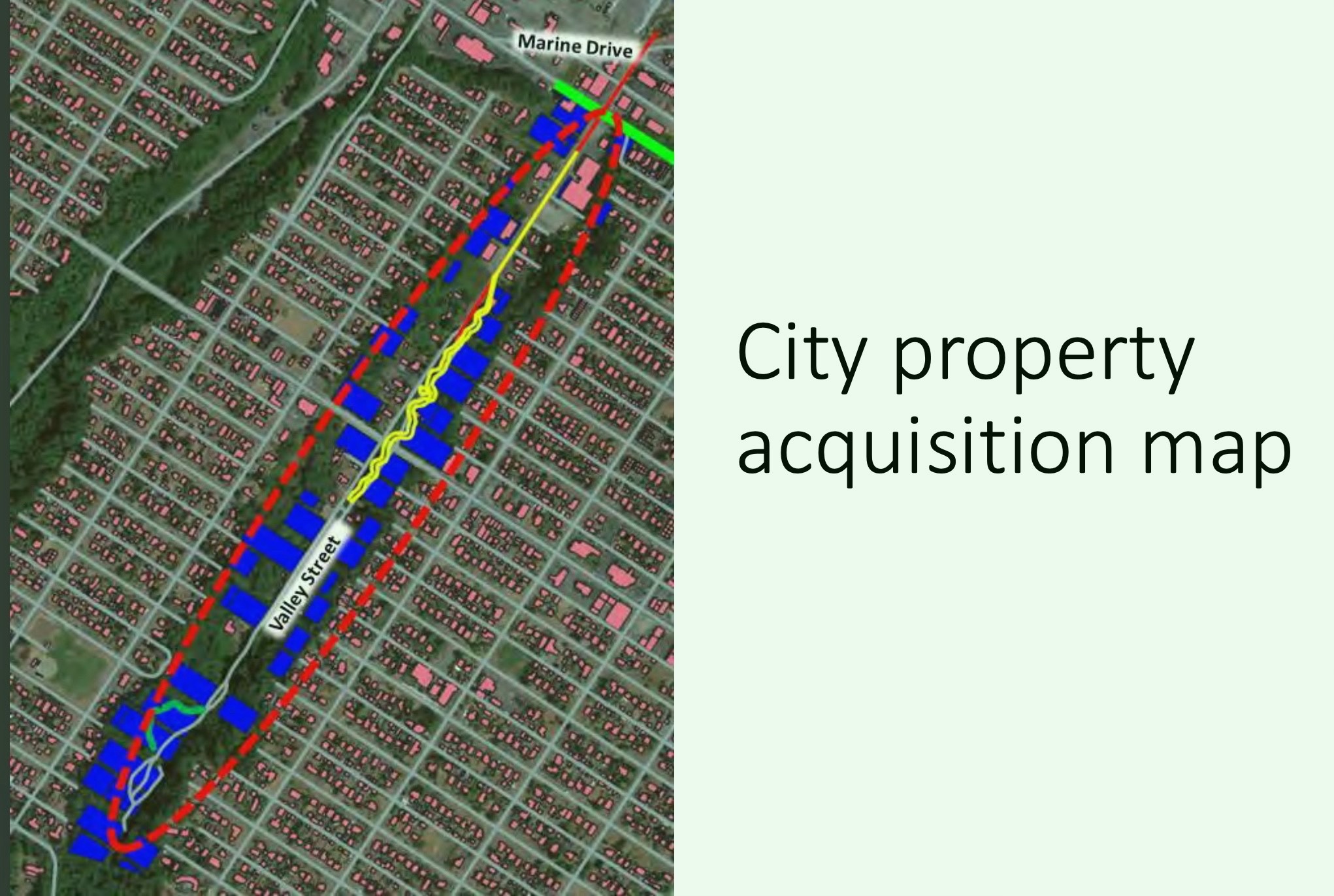
This is the same pattern described in GreenLink or Land Grab published four months ago. Daylight the creek. Widen the corridor. Call it a park. Then the industrial land, streets, and private lots are treated as obstacles. Restoration language first. Acquisition questions later.
The mill and the port are “critical.” The creeks get a sermon.
Carr said the mill sits in what she would “imagine to be a critical area.” Most of the port buildings, too. The marina. “A huge amount of infrastructure on our shoreline.” She says that is not necessarily bad. She wants “smart and strategic development.”
Then she named the problem, and it was not the needles and human waste in Peabody and Tumwater Creeks. It was employers:
“What are we doing about the big businesses who can pay… What are we doing about the people who have enough pull… that the most vulnerable and the poorest people among us are not.”
That is the tell. Critical-area talk gets strict when a mill, a terminal, or an Amazon-scale project might get a variance. It goes soft when the same corridors hold encampments. The people with “pull” are the ones who file applications and make payroll. The “most vulnerable” become the reason not to enforce.
Selective enforcement is a fair complaint. The answer cannot be a code that squeezes businesses and treats illegal occupation of stream corridors as a protected class. Trash, needles, and sewage in the creeks are not a land-use variance. They are a public-health failure. Lecturing Westport while encampments sit in the same “critical” landscape is not environmentalism. It is politics.
A deep-water port is not a mooring-ball experiment
Carr was “delighted” to hear eelgrass and kelp mentioned. She interacts with them “through sailing.” Then: should Port Angeles “continue to allow people to anchor in our harbor”? Tankers do it. Private boats do it. Her preferred fix for the little guy is mooring buoys, plus more public dock space, because anchors can tear eelgrass.
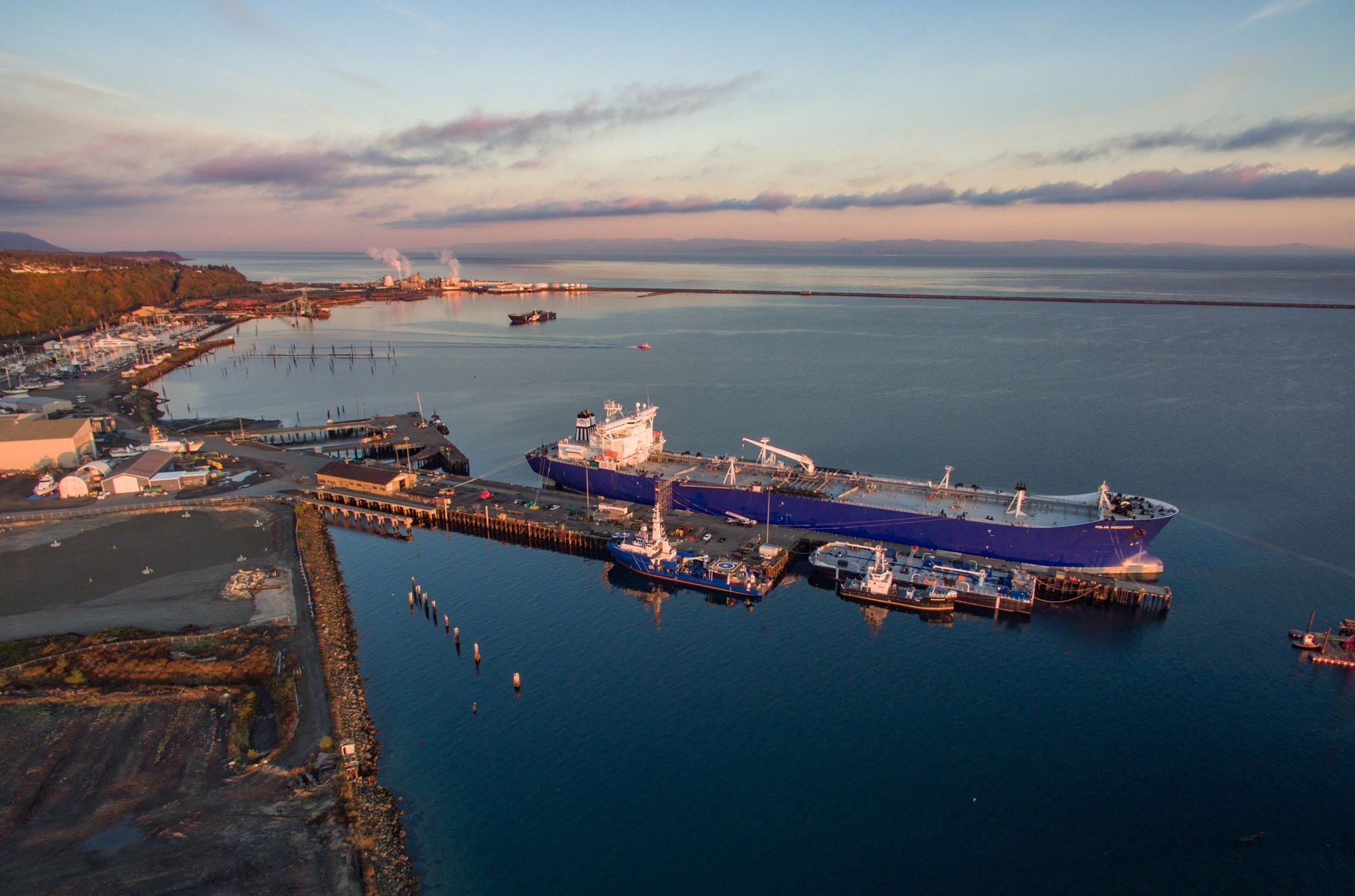
Port Angeles is not a boutique cove. It is the first full-service deep-water port on the Strait of Juan de Fuca, with three industrial terminals that take logs, lumber, pulp, chips, chemicals, and repair work — vessels up to 1,000 feet. Harbor anchoring is part of how that system works. Treating tanker layup and commercial use as a lifestyle conflict with kelp beds is how a timber-and-marine town talks itself into being a marine sanctuary with a gift shop.
Protect eelgrass, but do not pretend the harbor exists for Navarra’s sailing calendar.
Water after the dams, trees after the neighbors, bluffs after the condos
Carr echoed Councilmember LaTrisha Suggs on aquifers and “other ways to expand where we’re able to get our water,” because “we’re in a drought” and past councils did not have to think this way. The Elwha dams came out, and the city’s water storage left with those dams. Now the same political cohort wants new water sources and tighter land rules at the same time.
On trees, she and Suggs want retention treated as a community asset, not a lot-by-lot right. “We live in a community.” True. Communities also need roofs, shops, and the ability to cut a hazard tree without a public hearing.
Then she turned to the bluffs.
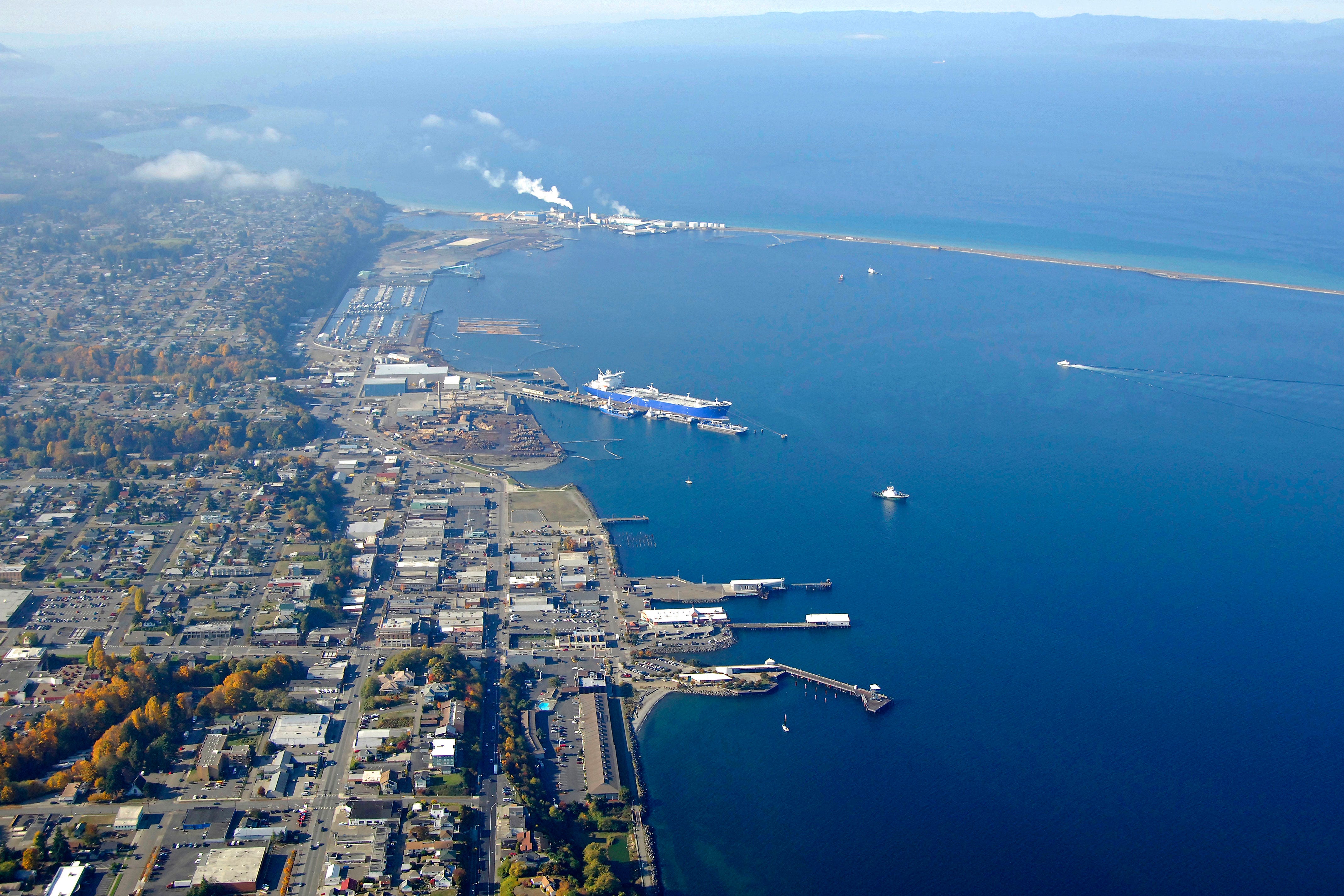
Carr tied the bluffs south of First Street to the climate mitigation plan: slopes already sliding toward the Strait and down toward Country Aire. She liked Suggs’ idea of larger buffers. Her own phrasing was more blunt. If the ground is that unstable, “it’s either we tell people… you got to go.”
She did not name Second Avenue. She did not have to. That is where homes sit on top of those bluffs, and where people live below them. She said those houses are at “immense risk,” and that if something fails, the city — meaning taxpayers — will likely be “the entity bailing them out.”
The unresolved question she left on the table is enforcement: what happens to people who already live there, and what rules hit anyone who wants to build next. If the answer is bigger buffers and “you got to go,” that is not a mapping exercise. That is a conversation about who gets to stay.
Meanwhile, Peninsula Behavioral Health put a roughly $12 million, 36-unit permanent supportive housing project, North View, at Second and Oak — the top of the switchbacks above Country Aire.
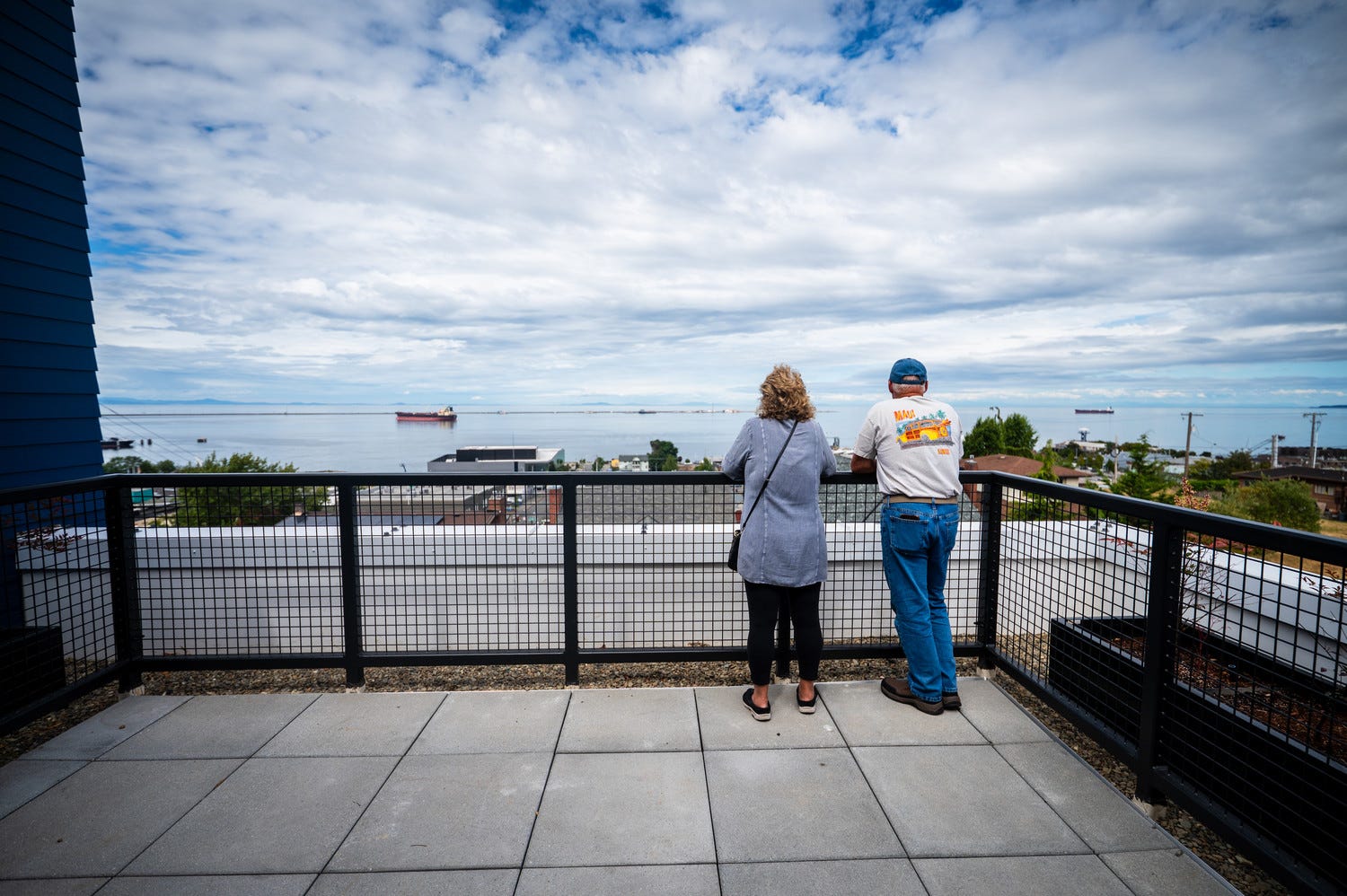
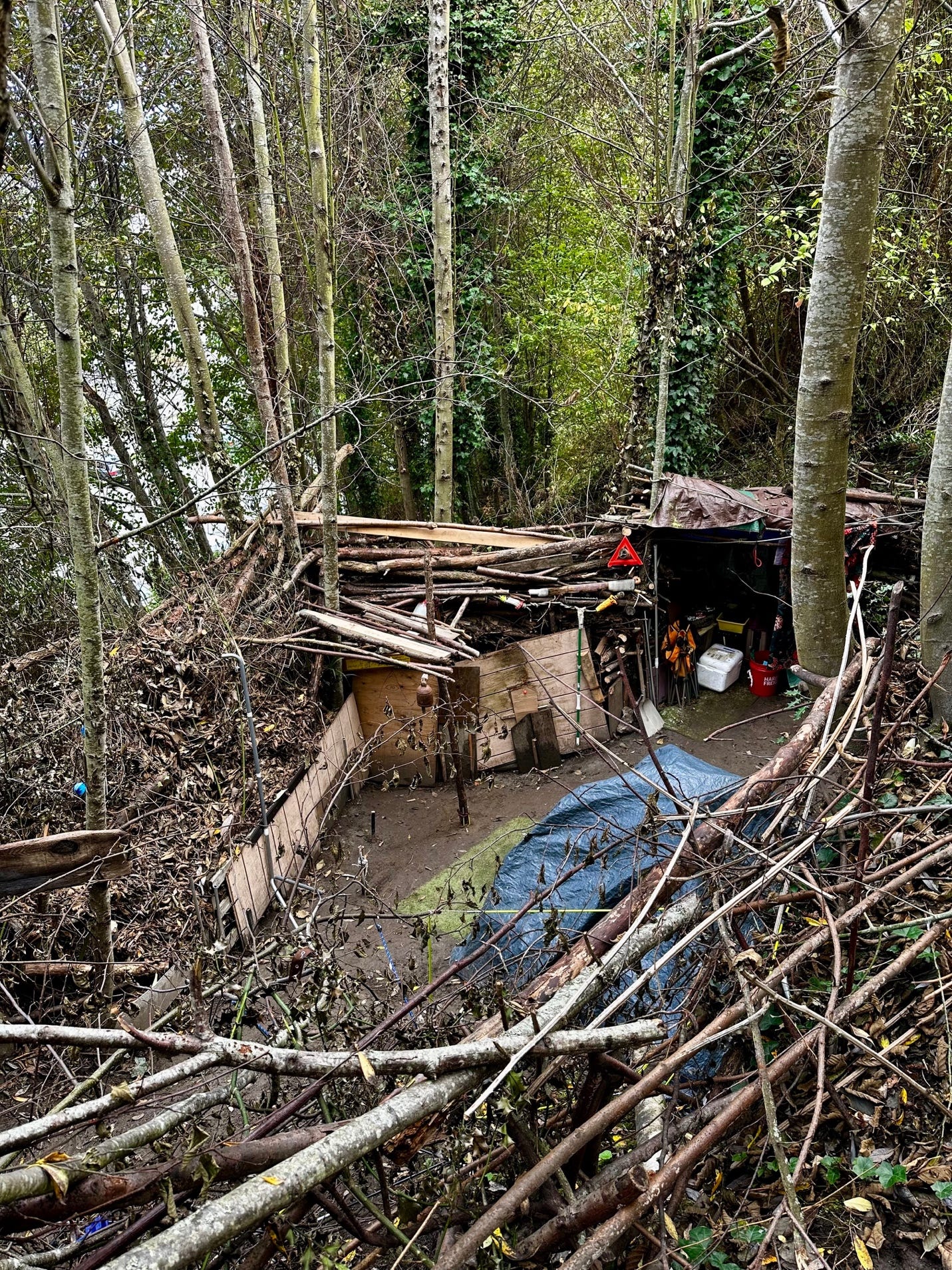
If bluff vegetation and buffers are now sacred, explain why a public-funded four-story building belongs on that rim while private owners are told the science has changed. Encampments that strip cover off the same slopes get the vulnerability speech. Homeowners get the ordinance. You cannot tell homeowners the bluff is too dangerous to occupy if the city will not clear the people already camping on it.
What Carr is actually offering
Strip the work-session manners and the list is short:
Draw critical areas so wide that downtown fill, under-road creeks, mills, the port, marinas, and bluffs all count.
Prohibit development in those areas, then ration exceptions through a “clear process” aimed at people with “pull.”
Revive net ecological gain — last year’s Comprehensive Plan fight, back as code.
Treat harbor anchoring as a harm to manage with buoys.
Expand water planning after the region already removed two water storage reservoirs.
Grow tree and buffer rules until existing houses look like nonconforming violators.
Navarra Carr says she does not want to make it “harder to build.” Net gain plus prohibition plus climate-classified fill is how you make it harder to build. Housing costs do not fall when every parcel needs a study, a variance, and a morality play about who is poor enough to be exempt.
French does not have to read the remarks into the record. He hired the person giving them. He funded her. He backed the North View bluff housing project. He tapped her to run his campaign.
Carr’s kelp lecture is a distraction. The real question is whether Port Angeles still gets to function as a port town, or whether the next changes will decide that jobs, houses, and a working harbor were the mistake.
The maps she wants will be very pretty. The price shows up in permits, empty lots, and a harbor that still has to earn a living.
What you can do
This is still a draft ordinance, not finished law. Tell the council you want a working waterfront, enforceable creek rules that apply to everyone, and no “net ecological gain” standard that turns housing and payroll into a variance.
Email the Port Angeles City Council at council@cityofpa.us
Say it plainly: map the critical areas if you must, but do not overlay the mill, the port, downtown, and the bluffs into a no-build zone while encampments proliferate along our creeks.
Stay engaged today
This morning is packed.
7:30–8:30 a.m. — PABA hosts State Rep candidates Eric W. Pratt and Adam Bernbaum (24th District, Position 1) at Jazzy Joshua’s, 113 Del Guzzi Drive, East Port Angeles. Also livestreamed on PABA’s Facebook page. Pratt will be virtual. There is a $5 charge if you do not order breakfast. Members get to ask questions first. More details are at the bottom of yesterday’s article.
9:00 a.m. Commissioners’ work session — They are moving a same-day letter to Sen. Patty Murray asking Congress to keep SAVE America Act provisions out of the National Defense Authorization Act (NDAA).
10:00 a.m. Commissioners’ weekly meeting — The Board will read a proclamation. Not for September 11. For “Diaper Need Awareness Week.”
America swore it would never forget, but the commissioners already did. Be in the room anyway.


