


Port Angeles starts expensive ADA work on Peabody Street tomorrow while tents and debris already occupy the right-of-way. The same week, a lone island resident backs handing two national wildlife refuges to a tribe, teen substance use in Port Angeles runs twice the state average, and legacy media is asked to return to the issues. These stories are connected by one question: who is actually being served?
Peabody Street ADA Project Meets Reality on the Ground
Tomorrow the City of Port Angeles begins ADA improvements on Peabody Street—removing and replacing sidewalks, curbs, ramps, and pavement at multiple intersections from 2nd to 12th Street.
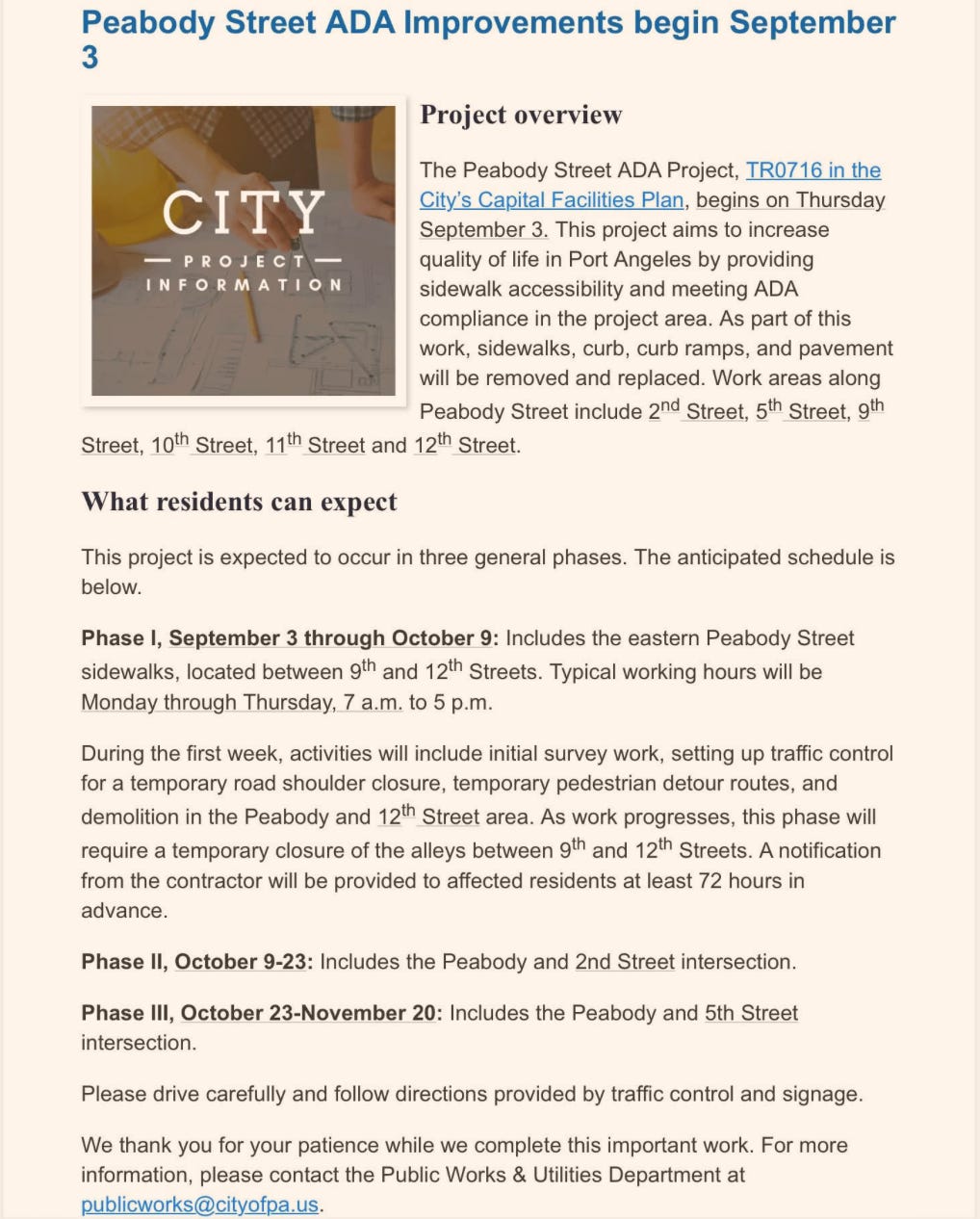
The stated goal is better access and mobility, but look at photos of Peabody Street taken last week.


The most immediate barriers to wheelchair users, strollers, and pedestrians are not missing curb cuts. They are tents, tarps, shopping carts, and debris sitting on or immediately beside the sidewalk.
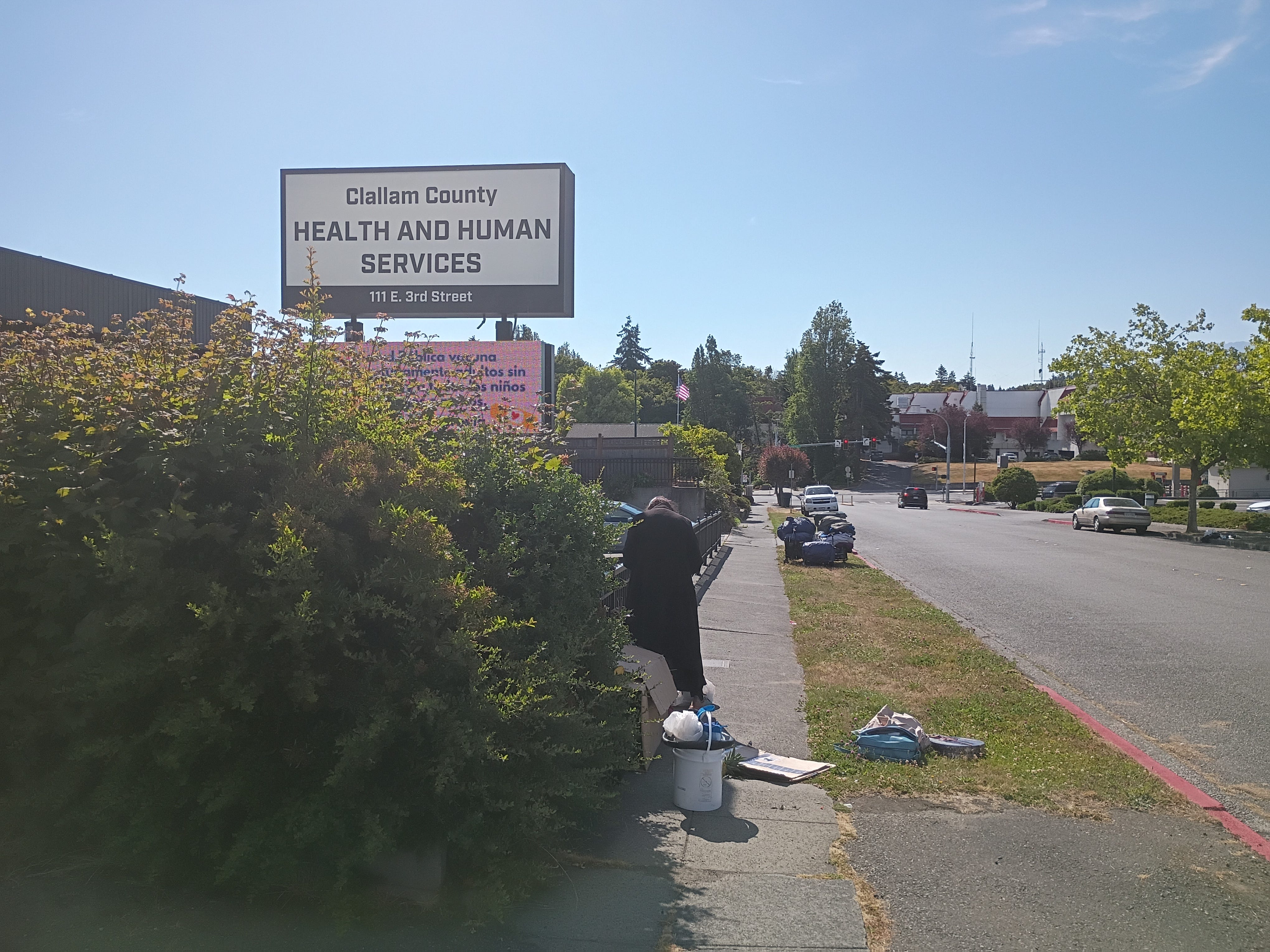
Clearing those encampments, enforcing existing camping and obstruction rules, and keeping the existing pavement usable would increase ease of access without another multi-phase construction project.
Protection Island’s Only Resident Wants Public Land Transferred to the Tribe
Marty Bluewater, 78, is the sole remaining lifetime resident of Protection Island National Wildlife Refuge. He supports transferring both Protection Island and the nearby Dungeness National Wildlife Refuge from the U.S. Fish and Wildlife Service into trust for the Jamestown S’Klallam Tribe.

The tribe already co-manages the sites under a 2024 agreement and argues it can cut bureaucracy while keeping conservation purposes and public access at Dungeness. Protection Island would stay closed to the public.
Jefferson County Commissioner Greg Brotherton calls the proposal a “moment of truth” for the Native land-back movement and supports the transfers. Chairman Ron Allen — who has said he is 75 percent European — waved off concerns about the tribe’s commercial oyster farm on adjacent state tidelands, where the plan is to grow a shellfish species native to Asia. “Oysters are oysters, for crying out loud,” Allen said.
The analogy is incomplete. Native Dungeness crab and the invasive European green crab are both crabs; one belongs here, and the other is destroying habitat. The same distinction applies to species, management authority, and whether national wildlife refuges created for the public remain public. Critics worry the transfer sets a precedent that could extend far beyond two refuges.
Read the Seattle Times article here.
Grant-Writing Is the One Industry Still Growing
Clallam County’s private-sector economy continues to struggle, but one sector is thriving: writing and administering federal grants. The Washington State Department of Commerce’s Federal Funds Grant Writing Assistance Program is holding free, full-day in-person workshops on September 29 in Eastsound and October 1 in Port Angeles.
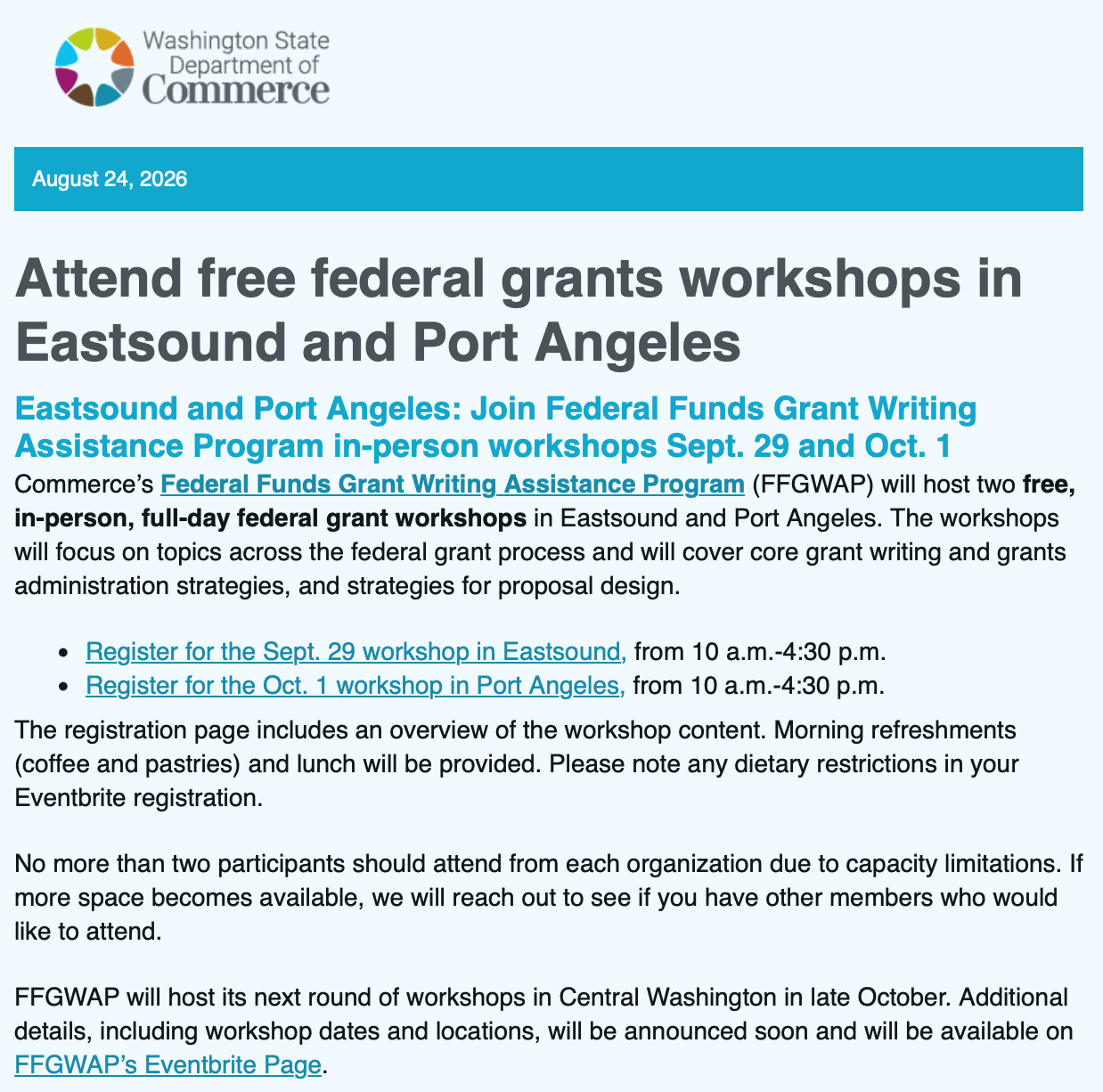
When the workshops let out, every storefront still hanging a “Grant Writer Needed” sign in the window may finally have the staff to expand hours. The real economy can wait. The application economy is hiring.
Coffee with Colleen: Recompete Update Today
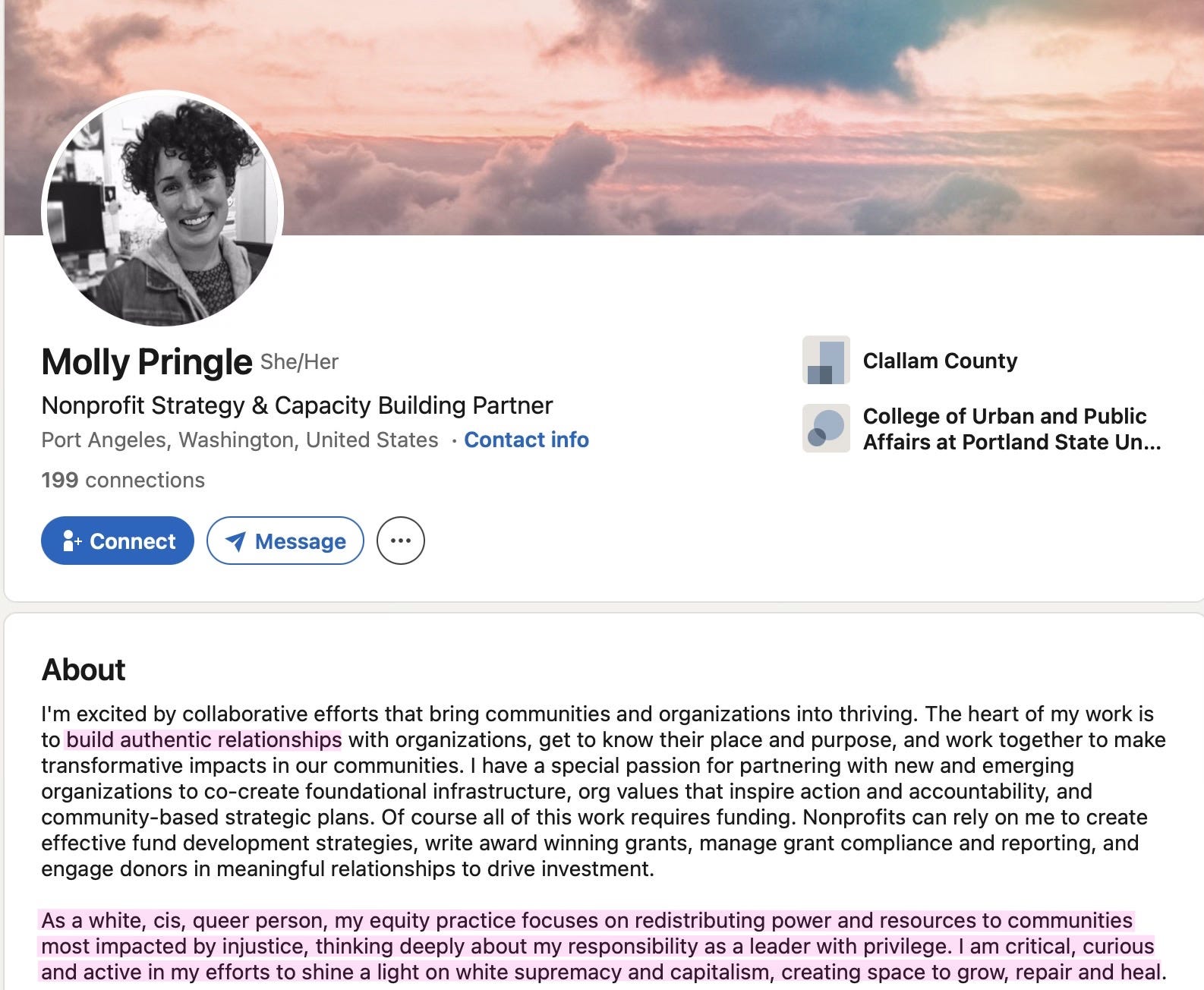
Join Coffee with Colleen today, September 2, at 8 a.m. for an update from Recompete Plan Coordinator Molly Pringle and Communications Coordinator Carolyn Edge.
Topics include grant structure, federal role, recent milestones on jobs, infrastructure, workforce, and support programs, plus upcoming plans.
Zoom: https://us02web.zoom.us/j/89474510306?pwd=VlIrRHh5RG1nYVh3V3JXRzFSMmRodz09
Meeting ID: 894 7451 0306
Passcode: 187447
Ask pointed questions. Year-one results showed 31 job placements against a five-year target of roughly 900. At $35 million, that works out to tens of thousands of dollars per placement if targets are ever met.
The coordinator, Molly Pringle, came from Portland and has described her work as redistributing power and shining a light on “white supremacy and capitalism.”
And don’t forget the hydroseeding equipment and excavator the program has agreed to buy for the multi-million-dollar Jamestown Corporation.
Residents have a right to know whether this is a jobs program or another wraparound-services pipeline.
Port Angeles Teens Use Drugs at Twice the State Rate—Look Around
KONP reports that 13 percent of Port Angeles 10th-graders surveyed had smoked or vaped in the previous 30 days, 15 percent used alcohol, and 11 percent used marijuana—roughly twice the Washington state average in each category.

Those numbers did not appear in a vacuum. Open drug use occurs around the Veterans Bell, Safeway has become a known dealing spot, the county distributes paraphernalia and messages such as “start low, go slow,” and playgrounds and fields collect needles and foil. Teens notice what adults tolerate.
Read This Before You Vote: Pardon My French
Clallamity Jen’s latest piece does what last week’s District 3 forum only hinted at. Incumbent Mike French spent the night calling every policy he opposes “ideological” and every policy he favors a “practical tool.” Challenger Jake Seegers answered with facts, figures, and the County’s ledger.
Out of Clallam County’s $56 million general fund, $33 million — nearly 60 percent — now goes to law and justice. The sheriff and Chief Smith have both said nearly all of that crime is drug-related. Low-barrier policies that tolerate open use without accountability generate the calls that generate the bills. Taxpayers pay once for the front-end programs and again for courts, jail, prosecution, and public defense.
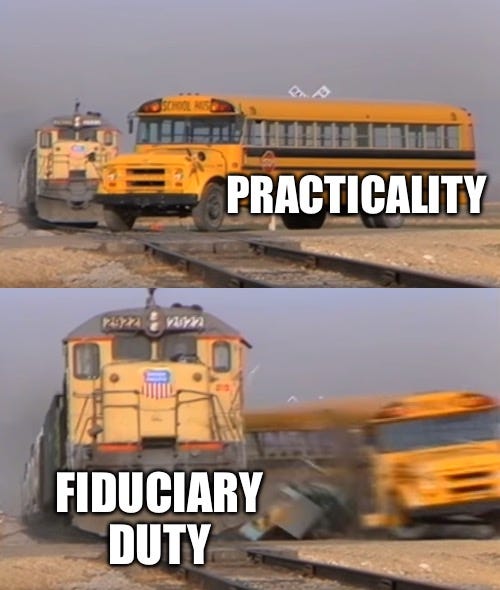
Jen’s argument is simple and devastating: a commissioner’s first duty is fiduciary — protect the money coming in and the public safety that keeps the tax base alive. When downtowns degrade, businesses leave, and families stay away, that $33 million tab does not shrink. It just lands on fewer remaining property owners.
Read Clallamity Jen’s full essay, watch the forum clips she includes, and subscribe.
The November vote is not a personality contest. Every taxpayer from Sequim to Forks is funding the outcome.
Overdose Survival Is Not the Same as Recovery
A letter in the journal Addiction argues that reversing an opioid overdose with naloxone saves a life but does not reverse the hypoxic brain injury that often accompanies it. Repeated overdoses produce cumulative damage similar in concept to chronic traumatic encephalopathy (like a stroke).
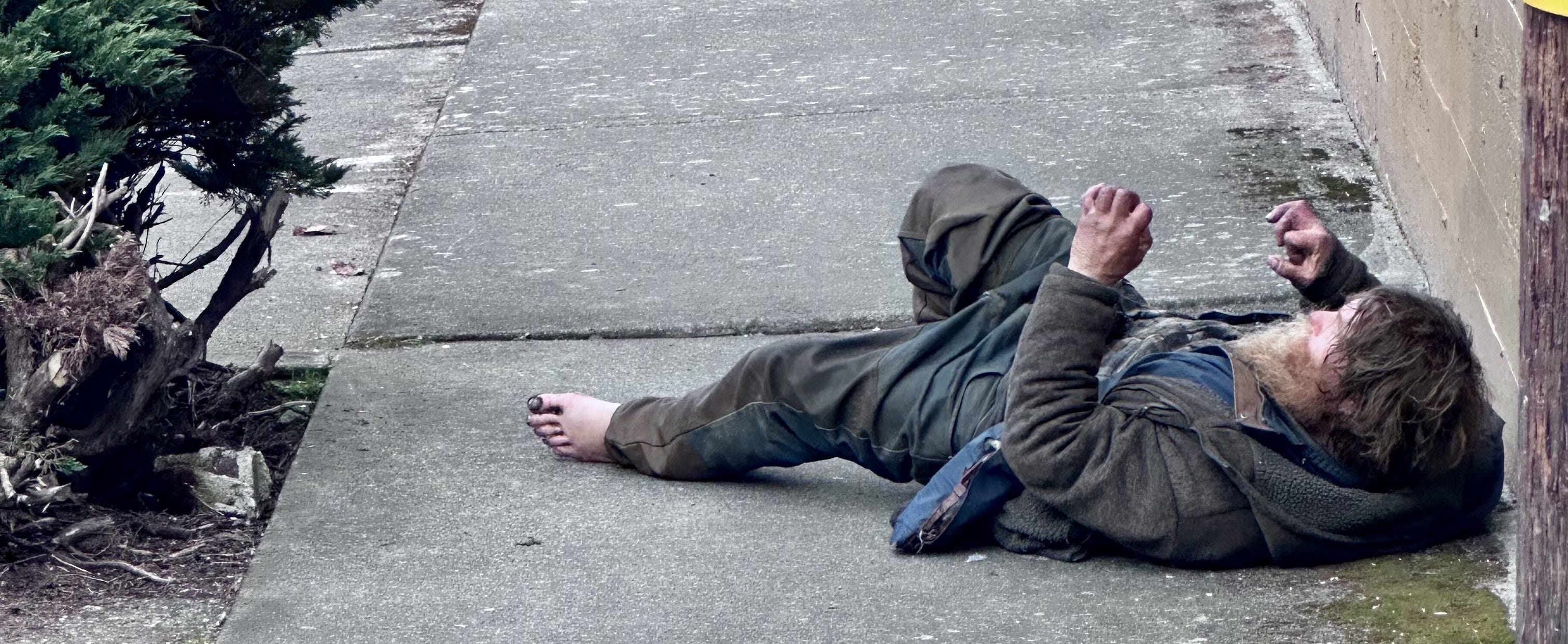
British Columbia data show a 6 percent risk of diagnosed brain injury within one year of a first overdose for adults and 10 percent for those under 19. Many non-fatal overdoses never reach a hospital, so the true rate is higher. Treatment programs that treat reversal as the finish line ignore impaired memory, impulse control, and executive function—the very skills needed to stay in recovery.
One in Five? Seattle Data and Street Reality Say Otherwise
Health Officer Allison Berry has maintained that only one in five people experiencing homelessness are addicted to drugs. Christopher Rufo’s reporting in City Journal on Seattle, drawing on King County surveys, found 80 percent of the homeless population struggling with drug and alcohol addiction, with widespread use of heroin, meth, and crack and tens of thousands of needles collected annually. Thirty percent had serious mental illness. Encampments produced spikes in property crime, assaults, and public disorder.

The same patterns—open use, needles, and visible addiction—are observable in Port Angeles. Claiming a 20 percent rate while fentanyl smoke and foil litter public spaces is not data-driven public health; it is a talking point that keeps the current policy in place.
The Dogs Are Not Fine Either
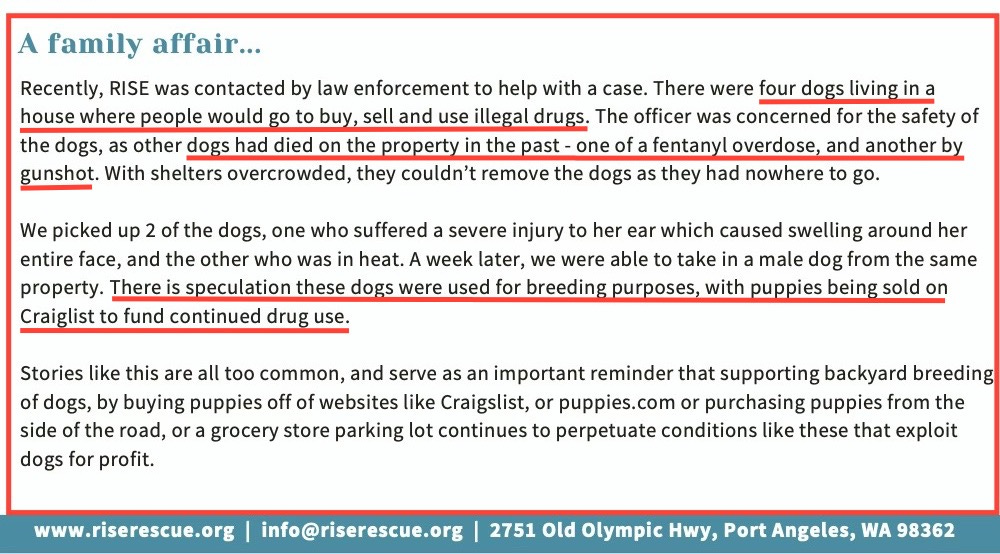
On Los Angeles’ Skid Row, rescue volunteer Joey Tuccio told NewsNation that dogs living in the encampments are used in fights, dosed as drug-test subjects, and dying by the hundreds. His group has pulled more than 150 animals out of the tents — eyes and genitals glued shut, legs rotting off, amateur surgeries performed under tarps. One French bulldog was rescued after overdosing on six drugs. Tuccio’s charge is blunt: city leaders treat the tents as off-limits even when crimes, including animal torture, are happening inside them.

Clallam County is not Skid Row. It is also not immune to the same logic. Walk the creeks, the bridges, and the lots, and you will see the same pairing: people in active addiction and the dogs tied to them. The animals did not choose the encampment, the fentanyl smoke, the winter rain, or the next move. When policy treats a tent as a home that must not be disturbed, it does not only lock in human misery. It locks the dog in with it.
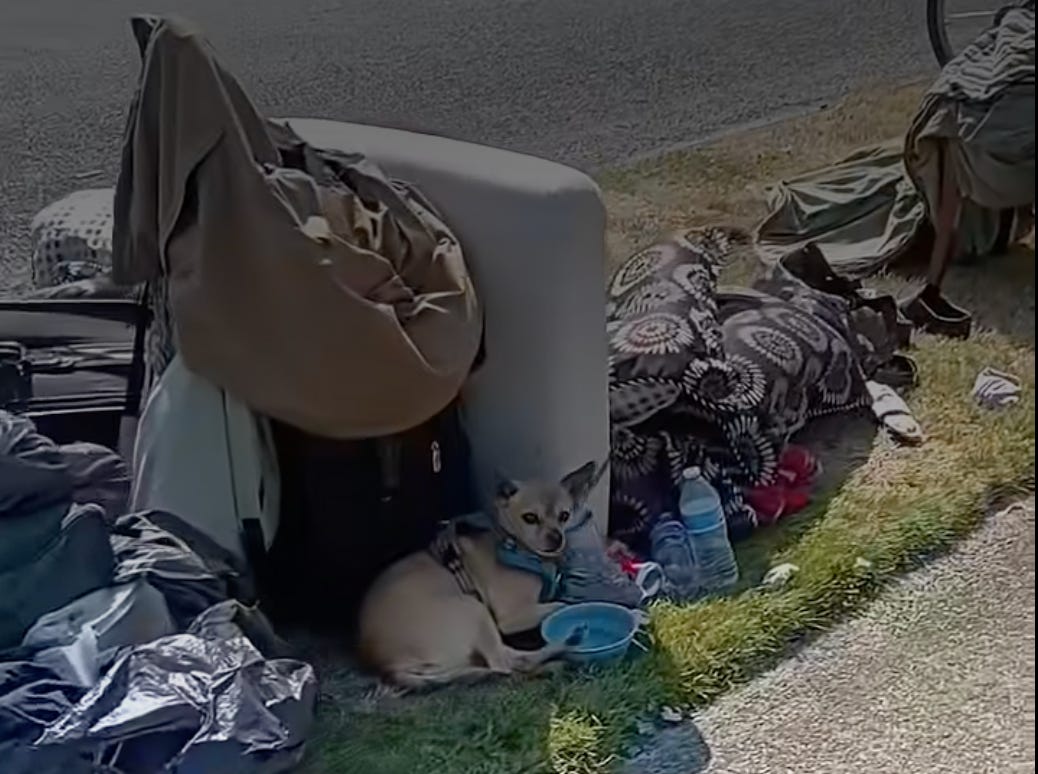
Compassion that cannot draw a line around a suffering animal is not compassion. It is neglect with a slogan. If Los Angeles needed an activist with a camera to force the question, Port Angeles and Sequim do not. The dogs are already here. Look.
Focus on the Race, Not the Sideshow
One Peninsula Daily News subscriber put it as plainly as it can be said: cover the issues in the Clallam County Commissioner race, not the distractions.
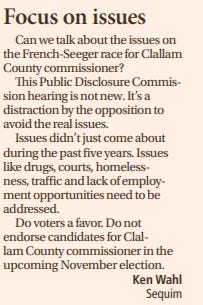
The issues are not hard to find. They are the $33 million law-and-justice bill eating nearly 60 percent of the general fund. They are open drug use, blocked sidewalks, and a downtown that businesses and families increasingly avoid. They are measurable results — or the lack of them — from the policies voters are being asked to renew.
Everything else is noise. Read the record, and vote in November.


