


This week offered a reminder that engaged citizens can still change outcomes in Clallam County. After public pushback, commissioners backed away from renaming the courthouse. But other concerns remain: homelessness spreading into public spaces, activist fear campaigns shaping policy, and public meetings tied to behavioral-health bureaucracy held on sovereign land. The lesson is simple — when citizens pay attention and push back, the script can change.
The Courthouse Stays the Courthouse
The Clallam County Courthouse will remain the Clallam County Courthouse after a majority of commissioners decided Tuesday to explore other ways to memorialize former Washington Supreme Court Justice Susan Owens. One option now under discussion is naming the hall outside the courtrooms in her honor rather than renaming the entire building.
Commissioner Randy Johnson was absent. Last month, on Feb. 3, Commissioner Mike French strongly supported renaming the courthouse, saying it would spread the message the furthest. But after hearing testimony that was overwhelmingly opposed to renaming the building, French reversed course. He said he now understood that Forks intended to honor Owens in District Court II, where she had worked, and said that mattered to him.
That explanation, however, raises obvious questions. Public records obtained by Denise Lapio show that six days before French publicly backed renaming the courthouse, the administrator for District Court II had already told the commissioners that a memorial was being designed, was in production, and that Owens herself would not have wanted the courthouse renamed.
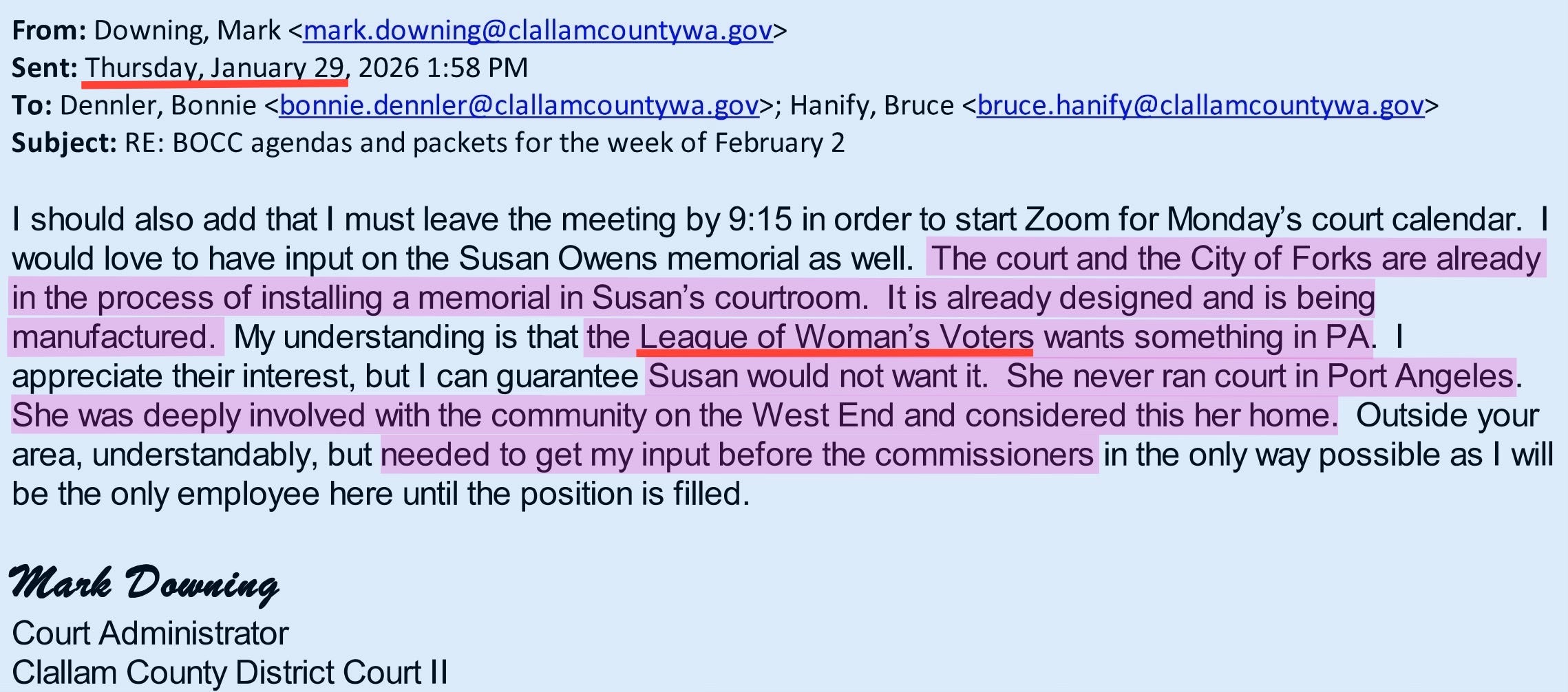
In other words, this was not new information suddenly discovered after public testimony. It had already been communicated.
Commissioner Mark Ozias, who had previously called renaming the courthouse “wholly appropriate,” also softened his position after hearing from the public. He said he still believed Owens should be honored, but short of renaming the entire building. He asked for additional consultation with the Washington Women Lawyers organization, which had pushed for the renaming, and said he liked the idea of naming the judicial hall instead.
Two lessons were reinforced Tuesday. First, our commissioners remain remarkably susceptible to organized pressure. The amount of staff time, design work, hearing time, and public resources invested in advancing this idea was extraordinary. Compare that to the county’s resistance to answering basic questions about harm reduction, performance metrics, or accountability for public spending.
Second, and more important, engaged citizens made the difference. This did not change because officials suddenly found better judgment on their own. It changed because people showed up, wrote letters, testified, and dug for records. When Denise Lapio suspected decisions were being shaped outside public view, she filed a public records request. When citizens saw what was happening, they responded.
Tuesday was a victory for every engaged Clallam County citizen.
A Treasured Trail, and a Warning
The Waterfront Trail in Port Angeles is one of the region’s gems, where in minutes people can leave downtown and walk between the beach and dense forest. It’s a popular path for runners, families, and visitors.
But increasingly it’s becoming another corridor of disorder. A subscriber recently sent a photo from the trail showing a wheelchair piled with belongings and what appeared to be a large machete wrapped in paper on top. The owner was nearby on the beach.
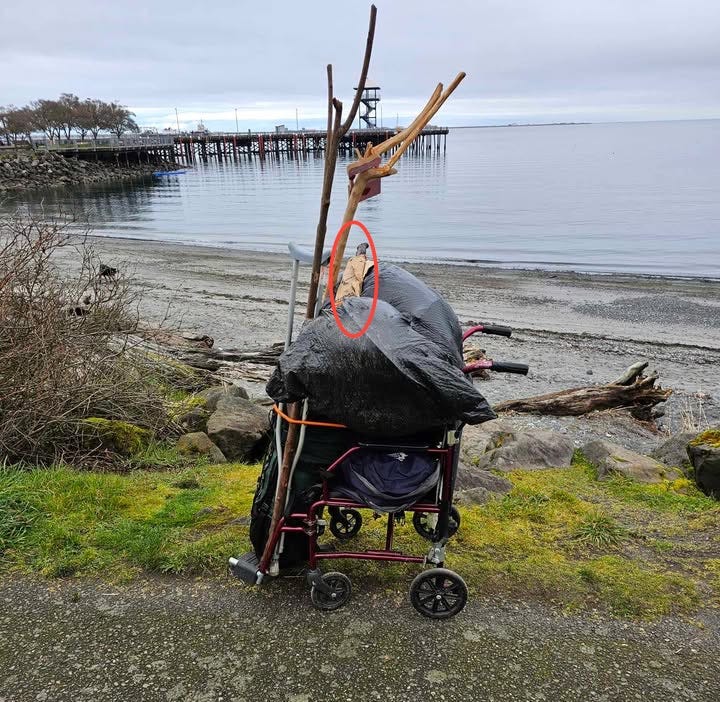
It’s a reminder that as addiction, homelessness, and untreated mental illness grow in Clallam County, public spaces no longer feel as predictably safe. People should be able to enjoy a public trail without worrying about dangerous encounters, yet more residents now feel they must stay alert and look out for themselves.
It Could Never Happen Here, Right?
A recent HotAir article highlighted a dispute in British Columbia involving agreements with the Musqueam Indian Band recognizing Aboriginal rights and title across parts of Metro Vancouver. The concern isn’t just symbolic recognition, but whether vague agreements and limited public disclosure could eventually affect private property rights and land use.
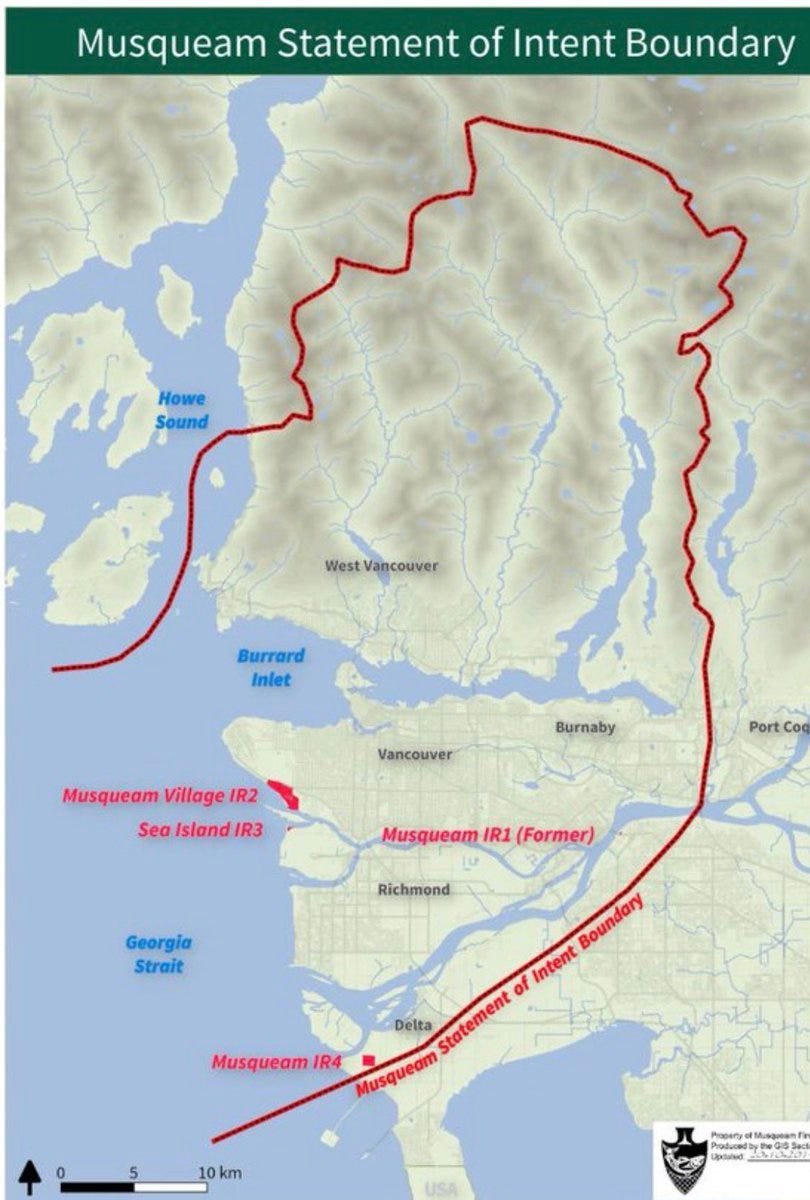
Whatever you think of the article’s tone, the larger issue is worth watching. Across North America, “land back” increasingly means legal claims, title disputes, land transfers, and pressure to move public land under tribal control. Critics in British Columbia say some of these agreements are moving forward without the transparency landowners would expect.
That matters here because the pattern feels familiar. In Clallam County, residents are often told not to worry when public land transfers or expanded tribal control are discussed. But once control changes, the public’s leverage usually shrinks. What looks like a small administrative move today can become something much bigger tomorrow.
The Crisis Industry and the Politics of Fear
In a recent John Stossel segment with journalist John Tierney, the argument is that many activist organizations rely on keeping the public in a constant state of alarm. The video runs through issue after issue — climate change, racism, homophobia, hate groups, public health — and suggests the system rewards exaggeration. If the crisis fades, so do the attention, funding, and influence that come with it.
Tierney isn’t saying problems don’t exist. His point is that a whole network of activists, nonprofits, media figures, and bureaucracies benefits when every problem is framed as an existential threat. Fear gets attention. Fear raises money. Fear grows organizations.
That’s why the video is worth watching. If you’ve wondered why groups like the Clallam County League of Women Voters and similar activist networks often frame issues in the most dramatic terms possible, this offers one explanation: alarm isn’t just a strategy — it’s the product.
What Is the Salish BH-ASO, and Why Are Its Meetings on Sovereign Land?
The Salish Behavioral Health Administrative Services Organization, or Salish BH-ASO, is the regional body overseeing behavioral-health programs for Clallam, Jefferson, and Kitsap counties. Its Executive Board also functions as the governing body for the region’s opioid settlement funds. Clallam County Commissioner Mark Ozias serves on its executive board.
Recent meeting packets show the group holding hybrid meetings in Sequim, including at the Jamestown Tribe’s 7 Cedars facilities. That raises a fair question: when a public body responsible for major regional policy chooses to meet on sovereign tribal land, what protections do citizens have if disputes arise over speech, access, or decorum?
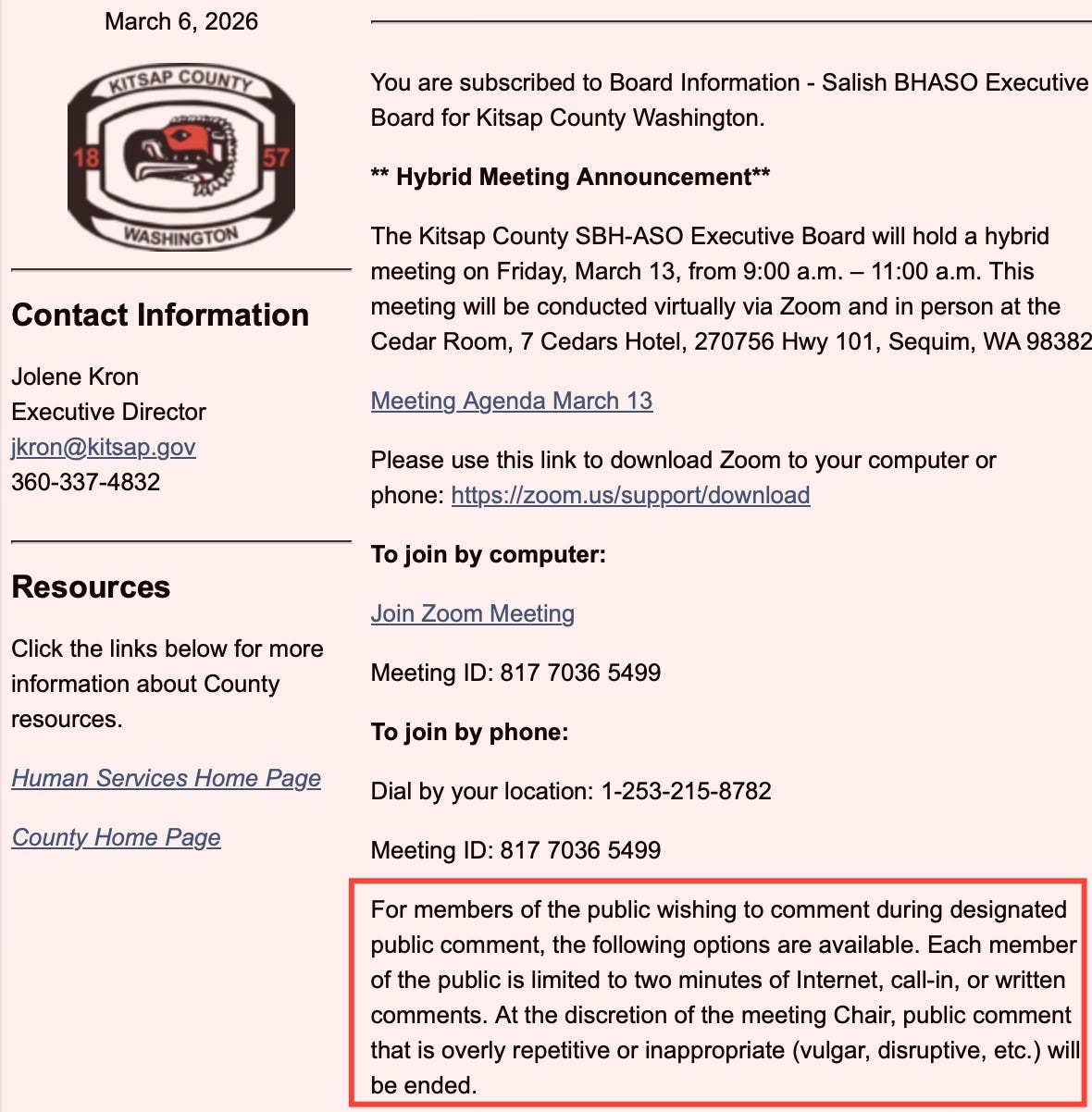
The board’s rules say public comment can be cut off if the chair decides remarks are “overly repetitive or inappropriate.”
Who decides if a public commenter is “overly repetitive?” What’s the threshold for being “innapropriate?”
That kind of discretion may sound minor, but when citizens want to challenge harm-reduction policies or ask questions about opioid settlement money, they shouldn’t have to wonder whether the setting itself limits their ability to speak. Public business should be held in places where the public’s right to address its government is clearly protected.
The “30 Percent” Food Bank Narrative Needs Context
Last fall, the Sequim Gazette reported that the Sequim Food Bank estimated about 30% of residents in the Sequim School District area use its services at least once a year. That number has been repeated a lot in local conversations.
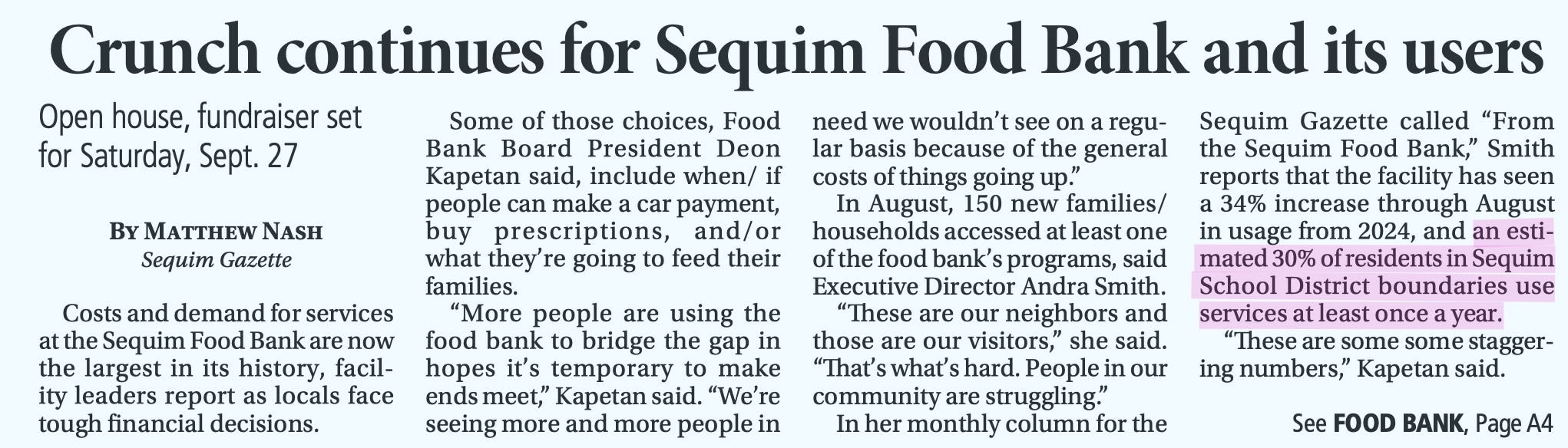
But it needs some context. The food bank says its services are available to anyone, and its reports talk about rising demand and many first-time users. So the statistic doesn’t mean 30% of Sequim residents are living in poverty. It means a large number of people in the wider service area stopped by the food bank at least once during the year.
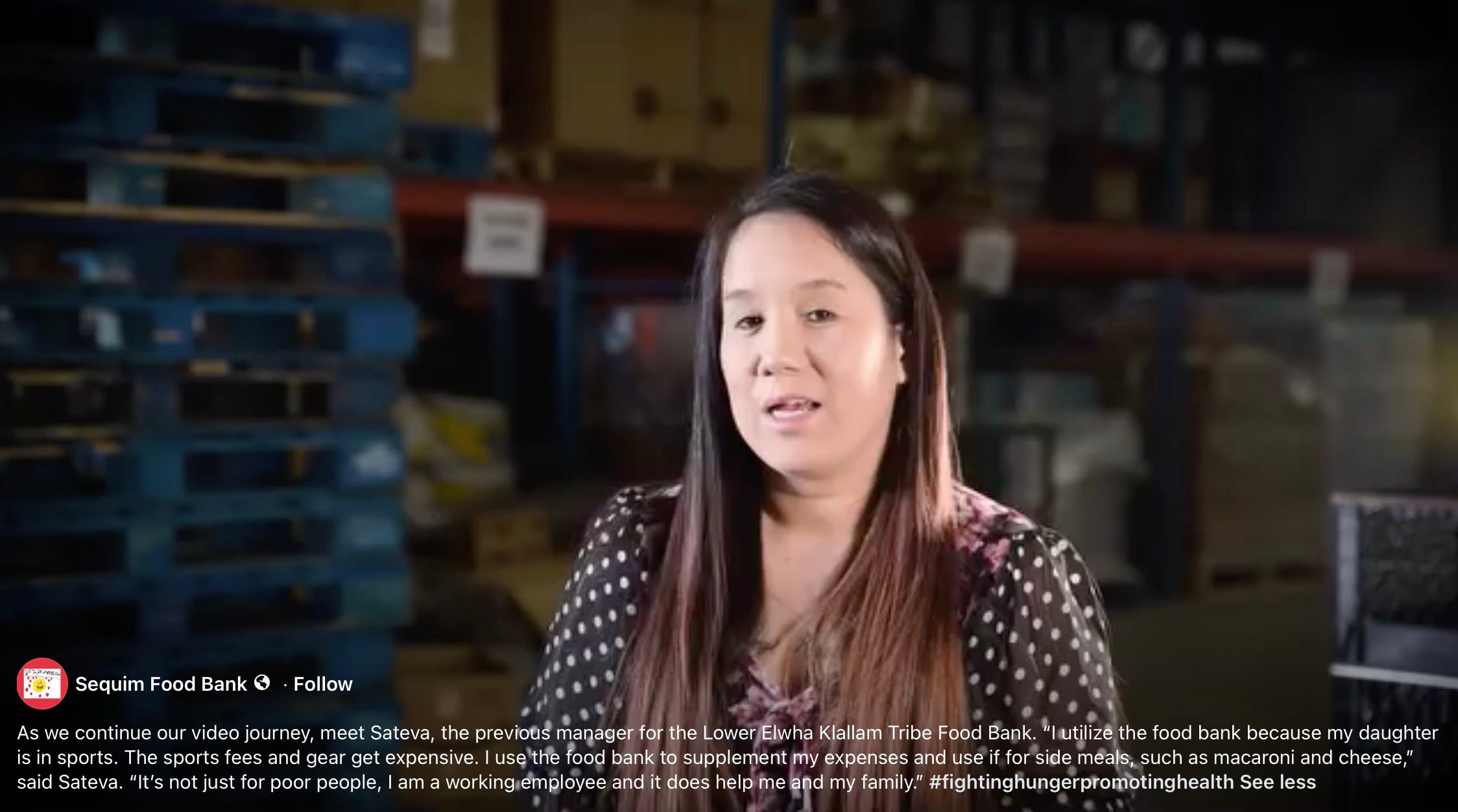
That distinction matters. In a video testimonial, one user says the food bank isn’t just for poor people — “it’s for everybody.” If families are using it to offset costs like sports fees, groceries, or other expenses, that’s very different from long-term poverty. People are free to support that model if they want, but the 30% figure should be understood for what it is: a low-barrier program being used by a wide range of people, not necessarily a sign that a third of Sequim is struggling to survive.
Half-Million-Dollar “Affordable” Units
The County’s Housing Solutions Committee recently heard from the Peninsula Housing Authority about funding for new construction of Mt. Angeles View Phase II, a senior-housing project planned behind the Port Angeles Boys & Girls Club. The headline number is hard to ignore: 60 units for $30 million.
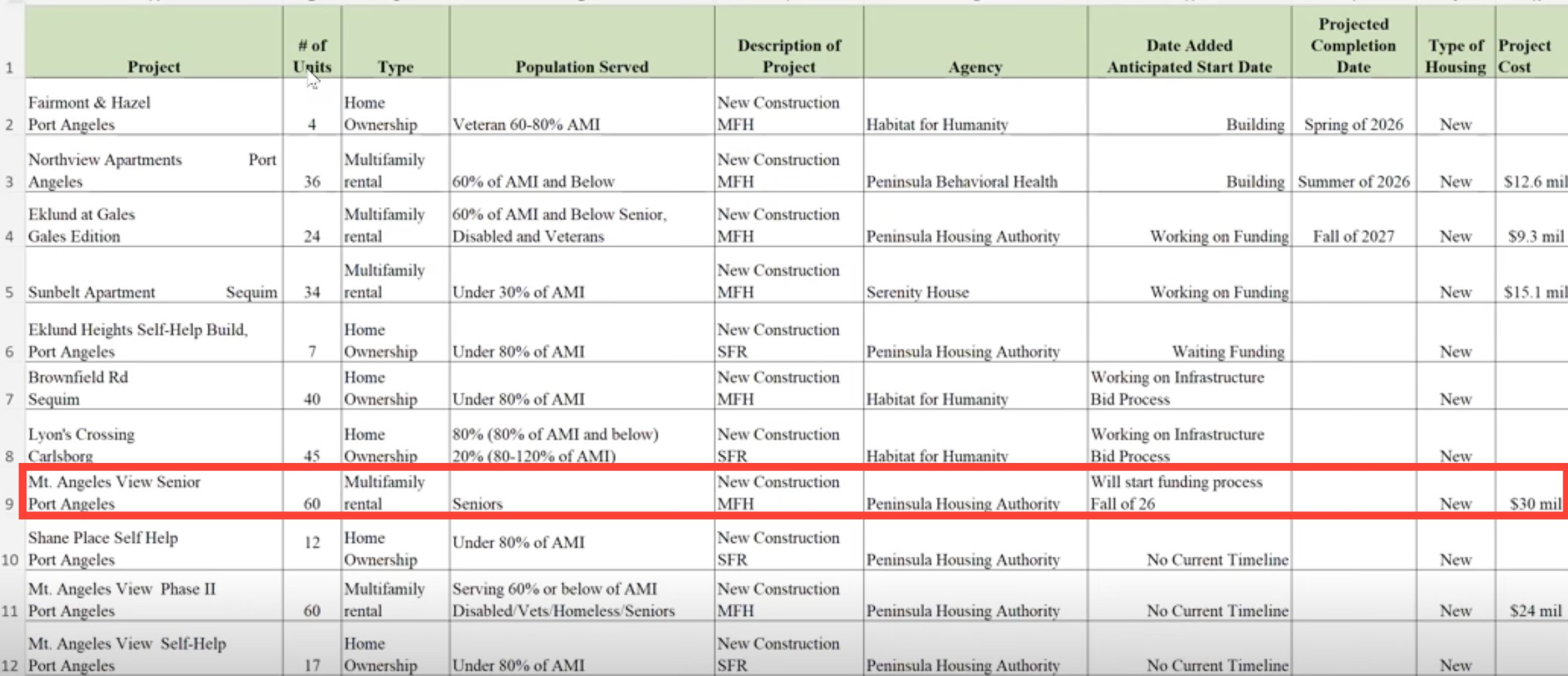
That works out to $500,000 per unit. By the time officials finish explaining pre-development costs, consultants, architectural work, inflation, compliance burdens, and the usual stack of public financing layers, the sticker shock is supposed to disappear under a fog of jargon. It should not.
Who pays for this? Taxpayers do. And once those units are built, who helps carry the subsidized side of the ledger? Taxpayers again. Public housing policy increasingly asks working people to accept that they cannot afford a home of their own, but they can afford to underwrite ever more expensive housing schemes for others. We are told this is compassion. It also looks a lot like a very costly industry.
Dignity, Disorder, and the Carlsborg Man
Remember the man reportedly terrorizing Carlsborg last week? He was booked Monday and released Tuesday, with one charge not filed and others court-ordered release.
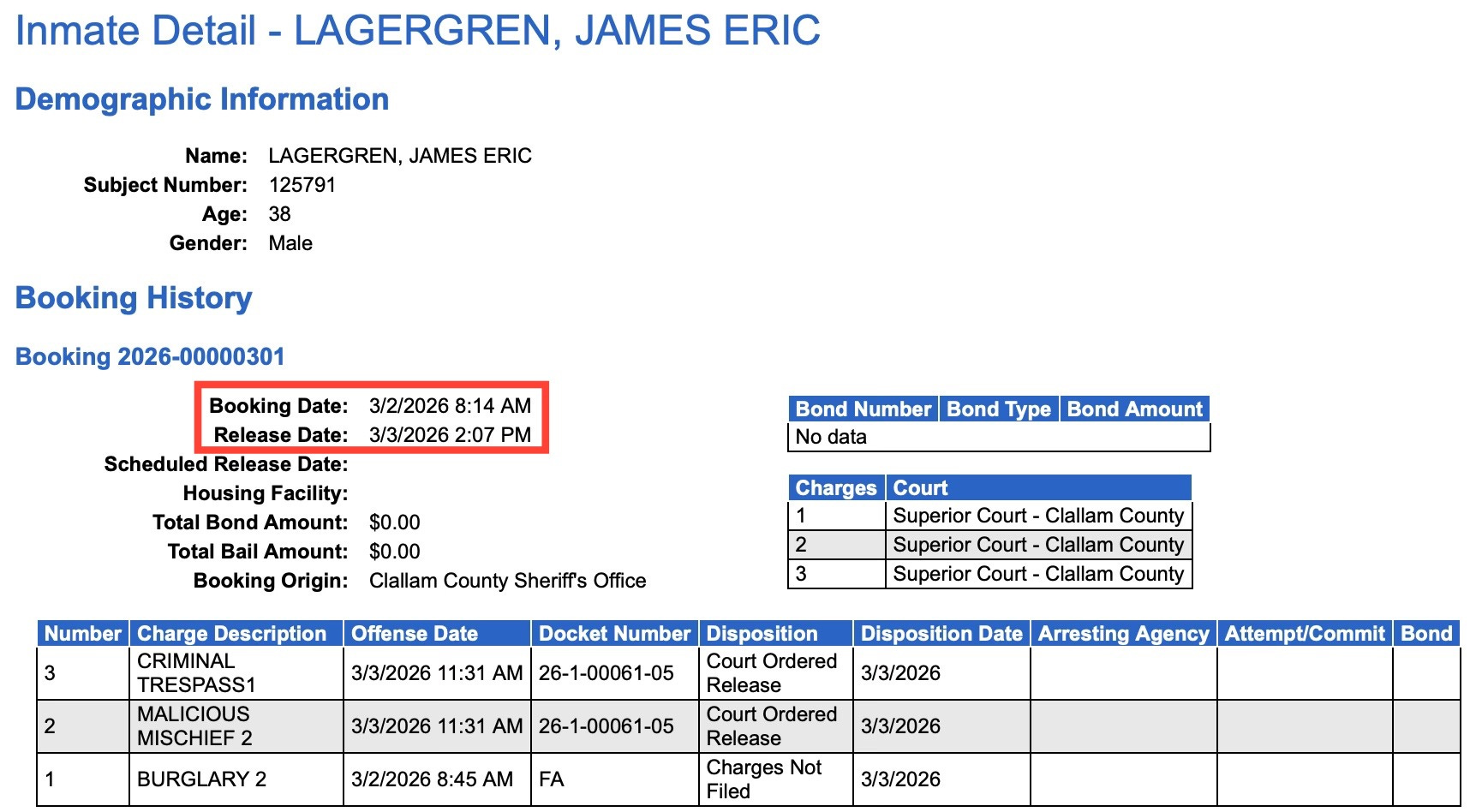
An eyewitness said he later appeared at the Port Angeles transit center and farmers market, wearing a blanket wrapped around his head, a scab on his nose oozing, and trying to provoke trouble.

Residents do not need a policy paper to understand the problem. They see it. They live around it. They work around it. They take their kids around it. And more often than not, they are told that the public is the one failing to show enough empathy.
But there is nothing compassionate about forcing the public to normalize visible collapse. There is nothing dignified about leaving people to rot in addiction, psychosis, or permanent instability while officials congratulate themselves for using the right vocabulary. Next time Dr. Berry or her allies lecture the public about preserving human dignity, residents might reasonably ask whether dignity means endless excuses, rapid release, and no meaningful intervention.
Public Land Promises Are Easy to Make
As the Jamestown Tribe seeks to have public DNR trust land transferred into tribal ownership while assuring residents it will remain open to the public, it’s worth looking at what has happened elsewhere. In Idaho, about 12,750 acres were removed from the state’s large-tracts program after a land deal involving Stimson Lumber and the Coeur d’Alene Tribe, changing both the land’s status and expectations around public access.
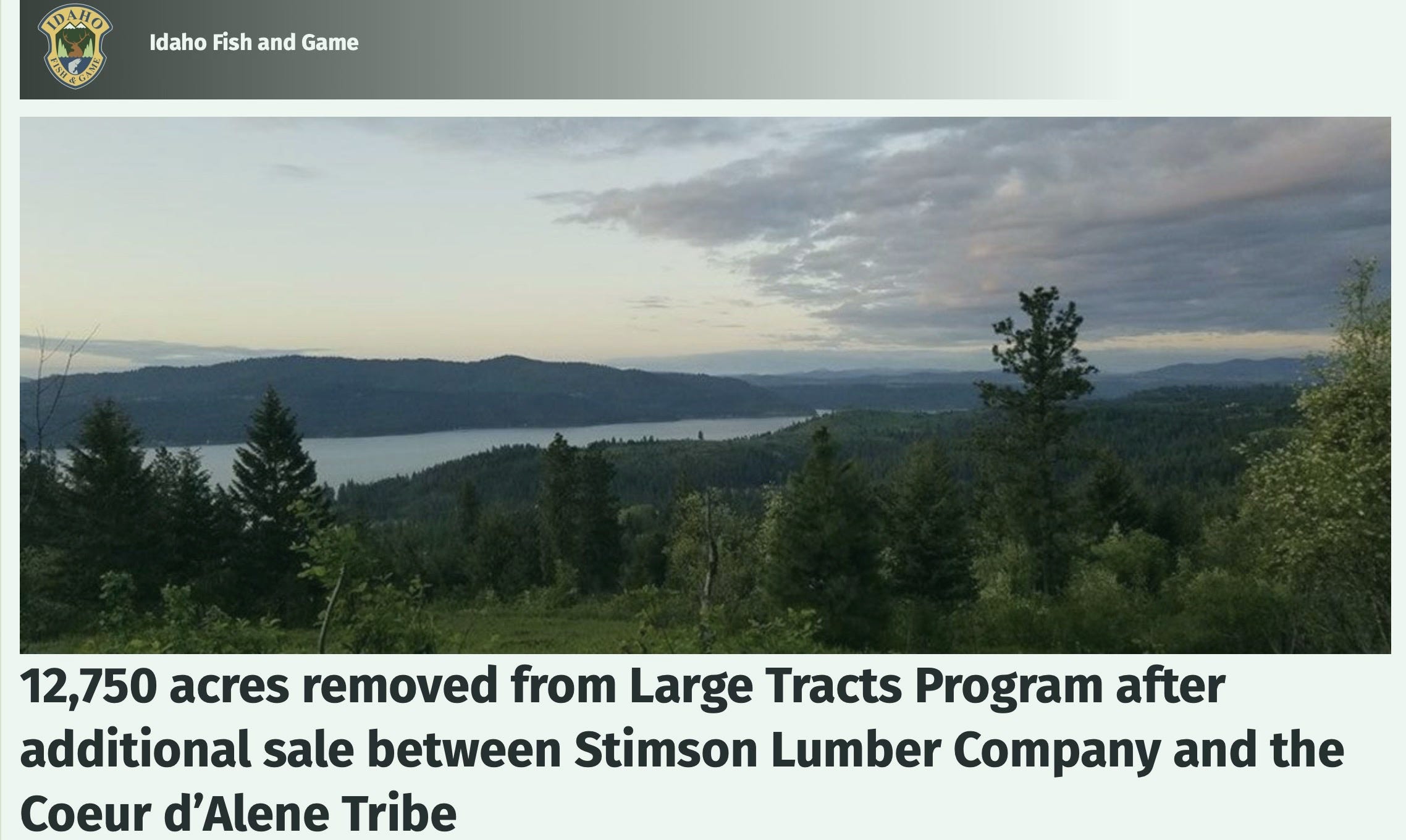
The situations aren’t identical, but the lesson is straightforward. Promises made during a land transfer are only as strong as the legal protections behind them. If continued public access is part of the pitch, residents should ask what actually guarantees it, who enforces it, and what happens if policies change after ownership changes.
We’ve heard this before: don’t worry, access will remain, nothing will change. Maybe that’s true. But once land moves into a different ownership structure, the public’s leverage often shrinks. That’s not paranoia — it’s experience.
Read This and Think About Clallam County
Peninsula Behavioral Health is just months away from completing North View, its low-barrier, luxury, permanent supportive housing complex overlooking Port Angeles with sweeping views of the harbor and mountains. At the same time, the organization is gearing up for its annual May gala and fundraiser.

A similar NGO, Plymouth Housing in Seattle, recently held its own annual gala. If you want a glimpse of how these events typically unfold — with donors, activists, and leaders in the homelessness industry celebrating the model — the video below offers a look at how that evening went.


