


Port Angeles residents may soon be asked to swallow a new public-safety sales tax approved by council instead of voters. A federal “once-in-a-generation” jobs grant is starting to look a lot more like a social-services slush fund. A familiar name from last week’s Agnew standoff comes with a long criminal trail, the county’s harm-reduction contradictions keep getting harder to defend, and even protected farmland near Dungeness is headed for sale. In other words: another week in local government, where the slogans sound noble, the details tell a different story, and taxpayers are left to fund the gap.
Port Angeles May Be Looking at a New Sales Tax
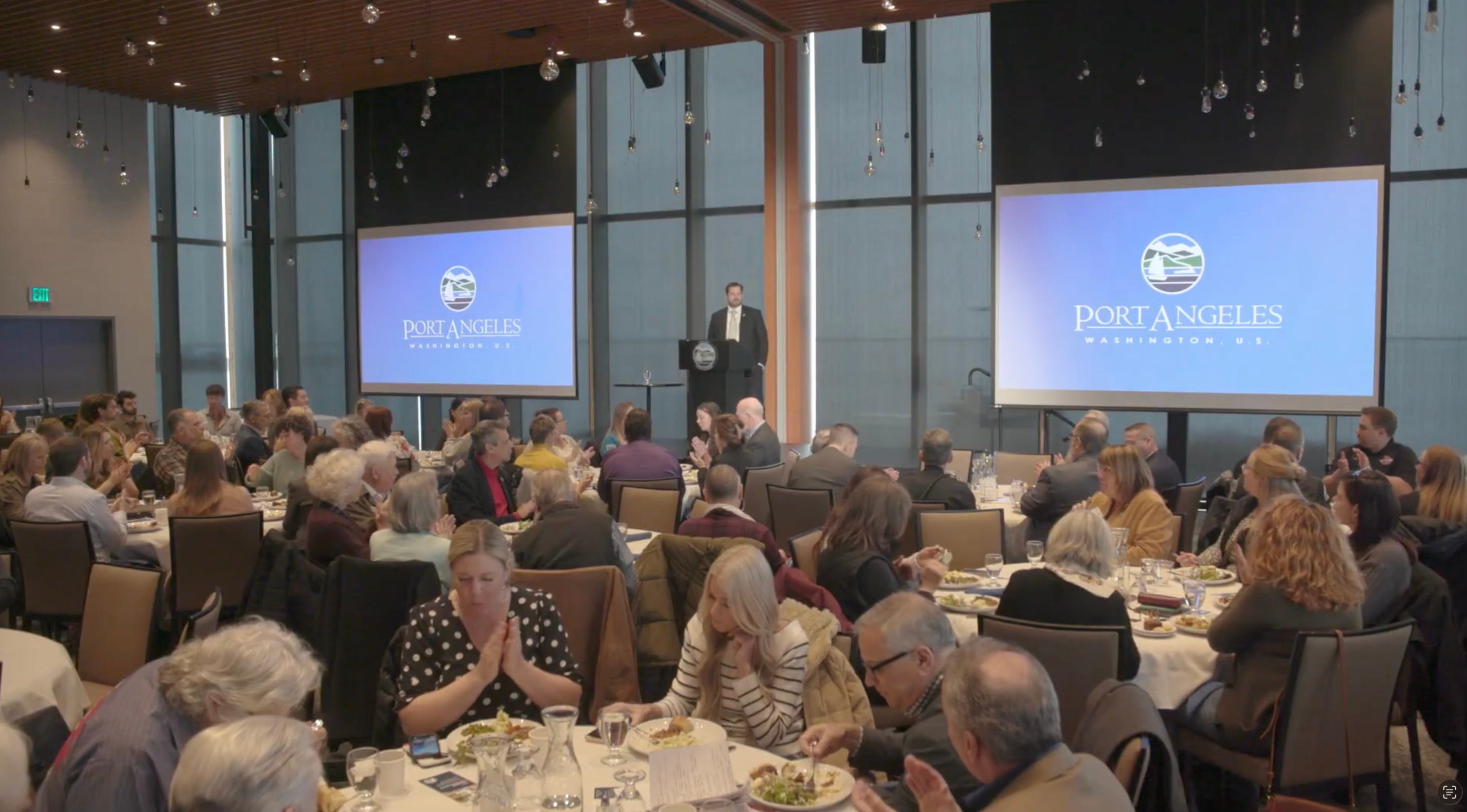
At a packed Field Hall event full of attendees willing to pay $30 a plate, Port Angeles City Manager Nathan West highlighted the city’s spending priorities and previewed an April 24 council work session on opportunities created by House Bill 2015. What he did not explain is the part residents are likely to care about most: the bill authorizes a new local sales-and-use tax of up to 0.1% for criminal justice purposes.
Under the law, a city or county legislative authority can adopt that tax by ordinance. The bill authorizes the revenue to be used for criminal-justice purposes ranging from law enforcement support to public defense, diversion, reentry, domestic-violence services, and mental-health crisis response.
So yes, Port Angeles residents could be looking at a new sales tax for “public safety” that never goes before the voters at all, but is instead approved by city council. That is the kind of detail that should be mentioned before the applause, not after the bill comes due.
West also drew a hard line in the city’s ongoing criminal-justice contract dispute with Clallam County, saying the county’s request for an additional $2.5 million “is not going to be acceptable to the city of Port Angeles.” The county, meanwhile, maintains that Port Angeles has been underpaying for years. That disagreement matters, because in a recent presentation to the Port Angeles Business Association, Prosecuting Attorney Mark Nichols indicated that Port Angeles accounts for a disproportionate share of NGRI (Not Guilty by Reason of Insanity) and incompetent defendants moving through the county court system compared with Sequim, the State Patrol, Forks, and the county itself.
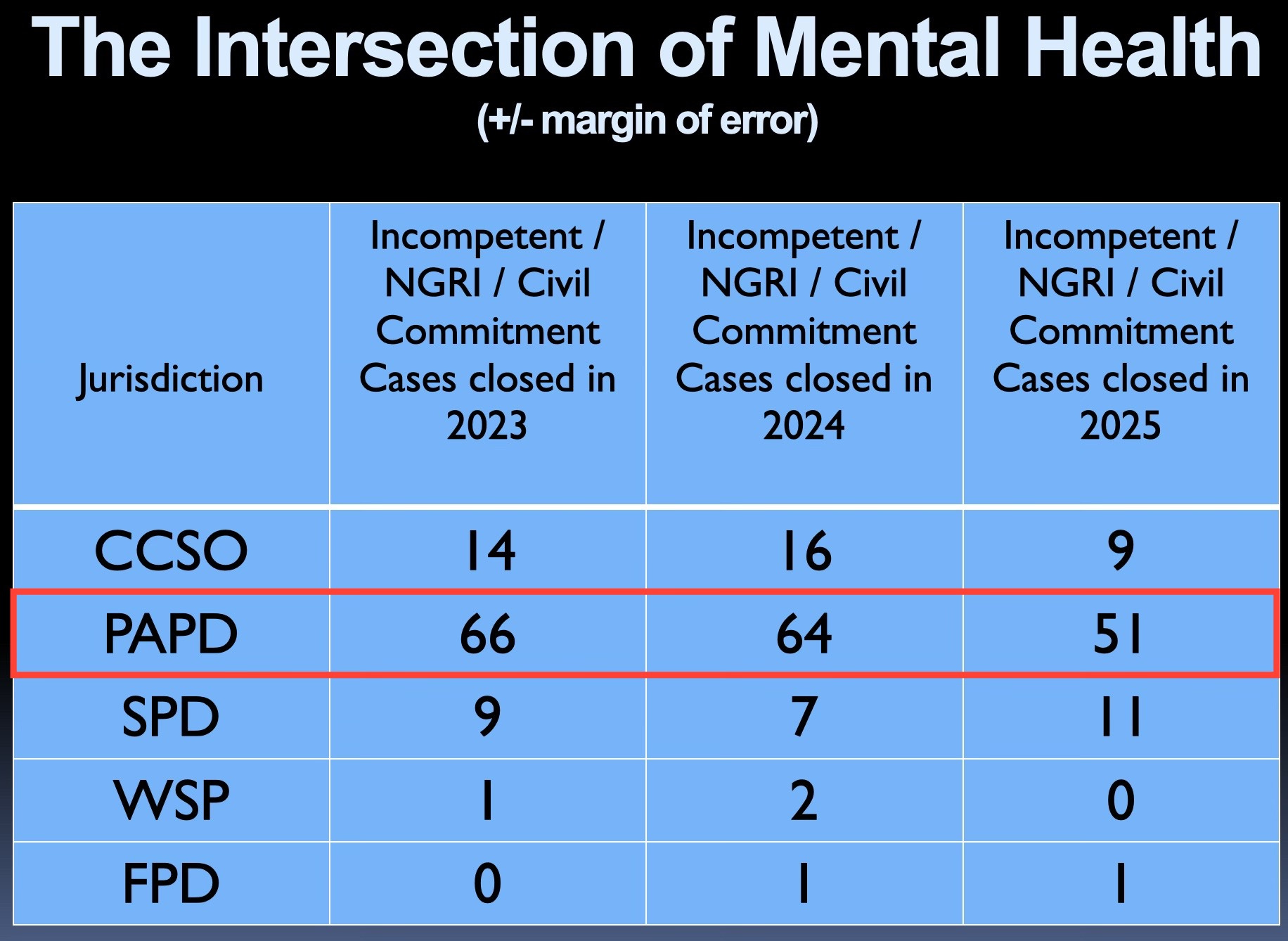
In other words, the city appears eager to reject the bill while sending a heavy share of the burden upstream.
And yet, residents were also told crime was trending downward in 2025. Maybe so. But if things are improving, why is the city already eyeing new taxing authority for policing? Perhaps taxpayers should ask the Port Angeles City Council before they adopt a new tax. Residents can also take comfort in knowing that, amid all this, the city planted 74 new trees last year.
Agnew Standoff Suspect Comes With a Long Paper Trail
Last week’s Agnew standoff involving Patrick Nelson was dramatic enough on its own. His history makes it more revealing.
A 2014 Kitsap Sun article described how authorities were searching Kitsap, Clallam, and Jefferson counties for Nelson after a Bremerton-area gun store burglary. The report said Nelson was later cornered in Bremerton along with Sequim resident Colette Rapp, when the SUV she was driving allegedly rammed vehicles used by a U.S. Marshals task force.
Another report in the Peninsula Daily News said Nelson, a Forks native, was charged in connection with the gun-store burglary, and that both Nelson and Rapp had prior criminal history in Clallam County. The PDN report also stated Nelson had previously been sentenced in Clallam County in 1999 for second-degree burglary, while Rapp pleaded guilty in 2002 to fourth-degree assault after a fight outside Delaney’s in Port Angeles.
So when residents heard that last week’s Agnew operation involved a man with an active Department of Corrections warrant, they were not looking at a one-off or a misunderstanding. They were looking at someone with a long history of law-enforcement contact stretching back decades and across county lines.
That matters, because local officials and activists love to talk about “systems,” “root causes,” and “narratives.” Fine. Here is one narrative that rarely gets enough attention: some people keep cycling through crime, custody, release, and reoffense for years, while the public is told not to notice the pattern.

Recompete: Jobs Program or NGO Slush Fund?
Remember how Recompete was pitched? A historic federal investment. A once-in-a-generation chance to reconnect people to work. Nearly $40 million to restore the economic trajectory of Clallam and Jefferson counties. Jobs. Wages. Industry. Opportunity.
But when you look at how the money is actually structured, the language quickly turns into bureaucratic word salad.
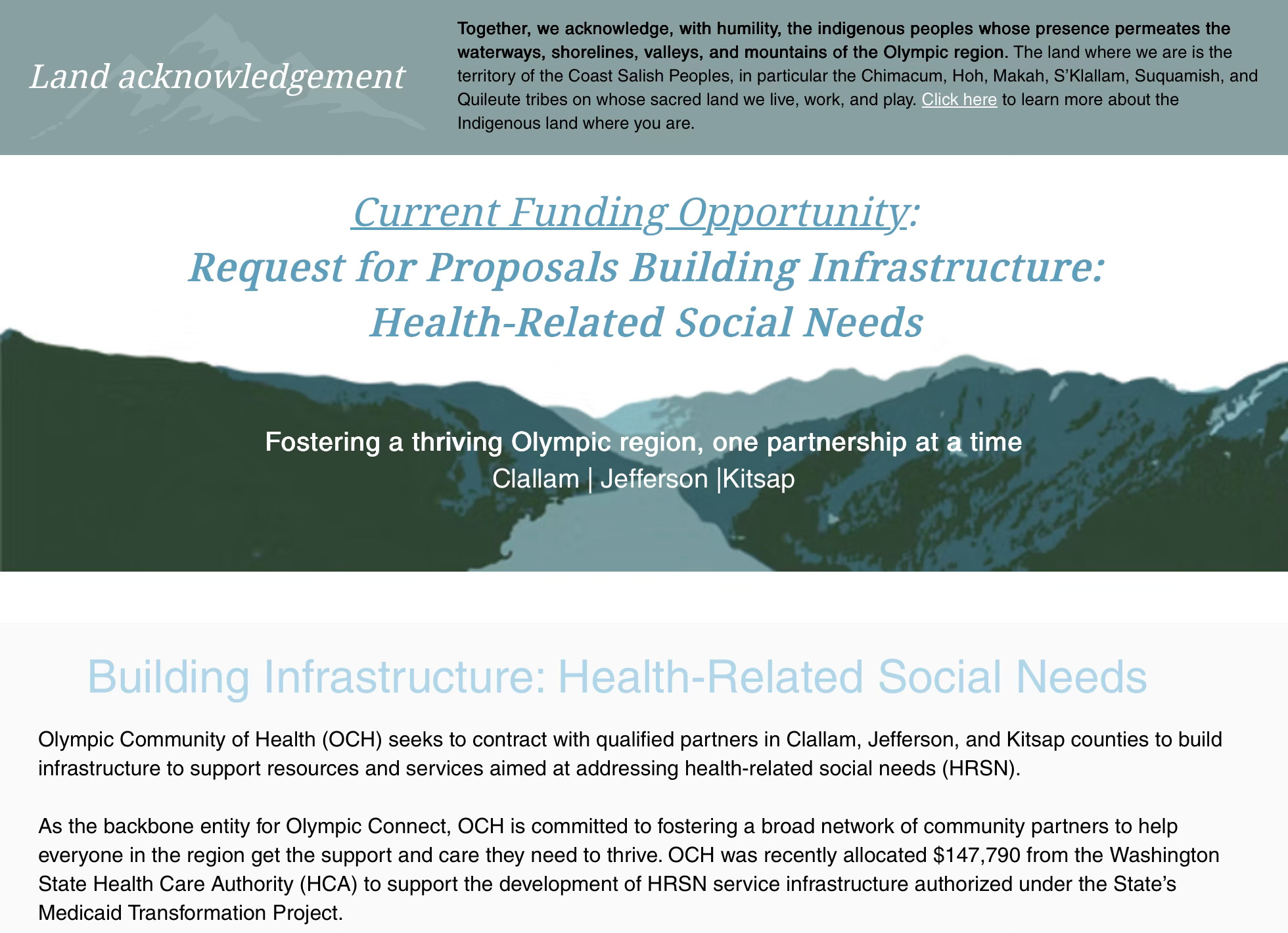
One of the largest pieces of the grant — about $10 million — is not directed to industry or private-sector job creation at all. Instead, it funds something called the Olympic Peninsula Resource Hub, also known as “Olympic Connect.”
According to a breakdown published by Clallam County Solutions:
“This is the backbone of the entire effort: a coordinated, person-centered system for removing the real-life obstacles that keep people out of the workforce… Through a network of navigators and a flexible voucher support program managed by the YMCA, ‘Olympic Connect’ will help people access the services they need while staying on track toward a stable, living-wage job.”
Translated from grant-speak, that means over a quarter of the region’s economic development funding is being routed into navigation services, vouchers, and social-service infrastructure run by nonprofits.
The project is led by Olympic Community of Health, with the YMCA managing parts of the voucher system. Clallam County Commissioner Randy Johnson previously served as president of the YMCA board.
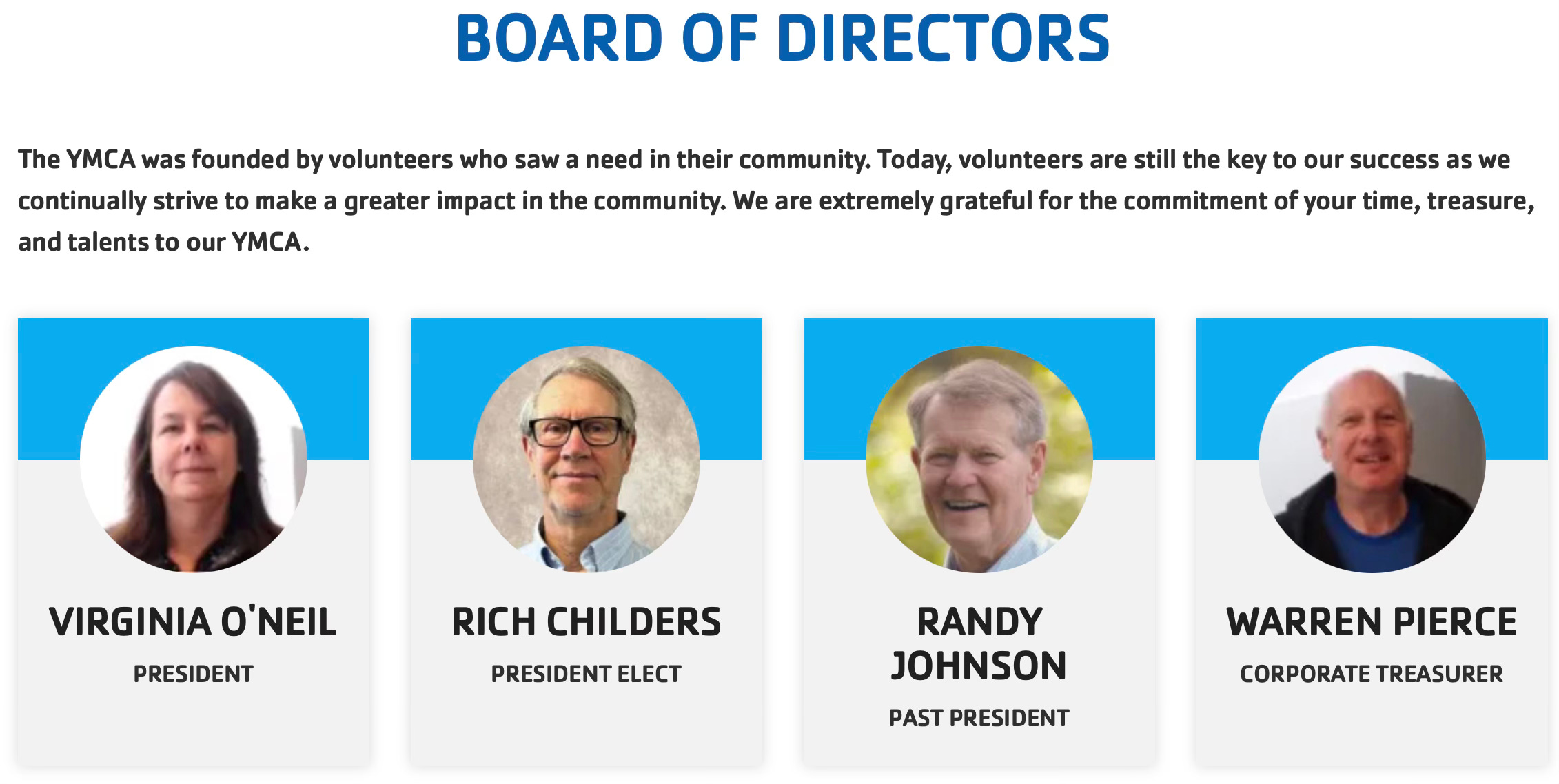
None of this is illegal. But it raises a fair question: how did a jobs grant become so saturated with the vocabulary and mechanics of the social-services industry?
From where many residents are sitting, Recompete is starting to look less like economic recovery and more like another large pot of federal money circulating through the region’s NGO ecosystem.
French Taking Communication Training
Paul Pickett, the Charter Review Commissioner who last year called public commenters “ignorant” and “racist,” recently published a “Profile in Leadership” interview with Commissioner Mike French in Clallam Democrats Rising. The piece paints French as a thoughtful local leader, a piano-playing former restaurant owner who was inspired to enter politics and who now sees his biggest achievement as leading the region’s successful Recompete grant application.
The interview itself contains an interesting admission. French said he is currently taking plain-language training to help him communicate more simply and clearly with the public.
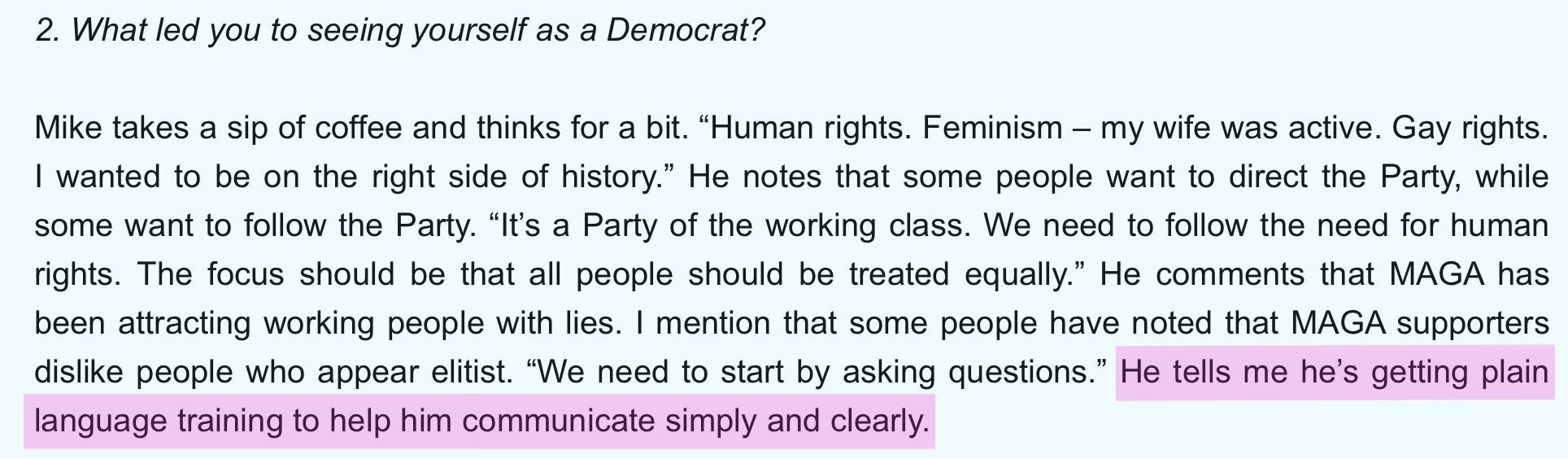
That may be a good idea.
Because communication in public office means more than just speaking plainly. It means taking questions from the public, communicating clearly with NGOs about expectations, following through by asking county departments for measurable results, and answering emails—even when those emails contain criticism.
And once Commissioner French finishes learning how to communicate more clearly, perhaps he can share a few of those lessons with Pickett—especially so he doesn’t dismiss public commenters as ignorant racists.
Put That In Your County-Funded Pipe and Smoke It
Try ordering a corn cob pipe on Amazon and having it shipped to your home. In many cases, you will be told it cannot be delivered because of local law or company policy.

Try ordering cigarette rolling papers, and you may run into the same sort of restriction.
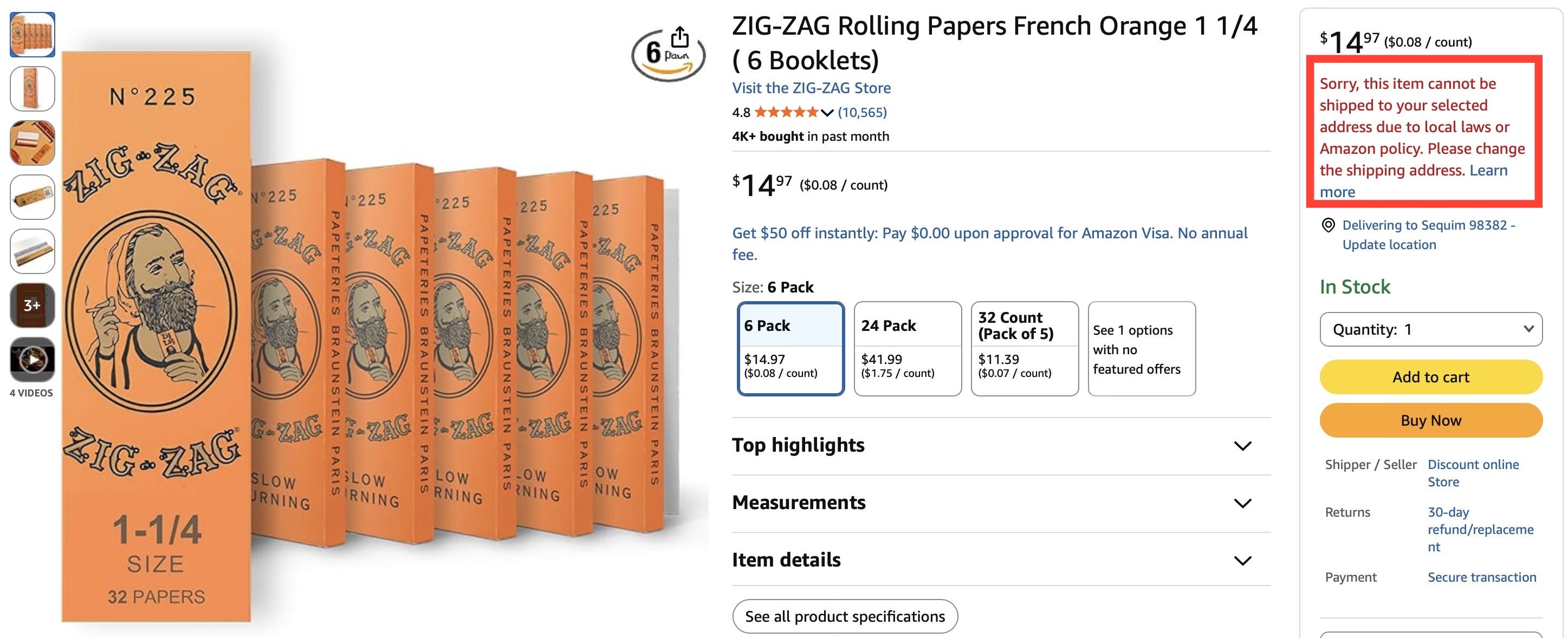
But here in Clallam County, county staff at the Harm Reduction Health Center will place a meth pipe, syringe, crack-pipe cleaning kit, or boofing kit directly into the hands of someone in active addiction.

Make that make sense.
This is the contradiction at the heart of the county’s entire harm-reduction regime. Ordinary commerce is constrained. Publicly funded paraphernalia distribution is institutionalized. And taxpayers are told this is compassion, science, and best practice. Maybe county leaders should explain why private retailers are held to a tighter standard than government employees.
At What Point Does a “Nonprofit” Start Looking Like a Business?
The Sequim Food Bank is hiring. The office administrator position pays $21 to $23 per hour, and the development coordinator position pays $26 per hour.

That might not sound remarkable until you compare it with the actual statewide minimum wage. As of January 1, 2026, Washington’s minimum wage is $17.13 per hour.
None of this is an argument against paying people fairly. It is a fair question, though, to ask when nonprofit payrolls, administrative growth, and development staffing begin to blur the line between charity and enterprise. In a county where residents are being squeezed by taxes, housing costs, and stagnant wages, that question is not cynical. It is responsible.
Peaceful Protest, Taxpayer Edition
Property tax statements are arriving, and with them comes a reminder that protest does not always look like chanting in the street. Sometimes it looks like a formal notice to the county treasurer.
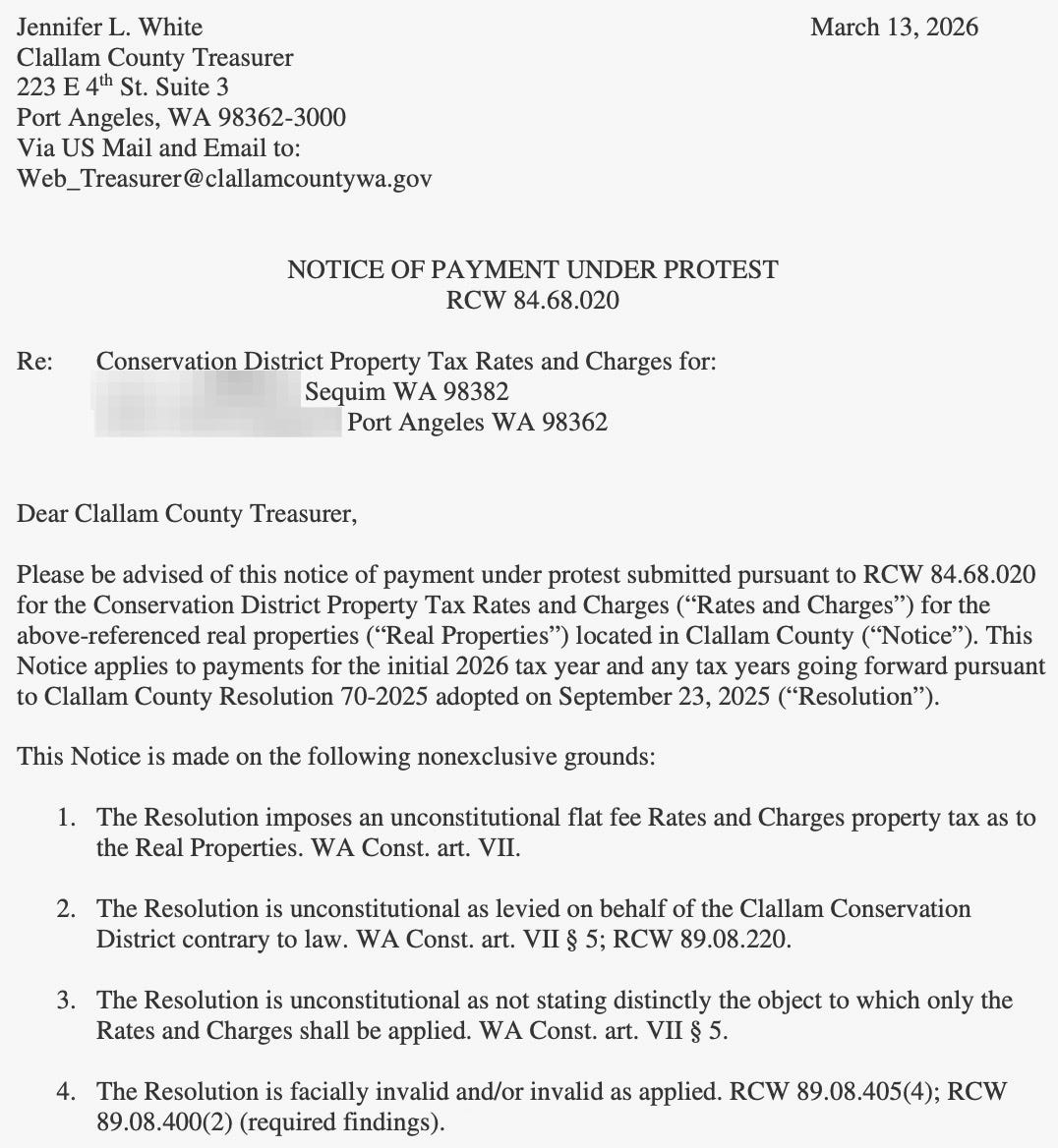
A March 13, 2026 notice of payment under protest challenges the Clallam Conservation District’s rates and charges on multiple grounds, including that the fee is an unconstitutional flat charge, was levied contrary to law, and failed to distinctly state the object to which the revenue would be applied.
That is what taxpayer resistance looks like when people are tired of being treated like a bottomless revenue source.
Who Gets to Tell Sequim’s History?
A reader named Andrea Hana raises a point worth taking seriously: how much of Sequim’s history is being quietly rewritten in plain sight?
HistoryLink says the name “Sequim” comes from a poor approximation of a Klallam word often pronounced “Skwim.”
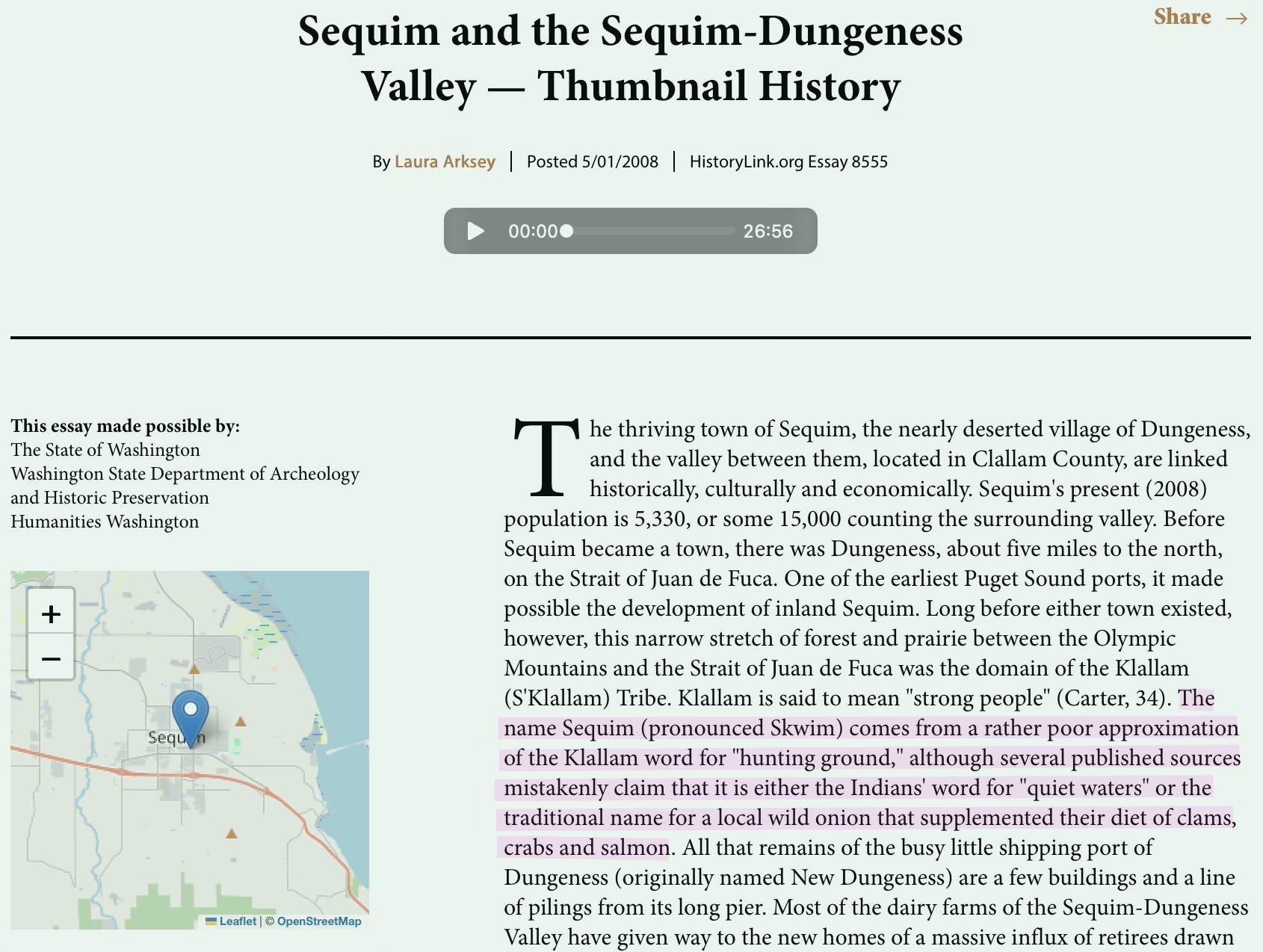
But the City of Sequim’s own historical material tells a different story. According to the city, the first post office was named “Seguin” in 1879, then reportedly became “Seguim” for about a month in 1907 after a postal reading error, before being read again as “Sequim,” a name that stuck.

If that account is right, then the modern retelling of Sequim’s name as an indigenous-language derivation is at least incomplete and possibly wrong. And if it is wrong, then residents have every reason to ask why official local history is being displaced by a cleaner, more fashionable narrative.
The larger issue is not spelling. It is ownership of memory. Towns lose something important when their true stories are slowly edited into something more politically convenient.
Andrea also makes a practical point: if HistoryLink is wrong, how do citizens get it corrected? That is a fair question, especially when ordinary people can produce city-backed historical material and still get no response from institutional gatekeepers. Local history should not belong only to whoever has the biggest platform. It belongs to the people who lived it, kept it, and bothered to remember it.
The Jail Merry-Go-Round Keeps Spinning
Macllin Joseph Heaward, previously arrested in connection with the videotaped assault of a transit driver, appears to be back on the Clallam County jail carousel.
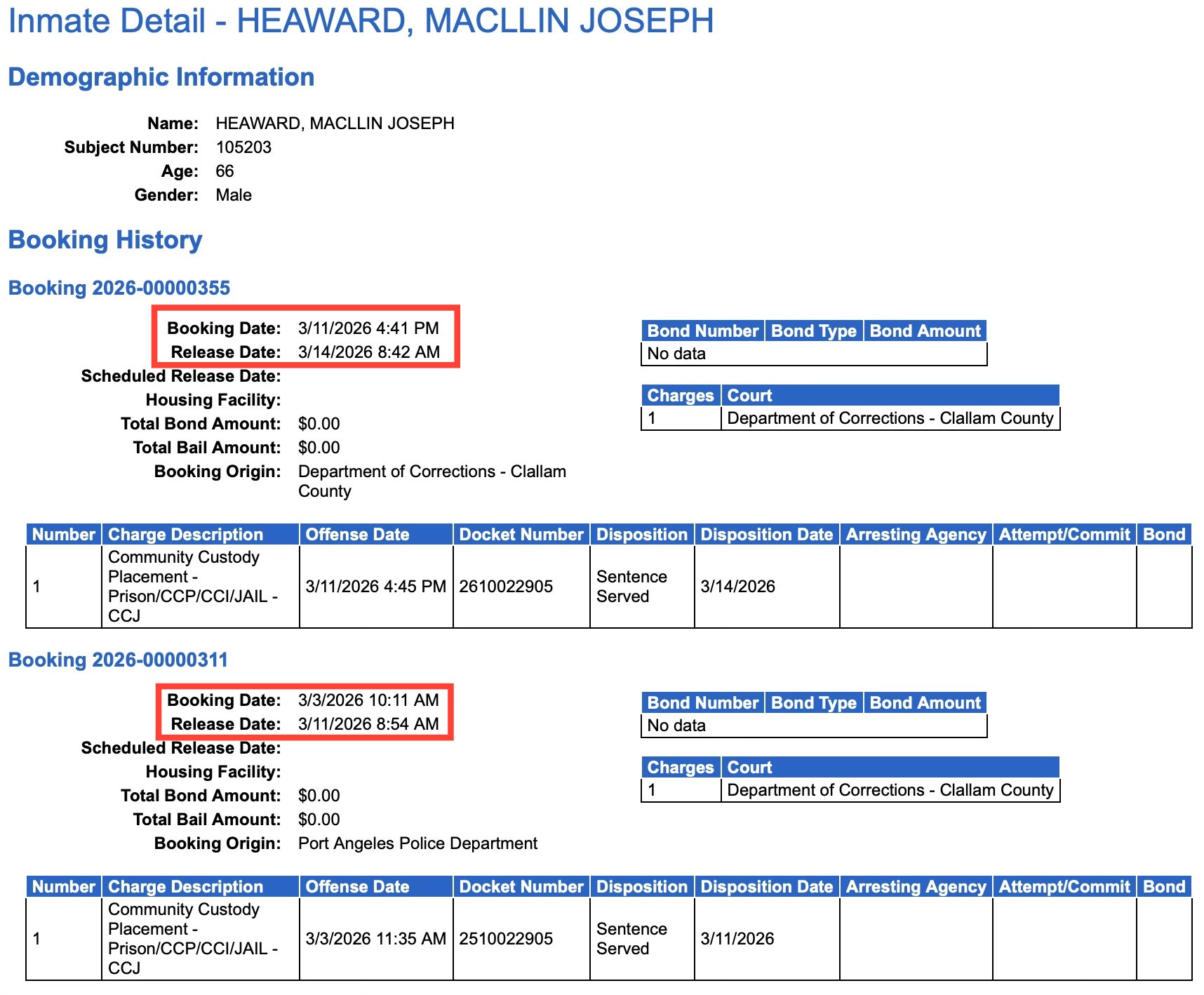
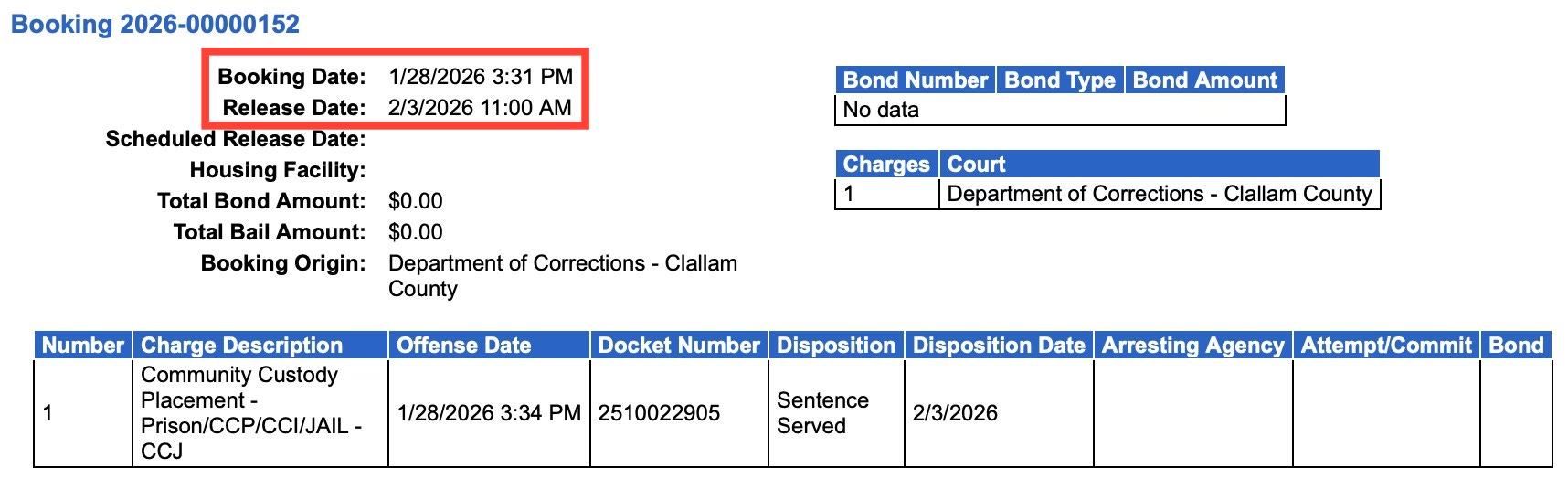
According to the booking pattern described here, he was arrested in late January for community-custody placement and released six days later. He was arrested again in March for the same thing, released after eight days in the morning, then arrested that same afternoon again for the same offense and spent another three days in jail before being released on Saturday.
This is the part of the criminal-justice conversation that almost never gets spoken plainly. Every time one of these frequent fliers goes back into the jail, taxpayers cover the tab: meals, medical care, defense, staffing, and the rest. Then the cycle repeats, and the public is told to focus on compassion while pretending cost and consequence are impolite topics.
They are not impolite topics. They are the topic.
Delta Farm Will Soon Be for Sale
One of the more consequential quiet developments of the month did not come from the courthouse or a council chamber. It came from Washington Farmland Trust.
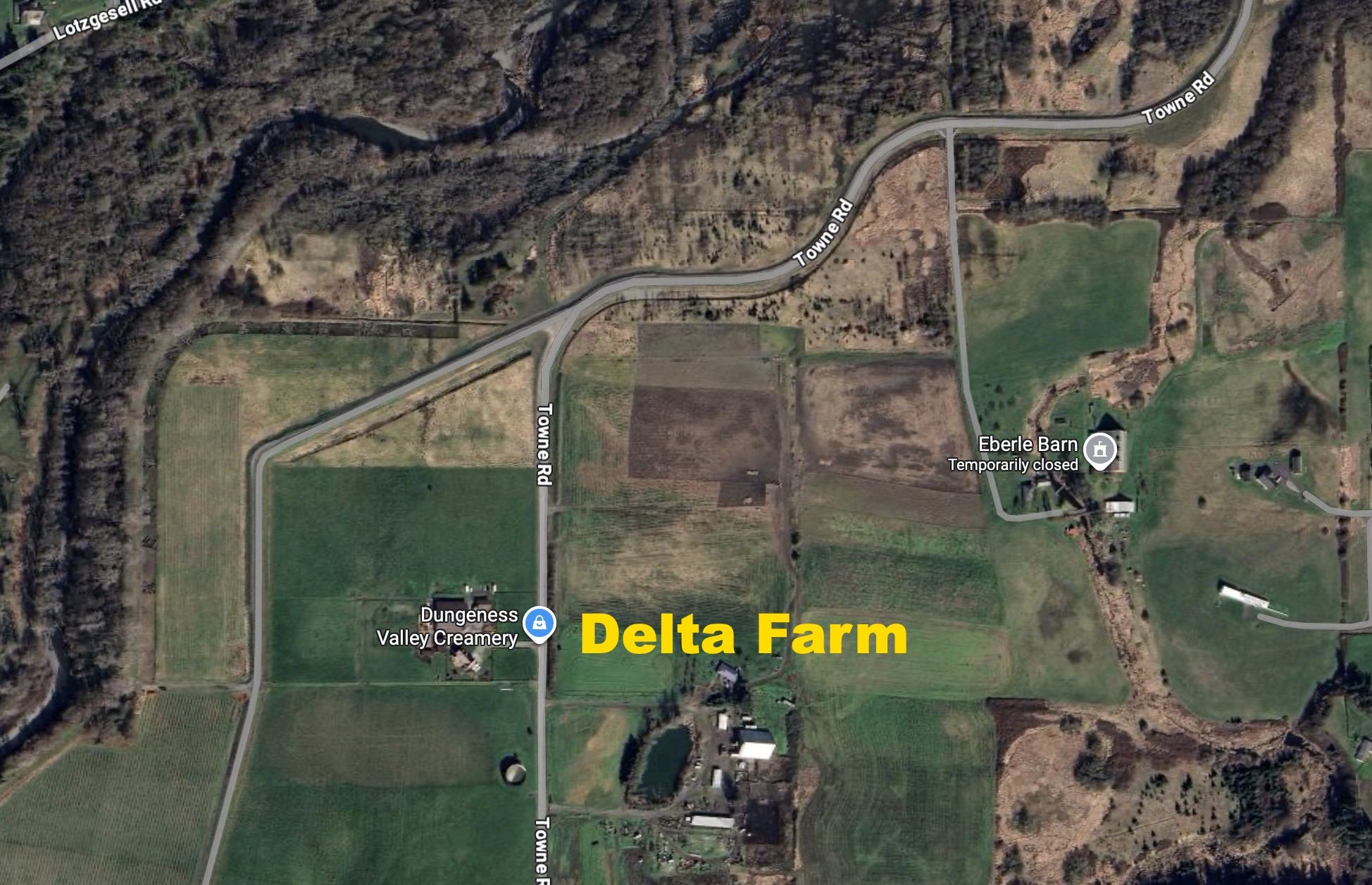
The Trust announced on March 2 that Delta Farm in the Dungeness Valley will be listed for sale later this year. The property is described as a 73-acre conserved farm in the fertile Dungeness Delta, long associated with Nash’s Organic Produce. The Trust says the land will remain protected farmland under its “Buy Protect Sell” model, and notes that the property drains into the Lower Dungeness River and includes headwaters feeding Meadowbrook Creek.

That does not mean the sale is insignificant. Quite the opposite. Delta Farm sits in an area that has already attracted intense attention because of land-use battles, agricultural preservation, water issues, and the Jamestown Tribe’s broader footprint in the Dungeness/Towne Road area. When a farm of that size and location comes into play, people should pay attention early, not after the paperwork is already done.
The obvious questions are simple. Who will buy it? Under what terms? And how, exactly, will this sale reshape the local landscape around one of the most contested areas in eastern Clallam County?
Those are not fringe questions. They are the kind of questions residents should ask before another “community asset” quietly changes hands and the public is later told the outcome was inevitable.
Port Townsend Project Hits the Midden Wall
From the Port Townsend Leader comes another story that deserves attention far beyond Jefferson County.
Plans for the Sims Gateway Project and other Port of Port Townsend work are now on hold after environmental studies in Boat Haven uncovered what were described as “culturally significant resources,” specifically midden material including animal bones and shells. The discovery triggered consultation with the Jamestown S’Klallam Tribe, which confirmed a significant amount of midden and said Port Townsend sits on the qatáy village site. Port officials now say work will not move forward until a plan is developed to address cultural resources, and Port Director Eron Berg indicated Sims Way is now likely more of a 2027 project.
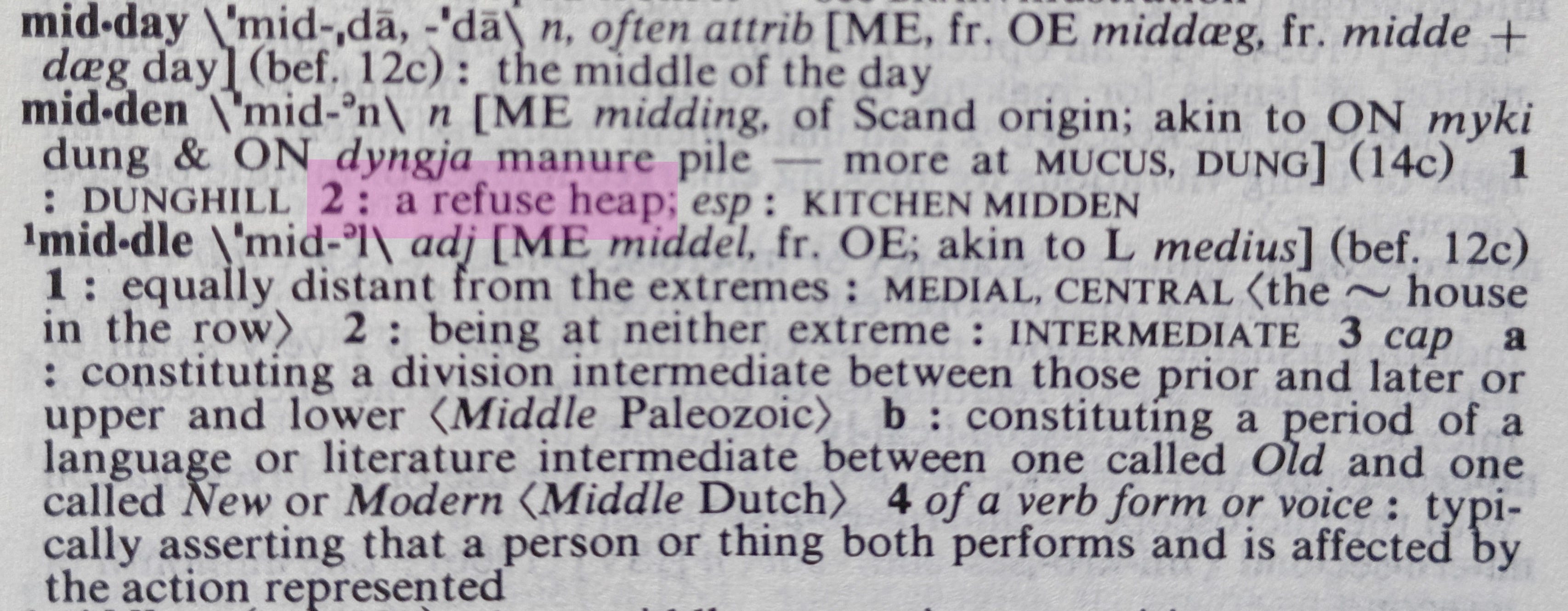
There are at least two obvious questions here. First, why is the Jamestown S’Klallam Tribe the key consulting entity on a project in Jefferson County, in an area many would more naturally associate with Chimakum history? Second, how many major public projects are now just one discovery of shells or animal bones away from being delayed indefinitely?
Of course, cultural resources matter. But predictability matters too. Infrastructure matters. Public investment matters. And when projects that were nearly ready to go suddenly hit the brakes over midden, residents are justified in wondering whether “consultation” has effectively become veto power by another name.
Just like that, another public project goes from full steam ahead to deep breath, pause, reassess, and maybe someday. Around here—especially with the rebuild of the Hurricane Ridge Lodge hinging on two archaeological sites and requiring consultation with local tribes—that pattern is starting to feel awfully familiar.


