
Commissioner Mike French says homelessness services aren’t attracting people to Clallam County. But when a convicted sex offender with arrests in Illinois and Bremerton ends up living steps away from a Port Angeles shelter and receiving services funded by local taxpayers, residents are asking a simple question: if people aren’t coming here because of the services, why do so many seem to arrive where the services are? As the debate over shower vouchers at the William Shore Pool intensifies, Jake Seegers is emerging as the candidate offering what many voters see as a common-sense alternative.
French Says Services Aren’t Drawing People Here
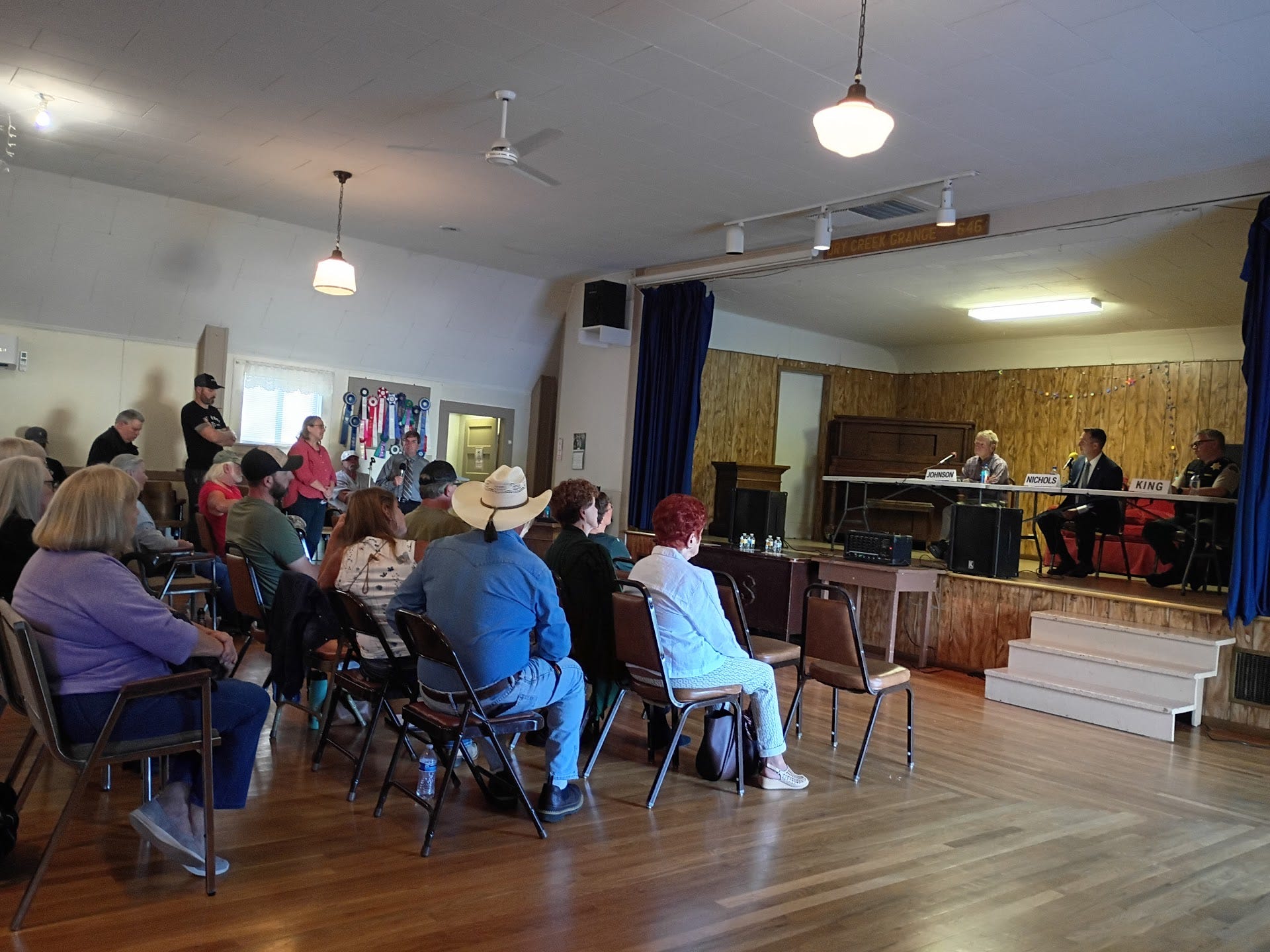
At April’s Commissioner Forum, Commissioner Mike French was asked directly whether Clallam County’s extensive homelessness and harm-reduction services might be attracting people from outside the area.
His answer was essentially, “no.”
French acknowledged he doesn’t have definitive data but suggested that Clallam County’s remoteness may play a role.
“Generally no,” French replied.
He went on to speculate that people with warrants elsewhere may be drawn to remote communities because they are less connected to the places they are trying to leave behind. French also warned against what he sees as an effort to blame outsiders for local problems.
“The focus right now is on finger-pointing,” he said. Yet there remains an unanswered question.
If remoteness is the primary factor, why are so many individuals concentrated in the exact locations where the county’s services are concentrated?
A Different View from Commissioner Johnson
Commissioner Randy Johnson has previously pointed to a visit he made to Serenity House, where he said only four of roughly 114 residents were from outside the area.
But Johnson recently shared another story that complicates the picture.
During last week’s Public Safety Town Hall hosted by the Calico Cat Social Club, Johnson described a conversation with a resident of Oxford House, a recovery-based housing program that requires accountability and adherence to rules.
The man told Johnson:
“I was in jail in Seattle. Then I came here, and I was in jail again.”
Johnson used the story to illustrate the success of Oxford House in helping people rebuild their lives. But it also served as a reminder that at least some individuals are arriving in Clallam County from elsewhere.

Meet Robert Jason Gould
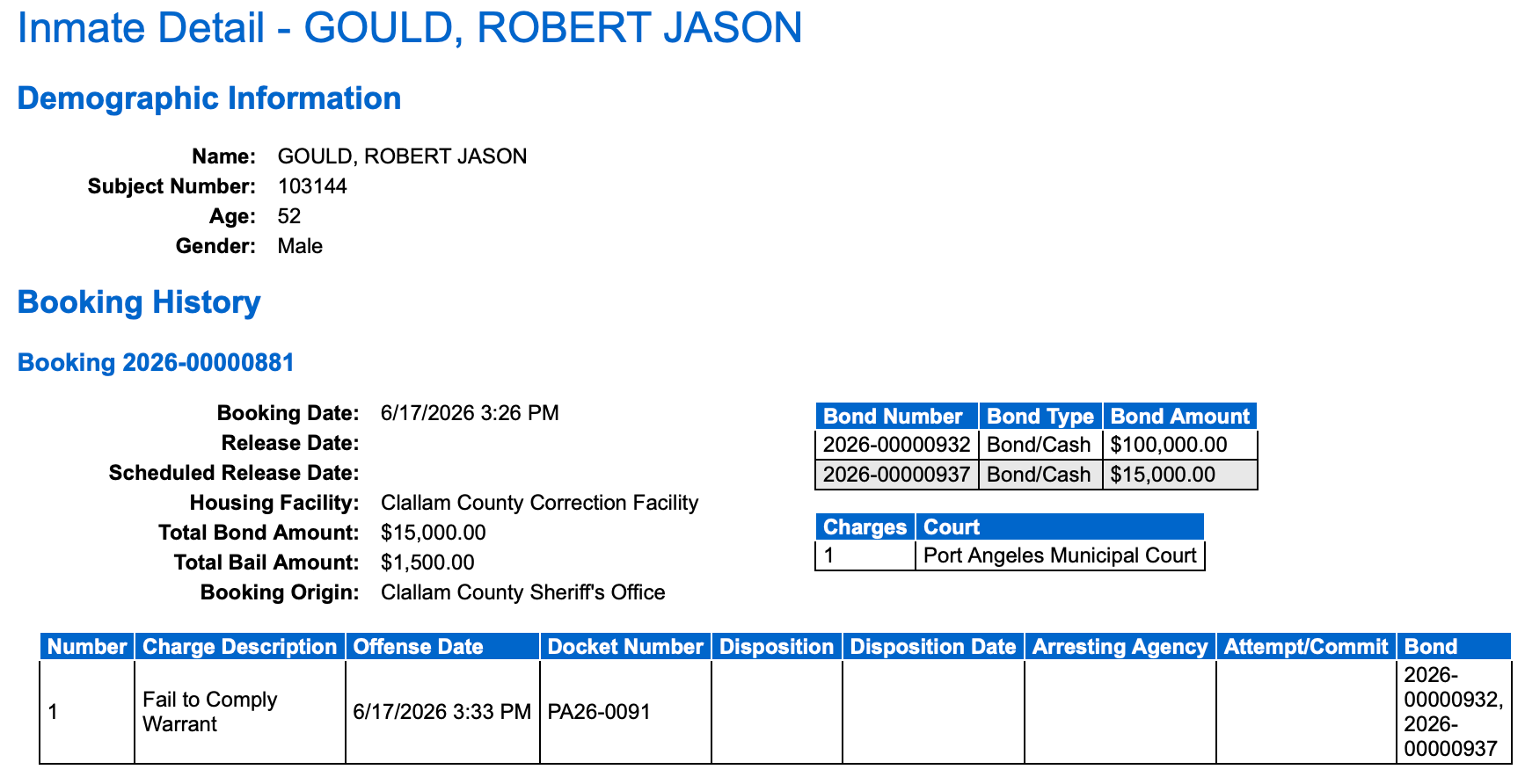
Last week, 52-year-old Robert Jason Gould was booked into the Clallam County Jail on a warrant-related matter.
Public records show Gould is classified as a Level 2 sex offender following a 1998 conviction for attempted rape.
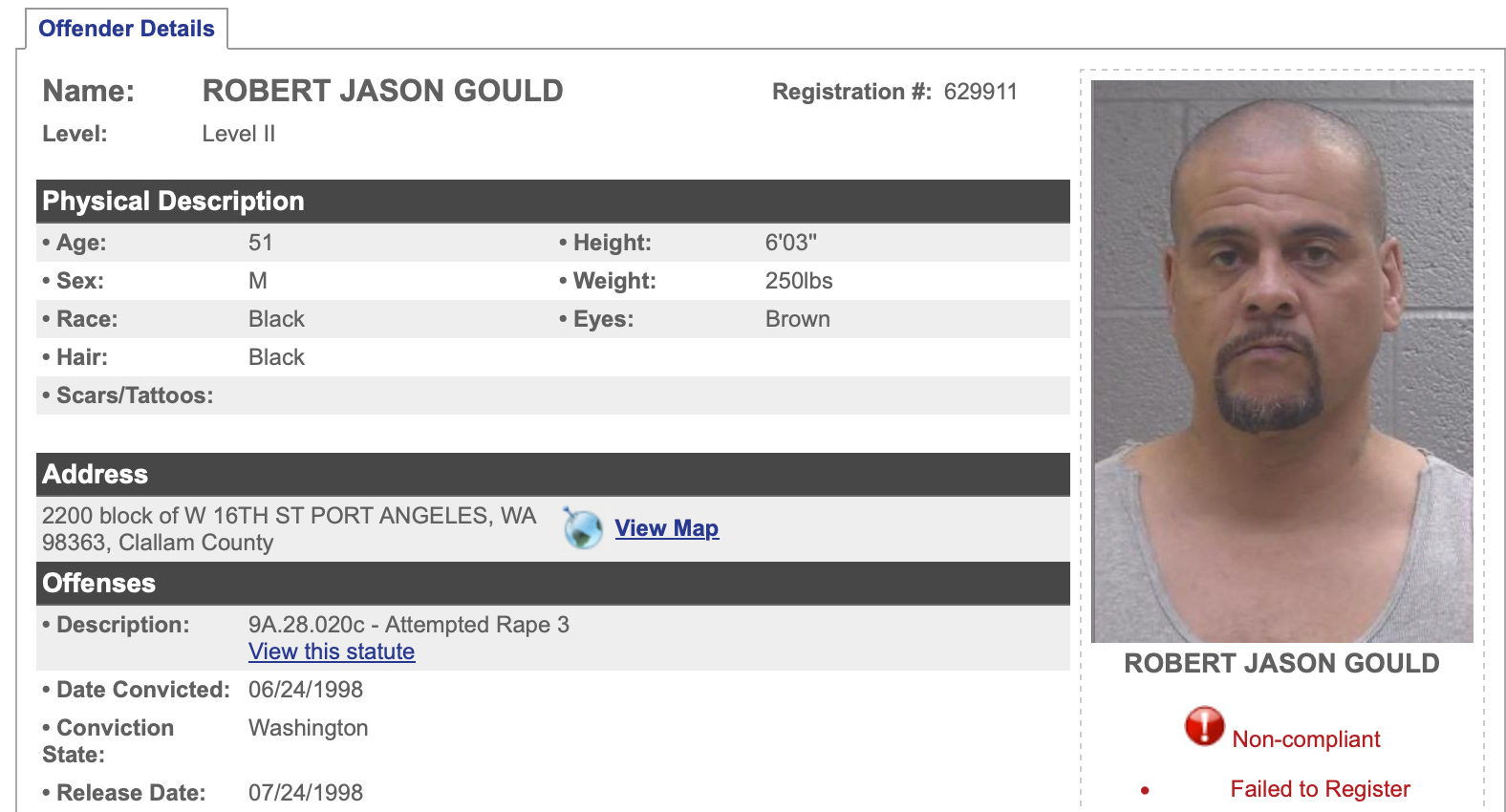
In Washington, a Level 2 designation generally means law enforcement believes the individual presents a moderate risk of reoffending and community notification is authorized.
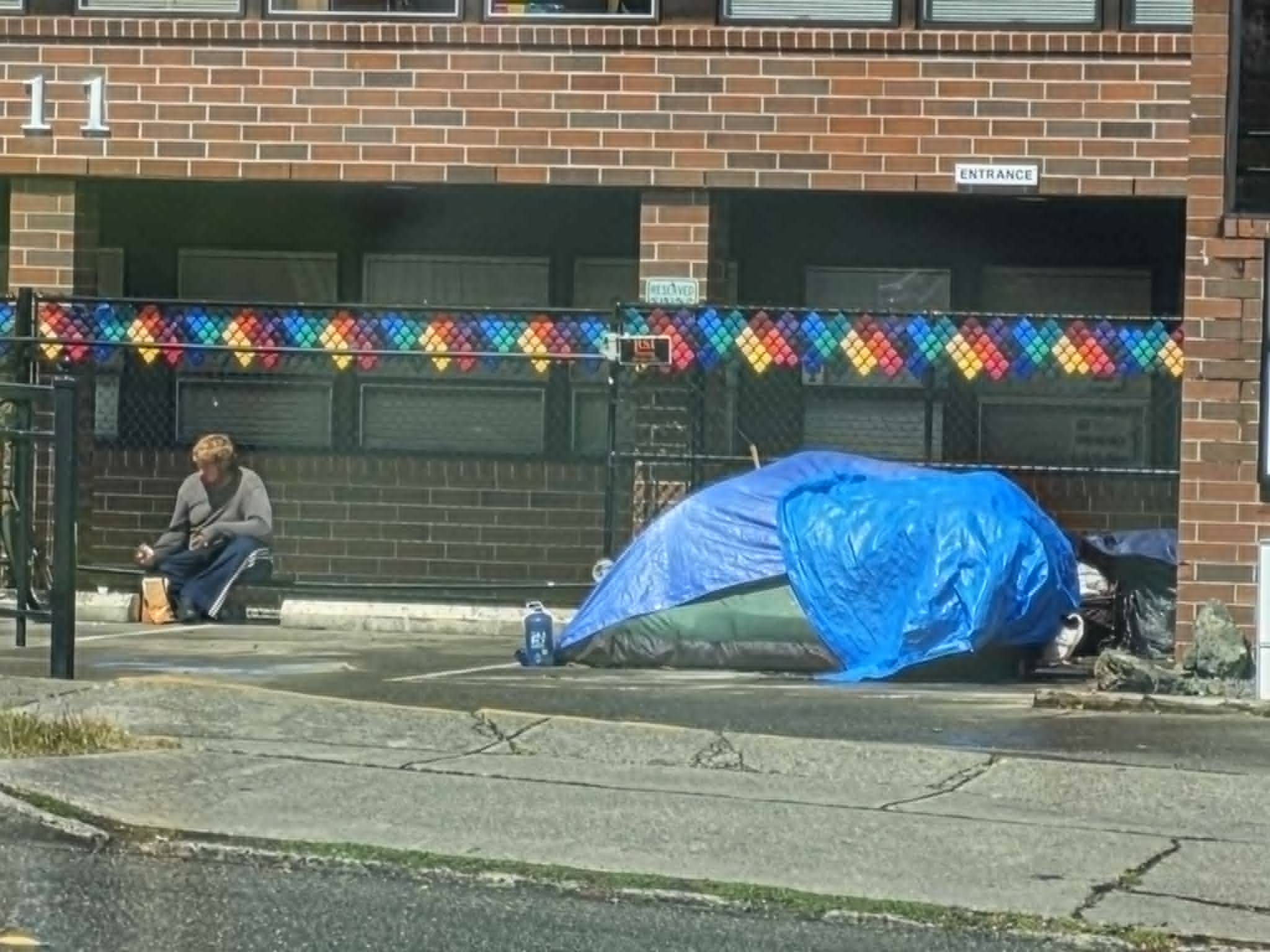
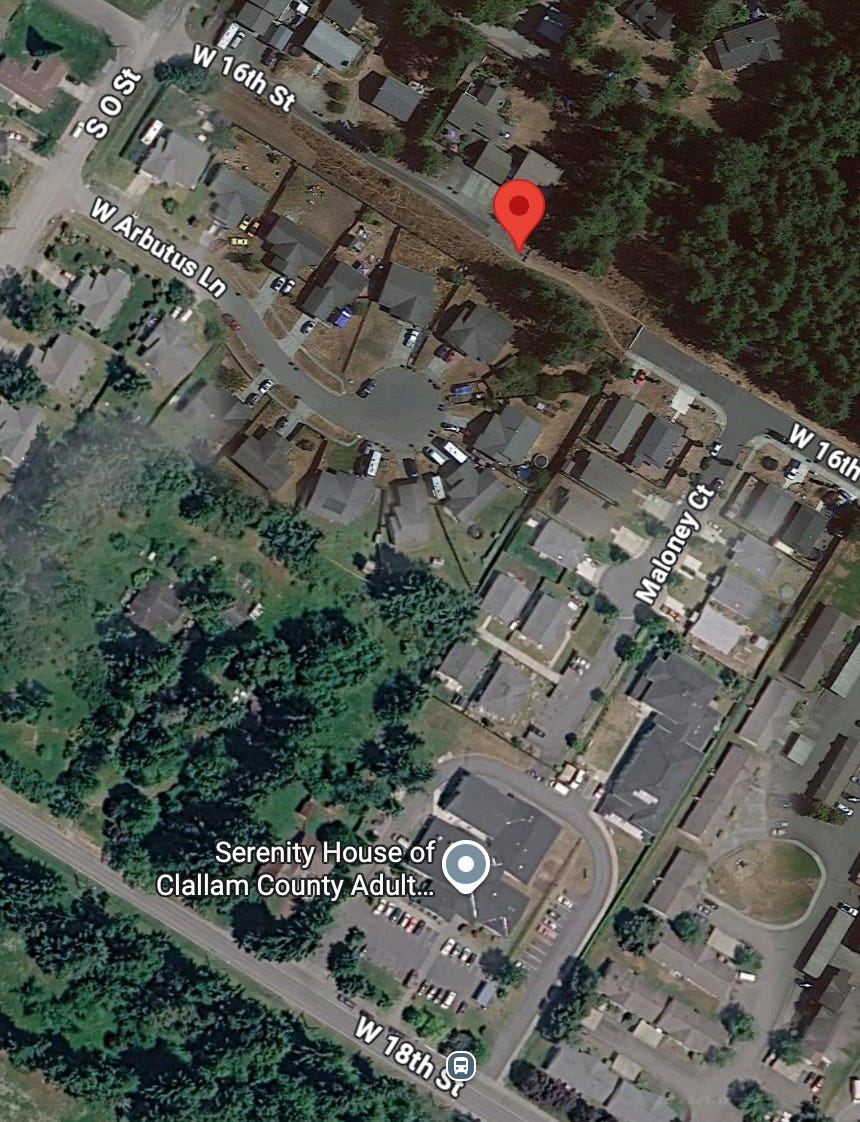
His registered address is in the 2200 block of West 16th Street in Port Angeles, just a short distance from Serenity House.
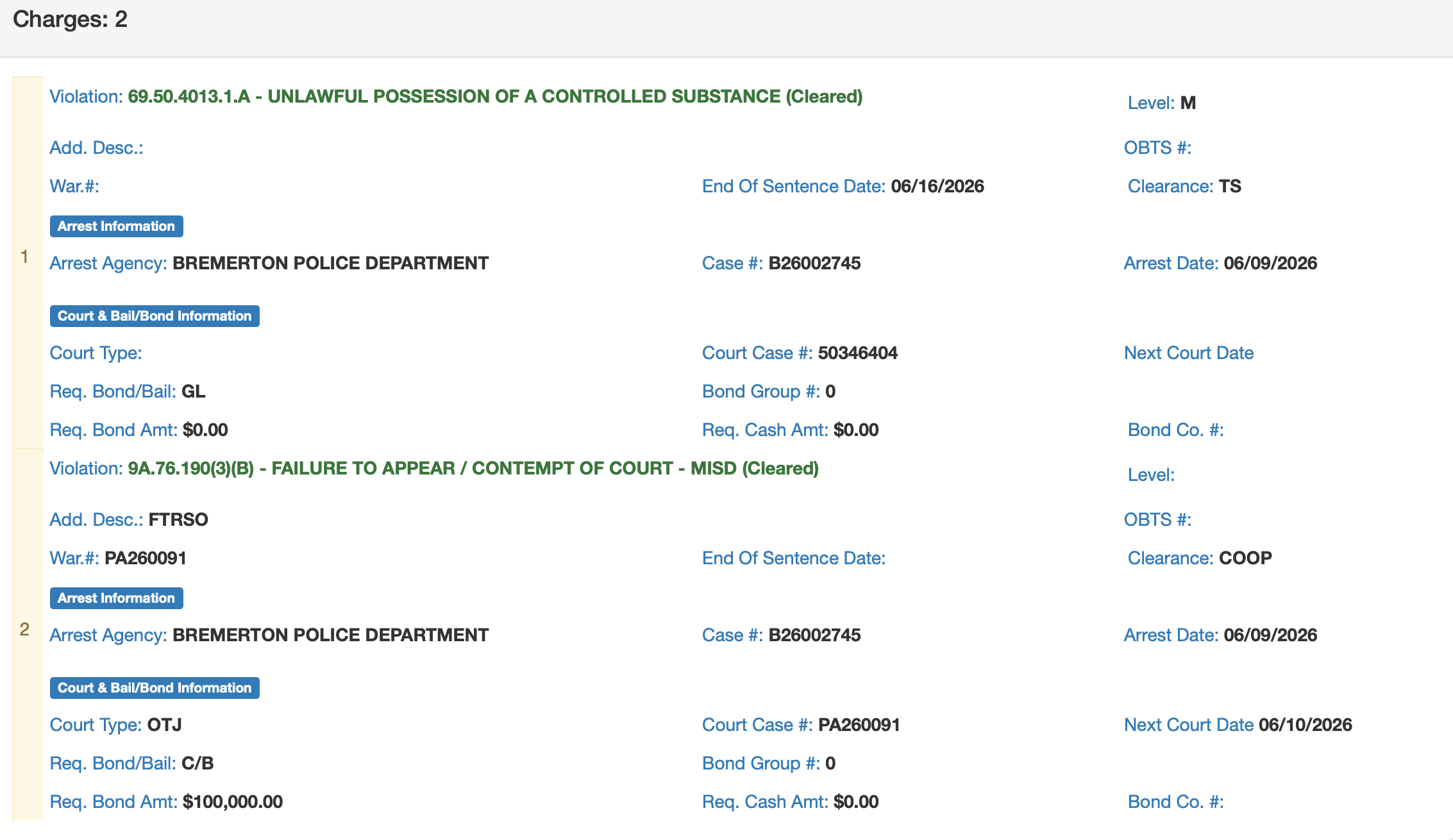
Records also show Gould was arrested earlier this month in Bremerton on allegations involving unlawful possession of a controlled substance and failure to appear.
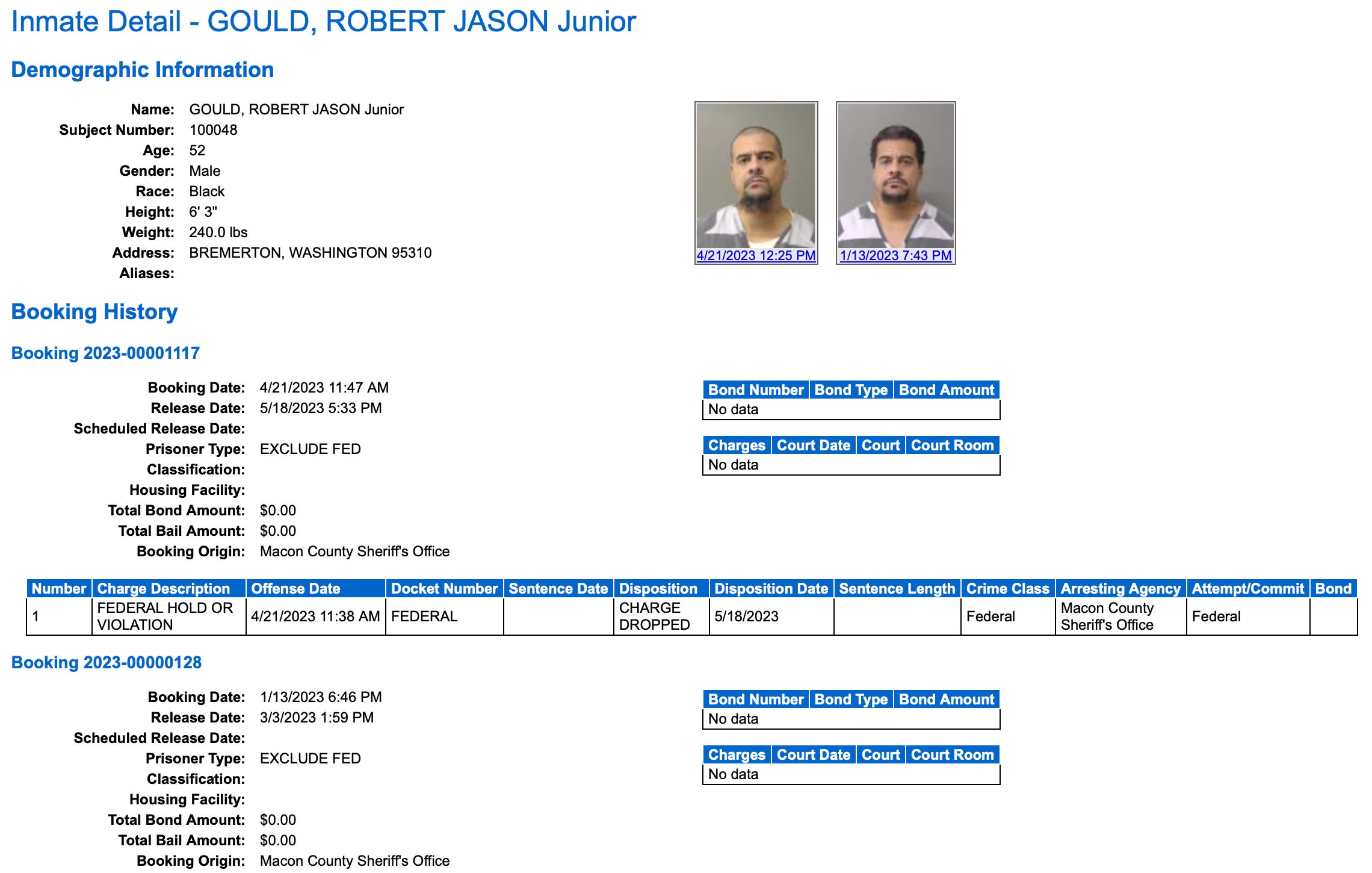
Prior records indicate arrests in Macon County, Illinois, including a federal hold and a criminal contempt matter.

Whether Gould came to Clallam County because of available services, because of personal circumstances, or for some other reason isn’t known.
But his case highlights the larger policy question facing local leaders:
When people with extensive criminal histories arrive here from elsewhere, what obligations do taxpayers assume, and what policies may be encouraging that migration?
The Shower Voucher Debate
That question has become increasingly relevant as local officials debate the County’s shower voucher program. Under the program, vouchers distributed through the Harm Reduction Health Center can be redeemed for shower access at the William Shore Memorial Pool.
Commissioner Randy Johnson defended the program at last week’s town hall, noting that it averages roughly one voucher per day. He argued the recipients are often vulnerable individuals, including women living in vehicles and families facing hardship.
Commissioner Mike French also defended the program during last week’s debate against Jake Seegers.
French argued that the pool is an existing public resource that can provide hygiene services at little additional cost and noted that the program operated for roughly 18 months without significant incident.
But Seegers challenged that reasoning.
Seegers argued that the absence of past incidents does not eliminate future risk.
“Eighteen months of no incidents is not an argument to pursue something that is just an obvious common-sense public safety concern.”
Seegers emphasized that individuals receiving vouchers where drug paraphernalia is distributed are often connected to addiction and argued that public swimming facilities serving children are not the appropriate venue for those programs.
Unlike French, who framed the issue as a matter of service delivery, Seegers framed it as a matter of public safety and transparency.
Watch the exchange here:
The program operated for 18 months largely out of public view. Even Commissioner Mike French has said he was unaware of it until recently. That admission raised eyebrows because French sits on the William Shore Pool Board, where the vouchers are redeemed, while also serving as a county commissioner overseeing the department that distributes them. Despite those overlapping roles, he was unaware of the program.
A Clear Contrast for Voters
The debate over homelessness, harm reduction, public safety, and accountability is shaping up to be one of the defining issues in this year’s county commissioner race. Commissioner Mike French argues that services are a compassionate response to existing problems and rejects the idea that they are attracting people to Clallam County. Jake Seegers, on the other hand, argues that compassion without accountability can create new problems while failing to solve old ones.
Cases like Robert Jason Gould’s sit squarely at the center of that debate. Here is a man whose record stretches from Illinois to Washington, who carries a Level 2 sex offender designation, and who has recent arrests involving controlled substances.
Whatever brought Gould to Port Angeles, he now lives where many taxpayer-funded services are concentrated. If he is struggling with substance abuse, the Harm Reduction Health Center exists to provide supplies and services to encourage his addiction. It is also the same place where shower vouchers are distributed for use at a public pool frequented by local families and children.

That is why this debate is about much more than a shower voucher. It is about the kind of system Clallam County is building and who ultimately benefits from it. Supporters see a network of services that offers dignity, compassion, and help to people in need. Critics see a growing system that too often manages dysfunction rather than demanding recovery, accountability, and change.
As voters weigh those competing visions, the question may come down to something much simpler: Is Clallam County building systems that help people recover and become productive members of society, or systems that make it easier for people to remain dependent while attracting more of the same challenges from outside the community?
What You Can Do
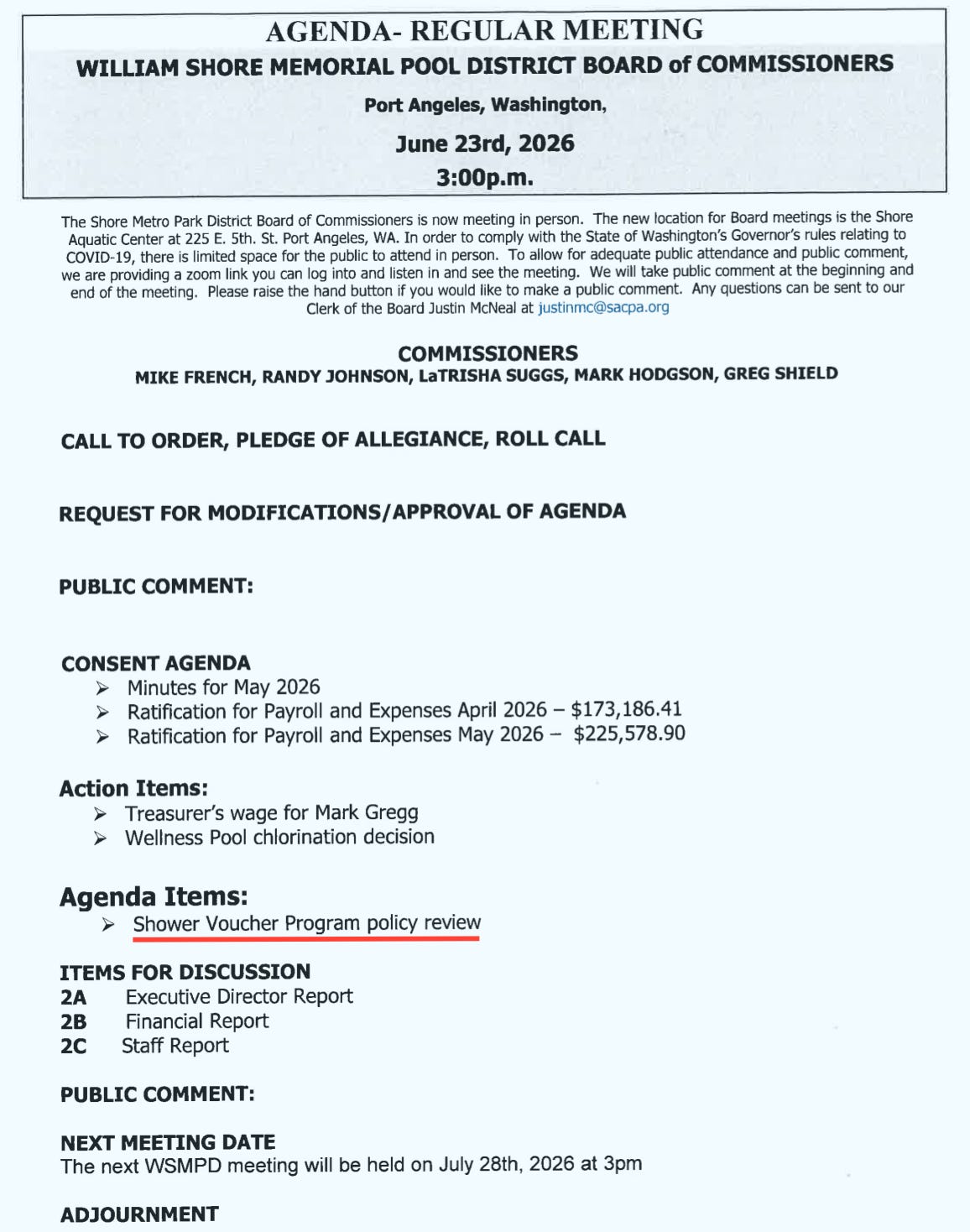
The William Shore Memorial Pool Board will meet this Tuesday, June 23, at 3:00 p.m. to review the shower voucher policy.
The pool board members are County Commissioners Mike French and Randy Johnson, Port Angeles City Council members Mark Hodgson and LaTrisha Suggs, and community representative Greg Shield.
The public is welcome to attend and provide comment. For information about attending online or in-person, click here.
Contact the Board:
Mike French — Mike.French@clallamcountywa.gov
Randy Johnson — Randy.Johnson@clallamcountywa.gov
Mark Hodgson — mhodgson@cityofpa.us
LaTrisha Suggs — losuggs@cityofpa.us
Greg Shield — gshield6@icloud.com
Residents who support ending the voucher program may also sign the petition calling on the board to reject shower voucher and hygiene-center programs at the aquatic center.
Today’s Tidbit: Town Hall Audio