
Clallam County Health and Human Services showcased soft “success stories” at its July Board of Health meeting while expanding its campaign against misinformation. When Jake Seegers presented coroner data, near-zero treatment conversion rates, and a history of shifting overdose counts, Health Officer Allison Berry defended the department’s numbers, and Commissioner Mike French immediately shut down any follow-up. The exchange laid bare a culture that treats critical residents as disruptions and selected experts as beyond serious scrutiny.
Soft Stories, Hard Costs
At the July 21 Board of Health meeting, the County’s Health and Human Services (HHS) highlighted three “Success Stories” from the Harm Reduction Health Center. One participant used a computer to apply for a job; staff printed a resume, provided a folder, and supplied interview clothes from the closet. Three others received food, a place to rest, and wound care from the Olympic Peninsula Community Clinic and community paramedics. A third was given “a calm and welcoming space to regroup” after losing cash.
The center’s annual budget is approximately $530,000. Officials offered no information on whether any of these participants entered recovery, reduced their drug use, or simply received more supplies that enabled continued addiction in the woods. The stories were presented as progress. The harder metrics were left unmentioned.
The Misinformation Pivot
Officials then turned to expanding HHS’s “spotting misinformation” initiative, including a possible monthly educational piece. The timing was revealing: the same meeting that celebrated feel-good moments and announced a fight against bad information immediately faced data the department preferred not to examine in public.
Seegers Brings the Numbers
Public commenter Jake Seegers went straight at the issue:
“If we are focused on misinformation, we need to also focus on misinformation coming from the county.”
He noted that the HHS Opioid Gaps Report conflicted with data from the coroner’s office. Last year the county recorded 25 overdose deaths—three times the 2018 total when it fully embraced harm reduction. “That means that every Board of Health meeting, we lose two people,” he said.
Mid-year figures already showed seven confirmed overdose deaths and five suspected, tracking last year’s pace with no clear improvement.
Seegers cited HHS’s own figures: the center had been logging roughly 1,000 encounters a month, or about 12,000 a year. From those 12,000 opportunities, the county performed only 27 treatment assessments—a 0.2 percent conversion rate.
“Any salesperson making that conversion rate would be out on the streets as well. It’s because we’re not selling treatment, we’re not selling a way out, we’re selling continued addiction down at the Harm Reduction Health Center.”
According to the same data, each encounter averaged eight syringes—even as officials claim injection is no longer the most common method—and every other encounter received one dose of naloxone.
“This is not working. We need a path to treatment,” Seegers told the Board. “I’m tired of losing two people per month.”
Berry Defends, French Cuts Off
Health Officer Allison Berry responded at length directly to Seegers. She insisted HHS and the coroner are “not in conflict” but simply count differently—residence versus place of death—and that the numbers are “only slightly different on any given year.”
She explained that some people from outside the area travel to the west end intending to die by suicide because of Clallam County’s natural beauty. This means that a non-resident who receives supplies from the Coutny’s Harm Reduction Health Center and overdoses in a tent along Tumwater Creek is recorded by the coroner as a local death but is not counted by HHS as a Clallam County resident death. A Clallam resident who dies in a Seattle hospital is counted by the health department as a local death.
When Seegers began a follow-up question—“Why…”—Commissioner Mike French cut him off immediately: “We’re not going to get into a back and forth.”
Seegers pointed out that Berry had already engaged by speaking directly to him. French raised his voice: “We’re going to have respect for the meeting that’s going on, we’re going to follow an agenda, and we’re going to not get into a back and forth… We’re going to have respect for the people that showed up here.”
Berry then declared, “We don’t respond to an individual commenter”—immediately after having done exactly that.
A History of Moving Numbers
Berry’s claim that the figures differ only “slightly” sits uneasily with a documented record of large swings. In a January 2019 Peninsula Daily News article, she cited an “Opioid Surveillance Dashboard” showing overdose deaths dropping from 10 in 2017 to just 2 in 2018, attributing the decline to expanded naloxone access.
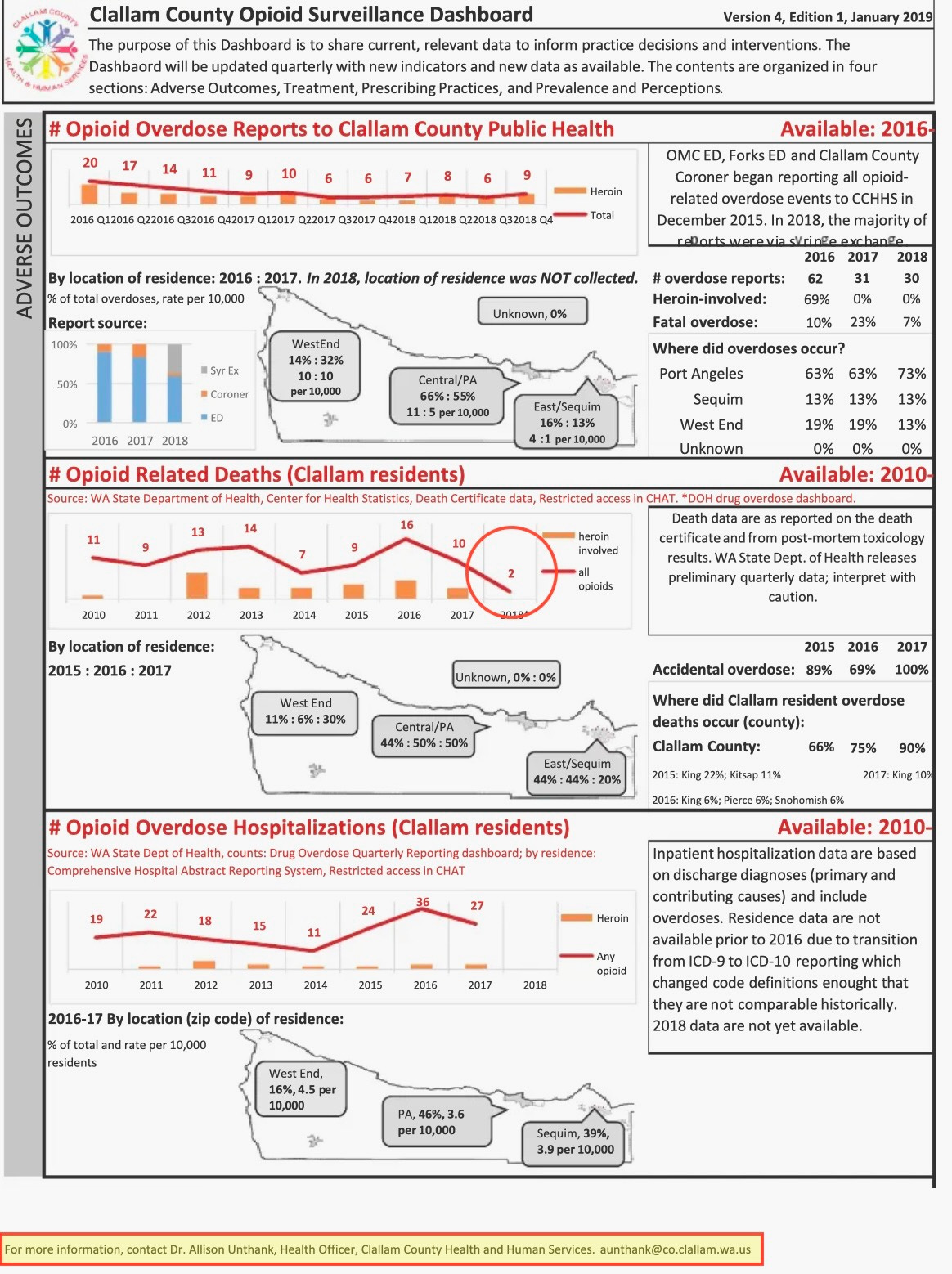
Three months later, the same dashboard was quietly updated to show 10 deaths in 2018.
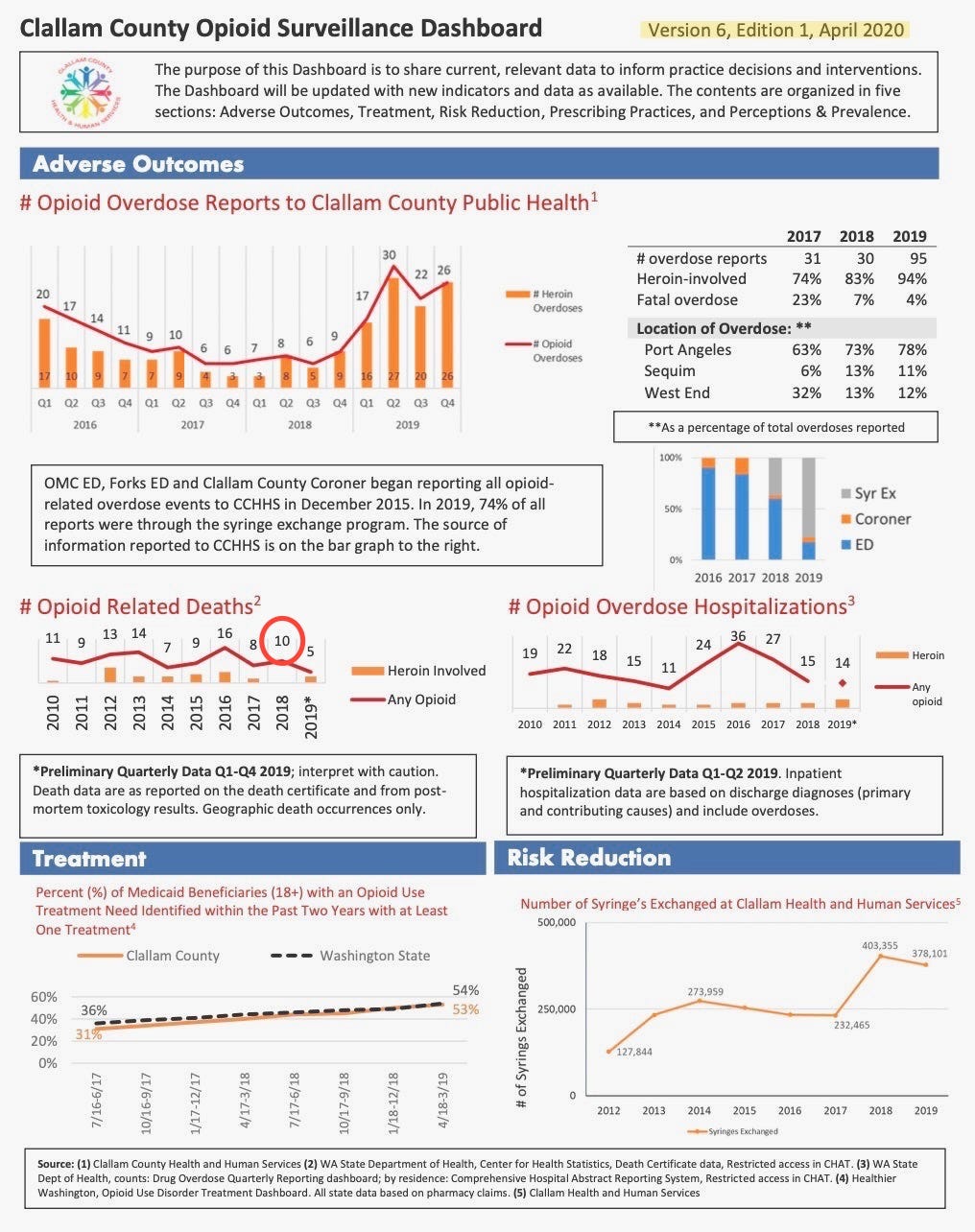
A later case-by-case review by Deputy Coroner Rebecca Shankles revised the verified 2018 total to 8. When headline numbers shift that dramatically, questions about the reliability of the data used to declare policy success become unavoidable. That history makes the decision to allocate $25,000 for HHS to produce its own Gaps Report particularly sensitive: the same department that designed and runs the programs is tasked with evaluating their effectiveness.
Steeper Surge, Higher Baseline
Berry attributed the large surge from 2021 to 2023 to the arrival of fentanyl. That factor is real. Yet Clallam County and Washington State—both strong embracers of harm reduction—experienced steeper proportional increases than many jurisdictions that restricted drug-use supply distribution.
From 2018 to peak, Clallam’s overdose deaths rose 538 percent and Washington’s 207 percent, while states that limited or prohibited syringe programs averaged roughly 94 percent increases. Idaho, with far tighter restrictions, saw only a 58 percent rise and peaked earlier.
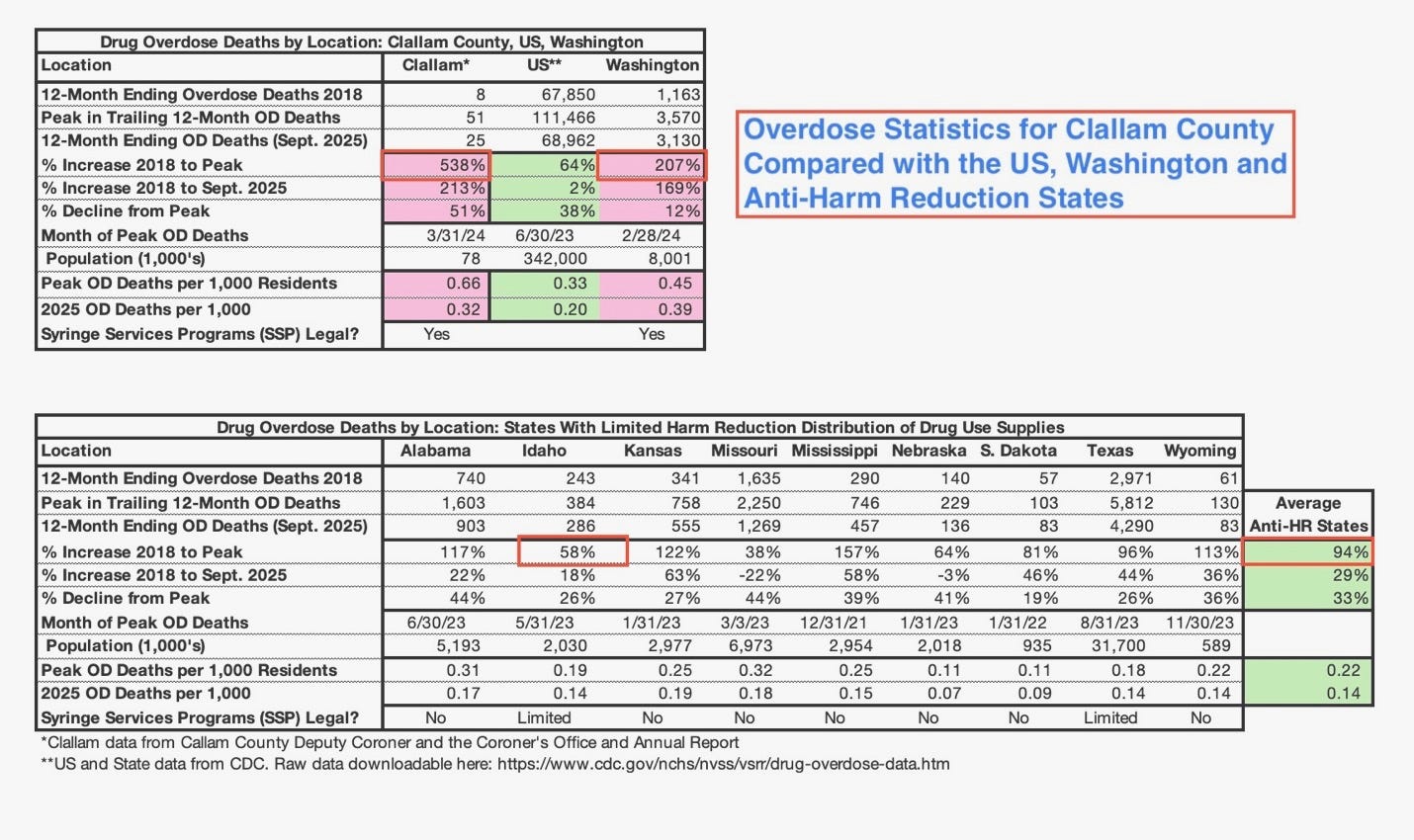
Clallam’s 25 deaths in 2025 remain more than triple the eight recorded by the coroner in 2018, and its rate per 1,000 residents stays higher than Idaho’s and the average among restrictive states. Recent declines from the peak have not erased a baseline that is still roughly three times higher than it was when the county fully committed to the harm reduction approach.
Experts First, Public Second
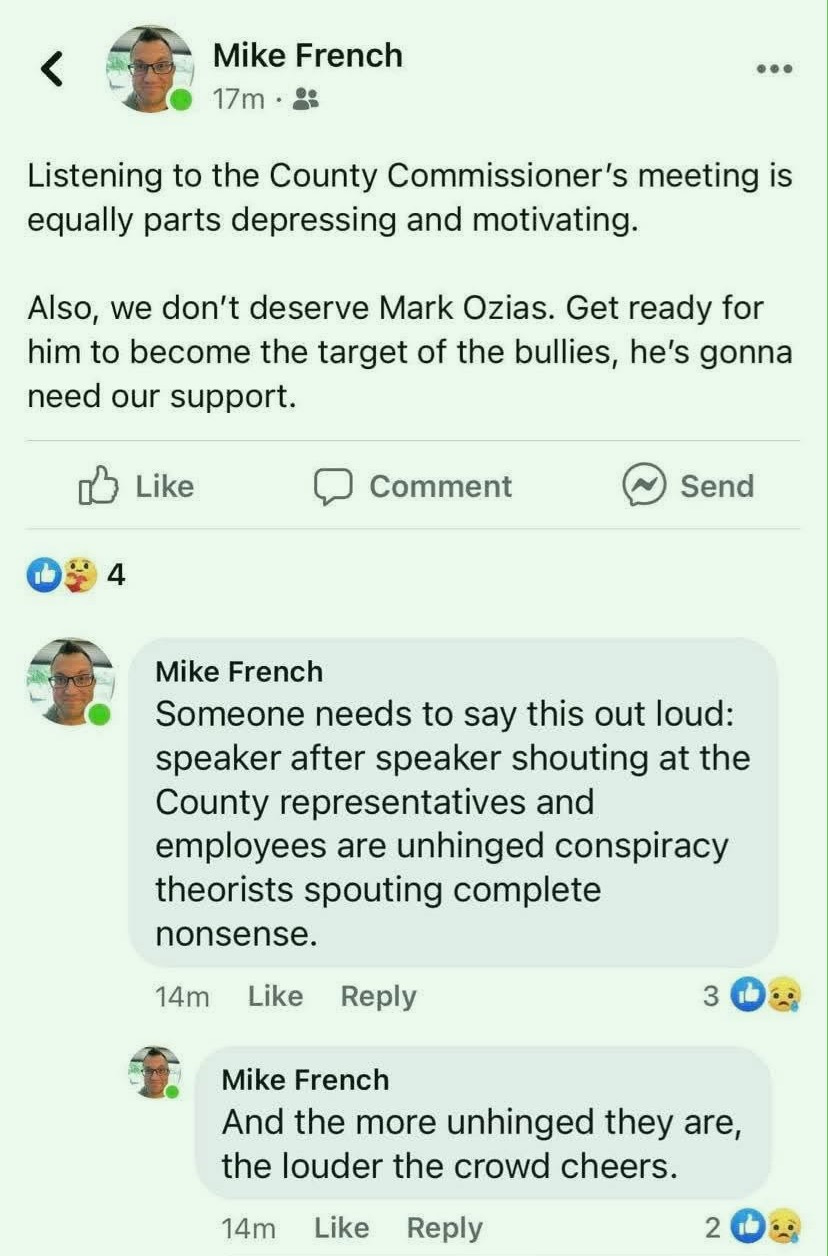
French has long made his view of public participation clear. During COVID he dismissed critical speakers as “unhinged conspiracy theorists spouting complete nonsense.”
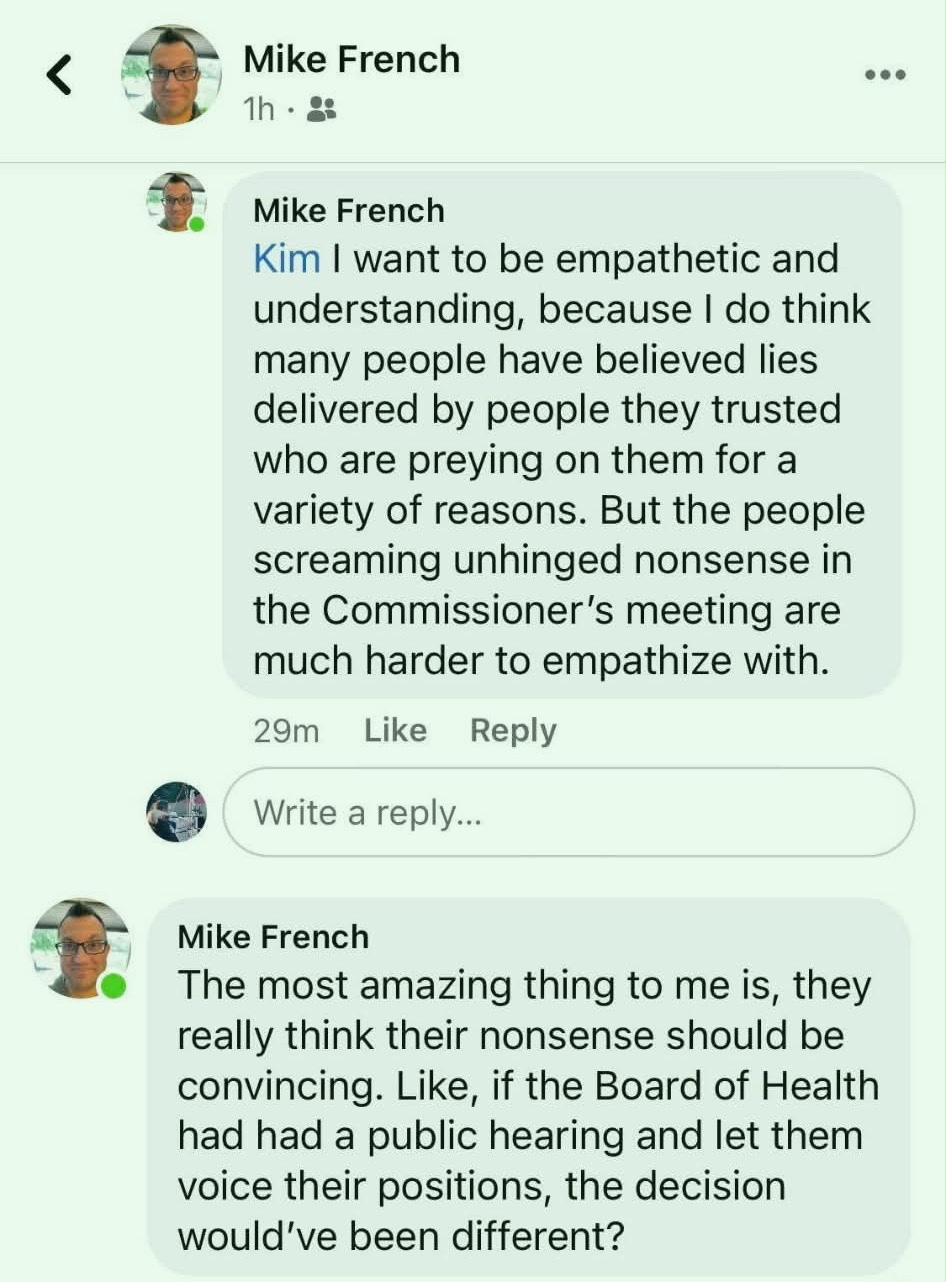
French also expressed amazement that residents believed their arguments “should be convincing. Like, if the Board of Health had a public hearing and let them voice their positions, the decision would’ve been different?”
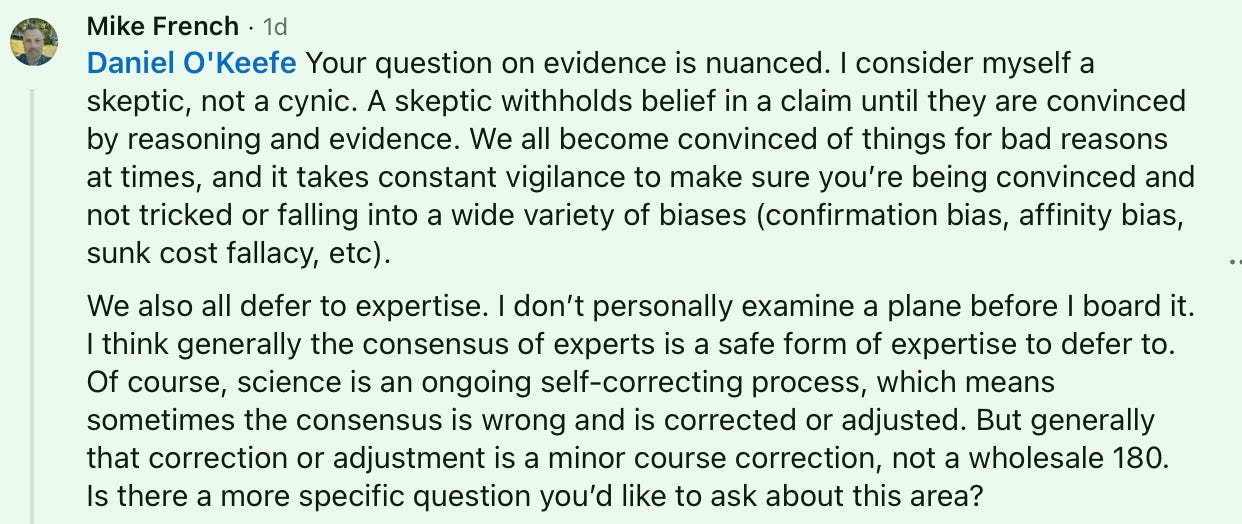
More recently, he described himself as a skeptic who practices “constant vigilance” against confirmation bias, affinity bias, and sunk-cost fallacy while deferring to expertise.
In practice, that skepticism stops at Health Officer Berry. Data that challenges the harm-reduction record is met with defense of the expert and rapid shutdown of the resident presenting it.
The contrast with prior meetings is stark. Last year, when advocates pushed to rename the courthouse in honor of Justice Susan Owens—a change French supported—he allowed unscheduled residents to speak from the gallery and even invited them to sit with the commissioners during a work session to advocate for the renaming. French called those supportive voices “stakeholders.” Residents who opposed the change were denied the same access and participation.
It has been a consistent pattern throughout Commissioner French’s time on the Board of Commissioners. Whether the issue is harm-reduction advocates, opponents of reopening Towne Road, or environmental activists, voices that align with his positions are welcomed into the conversation. Those who point out erroneous information or question the policy are ruled out of order and told they lack respect.
The Culture in Clallam County
Moments after launching an intensified fight against misinformation, county leaders refused the simplest form of clarification: answering questions about their own numbers and results. French and Berry proved that three minutes is allowed, but follow-up is not when it challenges the preferred narrative.
The result is a $530,000 program without metrics, overdose deaths still triple 2018 levels, almost no conversion to treatment, and a governing culture that protects selected expertise while treating the public’s demand for evidence as the real problem.
Today’s Tidbit: Indivisible on the Attack
Rather than making the case for why Commissioner Mike French deserves another four years in office, Indivisible continues to campaign by attacking his opponent, Jake Seegers. Their latest target isn't just Jake—it's 4PA, a widely respected nonprofit where Jake volunteers. The organization has removed thousands of pounds of trash from some of Port Angeles' most ecologically sensitive areas, making it an unlikely target in a political campaign.
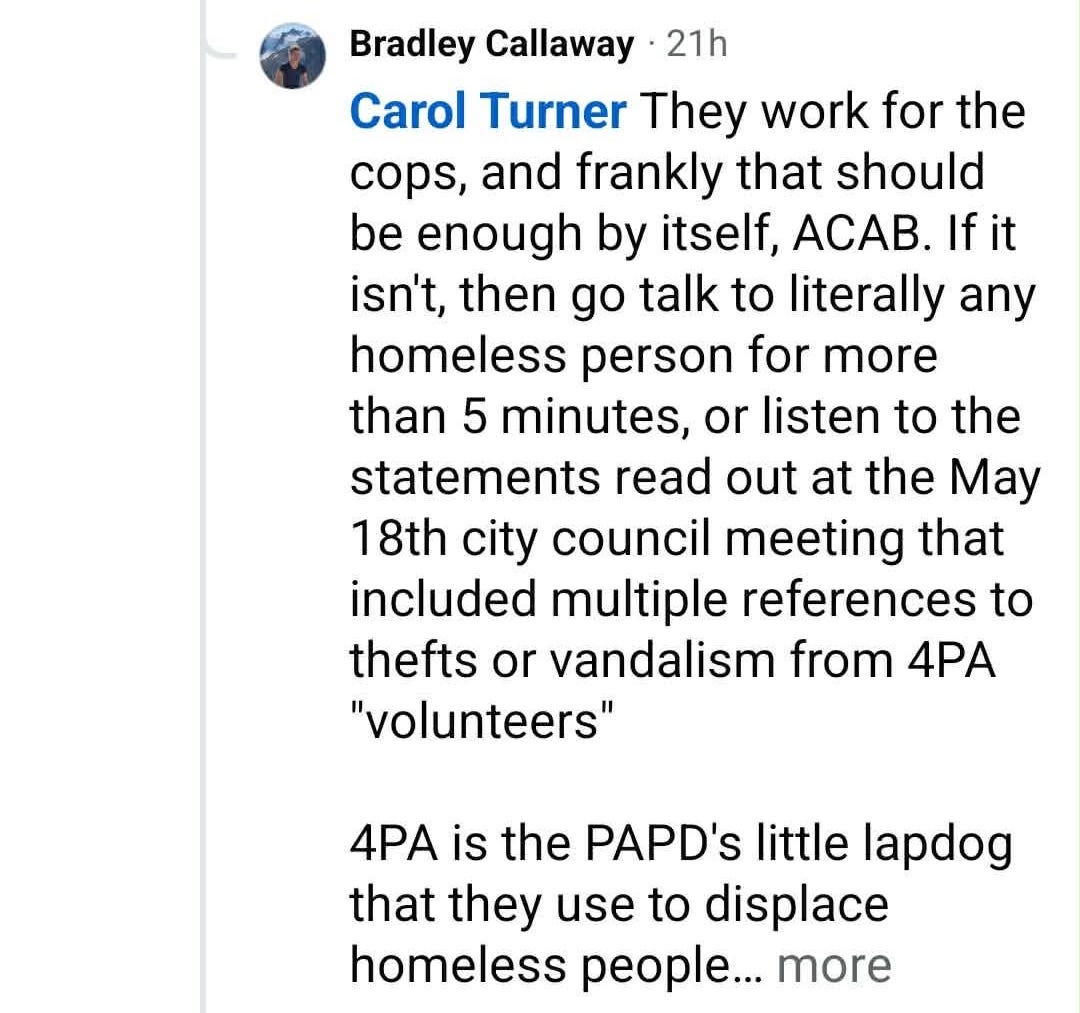
Socialist candidate for State Representative Bradley Callaway has been repeating a claim also made by Health Officer Allison Berry—that groups like 4PA are stealing from homeless people.
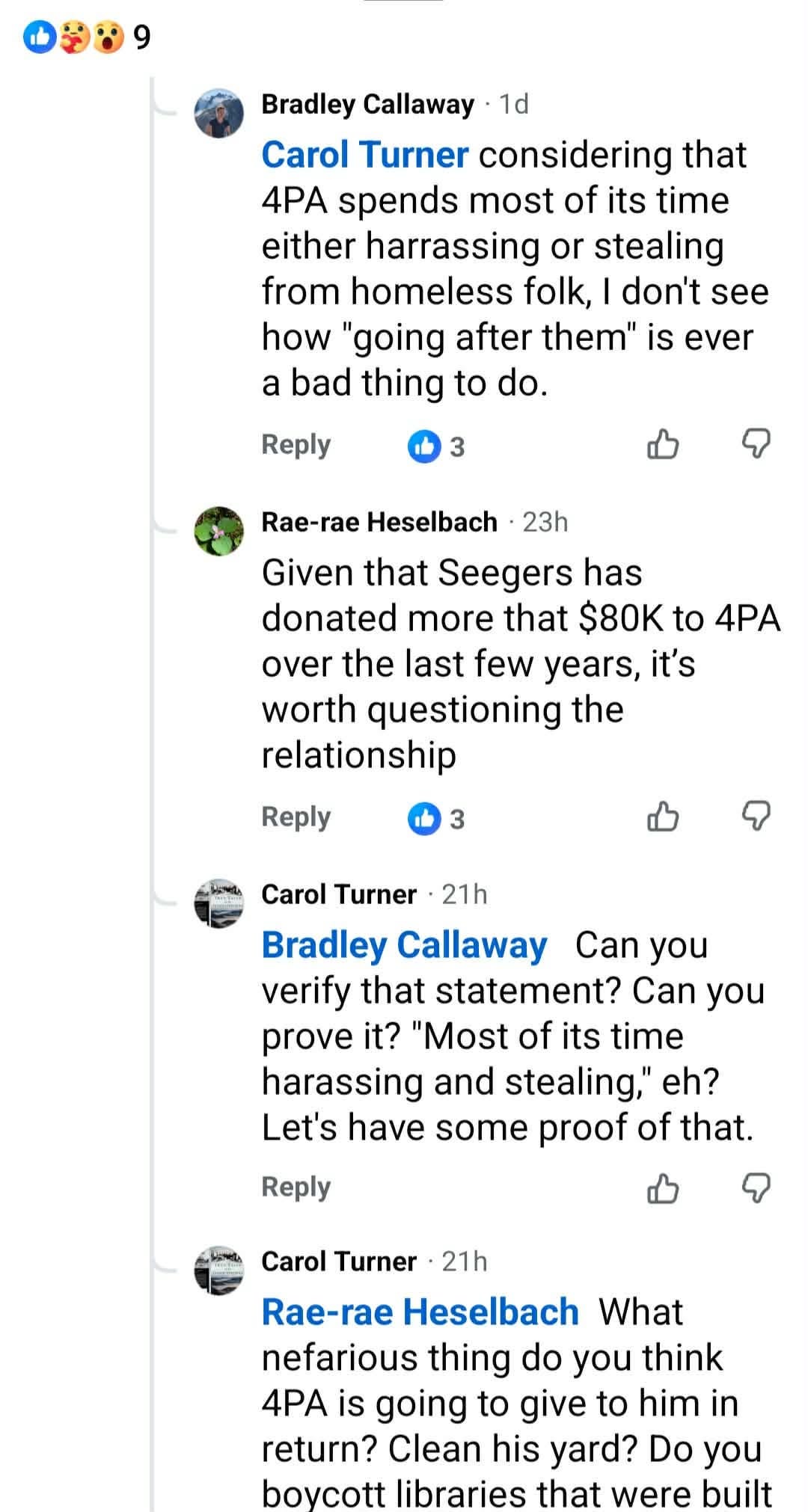
Callaway goes on to describe 4PA as the "PAPD's little lapdog" and invokes the acronym "ACAB" ("All Cops Are Bastards"), a slogan that gained widespread prominence during the "Defund the Police" movement.
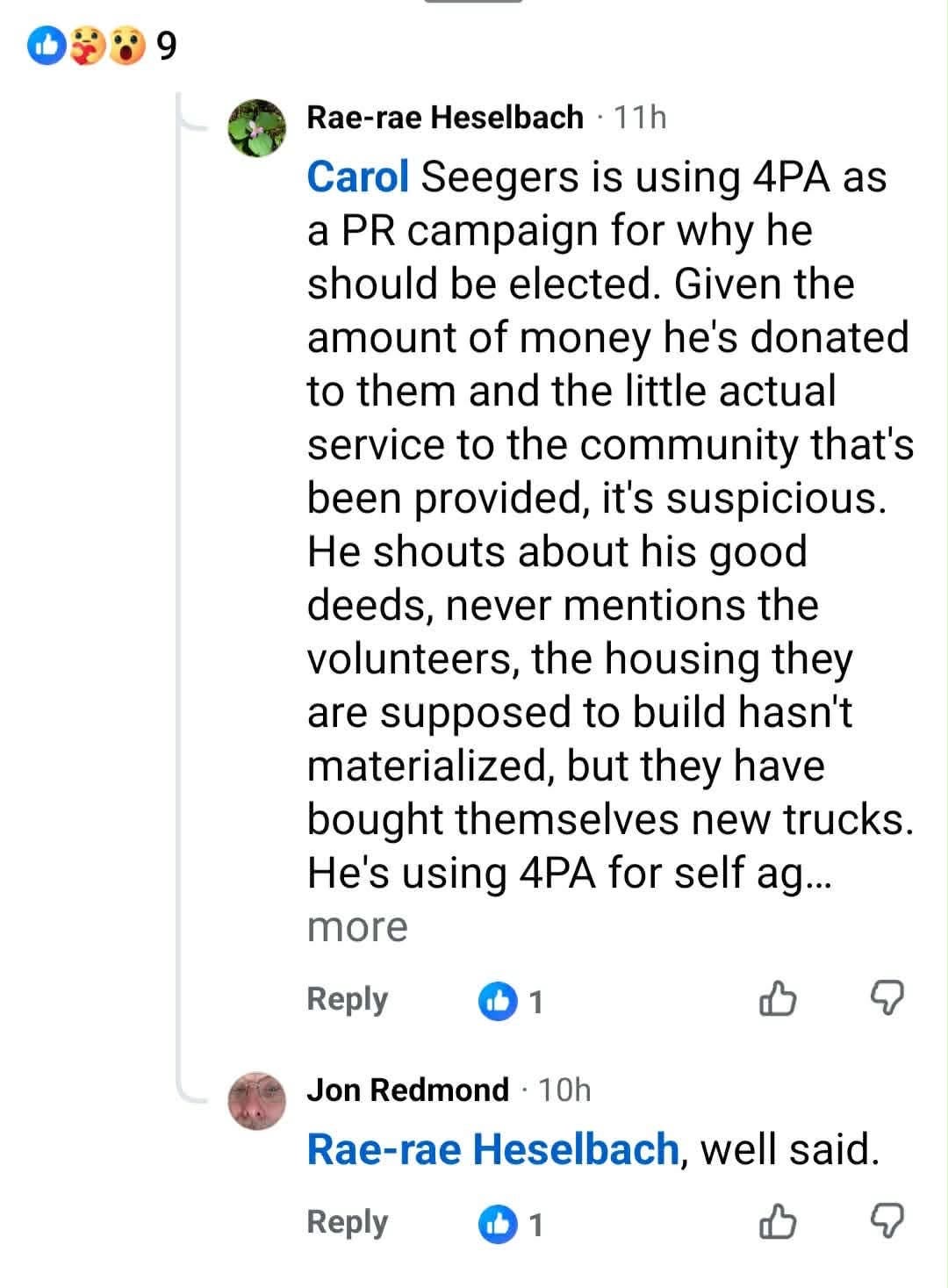
Danielle "Rae-Rae" Heselbach, whom Commissioner Mike French recently appointed to the Developmental Disabilities Advisory Board, claimed that Jake Seegers is using his volunteer work with 4PA as nothing more than a public relations campaign to benefit his election.
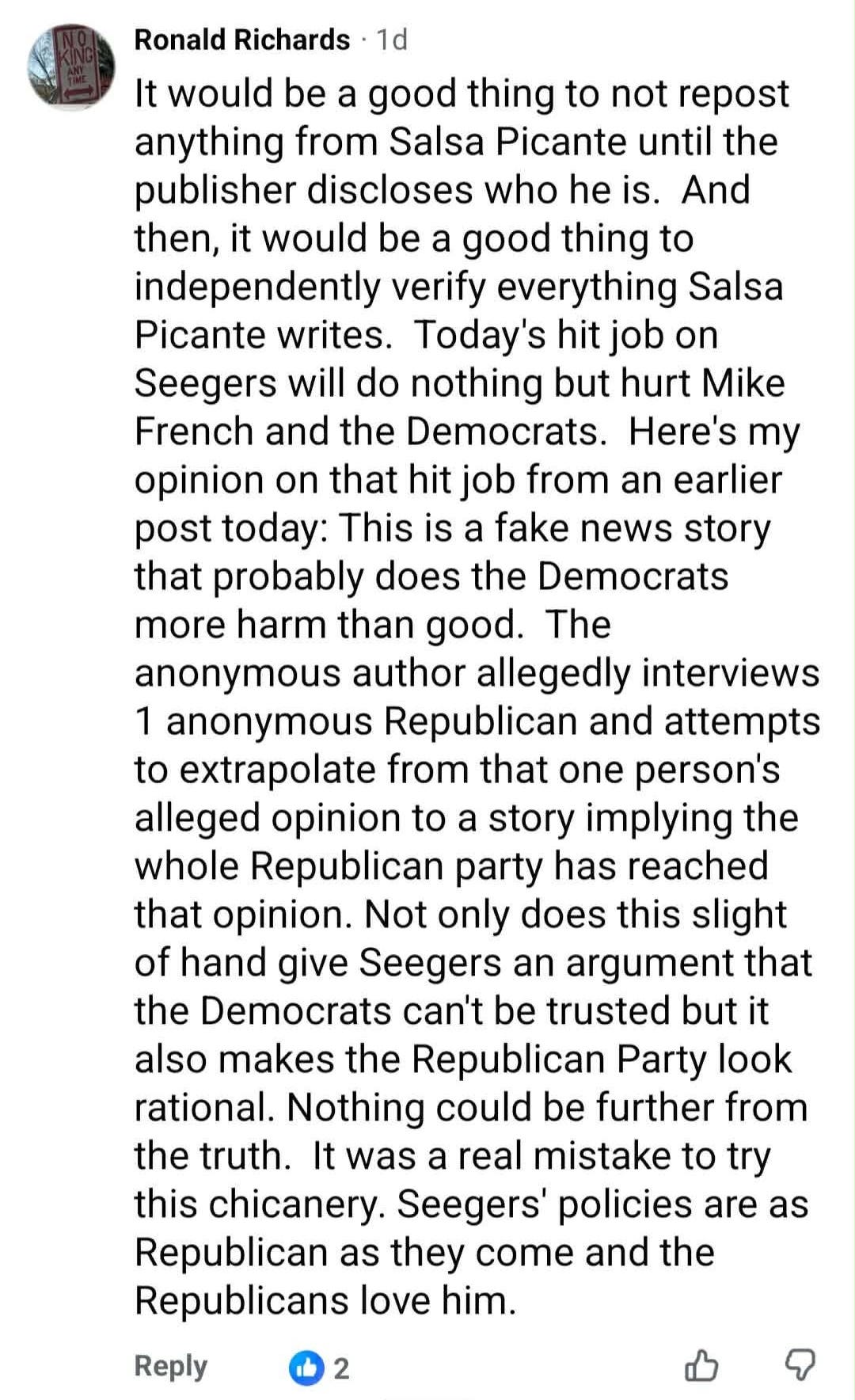
Indivisible member Ron Richards identified the common thread behind these allegations: they all originated from the anonymous blog "Salsa Picante."
Perhaps the most troubling aspect is that this is the group the League of Women Voters of Clallam County has chosen to support, amplify, and lend credibility to while presenting itself as a nonpartisan defender of democracy.
Indivisible has called for boycotts of local businesses, published a questionnaire targeting Jake Seegers while promoting Commissioner Mike French in a favorable article, and accused critics of being “outsiders” when they attended a public meeting at a public library—leading to a call for law enforcement to remove them.
Yet this is the organization the League of Women Voters of Clallam County has embraced.
That is politics in Clallam County.
Seen at the Sequim Farmer’s Market