
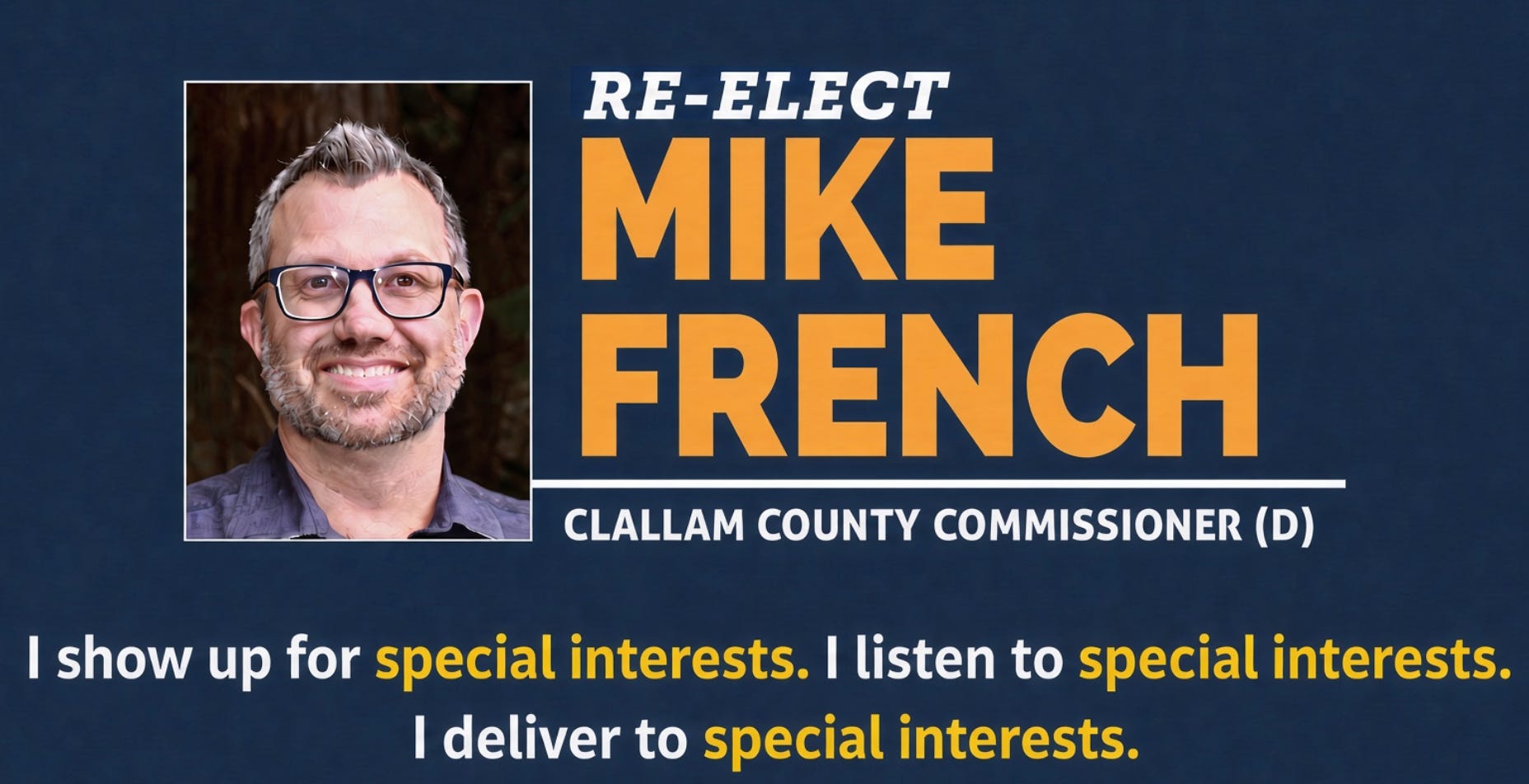
Public-records emails from Commissioner Mike French reveal detailed, ongoing collaboration with arts advocates to advance a cultural-access sales tax, including advice on packing meetings and preparing presentations. The correspondence fits a broader record in which French has made time for special-interest campaigns on Towne Road and a proposed courthouse renaming, while general public input faces tighter limits and slower responses.
The Culture-Tax Correspondence
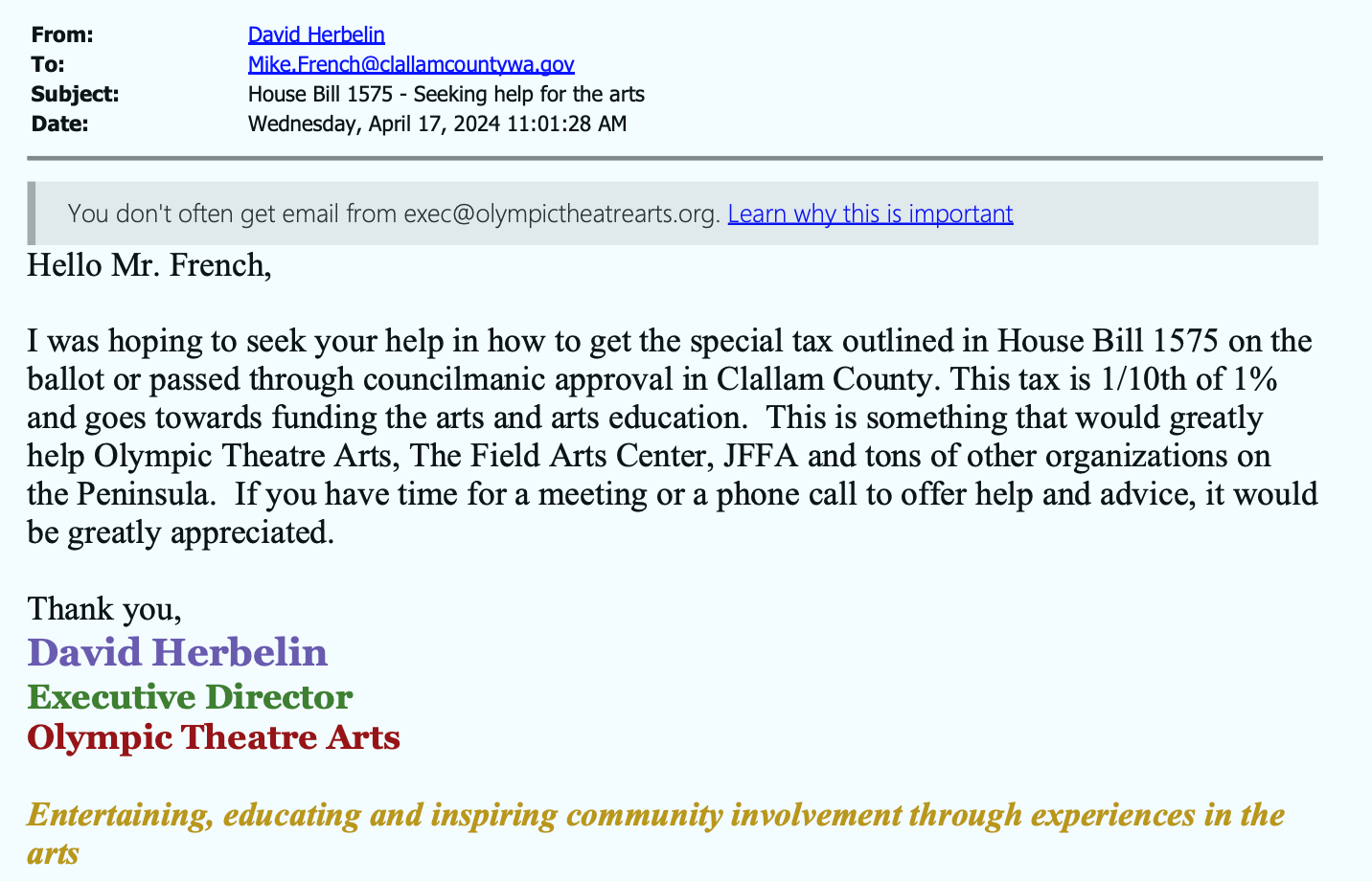
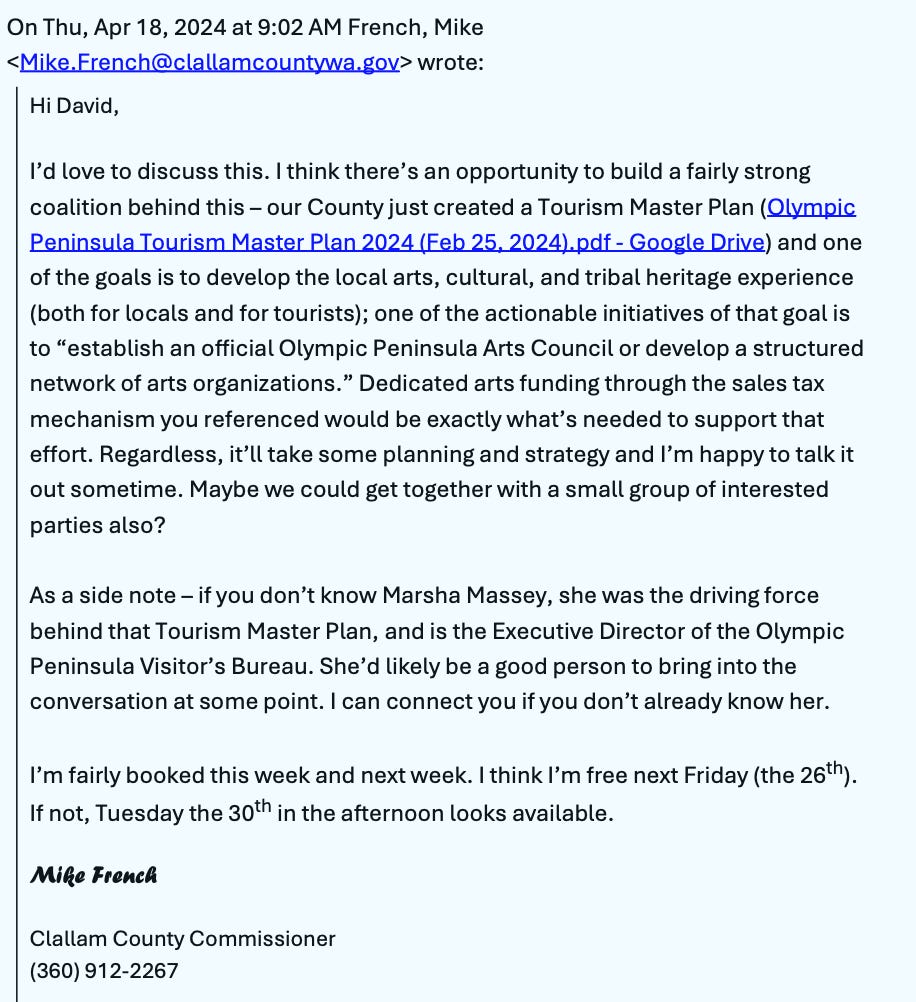
A public-records release of emails involving Commissioner Mike French and David Herbelin, the late executive director of Olympic Theatre Arts, shows the commissioner engaging directly and repeatedly from spring 2024 onward. Herbelin first contacted French in mid-April seeking help placing the 0.1 percent cultural-access sales tax on the ballot or securing councilmanic approval (without a public vote) under House Bill 1575.
French replied the next day that he would “love to discuss this,” offered multiple open windows the following week, and later confirmed a group meeting in the commissioners’ offices.
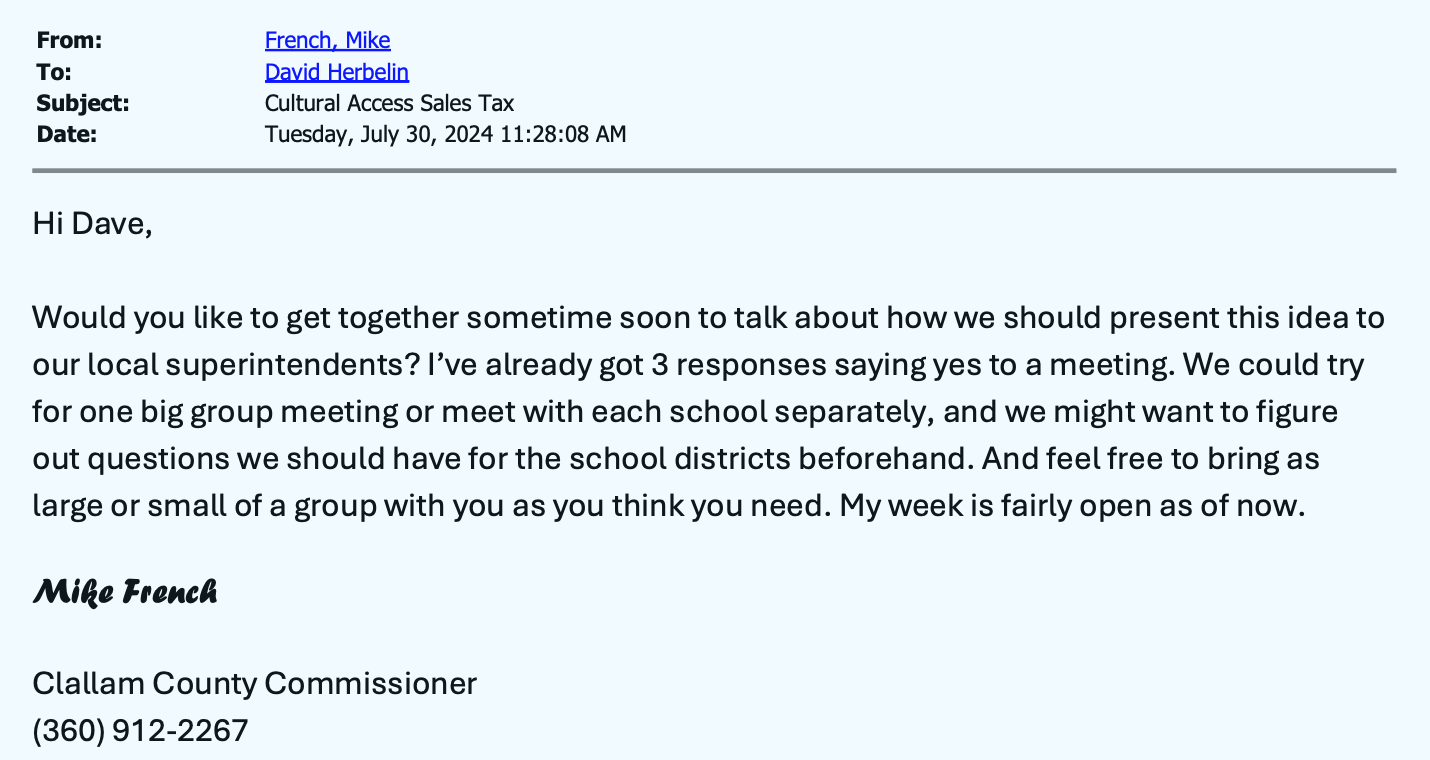
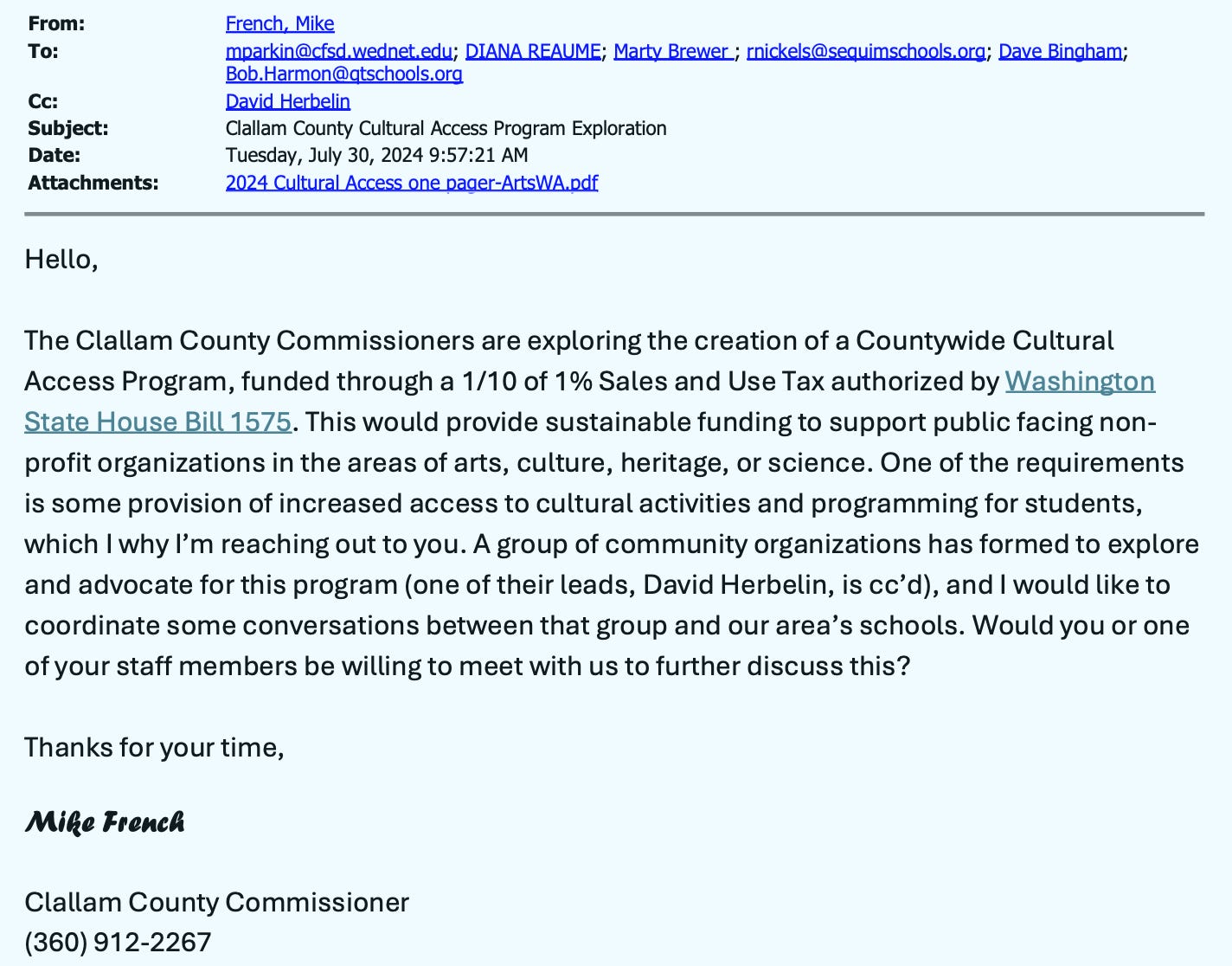
By late July, French was coordinating school-superintendent outreach and proposing that Herbelin bring “as large or small of a group” as he wished.
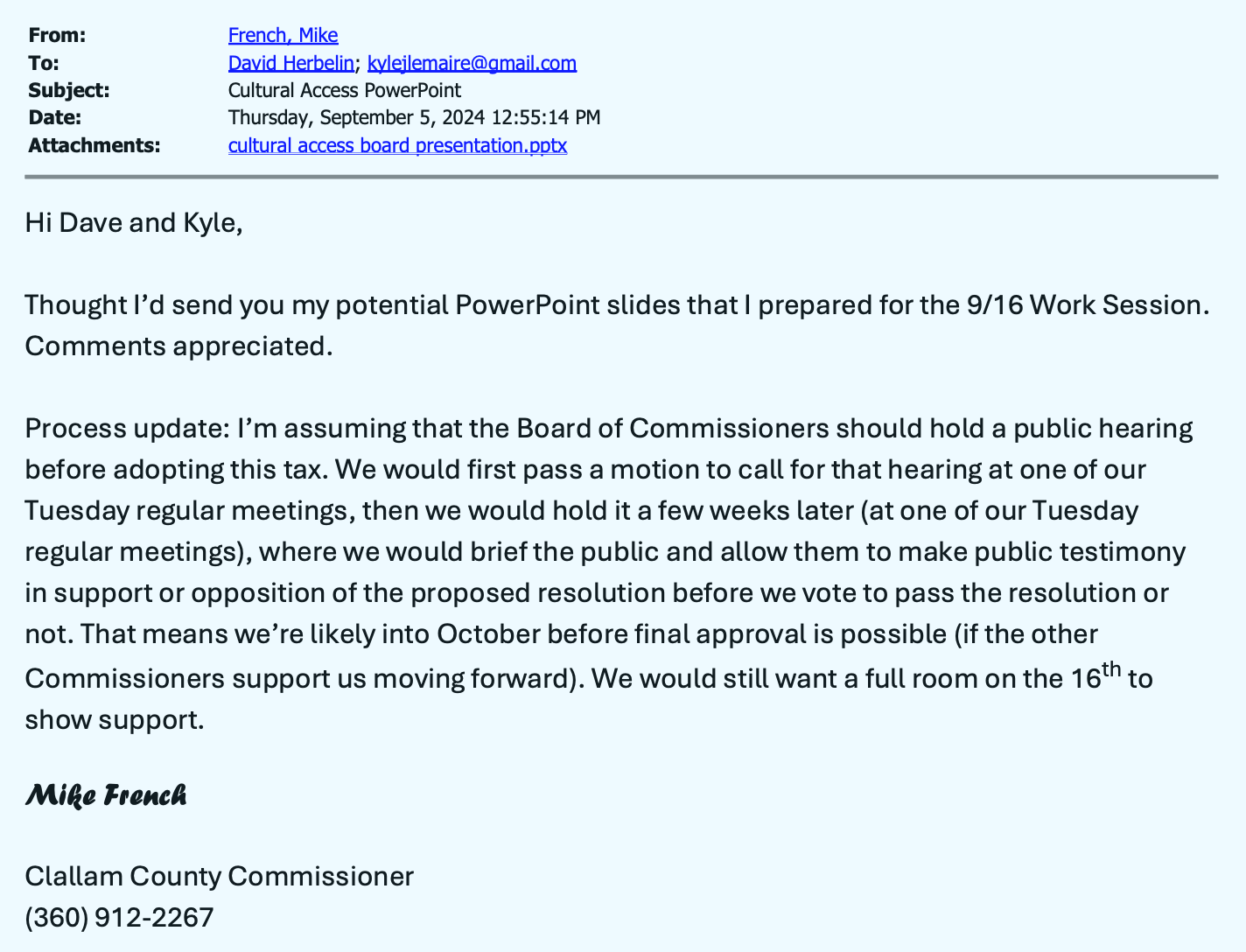
In early September, French forwarded draft PowerPoint slides he had prepared for the September 16 work session, asked for comments, and outlined the formal process he expected: a motion to call a public hearing, followed by the hearing itself a few weeks later. He closed that email with a practical note on turnout: “We would still want a full room on the 16th to show support.”
Later messages show French sharing ArtsWA materials, looping Herbelin into scheduling with state arts-commission staff, and asking what additional information to present to the board.
In late October 2024, David Herbelin emailed a call to action urging supporters to speak during the November 12 commissioners meeting. He assessed the board as follows: French supported councilmanic approval; Ozias preferred to wait a few years or put it to a public vote; and Johnson, facing reelection, was reluctant to act before the election and favored a vote of the people.
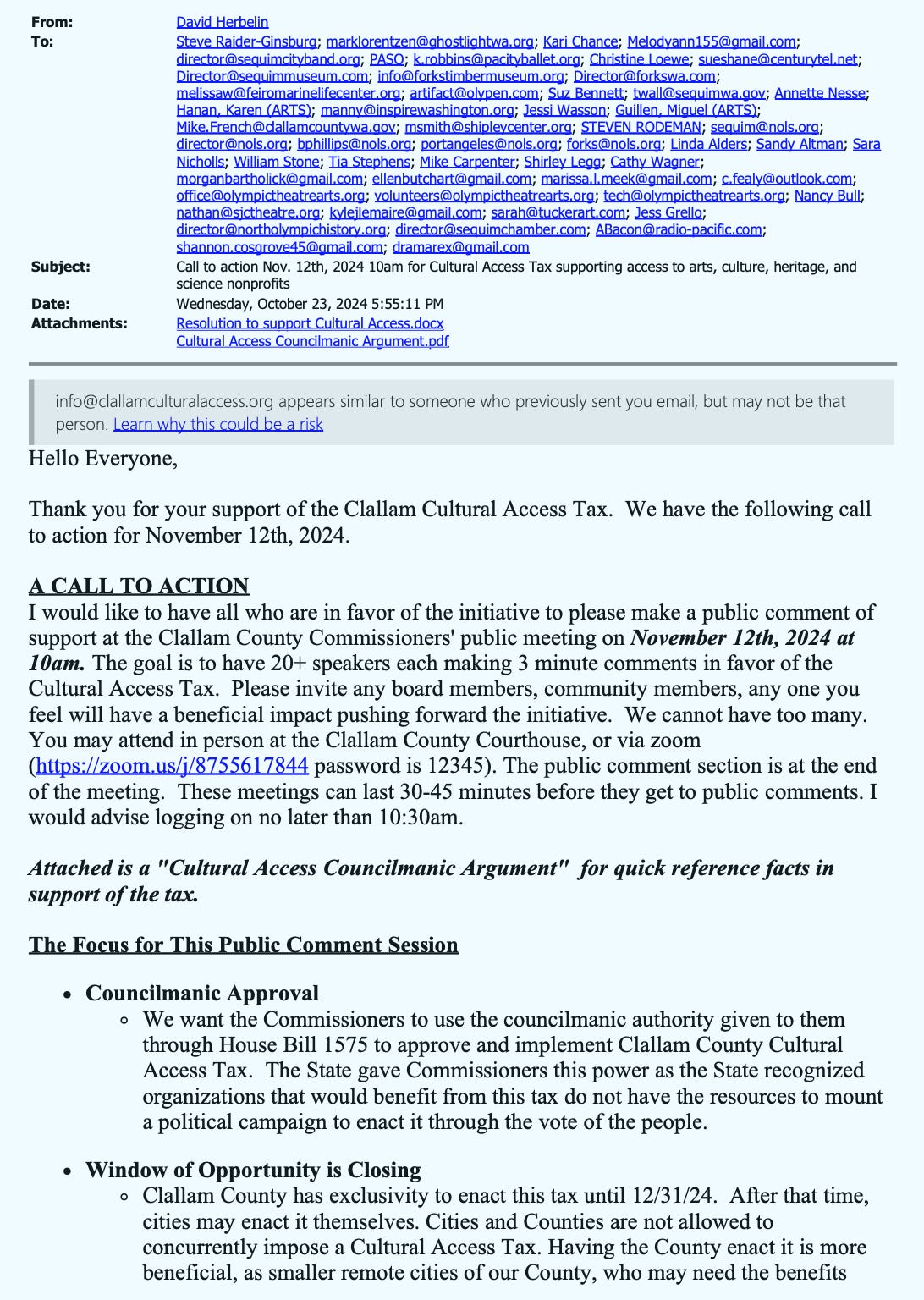
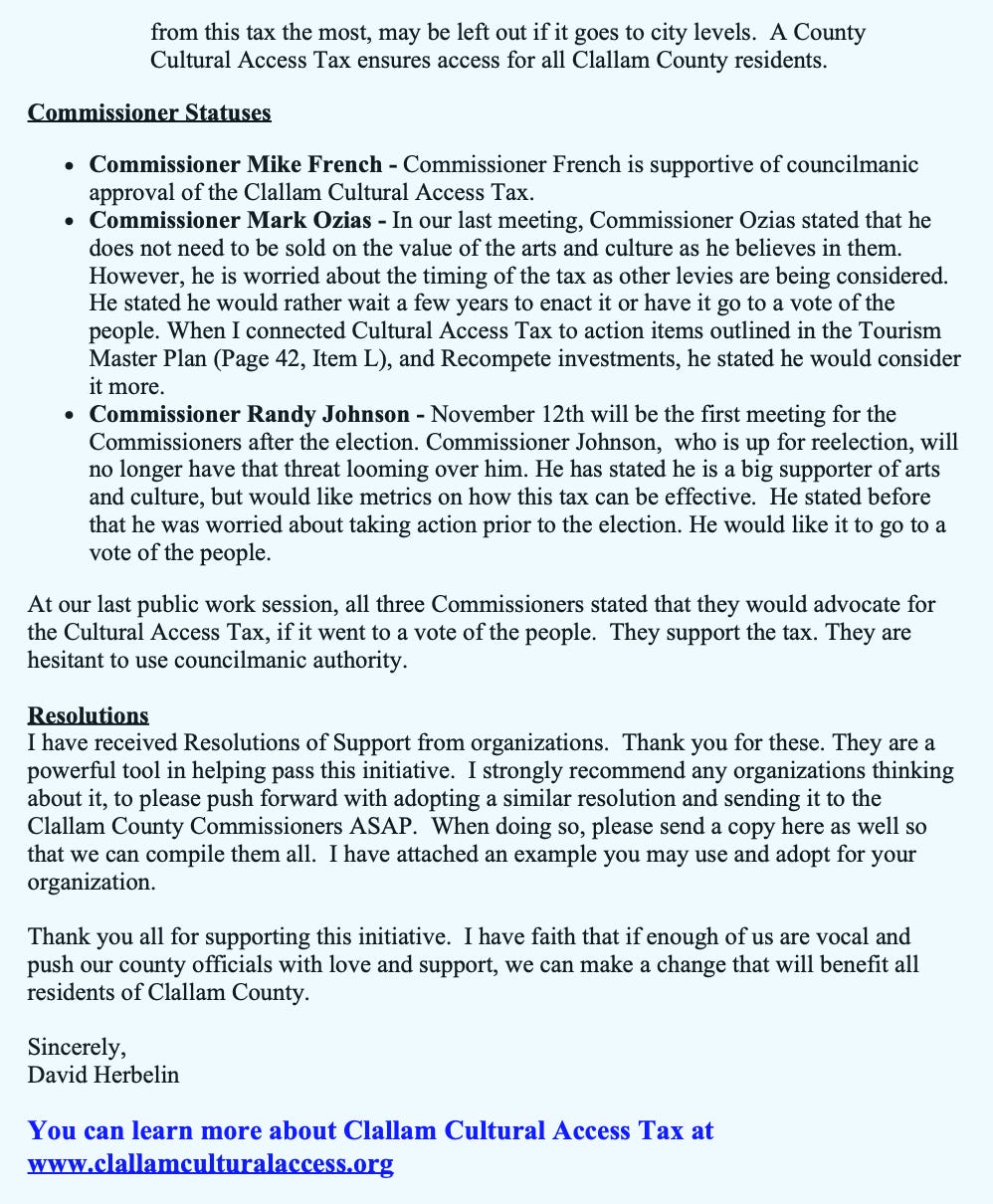
After the November 12 public-comment session, French replied to Herbelin’s follow-up on next steps. The exchange continued into 2025, with French still responding to Herbelin on related arts-funding events.
These are not one-off replies. They document months of shared drafting, timing advice, and explicit interest in visible supporter presence at official meetings. When later asked whether he had been the commissioner encouraging Herbelin to organize public comments, French said he did not recall. The emails themselves remain part of the public record.
The Same Door for Other Organized Groups
The culture-tax emails sit alongside other examples of French making himself available to organized campaigns. In early 2024, during the fight over reopening Towne Road, French attended a Dungeness Levee Trail Advocates rally at Nash’s barn. He told those present that bringing roughly 50 people to a commissioners’ meeting would be the scale needed for him to reconsider the board’s prior commitment to complete the road as promised.
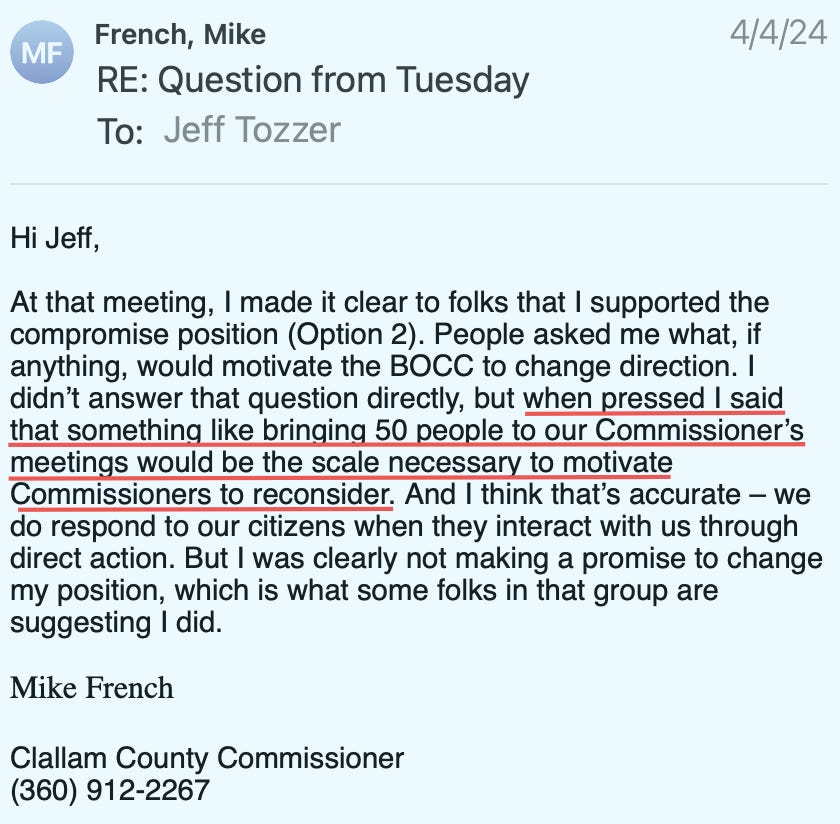
French’s statement treated headcount from one group of activists as a potential basis for revisiting a resolution the board had already adopted.

A parallel pattern appeared in early 2026 with the proposal to rename the historic Clallam County Courthouse after the late Justice Susan Owens. At a work session, Commissioner Mark Ozias said renaming the building would be “wholly appropriate.” French immediately agreed that it would be “the way to spread the message the furthest” and suggested also naming a Forks courtroom. He then invited audience “stakeholders” to the staff table; a representative of Washington Women Lawyers spoke.
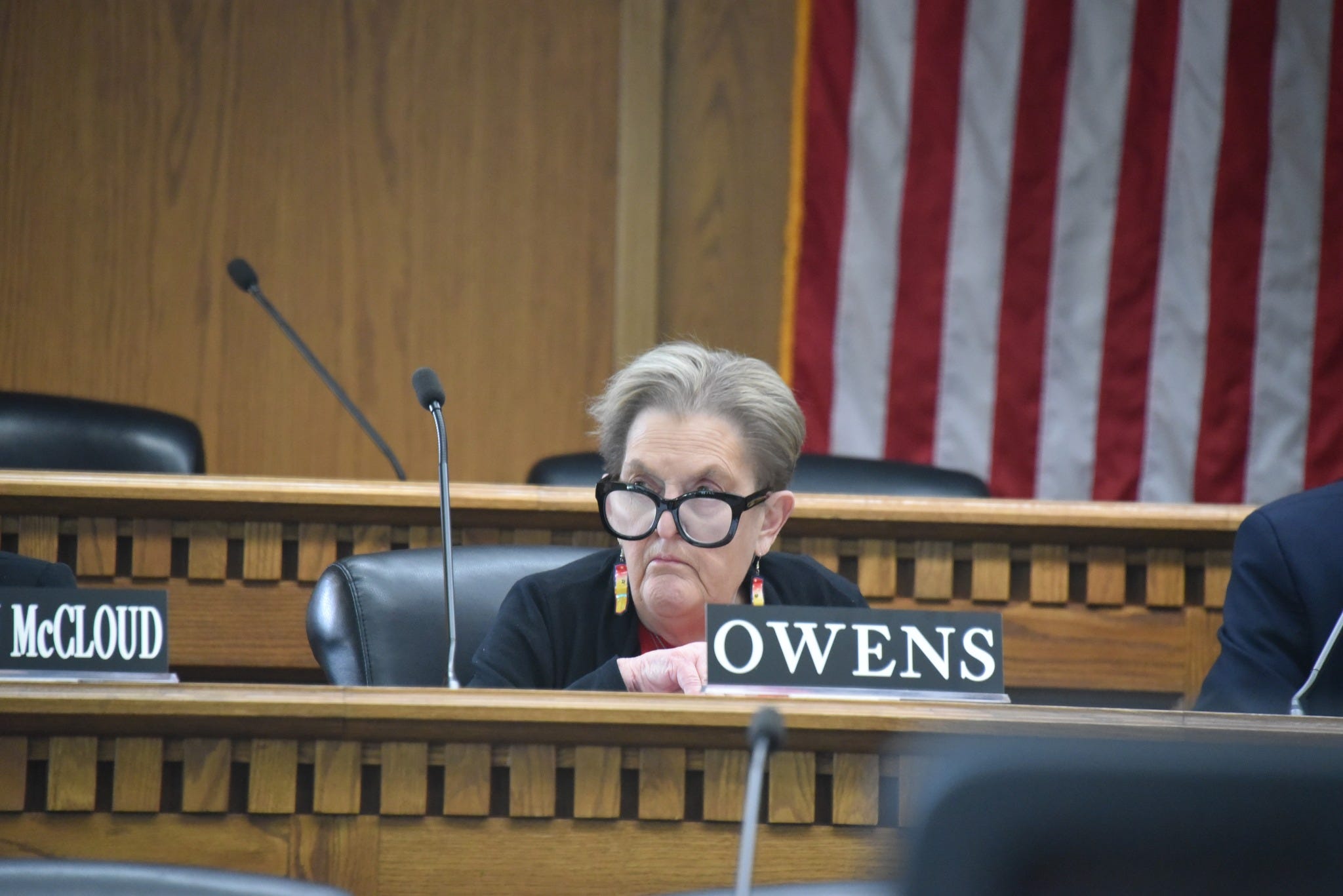
Public records later showed that District Court II staff in Forks had already indicated a local memorial was in progress and that Owens herself would not have wanted the Port Angeles courthouse renamed. After substantial public opposition at a subsequent hearing, French reversed course and said he now understood the local preference in Forks.
It’s another example of French’s quick, open-door responses to special interests, in contrast to the slower replies and limited public-comment slots ordinary residents typically receive on everyday issues.
What the Public Gets
County commission meetings allot three minutes of public comment at the end of the agenda. Emails from residents on budget, roads, or services frequently receive delayed or no substantive replies. The culture-tax record, the Towne Road rally comment, and the courthouse-renaming exchange show a different tempo when the requester is an organized group with a clear policy ask. The commissioners’ own mission-statement language prioritizes translating “the desires of our residents.”
French’s emails illustrate whose desires have reliably produced meetings, PowerPoint presentations, and advice on how to organize.
The cultural-access tax has been covered before. The new emails reveal how thoroughly Commissioner French worked on behalf of one organized interest to raise taxes outside public knowledge and without a vote of the people. Those records exist because a resident filed a public-records request. Every other resident has been waiting for the same access—do you want to wait another four years?
This reporting was made possible by a public-records request from CC Watchdog subscriber Denise Lapio.
Irony on Your Radar
Today, October 22, 2026, the “Let Our Salmon Come Home” campaign is staging a day of action in Sequim aimed at the Pacific Salmon Commission, which is meeting at the Jamestown Tribe’s 7 Cedars Casino. The group wants policymakers to reform the U.S.–Canada Pacific Salmon Treaty, sharply reduce mixed-stock ocean fisheries (especially commercial trolling that intercepts threatened Chinook far from their home rivers), and shift harvest closer to terminal areas so more fish return to spawn. Speakers include representatives from the campaign itself, the Wild Fish Conservancy, the Wild Steelhead Coalition, and both recreational and commercial fishers.
The schedule runs from an 11:30 a.m. rally and 1 p.m. press conference at the Gardiner Community Center to a 2 p.m. procession and sign-carrying march to a site next to 7 Cedars, followed by public comment inside the casino from 3:30–5:00 p.m. The campaign plans a post-event gathering at a Sequim’s Barhop Brewery. The campaign is a coastwide NGO-led effort (California to Alaska) that frames industrial ocean harvest as the primary reason too few salmon return, despite habitat and dam-removal spending. It argues that indiscriminate ocean fisheries undermine recovery for salmon and Southern Resident killer whales.
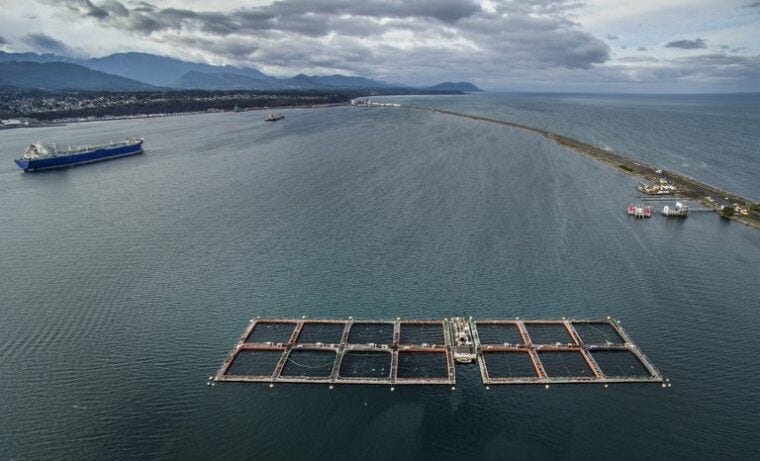
The choice of venue is notable. The Jamestown Tribe is a major treaty-rights harvester of salmon and has actively pursued commercial net-pen aquaculture (through the Salish Fish joint venture with Cooke Aquaculture) to raise steelhead, arguing it supports tribal self-reliance and takes pressure off wild stocks. That position has put the tribe at odds with other tribes and with environmental groups that successfully pushed a state ban on commercial finfish net pens. Hosting an event that targets ocean commercial harvest at a tribal casino whose owners have fought to expand commercial fish production adds an obvious layer of irony—especially when one straightforward way to increase salmon returns would be for major harvesters, tribal and non-tribal alike, to take fewer of them.