
Serenity House is covering nearly $800,000 in shortfalls while chasing roughly $12 million for a 36-unit low-barrier permanent supportive housing project in Sequim. Meanwhile, state tax dollars fund tribal-only homeownership, Peninsula Behavioral Health’s North View mirrors Seattle’s housing-first model, and commissioners budget association dues that include a sponsored “Bunny Break.” Tonight’s public meeting is the place to ask why working families wait while the system expands.
Serenity House’s Timing Problem
Serenity House is covering nearly $800,000 in shelter and supportive-housing shortfalls while seeking $12 million to replace Sequim’s 17-unit Sunbelt Apartments with a 36-unit low-barrier complex, according to myclallamcounty.com. Supportive housing ran about $382,000 short last year, and shelter operations need roughly $395,000 more annually—costs driven largely by staffing for about 130 people a night, which the agency says it cannot safely cut.
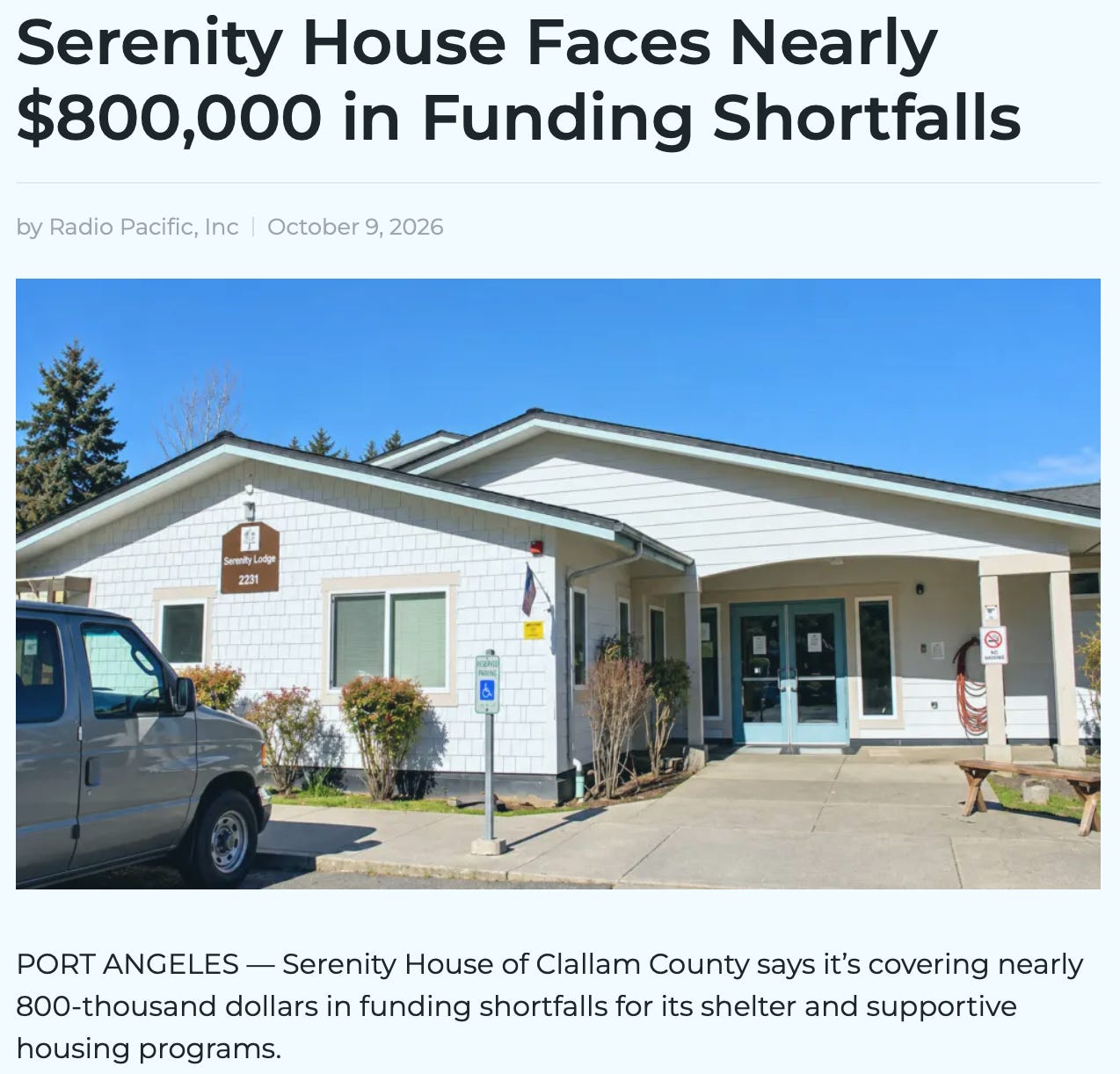
Is this the time to expand? The organization is growing even as funding falls short, a pattern that mirrors Clallam County’s own habit of adding projects while running deficits.
Tax Dollars, Tribal Households Only
The Washington Department of Commerce has extended the 2026 Capital Programs Tribal Homeownership Funding Cycle; applications are due by 3 p.m. November 16. Eligible applicants are federally recognized tribes, community-based tribal organizations, and tribal housing authorities. The money supports new construction, purchase and rehabilitation, affordability subsidies, and down-payment assistance specifically for low-income tribal households.
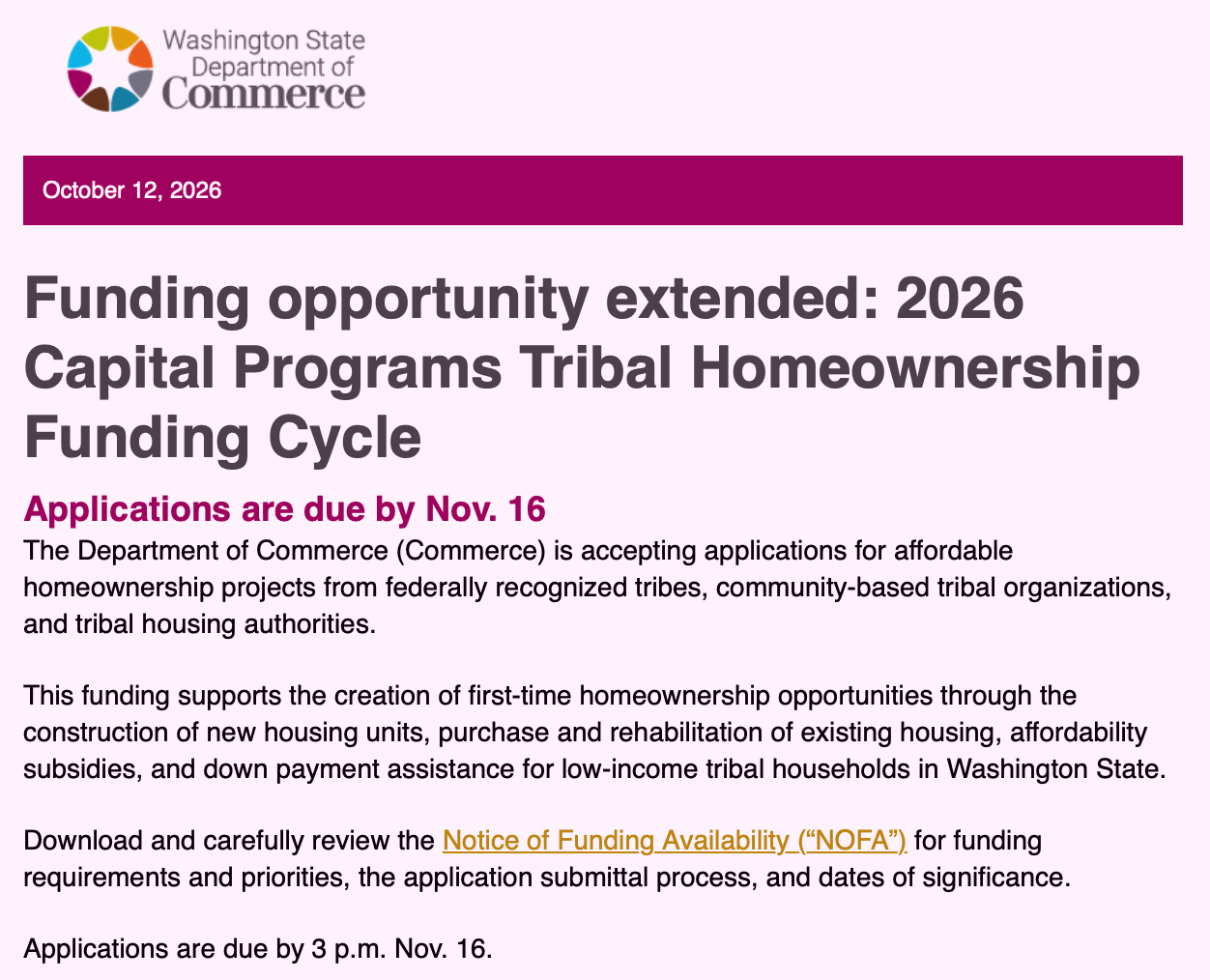
These are your state tax dollars restricted by race. Imagine the political reaction if an identical program were limited to white households.
Housing First, Treatment Later (If Ever)
Peninsula Behavioral Health’s North View complex in Port Angeles follows the Seattle model: permanent supportive housing first, treatment sometime later—if ever. Independent journalist Jonathan Choe spent time with a resident of a comparable Downtown Emergency Service Center facility in Seattle. The roughly 5-minute video shows the man stopping at the front desk for free drug paraphernalia, heading out to meet a dealer, scoring, and returning to a decent studio to get high. The account shows no job requirement, no treatment mandate, and minimal case-management contact.
North View itself is a 36-unit, roughly $12.75 million project (more than $350,000 per unit) with county contributions, rooftop terraces, harbor views, quartz counters, dishwashers, a dog-washing sink, and EV charging. It is described as low-barrier and not exclusively dry. The pattern is familiar: convenience for ongoing use, permanence for the placement, and limited pressure toward recovery.
Why Advertise When the Lists Are Long?
If subsidized housing has waiting lists, why does the Peninsula Housing Authority advertise openings?
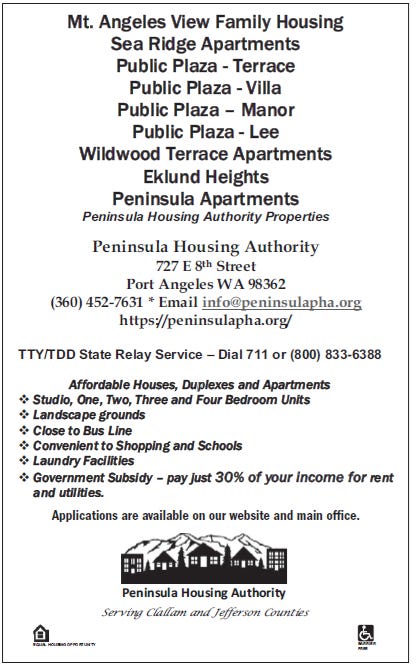
Public housing and Section 8 lists have historically been long. Advertising capacity while thousands of local households remain on waitlists for assistance raises the obvious question of priorities and messaging.
Canada’s “Compassion” Lesson
Read the October 12 New York Post piece on “compassionate” drug policy and Canada.
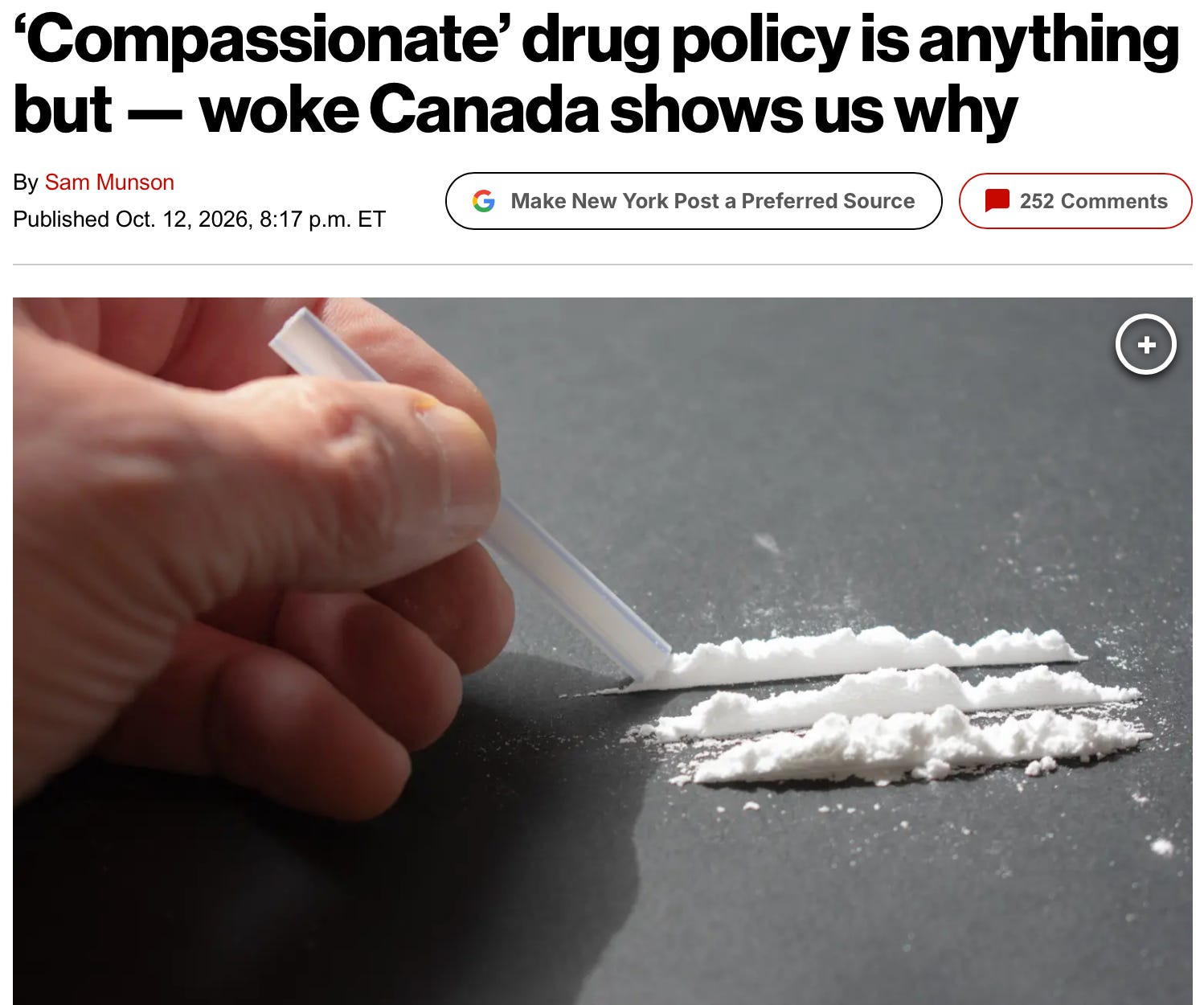
Federal prisons are distributing paper straws for “safer snorting,” foil for smoking, and test kits. British Columbia’s decriminalization pilot ended with high unregulated drug death rates; judges have stayed trafficking convictions on “compassion” grounds; and safe-supply programs continue. The parallels to Clallam County’s low-barrier housing, harm-reduction distribution, and tolerance of ongoing use are straightforward. Compassion that enables use while streets and families pay the cost is not compassion. The full article is worth the time.
Dues, Leadership Roles, and the Bunny Break
Clallam County is cash-strapped, yet commissioners are budgeting $40,000 for Washington State Association of Counties dues for 2027. Commissioner Mark Ozias is WSAC president; Mike French sits on the legislative steering committee. At the upcoming County Leaders Conference, organizers are promoting a “Bunny Break”: a sponsored bunny area where county leaders can step away from sessions for fluffy, de-stressing interaction. The contrast between local fiscal pressure and association perks is hard to miss.

Pet Costumes vs. Luxury Homeless Units
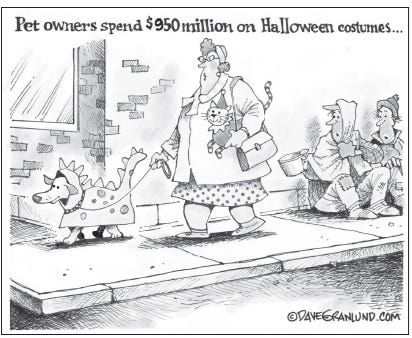
The Peninsula Daily News recently ran a cartoon noting that Americans spend roughly $950 million on pet Halloween costumes while people remain homeless.
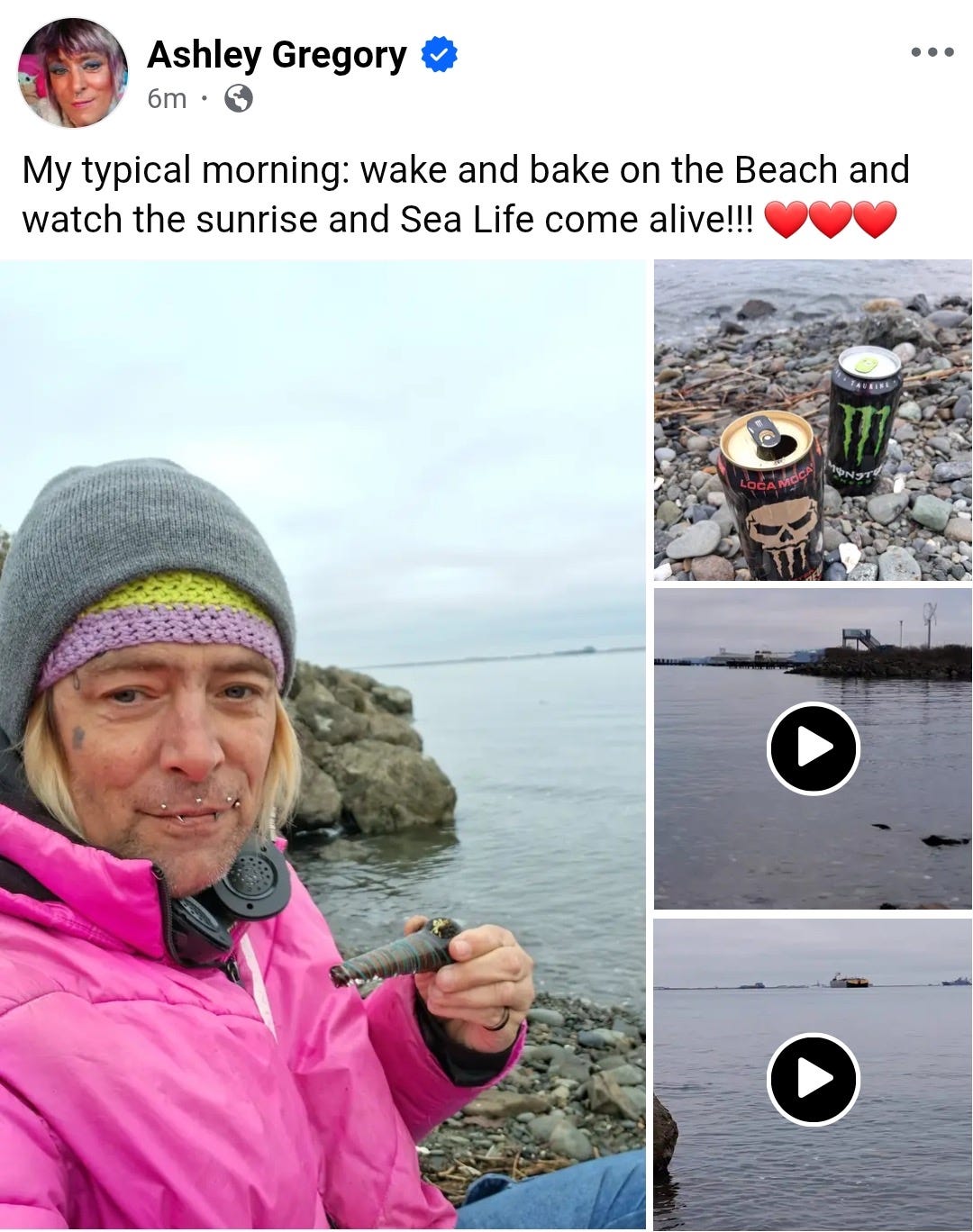
Locally, taxpayers are funding permanent supportive housing at $350,000-plus per unit, with costs climbing toward $500,000 in some projects. One public example is Ashley Gregory (formerly Scott Warren Gregory), a North View resident with a documented criminal history including assault and domestic-abuse complaints. Public posts show a “wake and bake” beach routine, free bus rides, art-therapy classes, Harm Reduction Center supplies, and Medicaid-supported facial feminization surgery—all while living in a new harbor-view unit.
The homelessness industrial complex absorbs more money without ending the problem. Residents can dress their dogs without guilt; the system will never have enough of your money.
Casino Cash and Political Reach
A 2003 Seattle Times article documented Washington tribes becoming political players through casino revenue—raising campaign contributions, lobbying, and influence on gaming and other issues. Ron Allen of the Tribe (operator of 7 Cedars Casino) was quoted on learning to play the political game.
"Campaign contributions is only a part of it," said Ron Allen, chairman of the Jamestown S'Klallam Tribe and a former president of the National Congress of American Indians. "Over time, we have become more astute at playing the political game."
The pattern has continued: 7 Cedars and Jamestown entities have made substantial contributions to political committees and candidates, including local races. The archive piece is worth reading for the early trajectory; the local parallel is the ongoing combination of sovereign economic activity and political spending that shapes county and state outcomes.
Repeat Offender, Local Bill
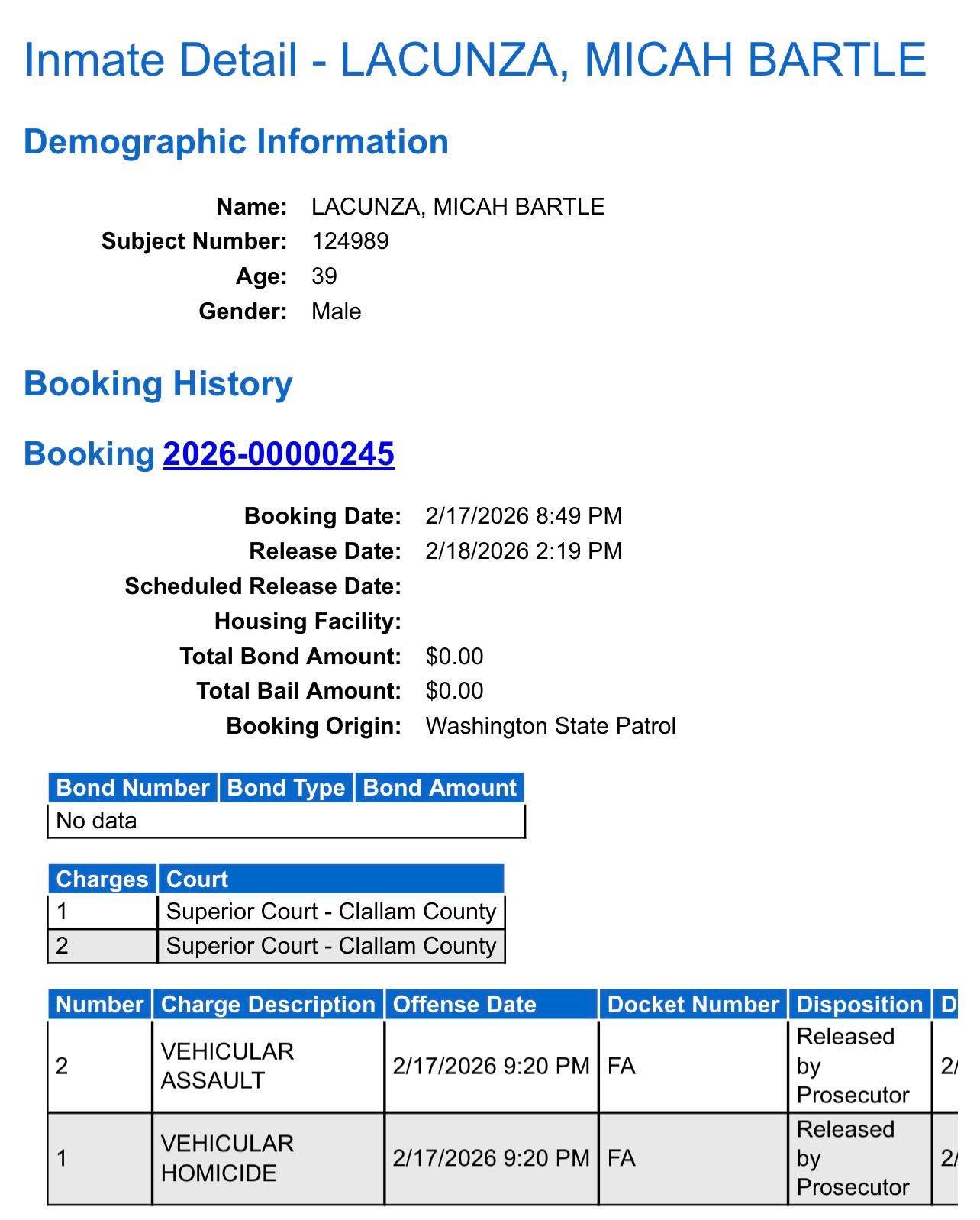
Micah Lacunza was booked and released in Clallam County after the February 15, 2026, head-on collision east of Sequim on Highway 101.
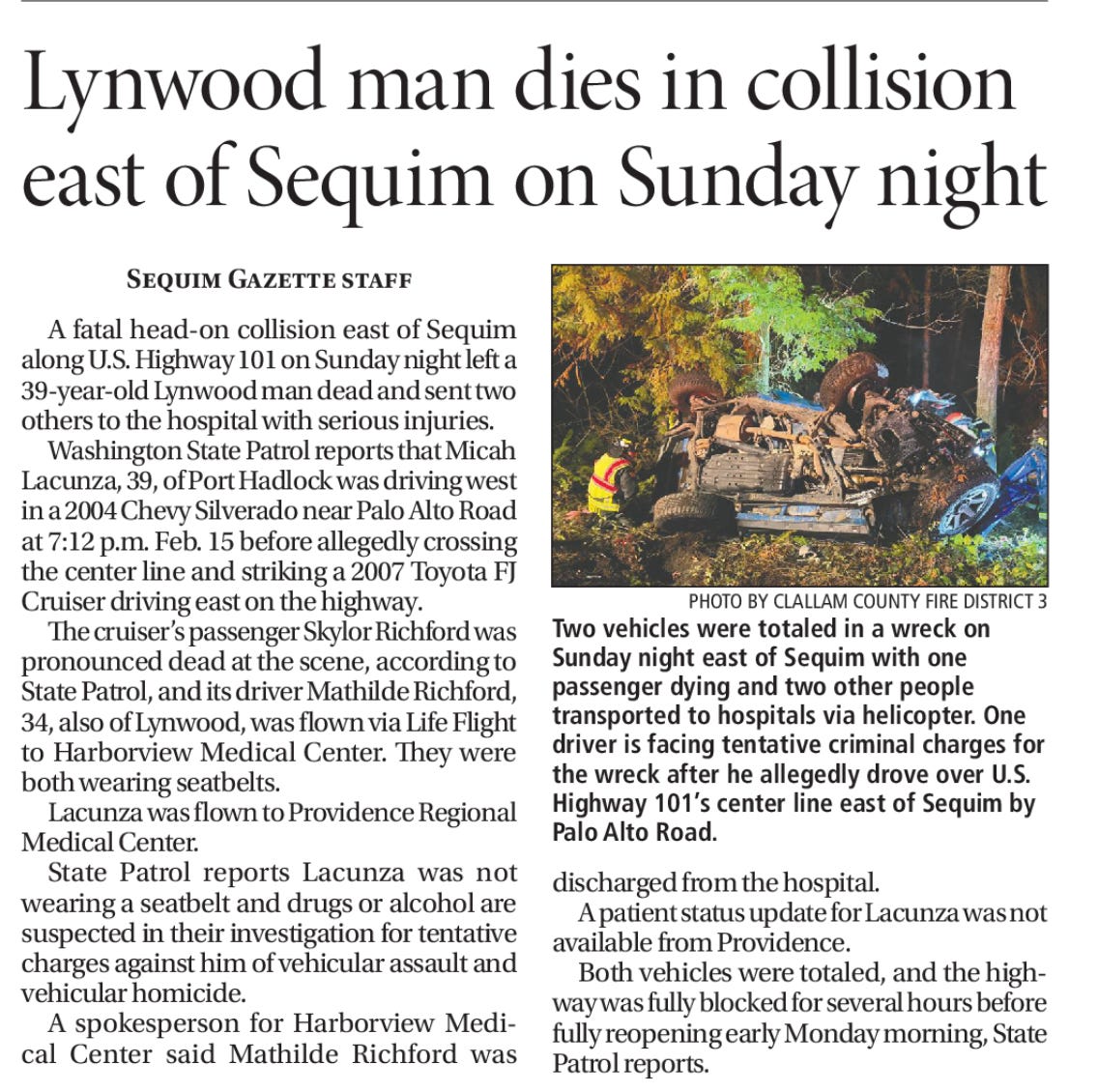
Driving a 2004 Chevrolet Silverado westbound, he crossed the centerline and struck a Toyota FJ Cruiser; Skylor Richford died at the scene, and Mathilde Richford was airlifted. Investigators believed impairment by drugs and/or alcohol was involved.
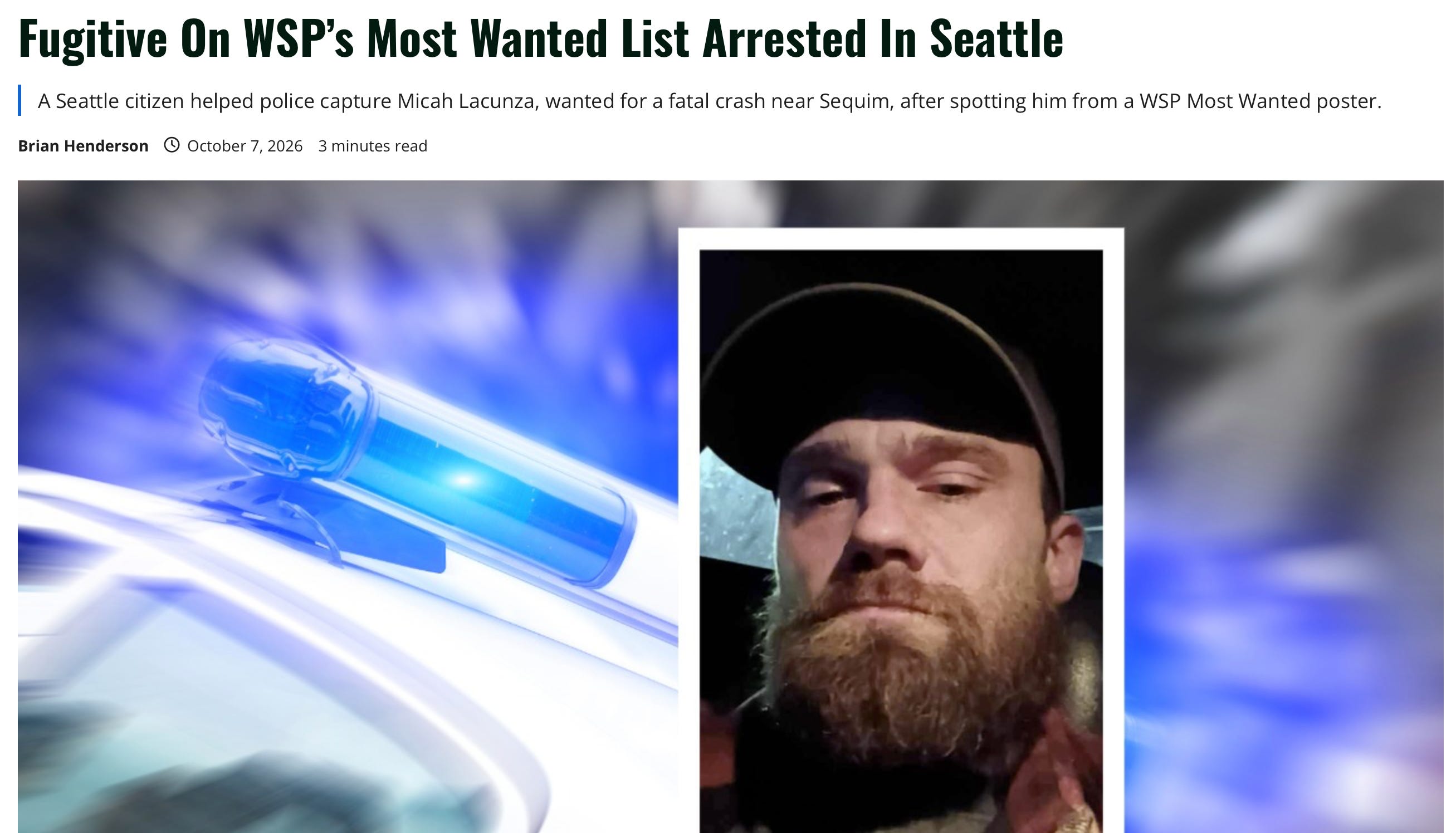
Lacunza was later placed on the Washington State Patrol Most Wanted list with a $500,000 bail warrant for vehicular homicide, evaded capture in Tacoma, and was arrested in Seattle on October 5 after a citizen tip. He faces extradition and additional charges.
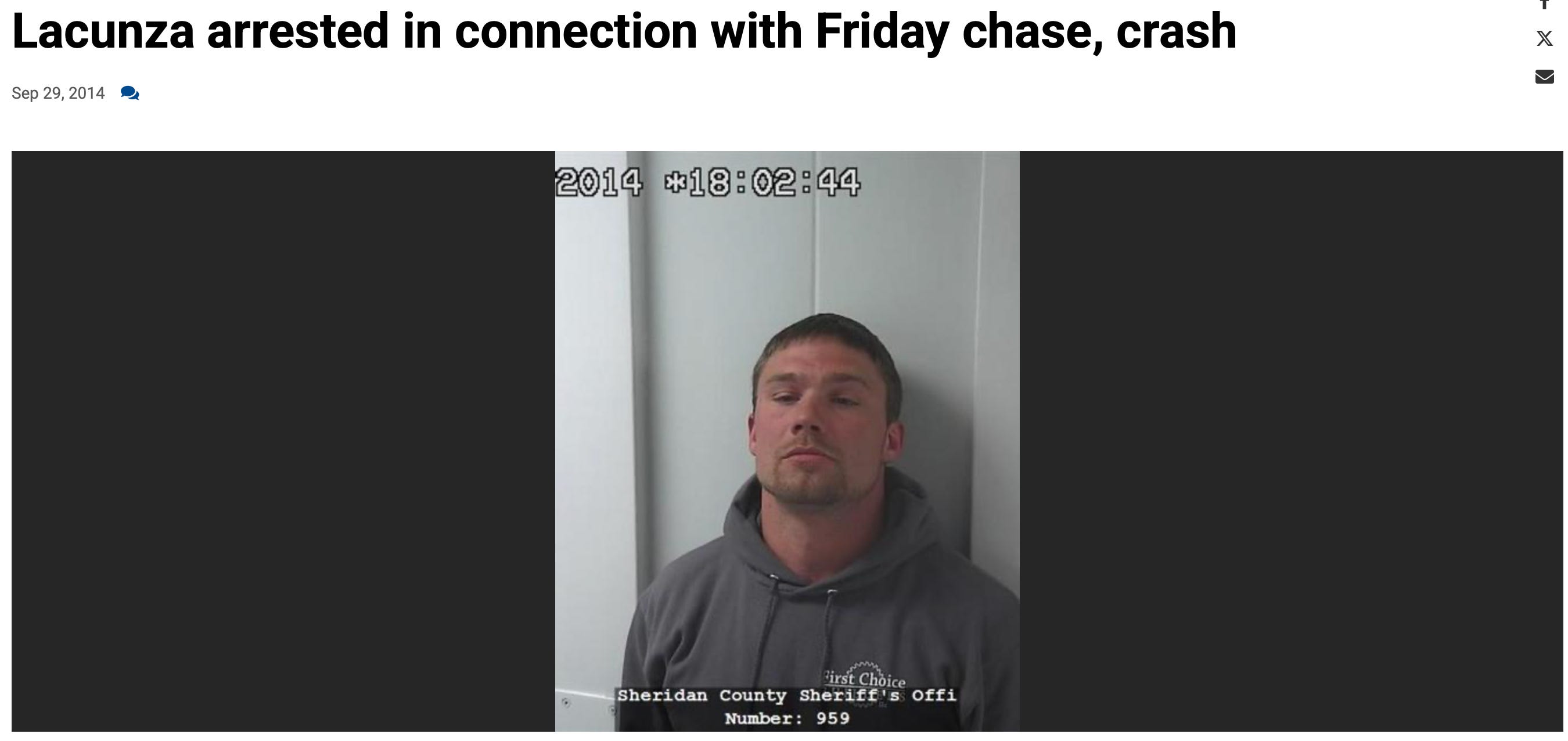
Twelve years earlier, a Sheridan Press report showed the same pattern: Lacunza (then 27) was arrested in Sheridan, Wyoming, for stealing a vehicle and attempting to evade officers in a chase-and-crash incident.
Washington State Patrol says Lacunza will be returned to Clallam County to face the vehicular homicide charge, plus several other unrelated charges. Another case for local taxpayers to fund from start to finish.
Tonight’s Meeting
The Clallam County Board of Commissioners holds a special Budget Town Hall and Transportation Improvement Program (TIP) meeting tonight, Wednesday, October 21, 2026, at 5 p.m. at the Guy Cole Event Center, 202 N. Blake Avenue, Sequim.
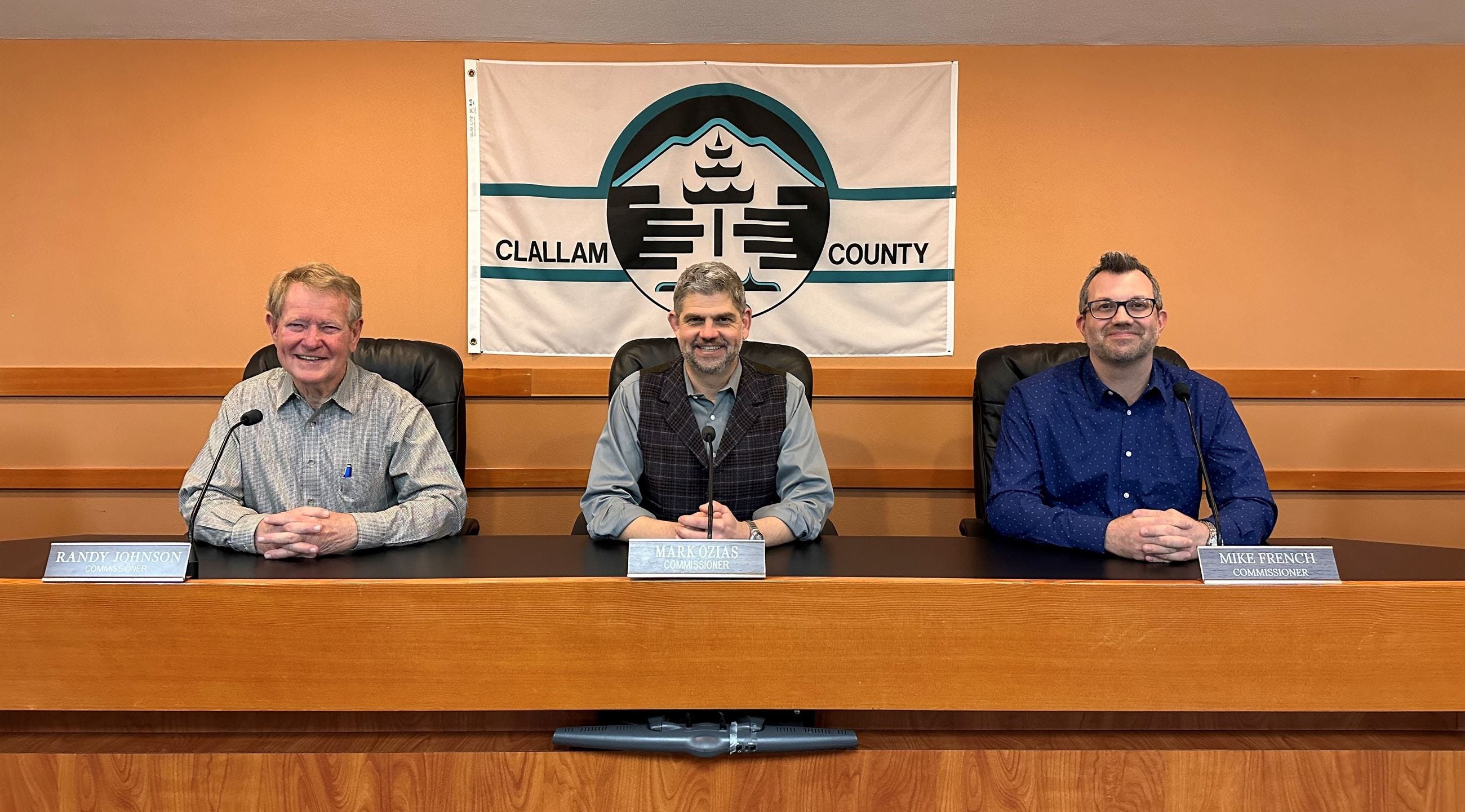
Topics include the Administrator Recommended Budget, the six-year TIP, and a question-and-answer session. Virtual options are available here.
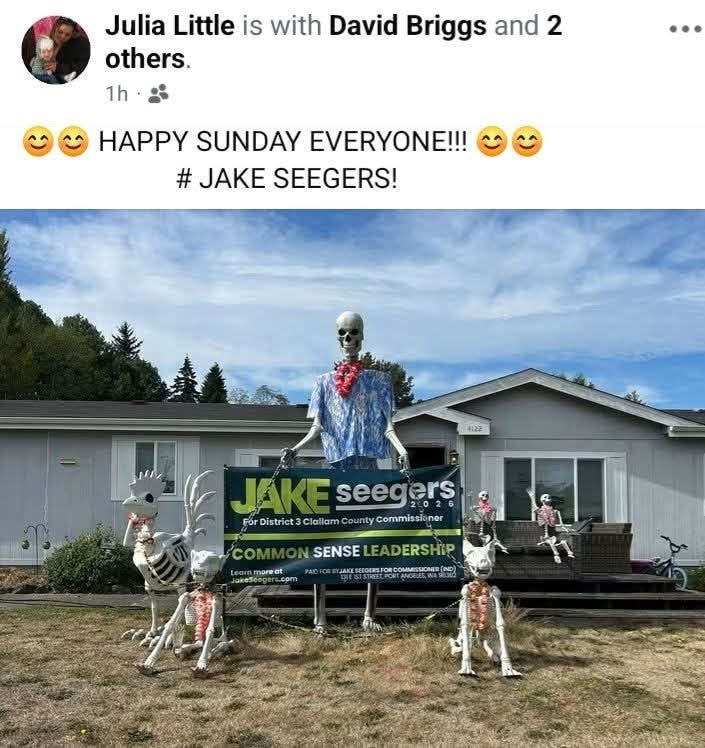
Award for “Most Creative Campaign Sign Placement” Goes to…