


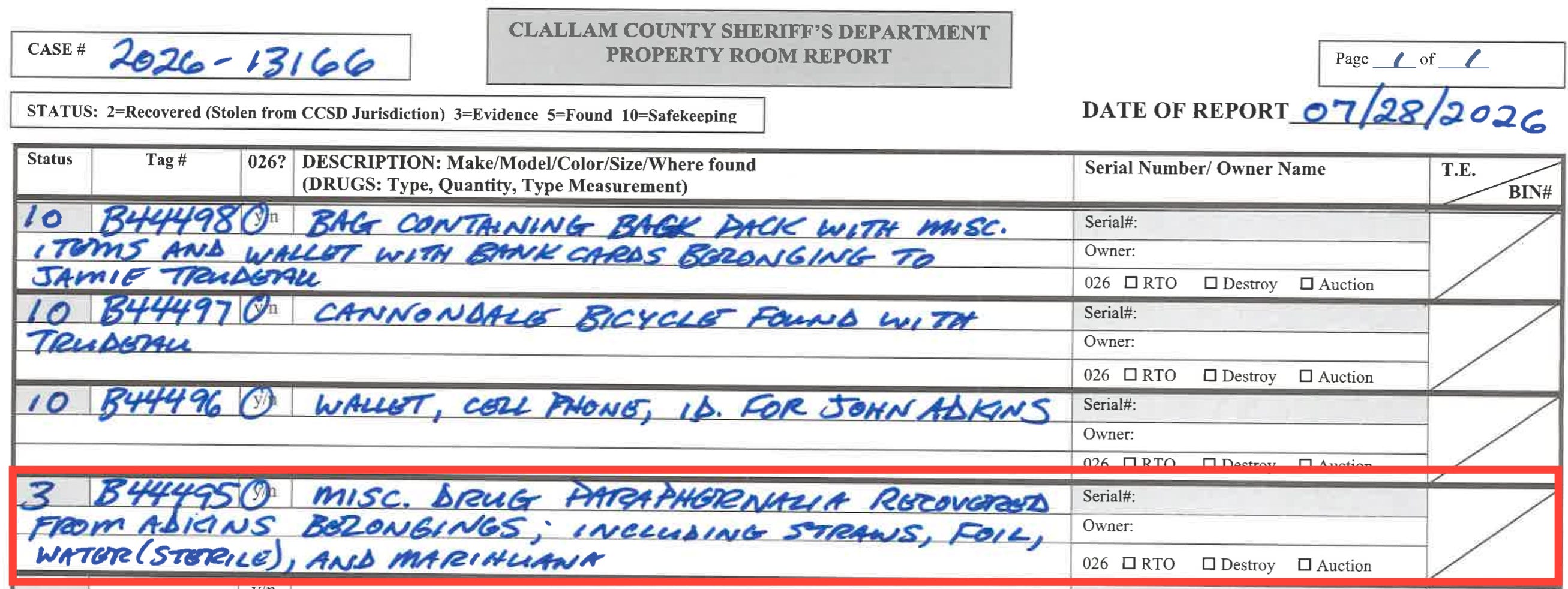
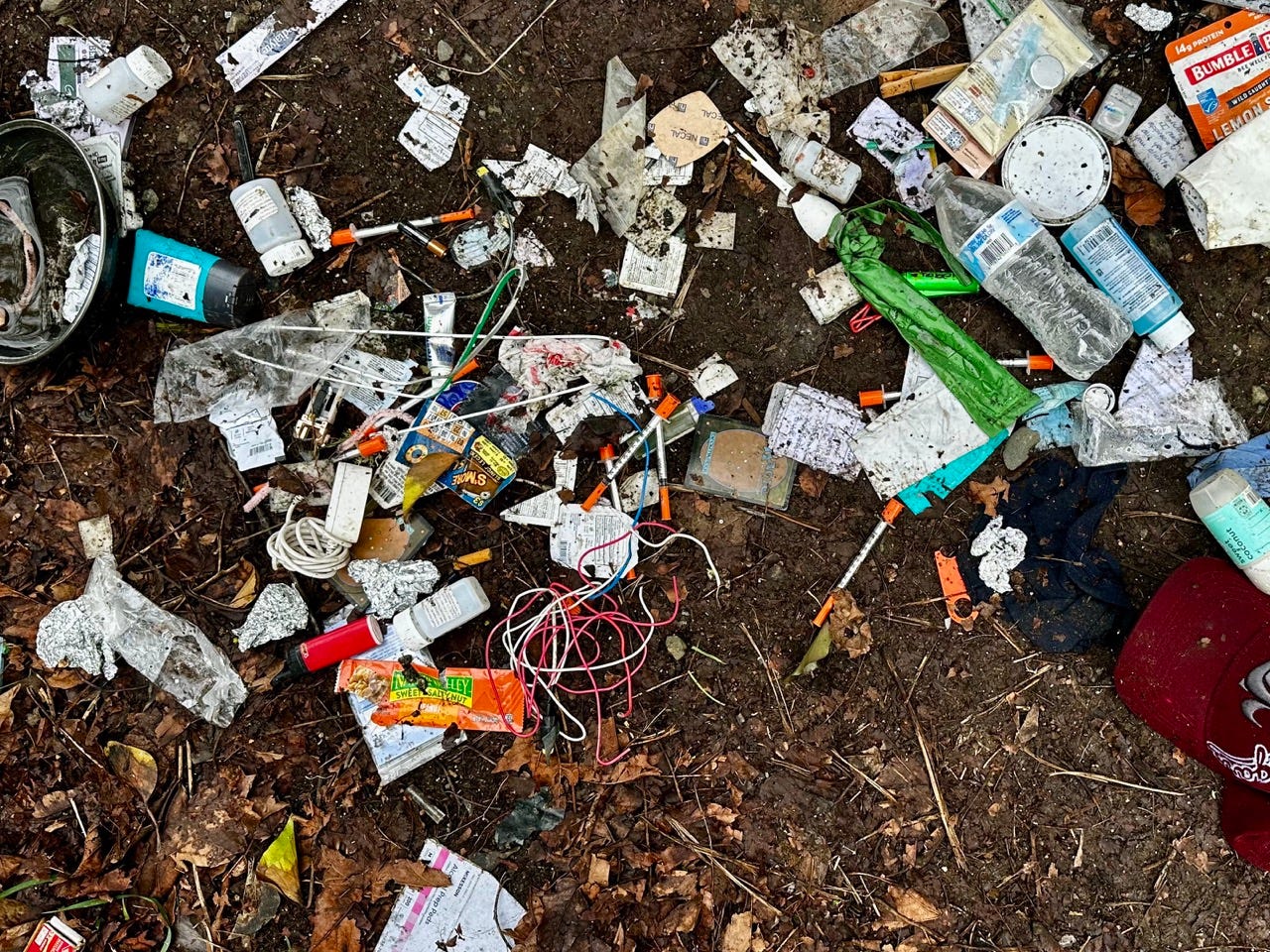
This summer, a Clallam County Sheriff’s deputy followed a frantic man into the dark along the south side of Highway 101 in the “Baker Dip” in east Port Angeles. “Come here and look,” the man said. “Right here.” Two people were down. Neither was breathing. Paramedics arrived, confirmed no pulses, and began CPR while more sirens closed in. One of the men, John Michael Adkins, 54, was later taken to Harborview Medical Center and died. The other, Jamie C. Trudeau, 61, was transported with a weak pulse after Narcan. Both had been found next to bicycles on a walkway protected by concrete barriers, amid a construction site. Drug paraphernalia—plastic “tooter” straws and burnt tin foil used to smoke controlled substances—was recovered at the scene and booked into safekeeping.
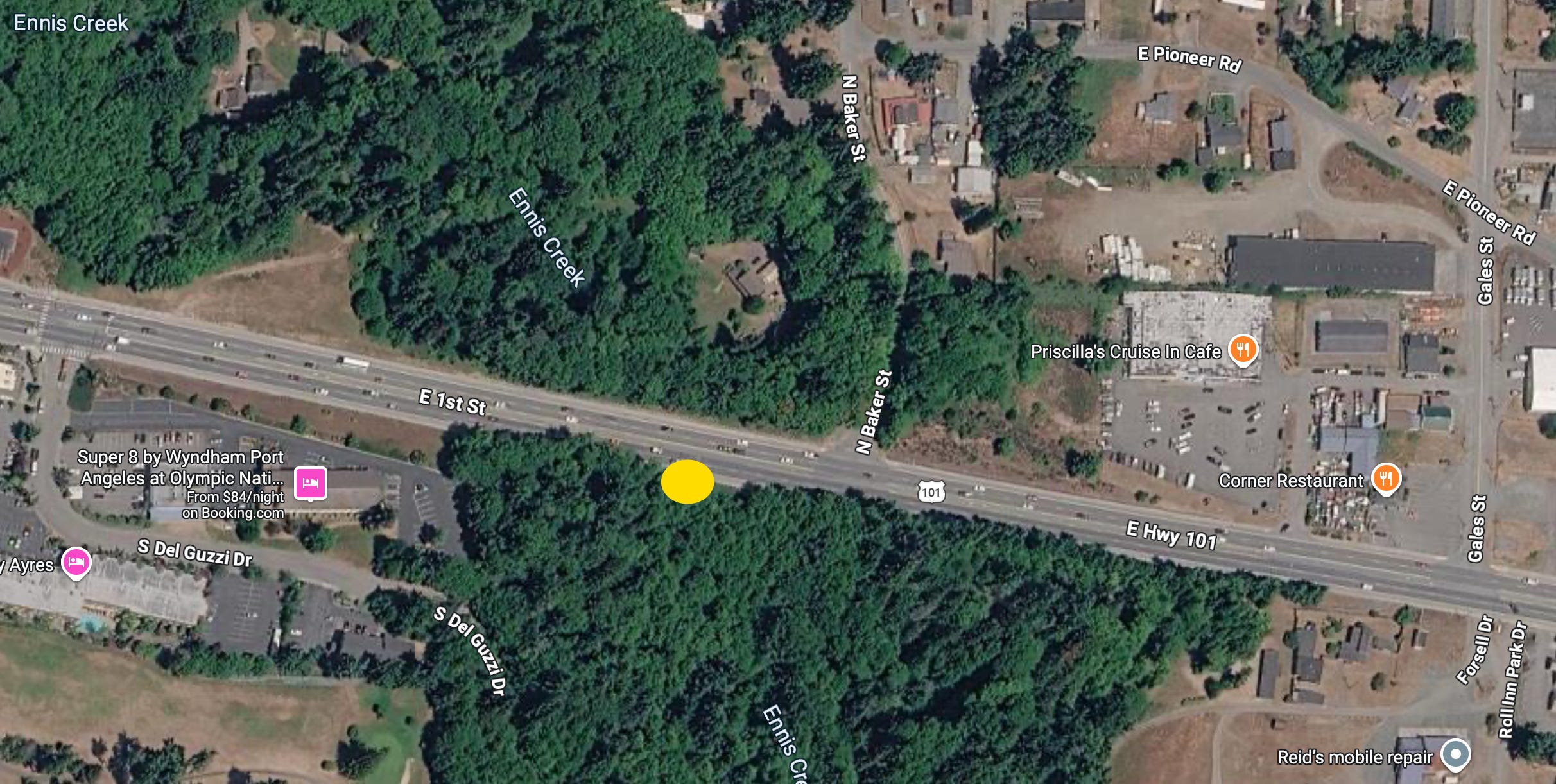
The Scene on Highway 101
This is the actual cost of the harm-reduction expansion Dr. Allison Berry has championed and that Board of Health Chair Commissioner Mike French has defended. French recently told a Rotary group that the county expanded harm reduction a few years ago largely in response to the Jamestown MAT Clinic opening, framing the free supplies as a way “to create a connection with active drug users so that you can leverage that connection to get them to go to treatment.” He said the desire was treatment. The result on a stretch of highway many residents drive every day was two men who had collapsed together, unresponsive, one of them dead, with the tools of their addiction nearby.
What the County’s Own Numbers Show
The county’s own numbers undermine the claim that drug users are being “connected” to services. In a recent Kiwanis debate with Jake Seegers, French acknowledged that many people see “syringe exchange programs” as enabling. Seegers answered with the board of health’s own data: of roughly 12,000 encounters last year, only 27 were referred to services.
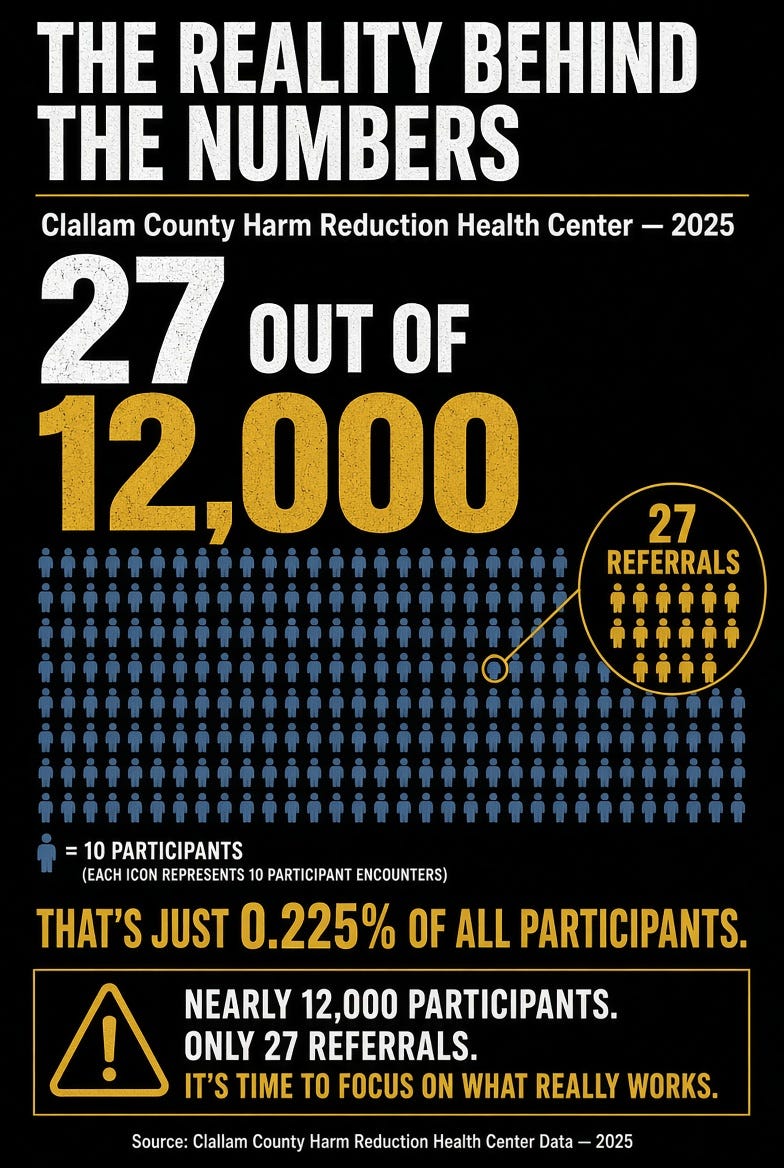
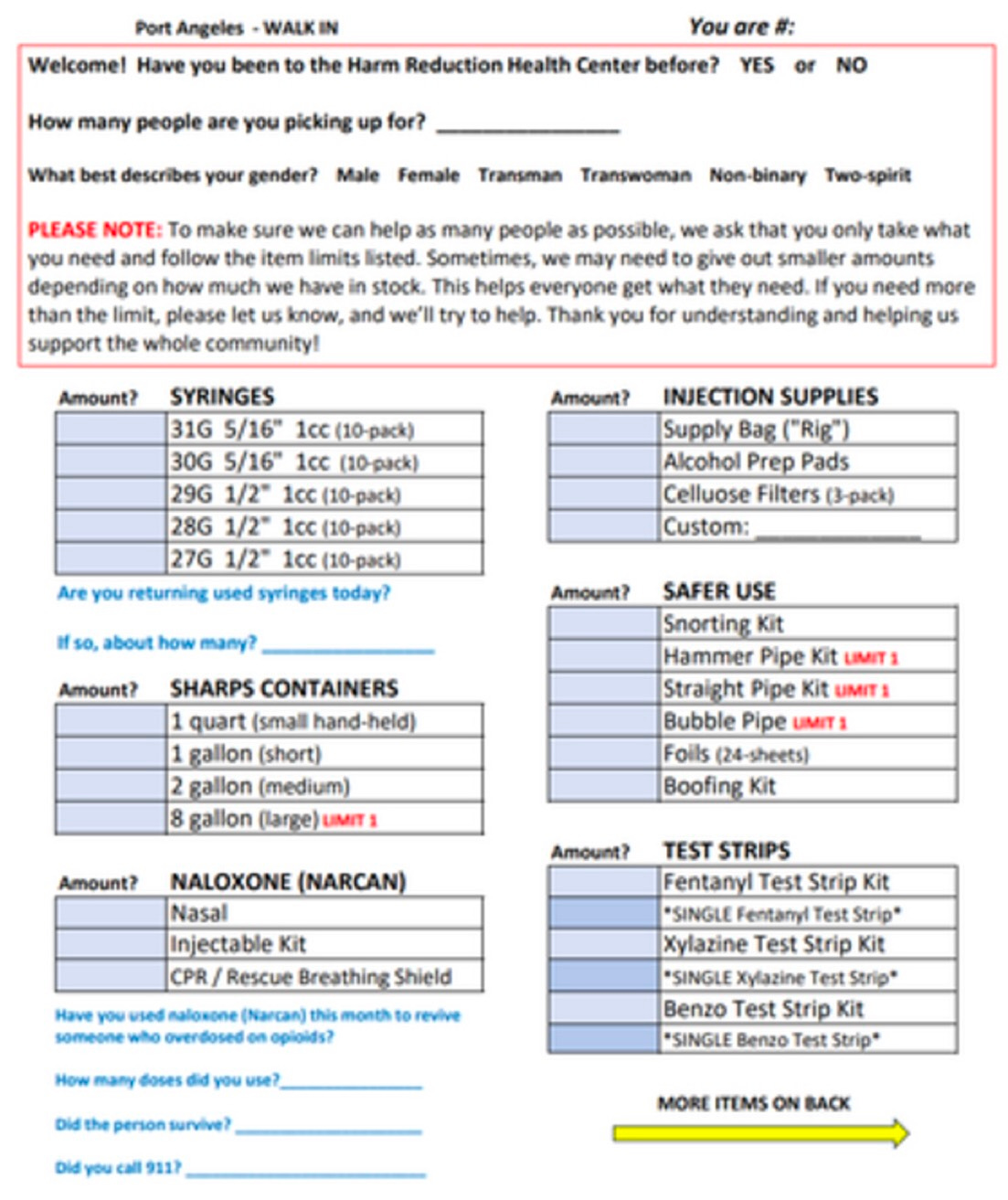
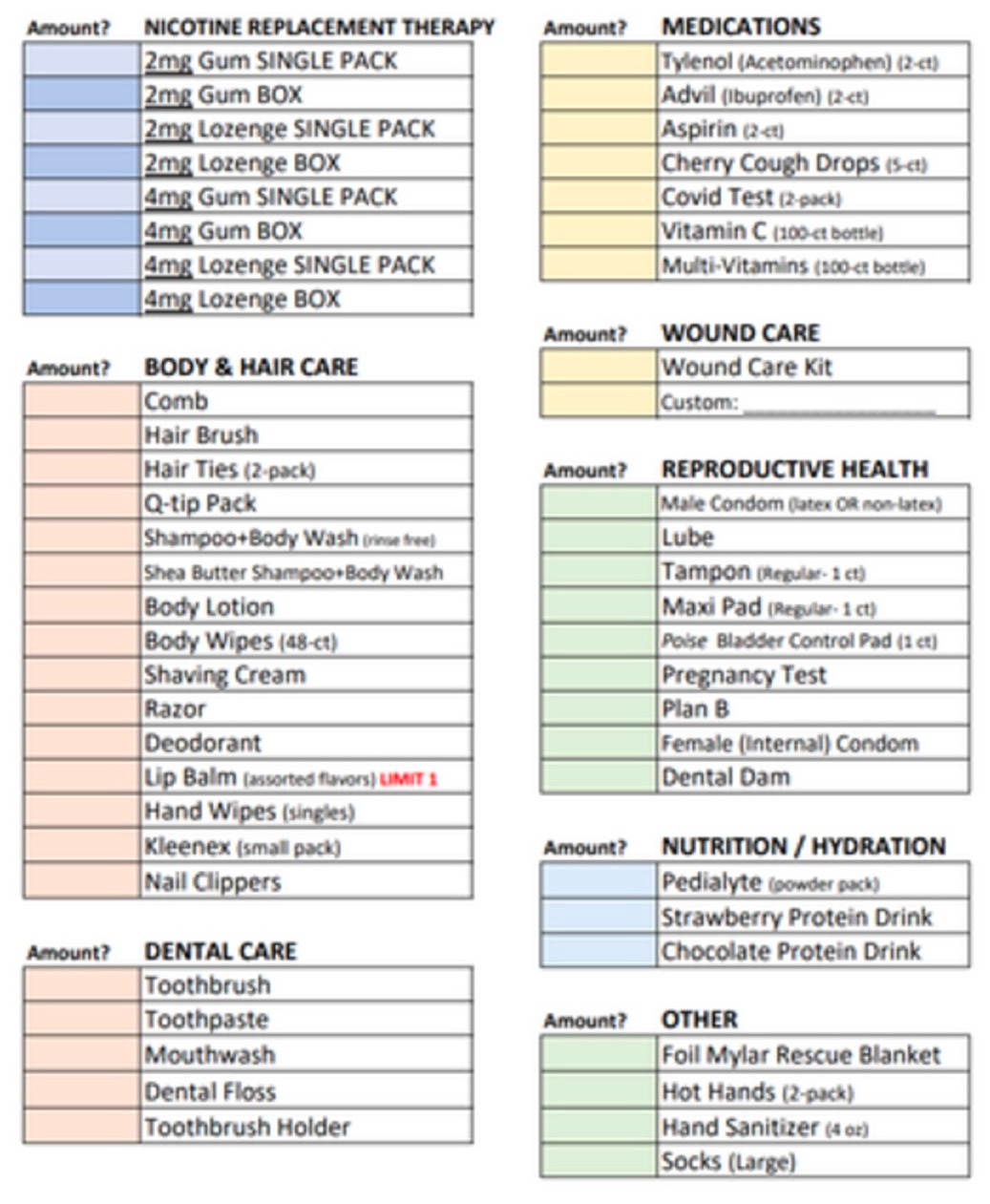
That is a referral rate, not confirmed entry into treatment. Seegers noted that it isn’t a syringe “exchange” program at all — people can obtain hundreds of syringes at a time along with boofing kits, pipes, lighters, and foil for fentanyl — all taxpayer-funded and unrestricted. “We don’t have a syringe exchange program anymore,” Seegers said.
No Pathway to Treatment
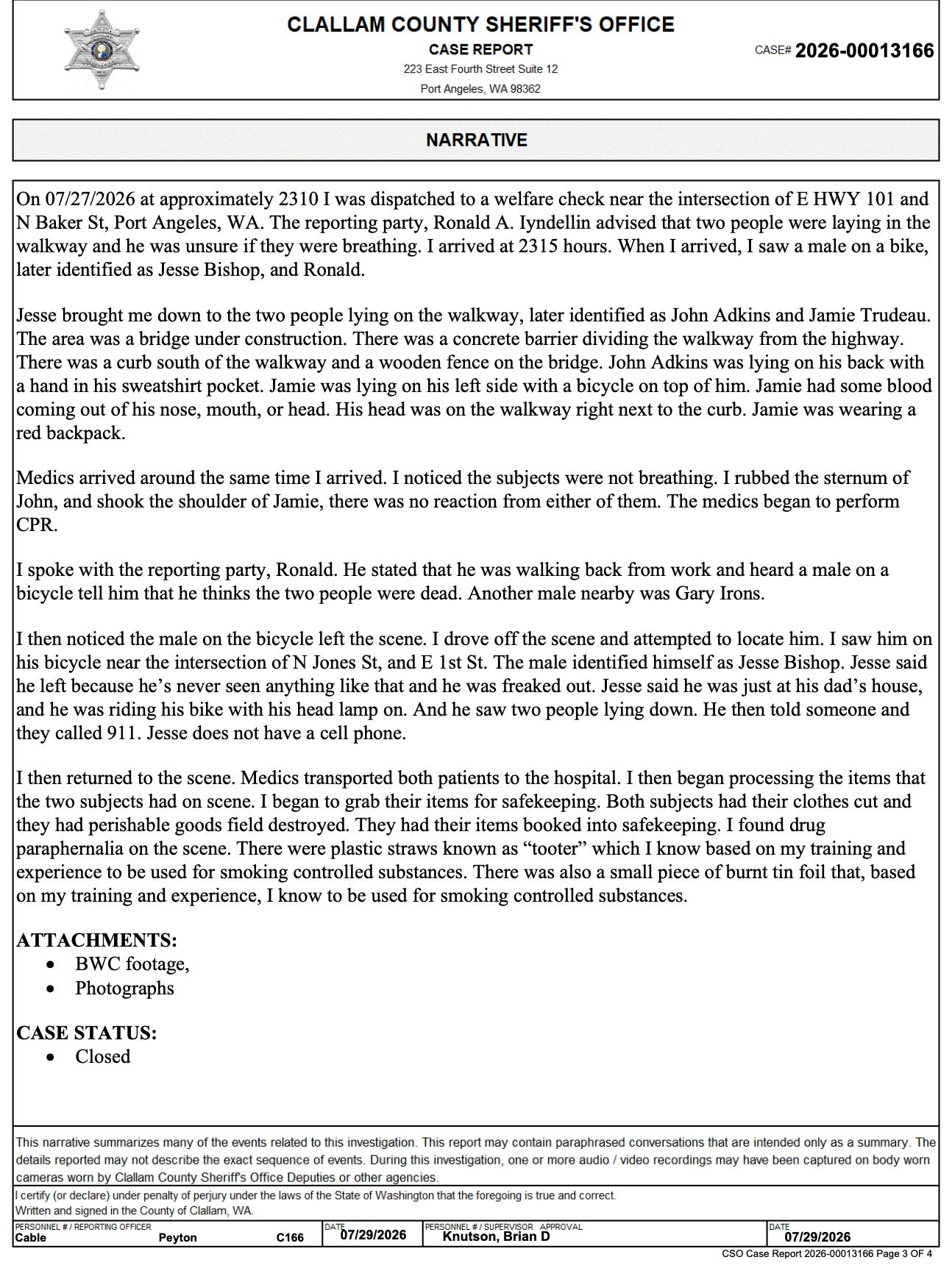
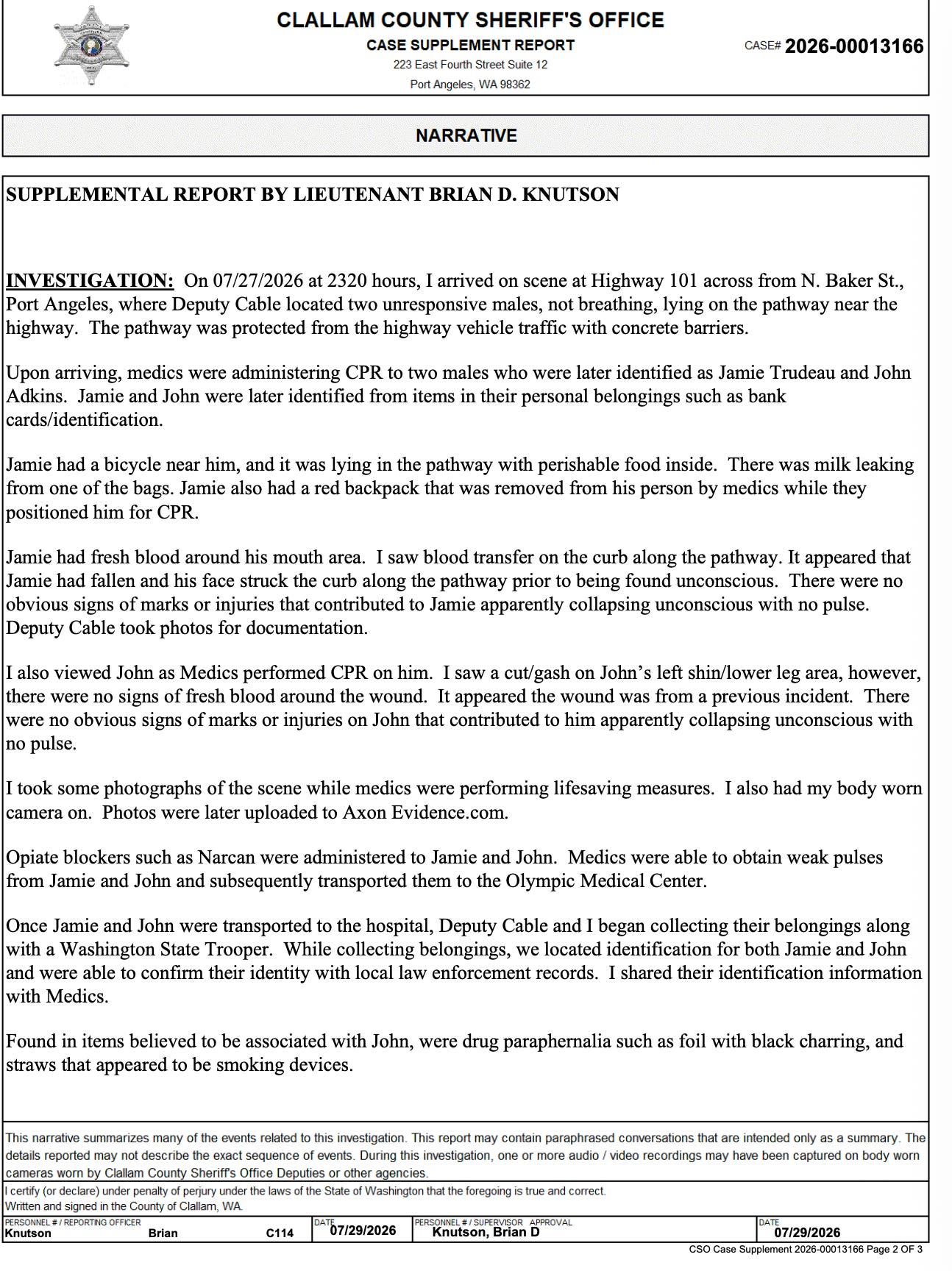
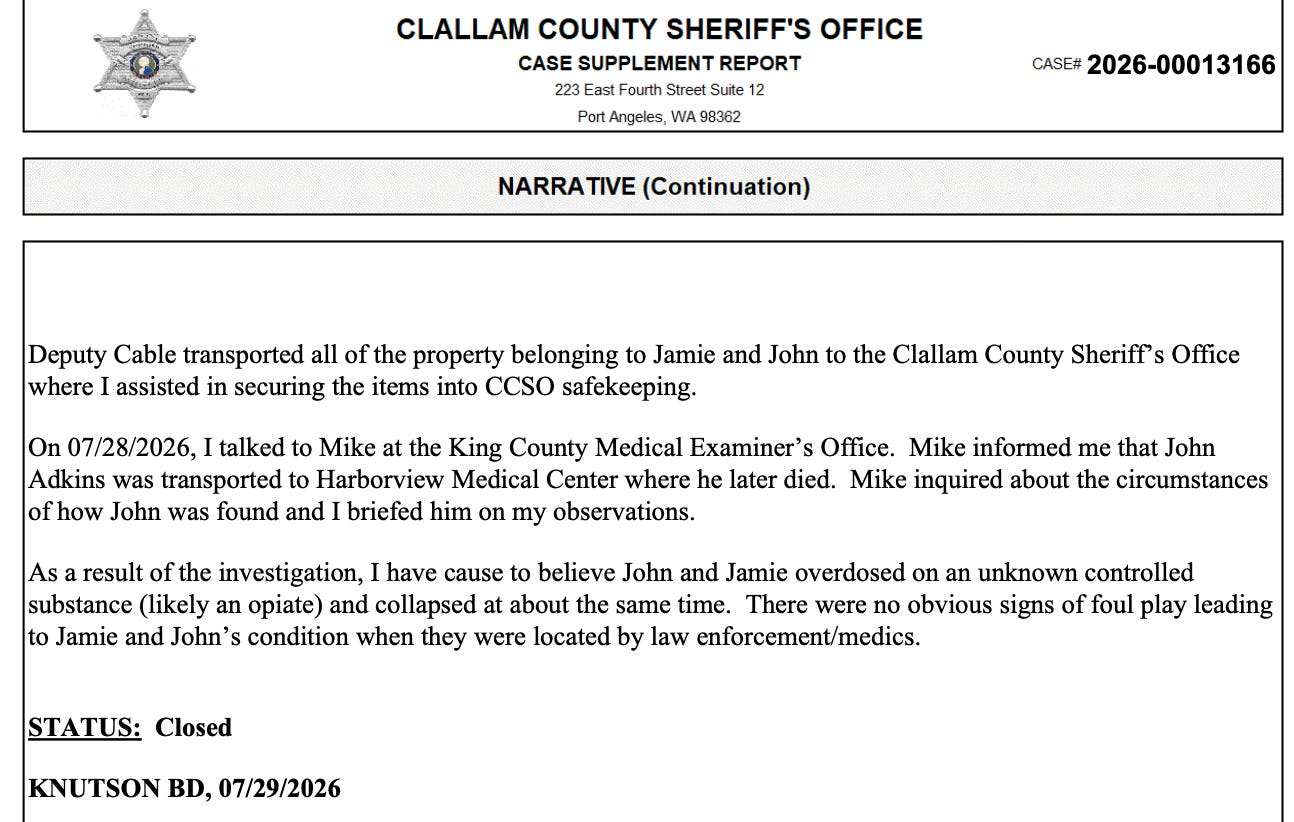
John Adkins and Jamie Trudeau never found the pathway French described. The Lieutenant’s supplemental report concluded both men had overdosed on an unknown controlled substance, likely an opiate, and collapsed at roughly the same time, with no obvious signs of foul play. Responders identified Adkins from items in his belongings; Trudeau had a red backpack and a bicycle on him. Their clothes were cut for CPR. Perishable goods were field-destroyed. First responders performed CPR in the dark, requested additional fire resources, and later collected the paraphernalia. Those same responders then went home after watching two lives flirt with death on the sidewalk.

It’s just another day on the job in a county that gives addicts the tools that trap them in their addiction.
Silence from Local Media and Officials
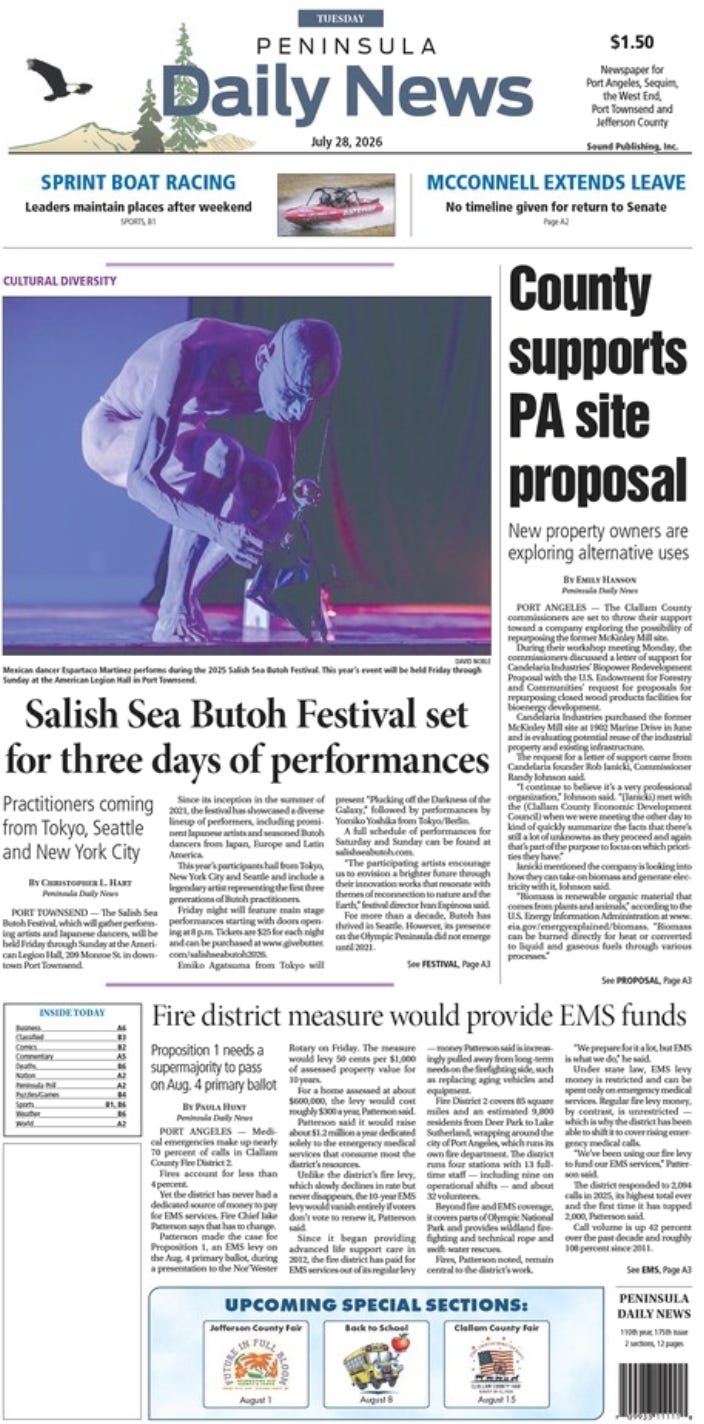
Local media has not treated this as news residents should know. The Peninsula Daily News has not been contacted by the county to report two overdoses—one fatal—on a high-traffic stretch of Highway 101. How many of these overdoses are being covered up and ignored? Here’s what the front page featured the day after the incident: Getting the public ready for another EMS levy.
The Resources and the Trauma
As voters consider EMS levies and commissioners discuss a criminal-justice tax to hire more law enforcement, the video of this response is worth watching. It shows the resources—deputies, medics, fire—devoted to people the county first equipped with drug use supplies and then abandoned to the consequences of using street drugs. Warning: the body-worn camera footage is hard to watch because you are watching a life end. The officer arrives, finds both men unresponsive, calls it in, and the paramedics begin compressions while bystanders describe discovering them. Blood is visible near one man’s face from the fall onto the curb. There is no heartbeat. More units arrive.
Watch it, and you’ll witness a life ending.
The Choice Before the County
Clallam County cannot claim to be a first-world community or a compassionate society while it supplies the tools of self-destruction and then measures success by the number of free kits distributed rather than the number of people who stop using them.
French’s defense of the expansion as a treatment bridge has not produced the promised results. Berry’s tenure has expanded the program. Seegers has offered the alternative: stop funding unlimited paraphernalia with taxpayer money, stop pretending 27 referrals out of 12,000 encounters is a success, and focus on recovery rather than managing an open-air decline that ends on the side of a highway.
At least one man is dead. The policy that enabled the conditions of his final night remains in place. Residents can decide whether that is the outcome they want their tax dollars and their Board of Health to keep producing.
Tell Them This Death Was Preventable
Tomorrow is the monthly Board of Health meeting. Come and tell the BOH—which includes the three commissioners and Dr. Allison Berry—that harm reduction isn’t working. Tell them about this death. It could have been prevented, but instead this county enabled it.
The October 20, 2026 Board of Health meeting is your chance to force the question into the open. It runs 1:30–3:30 p.m. in the Clallam County Courthouse Board of Commissioners Meeting Room 160, 223 E. 4th Street, Port Angeles. You can attend in person or join virtually and comment online. Show up. Speak. Demand better.
Thank you to CCWD reader Leia for the tip that made this story possible.
Stay Engaged This Week
Tuesday

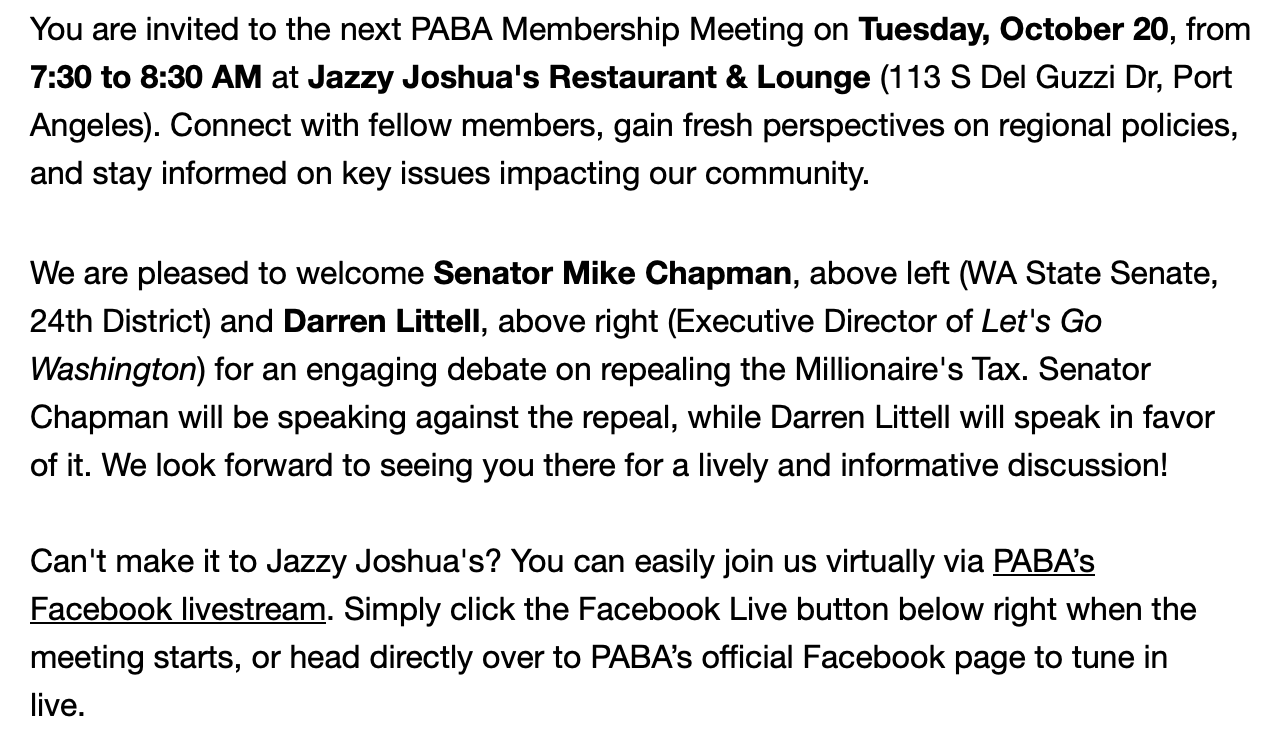
Note: Darren Littell is unable to attend. Viet Nguyen, President of 5G Americas, will advocate for repealing the Millionaire’s Tax.
Tuesday
The weekly commissioners’ meeting that begins at 10:00 a.m. will feature the monthly “Citizens’ Forum,” your only chance to engage with the commissioners in a two-way dialogue. You can attend in person or virtually.
Tuesday
The monthly Board of Health meeting, with all three commissioners and Health Officer Allison Berry, will begin at 1:30 p.m. in the commissioners’ boardroom. Public comment is allowed in person or virtually.


