


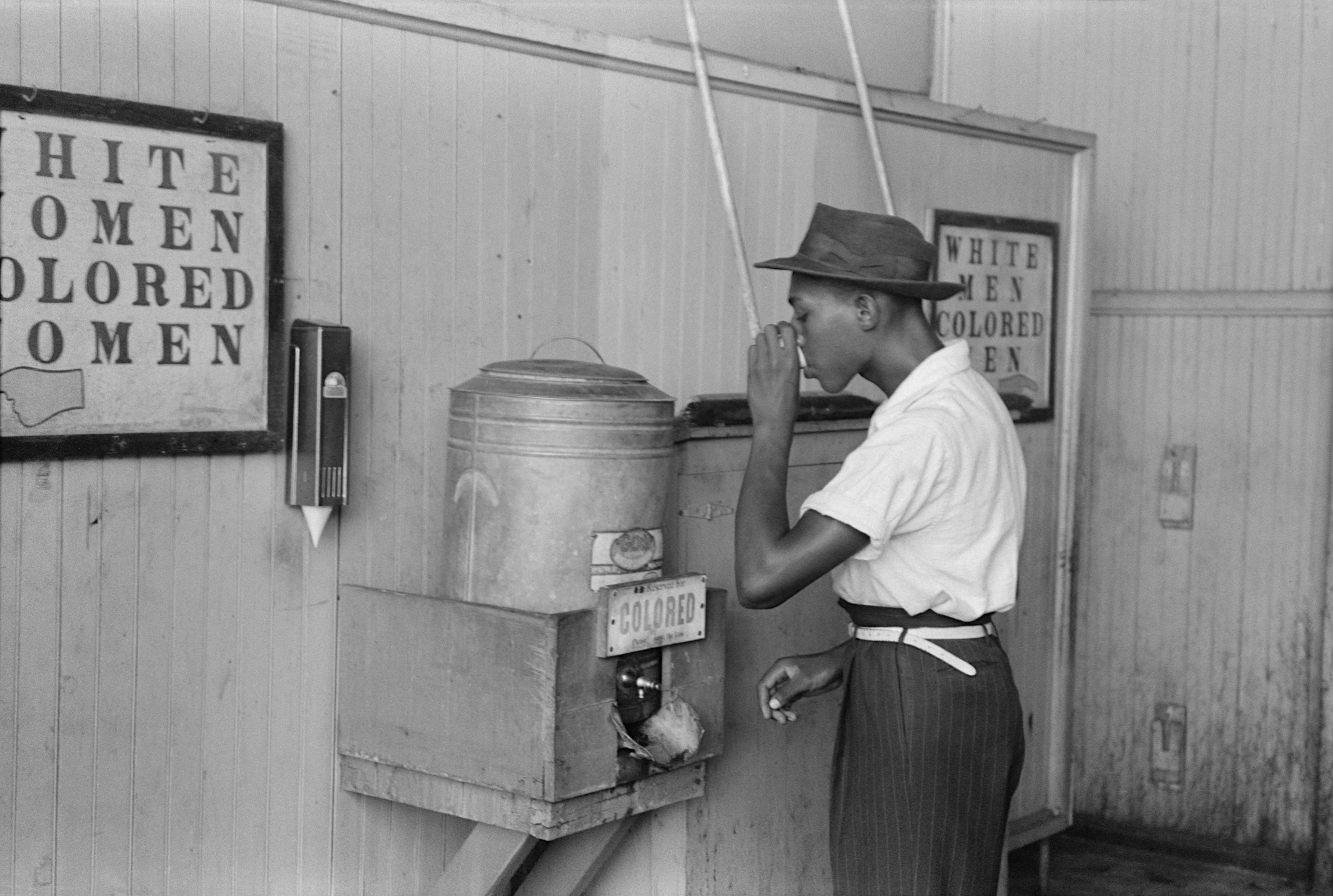
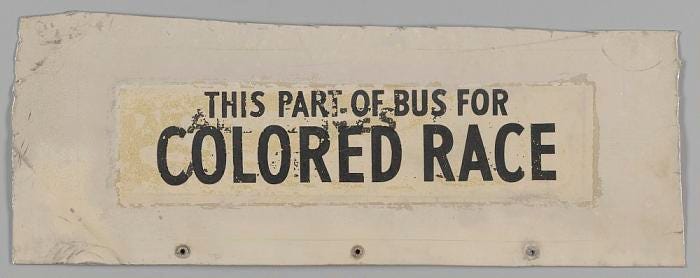
Sixty years after the civil rights movement, racial segregation and discrimination are poised to make a quiet comeback under the leadership of the Clallam County Commissioners. They intend to use the Comprehensive Plan—the massive document that will chart the course of the county for the next twenty years—to accomplish it.
French’s “Misspoke” Moment on a Non-Required Assessment
Commissioner Mike French spent the month of September telling civic organizations and debate audiences that the state required the county to complete a Climate Vulnerability Assessment (CVA). His opponent, Jake Seegers, pointed out repeatedly that no such standalone assessment was required.
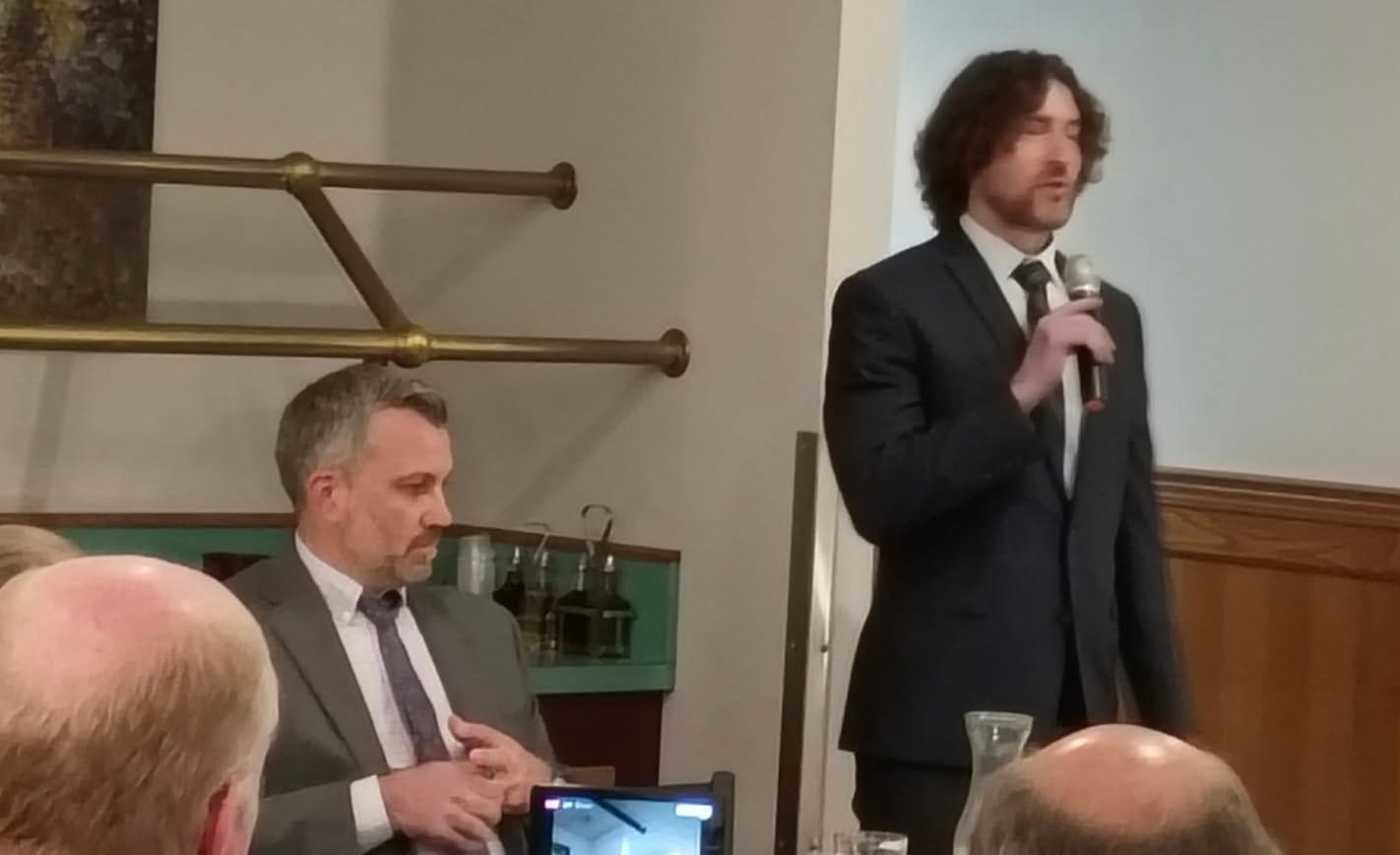
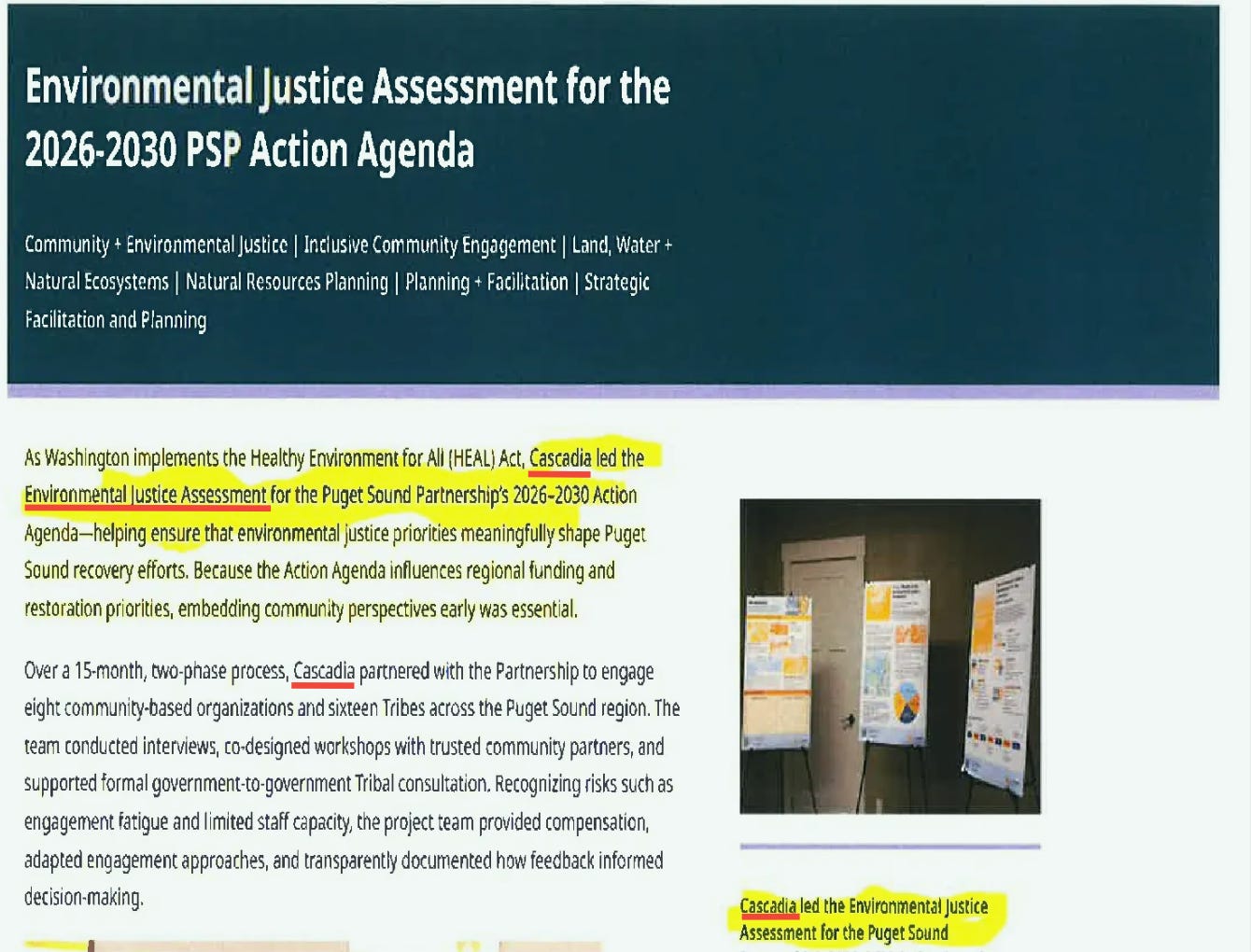
At the October 13 commissioners meeting, French acknowledged that he had “misspoke” and apologized. The damage, however, was already done. The CVA had been drafted behind closed doors by Cascadia Consulting Group and the North Olympic Development Council—Commissioner Mark Ozias’s NGO—and is now being treated as foundational input for the Climate Element of the Comprehensive Plan.
How the CVA Elevates Tribal Communities Above Everyone Else
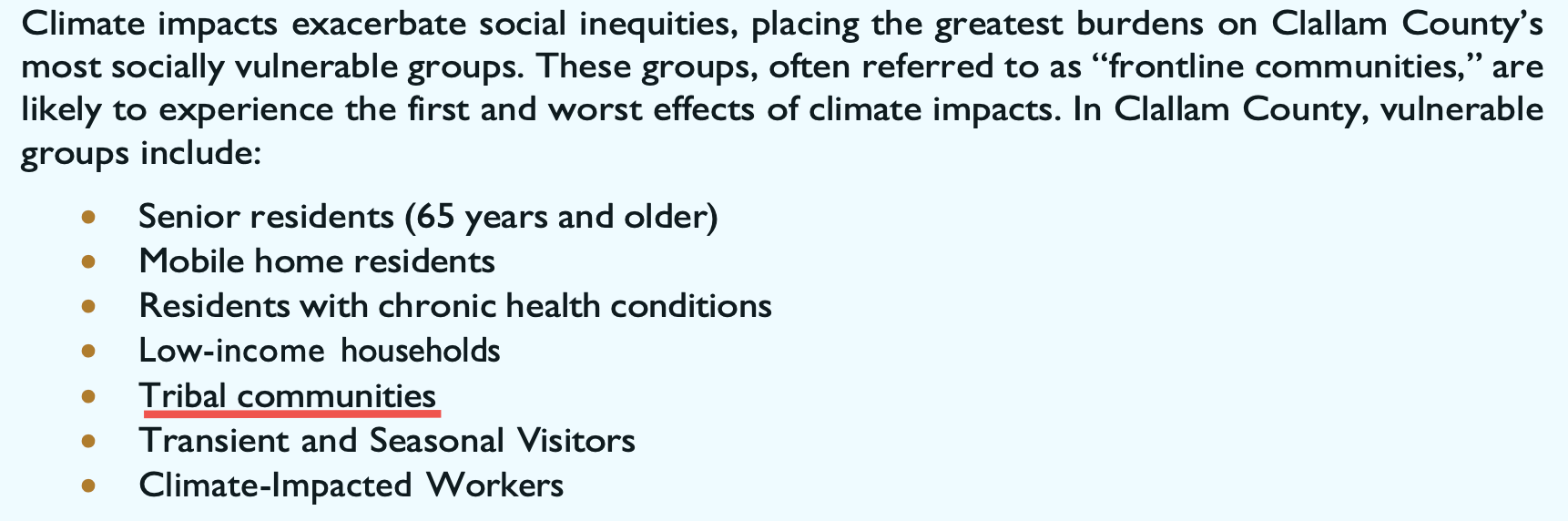
Why does the CVA matter so much? Because it repeatedly elevates Tribal communities as a distinct, especially vulnerable class of people whose needs the county must prioritize. On page 17 the assessment lists “Tribal communities” as one of the core vulnerable groups alongside seniors, mobile-home residents, and low-income households.
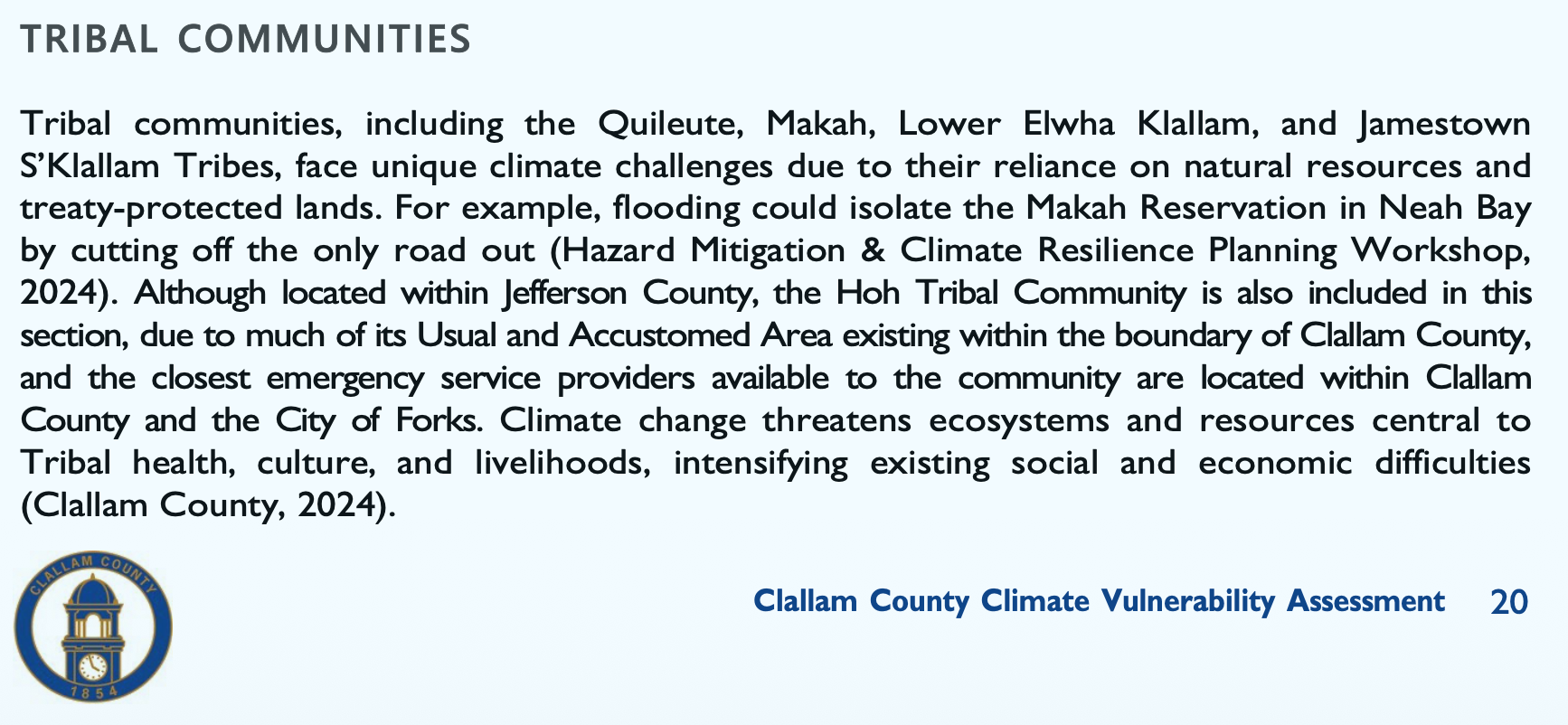
Page 20 gives them their own dedicated subsection, citing “unique climate challenges due to their reliance on natural resources and treaty-protected lands.”
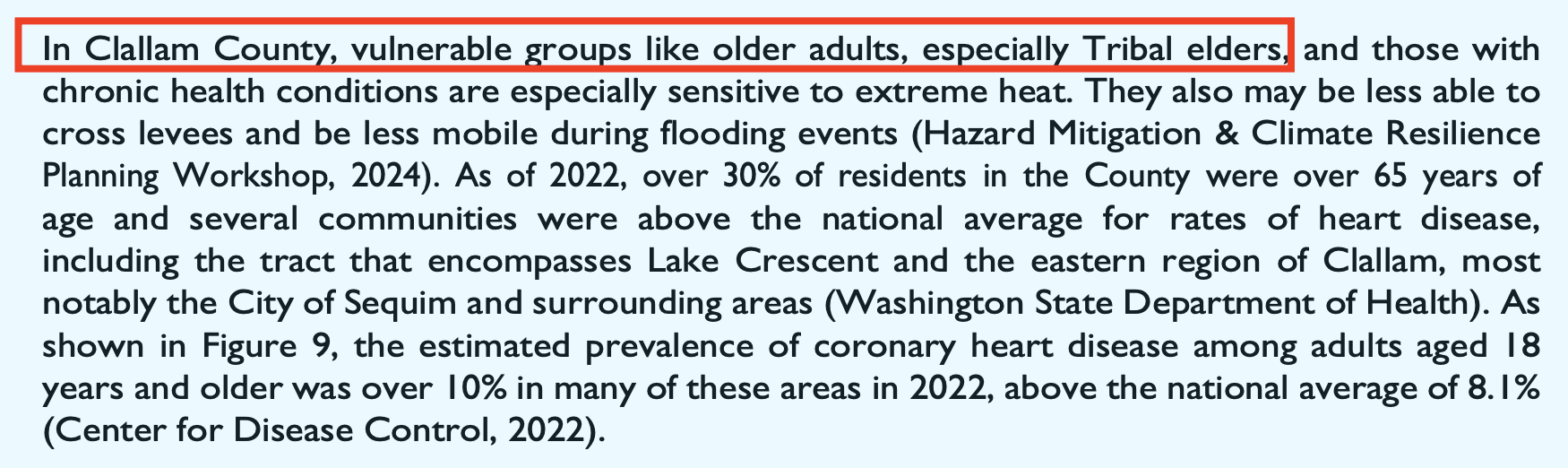
Page 24 states, in the exact language a public commenter read into the record on October 13: “In Clallam County, vulnerable groups like older adults, especially Tribal elders, and those with chronic health conditions are especially sensitive to extreme heat.”
French Defends Singling Out Tribal Elders
One public commenter noted that his own father is 89 and white, then asked how an elderly white man is any more or less vulnerable than a tribal elder. French’s reply was that elderly people are all vulnerable, yet when pressed on whether the “especially Tribal elders” phrase would remain, all three commissioners initially refused to answer. The next speaker, Mitch Zenobi, stayed at the podium for his full three minutes demanding an answer.
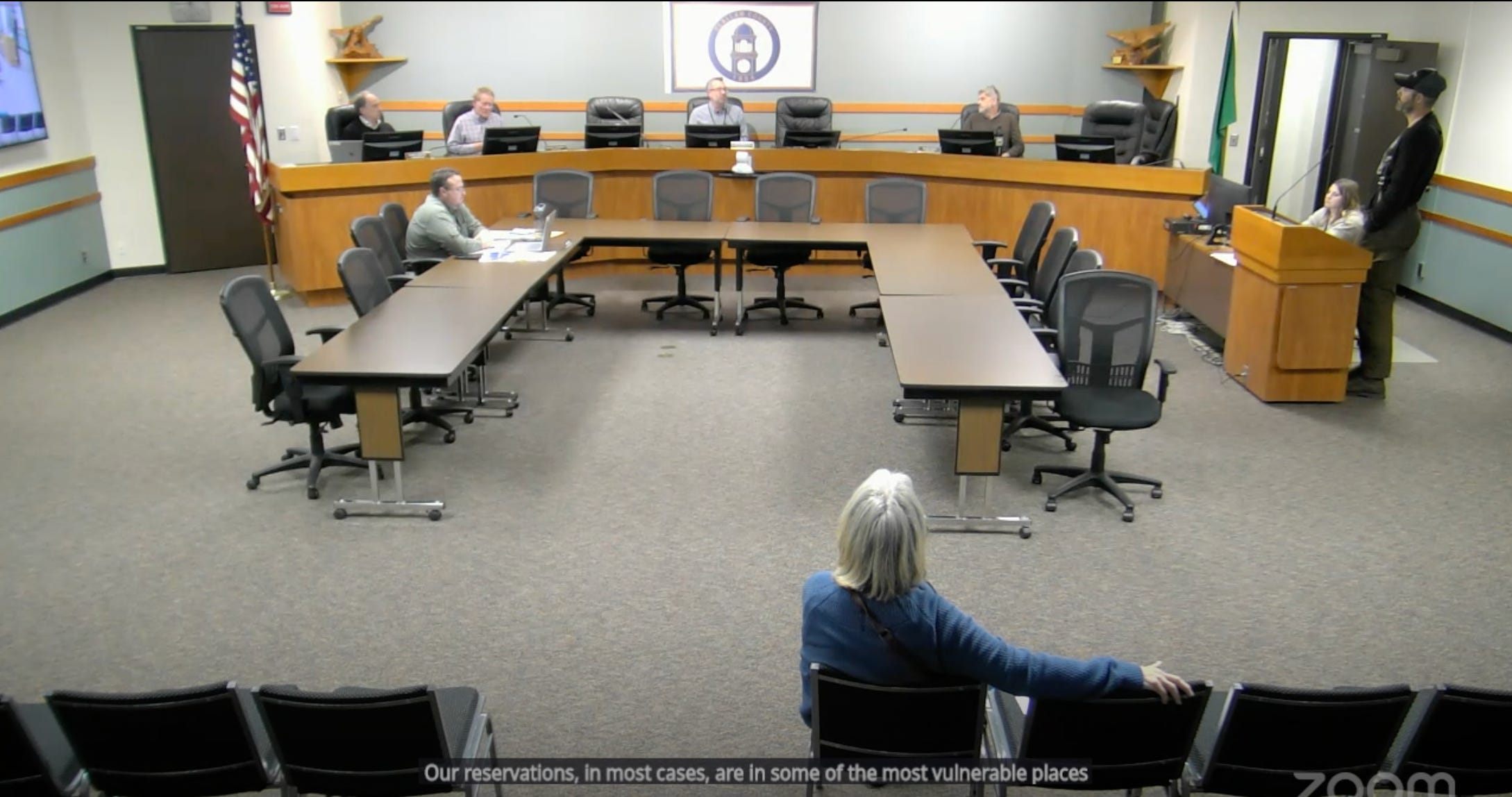
French finally said:
“I think that it’s perfectly reasonable for us to have a phrase like that in our comprehensive plan. I don’t think that it detracts from other members or other demographics, and I think the history of how our reservations got to be where they are is relevant. Our reservations in some cases are in some of the most vulnerable places to climate change.”
The Practical Reality of Coastal Cooling Versus Special Status
All four of Clallam County’s Tribes have traditional villages on the water. On a hot summer day, Jamestown Beach typically runs about ten degrees cooler than downtown Sequim four miles inland. The same coastal cooling effect exists at Neah Bay, Lower Elwha, and La Push.
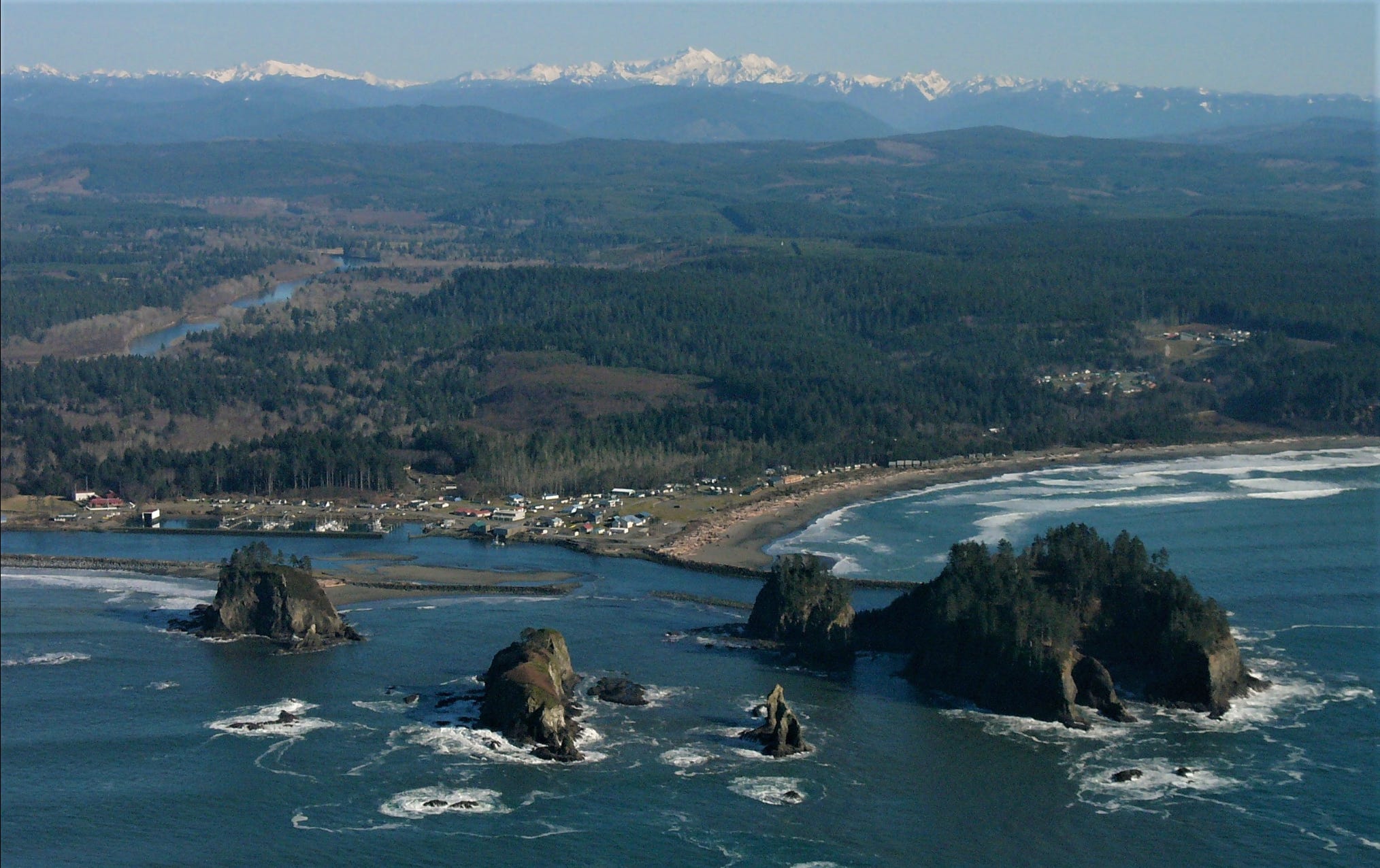
The CVA still singles out Tribal elders as especially sensitive to heat while saying nothing about non-Tribal seniors living in hotter inland areas.
The Racism Test French Cannot Pass
If French believes the phrase is “perfectly reasonable” and does not detract from other demographics, the logical test is simple: would the commissioners accept language that said vulnerable groups “especially elderly white people”? If the answer is no, then prioritizing any other race or ethnicity is the same distinction by race.
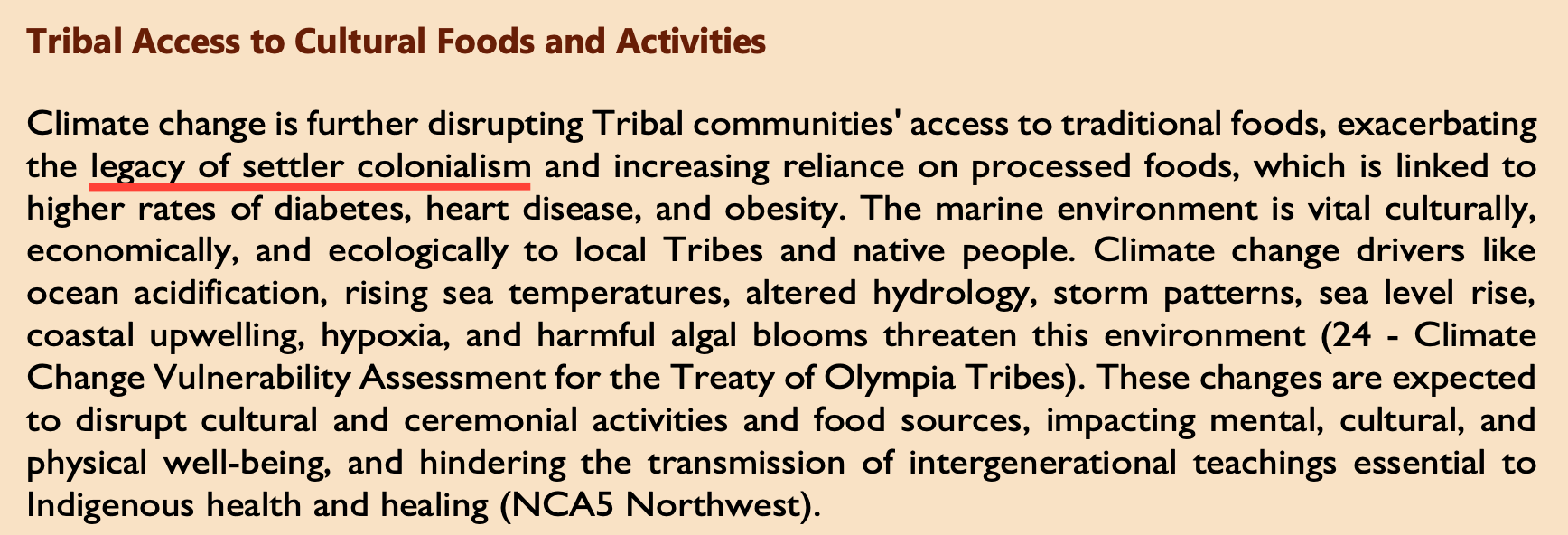
The CVA does not stop at heat. It contains a full section on “Tribal Access to Cultural Foods and Activities” that frames climate impacts as “exacerbating the legacy of settler colonialism.”
Another section details “Tribal Emergency Management Adaptive Capacity,” cataloguing Tribal plans and resources while the county’s own residents receive only generalized treatment.
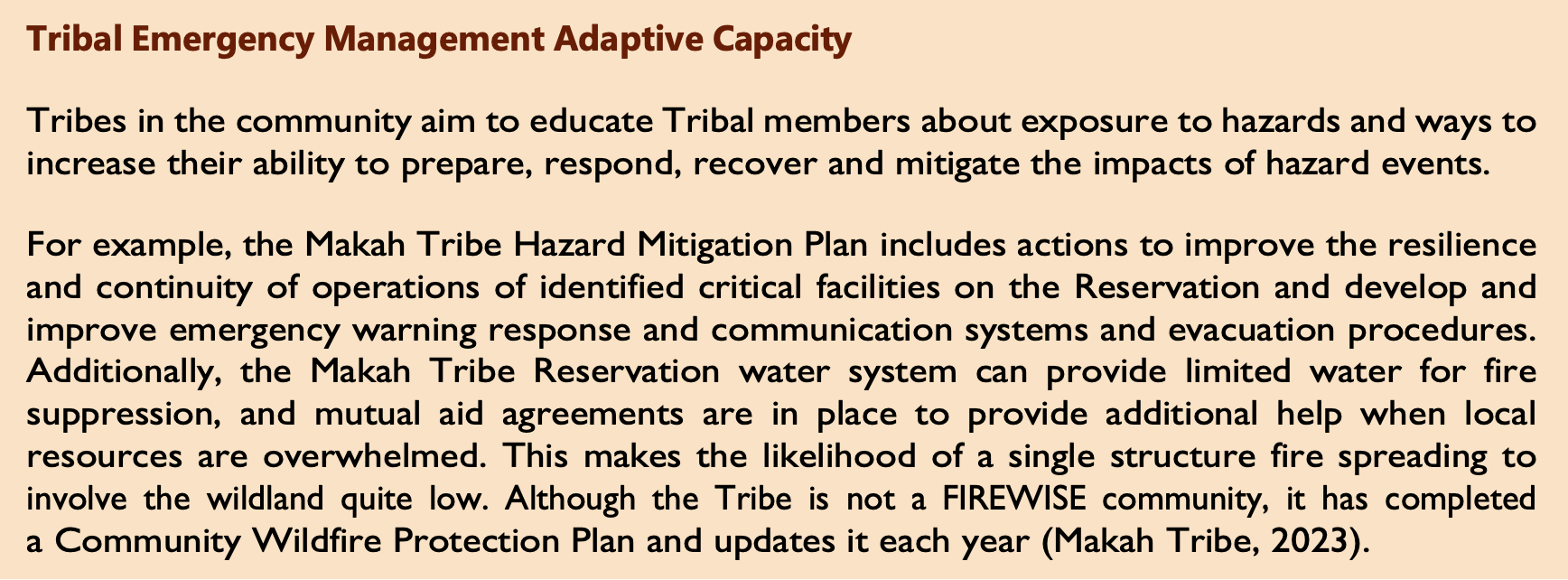
The conclusion again lists “Tribal communities” alongside the elderly and low-income residents as “particularly at risk,” positioning the assessment as the guide for future planning and resource decisions.
Real-World Preferences the CVA Would Create
Real-world consequences follow directly from this framing. During a heat wave, county-run cooling centers, bottled-water deliveries, or emergency transportation could be directed first to Tribal elders identified as “especially” sensitive.
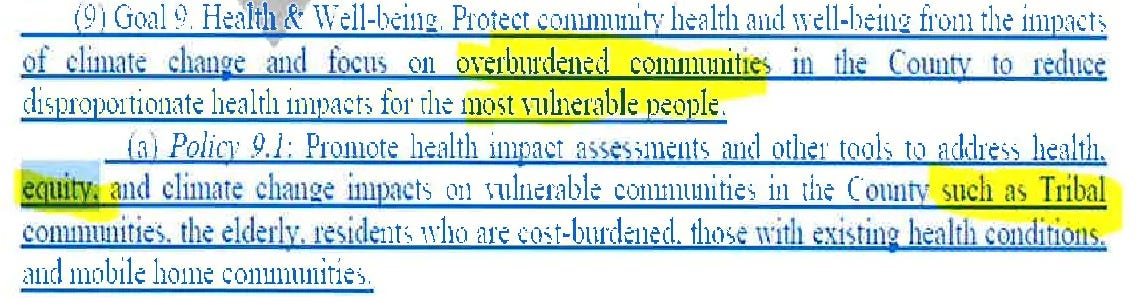
Citizen John Worthington’s research discovered that climate-resilience grant dollars and weatherization programs could be prioritized for Tribal communities labeled “overburdened.”
Zoning and land-use decisions under the Climate Element could require “environmental-justice reviews” that give extra weight to Tribal interests, while private landowners face new restrictions justified by the same assessment.
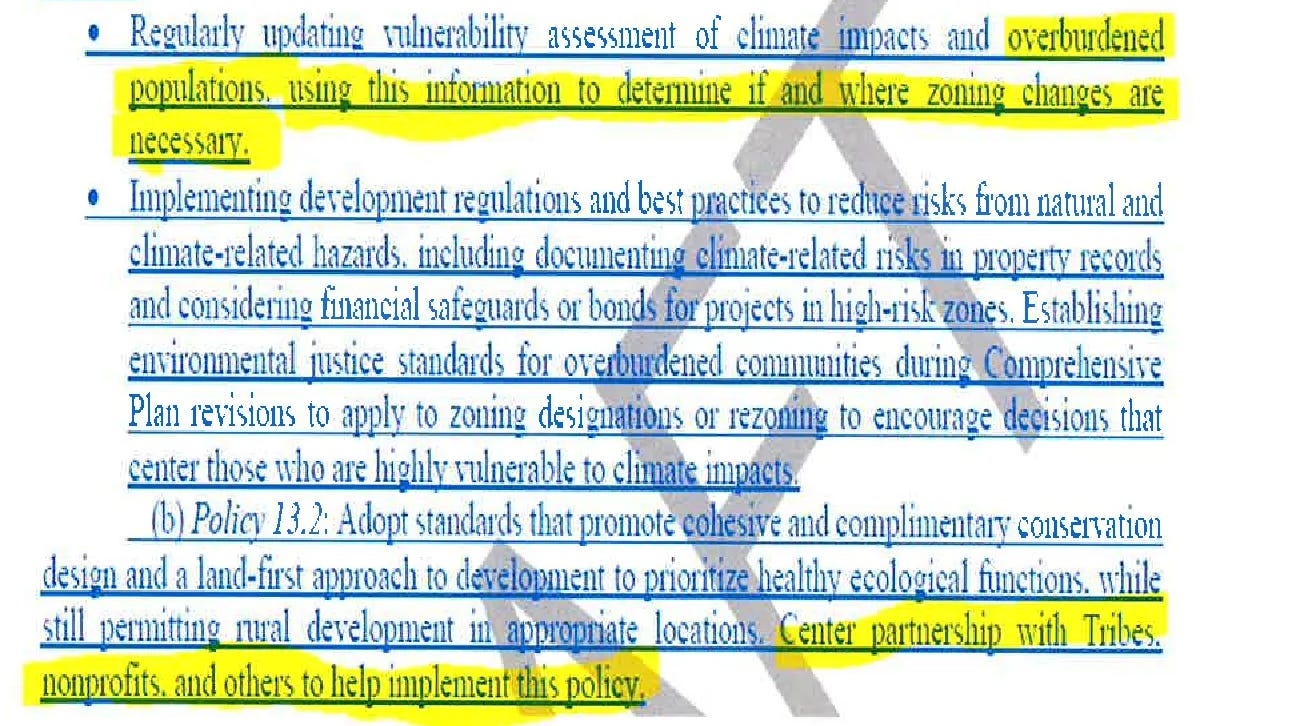
Health-impact assessments and partnership requirements already appearing in draft Comp Plan policies—health equity for Tribal communities, environmental-justice standards for overburdened communities, and centering partnerships with Tribes—would convert the CVA’s language into binding preference.
The Board of Health’s Reconciliation Commitment
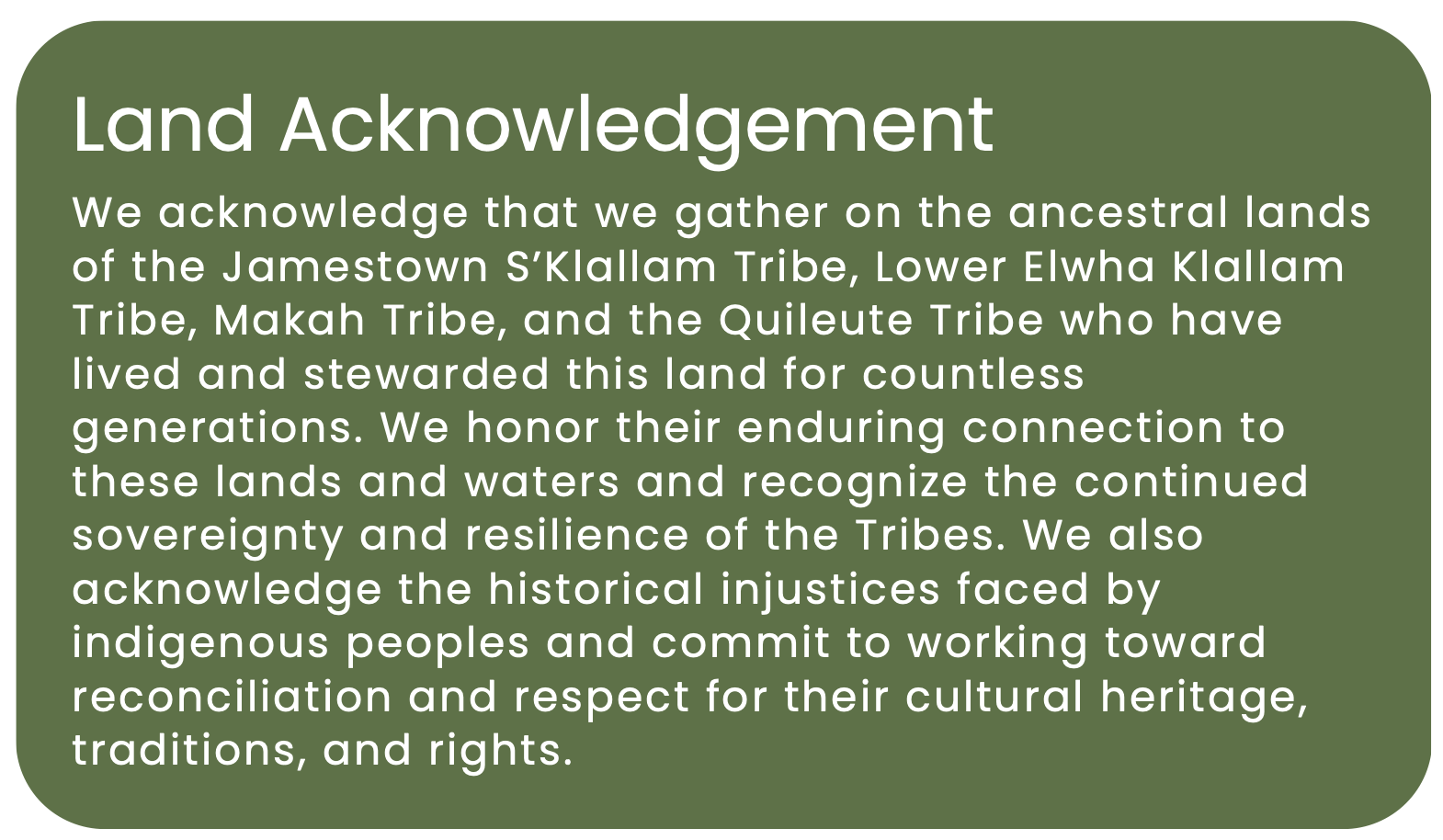
The county’s own Board of Health, chaired by Mike French, has already adopted the ideological premise. Its 2025 annual report opens with a land acknowledgment that commits the department to “working toward reconciliation and respect for their cultural heritage, traditions, and rights.”
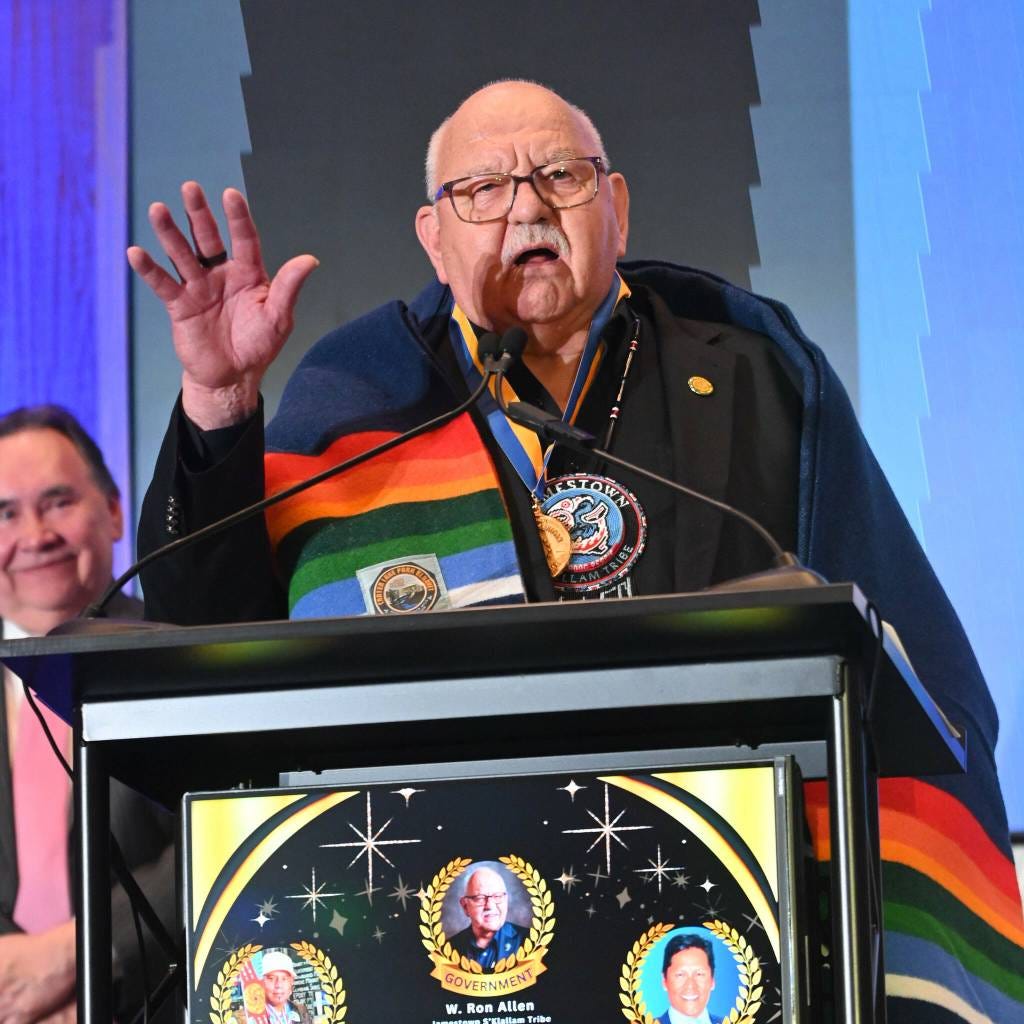
Reconciliation usually means patching things up after a fight. In this setting it points to an open-ended obligation—something closer to reparations—that county government is supposed to keep paying. Plenty of enrolled Tribal elders today are majority European by ancestry. Under the CVA’s framing, a multimillion-dollar tribal corporation CEO like Jamestown Elder Ron Allen would get first dibs on a cooling center or resilience money ahead of a non-Tribal senior of the same age and health living on the same street.
Call to Action: Speak on Tuesday
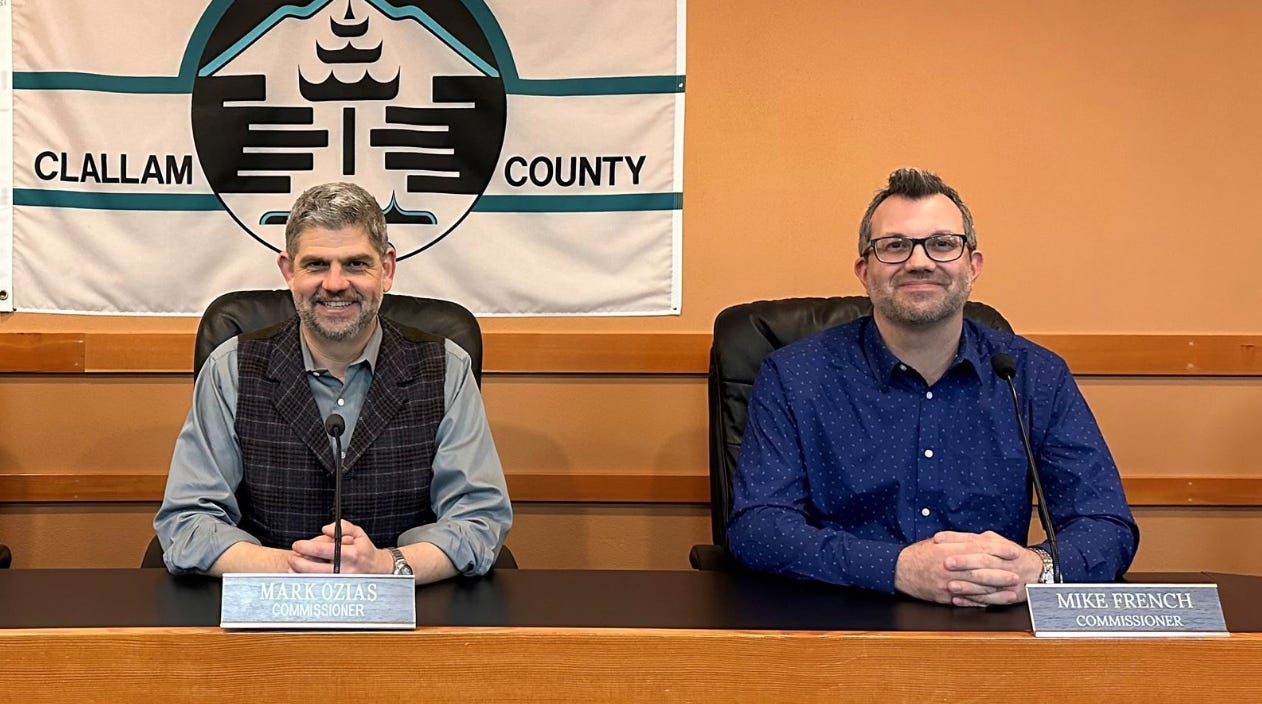
French and Ozias are the commissioners who advanced this framework while Commissioner Johnson and Administrator Mielke were absent. French is now the one defending the resulting language as reasonable and historically justified. The Comprehensive Plan public hearing resumes this Tuesday, October 27, at 10:30 a.m. in the Commissioners’ Meeting Room (or via the county’s Zoom link). The board is taking public comment.
Residents should tell the commissioners that the CVA must be discarded or completely revised, that the county will not return to an age of racial preference, and that every citizen of Clallam County is entitled to equal representation and equal treatment under the plan that will govern the next twenty years.
Email all three commissioners through Clerk of the Board Loni Gores at loni.gores@clallamcountywa.gov and DCD Director Bruce Emery at bruce.emery@clallamcountywa.gov, then show up in person or online so they have to hear it from the people they were elected to represent.


