
Did you know a 2019 race in Clallam County was decided by only 3 votes? Your vote matters! Please return your ballot to an official ballot drop box by 8 p.m. tomorrow. Here is a list of Clallam County drop box locations.
Two national wildlife refuges are up for grabs. A tribal oyster business wants them, and the Tribe’s own chairman says that’s how this started. Two Democrats on your ballot are willing to go along with it.
Signs of the Times
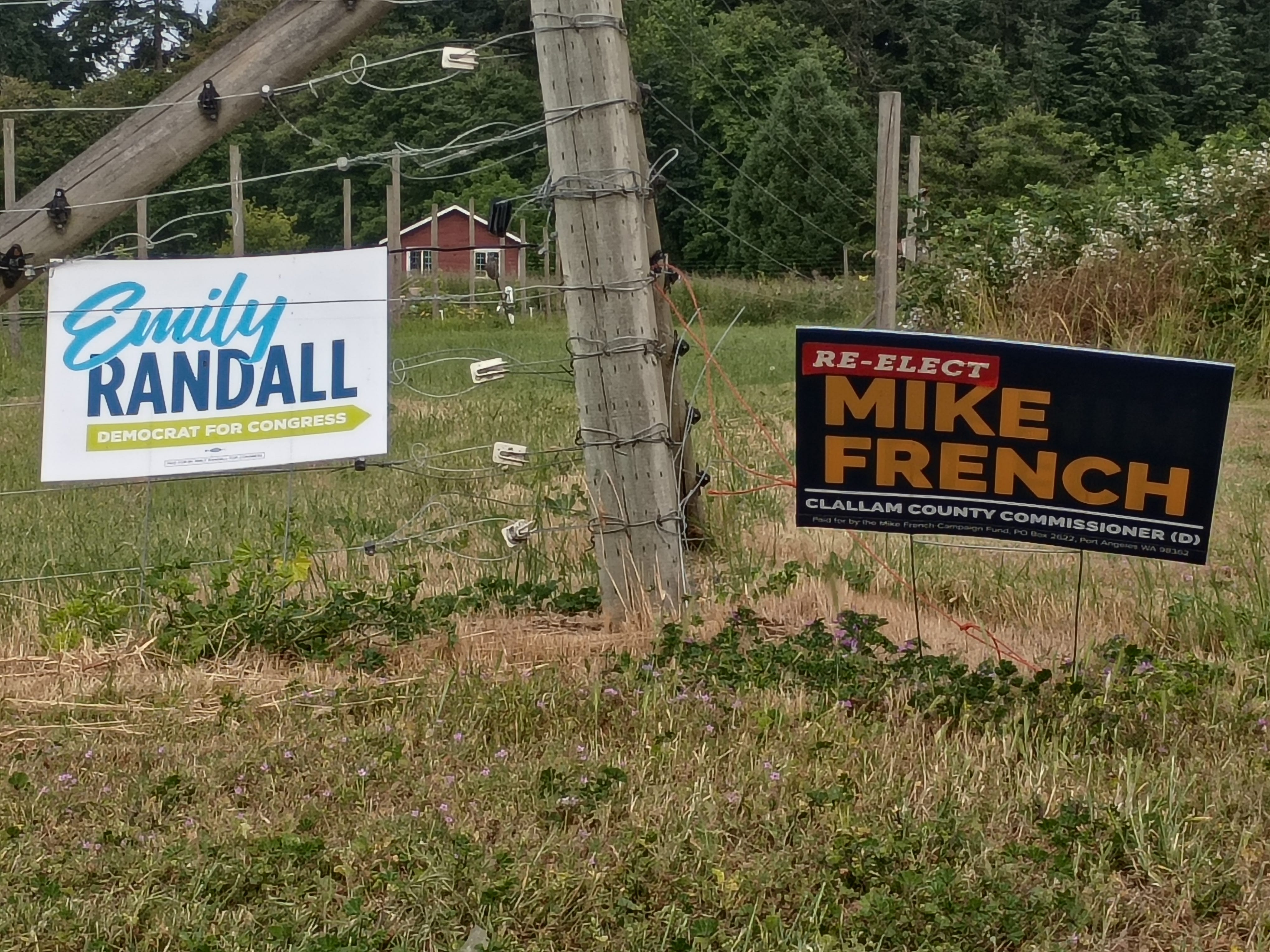
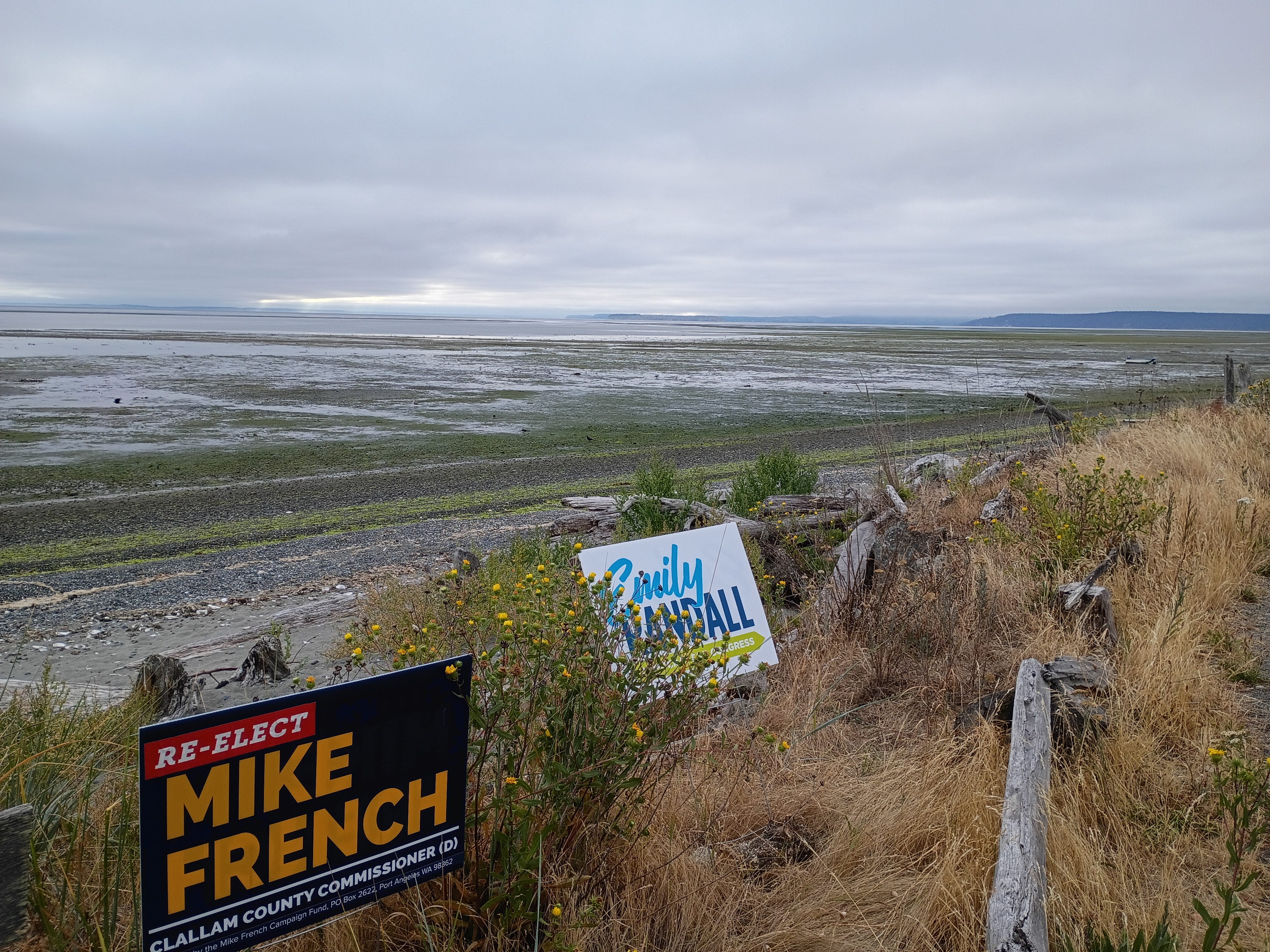
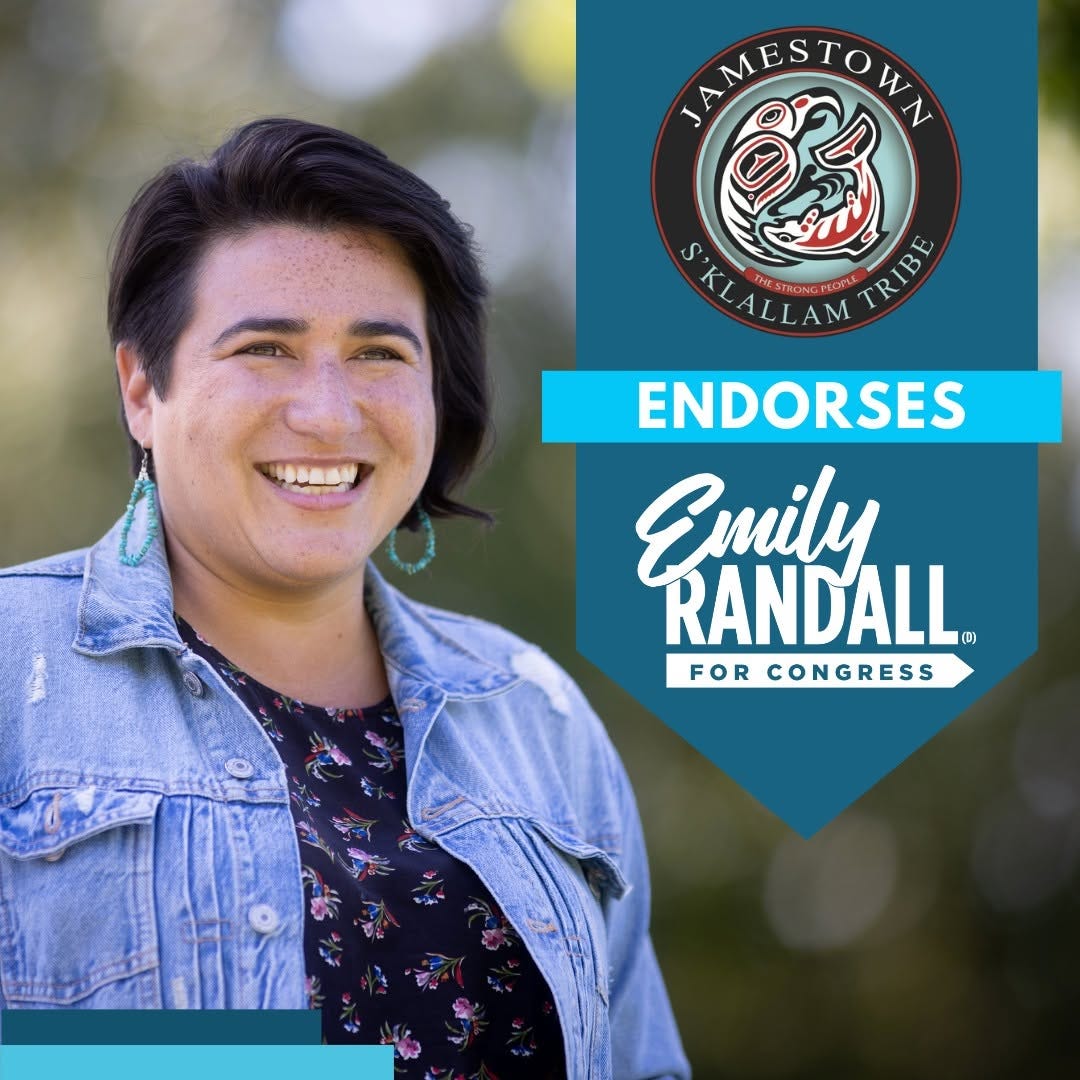
Ever notice that Emily Randall’s and Mike French’s campaign signs always seem to travel together?
It isn’t a coincidence. They have a lot in common. Both are Democrats. Both take campaign money from sovereign tribal governments (nations they weren’t elected to represent). And both are open to handing two of our national wildlife refuges, Dungeness Spit and Protection Island, over to the Jamestown Tribe, a sovereign government with a growing commercial seafood business.
Did you ever think we’d be electing representatives who want to give our public lands to another nation for a profitable commercial seafood operation?
Read the Bill
The draft legislation is real, and it’s titled the “Jamestown S’Klallam Land Transfer Act of 2026.”
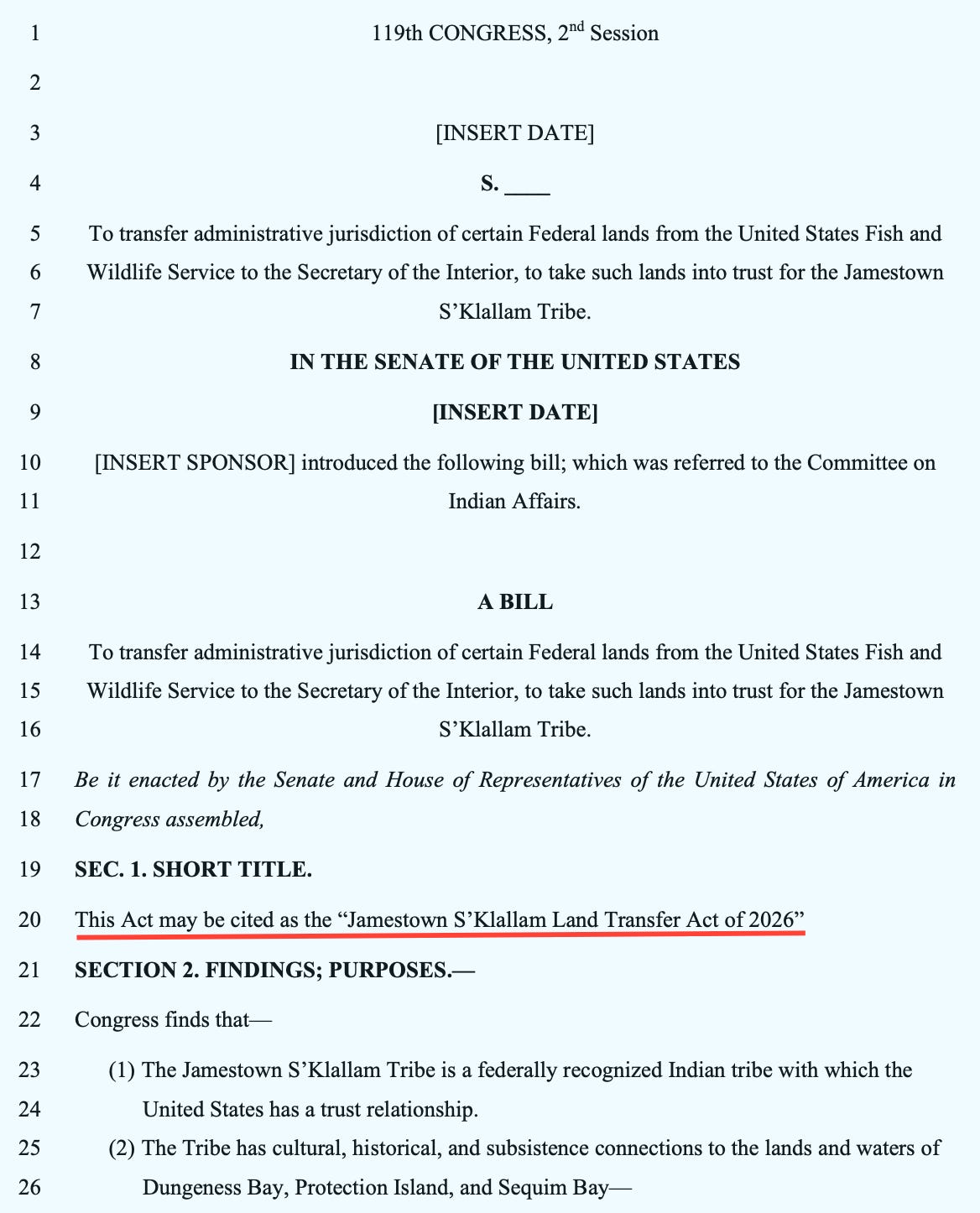
The sponsor’s name is still blank, but the text is not. Here’s what it does:
It transfers the land. “All right, title, and interest of the United States” in about 608 acres at Dungeness and Sequim Bay and nearly 300 acres on Protection Island goes into trust “for the benefit of the Tribe.”
The land becomes reservation. The transferred land would become “part of the Tribe’s Reservation,” governed by Indian trust law and managed by the Tribe, which also gets to rename it.
It repeals Protection Island’s protection. The 1982 law that created the Protection Island National Wildlife Refuge is “hereby repealed.”
It hands over the buildings. Every building and structure on the land would be conveyed to the Tribe outright.
It keeps the federal checks coming. The Interior Secretary would plan “annual distribution of funds for the Tribe’s management.” You’d keep paying for land you no longer own.
The bill promises public access “in perpetuity,” but read the fine print. That promise covers only the former Dungeness lands. And once the land is sovereign, the only one who enforces that promise is the Tribe. Notice what’s missing, too: there’s not a word in the bill limiting commercial aquaculture.

Where They Stand
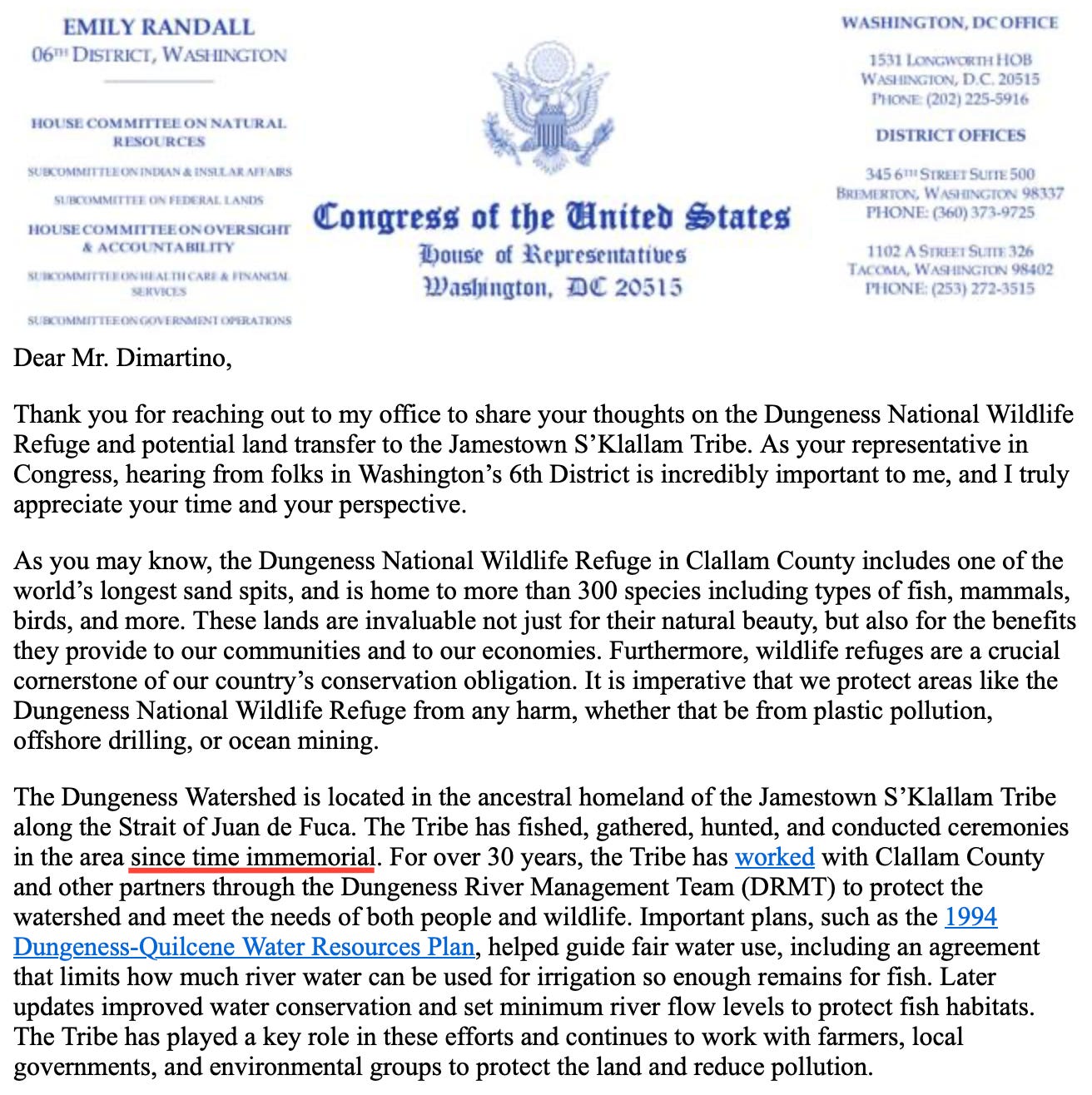
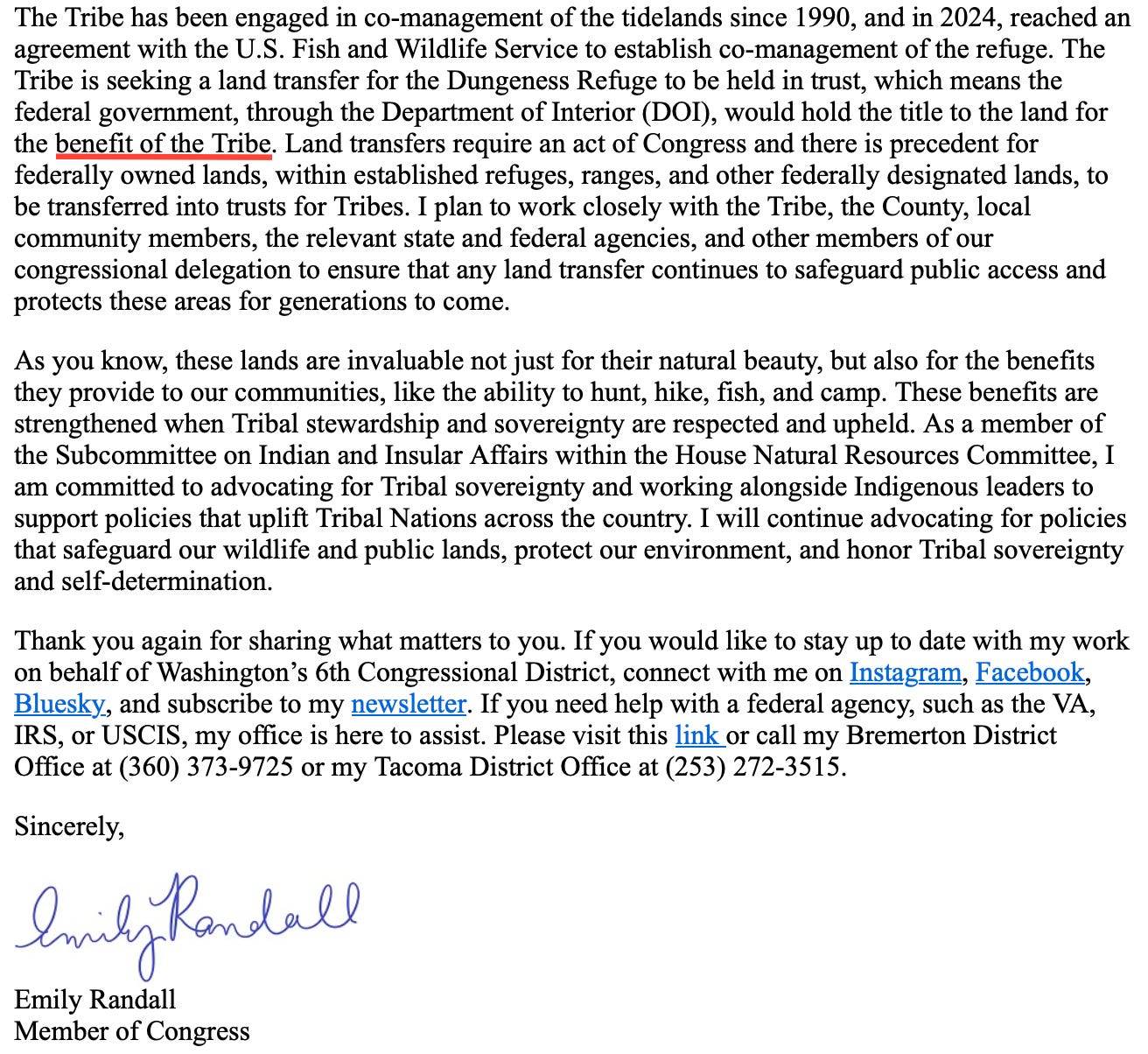
Congresswoman Randall is the Tribe’s go-to in Congress. In a letter to a constituent, she says the Tribe wants the Dungeness Refuge held in trust “for the benefit of the Tribe” and points to precedent for moving refuge land into tribal trust. She says she plans to “work closely with the Tribe” so the transfer “continues to safeguard public access.” Her question isn’t whether to transfer. It’s how.
Mike French says he can’t take a position until he reads the legislation, but that he would likely support it if public access is guaranteed. Well, Commissioner, here it is. Read it.
French should know better than anyone what a Jamestown promise is worth. For a decade and a half, the Tribe worked with the county on relocating Towne Road. Then, at the eleventh hour, it decided it didn’t want the road to go through after all. It wanted the land for itself, for a park or an “outdoor classroom.”
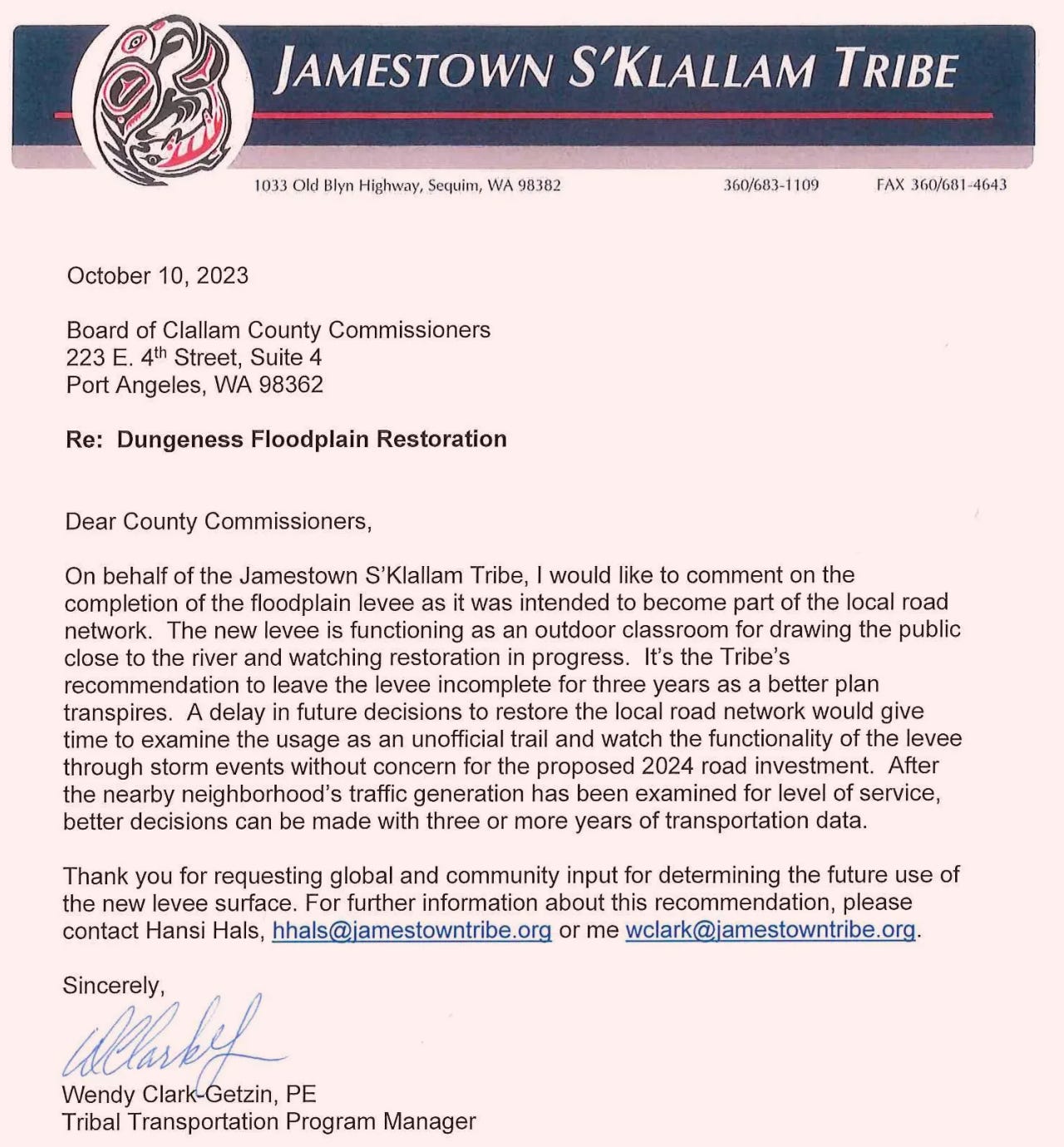
Promises from Jamestown change, and sovereign land doesn’t come back.
The Challengers See It Differently
Teresa Fox, who is challenging Randall, opposes transferring these public lands to a sovereign nation.
Jake Seegers, who is challenging French, opposes it too, and he puts it simply. The Jamestown Tribe already owns the national wildlife refuges, just like the rest of us, because we are all Americans.
In the Chairman’s Own Words
You don’t have to guess why this is happening. Jamestown Chairman and CEO Ron Allen told the Jefferson County Board of Commissioners on June 22, 2026 [Ron Allen’s presentation begins at 1:58:00]:
“What initiated this to start with? So, we have an oyster farm inside of the Refuge... We ran into a buzzsaw with Fish and Wildlife on recertifying and getting all the permits because we were out of compliance.”
“We’re developers too, so don’t confuse yourself that we’re just conservation-minded.”
“But we decided that why not just take two of them? ... It makes more sense for us because we basically wanted to remove Fish and Wildlife and that we can control and manage it.”
“It’s not just for subsistence anymore, it’s just for commercial purposes.”
That isn’t conservation. It’s a business plan. The Tribe was out of compliance, the regulators said no, and the answer was to get rid of the regulators.
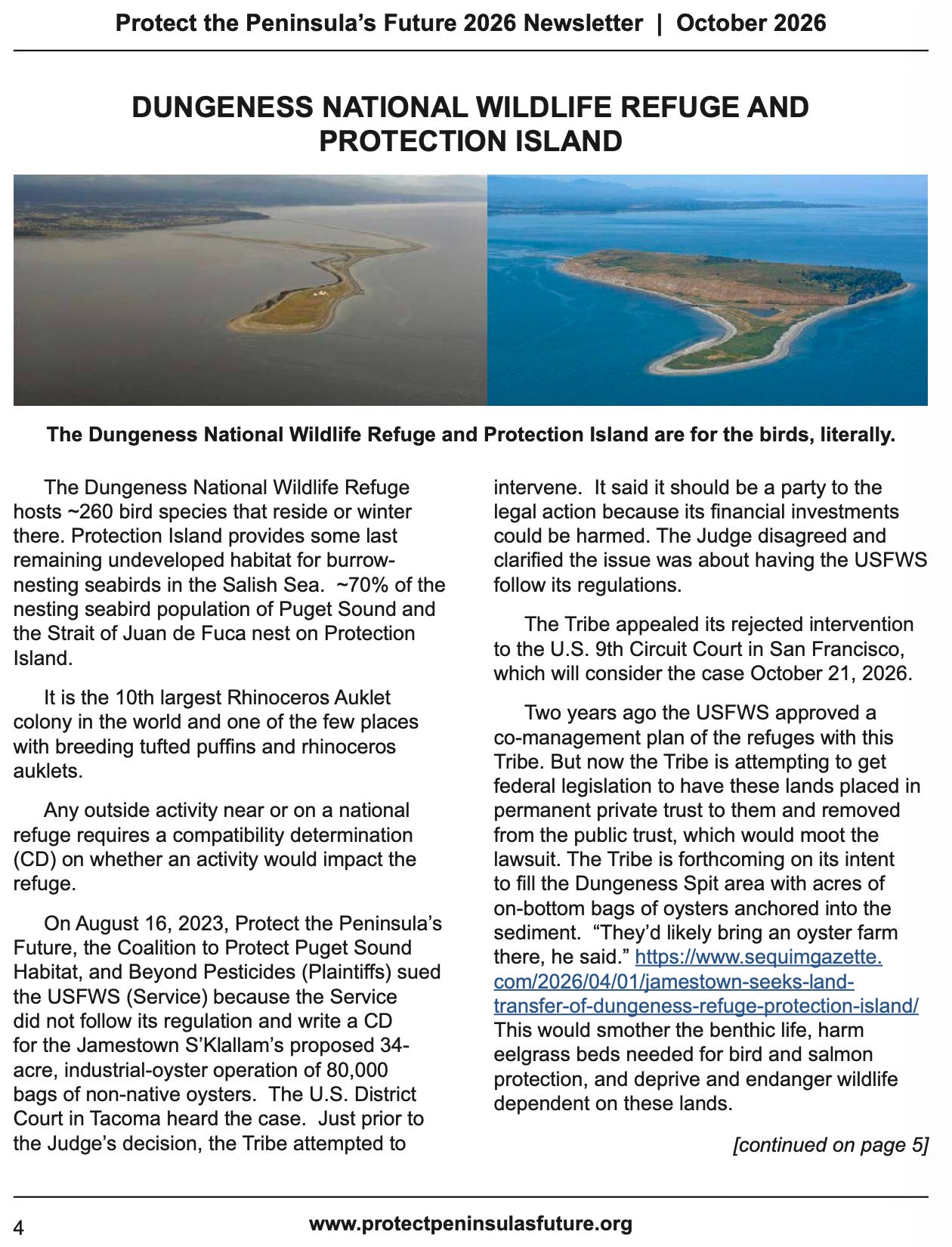
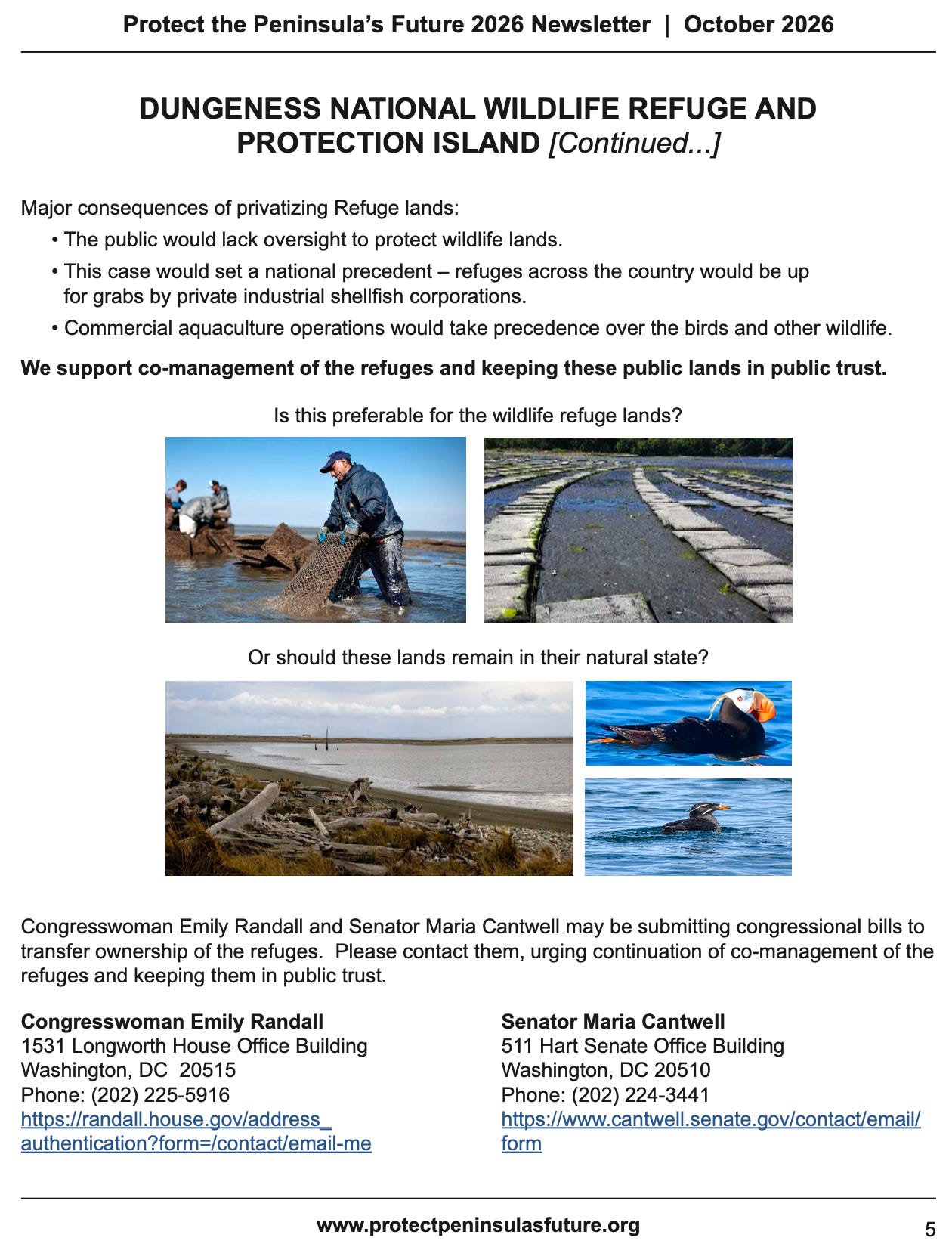
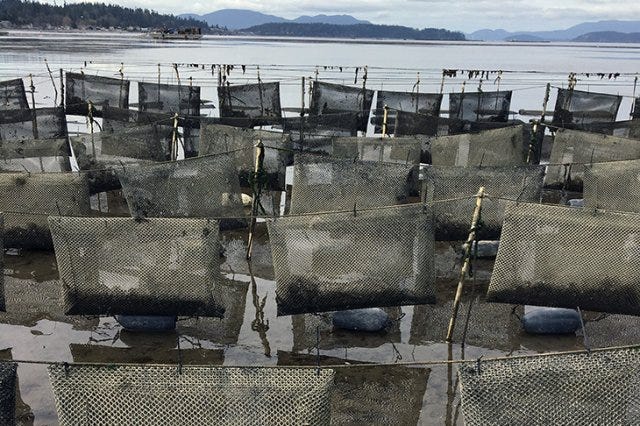
Protect the Peninsula’s Future reports that the Tribe proposed a 34-acre industrial oyster operation with 80,000 bags of non-native oysters inside the Dungeness Refuge. PPF warns that this would smother life on the bottom, harm the eelgrass beds that birds and salmon depend on, and endanger the wildlife the refuge exists to protect.
“As Transparent as We Possibly Can”
At that same June 22 meeting, Ron Allen told the Jefferson County commissioners, “We want to be as transparent as we possibly can.” So let’s look at what else he said.
The graves. Allen told the commissioners, “We have graves on the spit.” What he left out is whose graves some of them are. On September 21, 1868, S’Klallam raiders crept up on a camp of 18 Tsimshian travelers on Dungeness Spit before dawn and killed 17 of them, including five women and two children. The Tsimshian were heading home to British Columbia after harvesting hops. The lone survivor, a 17-year-old pregnant woman, was clubbed, stabbed, and left for dead before she made it to the lighthouse. Settlers buried the victims on what is still called Graveyard Spit. The Jamestown S’Klallam Tribe’s own history page describes the attack as “revenge” for a kidnapping. You can read the full account at HistoryLink. If graves on the spit are a reason to hand the Tribe the land, the public deserves the whole story, including the graves of the people their ancestors massacred there.
The dates. Allen repeatedly said Protection Island became a refuge in the 1950s. It didn’t. Congress created the Protection Island National Wildlife Refuge in 1982, after a decade-long fight led by Eleanor Stopps. The man asking to take over the refuge didn’t seem to know when it was created.
The county park. Then Allen dropped this: Clallam County has reached out to the Tribe and asked it to run the RV park at the county’s Dungeness Recreation Area.
“We’re very interested in obtaining that idea with them… We even told them we’re interested in buying it.”
That hasn’t been discussed during a public Clallam County meeting. So who reached out, when, and why haven’t the people who own that park heard a word about it? If the Tribe wants to buy the county park next to the refuge it’s trying to take over, Clallam County voters deserve to know before the deal is done, not after.
Transparent? Then let’s have the conversation in public.
Oysters Aren’t Just Oysters
The Jamestown Corporation intends to farm Pacific oysters, which are larger than Olympia oysters. The Pacific oyster isn’t native here. It was brought from East Asia starting around 1902 after the native Olympia oyster declined, and it has not been a neutral guest.
Habitat change: In Willapa Bay, intensive oyster culture turned open mudflats into hard oyster beds. The heavy waste from dense oyster beds can starve sediment of oxygen, which hurts eelgrass and the creatures living in the mud.
Displacement: Feral Pacific oysters in the San Juan Islands have changed which species live on the rocky shore and pushed out some natives.
A refuge is supposed to protect what belongs there, not serve as a farm for something that doesn’t.
The Scientists Have Spoken
In August, twelve scientists wrote to Senators Cantwell and Murray and Rep. Randall. Together they represent more than 40 years of peer-reviewed research on the seabirds and marine mammals of these two refuges, and they are uniformly opposed to the transfer.
They study tufted puffins, rhinoceros auklets, pigeon guillemots and black oystercatchers, birds they describe as “sentinels for the quality of the marine environment.” Their warning is blunt:
“Without this constant vigilance and growing body of related research, many of these species could fall further into decline and eventual extinction.”
They also explain why breaking up the refuge system makes no sense:
“Birds and other marine species do not understand boundaries, and many species move throughout the Maritime Complex.”
Even the scientists say the current partnership between the Fish and Wildlife Service and the Tribe “is working well,” but they stress “the critical role that federal oversight, federal protective regulations and federal ownership continue to play.” In other words, if co-management isn’t broken, don’t fix it.
What Eleanor Stopps Fought For
Eleanor Stopps spent years leading the fight to make Protection Island a refuge. Her campaign partner, Lorna Smith, recalls thousands of letters and dozens of building lots bought by Audubon members and donated to the Fish and Wildlife Service to be protected forever.
Jefferson County Commissioner Greg Brotherton has tried to cast the transfer as a way to honor Stopps. Her daughter, Laura Walker, wasn’t having it. In a letter to the Peninsula Daily News, she called it an “outrageous attempt to spin the repeal of National Wildlife Refuge status into a way to honor Eleanor Stopps.”
“Losing it now is no honor.”
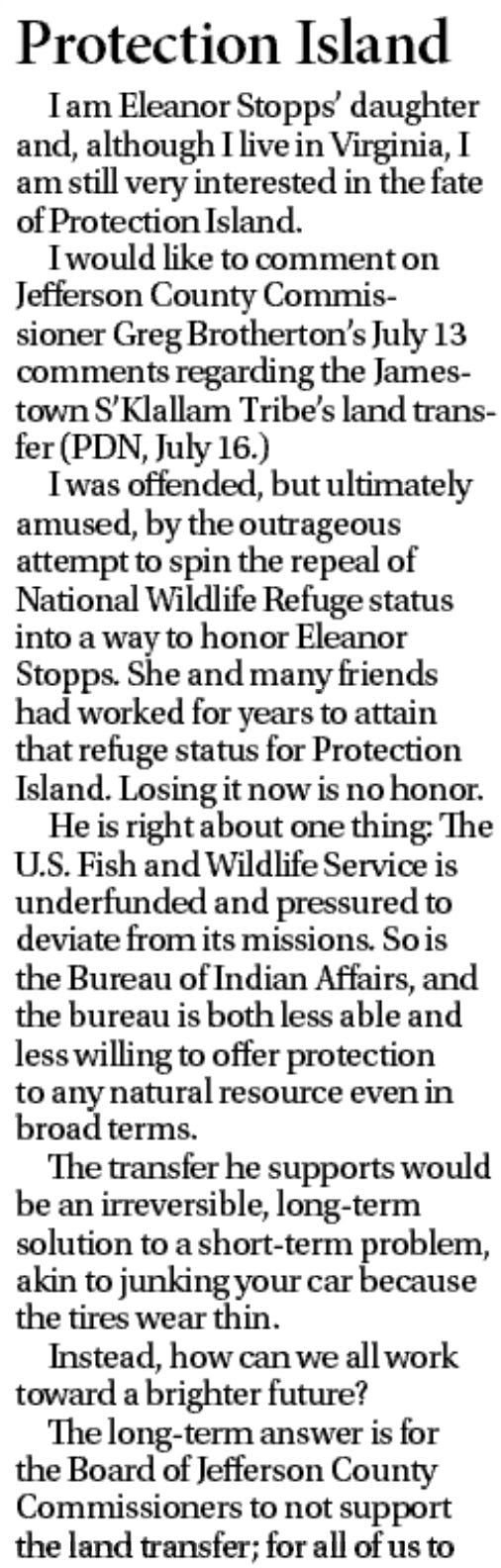
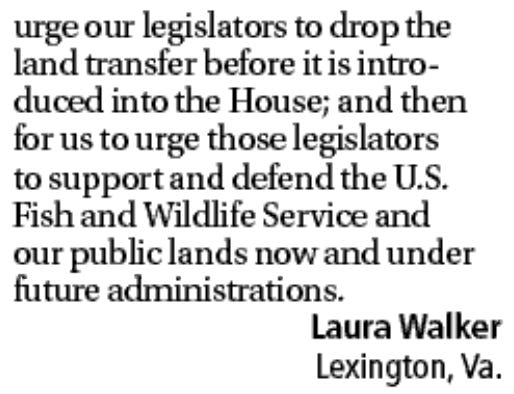
Walker agrees that the Fish and Wildlife Service is underfunded, but points out that the Bureau of Indian Affairs is “both less able and less willing to offer protection to any natural resource.” The transfer, she wrote, would be “an irreversible, long-term solution to a short-term problem, akin to junking your car because the tires wear thin.”
Co-Management Already Works
The Tribe already has a seat at the table. It has helped co-manage the tidelands since 1990, and in 2024 it reached a co-management agreement with the Fish and Wildlife Service covering both refuges.
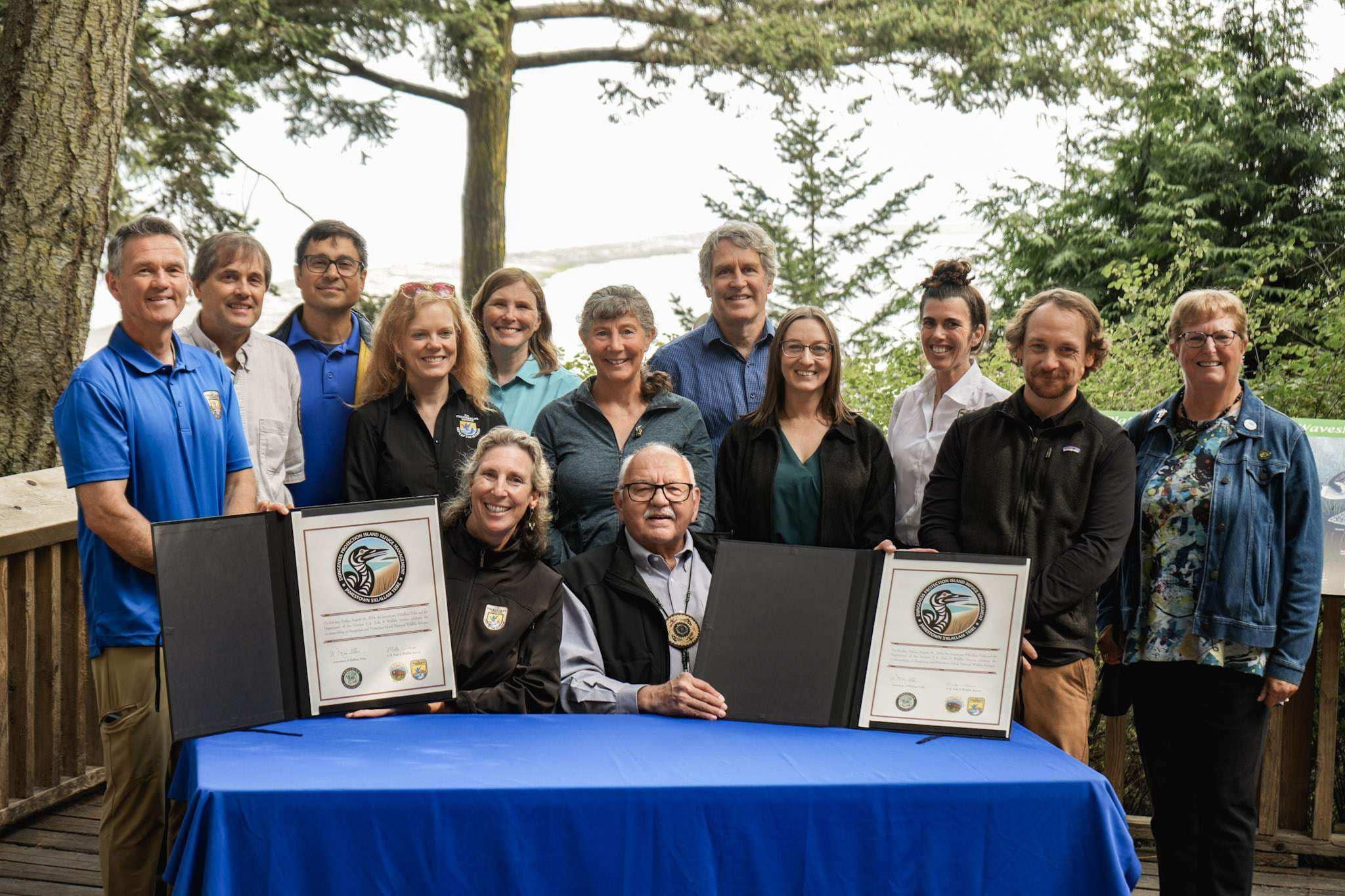
Lorna Smith says opponents welcome the Tribe as co-managers. But the bill would dissolve that agreement and take Fish and Wildlife out of the picture. As Smith puts it, once the land is sovereign, “the Tribe and the Tribe alone controls all actions and decisions.” The public would have no legally enforceable say.
Where’s the Environmental Lobby?
Mike French has the endorsement of Olympic Climate Action, a group that’s supposed to care about the environment. So how does that work?
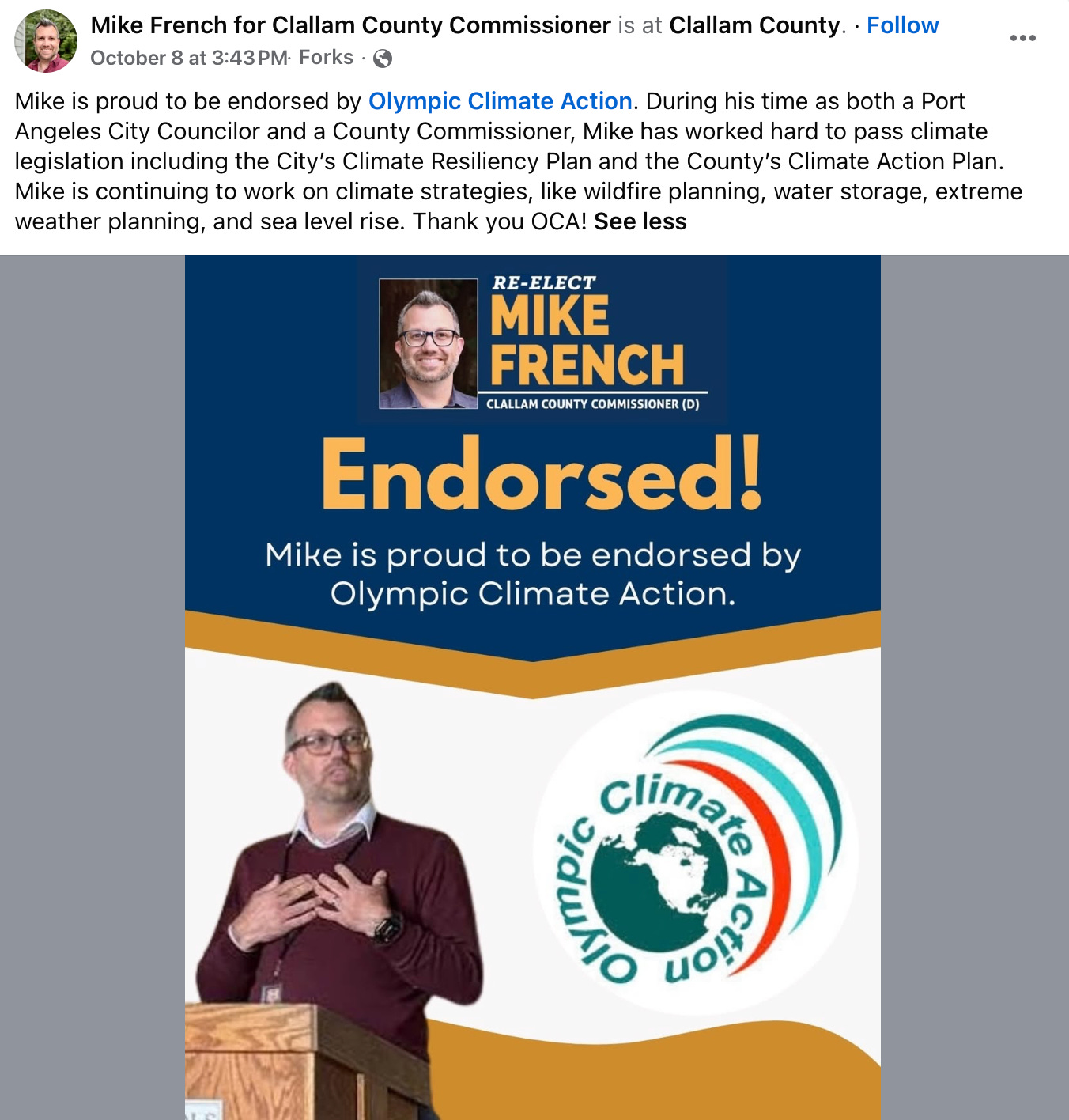
The candidate it endorsed is open to giving a national wildlife refuge to an entity that wants to fill it with a non-native commercial oyster crop. If a private developer proposed this, environmental groups would be lining up at the courthouse.
What’s at Stake
Protection Island: About 70% of the nesting seabirds in Puget Sound and the Strait of Juan de Fuca nest here. It’s the world’s 10th-largest rhinoceros auklet colony and one of the few places tufted puffins still breed. It’s also the Salish Sea’s largest consistent harbor seal pupping and haul-out site, at a time when the Tribe has asked Randall to sponsor a bill on culling seals and sea lions.
Dungeness Refuge: One of the longest sand spits in the world, hosting about 260 bird species.
The precedent: Allen told the Jefferson County commissioners that other Washington tribes plan to follow suit “once this is done” and go after the remaining four refuges in the Washington Maritime complex. PPF warns that refuges across the country could be up for grabs.
Randall and Allen are spearheading the effort to pull both refuges out of federal conservation oversight, and Mike French supports it.
In Court, Too
Protect the Peninsula’s Future, the Coalition to Protect Puget Sound Habitat, and Beyond Pesticides sued the Fish and Wildlife Service in 2023, arguing that it skipped the required review of whether the Tribe’s oyster operation is compatible with the refuge. The Tribe tried to join the case to protect its “financial investments.” The judge said no, and the Tribe appealed. PPF now reports that the 9th Circuit sided with PPF and the Fish and Wildlife Service, ruling that the Tribe’s bid to intervene was premature because the Tacoma court hasn’t issued a final decision.
Here’s the catch: if Congress transfers the land, the lawsuit becomes moot. If you can’t win in court, change who owns the land.
What You Can Do
These refuges were saved by ordinary people writing letters. They can be saved the same way.
Read Protection Island, Dungeness Spit: Enviros vs. Enviros at the Olympic Open.
Sign the petition at ProtectRefuges.org, or email ProtectRefuges@gmail.com and see if they can present to your group.
Tell Rep. Emily Randall and Senators Maria Cantwell and Patty Murray to drop the transfer before it’s introduced, keep co-management, and keep these refuges in public hands.
And when you vote, remember whose signs are standing side by side.
The refuges belong to all of us, every American, tribal members included. Let’s keep it that way.