


OlyCAP wants Port Angeles to help fund a converted motor coach with 20 individual sleep pods. The request comes from the same leadership that oversees a Safe Parking program limited to a handful of spaces. That program received over $118,000 in taxpayer funds approved by Commissioner Mike French, who sits on OlyCAP’s board. Public records showed substantial spending on OlyCAP staffing even as participation lagged and questions went unanswered. Residents are now being asked to trust the same arrangement with a larger ask.
REMINDER: Comprehensive Plan hearing – Today, Oct. 27, 10:30 a.m.
French and Ozias advanced this framework while Johnson and Mielke were absent. French is now defending the language as reasonable and historically justified.
The public hearing resumes today at 10:30 a.m. in the Commissioners’ Meeting Room or virtually. Public comment is open.
Tell the board the Climate Vulnerability Assessment must be discarded or fully revised, that the county will not return to racial preference, and that every Clallam County resident deserves equal representation and equal treatment under the plan for the next twenty years.
Show up in person or online so they hear it from the people they were elected to represent.
The New Proposal: A 20-Bed Bus for Port Angeles
Earlier this month, OlyCAP presented the Dignity Bus to the Port Angeles City Council.
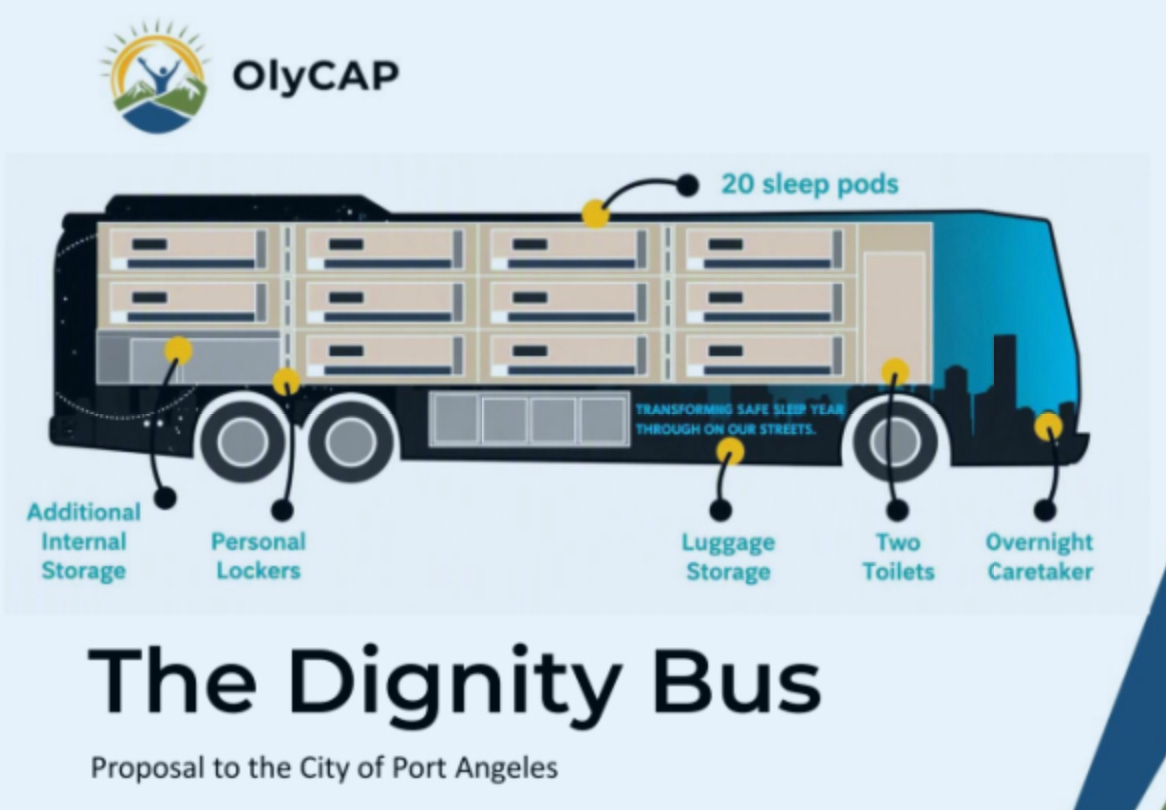
Housing Director Viola Ware described a decommissioned motor coach that the Florida nonprofit The Source retrofitted into 20 individual sleep pods. The package includes an ADA lift, secure personal storage, a private water system, onboard laundry, smart HVAC, a staff workspace, security systems, power, and Wi-Fi. The total cost is about $260,000, with delivery possible in about 10 weeks.
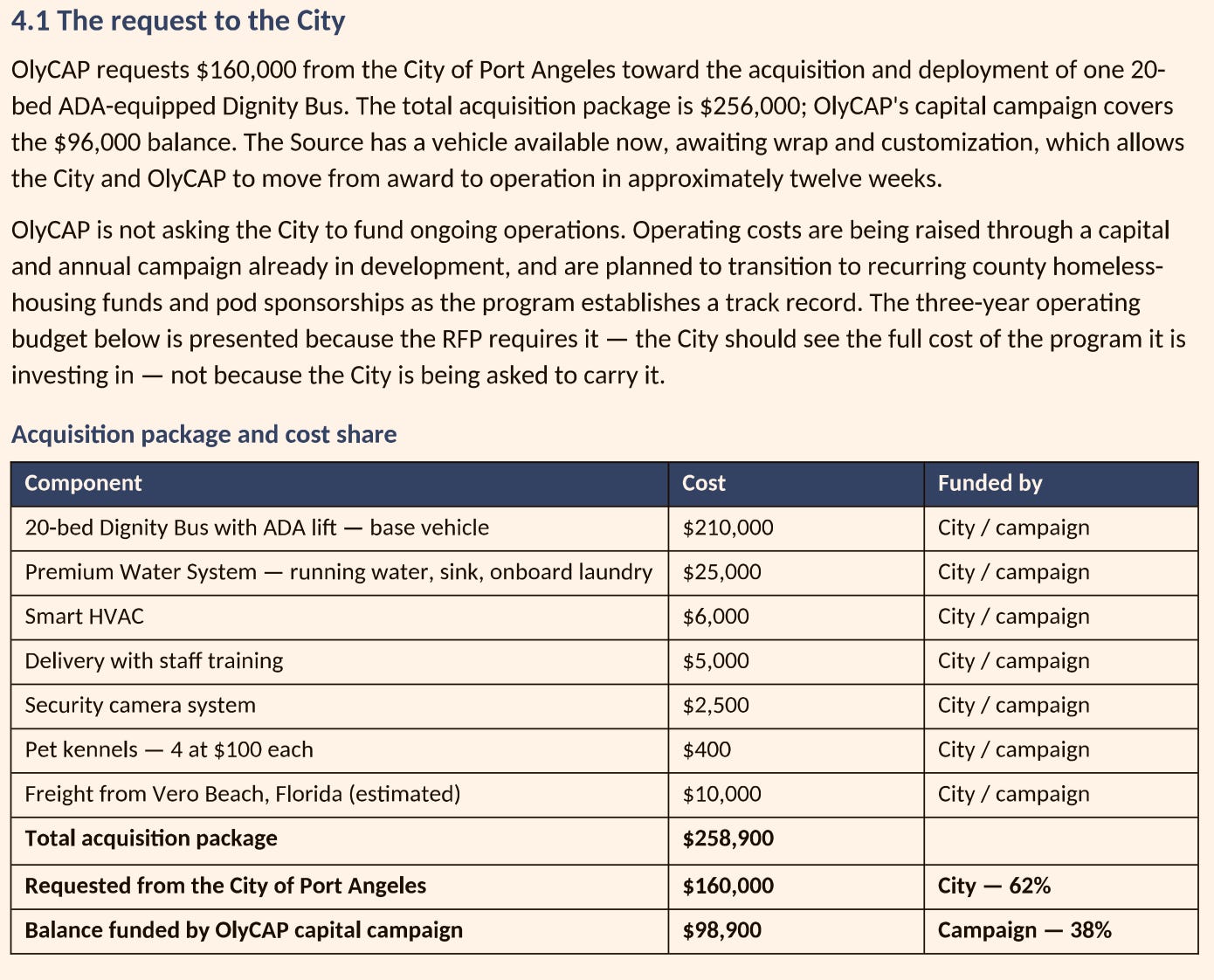
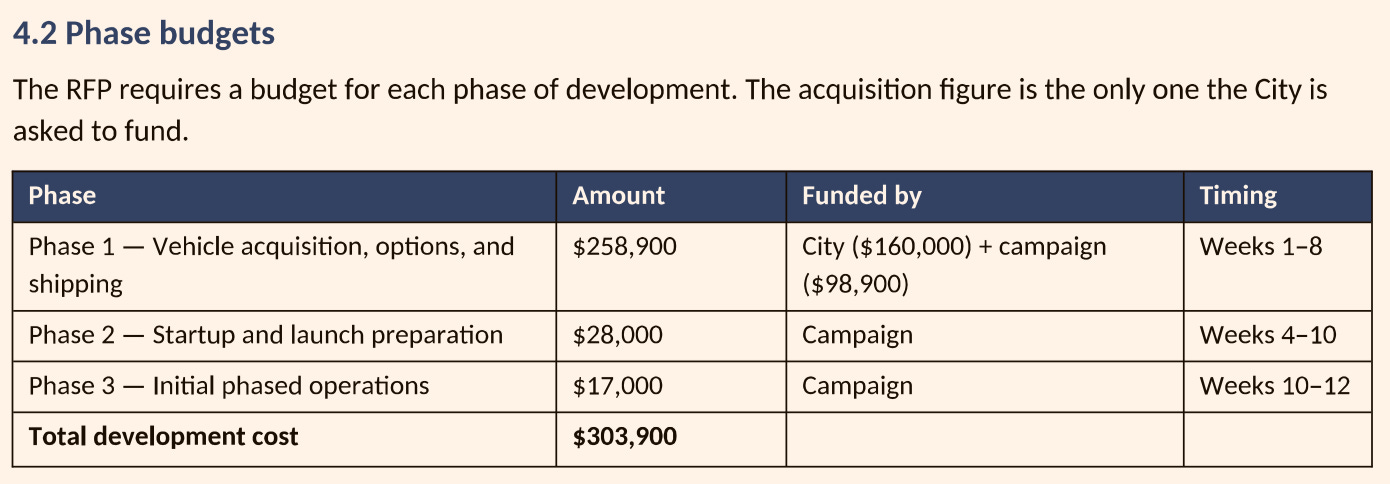

OlyCAP sought roughly $160,000 from the city while contributing about $98,900 itself. Council directed staff to explore funding options, including possible regional cost-sharing or affordable-housing tax funds. No purchase has been approved.
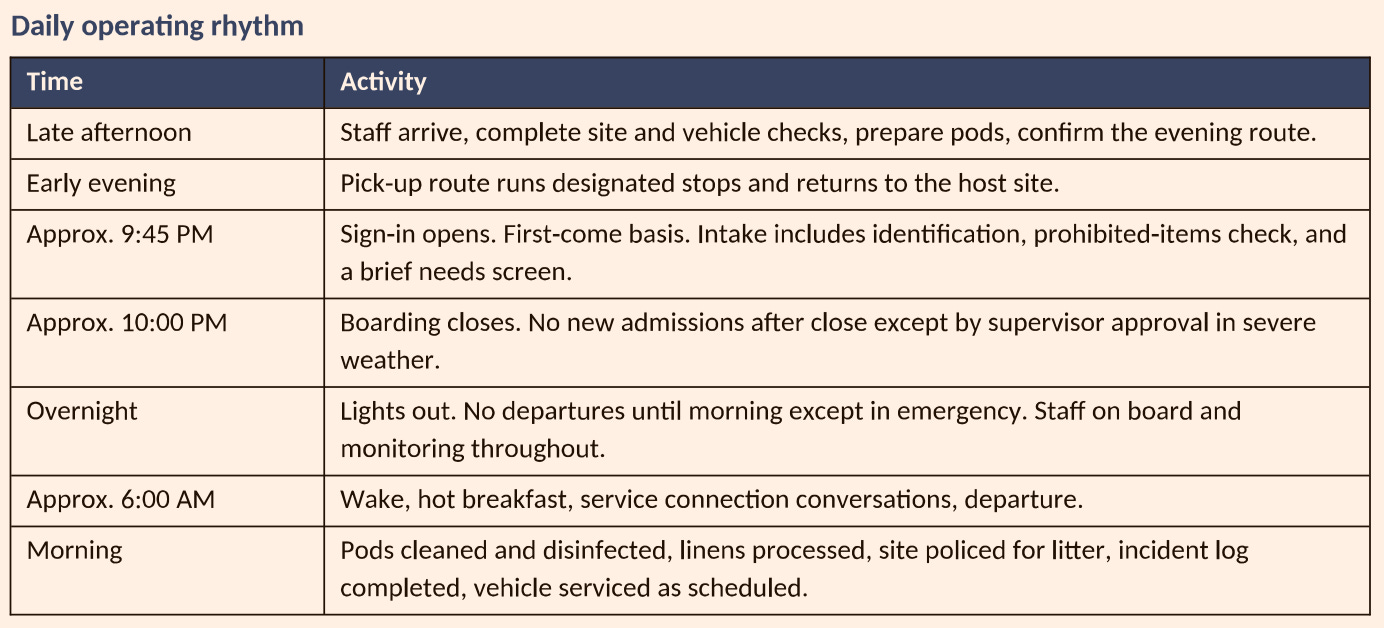
Ware has framed the bus as “not the solution to homelessness” and “simply a place to sleep” when Serenity House is unavailable. It is described as low-barrier: sobriety is not required.
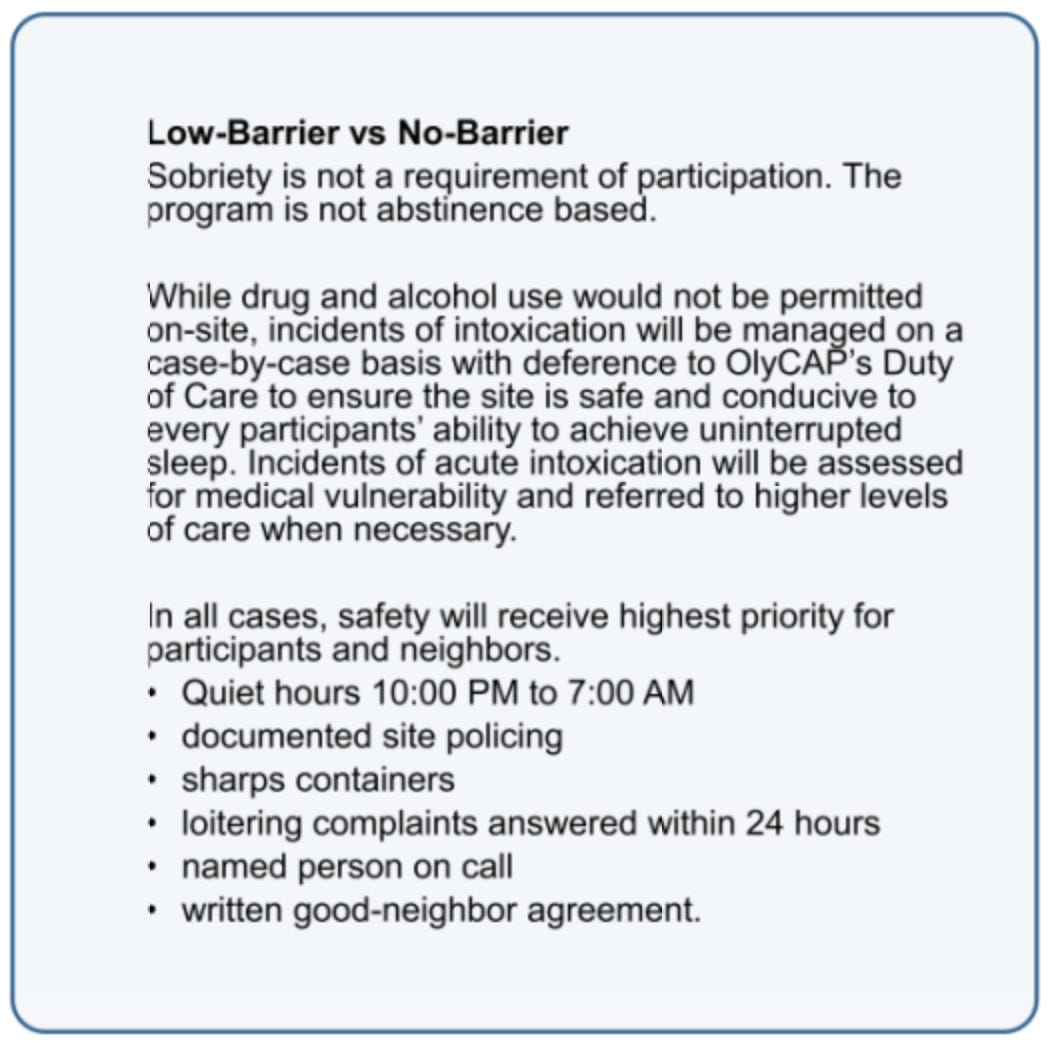
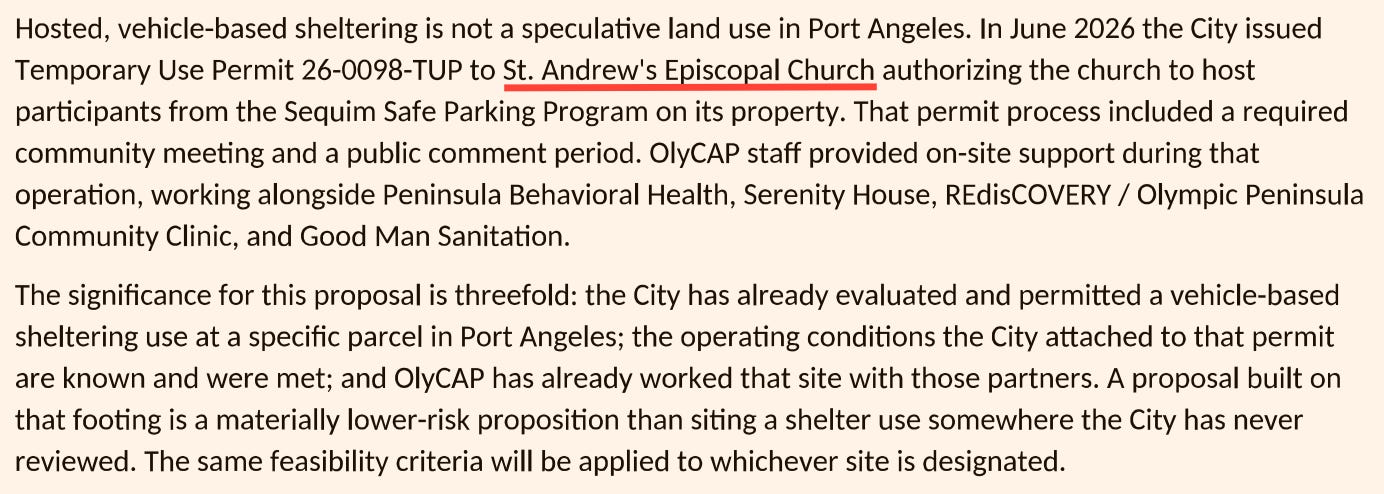
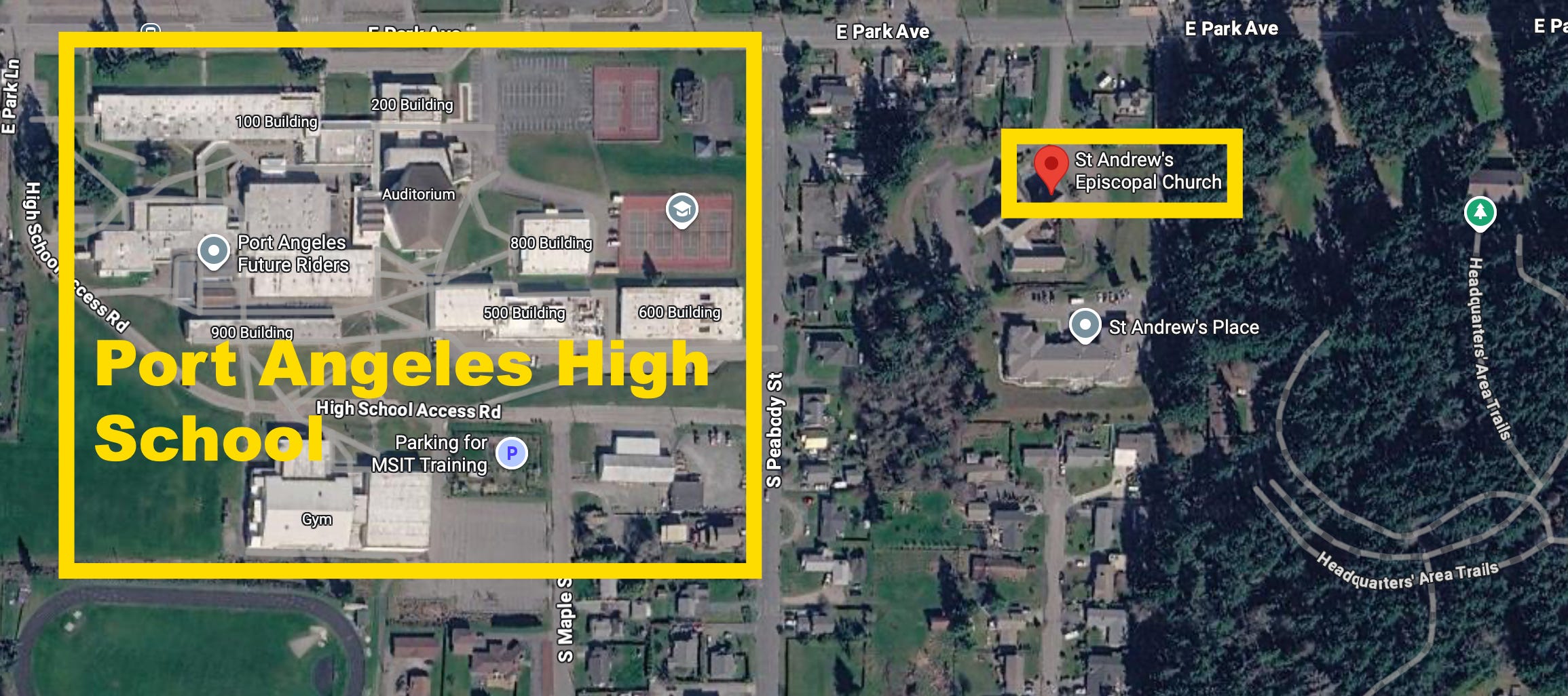
OlyCAP has discussed overnight hosting with St. Andrew’s Episcopal Church in Port Angeles and has noted the vehicle could be based on OlyCAP property and driven in daily.
Staffing would involve “Lived Experts,” a CDL driver, and a program supervisor.

Ware introduced the concept to the County’s Homelessness Task Force, which Ware chairs, earlier in the summer.
The Track Record: $118,000 for Three Spaces
This is not the first recent request involving public dollars for limited-capacity shelter alternatives. Clallam County approved up to $118,780 for a Safe Parking pilot at Trinity United Methodist Church in Sequim intended for three to five vehicles. The program is hosted by the church, but county contract documents and internal records obtained through public disclosure show direct ties to OlyCAP personnel expenses, payroll taxes, benefits, and related costs.
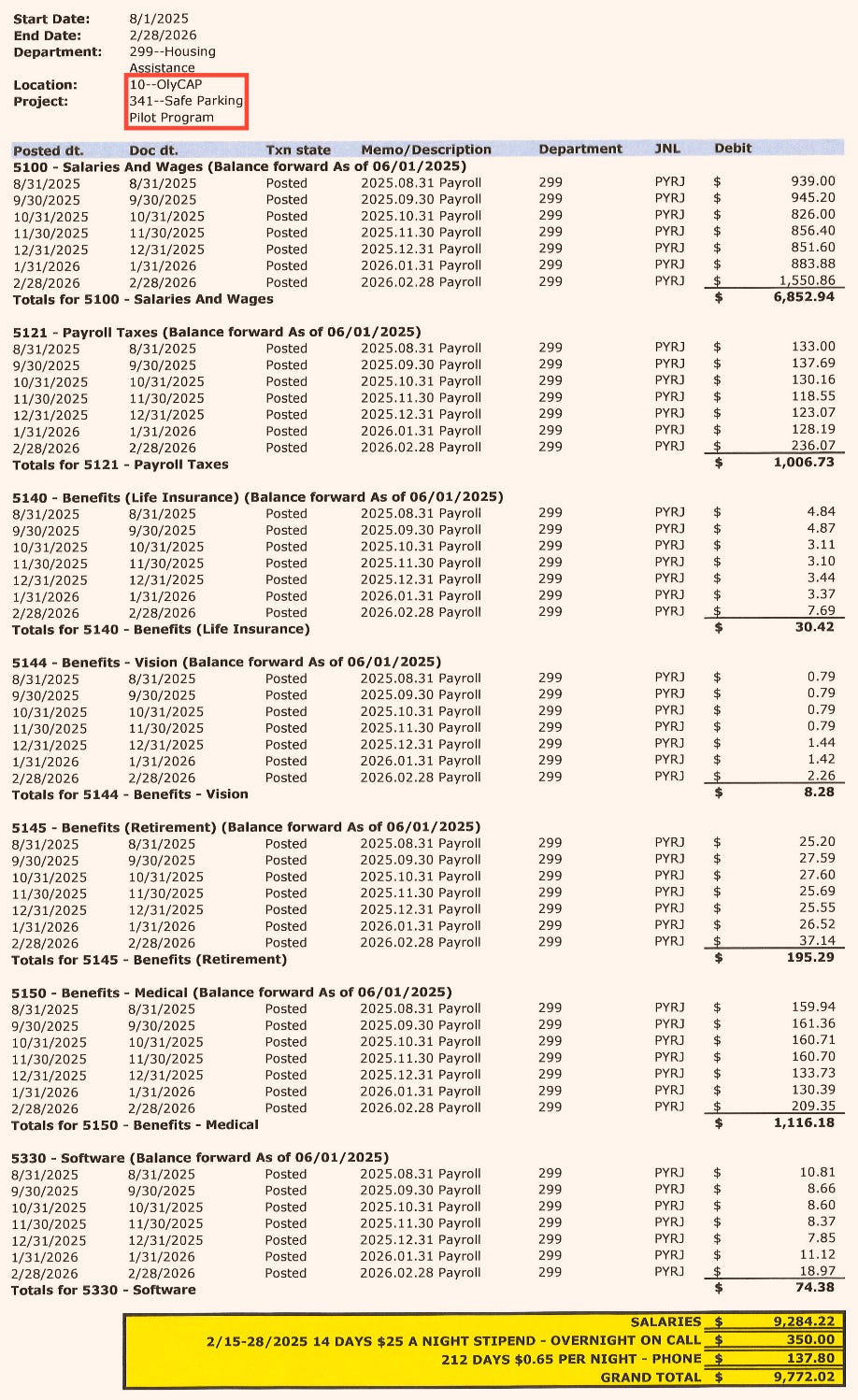
Ware has stated that the church manages the program, that OlyCAP provides limited evening, morning, and on-call support, and that case management was provided “for free.” The financial registers tell a different story: public funds covered hours and benefits for specific OlyCAP employees, and Ware herself has approved payroll distributions charged to the program.

Participation has struggled since inception. Later church updates reported a small number of applicants and users after entry criteria were adjusted. No formal, publicly available evaluation of participation, outcomes, and actual costs has been produced. The combination of high cost relative to capacity, slow enrollment, and limited visibility once the money left the county ledger is the record now being asked to support a larger project.
Mike French’s Dual Role and Unanswered Questions
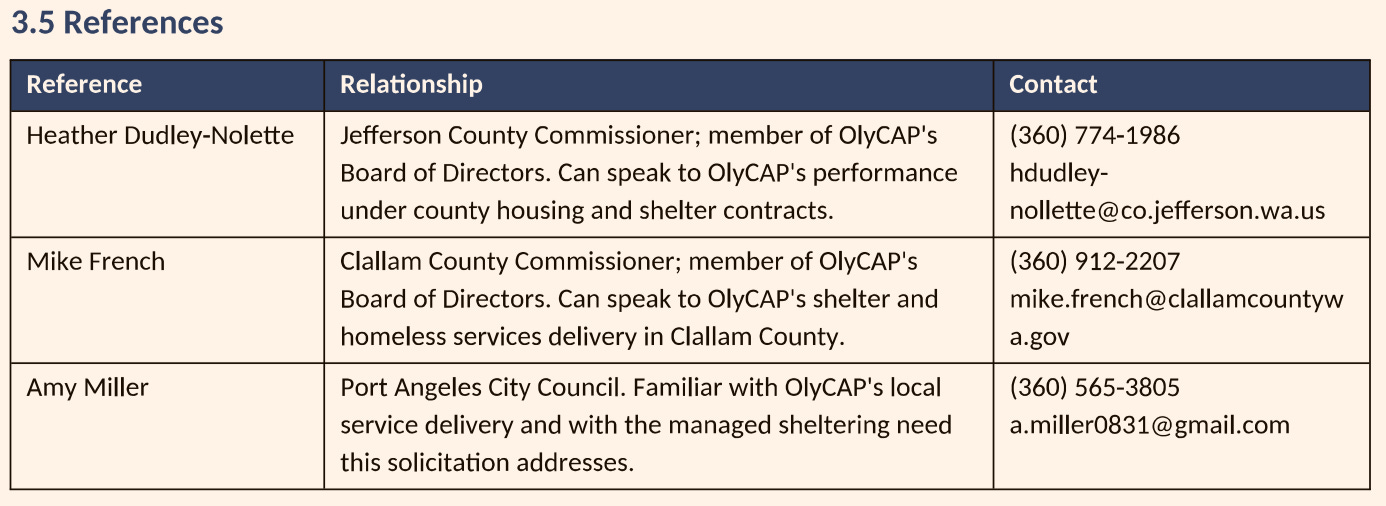
Commissioner Mike French sits on the OlyCAP board—a position established through a county resolution he helped draft and pass.
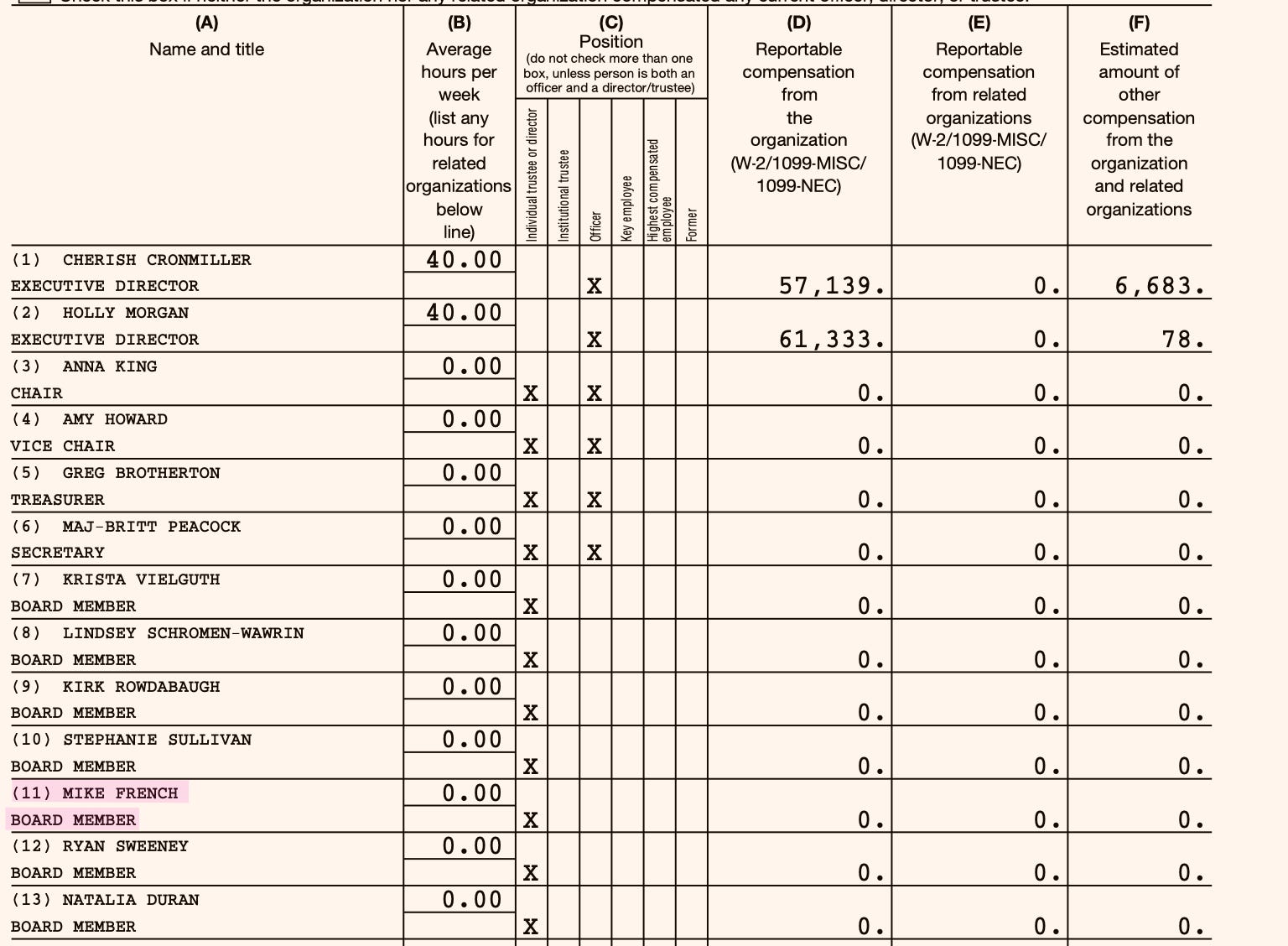
As a commissioner, he approved the county funding that flowed to the Safe Parking program in partnership with the NGO whose board he occupies. Prior CC Watchdog reporting has detailed how this arrangement creates overlapping roles: French participates in decisions that allocate public money to an organization on whose board he serves, while OlyCAP's Housing Director chairs the Homelessness Task Force that recommends such allocations.
French has not answered detailed public questions about the Safe Parking funds, the program’s results, or the path of the money once it reached the church-OlyCAP partnership. Ware has also not responded to emailed inquiries. At a Homelessness Task Force meeting, the body adopted the position that it is not obligated to engage in dialogue with public comment.
“While we are able to respond to public comment, this board’s role is not to engage in back-and-forth debate with public comment during meetings… in answer, we are not obligated to respond.” — Viola Ware
When public records showed OlyCAP payroll costs charged to the program, the official description of limited or “free” support remained conflicting with the documents. French’s dual role—approving the funds as commissioner while sitting on the receiving organization’s board—has not produced public explanations of how the arrangement was managed or what measurable outcomes justified the expenditure.
The LEAD Connection
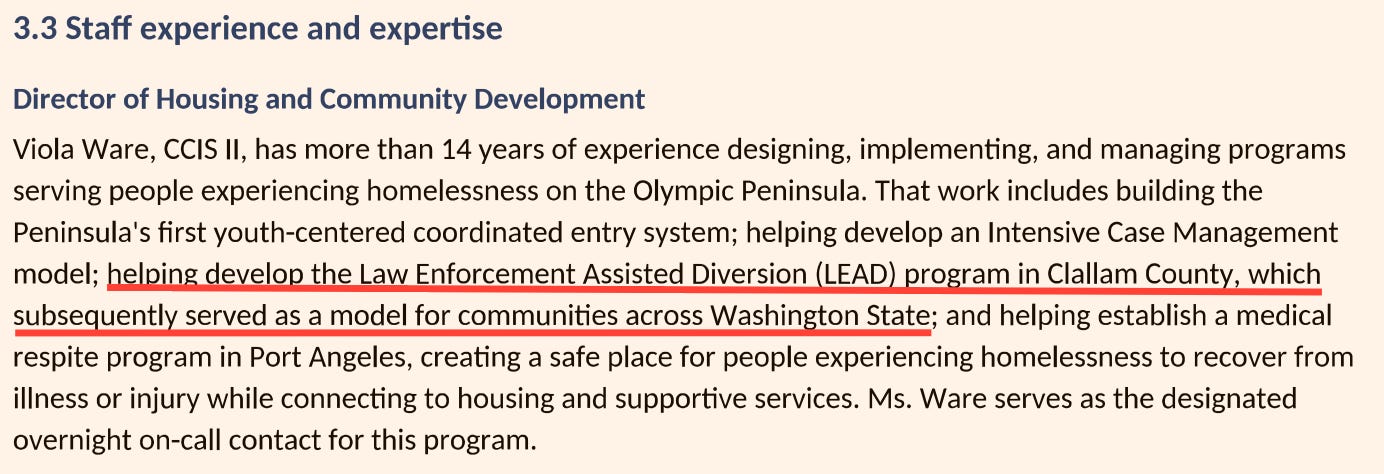
Proposal materials reference Ware’s role in developing the LEAD program for the county and describe it as a model across the state.
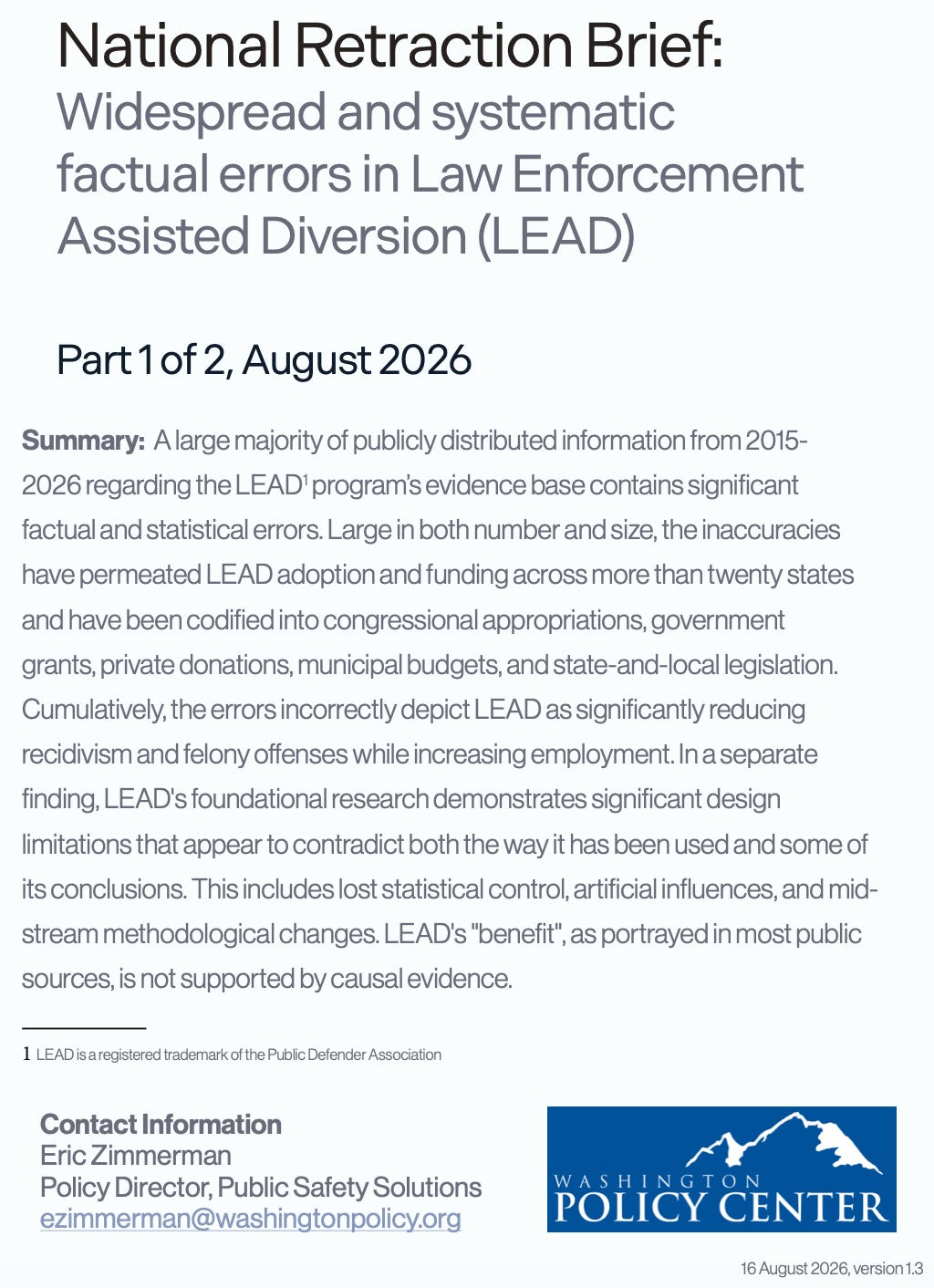
The Washington Policy Center’s August 2026 National Retraction Brief documents widespread and systematic factual errors in how LEAD’s original research has been presented for more than a decade.
Common claims of 58 percent reductions in recidivism or large percentage drops in felony charges and employment gains substantially overstate what the underlying study shows. After accounting for design limitations, selection issues, and differences in how groups interacted with prosecutors and law enforcement, the research found little or no clear positive intervention effect on key measures.
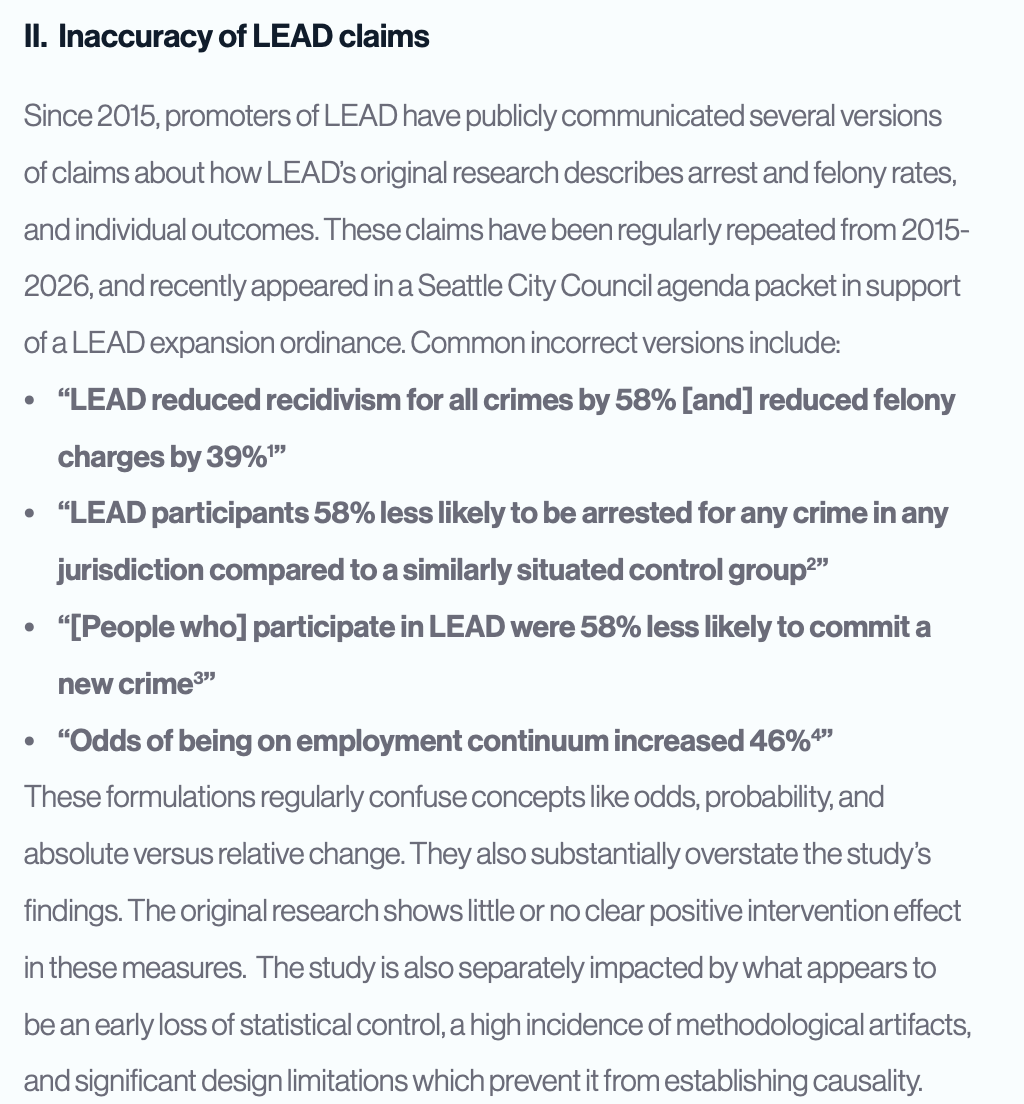
Absolute outcomes were modest. Those inflated results helped the program spread and attract funding across the country. Relying on the same framing here, without an independent local look at what earlier programs actually delivered, is worth questioning.
What Residents Asked and What Ware Answered
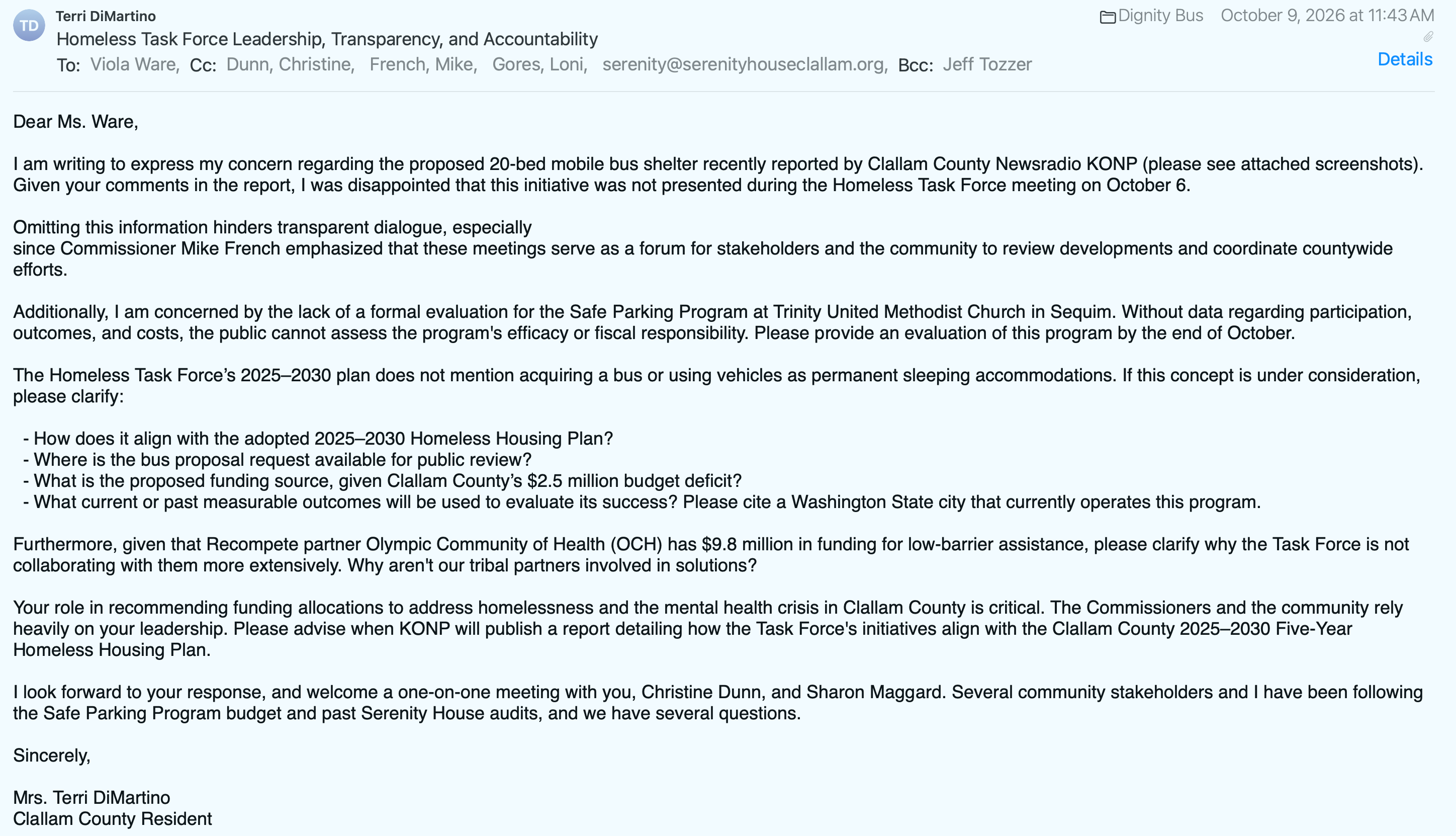
After the Dignity Bus reporting, Clallam County resident Terri DiMartino wrote to Viola Ware. She noted that the bus concept had not been presented at the October 6 Homelessness Task Force meeting, even though Commissioner Mike French has described those meetings as a place for stakeholders and the community to review developments and coordinate countywide efforts. She asked for a formal evaluation of the Safe Parking program—participation, outcomes, and costs—by the end of October. She pointed out that the 2025–2030 Homeless Housing Plan does not mention acquiring a bus or using vehicles as permanent sleeping accommodations, and she asked how the proposal aligns with that plan, where the request is available for public review, what the funding source would be given the county’s budget pressures, and what measurable outcomes and comparable Washington examples would be used to judge success. She also asked about greater collaboration with Olympic Community of Health’s low-barrier funding and the role of tribal partners.
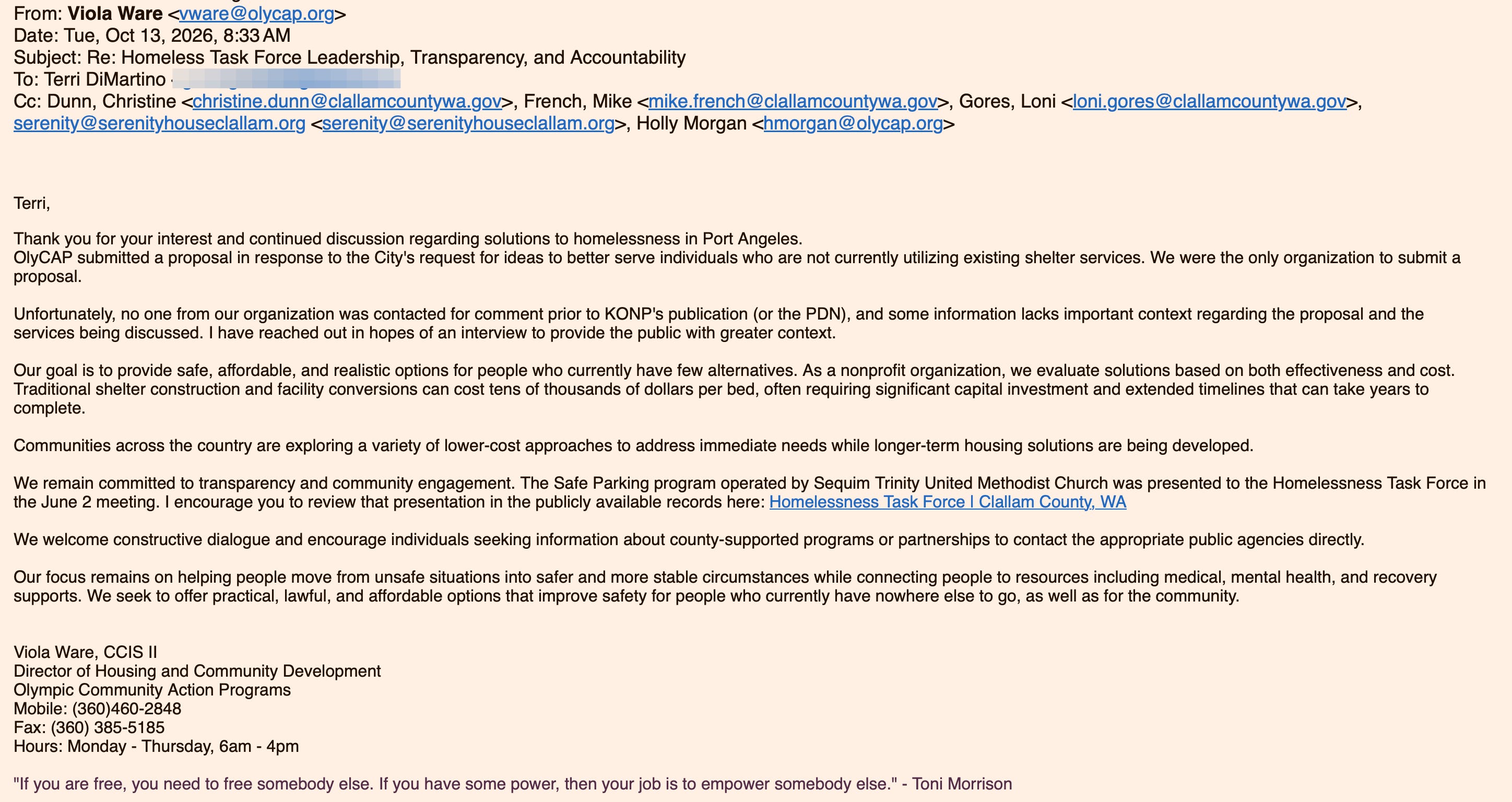
Ware replied. She thanked DiMartino for her interest and said:
OlyCAP had submitted the only proposal in response to the city’s request for ideas to better serve people not currently using existing shelter services
She stated that no one from OlyCAP was contacted for comment before the KONP or Peninsula Daily News stories and that some information lacked important context; she said she had reached out in hopes of an interview
She described the goal as providing “safe, affordable, and realistic options” for people with few alternatives, noted that traditional shelter construction can cost tens of thousands of dollars per bed and take years, and said communities across the country are exploring lower-cost approaches.
She asserted a commitment to transparency and community engagement, pointed to a June 2 Homelessness Task Force presentation on the Safe Parking program operated by Sequim Trinity United Methodist Church, and directed readers to publicly available records.
Ware closed by encouraging people seeking information about county-supported programs to contact the appropriate public agencies directly, and restated the focus on helping people move from unsafe situations into safer ones while connecting them to medical, mental health, and recovery supports.
The reply addresses some of the process points and restates the cost argument for the bus. It does not answer the core requests.
It does not explain why the Dignity Bus was not presented at the October 6 Task Force meeting
It does not supply, or commit to supplying, a formal evaluation of the Safe Parking program’s participation, outcomes, and actual costs—the specific document DiMartino requested
Pointing to a June presentation does not substitute for the performance data that has remained limited and contested in public records
The response also does not address alignment with the 2025–2030 plan, the funding source amid county budget pressures, measurable outcomes, comparable Washington examples, collaboration with Olympic Community of Health, or the involvement of tribal partners.
Ware’s direction to contact “the appropriate public agencies” sits alongside the fact that the program in question involved county funds approved while Commissioner French sat on OlyCAP’s board, that public records showed OlyCAP personnel costs charged to the Safe Parking effort, and that both French and Ware have previously left detailed questions unanswered.
The claim of transparency offers no new information that closes the gap between the official description of limited or “free” support and the payroll registers. The reply notes that OlyCAP was the only organization to submit a proposal; it does not explain why the prior pilot’s combination of high cost relative to capacity, slow enrollment, and limited visibility once the money left the county ledger should give the public confidence in expanding the same approach.
The letter and the response therefore leave the central issues where they stood: a request for an evaluation and for answers about results, funding, plan alignment, and the dual role of the commissioner who approved the earlier funds and sits on the receiving organization’s board. Those questions remain open.


